
Concrete Companyin Bell Gardens, CA
Concrete work in Bell Gardens runs into two blunt limits: paved areas in a residential front yard may not exceed 50 percent, and concrete is not permitted in a parkway. A low walk or slab may be exempt from a building permit, but work at the curb needs a city engineer permit.
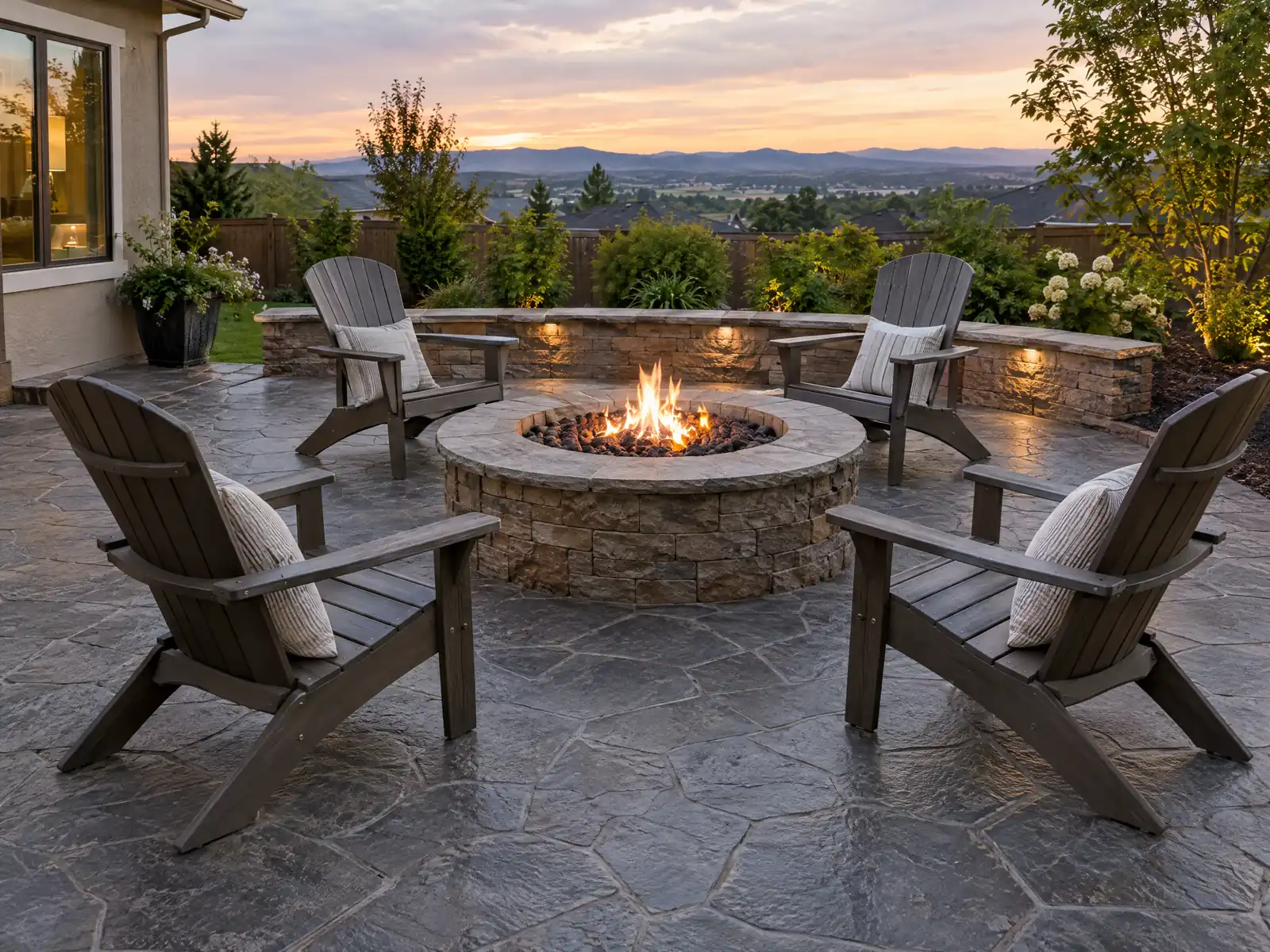
Almost nothing in Bell Gardens is empty ground. The City says it has been fully developed since it incorporated on August 1, 1961, and its 1,536 acres hold lots about 50 feet wide and 150 feet deep that typically carry two to four detached homes. Many trace back to Billy Goat Acres, the Depression-era strip of narrow plots where O.C. Beck built cheap houses beginning in 1930, and Census Bureau 2024 five-year estimates (data.census.gov) put 50.5 percent of the housing units before 1960. A concrete job here is rarely a blank slate; it is a replacement beside a house, a neighbor and a meter.
The rules below come from the Bell Gardens Municipal Code as published on the GoCodebook mirror, because the City's own site blocked our automated tools, so confirm anything that affects your job with the Building and Safety Division. MDG Builders, CSLB #1040337, is a general contractor in Tarzana that draws the layout, finds out which offices must sign off and runs the schedule, while a licensed concrete subcontractor does the forming, pouring and finishing. Mixes, joints and finishes are on our concrete page, and the Bell Gardens overview lists our other trades here.
Concrete rules in Bell Gardens, with sources
Where concrete permits come from in Bell Gardens: City of Bell Gardens Community Development Department, Building and Safety Division.
- The County Title 26 exempt list Bell Gardens follows exempts decks, walks and driveways not more than 30 inches above grade, not over a basement or story below, and not part of an accessible route. Bell Gardens' own page lists platforms, walks and driveways only when they meet the adopted County exemption conditions, so a thicker or raised slab can need a permit.
- Paved areas in a residential front yard, including walkways and hardscape, may not exceed 50 percent of the total front yard (BGMC 9.46.010.C).
- BGMC 9.34.020 requires front yards and street side yards to be landscaped except for driveways and entry walkways, caps rock, gravel, decomposed granite, boulders and similar hardscape at 50 percent of the landscaped area, and caps artificial turf at 50 percent of the landscaped area (parkway excluded).
- Parkways in Bell Gardens must be planted or covered with permitted nonvegetative material. Decomposed granite and pavers are allowed with an encroachment permit from public works, but mulch, bark, artificial turf and cement concrete (both standard and stamped) are not permitted in parkways, and plantings may not exceed 36 inches (BGMC 9.34.050).
- Residential driveways in Bell Gardens must be at least 12 feet wide, and the driveway directly in front of a garage or carport must match the width of the garage entry and be at least 20 feet deep (BGMC 9.38.070.F).
- Driveways and required parking areas must be paved with concrete at least 3.5 inches thick with expansion or contraction joints as needed, or asphalt at least 1.5 inches thick over a 4 inch compacted base, unless the city engineer approves an equivalent (BGMC 9.38.090.A). No part of a required front yard in a residential zone may be developed for required parking (9.38.090.D).
- Work on a sidewalk, curb, driveway approach or any excavation in the public right-of-way needs a written permit from the city engineer under BGMC 12.12.010, with plans reviewed and approved by the city engineer (12.12.040).
- CSLB defines the C-8 Concrete classification as forming, pouring, placing, finishing and installing mass, pavement, flat and other concrete work, and setting screeds for pavements or flatwork.
Can you pour concrete in a Bell Gardens parkway, and who approves work at the curb?
No, not in the parkway strip itself. Section 9.34.050 of the Municipal Code says parkways must be planted or covered with a permitted non-plant material, allows decomposed granite and pavers with an encroachment permit from public works, and lists mulch, bark, artificial turf and cement concrete, both standard and stamped, as not permitted. Plantings may not exceed 36 inches. That rule comes from the code text on the mirror, so confirm it with Planning before a design leans on it.
The curb is a separate approval. Section 12.12.010 requires a written permit from the city engineer for work on a sidewalk, curb, driveway approach or any excavation in the public right-of-way, and 12.12.040 has the engineer review the plans. A new or widened driveway opening is the usual trigger, so the order is design, right-of-way permit, then saw cuts, never the reverse.
A dumpster or a pile of materials in the street counts too. A dumpster must sit flush against the curb, stay at least 100 feet from a corner return on a residential street, carry reflective tape or buttons and leave within 14 consecutive days unless extended (12.12.065). Ask whose name goes on those permits.
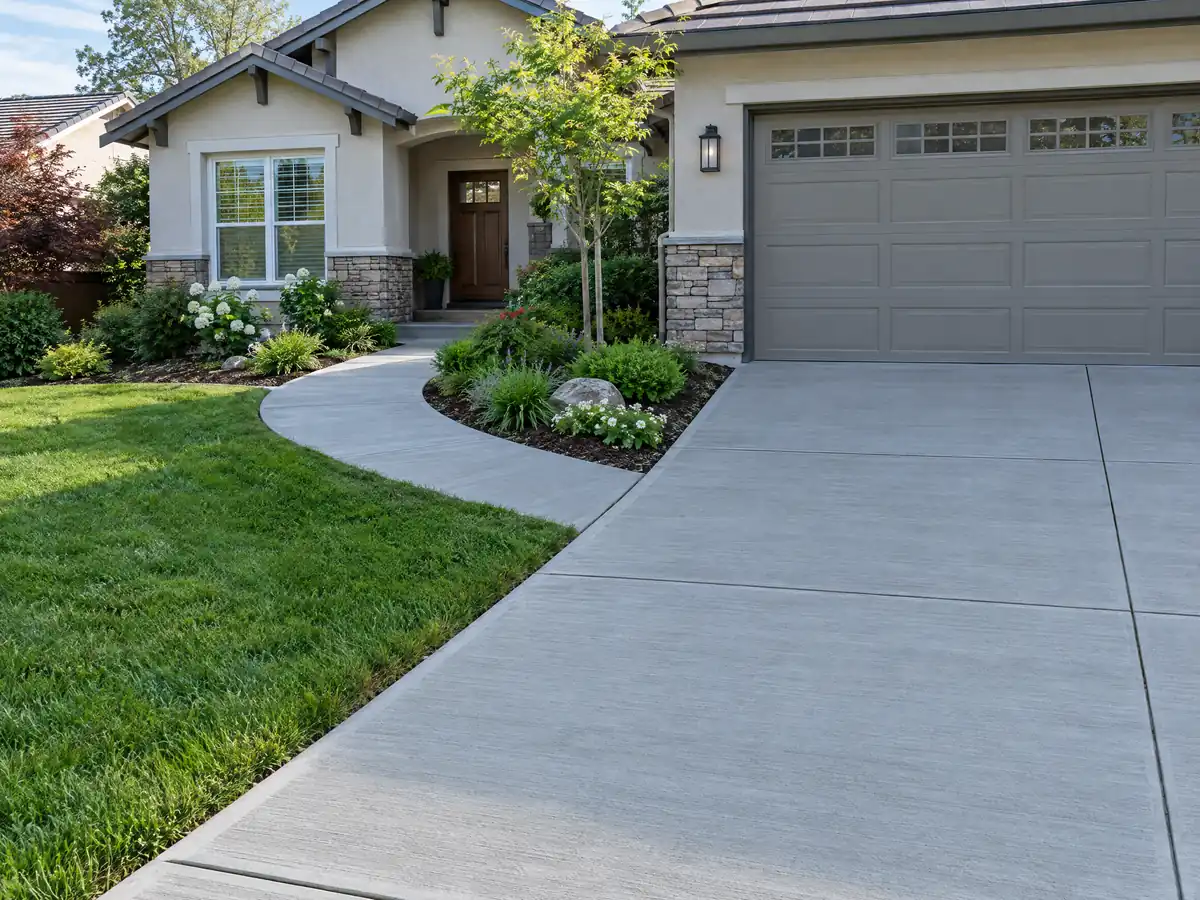
How much of a Bell Gardens front yard can be paved with concrete?
Half at most. Section 9.46.010.C caps paved areas in a residential front yard, including walkways and other hardscape, at 50 percent of the total front yard. On a narrow lot, a wide driveway plus an entry walk can use that allowance quickly, so the layout should be measured before a quote is accepted. This cap also comes from the mirror's code text.
Landscaping rules sit on top. Section 9.34.020 requires front and street side yards to be landscaped except for driveways and entry walkways, caps rock, gravel, decomposed granite, boulders and similar hardscape at 50 percent of the landscaped area, and caps artificial turf at 50 percent of the landscaped area, parkway excluded. A plan that replaces a lawn with slab, rock and turf has to pass both sets of numbers.
Pools, spas, pre-manufactured canopies, carports, storage sheds and mechanical equipment are not permitted in the front yard at all (9.46.050.C), which narrows what a front yard pour can serve. Ask that the paved percentage be written on the proposal drawing.
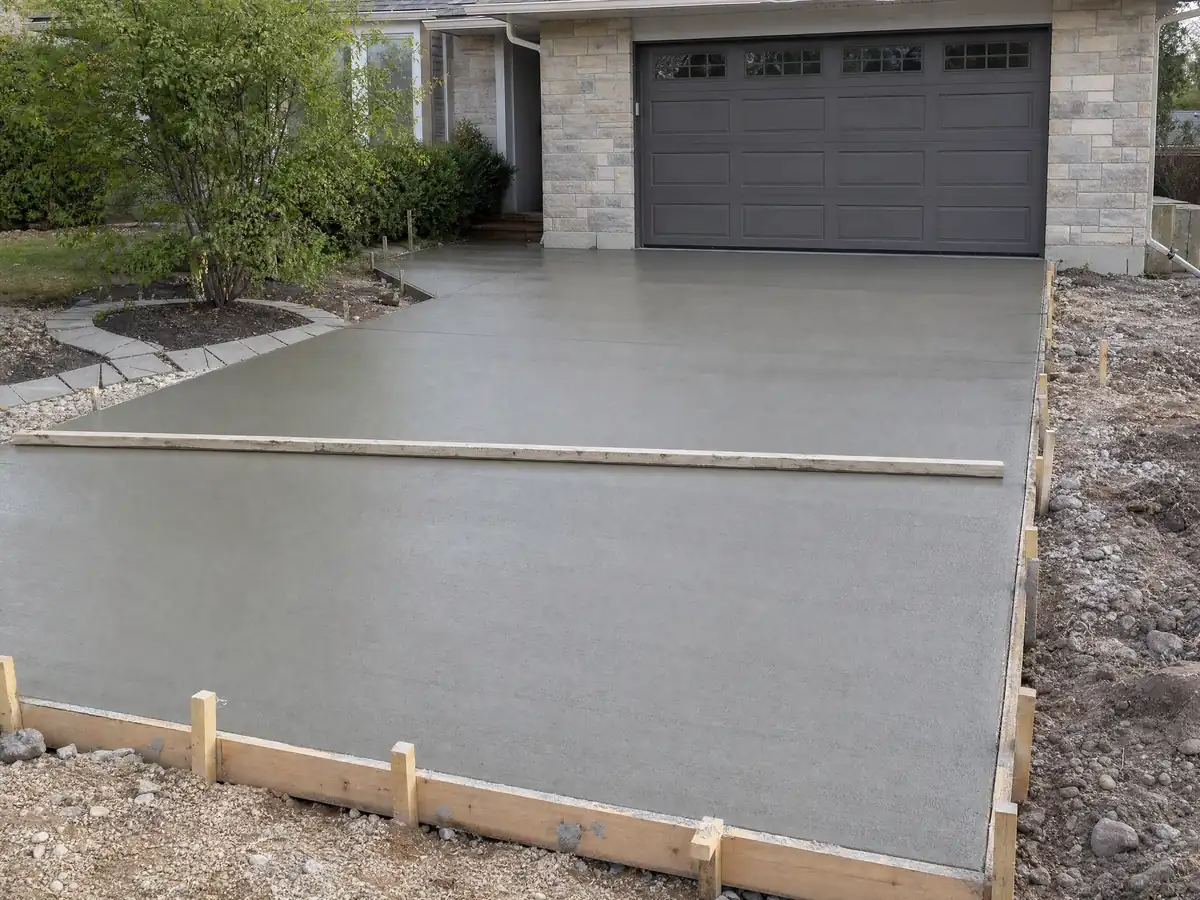
How wide and how thick does a Bell Gardens concrete driveway have to be?
Section 9.38.070.F says a residential driveway must be at least 12 feet wide, and the part directly in front of a garage or carport must match the garage entry width and run at least 20 feet deep. Section 9.38.070 also requires a two-car garage to have a clear interior of 20 by 20 feet, so a driveway and its garage are measured as a pair.
Section 9.38.090.A sets the thickness for driveways and required parking: concrete at least 3.5 inches thick with expansion or contraction joints as needed, or asphalt at least 1.5 inches thick over a 4 inch compacted base, unless the city engineer approves an equivalent. Heavy vehicles often call for more, and we found no code citation for mesh or joint spacing, so ask the subcontractor to state thickness, steel and joint layout in writing instead of leaning on the 3.5 inch floor.
Required parking also stays out of the front yard: 9.38.090.D says no part of a required front yard in a residential zone may be developed for required parking, and 9.38.050 requires two spaces per unit on lots with four or fewer units. A new parking pad in the front yard is therefore a question for Planning before it is a question for a pour.
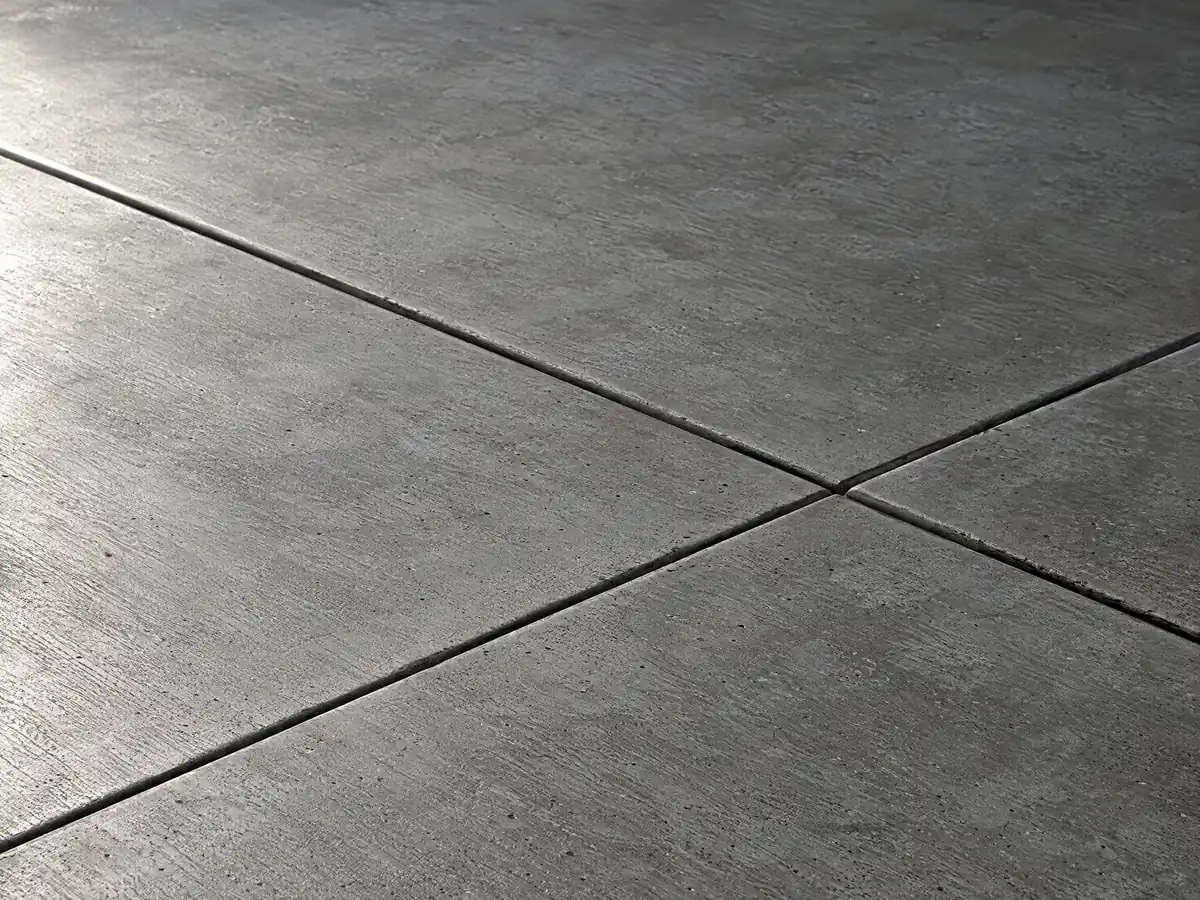
What do narrow Billy Goat Acres lots mean for a concrete company's access, layout and old slabs?
Space is the constraint. The Housing Element says most residential properties hold multiple single-family units on one lot, typically 50 feet wide and 150 feet deep with two to four detached homes, so a shared driveway, a long side passage and a back unit are common starting points. A pump truck or a wheelbarrow route that crosses a tenant's doorway needs to be agreed before the pour day, not on it.
Age adds surprises. The 2024 estimates put 29.4 percent of units before 1950, and the Depression-era plots were laid out cheaply on what had been floodplain and farmland. Removing an old slab can expose buried pipes, past repairs and fill nobody recorded, so the proposal should say how those finds will be priced. With 78.8 percent of homes rented, ask who lives on the lot and how many days they lose use of the driveway.
For scale, the Casa de Rancho San Antonio adobe on Gage Avenue, begun in 1795 by one account and finished by 1810, is a State historical landmark registered May 26, 1989. The code also creates a Historical Preservation District overlay that requires commission review before a permit to alter a structure or landscape feature, but we could not confirm which parcels carry it, so ask Planning whether yours does.
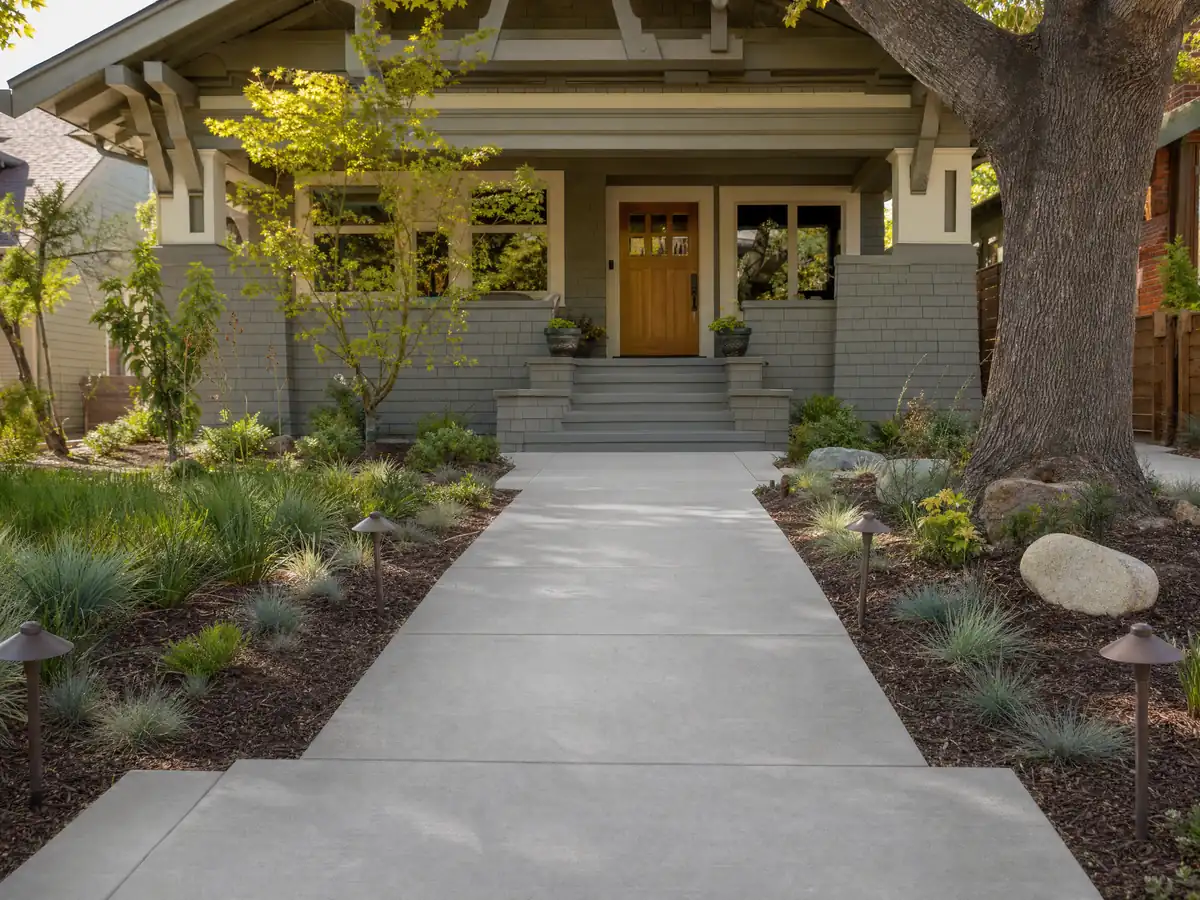
Does a concrete patio or walk need a permit in Bell Gardens, and does liquefaction risk matter?
A low walk or slab may not. Los Angeles County's exempt work list, which Bell Gardens follows, exempts decks, walks and driveways not more than 30 inches above grade, not over a basement or story below, and not part of an accessible route. A third-party summary of the City's page says it lists platforms, walks and driveways only when they meet those County conditions, so a raised or thick slab can need a permit. No exemption excuses a zoning violation, and none covers the public right-of-way.
The ground deserves a look. The County's hazard layer put 32 of the 39 grid points we sampled inside the State's liquefaction zone, and the Housing Element names the Puente Hills and Elysian Park Faults and says the City requires engineering reports to set design standards and mitigation measures. For a patio that rarely matters; for a footing under a wall it can. The same document places the whole city in FEMA Zone X, an area of minimal flood potential.
Weather sets the calendar. NOAA's 1991 to 2020 normals for Downtown USC show 14.25 inches of rain a year, nearly all of it from December through March, and about 25.6 days a year at or above 90 F. Ask how the subcontractor handles curing in heat and rain, and note that Section 16.24.120 bars outside construction work between 7:00 p.m. and 8:00 a.m. in or near residential zones when it disturbs a reasonable person.
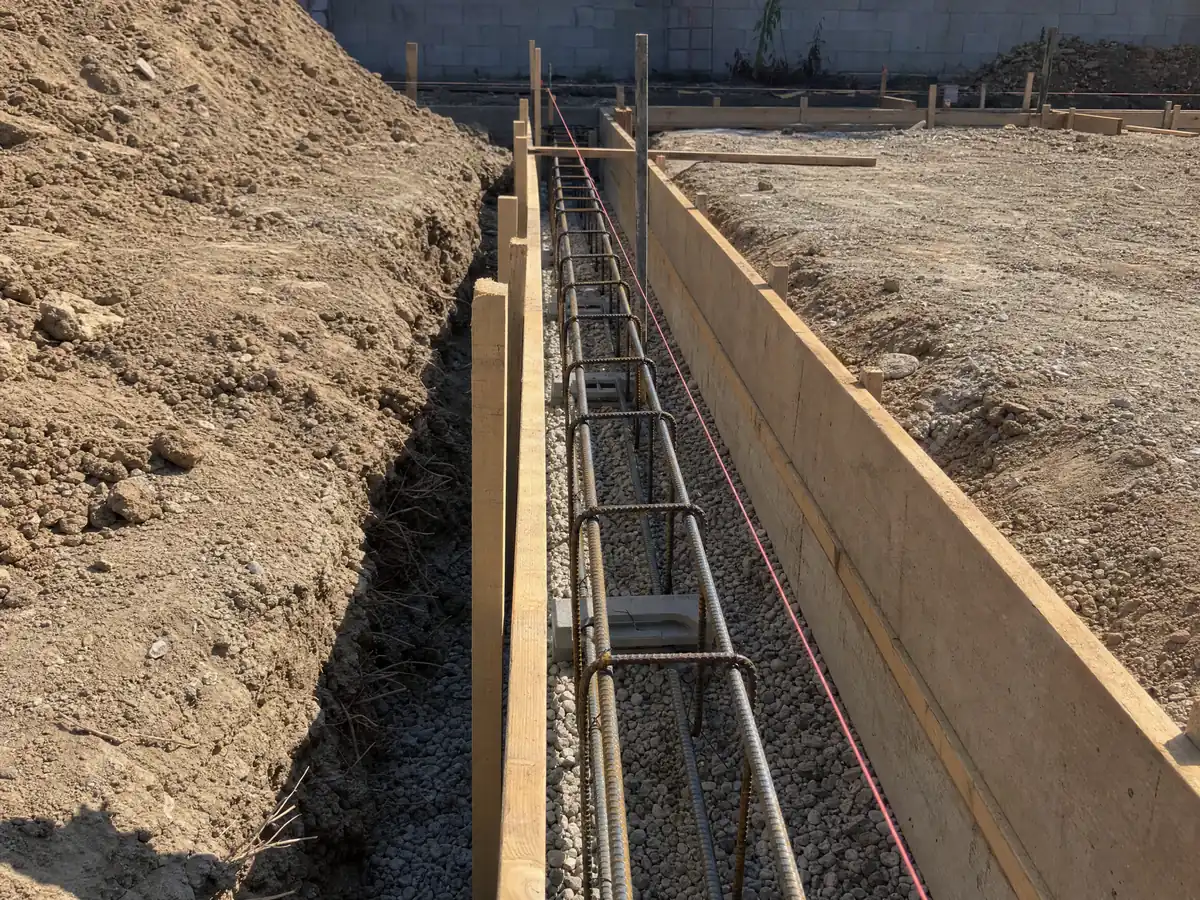
What does Bell Gardens require for a block wall or retaining wall beside a concrete project?
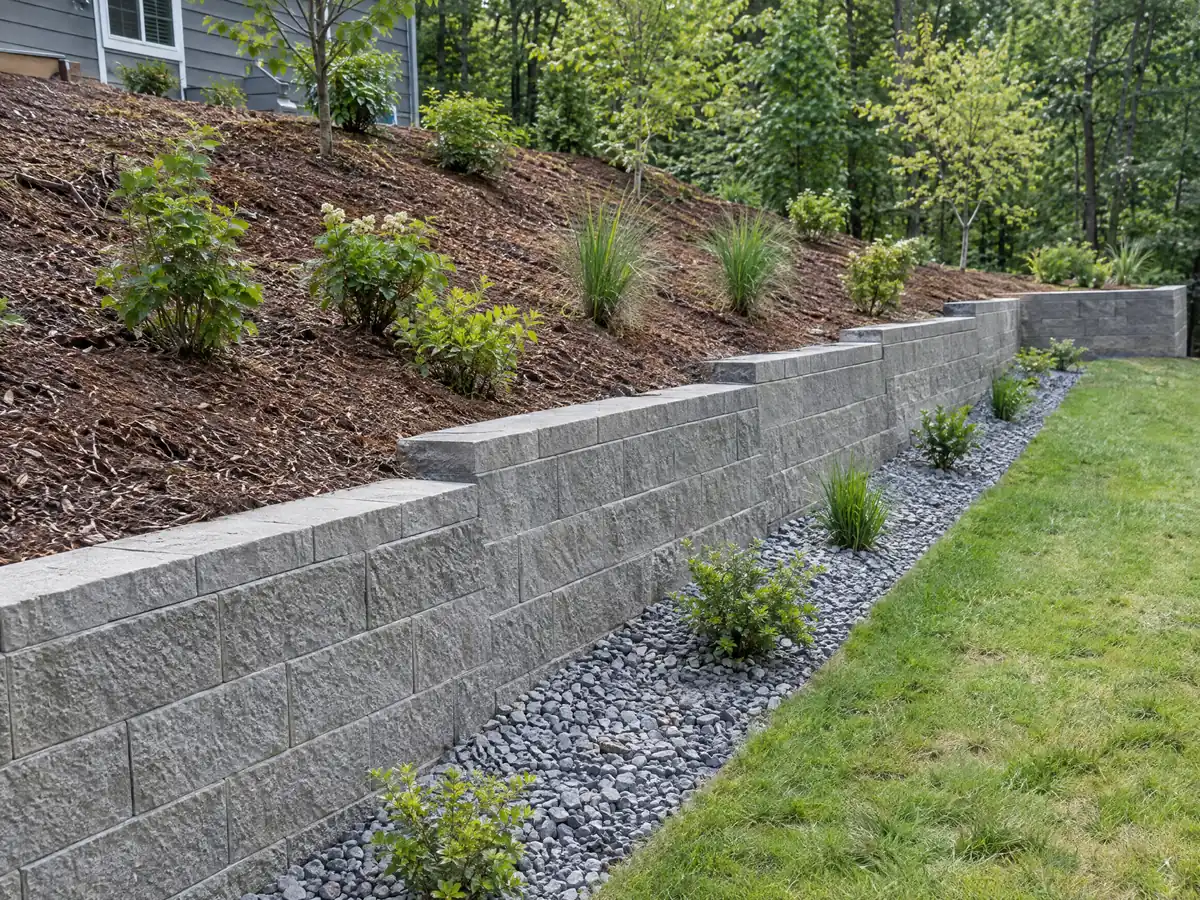
Block walls come with a stack of rules. Section 9.32.090 requires the city planner to approve every new masonry wall, with a decorative cap and decorative pilasters or other articulation at least every 15 feet of wall visible from a public right-of-way or park. In a required front yard a wall may not exceed 42 inches. Bell Gardens also exempts only fences up to 2 feet from a building permit (6.04.050), well below the County's 6 feet, though that text still cites the 2013 code, so confirm it.
A plot plan showing property dimensions, existing structures, driveways and streets, plus an elevation with heights, goes to both Planning and Building and Safety for any proposed wall or fence (9.32.060). Under the County exempt list, a retaining wall that holds back not more than 4 feet, measured from the bottom of the footing to the top, can skip a permit unless it carries a surcharge. Anything taller should be treated as permit work.
On who builds it, CSLB's C-8 classification covers forming, pouring and finishing concrete and flatwork, while a block wall is masonry, a separate class. Either one needs drainage behind it, and drainage often costs more than owners expect.
What does a concrete company charge in Bell Gardens, and who is allowed to do concrete work?
We found no Bell Gardens price study with a stated method, so the ranges here come from Angi's Los Angeles pages and HomeGuide, behind our concrete page, and we rate them medium at best. Plain broom-finished patios, walks and slabs of 300 square feet or more run about $8 to $14 per square foot, decorative finishes such as stained, stamped or exposed aggregate $15 to $30, and a driveway replacement with demolition of the old slab $9 to $20. Small jobs run above the per-foot averages because of minimum charges.
Retaining walls carry no per-foot figure here, because height, footing, steel, drainage and engineering set the price. Federal wage data show a mean of $33.67 an hour for cement masons in the Los Angeles-Long Beach-Anaheim metro in May 2025, which measures pay and not what a company bills.
Concrete work falls under CSLB's C-8 class. Anyone doing business in Bell Gardens needs a City business license even without an office here (BGMC 5.02.020 and 5.02.030), and the $1,000 unlicensed limit under AB 2622 never covers permitted work. MDG manages the job and a C-8 subcontractor pours it, so ask for that firm's license and certificate of insurance, and see our license check guide for how to verify a number.
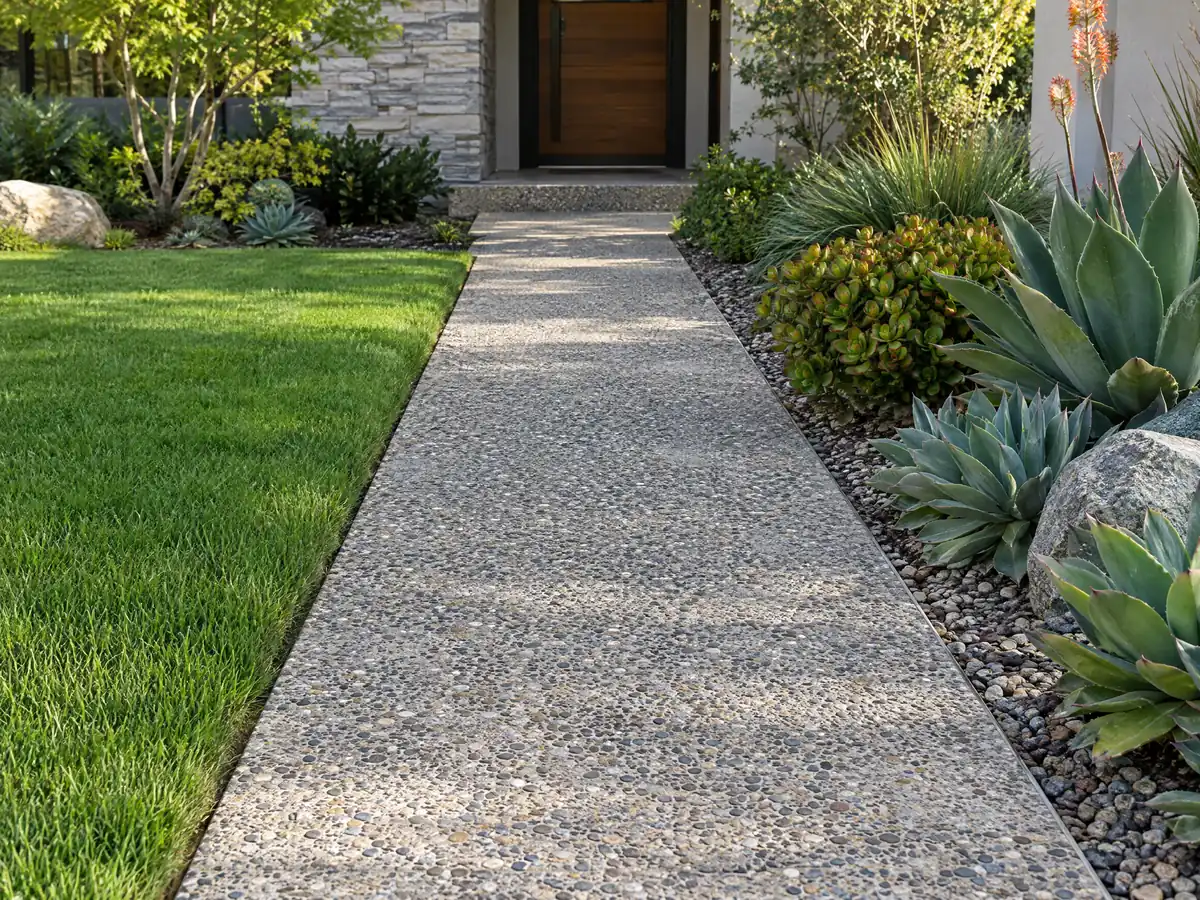
Concrete photos from Bell Gardens and nearby communities
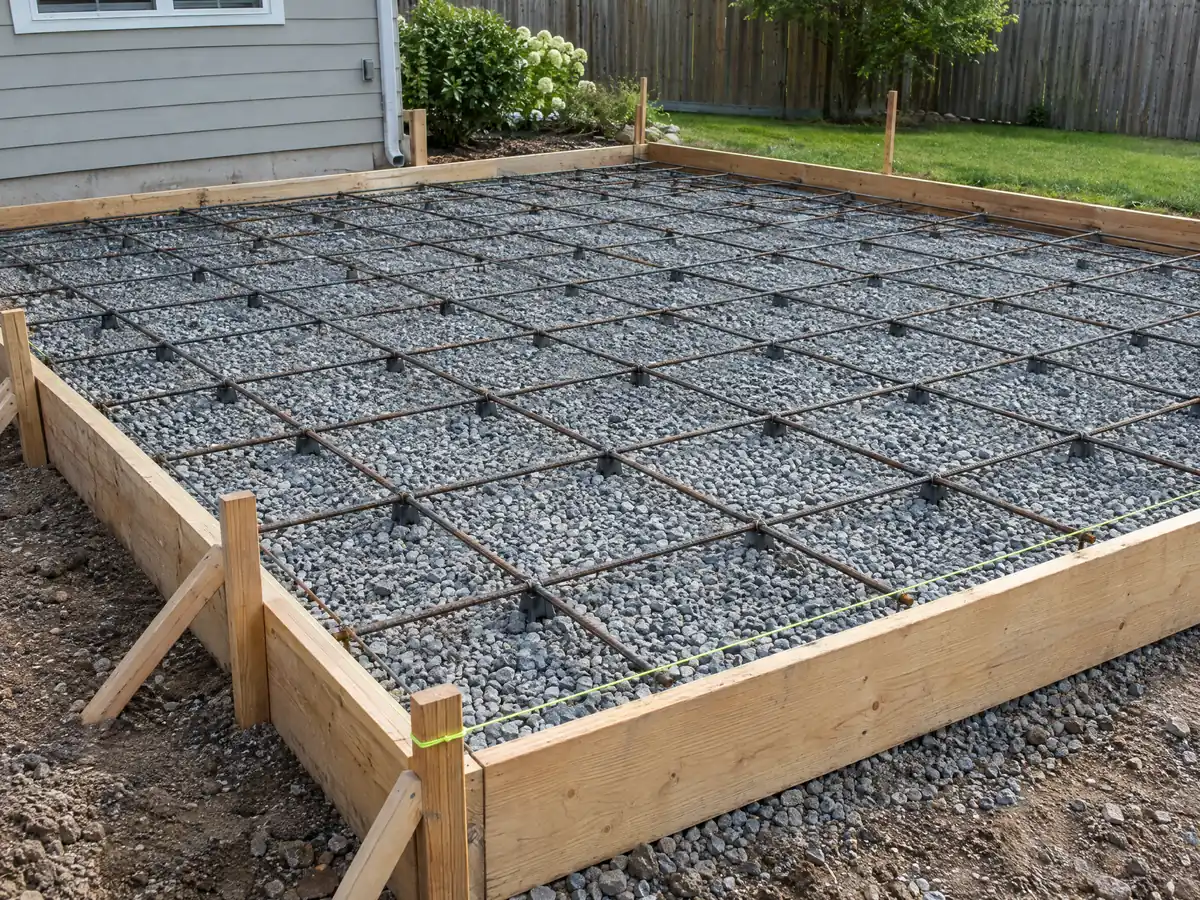
Photos of forms, rebar and finishes from concrete jobs in Bell Gardens and the towns around it. Tap any photo to enlarge it.
What concrete costs around Bell Gardens
The ranges above are Los Angeles figures behind our concrete price table, not a Bell Gardens quote. Nearby pages cover concrete in Downey, concrete in South Gate, concrete in Montebello, concrete in Huntington Park and concrete in Los Angeles. The same lot often needs decks in Bell Gardens or flooring in Bell Gardens too, and our garage conversion permit steps show where a new slab fits in a larger sequence.
| What it covers | Typical range |
|---|---|
| Patio, walkway or slab, broom finish, 300 sq ft or more | $8 to $14 per square foot |
| Decorative: stained, stamped or exposed aggregate | $15 to $30 per square foot |
| Driveway replacement, with demolition of the old slab | $9 to $20 per square foot |
| 20 by 20 foot plain patio (400 sq ft) | About $3,200 to $5,600 |
| 20 by 20 foot decorative patio (400 sq ft) | About $6,000 to $12,000 |
| Small jobs under 300 sq ft | Usually above the per-foot range |
| Retaining walls | Set by the written proposal |
Other work we manage in Bell Gardens
Concrete in Bell Gardens: what homeowners ask
Can I pour a concrete patio without a permit?
In Bell Gardens, possibly, if it is low. The County exempt list that Bell Gardens follows exempts walks, driveways and decks not more than 30 inches above grade and not over a basement or story below, and the City's page is reported to list them only on those conditions. Zoning, the front yard paving cap and the parkway ban still apply, so confirm with the Division first.
Can I expand my driveway without a permit?
Not safely in Bell Gardens. A wider slab on your lot may need no building permit, but a wider opening at the curb needs a written permit from the city engineer under Section 12.12.010. Paved areas in a front yard are also capped at 50 percent, and the driveway at the garage must match the garage entry width, so measure and ask before any saw cut.
Is concrete allowed in a Bell Gardens parkway?
No. Section 9.34.050 does not permit cement concrete, standard or stamped, in parkways, along with mulch, bark and artificial turf, and allows decomposed granite or pavers with a public works encroachment permit. That text comes from the GoCodebook mirror of the code, so confirm it with Planning before ordering any parkway material.
How much should a 20x20 concrete patio cost?
In Bell Gardens, a 400 square foot patio comes to about $3,200 to $5,600 at $8 to $14 per square foot for plain broom finish, and about $6,000 to $12,000 for decorative finishes at $15 to $30. That is arithmetic from Los Angeles ranges, not a quote, and demolition, grading, steel and the front yard paving cap can change the number.
Is 4 inches of concrete thick enough for a driveway?
Bell Gardens requires at least 3.5 inches under Section 9.38.090.A, with expansion or contraction joints as needed, unless the city engineer approves an equivalent. Heavy trucks and soft soil often justify more, and the code text we read says nothing about mesh. Ask the subcontractor to put thickness, steel and joint spacing in the proposal instead of treating the minimum as the standard.
Can I build a retaining wall in Bell Gardens without a permit?
Only a low one. The County exempt list that Bell Gardens follows exempts retaining walls holding back not more than 4 feet, measured from the bottom of the footing to the top of the wall, unless they carry a surcharge. Taller walls, or walls supporting a driveway or building, should be treated as permit work, and block walls need planner approval.
How much of my front yard can be paved in Bell Gardens?
No more than 50 percent, walkways and other hardscape included, under Section 9.46.010.C. Section 9.34.020 adds that front yards must be landscaped except for driveways and entry walkways, with rock and artificial turf each capped at 50 percent of the landscaped area. Have the paved percentage measured before you accept a quote.
Who is allowed to do concrete work in Bell Gardens, and what license do they need?
A contractor holding CSLB's C-8 concrete license, plus a City business license for anyone doing business in Bell Gardens. The State's unlicensed limit is $1,000 and never covers permitted work. A block wall is masonry, a separate class. Ask the firm for its license number and certificate of insurance, and check the number on the CSLB site.
What is the downside of stamped concrete in a Bell Gardens yard?
Cost and cracking are the usual downsides, and in Bell Gardens the location matters too. Stamped concrete is barred from parkways under Section 9.34.050, and it counts toward the 50 percent front yard paving cap. Decorative finishes run $15 to $30 per square foot against $8 to $14 for plain broom finish, according to our Los Angeles sources.
Plan a driveway, patio or wall in Bell Gardens
Tell us what you want poured, about how big it is, how wide your lot is and whether the work touches the curb or the parkway. We check the paving caps before we price it.