
Flooring Installationin Santa Ana, CA
Flooring installation in Santa Ana starts with what lies under the old floor. About 69 percent of the city's homes predate 1980, so vinyl tile, sheet goods and glue can hold asbestos until a lab says otherwise. Replacing the floor covering alone needs no building permit, but subfloor, plumbing or structural work does.
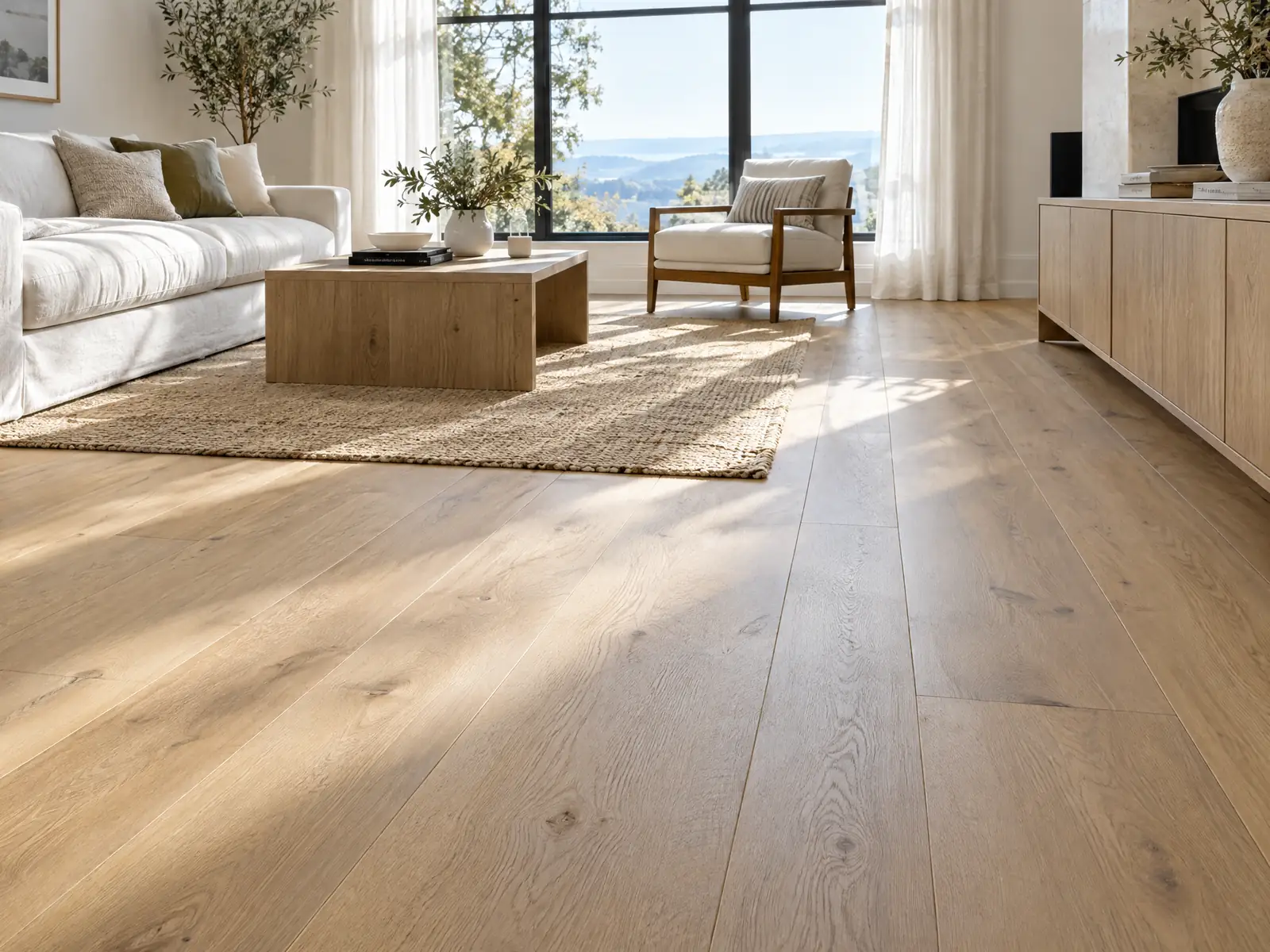
Santa Ana's floors carry more than a century of building. William Spurgeon claimed the townsite in 1869, the city incorporated in 1886 and became the seat of the new Orange County in 1889, and houses from the late 1800s still stand downtown. The big wave came after the Second World War: Census estimates for 2024 count 87,405 homes, about 57 percent of them (49,733) built from 1950 to 1979, and only about 12 percent from 2000 on. Most of the floors being replaced today sit on a mid-century structure.
MDG Builders, CSLB #1040337, is a general contractor in Tarzana, so the flooring itself is laid by licensed flooring and tile subcontractors that we book and supervise. We write the scope, take the permit questions to Santa Ana's Building Safety Division and keep the testing results with the job. Materials and ranges are on the flooring page, and the Santa Ana overview lists the rest of our trades here.
What Santa Ana's Building Safety Division, South Coast AQMD and state law say about flooring work
Where flooring permits come from in Santa Ana: City of Santa Ana Planning and Building Agency, Building Safety Division (Permit Counter).
- Tiling, carpeting and similar finish work are on the City's exempt list, so replacing floor coverings alone does not need a building permit, while any subfloor, structural, electrical or plumbing work does.
- South Coast Rule 1403 requires an asbestos survey before renovation that covers all layers of flooring materials down to the joist level, and the rule treats asphalt and vinyl floor tile and sheet vinyl as resilient floor covering that can contain asbestos. That matters in homes built before 1980, about 69 percent of Santa Ana's units per ACS 2024.
- South Coast AQMD's Rule 1113 table lists a 50 grams per liter VOC limit for floor coatings in the version dated February 5, 2016, relevant to epoxy and other coated floors in garages and interiors. This is the table of standards, not the full rule.
- Termite damage is rated very heavy in the table Santa Ana adopted for its Residential Code, which is a reason to look at subfloor and sill wood whenever floors come up. (The mirror's text for this item was read because the City code host blocks automated access, so check the current section with Planning.)
- CSLB defines the C-15 Flooring and Floor Covering classification as preparing a surface for and installing carpet, resilient sheet goods and tile, and wood floors, and it places ceramic and mosaic tile in the separate C-54 classification.
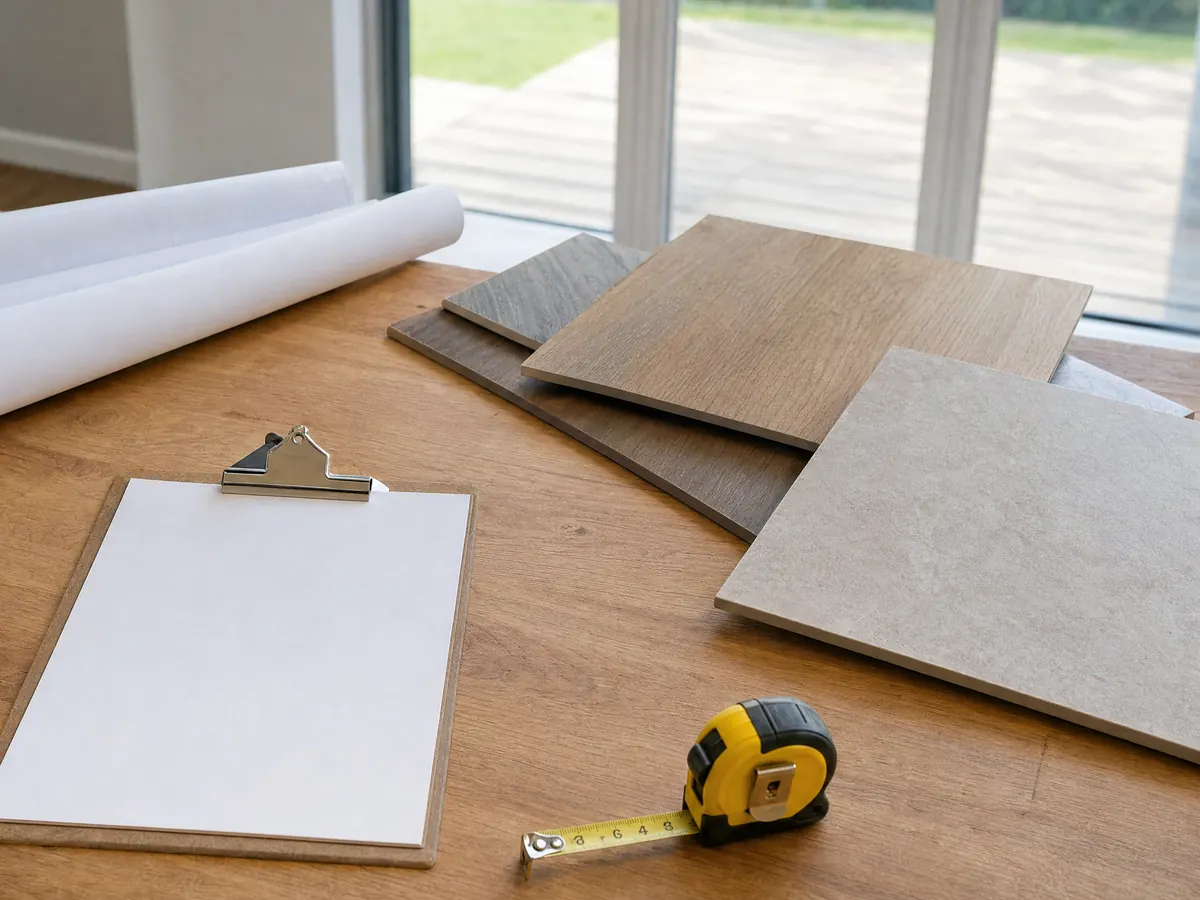
What is under the floors of a Santa Ana house built in the 1950s, 1960s or 1970s?
Most likely a slab or a raised wood floor from the postwar boom, and the numbers show how common that era is. Of 87,405 homes, 49,733 went up between 1950 and 1979, per the Census estimates, and the Army Air Base and the 1950s defense and farm boom drove that growth, according to Wikipedia's history of the city. Original coverings in those houses have often been replaced once or twice already, so the layer you see may not be the layer that matters.
The oldest floors are downtown. The Census table counts 5,823 homes from 1939 or earlier, and the old farm community of Greenville has buildings over a century old. Strip oak or fir in those houses can sometimes be sanded and refinished rather than replaced. How much wood stands above the tongue decides it, and a cut edge at a floor register shows that in a minute.
Finishes are limited by the district's air rules. South Coast AQMD's table of coating standards lists 50 grams per liter of VOC for floor coatings in its February 2016 version, so ask the refinisher for the product name and the number printed on the can. We read the table, not the full rule text.
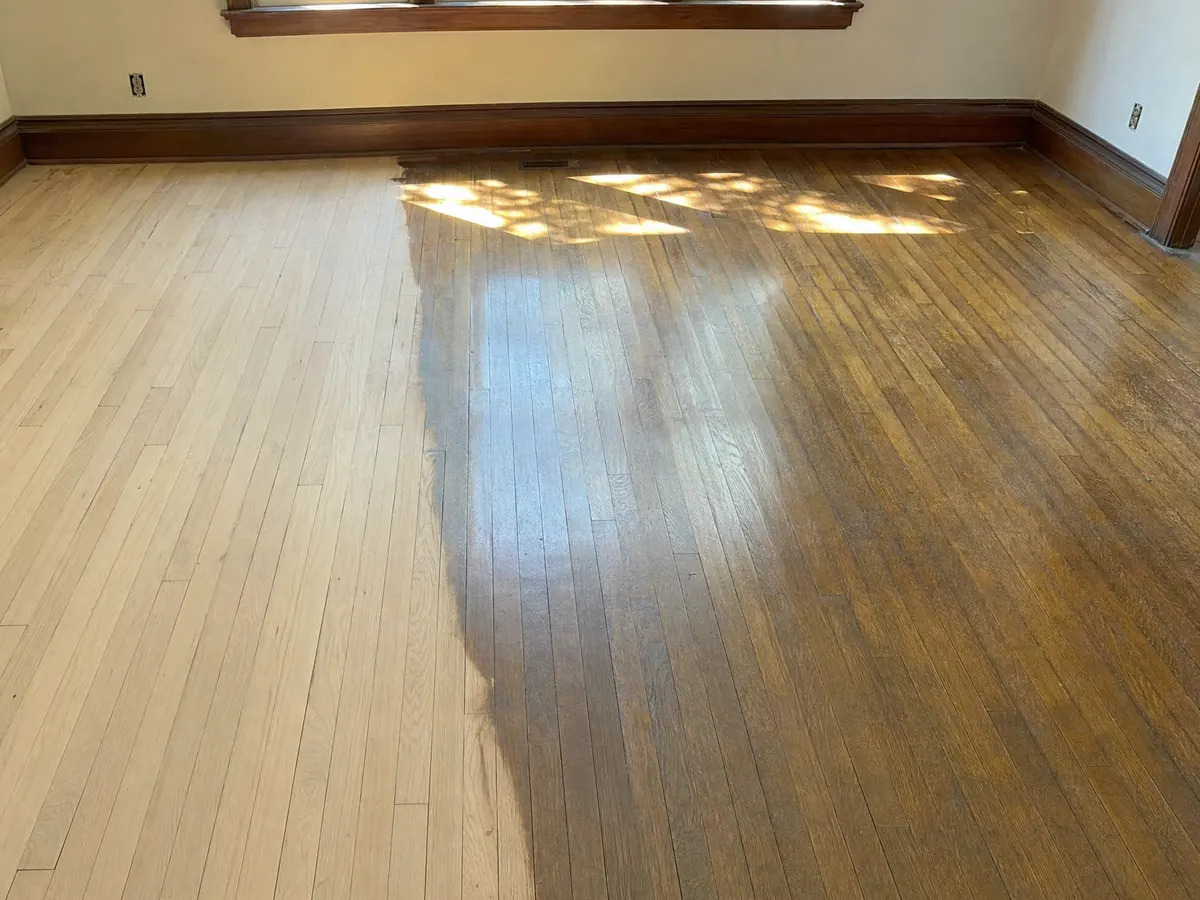
Does flooring in a pre-1980 Santa Ana home contain asbestos?
It can, and age makes it a routine question in this city. About 69 percent of the units, 60,647 of 87,405, were built before 1980. South Coast AQMD Rule 1403 calls for a thorough asbestos survey before renovation that covers every flooring layer down to the joist, and it treats asphalt and vinyl floor tile and sheet vinyl as resilient coverings that may contain it. Only a lab result settles the matter.
Small jobs have a lighter path. The rule exempts some renovations that strip less than 100 square feet of asbestos material from its notification and training steps. Ask the firm which side of that line your floor falls on and who hauls a layer that tests positive.
Lead is the second check. EPA's Renovation, Repair and Painting rule covers paid work that disturbs paint in housing built before 1978, which includes pulling baseboards for a new floor. The Census table cannot split 1978 from 1979, so we cannot say how many homes are covered. The City's lead page cites state data showing ZIP codes 92701, 92703, 92704 and 92707 with the highest childhood blood lead rates, which is a reason to ask whether the crew is certified.
- Was a sample of the old tile and glue tested by a lab?
- Who removes and hauls a layer that tests positive?
- Is the crew certified for lead-safe work?
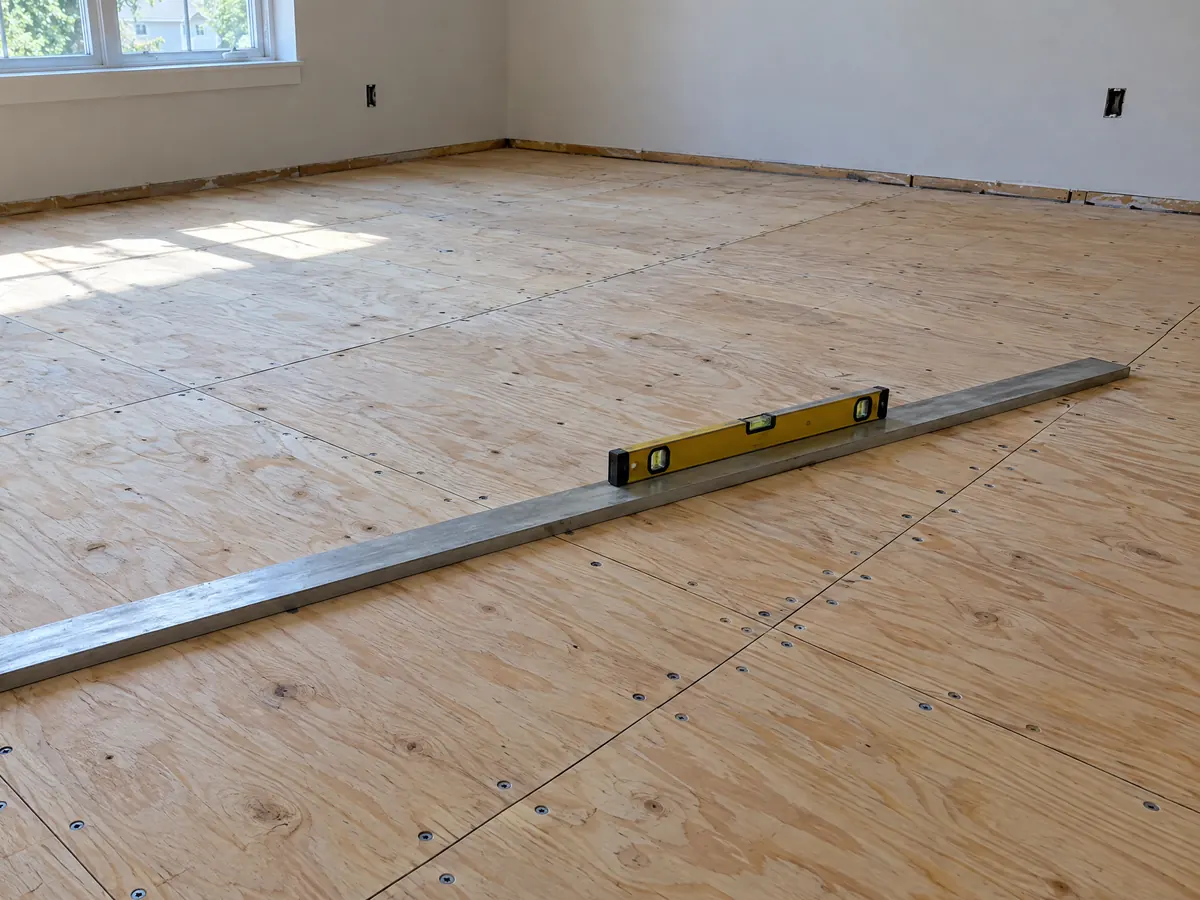
Do you need a permit to replace flooring in Santa Ana?
Not for the covering alone. The City's permit FAQ lists painting, papering, tiling, carpeting, cabinets, counter tops and similar finish work as exempt, so new planks, vinyl or tile over a sound floor go in without a building permit. Handout BLD-01 adds that exempt work can still need approval from another City office, so ask when the room is unusual.
Whatever lies beneath changes the answer. The FAQ requires a permit to alter or repair a building and to install or replace any electrical, gas, mechanical or plumbing system, which reaches subfloor framing, structural repairs and a bathroom where the drain or the fixtures move. The permit counter at (714) 647-5800 gives a quote for permitted work.
Permitted jobs run through Accela. Since July 1, 2026 plans and applications are filed electronically in Accela Citizen Access and paper is no longer accepted, and a contractor must show a current CSLB license and a City of Santa Ana business license. Historic register properties and the SD-19 and SD-40 districts are shut out of the PBx same-day lane, though the City's historic pages we read speak to exterior changes, not interior floors.
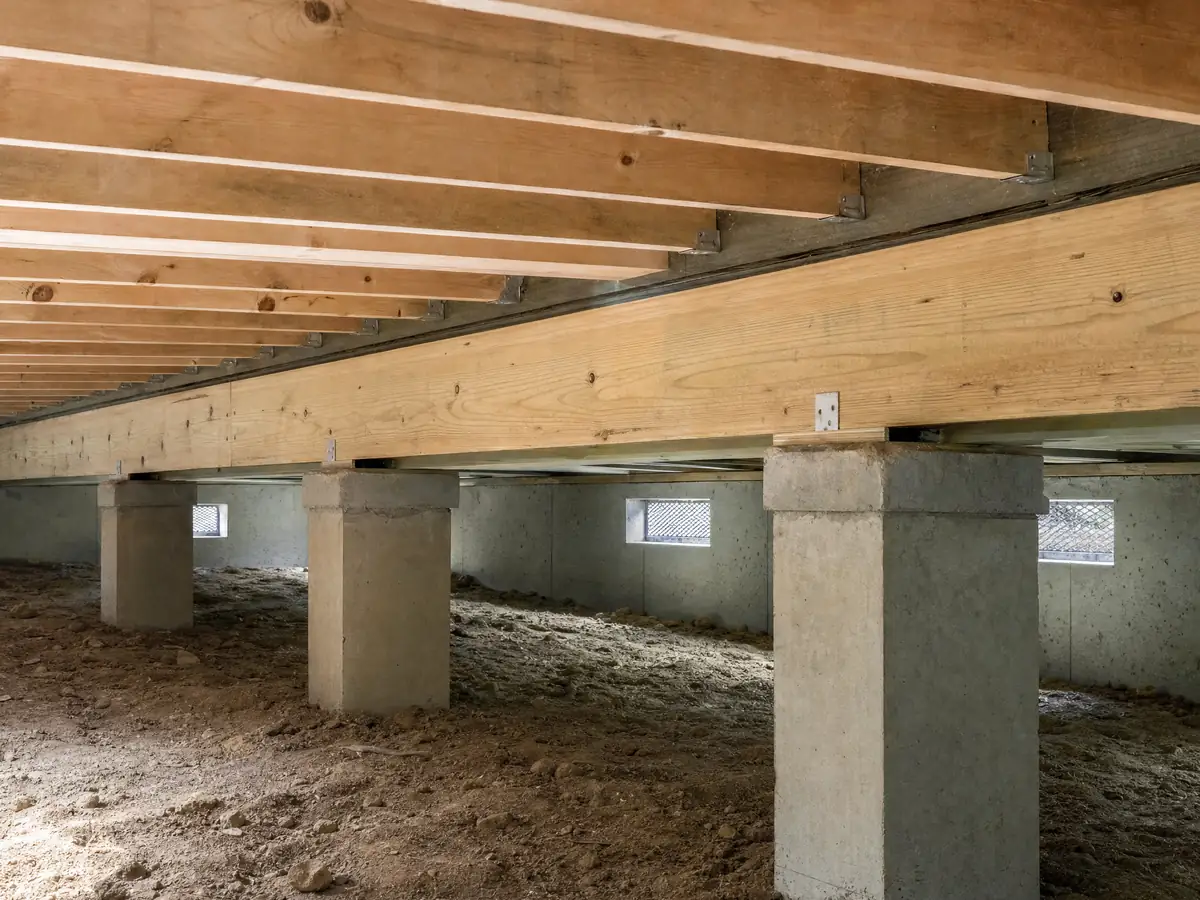
What do you do about bouncy or damaged floors over a crawl space in an older Santa Ana home?
Open the framing before you pick the finish. Many houses from the 1950s and earlier sit on a raised wood floor, though we found no count of how many Santa Ana homes do, so look from the crawl space or through a floor register. Soft spots, rot or insect damage at the sill and subfloor mean the carpentry comes first and the new floor second.
That repair is structural, and structural work is permitted work. The City's over-the-counter list includes seismic retrofit of an existing raised foundation using City of Los Angeles standard details, which is worth pairing with a floor job when the crawl space is already open. Review runs Monday to Thursday, 8:00 a.m. to 2:30 p.m., and historic properties and parcels in FEMA Flood Zone A or AE are not eligible for that lane.
Ask the flooring crew to split the proposal into three lines: structural repair, crawl space moisture control and the new floor. Our flooring cost guide shows how repair and replacement are priced beside each other.
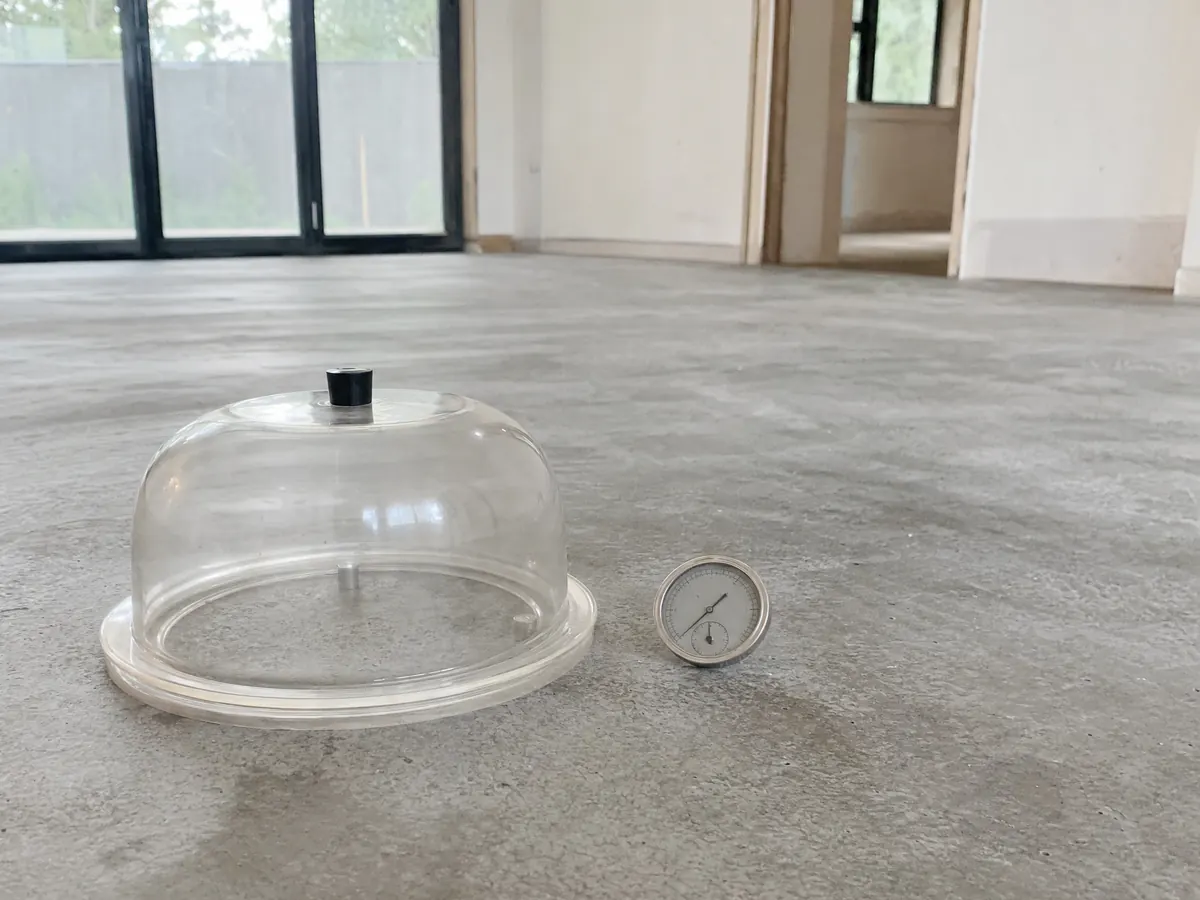
How do you stop moisture coming up through a concrete slab before flooring goes down?
Measure first, then choose the fix. ASTM F2170 reads relative humidity in holes drilled into the slab and ASTM F1869 weighs the vapor leaving the surface under a calcium chloride dish. Neither carries a pass mark; the limit comes from the maker of the plank, vinyl or adhesive. The National Wood Flooring Association strongly recommends a vapor retarder of 0.13 perms or less, such as 6-mil polyethylene, under slabs for wood floors.
Santa Ana's dry summers can fool a test. NOAA's normals for the Santa Ana Fire Station give 12.54 inches of rain a year, 9.91 of them from December through March, and 0.03 inch in July and none in August. The ground is flat and low, and a downspout, planter or sprinkler against one wall can wet a single corner of a slab while the rest reads dry, so take readings along exterior walls and near bathrooms.
Flood zones raise the stakes. The City keeps FEMA Zone A and AE parcels out of its over-the-counter lane, and Chapter 7 of the municipal code treats improvements costing 50 percent or more of a structure's value as substantial improvements that need floodplain compliance (read on the GoCodebook mirror because the City's code host blocked our tools, so confirm with Planning). A whole-house remodel with new floors is the kind of project to ask about.
Which floors hold up in a Santa Ana rental or a crowded household?
Sealed, hard-wearing floors that clean easily are the usual choice, and the city's numbers show why wear matters. Census estimates put 56.8 percent of occupied homes in Santa Ana as rentals and 34.0 percent of units in buildings of five or more, and Wikipedia reports 2020 households averaging 3.98 people. Many floors here carry daily traffic from large families and extended households.
Rentals add an inspector. The City's Proactive Rental Enforcement Program checks residential rentals for substandard conditions, and its stated intent does not require retrofits of conditions built to the code in effect at the time, if they have been kept in good and safe repair. A tenant needs the owner's consent before changing a floor, and an owner should keep the receipts and test results with the unit's records.
In a condo or apartment above another unit, hard floors raise the sound question. We found no verified sound rating number, so read the association's documents and ask the manager in writing what it requires before material is ordered. Our subcontractor guide explains who does what on a multi-trade job.
What does a flooring contractor charge in Santa Ana, and which license applies?
We found no Santa Ana price study with a stated method, so these are Los Angeles figures from Angi's July 2026 pages, which we rate medium to low in confidence. Angi gives an average flooring project of $4,011, with most between $2,134 and $6,197, or $12 to $16 per square foot installed, and an average hardwood project of $5,566 within $3,153 to $8,496. Orange County pricing can differ.
Labor data reaches Orange County. Federal wage estimates for the Los Angeles-Long Beach-Anaheim metro area in May 2025 show floor layers averaging $33.48 an hour, tile and stone setters $30.72 and carpet installers $27.54. Those are wages, not billing rates, and demolition, subfloor repair, moisture testing and stairs belong on their own proposal lines.
CSLB's C-15 class covers carpet, resilient sheet goods and tile, and wood floors, while ceramic and mosaic tile sits in C-54. Our license check guide shows how to look a number up, and the CSLB bulletin on AB 2622 explains why the $1,000 unlicensed limit never covers a permitted job.
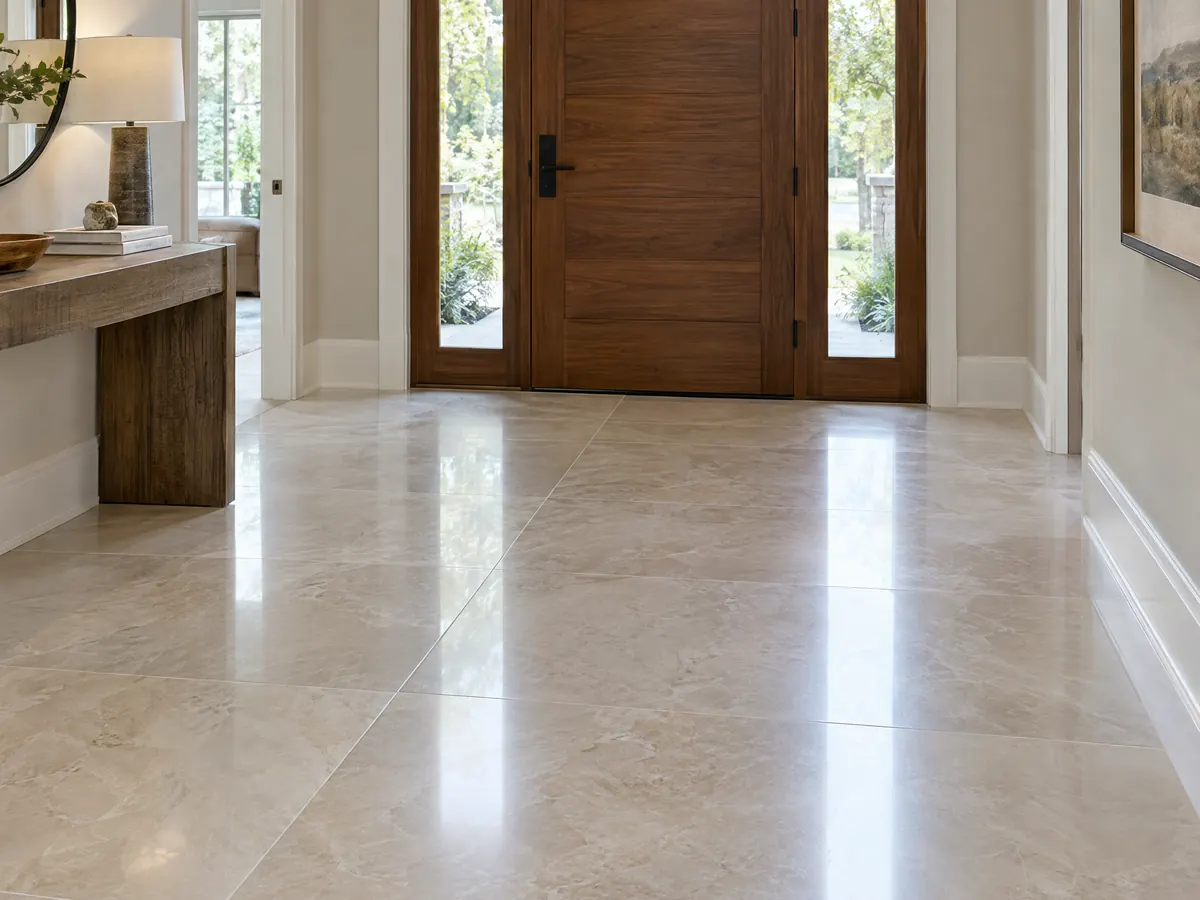
Flooring photos from Santa Ana and nearby communities
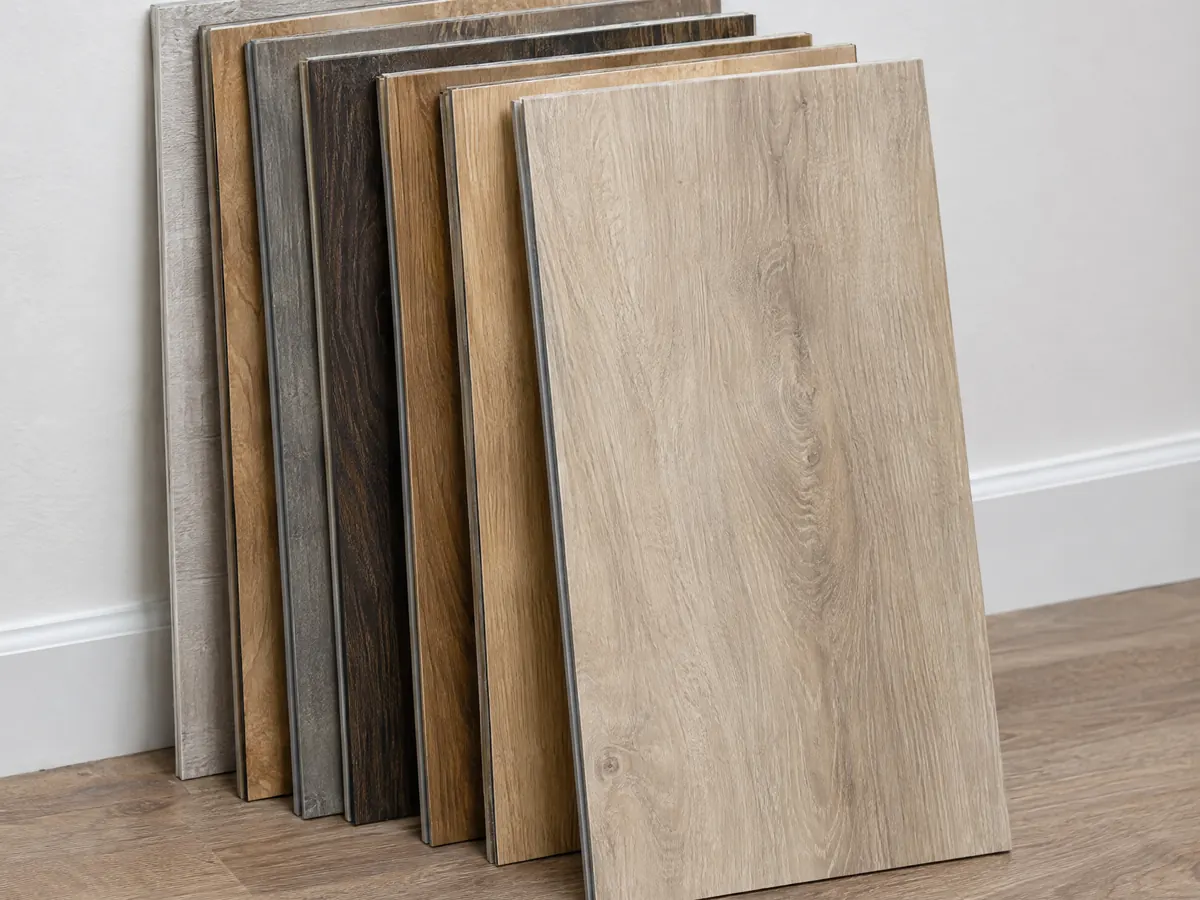
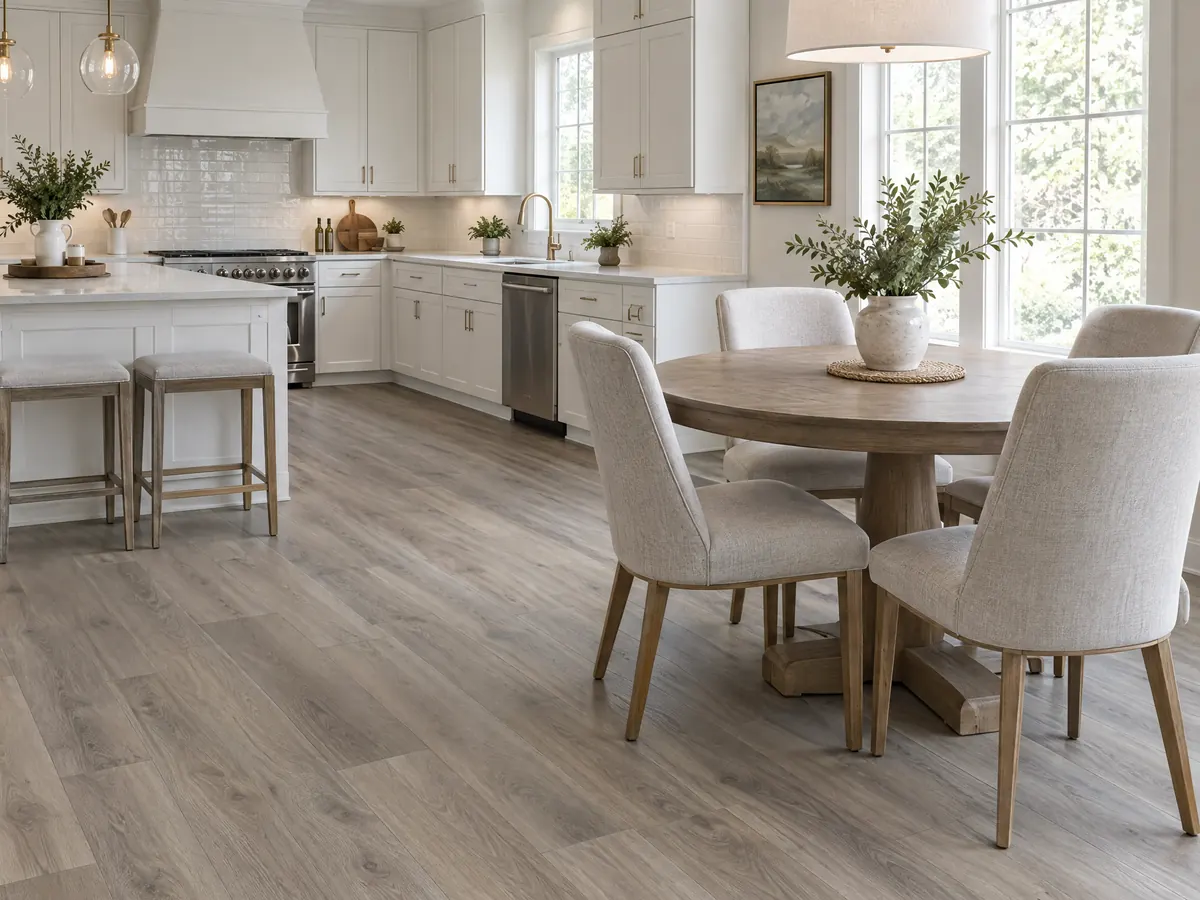
Plank samples, slab tests, crawl space framing and finished floors from Santa Ana and nearby towns, shown at the steps that matter. Tap any photo to enlarge it.
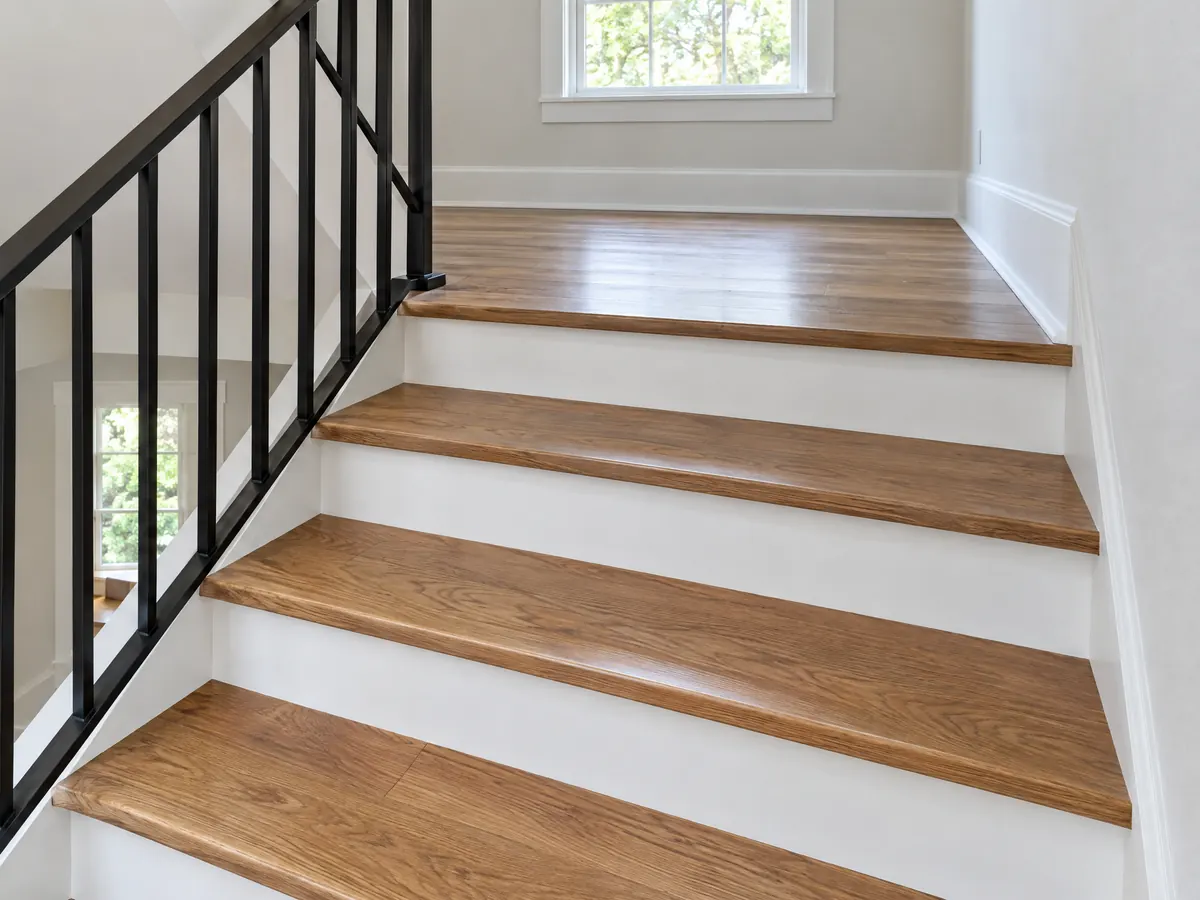
What flooring costs around Santa Ana
Dollar figures on this page are Los Angeles planning ranges from our flooring page, not a Santa Ana bid, and a written proposal should list demolition, testing, subfloor work and stairs on separate lines. For the same property, see concrete work in Santa Ana and decks in Santa Ana. Nearby, compare flooring in Anaheim, flooring in Garden Grove and flooring in Irvine, or flooring in Los Angeles.
| What it covers | Typical range |
|---|---|
| Installation labor only | $3 to $9 per sq ft |
| Solid hardwood, installed | $12 to $22 per sq ft |
| Engineered hardwood, installed | $10 to $18 per sq ft |
| Refinishing existing hardwood | $4 to $8 per sq ft |
| Laminate, whole project | $2,000 to $5,500 |
| Hardwood, whole project | $3,153 to $8,496 |
| Removing the old floor | $455 to $685 per 200 sq ft |
| Tile | No sourced Los Angeles range |
Santa Ana flooring questions, answered
Do I need a permit to replace flooring in Santa Ana?
Not for the covering alone. The City's permit FAQ lists tiling, carpeting and similar finish work as exempt. Subfloor, structural, plumbing or electrical work does need a permit, so ask the permit counter at (714) 647-5800 when the job reaches below the surface.
How much does it cost to have flooring professionally installed in Santa Ana?
Angi's July 2026 Los Angeles pages show $12 to $16 per square foot installed and $3 to $9 for installer labor, with hardwood at $12 to $22 installed. We found no Santa Ana study and rate these medium to low in confidence. Demolition and subfloor repair are separate lines.
How much to refloor a 2,000 square foot house in Santa Ana?
At Angi's $12 to $16 per square foot installed, 2,000 square feet comes to $24,000 to $32,000, while labor alone at $3 to $9 is $6,000 to $18,000 before material. Those figures come from multiplying Los Angeles ranges, which is arithmetic and not a bid, so a visit sets the number.
Can you put flooring over concrete in a Santa Ana home?
Yes, once the slab is tested and prepared. The maker of the flooring or adhesive sets the moisture limit, so the installer should read ASTM F2170 probes or set an F1869 dish, then fill cracks and level the surface. Ask for the numbers in writing beside that limit.
Why does moisture come through a concrete floor in Santa Ana?
Usually because water reaches the slab from the ground, a downspout, a planter or irrigation, and the slab has no working vapor barrier beneath it. We found no source on which Santa Ana homes have one, so test along exterior walls and near bathrooms before choosing a floor.
Is there asbestos under old vinyl flooring in Santa Ana homes built before 1980?
Possibly, and nobody can tell by eye. About 69 percent of Santa Ana's homes predate 1980, and South Coast AQMD Rule 1403 treats vinyl floor tile and sheet vinyl as coverings that can contain it. Send a lab sample before sanding or ripping, and ask who hauls a positive layer.
Can I refinish old hardwood floors in a Santa Ana house instead of replacing them?
Often, when enough wood stands above the tongue to take a sander, which a floor register or a cut edge reveals. Angi's Los Angeles pages put refinishing at $4 to $8 per square foot against $12 to $22 for new hardwood, both medium to low in confidence. Ask for the finish's VOC number.
Can a tenant replace the flooring in a Santa Ana rental?
Only with the owner's consent. Keep receipts, test results and photos, because the City's rental inspection program looks at rental conditions, and a condo may also need the association's approval for hard floors above another unit. Anything beyond the covering may need a permit.
What license does a flooring contractor need in Santa Ana?
Carpet, resilient flooring and wood floors fall under CSLB's C-15 class, and ceramic tile under C-54. For permitted work the City asks to see a CSLB license and a City of Santa Ana business license. Look the license up on the CSLB site before accepting a quote.
Tell us the house, the rooms and what is on the floor now
Say whether it is a house, a condo or a rental unit, which rooms you want done and what you know about the old flooring and the year the home was built. The testing and permit questions come with us to the first visit.