
ADU Constructionin Santa Ana, CA
ADU construction in Santa Ana is allowed on lots zoned for housing, with up to one ADU and one JADU on a single-family lot and detached units up to 1,000 square feet under the City's standards. One point needs a call first: the City's pre-approved plan page says paper only, while its Accela page says paper ended July 1, 2026.
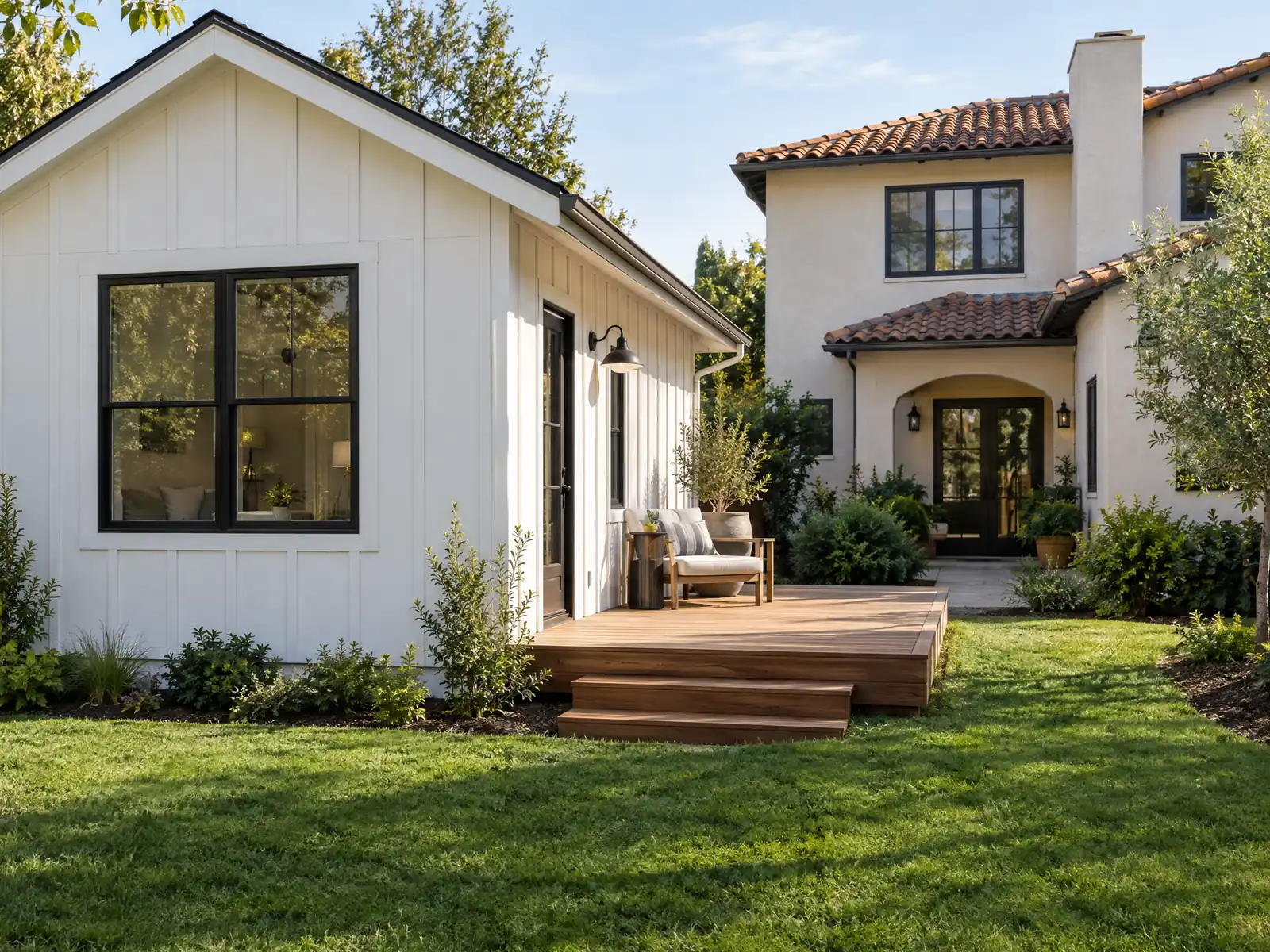
Santa Ana has 87,405 homes, and 37,747 of them, 43.2 percent, are single-family detached houses on lots that state ADU law was written around. Another 34.0 percent sit in buildings of five or more units, and 56.8 percent of occupied homes are rented, so many ADU questions here come from landlords as well as owners. The city was a farm town that became the seat of Orange County in 1889, and its housing is mostly postwar, with about 69 percent of it built before 1980.
This page covers the conflict between the City's two ADU pages, size and setback limits, garage conversions, JADUs and multifamily lots, grading and soils, fire review and fees, and historic districts. The City's code websites returned HTTP 403 to our tools, so ordinance text comes from the GoCodebook mirror and the City's own handouts; the standards come from the City's ADU and JADU standards page. Price ranges and phases are on our ADU construction page.
Santa Ana Planning and Building rules that apply to ADU construction
Where adu construction permits come from in Santa Ana: City of Santa Ana Planning and Building Agency, Building Safety Division (Permit Counter).
- The City says ADUs may be permitted on properties in zones that allow residential uses, including R1, R2, R3, R4 and Specific Development or Specific Plan areas where residential is permitted, and they must meet development standards in Section 41-194 of the Santa Ana Municipal Code. The City's property information search shows a parcel's zoning.
- Santa Ana's ADU standards: up to one ADU and one JADU on a single-family lot; on multifamily lots up to eight detached ADUs (not more than the number of existing units) plus conversions of non-habitable space up to 25 percent of existing units. A detached ADU may be up to 1,000 square feet, an attached ADU up to 1,000 square feet or 50 percent of the main home (an 800 square foot unit is always allowed), and a JADU up to 500 square feet inside the home or attached garage.
- Per the City's standards page, rear and side setbacks for an ADU are 4 feet (none for a conversion of an existing building), the front yard follows the zone, a detached ADU is limited to 20 feet or two stories, and an attached ADU follows the height of the primary building. A separate address and full kitchen are required for an ADU, an efficiency kitchen at minimum for a JADU, and ADUs may be rented for 30 days or more but not as short-term rentals.
- Parking for a new ADU is one space unless it is within a half mile of transit, inside an existing building, in a historic district, not offered a required on-street permit, near a car share, or a studio; no parking is required for a JADU and replacement parking for a converted garage is not required. ADUs need pedestrian access from the street, have no minimum lot size, and may be sold separately only when built by a qualified non-profit under an affordable housing agreement.
- The JADU standards require owner occupancy in either the single-family home or the JADU, with a restrictive covenant recorded when the building permit is issued, while an ADU has no owner occupancy requirement. The FAQ adds that application review, permit and development impact fees apply, with current amounts to be confirmed with each department, and that HOAs generally cannot prohibit an ADU.
- To use Santa Ana's pre-approved ADU plans the lot must have or be proposed for a single-family home, be outside FEMA Flood Zone A or AE, not be in the French Park (SD-19), Downtown or Floral Park historic districts or Heninger Park (SD-40), and meet the grading permit exemption. The City urges a pre-submittal consultation at planning@santa-ana.org; review is by Planning, Building and Safety and Public Works and can be approved in as little as one day, and school district fees are paid at the district.
- The pre-approved ADU page says those projects may only be submitted over the counter with paper copies and a title report completed within six months, while the Accela page says paper submittals ended July 1, 2026. The two pages disagree, so confirm the submittal method with Planning before assuming either.
- A new detached ADU needs a grading permit and a stamped precise grading plan unless the owner signs the PCC-20 waiver, which is open to detached ADUs of 1,200 square feet or less outside FEMA Flood Zone A or AE with less than 50 cubic yards of cut or fill, drainage that flows away from buildings and neighbors, and a site plan showing drainage. The owner takes full liability for site drainage.
Sources for these rules
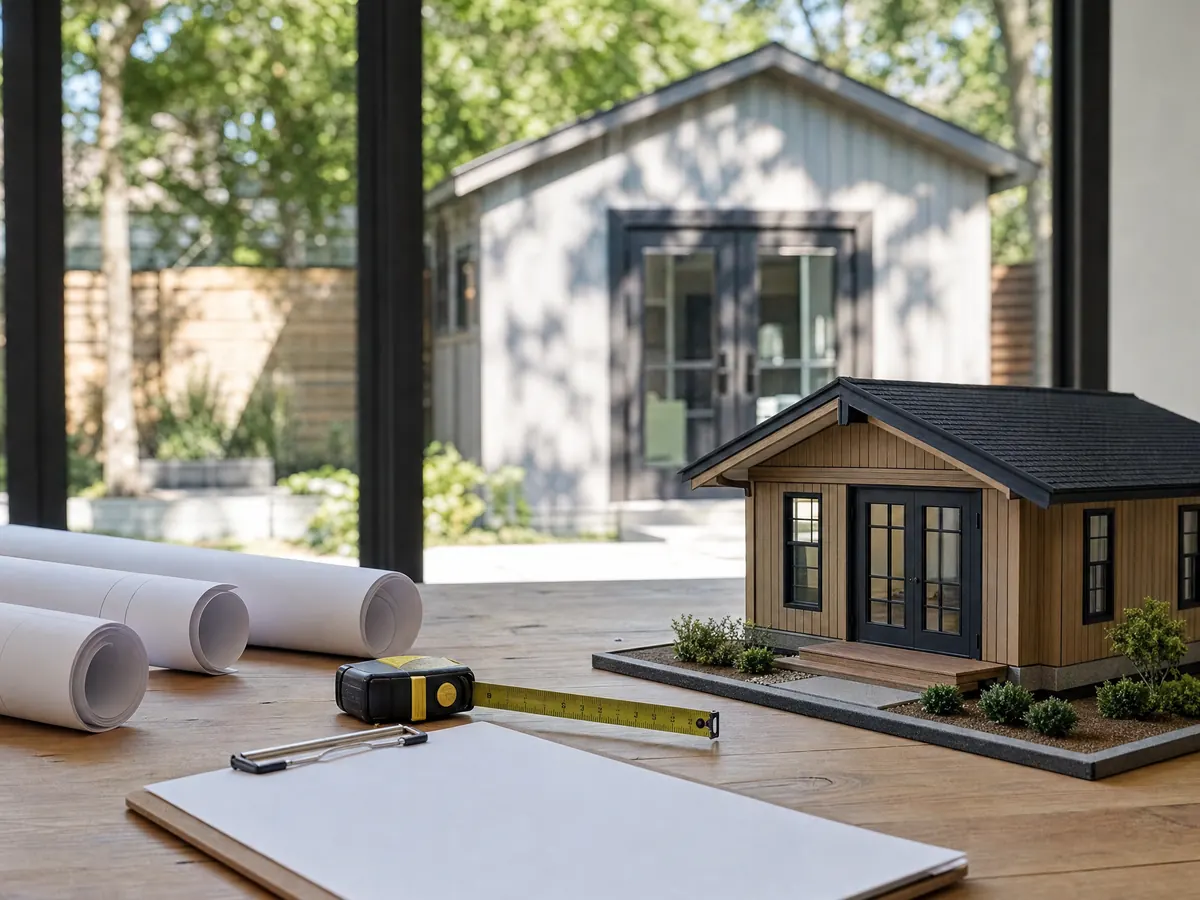
Build an ADU in Santa Ana: pre-approved plans, Accela and a paper rule that conflicts
Two City pages disagree, and a homeowner should know before paying for drawings. The pre-approved ADU submittal page says those projects may only be submitted over the counter, on paper, with a title report completed within six months. The Accela page says that since July 1, 2026 the City takes every plan and application electronically through the Accela Citizen Access portal and accepts no paper. We cannot tell which page is current, so we treat the submittal method as unconfirmed and call Planning before filing.
The City asks for a pre-submittal consultation at planning@santa-ana.org. To use the pre-approved plans the lot must have or be proposed for a single-family home, sit outside FEMA Flood Zone A and AE, stay out of French Park (SD-19), Downtown, Floral Park and Heninger Park (SD-40), and qualify for the grading permit exemption. Planning, Building and Safety, and Public Works review it, and approval can come in as little as a day.
State law sets the outer clock. Under Government Code 66317 the City has 15 business days to say whether an application is complete and 60 days after that to act, and silence means approval. Santa Ana school district fees are paid at the district, not at the counter.
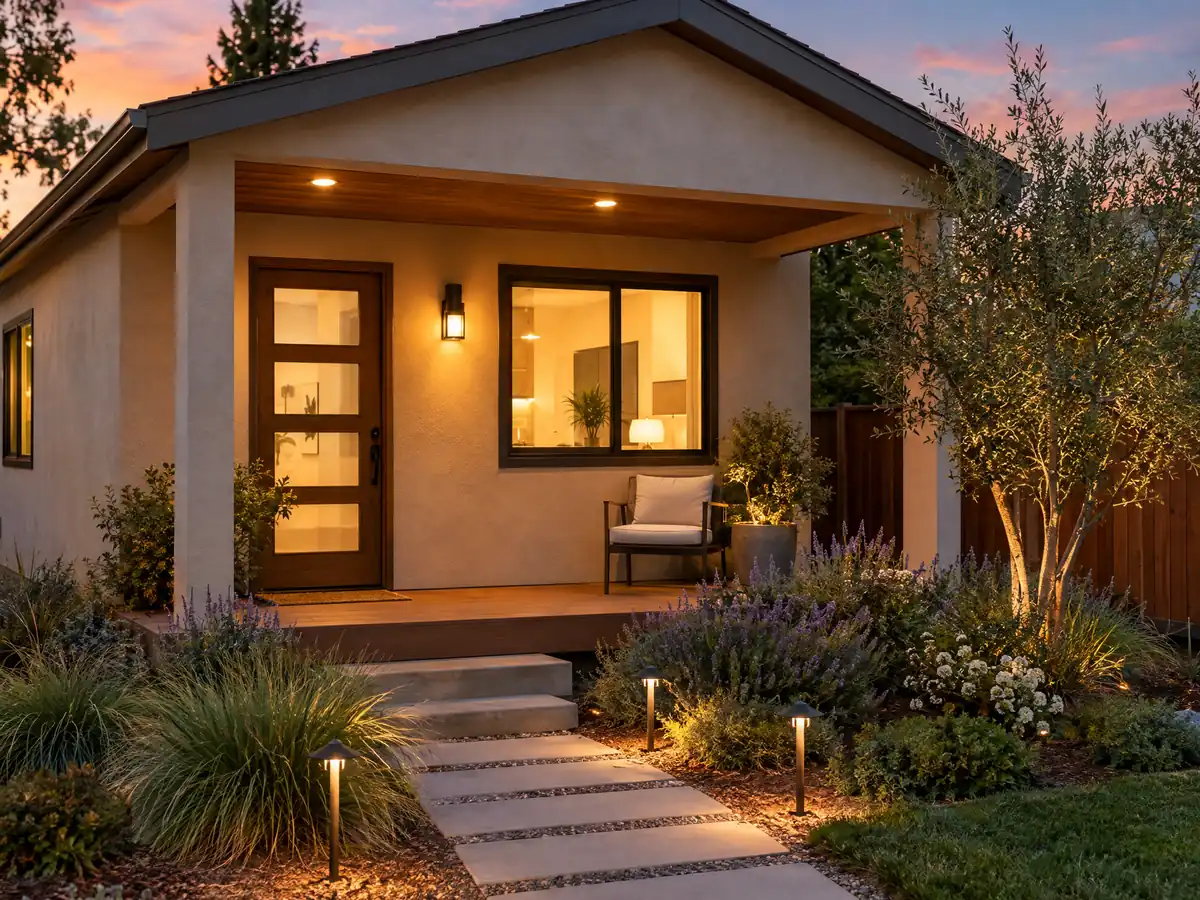
Can you build an ADU in Santa Ana? Zones, size caps, setbacks and height
Yes in zones that allow housing, which the City lists as R1, R2, R3, R4 and Specific Development or Specific Plan areas where homes are permitted. A single-family lot may have one ADU and one JADU. A detached ADU can reach 1,000 square feet, an attached one 1,000 square feet or half the main home, and an 800 square foot unit is always allowed. State law caps detached units at 1,200 and lets a city set a lower limit only if it stays at or above 850 square feet, or 1,000 with more than one bedroom.
Rear and side setbacks are 4 feet, with none for a conversion of an existing building, and the front yard follows the zone. A detached unit is held to 20 feet or two stories, an attached one follows the main building, and every ADU needs its own address, a full kitchen and a path from the street. In R1, the 20 foot rear yard and the limit of 35 percent of the rear yard for accessory buildings do not apply to ADUs, per the mirror's text of Sections 41-236 and 41-239.
Garage conversion ADU in Santa Ana: replacement parking and the one-space rule
Turning a garage into a unit is the cheapest route to an ADU, and the City does not require replacement parking when a garage is converted. The garage walls and slab are already there, so the setbacks do not apply either. Expect work on the slab, insulation, a window or egress opening, a kitchen and bath, and a separate address.
A new ADU needs one parking space unless an exemption applies: within a half mile of transit, inside an existing building, in a historic district, no on-street permit offered to the unit, a car share nearby, or a studio. A JADU needs none. We found no Santa Ana fee table we could read, so conversions are priced from scope, not from a City figure. Our garage conversion permit steps guide lists the sequence, though it was written for Los Angeles.
JADUs, owner occupancy and ADUs on Santa Ana apartment lots
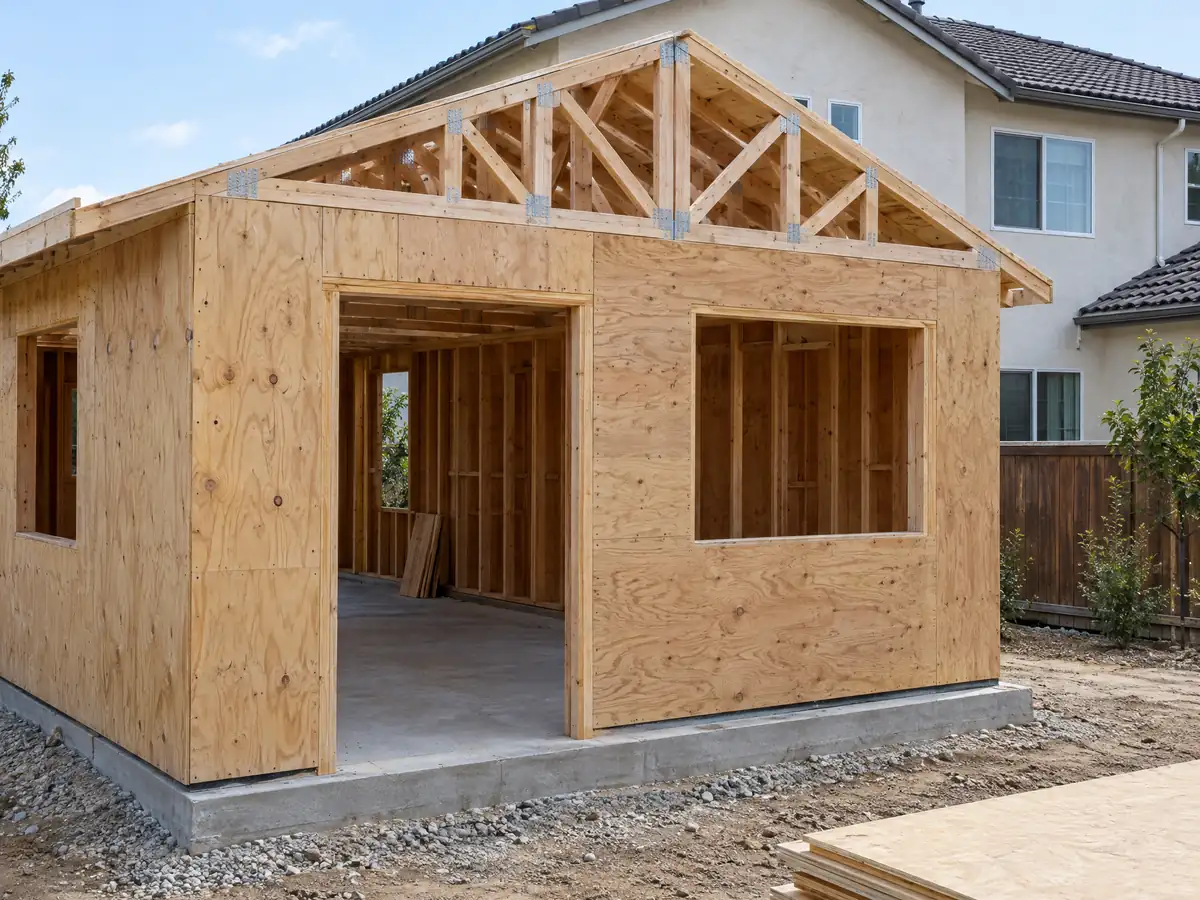
A junior ADU is capped at 500 square feet inside the home or an attached garage and needs an efficiency kitchen. The City's page requires owner occupancy in either the house or the JADU, with a restrictive covenant recorded when the permit issues, and an ADU carries no owner occupancy requirement. State law since January 1, 2026 asks for owner occupancy only where the JADU shares a bathroom with the main house (Government Code 66333, amended by AB 1154), so ask Planning which rule governs. Our ADU versus JADU guide compares the two.
Multifamily lots follow their own count: up to eight detached ADUs, not more than the number of existing units, plus conversions of non-habitable space such as storage or a garage up to 25 percent of the existing units. With 29,726 homes in buildings of five or more units, that rule may matter more here than in a suburb. ADUs may be rented for 30 days or more but not as short-term rentals.
Grading permits, soils reports and flood zones for a detached ADU in Santa Ana
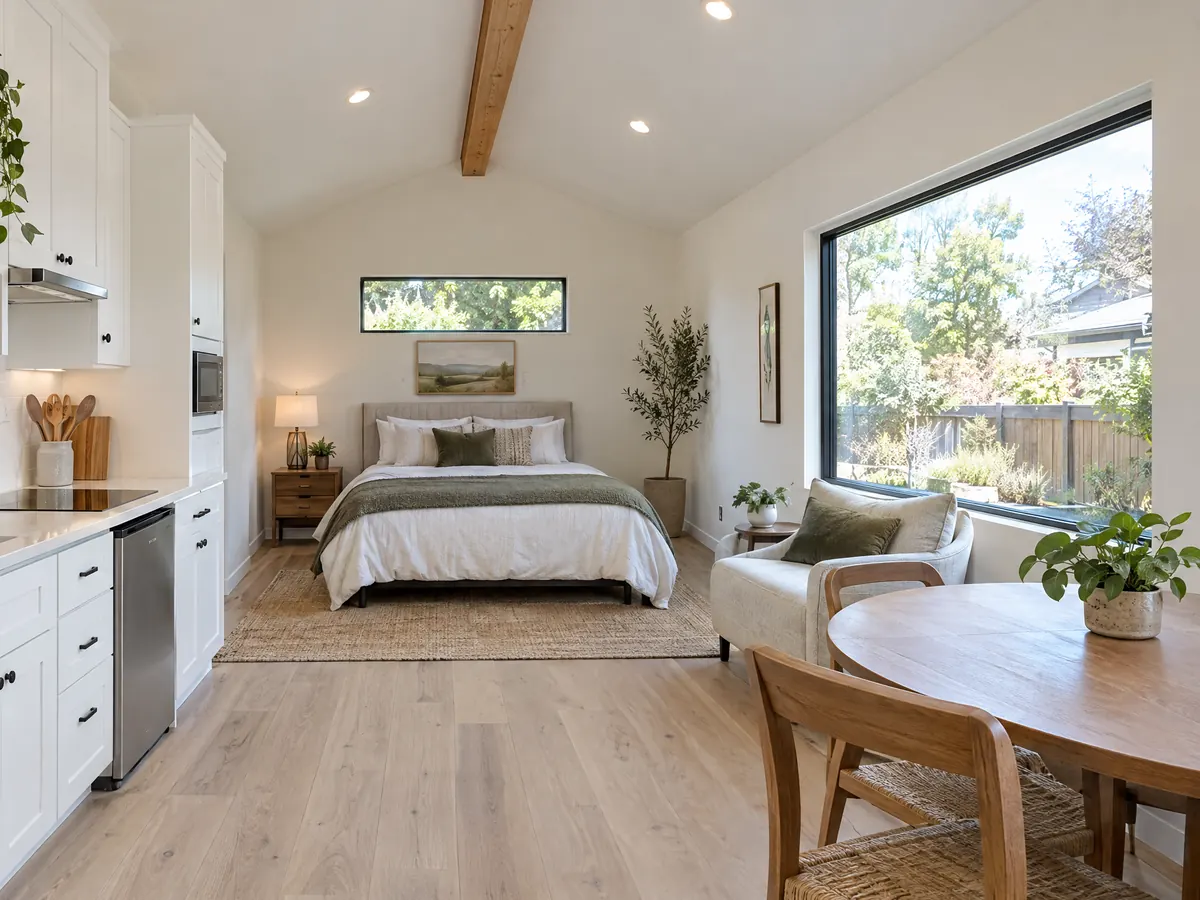
Santa Ana sits on flat ground, and the mostly channelized Santa Ana River on its west edge flooded several times in the 20th century, per Wikipedia. A new detached ADU needs a grading permit and a stamped precise grading plan unless the owner signs the PCC-20 waiver. It is open to detached units of 1,200 square feet or less outside Flood Zone A and AE, with under 50 cubic yards of cut or fill and drainage that runs away from buildings and neighbors. The owner takes full liability for site drainage.
The City's soils handout exempts one-story detached ADUs of 750 square feet or less that meet its minimum foundation rules, including an 18 inch foundation depth and a 4 inch slab with #4 bars at 18 inches each way. An Orange County alternate policy from September 22, 2021 waives a geotechnical report for one-story detached units up to 1,200 square feet in non-liquefaction areas, with 4 feet of overexcavation if the lot is in a liquefaction area and the unit is over 500 square feet.
OCFA review, utility connections and ADU fees in Santa Ana
Fire review runs through the Orange County Fire Authority, which Santa Ana joined on April 20, 2012. Its screening form for single-family and duplex projects asks whether the ADU is on a lot with a sprinklered house and whether the farthest point is more than 140 feet from the fire access road, and either answer can trigger sprinkler and residential site plan reviews. A driveway gate across a fire access road adds a gate review. State law does not require sprinklers in an ADU when the main house has none.
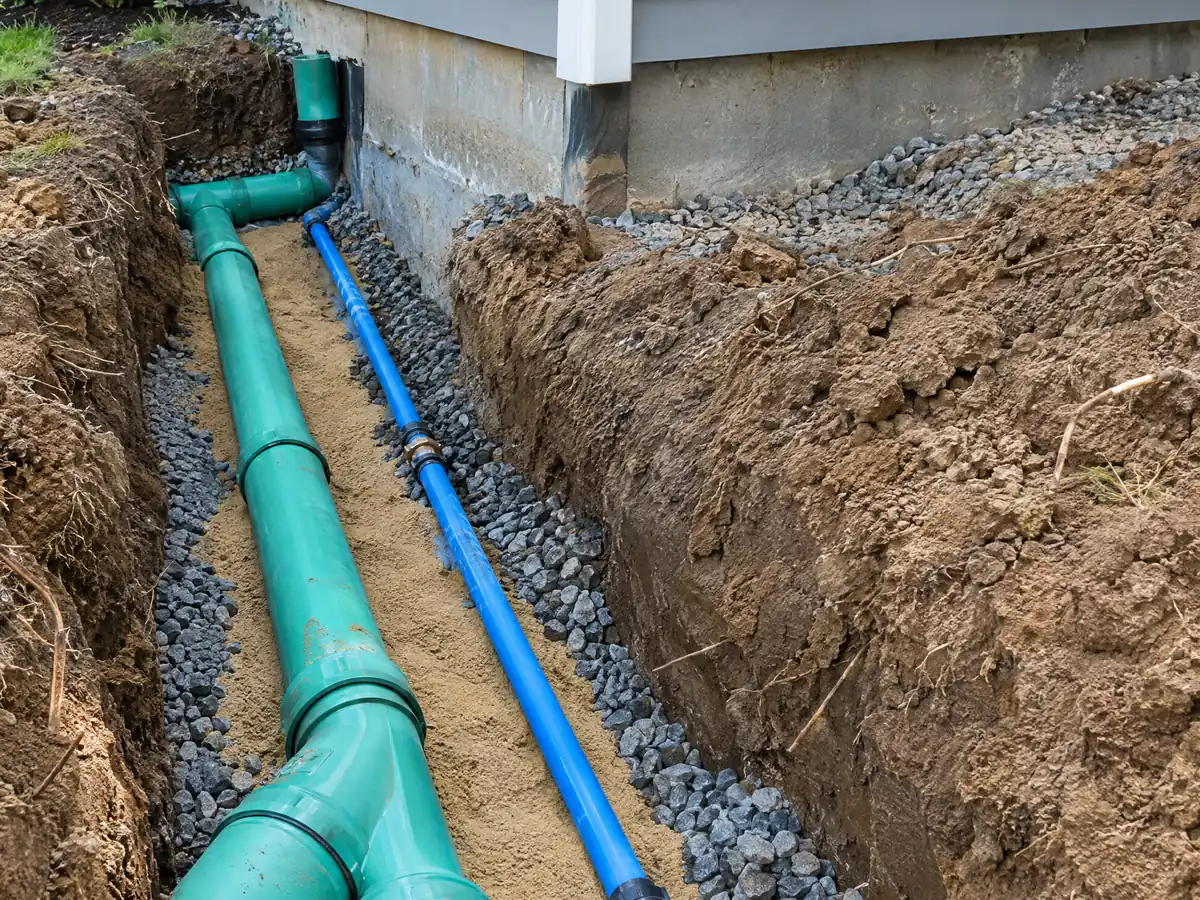
The City says application review, permit and development impact fees apply and tells owners to confirm amounts with each department, so we print none. State law bars an impact fee on an ADU of 750 square feet or less, and utility connection charges are separate from that exemption. A new detached ADU needs solar panels under the Energy Code, which a conversion does not. Trench length from the street to the unit moves the price.
ADUs behind older Santa Ana homes: historic districts, HOAs and a zoning code in transition
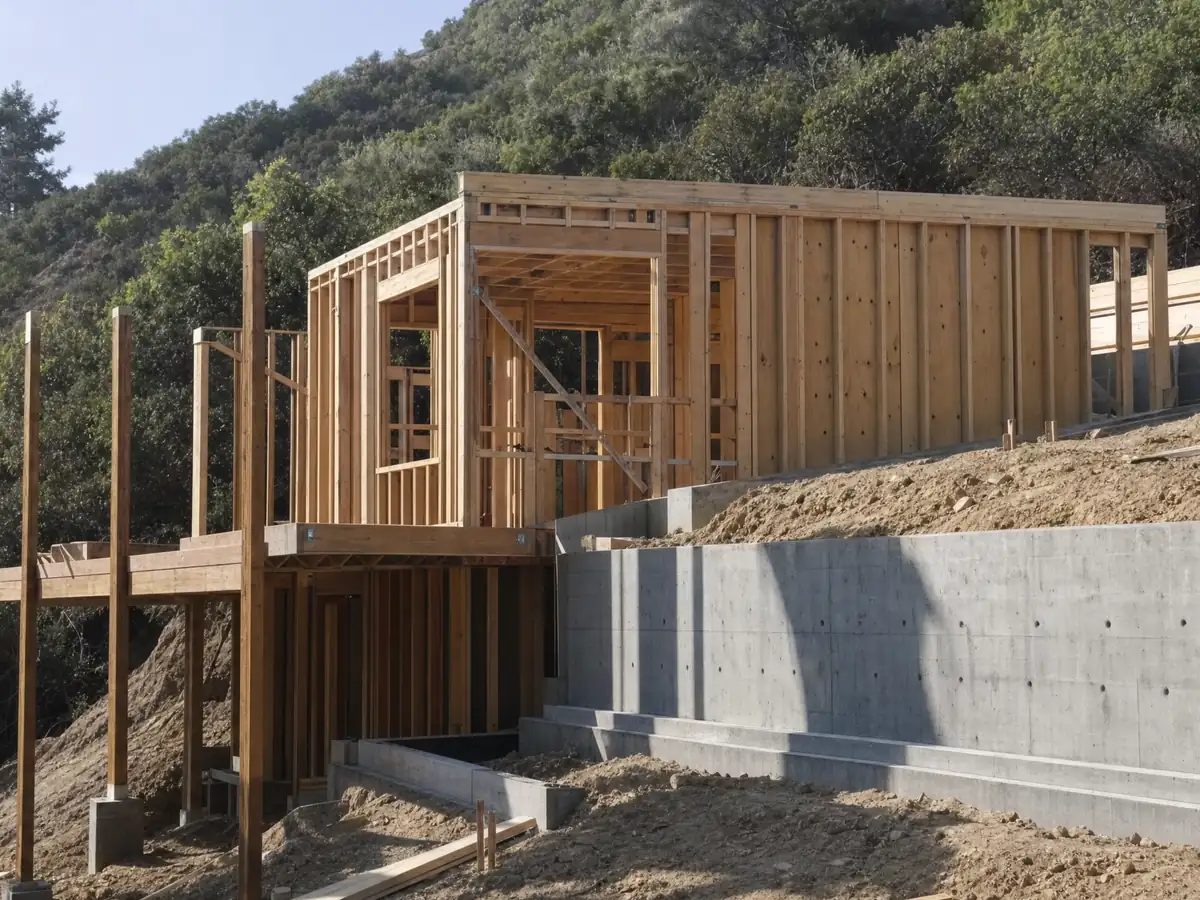
Downtown, French Park and Floral Park are National Register Districts, and SD-19 and SD-40 protect French Park and Heninger Park. Exterior alterations to a historic property need a Certificate of Appropriateness under the Secretary of the Interior's Standards, and these areas are shut out of the pre-approved route. A historic district also removes the parking requirement. A new unit behind a century-old house is a design review question as much as a zoning one.
The City says its Zoning Code dates to the 1960s, and it released a draft replacement map and code on July 23, 2026, with hearings still to come. Setbacks and uses may change, so confirm the current standards. HOAs generally cannot prohibit an ADU, and an ADU may be sold separately only when a qualified non-profit builds it under an affordable housing agreement. MDG Builders, CSLB #1040337, is the general contractor on an ADU: we draw it, file it and manage the licensed trades, and each firm's license is public on the CSLB site.
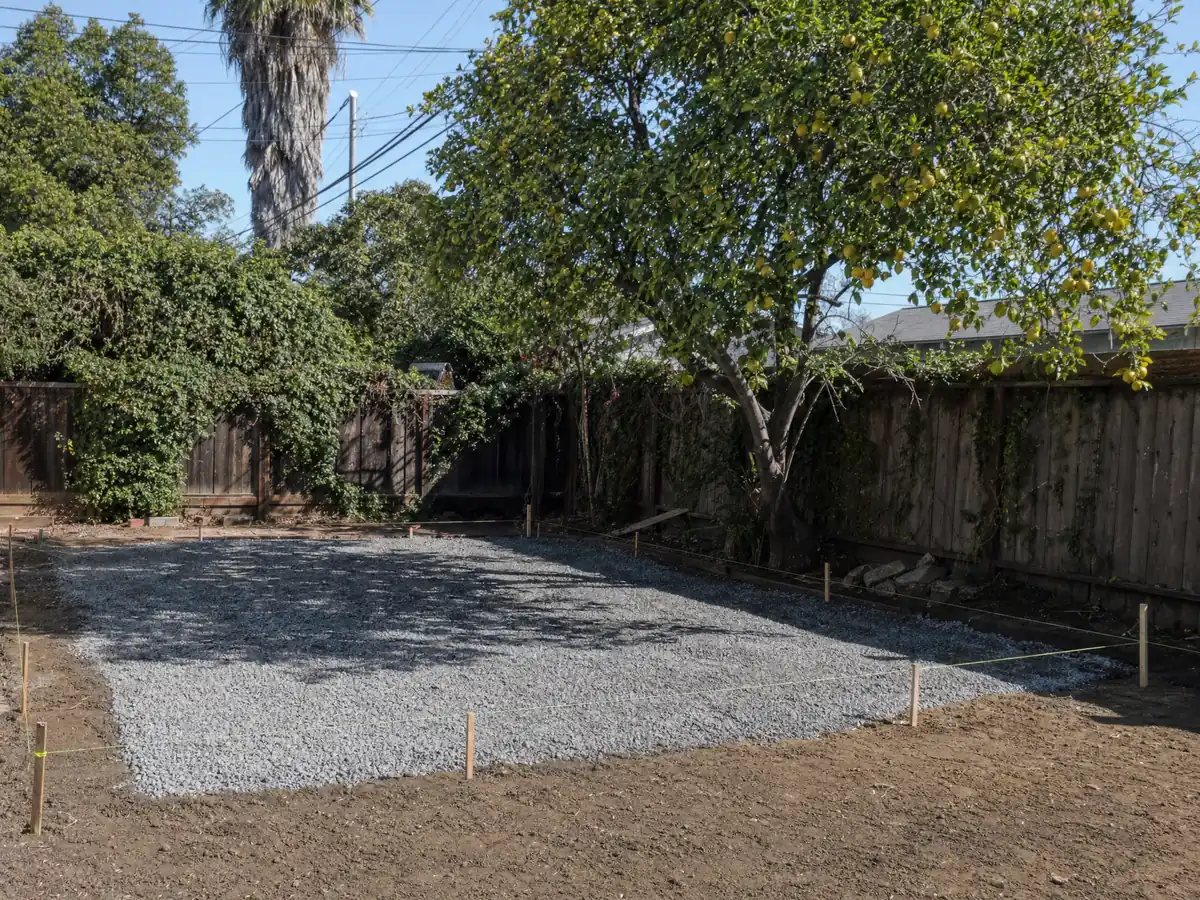
ADU photos from Santa Ana and nearby homes
ADU scenes tied to Santa Ana and the Orange County communities around it, from garage conversions and framing to finished studios. Tap a photo to enlarge it.
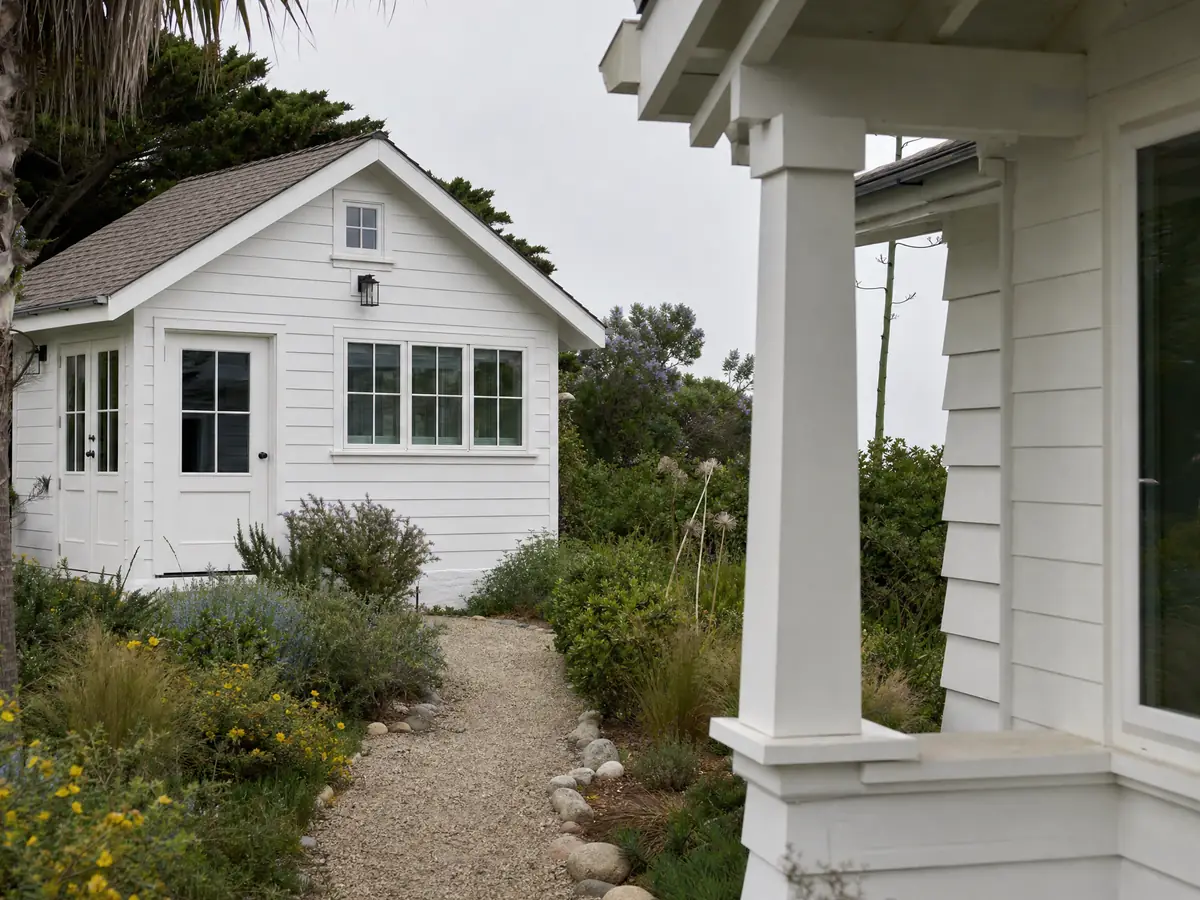
What adu construction costs around Santa Ana
Our ADU construction page prices a garage conversion to a studio or one-bedroom at roughly $100,000 to $200,000 and a new detached unit of 400 to 800 square feet at roughly $200,000 to $400,000. Three independent sources back that spread. A UC Berkeley survey of Los Angeles County owners who finished or applied for an ADU in 2018 and 2019 found a $100,000 median, with $90,000 for garage units and $180,000 for detached ones. The Terner Center's 2020 estimate for Los Angeles was $148,000. Remodeling magazine's 2025 Cost vs. Value report lists a $178,536 job cost for Los Angeles, of which 39.9 percent came back at resale. None of these is a Santa Ana quote, and we found no Orange County ADU survey. Fees and utility charges stay separate lines in a written proposal. The ADU cost guide covers what moves the price, and the license check guide shows how to verify any contractor. Compare ADU construction in Anaheim, Irvine and Los Angeles. A bath inside the unit is on our Santa Ana bathroom page, an attached addition on the Santa Ana room addition page, and the Santa Ana area page lists every trade we cover in the city.
| What it covers | Typical range |
|---|---|
| Garage conversion to a studio or one bedroom | $100,000 to $200,000 |
| New detached ADU, 400 to 800 sq ft | $200,000 to $400,000 |
| UC Berkeley survey, Los Angeles County median, 2018 and 2019 projects | $100,000 overall. $90,000 garage. $180,000 detached. |
| Terner Center and Berkeley CCI, 2020 | $148,000 Los Angeles estimate. $167,000 statewide average. |
| Remodeling Cost vs. Value 2025, Los Angeles | $178,536 job cost |
| Electrical and plumbing, Angi Los Angeles, January 2026 | Electrical $2,600 to $7,800. plumbing $3,900 to $10,400. |
| City permit and plan check fees | Not priced here |
Santa Ana ADU questions, answered
Can I build an ADU in Santa Ana?
Yes, on lots in zones that allow homes: R1, R2, R3, R4 and Specific Development areas where housing is permitted. A single-family lot can have one ADU and one JADU, and the unit must meet the standards in Section 41-194. The City's property search shows your zoning. Historic districts add design review, and flood zones limit the fast routes.
How do you build and permit an ADU in Santa Ana?
Check zoning, choose between the City's pre-approved plans and custom plans, then file through Accela, since the City says paper submittals ended July 1, 2026. The pre-approved page still describes paper filing, so confirm the method with Planning first. State law gives the City 60 days to act on a complete application, after a 15 business day completeness check.
How big can an ADU be in California?
State law allows detached units up to 1,200 square feet and attached units up to half the main house, and cities may set lower caps but not below 850 square feet, or 1,000 with more than one bedroom. Santa Ana's page sets detached units at 1,000 square feet and always allows an 800 square foot unit.
How much does it cost to build an ADU in California?
Roughly $100,000 to $200,000 for a garage conversion and $200,000 to $400,000 for a new detached unit of 400 to 800 square feet. The ranges rest on Los Angeles County surveys and a 2025 Cost vs. Value figure, since no Santa Ana survey exists, and fees are extra. A written proposal sets the price.
Do I need to provide parking for my ADU?
Usually one space for a new ADU, but not within a half mile of transit, inside an existing building, in a historic district, near a car share, or for a studio, and none for a JADU. Converting a garage needs no replacement parking in Santa Ana. Check your lot against the City's list before assuming an exemption.
What is the difference between an ADU and a JADU?
An ADU is a full second home with its own kitchen, bath and address, up to 1,000 square feet detached in Santa Ana. A JADU is a unit of up to 500 square feet inside the main house or attached garage with an efficiency kitchen. The City asks for owner occupancy on a JADU, and state law may narrow that rule.
Can I convert my garage to an ADU in Santa Ana?
Yes, and the City does not require replacement parking for the garage. Setbacks do not apply to a conversion of an existing building, and the project may qualify for over-the-counter review if the lot is outside Flood Zone A and AE and not in a historic district. The unit still needs a kitchen, bath and separate address.
Can I sell my ADU separately from the main house?
Generally no. Santa Ana allows a separate sale only when a qualified non-profit builds the ADU under an affordable housing agreement, which matches the exceptions in state law. A city-adopted condominium ordinance is the other state route, and we did not research whether Santa Ana has adopted one. Ask Planning before promising a buyer.
Can I use Santa Ana's pre-approved ADU plans?
If the lot has or will have a single-family home, sits outside Flood Zone A and AE, is outside French Park, Downtown, Floral Park and Heninger Park, and qualifies for the grading exemption. Approval can take as little as one day, but the submittal method conflicts between two City pages, so confirm it first.
Tell us about your Santa Ana ADU
Tell us your neighborhood, whether the lot is single-family or multifamily, whether you want a garage conversion or a new unit, and whether the house is in a historic district, and the first visit will start from the filing question.