
ADU Constructionin Orange, CA
You can build an ADU in the city of Orange: Chapter 17.29 of the municipal code approves ADU and JADU applications ministerially, without a hearing, and the City must act within 60 days of a complete application. A detached unit of 800 square feet is always allowed, with setbacks of four feet or less. Historic districts add garage rules.
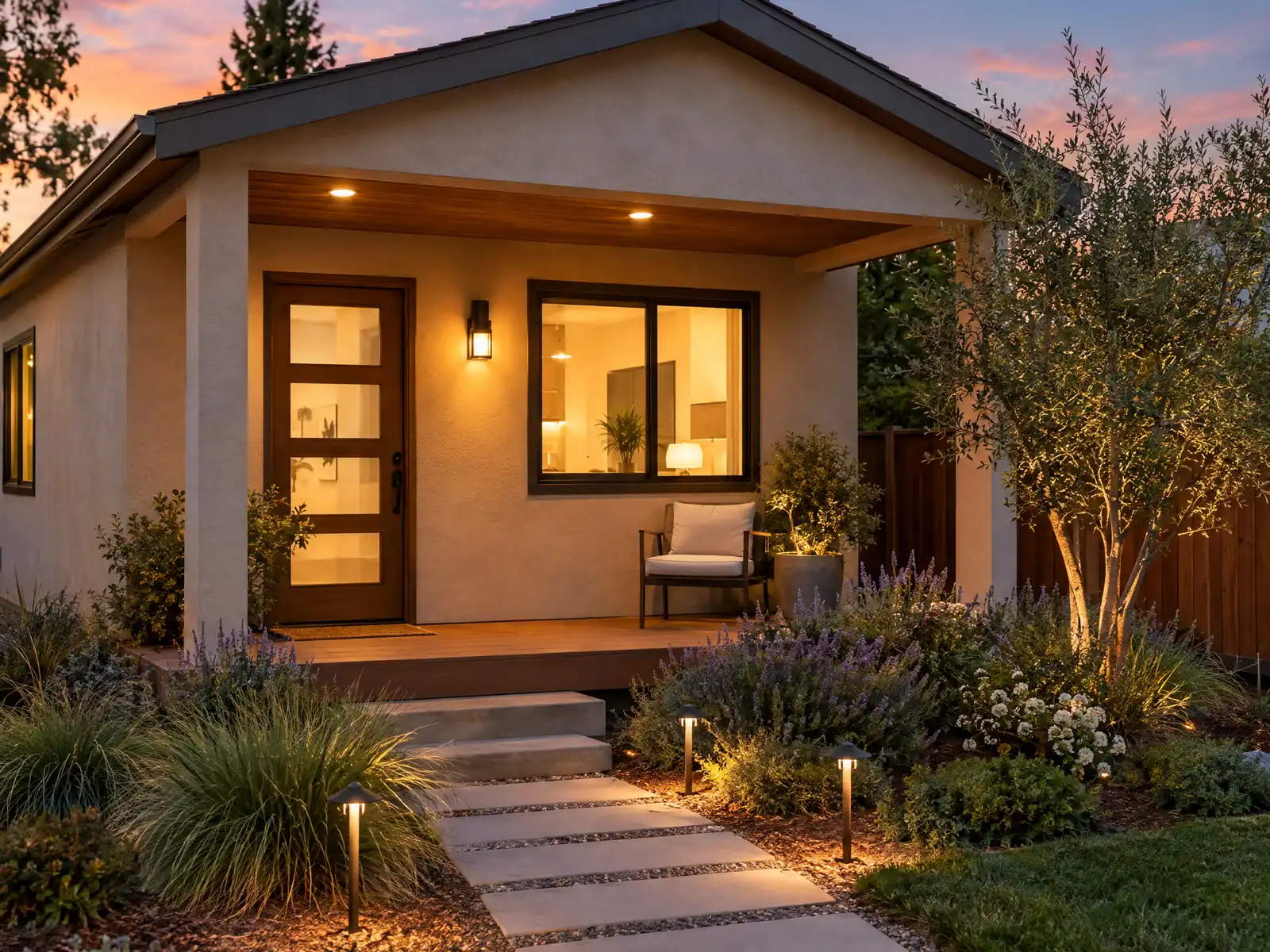
Orange is a plaza town that grew into a tract city. The Census Bureau's 2024 one-year estimates count 46,126 homes, and 54.4 percent of them, 25,106, are single-family detached houses, the lot type state ADU law was written around. Another 5,041 are attached homes. The 1960s are the largest building decade at 26.2 percent, the townsite dates to 1869 through 1873, and the median owner-occupied home is worth $1,069,700, so a backyard unit here sits behind a house that is usually mid-century and often expensive.
This page covers what Chapter 17.29 allows, how historic districts change a garage conversion, the design standards, parking and sprinklers, fire and flood overlays, fees, and how a job runs. It is about the city of Orange, not Orange County, and the City's website blocks automated tools, so we read none of its pages. The code text comes from GoCodebook, a third-party mirror of the Orange ADU chapter, so confirm anything that matters with Building and Safety Services. Price ranges and phases are on our ADU construction page.
City of Orange Planning and Building rules that apply to ADU construction
Where adu construction permits come from in Orange: City of Orange Community Development Department, Building and Safety Services Division.
- Orange's ADU chapter (17.29) says ADU and JADU applications are approved ministerially, without a hearing, if they meet the chapter, and the City must act within 60 days of a complete application. The applicant files a Community Development Department ADU Application with a fee set at the Administrative Design Review fee, then submits a building permit application for plan check. A deed restriction is required only for JADUs, not ADUs.
- Orange limits a JADU to 150 to 500 square feet inside an existing or proposed single-family home or its attached garage, and an ADU to 850 square feet with one bedroom or fewer or 1,000 square feet with two or more bedrooms, except inside existing living area or an existing detached accessory structure. An ADU over 800 square feet may not exceed 50 percent of the primary home, but 800 square feet is always allowed, and a conversion is limited to the existing footprint plus up to 150 square feet for ingress and egress.
- Orange requires side and rear setbacks of no more than four feet for a new ADU of 800 square feet or less, no setback for an ADU built in the same location and dimensions as an existing structure, and the zoning district setbacks for an ADU over 800 square feet. Height limits are 16 feet for a detached ADU, 18 feet within one-half mile of a major transit stop or for a detached ADU at a multi-story multifamily lot, and 25 feet or the zone limit for an attached ADU, which may not exceed two stories.
- Orange's objective design standards for ADUs (17.29.090) require design elements and detailing to wrap the whole structure, at least two building materials on each frontage with any one covering at least 20 percent, at least two exterior colors with primary colors used only as accents, trim of at least two inches around every window and door, no facade plane longer than 20 feet without a break, and roof form and pitch that match the principal residence on new construction.
- Orange requires one parking space per ADU or per bedroom, whichever is less, but none within one-half mile walking distance of transit, inside a historic district, when the ADU is part of the primary residence or an existing accessory structure, or where on-street permits are not offered. Garage spaces demolished or converted for an ADU do not need replacement, ADUs under 750 square feet pay no impact fees, and rentals must be longer than 30 days.
- In an Orange historic district or on an individually listed historic property, an ADU is subject only to the applicable objective design standards for that property or district to the extent state law allows, and garage doors on contributing structures must be preserved in place but made inoperable. Non-contributing garages with non-historic doors can be changed only after a historical assessment acceptable to the Community Development Director confirms they are not eligible as contributing.
- Orange's SB 9 rules (17.14.060) guarantee an 800 square foot unit in an R-1 zone with Director-approved waivers when standards would otherwise block it, set an R-1 SB 9 table of 20 foot front, 4 foot side and rear setbacks and a 16 foot, one story height limit, allow one bedroom per 500 square feet of unit area with direct exterior access to bedrooms barred except for the largest, and apply the ordinary Title 17 rules to garages and accessory structures.
- Orange's ADU chapter requires no sprinklers in an ADU if the primary residence does not need them, but building an ADU can trigger sprinklers in the main house and the ADU.
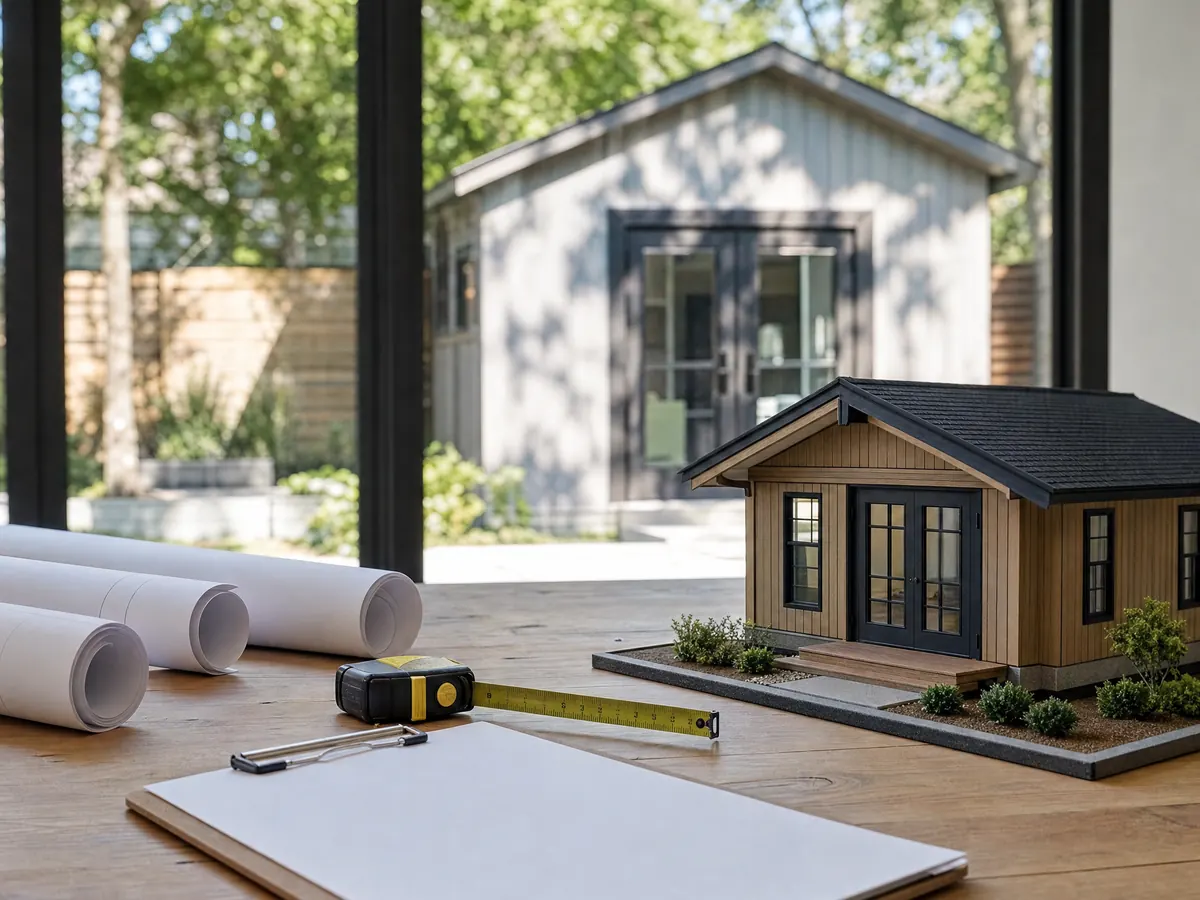
Building an ADU in Old Towne Orange or an Eichler tract: historic garages and objective standards
In an Orange historic district or on an individually listed historic property, an ADU is subject only to the objective design standards for that property or district, to the extent state law allows. The City's code adds a rule that surprises owners: garage doors on contributing structures must be kept in place but made inoperable. A non-contributing garage with non-historic doors can be changed only after a historical assessment, acceptable to the Community Development Director, confirms it is not eligible as contributing.
Old Towne's one square mile holds more than 1,300 vintage buildings, mostly built from about 1874 to 1940, and the code treats the pre-1940 buildings in the City's Historic Building Inventory as contributing. A detached garage behind a 1920s bungalow can therefore count as a contributing structure, and a conversion there starts with the assessment, not the drawings. We could not read the Old Towne standards, so we cannot say how they treat a new detached unit.
The three Eichler tracts, Fairhaven, Fairmeadow and Fairhills, are local historic districts whose standards review changes visible from the street. A backyard unit behind a tract house may be out of view, but ask Planning whether the standards reach it before you pay for plans.
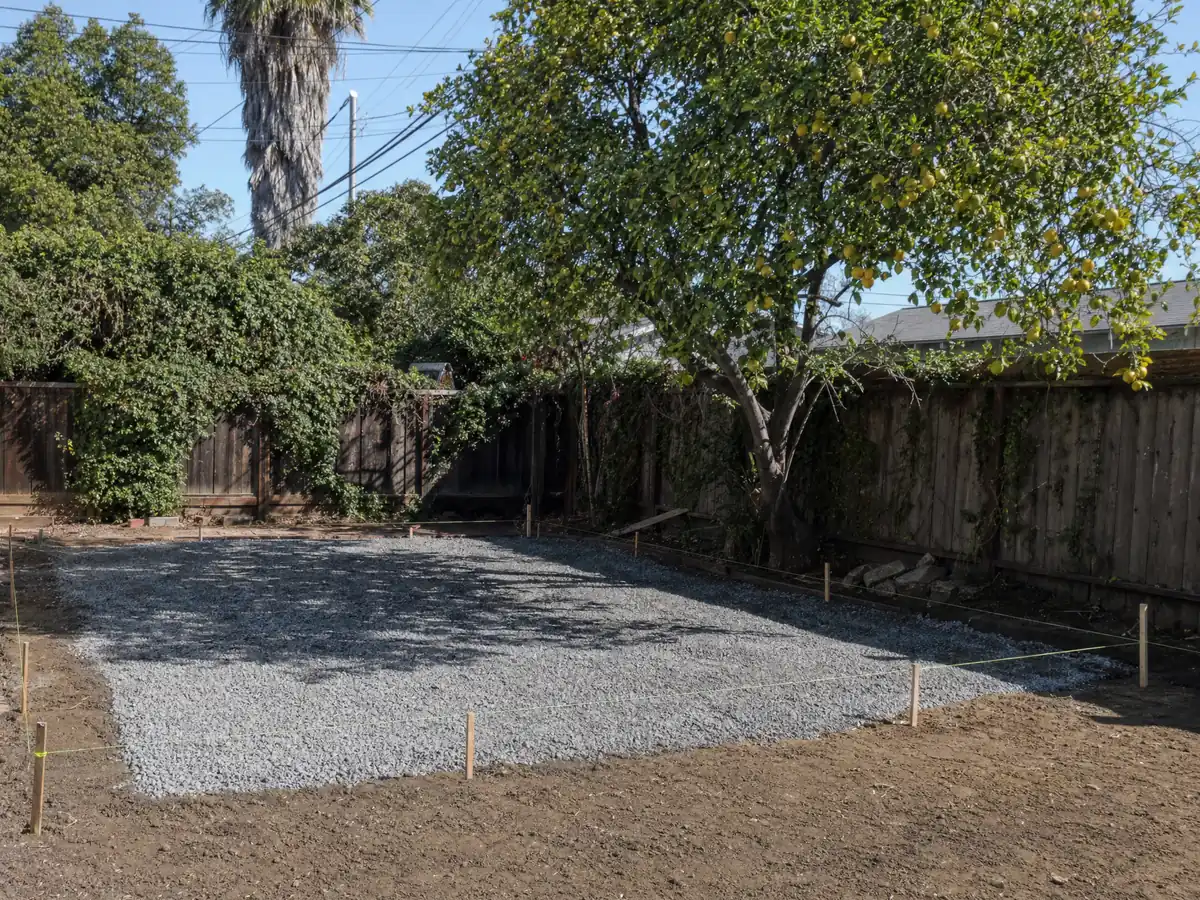
How big can an ADU be in Orange? Square feet, setbacks and height under Chapter 17.29
Orange limits a JADU to 150 to 500 square feet inside an existing or proposed single-family home or its attached garage, and an ADU to 850 square feet with one bedroom or fewer or 1,000 square feet with two or more, except inside existing living area or an existing detached accessory structure. An ADU over 800 square feet may not exceed 50 percent of the main house, but 800 square feet is always allowed. A conversion is held to the existing footprint plus up to 150 square feet for entry and exit.
A new unit of 800 square feet or less needs side and rear setbacks of no more than four feet, a unit rebuilt where a structure stood needs none, and a larger unit follows its zone. Height tops out at 16 feet for a detached unit, 18 feet within one-half mile of a major transit stop or for a detached unit on a multi-story multifamily lot, and 25 feet or the zone limit for an attached unit, which may not exceed two stories.
State law sets the floor under these numbers. Government Code sections 66310 to 66342 allow no minimum lot size and bar a local cap below 850 square feet, or 1,000 for more than one bedroom, so Orange sits at the state minimum. In an R-1 zone the City's SB 9 rules also guarantee an 800 square foot unit, with 20 foot front and 4 foot side and rear setbacks and a one story, 16 foot height limit.
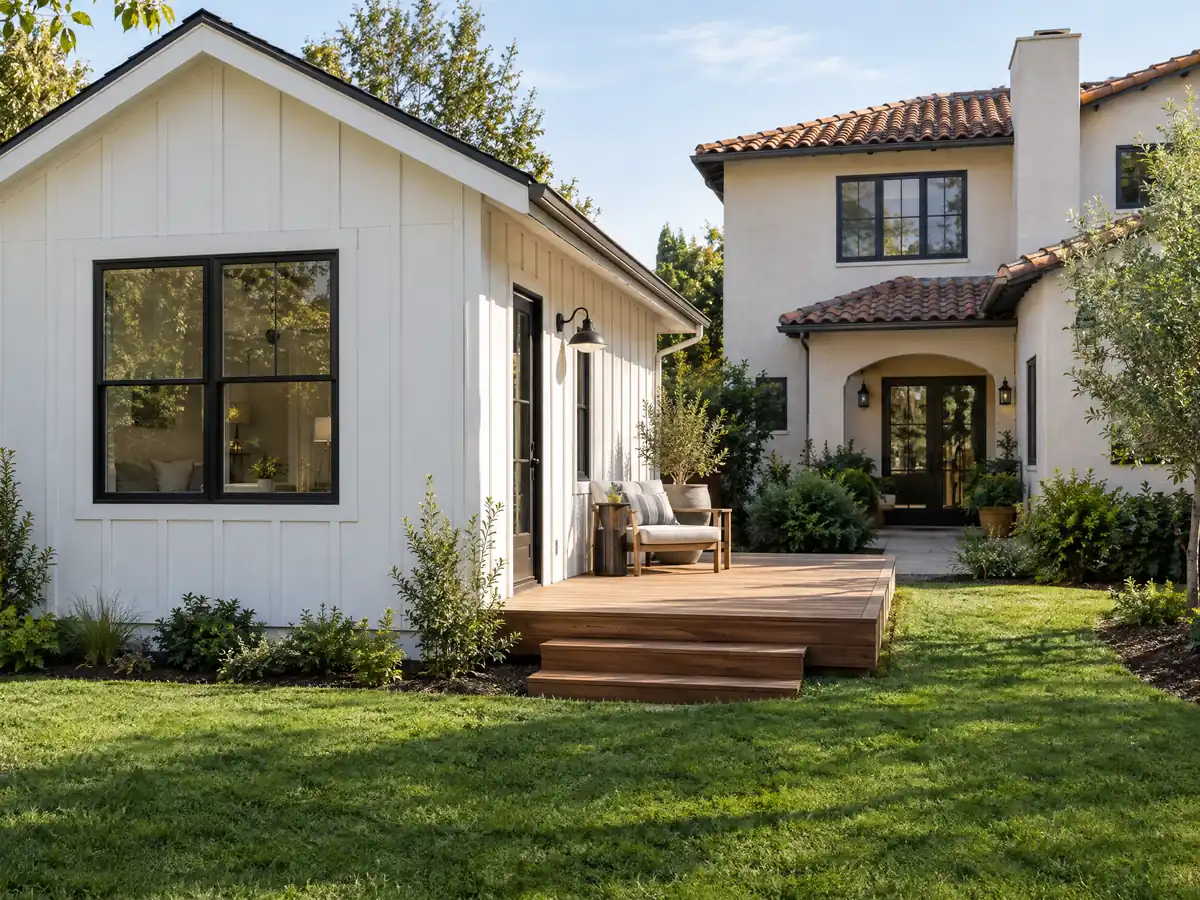
Orange's ADU design standards: two materials, two colors and two-inch trim
Section 17.29.090 sets objective design standards that a drawing set has to meet line by line. Design elements and detailing must wrap the whole structure. Each frontage needs at least two building materials, with any one covering at least 20 percent, and at least two exterior colors, with primary colors used only as accents. Trim of at least two inches goes around every window and door, and no facade plane may run longer than 20 feet without a break.
New construction must also match the roof form and pitch of the main house, which settles the roof plan before the floor plan: a gabled house gets a gabled unit. Objective standards are the point of the state's approach, since a reviewer checks measurable items and cannot hold a hearing. If an application is denied, state law requires a written list of every defect.
We ask the architect to mark each standard on the elevations before submittal, so the plan check comments come back about structure, not style.
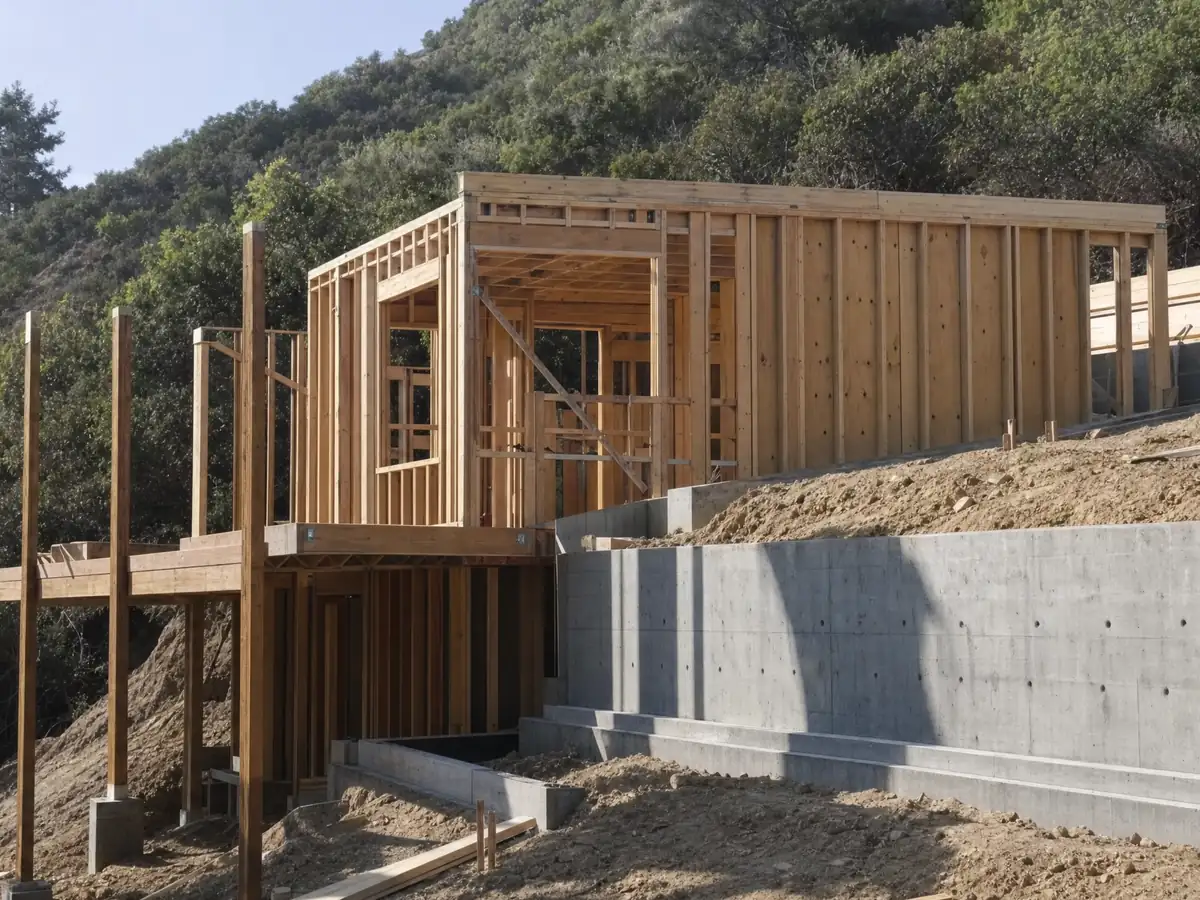
Garage conversion ADU in Orange: parking, the 12 by 20 foot driveway rule and sprinklers
Orange requires one parking space per ADU or per bedroom, whichever is less, but none within one-half mile walking distance of transit, inside a historic district, when the ADU is part of the main house or an existing accessory structure, or where on-street permits are not offered. Garage spaces demolished or converted for an ADU need no replacement. That matches state law, so a garage conversion should not add a parking bill.
The house keeps its own rule: a single-family home must provide two enclosed garage spaces up to four bedrooms, reached by a driveway 12 feet wide and 20 feet long. Ask Planning to confirm in writing that the ADU chapter's no-replacement line controls when the garage itself becomes the unit. The driveway then carries all the parking, and the cap of 60 percent paving in a front yard still applies.
Sprinklers need a careful read. Orange's ADU chapter says an ADU needs none if the main house does not, yet also says an ADU can trigger sprinklers in the main house and the unit. State law says an ADU cannot trigger them in the main house, under Government Code sections 66314 and 66323. We treat that as a conflict to settle with the City before pricing, since sprinkler work moves the budget.
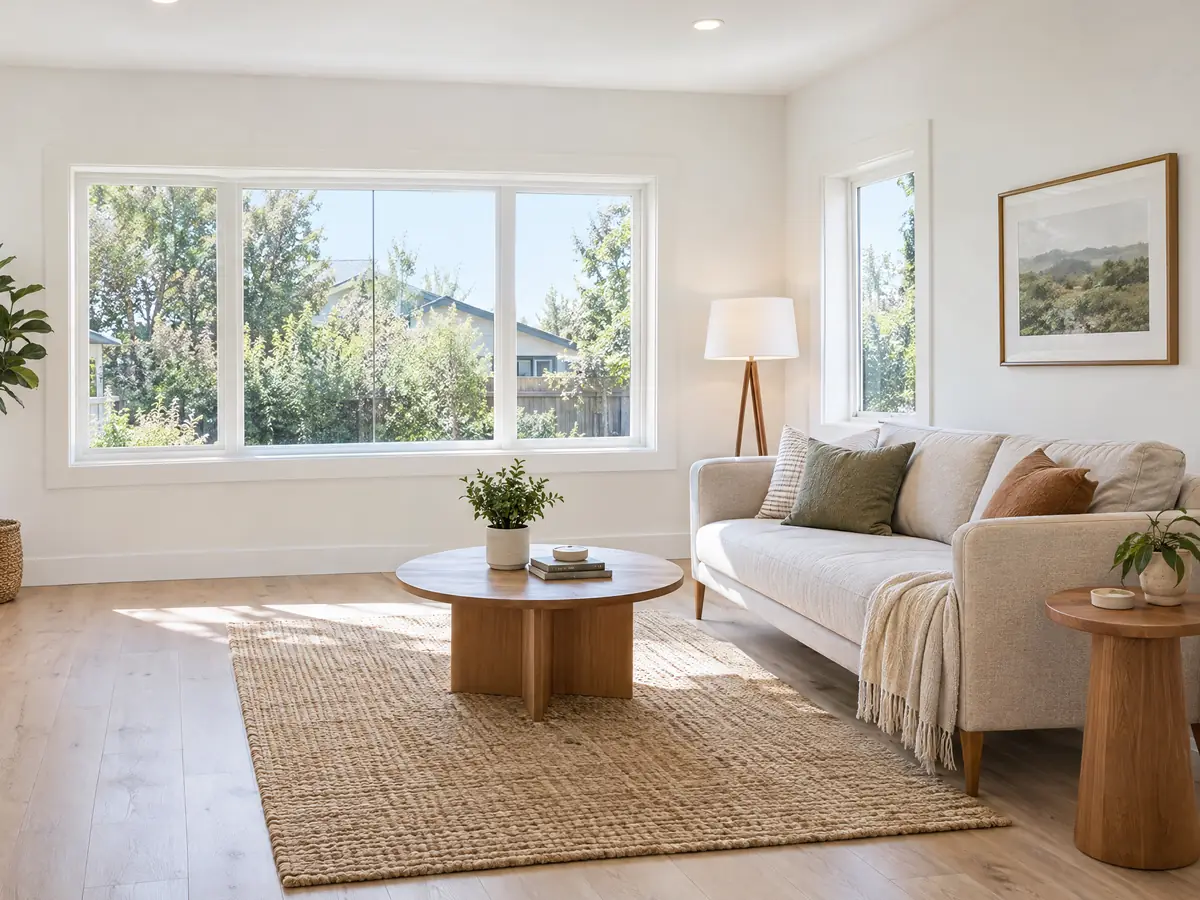
Fire hazard zones, flood overlays and a detached ADU in Orange
Orange adopted the State Fire Marshal's recommended 2025 Local Responsibility Area map by Ordinance 07-25, and Municipal Code 15.36.040 records adoption on May 27, 2025. The legend carries Very High, High and Moderate tiers, the map is an image, and we cannot tell you which streets fall in which tier, so read your parcel on the City's fire hazard severity zone map. New buildings and their accessory buildings in a designated zone follow the City's Wildland-Urban Interface Code, Chapter 15.31, with the Orange City Fire Department as code official.
Flood is the second overlay. The FP-1 floodway and FP-2 flood plain overlays and the Flood Damage Prevention chapter require a development permit before building in a mapped flood area, and a new or substantially improved building needs its lowest floor at least one foot above base flood elevation plus freeboard. The Residential Code table carries a note saying the City has no flood hazard zones, which conflicts with those chapters, so we follow the flood chapters and ask the City Engineer, the Floodplain Administrator.
Parts of El Modena and Orange Park Acres lie outside the city limits according to Wikipedia, and a lot there answers to the County of Orange, not this page. The same table lists Seismic Design Category D 2 or E, a 110 mph basic wind speed and a Very Heavy termite damage rating, so structural drawings and a termite plan belong in the first set.
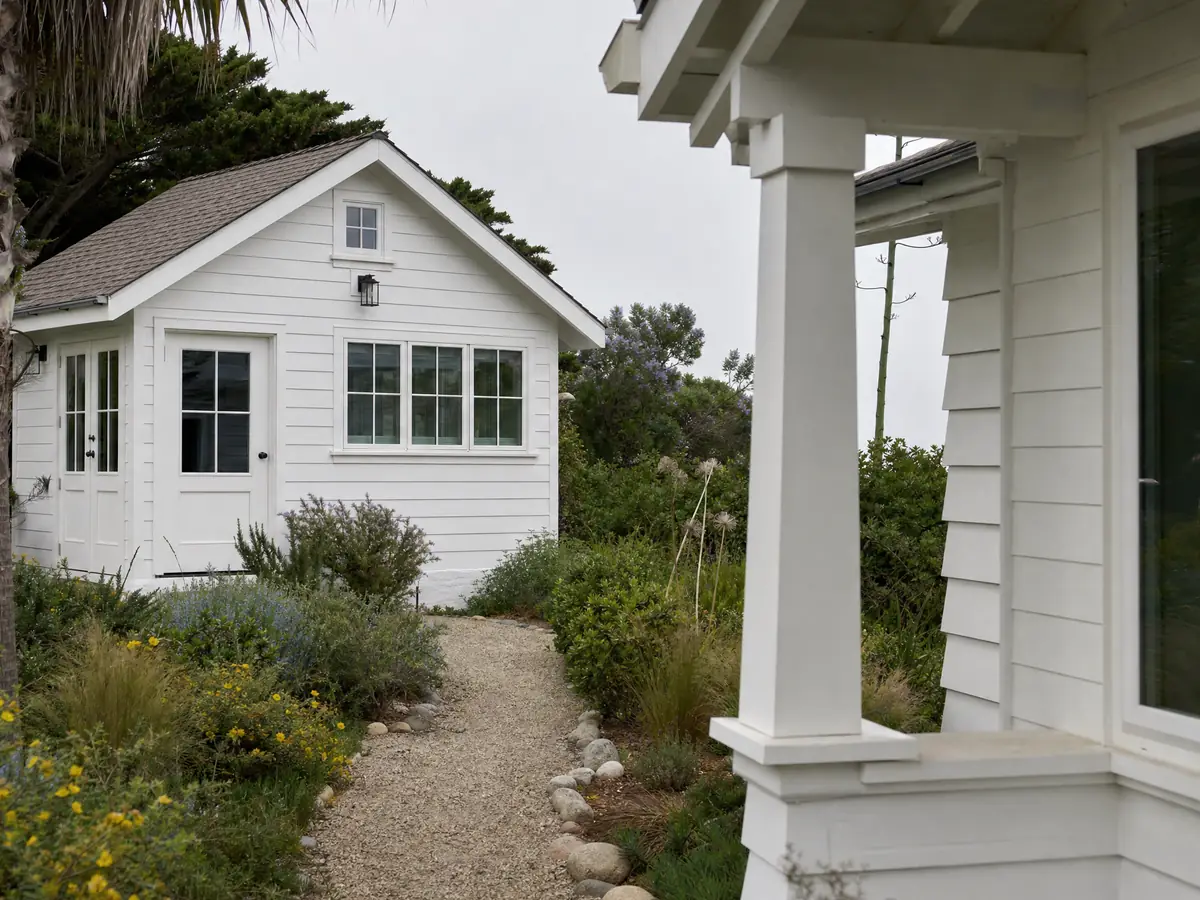
ADU fees, impact fees under 750 square feet and utility connections in Orange
The City asks for a Community Development Department ADU application with a fee set at the Administrative Design Review fee, then a building permit application for plan check. We did not read the fee schedule, so no amount appears here. Orange's chapter says ADUs under 750 square feet pay no impact fees, which tracks Government Code section 66311.5, and above that size fees must be proportional to the main house. Utility connection and capacity charges are a separate matter.
A converted unit cannot be forced to take a new utility connection, and a unit under 500 square feet counts as adding no assessable space for school fees. According to the state housing department's handbook, a newly built detached ADU must carry solar panels under the Energy Code, while a conversion or an attached addition need not. Lenders such as FHA, Freddie Mac and Fannie Mae can count ADU rental income, and the CalHFA grant of up to $40,000 had run out of funds when that handbook was written.
Rentals must run longer than 30 days, and a deed restriction is required only for a JADU. The Board of Equalization reassesses only the new portion of a building, at the market value it adds. State law bars selling an ADU apart from the house except through a qualified nonprofit buyer program or a city condominium ordinance.
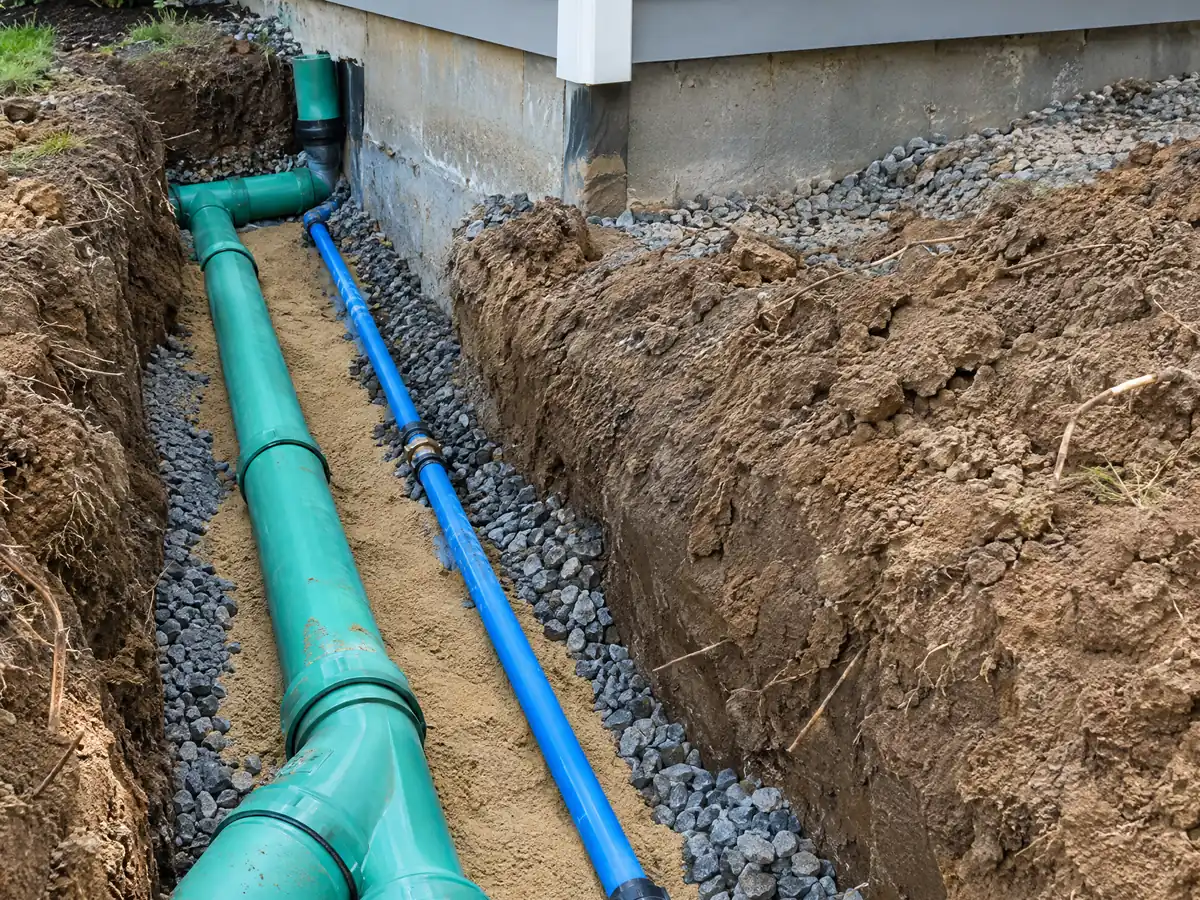
How to build an ADU in Orange from application to final inspection
Orange's chapter approves a qualifying application ministerially, without a hearing, and the City must act within 60 days of a complete one. State law adds a written completeness answer within 15 business days and a deemed approval if the 60 days pass, under Government Code section 66317 as amended effective January 1, 2026. We could not read the City's own ADU page or its filing portal, so confirm how to submit with Building and Safety Services.
MDG Builders, CSLB #1040337, is the general contractor on an ADU: we design the unit, assemble the packet and run the schedule, while licensed firms pour, frame, plumb and wire it. Our planning frame is 3 to 5 months of construction for a garage and 5 to 9 months for a detached unit. Construction noise is held to the exterior standards outside 7 a.m. to 8 p.m., or 9 a.m. to 8 p.m. on Sundays, and 65 percent of debris must be diverted from the landfill.
Since October 10, 2025, a certificate of occupancy for an ADU may not come ahead of the main house's, except in emergency-declared counties. On a lot with a house that rarely matters, and on a rebuild it can. If you are still choosing between unit types, start with the ADU versus JADU guide.
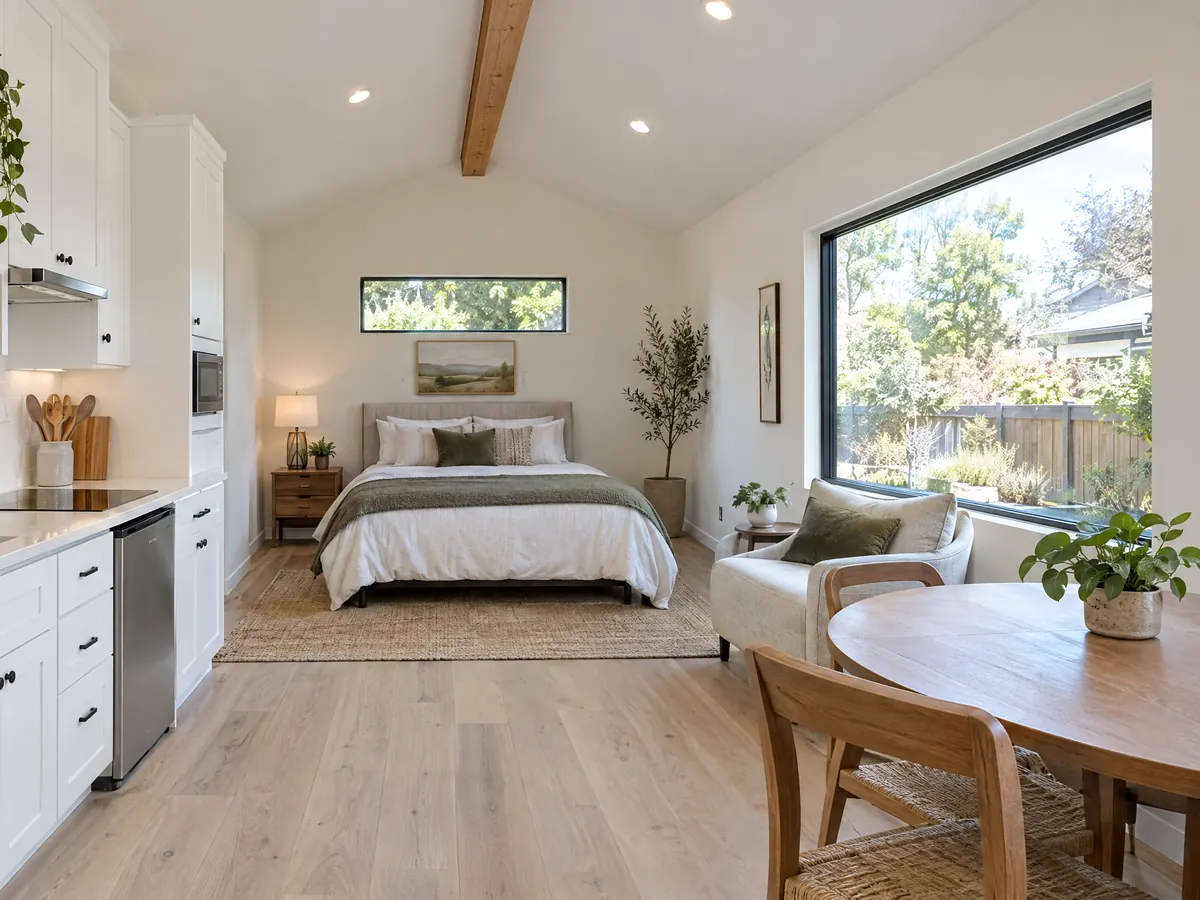
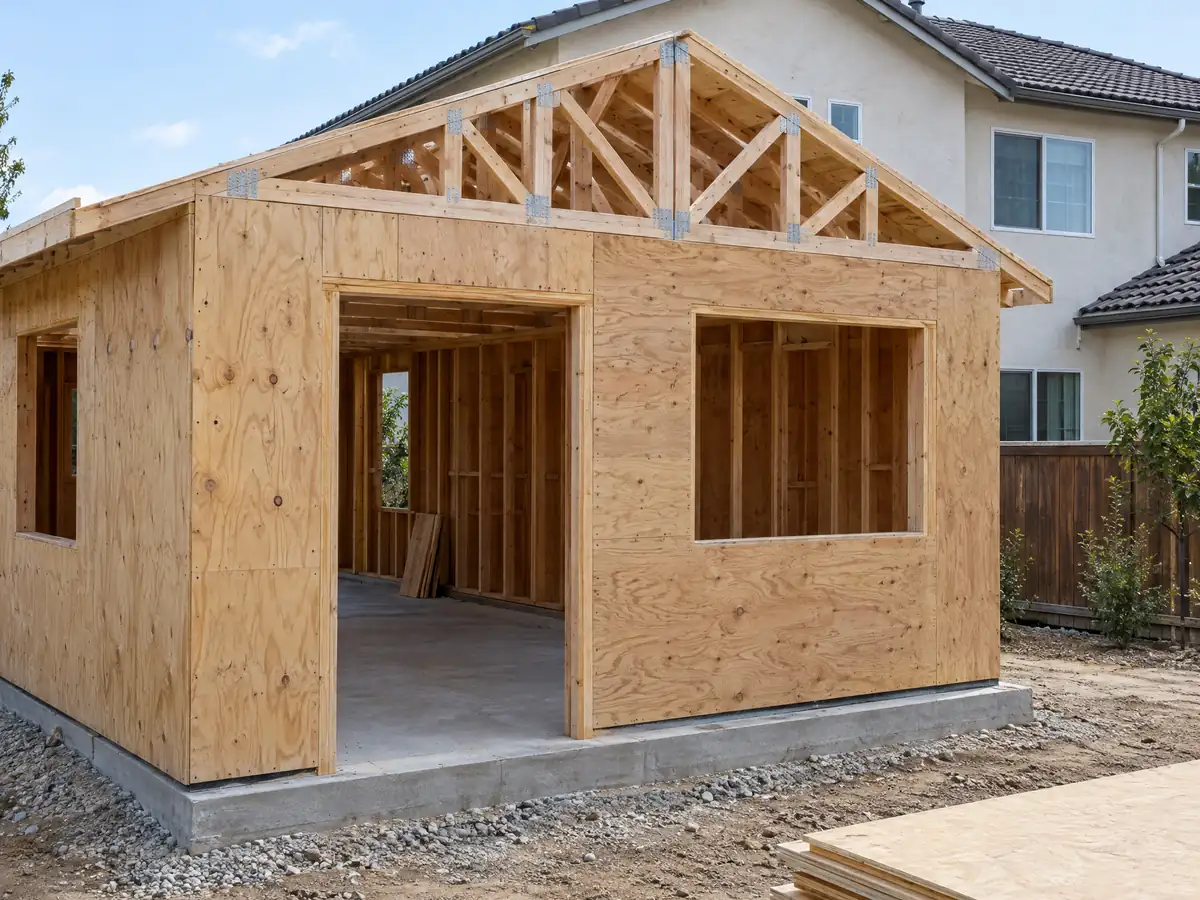
ADU photos from Orange and nearby homes
ADU scenes tied to Orange and the Orange County communities around it, from garage conversions and slabs to finished cottages. Tap a photo to enlarge it.
What adu construction costs around Orange
Our ADU construction page sets a garage conversion to a studio or one bedroom near $100,000 to $200,000 and a new detached unit of 400 to 800 square feet near $200,000 to $400,000. Three independent sources back that frame. UC Berkeley surveyed households that finished or applied for an ADU in 2018 and 2019 and found a $100,000 median for Los Angeles County, the Terner Center estimated $148,000 for Los Angeles in 2020, and Remodeling magazine's 2025 report shows a $178,536 job cost for Los Angeles that recouped 39.9 percent at resale. None is a quote for Orange, and the city's $1,069,700 median home value may lift finish spending, so read the ranges as a regional frame. Permit, plan check and utility charges appear as separate lines in a written proposal. The ADU cost guide goes deeper on what moves the number. For comparison see ADU construction in Anaheim, Irvine and Los Angeles. A bath inside the unit is on our Orange bathroom page, a larger attached addition on the Orange room addition page, windows for the unit on the Orange window page, and the Orange area page lists every trade we cover in the city, next to the Anaheim area page. Before signing anything, the license check guide and the subcontractor chain explained cover who is licensed to do what.
| What it covers | Typical range |
|---|---|
| Garage conversion to a studio or one bedroom | $100,000 to $200,000 |
| New detached ADU, 400 to 800 sq ft | $200,000 to $400,000 |
| UC Berkeley survey, Los Angeles County median, 2018 and 2019 projects | $100,000 overall. $90,000 garage. $180,000 detached. |
| Terner Center and Berkeley CCI, 2020 | $148,000 Los Angeles estimate. $167,000 statewide average. |
| Remodeling Cost vs. Value 2025, Los Angeles | $178,536 job cost |
| Electrical and plumbing, Angi Los Angeles, January 2026 | Electrical $2,600 to $7,800. plumbing $3,900 to $10,400. |
| City permit and plan check fees | Not priced here |
Orange ADU questions, answered
Can I build an ADU in Orange?
Yes, in most cases. Chapter 17.29 of Orange's code approves ADU and JADU applications ministerially, without a hearing, when they meet the chapter, and the City must act within 60 days of a complete application. Historic districts and fire or flood overlays add steps, so ask Planning about your parcel before you design.
How big can an ADU be in Orange?
Up to 850 square feet with one bedroom or fewer and 1,000 square feet with two or more, per Orange's code, and an ADU over 800 square feet may not exceed 50 percent of the main house. A detached 800 square foot unit is always allowed. State law caps detached units at 1,200 square feet.
How much does it cost to build an ADU in California?
Budget about $100,000 to $200,000 for turning a garage into a unit and $200,000 to $400,000 for a new detached one of 400 to 800 square feet. Those ranges draw on 2018 to 2020 surveys and a 2025 Los Angeles job cost, nothing specific to Orange, so the number that counts arrives in a written proposal after a site visit.
Do I need to provide parking for my ADU?
Often not. Orange requires one space per ADU or per bedroom, whichever is less, but none near transit, inside a historic district, when the unit is part of the house or an existing accessory structure, or where on-street permits are not offered. Garage spaces lost to a conversion need no replacement.
What is the difference between an ADU and a JADU?
A JADU is a unit of 150 to 500 square feet inside the single-family house or its attached garage, with an efficiency kitchen, and Orange requires a deed restriction for it. An ADU can be a conversion, an attached unit or a detached unit with a full kitchen. A lot can sometimes carry both, so ask about the combination.
Can my HOA stop me from building an ADU?
Not by a rule that effectively prohibits or unreasonably restricts one on a single-family lot, according to the state housing department's handbook, which cites Civil Code sections 4751 and 714.3. Reasonable restrictions can survive, and condominium owners face common-area limits, so read the association's CC&Rs before paying for drawings.
Can I sell my ADU separately from my main house?
Generally no. State law bars separate sale except through a qualified nonprofit buyer program or a city condominium ordinance, and we found no Orange condominium path. Treat an ADU as part of the property. Rentals must run longer than 30 days, and Orange asks for a deed restriction only on a JADU.
How long does it take to get an ADU permit?
State law gives the City 15 business days to say whether an application is complete and 60 days to act on a complete one, after which it is deemed approved, and Orange's own chapter repeats the 60 days. Corrections reset parts of the clock, and we could not read the City's actual review times.
Do I need a permit to convert my garage into an ADU?
Yes. A conversion is a change of use that needs an ADU application and a building permit with plan check. State law protects it from several local rules, such as replacement parking, and Orange limits it to the existing footprint plus up to 150 square feet for entry and exit, but it does not waive inspections.
Can I build an ADU in a historic district in Orange?
Yes, subject to the objective design standards for that district to the extent state law allows. Garage doors on contributing structures must stay in place but be made inoperable, and a non-contributing garage can change only after an accepted historical assessment. No parking is required inside a historic district.
Tell us about your Orange ADU
Tell us whether you are weighing the garage or the backyard, whether the house is in Old Towne, an Eichler tract or a 1960s neighborhood, and roughly how big a unit you want, and the first visit will start from the historic and overlay questions.