
Deck Builderin Orange, CA
A deck builder in Orange, CA works inside four layers: the state exempt list covers only a free-standing deck of 200 square feet or less and 30 inches or lower, zoning limits rear yard reach, Old Towne and the Eichler tracts add design review, and pools add barrier rules. Attached or raised decks need permits.
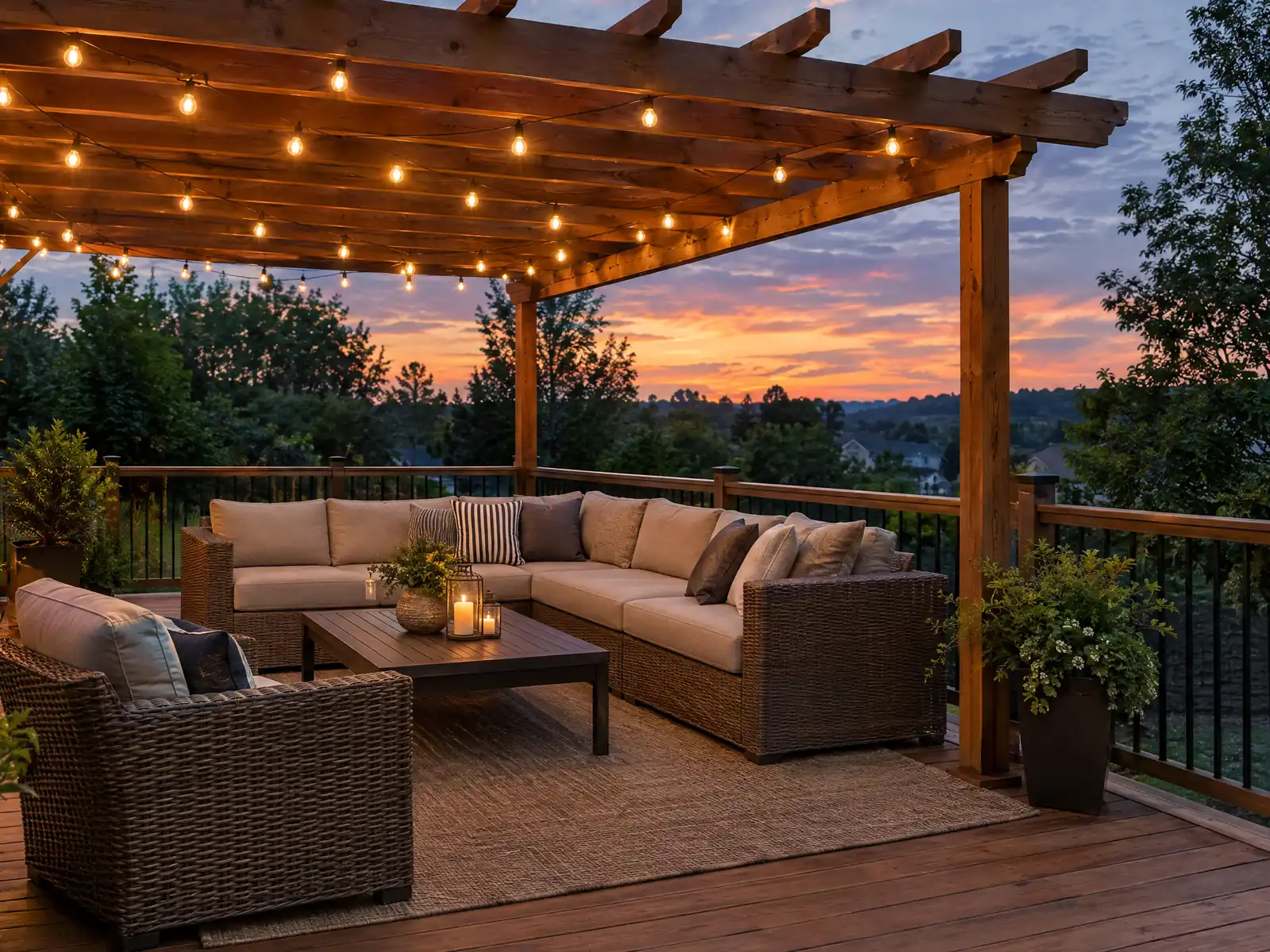
Orange backyards vary by era. Census estimates for 2024 count 46,126 homes, 54.4 percent of them single-family detached, and 59.2 percent were built from 1950 through 1979, so the typical rear yard is a tract lot with a slab patio and a block wall. Old Towne's older bungalows and the three Eichler tracts add review on top of that.
MDG Builders, CSLB #1040337, is a general contractor in Tarzana. We draw the deck, take it through Orange's Building and Safety Services Division and hire a licensed carpentry subcontractor to build it. Orange's website blocked our research tools, so the code sections cited here come from a third-party mirror of the municipal code and should be confirmed with the City. Materials and ranges are on the decks page, and the Orange overview shows our other trades in town.
What Orange's Building and Safety Services Division, zoning code and historic district standards say about decks
Where decks permits come from in Orange: City of Orange Community Development Department, Building and Safety Services Division.
- The state exempt list (as excerpted by the City of Albany) exempts decks not exceeding 200 square feet that are not more than 30 inches above grade at any point, are not attached to a dwelling and do not serve a required exit door. Anything attached to the house, larger, or higher needs a building permit, and Orange adds no deck amendment to that list.
- In Orange a second story deck or balcony can extend into the required rear yard only to 10 feet from the rear property line and only when the rear lot line abuts a street, alley or permanent open space (Municipal Code 17.14.090.C), and balconies that are not primary or secondary access may project into the rear yard no more than 4 feet at a height of at least 8 feet.
- Orange's patio cover rules combine the zoning allowance for covered patios (unenclosed on at least two sides, no closer than 10 feet to the rear line) with Appendix I Patio Covers of the California Building Code and Appendix BF of the Residential Code, which the City adopted. Eaves and canopies at least 8 feet high may project into setbacks only a fraction of the setback dimension and must be supported entirely by the building.
- Orange allows above grade pools or spas and their elevated decking no closer than three feet to any property line (17.14.190.D), and a pool needs a clear three foot path around the pool; arbors up to 8 feet high, 4 feet wide and 2 feet deep are allowed in setbacks if securely installed on private property.
- In Orange's Single Story Overlay, structures are limited to one story or 20 feet, and the three Eichler tracts and Old Towne require design review for exterior changes visible from the street, so a rooftop deck or second story deck at those addresses is a design review item before it is a building permit item.
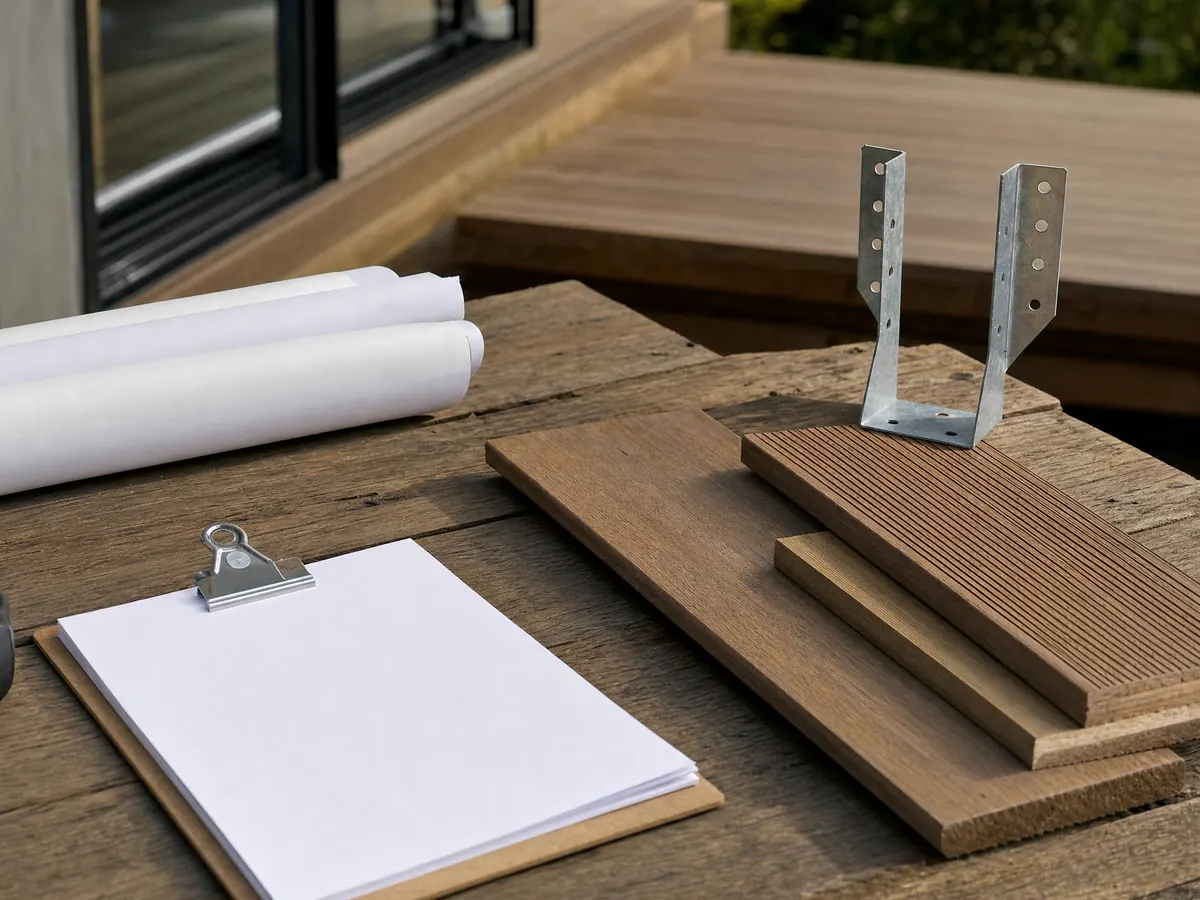
Can you build a deck without a permit in Orange, CA?
Only a small, low, free-standing one. The state's exempt list, as the City of Albany excerpts it from the 2025 California Building Code, covers a deck of not more than 200 square feet that is no more than 30 inches above grade at any point, is not attached to a dwelling and does not serve a required exit door. Anything attached to the house, larger or higher needs a building permit. Orange adds no deck line, only TV dishes and flagpoles, to that list.
Zoning applies either way. The City's own exemption handout could not be read, so call Building and Safety Services with the size, the height and the distance to each property line before you buy lumber. Under Orange's building code, a violation is a separate offense for each day, punishable by a fine of up to $1,000 or up to six months in jail, or both.
- Is the deck 200 square feet or less?
- Is it 30 inches or lower above grade everywhere?
- Is it detached and away from an exit door?
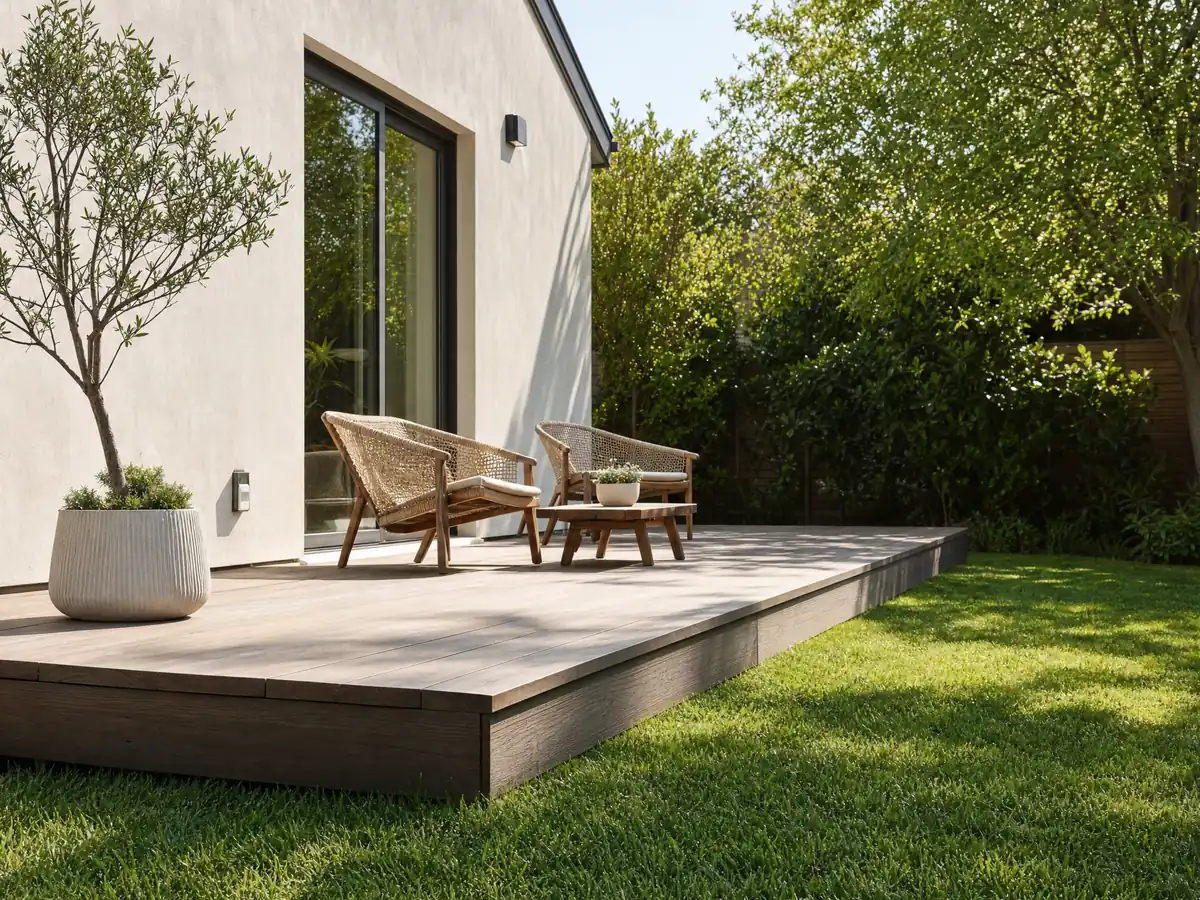
Do Old Towne and the Eichler tracts review a backyard deck in Orange?
Often as a design question before it is a permit question. In Old Towne the city requires design review for all projects unless an adopted standard exempts them, residential quadrants carry a 20 foot minimum front yard, and alterations follow the State Historical Building Code. We could not read the standards, so we cannot say which rear-yard decks they exempt.
Fairhaven, Fairmeadow and Fairhills, 339 Eichler homes, became local historic districts in November 2018. Their design standards review exterior changes visible from the street, and the City's historic preservation planner told the Eichler Network that any addition needs review by the design review committee. A deck behind a fence may not be visible from the street, but one that rises above the wall is another matter, and we found no sentence that names decks, so ask Planning.
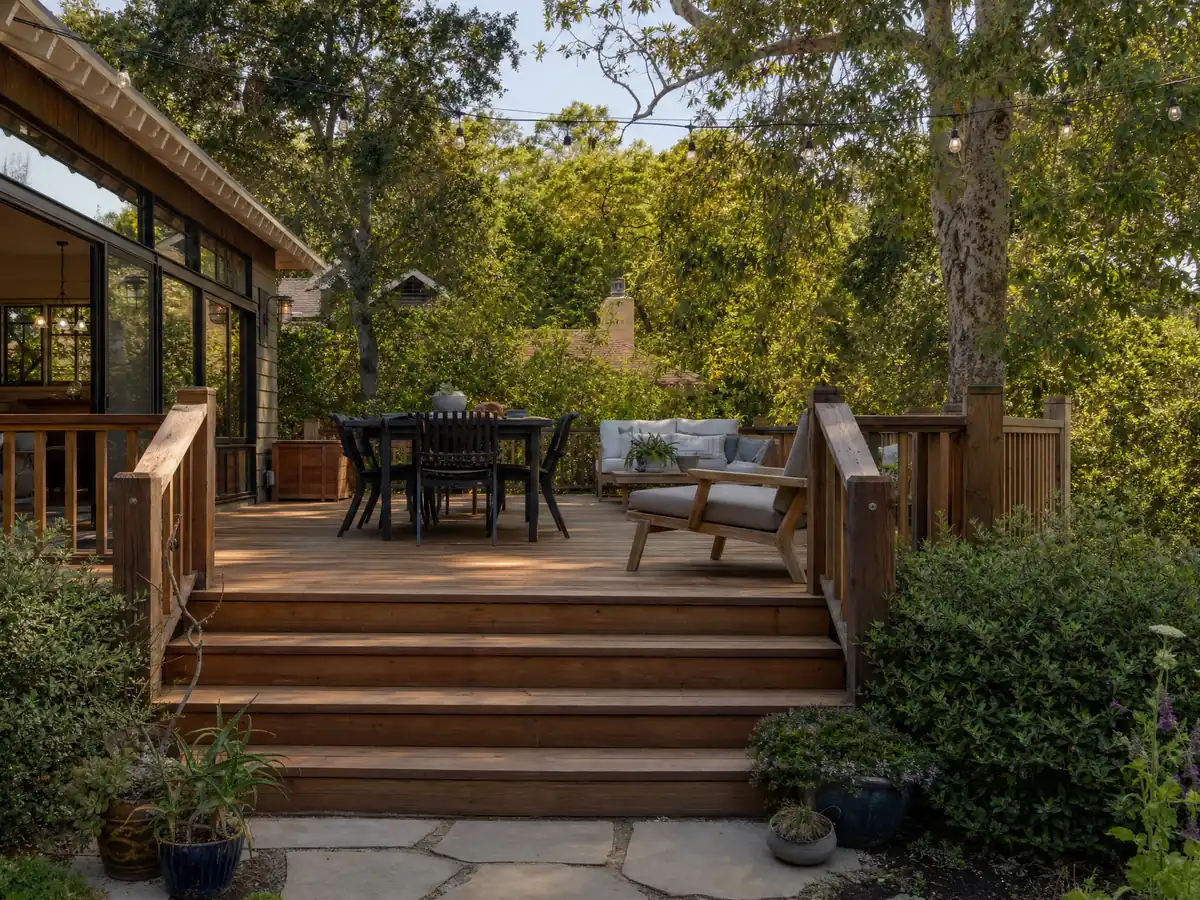
How far into the rear yard can an Orange deck, balcony or patio cover reach?
Orange's single-family zones set a 20 foot rear setback and a 5 foot side setback. A one story addition may extend into the required rear yard if it stays at least 10 feet from the rear lot line, and a covered patio at grade, unenclosed on at least two sides, may do the same no closer than 10 feet. Patio covers also follow Appendix I of the California Building Code and a matching appendix of the residential code, which the City adopted. We found no sentence that sets a projection for an open ground-level deck, so ask.
Raised decks answer to the rear lot line. A second story deck or balcony may reach into the required rear yard, to 10 feet from the line, only when that line abuts a street, alley or permanent open space, and a balcony that is not primary or secondary access may project no more than 4 feet at a height of at least 8 feet, per Municipal Code 17.14.090.C.
Lots under the Single Story Overlay, marked A on the zoning map, are capped at one story or 20 feet, so a second story or rooftop deck there is a Planning question first. Floor area ratio is 0.60 on lots under 10,000 square feet and counts garages and accessory structures, so ask whether the deck counts toward it.
How high must an Orange deck railing be, and what changes next to a pool or spa?
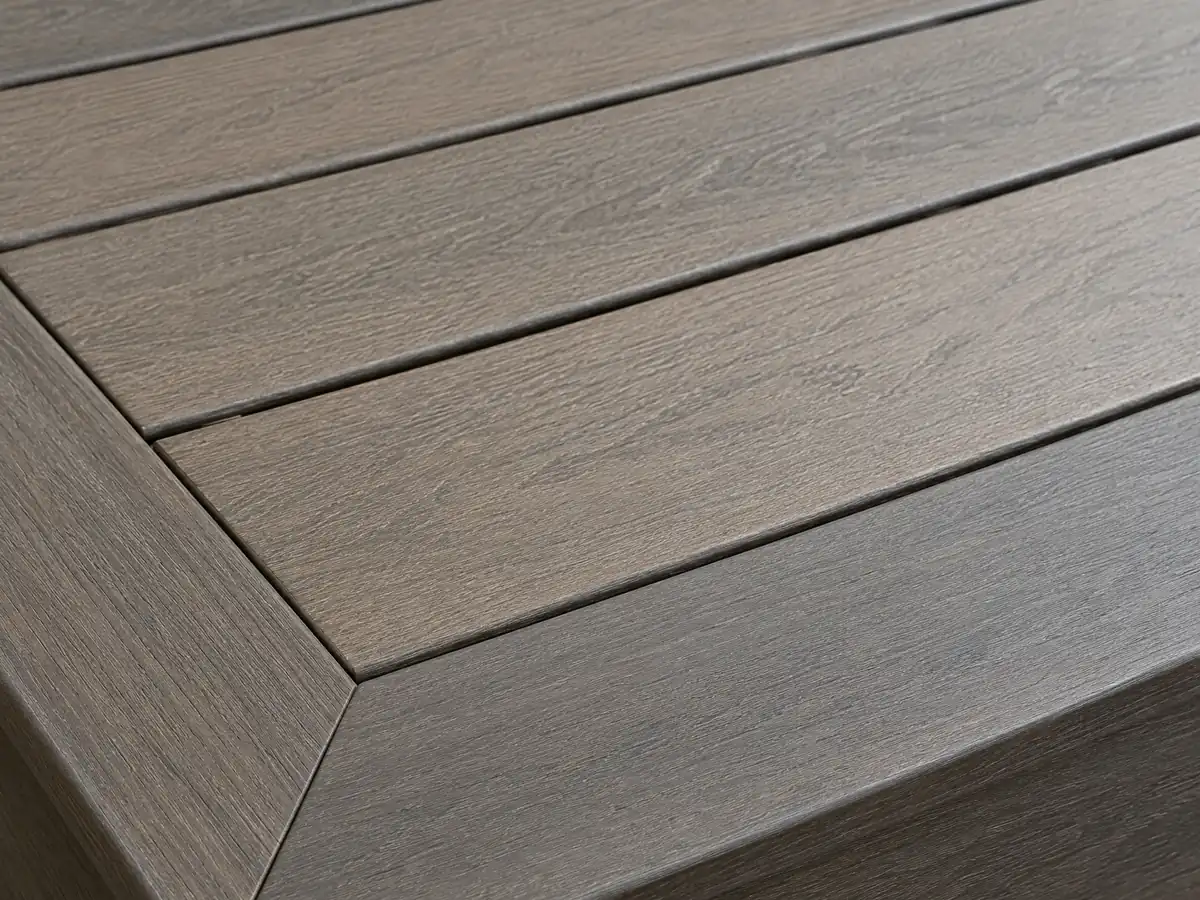
Guards run 42 inches high in the residential code text we read, the 2022 California edition, which you can see on ICC's site. A guard is required where the deck surface is more than 30 inches above grade within 36 inches of the edge, and no opening may let a 4 inch sphere through. Orange enforces the newer 2025 edition, so ask the inspector to confirm the numbers.
Pools bring a longer list. Orange's pool code, 17.14.190, calls for a fence or wall at least 5 feet high measured from outside the pool area, wrought iron openings no wider than 4 inches, self-closing and self-latching gates with the latch at least 5 feet above the ground, and a clear 3 foot path around the pool. A new or remodeled pool at a single-family home also needs the enclosure plus one more drowning prevention feature under Appendix CI of the amended residential code.
Above-grade pools or spas and their elevated decking may sit no closer than 3 feet to any property line. Arbors up to 8 feet high, 4 feet wide and 2 feet deep may stand in setbacks if securely installed on private property.
What holds a deck up in Orange, and do you need a permit for deck repair?
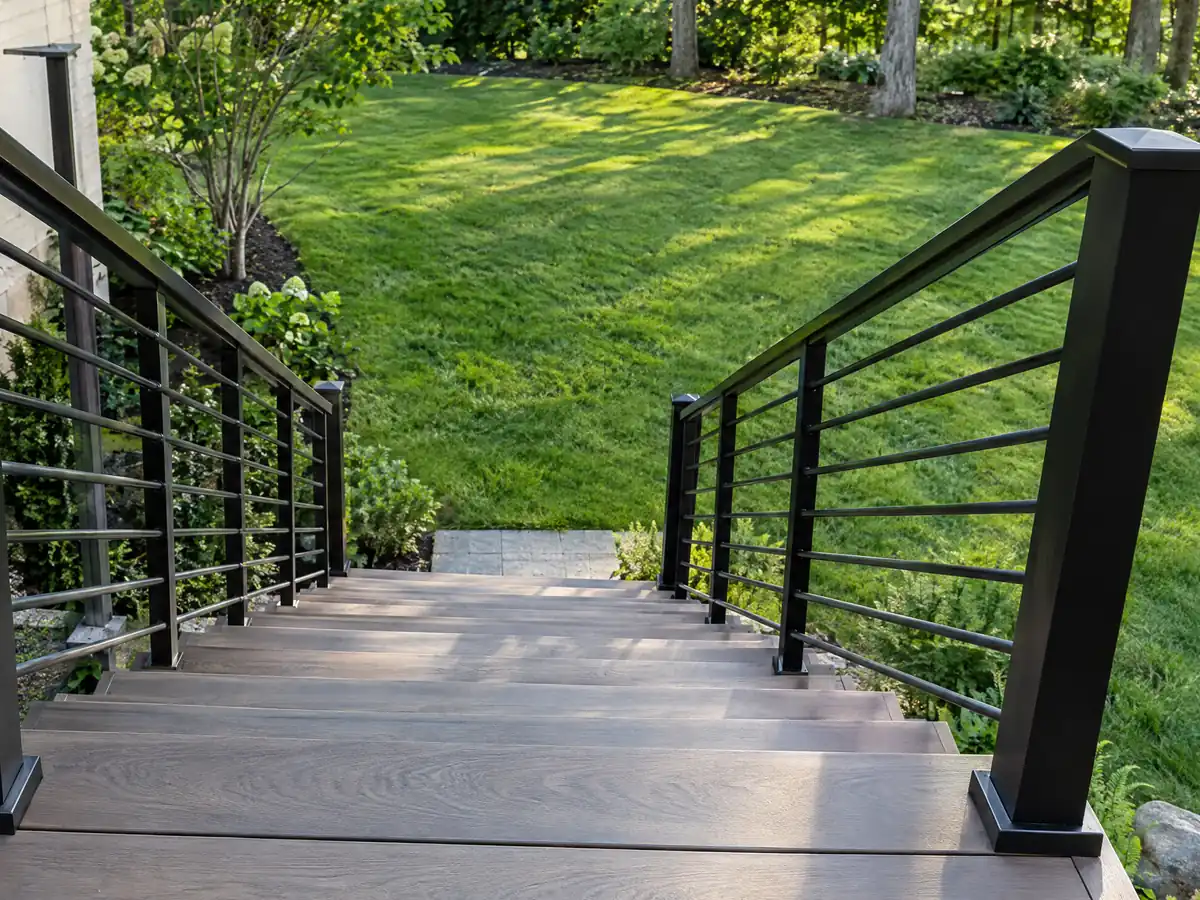
The ledger, the footings and the hold-downs, and rot attacks all three. In the 2022 residential code text we read, a ledger is at least a 2 by 8 of pressure-treated lumber, carries no concentrated loads from beams or girders, may not be fastened to stone or masonry veneer, and needs flashing and galvanized or stainless fasteners, with lateral hold-downs at the connection. Orange's amended table lists Seismic Design Category D 2 or E and a Very Heavy termite damage rating, so framing details are no place to economize.
Repair is a gray area. Swapping worn boards in place is the simple case, but we found no Orange sentence that says it needs no permit, so ask. Rebuilding framing, a ledger, stairs or guards points toward a permit, and any attached deck needed one when it was new. UC's integrated pest management pages say drywood termites are most prevalent in southern California and infest decks and fences, so ask where each post meets the ground.
About 64.5 percent of Orange's homes predate 1980, so EPA's lead-safe rule can apply when a repair disturbs paint on a house built before 1978, and stains and sealers fall under South Coast AQMD's coating limits.
Does a deck need ember-resistant materials in Orange's fire hazard zones?
It depends on whether the lot is mapped, and we could not read the map. The City adopted the State Fire Marshal's recommended 2025 Local Responsibility Area map by Ordinance 07-25, and its legend carries Very High, High and Moderate tiers, but the tier for a given street has to be read on the City's own map. We name no neighborhood.
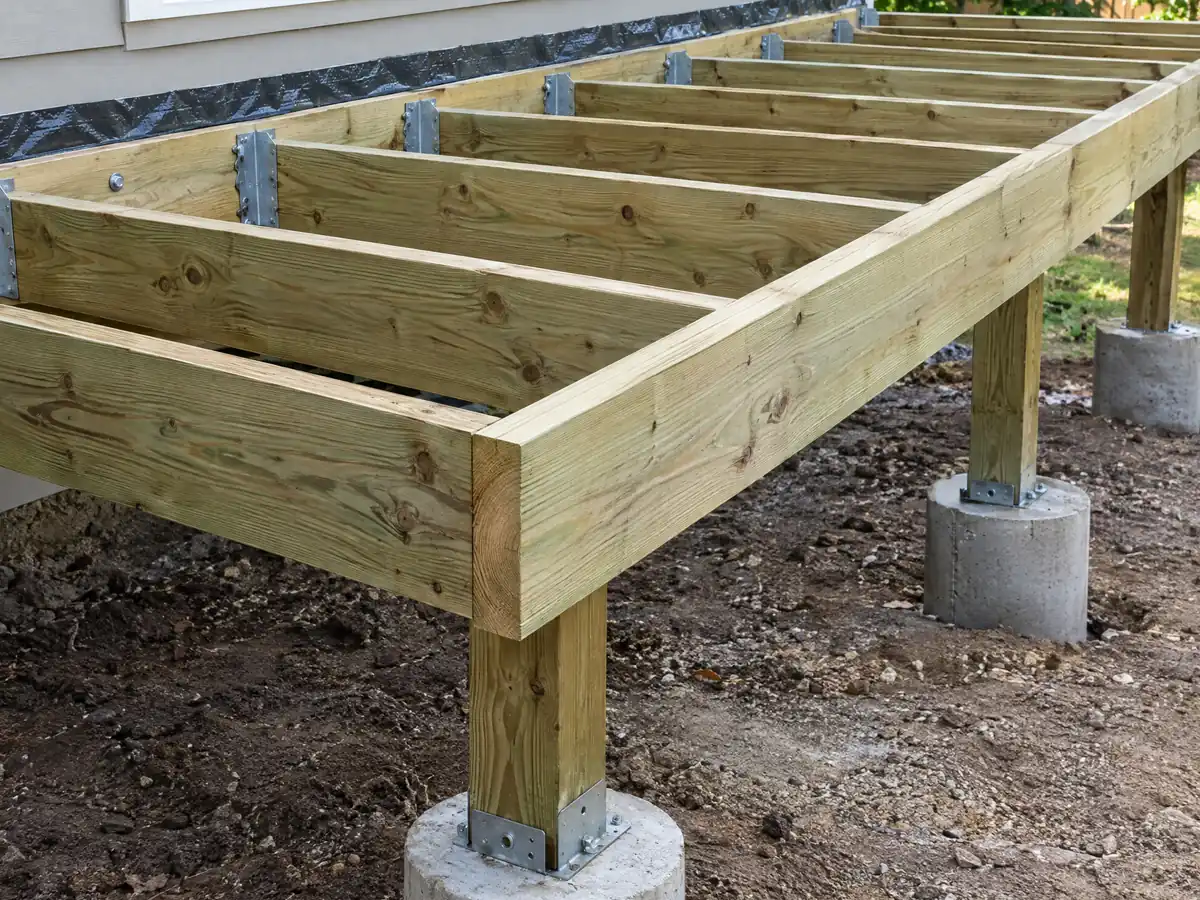
Orange's Wildland-Urban Interface Code, chapter 15.31, applies to new buildings and their accessory buildings in any designated zone, with the Orange City Fire Department as the code official. Additions and remodels of buildings built before July 1, 2008 are excepted only where exterior building elements are not affected, and a deck that attaches to the house changes an exterior element, so ask the Department whether the provisions are triggered. The state interface rules list allowed decking surface materials, and a UC summary said some tested composites did not meet the ignition-resistant definition, so check any product against the State Fire Marshal's listing.
What does a deck builder charge in Orange, wood or composite?
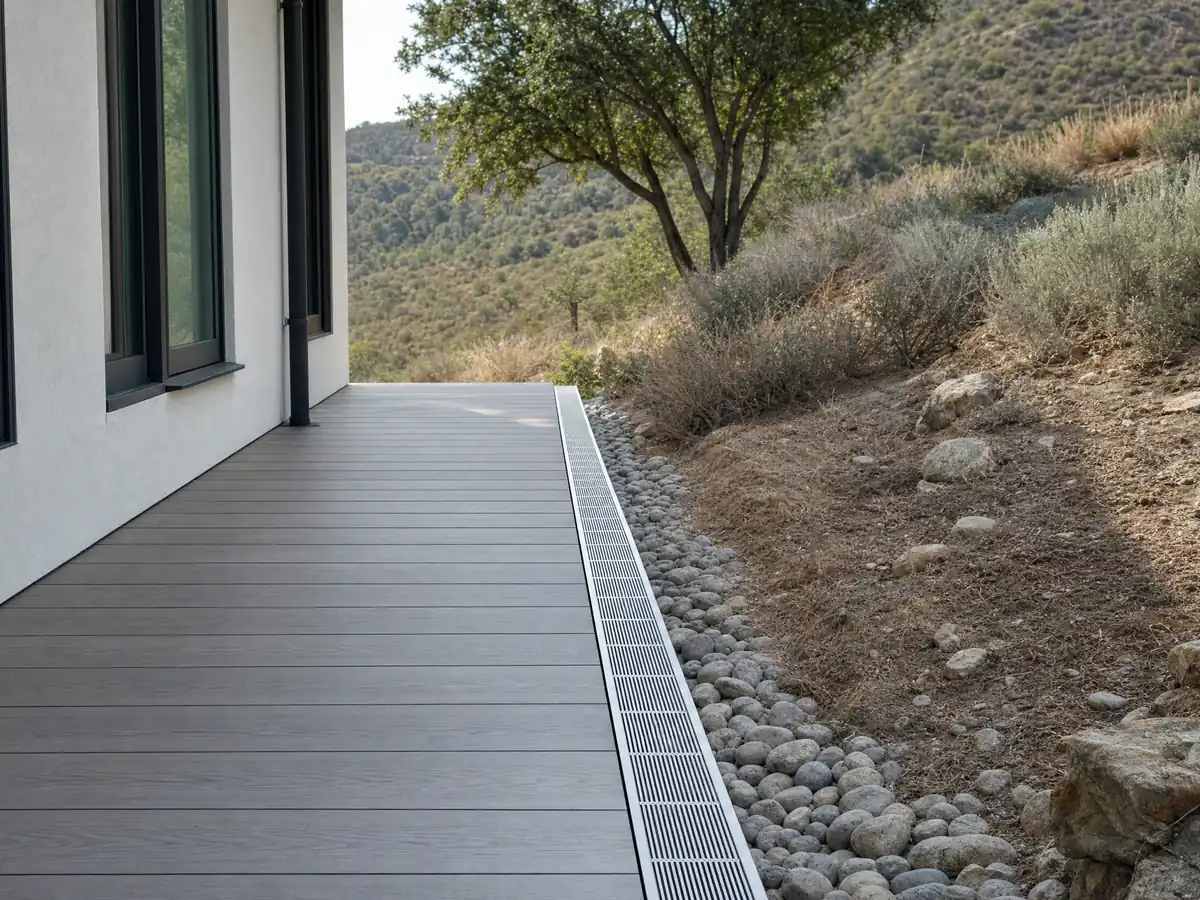
No Orange price study turned up, so the anchor is Remodeling magazine's 2025 Cost vs. Value report for Los Angeles. Its model deck is 16 by 20 feet with a built-in bench and planter, three steps and full railing: the wood version costs $18,419 and returns 99.6 percent at resale, the composite version $26,872 and 73.9 percent. Angi's Los Angeles page of October 2025 shows an average project of $13,570.
Planning ranges drawn from those sources are about $45 to $75 per square foot for treated wood and $65 to $110 for composite, which puts a 16 by 20 deck near $14,500 to $24,000 in wood and $21,000 to $35,000 in composite, with permits and engineering extra. We rate wood medium and composite medium to low in confidence. The Bureau of Labor Statistics' May 2025 survey of the Los Angeles-Long Beach-Anaheim area lists mean carpenter pay at $37.79 an hour, a wage and not a billing rate.
A wood deck is framing work, which CSLB's C-5 class describes as form work, framing and rough carpentry for framed structures. Our license check guide shows how to look a number up.
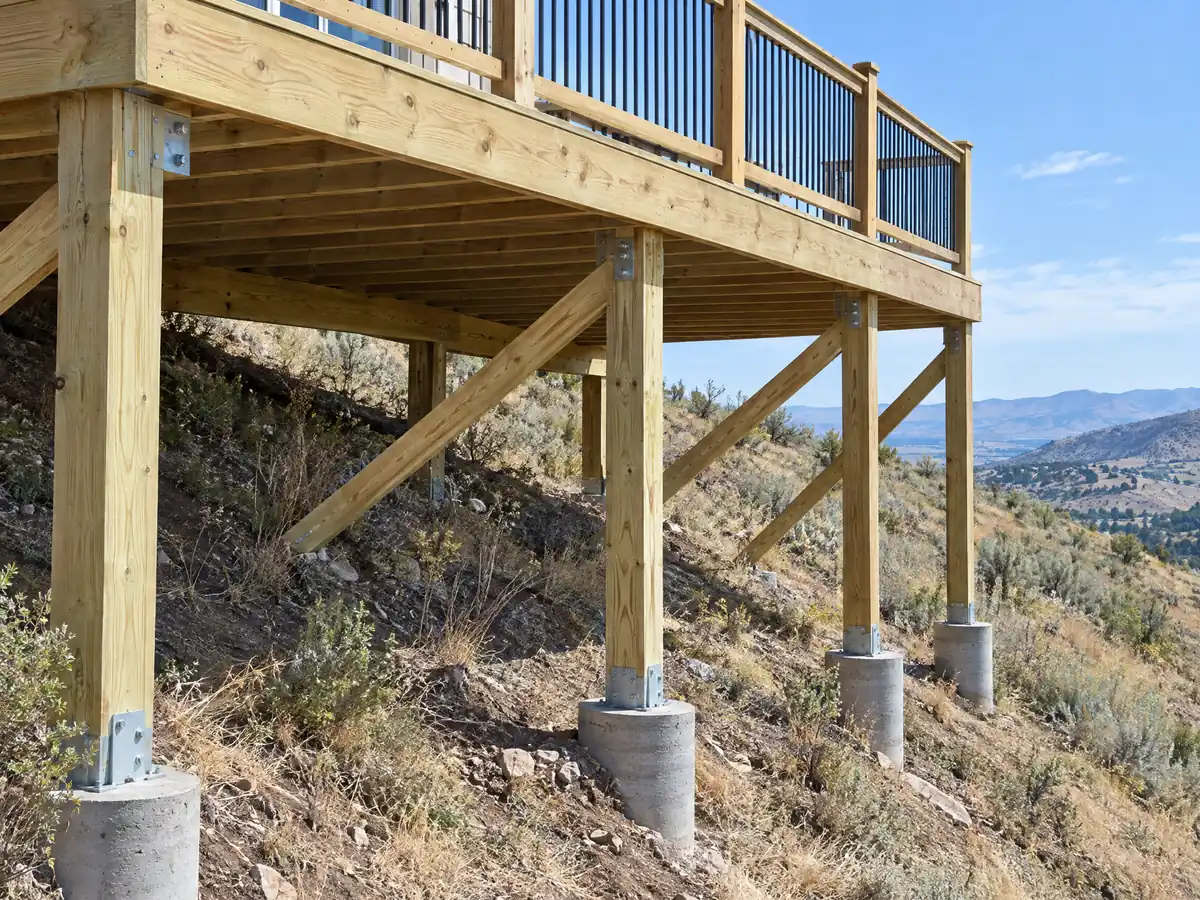
Deck photos from Orange and nearby communities
Footings, framing, railings and finished decks from the city of Orange and nearby towns, shown at the stages that matter. Tap any photo to enlarge it.
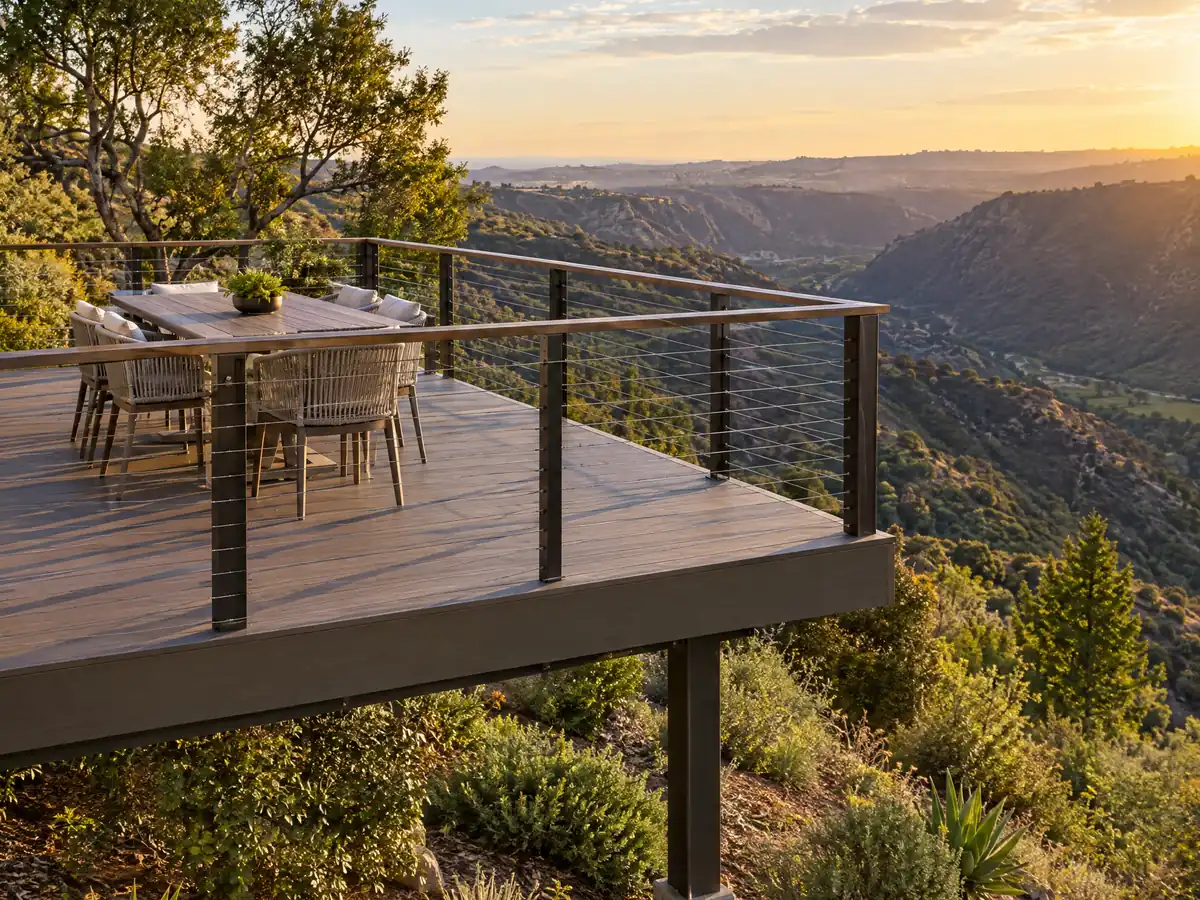
What decks costs around Orange
Dollar figures on this page are Los Angeles planning ranges from our decks page, not an Orange bid, and permits, engineering and any historic design review belong on separate lines of a proposal. For the same lot, see flooring in Orange and concrete in Orange. Nearby comparisons: decks in Anaheim, deck building in Garden Grove, decks in Irvine and decks in Los Angeles. See also the room addition versus ADU guide, the Anaheim overview and the contact page.
| What it covers | Typical range |
|---|---|
| Pressure-treated wood deck | $45 to $75 per square foot |
| Composite deck | $65 to $110 per square foot |
| 16 by 20 foot wood deck (320 sq ft) | About $14,500 to $24,000 |
| 16 by 20 foot composite deck | About $21,000 to $35,000 |
| Hillside, second-story, rooftop and ipe decks | Priced by site visit |
| Permits and engineering | Quoted as separate lines |
Orange, CA deck questions, answered
Can I build a deck without a permit in Orange, CA?
Only a small free-standing one: 200 square feet or less, no more than 30 inches above grade, not attached to a house and not serving the exit door, per the state exempt list. Orange adds no deck rule of its own, but zoning still applies, so call Building and Safety Services first.
What is the largest deck you can build without a permit in Orange?
Under the state exempt list, 200 square feet, if it is no more than 30 inches above grade at any point, detached and away from the required exit door. A larger, higher or attached deck needs a permit. The City's own handout could not be read, so confirm the numbers.
Do Old Towne or the Eichler tracts need review before I build a deck in Orange?
Possibly. Old Towne requires design review for all projects unless an adopted standard exempts them, and the three Eichler tracts review exterior changes visible from the street. We found no sentence naming decks and could not read the standards, so ask Planning before you design.
How close to the property line can a deck go in Orange?
We found no projection rule for an open ground-level deck, so ask Planning. The related limits are a 20 foot rear and 5 foot side setback in single-family zones, covered patios no closer than 10 feet to the rear line, and above-grade pool decking no closer than 3 feet to any line.
Is deck railing 36 or 42 inches in Orange?
Forty-two inches in the residential code text we read, which requires a guard where the surface is more than 30 inches above grade and stops a 4 inch sphere at any opening. Orange enforces the 2025 edition, so ask the inspector to confirm the current numbers.
How much should a 16x20 deck cost in Orange?
For a 16 by 20 foot deck with bench, planter, steps and railing, Remodeling magazine's 2025 Los Angeles figures are $18,419 in wood and $26,872 in composite, and Angi's Los Angeles page averages $13,570. No Orange study turned up, so a site visit sets the price.
Is it cheaper to build a wood deck or a composite deck in Orange?
Wood costs less to build, and the Los Angeles data shows a wide gap: $18,419 for wood against $26,872 for composite in Cost vs. Value 2025. Wood returned 99.6 percent at resale and composite 73.9 percent. Composite saves staining, while wood needs sealing and termite watch.
Do I need a permit for deck repair in Orange?
Replacing boards in place is probably the simple case, though no Orange sentence we found says so. Rebuilt framing, ledgers, stairs or guards, and any attached deck, lean toward a permit. Send photos of the damage to Building and Safety Services before you hire a deck repair crew.
What rules apply to a deck next to a pool in Orange?
Orange requires a pool fence or wall at least 5 feet high, self-closing and self-latching gates with the latch 5 feet up, a clear 3 foot path around the pool, and elevated pool decking no closer than 3 feet to a property line. New pools also need one more drowning prevention feature.
Send the address and a photo of the backyard
Tell us the rough size, how high the deck would sit and whether the house is in Old Towne or an Eichler tract. We carry the setback and review questions to the first visit.