
Fence Companyin Orange, CA
A fence company in the city of Orange works to a 3.5 foot limit in the required front yard and 6 feet on side and rear lines, measured from the higher ground. Chain link is banned in residential zones. A fence of 7 feet or less may need no building permit yet still break the zoning height.
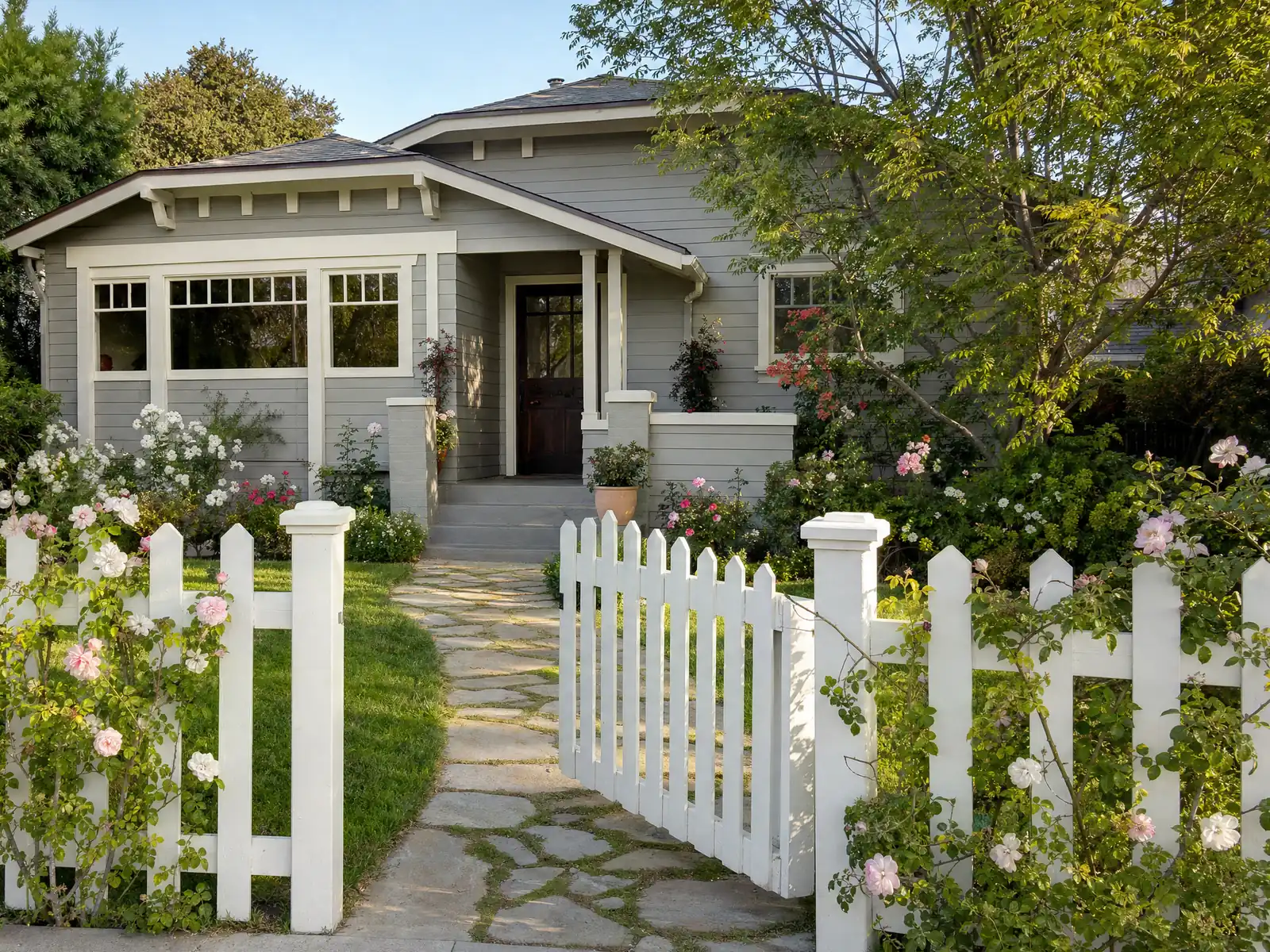
Orange's streets were drawn around a plaza in the 1870s, but most of its property lines come from the tract boom. Preserve Orange County reports more than 5,000 homes processed from 1960 to 1964 alone, and the Census Bureau's 2024 one-year estimates put 59.2 percent of the city's 46,126 housing units in the years 1950 to 1979. Those tracts came with perimeter walls along the streets, long runs that the City's code treats as one piece owned by many people. Fences here are a zoning matter first and a building matter second.
Fencing is a licensed specialty trade. MDG Builders (CSLB #1040337) checks the lot lines and the height rules, handles the permit questions and the schedule, and a licensed fencing subcontractor sets the posts and panels. Our fencing page holds the sourced prices, the Orange overview lists our other trades in town, and neighboring cities word their fence rules differently, as the guides for Anaheim, Irvine and Garden Grove show.
What Orange's zoning code says about fences and walls
Where fencing permits come from in Orange: City of Orange Community Development Department, Building and Safety Services Division.
- Orange's zoning code allows fences and walls in the required front yard of a standard residential lot only up to three and one-half feet (Municipal Code 17.12.070.B.2 and 17.12.040.D). Side and rear yard fences on a standard lot are limited to six feet measured from the highest adjacent ground and ten feet measured from the lowest, and privacy toppers, latticework and screens attached to a fence count toward the height.
- Orange allows a side or rear yard sound wall up to eight feet (ten feet from the lowest ground) within 300 feet of a freeway or railroad inside the noise contours, and for lots abutting a nonresidential zone. The Zoning Administrator can approve up to two additional feet through an administrative adjustment, and the Planning Commission can grant more through a variance.
- Orange's fence material table (17.12.070.A.3) permits wood, masonry, vinyl and composite and decorative metal in residential zones, bans chain link (and says it may never face a street in a required setback), permits only coated vinyl mini-mesh chain link, bans barbed and concertina wire, and permits electrified fences only on lots of 20,000 square feet or more and not as perimeter fencing. In historic or architecturally significant districts additional material restrictions may apply under the district standards.
- Under Orange's fence code perimeter fences go on the property line unless the Community Development Director allows otherwise, and a parallel fence may not be built closer than five feet to an existing fence or wall without Director approval. Corner, reverse corner and key lots follow a separate height figure and the corner cut-off rule in 17.14.150, which bars anything that blocks visibility at intersections, driveways and alleys.
- Orange's tract fencing rule says walls and fences along public streets around a residential tract are built by the developer and maintained by the homeowners' association, or by each owner where there is none. Repairs must match the original design and appearance, and repainting or replastering must be applied to the entire contiguous fence or wall, including parts beyond the individual lot.
- Orange's swimming pool code (17.14.190) requires a fence or wall at least five feet high measured from outside the pool area, wrought iron openings no wider than four inches, gates that are self-closing and self-latching with the latch at least five feet above the ground, and a clear three foot path around the pool (around 50 percent or more of the perimeter for properties with two or fewer units). New or remodeled pools at a single-family home also need the enclosure plus at least one more drowning prevention feature under the amended Residential Code Appendix CI.
- The state list of permit-exempt work (as excerpted by the City of Albany from the 2025 California Building Code) exempts fences not over 7 feet high and retaining walls not over 4 feet measured from the bottom of the footing to the top of the wall unless they support a surcharge. Orange amends only TV dishes and flagpoles in its exempt list, and the zoning height limits above still apply, so a 7 foot fence can need no building permit and still break the 6 foot yard limit.
- CSLB defines the C-13 Fencing classification as constructing, erecting, altering or repairing all types of fences, corrals, runs, railings and gates, and it excludes masonry walls.
How tall can a fence be in an Orange front yard, side yard or corner lot?
In the required front yard, three and one-half feet is the ceiling for a standard residential lot (Municipal Code 17.12.070.B.2 and 17.12.040.D). Side and rear yard fences on a standard lot may reach six feet measured from the highest adjacent ground and ten feet measured from the lowest, which matters on a sloped lot. Privacy toppers, latticework and screens added to a fence count toward the height, so a six foot fence with a one foot topper is a seven foot fence.
Corner, reverse corner and key lots follow a separate height figure, plus the corner cut-off rule in 17.14.150, which bars anything that blocks sight at intersections, driveways and alleys. We read these sections on the GoCodebook mirror of the code, since the official hosts and the City's website blocked automated readers, so ask the Building and Safety Services Division to confirm the number for your lot.
The front of the lot has a second limit that crews overlook. No more than 60 percent of a front yard may be paved, and every required setback that touches a public right-of-way must stay permanently landscaped, so a new driveway gate and a widened apron can collide with a fence plan.
Measure a corner lot's cut-off area on the survey before a gate swing or hedge is drawn into it.
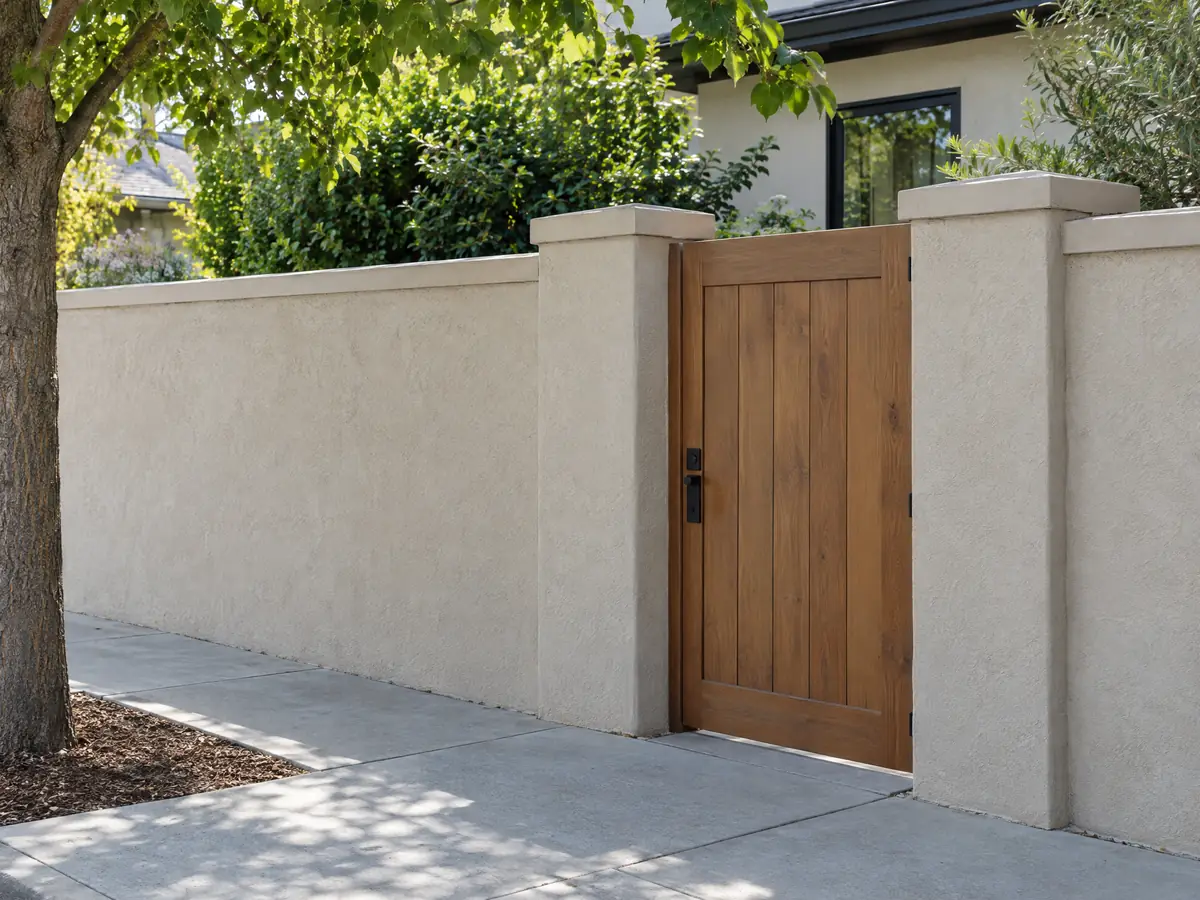
Does fence installation need a building permit in Orange, and can a 7 foot fence break the rules?
A 7 foot fence may need no building permit and still be illegal. The state's exempt list, as excerpted by the City of Albany from the 2025 California Building Code, exempts fences not over 7 feet high and retaining walls not over 4 feet from the bottom of the footing to the top, unless they carry a surcharge. Orange amends only TV dishes and flagpoles in its own exempt list, and the zoning limits above still apply, so the 6 foot side yard limit governs before the 7 foot building threshold does.
The City's own exemption handout was not readable to us, so confirm the permit question for anything near those limits. Where a permit is needed, a licensed contractor is required, because the state's $1,000 limit on unlicensed minor work does not apply to a job that needs a building permit.
Fence work is noisy and produces debris. Construction noise is exempt from the exterior standards between 7:00 a.m. and 8:00 p.m. on any day except Sunday or a federal holiday, and from 9:00 a.m. to 8:00 p.m. on those days (8.24.050.E). Chapter 8.31 requires at least 65 percent of project debris to be diverted from the landfill, which includes the old fence that comes out.
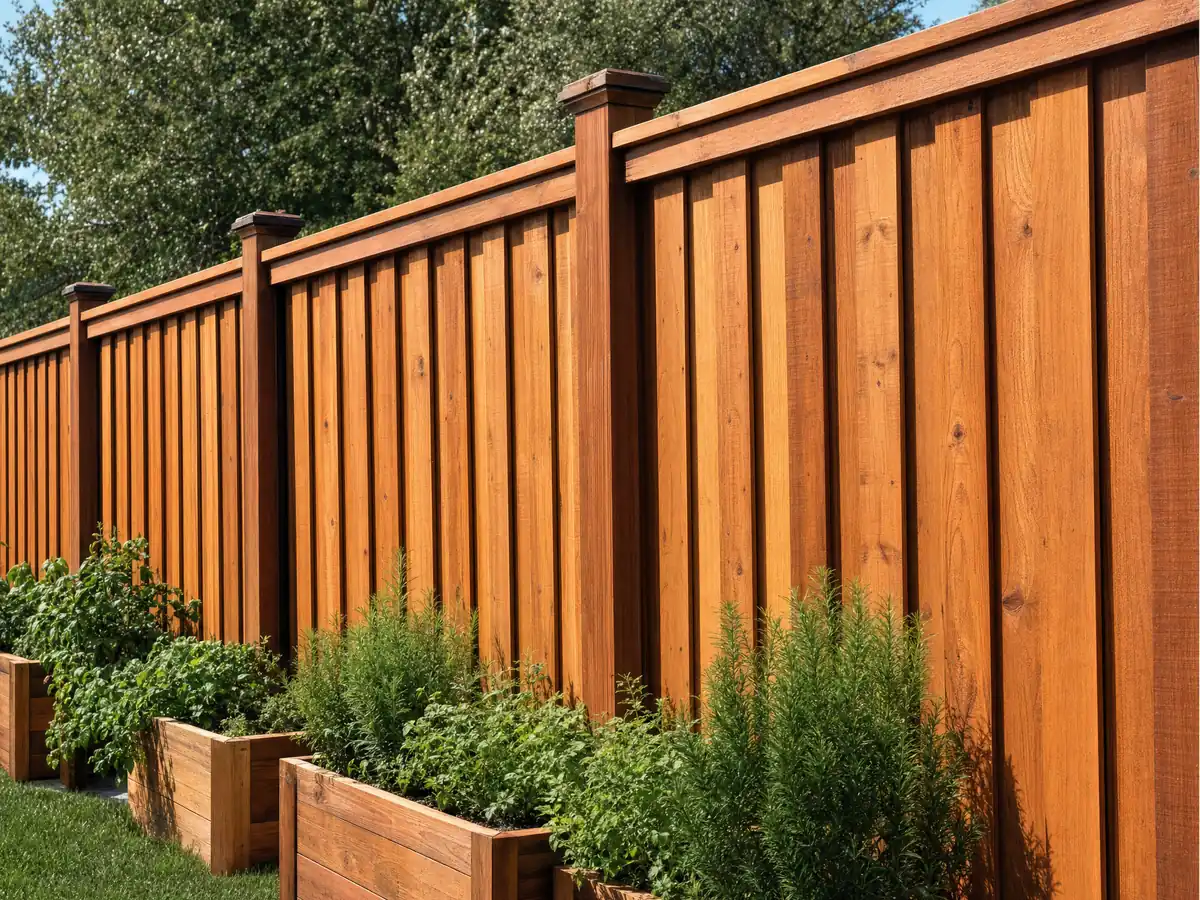
What fence materials are allowed in Orange, and is chain link banned?
The fence material table in 17.12.070.A.3 permits wood, masonry, vinyl and composite, and decorative metal in residential zones. Chain link is banned, and it may never face a street inside a required setback. Only coated vinyl mini-mesh chain link is permitted. Barbed wire and concertina wire are banned, and electrified fences are allowed only on lots of 20,000 square feet or more and never as perimeter fencing.
In historic or architecturally significant districts, additional material limits may apply under the district standards. That points to Old Towne Orange and the three Eichler tracts, where design review can reach exterior work visible from the street. We could not read those standards, so a fence at an Old Towne or Eichler address needs a Planning conversation before a material is chosen.
Wood has an enemy in southern California. The University of California's pest management program says drywood termites are most prevalent in the south of the state and infest decks and fences, and Orange's amended Residential Code table lists a Very Heavy termite damage rating. Where wood meets soil, ask for termite-resistant wood or concrete footers.
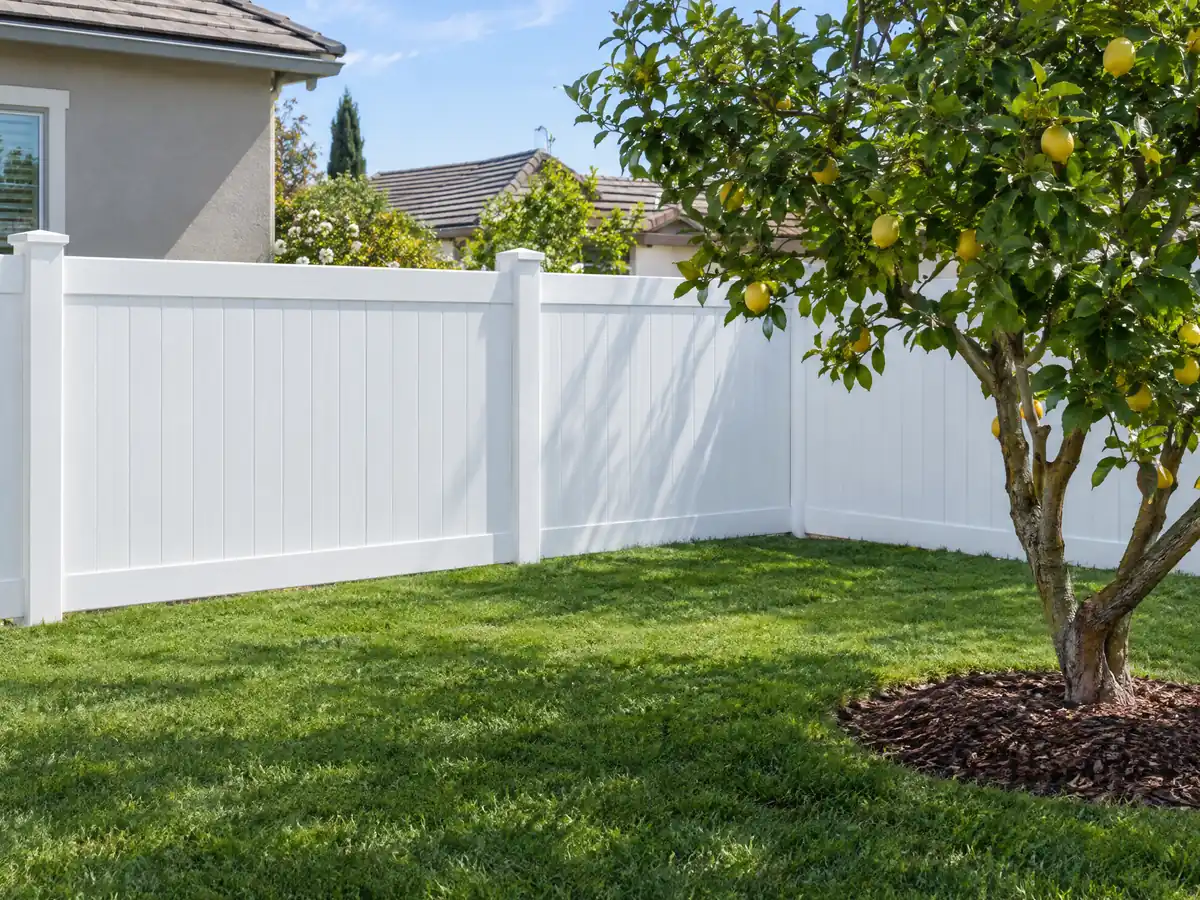
Can I build an 8 foot sound wall in Orange, and who builds a block wall?
Eight feet is allowed in two cases. A side or rear yard sound wall may reach 8 feet, or 10 feet from the lowest ground, within 300 feet of a freeway or railroad that sits inside the noise contours, and on lots that abut a nonresidential zone. The Zoning Administrator can approve up to two more feet by an administrative adjustment, and the Planning Commission can grant more through a variance. We cannot tell from the code which lots sit inside the noise contours.
A masonry wall is not fence work. CSLB's C-13 fencing class excludes masonry walls, which belong to a masonry contractor, so on a block wall job MDG hires a licensed masonry subcontractor for the footing, block and cap and keeps a fencing subcontractor for the gate and any wood or metal above.
Footing depth is an engineering call. Orange's amended Residential Code table lists Seismic Design Category D 2 or E, a 110 mph basic wind speed and a 12 to 24 inch frost line depth, and we state no footing depth from it. A tall solid wall acts like a sail in the wind, so the plan set, not a rule of thumb, should set the footing.
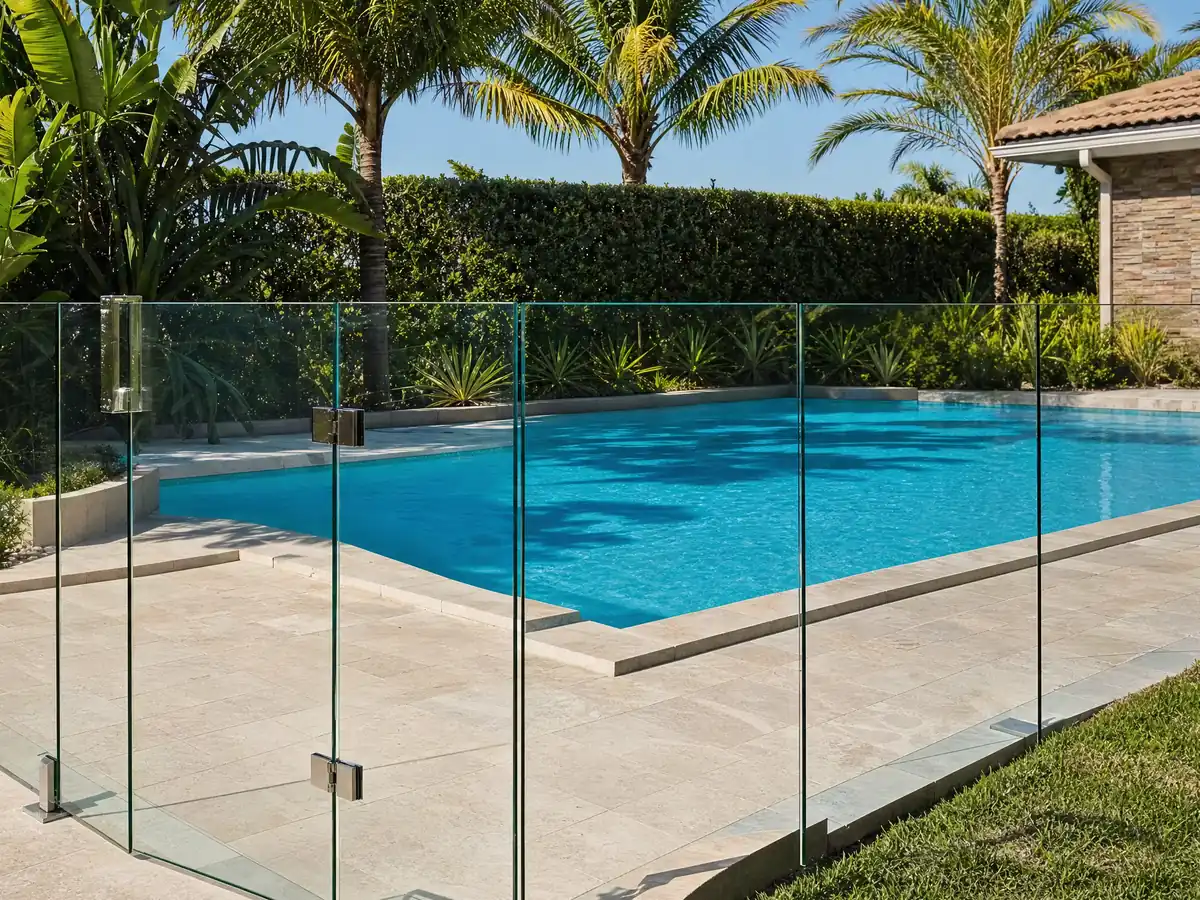
Who repairs and repaints a tract wall, and where does my fence line sit?
Along public streets, Orange's code says walls and fences around a residential tract are built by the developer and maintained by the homeowners' association, or by each owner where there is none. Repairs must match the original design and appearance. Repainting or replastering must cover the whole contiguous fence or wall, including the parts beyond your own lot, so painting only your stretch is not a compliant repair.
Perimeter fences go on the property line unless the Community Development Director allows otherwise, and a parallel fence may not be built closer than five feet to an existing fence or wall without the Director's approval. Because the line is the rule, order a survey or find the corner pins before posts are set. We left California's cost-sharing law for shared fences out of this page because we could not open its text, so settle the split with the neighbor in writing.
One more check comes first. Wikipedia lists El Modena, North El Modena, Orange Park Acres and Olive as unincorporated or partly unincorporated areas in and around Orange, so confirm whether the parcel answers to the City or to the County before any height or setback is quoted.
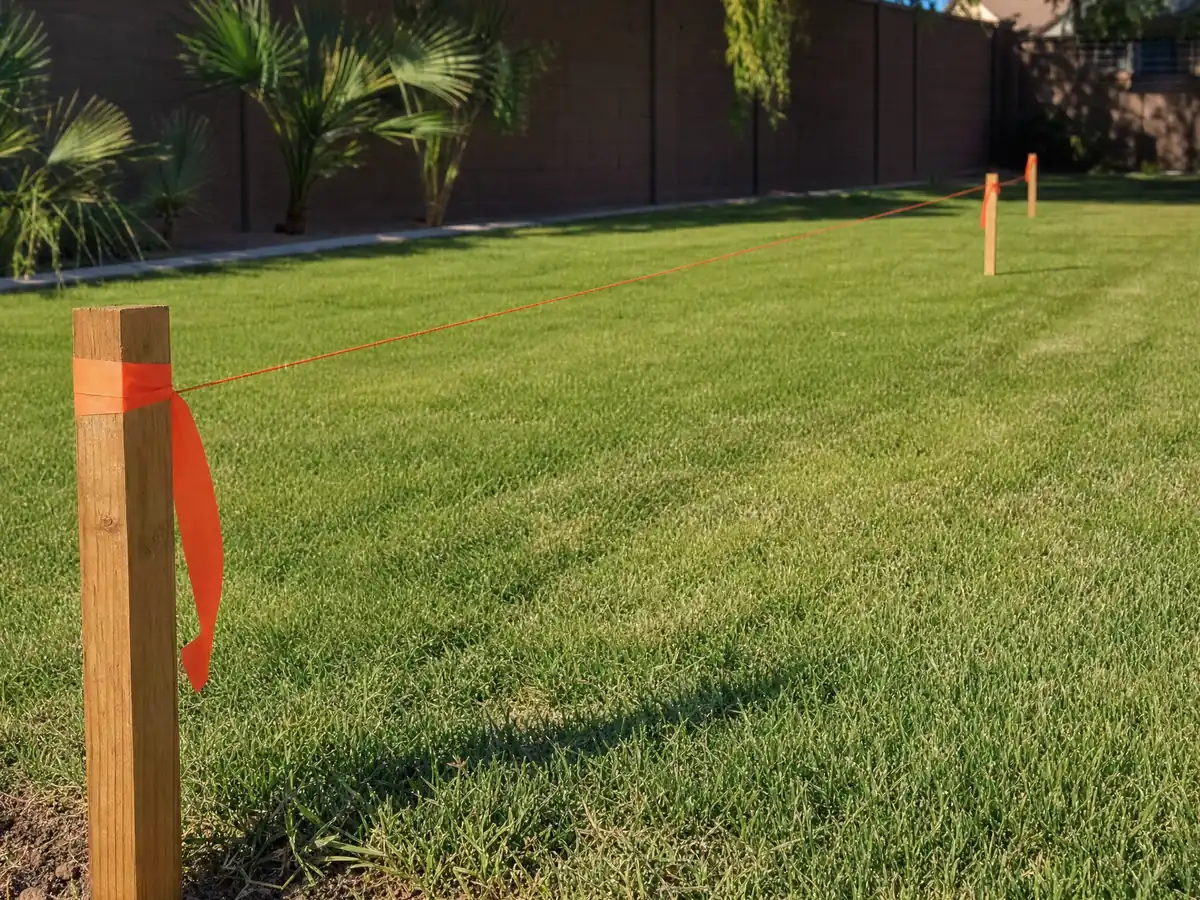
What kind of fence does a swimming pool need in Orange?
A pool needs a barrier at least five feet high, measured from outside the pool area (Municipal Code 17.14.190). Wrought iron openings may be no wider than four inches. Gates must be self-closing and self-latching, with the latch at least five feet above the ground, and the code asks for a clear three foot path around the pool, around 50 percent or more of the perimeter for properties of two units or fewer.
The enclosure is only part of the job. New or remodeled pools at a single-family home also need at least one more drowning prevention feature under the amended Residential Code Appendix CI. Above grade pools or spas and their elevated decking may sit no closer than three feet to any property line (17.14.190.D). Ask the Building and Safety Services Division which feature pairs with your enclosure before the posts are set.
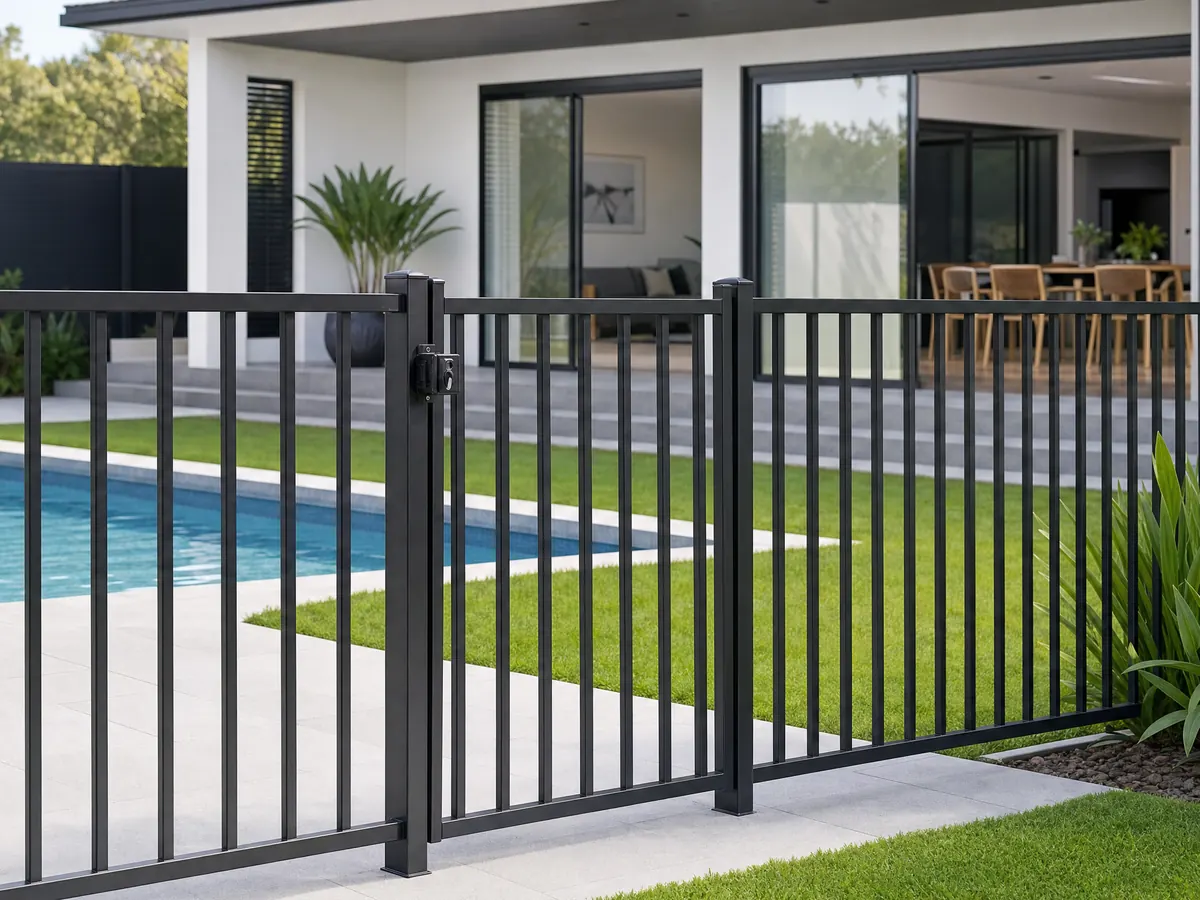
How much does fence installation cost in Orange, and how do I choose a fence company?
We found no Orange fence survey, so we use Los Angeles sources. Angi's Los Angeles page, updated August 4, 2026, shows an average of $3,051 with a typical range of $1,734 to $4,422, and $2,100 to $2,350 for 100 feet. HomeGuide's February 2026 page runs $20 to $60 per linear foot without a stated method, and Thumbtack's national page shows $23 to $57. Federal wage data for the Los Angeles-Long Beach-Anaheim metro puts fence erectors at a mean $28.00 an hour for May 2025. Blending these, we plan wood or vinyl privacy fencing at about $25 to $55 a linear foot.
Chain link is off the table here, so ask for wood, vinyl or decorative metal and for each footing to be priced. Check any license first with our guide to checking a contractor's license, and read how general contractors use subcontractors to see who answers for the work.
Extras change the total. Angi's national page lists gates at $150 to $2,000 and old fence removal at $3 to $5 a foot, and it shows a permit at $20 to $60, which may not match Orange's fee schedule because we could not read it.
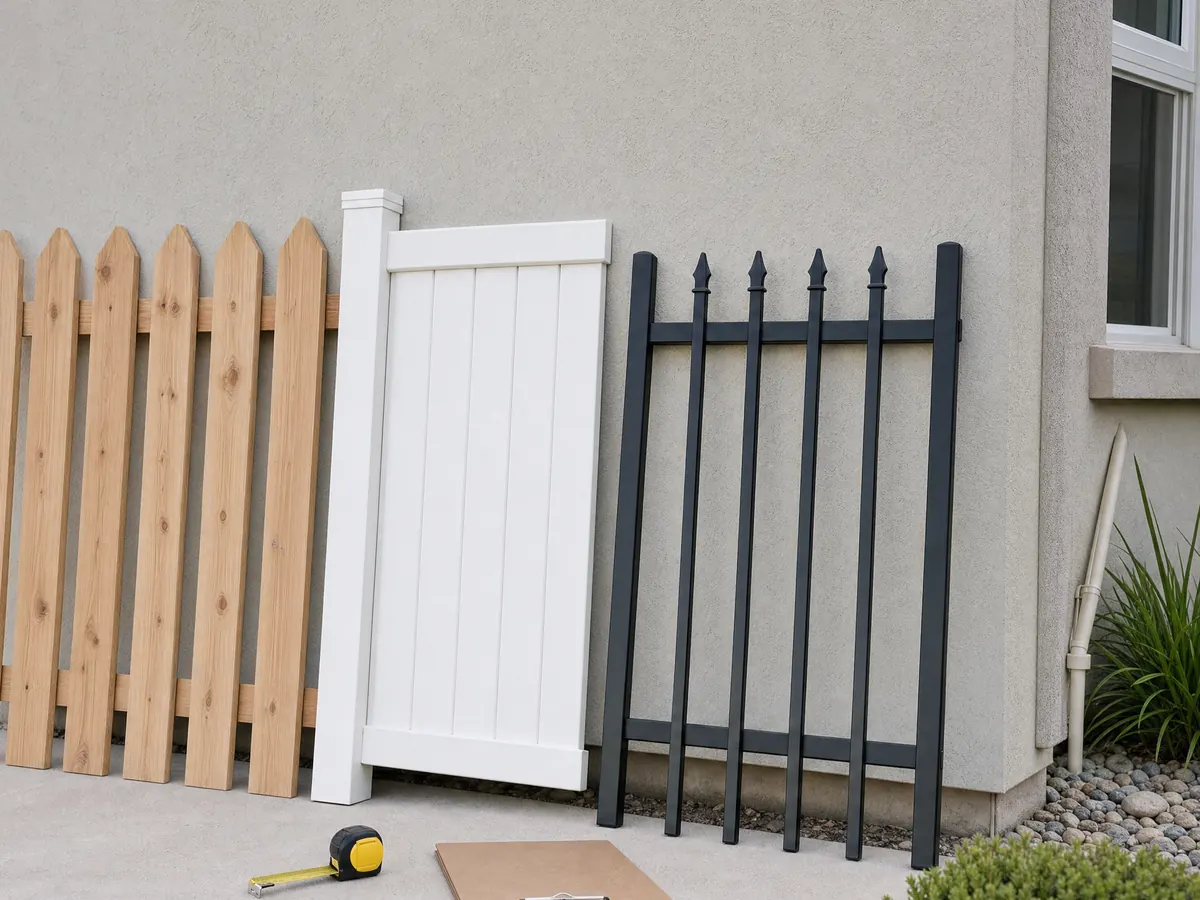
Fence photos from Orange and nearby communities
Fence scenes tied to Orange's tract streets and Old Towne lots and to nearby places such as Santa Ana, Villa Park, Tustin and Garden Grove, from posts and footings to gates, pool barriers and block walls.
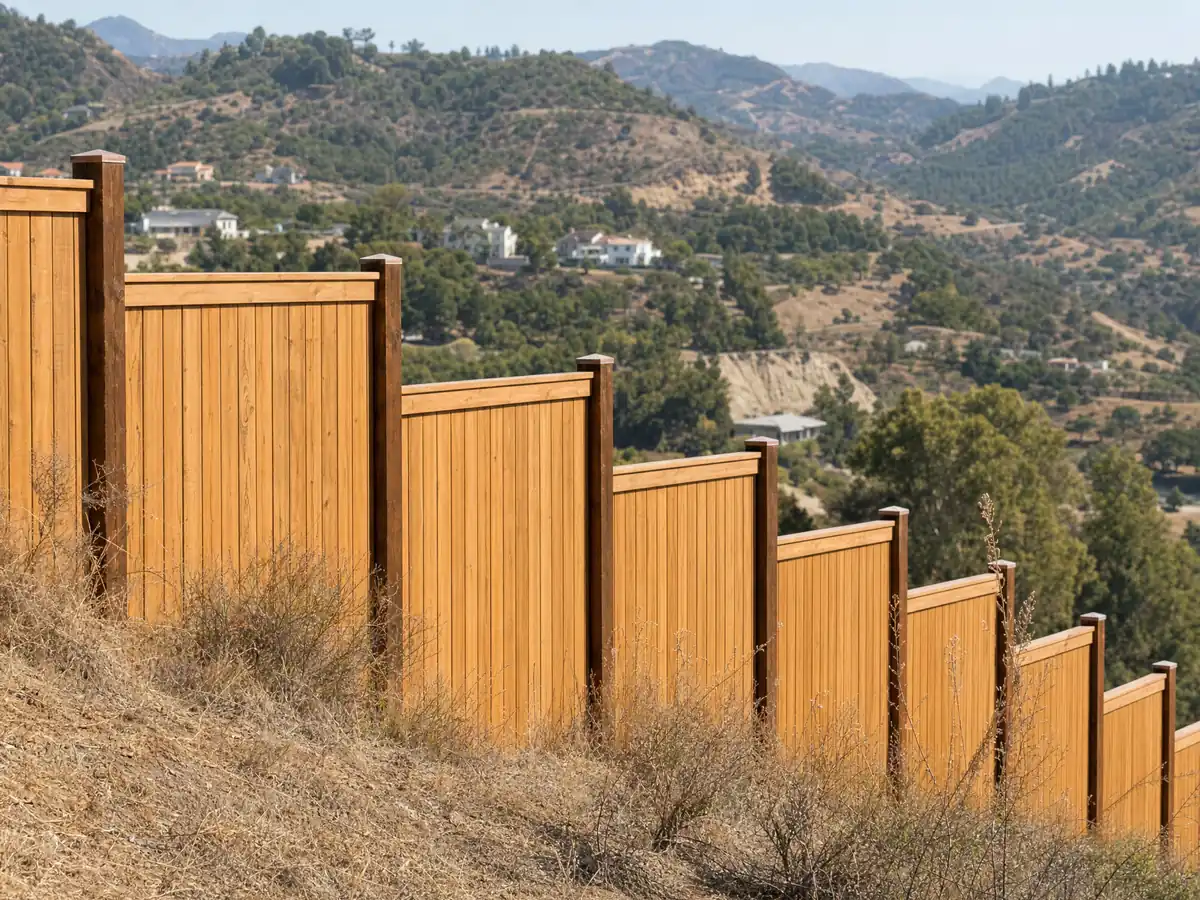
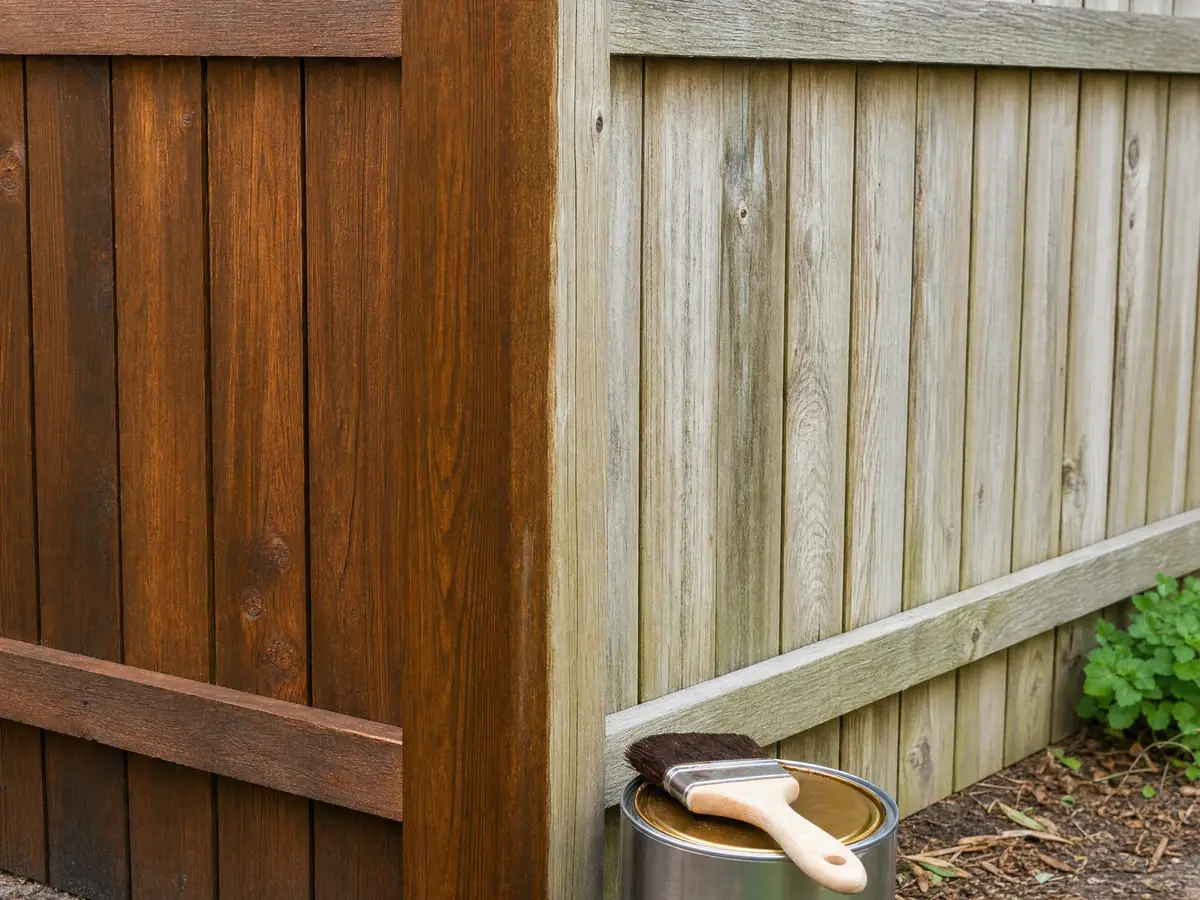
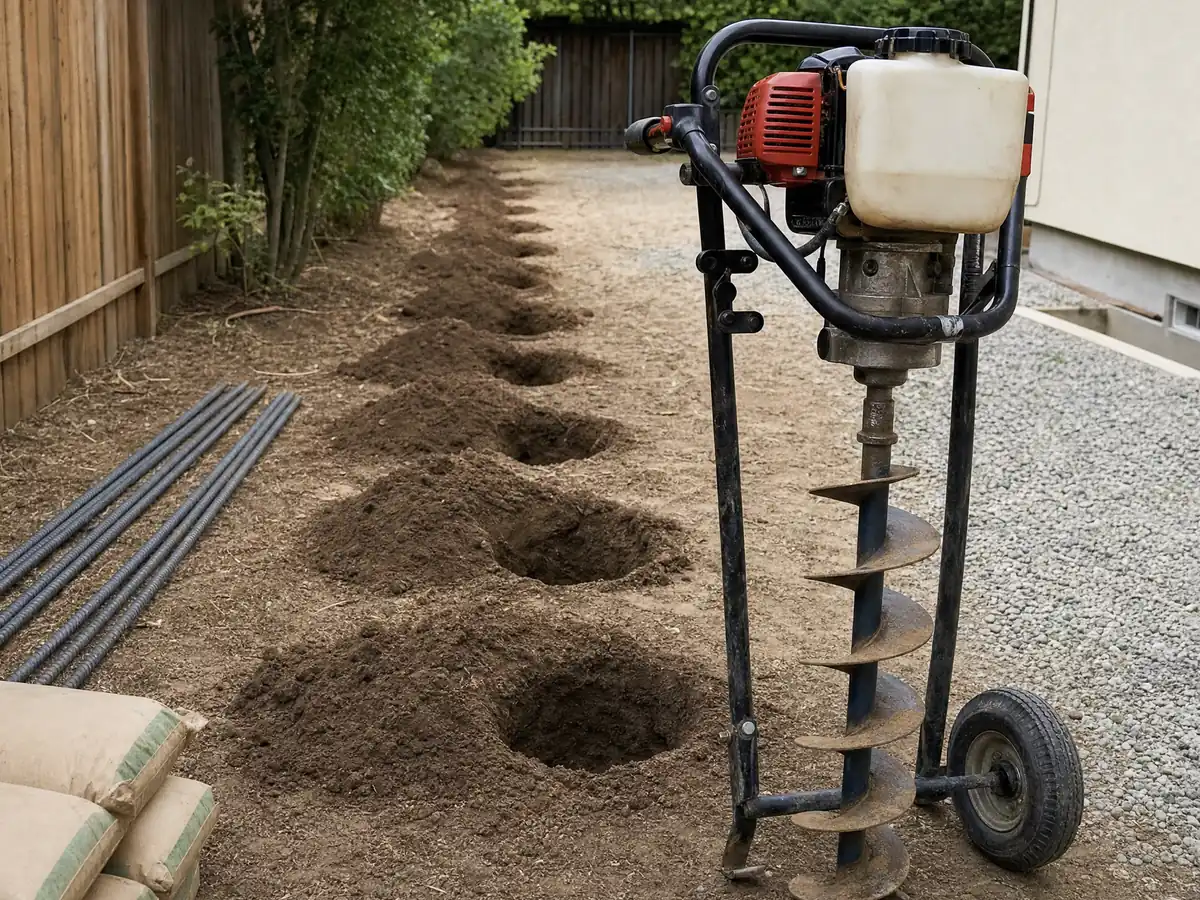
Where these Orange fence figures come from
The material by material table, with each source and date, is on our fencing price page. A fence usually goes in beside other exterior work, and the Orange rules for it are on the roofing page, the painting page and the kitchen remodeling page. For a city with a lower front yard cap and a hillside rulebook, read the Glendale fencing guide.
| What it covers | Typical range |
|---|---|
| Wood or vinyl privacy fence, 6 feet | $25 to $55 per linear foot |
| Chain-link | $12 to $30 per linear foot |
| Aluminum or ornamental iron | $35 to $85 per linear foot |
| Typical 100-foot backyard run | $2,500 to $5,500 total |
| Block walls, horizontal slat fences, gates and openers, hillside lots | Set by the written proposal |
Orange fence questions, answered
Do I need a permit to build a fence in Orange, CA?
Not always. The state exempt list covers fences up to 7 feet, but zoning limits still apply and Orange's own handout was not readable to us. Retaining walls over 4 feet, pool barriers and masonry walls are different matters, so ask the Building and Safety Services Division for your exact fence before you buy panels.
How tall can my front yard fence be in Orange?
Three and one-half feet in the required front yard of a standard residential lot, under Municipal Code 17.12.070.B.2 and 17.12.040.D. Corner and key lots follow a separate figure and the corner cut-off rule in 17.14.150, so measure from the survey and ask Planning when the lot is unusual.
Can I put up a 7 foot fence in Orange?
Not on a standard side or rear line. Those fences stop at six feet measured from the highest adjacent ground, and toppers and lattice count toward the height. A 7 foot fence can need no building permit and still break zoning, unless a sound wall rule or an administrative adjustment applies.
Is chain link allowed in Orange?
Not in residential zones. The fence material table bans chain link, which also may not face a street in a required setback, and permits only coated vinyl mini-mesh chain link. Barbed and concertina wire are banned too, so wood, vinyl, composite, masonry or decorative metal are the realistic choices.
Is fence installation with vinyl allowed in Orange?
Yes, vinyl and composite are on the list of permitted residential materials in 17.12.070.A.3, subject to the height limits. In Old Towne and the Eichler districts, additional material limits may apply under the district standards, so ask Planning before ordering vinyl for an address in those areas.
How much does it cost to have a 100 foot fence installed?
Angi's Los Angeles page shows $2,100 to $2,350 for 100 feet, and our blended planning range of $25 to $55 a linear foot puts a 100 foot privacy run at roughly $2,500 to $5,500. We found no Orange survey, so the measured proposal is what counts.
Do I need a permit for a block wall or retaining wall in Orange?
Possibly. The state exempt list covers retaining walls up to 4 feet from the footing bottom unless they carry a surcharge, while zoning height limits and the masonry trade's own permit questions apply separately. Ask the Building and Safety Services Division about your specific wall.
Do I need a swimming pool fence in Orange?
Yes. A pool barrier must be at least five feet high measured from outside the pool, with self-closing and self-latching gates, a latch at least five feet up and wrought iron openings no wider than four inches. New or remodeled pools at a single-family home also need one more drowning prevention feature.
Who repaints a tract wall in an Orange neighborhood?
Under the tract fencing rule, the homeowners' association maintains it or, where there is none, each owner does. A repaint or replastering must cover the entire contiguous wall, including the parts past your lot line, and repairs must match the original design and appearance.
Can a general contractor install a fence in California?
On our jobs, a general contractor manages the project and a licensed specialty subcontractor builds the fence. Fencing is CSLB class C-13, and masonry walls belong to a different class. With MDG Builders you can ask for each subcontractor's license number and certificate of insurance before you sign.
Tell us about your Orange fence
Give us the street, whether the fence faces the road, the pool or a neighbor and whether a tract wall is involved. We confirm the height rule for that lot before we visit.