
Concrete Companyin Culver City, CA
A concrete company in Culver City can pour private flatwork on grade without a Building Safety permit, but anything at the curb needs a Street Use Permit from Public Works Engineering, and Planning clears every job first. Front yards carry a 25 percent paving cap, and a lot with a 15 percent slope faces grading limits.
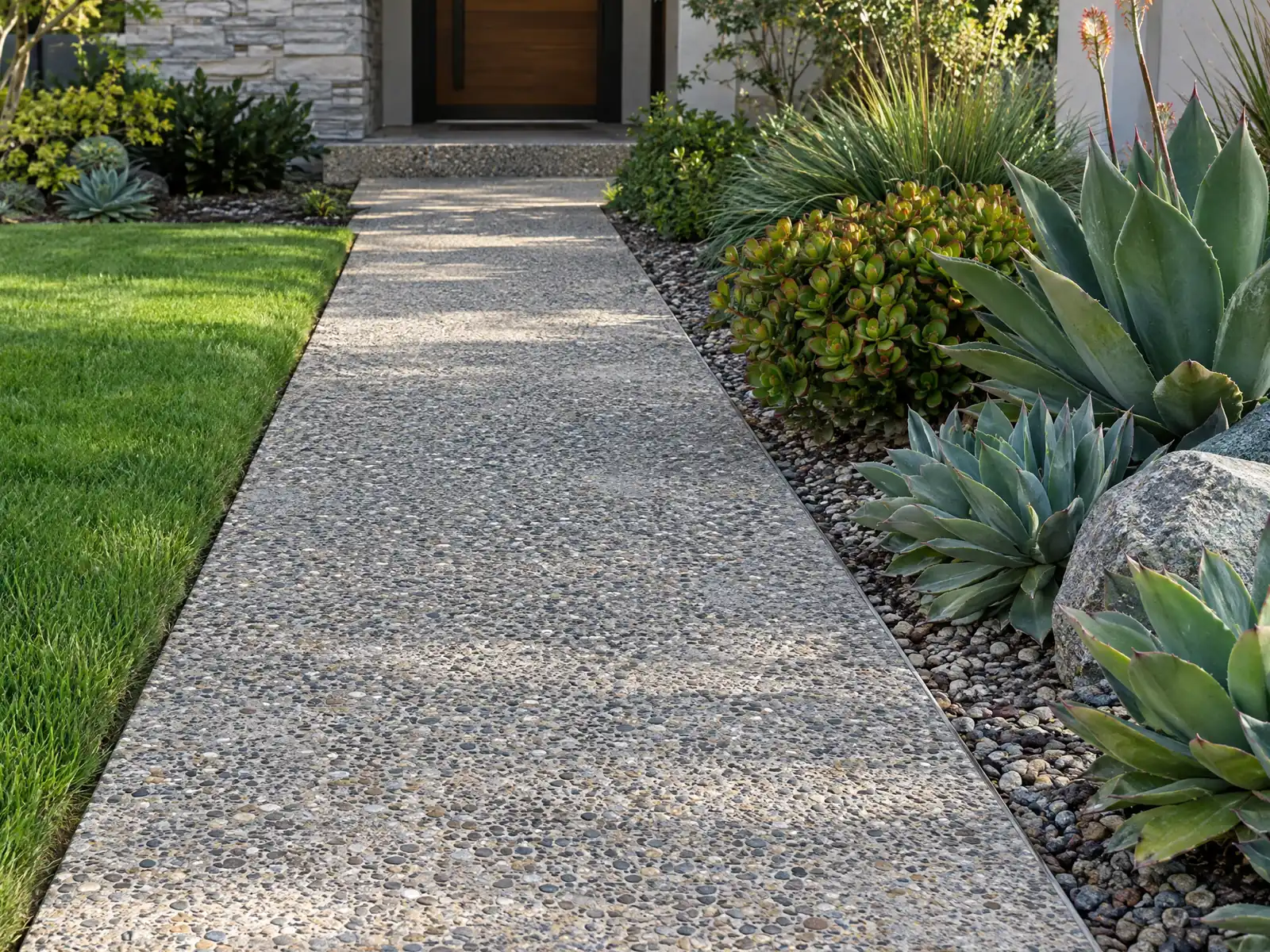
Concrete in Culver City is mostly a matter of replacing and adjusting what was poured long ago. By the Census Bureau's 2024 five-year survey the city has 18,803 housing units, 83.9 percent built before 1980, yet only 6,842 of them (36.4 percent) are detached single-family homes. Many jobs are a driveway, a front walk or a patio on a modest lot, or paving shared by a small building, and a lot with a slope of 15 percent anywhere on it is handled differently from a level one.
MDG Builders, CSLB #1040337, is a general contractor in Tarzana. We lay out the pour, put the permit questions to the City and sequence the crews, while a subcontractor licensed for concrete forms and finishes the work, and its license number and insurance certificate are available on request. Prices are on our concrete page, and the Culver City overview shows the other trades we run here, such as flooring and decks.
What Culver City's code, Public Works and Planning say about concrete
Where concrete permits come from in Culver City: City of Culver City Planning and Development Department, Building Safety Division.
- The City lists concrete sitework on grade that is not an accessible path of travel as exempt from a building permit, while foundations, retaining walls and parking lot paving, striping or restriping need permits; driveways are referred to the Engineering Division.
- New driveway approaches (aprons), driveway apron replacement, sidewalk replacement, curb and gutter replacement and curb cores in the public right-of-way need a Street Use Permit from Public Works Engineering: apply online with plans, plan check takes about 14 business days, Risk Management must approve insurance, fees are paid before issuance, then a pre-construction meeting is held with a Public Works Inspector. Contact is Engineering@culvercity.org.
- Municipal Code 9.08.415: a driveway may be no wider than 30 feet on flat ground and must follow the City Engineer's driveway specifications; an abandoned driveway or depressed curb must be removed and replaced with full-height curb and sidewalk before a new driveway is built; and before final inspection on any building, addition, remodel or pool the owner must fix defective, damaged or non-conforming sidewalk and drive approaches at no cost to the City.
- Removing a parkway tree for a private improvement requires an arborist report, review of transplanting, proof the project cannot be redesigned to avoid the removal, and approval by the Public Works Director, who generally requires two replacement trees (36-inch box where feasible) for each tree removed, with one year of maintenance by the applicant (9.08.215).
- Culver City's reach code (15.02.1120, CALGreen 4.106.3.1) requires at least 20 percent of new parking, walking or patio surfaces at a low-rise residential building to be permeable, excluding the primary driveway, primary entry walkway and entry porch or landing and required accessible routes.
- Driveway slopes may not exceed 20 percent along the centerline, the 20 feet nearest the street may not exceed 3 percent, parking areas may not exceed 5 percent, uncovered R1 and R2 parking must be within 15 feet of one interior side lot line or screened from the street by the house, and the driveway leading to a parking space must be at least 20 feet long (17.320.035).
- Residential driveways and parking areas should use two or more strategies to reduce visual impact, such as integral-color concrete, slate, brick, pervious concrete or permeable areas, single-width garage doors, or a driveway at the side of the lot (17.320.035.L).
- No more than 25 percent of a required street-facing setback may be paved in R1 and R2 zones, except to provide a standard 16-foot driveway to a street-facing two-car garage, and any extra permeable hardscape for lots with no other parking is capped at a combined 20 feet in width (17.210.020).
Sources for these rules
Who issues the permit for a new driveway apron, sidewalk or curb in Culver City?
Public Works, not the building counter. New driveway approaches, apron replacement, sidewalk replacement and curb and gutter work in the public right of way need a Street Use Permit from Public Works Engineering, applied for online with plans. The City's application page puts plan check at about 14 business days, then Risk Management must approve the contractor's insurance, fees are paid, and a pre-construction meeting with a Public Works Inspector comes before the first form is set.
Two code rules shape the design. Municipal Code 9.08.415 caps a driveway at 30 feet wide on flat ground, requires an abandoned driveway or depressed curb to be restored to full-height curb and sidewalk, and makes the owner fix cracked or non-conforming sidewalk and approaches before final inspection of any building, addition, remodel or pool. A remodel can therefore bring a sidewalk repair with it.
Street trees add a step. Removing a parkway tree for a private project (9.08.215) takes an arborist report, a look at redesigning around the tree, approval from the Public Works Director, and usually two replacement trees in 36-inch boxes with a year of upkeep by the applicant. For any right-of-way job the City also asks the contractor for a State license, a Culver City business license and a certificate of insurance on request.
Can I pour a patio or widen a driveway in Culver City without a permit?
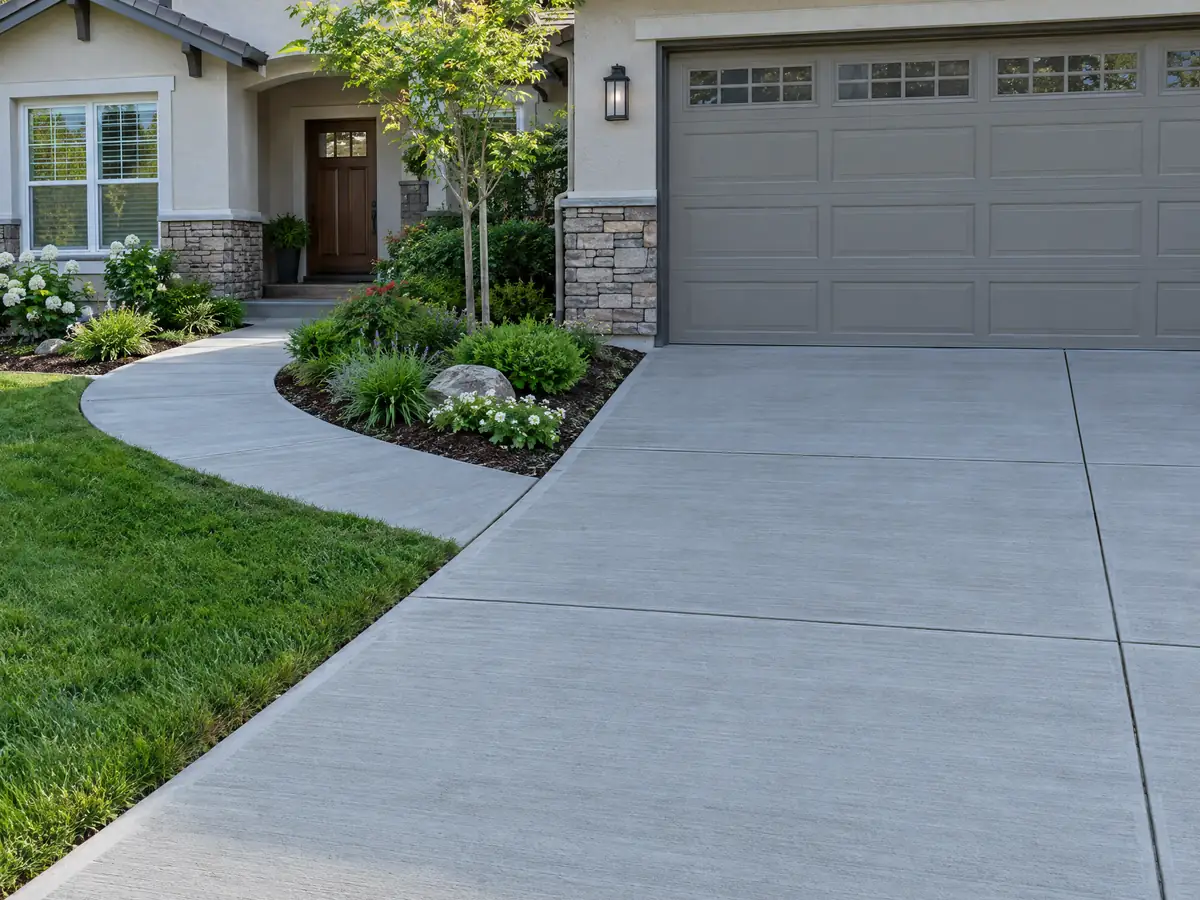
Often the pour itself needs no building permit, but zoning still applies. The City's permit list treats concrete sitework on grade as exempt unless it forms an accessible path of travel, and sends driveways to the Engineering Division, while foundations, retaining walls and parking lot paving need permits. Because a zoning clearance rides with every building or grading permit, call Planning at (310) 253-5725 before widening anything.
In R1 and R2 zones no more than 25 percent of the required street-facing setback may be paved, apart from a standard 16 foot driveway to a street-facing two-car garage (17.210.020). Slopes are regulated too: a driveway may not exceed 20 percent along its centerline, the first 20 feet from the street may not exceed 3 percent, parking areas stop at 5 percent, and the drive to a parking space must be at least 20 feet long (17.320.035).
Water has a rule of its own. The reach code (15.02.1120) requires at least 20 percent of new parking, walking or patio surfaces at a low-rise residential building to be permeable, though the primary driveway, main entry walk, porch or landing and accessible routes are excluded. Where a permit applies, 75 percent of construction waste must be diverted with third-party verification, so ask whether broken-out slabs count toward the tally on your permit.
What does the Hillside H designation mean for a pour, a footing or grading on a Culver City slope?
Culver City writes the slope into the lot. Any lot with a slope of 15 percent or more on any portion is recorded with the Hillside 'H' grading designation, so a topographic survey goes with the plans and a geotechnical and geological report goes with the grading plan. An owner who believes a lot is flat can appeal to the Planning Commission with a licensed surveyor's survey showing no slope at or above 15 percent. The Safety Element names Blair Hills and Culver Crest for landslide risk.
Quantities are capped. Cut plus fill on an H lot is limited to 500 cubic yards plus 5 percent of the lot size in cubic yards, and the code's own example gives a 5,000 square foot lot 750. A hillside grading plan and permit are needed once grading passes 100 cubic yards with a cut or fill over 3 feet, a cumulative cut and fill over 5 feet, or ground steeper than 25 percent. Third-party plan review is at the owner's expense, and no grading permit issues before the building permit.
A terrace, a driveway cut or a pad for a spa can pass those thresholds sooner than owners expect. County map layers carrying State hazard zones put 44 of 1,299 sample points inside the city in the earthquake-induced landslide zone, mostly on the east side. Ask for the grading quantity in the proposal, not just the slab area, and expect an engineer on the job.
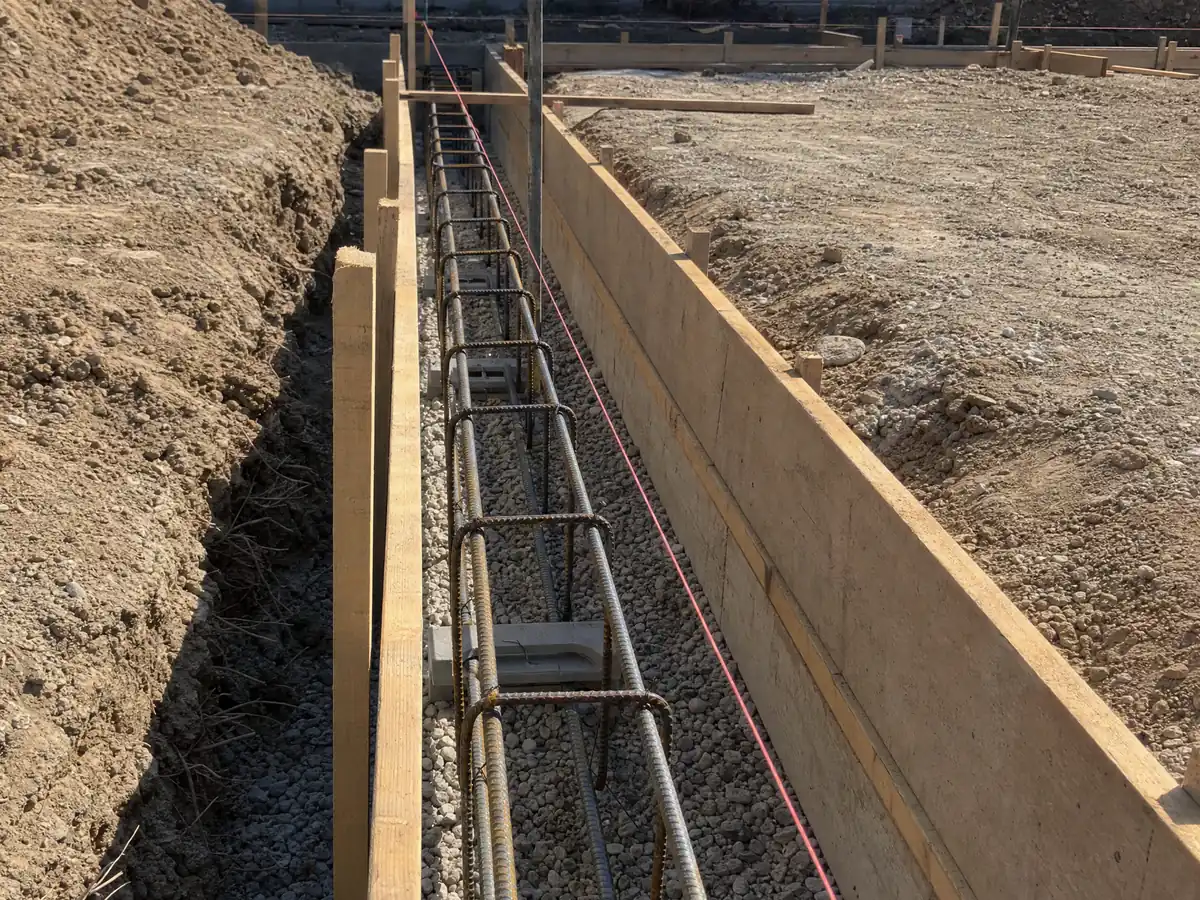
What are the retaining wall and block wall rules in Culver City?
On flat ground the City treats a retaining wall shorter than 4 feet, counted from the footing bottom up, as exempt from a building permit; anything taller, and any wall carrying a driveway or a slope above it, should be treated as engineered work. Zoning separately caps a single retaining wall at 6 feet and any combination at 12 feet, with walls in a series at least 3 feet apart horizontally (17.300.030).
Freestanding block and concrete fences are murkier because the City's own wording is inconsistent. The code amendment exempts a block or concrete wall of 3 feet 6 inches or less from a building permit, and the permit page says the same for block walls under that height, yet it also lists a new or replacement fence as permit required and says all fences and walls need Planning approval regardless of height. Treat Planning review as the starting point and ask Building Safety which counter applies.
Heights follow Planning's table: 4 feet in a required front setback, with the part above 30 inches open-work within 10 feet of the street, and 6 feet in side and rear setbacks. The City says a licensed surveyor must fix the exact property line, and fence applications go to Current Planning with a notarized owner affidavit. Pool barriers follow the building code, and block walls and pools receive separate permits.
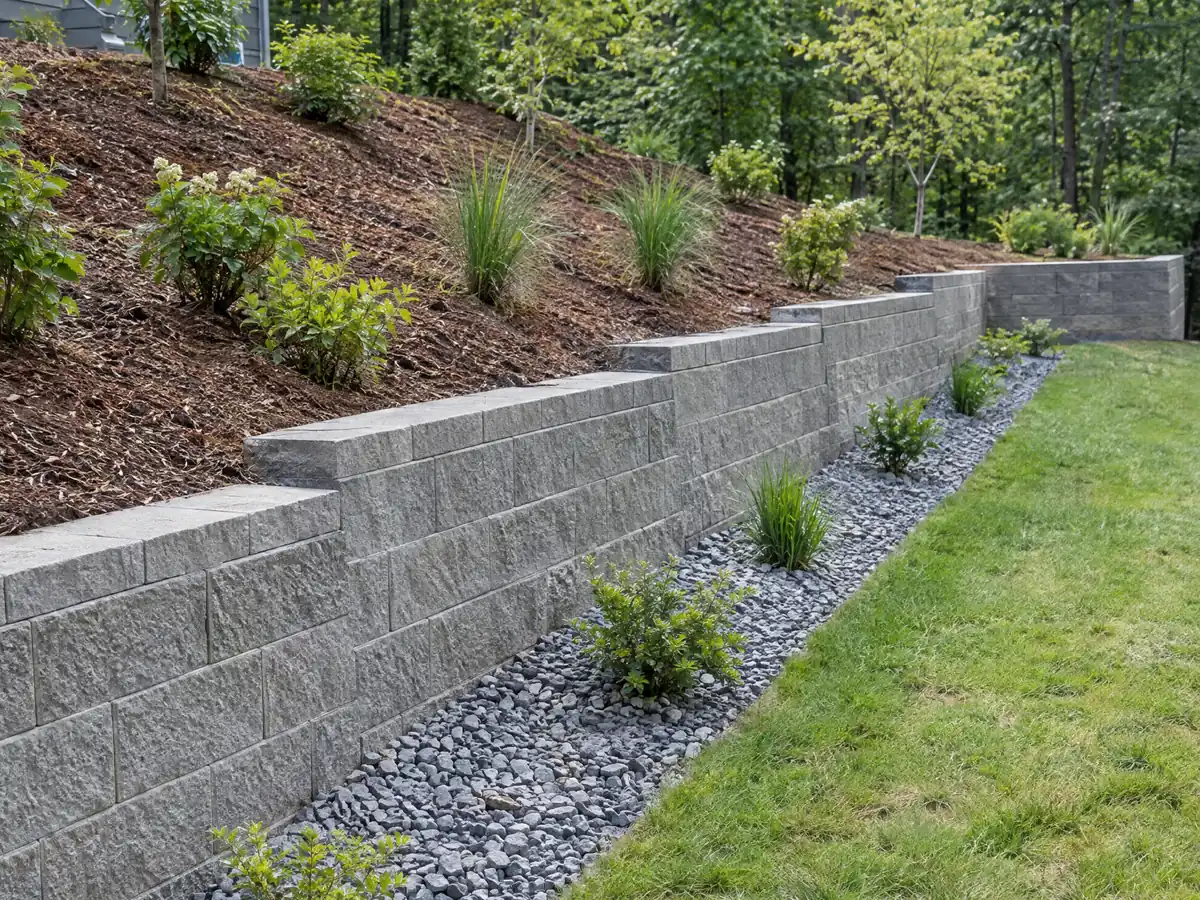
Why do older Culver City walks and slabs crack, and what is under them?
The city grew in bursts. Harry H. Culver began planning it in 1913, it incorporated in 1917, and Wikipedia's census table jumps from 8,976 residents in 1940 to 32,163 in 1960; the 2024 survey puts 34.5 percent of today's units in the 1940s and 1950s. Fox Hills, 330 acres of golf courses and stables, was annexed in 1964 for sewer service and built out by Home Savings and Loan, with its mall opening in 1975. Much of the original flatwork is therefore 50 years old or more, unless a past owner replaced it.
Ground matters. The Safety Element says most of the city except its northwestern and southeastern borders sits in an area of elevated liquefaction risk, and 784 of the County's 1,299 sample points (60.4 percent) fell in the State liquefaction layer. Only a geotechnical report on your lot says more, and the City's residential submittal list asks for one if applicable with the foundation drawings.
Water is the other side. The Safety Element describes a small flood area in the north, near Ballona Creek, as Zone AO with 1 to 3 feet of flooding, yet the County's 100-year layer returned only 3 of 1,299 points, so the two sources disagree on its size. The code asks for elevation data before any construction in a special flood hazard area, so ask whether a slab, footing or wall near the creek counts.
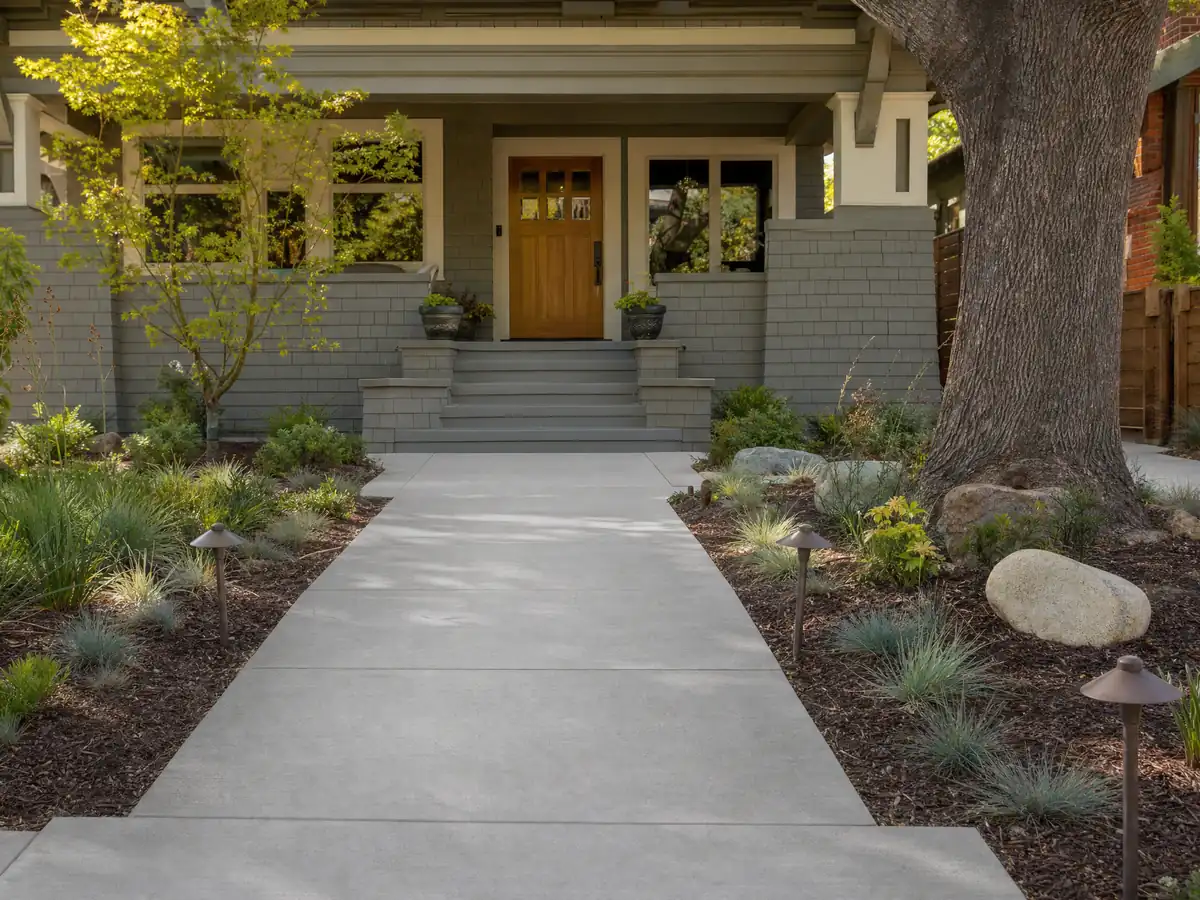
What does concrete work cost in Culver City, and what does a concrete company need to hold?
No Culver City price study turned up, so the numbers are the Los Angeles working ranges on our concrete page: $8 to $14 per square foot for plain patios, walks and slabs of 300 square feet or more, $9 to $20 for a driveway replaced with the old slab broken out, and $15 to $30 for decorative finishes. The sources are Angi's 2026 Los Angeles pages and HomeGuide, and our confidence is medium for plain flatwork and medium to low for decorative.
Multiply a 20 by 20 patio, which is 400 square feet, by $8 and by $14 and the plain version runs $3,200 to $5,600. At $15 to $30 a foot the same patio finished in stain or stamp runs $6,000 to $12,000, and for stamped work alone Angi's July 2026 Los Angeles page gives that same $15 to $30 band. Both results are arithmetic on ranges, not a bid, and small jobs cost more per foot because of minimum charges.
Crews work inside the City's hours, 8 a.m. to 8 p.m. on weekdays, 9 a.m. to 7 p.m. on Saturdays and 10 a.m. to 7 p.m. on Sundays (9.07.035). A permit holder needs a current Culver City business tax certificate, a concrete subcontractor holds CSLB class C-8, and masonry walls fall under C-29; our license check guide shows how to look a number up. Work started early can be penalized two ways, 100 percent of the permit fee in the code or an investigation fee of $274.95, or the permit fee up to $740, on the fee schedule.
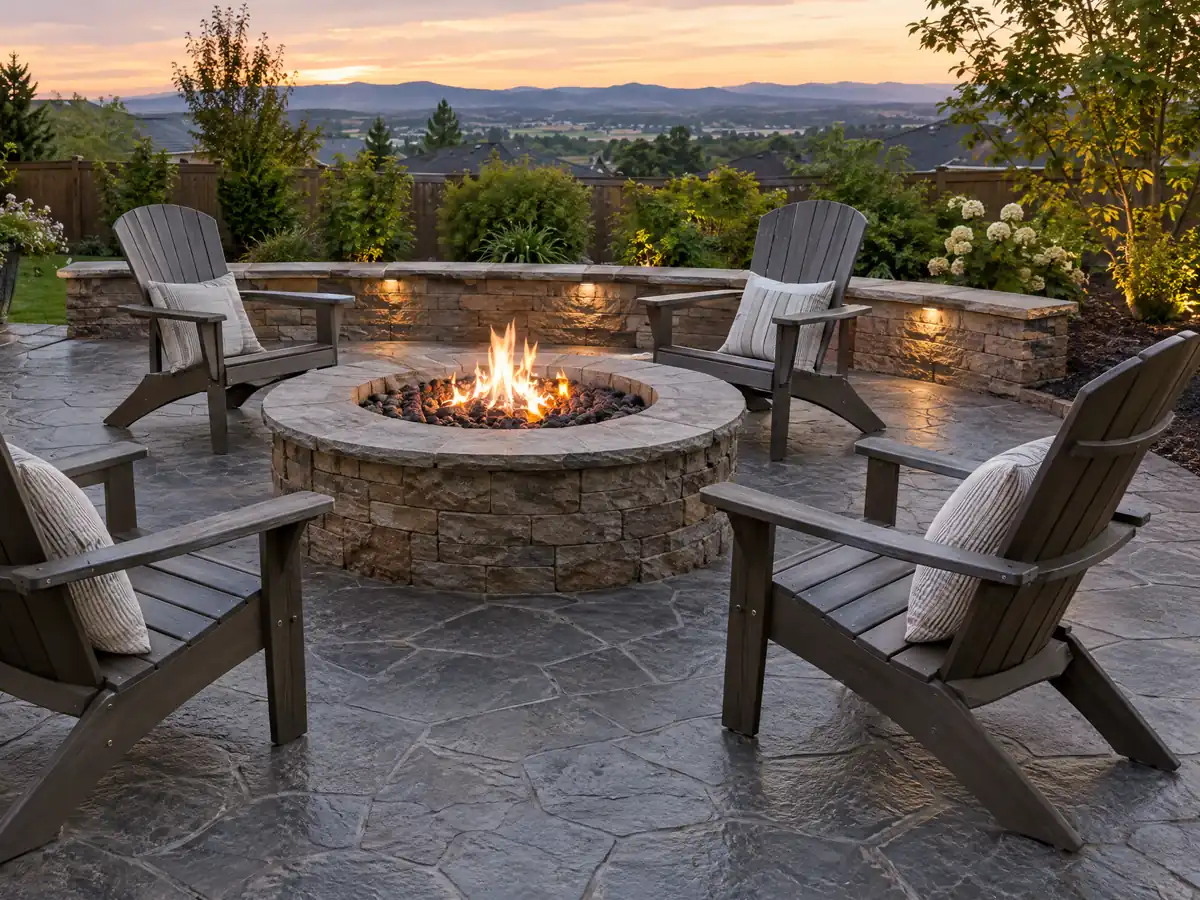
Concrete photos from Culver City and nearby Westside communities
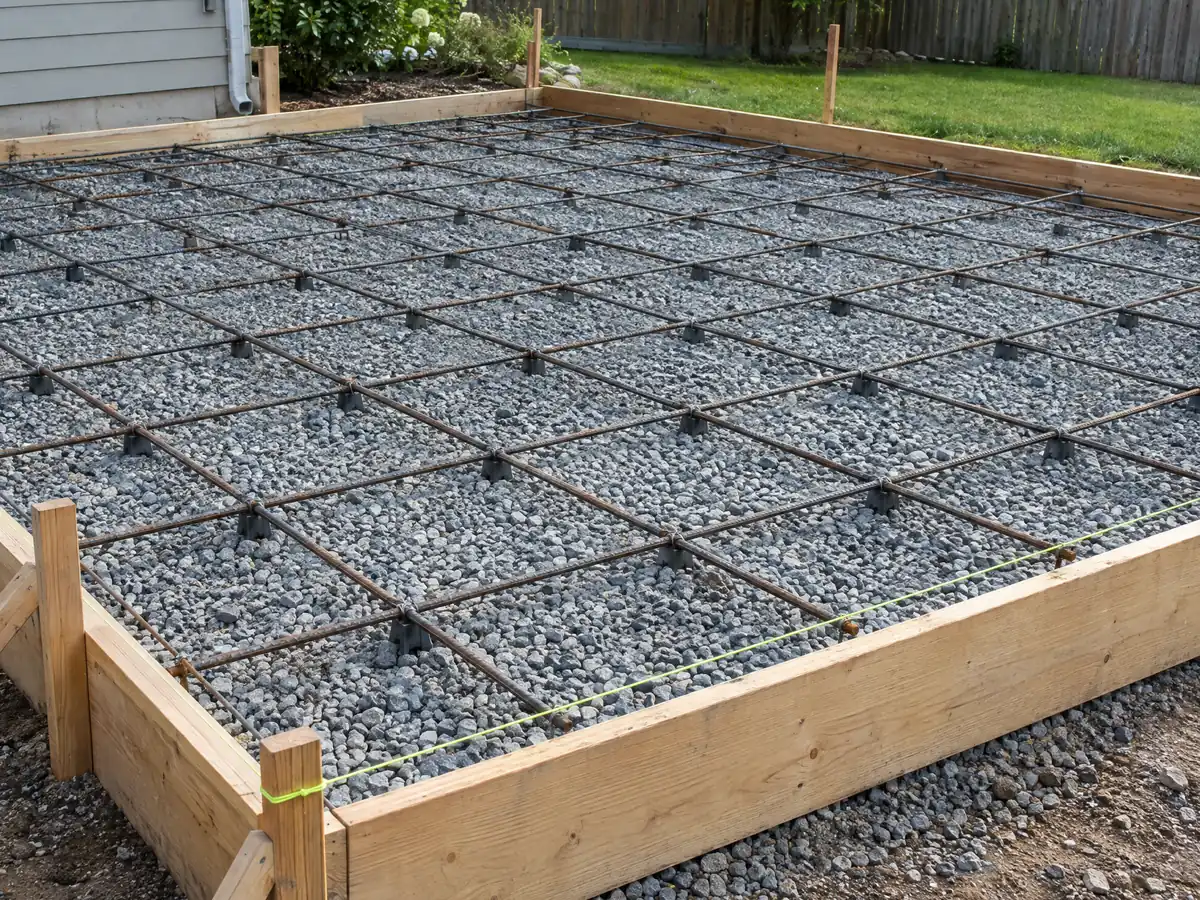
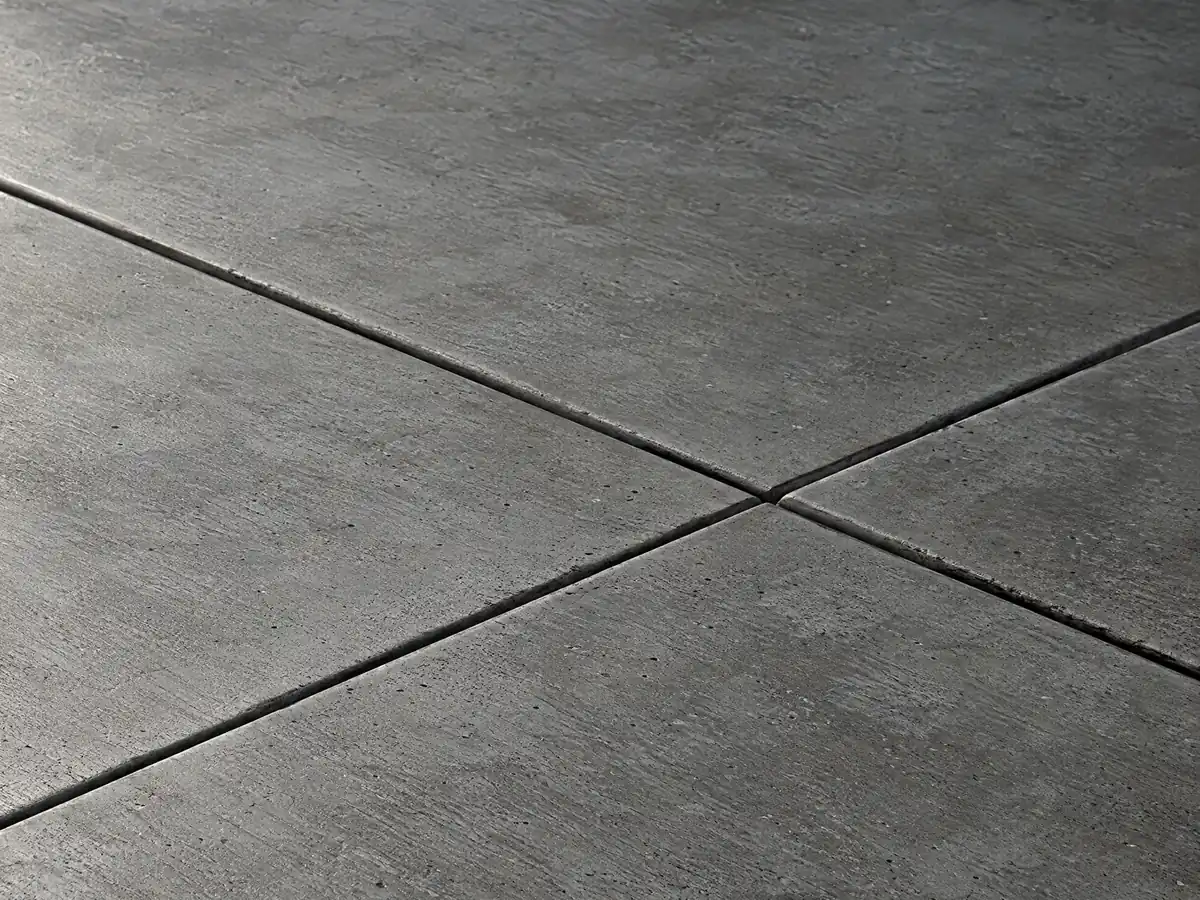
Walks, driveways, forms and finishes from around Culver City. Tap any photo to enlarge it.
What concrete costs around Culver City
These are Los Angeles ranges from our concrete page, not a Culver City quote, and retaining walls have no per-foot price here because height, footing, drainage, steel and engineering set it. Demolition, haul-off, grading quantities, soils reports and permits are separate lines on a proposal. Slabs often come with flooring in Culver City or a Culver City deck, and the guide on how general contractors use subcontractors explains who does what. For contrast, read concrete in Los Angeles, concrete in Inglewood, concrete in Santa Monica and concrete in Glendale.
| What it covers | Typical range |
|---|---|
| Patio, walkway or slab, broom finish, 300 sq ft or more | $8 to $14 per square foot |
| Decorative: stained, stamped or exposed aggregate | $15 to $30 per square foot |
| Driveway replacement, with demolition of the old slab | $9 to $20 per square foot |
| 20 by 20 foot plain patio (400 sq ft) | About $3,200 to $5,600 |
| 20 by 20 foot decorative patio (400 sq ft) | About $6,000 to $12,000 |
| Small jobs under 300 sq ft | Usually above the per-foot range |
| Retaining walls | Set by the written proposal |
Other work we manage in Culver City
Culver City concrete questions: permits, front yards and hillside lots
Can I pour a concrete patio without a permit in Culver City?
Usually yes for a patio on grade, because the City lists concrete sitework on grade as exempt unless it forms an accessible path of travel. Zoning still applies, including the front setback paving cap and the 20 percent permeable surface rule, so ask Planning at (310) 253-5725 before the pour.
Can I expand my driveway without a permit?
Not before checking zoning and Public Works. In R1 and R2 zones paving may cover no more than 25 percent of the required street-facing setback apart from a standard 16 foot driveway, a driveway may be no wider than 30 feet on flat ground, and any change at the curb needs a Street Use Permit.
How much should a 20x20 concrete patio cost?
On our Los Angeles ranges a plain 400 square foot patio runs $3,200 to $5,600 and a stained or stamped one $6,000 to $12,000, before demolition, drainage and permits. Both are arithmetic on medium and medium to low confidence sources, not a bid, and small jobs usually price higher per foot.
How much does a concrete driveway cost in Culver City?
We found no Culver City study, so our Los Angeles range applies: $9 to $20 per square foot for a driveway replaced with the old slab broken out and hauled away. Thickness, haul-off, grading and whether the curb approach is included move the number, and the approach itself needs a City Street Use Permit.
What is the tallest retaining wall I can build without a permit in Culver City?
Shorter than 4 feet, measured from the bottom of the footing to the top, on flat ground and without a surcharge. Taller or surcharged walls need plans. Zoning also limits one wall to 6 feet and a combination to 12 feet, and on a hillside lot the grading rules apply as well.
Do I need a permit to replace a driveway apron or sidewalk in Culver City?
Yes, a Street Use Permit from Public Works Engineering. The City lists driveway approaches, apron replacement, sidewalk replacement and curb and gutter work, with plan check around 14 business days, insurance approval and a pre-construction meeting. A remodel or pool can also trigger required sidewalk repair before final inspection.
How does the Hillside H designation change concrete work in Culver City?
It adds paperwork and limits. A lot with a 15 percent slope anywhere carries the designation, so plans need a topographic survey and a geotechnical report, grading gets third-party review and cut plus fill is capped at 500 cubic yards plus 5 percent of the lot size. Confirm a lot's status on the City's map.
Is 4 inches of concrete thick enough for a driveway?
Four inches is common practice for patios and walks, though we found no code number for it. Delivery trucks, weak or liquefiable ground and heavy loads call for more depth or steel. Ask the proposal to state thickness, base and reinforcement in writing before the forms go up.
What license should a Culver City concrete company hold for concrete work?
Class C-8 is the CSLB concrete license, and C-29 covers masonry, which includes block walls. Ask for the number, check it with our license check guide and request a certificate of insurance. Right-of-way work also needs a Culver City business license, and any contract over $500 must be written and signed first.
Tell us the address and the slab you want
Say whether the pour is in the front yard, at the curb or on a slope, and what it replaces, so the Planning and Public Works questions come with us to the first visit.