
Fence Companyin Culver City, CA
A fence company in Culver City works to 4 feet in the required front setback and 6 feet at the sides and rear, measured from the higher grade of the two lots. The City says every fence needs Planning approval, while its permit page sets building permit lines at 3 feet 6 inches for block and 7 feet for wood.
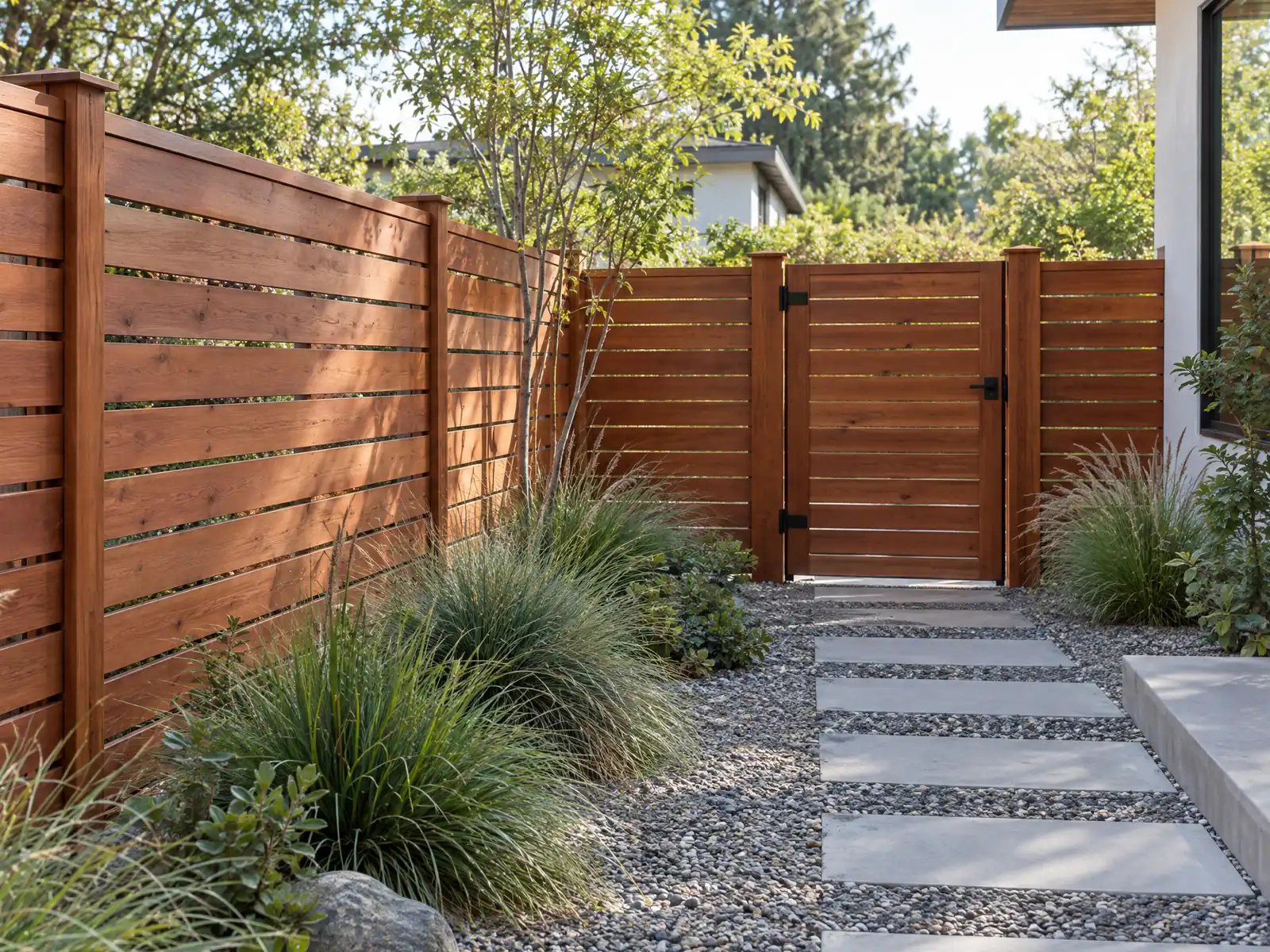
Culver City fences mostly surround small lots. The Census Bureau's 2024 five-year estimates count 6,842 detached and 1,673 attached houses among 18,803 housing units, and the median year built is 1963. The building boom behind that number ran from 1940 to 1960, when Wikipedia's census table shows the population climbing from 8,976 to 32,163, so the typical fence line today separates a bungalow or tract house from another rear yard just like it. The City has been a charter city since 1947, and its code on fences, hedges and walls, section 17.300.030, can differ from the cities around it.
MDG Builders (CSLB #1040337) takes a fence job as the general contractor. We confirm the heights on your lot, file with Planning where the City wants a form, and send a licensed fence subcontractor to set the posts, which is the arrangement described in our piece on how general contractors use subcontractors. The fencing page has the sourced prices, and the rules next door are in the guides for Santa Monica, Inglewood and Los Angeles.
What Culver City's fence code and permit pages say about fences
Where fencing permits come from in Culver City: City of Culver City Planning and Development Department, Building Safety Division.
- The City's permit list says a block wall over 3 feet 6 inches and a wood or vinyl fence over 7 feet need a building permit, a block wall under 3 feet 6 inches and a wood or vinyl fence under 7 feet are exempt, and 'all fences/walls require Planning Division approval, regardless of height.' The same page also lists 'Fence, new or replacement' under permits required, so ask Building Safety which applies.
- The Culver City code amendments exempt a block wall or concrete fence not over 3 feet 6 inches high from a building permit (CBC 105.2 item 14, CRC R105.2 item 11).
- Fence permits are filed with Current Planning (online or in person at 9770 Culver Blvd., 2nd floor) with the address, a scaled site plan on the City's worksheet, an elevation for openwork fences, a notarized owner affidavit and, if any part sits on a neighbor's land, a notarized neighbor affidavit; the City says review takes 1 to 2 weeks and phones are (310) 253-5725 and (310) 253-5710.
- Maximum heights (Table 3-2, 17.300.030): 4 feet in a required front setback, with the part above 30 inches open-work (wrought iron or similar) within 10 feet of the street right-of-way and within 5 feet of a driveway or alley intersection; 4 feet in a 15-foot intersection sight line and a 5-foot driveway sight line, open-work above 30 inches; 6 feet in a required side or rear setback; 8 feet beside an alley or a non-residential zone.
- A side or rear fence on a line that abuts a public street needs a 1-foot landscaped setback, an 8 foot fence is allowed between two abutting rear yards by mutual agreement of both owners, open-work fences with at least 60 percent openings may use masonry pilasters (16 inches thick, 10 feet apart) and still count as open-work, and ornamental finials may exceed the limit by 6 inches at least 4 feet apart (17.300.030).
- Retaining walls are capped at 6 feet for any one wall and 12 feet for any combination (including freeboard), walls in a combination must be 3 feet apart horizontally, and retaining walls are allowed in all yards (17.300.030.C). A retaining wall under 4 feet measured from the bottom of the footing on a flat site is exempt from a building permit.
- The Director may administratively approve taller fences if the City verified a nuisance or criminal activity nearby, the property has exceptional geographic circumstances, or the front setback is on a designated primary arterial; fences may not use electric current, razor ribbon, barbed wire or sharp elements (wrought iron arrowheads allowed), fence height is measured from the higher grade of two abutting properties, and a fence hiding the address needs numbers on the fence (17.300.030).
- The City's FAQ summarizes the rule as 4 feet maximum in the front yard and 6 feet in side and rear yards, with open-work above 30 inches in safety sight lines, and says a licensed surveyor must determine exact property line locations.
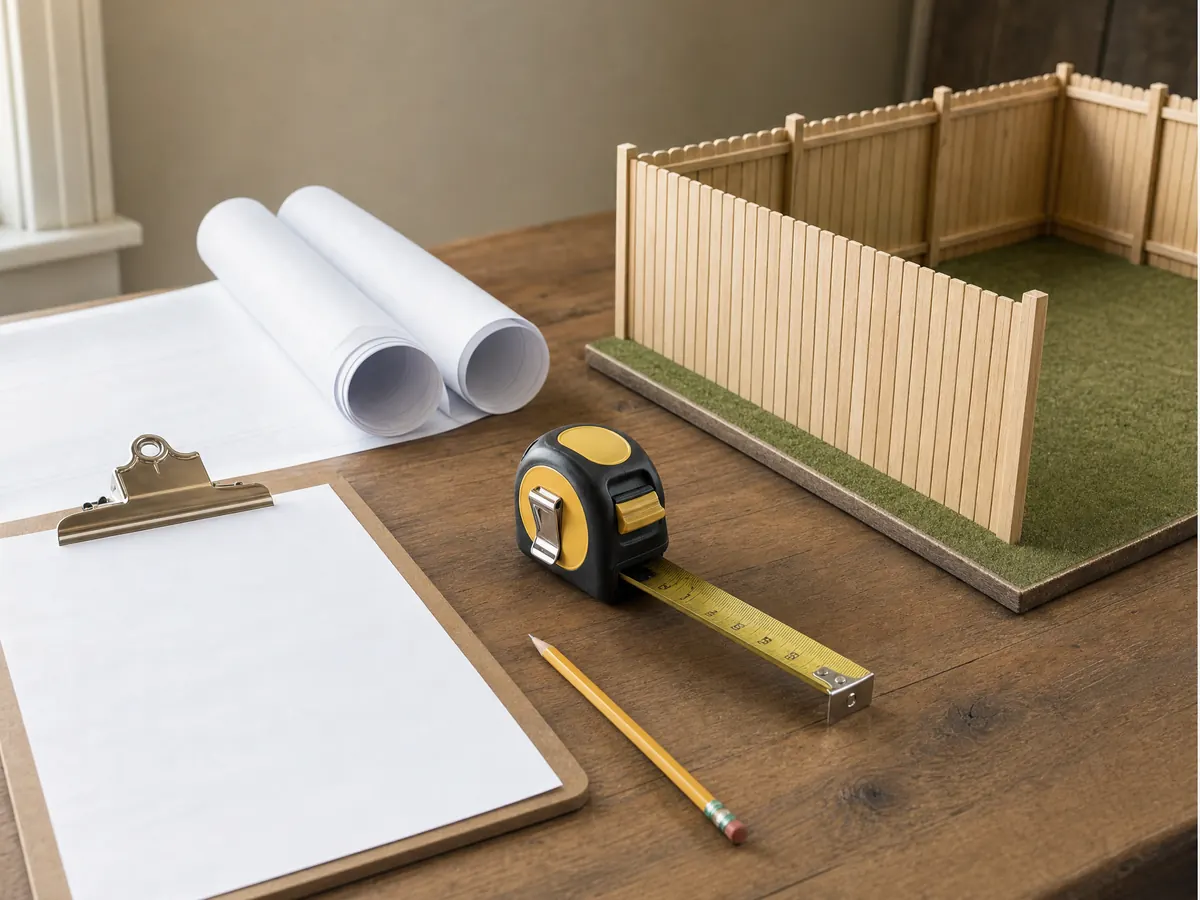
How tall can a fence be in a Culver City front yard, side yard or backyard?
The limits come from Table 3-2 of Municipal Code 17.300.030. A fence in a required front setback may be 4 feet tall, and the part above 30 inches must be open-work, such as wrought iron, within 10 feet of the street right-of-way and within 5 feet of a driveway or alley intersection. In a required side or rear setback the limit is 6 feet, and beside an alley or a non-residential zone it is 8 feet.
Corners are stricter. A 15-foot intersection sight line and a 5-foot driveway sight line both hold a fence to 4 feet, with open-work above 30 inches, so the gate beside the driveway is usually where a clean front-yard design gets tested. Height is measured from the higher grade of the two abutting lots, which matters when the lots step. The City's own FAQ boils it down to 4 feet in front, 6 feet at the sides and rear, and open-work in the sight lines.
Ask for the fence height at each corner of the sketch, because a run can be legal at 6 feet along the side yard and too tall five feet from the driveway.
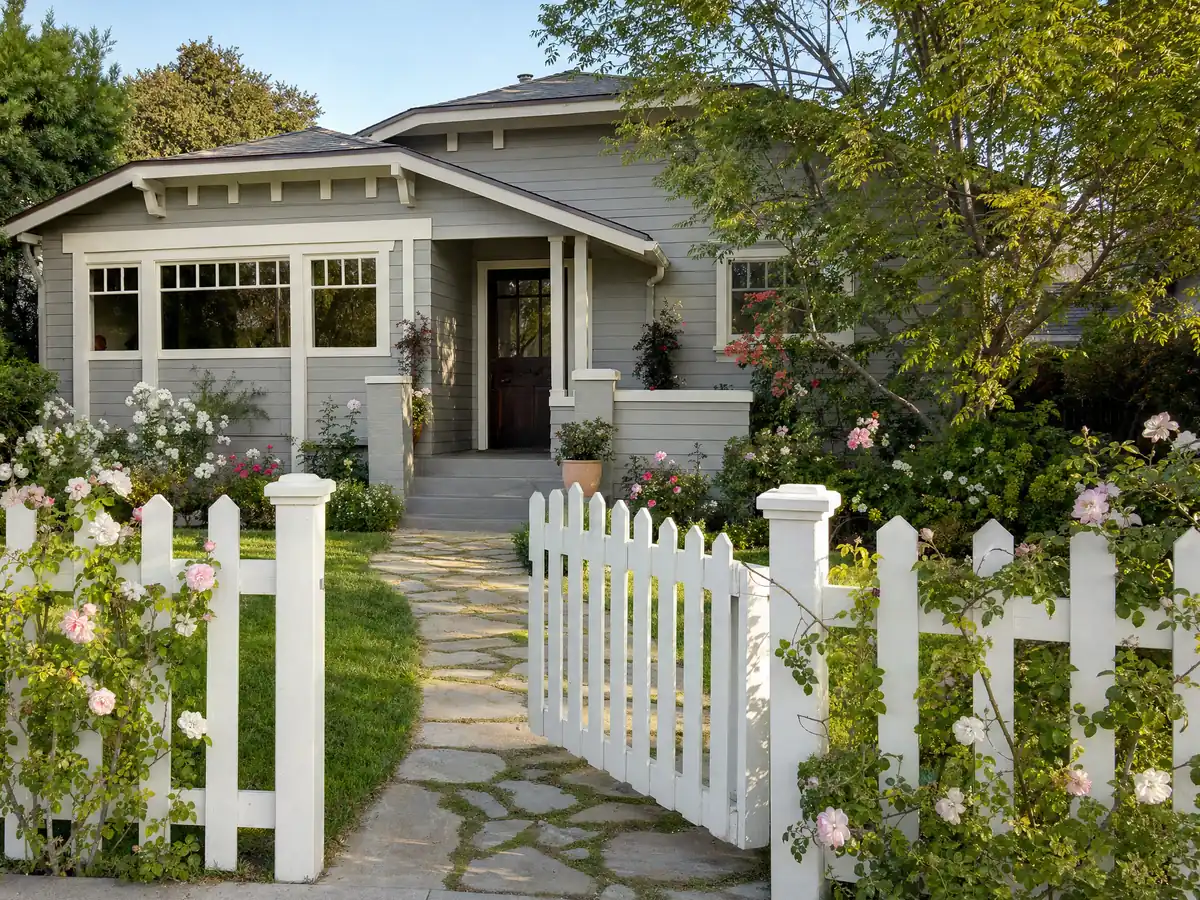
Do I need a permit to build a fence in Culver City?
The City's pages do not agree, so we report them as written. The required-permit page says a block wall over 3 feet 6 inches and a wood or vinyl fence over 7 feet need a building permit, and that shorter ones are exempt. The same page says all fences and walls require Planning Division approval regardless of height, and it also lists a new or replacement fence under permits required. We cannot tell from the page which line controls, so ask Planning and Building Safety before you order materials.
What is documented is the Planning route. Fence applications go to Current Planning, online or on the second floor of City Hall, with the address, a scaled site plan on the City's worksheet, an elevation for open-work fences, a notarized owner affidavit and, if any part of the fence sits on a neighbor's land, a notarized neighbor affidavit. The fence application page quotes one to two weeks for review, and the Planner on Duty answers at (310) 253-5725.
The code also bans electric current, razor ribbon and barbed wire, while wrought iron arrowheads are allowed. Ornamental finials may rise 6 inches above the limit if they are at least 4 feet apart, and a fence that hides the address must carry the numbers.
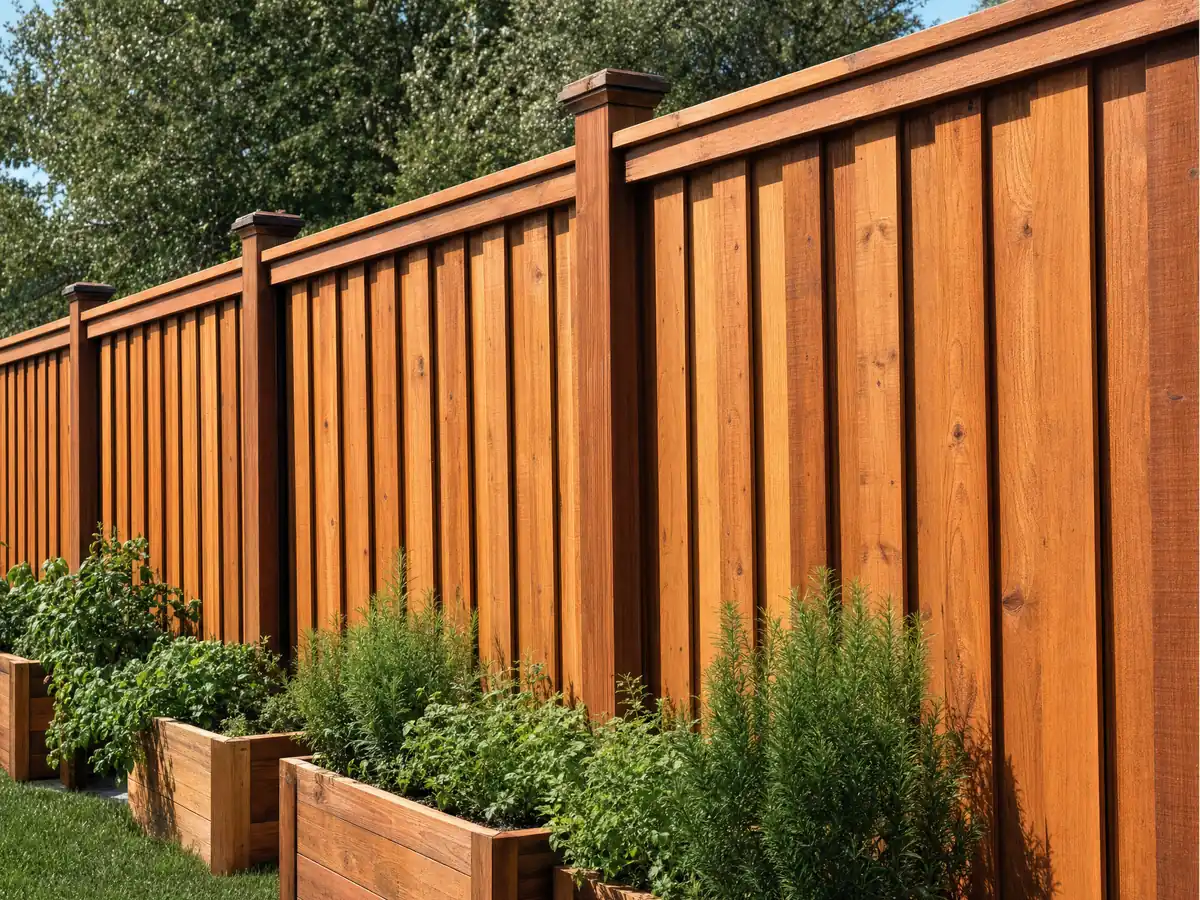
Who pays for a shared fence, and can I build 8 feet between two backyards?
California's good neighbor statute, Civil Code 841, presumes that adjoining owners share the cost of a boundary fence equally and requires 30 days' written notice before one owner incurs costs. The presumption can be rebutted, so a dispute over a fence that is not truly on the line is a different conversation.
Culver City adds a height option. An 8 foot fence is allowed between two abutting rear yards by mutual agreement of both owners, so get that agreement in writing. A side or rear fence on a line that abuts a public street needs a 1-foot landscaped setback. The City's FAQ says a licensed surveyor must determine exact property line locations, and an old fence is not proof of where the line runs.
When a new fence replaces an old one, photograph the old posts and gaps before demolition, send the neighbor the 30 day notice with the survey and the quote, and keep the reply.
What are the rules for block walls and retaining walls in Culver City?
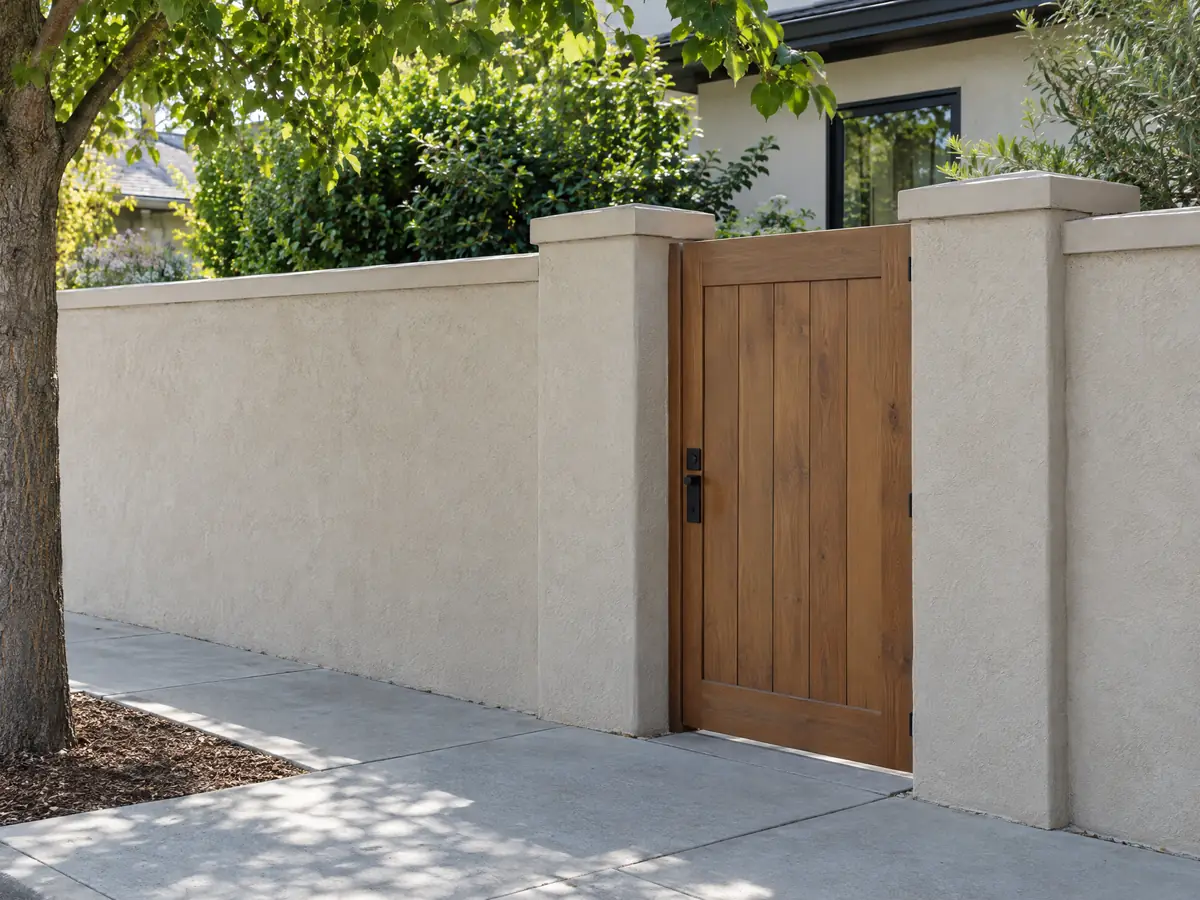
A block wall is masonry, so under State licensing it belongs to a C-29 masonry subcontractor, since the C-13 fencing class excludes masonry walls. The City sorts walls by height: its code amendments exempt a block or concrete wall up to 3 feet 6 inches from a building permit, and the permit page puts the line at over that height. The City's submittal list adds that block walls and pools get separate permits.
Retaining walls have caps of their own in 17.300.030. One wall may be 6 feet tall, any combination is limited to 12 feet including freeboard, walls in a combination must sit 3 feet apart horizontally, and retaining walls are allowed in all yards. A retaining wall under 4 feet, measured from the bottom of the footing on a flat site, is exempt from a building permit.
An open-work fence with at least 60 percent openings may use masonry pilasters 16 inches thick and 10 feet apart and still count as open-work, which is how a front-yard iron fence gets stone or stucco posts. Footings meet the ground next: 784 of the 1,299 County sample points (60.4 percent) fall in the State liquefaction layer, and the City's submittal list asks for a geotechnical report 'if applicable', so ask whether a tall wall needs one.
How do fences and walls work on a Culver City hillside lot?
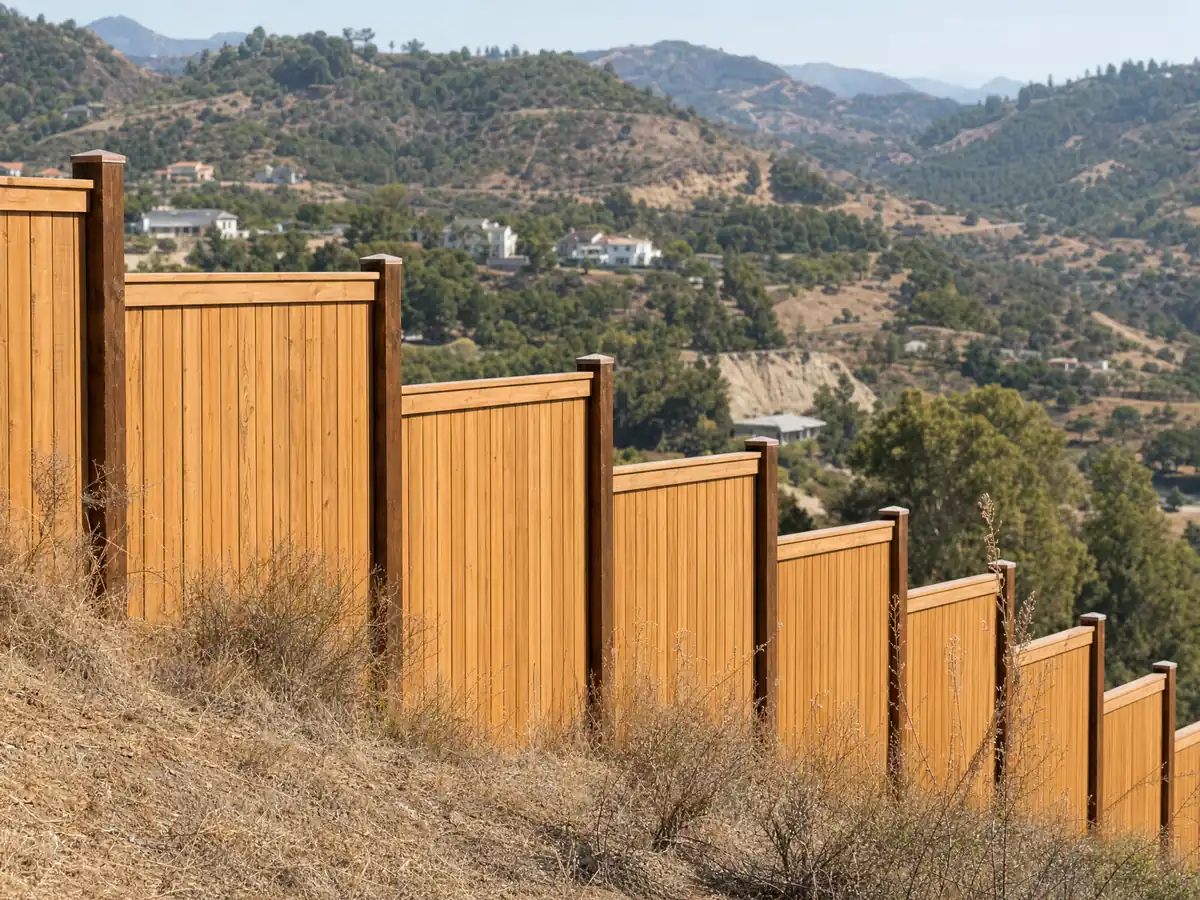
The Baldwin Hills edge of the city is where the code changes. Any lot with a slope of 15 percent or more on any portion carries the Hillside 'H' designation, which brings a topographic survey, a geotechnical and geological report, third-party grading review at the owner's expense and a cap of 500 cubic yards of grading plus 5 percent of the lot size. A hillside grading permit is needed when grading passes 100 cubic yards with a cut or fill over 3 feet, a cumulative cut and fill over 5 feet, or ground steeper than 25 percent.
On steep ground, ask Planning how the higher-grade rule applies and whether a fence on top of a retaining wall counts toward the combined 12 feet. Retaining walls assigned to Seismic Design Category D, E or F may not be built wholly or partly of wood. Whether your lot has the H designation or the -RH overlay must be confirmed on the City's zoning map, which we did not read.
For a taller fence, the Director may approve one administratively where the City verified a nuisance or criminal activity nearby, the lot has exceptional geographic circumstances or the front setback sits on a designated primary arterial.
What does a pool fence or driveway gate need in Culver City?
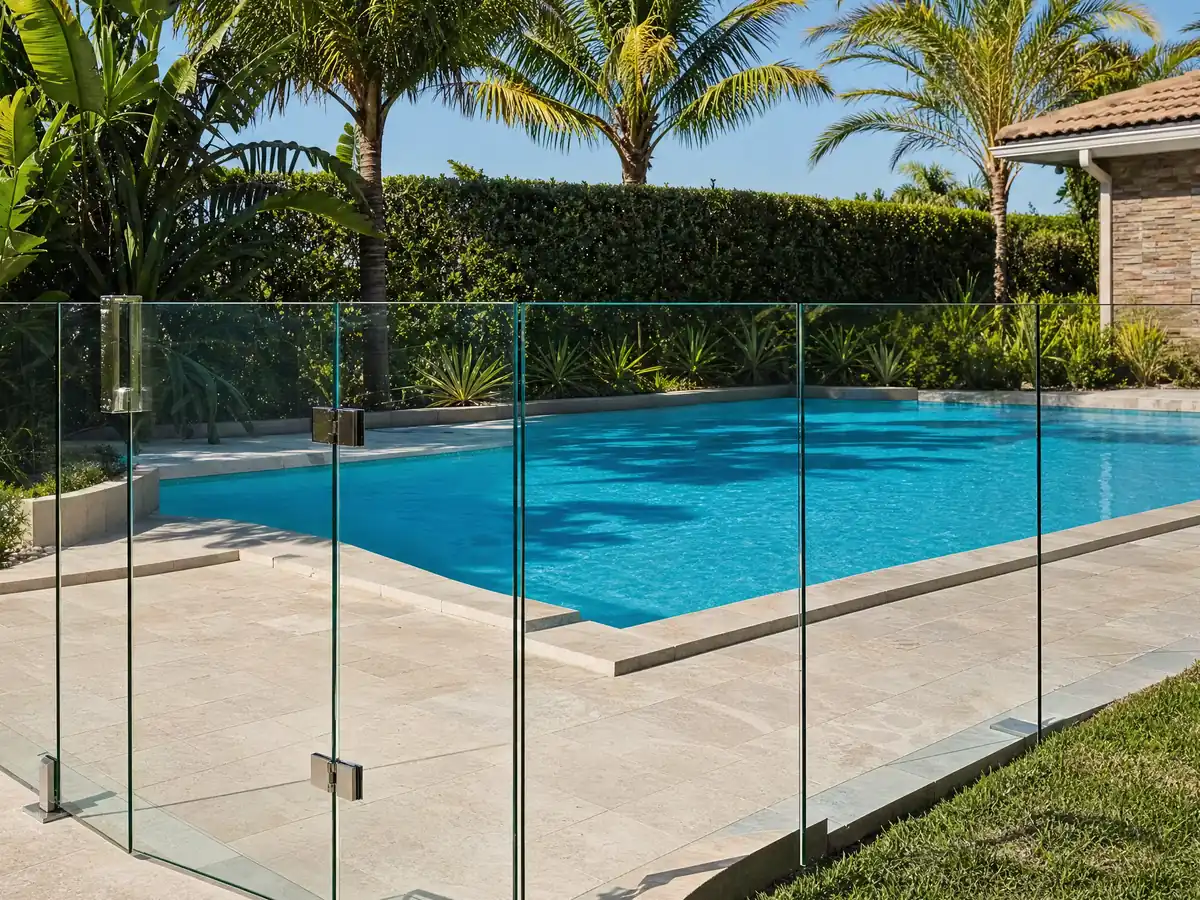
Pools, spas and similar water features must be fenced in compliance with the building code, according to 17.300.030.E.1. California's Health and Safety Code 115922 asks for two of seven drowning-prevention features when a permit issues for a new or remodeled pool, with an enclosure meeting section 115923. We did not read the barrier height in 115923, so we print no number; the permit counter or the pool designer will state it.
A driveway gate meets the sight lines, which hold it to 4 feet with open-work above 30 inches within 5 feet of the driveway. A new driveway apron or curb cut is right-of-way work and needs a Street Use Permit from Public Works Engineering, at Engineering@culvercity.org, with plan check of about 14 business days by the City's estimate. In R1 and R2 zones only 25 percent of a required street-facing setback may be paved, except for a standard 16-foot driveway to a street-facing two-car garage.
For a landmark or one of the three historic districts, the preservation ordinance is written about the exterior of the structure. We found no sentence about fences, so ask Cultural Affairs at (310) 253-6003.
How much does fence installation cost in Culver City, and how do I hire a fence company?
No Culver City fence survey turned up, so every number is a Los Angeles one. Angi's Los Angeles page, dated August 4, 2026, lists $15 to $60 per linear foot, a $3,051 average project and $2,100 to $2,350 for 100 feet, though its own $29 per foot average and its 100-foot row do not match. HomeGuide shows $20 to $60 and Thumbtack $23 to $57. The Bureau of Labor Statistics put the mean fence erector wage in the metro at $28.00 an hour in May 2025, a labor check and not a billing rate. Our working range for a 6 foot wood or vinyl privacy fence is $25 to $55 per linear foot.
Fencing is CSLB class C-13. California requires a license for work of $1,000 or more or whenever a permit is required, under Business and Professions Code 7048, and you can compare any license with our guide to checking a contractor's license. Culver City will not issue a permit to an applicant who must hold a business tax certificate without a current one (Municipal Code 15.02.020). Section 7159.5 caps a down payment at $1,000 or 10 percent, whichever is less.
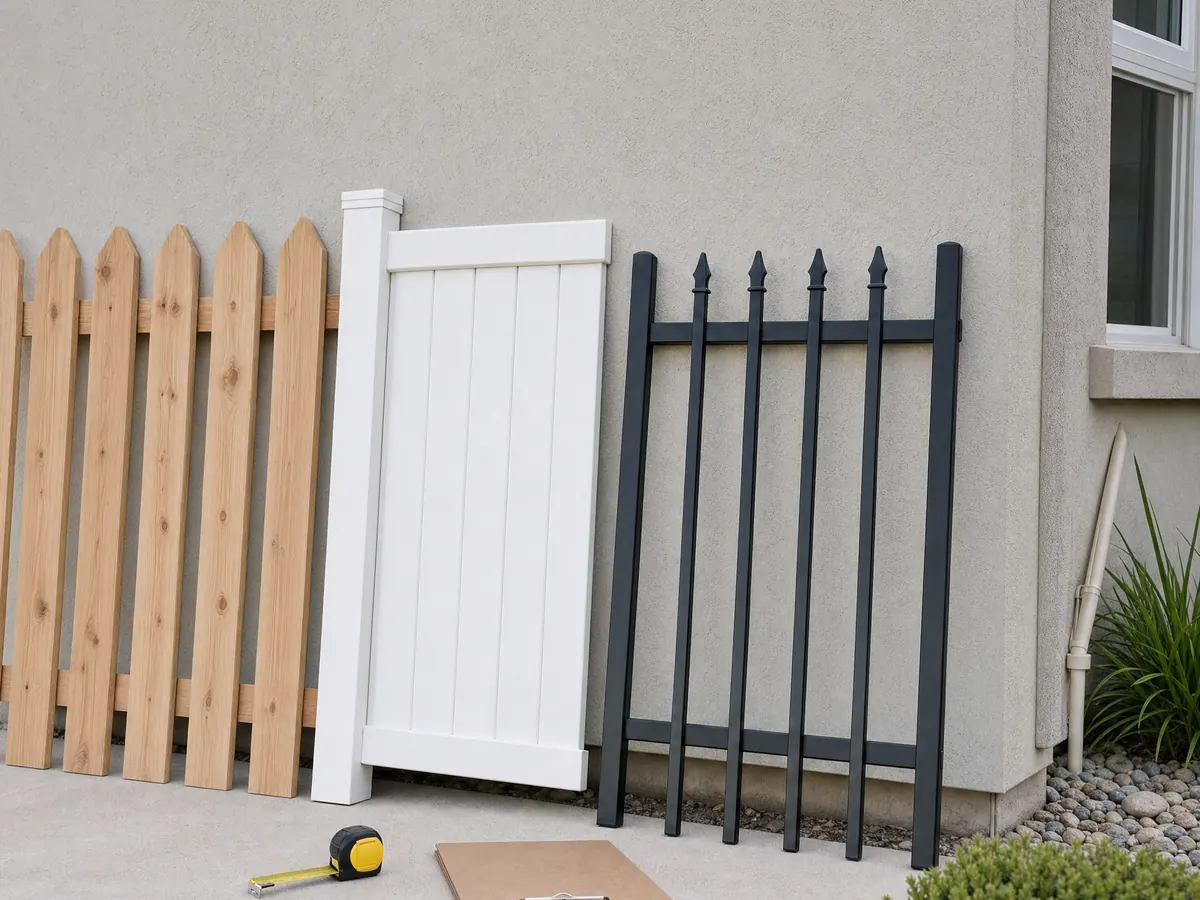
Fence and gate photos from Culver City and nearby communities
Six fence and gate scenes from Culver City lots in Lindberg Park, Carlson Park and Blair Hills, and from nearby Palms, Mar Vista and West Adams, in wood, iron, block and glass.
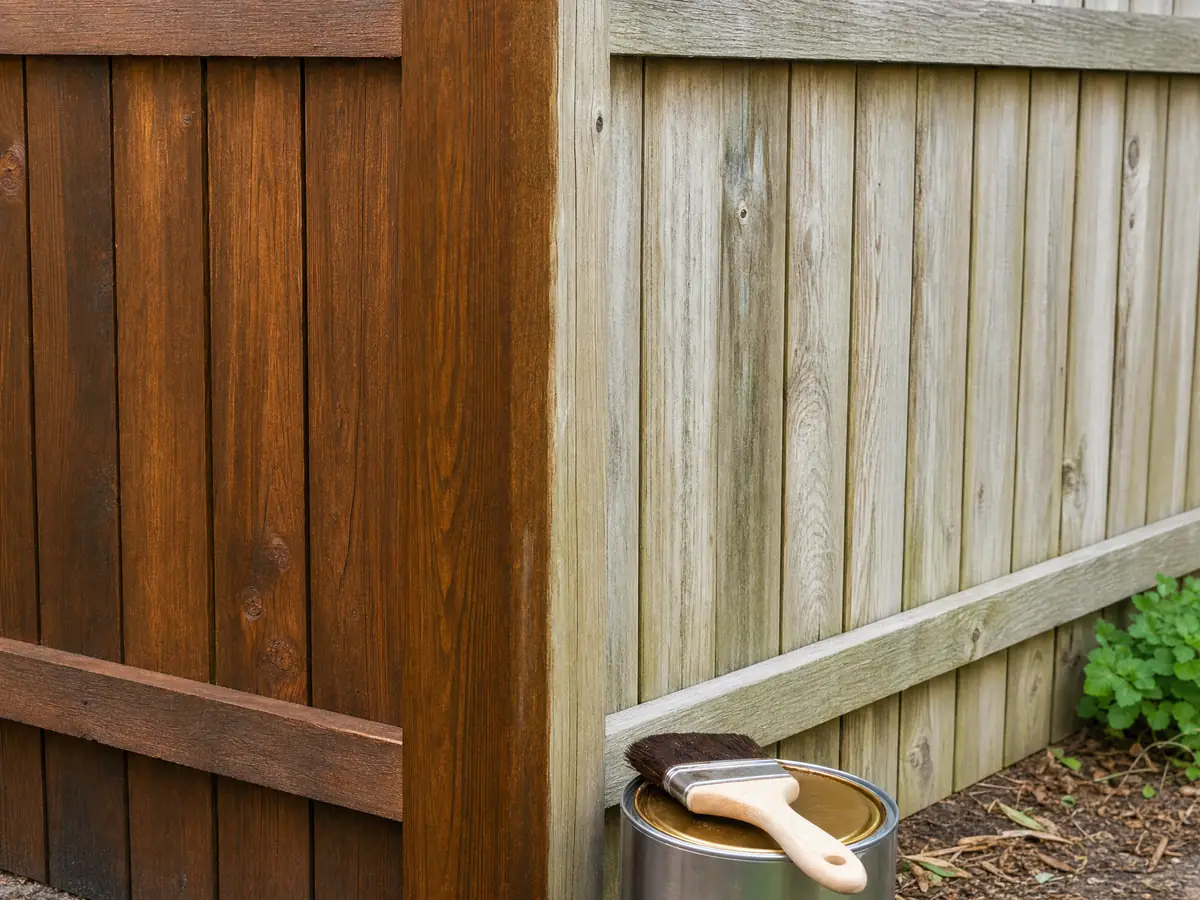
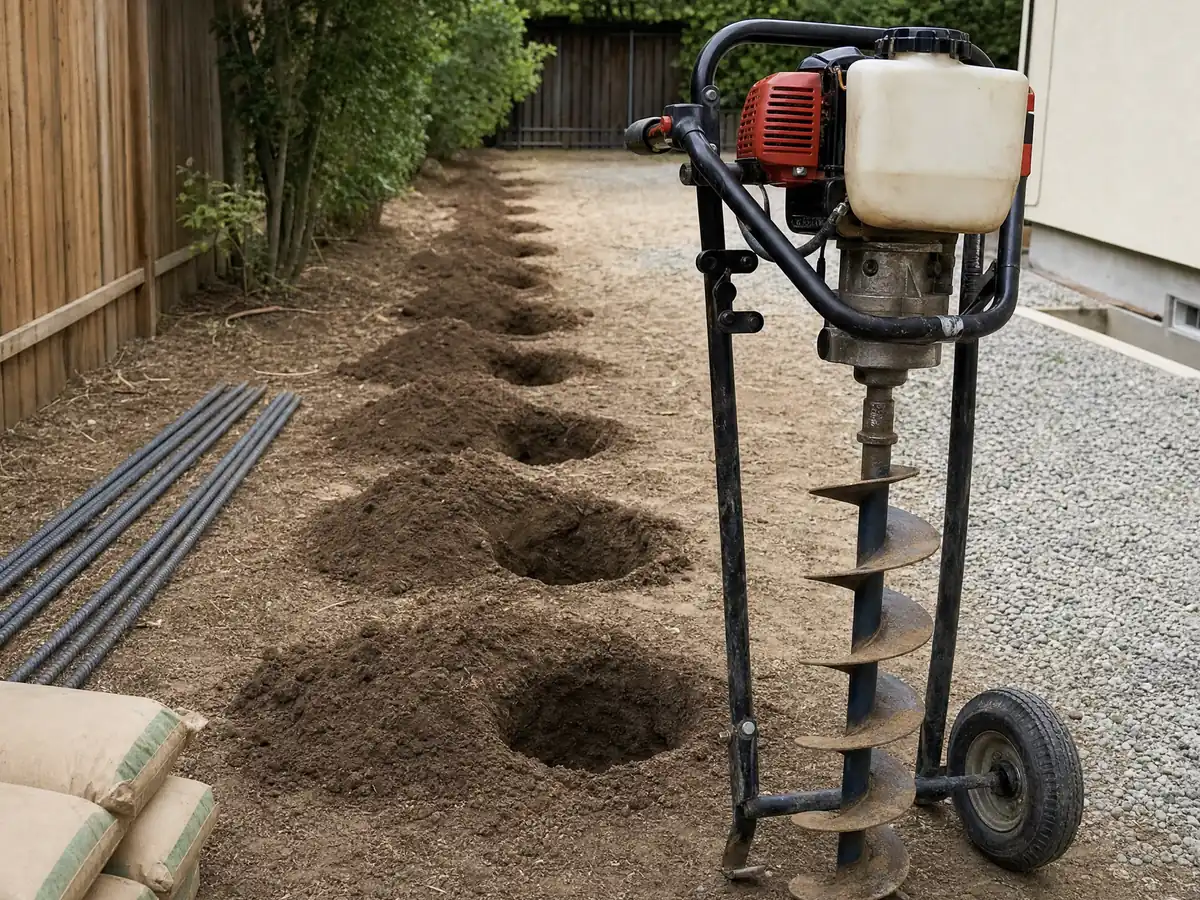
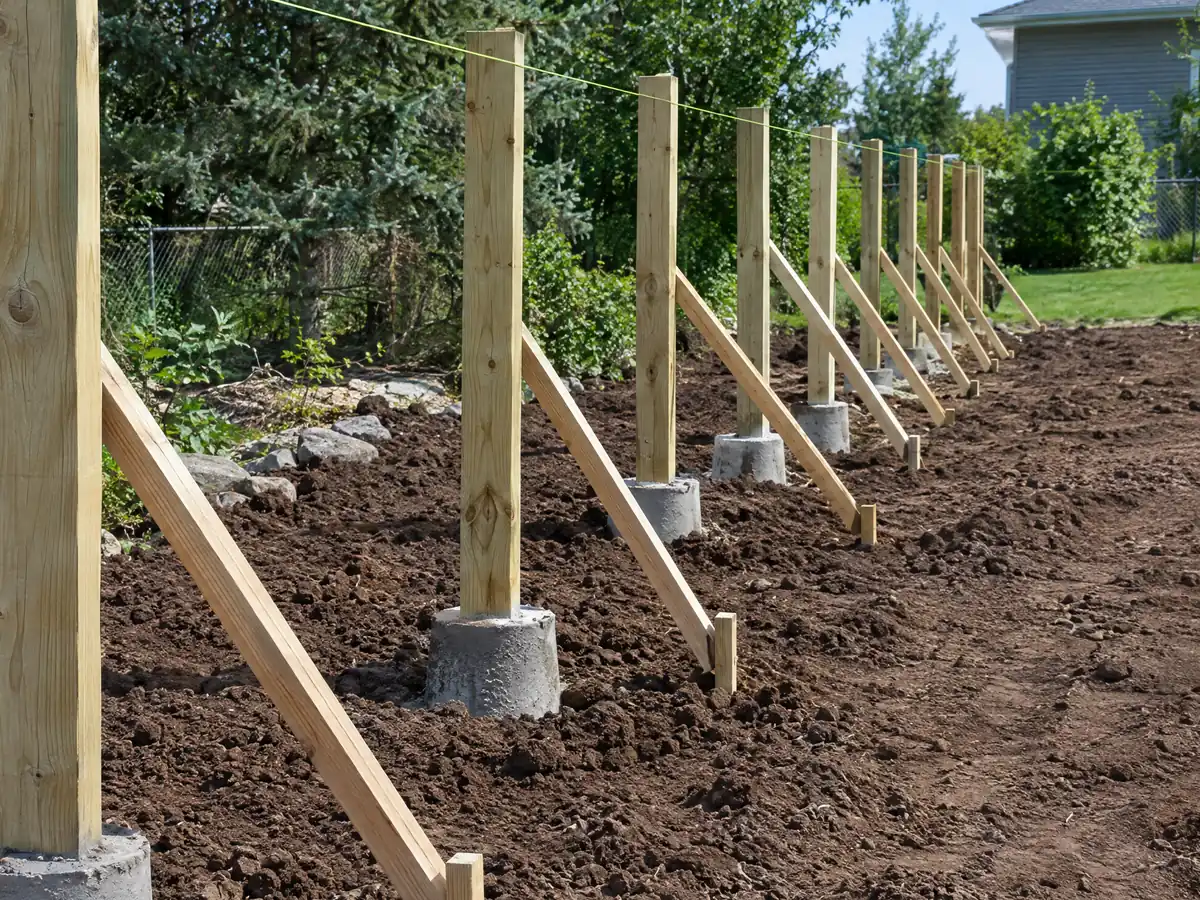
Where the fence numbers come from
Each per-foot figure and its source are in the table on our fencing price page. Permit and affidavit costs are not in those numbers, and the sources disagree at the low end, so treat them as a planning range. A fence often follows work on the house, so see the Culver City guides to roof repair, house painting and kitchen remodeling, and the Culver City overview.
| What it covers | Typical range |
|---|---|
| Wood or vinyl privacy fence, 6 feet | $25 to $55 per linear foot |
| Chain-link | $12 to $30 per linear foot |
| Aluminum or ornamental iron | $35 to $85 per linear foot |
| Typical 100-foot backyard run | $2,500 to $5,500 total |
| Block walls, horizontal slat fences, gates and openers, hillside lots | Set by the written proposal |
Other work we manage in Culver City
Culver City fence questions, answered
How much should I pay for fence installation in Culver City?
Plan on $25 to $55 per linear foot for a 6 foot wood or vinyl privacy fence, our working range from four Los Angeles sources. Angi's Los Angeles page lists $15 to $60 per foot across all types. No Culver City survey exists, so a measured proposal that lists posts, gates, haul-away and permit work separately is the real price.
How tall can a fence be in Culver City?
Four feet in a required front setback, 6 feet in a required side or rear setback and 8 feet beside an alley or a non-residential zone, under Municipal Code 17.300.030. The part of a front fence above 30 inches must be open-work near the street and driveways. Height is measured from the higher grade of the two lots.
Do I need a permit to build a fence in Culver City?
Plan on Planning approval, whatever the height. The City's permit page says all fences and walls need it, and it also draws building permit lines at over 3 feet 6 inches for block and over 7 feet for wood or vinyl while listing a new fence under permits required. Because the page conflicts, ask the counter.
Can I put a privacy fence up in my front yard?
Not a solid tall one. Culver City holds a fence in the required front setback to 4 feet, and the part above 30 inches must be open-work within 10 feet of the street right-of-way and within 5 feet of a driveway or alley intersection. A 6 foot privacy fence belongs in the side or rear setback.
Does my neighbor have to pay for half the fence in California?
Usually the law presumes so, but not always. Civil Code 841 presumes adjoining owners share the cost of a boundary fence equally and requires 30 days' written notice before you incur costs. The presumption can be rebutted, and the City's fence application asks for a notarized neighbor affidavit if any part sits on neighbor land.
What happens if I don't have a permit for a fence?
Expect a penalty, and expect to be told two different amounts. The Building Code amendment adds a fee equal to 100 percent of the permit fee, or as the building official determines, while the fee schedule lists $274.95 or the permit fee, not over $740. Ask Planning whether the fence also needs its approval.
Is an 8 foot privacy fence too high in Culver City?
Usually yes, with two exceptions. Eight feet is allowed beside an alley or a non-residential zone, and between two abutting rear yards by mutual agreement of both owners. Elsewhere the side and rear limit is 6 feet. The Director can also approve a taller fence in listed circumstances, such as exceptional geographic conditions.
How much does it cost to install 200 feet of fencing?
Multiplying our $25 to $55 per foot range gives $5,000 to $11,000 for 200 feet of 6 foot wood or vinyl. HomeGuide's own 200 foot figure is $4,000 to $12,000, but its page shows no method. Gates, hillside footings, block and removal of an old fence all change the total.
Do I need a permit for a block wall in Culver City?
Over 3 feet 6 inches, yes, according to the City's permit page. The code amendments exempt a block or concrete wall not over 3 feet 6 inches from a building permit, but the page also says every wall needs Planning approval. A retaining wall under 4 feet on a flat site is exempt from a building permit.
How do I choose a fence company in Culver City?
Check the CSLB license first: fencing is class C-13, and block walls are masonry. Then ask for the written contract Business and Professions Code 7159 requires, a Culver City business tax certificate and proof of insurance. Compare two proposals that state fence height, post depth, gate hardware and who files the permit, so the numbers are comparable.
Describe your Culver City fence
Tell us the street, where the fence will run and whether the lot is flat, hilly or beside an alley, and we will check heights and the Planning steps before the site visit.