
Concrete Companyin Murrieta, CA
A concrete company in Murrieta can pour a sidewalk or driveway without a building permit when it sits no more than 30 inches above grade, but grading on natural ground, pavement over 3,000 square feet, masonry walls and hillside lots need City review. Fault, creek and collapsible soils also shape every slab here.
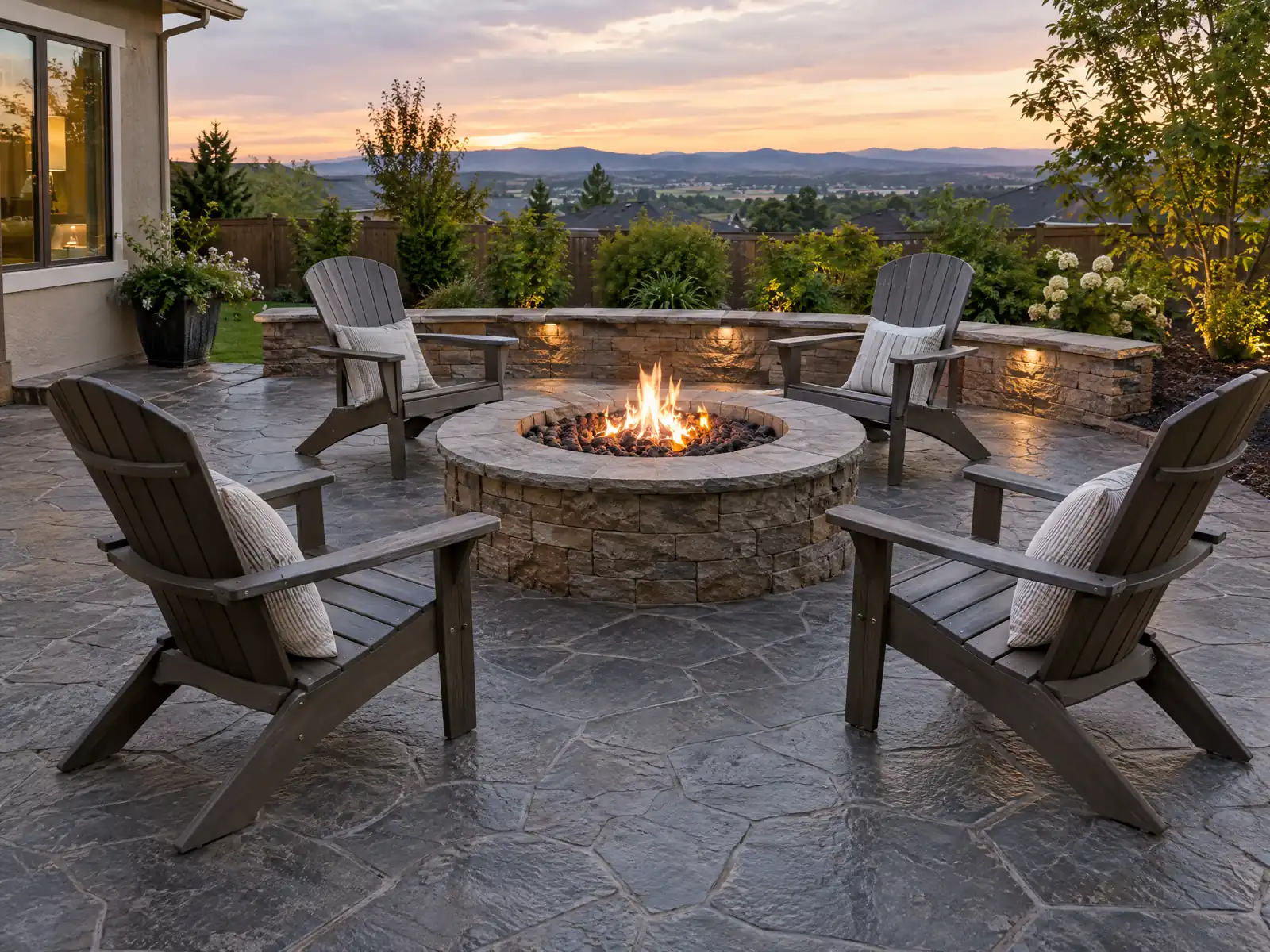
Murrieta's slabs are young. The City's history page says the extension of Interstate 15 through the valley set off the growth, and the Fire Department's history says about 15,000 homes and apartments were built or under construction after 1987. The Census Bureau's 2024 estimates give 43.1 percent of the city's homes to the 2000s and 20.4 percent to the 1990s, so most driveways, walks and patios are 15 to 35 years old, and the first generation is reaching its repair years.
MDG Builders (CSLB #1040337) is a general contractor in Tarzana. For a Murrieta pour we draft the scope, ask Building & Safety which permits apply and schedule a licensed concrete subcontractor to form, place and finish. The concrete page covers finishes, and the Murrieta overview lists the other trades we line up here.
What Murrieta's Building & Safety Division, Engineering, South Coast AQMD and state law say about concrete work
Where concrete permits come from in Murrieta: City of Murrieta Development Services Department, Building & Safety Division.
- IB-131 exempts sidewalks and driveways not more than 30 inches above adjacent grade (not over a basement or story below and not part of an accessible route) from a building permit; grading, paving, clearing and excavation on natural grade still need a grading permit from the City Engineer under Chapter 15.52, with listed exceptions such as footings and basements authorized by a building permit and small excavations of 50 cubic yards or less that meet depth limits.
- Section 15.52.030.B requires a grading permit for pavement over 3,000 sq ft on natural or existing grade for a private road or a commercial, industrial or multifamily parking lot or travelway unless the City Engineer waives it; the chapter also requires dust prevention and erosion and sediment control plans and NPDES coverage where applicable, and section 15.04.130 tells applicants on projects of one acre or more about the State NPDES construction permit.
- Fault and soils: the Safety Element says a geologic investigation is required before building in an Alquist-Priolo zone, and the City's FY 2026-2027 fee schedule lists a Seismic Study (Alquist-Priolo/Special Study Zone) plan check fee of $3,876.57 (Engineering). Expansive and collapsible soils are named hazards, and alluvium along Murrieta Creek is in a liquefaction zone.
- IB-112 quotes UPC 1211.4: no gas piping may be installed in or on the ground under any building or structure (including porches) unless it is in gastight conduit, and exposed piping must stay at least six inches above grade; IB-128 describes the slab inspection as made after slab grading, vapor barriers, reinforcement, sand bedding and under-slab piping are in place.
- DS-141 requires a hydrostatic relief valve in every pool and bonding of the reinforcing steel and metal parts within five feet of the pool wall into an equipotential grid that extends at least three feet under the perimeter surface, and sets pool setbacks of 5 ft from the water's edge and 4 ft for equipment.
- Dust and runoff: Development Code 16.18.030.B (third-party mirror) says grading and earth-moving cease when wind exceeds 25 mph averaged over one hour, excavated material is watered at least twice daily, and areas inactive longer than three months are seeded; section 16.18.030.A requires compliance with SCAQMD rules.
What do the fault zones, collapsible soils and creek alluvium mean for a Murrieta slab?
They mean the ground, not the concrete, sets the risk. The Safety Element names two Alquist-Priolo Earthquake Fault Zones: the Temecula segment of the Elsinore Fault Zone, which crosses the city west of I-15, and the Murrieta Creek Fault at the far southwest corner. Zones run about 500 feet to each side of a major trace, and occupied buildings are generally kept 50 feet from a fault. A patio is not an occupied building, but a new slab for a room, ADU or garage can be, and the FY 2026-2027 fee schedule lists a $3,876.57 Seismic Study plan check fee.
Soil adds three more hazards. The same element reports expansive and collapsible soils, collapse damage in the California Oaks area when groundwater rose, liquefaction in the alluvium along Murrieta Creek and old landslides on the eastern Santa Ana Mountain slopes and the northern hills. The City's design criteria (IB-114) give Seismic Design Category D, with D2 for the residential code, unless a geotechnical engineer sets otherwise, and zero ground snow load. We did not read a frost depth.
Weather gives the finisher a calendar. Fallbrook 5 NE records about 60 days a year at or above 90 F and Elsinore about 123, with 15.31 and 11.65 inches of rain. Ask for a written curing plan that names the month of your pour.
Can I pour a patio, walkway or driveway in Murrieta without a permit?
Often yes for a walk or driveway, and not clearly for a patio. IB-131, the City's list of work exempt from building permits (May 2024), covers sidewalks and driveways not more than 30 inches above adjacent grade that sit over no basement or story below and are not part of an accessible route. A ground-level patio slab was not among the exemptions we found, so describe its size, height and location to Building & Safety. An exemption also never excuses zoning, fire or other rules.
Grading is a separate permit. Chapter 15.52, read on the third-party GoCodebook mirror, requires a grading permit from the City Engineer for paving, clearing and excavation on natural grade, with exceptions that include footings authorized by a building permit and small excavations of 50 cubic yards or less within depth limits. Section 15.52.030.B adds pavement over 3,000 square feet on natural or existing grade for a private road or a commercial, industrial or multifamily lot, unless the City Engineer waives it.
Permits that issue have a clock. Under section 15.04.140 a permit expires if work does not start within one year or stops for 180 days, and an extension is a written request to the Building Official. The City asks for the State and City license numbers on the application, so an unlicensed crew cannot pull a permit for you.
What do dust, runoff and noise rules mean for a concrete pour in Murrieta?
Wind can stop the work. Development Code 16.18.030.B, read on the GoCodebook mirror, says grading and earth moving cease when wind exceeds 25 miles per hour averaged over an hour, that excavated material is watered at least twice a day and that ground left inactive for more than three months is seeded. Section 16.18.030.A requires compliance with South Coast AQMD rules, and the District's jurisdiction page lists Murrieta among its Riverside County cities.
Runoff has its own paperwork. Chapter 15.52 asks for dust prevention and for erosion and sediment control plans, with NPDES coverage where it applies, and section 15.04.130 tells applicants on projects of one acre or more about the State's NPDES construction permit. A single driveway never reaches an acre, but a subdivided lot or a new pad can.
Hours are the usual conflict. Municipal Code 16.30.130, per the mirror, bars construction noise across a property line from 8 pm to 7 am on weekdays and all day on Saturdays, Sundays and holidays, with 75 dBA for mobile and 60 dBA for stationary equipment at single-family homes. The City's own IB-188 handout omits Saturdays. Ask the City which version it enforces before booking a Saturday pour.
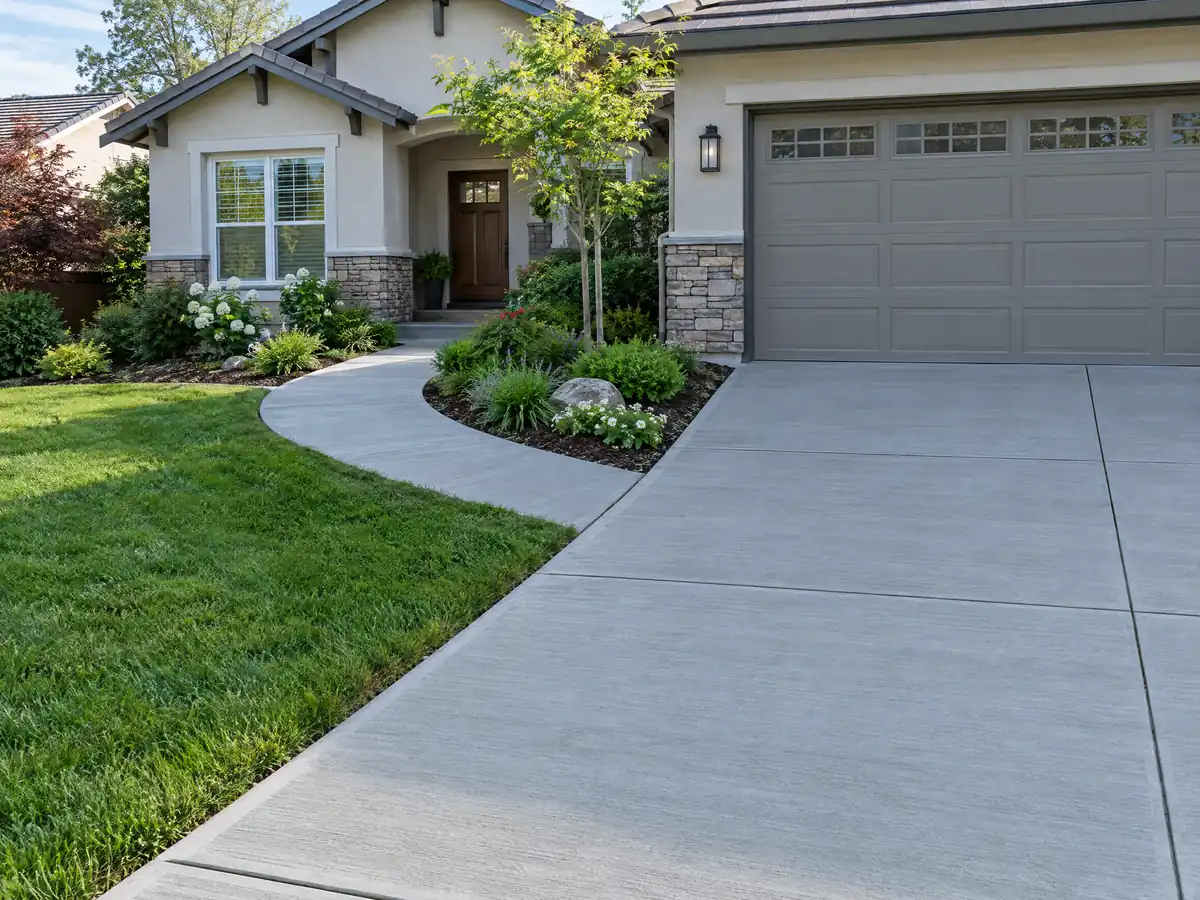
How tall can a block wall, fence or retaining wall be in Murrieta?
Zoning sets lower limits than the permit exemption. Development Code 16.22.030, per the mirror, caps fences and walls within setback areas at 6 feet in rear and side yards, 3 feet in front yards and 24 inches in the corner sight triangle, and 16.22.040 allows 5 and 8 feet where the extra height is see-through, with up to 10 feet when setbacks are met. IB-131 exempts fences up to 6 feet and retaining walls up to 4 feet from footing bottom to wall top from a building permit, yet masonry pilasters and masonry or concrete wall systems always need one.
The City publishes standard drawings. TD-113 is a freestanding block wall with footing and rebar tables up to 6 feet and three inspections, footing, rebar before grout and final. TD-114 puts a block wall on a 2 foot retaining wall, and TD-110 covers retaining walls up to 6 feet with drainage. Each says fence heights and masonry materials are regulated by Planning and that natural drainage may not be blocked.
Sloping property lines add a rule. Where grade differs by less than 2 feet between parcels, height is measured from the higher parcel's finished grade, and at 2 feet or more the director decides (16.22.050). CSLB's C-29 masonry class covers block walls for structures and fences, and C-8 covers poured concrete.
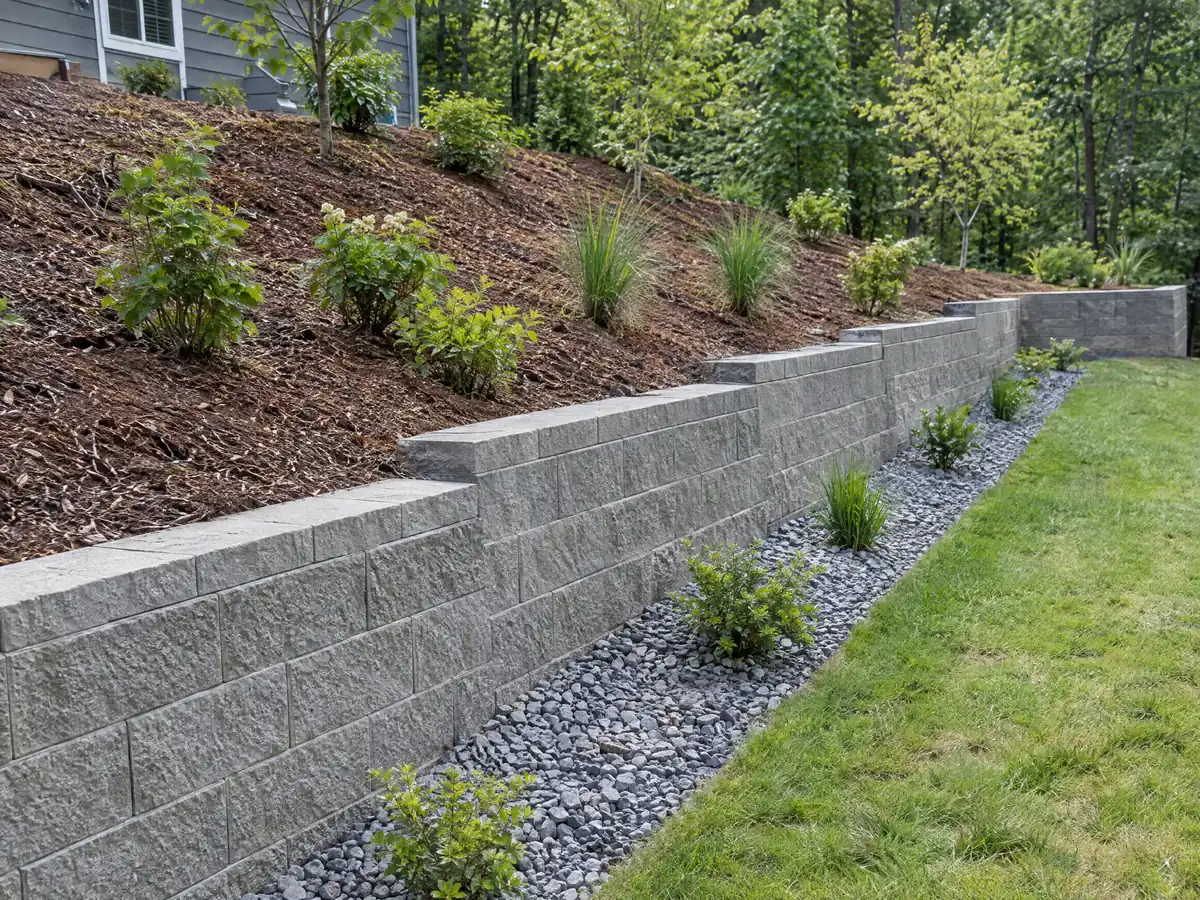
Can you pour a driveway or build a retaining wall on a Murrieta hillside lot?
Only inside the hillside code's limits. Chapter 16.24 applies to slopes of 20 percent or more and to land on the significant features map, needs a development plan permit, limits building on 25 to 50 percent slopes and prohibits it at 50 percent and over. A driveway steeper than 15 percent needs fire, engineering and building approval and traction paving, and hillside retaining walls may reach 6 feet but only 3 feet inside the front setback, with terraced walls limited to two walls 6 feet high set 6 feet apart.
The rules may change. The City's Hillside Ordinance Updates page describes workshops that support a formal Hillside Area Map, a 25 percent slope threshold and citywide retaining wall standards, but it presents them as proposals, so section 16.24 is what we can call current. Walls and fences there must use the colors and materials of the adjacent structure and follow the landform.
Fire shapes the hardscape. CAL FIRE's 2025 zone maps for Murrieta took effect July 4, 2025, hillside homes need 100 feet of clearance and the Safety Element names the western escarpments, Greer Ranch and Los Alamos as wildfire areas. The City's Zone Zero page asks owners to clear mulch, bark, wooden fences and dry vegetation within 5 feet of a structure, as a recommendation, so a poured apron or walk is one way to leave a bare strip.
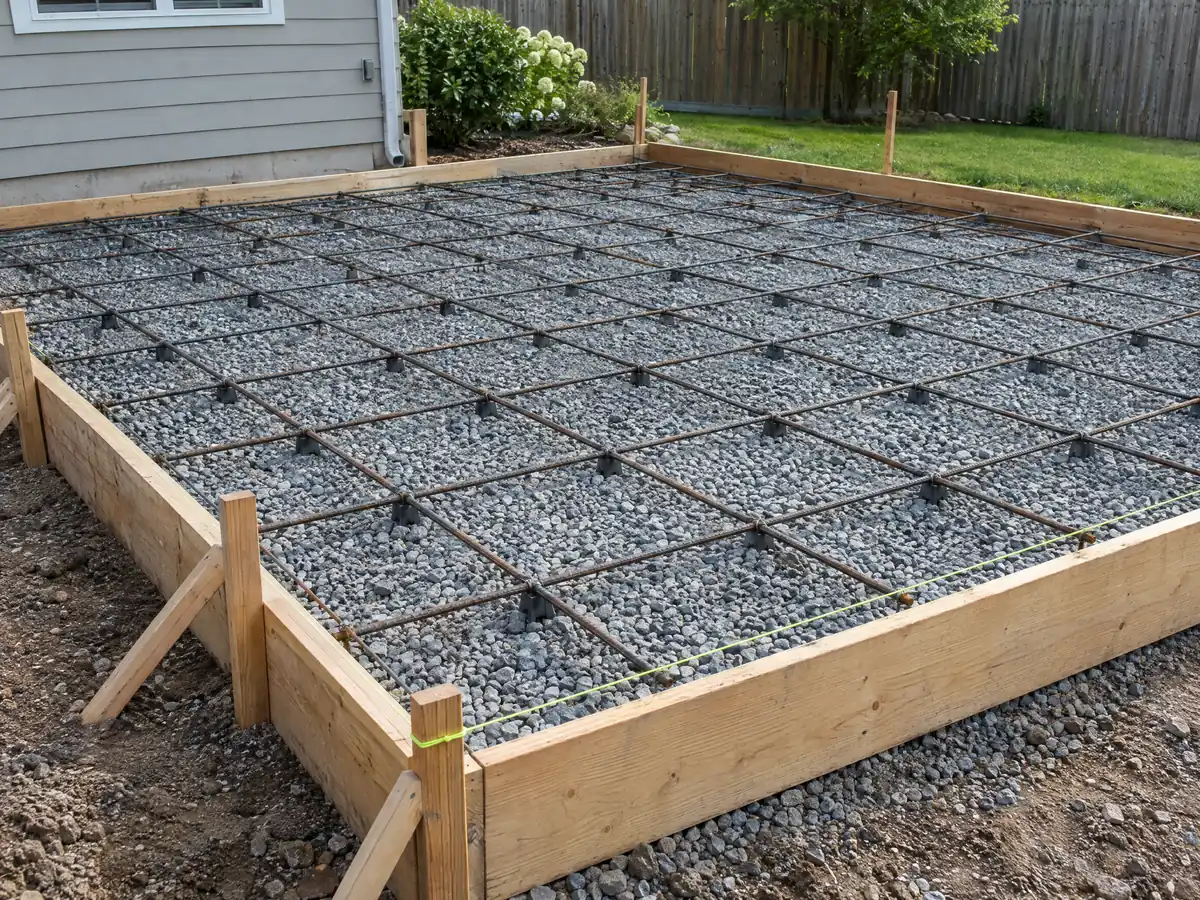
What do pool decks, gas lines and sensitive parcels add to a Murrieta pour?
Pool decks carry bonding rules. DS-141 requires a hydrostatic relief valve in every pool and bonding of the rebar and metal parts within 5 feet of the pool wall into an equipotential grid that extends at least 3 feet under the perimeter surface, with pool setbacks of 5 feet from the water's edge and 4 feet for equipment. We did not state the pool barrier rule, because the Municipal Code section on enclosures cross-references a chapter that covers a different subject in the mirror.
Gas lines and slabs conflict. IB-112 quotes UPC 1211.4: no gas piping goes in or on the ground under a building or structure, porches included, unless it is in gastight conduit, and exposed piping stays at least 6 inches above grade. A patio slab for a fire feature or outdoor kitchen should show the gas route before the pour.
Some parcels follow a longer path. IB-117 says properties flagged as historically or biologically sensitive involve a Consulting Tribe, a possible Tribal Monitoring Agreement with at least 72 hours' notice for a monitor and no inspection until the Tribe approves. The City's fee page also lists a 2026 nexus study for the Stephens' Kangaroo Rat habitat plan, but we saw titles only, so we cannot say whether a slab pays a habitat fee. Ask Building & Safety.
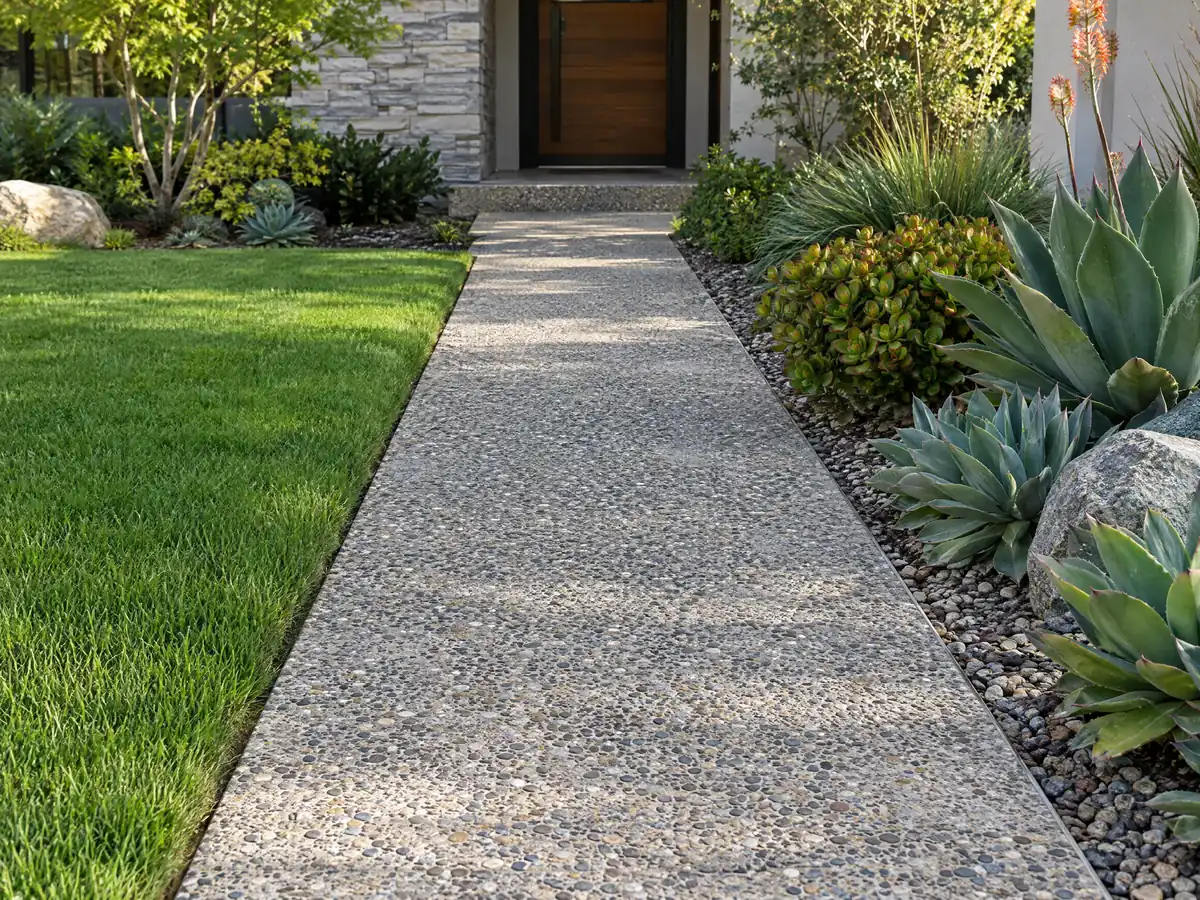
How much does concrete work cost in Murrieta, and who needs which license?
No Murrieta price study with a stated method turned up, so the anchor is Angi's Los Angeles pages. The patio page of August 4, 2026 lists $4 to $13 a square foot with a $5,248 average, the stamped page of July 20, 2026 lists $15 to $30 and the driveway page of May 5, 2026 lists $8 to $20. Federal data show a $33.67 mean hourly wage for cement masons in the Los Angeles metro area in May 2025. Murrieta quotes may differ.
Our own Los Angeles planning figures are $8 to $14 a square foot for plain flatwork of 300 square feet or more, $15 to $30 for stained, stamped or exposed aggregate and $9 to $20 for a driveway replacement including demolition. That puts a plain 20 by 20 slab near $3,200 to $5,600. Small jobs cost more per foot because of minimum charges, and we print no wall price per foot because none came from an independent source.
A job that needs a permit needs a licensed contractor, because the $1,000 unlicensed limit ends once a permit is required. Business and Professions Code 7159.5 limits the deposit on a home improvement contract to $1,000 or 10 percent, whichever is less, and our license check guide shows how to verify a number.
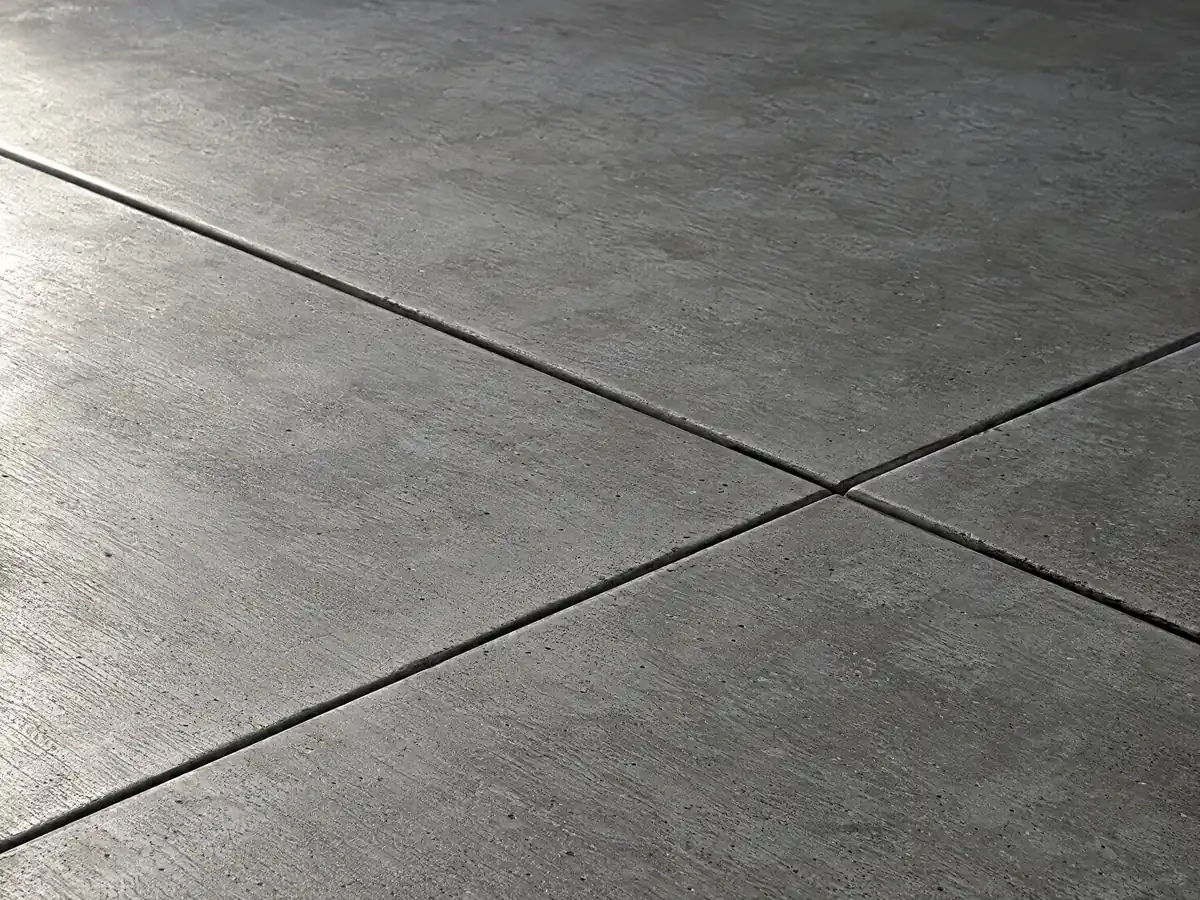
Concrete photos from Murrieta and nearby communities
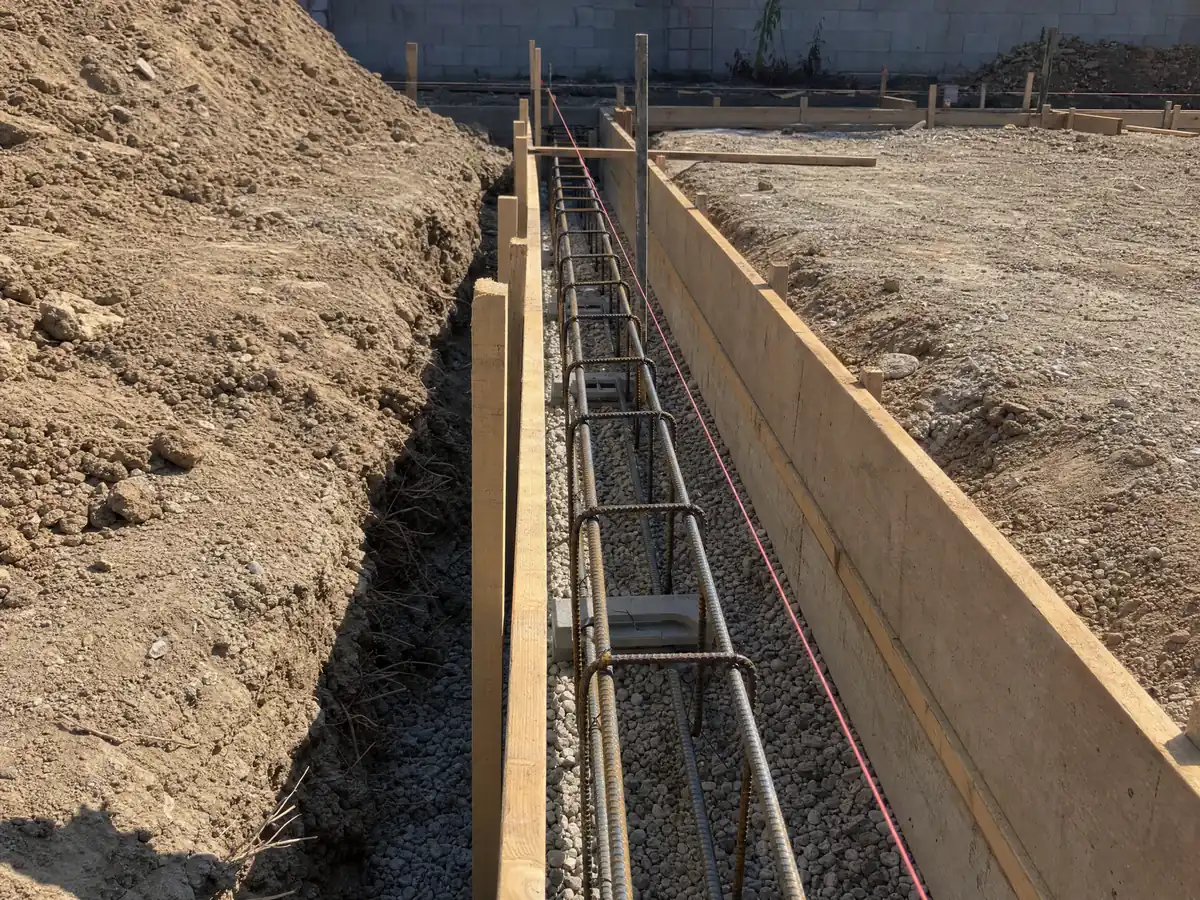
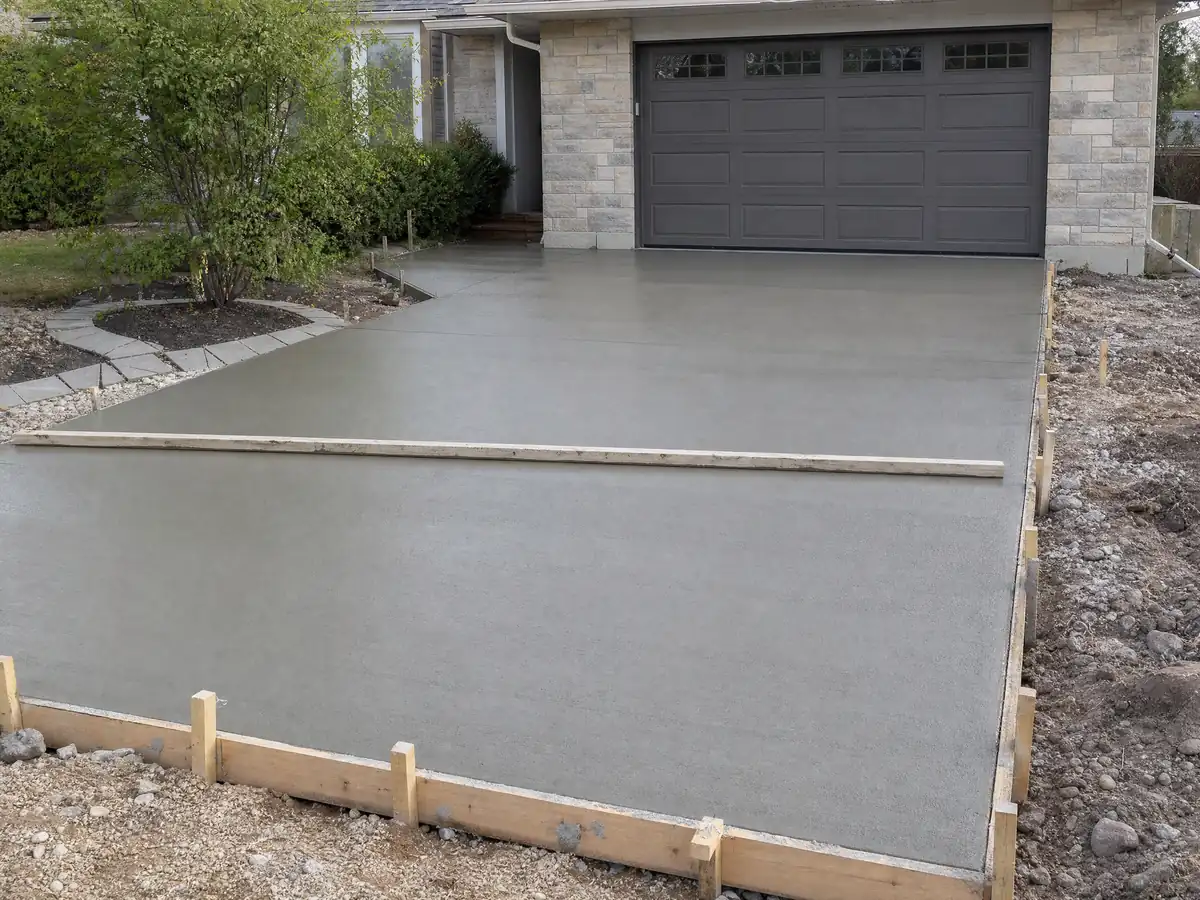
Footings, rebar, screeded slabs and finished walks and patios from Murrieta and the towns around it, shown at the steps where the rules bite. Tap any photo to enlarge it.
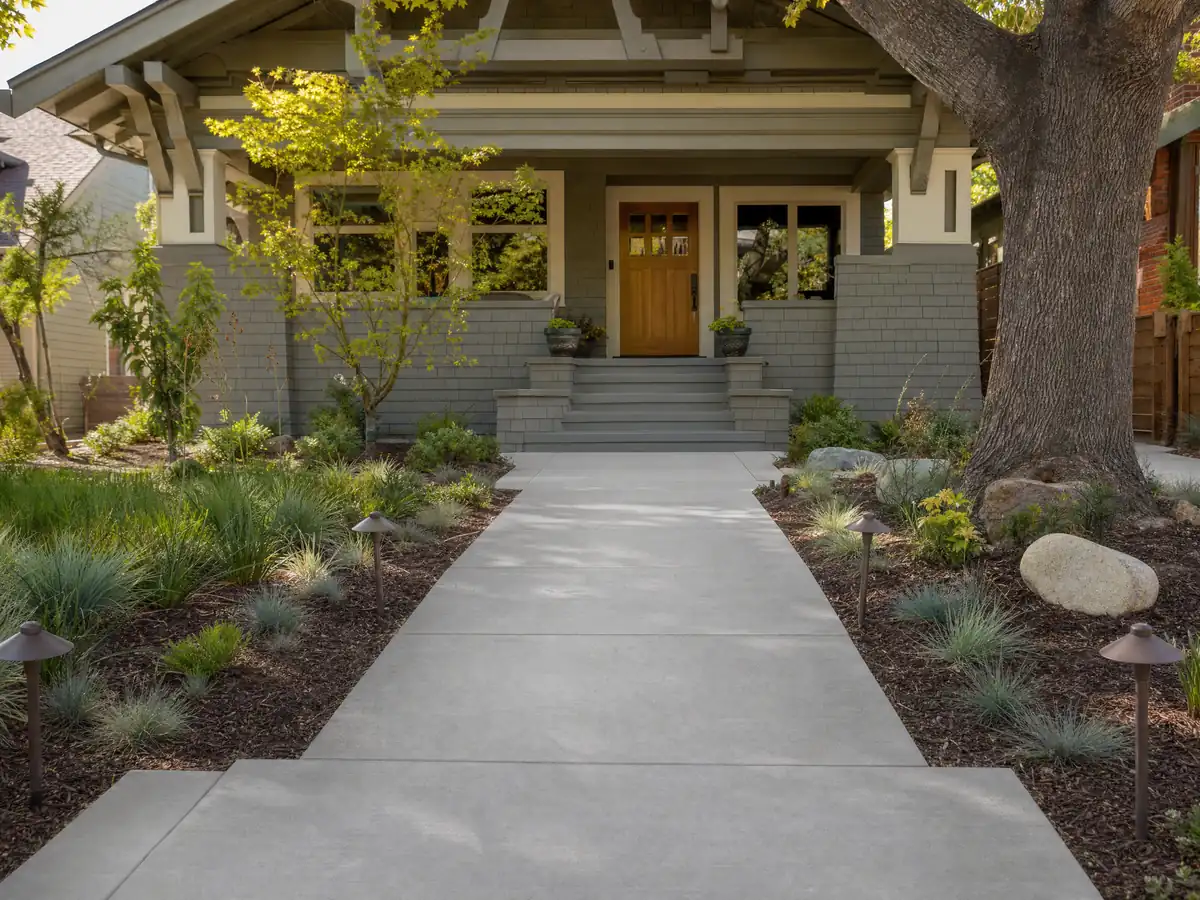
What concrete costs around Murrieta
Dollar figures here are Los Angeles planning ranges, not a Murrieta bid, and demolition, haul-off, rebar, drainage and any grading or wall permit should be separate lines on the written proposal. The same property may need flooring in Murrieta or a deck in Murrieta. For nearby pours, read concrete in Temecula, concrete in Menifee and concrete work in Corona, and concrete in Los Angeles for the benchmark city. The subcontractor guide shows which trade forms a slab and which finishes it, and the flooring cost guide prices the surfaces that go on top.
| What it covers | Typical range |
|---|---|
| Patio, walkway or slab, broom finish, 300 sq ft or more | $8 to $14 per square foot |
| Decorative: stained, stamped or exposed aggregate | $15 to $30 per square foot |
| Driveway replacement, with demolition of the old slab | $9 to $20 per square foot |
| 20 by 20 foot plain patio (400 sq ft) | About $3,200 to $5,600 |
| 20 by 20 foot decorative patio (400 sq ft) | About $6,000 to $12,000 |
| Small jobs under 300 sq ft | Usually above the per-foot range |
| Retaining walls | Set by the written proposal |
Murrieta concrete questions, answered
Can I pour a concrete patio without a permit?
Sometimes in Murrieta. IB-131 exempts sidewalks and driveways up to 30 inches above grade, but we did not find a ground-level patio slab on that list, and grading and zoning rules still apply. Call Building & Safety at 951-461-6062 with the size, height and location before the truck is ordered.
How much should a 20x20 concrete patio cost?
At our Los Angeles planning range of $8 to $14 per square foot, 400 square feet of plain concrete runs about $3,200 to $5,600, while Angi's August 2026 Los Angeles patio page lists a 20 by 20 slab at $1,600 to $5,200. We found no Murrieta study, and demolition, stamping and drainage add cost.
Can I expand my driveway without a permit?
Not safely without asking. A private driveway up to 30 inches above grade is on the City's exemption list, but grading on natural ground, pavement over 3,000 square feet for some lots and hillside driveways steeper than 15 percent need City review. Ask Building & Safety first, and confirm where the property line sits.
What is the maximum height of a retaining wall without a permit in California?
In Murrieta, IB-131 exempts retaining walls up to 4 feet measured from the bottom of the footing to the top of the wall, and tells owners to verify with Planning and Building. Hillside walls follow Chapter 16.24 and may reach 6 feet, but only 3 feet in the front setback.
Is 4 inches of concrete thick enough for a driveway?
Four inches is common for walks and light slabs, but we found no Murrieta rule that sets flatwork thickness. Collapsible soils and vehicle weight argue for a written plan covering base, reinforcement and joint spacing. Ask the finisher to state those details in the proposal before the pour.
How much does a 300 sq ft stamped concrete patio cost?
Angi's Los Angeles stamped page lists $15 to $30 a square foot, so 300 square feet comes to roughly $4,500 to $9,000, with a $5,948 average shown. We found no Murrieta study, and color, sealer and old slab removal shift the figure, so the real number comes from a site visit.
How tall can a fence or block wall be in a Murrieta front yard?
Three feet in the front setback, or up to 5 feet when the added height is see-through, according to Development Code 16.22 on a third-party mirror. Side and rear yards allow 6 feet, and corner sight triangles stay at 24 inches. The 6 foot permit exemption for fences does not override zoning, so confirm with Planning.
Does Murrieta's soil crack concrete slabs?
It can. The Safety Element reports expansive and collapsible soils, collapse damage in California Oaks when groundwater rose and liquefaction-prone alluvium along Murrieta Creek. Cracks also depend on base, joints, drainage and curing, so ask the finisher how each is handled on your lot, and ask whether a soils report is needed.
Do concrete contractors need to be licensed?
Yes. A concrete contractor needs a current California license, usually C-8 for poured work or C-29 for block walls, and a permit job can never use the $1,000 unlicensed limit. Murrieta also asks for a City business license on the application. Check the CSLB number and ask each subcontractor for a certificate of insurance.
Tell us the lot, the slab size and the slope
Say what you want poured, how big it is, whether the lot is flat, sloped or near the creek and whether any of it touches a wall or the sidewalk. The soil, grading and permit questions come with us to the first visit.