
Concrete Companyin Vista, CA
A concrete company in Vista can pour driveways and sidewalks without a building permit up to 30 inches above grade, per the City's guidebook, but a patio slab is not named and retaining walls of four feet or more need review. Excavation over 50 cubic yards needs a grading permit, and Zone 0 fire rules favor hard surfaces.
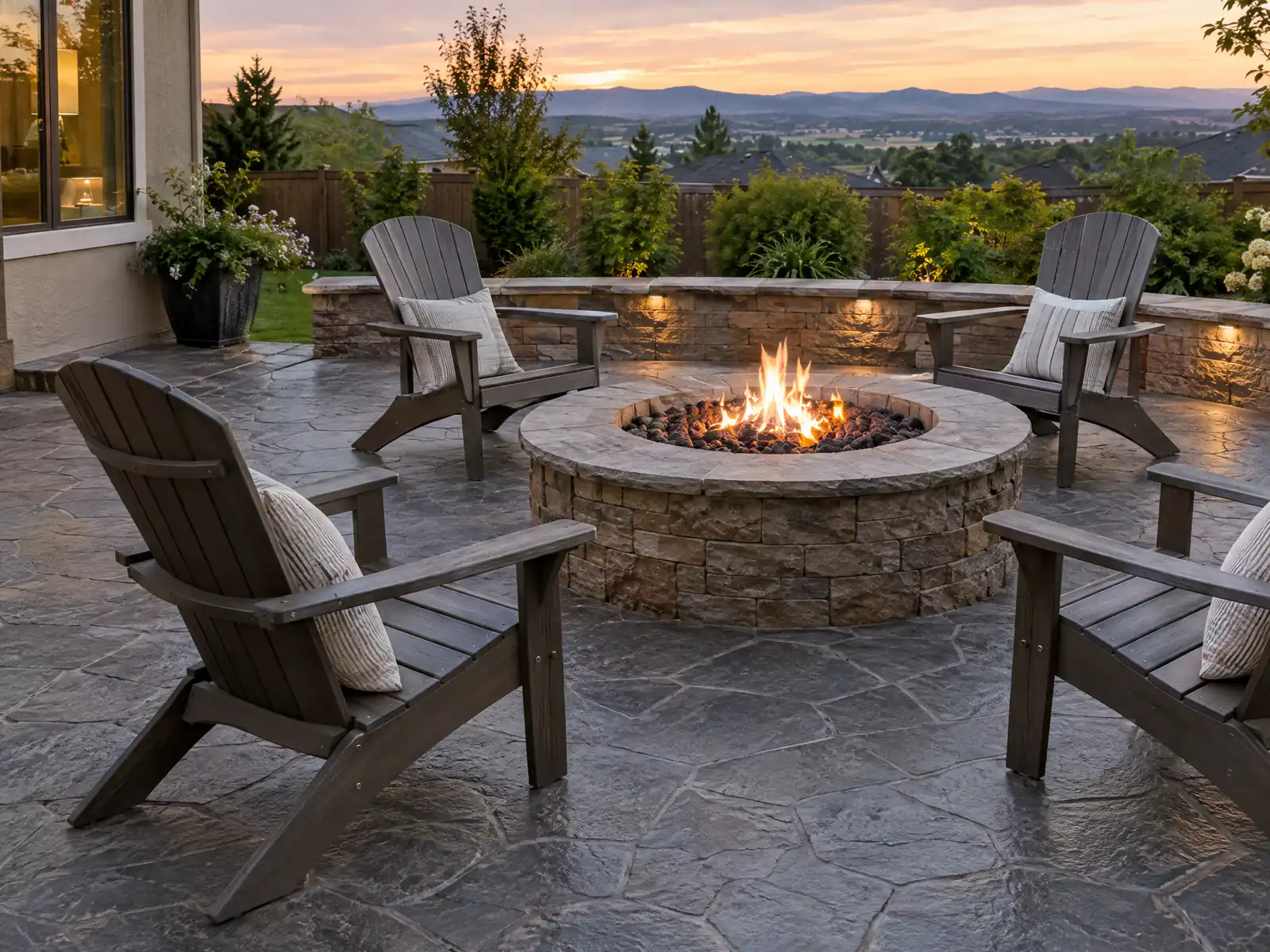
Vista's streets and slabs follow its water. The Vista Irrigation District won funding in 1923 to bring water from Lake Henshaw, citrus, tomatoes, celery and hillside avocados followed, and the City incorporated on January 28, 1963 with about 19 square miles. By Wikipedia's census table the population then went from 24,688 in 1970 to 71,872 in 1990, which is when most of today's driveways, side yard slabs and block walls were poured, so a typical Vista slab now has close to four or five decades behind it.
MDG Builders, CSLB #1040337, is a general contractor based in Tarzana. We scope the pour, take permit questions to the Vista Building Division and manage the schedule, and a licensed concrete subcontractor forms, places and finishes the work. The concrete page covers finishes and materials, and the Vista overview lists the other trades we manage here. We read City pages through Wayback Machine copies because vista.gov blocked our tools, and the code text through the GoCodebook mirror, so confirm each section with the City.
What Vista's Building Division, Land Development, Fire Prevention and the Municipal Code say about concrete work
Where concrete permits come from in Vista: City of Vista Community Development Department, Building Division.
- The 2016 Guidebook exempts sidewalks and driveways not more than 30 inches above adjacent grade that are not over a basement or story below and not part of a disabled accessible path of travel, and retaining walls under four feet unless they carry a surcharge. It has no separate exemption for a patio slab, so ask for written confirmation before pouring one.
- Vista's Free Standing Wall handout calls for footing concrete of at least 2,500 psi, type N block grouted solid at 1,500 psi masonry strength, and says plastic cement is not permitted in retaining walls; the Retaining Wall handout requires footing, pre-grout, backfill and drainage, and final inspections, and the Decks handout requires 2,500 psi footing concrete with an inspection before concrete is placed.
- Vista's Retaining Wall handout says a grading permit is also required if the general drainage pattern is altered or concentrated, and the Guidebook says excavations over 50 cubic yards need a grading permit under Development Code Chapter 17.56, with the Land Development Division at 760.639.6111.
- CSLB defines the C-8 Concrete classification as forming, pouring, placing, finishing and installing mass, pavement, flat and other concrete work, and placing and setting screeds for pavements or flatwork.
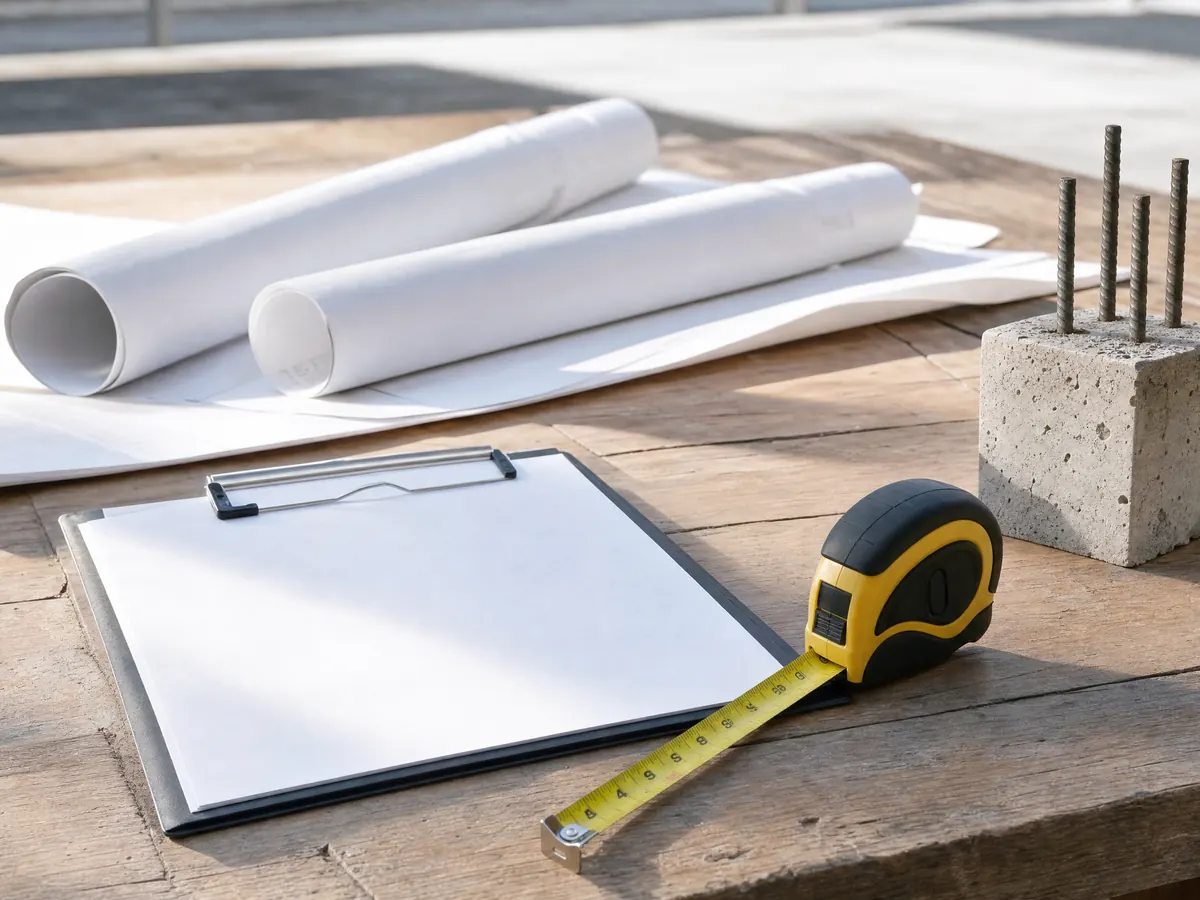
Can concrete replace the mulch, wood fence and shade sail along a Vista house wall?
It is often the obvious candidate, and that is why fire rules now shape Vista flatwork. Municipal Code 8.62, adopted as Ordinance 2025-02, defines Zone 0 as the first 5 feet from a building, measured from any attached deck or patio. In that strip it bans firewood, combustible mulch for new landscaping and any fence, arbor, awning or shade sail that attaches to or touches the structure, and the City asks owners to replace the 5 feet of fence that meets the house with a non-combustible material.
A poured band, a paved walk or a masonry curb does not burn, which is the plain reason to consider them. What the City accepts is its call, so ask Fire Prevention at 760.643.2801 before pouring and describe the width of the strip, any drain and whether a block wall will replace the fence line.
Enforcement runs by notice. The code text we read gives 21 days to comply, while the City's own FAQ describes a 30 day notice and a 21 day re-inspection window, so the two documents differ and the City can say which applies. Parcels inside the Vista Fire Protection District follow the district's ordinance, so for a rural lot the first question is which agency covers it.
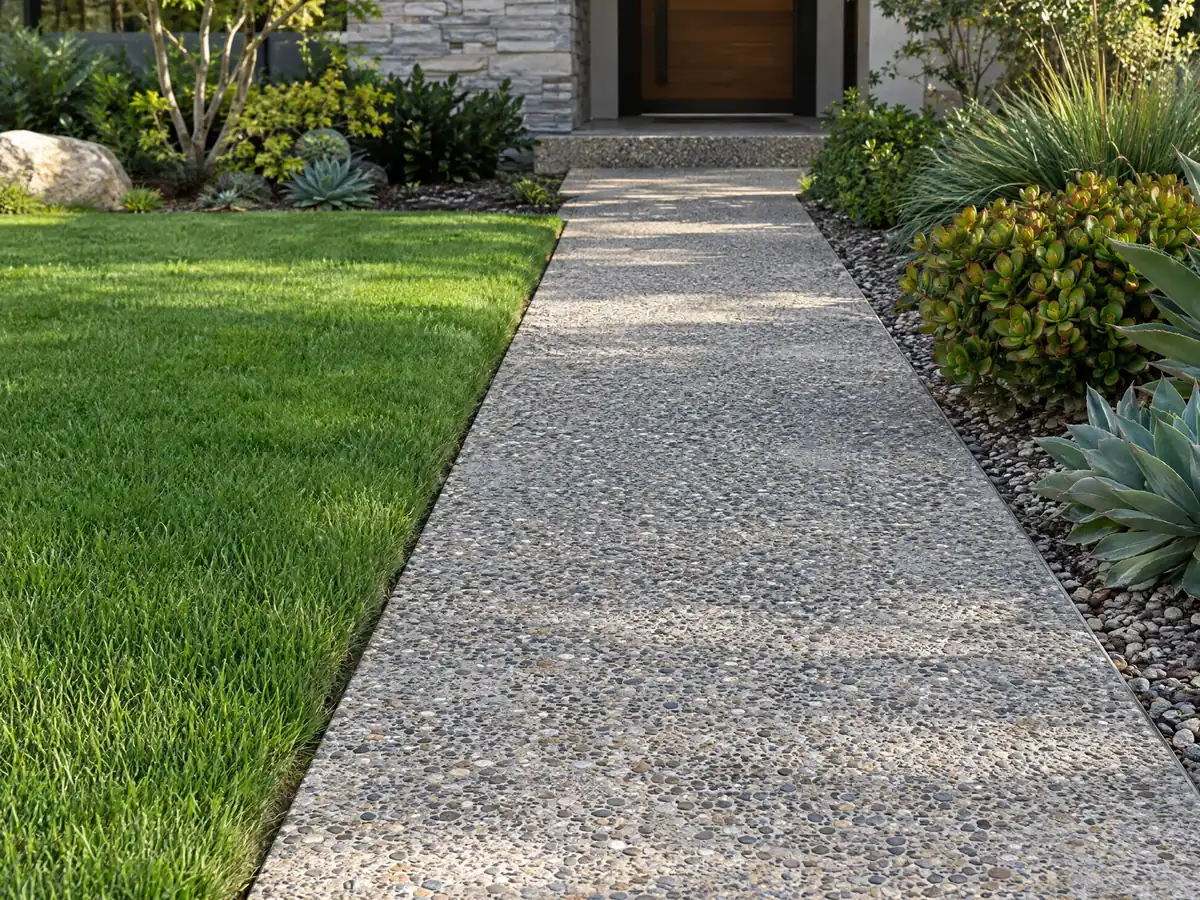
Can you pour a concrete patio, driveway or walk in Vista without a permit?
Driveways and sidewalks are on the City's no-permit list, and patio slabs are not named. The 2016 Community Development Guidebook exempts sidewalks and driveways not more than 30 inches above adjacent grade, not over a basement or story below and not part of an accessible path of travel. It has no line for a patio slab, so get the Building Division's answer in writing before a form goes up. The City's newer exempt-work handout could not be opened, so ask for the current list.
Some flatwork still touches planning review. A block wall of 42 inches or less needs no building permit under that guidebook but still needs a no-fee fence permit from Planning, and vehicular gates carry their own permit with a plot plan. We could not read the current zoning text on driveway width or front yard paving, so ask Planning whether a lot has a limit before widening a driveway.
Plan on a permit for anything structural. A contractor needs a current City of Vista business license before the permit issues, an application is deemed abandoned one year after filing unless the permit has been issued, and starting early costs a penalty equal to the permit fee.
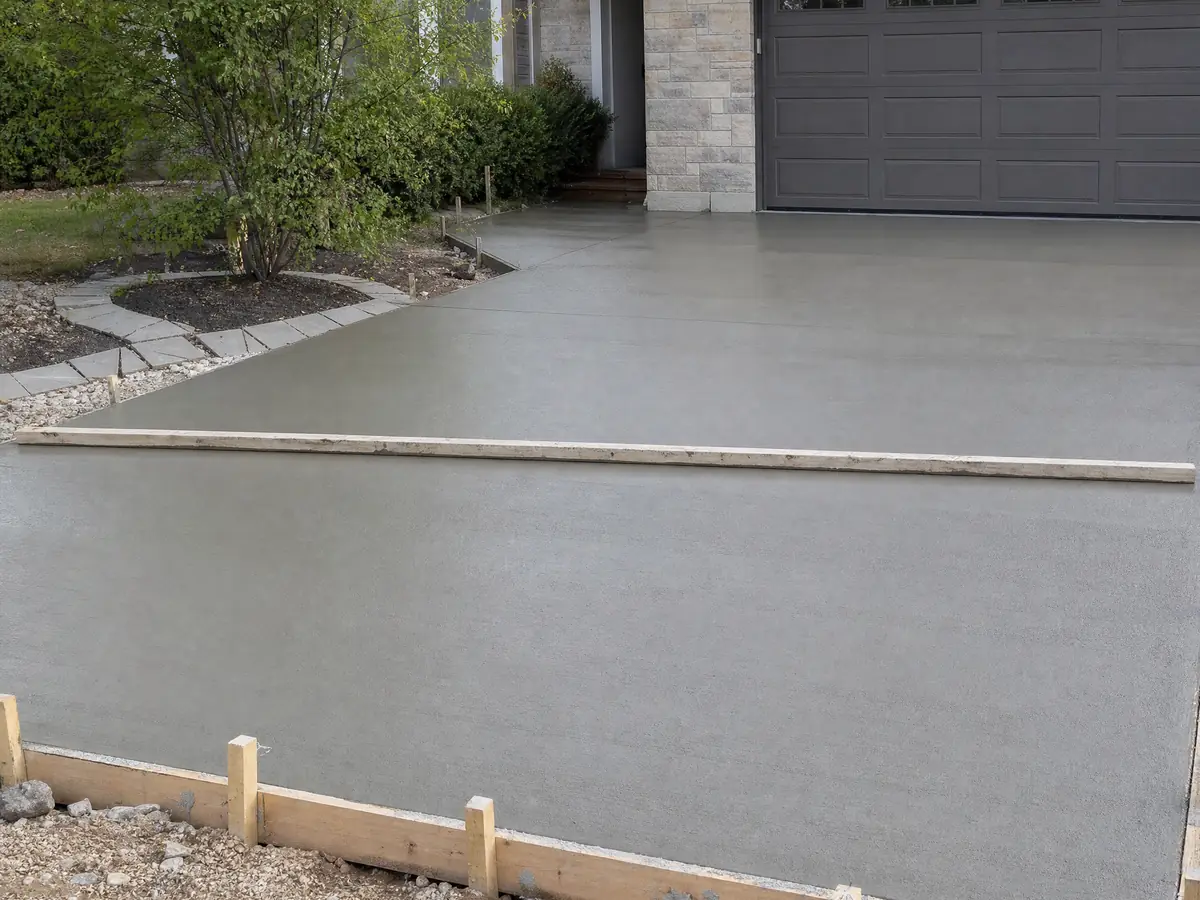
How tall can a retaining or block wall be in Vista before it needs a permit?
Under four feet, measured from the bottom of the footing to the top of the wall, and only if it carries no surcharge. The City's Retaining Wall handout, marked 07/2014, says taller or surcharged walls need a building permit with inspections at footing, masonry pre-grout, backfill and drainage, and final, and that a grading permit is also needed if the wall alters or concentrates the general drainage pattern.
The Free Standing Wall handout, updated 09/2020 and titled 6ft or 7ft, says no building permit or inspection is required for such a wall but sets the build: type N block grouted solid, footing concrete of at least 2,500 psi and deformed rebar with 24 inch laps. It states no height limit in the text we read, and it differs from the guidebook's 42 inch line, so ask Planning which number applies.
Block is a different trade from poured concrete. CSLB's C-29 class covers concrete block walls for structures and fences, while C-8 covers forming and pouring, so a project that mixes both may bring two licensed subcontractors.
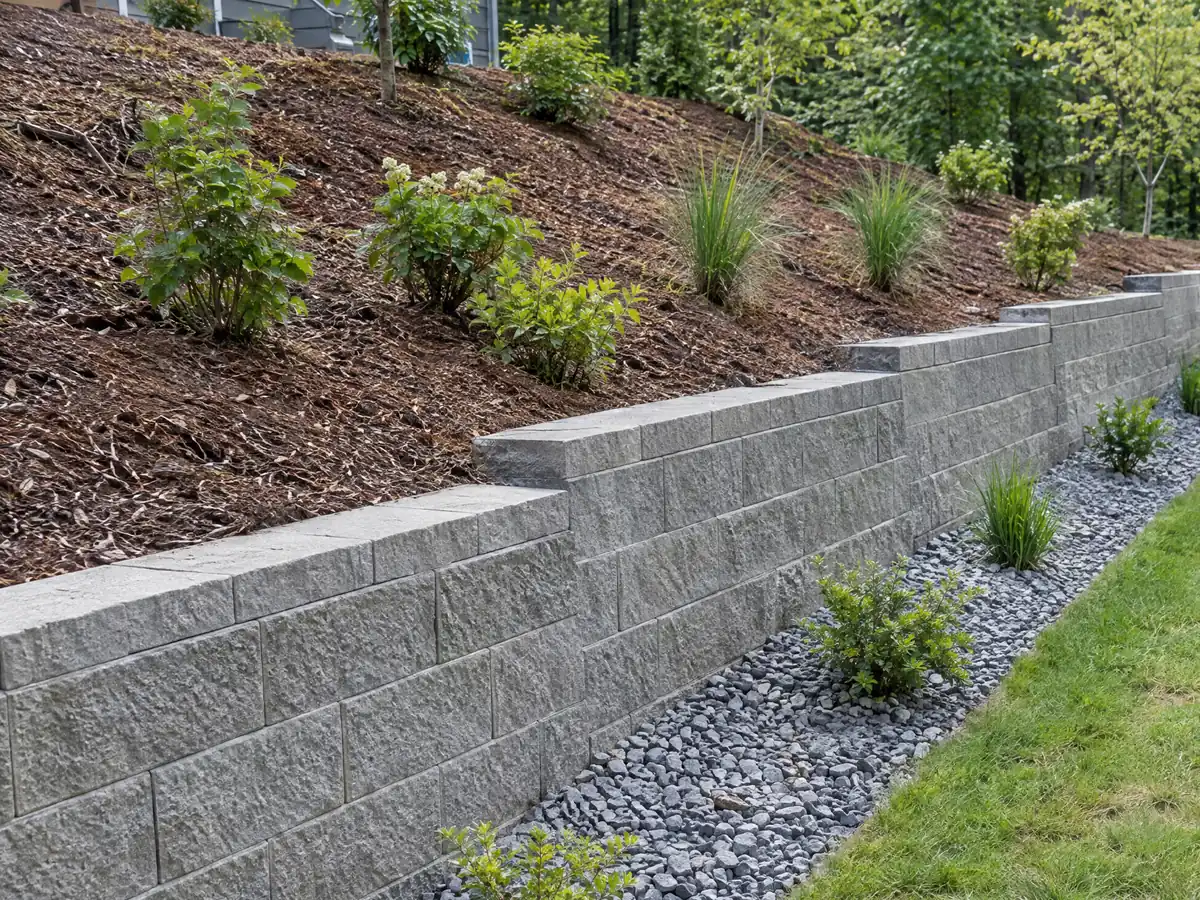
What changes when the slab goes on a Vista hillside or next to a creek?
Grading rules start at 50 cubic yards. The guidebook says a grading permit is generally required for excavations over 50 cubic yards and for work in sensitive areas such as steep slopes or riparian areas, under Development Code Chapter 17.56, with plans and reports from a licensed civil engineer. Land Development answers at 760.639.6111, and a long footing trench or a driveway cut into a bank adds up faster than owners expect.
Mar Vista, about 143 acres of hillsides near State Route 78 that were annexed from the County, keeps rural A-1 standards. The Vista fire code also carries a figure that places single-story buildings 15 feet and two-story buildings 30 feet back from the top of a slope. We could not tell which parcels that section covers, so ask Planning and Fire before putting a wall or slab near a rim.
Creeks show up in the fire ordinance. Buena Vista Creek, Buena Creek and Agua Hedionda Creek are named as high fire zones, and the City says it does not make floodplain determinations, so flood questions go to FEMA maps and a licensed surveyor or civil engineer. We did not open any Vista map for liquefaction, landslide or hillside parcels.
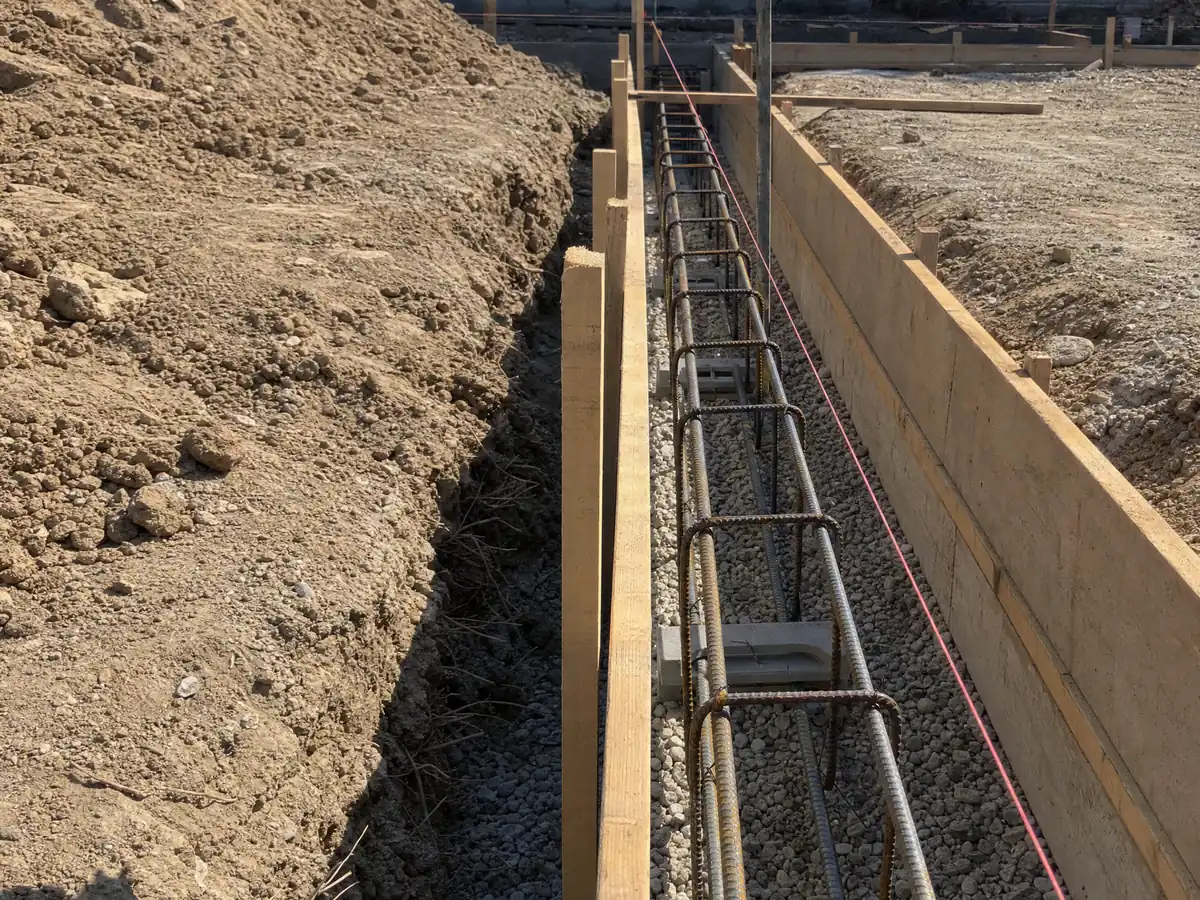
Should a 40 year old Vista driveway or patio be repaired or replaced?
The boom put 17,472 housing units on the ground between 1970 and 1989, so many driveways, side yard slabs and patios here are four or five decades old. The Census Bureau's 2024 estimate has 50.6 percent of Vista's 36,136 units single-family detached and 4.6 percent mobile homes, and the City issues permits for mobile home carports, porches and foundations.
Look for cracks that move. A hairline crack is ordinary concrete behavior, a crack with one side sitting higher than the other is a settlement problem, and a slab that tips toward the house is a drainage problem. We found no Vista soil study that explains movement, so a contractor who blames the soil should show the evidence.
Replacement starts with demolition and haul-off, and a driveway that is part of a public approach is a different permit than a private slab. We did not read what Vista requires for work in the public right of way, so ask the Land Development Engineering Division before cutting a curb or sidewalk.
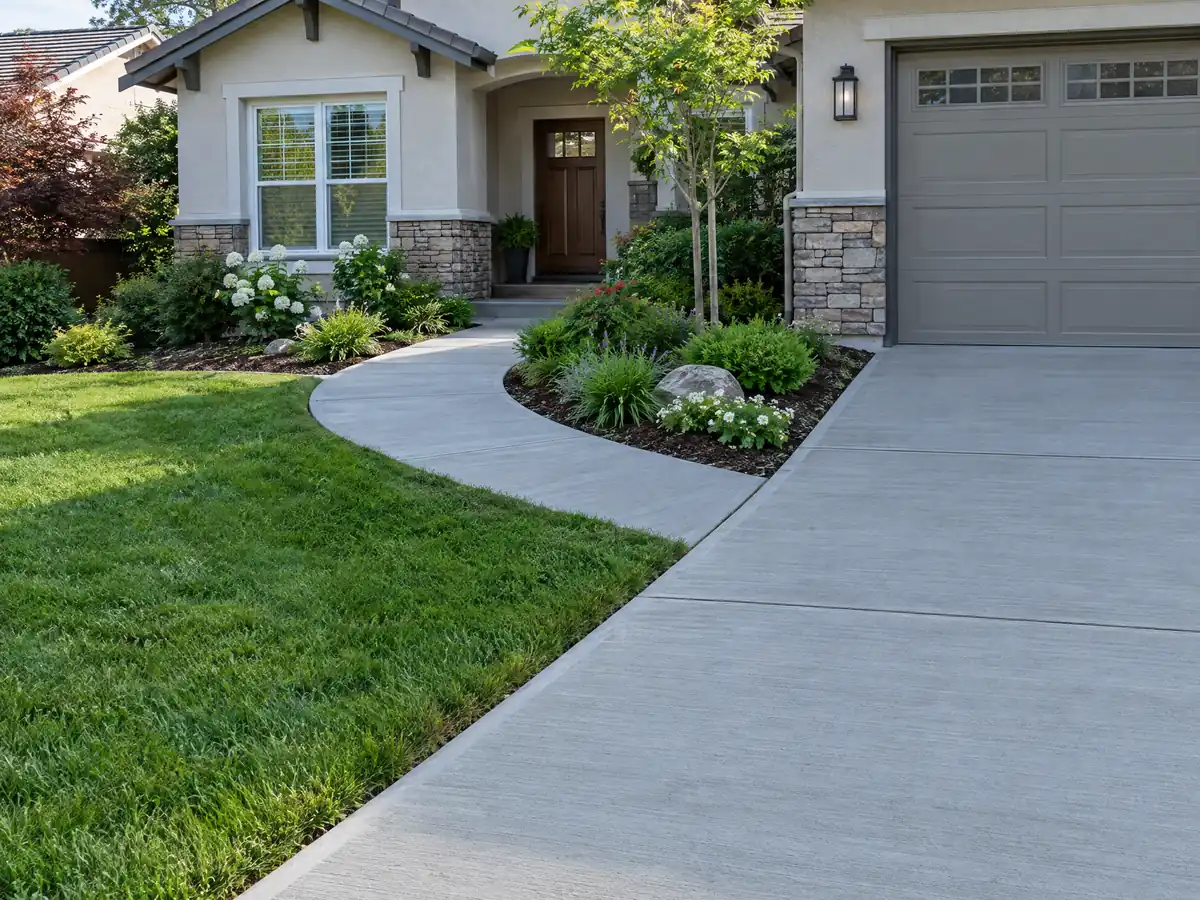
Can you pour concrete in the rain or in the Vista summer heat?
Rain is a scheduling problem more than a ban. NOAA's 1991 to 2020 normals put 10.02 of Vista's 13.39 inches of yearly rain between December and March, with 0.10 inch in July and 0.03 inch in August, so most pours land in dry months, and a winter pour needs a plan for covering the fresh surface.
Heat is the other hazard. The VISTA station averages 105.9 days a year at or above 80 F and 18.7 days at or above 90 F, and Vista runs several degrees hotter than the Oceanside coast. A contractor should say how a hot afternoon pour will be kept wet, shaded and jointed so it does not craze, and how soon the slab can take foot traffic or a car.
Freezing is rare, at 1.2 days a year with lows at or below 32 F, so subgrade and thickness matter more than frost protection. We found no Vista code number for slab thickness or joint spacing, which makes them industry practice we could not tie to a section, so ask for both in the proposal.
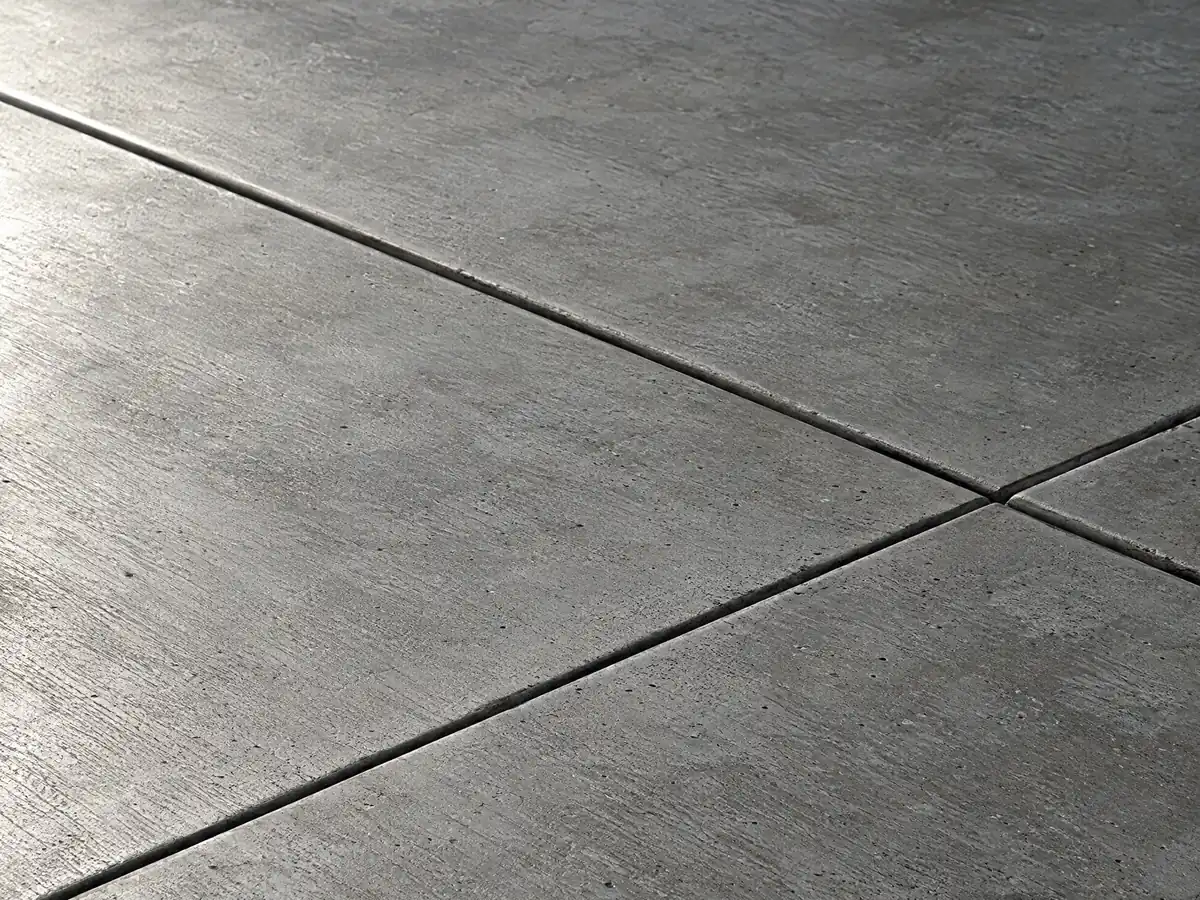
How much does a concrete company charge in Vista, and which license is required?
We found no Vista price study, so the anchors are Angi's Los Angeles pages, which cite customer surveys and pro data and may run higher than San Diego County. They put plain patios at $4 to $13 per square foot (August 4, 2026), stamped patios at $15 to $30 (July 20, 2026) and driveways at $8 to $20 (May 5, 2026).
Our Los Angeles planning ranges are $8 to $14 per square foot for typical flatwork of 300 square feet or more, $15 to $30 for stained, stamped or exposed aggregate and $9 to $20 for driveway replacement including demolition. Small jobs run higher per foot because of minimum charges, and retaining walls are priced by height and drainage, so we print no per foot figure for them. The federal wage survey puts Los Angeles area cement masons at a mean $33.67 an hour as of May 2025.
Poured work falls under CSLB's C-8 class. A permitted job can never use the state's $1,000 unlicensed work limit, and Vista asks for a City business license first. Our license check guide shows how to read a CSLB record.
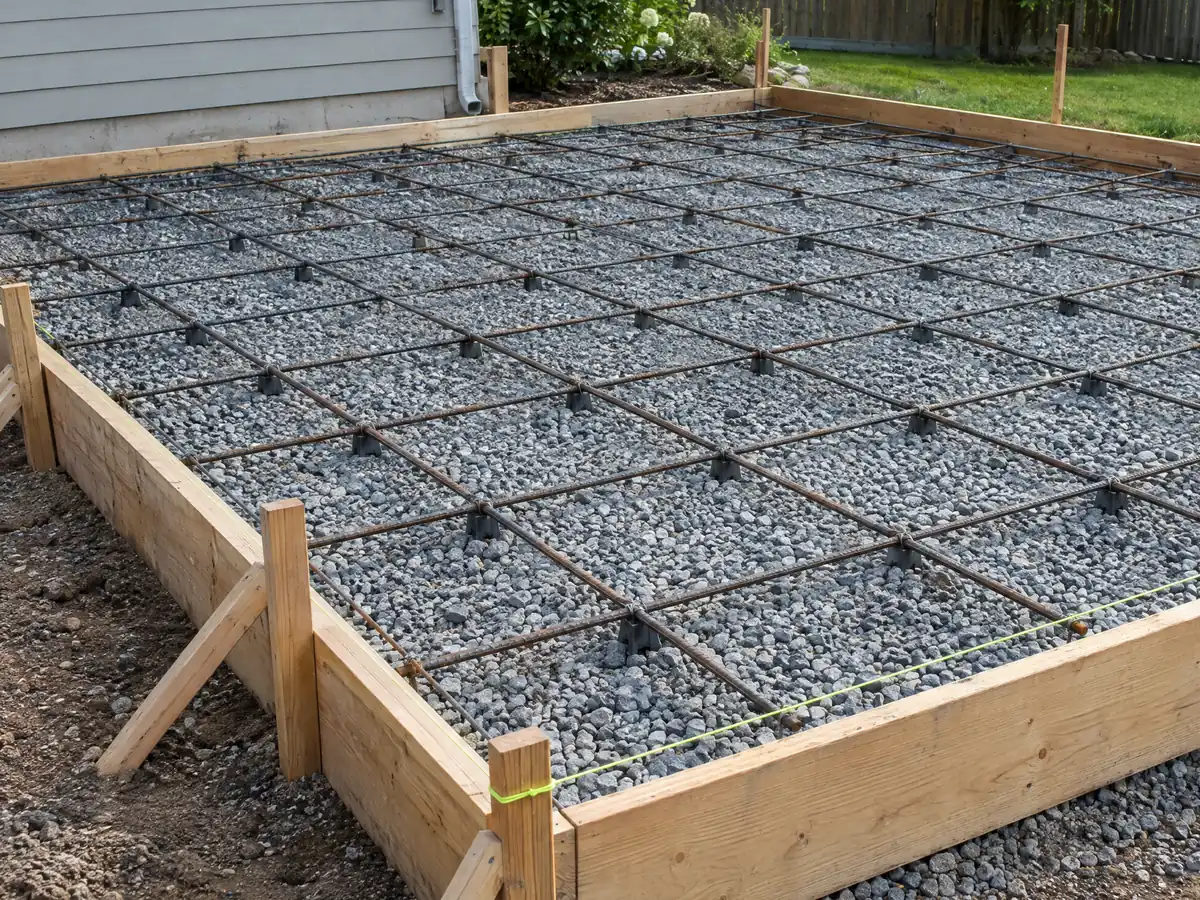
Concrete photos from Vista and nearby communities
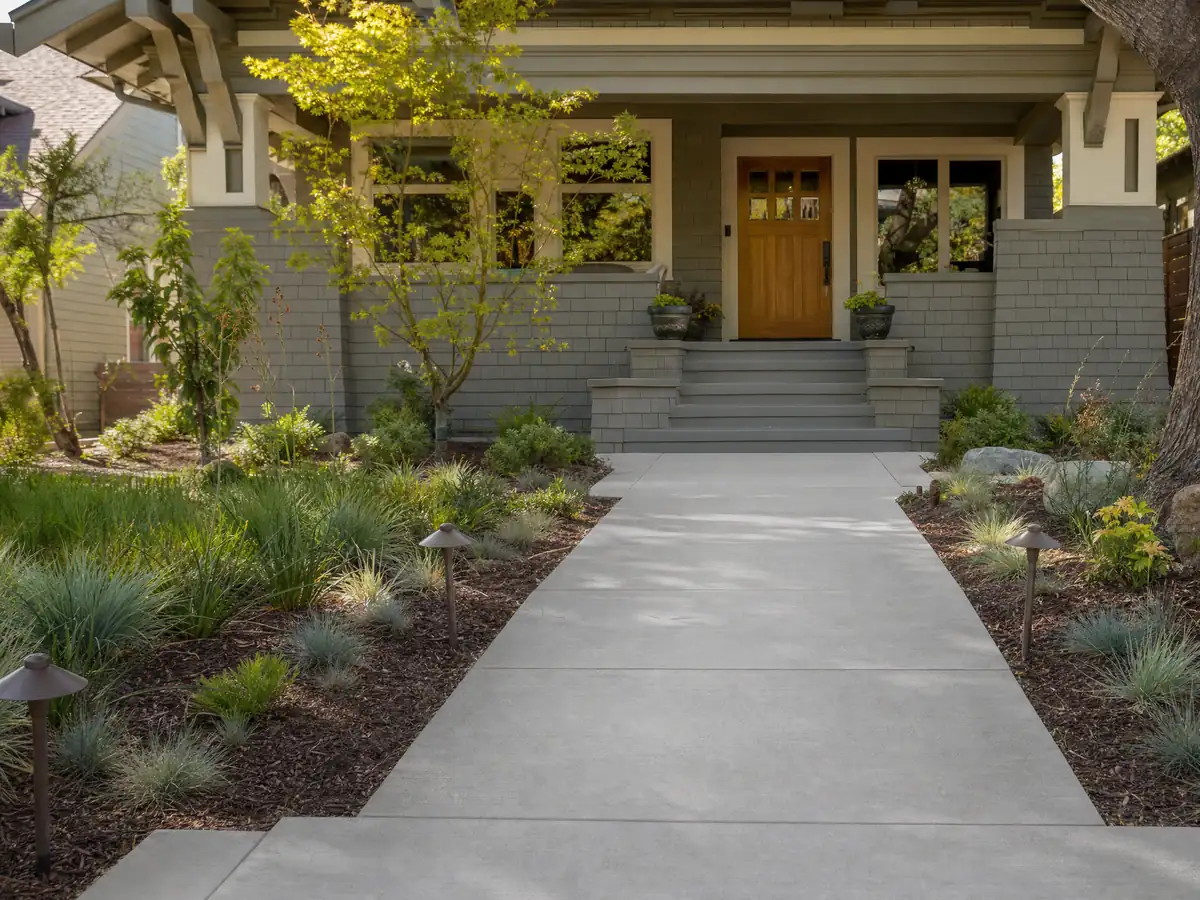
Forms, rebar, finished flatwork and block walls from Vista and the North County towns around it, shown at the steps where the rules matter. Tap any photo to enlarge it.
What concrete costs around Vista
Dollar figures here are Los Angeles planning ranges from our concrete page, not a Vista bid, and a proposal should show demolition, base, rebar, engineering and any right of way permit on separate lines. The same lot may need flooring in Vista or decks in Vista. For nearby comparisons, read concrete in Oceanside, concrete in Carlsbad, concrete in Escondido and concrete in San Diego, with concrete in Los Angeles as the big-city benchmark. The subcontractor guide explains who forms and who pours.
| What it covers | Typical range |
|---|---|
| Patio, walkway or slab, broom finish, 300 sq ft or more | $8 to $14 per square foot |
| Decorative: stained, stamped or exposed aggregate | $15 to $30 per square foot |
| Driveway replacement, with demolition of the old slab | $9 to $20 per square foot |
| 20 by 20 foot plain patio (400 sq ft) | About $3,200 to $5,600 |
| 20 by 20 foot decorative patio (400 sq ft) | About $6,000 to $12,000 |
| Small jobs under 300 sq ft | Usually above the per-foot range |
| Retaining walls | Set by the written proposal |
Vista concrete questions, answered
Can I pour a concrete patio without a permit?
Not safely assumed in Vista. The City's 2016 guidebook exempts driveways and sidewalks up to 30 inches above grade but names no patio slab, and the newer exempt-work handout could not be opened. Ask the Building Division for a written answer before pouring, and expect a permit for anything structural or tied to a wall.
Can I expand my driveway without a permit?
The building permit side is usually exempt, because the guidebook lists driveways up to 30 inches above grade. Width and front yard paving are zoning questions, and we could not read Vista's current zoning text on them. Ask Planning before widening, and ask Engineering if the work touches a curb, sidewalk or public approach.
What is the maximum height of a retaining wall without a permit in California?
In Vista, a wall under four feet measured from the bottom of the footing to the top, carrying no surcharge, needs no building permit, per the City's Retaining Wall handout. Taller or surcharged walls need permits and four inspections, and a grading permit applies if drainage changes. Check the handout's date with Building.
How much should a 20x20 concrete patio cost?
A 20 by 20 patio is 400 square feet, which at our Los Angeles planning range of $8 to $14 per square foot is $3,200 to $5,600. Angi's Los Angeles page shows a wider $1,600 to $5,200 for a plain 20 by 20, so ask for demolition, base and finish as separate lines.
How much would a 20x20 stamped concrete patio cost?
At our Los Angeles planning range of $15 to $30 per square foot for decorative work, 400 square feet runs $6,000 to $12,000. Angi's Los Angeles stamped page shows an average of $5,948 inside a $2,915 to $8,982 spread. Pattern, color and sealer change the price, and Vista bids may differ.
How much should I expect to pay for a concrete driveway?
Angi's Los Angeles driveway page of May 5, 2026 shows $8 to $20 per square foot, an average of $7,270 and about $2,500 for 200 square feet. Our planning range is $9 to $20 including demolition of the old slab. Grading, a curb cut or a public approach can add lines.
Can I use concrete or a block wall instead of a wood fence next to my house in Vista?
Often yes, and in Zone 0 it is what the City suggests. Municipal Code 8.62 bars fences, arbors and shade sails from attaching to or touching a building within 5 feet, and the City asks owners to replace the 5 feet of fence meeting the house with masonry or metal. Confirm the design with Planning and Fire Prevention.
Is 4 inches of concrete thick enough for a driveway?
It is a common thickness for patios and walks, but we found no Vista code number for driveway thickness, so treat it as industry practice. Ask the proposal to state thickness, base, reinforcement and joint spacing in writing. Heavy trucks, RVs and a poor subgrade change the design, and so do slopes.
Do concrete contractors need to be licensed in Vista?
Yes for almost any job. CSLB's C-8 class covers forming, pouring and finishing concrete, and the state's $1,000 unlicensed work limit never applies if a permit is needed. Vista also requires a current City business license before a permit issues. Check the CSLB record and ask for each subcontractor's license.
Can you pour concrete in the rain?
Light rain is manageable if the contractor covers and protects the fresh surface, but a hard rain can wreck a finish. Vista gets 10.02 of its 13.39 yearly inches from December through March, so winter pours need a weather plan. Ask what the crew does if a storm arrives before the surface sets.
What do you want poured, how big and on what kind of lot?
Describe the patio, driveway or wall, the rough size and whether the lot is flat, sloped or beside a creek. The Zone 0, grading and right of way questions come with us to the first visit.