
Deck Builderin Fountain Valley, CA
A deck builder in Fountain Valley works on flat lots over shallow groundwater. Platforms up to 30 inches above grade are exempt on the City's code list, patio covers have a City Standard permit, and a taller or attached deck is safest treated as a permit job. The City's 2023 assessment finds no Very High fire zone.
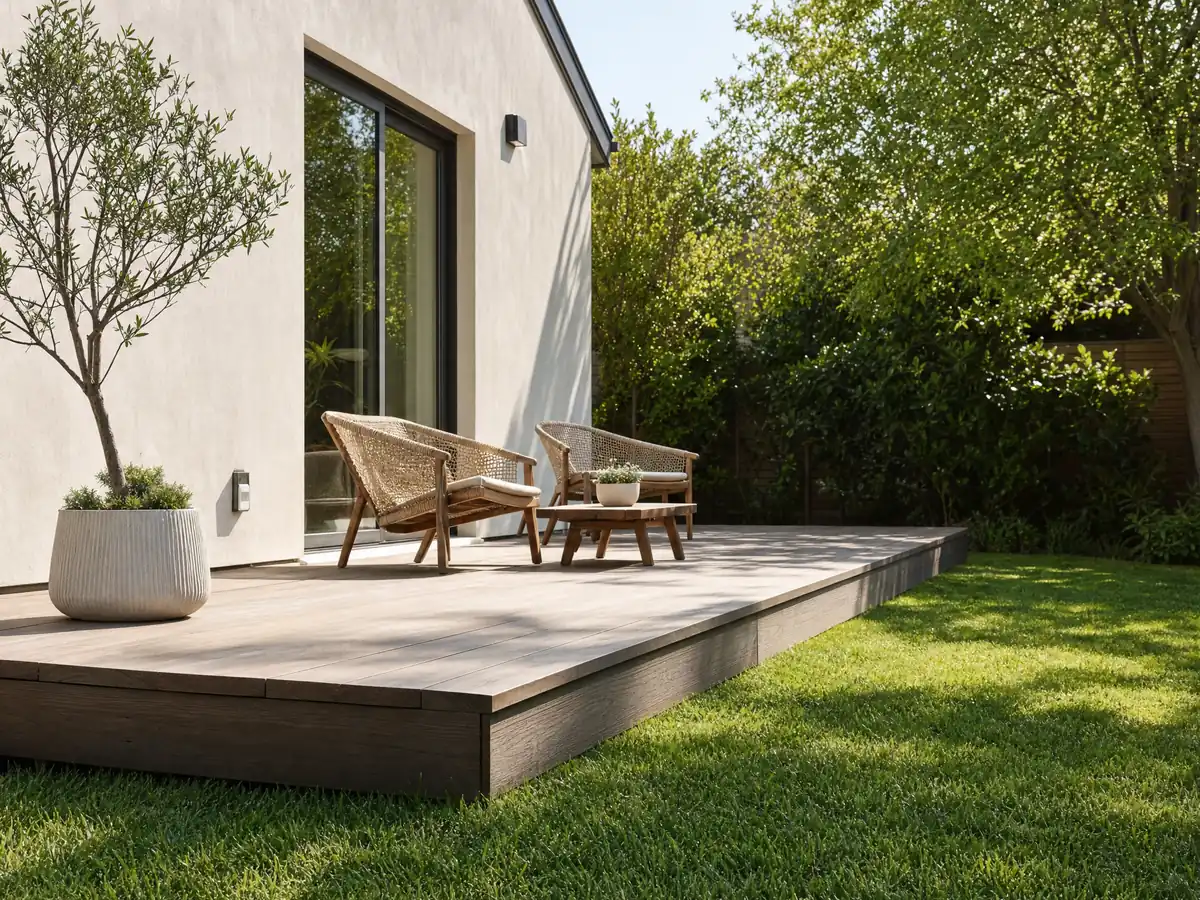
Fountain Valley's decks sit behind tract homes from the 1960s and 1970s. The city incorporated in 1957, its first tract broke ground in 1962, and Census estimates for 2024 count 13,040 detached houses among 19,227 homes, with a median owner-occupied value of $1,072,300, plus or minus $16,485. That is enough money in an older house to settle the permit, footing and fire questions before anyone orders lumber.
MDG Builders, CSLB #1040337, is a general contractor in Tarzana that designs the deck, sends the permit questions to Fountain Valley's Building Division and books a licensed carpentry subcontractor to build it. Materials and ranges are on the decks page, and the Fountain Valley overview covers the rest of our trades here.
What Fountain Valley's Building Division, the Zoning Code and the City's patio cover plans say about decks
Where decks permits come from in Fountain Valley: City of Fountain Valley Community Development Department, Building Division (Permit Center).
- Municipal Code 18.04.045 (GoCodebook mirror) defines unenclosed structures as those with a roof and no more than one side, or no roof, and says they include patio covers, decks and balconies. Platforms, walks and driveways not more than 30 inches above grade and not over any basement or story below are exempt from a permit.
- Zoning Code 21.18.090 (GoCodebook mirror) exempts decks, steps and terraces placed on the finished grade and less than 18 inches above it from setback requirements, and lets covered unenclosed porches reach up to 4 feet into a front setback, up to 4 feet into a side setback but no closer than 3 feet to the side line, and up to 15 feet into the rear setback but no closer than 10 feet to the rear line.
- The City publishes standard plans for detached and attached patio covers (the sheets read with local OCR carry a 3/22/11 date and a 2/16/16 revision date, and show a concrete slab, post, beam and rafter details with rafter and beam span tables). The expedited City Standard Patio Cover permit follows these plans, so a cover that departs from them needs its own plans.
- The City's Single-Family Development Standards sheet says accessory structures need a 10 foot setback from the main dwelling and 5 feet from rear and side lines, have a 15 foot height limit, and pools and spas must sit 5 feet from the house and from rear and side lines, with AC units and pool equipment 3 feet from a side line (18 inches if behind the house in the rear yard).
- The City's Patio Enclosures handout (revised 2/4/10, read with local OCR) says a patio enclosure is non-habitable space where at least 65 percent of two adjacent walls is only screening or readily removable plastic up to 6 feet 8 inches, that glass, interior drywall and non-exterior-rated electrical are not allowed, and that it may not block a bedroom egress window or enclose an electric or gas meter. An enclosure used as living space violates the building and zoning codes and can bring a citation, fine or removal.
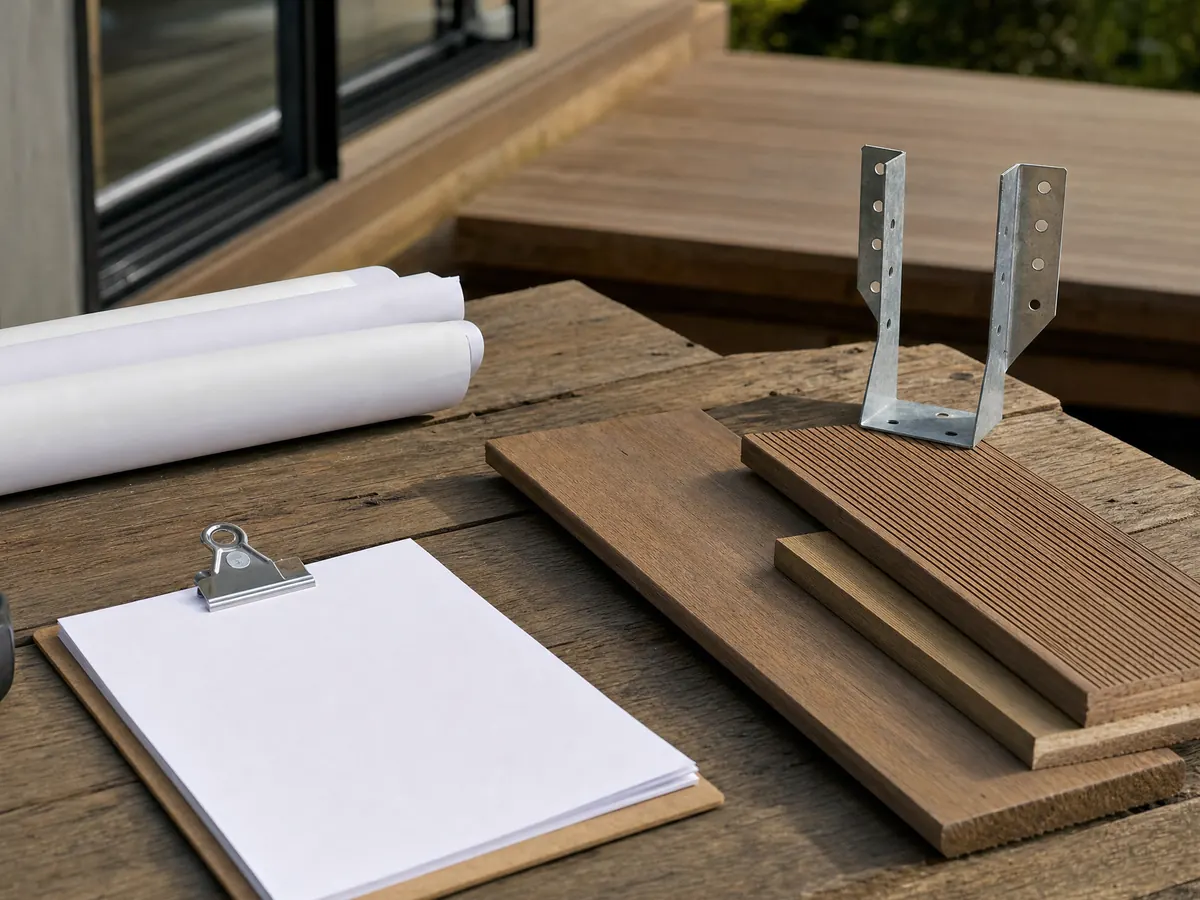
Do you need a permit to build a deck in Fountain Valley?
Only the lowest decks skip one. Municipal Code 18.04.045, read on the third-party GoCodebook mirror, defines unenclosed structures as those with a roof and no more than one side, or no roof at all, and lists patio covers, decks and balconies among them. It exempts platforms, walks and driveways not more than 30 inches above grade and not over any basement or story below. The mirror is not the official text, so confirm with the City.
Zoning is a separate test. Section 21.18.090 of the Zoning Code on the mirror exempts decks, steps and terraces placed on the finished grade and less than 18 inches above it from setback requirements. A deck between 18 and 30 inches may skip the building permit and still need to respect setbacks. The City's single-family sheet gives accessory structures 10 feet from the house, 5 feet from rear and side lines and a 15 foot height limit, so ask whether a freestanding deck or cover counts.
We found no City sentence on a square-foot limit for a freestanding deck. An attached deck, a deck over 30 inches and any deck with a cover are safest treated as permit jobs, so call the Building Division at 714-593-4429 and ask for the answer in writing.
How do wet, soft soils affect deck footings in Fountain Valley?
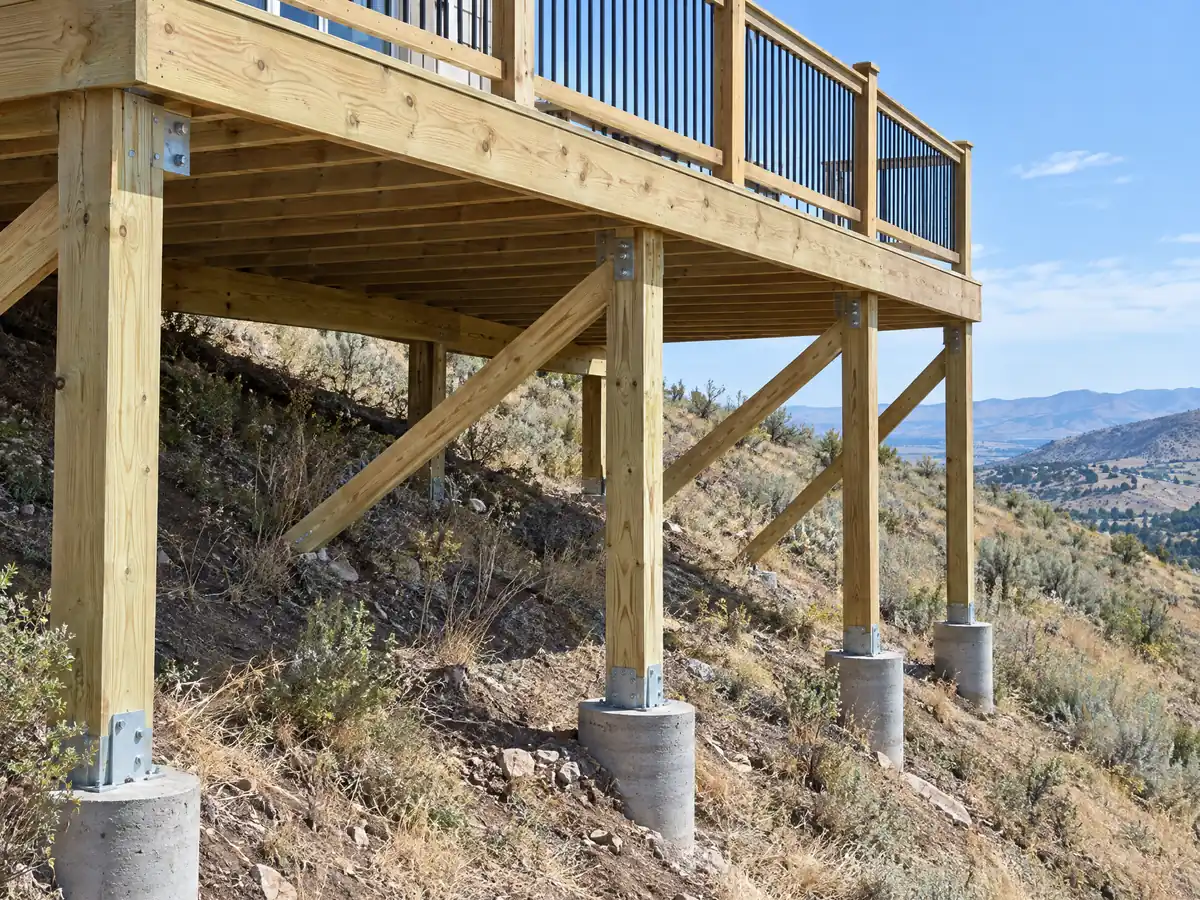
They make the footing the part to settle first. The City's Vulnerability Assessment puts groundwater under ten feet and calls the whole city except an isolated Newland Street area susceptible to liquefaction, and a Seismic Hazard overlay lets the building official require special design and a soils report. For any new residential construction or addition, Municipal Code 18.12.080 on the mirror lets the Building Official require a geotechnical report after a site visit.
The City's Foundation Requirements policy, effective January 1, 2023, covers residential projects and accessory structures and asks for a geotechnical report unless an exception applies. It also notes that some soils in Orange County are expansive. We could not tell from the policy whether a deck on posts counts, so ask the Building Division before you order a pier layout.
Flood areas add a rule. The Assessment says flooding is most likely in the northwest near Sandalwood Street, Walnut Street and Heil Avenue, and the Floodplain overlay counts repairs and improvements over five years toward a 50 percent substantial improvement test (section 21.14.040 on the mirror). Ask whether new work at the house counts toward it.
- Is the lot near Sandalwood Street, Walnut Street or Heil Avenue?
- Does the deck bolt to the house or stand on its own?
- Who orders the soils report if the City asks for one?
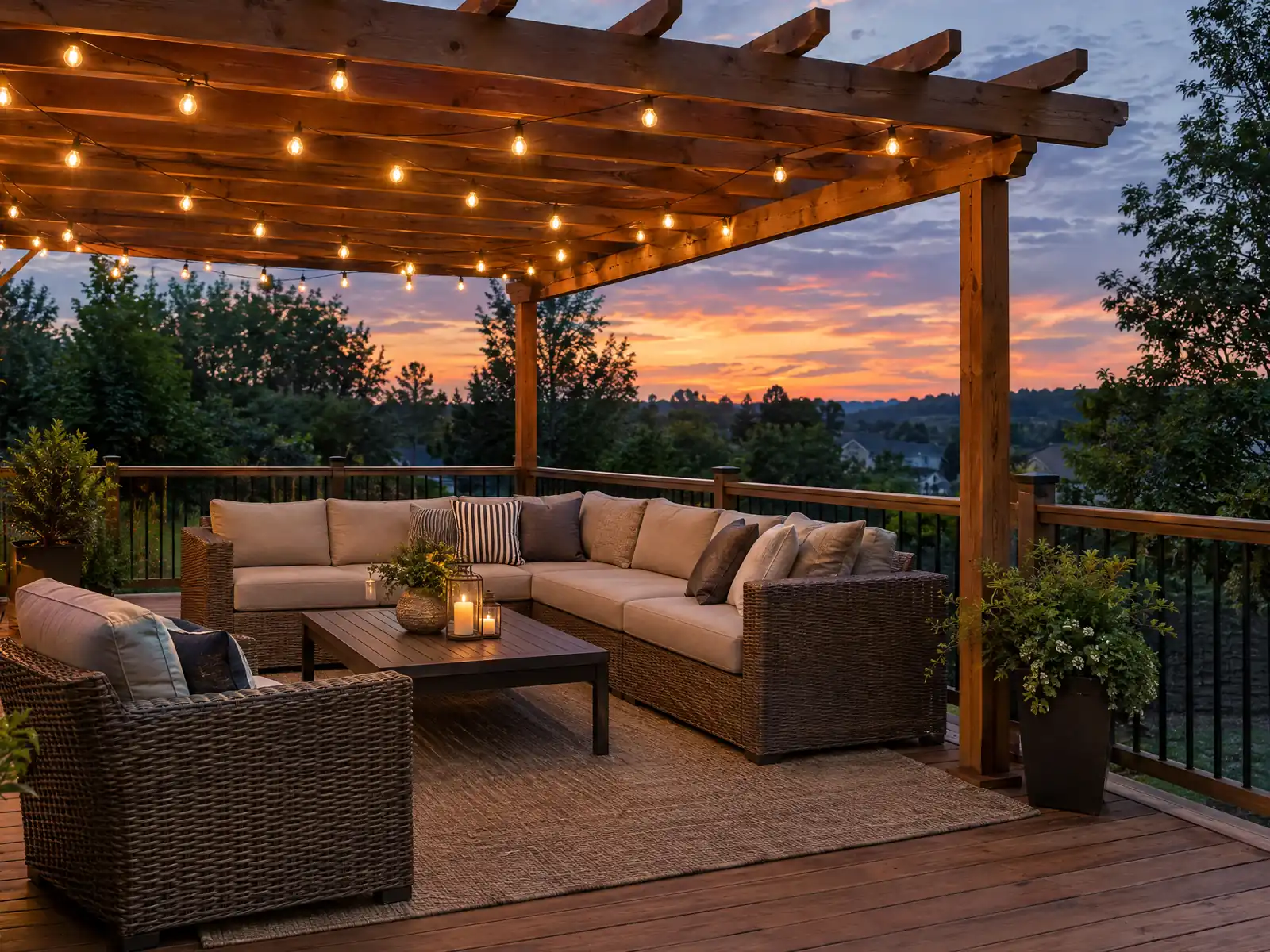
What are the rules for a patio cover or pergola over a Fountain Valley deck?
A patio cover has a shortcut. The City lists City Standard Patio Cover among its expedited permits, submitted with a site plan, and publishes standard plans for detached and attached covers with a slab, posts, beams, rafters and span tables. The sheets we read carry a 2011 date and a 2016 revision, and a cover that departs from them needs its own plans.
Setbacks still apply. Section 21.18.090 on the mirror lets a covered unenclosed porch reach up to 4 feet into the front setback, up to 4 feet into a side setback but no closer than 3 feet to the line, and up to 15 feet into the rear setback but no closer than 10 feet. The City's single-family sheet adds that pools and spas keep 5 feet from the house and from rear and side lines, and that AC units and pool equipment stay 3 feet from a side line.
Screening in a cover has its own handout. The City's Patio Enclosures sheet, revised in 2010 and read by OCR, says an enclosure is non-habitable space where at least 65 percent of two adjacent walls is screen or removable plastic, bars glass and drywall, and keeps bedroom egress windows and meters clear. Using an enclosure as living space violates the codes and can bring a citation, a fine or removal.
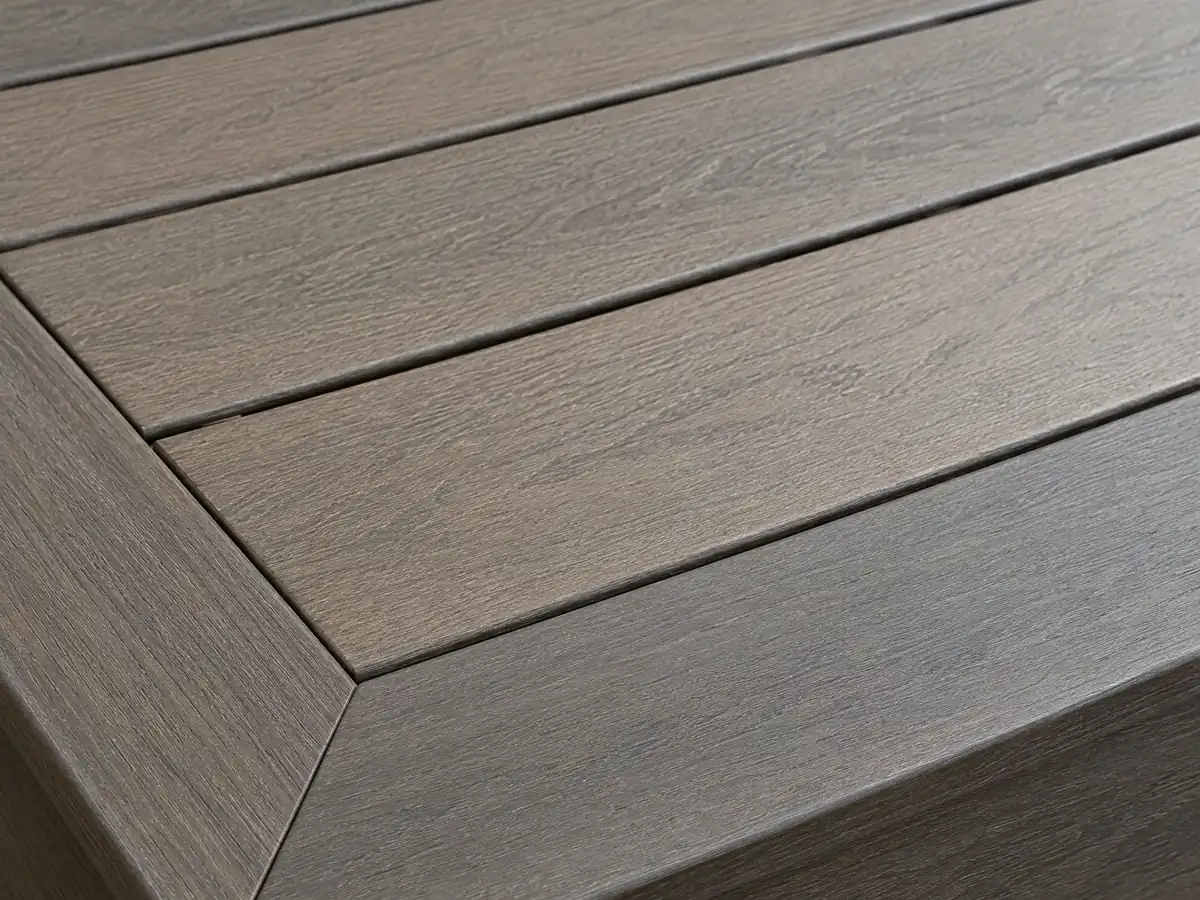
Does Fountain Valley require fire-resistant decking?
Not under the fire maps the City has published. Its 2023 Vulnerability Assessment says there is no Very High Fire Hazard Severity Zone in Fountain Valley or the adjacent communities, that the city is not in a wildland-urban interface, and that the nearest High and Very High zones are in the San Joaquin Hills and Loma Ridge. The main fire concern it names is structure fires.
Two cautions apply. The Assessment is dated May 2023, before the State Fire Marshal's 2025 update, which we did not open, so ask Fire Prevention at 714-593-4436 whether your parcel is mapped. And a low zone does not make a deck safe from a grill or fire pit set against a wall.
Fire review here comes from the City's own Fire Department, not the Orange County Fire Authority, whose member-city page does not list Fountain Valley. When a project needs Fire Department review, the plan check page says paper plans go in separately from the online PDFs. Board choice is then mostly about upkeep, heat and cost.
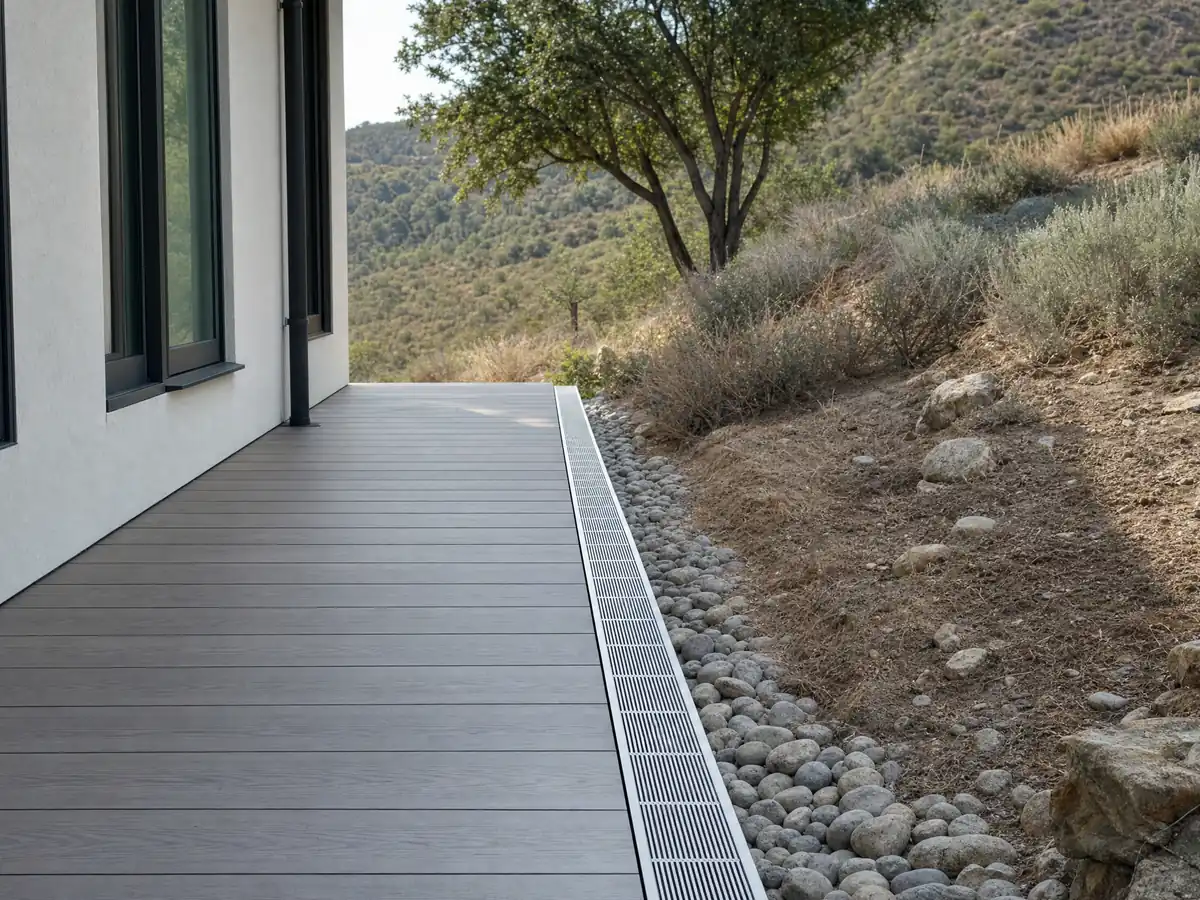
What does deck repair involve on a 1960s or 1970s Fountain Valley house?
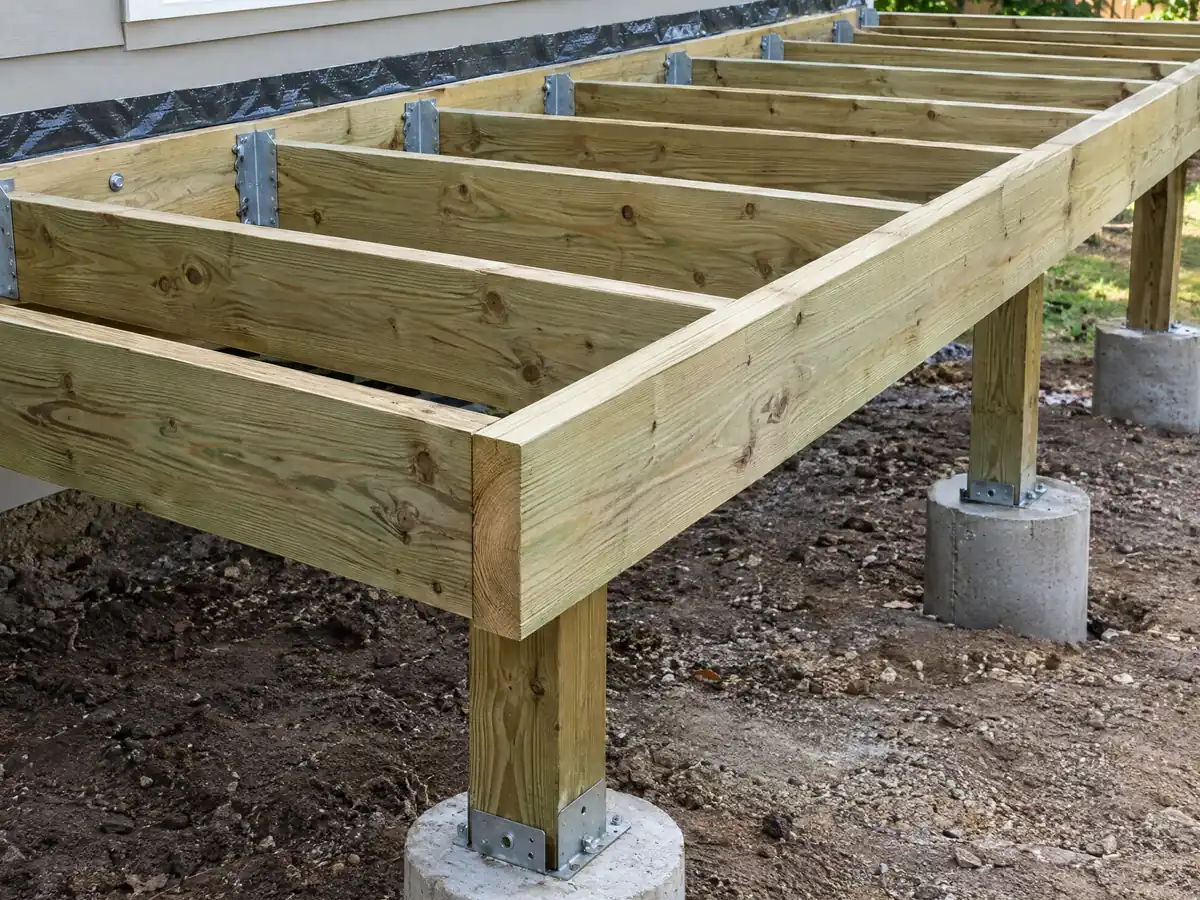
Start at the ledger and the posts. Per the ICC copy of the 2022 California Residential Code, section R507.9 asks for a pressure-treated ledger of at least 2x8, no beam loads landing on it, hot-dipped galvanized or stainless fasteners, flashing, and lateral hold-downs of either two 1,500 pound devices within 24 inches of each end or four 750 pound devices. A rebuilt attachment is measured against that standard.
Termites are the other repair driver. UC Integrated Pest Management says drywood termites are most prevalent in southern California and infest decks and fences, and that fixing moisture and sealing exterior wood helps. Ask the carpenter to probe post bases and ledger ends before quoting boards alone.
Guards deserve a tape measure. The code requires one where the walking surface is more than 30 inches above grade within 36 inches of the edge, at least 42 inches tall, with openings that stop a 4 inch sphere. No City sentence we read says whether replacing boards alone needs a permit, so send the Building Division photos and ask. New framing, a ledger or stairs point toward one.
- Are the post bases and ledger ends sound when probed?
- Is the ledger flashed and fastened with galvanized or stainless hardware?
- Do the guards measure 42 inches and stop a 4 inch sphere?
What does a deck builder charge in Fountain Valley, wood or composite?
We found no Fountain Valley deck study, so the anchor is Remodeling magazine's 2025 Cost vs. Value report for Los Angeles. A 16 by 20 foot deck with bench, planter, three steps and full railing costs $18,419 in treated wood, which recoups 99.6 percent at resale, and $26,872 in composite, which recoups 73.9 percent. Angi's Los Angeles page, updated October 2025, shows an average of $13,570 and $45 to $90 per square foot.
Our planning ranges for a standard, flat-lot, attached deck are $45 to $75 per square foot in pressure-treated wood and $65 to $110 in composite, with permits and engineering extra. We rate that medium confidence for wood and lower for composite. Federal data for May 2025 put carpenters in the Los Angeles-Long Beach-Anaheim area at $37.79 an hour, a wage and not a billing rate.
A wood deck is carpentry, which fits CSLB's C-5 framing and rough carpentry class, and a general building contractor may take it as a prime contract. We could not confirm which class CSLB assigns to composite surfacing, so ask the subcontractor which license it holds, and use our license check guide to verify it.
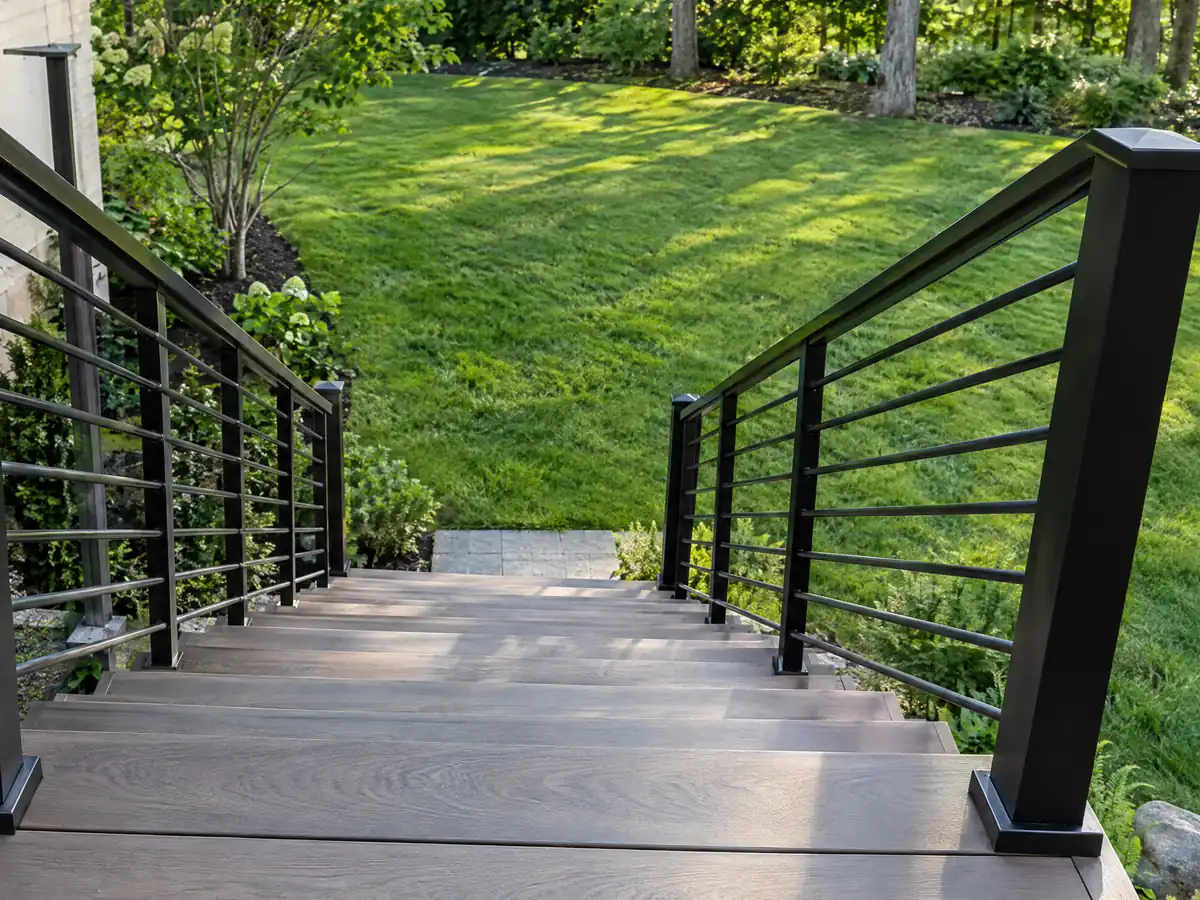
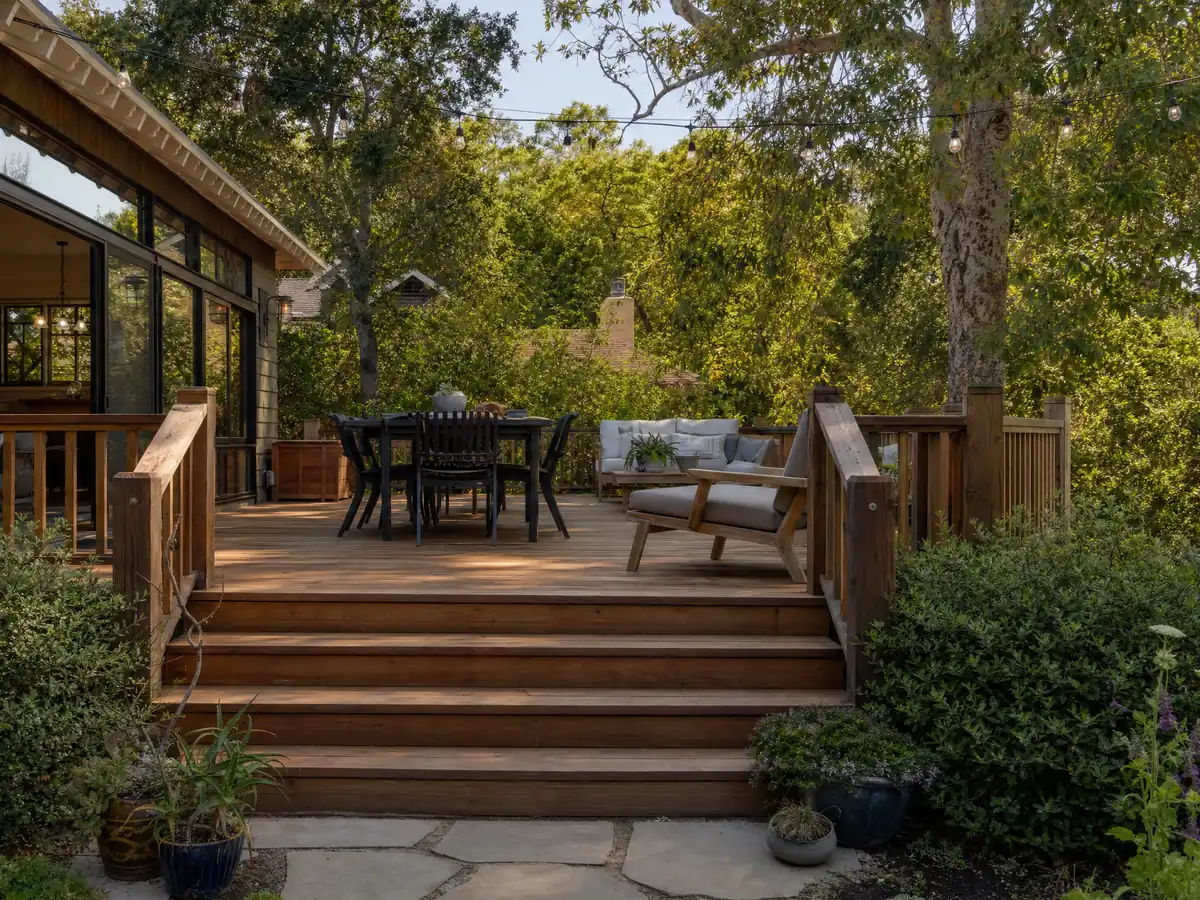
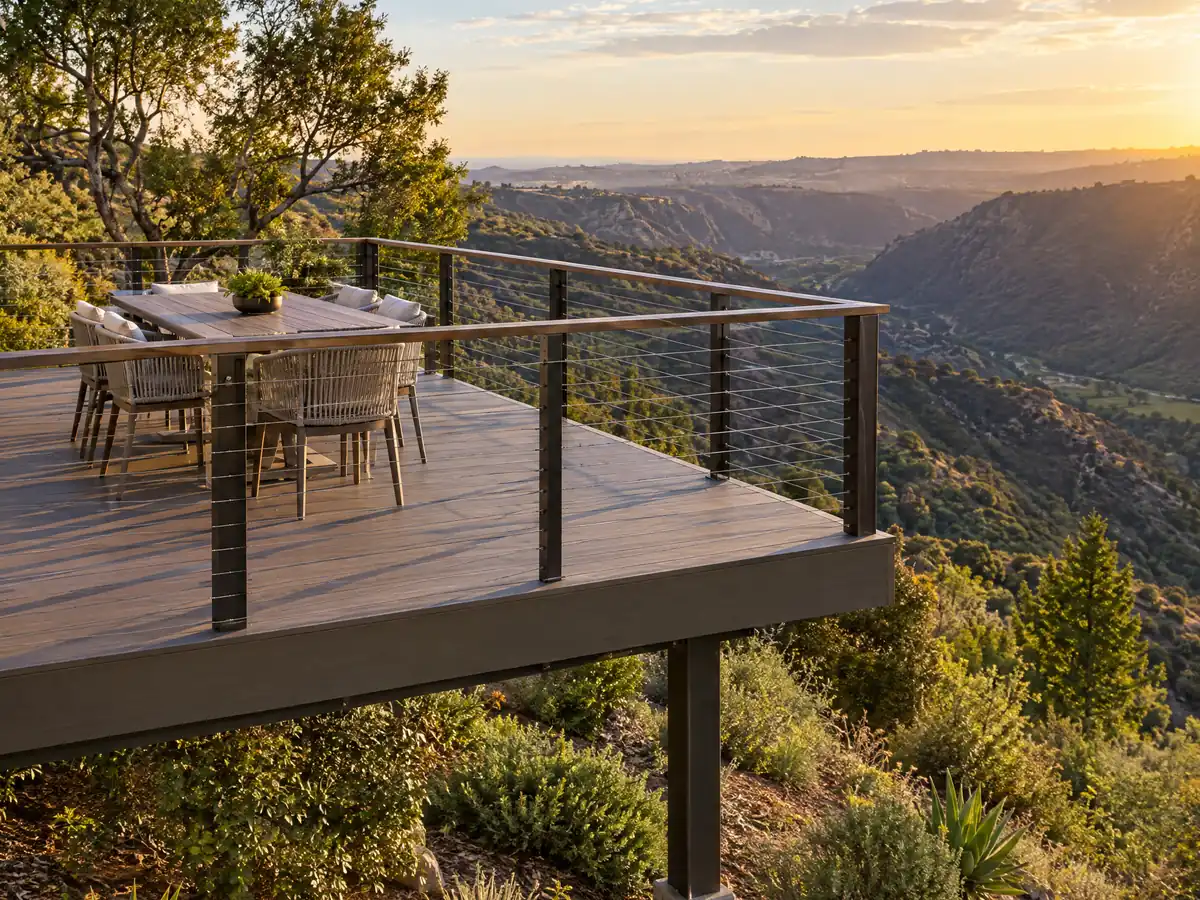
Deck photos from Fountain Valley and nearby communities
Posts, framing, rails, patio covers and finished decks from Fountain Valley and nearby towns, shown at the steps that matter. Tap any photo to enlarge it.
What decks costs around Fountain Valley
Dollar figures on this page are Los Angeles planning ranges from our decks page, not a Fountain Valley bid, and permits, engineering and any soils report belong on separate proposal lines. For the same property, see flooring in Fountain Valley and concrete in Fountain Valley. Nearby, compare deck building in Huntington Beach, decks in Garden Grove and decks in Costa Mesa, or see decks in Los Angeles. Our subcontractor guide explains who builds what.
| What it covers | Typical range |
|---|---|
| Pressure-treated wood deck | $45 to $75 per square foot |
| Composite deck | $65 to $110 per square foot |
| 16 by 20 foot wood deck (320 sq ft) | About $14,500 to $24,000 |
| 16 by 20 foot composite deck | About $21,000 to $35,000 |
| Hillside, second-story, rooftop and ipe decks | Priced by site visit |
| Permits and engineering | Quoted as separate lines |
Other work we manage in Fountain Valley
Fountain Valley deck questions, answered
Can I build a deck without a permit in California?
Only a low one in Fountain Valley. The City's code list exempts platforms not more than 30 inches above grade and not over a basement or story below. An attached deck, a taller deck or one with a cover is safest treated as permit-required, so call the Building Division at 714-593-4429.
What is the largest deck without a permit?
No City sentence we read gives a square footage, only a 30 inch height line. The model residential code exempts a deck of 200 square feet or less that is no more than 30 inches high, detached and not serving the exit door, but we did not find that on a City page, so confirm it with the Building Division.
How much should a 16x20 deck cost?
In the 2025 Cost vs. Value report for Los Angeles, a 16 by 20 foot deck with bench, planter, steps and railing costs $18,419 built in wood and $26,872 in composite, and Angi's Los Angeles page shows a $13,570 average. We found no Fountain Valley study, so only a site visit sets a price.
How much would a 20x20 deck cost?
Multiply 400 square feet by $45 to $75 for treated wood and you get roughly $18,000 to $30,000, or $26,000 to $44,000 in composite at $65 to $110. Those rest on Los Angeles planning ranges, medium confidence for wood and lower for composite, and permits, soils work and engineering come on top.
Is it cheaper to build a wood deck or composite deck?
Wood costs less to build. The Los Angeles Cost vs. Value 2025 figures are $18,419 for wood against $26,872 for composite, recouping 99.6 percent against 73.9 percent. Fountain Valley has no mapped Very High fire zone in the City's 2023 assessment, so cost and upkeep drive the choice more than fire rules.
Is railing height 36 or 42 for decks?
Forty-two inches under the model residential code, which asks for a guard where the walking surface is more than 30 inches above grade and openings too small for a 4 inch sphere. Whether Fountain Valley's adopted text differs was not checked, so ask the inspector which edition governs.
Do I need a permit for deck repair in Fountain Valley?
Replacing boards in place is probably simple, though no City sentence we read says so. New posts, framing, a ledger or stairs, and any attached deck, point toward a permit. Send the Building Division photos and ask before you hire a deck repair crew, because work begun early pays double the permit fee.
Can I put a patio cover over my deck in Fountain Valley?
Yes, with a permit. The City lists City Standard Patio Cover as an expedited permit that follows its standard plans and needs a site plan. A cover that departs from those plans needs its own drawings, and setbacks still apply, so ask the Building Division how far the cover may reach toward the rear line.
Does Fountain Valley have fire zone rules for decking?
Not on the maps the City published. Its 2023 assessment says there is no Very High Fire Hazard Severity Zone in or next to the city and no wildland-urban interface. That document predates the State Fire Marshal's 2025 update, so ask Fire Prevention at 714-593-4436 whether your parcel is mapped.
Can a deck be built close to a pool or equipment in Fountain Valley?
Only with the distances the City sets. Its single-family sheet puts pools and spas 5 feet from the house and from rear and side lines, and AC units and pool equipment 3 feet from a side line, or 18 inches when they sit behind the house in the rear yard. Bring a site plan to the Building Division before framing.
Send the address, a photo and how high the deck sits
Say how high the deck sits, whether it touches the house and whether you want a cover. The footing, permit and setback questions come with us to the first visit.