
Concrete Companyin Fountain Valley, CA
A concrete company in Fountain Valley starts with the ground: groundwater sits under ten feet and nearly the whole city is liquefaction-susceptible, so the City can require a geotechnical report. Walks and driveways up to 30 inches above grade are exempt from a building permit, block walls over 3 feet are not, and waste concrete must stay on site.
Fountain Valley's concrete sits on drained swampland. The 2045 General Plan says settlers' canals drained the Gospel Swamps that covered the area into the early 1900s, and the first tract broke ground in 1962. Census estimates for 2024 count 13,040 detached houses among 19,227 homes, with 42.5 percent of all homes from the 1970s and 34.9 percent from the 1960s, so most of the driveways, patios and block walls people ask about are 45 to 65 years old.
MDG Builders, CSLB #1040337, is a general contractor in Tarzana. For concrete we draw the scope, take the soil and setback questions to Fountain Valley's Building Division and book a licensed concrete subcontractor for the forms, the pour and the finish. Finishes and ranges are on the concrete page, and the Fountain Valley overview shows our other trades here.
What Fountain Valley's Building Division, the foundation policy and the construction site agreement say about concrete work
Where concrete permits come from in Fountain Valley: City of Fountain Valley Community Development Department, Building Division (Permit Center).
- The City's Building Permits page exempts sidewalks and driveways not more than 30 inches above adjacent grade, not over any basement or story below and not part of an accessible route, and retaining walls up to 4 feet unless they carry a surcharge.
- Municipal Code Chapter 18.34 (GoCodebook mirror) requires a separate paving permit for building or resurfacing a vehicle parking area, with subgrade, base and final inspections, but says no separate paving permit is needed for paving serving residential occupancies when the area to be paved is 1,000 square feet or less, or for paving under a building with a valid building permit.
- The City's Foundation Requirements for Residential Projects and Accessory Structures policy (2022 codes, effective 01/01/2023) requires a geotechnical investigation report for all residential projects except listed cases. A one-story addition or detached structure up to 1,200 square feet outside a liquefaction area, or up to 500 square feet inside one, can use the policy's alternate slab method instead, and 500 to 1,200 square feet inside a liquefaction area needs 4 feet of overexcavation or that method.
- The same foundation policy's alternate slab method calls for scarifying the top 12 inches or recompacting 4 feet of overexcavation with a 90 percent compaction report, a 5 inch slab reinforced with number 4 bars at 18 inches each way over 4 inches of base and a 10 mil vapor retarder, a continuous foundation 12 inches wide and 24 inches deep, and concrete of at least 4,500 psi with Type V cement and a water-cement ratio of 0.45 or less.
- The City's Construction Site BMP agreement says waste concrete, stucco and mortar must stay on site and be disposed of as solid waste once dry, no washing into the public right-of-way or any drainage system, and sediment must be kept on site with perimeter controls.
- The City's Vulnerability Assessment says groundwater in Fountain Valley is less than ten feet from the surface, which the City ties to the swampland that existed in the early 1900s, and describes a very high liquefaction potential, so new slabs, footings and block walls can be subject to a soils report and special design under the Seismic Hazard overlay.
- CSLB defines the C-8 Concrete classification as forming, pouring, placing, finishing and installing mass, pavement, flat and other concrete work, excluding contractors whose sole business is plaster coatings or placing reinforcing steel.
What do groundwater under 10 feet and liquefaction mean for concrete work in Fountain Valley?
They mean the City may want a soils report before it approves a new slab, footing or block wall. The 2023 Vulnerability Assessment says groundwater is less than ten feet from the surface and that every part of the city except an isolated area along Newland Street is susceptible to liquefaction, with the highest potential beside the Santa Ana River and south of the I-405.
A Seismic Hazard overlay in the Zoning Code, section 21.14.050 on the GoCodebook mirror, lets the building official require special design and a site-specific soils report case by case. The official code sat behind a bot check when we tried to open it, so confirm the section with the City. We did not read the FEMA or liquefaction map images either, so nothing here says what applies to your street.
Flooding is a second ground question. The Assessment puts most of the city in FEMA Flood Zone X and the northwest in Zone A, with flooding most likely near Sandalwood Street, Walnut Street and Heil Avenue, and the Zoning Code adds a Floodplain overlay. Ask the Building Division whether your lot sits in it before you plan a raised patio or a new slab against the house.
What is the City's alternate slab method for a new slab on soft ground?
It is a recipe the City's Foundation Requirements policy, effective January 1, 2023, offers in place of a custom design. A one-story addition or detached structure up to 1,200 square feet outside a liquefaction area, or up to 500 square feet inside one, can use it, and between 500 and 1,200 square feet inside a liquefaction area the policy asks for 4 feet of overexcavation or this method. The policy speaks of residential projects and accessory structures, so whether a plain open patio slab counts is a question for the Building Division.
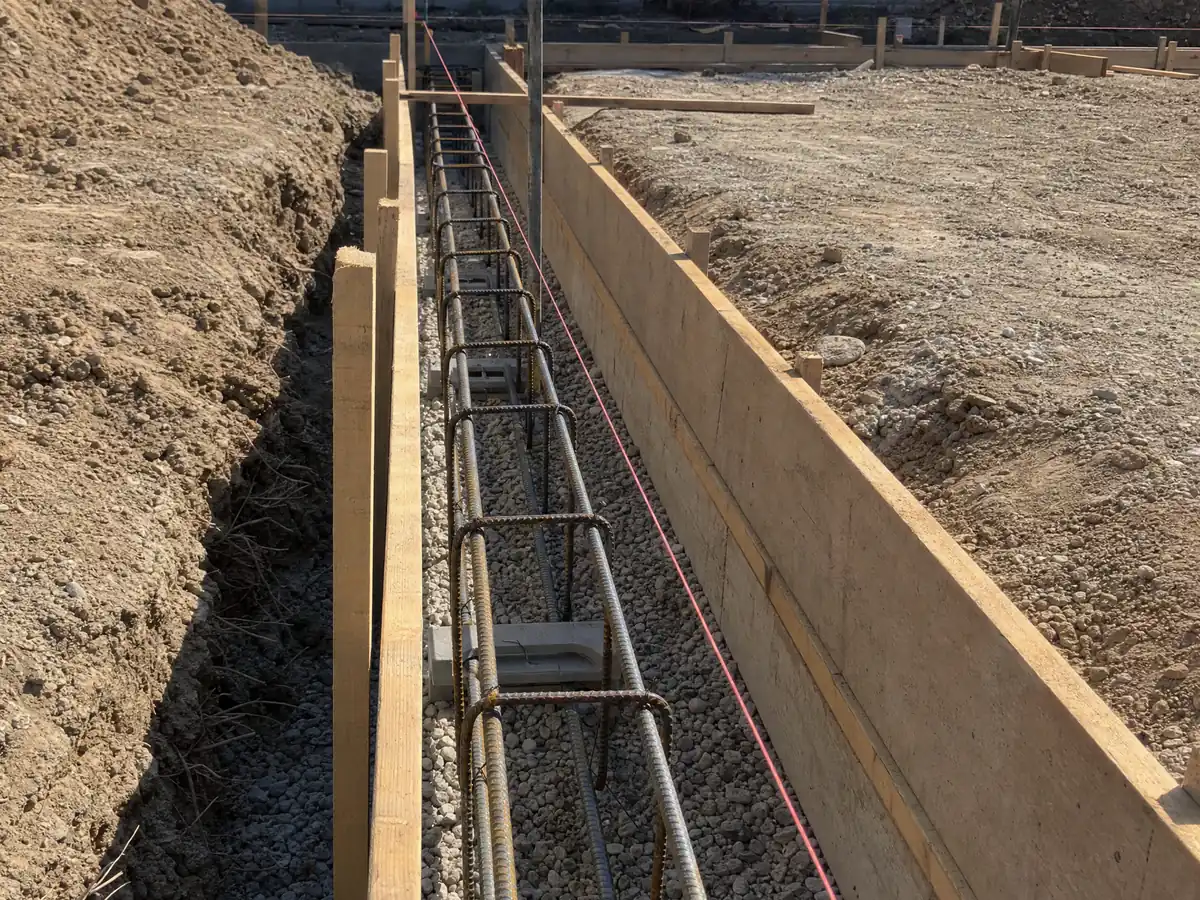
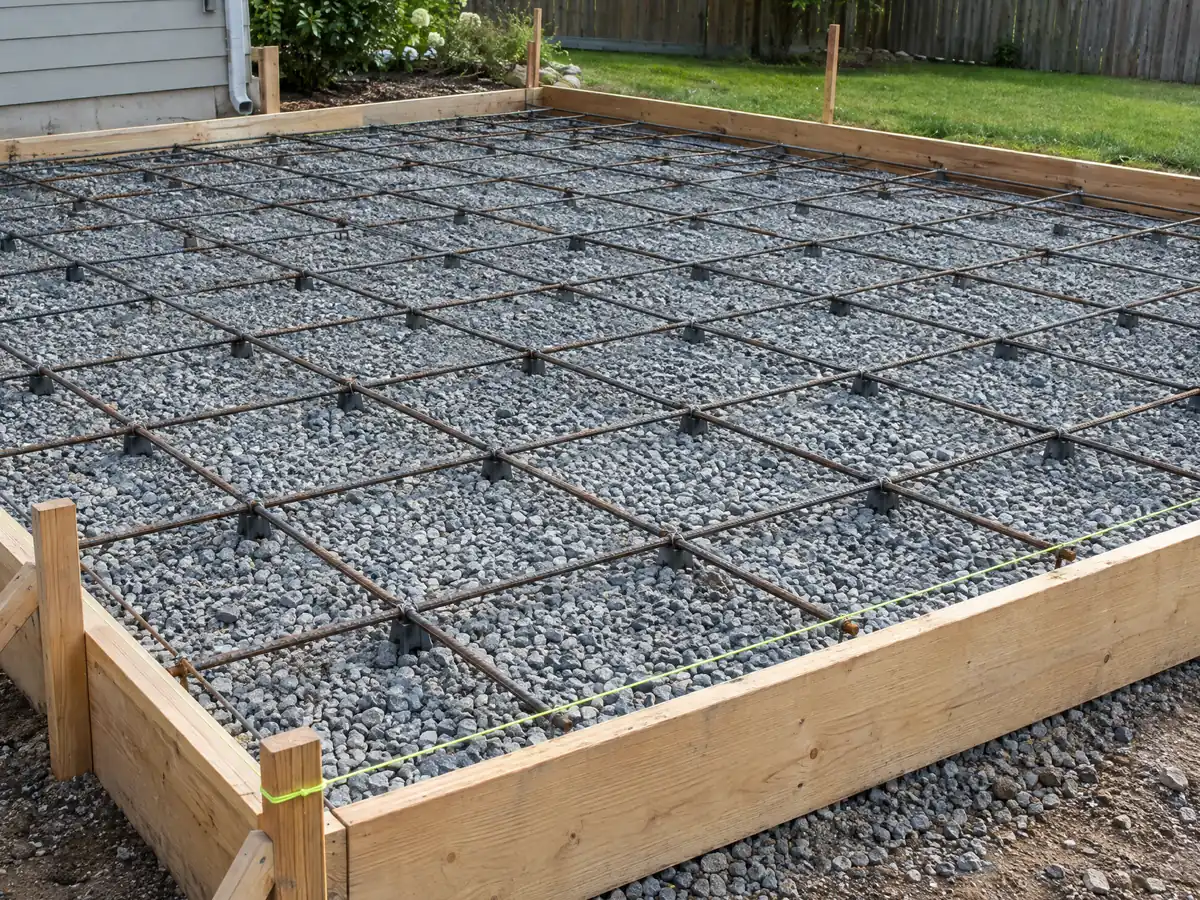
The recipe is specific. The soil is either scarified to 12 inches or overexcavated 4 feet and recompacted to 90 percent, with a compaction report. The slab is 5 inches thick, reinforced with number 4 bars at 18 inches each way over 4 inches of base and a 10 mil vapor retarder, and sits on a continuous foundation 12 inches wide and 24 inches deep. The mix is at least 4,500 psi with Type V cement and a water-cement ratio of 0.45 or less.
Outside the listed exceptions, the policy asks for a geotechnical investigation report. On this soil the price of a pour can be driven by excavation, compaction testing and that report more than by the concrete, so ask the subcontractor to price each as its own line.
Do you need a permit to pour a driveway, walkway or patio in Fountain Valley?
Often not for the slab itself, with two catches. The City's Building Permits page exempts sidewalks and driveways not more than 30 inches above adjacent grade, not over any basement or story below and not part of an accessible route. A decorative patio slab is not named, so call the Building Division at 714-593-4429 with the size and the distance to each property line before you assume.
The first catch is paving. Municipal Code Chapter 18.34, read on the GoCodebook mirror, requires a separate paving permit to build or resurface a vehicle parking area, with subgrade, base and final inspections. It says no such permit is needed for paving that serves a home when the area is 1,000 square feet or less, or for paving under a building with a valid building permit.
The second catch is the public right of way. A driveway apron and sidewalk belong to it, and we did not read Fountain Valley's rule for that work, so ask who issues the permit and which inspection applies before the old apron comes out. Starting before a required permit doubles the permit fee under the code on the same mirror.
- Is the slab 30 inches or lower above grade?
- Is the paved area 1,000 square feet or less?
- Does any of it reach the apron or sidewalk?
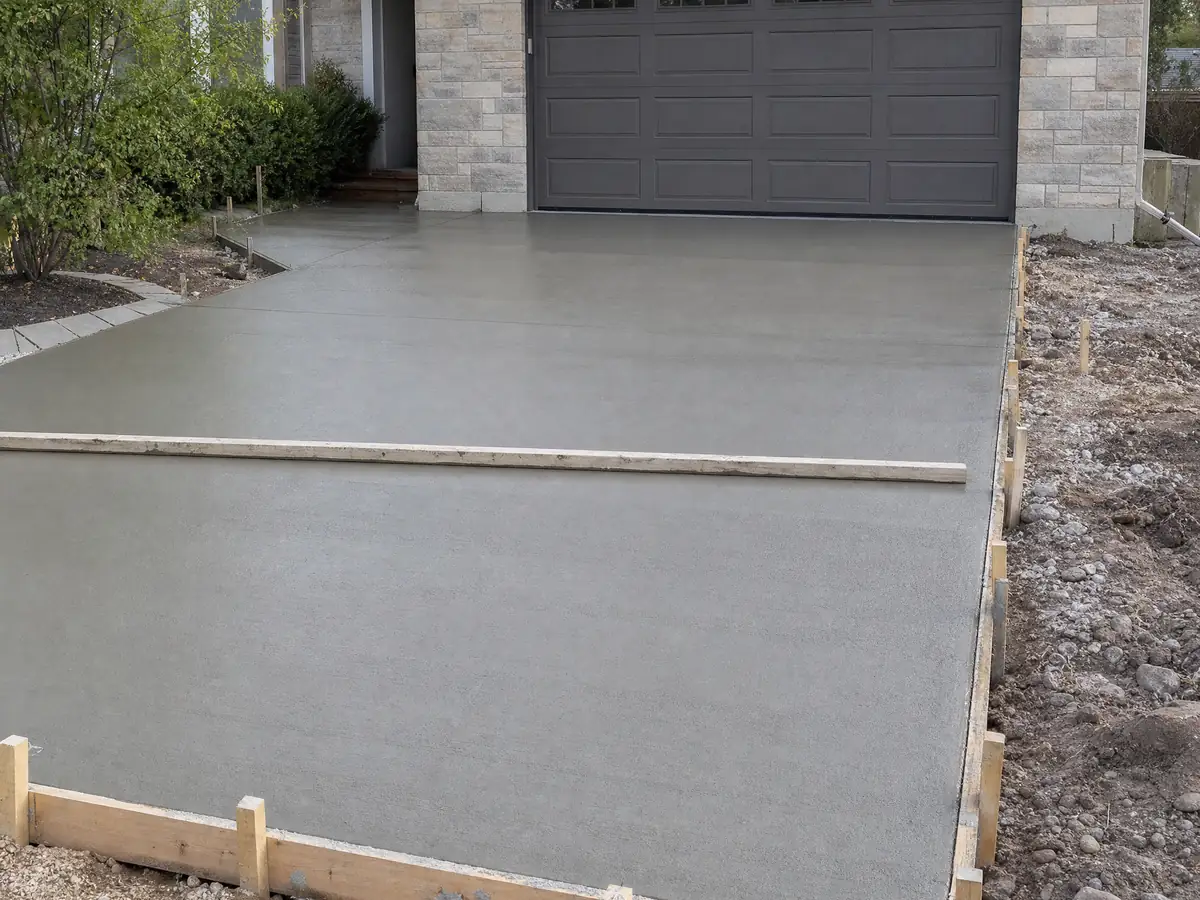
How tall can a block wall or retaining wall be in Fountain Valley before a permit?
A block wall needs a permit above 3 feet and a retaining wall above 4. The City's Building Permits page exempts block walls not over 3 feet and retaining walls not over 4 feet, measured from the bottom of the footing to the top of the wall, unless they carry a surcharge. Zoning is tighter than the building rule: per the Zoning Code and the City's single-family sheet, anything over 3 feet is out of the required front yard, side and rear yards stop at 6 feet, and walls along arterial highways may reach 8 feet with the director's approval.
The City offers a shortcut and a catch. Its City Standard block wall is an expedited permit that needs a signed common property line wall agreement when the wall sits on a shared boundary. The City's wall diagram says Planning approves the height, location and design before a permit issues, and that the standard wall is not designed to hold back soil. Hydrant and water meter clearances are on the same sheet, which we read by OCR, so check those numbers with the City.
Neighbors have rights too. California Civil Code 841 presumes adjoining owners split the cost of a boundary fence equally unless they agree otherwise in writing, and an owner planning the work gives each neighbor 30 days' written notice. Poured concrete falls under CSLB's C-8 class and block walls under its C-29 masonry class, so the wall crew may differ from the slab crew.
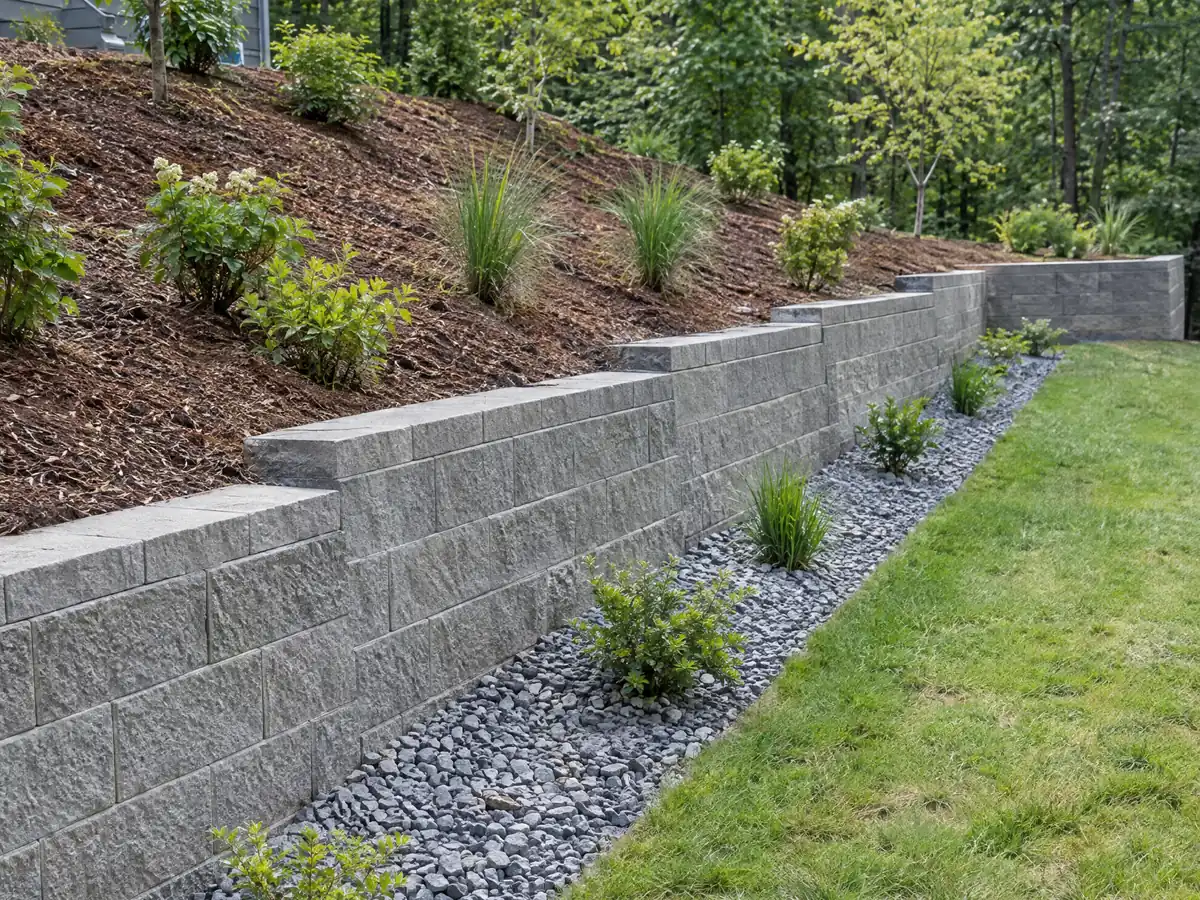
What are Fountain Valley's rules on concrete washout, work hours and debris?
A signed Construction Site Best Management Practices Agreement comes before the building permit. It limits construction, deliveries included, to 7 a.m. to 8 p.m. Monday to Friday and 9 a.m. to 8 p.m. Saturday, with nothing on Sunday or holidays, and it bans roll-off bins on public streets and alleys. Waste concrete, stucco and mortar stay on site until dry and leave as solid waste, never washed into the street or a drain, and the Building Official can revoke a permit after one warning.
Demolition debris has its own rule. Municipal Code Chapter 6.09 says staff decide at the counter whether a Construction Waste Management Plan is needed, and if so the contractor keeps weight tickets from an approved facility showing the debris came from Fountain Valley. The City's exclusive hauler is Republic Services and the bin is ordered as a Construction Bin. A broken-out driveway is heavy, so ask who orders the bin and who keeps the tickets.
Weather sets the schedule. NOAA's 1991 to 2020 normals show John Wayne Airport with 12.8 days a year at or above 90 F and the Santa Ana Fire Station with 30.0, and 8.89 of the airport's 11.18 inches of rain falling from December through March. No station sits inside the city, so heat on your pour lies between those two. Ask how the crew will cure a summer slab and cover a winter one.
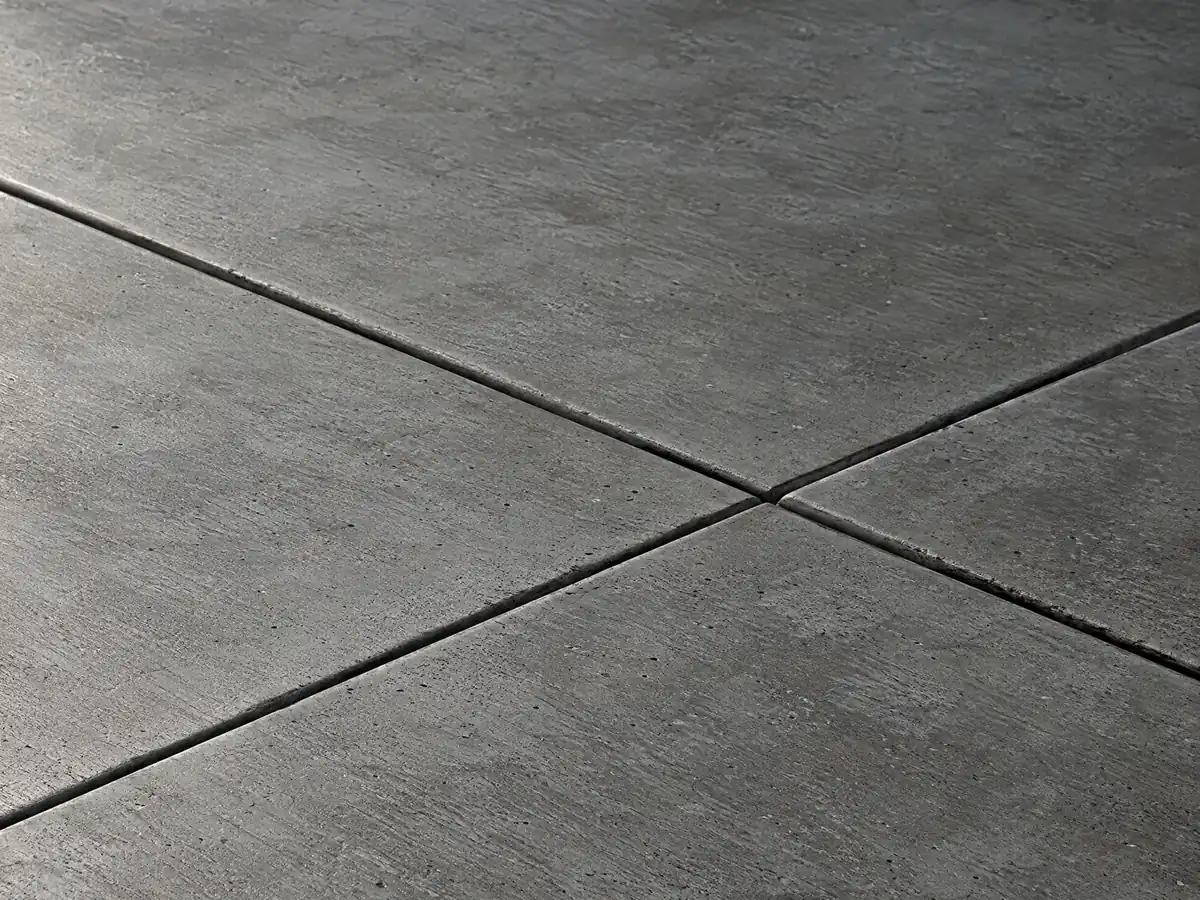
What does concrete work cost in Fountain Valley, and what license should the crew hold?
We found no Fountain Valley price study, so the figures come from Angi's 2026 Los Angeles pages, which draw on customer surveys and pro data, and Orange County prices can differ. A patio runs $4 to $13 per square foot and averages $5,248, a 20 by 20 foot patio costs $1,600 to $5,200, stamped work is $15 to $30 per square foot, and a driveway is $8 to $20 per square foot, averaging $7,270. Walls get no per-foot price here: Angi's retaining wall average is $7,140 within a $2,674 to $11,842 range, and height and drainage drive it.
On soft ground, add what the soil requires. Compaction testing, overexcavation and a geotechnical report are not in those averages, so ask for them as separate lines. Federal wage data for May 2025 show cement masons averaging $33.67 an hour in the Los Angeles-Long Beach-Anaheim area, which is a wage and not a billing rate.
A company doing concrete work should hold CSLB's C-8 class. When MDG hires the pour crew, you may request its license number and certificate of insurance before work starts, and our license check guide shows how to look up the rest. The subcontractor guide explains how the hiring works.
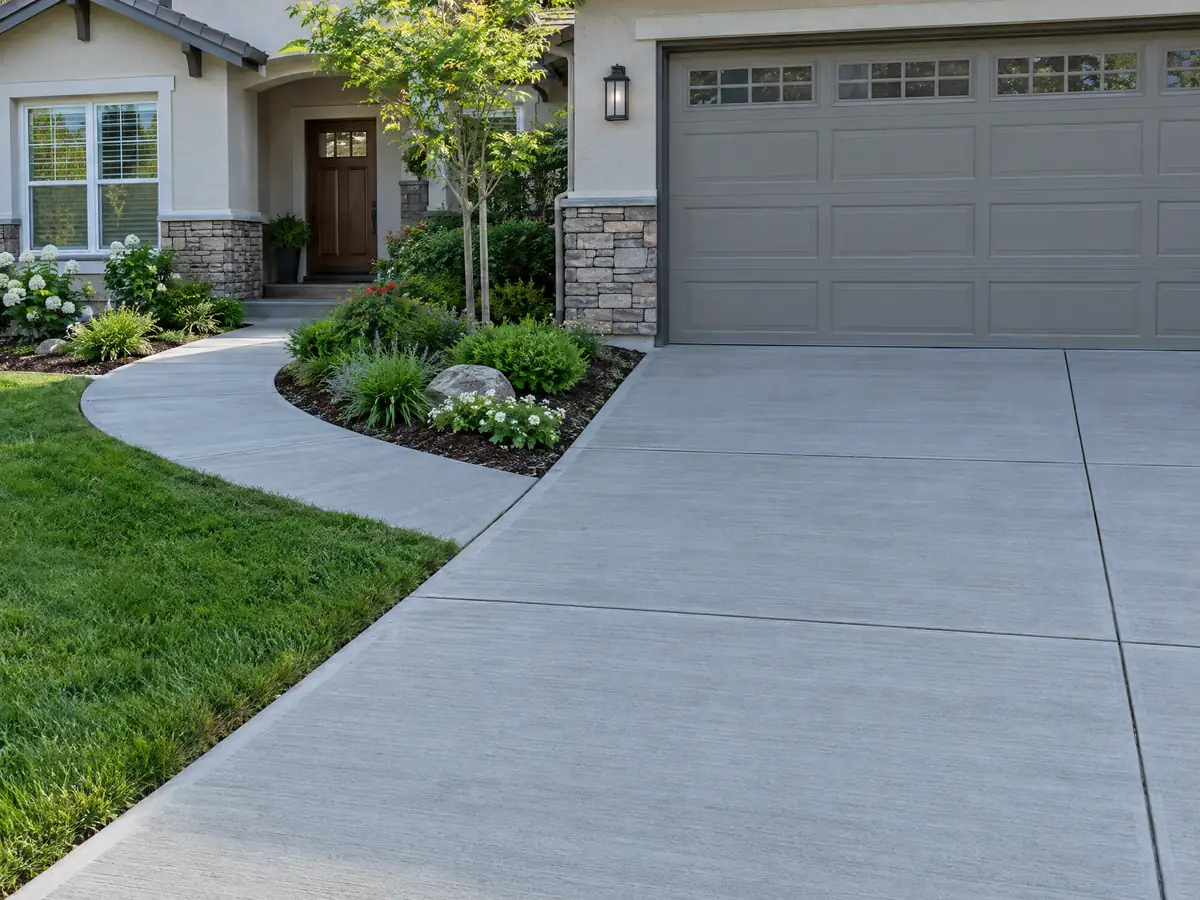
Concrete photos from Fountain Valley and nearby communities
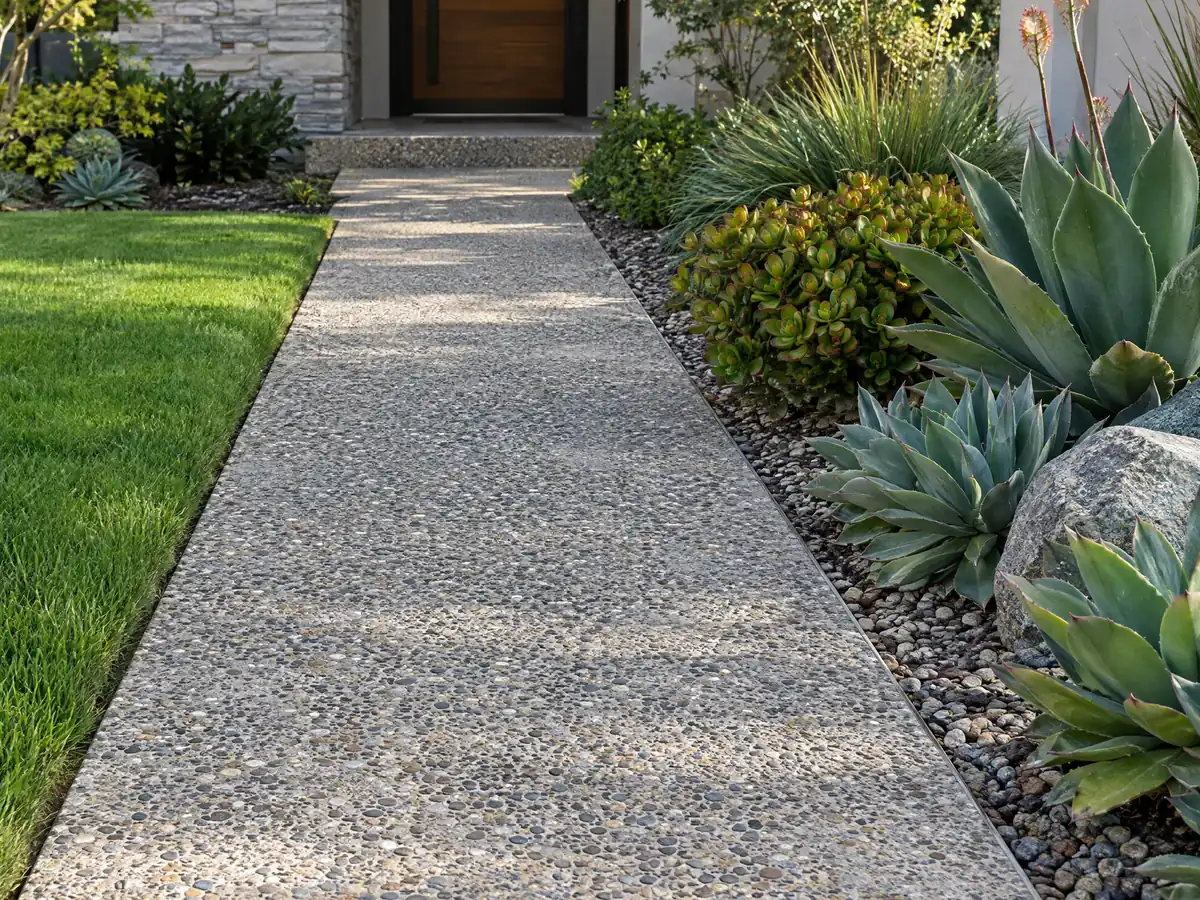
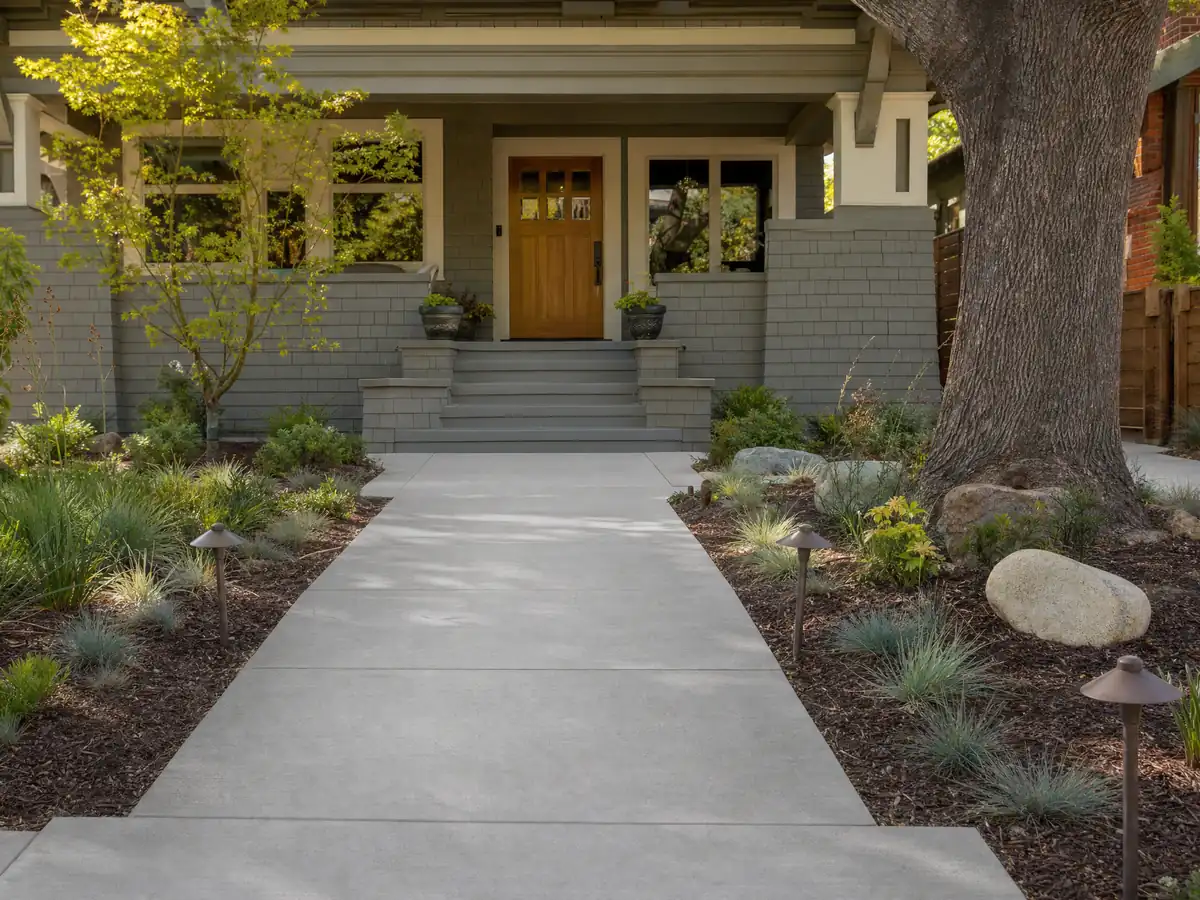
Forms, rebar, finished flatwork and block walls from Fountain Valley and nearby towns, shown at the steps that matter. Tap any photo to enlarge it.
What concrete costs around Fountain Valley
Dollar figures on this page are Los Angeles planning ranges from our concrete page, not a Fountain Valley bid, and the proposal should show demolition, base, rebar, soil work and any City review on separate lines. For the same property, see flooring in Fountain Valley and decks in Fountain Valley. Nearby, compare concrete work in Huntington Beach, concrete in Garden Grove and concrete in Costa Mesa, or see concrete in Los Angeles.
| What it covers | Typical range |
|---|---|
| Patio, walkway or slab, broom finish, 300 sq ft or more | $8 to $14 per square foot |
| Decorative: stained, stamped or exposed aggregate | $15 to $30 per square foot |
| Driveway replacement, with demolition of the old slab | $9 to $20 per square foot |
| 20 by 20 foot plain patio (400 sq ft) | About $3,200 to $5,600 |
| 20 by 20 foot decorative patio (400 sq ft) | About $6,000 to $12,000 |
| Small jobs under 300 sq ft | Usually above the per-foot range |
| Retaining walls | Set by the written proposal |
Other work we manage in Fountain Valley
Fountain Valley concrete questions, answered
Can I pour a concrete patio without a permit?
Possibly. The City exempts sidewalks and driveways up to 30 inches above grade but does not name patio slabs, so call 714-593-4429 with the size and distances to the property lines. Residential paving of 1,000 square feet or less needs no separate paving permit on the code mirror. Soil rules and any cover are separate questions.
How much should a 20x20 concrete patio cost?
A 20 by 20 foot patio, 400 square feet, runs $1,600 to $5,200 on Angi's 2026 Los Angeles page, within a general $4 to $13 per square foot. No Fountain Valley study turned up. Tear-out, base work, soil testing and decorative finishes shift the total, so the price comes after a site visit.
How much does a concrete driveway cost in Fountain Valley?
Driveways on Angi's 2026 Los Angeles page cost $8 to $20 per square foot and average $7,270, inside a $3,067 to $16,472 spread. Taking out the old slab, new base and apron work all move the number. Paving over 1,000 square feet may need its own paving permit, so ask the Building Division first.
What is the maximum height of a retaining wall without a permit?
Four feet, measured from the bottom of the footing to the top of the wall, unless it carries a surcharge such as a slope, a driveway or a building. Fountain Valley's Building Permits page uses that line, and zoning heights still apply, so confirm with the Building Division at 714-593-4429 before you dig.
Do I need a geotechnical report to pour a slab in Fountain Valley?
Possibly. The City's foundation policy asks for a geotechnical investigation report on residential projects unless an exception applies, and groundwater is under ten feet. Small one-story additions and detached structures may use a prescribed slab instead. Whether an open patio slab counts is a question for the Building Division.
Can I build a block wall without a permit in Fountain Valley?
Only up to 3 feet. The City exempts block walls not over 3 feet high, while front yards are capped at 3 feet and side and rear yards at 6. A City Standard block wall is an expedited permit that needs a common property line wall agreement, and Planning approves height and design first.
Is 4 inches of concrete thick enough for a driveway?
We found no City rule on driveway thickness, so treat 4 inches as industry practice and not a code number. The City's prescribed slab for additions and accessory structures calls for 5 inches over 4 inches of base. Ask the subcontractor to put thickness, base and rebar in writing.
Where can concrete washout go during a job in Fountain Valley?
Nowhere public. The City's construction site agreement says waste concrete, stucco and mortar must stay on site, be disposed of as solid waste once dry, and never be washed into the street or a drain. Sediment stays on site with perimeter controls, and the Building Official can revoke a permit after one warning.
Can I expand my driveway without a permit?
Sometimes. Paving that serves a home needs no separate paving permit at 1,000 square feet or less on the code mirror, but new paving above that, or any work in the public apron, may. We did not read the City's right of way rule, so ask the Building Division before you widen anything.
What license does a company doing concrete work in Fountain Valley need?
Flatwork and foundations fall under CSLB's C-8 class, and block walls under C-29. A permitted job also needs a valid state license, so look the number up on the CSLB site before accepting a quote, and ask any subcontractor for its license and certificate of insurance before the pour.
Send the address, a photo and what you want poured
Describe what you want poured, the rough size and whether the work touches the street or a shared fence line. The soil and permit questions come with us to the first visit.