
Fence Companyin La Quinta, CA
A fence company in La Quinta works under a process that changed on June 5, 2025: every residential fence or wall now gets either a Planning Fence Approval or a Wall/Fence Building Permit. Fences up to 7 feet skip the building permit, but zoning still caps most yard fences at 6 feet, and applications are filed online through the Hub.
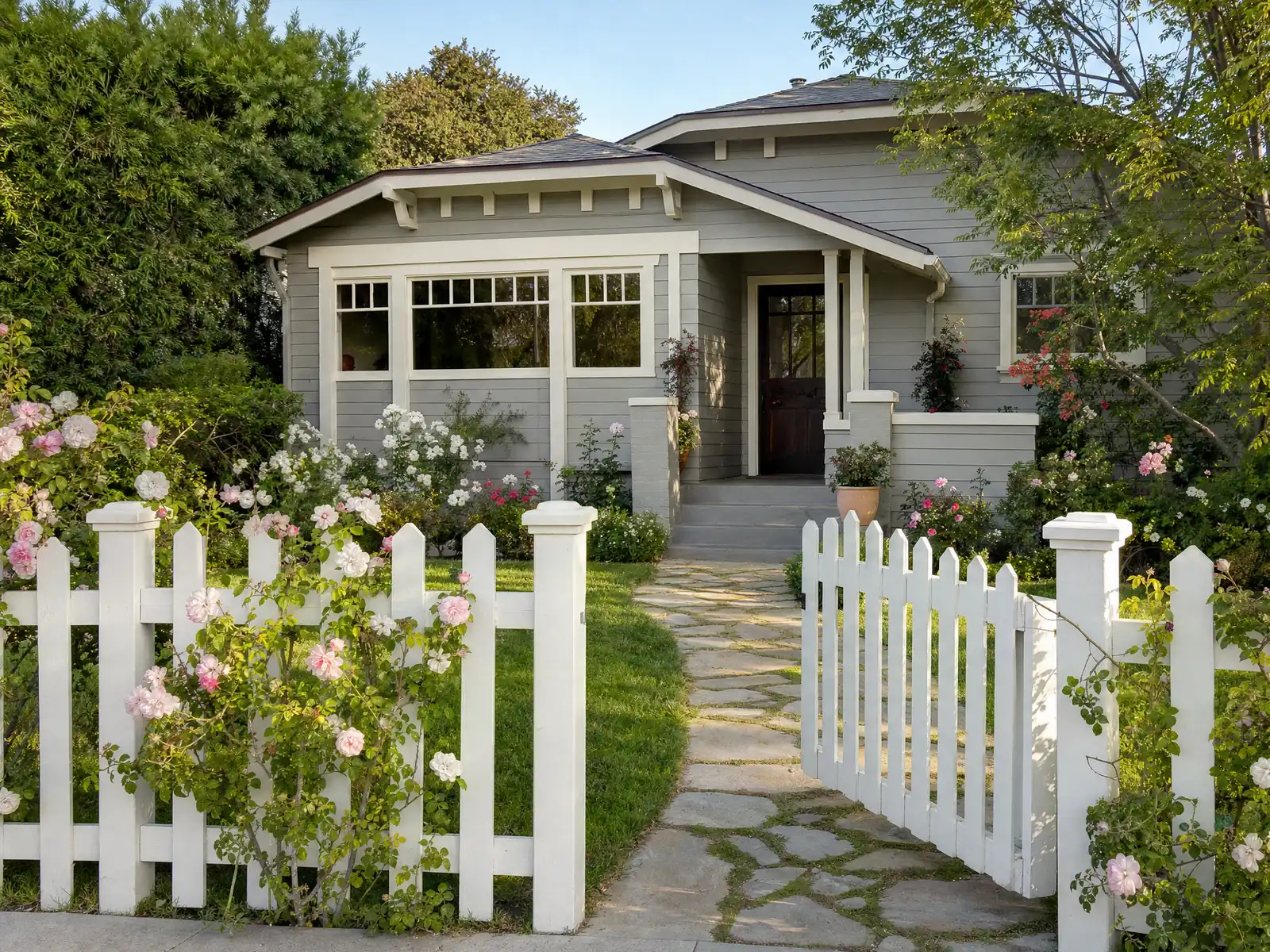
La Quinta's fence jobs follow its building history. Census Bureau ACS 2024 five-year estimates count 24,770 housing units, 86.0 percent of them single-family detached or attached, with a median year built of 1999 and 47.6 percent built in 2000 or later, so most work is a rear yard run, a side gate or a pool barrier on a house from the golf-resort boom. The City's own FAQ adds a wrinkle: properties built before the 1982 incorporation were under Riverside County, so some older walls break today's rules and may stay.
For a fence or wall, MDG Builders (CSLB #1040337) acts as the general contractor. We measure the yard against the zoning limits, prepare the City filing and line up the trades, with a licensed C-13 fencing subcontractor for posts and panels and a licensed C-29 masonry subcontractor for block. The fencing page carries our sourced prices and the La Quinta overview lists every trade we manage here. Neighbors set their own limits, so read the fence guides for Indio and Palm Desert before assuming a rule carries over. Permits come from the City's Building Division. laquintaca.gov answered our requests with HTTP 403, so City pages here are archived copies with snapshot dates and the Municipal Code is the third-party GoCodebook mirror. Confirm each section number with the City before ordering a single post.
What La Quinta's Municipal Code, zoning chapter and Building Division FAQ say about fences and walls
Where fencing permits come from in La Quinta: City of La Quinta Design and Development Department, Building Division.
- Since June 5, 2025 (Ordinance No. 622) every residential fence or wall gets one of two approvals: a Planning Fence Approval if it is exempt from a building permit, or a Wall/Fence Building Permit. The City checklist and a City Standard Site Plan for Wall/Fence Applications explain materials, locations and documents. Wayback snapshot 2026-10-07 (FAQ).
- Building permit exemption (Municipal Code 8.02.020 and 8.06.020): fences up to 7 feet measured from finished grade and non-retaining masonry walls up to 3 feet measured from the top of footing are exempt (not when used as a pool safety barrier), and retaining walls up to 2 feet measured from top of footing are exempt unless supporting a surcharge. This is the building permit only; the zoning height limits still apply. GoCodebook third-party mirror, text as of 2026-10-04.
- Zoning height limits (Municipal Code 9.60.030): 6 feet maximum in a required setback not adjoining a street and 6 feet in setbacks adjoining a public street, up to 8 feet measured from either side where the neighbor's pad is higher, 12 feet inside the buildable area, and a 30-inch limit on fences, walls and plants within the sight triangle at corners and driveways. Rear and side yards must be enclosed by view-obscuring fencing unless the neighbor waives it, the lot abuts a golf course, lake or similar open space, or the director approves a minor use permit. GoCodebook third-party mirror, text as of 2026-10-04 (section amended 2026-08-04).
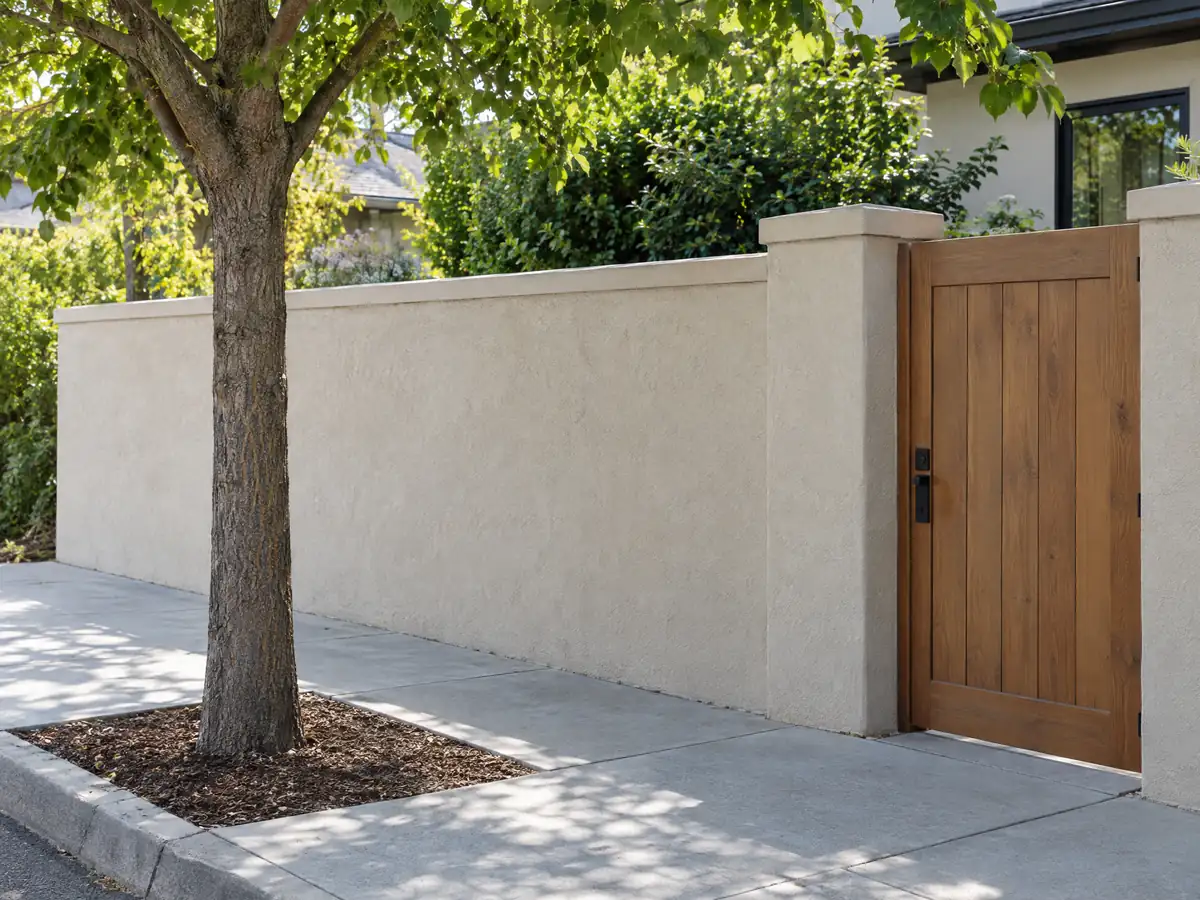
- Fence materials (Municipal Code 9.60.030(E) and the Residential Design Guidelines): wood is allowed only in rear or interior side yards where not visible from the street unless stucco-finished; ornamental iron or tubular steel is for front and street side yards; masonry is allowed anywhere with matching color; split two-rail fencing is allowed in front yards with columns at most 4 feet and needs a building permit; chain link gates are prohibited; pedestrian gates are at most 5 feet wide. Corrugated metal, bamboo and glass need the director's approval under the guidelines. GoCodebook mirror and Wayback copy of the guideline PDF.
- In the Cove (RC) district, combination retaining and garden walls may not exceed 4 feet of retaining wall plus 6 feet of garden wall. The Building Division FAQ also notes that two feet of retaining wall with a six-foot garden wall on top may be allowed where a lot sits two feet higher than its neighbor. GoCodebook mirror and Wayback FAQ.

What changed for fences in La Quinta on June 5, 2025, and do I still need a building permit?
Since June 5, 2025, under Ordinance No. 622, every residential fence or wall in La Quinta receives one of two approvals. A fence that is exempt from a building permit gets a Planning Fence Approval, and everything else gets a Wall/Fence Building Permit. The Building Division FAQ, in a snapshot dated October 7, 2026, points to a City checklist and a City Standard Site Plan for Wall/Fence Applications that explain materials, locations and documents. New applications go through the Hub Online Portal.
The exemptions sit in Municipal Code 8.02.020 and 8.06.020. A fence up to 7 feet, measured from finished grade, needs no building permit, nor does a non-retaining masonry wall up to 3 feet from the top of the footing, and a retaining wall up to 2 feet from the top of the footing is exempt unless it carries a surcharge. A fence that serves as a pool safety barrier is not exempt. All of this concerns the building permit only, and the zoning height limits still apply.
We did not open the City's Residential Fences and Wall Checklist or learn the fee for a Planning Fence Approval, so no amount is printed. Ask whether a 6 foot wood run at your address needs the approval alone or a full permit.
Write which of the two approvals applies on the proposal, and who files it.
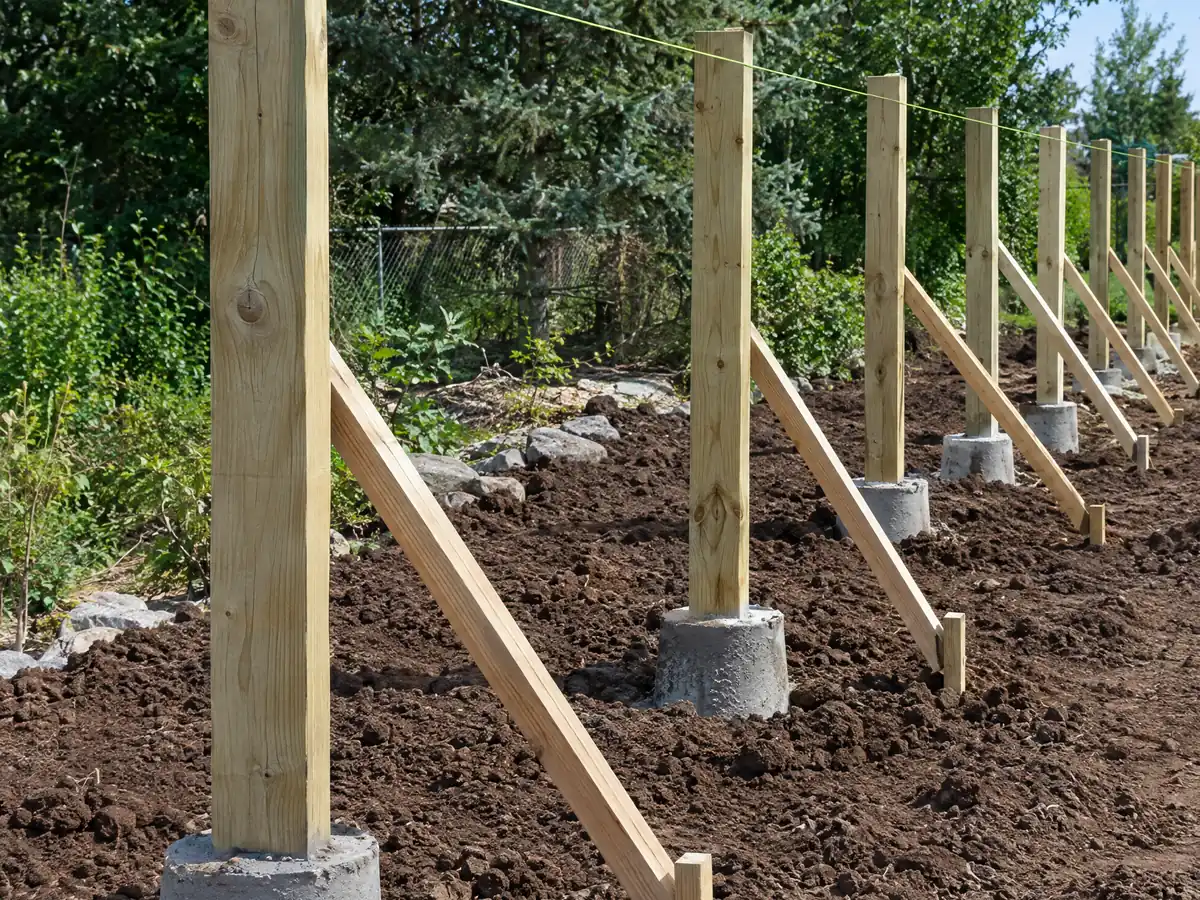
How tall can a fence be in La Quinta, and when does a golf course lot skip the privacy fence?
Zoning sets the heights in Municipal Code 9.60.030. A fence may reach 6 feet in a required setback that does not adjoin a street and 6 feet in one that does, with up to 8 feet measured from either side where the neighbor's pad sits higher. Inside the buildable area the limit is 12 feet. At corners and driveways, anything within the sight triangle, whether fence, wall or plant, is held to 30 inches.
The same section requires rear and side yards to be enclosed with view-obscuring fencing, and it names three ways out: the neighbor waives it, the lot abuts a golf course, a lake or similar open space, or the director approves a minor use permit. The City's history page counts 25 golf courses, so the open-space exit reaches many lots, although an association can still ask for something different.
A 7 foot fence can clear the building permit and still break the height limit, which is why the setback is measured first and the post order comes second.
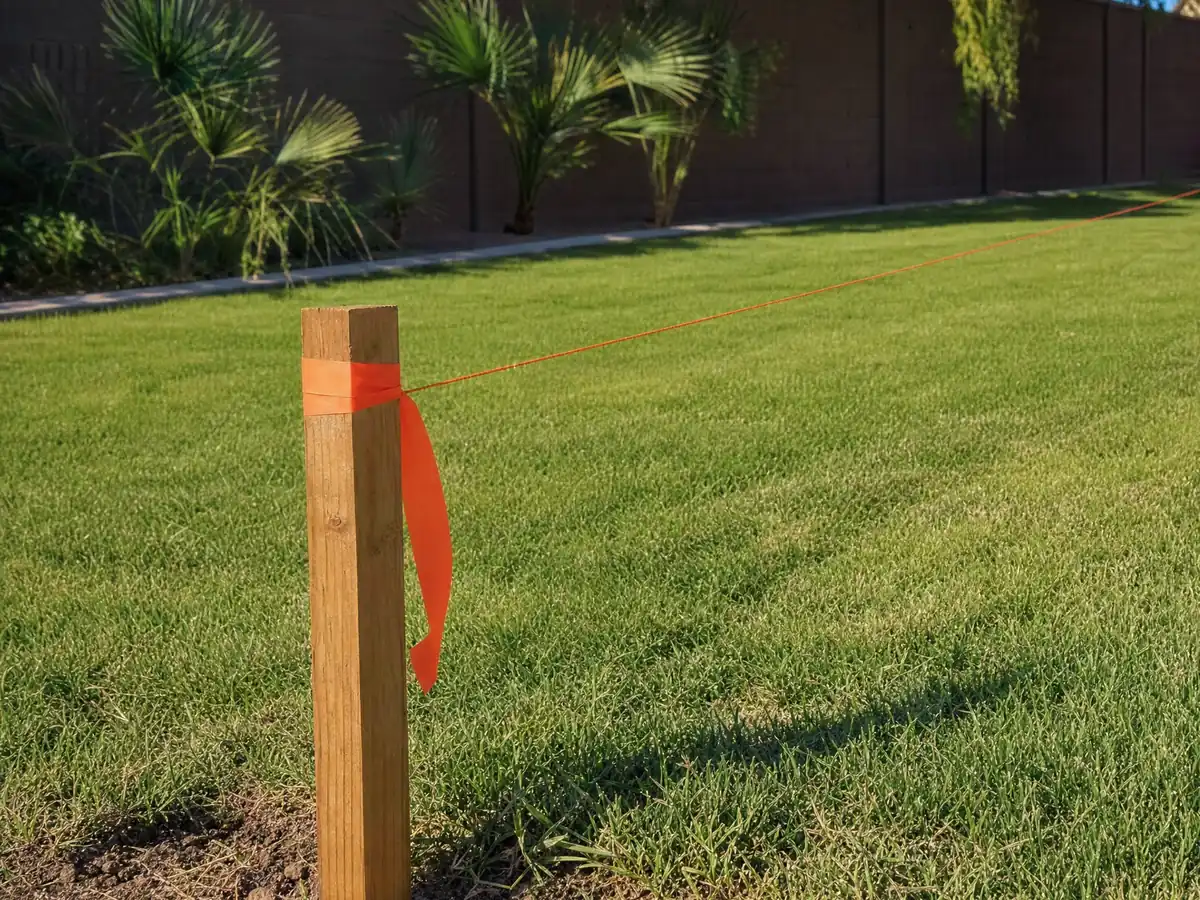
Draw the setback line and the sight triangle on the site plan before posts are ordered.
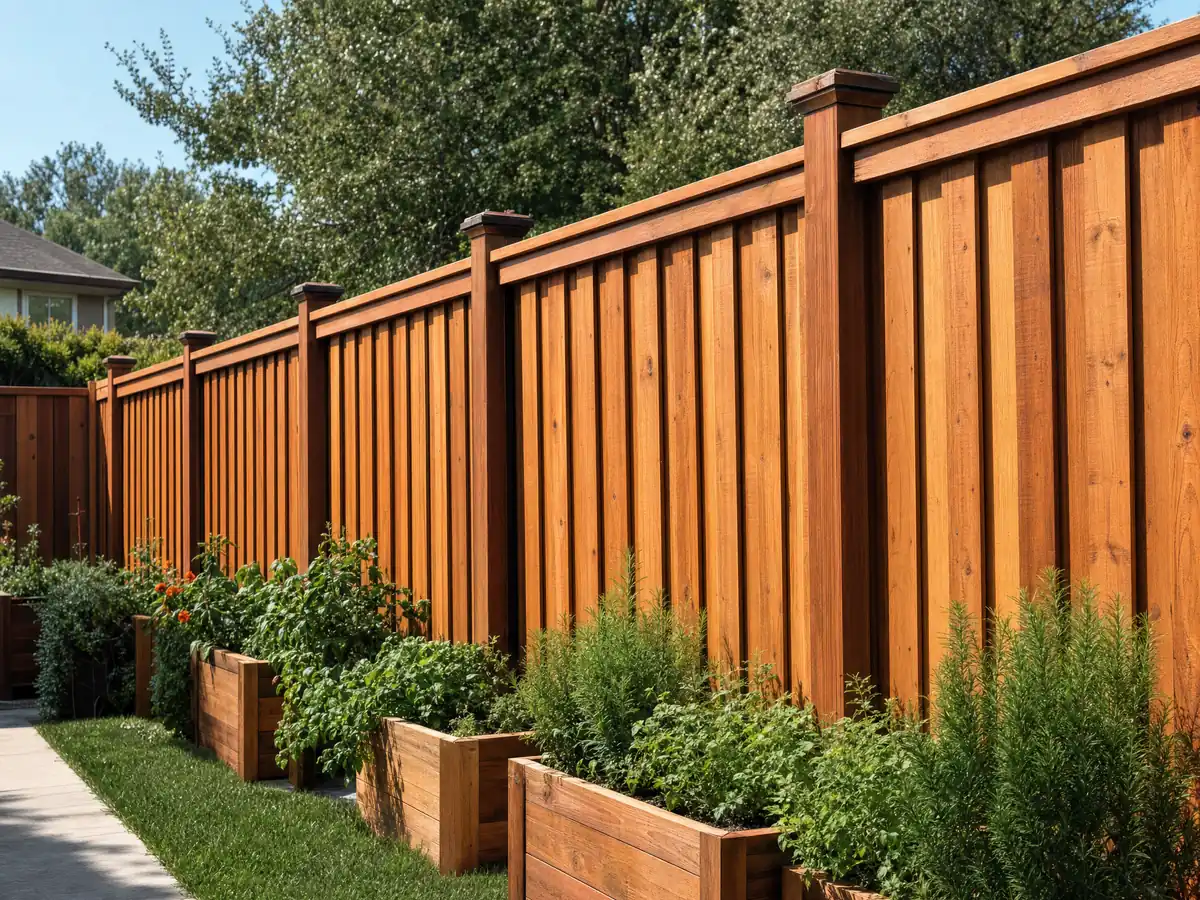
Which fence materials are allowed in a La Quinta front yard, side yard and backyard?
Municipal Code 9.60.030(E) and the Residential Design Guidelines sort materials by yard. Wood is allowed only in rear or interior side yards where the street cannot see it, unless it is stucco finished. Ornamental iron or tubular steel is meant for front and street side yards, and masonry may go anywhere if its color matches the house. Split two-rail fencing is allowed in a front yard with columns no taller than 4 feet and needs a building permit.
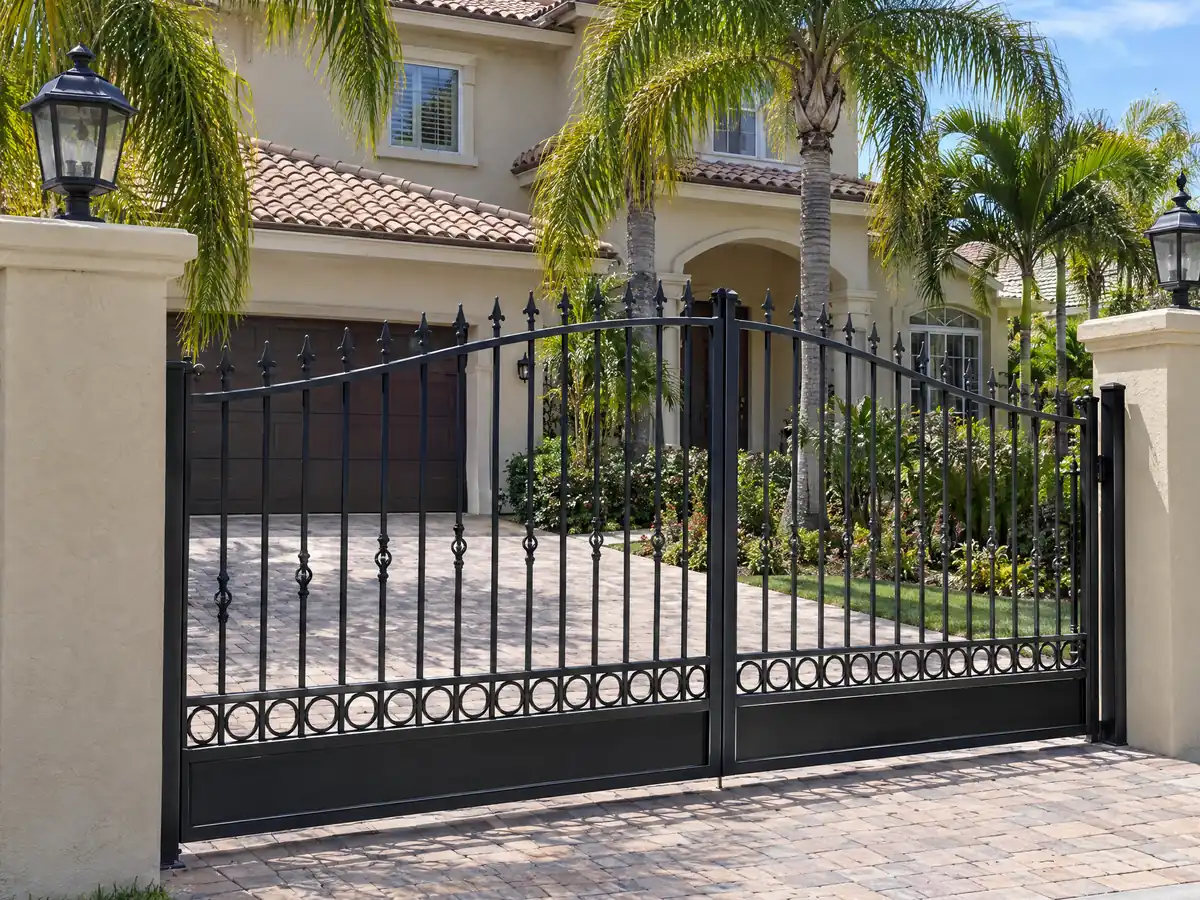
Gates have limits of their own. Chain link gates are prohibited and a pedestrian gate may be no more than 5 feet wide, while corrugated metal, bamboo and glass need the director's approval under the guidelines. The City rates termite damage potential as very heavy, and UC Integrated Pest Management says drywood termites are most common in Southern California and infest fences, so wood that meets soil needs a concrete footer or termite-resistant lumber.
A driveway gate with an operator brings wiring. We did not confirm which license class covers it, so ask which licensed subcontractor does the electrical work and whether it carries its own permit.
Have the proposal list material, finish and gate width for each side of the lot.
Does a block wall or retaining wall in La Quinta need a permit, and what caps apply in the Cove?
Treat block as permit work until the counter says otherwise. The 3 foot exemption covers non-retaining masonry only, the City's forms page offers Standard Block Wall, Combo Wall and Pilaster details with a site plan template, and the residential plan checklist wants every garden and retaining wall drawn on the site plan. Block is masonry, CSLB class C-29, and the fencing class C-13 excludes masonry walls, so a fence company must bring in a masonry subcontractor or leave the wall alone.
The Cove (RC) district sets its own ceiling: a combination of retaining wall and garden wall may not exceed 4 feet of retaining wall plus 6 feet of garden wall. The FAQ adds that 2 feet of retaining wall under a 6 foot garden wall may be allowed where a lot sits 2 feet higher than its neighbor.
Older walls can exceed today's rules. Because properties built before 1982 were under Riverside County, a nonconforming wall, such as an eight foot front yard wall, may remain as an existing structure, while new construction follows the current code. An old wall next door is not a design precedent.
Ask whether the wall follows a City standard detail or needs its own engineering.
What do pool barriers, dust rules and flood maps add to a La Quinta fence job?
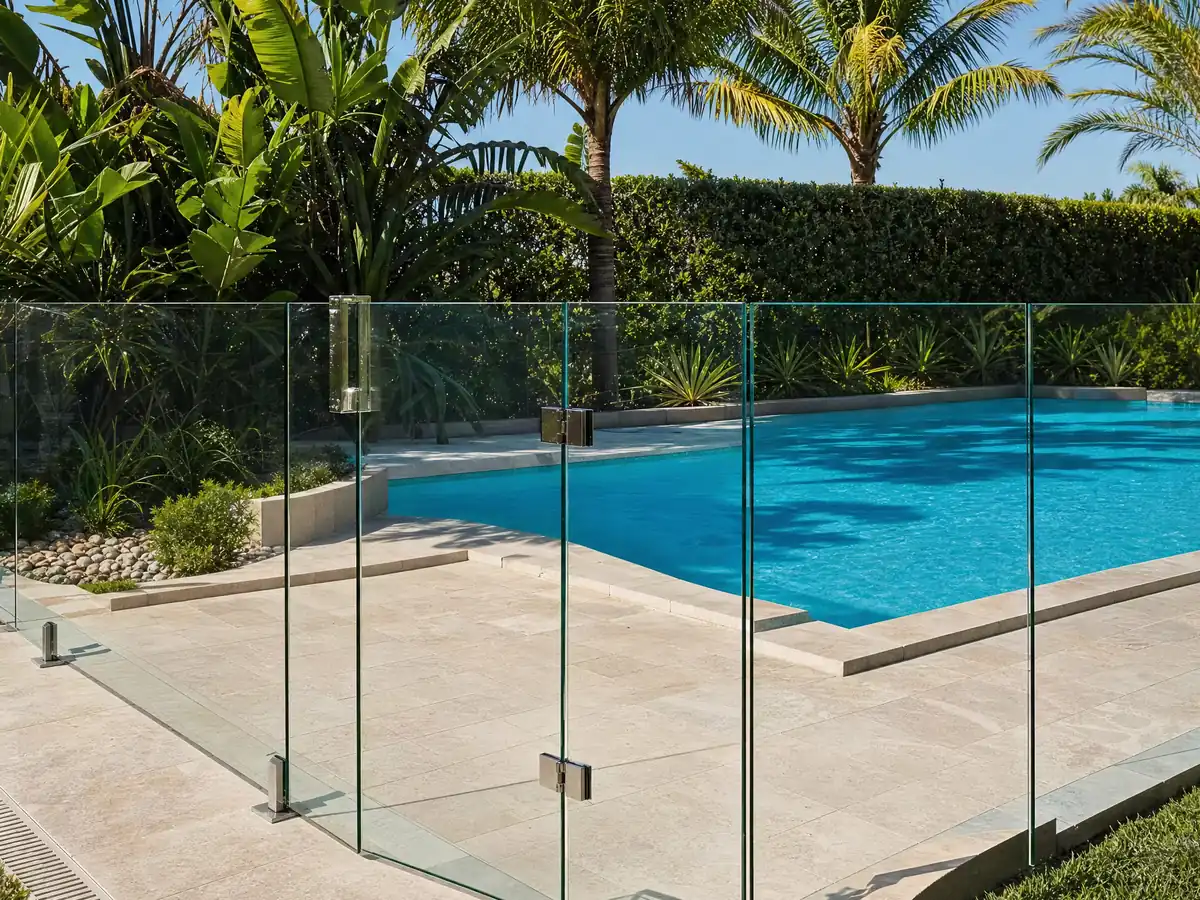
Pools sit under their own rules. Municipal Code 9.60.070 keeps a pool 18 inches or more deep at least 3 feet from any property line, with an exception for gated communities that share common open area, and pool fencing follows Chapter 8.02 and state law. Health and Safety Code 115922 requires at least two of seven drowning-prevention features when a permit is issued for a new or remodeled pool. The 60 inch barrier height is in a section we did not read, so we state no height.
Digging brings dust law. Chapter 6.16 of the Municipal Code requires a City-approved plan before earth-moving on more than 5,000 square feet, and smaller residential sites must still keep soil damp, watered or stabilized, with visible dust held to 20 percent opacity and 100 feet. South Coast AQMD Rule 403.1 adds Coachella Valley rules on top. We did not check whether your lot lies in the Blowsand Zone or whether the City's ordinance counts as District approved.
The Floodplain (FP) district follows the FEMA 100-year A and AO zones, and development in a special flood hazard area needs a floodplain development permit with elevation certification under Chapter 8.11. Whether a fence counts is for the Floodplain Administrator, and we did not check any parcel's zone.
Take photos of the current pool barrier and gate latch before any crew arrives.
Who pays for a shared fence in La Quinta, and what do HOAs add?
California Civil Code 841 presumes that adjoining owners split the cost of a boundary fence equally, and it asks an owner planning to spend money on a shared fence to give each affected neighbor 30 days' written notice. The presumption can be rebutted. A permit does not settle who pays, so agree on height, material and price in writing before a crew is booked.
Associations add a second approval. The City's FAQ says home owner association approval, where it applies, is separate from the City permit, and it says so in the patio cover answer. We did not research PGA West, SilverRock, Rancho La Quinta or any other community, so ask the board for its fence standards, its form and its response time.
With 27.7 percent of units held for seasonal use, the neighbor you must notify may spend the summer elsewhere. Send the notice early, by a method that leaves a receipt.
Keep the notice, the receipt and the association's approval with the contract.
How much does fence installation cost in La Quinta, and how do I read a quote?
No La Quinta fence survey turned up, so these are Los Angeles numbers. Angi's Los Angeles guide, updated August 4, 2026, lists an average of $3,051 inside a $1,734 to $4,422 range, $15 to $60 a linear foot, $2,100 to $2,350 for 100 feet, wood at $1,600 to $2,500 and vinyl at $1,850 to $3,400. Angi's national page adds $150 to $2,000 per gate and $3 to $5 a foot to haul off an old fence, and the federal wage survey puts fence erectors in the Los Angeles area near $28.00 an hour. We found no independent block wall price, so we print none. For planning we use $25 to $55 a foot for wood or vinyl privacy fence, $12 to $30 for chain link and $35 to $85 for aluminum or iron.
A contractor license is required for work of $1,000 or more and whenever a permit is required, under Business and Professions Code 7048 as amended January 1, 2026. Section 7159 holds the down payment to $1,000 or 10 percent of the price, whichever is smaller. Verify credentials with our license check guide and see how general contractors use subcontractors for who is on site.
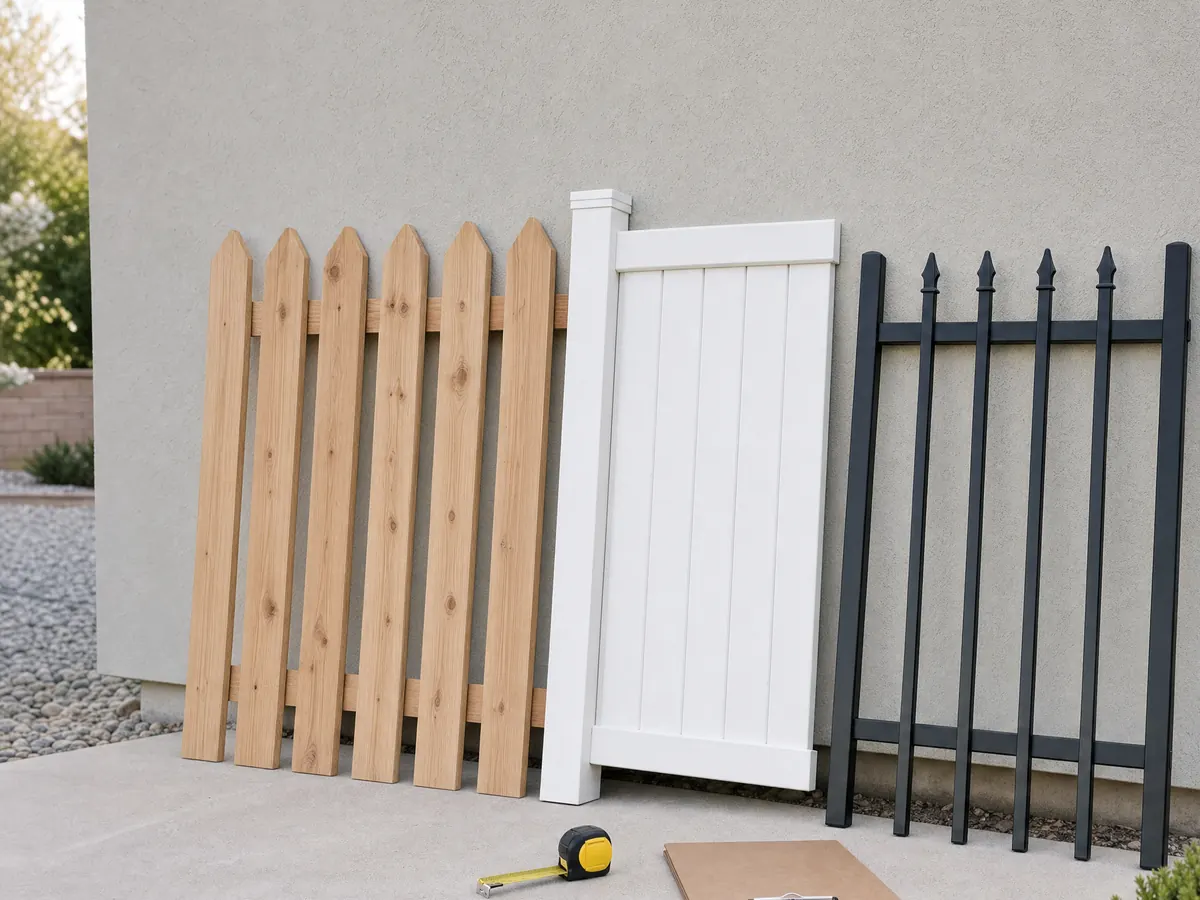
Fencing photos from La Quinta and nearby communities
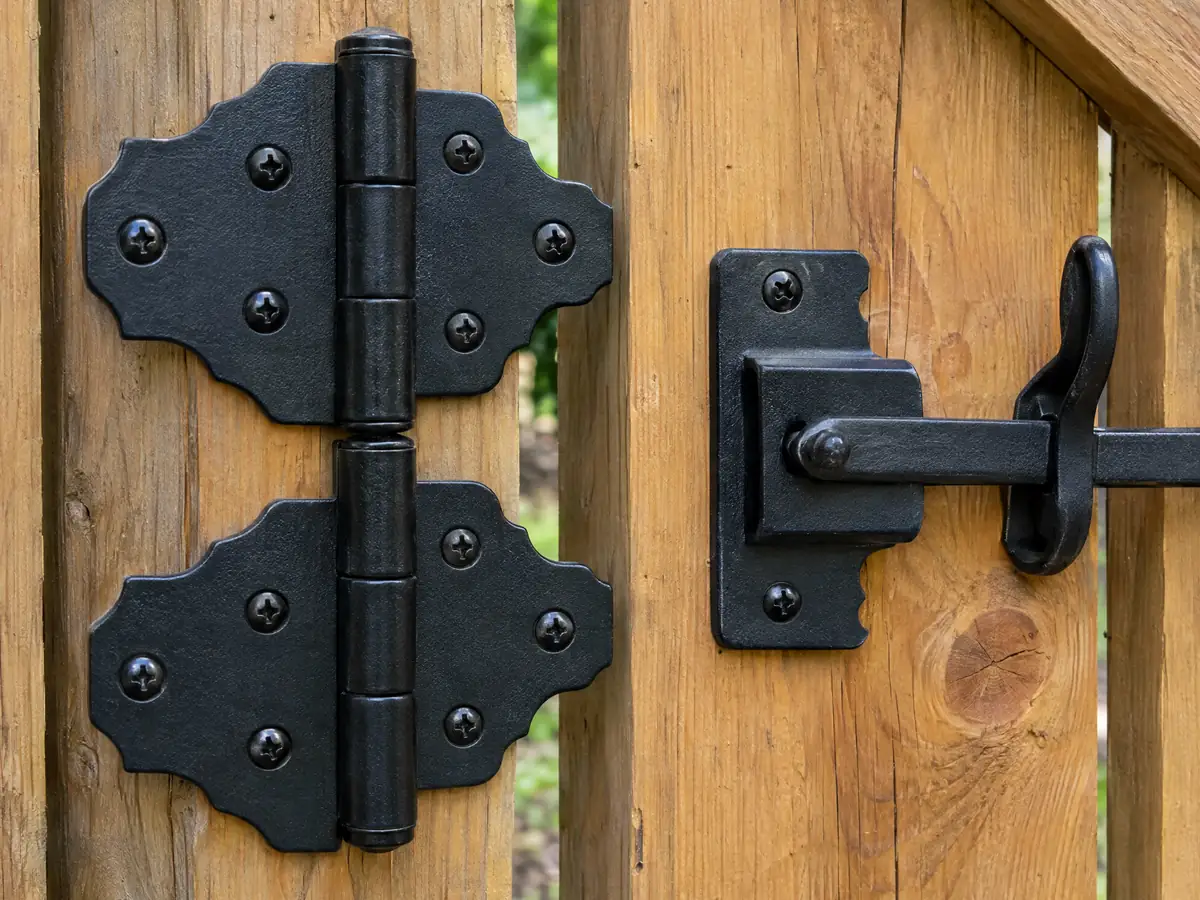
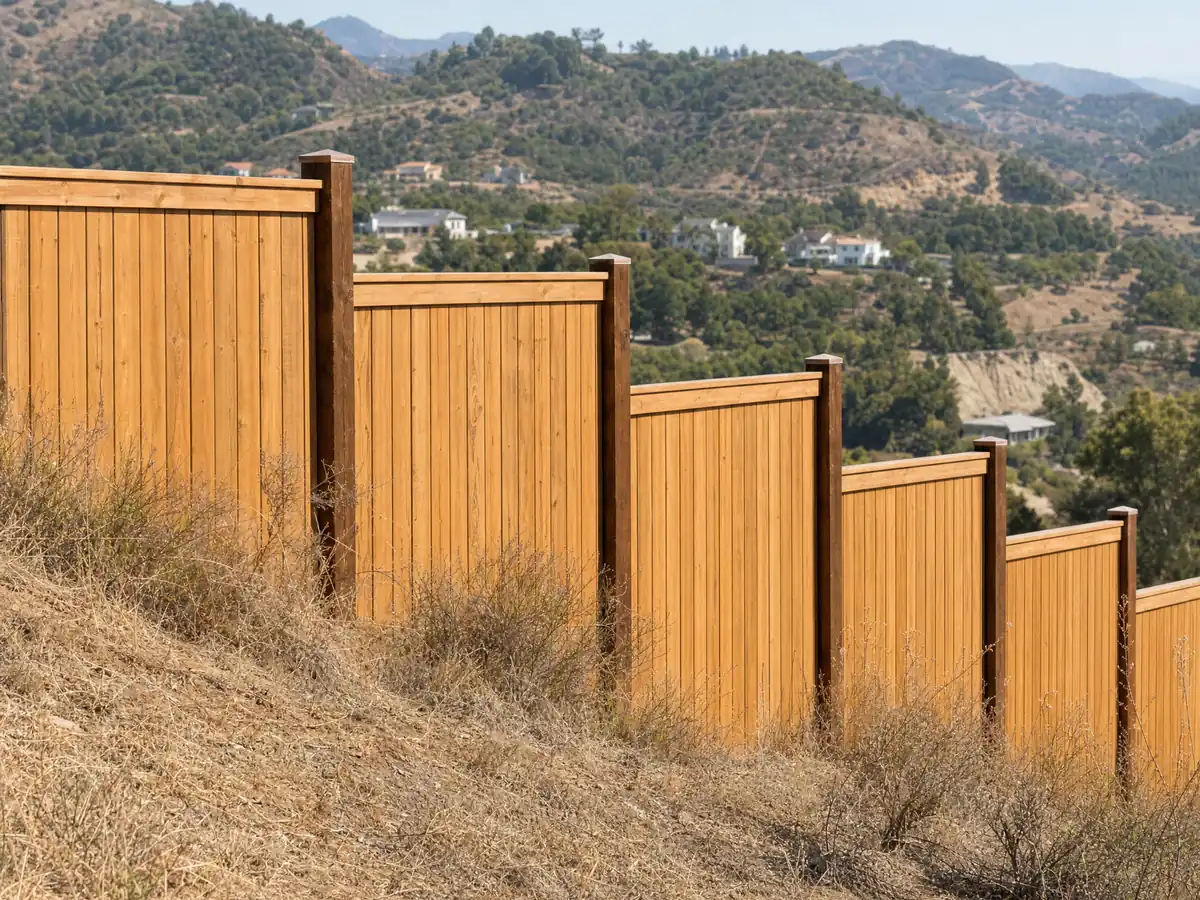
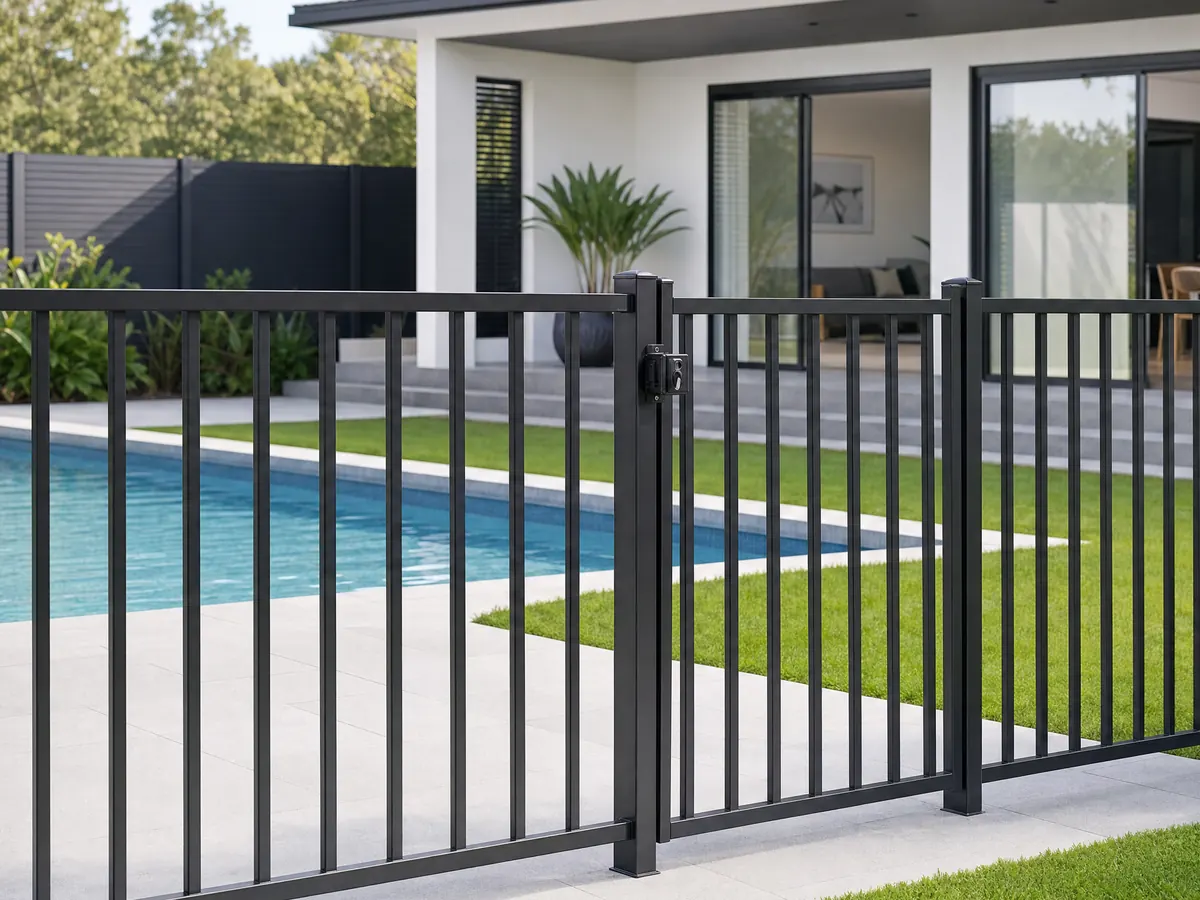
Fence scenes tied to La Quinta places such as the Cove, the Village, Fritz Burns Park and PGA West, and to nearby communities such as Indio, Coachella and Palm Desert, from wood privacy runs and block walls to iron gates and pool barriers.
Where these La Quinta fence figures come from
The fencing page prints every price with its source, its date and the numbers that disagree. Fences often go in beside other work, and the La Quinta rules for it are on the roofing page, the painting page and the kitchen remodeling page. For a valley city that handles walls and permits another way, read the guide for Palm Desert.
| What it covers | Typical range |
|---|---|
| Wood or vinyl privacy fence, 6 feet | $25 to $55 per linear foot |
| Chain-link | $12 to $30 per linear foot |
| Aluminum or ornamental iron | $35 to $85 per linear foot |
| Typical 100-foot backyard run | $2,500 to $5,500 total |
| Block walls, horizontal slat fences, gates and openers, hillside lots | Set by the written proposal |
La Quinta fencing questions, answered
Do I need a permit to build a fence in La Quinta?
Yes, one of two approvals. Since June 5, 2025, every residential fence or wall gets either a Planning Fence Approval, if it is exempt from a building permit, or a Wall/Fence Building Permit. Fences up to 7 feet are exempt from the building permit, but zoning still applies. File through the Hub portal.
How tall can a front fence be in La Quinta?
Zoning allows 6 feet in a required setback that adjoins a public street, and fences, walls and plants within the corner and driveway sight triangle may not exceed 30 inches. Front yards are meant for ornamental iron or tubular steel, and a split two-rail fence needs a building permit.
Can I put up a 7 foot fence in La Quinta?
Not in most setbacks. A fence up to 7 feet is exempt from the building permit, but zoning caps fences at 6 feet in required setbacks, rising to 8 feet measured from a higher neighbor's pad and 12 feet inside the buildable area. Ask Planning which line governs your yard.
Do I need a permit for a block wall in La Quinta?
Plan on yes above 3 feet. A non-retaining masonry wall up to 3 feet from the top of the footing is exempt from a building permit, and a taller one needs a Wall/Fence Building Permit. Every wall must appear on the site plan, and the City offers standard block wall and pilaster details.
What is the difference between a fence company and a masonry contractor in California?
A fence company holds CSLB class C-13, which excludes masonry walls, and a block wall belongs to class C-29. On a mixed job, a general contractor can bring in both as licensed subcontractors. Ask for each subcontractor's license number before the proposal is signed.
How much does it cost to have 100 feet of fence installed?
In Los Angeles, Angi's guide shows $2,100 to $2,350 for 100 feet, while our planning range for wood or vinyl privacy fence is $25 to $55 a foot, or about $2,500 to $5,500 for a backyard run. We found no La Quinta survey, and a written proposal sets the real price.
Who pays for a shared fence in California?
Civil Code 841 presumes neighbors split a boundary fence cost equally, and it asks the owner planning to spend money to give each affected neighbor 30 days' written notice. The presumption can be rebutted, so agree on height, material and price in writing first.
What do I need for a pool fence in La Quinta?
A pool 18 inches or more deep must sit at least 3 feet from any property line, and fencing follows Chapter 8.02 and state law. Health and Safety Code 115922 requires at least two of seven drowning-prevention features with a new or remodeled pool permit. Fences used as pool barriers are not exempt.
What are the new fence rules in California in 2026?
In La Quinta the change is local: Ordinance No. 622 took effect June 5, 2025. Statewide, Business and Professions Code 7048 now requires a license for work of $1,000 or more or when a permit is needed. State wildfire rules for fences near a home were unsettled in our sources, so we state none.
Can I put a wood fence in my front yard in La Quinta?
Generally no. Wood is allowed only in rear or interior side yards where the street cannot see it, unless it is stucco finished. Front and street side yards are meant for ornamental iron or tubular steel, and masonry is allowed anywhere with a matching color.
Ask for a fence estimate in La Quinta
Give us the neighborhood, the material, which side faces the street and whether a pool, a golf course edge or an association is involved. We read the setback limit and the approval path for that yard before we call back.