
Deck Builderin La Quinta, CA
A deck builder in La Quinta starts from one short exemption: the Residential Code excuses a deck of 200 square feet or less, no more than 30 inches high, detached from the house and not serving an exit door. Anything larger, attached or raised needs a permit, and yard limits, pools, foothills and HOAs sit on top.
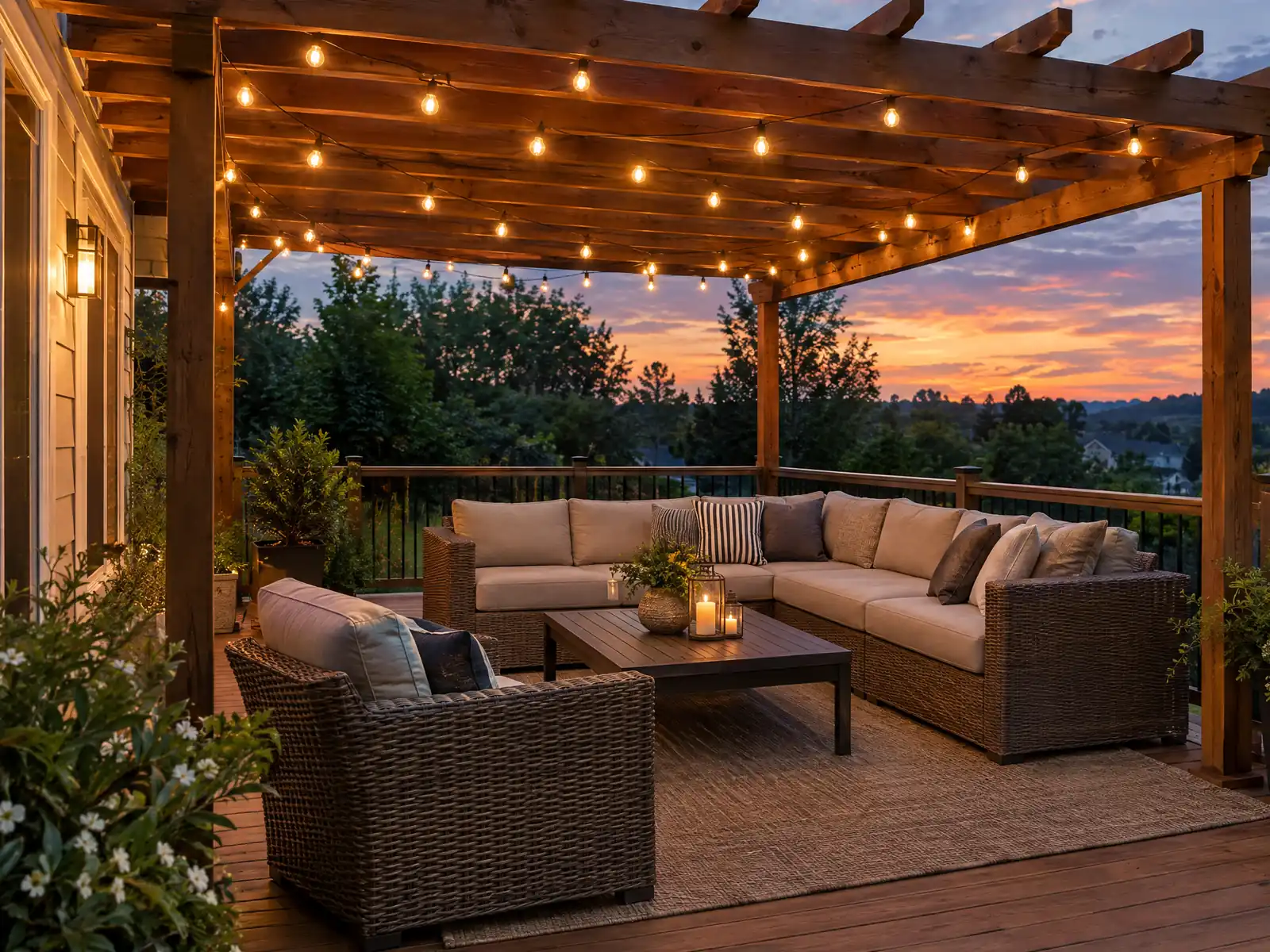
La Quinta's outdoor living grew up around golf. The City's history page counts 25 golf courses and 16 parks, PGA West sits on former Kennedy ranch land sold in 1976, and the Census Bureau's 2024 estimates count 18,699 detached houses among 24,770 units. In these yards a deck shares ground with pool equipment screens, garden walls and patio covers, and the code treats each of them separately.
MDG Builders (CSLB #1040337) is a Tarzana general contractor, so for a La Quinta deck we draw the scope, carry the permit and fire questions to the City's Building Division and hire a licensed carpentry subcontractor to build. The decks page covers materials and ranges, and the La Quinta overview lists the other trades we manage here.
What La Quinta's Building Division, the Municipal Code, the fire code and state law say about decks
Where decks permits come from in La Quinta: City of La Quinta Design and Development Department, Building Division.
- Patio covers: freestanding covers up to 120 square feet of roof area are exempt from a building permit but must meet the setbacks of Municipal Code 9.60.040 and get home owner association approval if applicable; any cover over 120 square feet, or attached to the house, needs a permit. The Building Division publishes a Patio Cover Standard (PDF). Wayback snapshot 2026-10-07 (FAQ) and 2026-04-12 (forms).
- Decks: the Residential Code exemption covers decks up to 200 square feet that are not more than 30 inches above grade at any point, are not attached to a dwelling and do not serve the required exit door; separate plumbing, electrical and mechanical permits are still required for exempted items where not otherwise exempt, and all exempt structures must meet zoning setbacks and height. GoCodebook third-party mirror, text as of 2026-10-04.
- Yard structures (patio covers, decks over 18 inches high, gazebos, trellises, play equipment over 8 feet): at most 12 feet high, at least 5 feet from an adjacent residential lot or a rear line on a street, 3 feet from a rear line on a common open space at least 10 feet deep, eaves may overhang 18 inches, roof water may not drain onto a neighbor, and the structures may not cover more than 50 percent of the required rear setback. Uncovered decks under 18 inches are not covered by this section. GoCodebook mirror (section amended 2026-08-04).
- Pools and equipment (Municipal Code 9.60.070 and 9.60.075): a pool of 18 inches or more depth must sit at least 3 feet from any property line (gated communities with common open area are the exception), pump and heater equipment in a front or rear yard must be enclosed on at least three sides by a masonry wall, and ground mounted air conditioner condensers belong in the rear yard unless a lot of 5,000 square feet or less screens a front yard unit. Pool fencing follows Chapter 8.02 and state law. GoCodebook mirror.
Can deck repair happen without a permit in La Quinta, and what do sun and termites do to old wood?
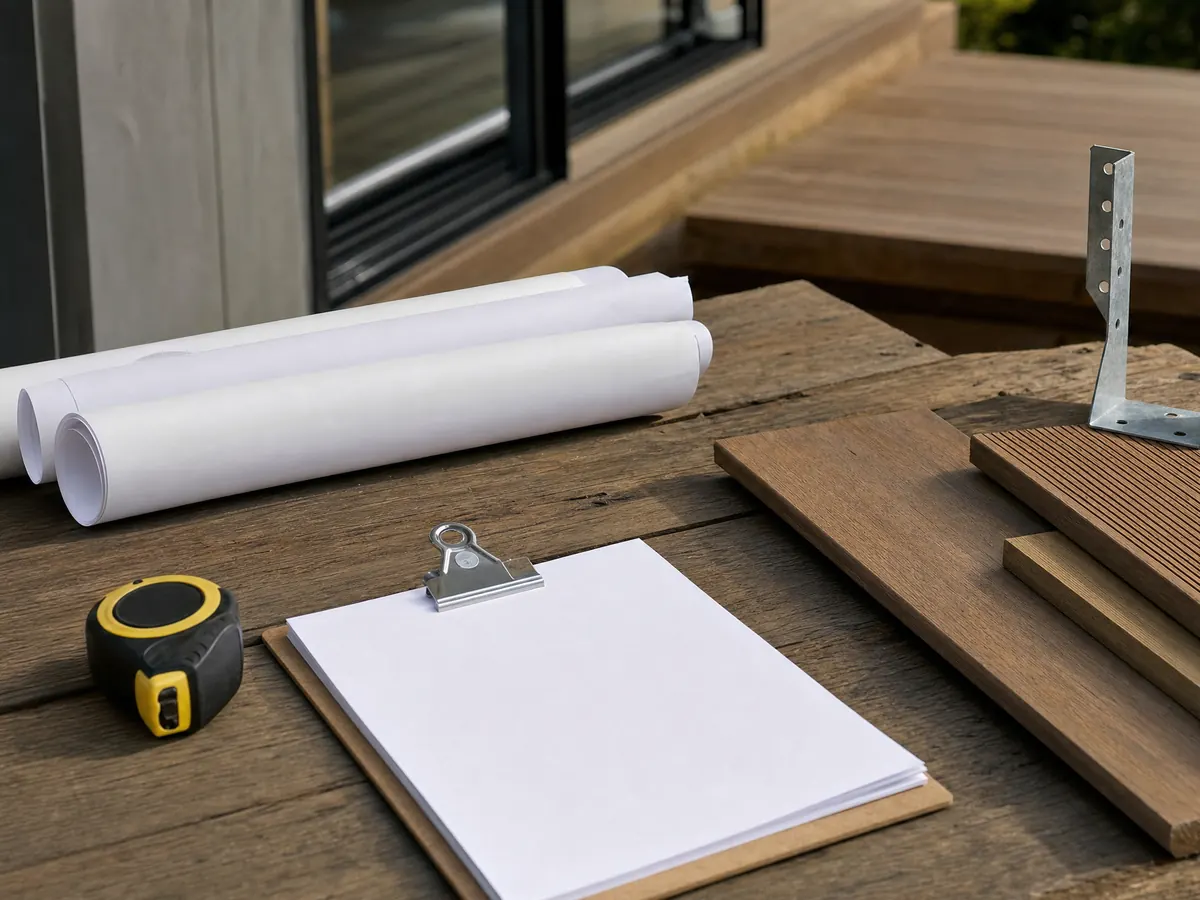
We found no La Quinta sentence that exempts repair as such. The Building Division's FAQ says anything altered or repaired needs a permit before work starts, and the exemption list in the code names specific items such as small decks and finish work, so send photos and the scope to the counter before a crew arrives. Treat new framing, a new ledger, stairs or a taller guard as permit work.
The sun is the constant. NOAA's 1991 to 2020 normals for Indio Fire Station show July highs of 105.8 F, about 184 days a year at or above 90 F and about 1 day with a low at or below 32 F. A desert deck never sees much freeze and thaw, but boards and fasteners take months of direct sun, and we found no La Quinta source on how hot particular boards get underfoot.
Termites often decide how far a repair grows. The City's design criteria rate termite damage potential as very heavy, and UC's Integrated Pest Management program reports that drywood termites are most prevalent in southern California and infest decks and fences. Have the crew probe the posts and the wall-side ledger before the price is set, and ask the proposal to say who pays for rotten framing.
How big can a deck be in La Quinta before it needs a building permit?
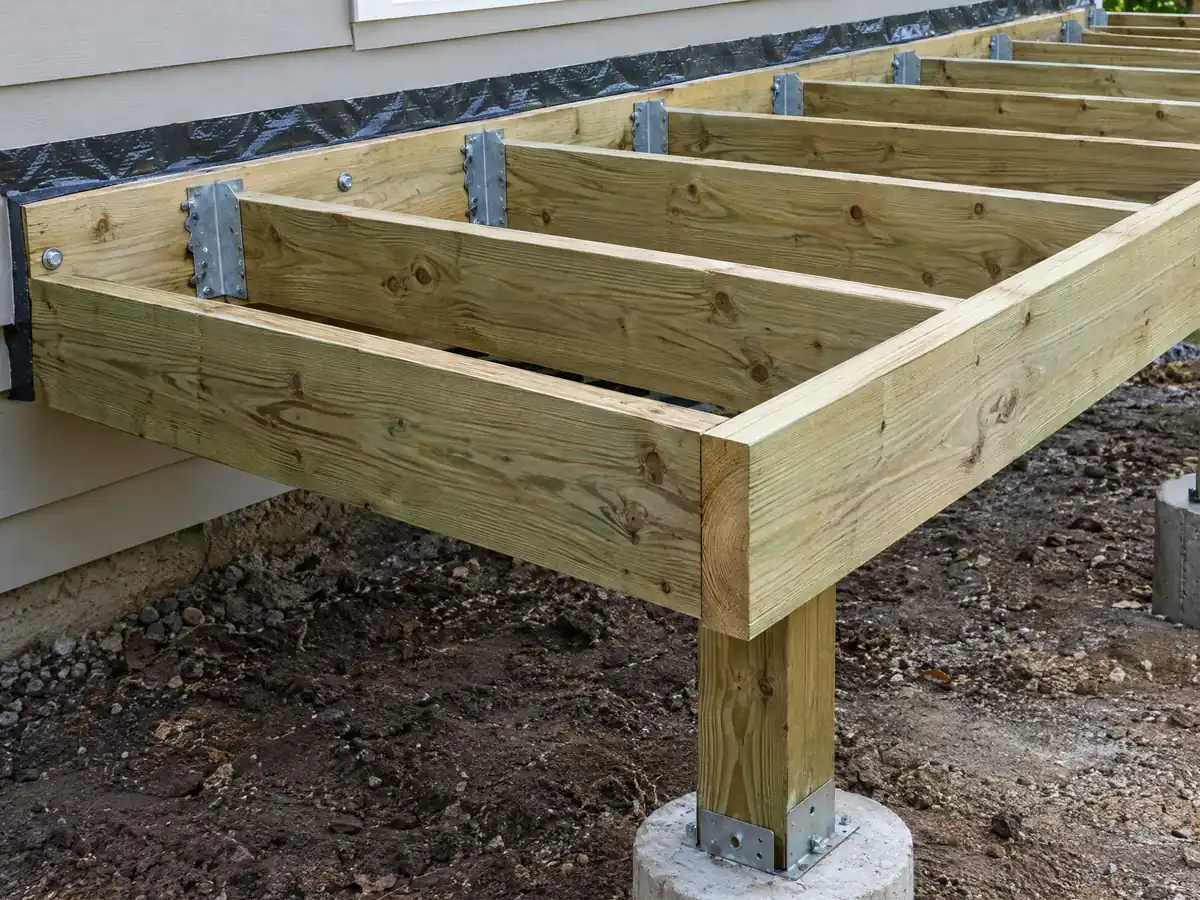
Up to 200 square feet, with three conditions. The Residential Code exemption, read in GoCodebook's third-party copy of Municipal Code 8.06.020, covers a deck of 200 square feet or less that is not more than 30 inches above grade at any point, is not attached to a dwelling and does not serve the required exit door. Miss any one of the four and the deck is permit work.
An exempt deck is not free of rules. Separate plumbing, electrical and mechanical permits are still required for exempted items where not otherwise exempt, and every exempt structure must meet zoning setbacks and height. A deck above 18 inches also falls under the yard structure limits in the next section, so measure the height before drawing the footprint.
The City website blocked our requests, so we read its pages from Wayback Machine copies. Permits are required before work starts whether a contractor or an owner does it, and applications go through the Hub Online Portal. The Building Division line is (760) 777-7125, open 7:30 a.m. to 4:30 p.m. Monday to Thursday and 8:00 a.m. to 4:30 p.m. Friday.
How high and how close to the line can a patio cover, gazebo or raised deck sit?
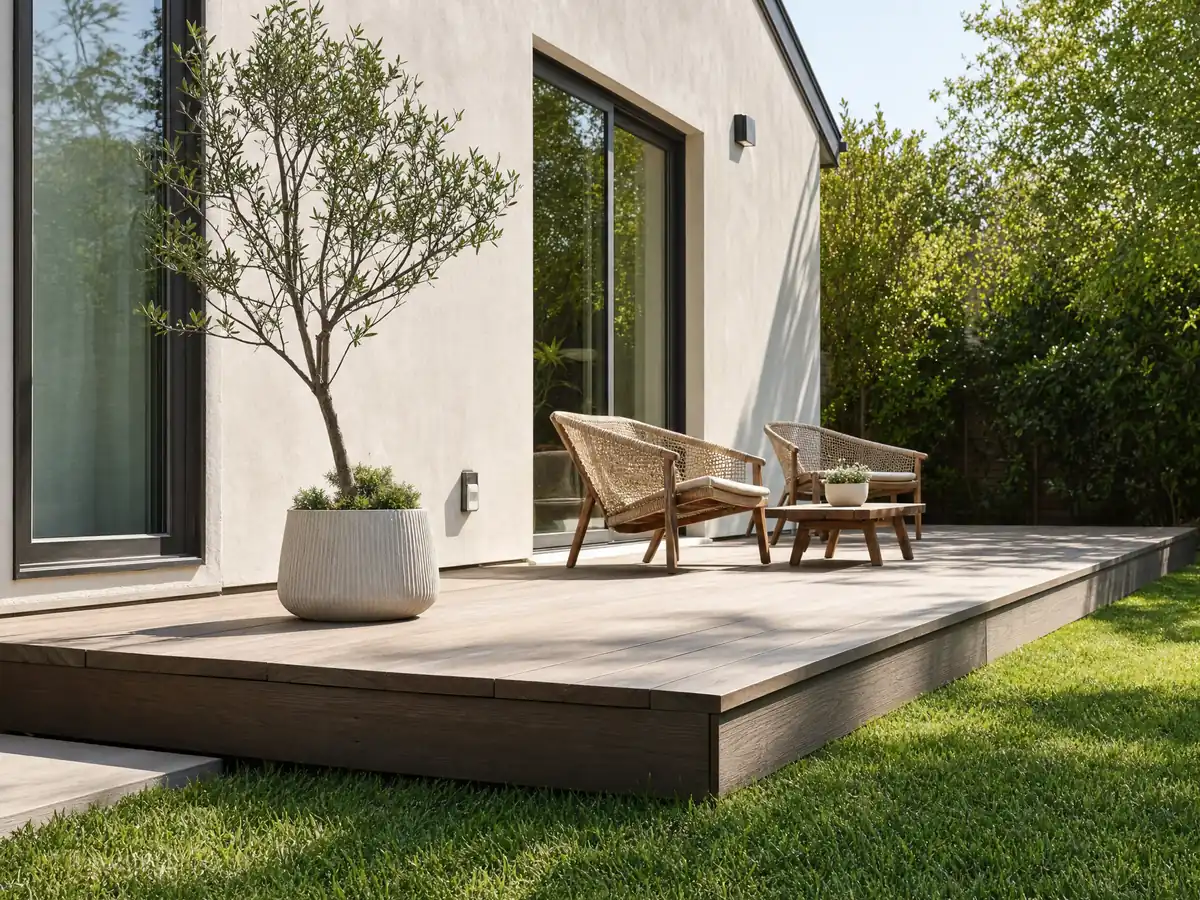
Yard structures have a short list of limits. Under Municipal Code 9.60.040, as read in the mirror, patio covers, decks over 18 inches high, gazebos and trellises may be at most 12 feet high and must sit 5 feet from an adjacent residential lot or from a rear line on a street, or 3 feet from a rear line on common open space at least 10 feet deep. Eaves may overhang 18 inches, roof water may not drain onto a neighbor, and the structures may cover no more than 50 percent of the required rear setback.
Patio covers split at 120 square feet. A freestanding cover of that roof area or less is exempt from a building permit but must meet the setbacks and get home owner association approval where one applies, while anything larger or attached to the house needs a permit. The Building Division publishes a Patio Cover Standard as a PDF.
Associations are a separate approval. The City FAQ says so for patio covers, and it does not publish rules for PGA West, SilverRock or any other community, so get the association's written decision before ordering lumber. A house in a mobile home park may need state HCD approval instead.
What do the pool and equipment rules change for a La Quinta pool deck?
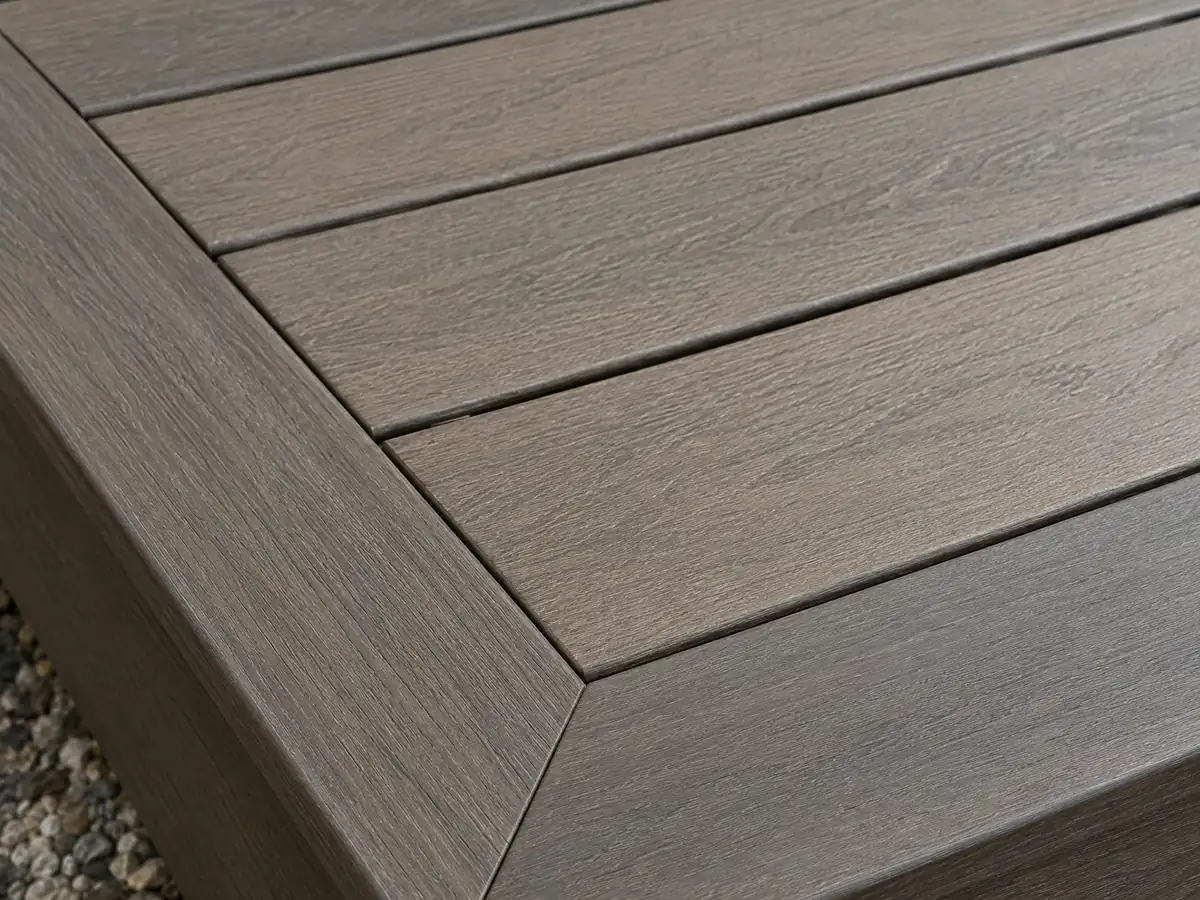
Pools keep a distance from the line. Municipal Code 9.60.070 puts a pool of 18 inches or more depth at least 3 feet from any property line, and gated communities with common open area are the exception. A deck that wraps the coping inherits that line, so place the pool edge before the framing plan.
Equipment has to be screened. Under 9.60.075, pump and heater equipment in a front or rear yard must be enclosed on at least three sides by a masonry wall, and ground-mounted air conditioner condensers belong in the rear yard unless a lot of 5,000 square feet or less screens a front-yard unit. Pool fencing follows Chapter 8.02 and state law.
Walls matter here. A fence or wall used as a pool safety barrier is not covered by the exemptions for fences up to 7 feet or masonry walls up to 3 feet, so any barrier on a pool deck is permit work. Since June 5, 2025, every residential fence or wall gets either a Planning Fence Approval or a building permit. Ask the subcontractor to mark each gate, door and guard on the plan before framing starts.
What do wildfire zones, the foothill overlay and wind change about a La Quinta deck?
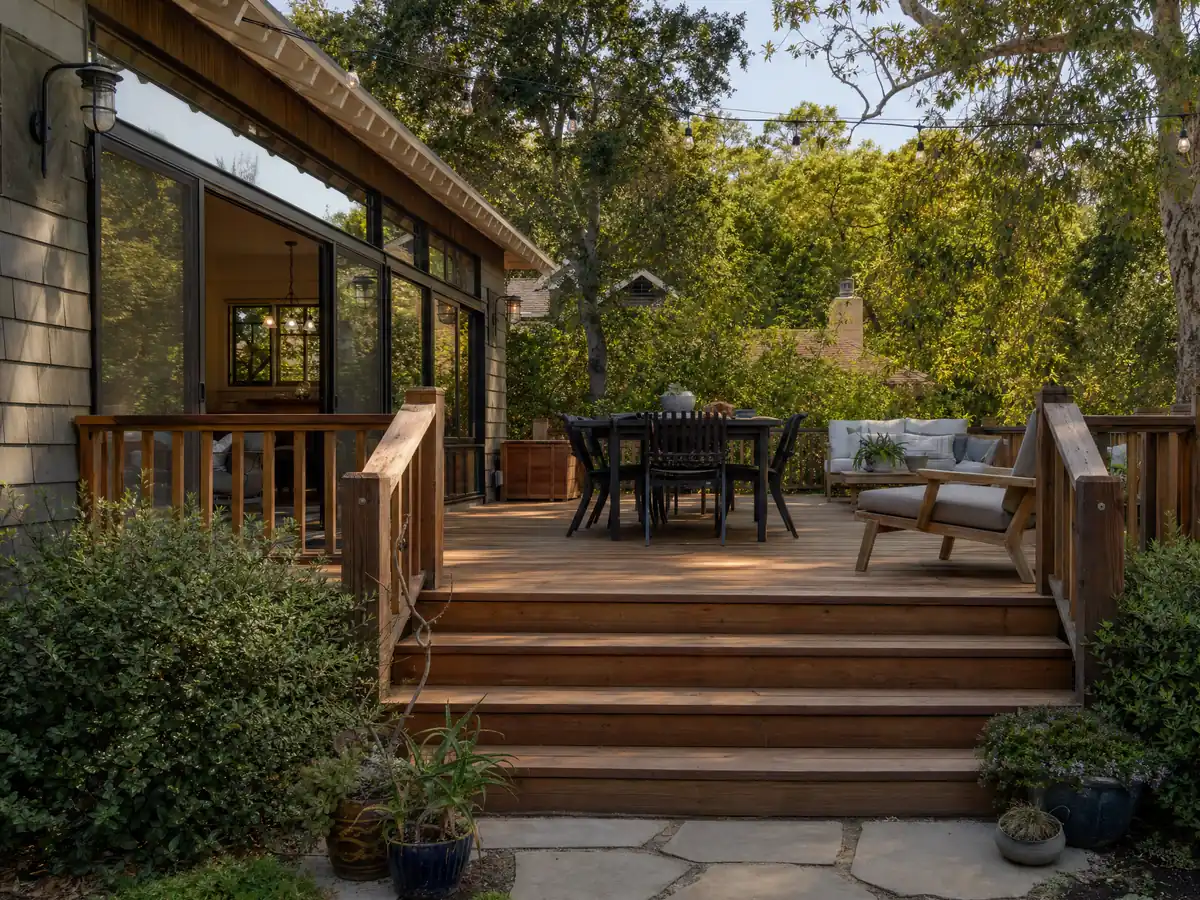
Fire rules follow the State Fire Marshal's maps. Municipal Code 8.18 adopts the 2025 California Wildland-Urban Interface Code, names the Riverside County Fire Chief as fire code official and designates moderate, high and very high zones on the State Fire Marshal's Local Responsibility Area maps. We did not open the parcel maps, so we state no zone for any address. Decking in mapped areas must come from the California Residential Code's wildland list, so ask for the listing of any board.
The foothill edge adds a review. The Hillside Conservation overlay starts above the toe of the slope in the Santa Rosa Mountains, bars building on slopes over 20 percent and sends all work through a conditional use permit and planning commission site development review. A deck on that ground is a hillside project before it is a carpentry job.
Loads are written down. The City's design criteria give Seismic Design Category D2 for residential work and winds of 95 to 100 mph with Exposure C, and under the 2022 Residential Code a guard is required where the surface is more than 30 inches above grade, at least 42 inches high, with openings that stop a 4 inch sphere. La Quinta plans under the 2025 codes from January 1, 2026, so confirm these numbers with the counter.
What does a deck builder charge in La Quinta, wood or composite?
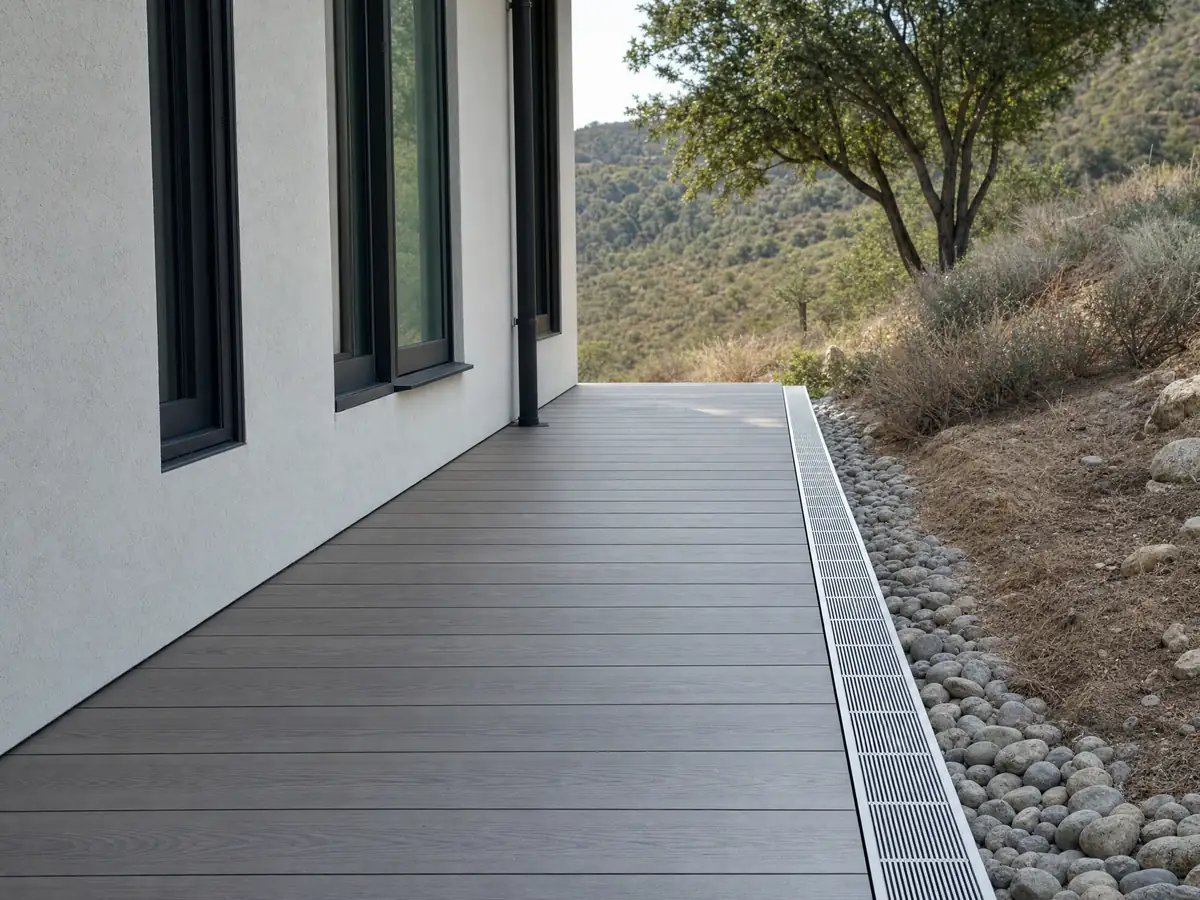
No La Quinta deck study turned up, so the anchor is Remodeling magazine's 2025 Cost vs. Value report for Los Angeles. Its model deck measures 16 by 20 feet with a bench, planter, three steps and full railing, and it costs $18,419 in treated wood, 99.6 percent recouped at resale, or $26,872 in composite, 73.9 percent recouped. Angi's Los Angeles page, updated October 28, 2025, shows a $13,570 average inside a $6,335 to $20,871 range.
Our own planning figures run $45 to $75 a square foot for pressure-treated wood and $65 to $110 for composite, so a 16 by 20 deck falls near $14,500 to $24,000 in wood or $21,000 to $35,000 in composite, permits and engineering extra. Hillside and engineered decks have no independent price source and wait for a site visit. The federal May 2025 wage survey gives Los Angeles area carpenters a mean of $37.79 an hour.
Wood framing falls under CSLB's C-5 class, and the deposit limit of $1,000 or 10 percent of the price, whichever is less, sits in Business and Professions Code 7159.5. The license check guide shows how to read a CSLB record.
Deck photos from La Quinta and nearby communities
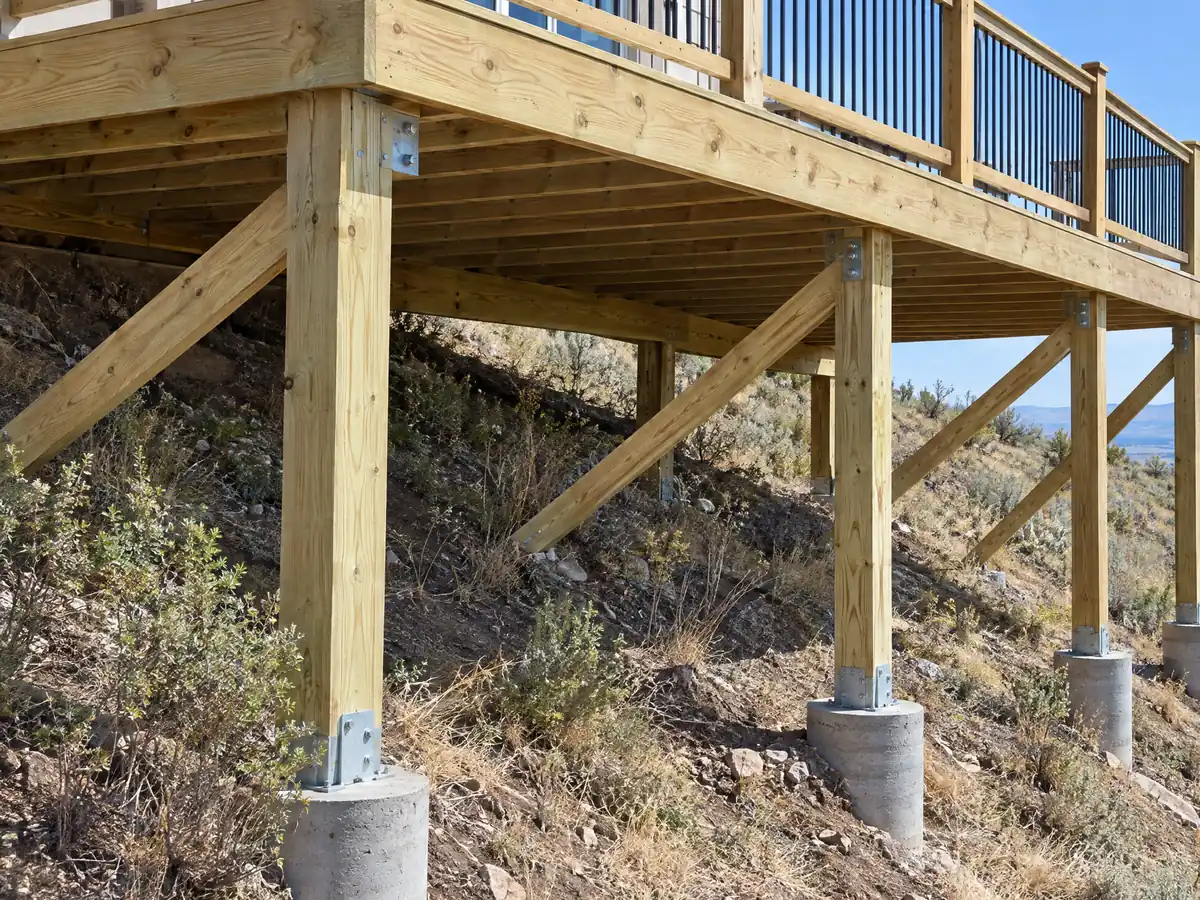
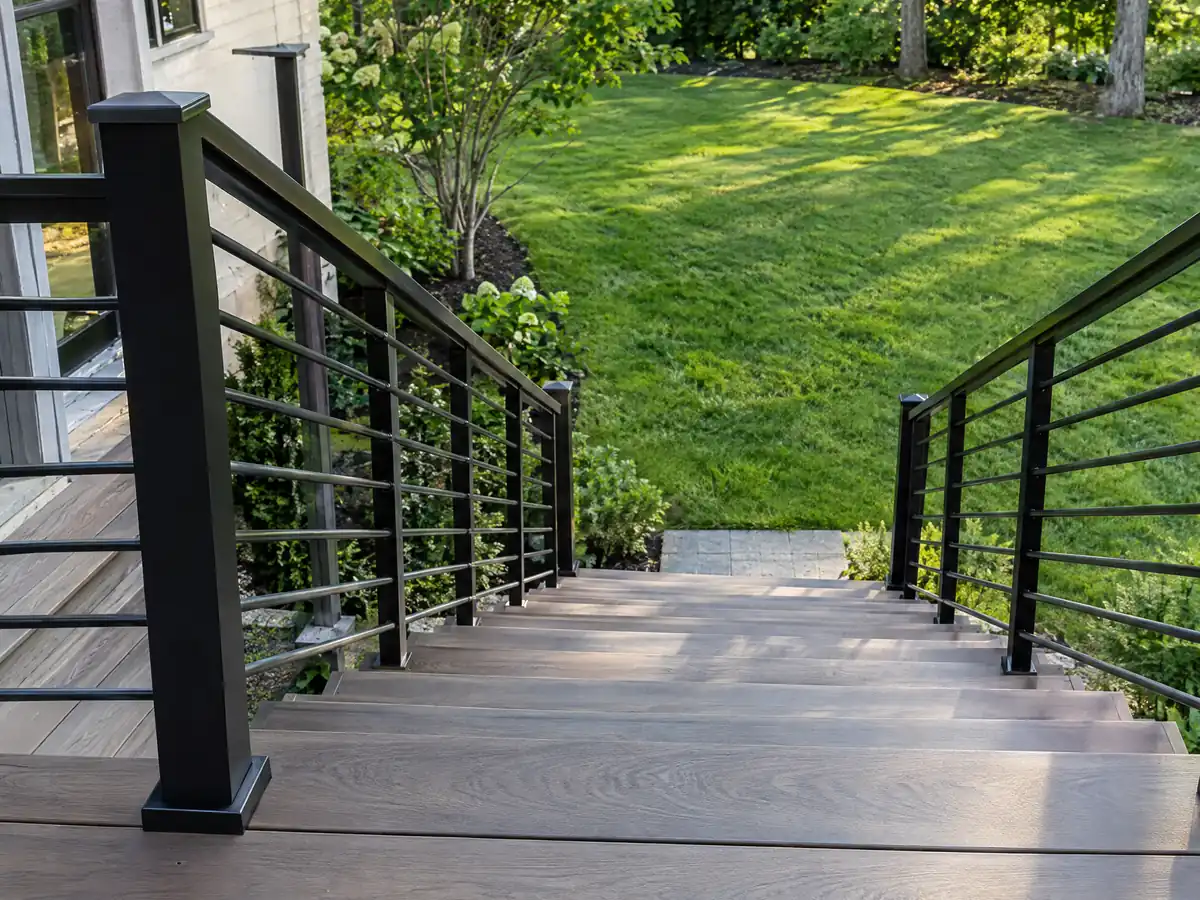
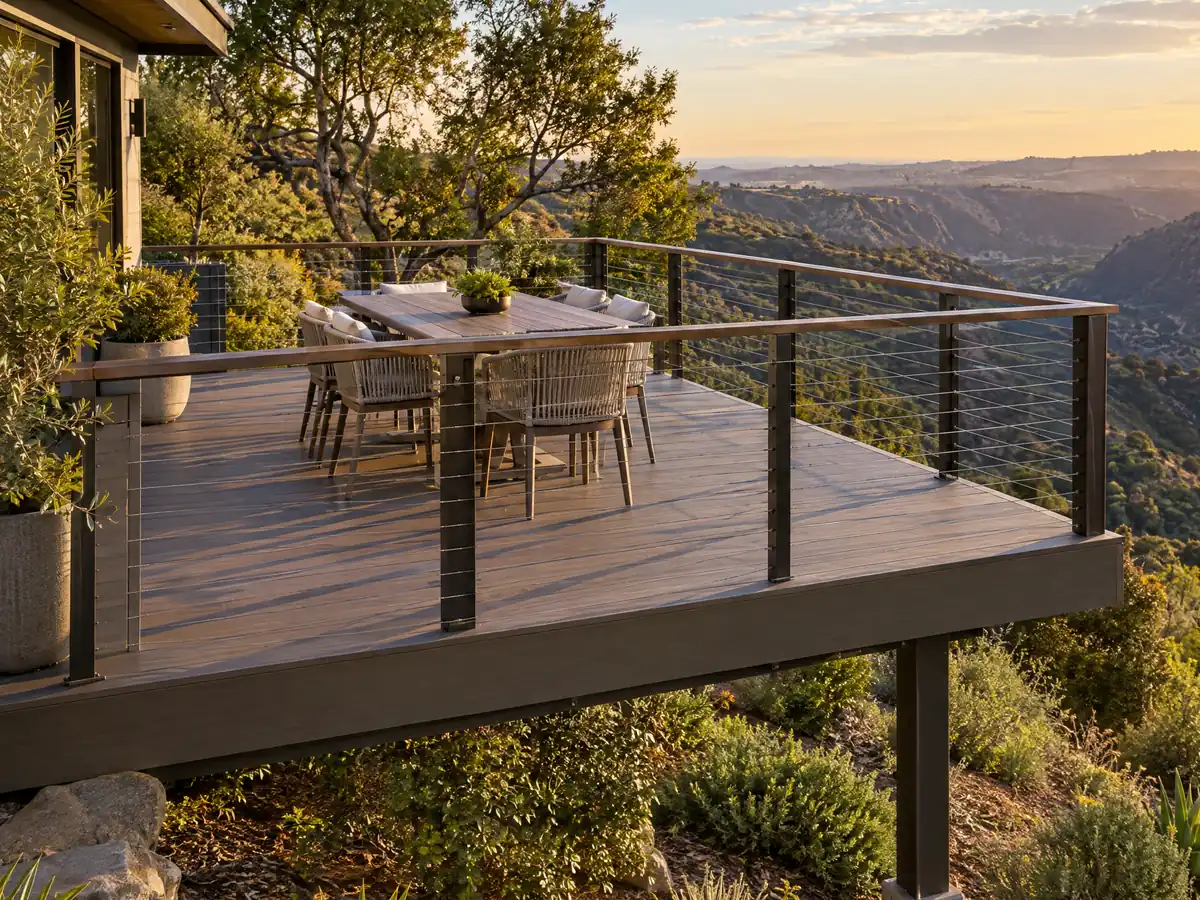
Footings, framing, railings and finished decks from La Quinta and the Coachella Valley towns around it, shown at the steps where the rules bite. Tap any photo to enlarge it.
What decks costs around La Quinta
Dollar figures here are Los Angeles planning ranges from our decks page, not a La Quinta bid, and permits, engineering, soils work and any fire or hillside review belong on separate proposal lines. The same property may need flooring in La Quinta or concrete in La Quinta. Valley comparisons are decks in Indio and decks in Palm Desert, with decks in Los Angeles as the big-city benchmark. The subcontractor guide explains who frames and who finishes, and the flooring cost guide covers indoor surfaces that sit next to a deck door.
| What it covers | Typical range |
|---|---|
| Pressure-treated wood deck | $45 to $75 per square foot |
| Composite deck | $65 to $110 per square foot |
| 16 by 20 foot wood deck (320 sq ft) | About $14,500 to $24,000 |
| 16 by 20 foot composite deck | About $21,000 to $35,000 |
| Hillside, second-story, rooftop and ipe decks | Priced by site visit |
| Permits and engineering | Quoted as separate lines |
La Quinta deck questions, answered
Can I build a deck without a permit in La Quinta?
Only a small one. The Residential Code exempts a deck of 200 square feet or less that is not more than 30 inches above grade, is not attached to a dwelling and does not serve the required exit door. Anything else needs a permit, and zoning setbacks apply either way. Call the Building Division at (760) 777-7125 with the size and height.
What is the largest deck without a permit?
In La Quinta it is 200 square feet, provided no point is more than 30 inches above grade, the deck stands free of the house and it does not serve the required exit door. Decks over 18 inches high also meet the yard structure limits of 12 feet in height and 5 foot setbacks from adjacent residential lots.
How much would a 20x20 deck cost?
On our Los Angeles planning figures, a 400 square foot deck costs roughly $18,000 to $30,000 in pressure-treated wood or $26,000 to $44,000 in composite, before permits and engineering. No La Quinta study turned up. Stairs, railing length, height and soil conditions usually move the price more than square footage does.
Is it cheaper to build a wood deck or composite deck?
Wood costs less to build. Cost vs. Value's Los Angeles report puts the same 16 by 20 deck at $18,419 in treated wood and $26,872 in composite, while composite recoups less at resale, 73.9 percent against 99.6 percent. We found no La Quinta source on surface temperature of dark boards, so ask each maker for data.
Is railing height 36 or 42 for decks?
Use 42 inches. The 2022 California Residential Code sets that minimum for guards where the walking surface is more than 30 inches above grade, with openings that stop a 4 inch sphere. La Quinta plans under the 2025 codes, so confirm the final numbers with the Building Division before cutting posts.
Can I repair a deck in La Quinta without a permit?
Possibly for like-for-like boards, but we found no La Quinta sentence that says so, and the City's FAQ says anything altered or repaired needs a permit before work starts. New framing, ledgers, stairs and taller guards are permit work. Send photos and a scope to the counter first, since termite damage is rated very heavy here.
Does a patio cover need a permit in La Quinta?
A freestanding patio cover with 120 square feet of roof or less is exempt from a building permit, but it must meet setbacks and get association approval where one applies. Any cover over 120 square feet, or attached to the house, needs a permit. The City publishes a Patio Cover Standard PDF to start from.
How close to the property line can a deck or pool be in La Quinta?
A deck over 18 inches high or a patio cover must sit 5 feet from an adjacent residential lot, and a pool of 18 inches or more depth must sit 3 feet from any property line. Gated communities with common open area are an exception for pools, and zoning maps and specific plans can change the numbers.
What license does a deck builder need in La Quinta?
The builder must hold a current California contractor license, typically general building or the C-5 framing class, and a permit job cannot go to someone unlicensed. Look the number up on the CSLB site, and ask each subcontractor for a license number and a certificate of insurance.
Tell us the yard, the height off the ground and what the deck touches
Say how big the deck is, how high it sits, whether it joins the house, a pool or a wall and whether an association or a slope is involved. The permit, fire and soil questions come with us to the first visit.