
Deck Builderin Indio, CA
A deck builder in Indio should treat every deck as permit work until Building & Safety says otherwise, because the City pages we could read name no deck exemption. Pools, patio covers and fire pits add setback and alarm rules, and the City's Balcony and Deck handout is an unread scan, so call the counter first.
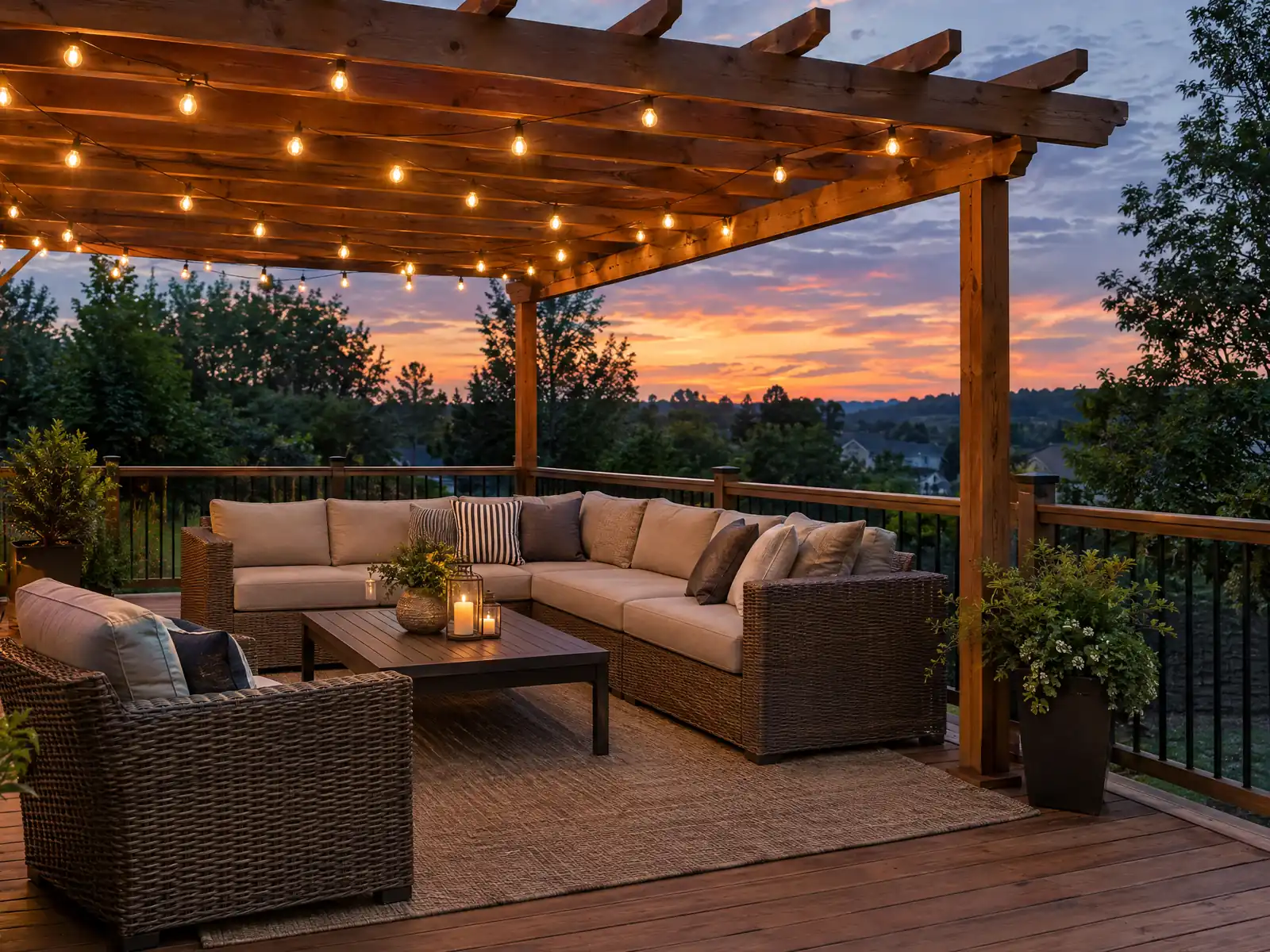
Indio's backyards are where the Coachella Valley's outdoor living meets the building code. The Census Bureau's 2024 estimates count 24,460 single-family detached homes, 67.4 percent of the city's 36,310 units, and the City says its population is up 73 percent since 2000 and describes housing from workforce homes to golf-course residences in gated communities. A deck here is usually added to a yard that already holds a patio, a pool or both.
MDG Builders, CSLB #1040337, is a general contractor in Tarzana. We draw the deck, bring the permit and fire questions to Indio's Building & Safety Division and hire a licensed carpentry subcontractor to build it. Materials and ranges are on the decks page, and the Indio overview lists the other trades we manage in town.
What Indio's Building & Safety Division, Fire Marshal, Planning Division and state law say about decks
Where decks permits come from in Indio: City of Indio Community Development Department, Building & Safety Division.
- Pools and decks: pool and spa water must stay out of the front setback unless the Director approves, 10 feet from the street-side line (5 feet inside a masonry subdivision wall), 5 feet from interior side and rear lines and 5 feet from the dwelling, and pool equipment may not sit in a setback next to a street or within 3 feet of a side or rear line or within 10 feet of a neighbor's living area unless it is in a soundproof enclosure (Municipal Code 3.02.05, third-party mirror).
- Pool barrier alarms: the City FAQ (Wayback 2026-05-14) says any door that forms part of a pool barrier needs an alarm meeting UL 2017 that sounds for at least 30 seconds within 7 seconds of the door opening at 85 decibels or more at 10 feet. The FAQ quotes the 2019 California Residential Code, but the City now enforces the 2025 code, so check current text.
- Patios and covers: the City hosts a Patio Plan handout (conventional design dated 04/01/2020) with rafter-span, header and footing tables (footings 18 or 24 inches square by 12 inches deep), a 6 foot 8 inch minimum clearance, 24 inch maximum overhang and ledger bolting rules, stating the design is not meant to be enclosed and alternates need engineering. The online forms page also lists Balcony & Deck Standards, Block Wall and Detached Garage Standards handouts; those three are scanned images and were not read (Wayback copies).
- Detached patio covers, gazebos, sheds and garages follow Table 3.02.04-1: 3 feet from rear and interior side lines, front and street-side setbacks the same as the house, 14 feet maximum height for most, and 5 feet and 20 feet for structures over 80 square feet and over 14 feet tall (third-party mirror). One-story sheds and similar structures up to 120 square feet are exempt from a building permit but not from zoning setbacks (Building & Safety FAQ and amended CBC 105.2).
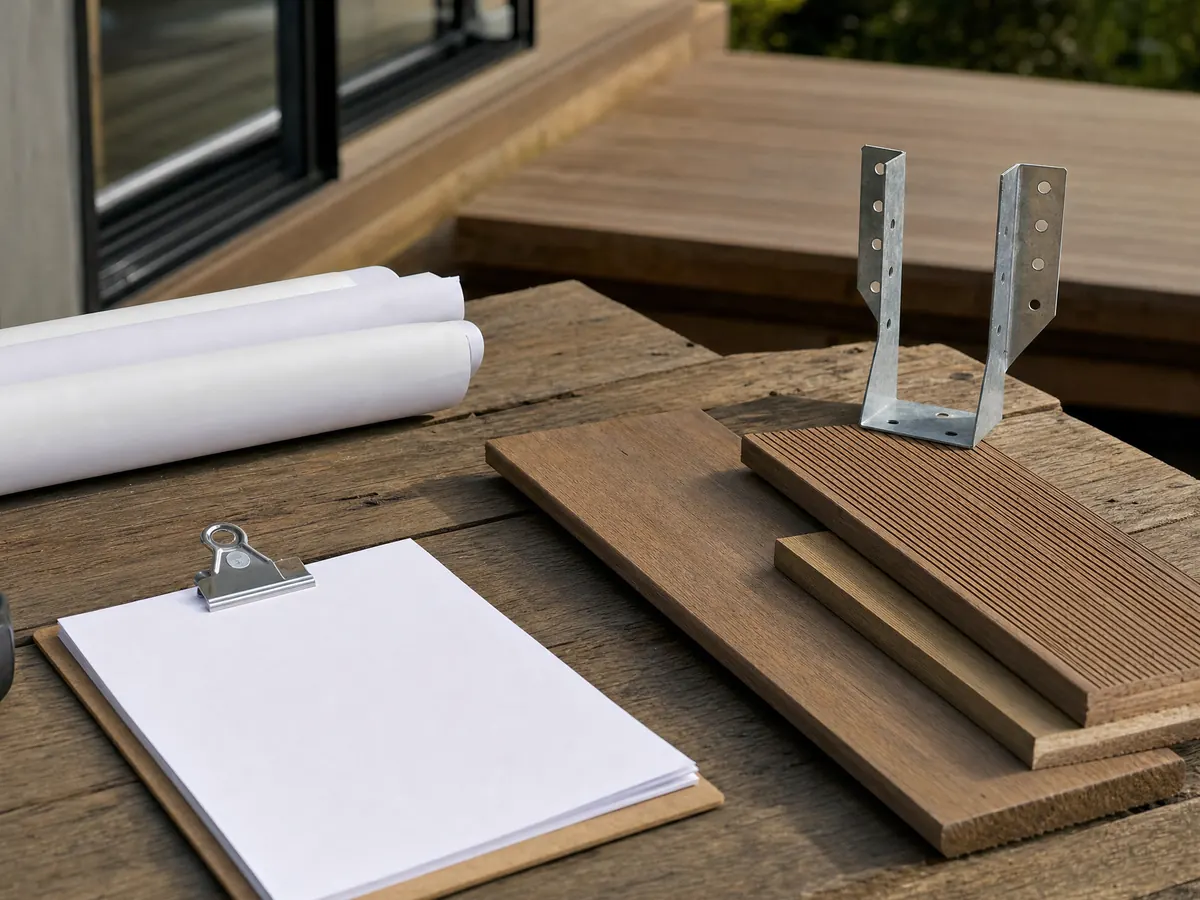
How do 105 degree summers and desert sun change what an Indio deck is made of?
Heat and sun are the weather, and frost is not. NOAA's 1991 to 2020 normals for Indio Fire Station put July highs at 105.8 F, nights at 82.5 F in July and August, about 118 days a year at or above 100 F and only about 1 day with a low at or below 32 F. Rain totals 2.92 inches. A deck here never sees freeze and thaw, but its boards, fasteners and finish take months of direct sun.
We found no Indio source on how hot particular boards get underfoot, so ask each manufacturer for its surface-temperature data and set a sample in the sun before you choose a color. The same goes for how a board expands in a 100 degree day. Gaps and fastener spacing come from the maker's installation sheet, and the subcontractor should be able to show it.
Fire is a separate question. Indio adopts the 2025 California Wildland-Urban Interface Code in Article 93A and says the stricter of that code and the Riverside County Fire Code applies. The General Plan says the city is not in a wildfire severity zone, but the 2025 recommended maps were not opened for Indio, so ask the Fire Marshal before assuming ember-resistant decking is or is not required.
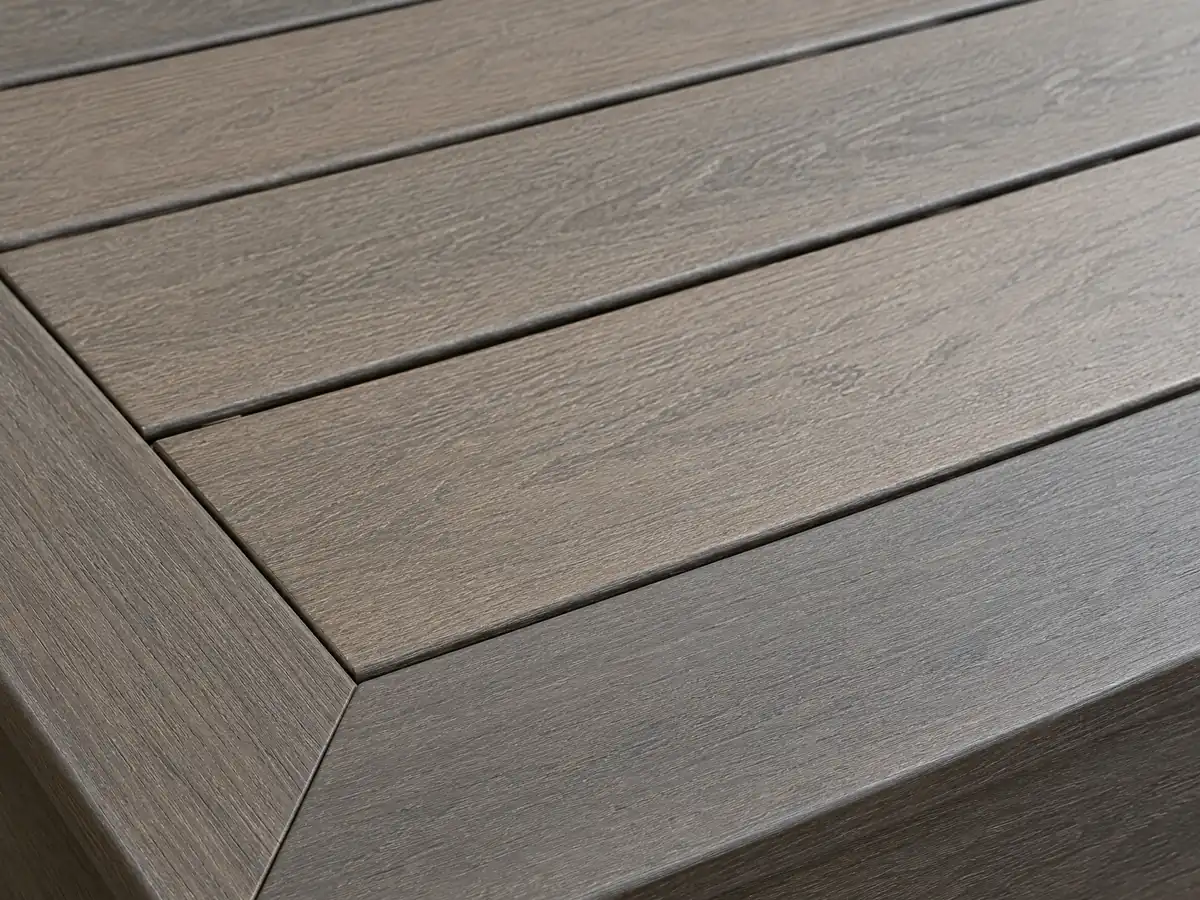
Do you need a permit to build a deck in Indio?
Treat it as yes until the City says otherwise. The Building & Safety FAQ says any structure that is erected, enlarged, altered or improved needs a building permit before work starts, and none of the pages we could read lists a deck exemption. The model residential code exempts a deck of 200 square feet or less, not over 30 inches above grade, not attached to the house and not serving the exit door, but Indio amends its exemption list and we could not open the amended text.
The City publishes a Balcony & Deck Standards handout on its online forms page. It is a scanned image we could not read, so we quote nothing from it. Zoning clearance is required for any structure that needs a building permit and runs inside plan check, and plans are submitted online through the CSS portal with three copies of drawings unless the counter says two will do.
Engineering changes the drawings. When a design needs engineering, each sheet carries a licensed engineer's or architect's stamp and wet signature, and the City's plan-check handout asks for a site plan, foundation and framing plans and elevations at least 18 by 24 inches. Starting early costs more: Indio adds an investigation fee equal to the permit fee when work begins without a permit.
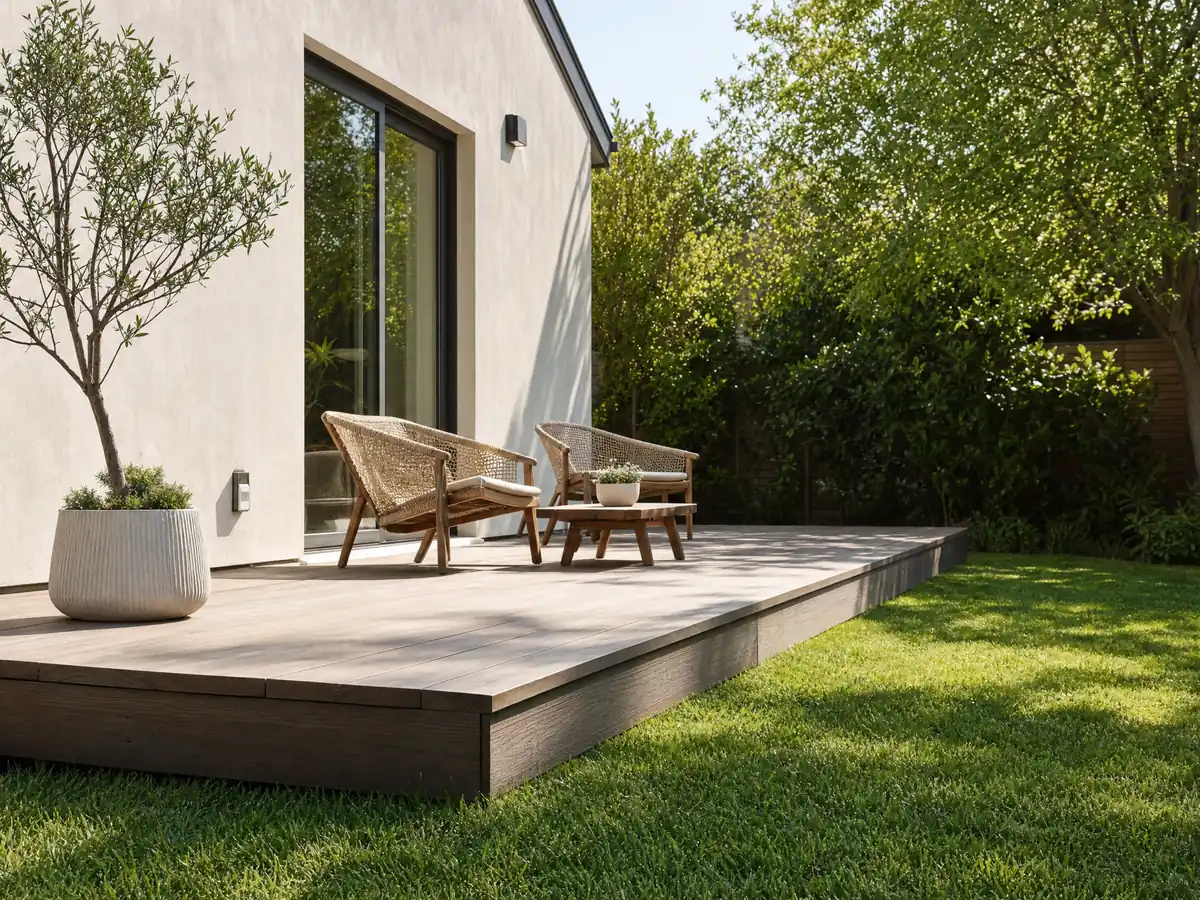
What do Indio's pool setbacks, barrier alarms and patio cover rules mean for a deck?
Pool water keeps its distance. Municipal Code 3.02.05 keeps pool and spa water out of the front setback unless the Director approves, 10 feet from the street-side line, and 5 feet from interior side and rear lines and from the dwelling. Equipment may not sit within 3 feet of a side or rear line unless it is in a soundproof enclosure. The City's FAQ adds that any door forming part of a pool barrier needs an alarm that sounds for at least 30 seconds within 7 seconds of opening, at 85 decibels or more at 10 feet. The FAQ quotes the 2019 residential code, so check the current text.
Covers have a handout. The City's Patio Plan, a conventional design dated April 1, 2020, gives footings of 18 or 24 inches square by 12 inches deep, a 6 foot 8 inch minimum clearance, a 24 inch maximum overhang and ledger bolting rules, and says the design is not meant to be enclosed. Detached covers and gazebos follow Table 3.02.04-1: 3 feet from rear and interior side lines and a 14 foot height limit, or 5 feet and up to 20 feet when over 80 square feet and over 14 feet tall.
Fire features need approval. Municipal Code 93.10 makes outdoor burning unlawful except in an area approved by Building and Safety, the Fire Marshal and Planning, and any outdoor fire appliance needs a product-safety listing such as UL.
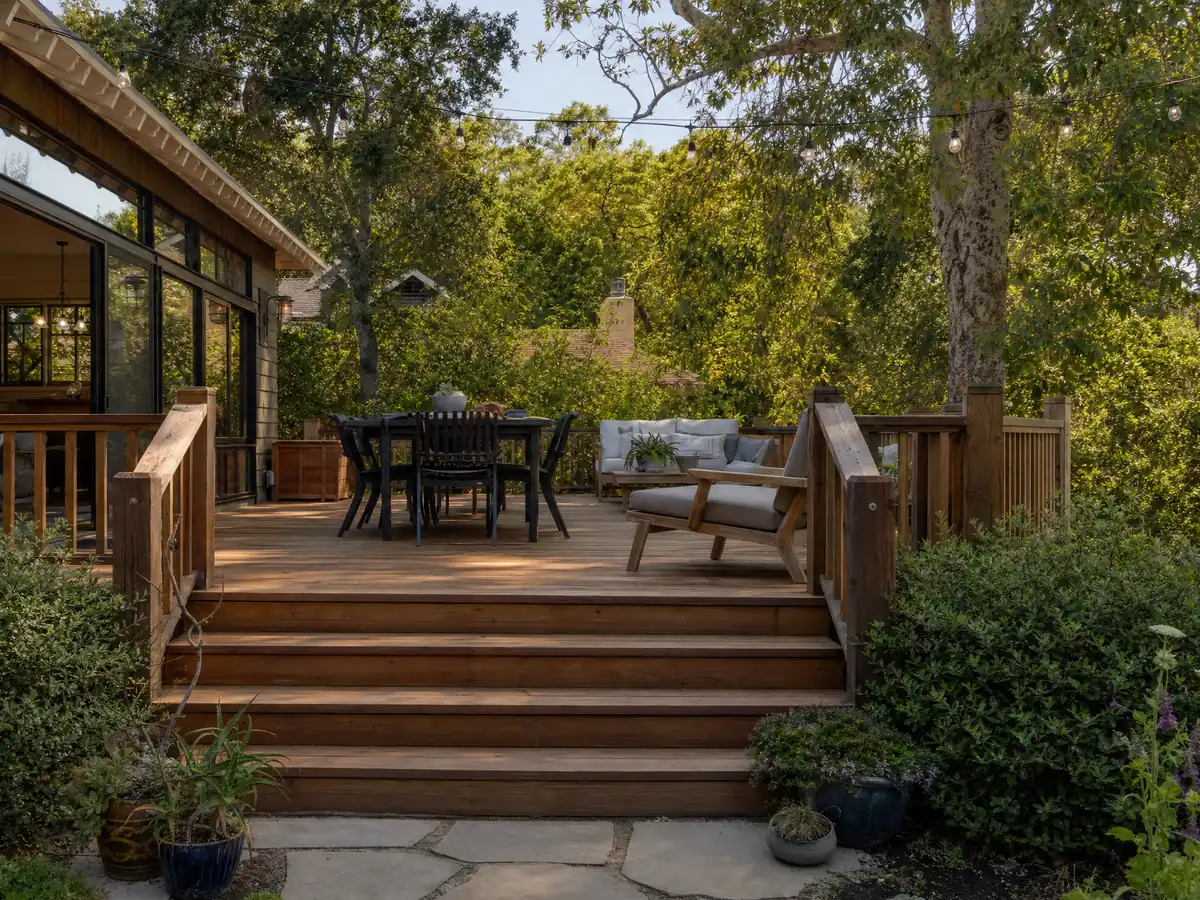
How high must an Indio deck railing be, and what holds the deck to the house?
Forty-two inches is the model-code answer. The 2022 California Residential Code requires a guard where the walking surface is more than 30 inches above grade within 36 inches of the edge, sets the minimum height at 42 inches and requires openings that stop a 4 inch sphere. Indio enforces the 2025 edition on a 2024 base, so confirm the numbers with the counter before cutting posts.
The ledger carries the risk. The 2022 text asks for at least a 2 by 8 pressure-treated ledger, no concentrated loads from beams on it, no attachment to stone or masonry veneer, hot-dipped galvanized or stainless fasteners and flashing. Lateral hold-downs are two 1,500 pound devices within 24 inches of each end of the deck, or four 750 pound devices. Read that as a checklist for the subcontractor, not a design.
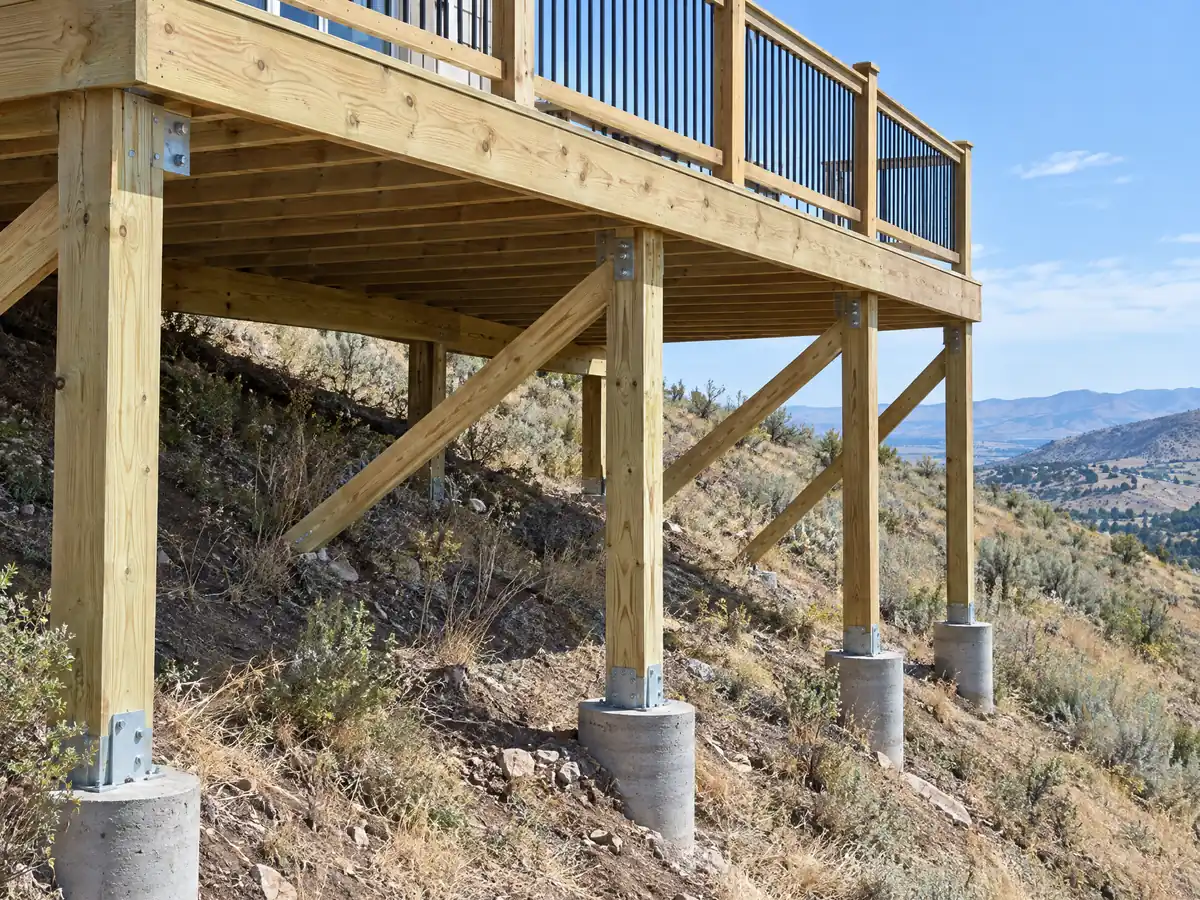
The ground is the other half. The General Plan describes the southern San Andreas fault, liquefaction where groundwater is shallower than 30 feet and historic subsidence from groundwater pumping, and Indio requires soil reports with grading and foundation designs. Ask whether footings sit on native soil or fill, and who signs off on it.
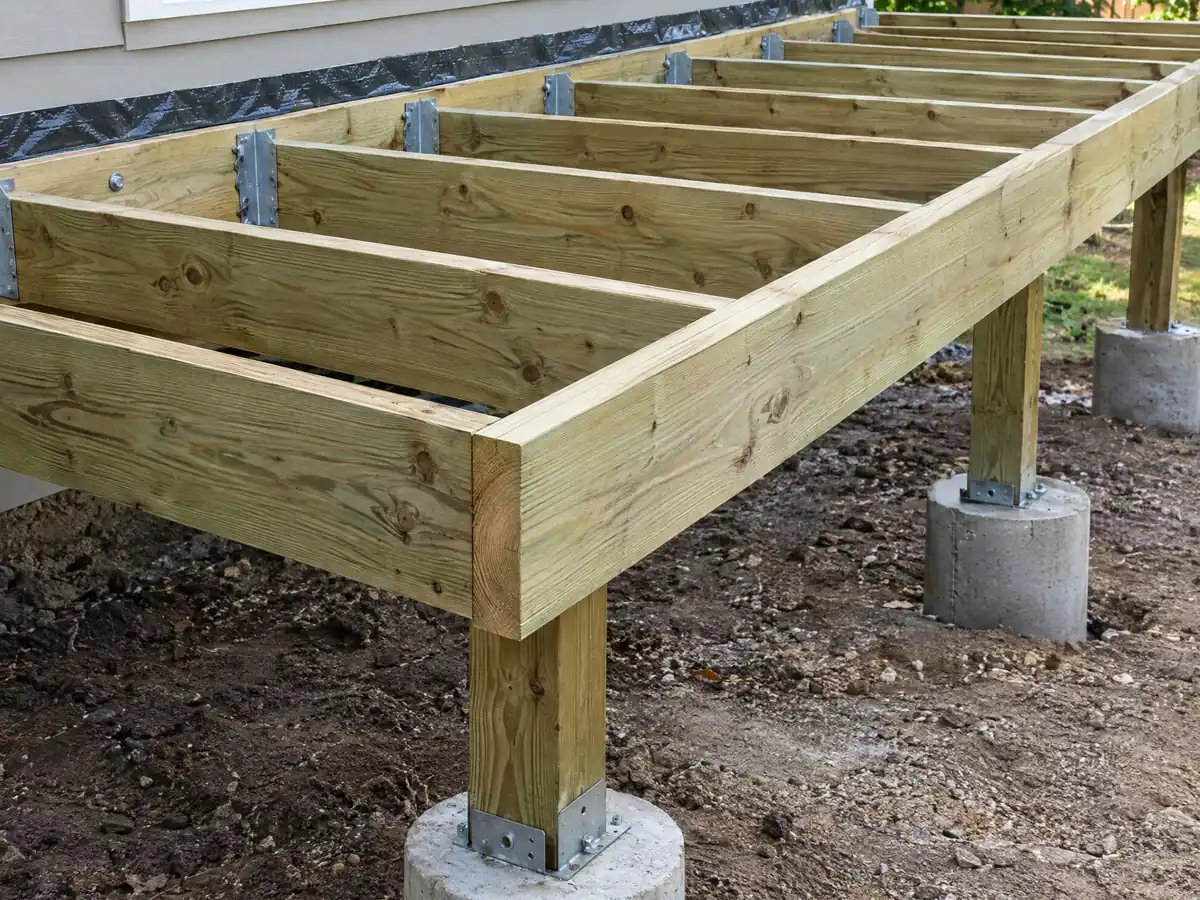
Can you do deck repair in Indio without a permit, and what about termites?
Replacing a few boards is upkeep in most people's minds, but we found no Indio sentence that says so. The City's FAQ lists repair among the work that needs a permit and exempts some items, and the exemption list was not readable. Send Building & Safety photos before the crew arrives, and treat new framing, a new ledger, stairs or a taller guard as permit work.
Termites are the usual reason a repair grows. The University of California's IPM program says drywood termites are most common in southern California and infest decks and fences, and that fixing moisture and sealing exterior wood helps. Probe posts and the ledger area before pricing, and have the proposal say what happens if framing is found rotten.
Skipping a permit has a price. The FAQ warns that unpermitted work can complicate a home sale and can invalidate fire and homeowner's insurance, and the investigation fee equals the permit fee whether or not a permit is later issued. Ask the City how a permit after the fact would work before spending more.
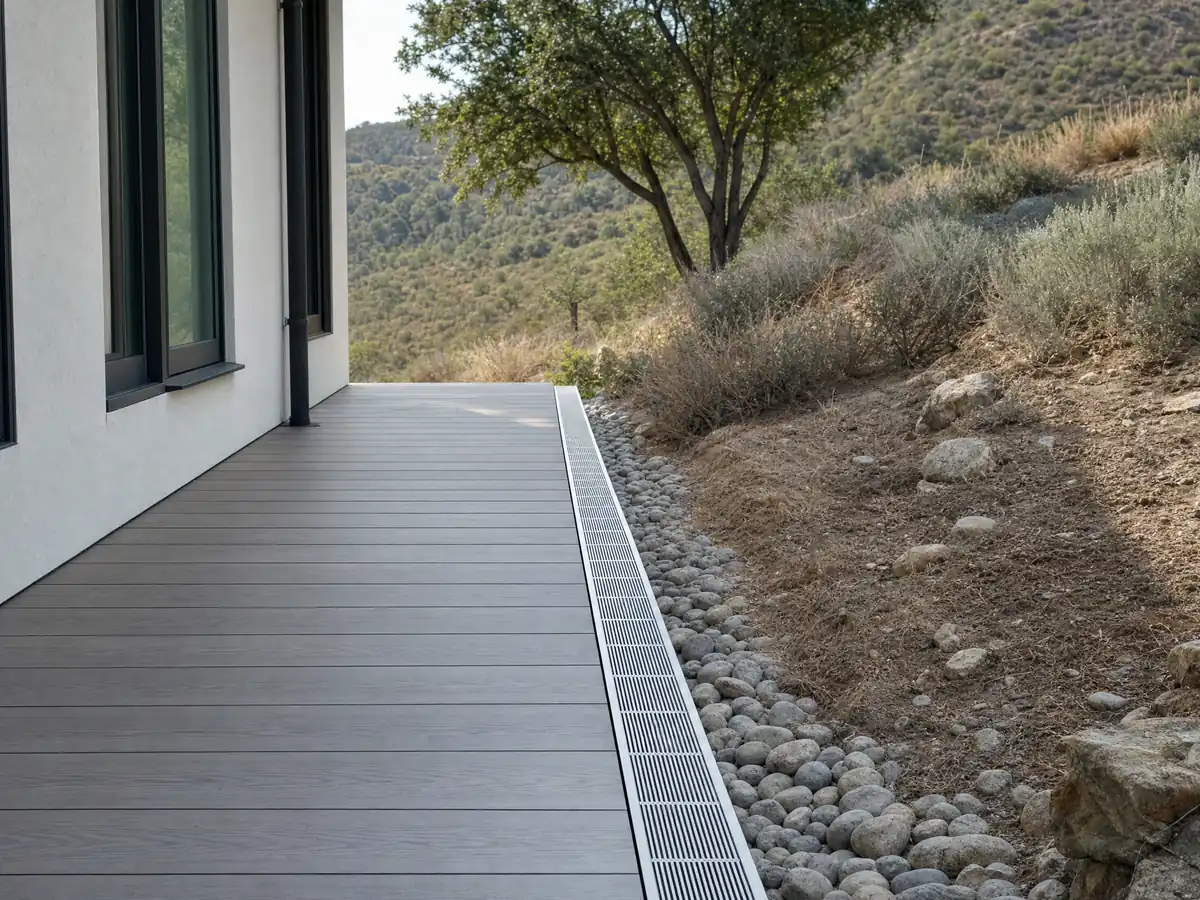
What changes for a deck at a mobile home, in a gated community or in a flood zone?
Mobile homes follow state rules. The Census counts 4,690 of them, about 12.9 percent of Indio's units, and the state HCD guide the City hosts says awnings, garages and porches attached to a mobile home need an HCD alteration permit and that the structure is a separate permit from the local enforcement agency. We did not research park rules or which parks are age-restricted, so ask the park office as well.
Gated communities add an approval. HOA architectural review is separate from the City permit, and the City pages do not describe it, so get the association's written approval before the permit is filed. Terra Lago is one gated community inside the city.
A flood zone adds a permit. Any construction or other development in a FEMA special flood hazard area needs a floodplain development permit from the Director of Public Works before work starts. Parts of the city sit in the 100-year floodplain, mainly northwest of I-10 and the Whitewater River, and Tropical Storm Hilary in August 2023 showed how fast water moves here.
What does a deck builder charge in Indio, wood or composite?
No Indio deck price study turned up, so the anchor is Remodeling magazine's 2025 Cost vs. Value report for Los Angeles. Its 16 by 20 foot deck with a bench, planter, three steps and full railing costs $18,419 in treated wood, recouping 99.6 percent at resale, and $26,872 in composite, recouping 73.9 percent. Angi's Los Angeles page, updated October 28, 2025, shows a $13,570 average within a $6,335 to $20,871 range. Resale numbers belong to Los Angeles.
Our planning figures are $45 to $75 a square foot for pressure-treated wood and $65 to $110 for composite, which puts a 16 by 20 deck near $14,500 to $24,000 in wood or $21,000 to $35,000 in composite before permits and engineering. No independent source prices hillside or engineered decks, so those wait for a visit. Government data from May 2025 show Los Angeles area carpenters at a mean $37.79 an hour.
A deck is framing under CSLB's C-5 class, and a deposit may not exceed $1,000 or 10 percent of the price under Business and Professions Code 7159.5. Our license check guide shows how to read a record.
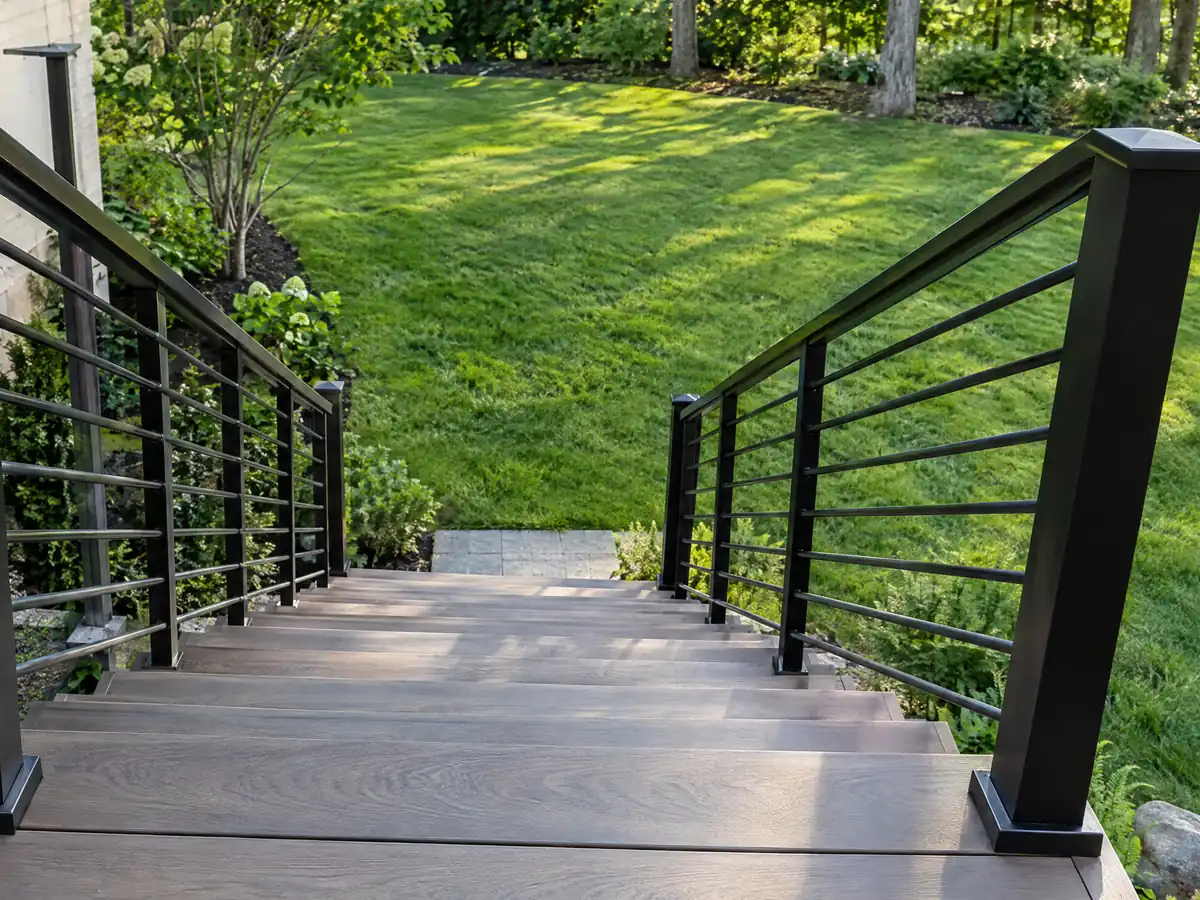
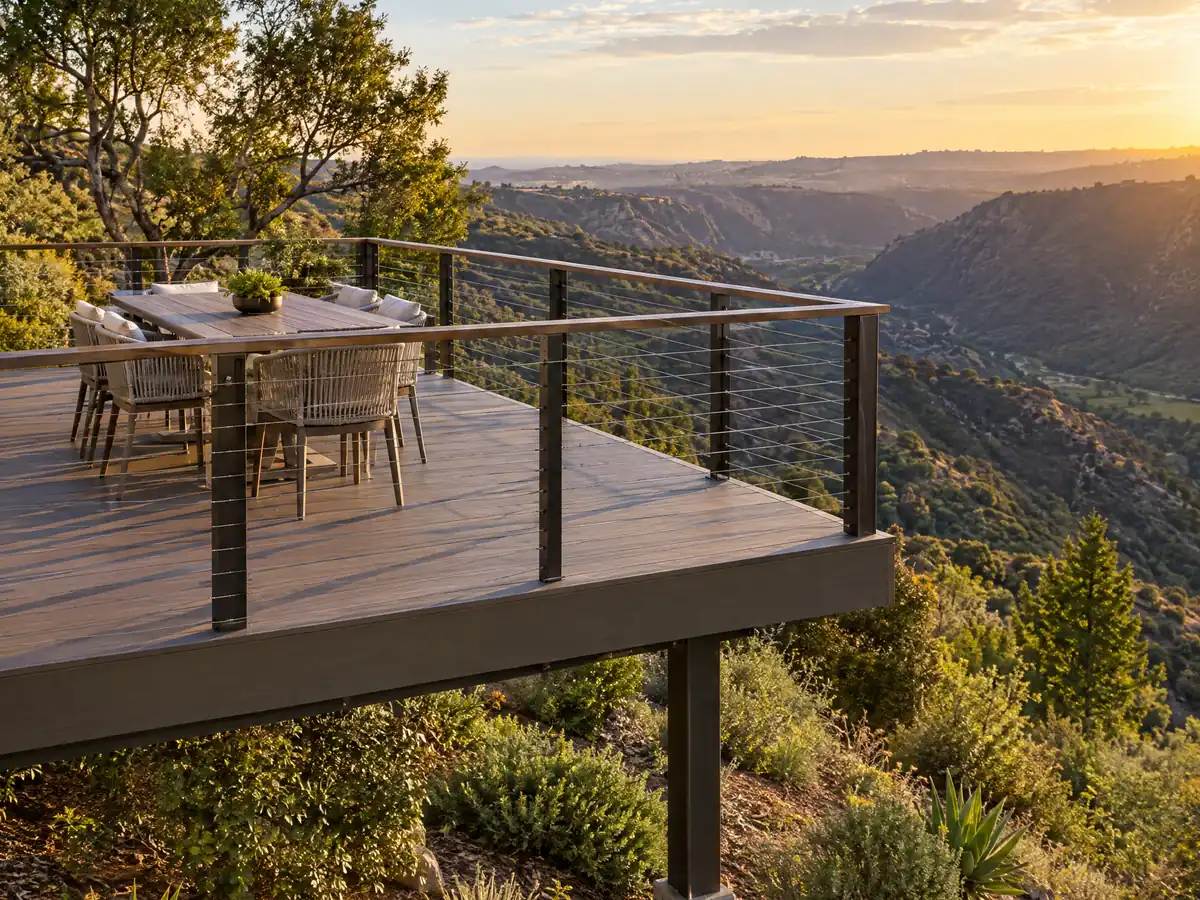
Deck photos from Indio and nearby communities
Framing, footings, guards and finished decks from Indio and the Coachella Valley towns around it, shown at the steps where the rules matter. Tap any photo to enlarge it.
What decks costs around Indio
Dollar figures here are Los Angeles planning ranges from our decks page, not an Indio bid, and permits, engineering, soils work and any fire review belong on separate proposal lines. The same property may need flooring in Indio or concrete in Indio. Inland neighbors to compare are decks in Riverside, decks in Moreno Valley and decks in Menifee, with decks in Los Angeles as the big-city benchmark. The subcontractor guide explains who frames and who finishes.
| What it covers | Typical range |
|---|---|
| Pressure-treated wood deck | $45 to $75 per square foot |
| Composite deck | $65 to $110 per square foot |
| 16 by 20 foot wood deck (320 sq ft) | About $14,500 to $24,000 |
| 16 by 20 foot composite deck | About $21,000 to $35,000 |
| Hillside, second-story, rooftop and ipe decks | Priced by site visit |
| Permits and engineering | Quoted as separate lines |
Indio deck questions, answered
Do you need a permit to build a deck in Indio?
Treat it as yes until the City says otherwise. Indio's FAQ requires a permit for any structure that is built, altered or improved, and none of the pages we could read lists a deck exemption. Call Building & Safety at (760) 391-4110 with the height, size and whether the deck touches the house.
How much would a 20x20 deck cost?
At our Los Angeles planning figures, 400 square feet runs about $18,000 to $30,000 in pressure-treated wood and $26,000 to $44,000 in composite, before permits and engineering. No Indio study turned up. Height, stairs, railing length and soil work move the price more than the square footage does.
How much should a 16x20 deck cost?
Remodeling magazine's 2025 Cost vs. Value report prices a 16 by 20 deck with a bench, planter, three steps and railing at $18,419 in wood and $26,872 in composite for Los Angeles. Our planning range is $14,500 to $24,000 in wood. These are Los Angeles numbers, so an Indio proposal may differ.
Is it cheaper to build a wood deck or composite deck?
Wood costs less to build. Cost vs. Value's Los Angeles numbers are $18,419 for treated wood and $26,872 for composite. Composite avoids some upkeep, but we found no Indio source on how hot dark boards get in 105 degree sun, so ask each maker for surface-temperature data before choosing.
Is railing height 36 or 42 for decks?
Use 42 inches. That is the minimum guard height in the 2022 California Residential Code, along with openings small enough to stop a 4 inch sphere, and it applies where the walking surface is more than 30 inches above grade. Indio enforces the 2025 edition, so confirm the numbers with Building & Safety.
Does a 3 foot high deck need a railing?
Yes. The residential code requires a guard where the walking surface is more than 30 inches above grade within 36 inches of the edge, and 3 feet is 36 inches. The guard must be at least 42 inches tall in the 2022 text. Confirm the current edition and any stair rules with the City.
What happens if a deck is built without a permit?
Indio adds an investigation fee equal to the permit fee. The City's FAQ also warns that unpermitted work can complicate a home sale and can invalidate fire and homeowner's insurance. Ask Building & Safety how an after-the-fact permit would work before spending more.
Can I repair a deck in Indio without a permit?
Possibly for like-for-like boards, but we found no Indio sentence confirming it. The City's FAQ lists repair among work needing a permit, with unnamed exemptions. New framing, a ledger, stairs or a taller guard are permit work. Send photos to Building & Safety before the crew starts.
Do doors next to an Indio pool need alarms?
Yes when the door forms part of the pool barrier. The City's FAQ says such a door needs an alarm meeting UL 2017 that sounds for at least 30 seconds within 7 seconds of opening, at 85 decibels or more at 10 feet. The FAQ quotes the 2019 code, so check the current text.
What license does a deck builder need in Indio?
A deck builder needs a current California license, usually a general building license or the C-5 framing class, plus a City of Indio business license and workers' compensation details when a permit is pulled. Check the number on the CSLB site and ask each subcontractor for a license and certificate of insurance.
Tell us the height, the yard and whether there is a pool
Say how high the deck will sit, whether it touches the house, a pool or a block wall, and whether an HOA has to approve it. We bring the permit, soil and fire questions to the first visit.