
Fence Companyin Maywood, CA
A fence company in Maywood starts with the Municipal Code, which asks for a building permit for any fence or wall and an approved plot plan before building. Front yard fences are held to 36 to 48 inches depending on which City text applies, and the two texts conflict, so confirm the height with Planning first.
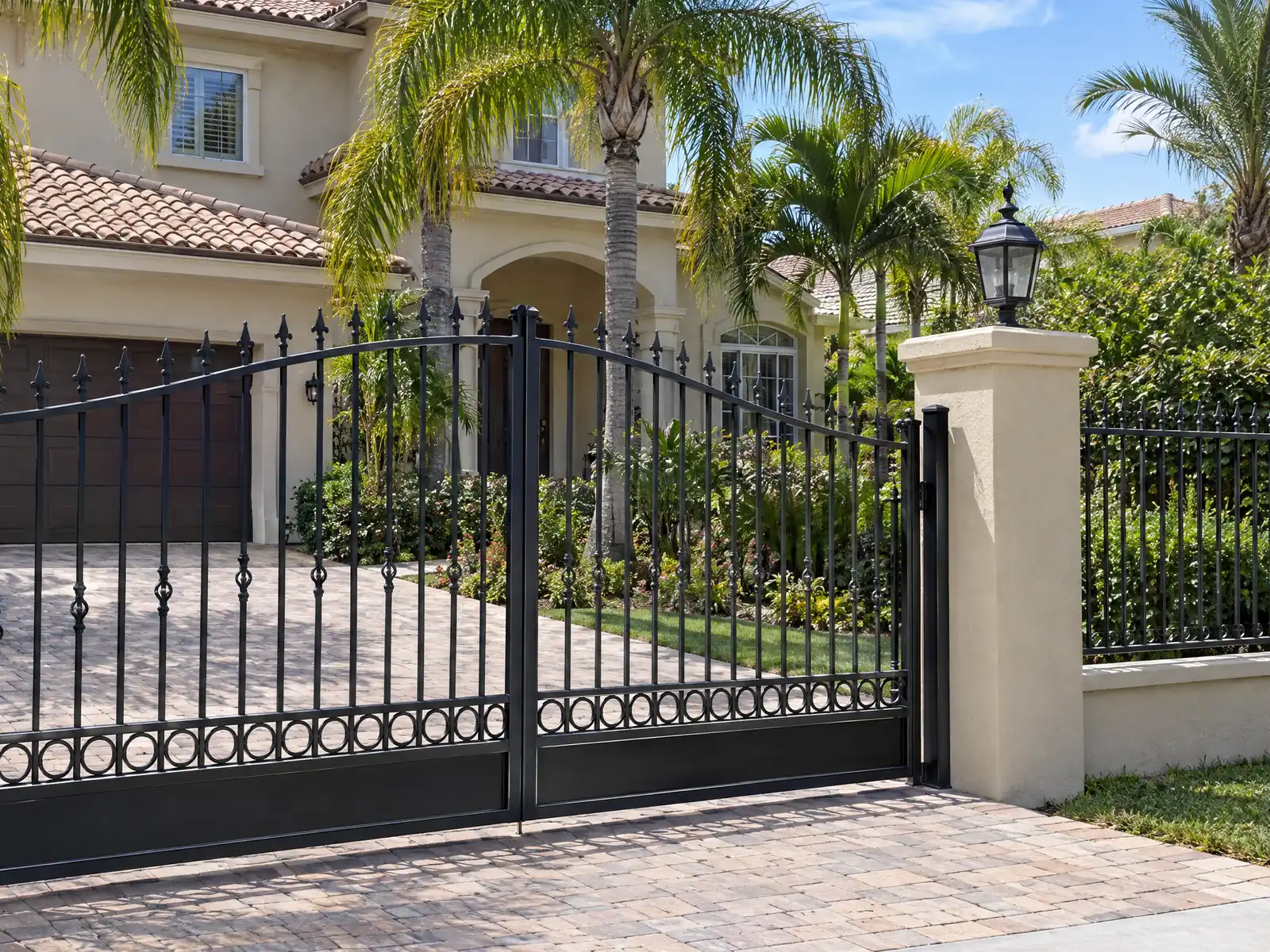
Maywood has no vacant land, so a fence here is a repair, a replacement or a lot line redrawn by a redevelopment. Of the city's 6,706 housing units, 3,647 are detached houses by the Census Bureau's 2024 five-year count, and the Housing Element says the structures being demolished average 70 years old. About 69.5 percent of occupied units are rented, so the person ordering a fence is often a landlord, and the same rules bind a rented lot and an owner-occupied one.
On a fence job, MDG Builders (CSLB #1040337) measures the lot, files the City paperwork and runs the schedule, and licensed subcontractors build it: a C-13 fencing contractor for wood and metal, and a masonry contractor for block. Our fencing page holds the sourced prices, the Maywood overview lists every trade we manage here, and the guides for Bell and Huntington Park show how nearby cities set their own limits.
What Maywood's Municipal Code and zoning text say about fences and walls
Where fencing permits come from in Maywood: City of Maywood Building and Planning Department, Building Division.
- Municipal Code 8-4.01 says no person may erect or construct any fence or wall in Maywood without first getting a building permit from the Building Official, and that repairs valued over $200 to any fence or wall also need a building permit. This is stricter than the state model list that exempts fences not over 7 feet high, so a short Maywood fence still needs a permit. Mirror text.
- Municipal Code 8-4.04 limits residential fences in a required front yard: chain link and other permitted types 48 inches, wrought iron only with no pilasters 48 inches, and fences with brick, stone or other approved pilasters 48 inches for the pilasters and 66 inches for the wrought iron between them. No residential fence may be built until the owner submits and the Building and Planning Department approves a plot plan showing design, height, spacing and placement.
- Municipal Code 8-4.03 allows fences and walls up to 8 feet in required side and rear yards of an interior lot, but solid fences and walls in residential side yards are limited to 6 feet, and fences in a required side or rear yard on the street side of a corner lot are limited to 6 feet. Section 8-4.09 limits any fence extending into setback spaces to 3 feet and an ornamental type, or 4 feet for ornamental open wire fence with steel or iron posts not over 2 inches in diameter, and bars vines on such wire fences.
- The 2009 Zoning Ordinance (section 4010.200) sets different numbers: solid fences and walls in a required front yard 36 inches, pilasters 48 inches, wrought iron with pilasters 66 inches, fences entirely of wrought iron 72 inches, chain link 48 inches, ornamental pickets no wider than 2 inches and spaced at least 4 inches apart, solid fences within 5 feet of an exterior side lot line 4 feet, and walls in required interior side or rear yards 6 feet. The Municipal Code says 48 inches for wrought iron only and 6 feet for corner street side yards, so the two texts disagree and Planning decides which controls on a given lot.
- Municipal Code 8-4.02 sets build standards: wood, chain link and post and slat fences need posts at least 24 inches into soil in concrete leaving 2 inches of concrete around the post, wood posts must be construction grade redwood or cedar, wrought iron, wood picket and chain link fences need a concrete mow strip at least 6 inches wide and 3.5 inches deep, chain link and wrought iron are the only recognized metal fencing, and solid board fences must be sheathed on the outside and painted or finished on both sides in a color that conforms to the surrounding neighborhood.
- Masonry fences and walls under Municipal Code 8-4.02 up to 6 feet need foundations at least 12 inches wide and 12 inches deep into firm undisturbed soil, walls over 6 feet must be engineered, pilasters may not exceed 24 inches in thickness or 10 feet in spacing and need footings at least 36 inches deep, and walls over 4 feet need horizontal bars at the bottom, mid height and top with all cells grouted. Mirror text.
- Municipal Code 8-4.08 prohibits barbed wire and razor ribbon on fences in any area zoned residential; they are allowed only in manufacturing zones at least 8 feet above grade, and in commercial zones only after a conditional use permit.
- Zoning Ordinance 4010.180 requires fences or walls to provide a gate or other suitable opening at least 30 inches wide for access to primary or accessory structures, and 4070.100 keeps the corner cut-off area at street intersections clear of anything that obstructs visibility, though open fences are allowed there if safety and visibility are maintained.
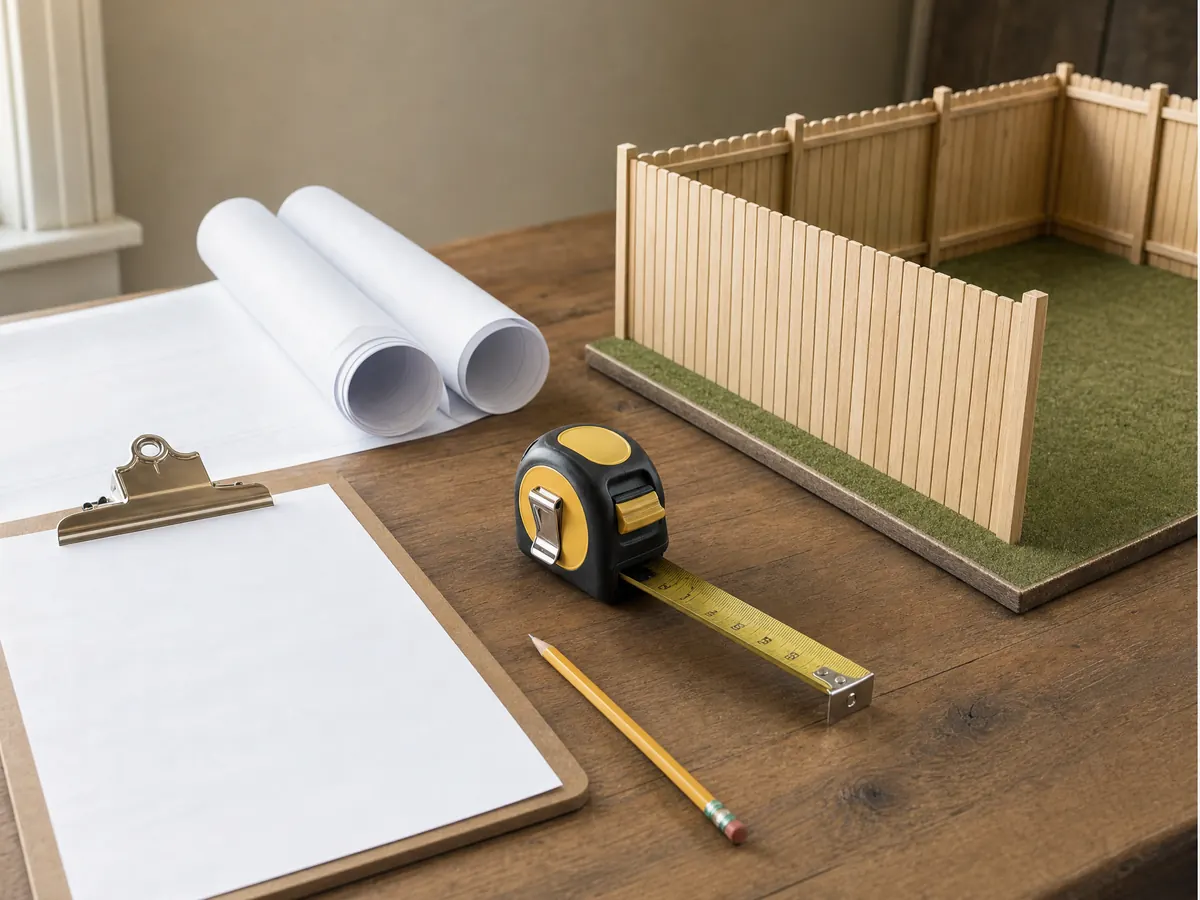
How tall can a fence be in a Maywood front yard, side yard or backyard?
Start with the Municipal Code, which the GoCodebook mirror carries as Chapter 8-4. The official eCode360 site returned an error to our tools, so confirm every number with the City. In a required front yard, section 8-4.04 caps chain link and other permitted types at 48 inches, caps wrought iron with no pilasters at 48 inches, and allows brick or stone pilasters at 48 inches with wrought iron up to 66 inches between them.
Behind the front yard the limits rise. Section 8-4.03 allows fences and walls up to 8 feet in required side and rear yards of an interior lot, but solid fences and walls in residential side yards stop at 6 feet, and so do fences in a side or rear yard on the street side of a corner lot. Section 8-4.09 holds anything that reaches into a setback space to 3 feet and an ornamental type, or 4 feet for ornamental open wire fence on steel or iron posts no thicker than 2 inches.
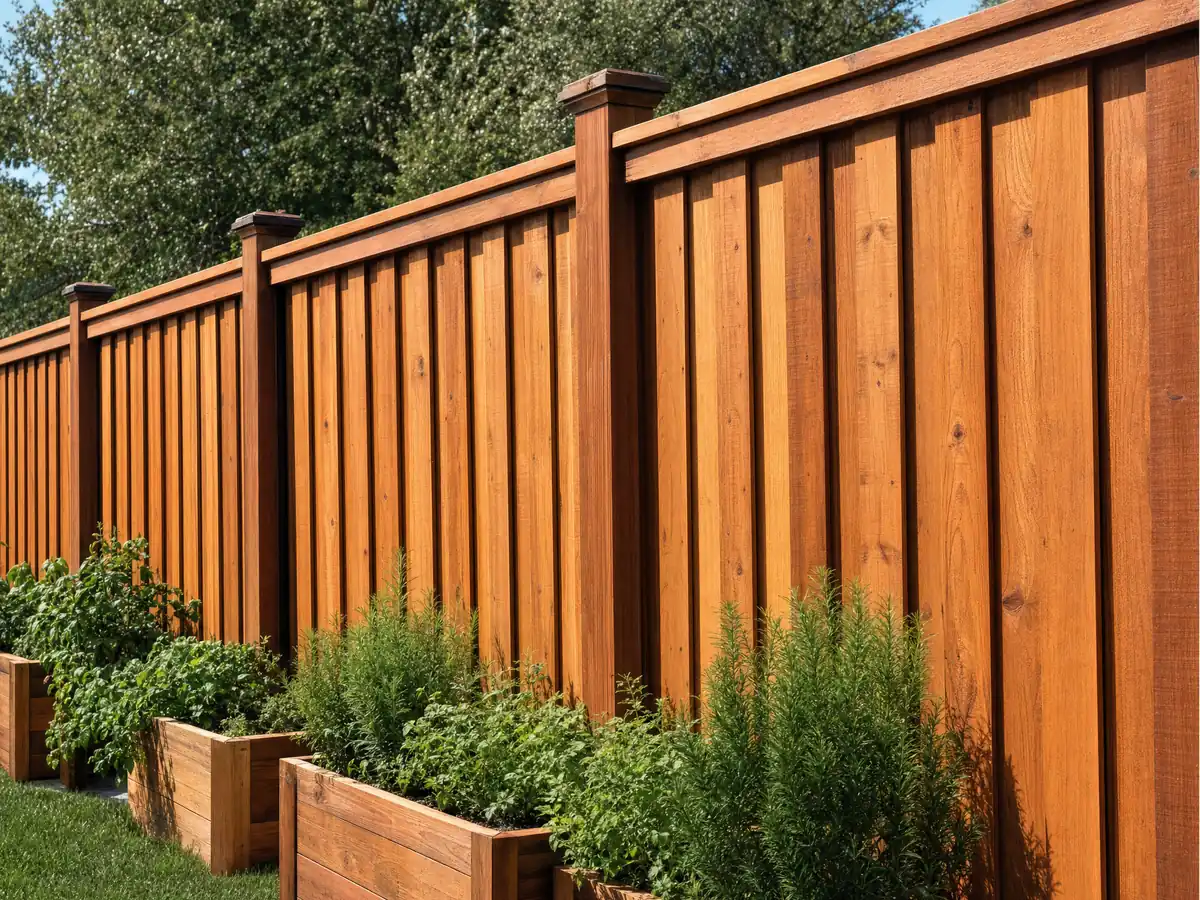
Why do two City texts give different fence heights in Maywood?
The City still posts a 2009 Zoning Ordinance, and its section 4010.200 gives other numbers. It puts solid fences and walls in a required front yard at 36 inches, pilasters at 48, wrought iron with pilasters at 66, fences entirely of wrought iron at 72 and chain link at 48, with ornamental pickets no wider than 2 inches and spaced at least 4 inches apart. A solid fence within 5 feet of an exterior side lot line is 4 feet, and walls in required interior side or rear yards are 6 feet.
The two texts disagree on wrought iron alone, 48 inches in the code against 72 in the zoning text, and on corner lots, 6 feet against 4 feet near the line. We cannot say which controls on a given lot, and Planning decides. Ask Planning to state the height in writing for your address, and get the plot plan approved before a post is set.
Do not order wrought iron for a front yard until Planning has named the height.
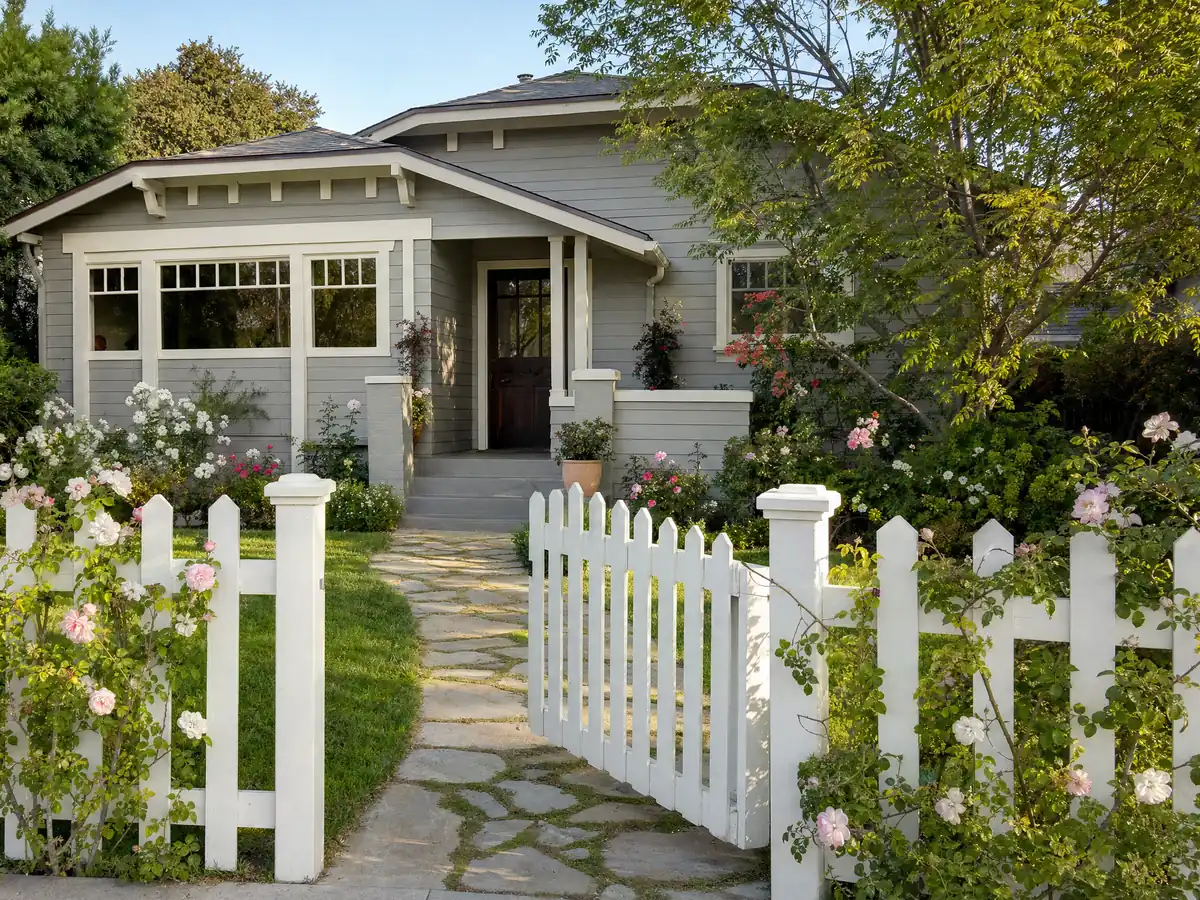
Does a short fence or a fence repair need a permit in Maywood?
Yes, if you read the Municipal Code literally. Section 8-4.01 says no one may erect a fence or wall without a building permit from the Building Official, and that repairs valued over $200 need one too. That is stricter than the state model list, which exempts fences not over 7 feet high. The Planning Division page lists fence permits among its administrative applications, and section 8-4.04 says no residential fence may be built until Building and Planning approve a plot plan showing design, height, spacing and placement.
The City's block wall handout points the other way: it says only a wall more than 3 feet above adjacent grade needs a building permit. We treat that as a conflict to confirm, not a loophole. A fence on the public right of way adds a step. Under Chapter 7-3, a fence under 6 feet is a minor encroachment approved by the City Engineer, a taller one is a major encroachment needing a City Council resolution, and no building permit issues until the encroachment permit does.
Ask the counter whether your fence is a permit item, and get the answer in writing before the fence company orders materials.
What are Maywood's rules for fence posts, materials and gates?
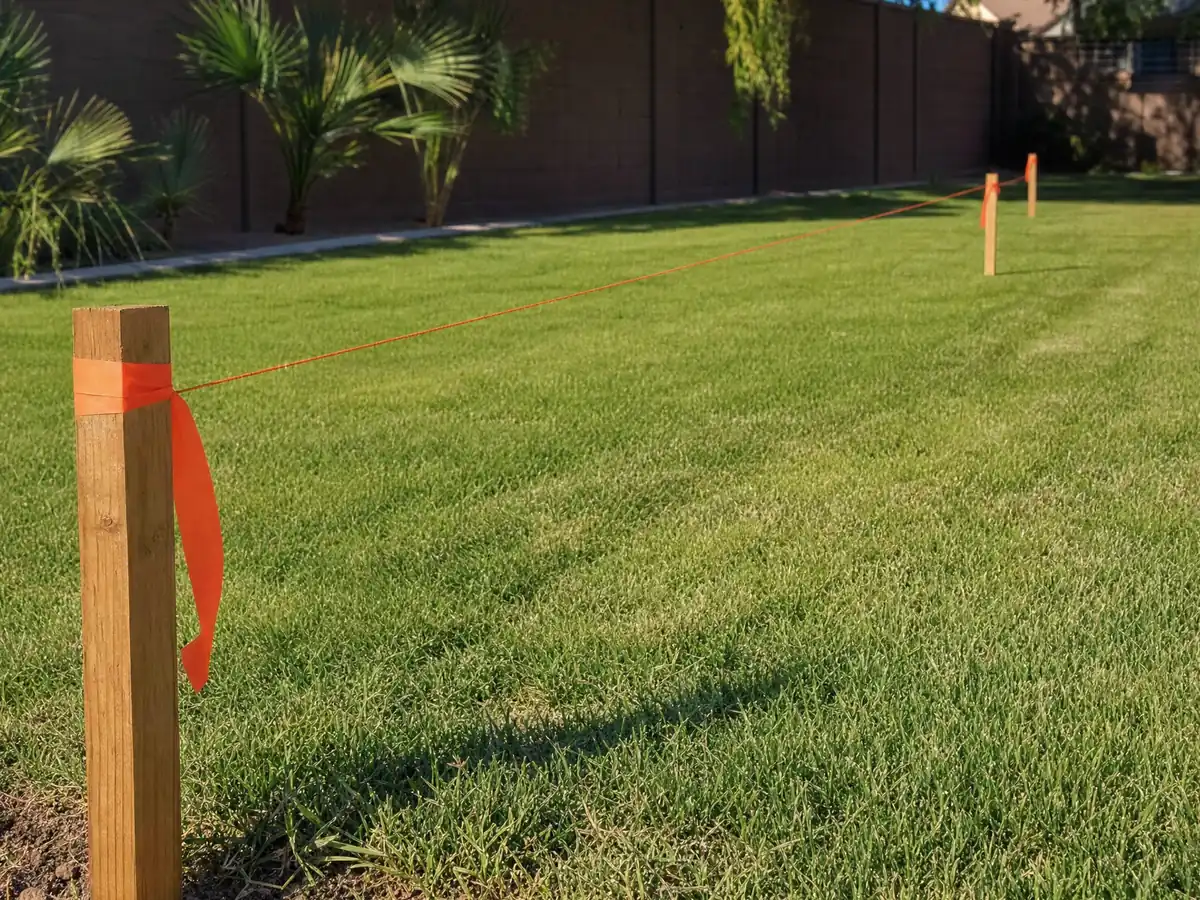
Section 8-4.02 sets the build. Wood, chain link and post and slat fences need posts at least 24 inches into soil, set in concrete with 2 inches of concrete around the post, and wood posts must be construction grade redwood or cedar. Wrought iron, wood picket and chain link fences need a concrete mow strip at least 6 inches wide and 3.5 inches deep. Chain link and wrought iron are the only metal fencing the code recognizes, and solid board fences must be sheathed on the outside and painted or finished on both sides in a color that conforms to the neighborhood.
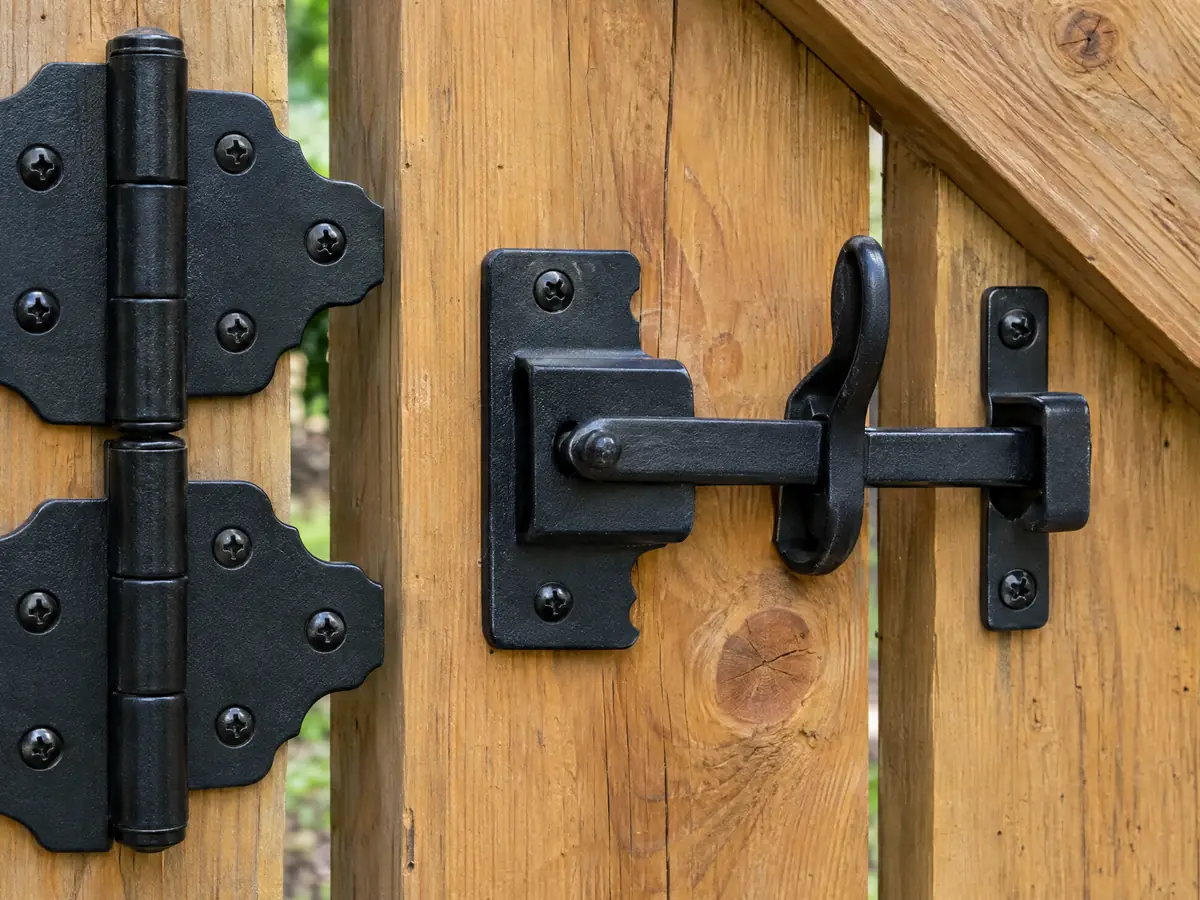
Section 8-4.08 prohibits barbed wire and razor ribbon in any residential zone. The 2009 zoning text asks for a gate or opening at least 30 inches wide so people can reach primary and accessory buildings, and keeps the corner cut-off area at street intersections clear of anything that blocks visibility, though open fences are allowed if safety and visibility are kept. Ask the fence company which of these lines its proposal follows.
What does a block wall need in Maywood, and who builds it?
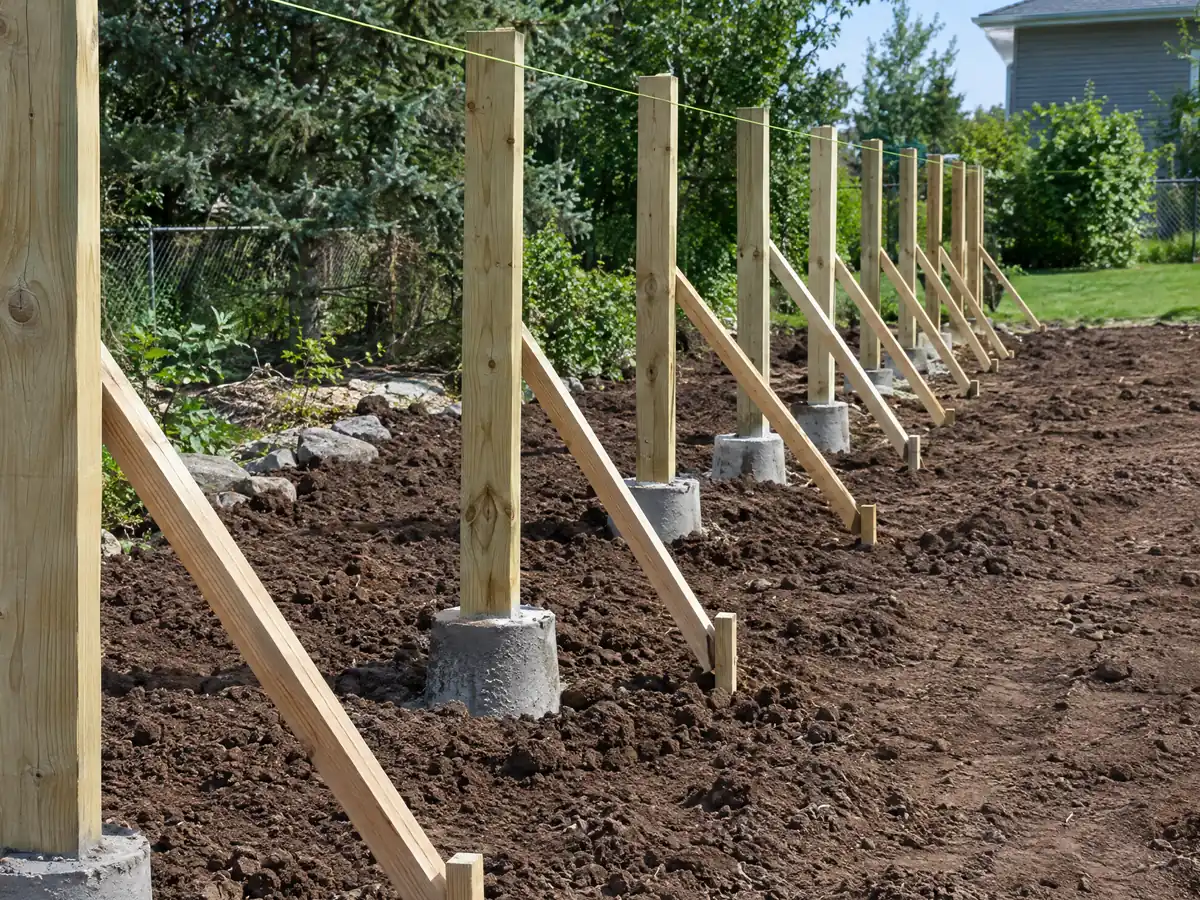
The City's Block Wall Standard (BLD-1110, revised July 14, 2024) gives a T-footing and an L-footing design with number 4 rebar and grouted cells. It assumes 110 mph ultimate wind speed, Exposure C, Seismic Design Category E, Site Class D and 1,500 pounds per square foot of soil bearing, and it requires three inspections: footing, with a clean trench and steel held 3 inches off the soil, rebar before grouting, and final after grouting but before any decorative cap.
It cannot serve as a retaining wall or be used where grade differs by more than 6 inches across the wall, and anything above 6 feet needs engineered details. The Municipal Code adds that masonry up to 6 feet needs foundations at least 12 inches wide and 12 deep in firm undisturbed soil, pilasters may be no thicker than 24 inches or farther apart than 10 feet and need footings 36 inches deep, and a wall over 4 feet needs horizontal bars at the bottom, middle and top with every cell grouted. CSLB's C-13 fencing class excludes masonry walls, so a masonry subcontractor builds block.
What fence does a Maywood swimming pool need?
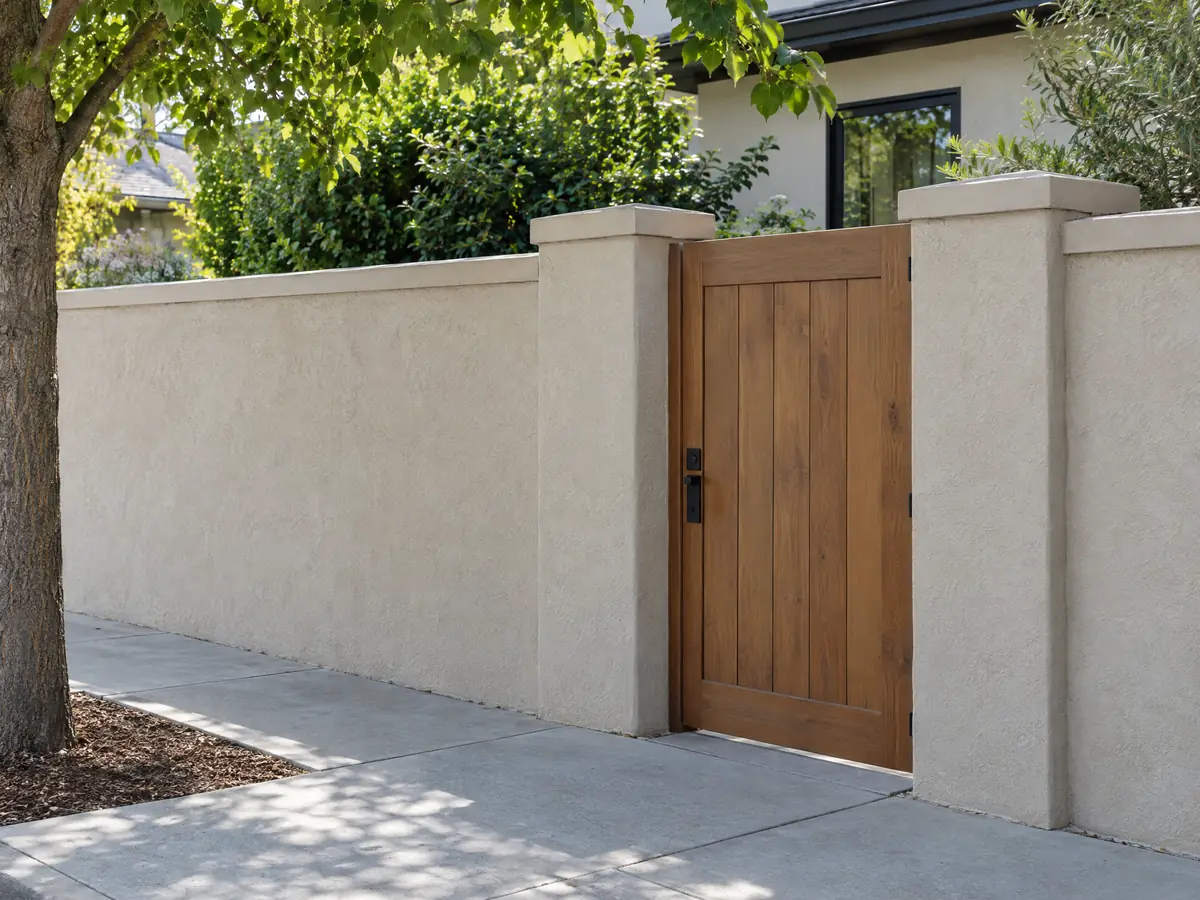
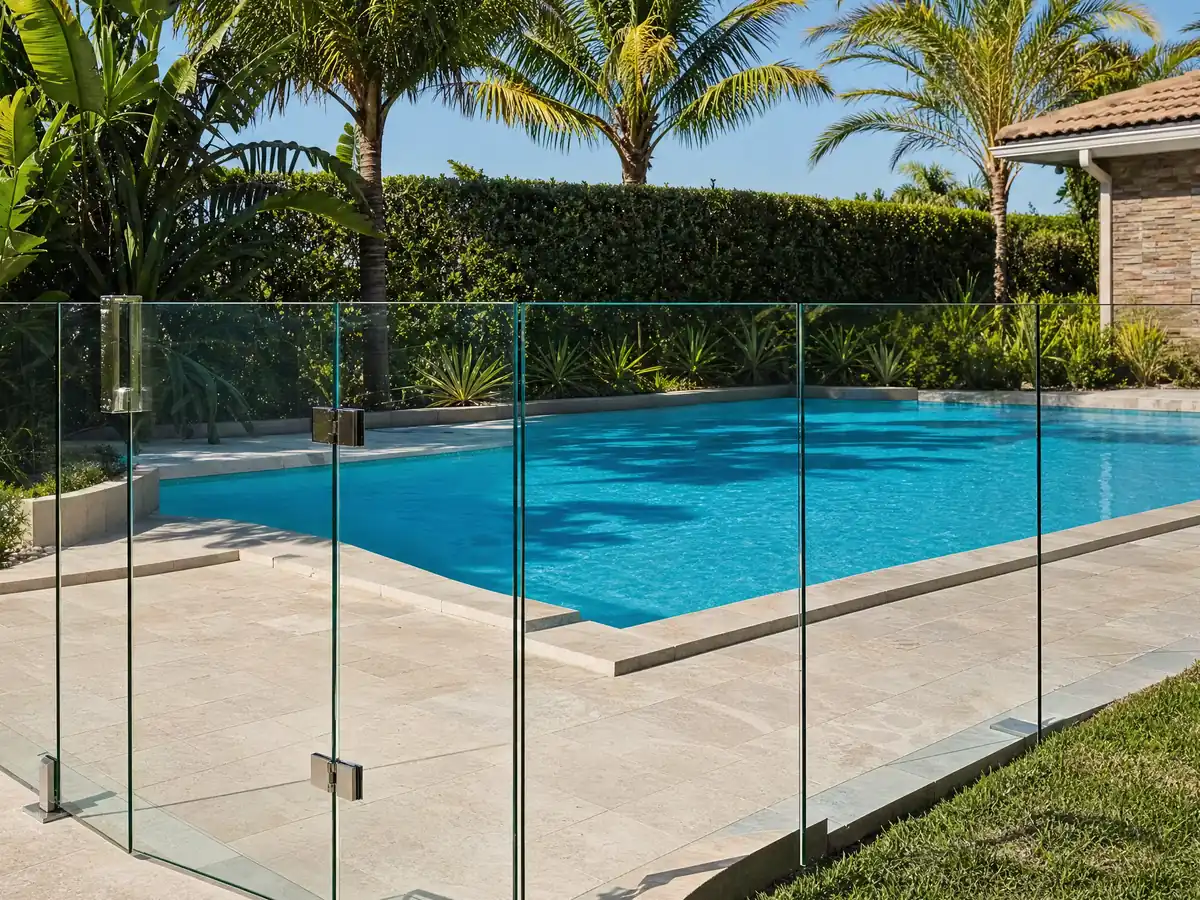
Municipal Code 8-10.01 requires a fence or solid structure at least 6 feet high around any pool or water body 18 inches or deeper. Openings may be no larger than 6 inches square except for doors and gates, and gates must self-close and self-latch with the latch at least 4 feet above grade. Plans must show compliance before a pool permit is issued, and zoning allows such pools only in side or rear yards. That text is from the mirror, so confirm it with the City.
State law adds drowning-prevention measures. California Health and Safety Code 115922 requires at least two of seven features when a permit is issued for a new or remodeled pool, and the enclosure must meet section 115923, which we did not read. A pool barrier is a separate design from a property line fence, so plan the barrier, gate hardware and latch height together.
How much does fence installation cost in Maywood, and who pays for a shared fence?
We found no Maywood price survey, so the figures come from Los Angeles sources. Angi's Los Angeles page, updated August 4, 2026, shows $15 to $60 per linear foot and $2,100 to $2,350 for 100 feet, and HomeGuide, Thumbtack and Fixr overlap it. A federal wage survey puts the Los Angeles area fence erector at a mean $28.00 an hour. Our working ranges are about $25 to $55 per foot installed for a 6 foot wood or vinyl privacy fence, $12 to $30 for chain link, which Maywood still recognizes, and $35 to $85 for aluminum or ornamental iron. A 100 foot backyard run lands near $2,500 to $5,500. Block walls have no independent price source, so we print none.
For a boundary fence, California Civil Code 841 presumes adjoining owners share the cost equally and asks for 30 days' written notice before one incurs it, and the presumption can be rebutted. Since January 1, 2025 the unlicensed work limit is $1,000, and CSLB says it does not apply when a permit is needed, which the code's permit rule suggests covers every Maywood fence. Our license checking guide shows the lookup.
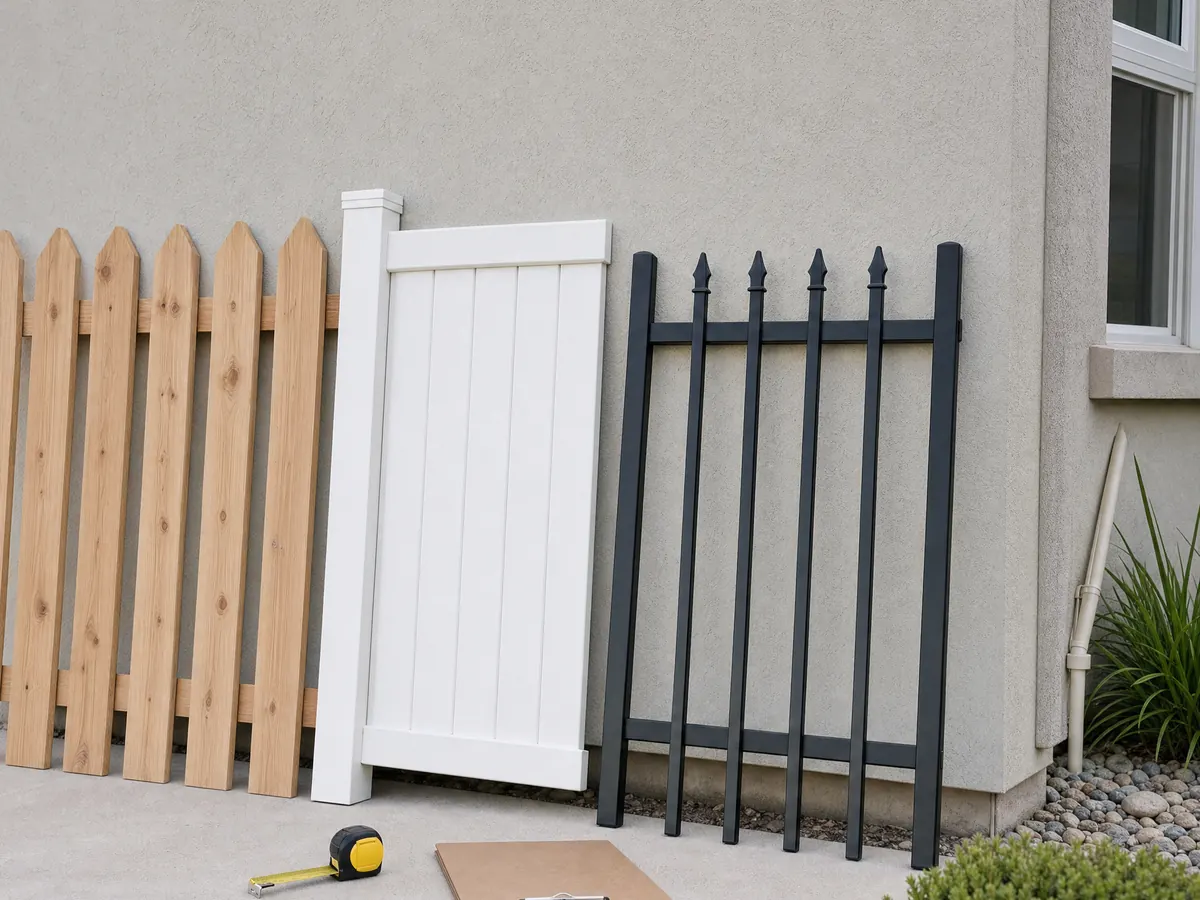
Fence photos from Maywood and nearby communities
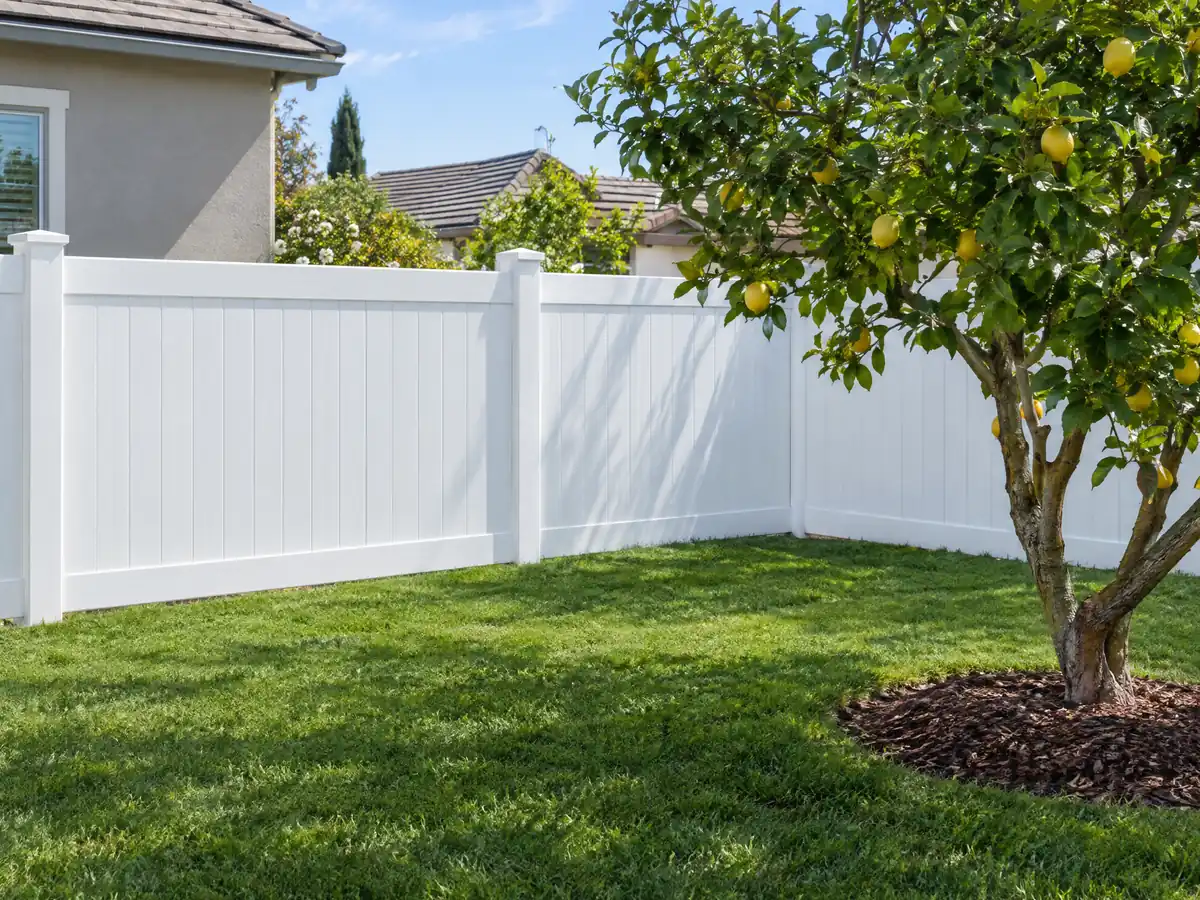
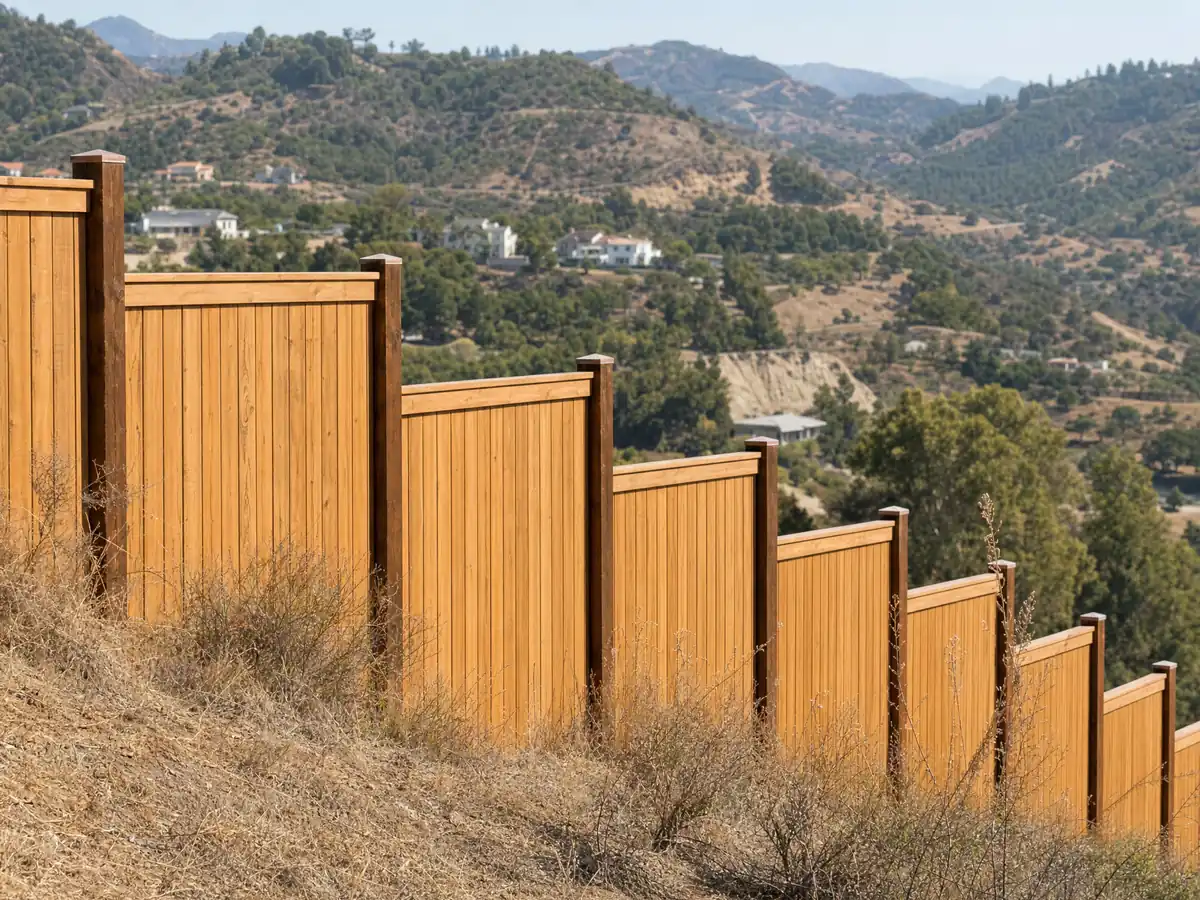
Seven fencing scenes tied to Maywood blocks and to nearby places such as Bell, Huntington Park and Cudahy, from open iron fronts and block walls to cedar backyard runs and pool barriers.
Where these Maywood fence figures come from
Every fence price and its source sit in the table on our fencing price page, and how general contractors use subcontractors shows who builds what. A new fence often goes up with other work, and Maywood's rules for that work are on the roofing page, the painting page and the kitchen remodeling page. To see how a hillside city sets fence limits, compare the guides for Glendale and Pasadena.
| What it covers | Typical range |
|---|---|
| Wood or vinyl privacy fence, 6 feet | $25 to $55 per linear foot |
| Chain-link | $12 to $30 per linear foot |
| Aluminum or ornamental iron | $35 to $85 per linear foot |
| Typical 100-foot backyard run | $2,500 to $5,500 total |
| Block walls, horizontal slat fences, gates and openers, hillside lots | Set by the written proposal |
Maywood fence questions, answered
How much does it cost to have 100 feet of fence installed?
Roughly $2,500 to $5,500 for 100 feet of 6 foot wood or vinyl privacy fence, based on our Los Angeles blend of Angi, HomeGuide, Thumbtack and Fixr numbers. Angi's own Los Angeles page shows $2,100 to $2,350 for the same run. Gates, tear-out of an old fence, slopes and block walls move the figure, so a written proposal is the real price.
Do I need a permit to build a fence?
Yes in Maywood, if you follow Municipal Code 8-4.01, which asks for a building permit for any fence or wall and for repairs valued over $200. The City's block wall handout says only walls over 3 feet need one, so the texts conflict. Ask Building and Planning to confirm in writing, and expect a plot plan to be approved first.
Can I put up a 7 foot fence?
Possibly in a rear yard. Section 8-4.03 allows up to 8 feet in side and rear yards of an interior lot, but solid side yard fences stop at 6 feet, as do fences on the street side of a corner lot. The 2009 zoning text limits walls in interior side or rear yards to 6 feet, so the texts conflict and Planning decides.
Can I put a privacy fence in my front yard?
Not a tall solid one. Municipal Code 8-4.04 caps chain link and wrought iron at 48 inches in a required front yard, and the 2009 zoning text puts solid fences and walls at 36 inches. Pilasters reach 48 inches with wrought iron up to 66 inches between them. Ask Planning which number applies, and get a plot plan approved first.
Does my neighbor have to pay for half the fence in California?
Often in part, but not automatically. Civil Code 841 presumes adjoining owners share equally the cost of a boundary fence that benefits both, and an owner who plans to build should give 30 days' written notice. The presumption can be rebutted, so agree on the cost with the neighbor and put it in writing.
What happens if I don't get a permit for a fence?
Under Municipal Code 8-1.03, starting work that needs a permit before it is issued brings an investigation fee, and paying it does not excuse compliance. Section 8-1.04 makes a code violation a misdemeanor punishable by up to $1,000, up to six months in jail, or both, with each day a separate offense. That text is from the GoCodebook mirror, so confirm it.
Is it cheaper to put up a wood fence or a vinyl one?
Wood is usually cheaper at the low end. On Angi's national fence page, updated October 13, 2026, wood is $10 to $45 a foot and vinyl $15 to $40, so the two ranges overlap. A Maywood solid board fence also has to be sheathed on the outside and finished on both sides in a neighborhood-conforming color, so budget the finish too.
What is the maximum height of a retaining wall without a permit?
The state model list exempts a retaining wall up to 4 feet from the bottom of the footing to the top, unless it holds a surcharge. Maywood's code asks for a permit for any fence or wall, and the City's block wall standard cannot serve as a retaining wall, so treat a retaining wall as a permit item and confirm with Building and Planning.
What are the new fence rules in California in 2026?
No statewide fence change for 2026 could be verified, so we name none. A Maywood fence is governed locally: Chapter 8-4 of the Municipal Code, the 2009 zoning text and the City's block wall standard. The City adopted the 2025 California codes by ordinance, while its handouts still cite the 2022 editions.
Get a fence plan for your Maywood lot
Tell us the street, whether the fence is front, side or rear and whether you are on a corner. We ask Planning about the height and the plot plan before we call you back.