
Fence Companyin Oceanside, CA
A fence company in Oceanside works to a 6 foot line: fences up to 6 feet need no building permit but must still meet zoning for height and location. Street front yards are capped at 42 inches, or 5 feet if the top is decorative and 75 percent open. Pool barriers must be 60 inches tall.
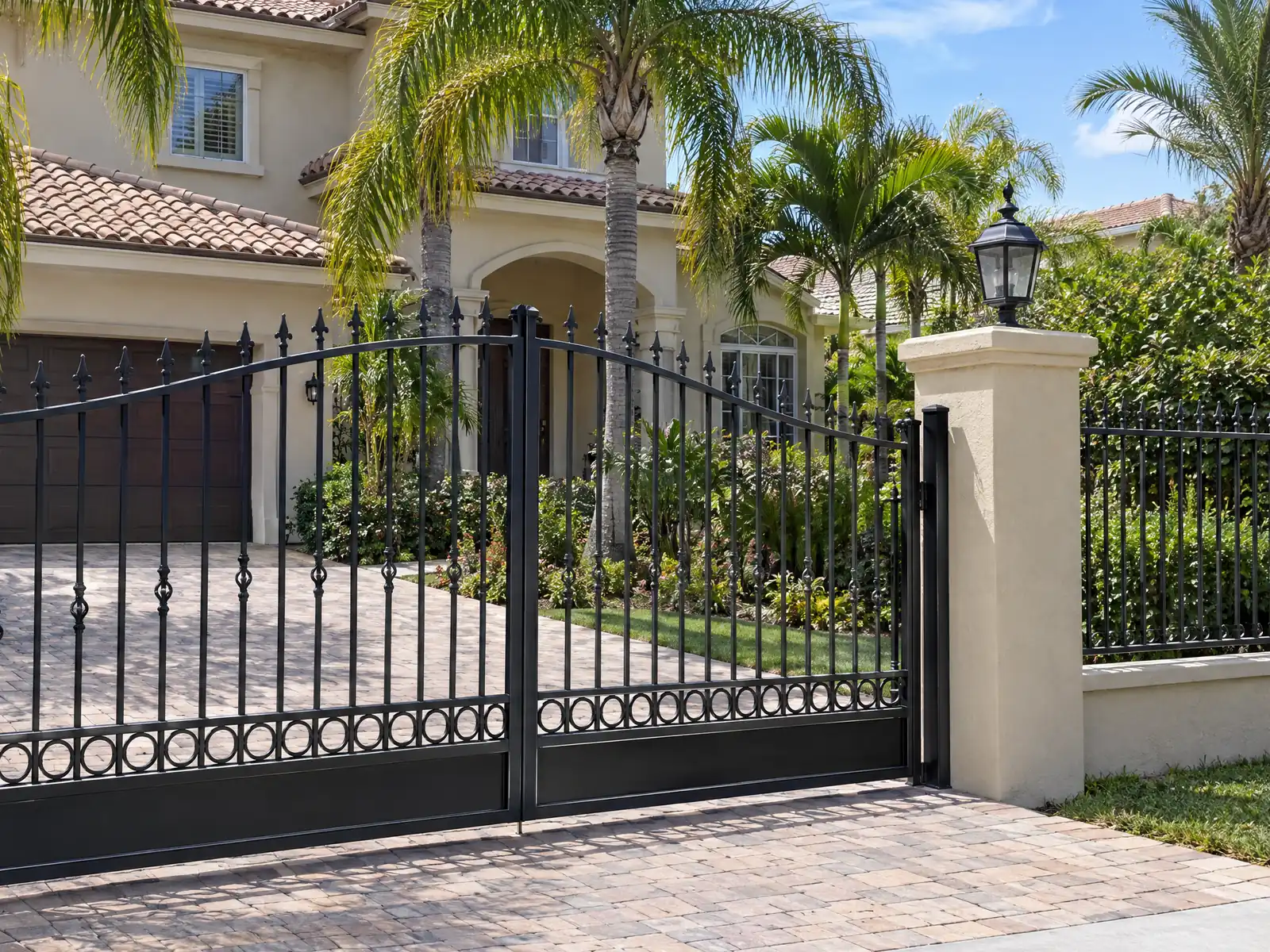
Oceanside's fence lines follow several different eras of lot-making. The City's history page puts the population at 3,508 in 1930 and 4,652 in 1940, then 12,888 in 1950 as Camp Pendleton filled the border with military families, and Wikipedia's census table, a third-party source, adds 128,398 by 1990. ACS 2024 one-year estimates count 68,129 housing units: 51.0 percent single-family detached (34,750), 11.4 percent attached, 10.8 percent in buildings of two to four units and 21.9 percent in buildings of five or more, with 39.6 percent of occupied homes rented. Owners hold homes with a median value of $820,800, plus or minus $21,754. A local-history blog, not an official source, says Henie Hills was subdivided from the early 1950s on land Sonja Henie bought around 1941 and that Fire Mountain was about 338 acres of citrus and avocado groves annexed in the 1960s, so fence lines run from old street grids to former grove land.
For fence work, MDG Builders (CSLB #1040337) is the general contractor that measures, sets the layout, handles any City step and schedules the work, and a licensed fence subcontractor builds it; block walls go to a masonry subcontractor because class C-13 excludes them. Ask us for the license number and certificate of insurance of each subcontractor on the job. Our fencing page carries the sourced price table, the Oceanside overview lists every trade we manage here, and the guides for Carlsbad and Escondido show how neighbors handle fences; Vista and San Marcos are close too, so call each counter first. The City's Building Division page covers permits, and Planning answers zoning at (760) 435-3520. The City's website blocked our tools, so we read its bulletins and zoning PDFs from Internet Archive copies dated April to September 2026, and Civil Code 841 from a FindLaw copy. The zoning PDFs mix in council revisions marked as in effect inland only, so confirm the current height text with Planning.
What Oceanside's bulletins, zoning articles and pool rules say about fences
Where fencing permits come from in Oceanside: City of Oceanside Development Services Department, Building Division.
- IB 116 (2025 codes) says fences not over 6 feet high do not need a building permit but must conform to Oceanside's zoning regulations for maximum height and location. Retaining walls not over 4 feet, measured from the bottom of the footing to the top of the wall, are exempt unless they support a surcharge or impound Class I, II or IIIA liquids. The 6 foot threshold is lower than the 7 foot figure in the state list that many other cities use.
- Oceanside's Zoning Ordinance residential districts (Article 10, footnote U) cap a fence or wall, including a retaining wall, at 6 feet, except in required front yards abutting a street where the maximum is 42 inches. A front yard fence may reach 5 feet if the material above 42 inches is decorative and 75 percent open, chain link or similar is not an acceptable decorative material above 42 inches, all fences and walls must meet the driveway visibility rules of Section 3115, and retaining walls over 4 feet must be planted and irrigated. Tennis court fencing may be 12 feet and cannot sit in a required yard. The PDF mixes in council revisions marked as in effect inland only, so confirm the current text with Planning.
- The coastal zone residential article (Article 10C, footnote K) repeats the same limits (6 feet, 42 inches in front yards abutting a street, 5 feet only if decorative and 75 percent open above 42 inches) and adds that side yard fencing on properties between the sea and the first coastal road must be designed to maintain views and must be at least 75 percent open. Coastal fence work may also trigger a Coastal Permit review.
- Zoning Ordinance Section 3040 (fences and walls, citywide) prohibits barbed wire, electrified fence and razor wire in any land use district unless a law or agency requires it, treats corner visibility under the City Engineer's Design and Processing Manual, and says fence materials must be generally used in the fencing industry (wood, block, stucco, wrought iron, steel, chain link, tennis mesh and slats are examples; wooden pallets, opaque plastic sheeting, broken concrete or asphalt and tires are not). Walls and fences must be treated with anti-graffiti material or comply with the City graffiti code, and must be kept straight, plumb and in good repair. Fences and walls may need a City permit in addition to a building permit.
- Under Oceanside's amended pool rules (IB 107, 2025 codes) a pool barrier must be at least 60 inches high, have no more than 2 inches of clearance under it, have openings that do not pass a 4 inch sphere, and have a surface without handholds or footholds. Gates must open away from the pool, self-close and self-latch with the latch at least 54 inches above the ground. The bulletin offers two options: fencing around the property using the house as part of the barrier, or fencing around the pool only.
- In Oceanside's Historic Overlay District 'alteration' includes changes to walls, fences, steps, plantings and landscape features that affect the visual qualities of a property, and a permit for alteration in an H district needs prior approval of the Historic Preservation Advisory Commission unless it is ordinary repair and maintenance.
- Under California Civil Code 841, adjoining owners are presumed to share equally in the reasonable cost of building, maintaining or replacing a dividing fence unless they agree otherwise in writing. An owner who plans such costs must give each affected neighbor 30 days' prior written notice with the presumption, the problem, the proposed fix, estimated costs, the cost-sharing proposal and the timeline. A neighbor can overcome that presumption by showing an equal split would be unjust.
- CSLB defines the C-13 Fencing classification as constructing, erecting, altering or repairing all types of fences, corrals, runs, railings, game court enclosures, guard rails, barriers, posts and gates, excluding masonry walls.
Sources for these rules
Does fence installation in Oceanside need a building permit?
Not up to 6 feet, but zoning still applies. The City's bulletin IB 116 says fences not over 6 feet high need no building permit and must still conform to Oceanside's zoning regulations for height and location. The state list many other cities follow uses 7 feet, so a 7 foot fence that is exempt in another city is not exempt here. Zoning Section 3040 adds that fences and walls may need a City permit in addition to a building permit.
Oceanside's Procedure A-1 closes the loop: staff do not tell callers by phone whether a job needs a permit, and an exemption counts only if it is approved in writing before work starts. A fence can be exempt from a building permit and still break the height rule, and a permitted fence cannot use the state's $1,000 unlicensed work limit, so have your fence company confirm both points in writing.
Ask the fence company to put the exemption or permit answer on the proposal.
How tall can a front yard fence be in Oceanside?
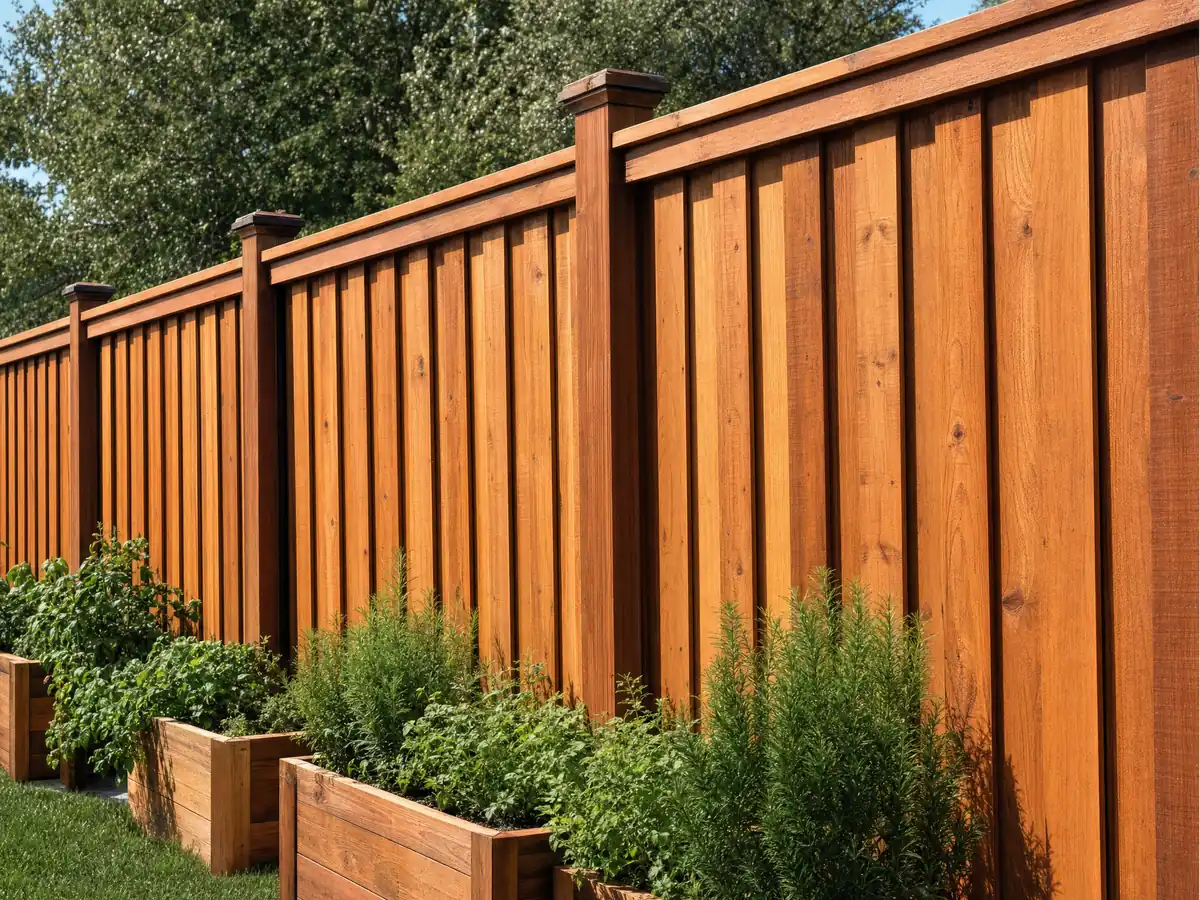
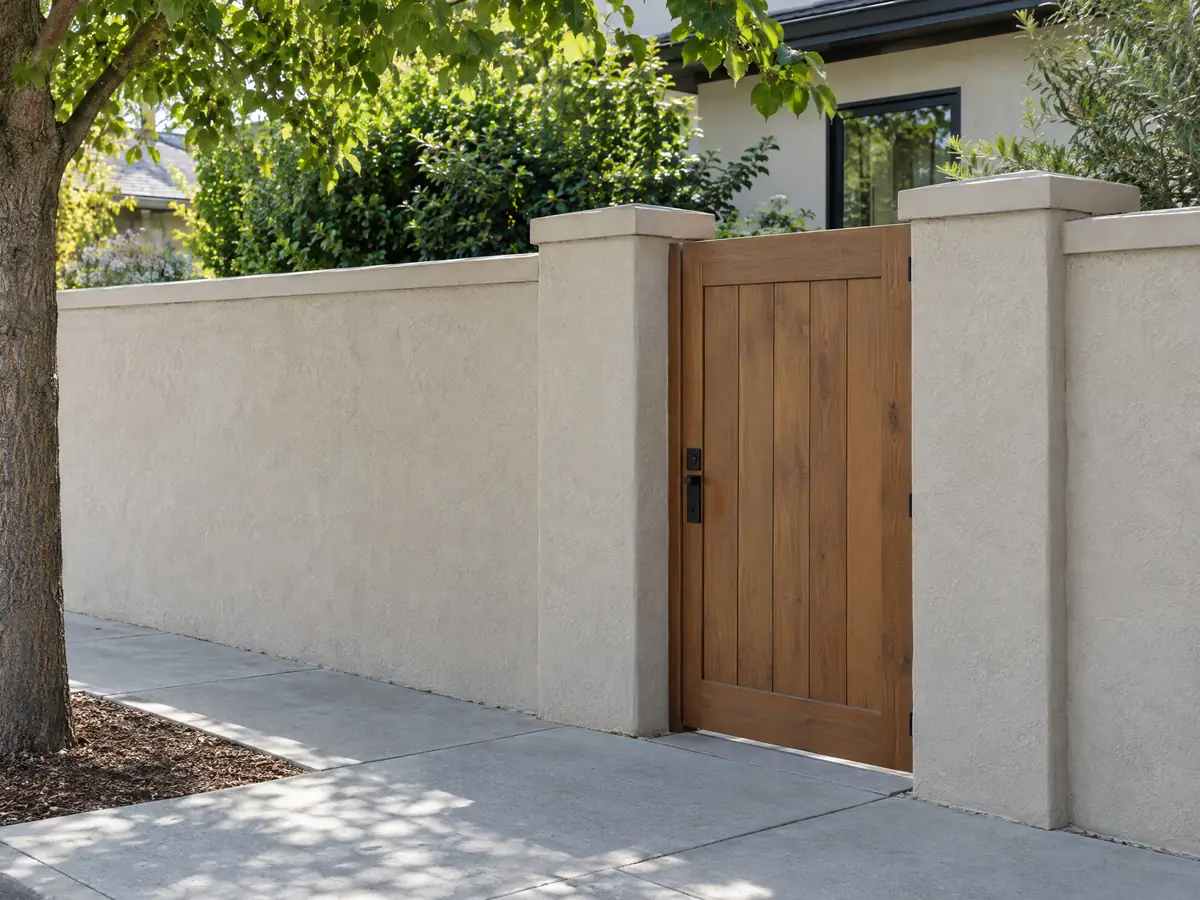
In a required front yard that faces a street, 42 inches. The residential zoning article caps every fence or wall at 6 feet, and that cap includes retaining walls, but a front yard abutting a street is held to 42 inches. A fence there may reach 5 feet only if everything above 42 inches is decorative and 75 percent open, and the article says chain link or similar material does not count as decorative above that line.
All fences and walls must also meet the driveway visibility rules of Zoning Section 3115, which is why a solid post beside a driveway can fail a plan even when the height is legal. On a lot with a front yard on two streets, ask Planning which yard line is the street front before the layout is staked.
- 42 inches in a street front yard
- 5 feet only if the part above 42 inches is decorative and 75 percent open
- 6 feet maximum elsewhere, retaining walls included
Ask Planning to confirm the front yard line on a corner lot in writing.
What fence materials, block walls and retaining walls does Oceanside allow?
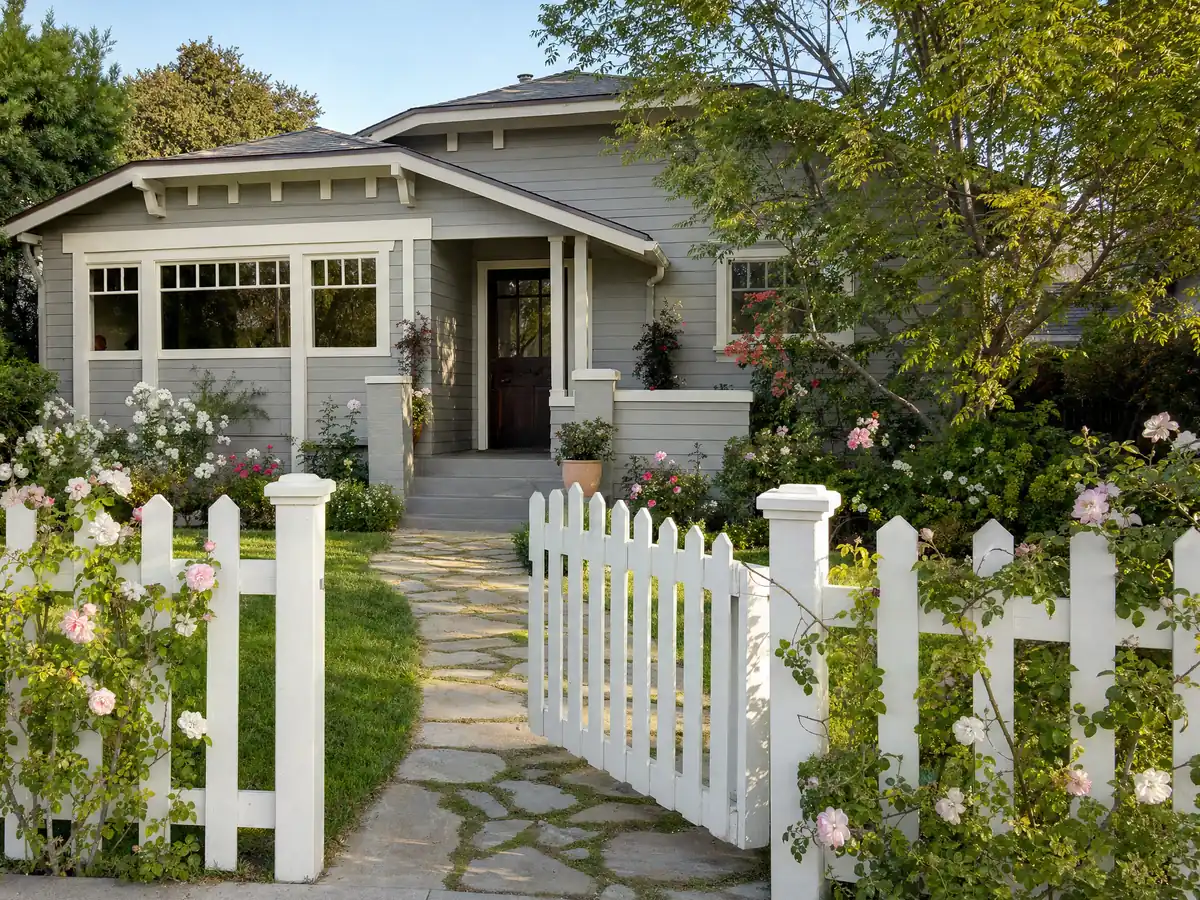
Section 3040 bans barbed wire, electrified fence and razor wire in every district unless a law or agency requires it, and says fence materials must be ones generally used in the fencing industry: wood, block, stucco, wrought iron, steel, chain link, tennis mesh and slats qualify, while wooden pallets, opaque plastic sheeting, broken concrete or asphalt and tires do not. Walls and fences must carry anti-graffiti treatment or comply with the City graffiti code, and they must stay straight, plumb and in good repair.
Retaining walls up to 4 feet, measured from the bottom of the footing to the top of the wall, are exempt unless they carry a surcharge. A retaining wall over 4 feet in a residential district must be planted and irrigated, and IB 108 asks for a geotechnical report when a permitted retaining wall uses a non-standard design or supports a surcharge. The hillside article, Section 3039, adds a Hillside Development Plan on steep land, though the pages we read do not list which lots count. Block walls belong to a masonry subcontractor, since class C-13 fencing excludes masonry.
Ask for the wall's footing depth and the retaining height on the proposal.
What does an Oceanside pool fence have to look like?
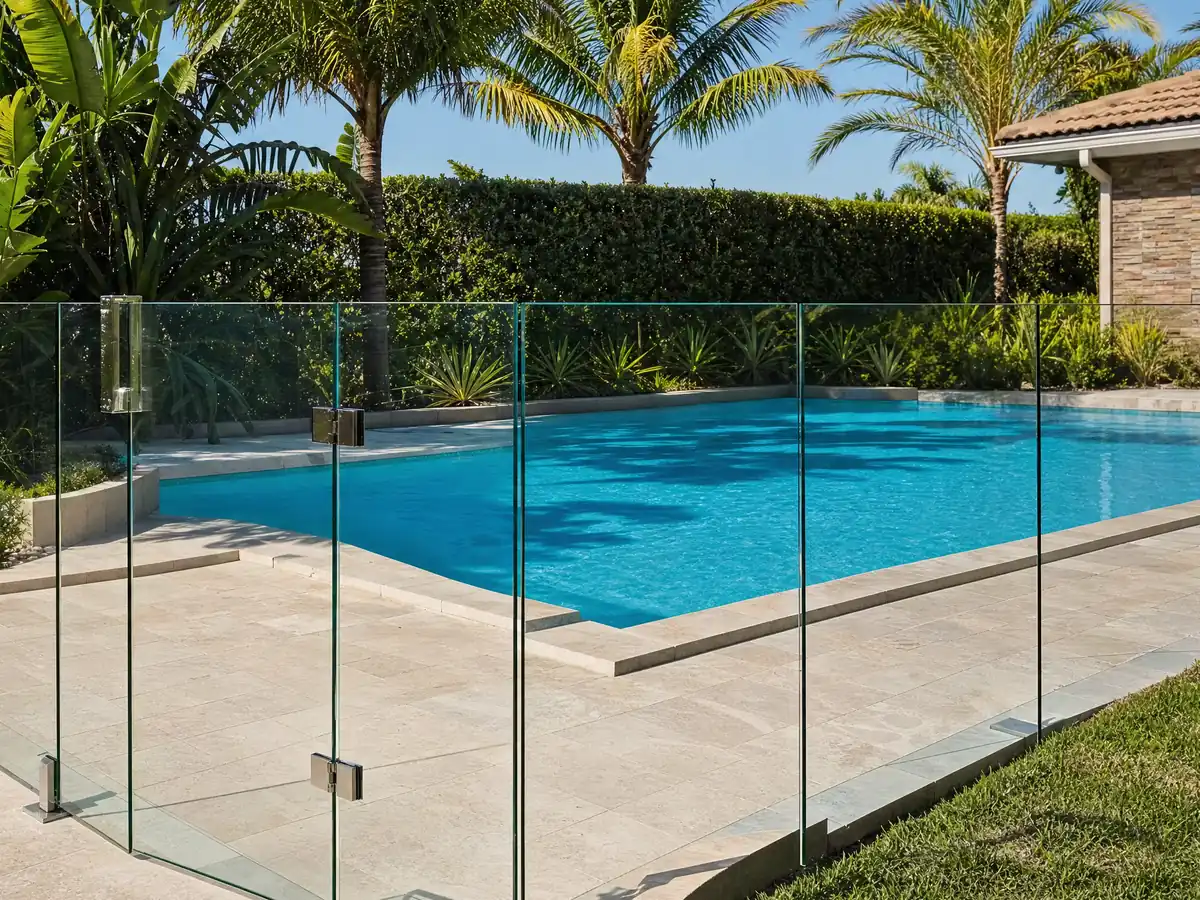
A pool barrier must be at least 60 inches high, with no more than 2 inches of clearance under it, openings that do not pass a 4 inch sphere and a surface without handholds or footholds. Under the City's amended pool bulletin IB 107, gates must open away from the pool, close on their own and latch on their own, with the latch at least 54 inches above the ground.
The bulletin offers two layouts: a fence around the whole property that uses the house as part of the barrier, or a fence around the pool alone. Which one fits depends on where the doors sit, so draw both before choosing. Pool plans also need a plot plan drawn to scale. Ask the fence company whether the barrier is reviewed under the pool permit or separately, since we could not confirm how the City bundles them.
Have the latch height and gate swing drawn on the plan before posts are set.
Do coastal lots and historic properties change the fence rules in Oceanside?
On the coast, yes. The coastal residential article repeats the 6 foot and 42 inch limits and adds that side yard fencing on lots between the sea and the first coastal road must be designed to keep views and must be at least 75 percent open. The City's Local Coastal Program also sorts coastal projects into five categories, from exempt to a California Coastal Commission permit, so fence work there may draw Coastal Permit review. The City's Coastal Permit Handbook was a scan we could not read, so we state no exemption distance.
Historic review is the other layer. In a Historic Overlay District, alteration includes changes to walls, fences, steps, plantings and landscape features, and the Historic Preservation Advisory Commission must approve it unless it is ordinary repair. We found no list of the districts, so call Planning before ordering a fence for an older Eastside or downtown house.
On a coastal or older lot, get Planning's category answer before posts are ordered.
Who pays for a shared fence in Oceanside, and how do I prove where the line is?
Both neighbors, unless they agree otherwise in writing. California Civil Code 841 presumes that adjoining owners share equally in the reasonable cost of building, maintaining or replacing a dividing fence. An owner who plans such costs must give each affected neighbor 30 days' prior written notice that states the problem, the proposed fix, the estimated cost, the cost-sharing proposal and the timeline, and a neighbor who thinks an even split is unfair has to show why.
For the line itself, the City's survey bulletin IB 129 shows what Oceanside accepts: a survey wet-stamped by a California licensed surveyor, or by a civil engineer registered before January 1, 1982. That bulletin governs buildings, not fences, but the same kind of survey settles a boundary dispute. In a mobile home park, the State Mobile Home Parks Act and the park's rules apply along with the City's, so ask the park office before a fence goes up.
Send the written notice before any fence work begins.
How much does fence installation cost in Oceanside, and who builds it?
We found no Oceanside or San Diego County fence survey, so these are Los Angeles numbers and a local bid will differ. Angi's Los Angeles guide, updated August 4, 2026, averages $3,051 with a typical range of $1,734 to $4,422 and quotes $15 to $60 per linear foot; a wood run is $1,600 to $2,500 and vinyl $1,850 to $3,400. The federal wage survey shows fence erectors in the Los Angeles area at a mean $28.00 an hour for May 2025, which is a wage, not a billing rate. Our planning ranges are $25 to $55 per linear foot for wood or vinyl privacy, $12 to $30 for chain-link and $35 to $85 for aluminum or ornamental iron, so a 100 foot backyard run lands near $2,500 to $5,500.
CSLB class C-13 covers fences, gates and railings but not masonry walls, which are class C-29, so a block wall means a second subcontractor. Under Business and Professions Code 7159 a contractor may not ask for more than $1,000 or 10 percent of the price up front, whichever is smaller. Check each license with our contractor license guide, and read how general contractors use subcontractors to see who answers for the crew.
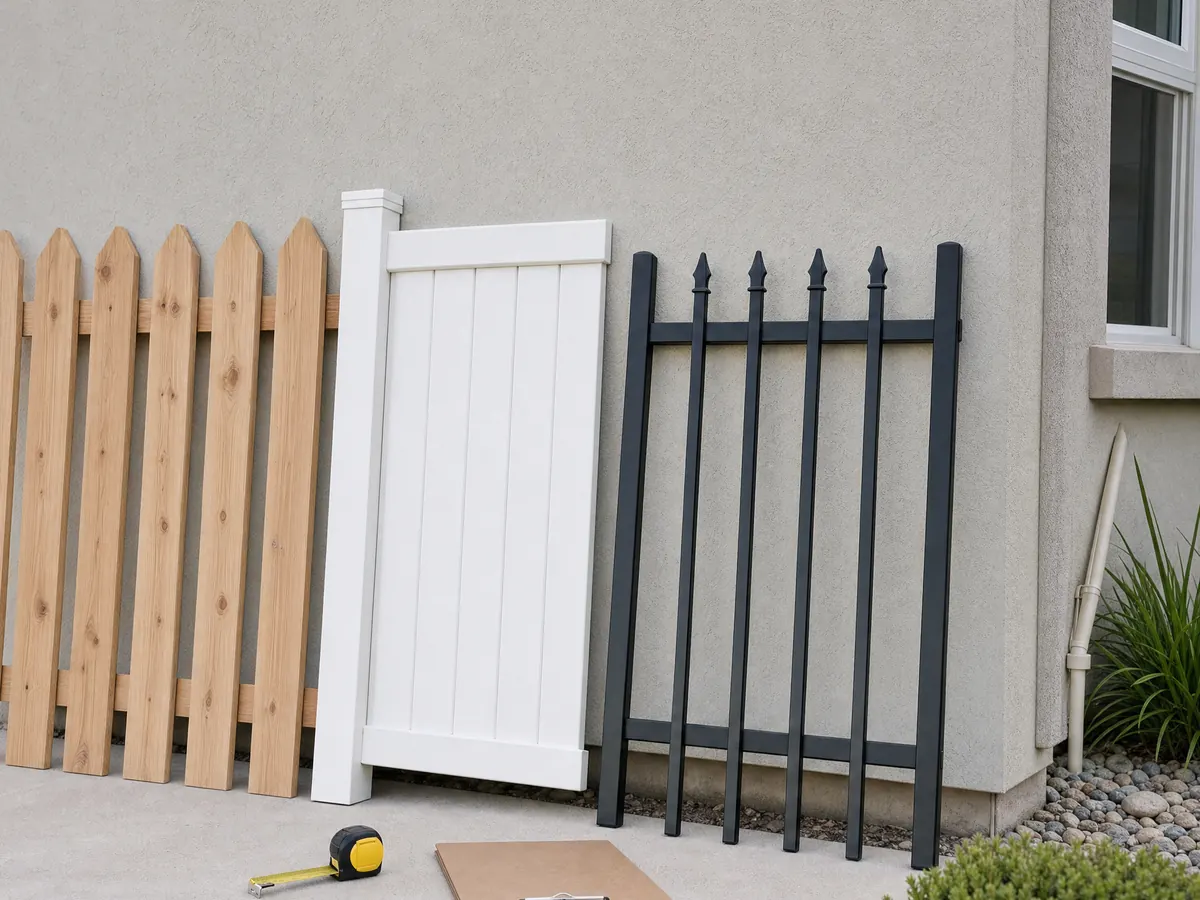
Fence photos from Oceanside and nearby communities
Fence scenes tied to Oceanside places such as the pier, Mission San Luis Rey and the harbor, and to nearby Carlsbad and Vista, from picket fronts and slat fences to pool barriers.
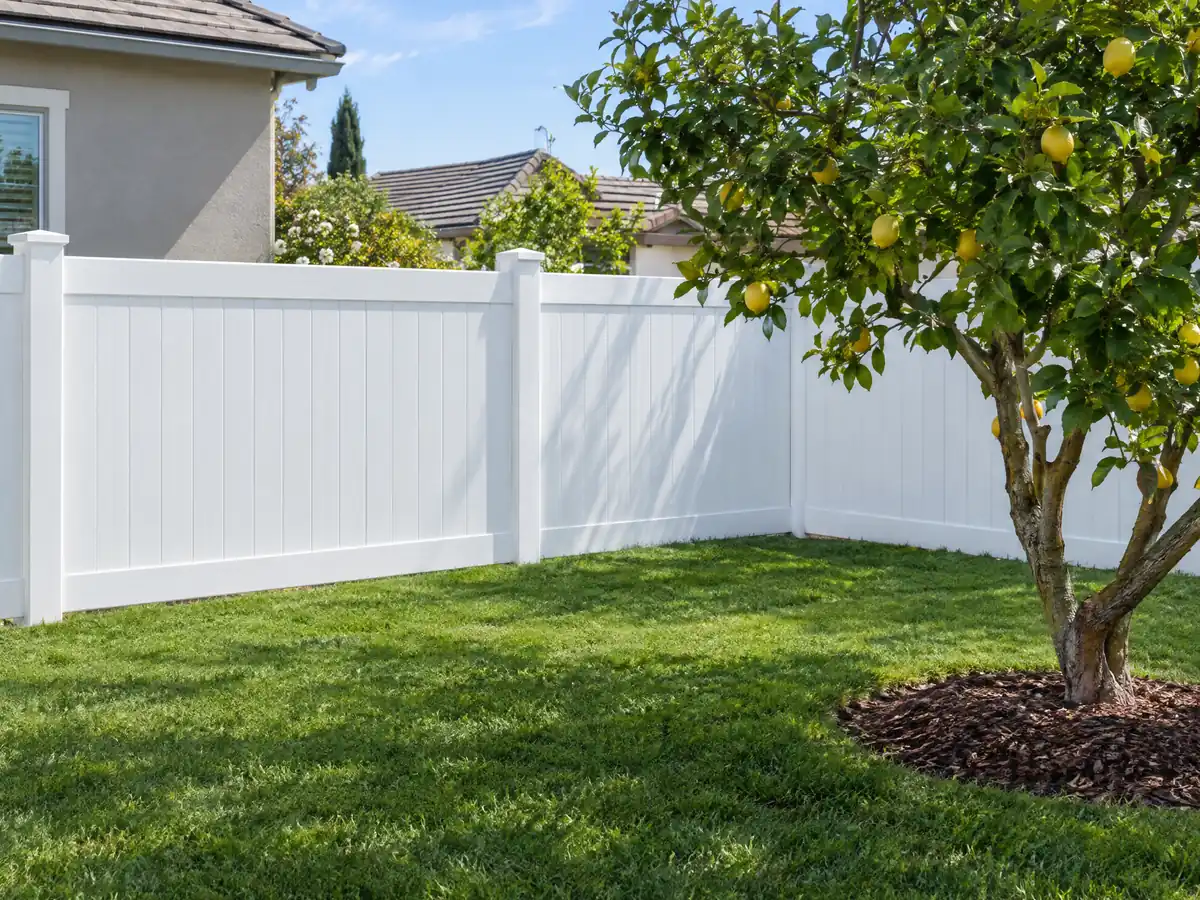
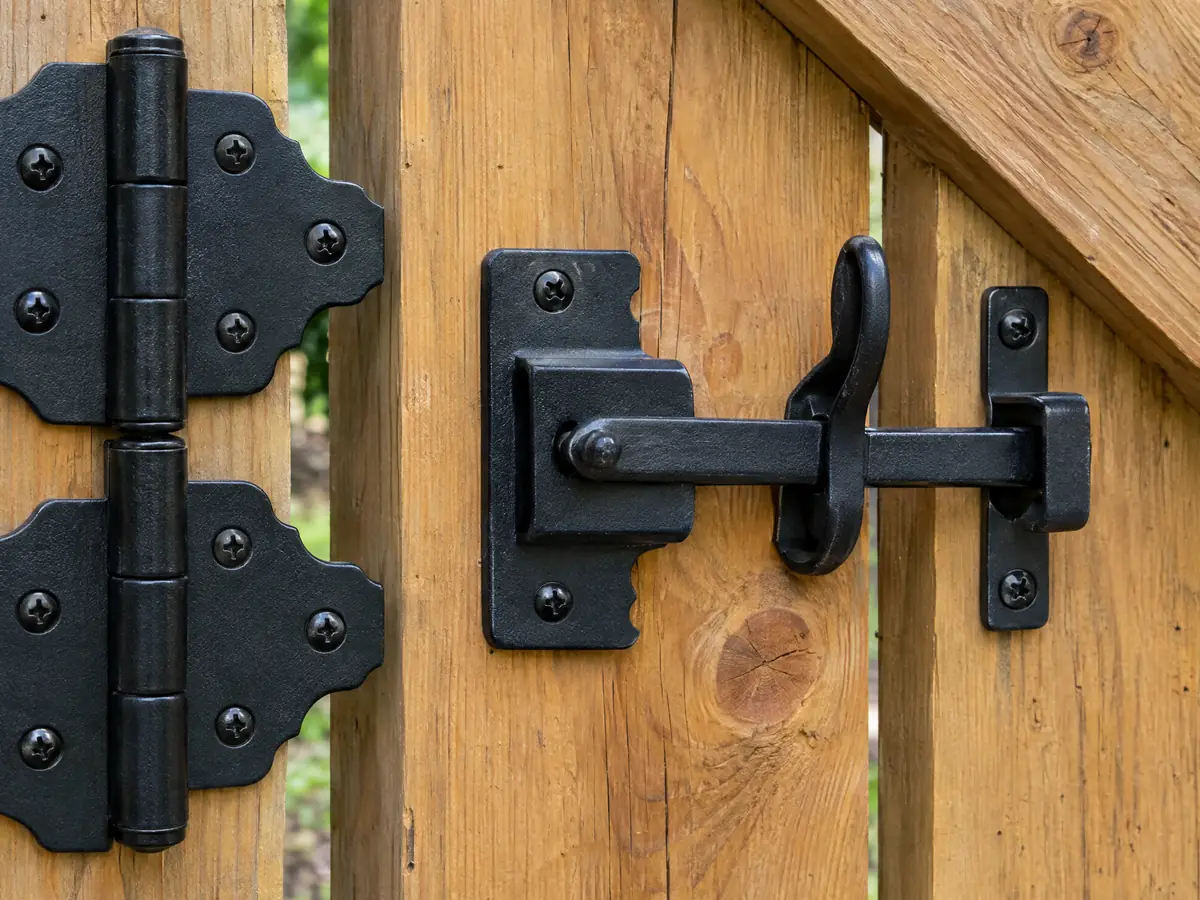
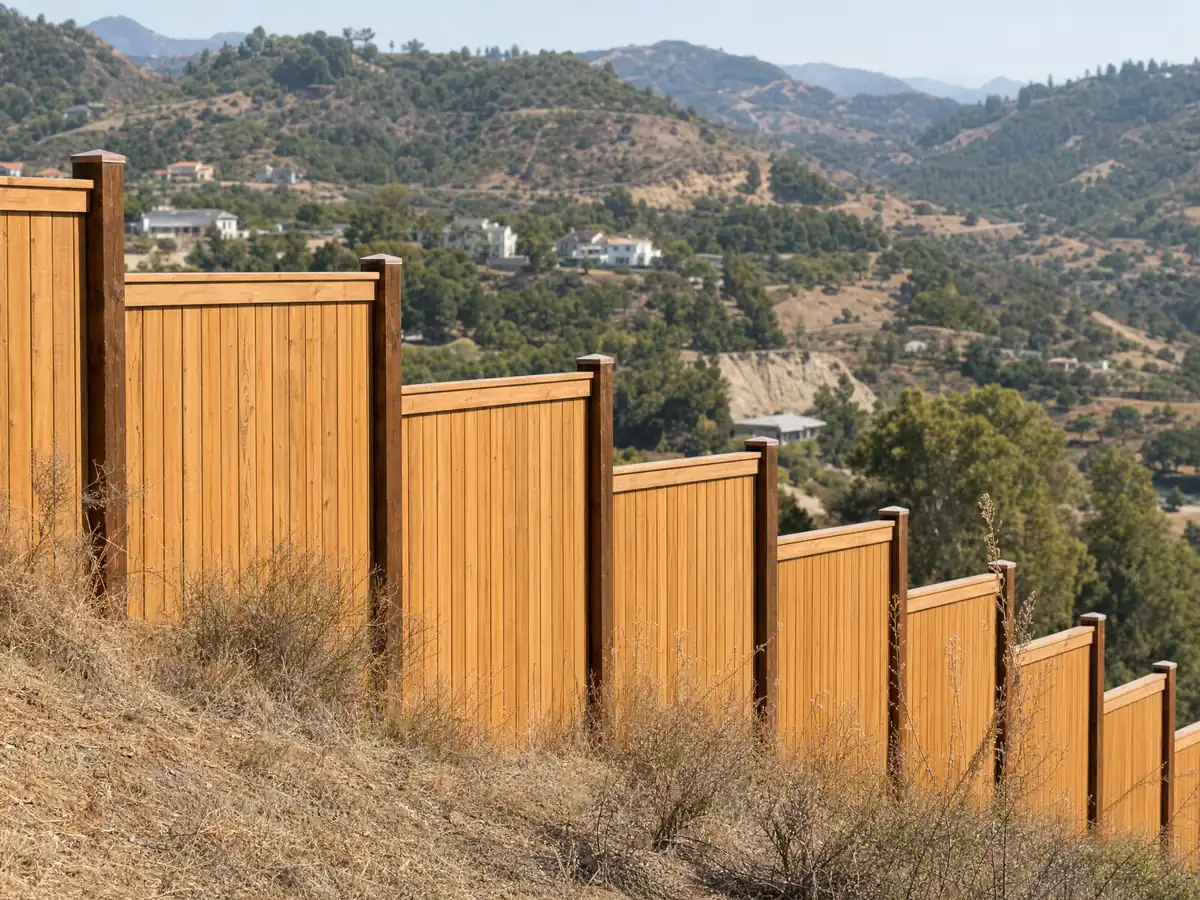
Where these Oceanside fence figures come from
The price table on our fencing page gives every fence figure with its source and date. A new fence often comes with other exterior work, and the Oceanside rules for it are on the roofing page, the painting page and the kitchen remodeling page. To see how neighbors treat fences, compare the guides for Carlsbad and Escondido, and for a Los Angeles County contrast try Glendale.
| What it covers | Typical range |
|---|---|
| Wood or vinyl privacy fence, 6 feet | $25 to $55 per linear foot |
| Chain-link | $12 to $30 per linear foot |
| Aluminum or ornamental iron | $35 to $85 per linear foot |
| Typical 100-foot backyard run | $2,500 to $5,500 total |
| Block walls, horizontal slat fences, gates and openers, hillside lots | Set by the written proposal |
Oceanside fence questions, answered
What is the maximum height for a backyard fence in Oceanside?
Six feet is the general cap for a fence or wall, retaining walls included, and a required front yard facing a street is limited to 42 inches. A front fence may reach 5 feet if the part above 42 inches is decorative and 75 percent open. The zoning PDFs we read mix in council revisions, so confirm the current text with Planning at (760) 435-3520.
Do I need a permit to build a backyard fence in Oceanside?
Not a building permit for a fence up to 6 feet, but the fence must meet zoning for height and location. Taller fences, pool barriers and retaining walls over 4 feet are different cases. Because staff do not confirm exemptions by phone, ask for a written exemption under Procedure A-1 if you want certainty before work starts.
Can I put up a 7 foot fence in Oceanside?
Probably not. The residential zoning article caps fences and walls at 6 feet, and the City's exempt list also stops at 6 feet rather than the 7 feet many other cities use. A fence taller than 6 feet would need a building permit and a zoning answer first, so ask Planning whether any exception applies to your lot.
Can I build a fence along the coast and keep my view?
Yes, if it is open enough. On properties between the sea and the first coastal road, side yard fencing must be designed to maintain views and be at least 75 percent open. Coastal fence work may also draw Local Coastal Program review, so ask Planning which of the five coastal categories your project falls into.
Who pays for a shared fence in Oceanside?
Both owners, unless they agree otherwise in writing. Civil Code 841 presumes equal sharing of the reasonable cost to build, maintain or replace a dividing fence, and the owner who plans the work must give 30 days' written notice with the problem, the fix, the estimate and the timeline. A neighbor who thinks an even split is unfair has to make that case.
What are the pool fence rules in Oceanside?
A pool barrier must be at least 60 inches high, have no more than 2 inches of clearance below it and have no openings that pass a 4 inch sphere. Gates must open away from the pool, self-close and self-latch with the latch at least 54 inches above the ground. Pool plans also need a scaled plot plan.
What fence materials are not allowed in Oceanside?
Barbed wire, electrified fence and razor wire are banned in every land use district unless a law or agency requires them. Wooden pallets, opaque plastic sheeting, broken concrete or asphalt and tires are not accepted fence materials. Wood, block, stucco, wrought iron, steel, chain link, tennis mesh and slats are examples of accepted ones.
Does a retaining wall need a permit in Oceanside?
Not up to 4 feet, measured from the bottom of the footing to the top of the wall, unless it carries a surcharge. A retaining wall over 4 feet must be planted and irrigated in residential districts, and a permitted wall with a non-standard design or a surcharge needs a geotechnical report under IB 108. Walls count toward the 6 foot cap.
How much do fencing contractors charge for a backyard fence in Oceanside?
Plan on $25 to $55 per linear foot for a wood or vinyl privacy fence, which makes 200 feet roughly $5,000 to $11,000. That range comes from Los Angeles sources because we found no Oceanside survey, and gates, removal of an old fence and slopes change it. A written, measured proposal is the real price.
Can a historic or mobile home park lot have different fence rules in Oceanside?
Yes. In a Historic Overlay District, changes to fences and walls need Historic Preservation Advisory Commission approval unless they are ordinary repair, and we found no district list. Inside a mobile home park the State Mobile Home Parks Act and park rules apply too. Ask Planning and the park office before ordering materials.
Describe your Oceanside fence
Give us your street or neighborhood, which side faces the street, a coastal road or a neighbor, and roughly how many feet the fence runs. We check the height line, the permit answer and any coastal or pool rule before we call back.