
Flooring Installationin Desert Hot Springs, CA
Flooring installation in Desert Hot Springs starts under the floor: the Mission Creek branch of the San Andreas Fault crosses the city, July highs average 108.6 F at the nearest airport station and about a third of the homes predate 1980. Finish flooring is on the City's exempt list, but slab, plumbing and structural changes are not.
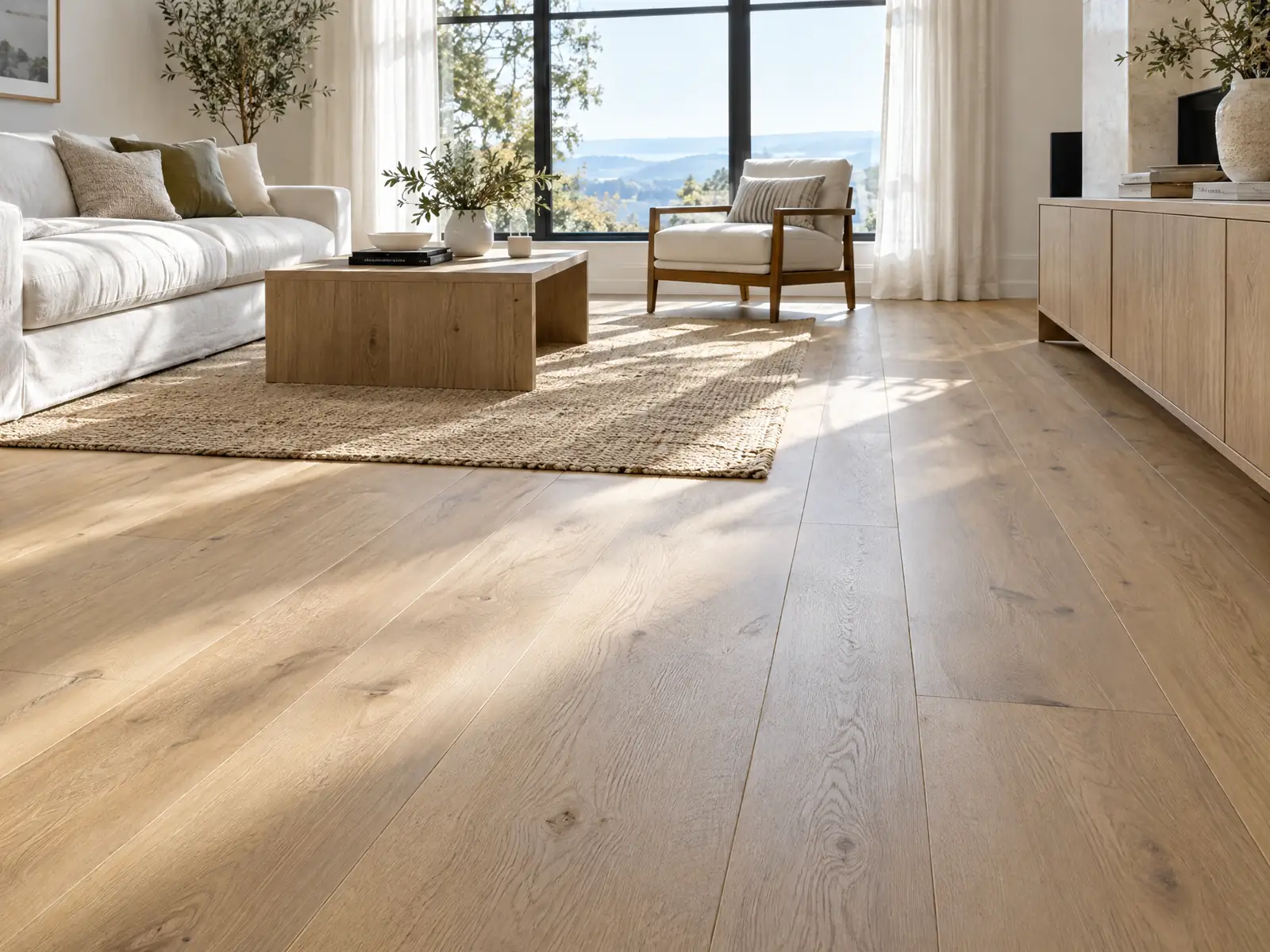
The City says Desert Hot Springs was incorporated on September 17, 1963, after homesteaders arrived from about 1908 and Cabot Yerxa found hot water on Miracle Hill in 1913. The General Plan dates the first bath house, at Eighth Avenue and Palm Drive, to 1941. The Census Bureau's 2024 five-year estimates count 12,474 homes, with 4,076 (32.7 percent) built before 1980 and 6,310 (50.6 percent) before 1990.
MDG Builders (CSLB #1040337) is a Tarzana general contractor. On a Desert Hot Springs floor we write the scope, carry the permit questions to Building & Safety and keep the schedule, while licensed flooring and tile subcontractors lay the material. Product choices are on the flooring page, and the Desert Hot Springs overview lists the other trades we manage in town.
What Desert Hot Springs' Building & Safety Division, the Municipal Code, South Coast AQMD and state law say about flooring work
Where flooring permits come from in Desert Hot Springs: City of Desert Hot Springs Community Development Department, Building & Safety Division.
- Finish flooring (tile, carpet and similar finish work) is on the City's Work Exempt From Permits list, but slab work, structural changes and any plumbing, electrical or mechanical changes are not. Floor coverings and concrete count as C&D waste in the City's recycling chapter, so a remodel that needs a building permit also needs the waste form (8.08.020, third-party mirror).
- Floor coatings: South Coast AQMD Rule 1113 defines floor coatings to include opaque coatings for garage floors, decks and porches and clear coatings on concrete, so epoxy and polyaspartic garage systems fall under the District VOC table that applies in Desert Hot Springs (Rule 1113 text, amended February 5, 2016; the per-category limit for floor coatings did not extract cleanly, so no gram-per-liter figure is quoted here).
Sources for these rules
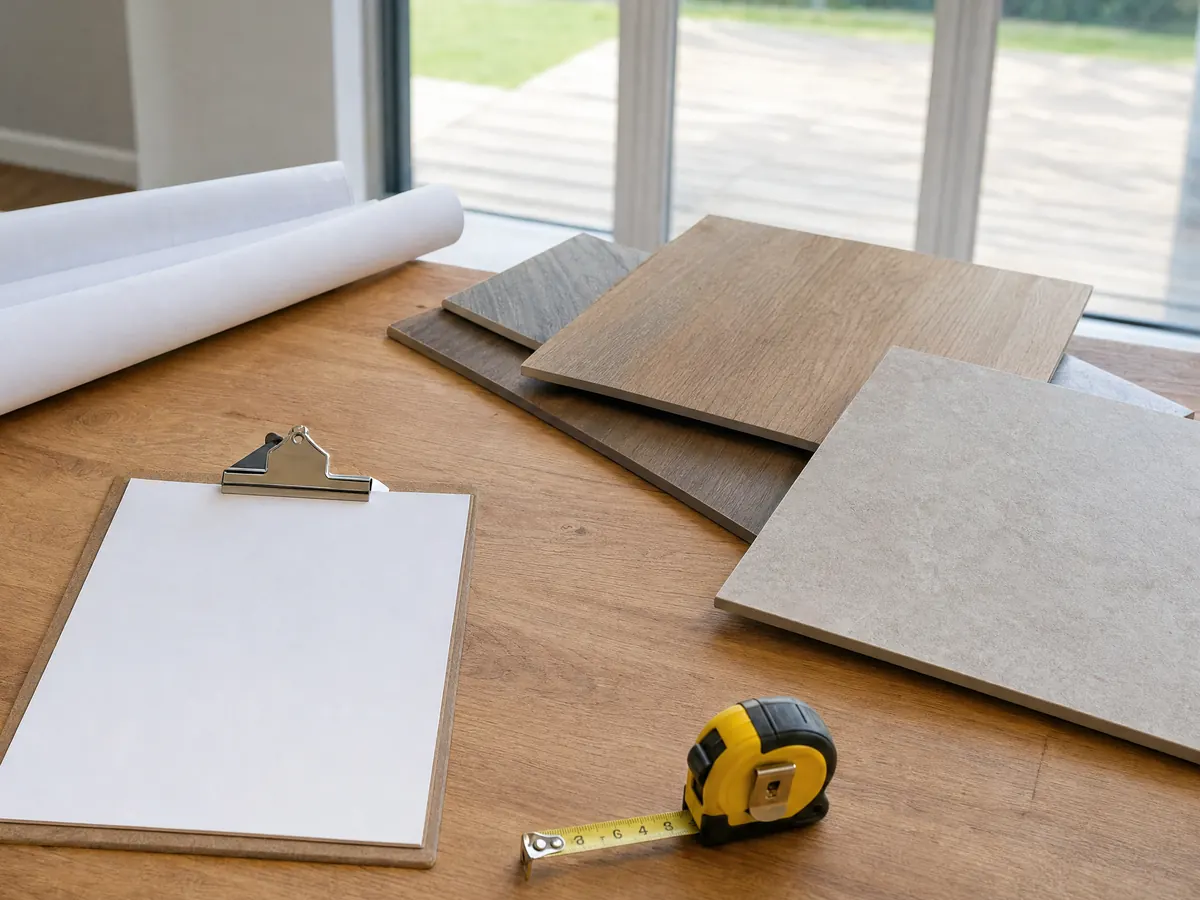
Does the Mission Creek fault change what you check under a new floor in Desert Hot Springs?
It changes what you ask, not what you buy. The General Plan says the San Andreas system cuts through the city from northwest to southeast, that the Mission Creek fault runs near downtown and that development already exists inside its Alquist-Priolo zone. The 2024 Local Hazard Mitigation Plan ranks earthquake as the top hazard. A plank or tile floor is a finish, but it rides on a slab that has to be flat and sound.
Look at the slab before material is ordered. Hairline shrinkage cracks are common, while a crack that has stepped up or opened is a question for a structural engineer, not a flooring crew. The proposal should list crack repair and leveling as separate lines, so a surprise under old carpet does not turn into an argument over a change order.
The City's fault rules are about buildings, not floor coverings. Chapter 15.64 asks for a registered geologist's report inside a State fault zone but does not reach alterations worth 50 percent or less of a structure's value and exempts most one- and two-story wood-frame houses, and Section 17.40.090 bars development within 50 feet of an active or potentially active fault. We did not check any parcel against the maps, and the code text comes from GoCodebook's third-party mirror, so ask the City.
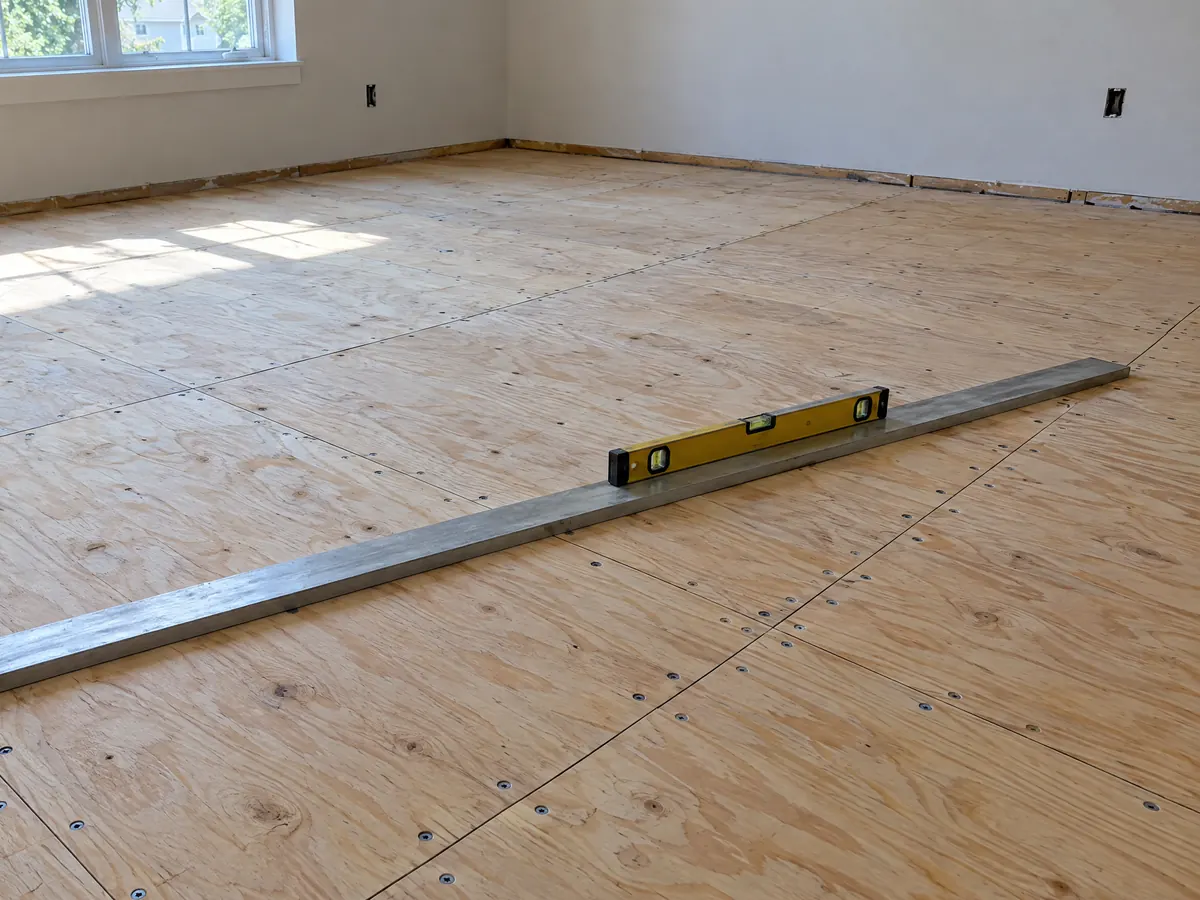
Does a concrete slab need a moisture test when hot mineral water runs under parts of Desert Hot Springs?
Yes, even though NOAA's 1991 to 2020 normals for Palm Springs Regional Airport, about 9 miles south, show only 4.61 inches of rain a year. Irrigation, leaks and downspouts feed the soil under a slab, and the General Plan says groundwater can sit within 50 feet of the surface near the Banning fault. A dry climate says little about the vapor one particular slab passes.
The city sits on two kinds of water. The Mission Creek fault separates a cold potable subbasin from a subbasin of hot mineral water, 90 to 180 degrees at the surface, and Mission Springs Water District says it does not test or map the hot zone and that its old maps are 20 to 30 years out of date. We found no source on what that water does to a floor, and the District cannot tell an owner which side a lot is on, so let a probe reading do the talking.
The test is standard: an ASTM F2170 humidity probe or an ASTM F1869 calcium chloride dish, with the pass mark set by the plank, vinyl or adhesive maker. Tropical Storm Hilary closed roads and damaged the Little Morongo Road, Indian Canyon Avenue and Dillon Road crossings, so ask whether runoff reaches the slab edge at a garage door or slider before a moisture-sensitive floor goes down.
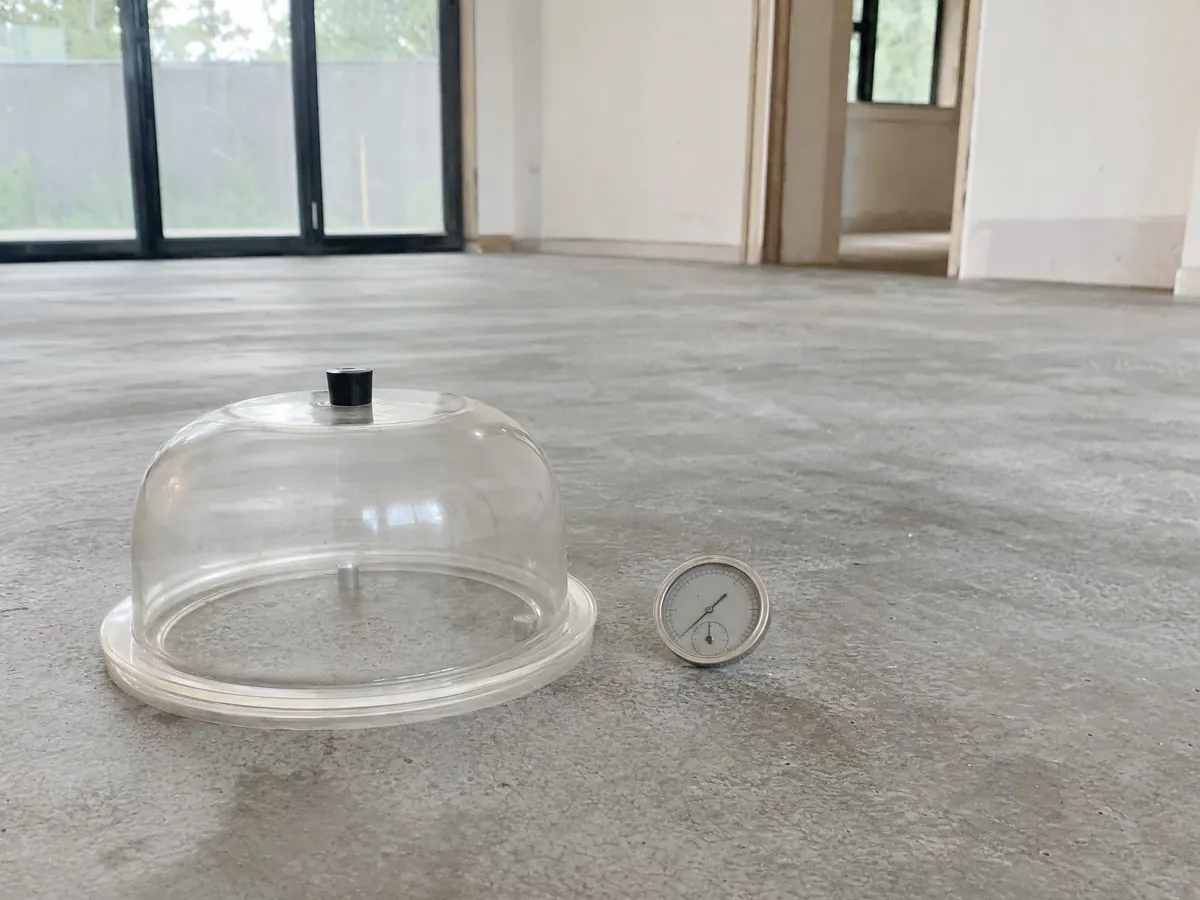
How do 108 degree Julys, spring wind and blowing sand affect a flooring job in Desert Hot Springs?
The heat is routine and the wind is the wild card. NOAA's normals at the airport station give a July average high of 108.6 F and 114.8 days a year at or above 100 F, and the General Plan puts the city about 1,000 feet above the valley floor, regularly over 100 degrees and sometimes below freezing at night. Ask each maker for its installation temperature range and for when the air conditioning must run before, during and after the job. We found no local source on adhesive working time.
Spring winds funnel through the San Gorgonio Pass and carry sand across the valley, and the General Plan says the city is more exposed than any other valley city. Sand under a coating or in an adhesive layer is a defect waiting to happen, so ask how doors will stay shut, how the slab will be vacuumed before bonding and which rooms get closed off in a windy week.
Crews cannot start whenever they like. Municipal Code 9.04.030 bars construction between 5 p.m. and 7 a.m., or between 6 p.m. and 6 a.m. while daylight saving time is in effect, and on Sundays, and a violation is an infraction. That text is from the third-party mirror, so confirm it with the City, and ask what the schedule does when a wind day stops the work.
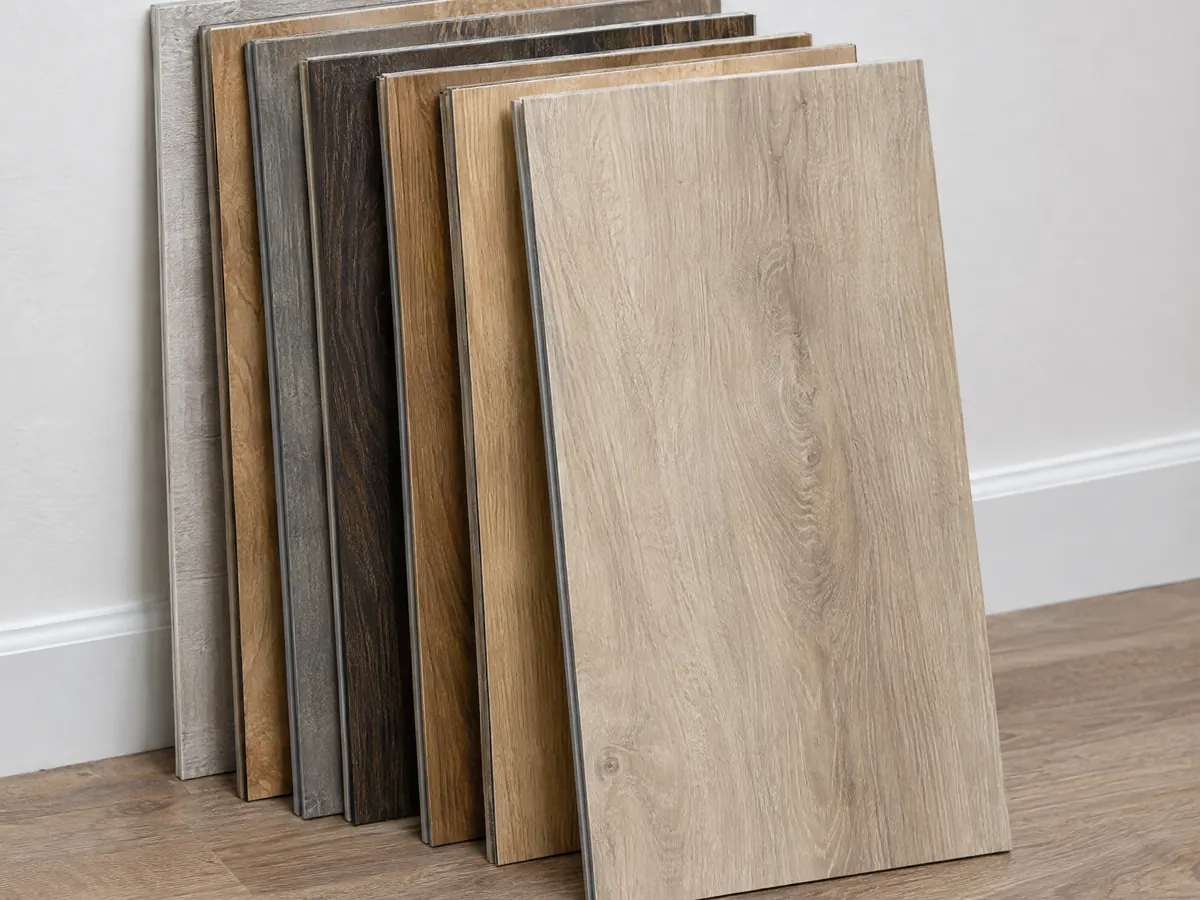
What is under the floors of Desert Hot Springs homes built before 1980, and what does tear-out stir up?
About a third of the stock. Of the 12,474 homes the Census counts, 4,076 predate 1980, 2,131 predate 1970 and only 189 predate 1950, so a prewar plank floor is rare while a spa-era or 1960s slab house with sheet vinyl or old tile is common. The General Plan says the city did not fully develop until the 1960s, which is why the oldest floors here are not very old.
Nobody can spot asbestos in resilient tile or black mastic by eye. We found no City asbestos notification rule in the pages we read, so ask Building & Safety whether one applies, and have the proposal name who takes the sample and who pays if a layer tests positive. Painted baseboards and casings in a house built before 1978 fall under EPA's lead-safe renovation rule, and the Census cannot separate 1978 from 1979 to count them.
Older lots may still be on septic. The General Plan says roughly half of households were on septic in 2019 and that Mission Springs Water District has converted parcels to sewer since 2005. That touches a floor only if a bathroom or laundry moves, because new drains mean a plumbing permit and a septic change means a building permit first and then a County Environmental Health application.
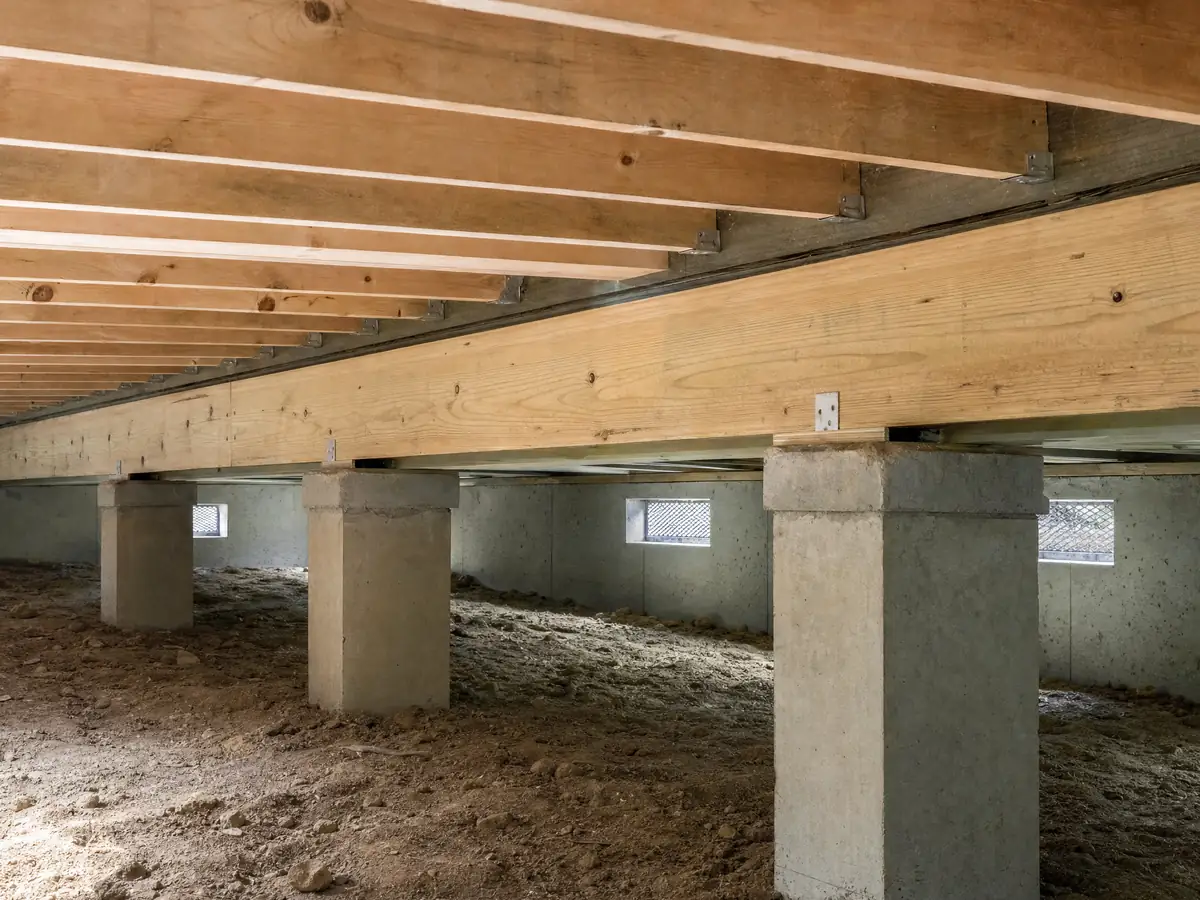
What should you know before flooring a rental, a mobile home or a unit in a small apartment building here?
Rentals are half the market. The Census counts 5,609 renter-occupied homes out of 11,379 occupied, or 49.3 percent, at a median gross rent of $1,412 with a margin of plus or minus $125. For a unit turn, ask the proposal to price rooms one by one, so the wear-prone rooms can be done first and the rest later.
Mobile homes number 996, about 8.0 percent of units, with a wide margin of plus or minus 267. The City's manufactured-home sheet covers placement on a residential lot, asking for HCD certification and a permanent foundation, but we found no City or HCD sentence about replacing a floor covering inside one. Ask the park office or HCD before assuming either answer.
Small apartment buildings hold 14.1 percent of homes (1,762 units in buildings of two to four units), and another 10.4 percent sit in buildings of five or more. The owner's or association's documents may require underlayment or limit hard flooring, and no City page we read describes that, so read them before anything is ordered.
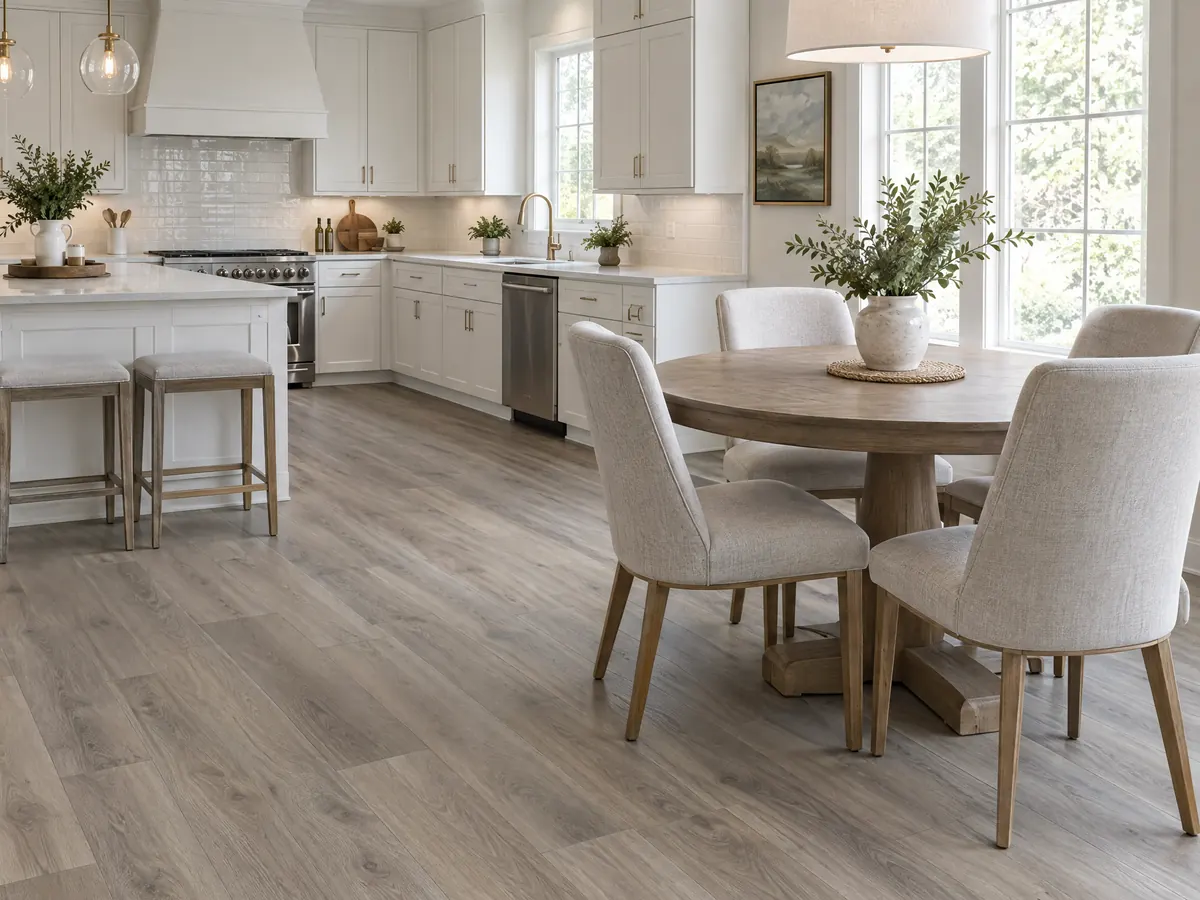
Does replacing flooring need a permit in Desert Hot Springs, and what about a garage floor coating?
Usually not for the finish itself. The City's Work Exempt From Permits handout lists painting, papering, tiling, carpeting, cabinets, counter tops and similar finish work, but slab repair, structural changes and any plumbing, electrical or mechanical change are not on it, and it adds that an exemption never authorizes work that violates the code. We found no flooring-specific handout, so confirm the scope with Building & Safety.
A permitted remodel brings paperwork. Chapter 8.08 counts floor coverings and concrete as construction waste, so a job with a building permit needs a recycling and waste reduction form and a 50 percent diversion, and the City's fee sheets ask for a Desert Valley Disposal bin receipt before issuance. Starting before a permit triggers an investigation fee equal to the permit fee under Section 15.03.035. We quote no remodel fee, because the City's published estimates cover new houses only.
Garage coatings follow an air rule. South Coast AQMD Rule 1113 counts opaque garage, deck and porch coatings and clear coatings on concrete as floor coatings, which puts epoxy and polyaspartic systems in the District's VOC table here. The per-category limit did not extract cleanly from the PDF, so we quote none. Ask the subcontractor to name the product and show its Rule 1113 compliance.
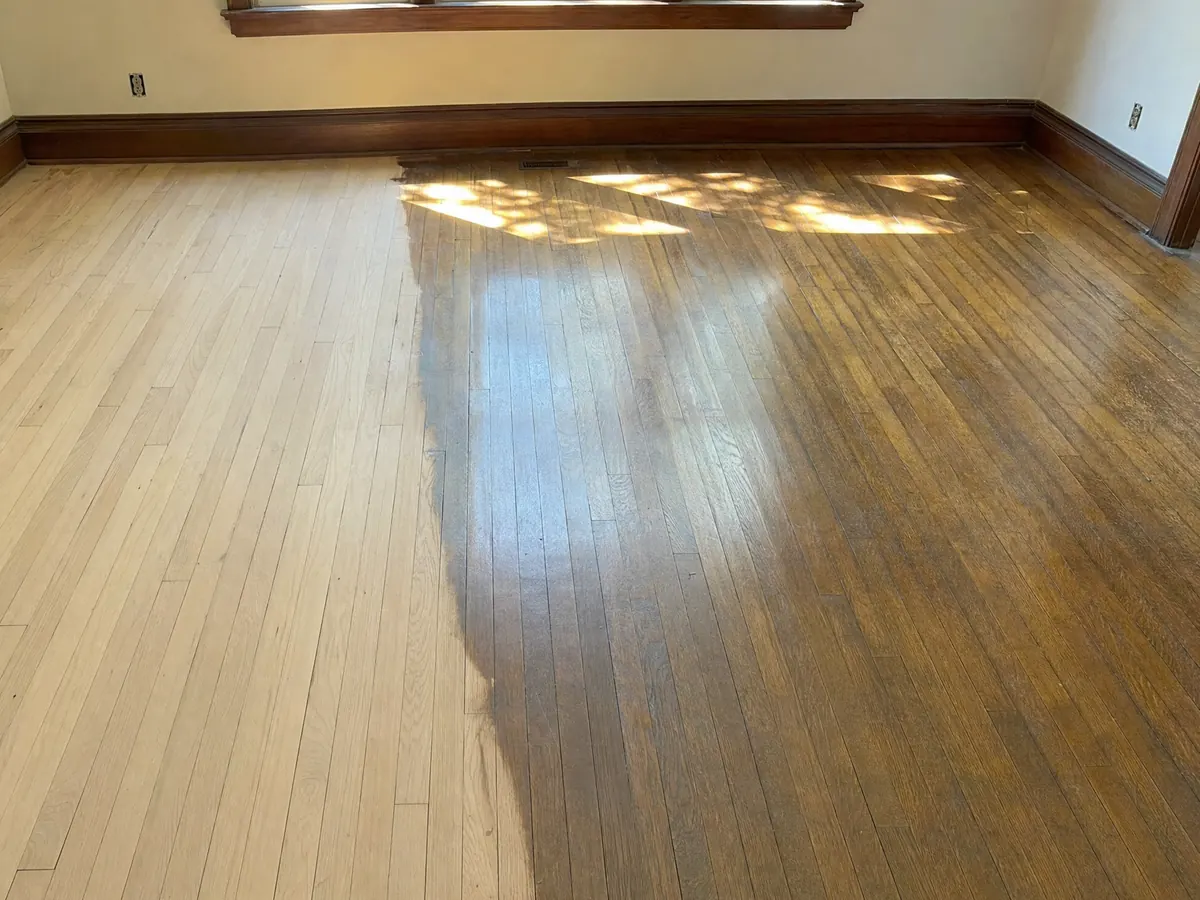
What does a flooring contractor charge in Desert Hot Springs, and who holds which license?
No Desert Hot Springs price study turned up, so the anchor is Angi's pages for Los Angeles, which we rate medium to low in confidence because a single publisher supplies them and shows no method. Its July 8, 2026 page puts installer labor at $3 to $9 a square foot, engineered hardwood at $10 to $18 installed and solid hardwood at $12 to $22, and its September 15, 2026 laminate page prices removal of an old floor at $455 to $685 for 200 square feet. Desert bids can differ.
Wages set a floor, not a price. The federal May 2025 survey for the Los Angeles area shows floor layers at a mean $33.48 an hour, which is what workers earn rather than what a contractor bills. Tear-out, probe testing, crack repair, leveling and door transitions each deserve a priced line of their own, plus the disposal bin when the job is permitted.
CSLB puts carpet, resilient flooring and wood floors in its C-15 class and ceramic tile in C-54. A deposit on a home improvement contract may not exceed $1,000 or 10 percent of the price, whichever is less, under Business and Professions Code 7159.5, and our license check guide shows how to read a record.
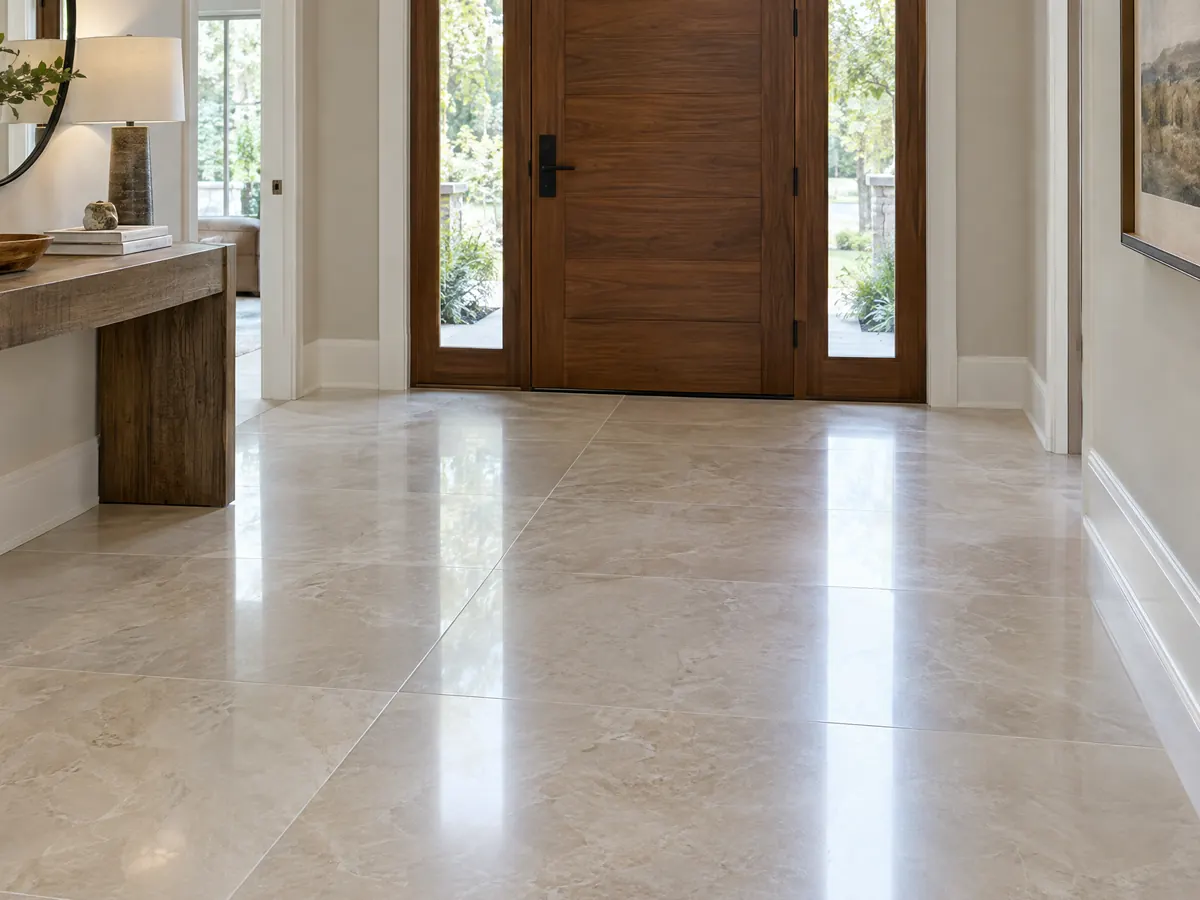
Flooring photos from Desert Hot Springs and nearby communities
Plank samples, moisture tests, tile and finished rooms from Desert Hot Springs and the desert communities around it, shown at the steps where the choices get made. Tap any photo to enlarge it.
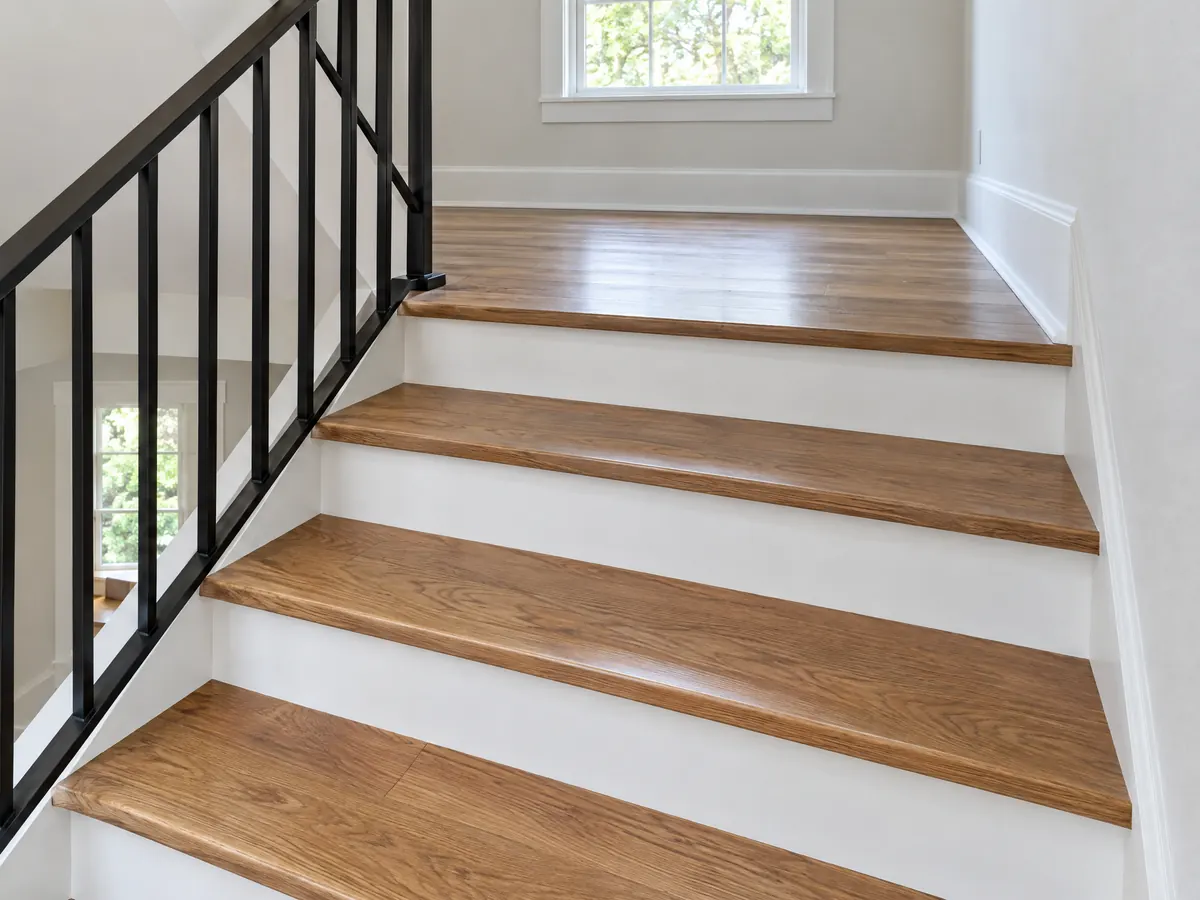
What flooring costs around Desert Hot Springs
Dollar figures here are Los Angeles planning ranges from our flooring page, not a Desert Hot Springs bid, and tear-out, probe tests, crack repair and leveling belong on separate lines of the written proposal. The same property may need concrete work in Desert Hot Springs or decks in Desert Hot Springs. Desert neighbors to compare are flooring in Palm Springs, flooring in Cathedral City, flooring in Palm Desert and flooring in Indio, with flooring in Los Angeles as the big-city benchmark. Our flooring cost guide compares refinishing with replacement, and the subcontractor guide shows who lays which layer.
| What it covers | Typical range |
|---|---|
| Installation labor only | $3 to $9 per sq ft |
| Solid hardwood, installed | $12 to $22 per sq ft |
| Engineered hardwood, installed | $10 to $18 per sq ft |
| Refinishing existing hardwood | $4 to $8 per sq ft |
| Laminate, whole project | $2,000 to $5,500 |
| Hardwood, whole project | $3,153 to $8,496 |
| Removing the old floor | $455 to $685 per 200 sq ft |
| Tile | No sourced Los Angeles range |
Other work we manage in Desert Hot Springs
Desert Hot Springs flooring questions, answered
Do I need a permit to replace flooring in Desert Hot Springs?
Usually not for the surface. The City's Work Exempt From Permits handout lists tiling, carpeting and similar finish work, but not slab repair, structural changes or plumbing, electrical and mechanical work. We found no flooring-specific page, so call Building & Safety at (760) 329-6411 with the scope before you order material.
How much does it cost to have flooring professionally installed?
Installer labor runs $3 to $9 a square foot, engineered hardwood $10 to $18 installed and solid hardwood $12 to $22 on Angi's Los Angeles page dated July 8, 2026. We found no Desert Hot Springs study with a stated method, so treat these as medium to low confidence. Tear-out, leveling and stairs usually appear as separate lines.
How much to refloor a 2000 sq. ft house?
On Angi's Los Angeles rates, 2,000 square feet runs $6,000 to $18,000 for labor alone, $20,000 to $36,000 with engineered hardwood installed and $24,000 to $44,000 with solid hardwood installed. Those are Los Angeles ranges, not a desert bid. Stairs, tear-out, crack repair and subfloor work push the total up.
Can you put flooring over concrete?
Yes, after the slab is tested and prepared. The flooring or adhesive maker sets the moisture limit, so the installer should read an ASTM F2170 probe or set an F1869 dish before patching and leveling. In a house built before 1980, old adhesive on the slab may need a lab check before it is ground or sanded.
Why does moisture come through a concrete floor in Desert Hot Springs?
Water vapor rises from the soil under the slab, and irrigation, leaks and downspouts keep that soil damp even at 4.61 inches of annual rain. The General Plan says groundwater can sit within 50 feet of the surface near the Banning fault. Only a probe or dish reading shows what a given slab is passing, whatever the weather.
Does Desert Hot Springs' heat and wind affect flooring installation?
Both affect scheduling and conditions, and the maker's installation sheet governs the rest. July highs average 108.6 F at the nearest airport station, and spring wind carries sand across the valley. Ask when the air conditioning must run, how doors will be kept shut and what the product's temperature range is.
Is there asbestos under old vinyl flooring in Desert Hot Springs homes?
Possibly in homes built before 1980, which the Census counts at 4,076 of the city's 12,474. Nobody can tell asbestos-bearing resilient tile, sheet vinyl or mastic from the safe kind by looking. Send a sample to a lab before sanding or pulling a layer, and ask Building & Safety whether any notification applies to the work.
What license does a flooring contractor need in Desert Hot Springs?
Carpet, resilient and wood floors usually call for a C-15 license, and ceramic or stone tile for C-54, held by a flooring contractor in good standing. Check the number on the CSLB site, ask each subcontractor for a license and certificate of insurance and ask the City whether a permit is needed for the scope.
Can I put an epoxy coating on my Desert Hot Springs garage floor?
Yes, as long as the product complies with South Coast AQMD Rule 1113, which treats garage floor coatings as floor coatings. The slab still needs a moisture reading and crack repair first. Ask the subcontractor to name the coating and show its compliance, and confirm with the City if the work changes the garage's use.
Tell us the age of the house, the rooms and what the slab is doing
Say whether the home is a spa-era house, a 2000s tract house, a mobile home or a rental, which rooms you want finished and what covers the floor now. Cracks, moisture, old adhesive and permit questions ride along to the first visit.