
Concrete Companyin Desert Hot Springs, CA
A concrete company in Desert Hot Springs starts with dust: Municipal Code Chapter 15.84 requires an approved dust control plan for any grading permit or any building permit that disturbs more than 5,000 square feet, and South Coast AQMD Rule 403.1 adds Coachella Valley rules on top. Fault and flood rules then decide footings and walls.
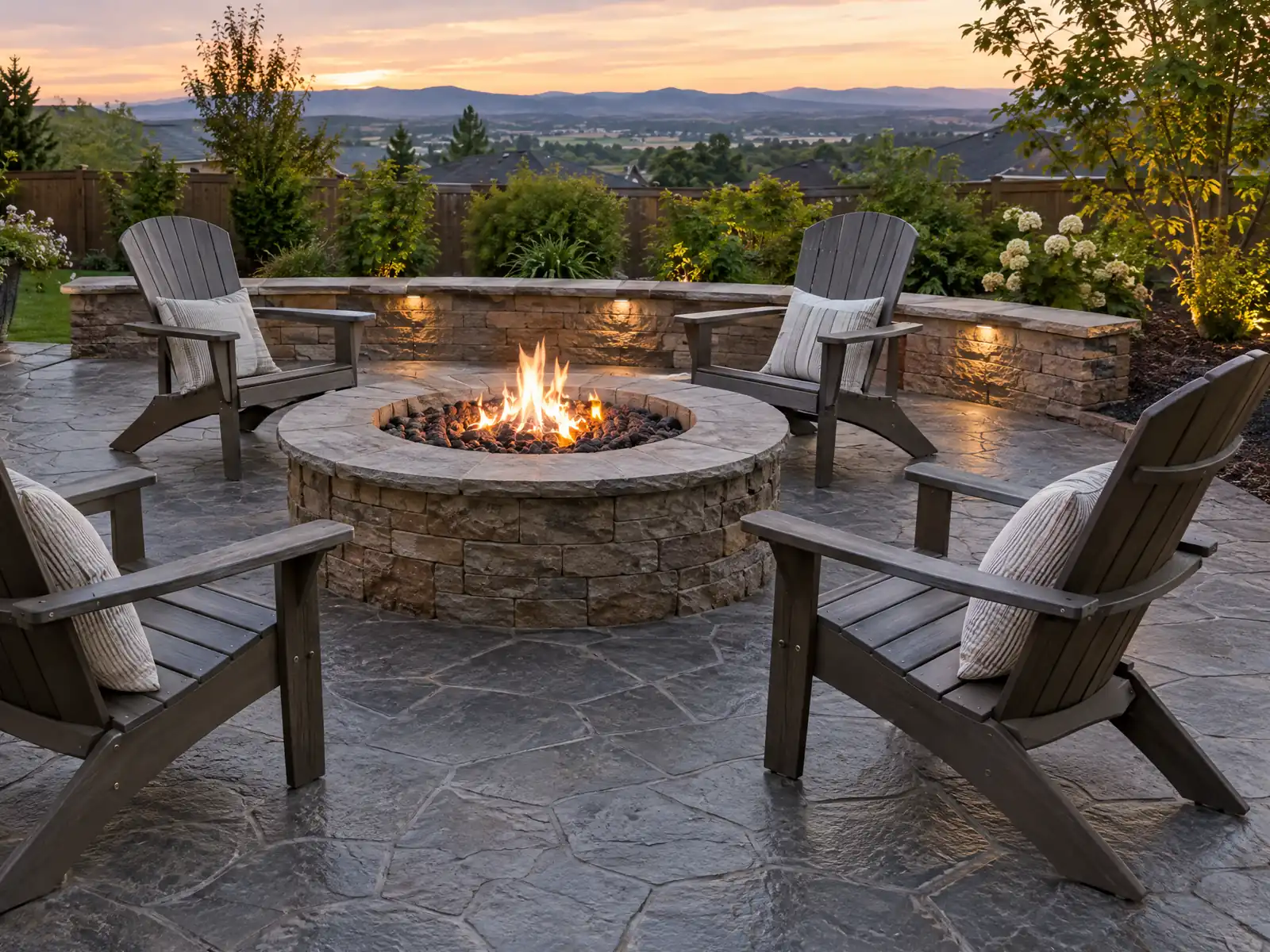
Most of Desert Hot Springs' concrete went down in two waves. The Census Bureau's 2024 five-year estimates credit the 1980s with 2,234 of the city's 12,474 homes and the 2000s with 3,640, and the General Plan says growth surged between 1980 and 2010 before stalling in the 2007 to 2009 recession. With 50.6 percent of homes (6,310) built before 1990, plenty of walks, driveways and patio slabs are 35 years old or more.
MDG Builders, CSLB #1040337, is a Tarzana general contractor. For a desert pour we draft the scope, take the dust, fault and permit questions to Building & Safety and bring in a licensed concrete subcontractor to form, place and finish. The concrete page explains finishes, and the Desert Hot Springs overview shows the other trades we run here.
What Desert Hot Springs' Building & Safety Division, Engineering, South Coast AQMD and state law say about concrete work
Where concrete permits come from in Desert Hot Springs: City of Desert Hot Springs Community Development Department, Building & Safety Division.
- Fugitive dust ordinance (municipal code Chapter 15.84, third-party mirror): any grading permit or any building permit with more than 5,000 square feet of disturbed surface needs a City-approved fugitive dust control plan before earth-moving starts, kept on site; visible dust may not exceed 20 percent opacity, travel more than 100 feet or cross a property line; track-out over 25 feet must be cleaned within one hour and at the end of each workday; soil must be kept damp, stabilized or treated during off hours, and long-term stabilization is required within ten days where work pauses 30 days; a high-wind episode is wind over 25 mph. The City's Engineering page hosts the Fugitive Dust Control Plan Application Form.
- Air district: the City's dust code defines AQMD as the South Coast Air Quality Management District, and the District's own jurisdiction page lists Desert Hot Springs among its Riverside County cities, so South Coast AQMD rules apply, not the Mojave Desert district. Rule 403.1 (supplemental fugitive dust requirements for Coachella Valley sources, amended April 2, 2004) applies on top of Rule 403 in the Coachella Valley, requires a District-approved dust control plan for more than 5,000 square feet of disturbed surface and defines the Blowsand Zone as the corridor 2 miles either side of the I-10 centerline from the SR-111 junction southeast to Jefferson Street in Indio; this research did not map that corridor against Desert Hot Springs parcels.
- Dust and dirt standard (municipal code 17.40.080, third-party mirror): no land use activity may create measurable dust beyond a parcel boundary, grading should be scheduled so it is not repeated, graded areas watered as often as needed, disturbed ground revegetated quickly, and walls or fences built to contain dust subject to City Engineer approval. The General Plan says persistent strong spring winds carry sand through the center of the valley and that Desert Hot Springs is closer to the San Gorgonio Pass than any other valley city, so it is more exposed to high-wind episodes.
- Flatwork and drainage: driveways and walkways are exempt from a building permit but the driveway approach in the right-of-way needs an Encroachment Permit; the Local Hazard Mitigation Plan says the older residential areas have no curb and gutter and are prone to low-lying damage and debris flow, Mission Creek flooding from Tropical Storm Hilary damaged the Little Morongo Road, Indian Canyon Avenue and Dillon Road crossings, and the code requires new construction and substantial improvements in a flood hazard to be anchored, flood-resistant and drained to reduce flood damage (15.72.030 and 15.72.040), with the lowest floor of a new or substantially improved home at or above the base flood elevation in AE, AH and A zones and at least 2 feet above the highest adjacent grade in an AO zone with no depth number (15.68, flood hazard reduction article, third-party mirror).
- Retaining and site walls: walls up to 4 feet (footing to top) without a surcharge are exempt, but the City's retaining wall standard covers masonry walls up to 6 feet with a toe or heel footing design and reinforcing tables, and the free-standing and pilaster wall standards carry a footing, rebar and final inspection sequence; the new-house fee sheet shows a separate block wall application. Perimeter walls must be built at the top of slope, adjacent to property lines (17.40.110 A, third-party mirror).
- Stormwater (municipal code Chapter 13.08, third-party mirror): Section 13.08.090 says anyone doing construction work in the City must comply with the chapter and with Riverside County Ordinance No. 457 for erosion and sediment control, dischargers on construction sites must comply with their NPDES permits (Colorado River Basin Regional Water Quality Control Board) with proof possible before permit issuance, and construction waste and wash water, including paint and stain waste, stucco fragments and concrete pour and cleanup water, are listed as prohibited discharges to the storm drain; the Engineering page also hosts a Desert Hot Springs BMP Agreement (posted March 10, 2022).
Sources for these rules
- gocodebook.com: chapter 15.84 control of fugitive dust pm10 emissions
- aqmd.gov: jurisdiction
- gocodebook.com: chapter 17.40 property development standards
- storage.googleapis.com: 041e8bf0 dhs 2024 local hazard mitigation plan final accepte
- storage.googleapis.com: Work Exempt From Permits
- gocodebook.com: chapter 13.08 stormwater management and discharge controls
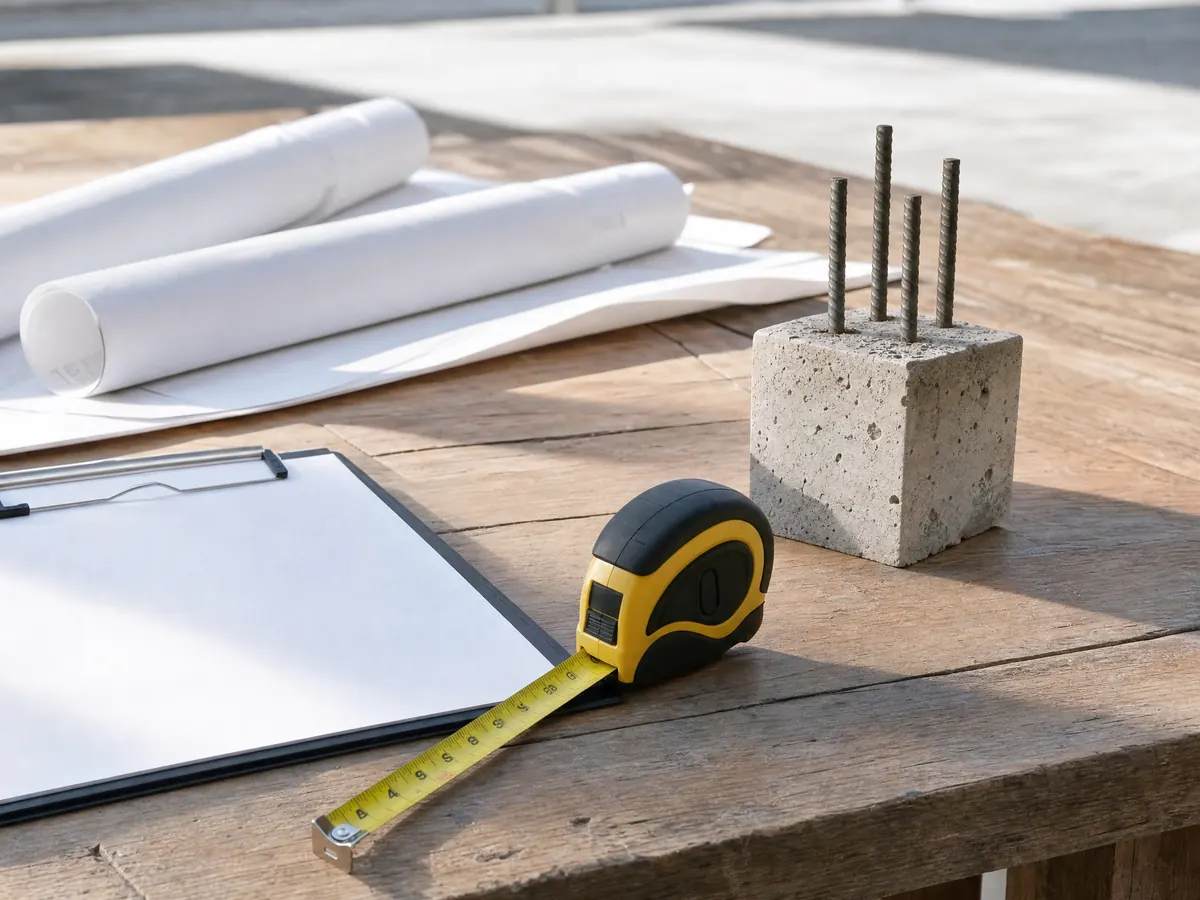
When does a concrete job in Desert Hot Springs need a fugitive dust control plan?
When it needs a grading permit, or a building permit that disturbs more than 5,000 square feet of surface. Municipal Code Chapter 15.84 requires a City-approved plan before earth-moving starts and keeps it on site, and the Engineering page hosts the Fugitive Dust Control Plan Application Form. A plain patio rarely reaches that size, but an ADU pad, a pool yard or a regraded lot can.
Rule 403.1 sits on top of the City code. The ordinance defines AQMD as the South Coast Air Quality Management District, and the District's jurisdiction page lists Desert Hot Springs among its Riverside County cities, so Rule 403 and its Coachella Valley supplement, Rule 403.1 (amended April 2, 2004), apply here and the Mojave Desert district does not. Above 5,000 square feet of disturbed surface the rule also asks for a District-approved plan.
Its Blowsand Zone is the corridor two miles either side of the I-10 centerline from the SR-111 junction southeast to Jefferson Street in Indio. We did not map that corridor against Desert Hot Springs parcels, so we do not say whether any lot falls inside it; ask the City and the District. The City code text comes from GoCodebook's third-party mirror, so confirm it with the City.
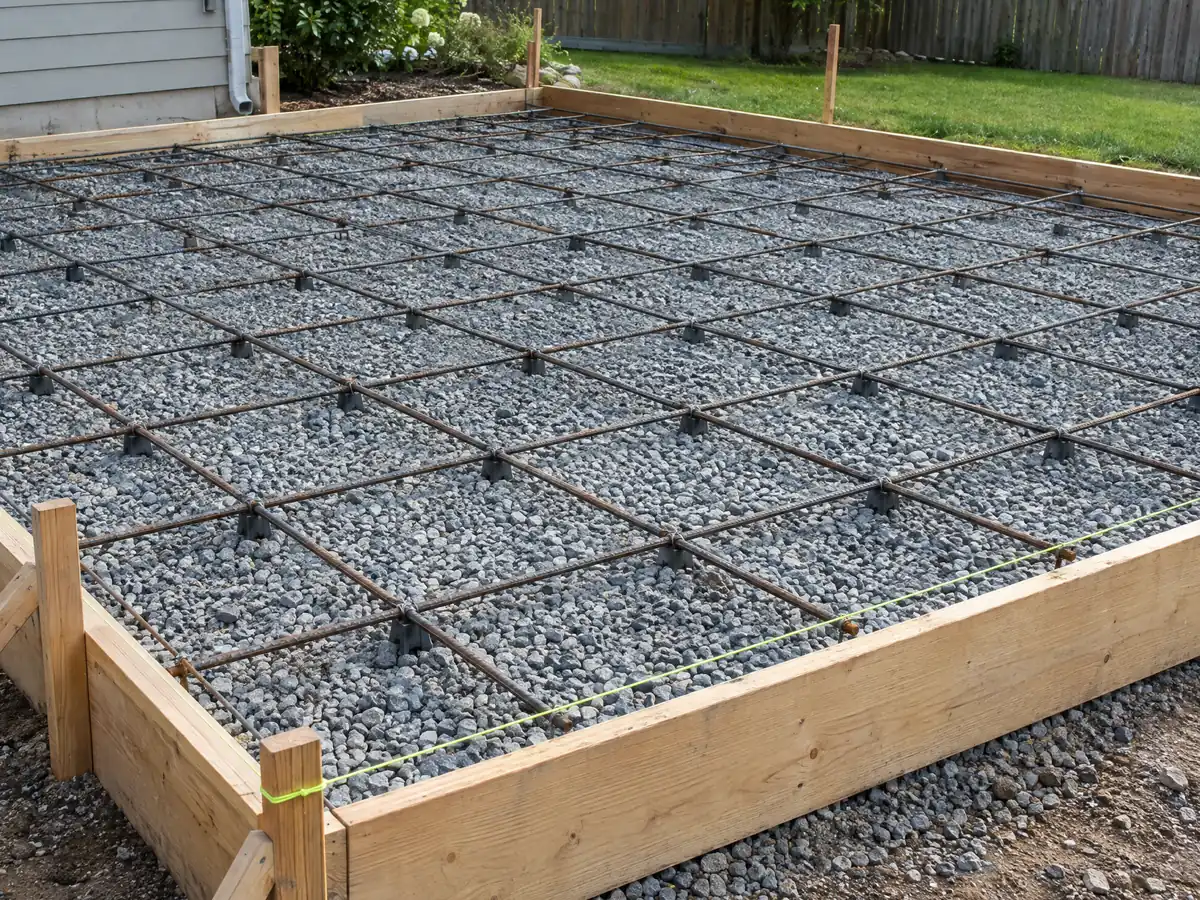
What do the 20 percent opacity and 100 foot limits mean on a Desert Hot Springs pour?
Dust cannot show up in the neighbor's yard. Under Chapter 15.84, visible dust may not exceed 20 percent opacity, travel more than 100 feet or cross a property line. Track-out onto the street beyond 25 feet must be cleaned within one hour and again at the end of each workday, soil must be kept damp, stabilized or treated off hours, and long-term stabilization is required within ten days where work pauses for 30 days.
Wind sets the pace on a bad day. The code defines a high-wind episode as wind over 25 mph, and Section 17.40.080 bars measurable dust beyond a parcel boundary, asks that grading be scheduled so it is not repeated and that disturbed ground be watered as often as needed and revegetated quickly. The General Plan says persistent strong spring winds carry sand through the middle of the valley.
Concrete water has its own rule. Chapter 13.08 lists pour and cleanup water, stucco fragments and paint waste as prohibited discharges to the storm drain and sends construction sites to Riverside County Ordinance No. 457 on erosion and sediment control. Ask the proposal who supplies the water, where the truck washes out and who pays for the bin.
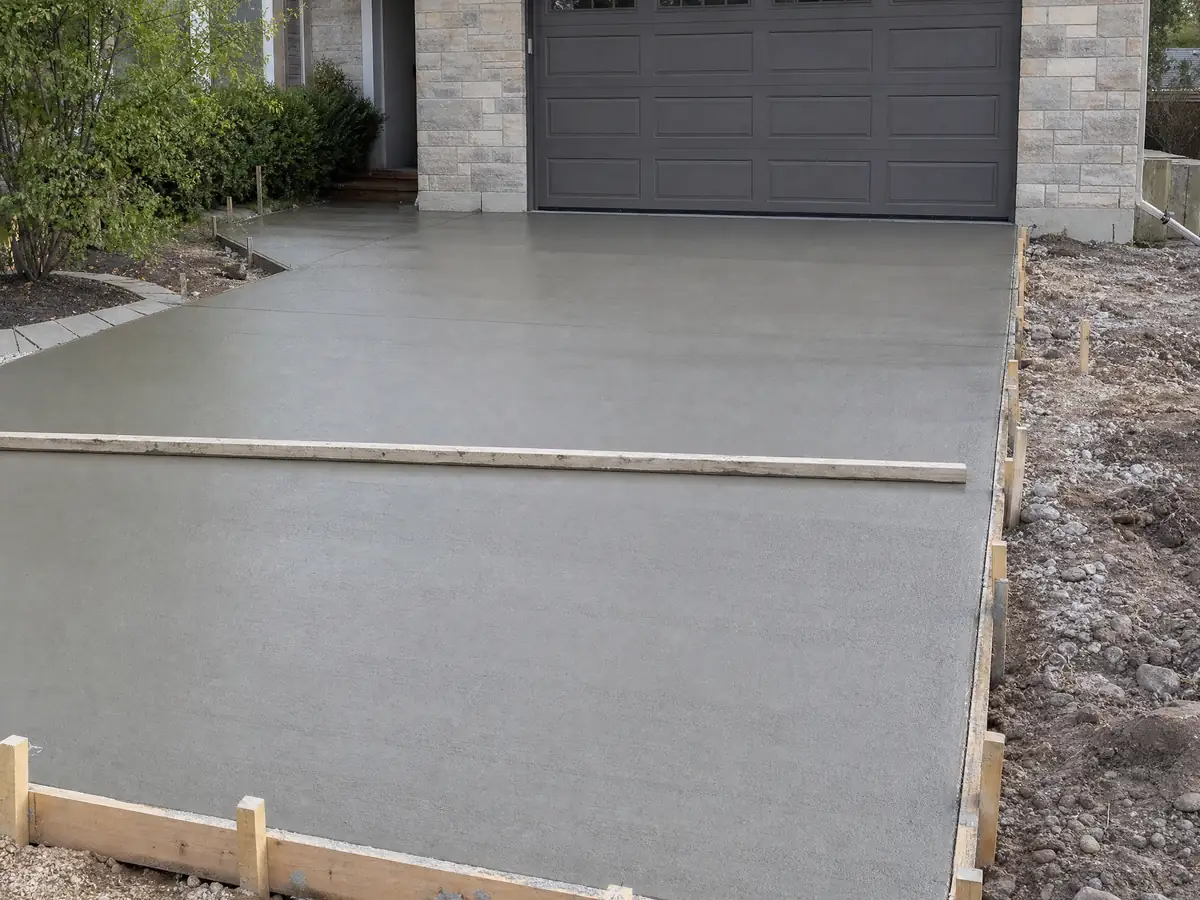
Can you pour a footing near the Mission Creek fault in Desert Hot Springs?
Only if the lot clears the fault and its rules. Section 17.40.090 prohibits development within 50 feet of an active or potentially active fault, and Chapter 15.64 asks for a registered geologist's report before approval inside a State earthquake fault zone. That chapter does not apply to alterations or additions worth 50 percent or less of a structure's value, and it exempts single-family wood-frame homes of two stories or fewer outside a development of four or more homes, plus mobile homes.
The General Plan says the San Andreas system crosses the city from northwest to southeast, with the Mission Creek, Banning and Devers Hill faults, and that development already sits inside the Mission Creek Alquist-Priolo zone. Liquefaction potential is generally low to moderate because groundwater is deep, but it is higher near the Banning fault. We did not look up any parcel's fault, liquefaction or flood status, so no lot gets a verdict from us.
Downtown shows what old masonry does in a fault corridor. The 2024 Local Hazard Mitigation Plan counts about 36 unreinforced masonry buildings, mostly downtown and including City Hall, and ranks earthquake as the top hazard. New footings and rebar deserve an engineer's detail and every inspection the City calls for.
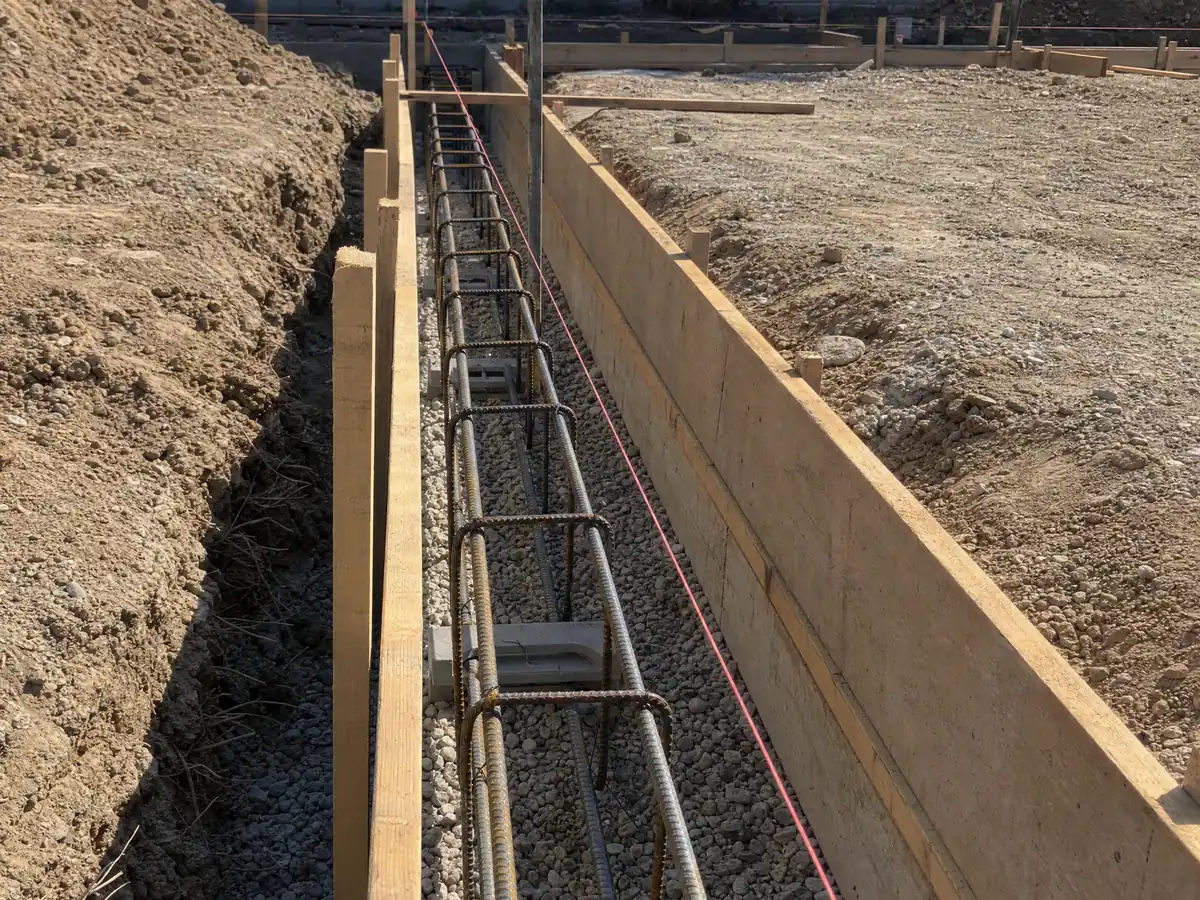
Do a patio, walkway or driveway need a permit in Desert Hot Springs, and where does the water go?
Walkways and driveways are on the City's exempt list, patio slabs are not named, and the handout says an exemption never authorizes work that violates the code, so ask Building & Safety about a patio. Any work in the right-of-way, such as a driveway approach, sidewalk or curb core, needs an Encroachment Permit from Engineering even though the driveway itself is exempt.
Drainage is the local problem. The 2024 Local Hazard Mitigation Plan says older residential areas without curb and gutter see low-lying damage and debris flow, and Tropical Storm Hilary damaged the Little Morongo Road, Indian Canyon Avenue and Dillon Road crossings near Mission Creek and Big Morongo Wash. Slope a new slab away from the house and ask where the runoff leaves the lot.
Mapped flood hazards are stricter. Chapters 15.68 and 15.72 require new construction and substantial improvements to be anchored, flood-resistant and drained, with the lowest floor at or above base flood elevation in AE, AH and A zones. We did not look up any parcel's flood zone, so check before drawing a slab next to the house.
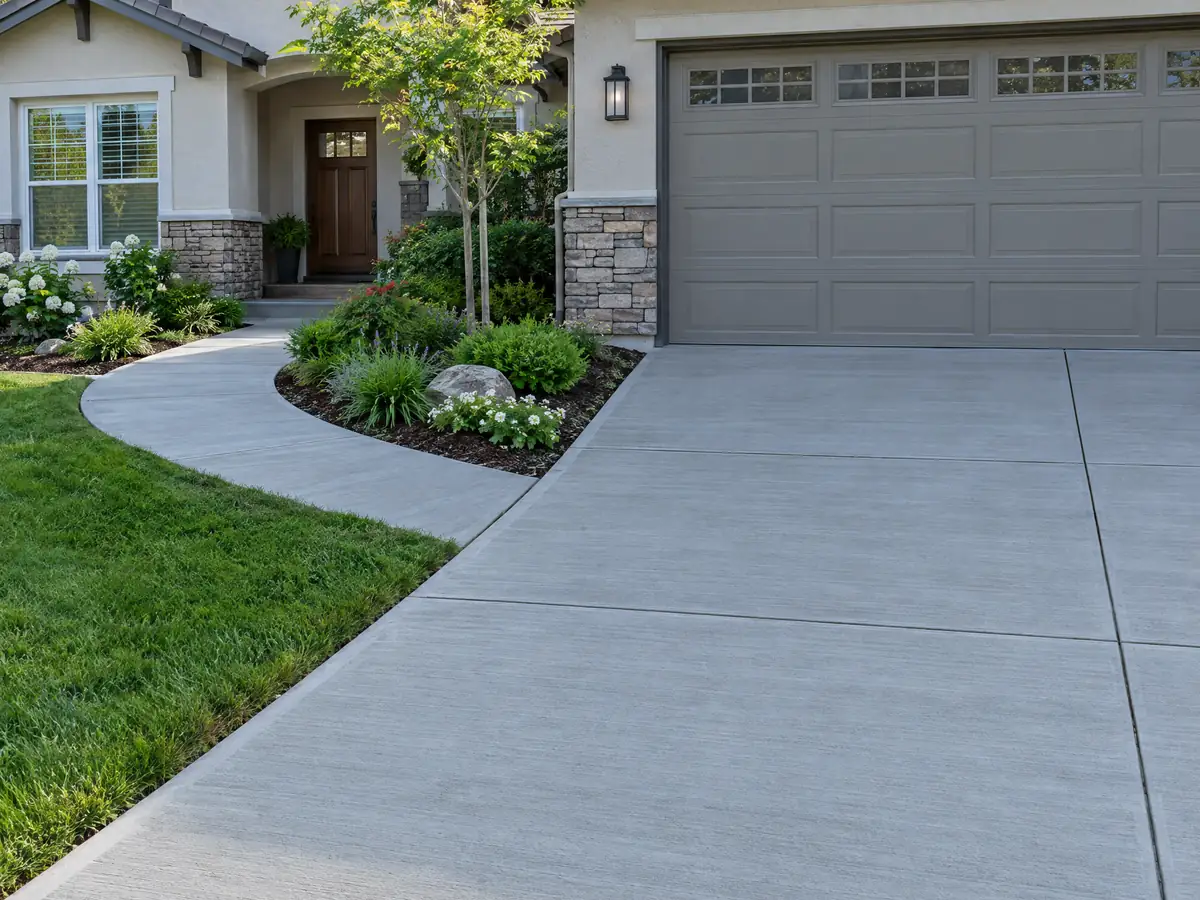
How tall can a block wall or retaining wall be in Desert Hot Springs before it needs a permit?
Retaining walls up to 4 feet, measured from the bottom of the footing, are exempt unless they carry a surcharge, and the building handout exempts fences up to 6 feet. The Planning fence packet still says a fence application with a plot plan must be approved before installation, so two City documents disagree and the counter has the last word.
Block walls have their own steps. The City publishes standard details for free-standing walls from 3 to 6 feet, pilaster walls and retaining block walls to 6 feet, with inspections at footing, rebar and pre-grout, and final before any decorative cap. The new-house fee sheet shows a separate block wall permit fee of $215.00, which covers a house project, not a backyard wall. Section 17.40.110 limits anything over 30 inches high in the corner traffic safety sight area and sets 4 feet for the first 10 feet of a front or street-facing yard.
Wind numbers differ by document. The block wall standard dated 07/18/2024 lists 95 mph, Exposure C, while the Building Division publishes 130 mph for houses. Use the Division's figure for a house and treat the wall sheet's as that sheet's alone.
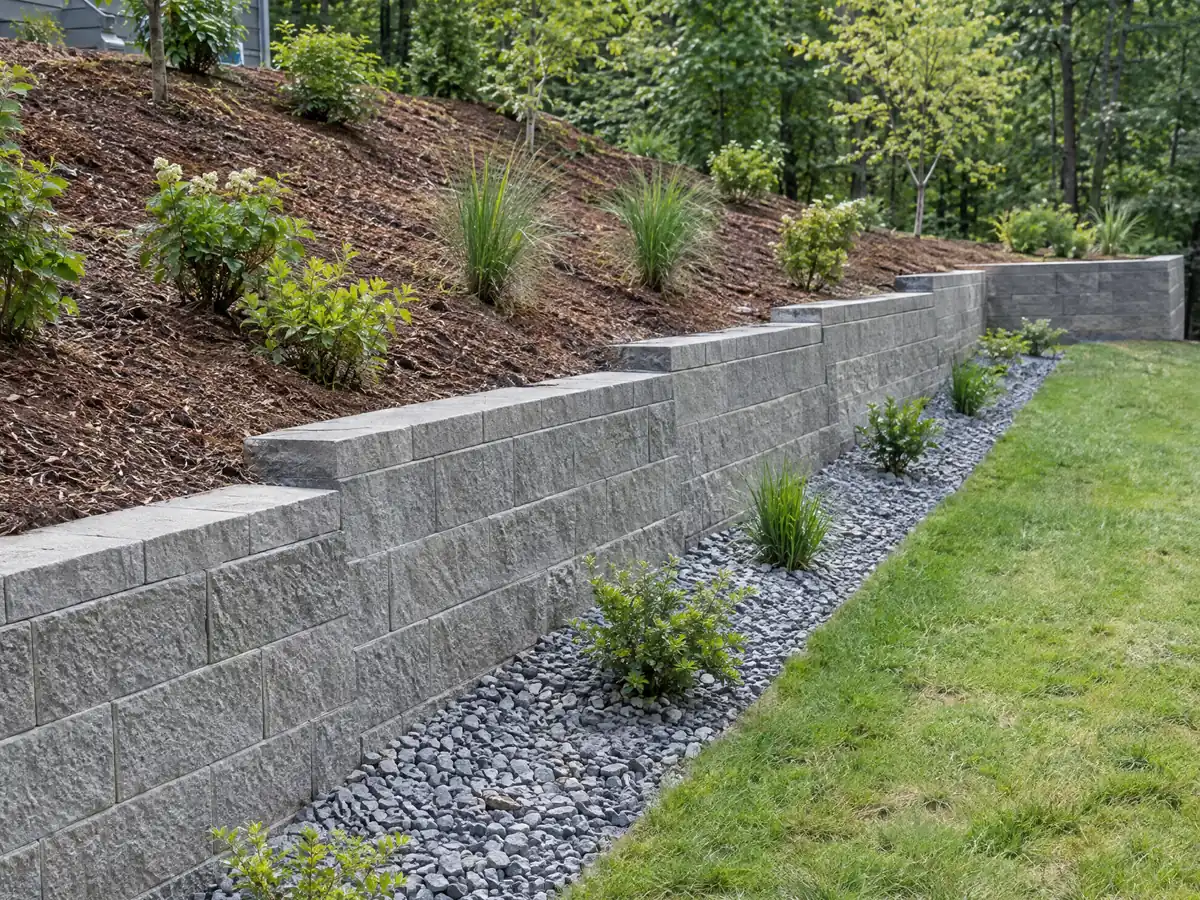
Can you pour concrete in 108 degree heat in Desert Hot Springs, and when can the crew work?
It can be done with planning, and the plan belongs to the contractor. NOAA's normals at Palm Springs Regional Airport give a July average high of 108.6 F and 114.8 days a year at or above 100 F, and the General Plan puts the city about 1,000 feet above the valley floor, regularly over 100 degrees. We found no local source on placing temperatures, so ask how the crew will place, finish and cure, when the truck arrives and who waters the slab.
Hours are written down. Municipal Code 9.04.030 bars construction between 5 p.m. and 7 a.m., or between 6 p.m. and 6 a.m. while daylight saving time is in effect, and on Sundays. A loaded truck cannot wait, so ask what the plan is if a pour runs late, and confirm the text with the City because it comes from the third-party mirror.
Cold is rare but real. The airport station averages 0.3 days a year at or below 32 F, and the General Plan says the city sometimes drops below freezing at night, so a pour in a winter cold snap deserves a question about blankets and timing.
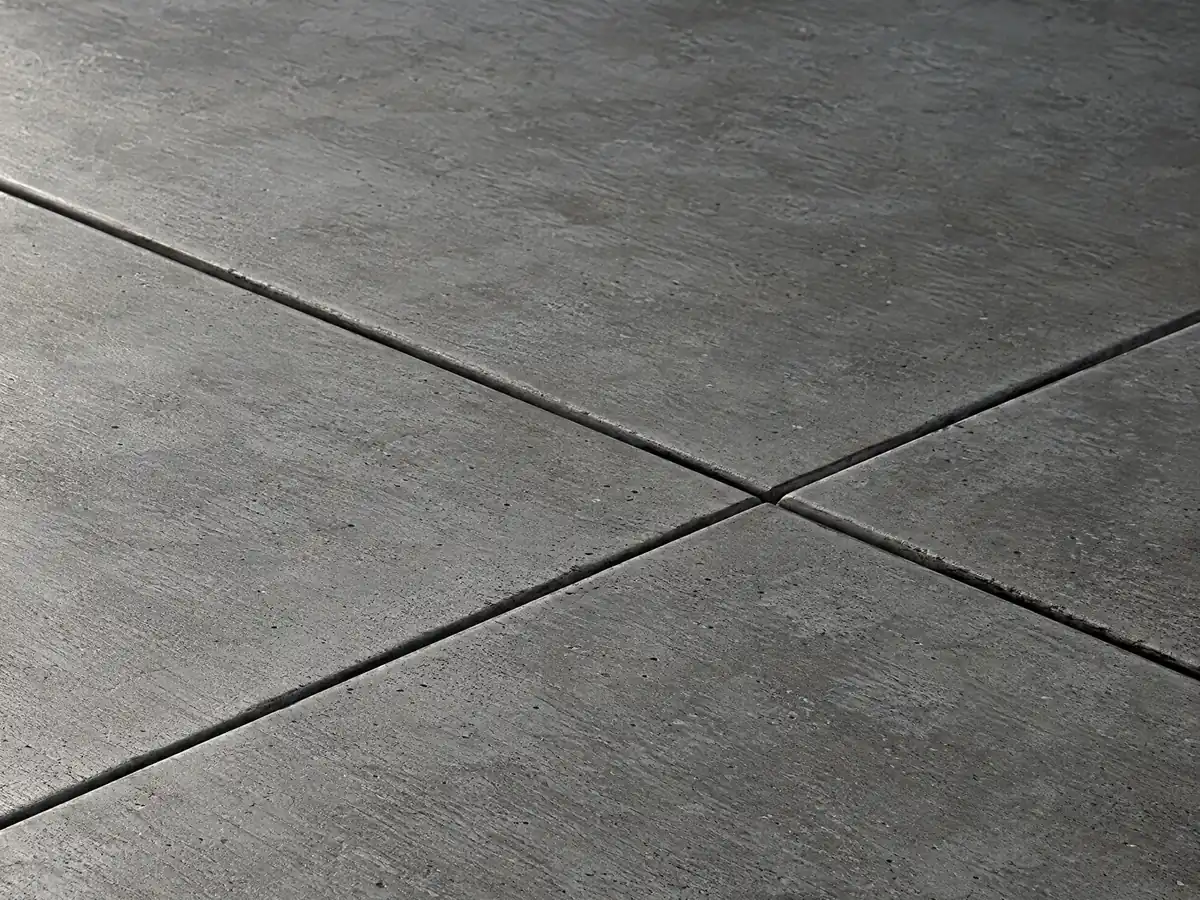
What does concrete work cost in Desert Hot Springs, and which license covers it?
No Desert Hot Springs price study turned up, so the anchor is Angi's Los Angeles pages. The August 4, 2026 patio page shows $4 to $13 a square foot with a $5,248 average, the July 20, 2026 stamped page shows $15 to $30 and the May 5, 2026 driveway page shows $8 to $20. Federal wage data for May 2025 list Los Angeles area cement masons at a mean $33.67 an hour. Desert bids may differ.
For planning we use $8 to $14 a square foot for plain flatwork of 300 square feet or more, $15 to $30 for stained, stamped or exposed aggregate and $9 to $20 for a driveway replaced including demolition. That puts a plain 20 by 20 slab near $3,200 to $5,600, with small jobs running higher per foot on minimum charges. Dust control, water, haul-off, rebar and any encroachment permit belong on their own lines.
CSLB's C-8 class covers forming, pouring and finishing flat and other concrete work, and work that needs a permit needs a licensed contractor under Business and Professions Code 7048. Our license check guide shows how to read a record.
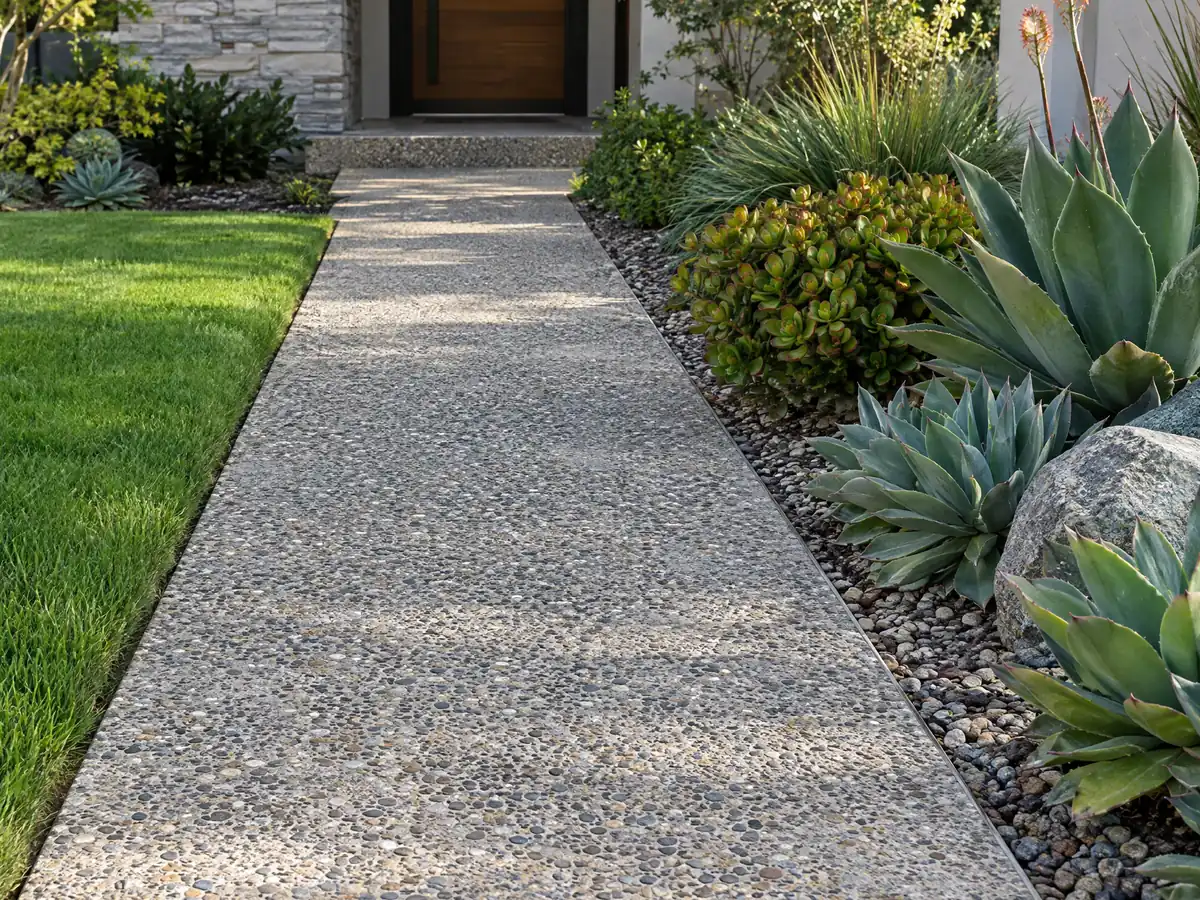
Concrete photos from Desert Hot Springs and nearby communities
Footings, rebar, screeded slabs and finished walks and walls from Desert Hot Springs and the desert communities around it, shown at the steps where the rules bite. Tap any photo to enlarge it.
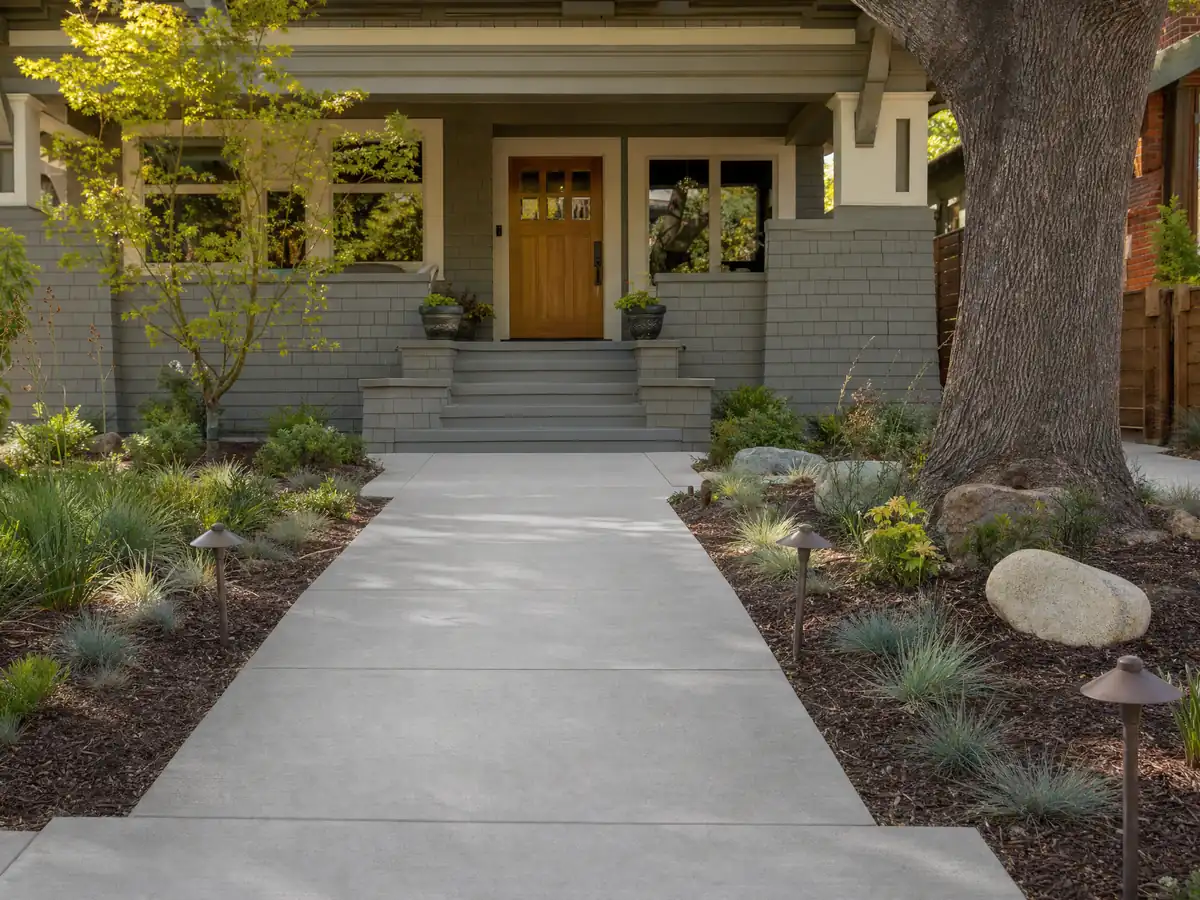
What concrete costs around Desert Hot Springs
Dollar figures here are Los Angeles planning ranges, not a Desert Hot Springs bid, and the dust plan, water, demolition, haul-off, rebar and any wall or encroachment permit should be separate lines on the written proposal. The same property may need flooring in Desert Hot Springs or decks in Desert Hot Springs. Desert neighbors to compare are concrete in Palm Springs, concrete in Cathedral City, concrete in Palm Desert and concrete in Indio, with concrete in Los Angeles as the benchmark city. The subcontractor guide names who forms a slab, who finishes it and who holds which license, and the flooring cost guide prices surfaces that go over one.
| What it covers | Typical range |
|---|---|
| Patio, walkway or slab, broom finish, 300 sq ft or more | $8 to $14 per square foot |
| Decorative: stained, stamped or exposed aggregate | $15 to $30 per square foot |
| Driveway replacement, with demolition of the old slab | $9 to $20 per square foot |
| 20 by 20 foot plain patio (400 sq ft) | About $3,200 to $5,600 |
| 20 by 20 foot decorative patio (400 sq ft) | About $6,000 to $12,000 |
| Small jobs under 300 sq ft | Usually above the per-foot range |
| Retaining walls | Set by the written proposal |
Other work we manage in Desert Hot Springs
Desert Hot Springs concrete questions, answered
Can I pour a concrete patio without a permit in Desert Hot Springs?
Maybe, but the exempt handout names walkways and driveways, not patio slabs. It also says an exemption never authorizes work that breaks the code, so dust control, setbacks and any wall still apply. Call Building & Safety at (760) 329-6411 with the size, height and location before the forms go in.
How much should a 20x20 concrete patio cost?
Plan on roughly $3,200 to $5,600 for 400 square feet of plain concrete at $8 to $14 a square foot in Los Angeles, while Angi's August 2026 Los Angeles page lists a 20 by 20 slab at $1,600 to $5,200. No desert study turned up. Water, demolition and drainage move either number.
Can I expand my driveway without a permit?
The City's handout exempts driveways, but a driveway approach in the right-of-way needs an Encroachment Permit from Engineering. Whether a wider driveway fits depends on the lot's zoning district, which sets setbacks and coverage. Ask Planning at (760) 329-6411 with a sketch before any saw cuts the curb.
What is the maximum height of a retaining wall without a permit in California?
The model code exempts retaining walls up to 4 feet, measured from the bottom of the footing to the top, unless they support a surcharge. Desert Hot Springs' handout follows that line, while its Planning fence packet still wants an application for fences, so confirm with the counter before digging.
Is 4 inches of concrete thick enough for a driveway?
Many installers pour 4 inches for walks and patios, but we found no Desert Hot Springs code line on driveway thickness and treat the figure as industry practice. A driveway that carries delivery trucks or an RV may need more, so have the subcontractor state thickness, base and reinforcing in writing.
How much does a 300 sq ft stamped concrete patio cost?
Stamped work at $15 to $30 a square foot on Angi's Los Angeles page puts 300 square feet at about $4,500 to $9,000. The figure comes from a July 20, 2026 page that shows no method, and we found no desert study. Pattern, color, sealer and tear-out of an old slab decide where the job lands.
Do I need a dust control plan to pour concrete in Desert Hot Springs?
Yes if the job needs a grading permit or a building permit that disturbs more than 5,000 square feet. Chapter 15.84 wants a City-approved plan before earth-moving, and Rule 403.1 adds District requirements. A small patio usually falls below the threshold, though visible dust still may not cross the property line.
Can you pour concrete in 108 degree heat?
It can be done with planning, though we found no local source on temperature limits. Ask the concrete subcontractor how it will place, finish and cure, what time the truck arrives and who waters the site. Municipal Code 9.04.030 bars construction after 5 p.m., or 6 p.m. in daylight saving time, and on Sundays.
What license does a concrete company need in Desert Hot Springs?
A concrete company needs a current California license, usually C-8 for poured and finished concrete work or C-29 for block walls, and a licensed contractor is required when a permit is involved. Check the number on the CSLB site and ask each subcontractor for a license and certificate of insurance.
Tell us the lot, the slab size and which way the water runs
Tell us what you want poured and how big, whether it meets a wall, a pool or the street and where rain or sprinkler water runs today. The dust, fault and permit questions ride along to the first visit.