
Concrete Companyin Cathedral City, CA
A concrete company in Cathedral City works under a double dust rule: the City's Chapter 8.54 and South Coast AQMD Rule 403.1 both want an approved plan before earth-moving on a grading permit or more than 5,000 square feet. Retaining walls over 2 feet need a permit, and new foundations must sit 18 inches above the curb or street crown.
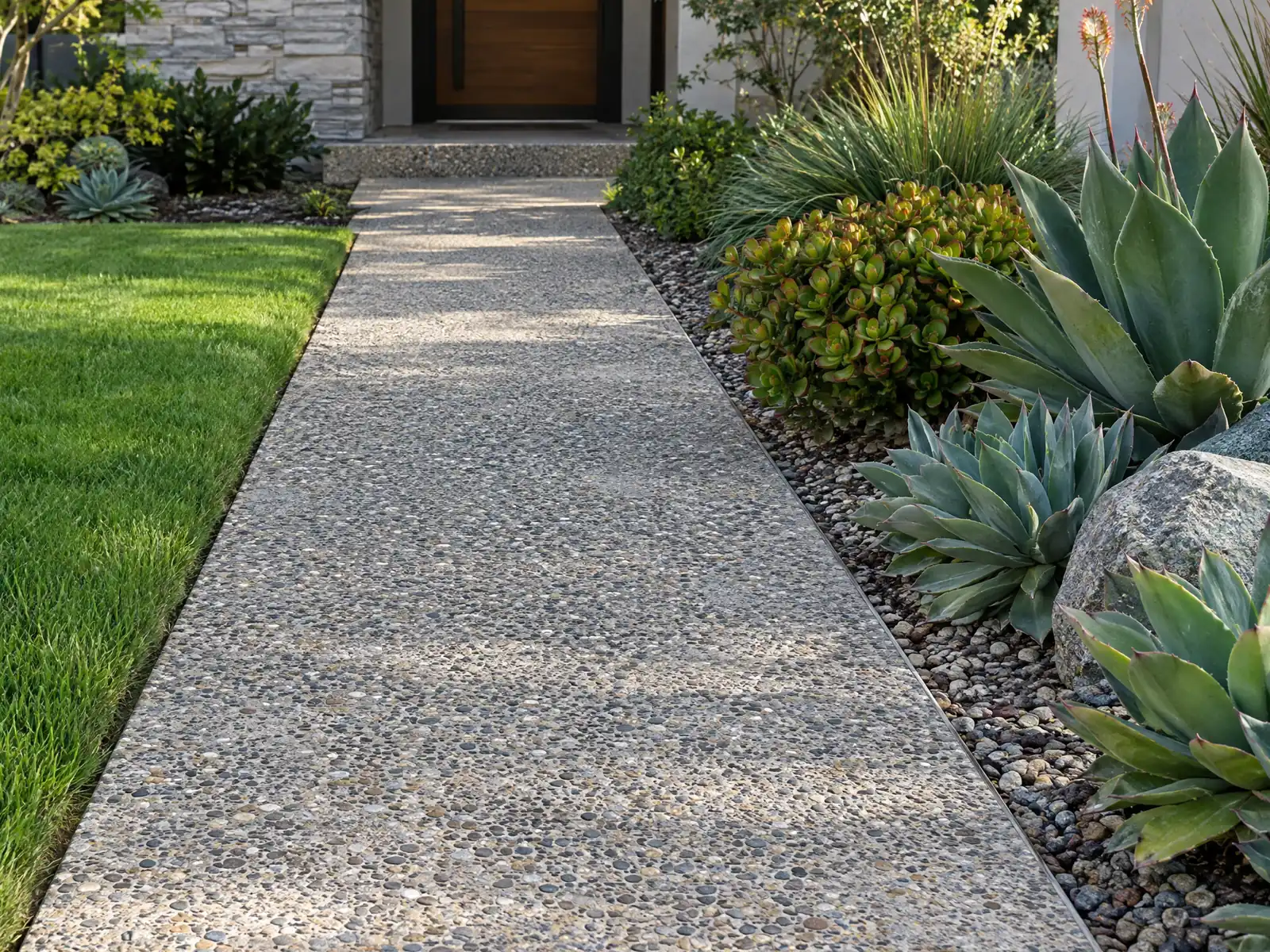
Cathedral City's first subdivision dates to 1925, the Agua Caliente Band's reservation (established 1876) covers approximately 28 percent of the city according to the City, and the city incorporated in 1981 with borders on both sides of Interstate 10. Most of its concrete comes from the boom that followed: the Census Bureau's 2020 to 2024 estimates count 22,599 homes, 56.8 percent of them built before 1990, so many driveways, walks and patios are 35 years old or more.
MDG Builders (CSLB #1040337) is a Tarzana general contractor that plans and manages the job while a licensed concrete subcontractor forms, places and finishes it. For a Cathedral City pour we raise the dust, wall and foundation-height questions with the City's Building & Safety Division. The concrete page covers finishes, and the Cathedral City overview lists our other trades here.
What Cathedral City's Building & Safety Division, Engineering, South Coast AQMD and state law say about concrete work
Where concrete permits come from in Cathedral City: City of Cathedral City Community and Economic Development Department, Building and Safety Division.
- Retaining walls: the CBC amendment deletes the model code's permit exemption for retaining walls not over 4 feet, and the CRC amendment exempts only retaining walls not over 2 feet (measured from bottom of footing to top of wall) that support no surcharge (third-party mirror, Municipal Code Chapters 8.04 and 8.18).
- Dust control for concrete, grading and demolition work: a grading permit or a building permit disturbing more than 5,000 square feet needs a fugitive dust control plan approved by the City before any earth-moving (Coachella Valley Fugitive Dust Control Handbook format), kept on site; sites of 5 acres or more or hauling 100 cubic yards a day need a track-out device at the exit, and demolition must follow AQMD Rule 1403 (Chapter 8.54; third-party mirror).
- AQMD Rule 403.1 (amended April 2, 2004) is supplemental to Rule 403 and applies only to the Coachella Valley; it requires a fugitive dust control plan approved by the AQMD Executive Officer before earth-moving on a disturbed surface area of more than 5,000 square feet (paragraph (i)(4) exempts operations whose plan goes to a city or county with a District-approved dust ordinance), signage with a project contact, and 24-hour stabilization of new bulk material piles in the Blowsand Zone (2 miles either side of I-10 from SR-111 to Jefferson Street in Indio); the rule's 25 mph wind stop applies to agricultural tilling, not construction (AQMD rule text and AQMD Rule 403 page).
- The Residential Code amendment R403.1.7.3.1 requires the top of the exterior foundation of residential structures to be at least 18 inches above the top of the curb (or above the street crown where the lot drains toward the road or is subject to water impounded behind it) unless the Chief Building Official waives it for an engineered equivalent or unique site conditions (third-party mirror, Municipal Code Chapter 8.18).
- R1 driveways and open parking may not cover more than 50 percent of the required front or street-side yard (up to 75 percent on a major or arterial street where the city engineer requires a turnaround), driveways must be at least 16 feet wide, and parking must sit on Portland cement concrete or similar approved durable material; R1 lots are limited to 40 percent building coverage and 26 feet in height, with a two-car garage required (Chapter 9.14; third-party mirror).
What does Cathedral City's Chapter 8.54 require before a concrete crew moves any dirt?
A City-approved dust control plan, once the job disturbs enough ground. Chapter 8.54, adopted in 2004 and read here in GoCodebook's third-party mirror, requires the plan for a grading permit or for a building permit that disturbs more than 5,000 square feet. It follows the Coachella Valley Fugitive Dust Control Handbook format, must be approved before earth-moving and stays on site. A patio or walk far below that size looks to fall outside it, but confirm the area with the City.
The daily limits are specific. Dust may not exceed 20 percent opacity or travel more than 100 feet, disturbed ground must be damp or stabilized after hours, track-out past 25 feet must be cleaned within one hour, and signage names a project contact. Sites of 5 acres or more, or hauling 100 cubic yards a day, need a track-out device at the exit, and demolition follows AQMD Rule 1403, whose text we did not open.
Debris rules apply on the same site. The City's amended building code (Section 117) requires a trash container of at least three cubic yards with a hinged, latched lid, anchored against wind, emptied weekly and kept off the public right-of-way, and inspectors will not inspect while debris is piled up, the final included. Broken-out concrete is heavy rubbish, so the proposal should show who hauls it and when.
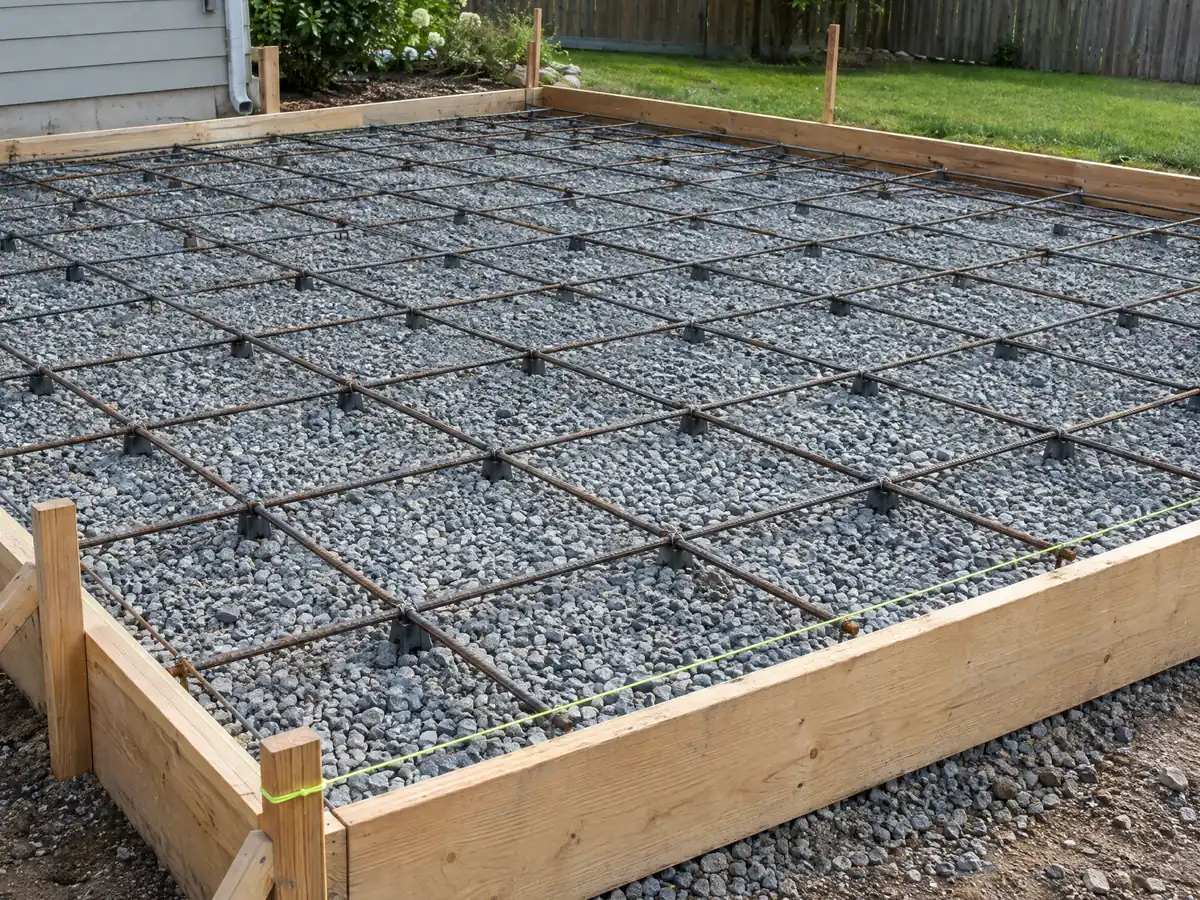
How does AQMD Rule 403.1 apply to a Cathedral City concrete job, and where is the Blowsand Zone?
It adds a district layer on top of Rule 403, for the Coachella Valley only. Amended April 2, 2004, the rule requires a plan approved by the District's Executive Officer before earth-moving on more than 5,000 square feet of disturbed surface, and paragraph (i)(4) exempts work whose plan goes to a city or county with a District-approved dust ordinance. Whether Chapter 8.54 counts as District-approved is unconfirmed, so ask the City which office reviews your plan. The District explains filing on its dust control page.
Wind is the point of the rule. The Blowsand Zone is the corridor 2 miles either side of I-10 from the SR-111 junction to Jefferson Street in Indio, and inside it new bulk material piles must be stabilized within 24 hours. The rule's 25 mph wind stop applies to agricultural tilling, not construction. We mapped no parcel, so ask whether a lot is inside the zone; North City, along I-10, sits nearest the corridor.
The Safety Element explains why. Strong winds from the San Gorgonio Pass carry sand across the valley floor, windblown deposits underlie much of the developed city, and a thick accumulation called the Palm Springs Sand Ridge rises in Cathedral City up to 120 feet above the valley floor. Gusts to 50 mph can reach any part of town, the north end most, so cover stockpiles, wet the subgrade and check the forecast on pour day.
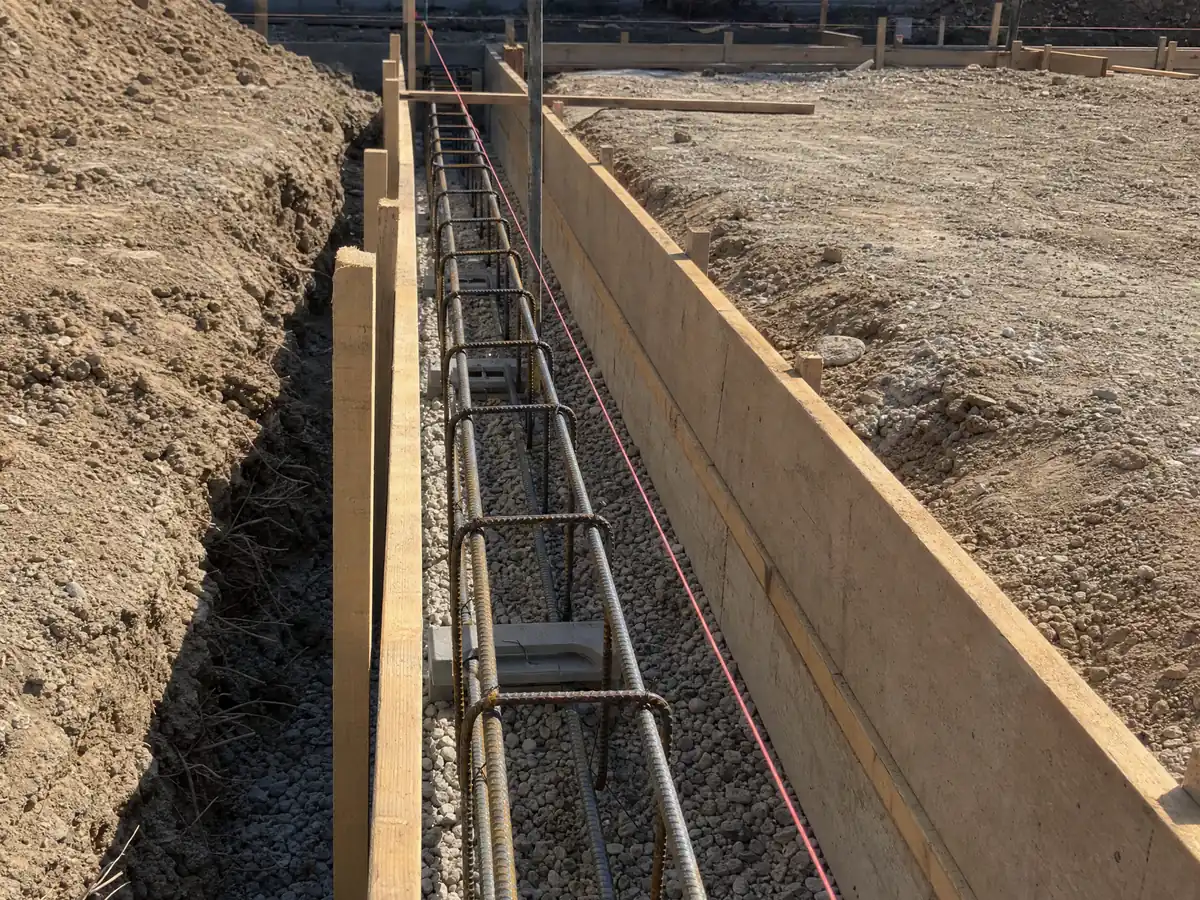
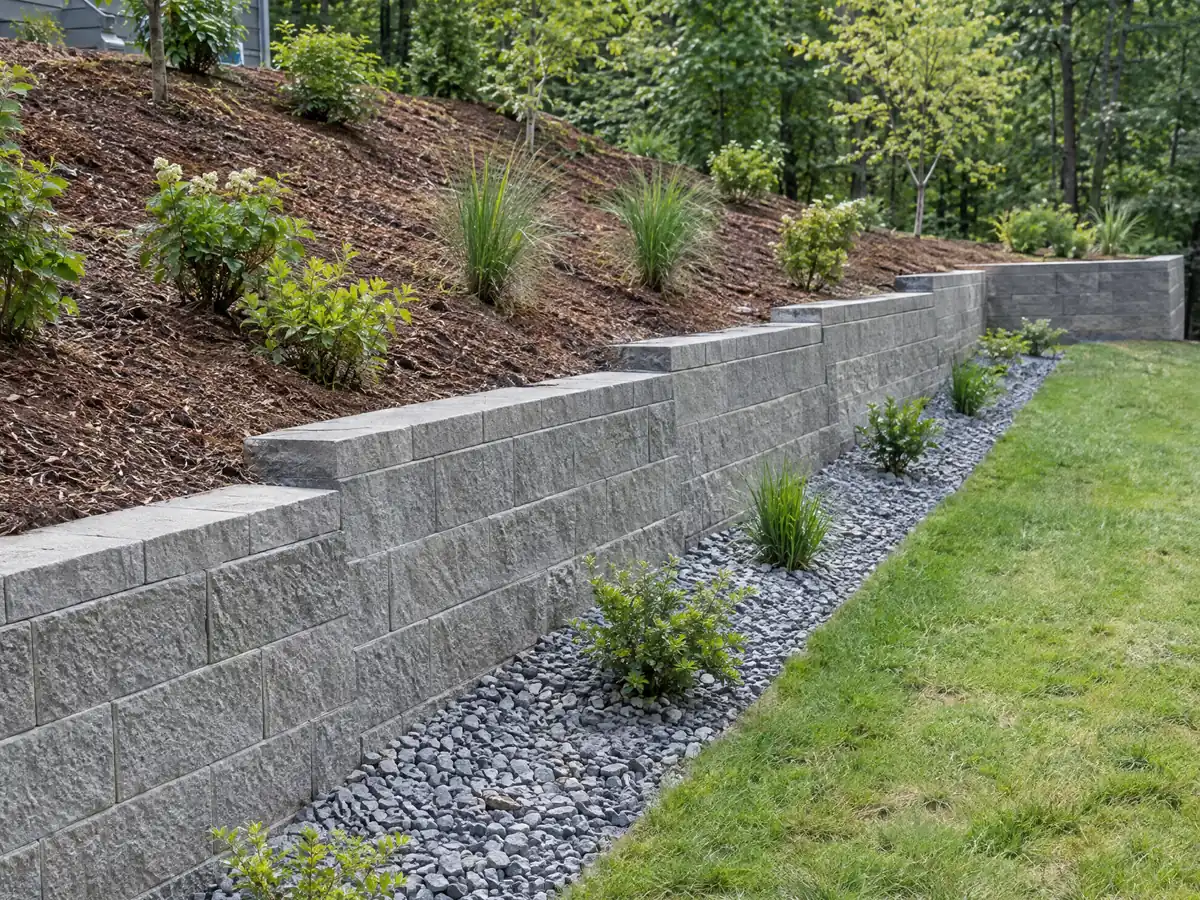
How tall can a block wall or retaining wall be in Cathedral City before it needs a permit?
Lower than most cities allow. The City's amendments exempt only fences and walls not over 3 feet, so a 4 to 6 foot block wall needs a building permit. Its Residential Code exempts retaining walls only up to 2 feet, measured from the bottom of the footing, when they carry no surcharge, and its Building Code amendment deletes the model code's 4 foot retaining wall exemption. The 2025 fee schedule lists a block or masonry wall permit at $358 for the first 100 feet plus $17 per added 25 feet, though its building column is headed Proposed Fee.
Zoning sets the ceiling. Rear and side yard fences may not exceed 6 feet, solid front yard fences stop at 42 inches, and height is measured from the top of a retaining wall when the fence stands on one. Corner lots keep visibility areas of 20 feet on local streets, 25 on collectors and 30 on major or secondary streets, where only 3-foot objects are allowed (Chapter 9.80, third-party mirror).
The City publishes drawings that shortcut engineering for some walls. Its garden wall standard shows 6 or 8 inch block with footings 17 to 29 inches wide in one option and 19 to 34 inches in another at heights of 3 to 6 feet, and separate retaining and combination wall standards exist. Block is masonry under CSLB's C-29 class, and tall or surcharged walls are priced after an engineer's visit, so no per-foot wall price appears here.
Why must a new Cathedral City foundation sit 18 inches above the curb?
Because water here arrives fast and downhill. The City's Residential Code amendment (R403.1.7.3.1) puts the top of an exterior foundation at least 18 inches above the top of the curb, or above the street crown where the lot drains toward the road or can hold impounded water, unless the Chief Building Official accepts an engineered equivalent or unique site conditions. Build that height into forms, stem walls, steps and garage slab elevations from the start.
Local flood history backs the rule. The Safety Element describes the Whitewater River Stormwater Channel on the west side, the East and West Cathedral Canyon Channels around the Cove and Eagle Canyon floods from the south and west, and it records the July 20, 2008 storm and the Eagle Canyon Dam finished in November 2015. Chapter 8.24 adopts the FEMA Flood Insurance Study dated August 28, 2008 and later revisions, but we state no flood zone for any address.
Slab work in the Cove has a grading wrinkle. The City requires a grading plan with any building permit for work in the Cathedral City Cove, and the Safety Element lists poorly drained intersections such as Vista Chino at Landau and Gerald Ford at Plumley. Liquefaction potential is low across most of the city but moderate to high in the north near the San Andreas fault, where the fault dams groundwater, so ask whether a soils report belongs on the job.
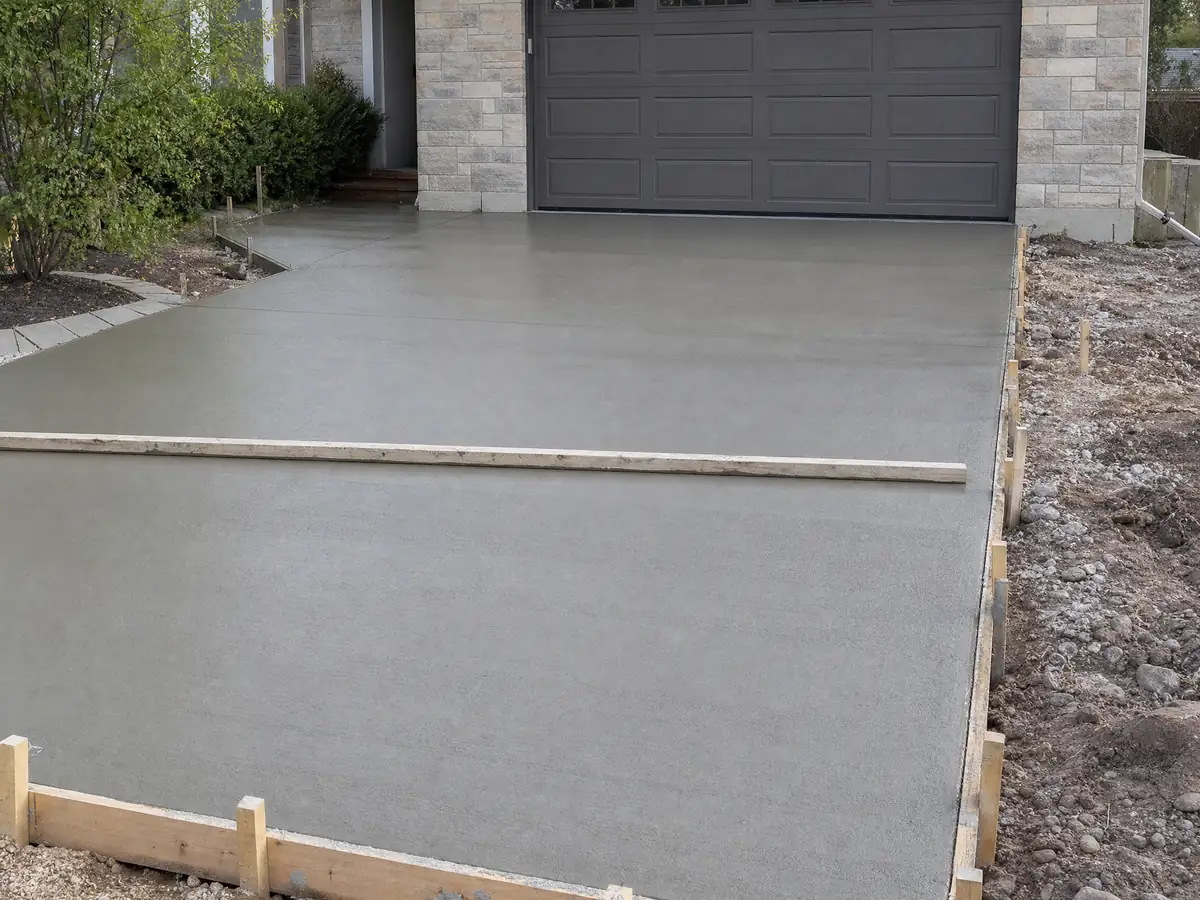
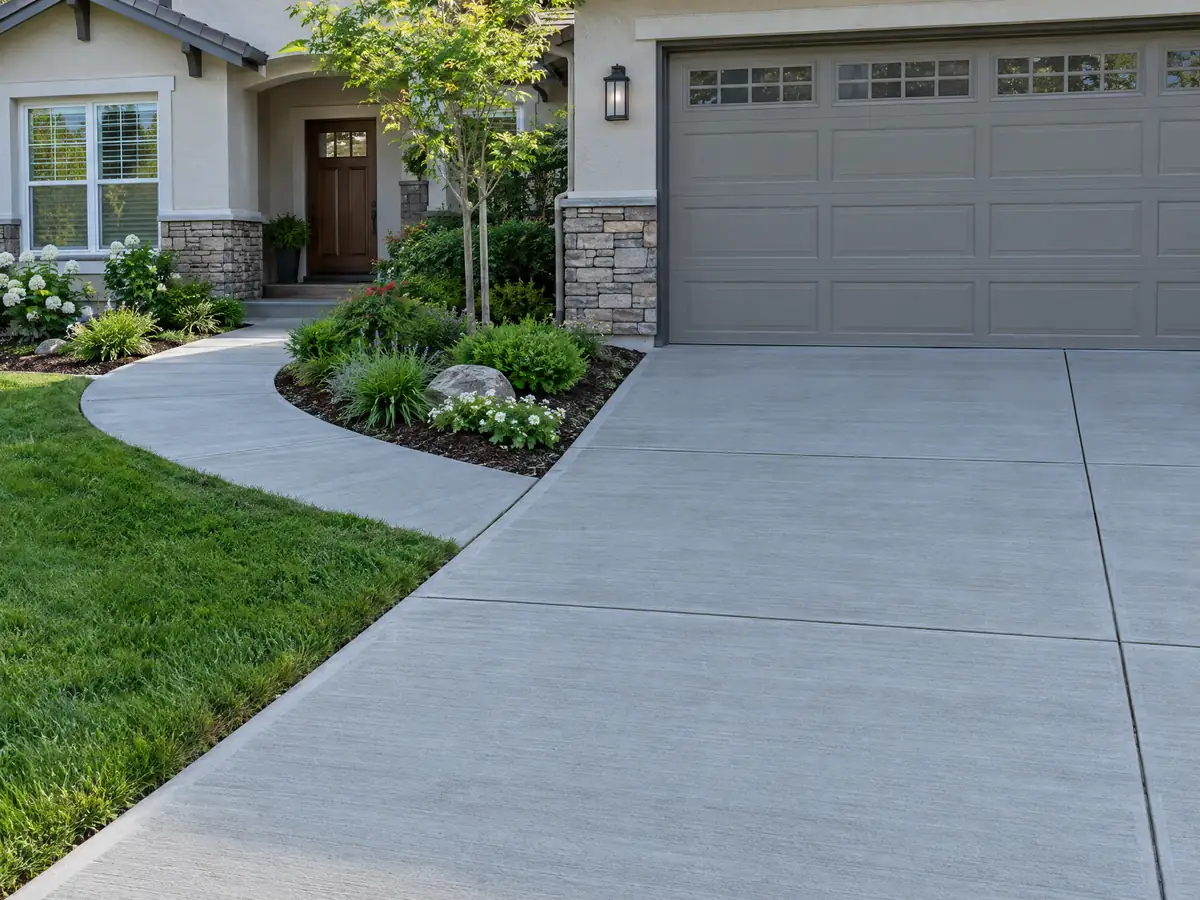
How wide can a Cathedral City driveway be, and what does the City allow in the right-of-way?
At least 16 feet wide, and no more than half the front yard. For R1 single-family lots the zoning chapter caps driveways and open parking at 50 percent of the required front or street-side yard, up to 75 percent on a major or arterial street where the city engineer requires a turnaround, and says parking must sit on Portland cement concrete or a similar approved durable material. Those numbers come from Chapter 9.14 in a third-party mirror.
The same chapter limits a lot to 40 percent building coverage and 26 feet in height and requires a two-car garage, which is worth knowing before a patio slab or RV pad eats the setbacks. Work in the public right-of-way is an Engineering matter: the fee schedule lists a residential driveway encroachment permit at $547 and a sidewalk encroachment at $328 for up to 20 linear feet, from a document whose building column reads Proposed Fee, so confirm the amounts.
HOAs add another approval in the golf communities. Wikipedia lists Cathedral Canyon, Date Palm, Cimarron and Desert Princess among the city's golf resorts, and association approval is separate from the City permit; the City does not publish HOA rules. With the 1980s the largest building decade at 6,860 homes, many aprons are past 35 years, so ask the crew to judge cracks and settling before choosing between resurfacing and replacement.
Can concrete be poured through a Cathedral City summer, and when can the crew start?
It can, with early starts and a plan. NOAA's 1991 to 2020 normals for Palm Springs Regional Airport show July highs of 108.6 F, August highs of 108.1 F and about 80 days at or above 100 F from June through August, and the City's Safety Element says summer afternoons can exceed 125 F. Only 0.3 day a year reaches 32 F, so freezing is not the concern. We found no Cathedral City source on placing temperatures or curing, so ask the subcontractor.
The posted hours help. Summer weekdays (May 1 to September 30) run 6:00 a.m. to 7:00 p.m. and winter weekdays 7:00 a.m. to 5:30 p.m., Saturdays are 8:00 a.m. to 5:00 p.m. all year, and Sundays and Government Code holidays are off. Inspections run Monday to Thursday only, so a Friday afternoon is a poor time to need forms or steel checked.
Water arrives in bursts. Rainfall is 4.61 inches a year, 3.44 of it from December through March, and summer thunderstorms flood more than winter storms, so a fresh slab needs a plan for a sudden cloudburst as well as for sun. Ask what covers the pour, who supplies water on site and how the schedule shifts when a storm is forecast.
What does concrete work cost in Cathedral City, and which license covers it?
No Cathedral City price study turned up, so the anchor is Angi's Los Angeles pages. Its August 4, 2026 patio page lists $4 to $13 a square foot with a $5,248 average, with $15 to $30 for stamped work (July 20, 2026) and $8 to $20 for driveways (May 5, 2026). Federal wage data for May 2025 give Los Angeles area cement masons a mean $33.67 an hour, and a desert bid may differ.
Our Los Angeles planning figures are $8 to $14 a square foot for plain flatwork of 300 square feet or more, $15 to $30 for stained, stamped or exposed aggregate and $9 to $20 for driveway replacement with demolition. Small jobs cost more per foot because of minimum charges. A Cathedral City proposal should list the dust plan, water, debris container, haul-off, rebar and any wall or encroachment permit separately, and the City's fee schedule adds a 3 percent technology fee on permit fees and 2.75 percent on card payments.
CSLB's C-8 class covers forming, pouring and finishing concrete, and permitted work needs a licensed contractor under Business and Professions Code 7048. Our license check guide shows how to read a CSLB record.
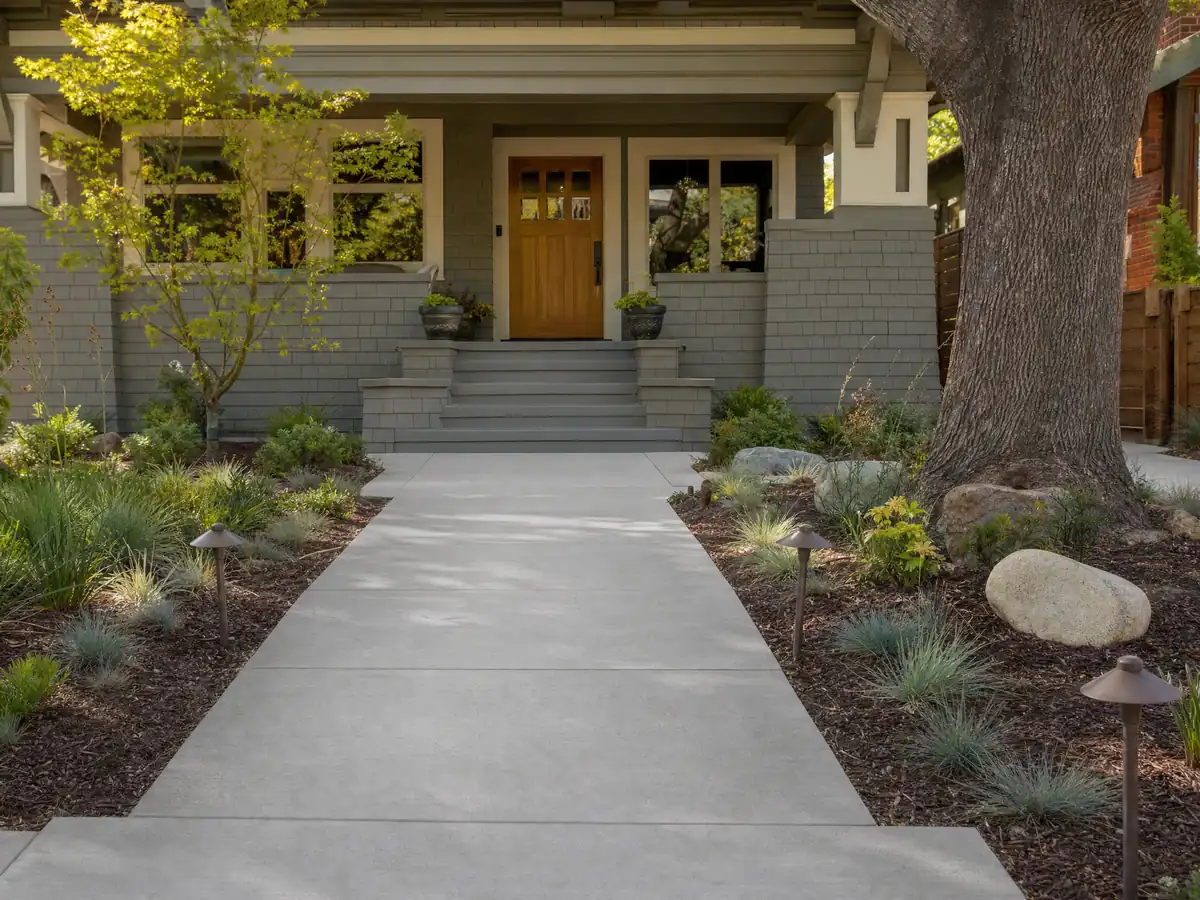
Concrete photos from Cathedral City and the Coachella Valley
Forms, steel, pours, finishes and walls from Cathedral City and the valley towns around it, photographed at the stages where the decisions are made. Tap any photo to enlarge it.
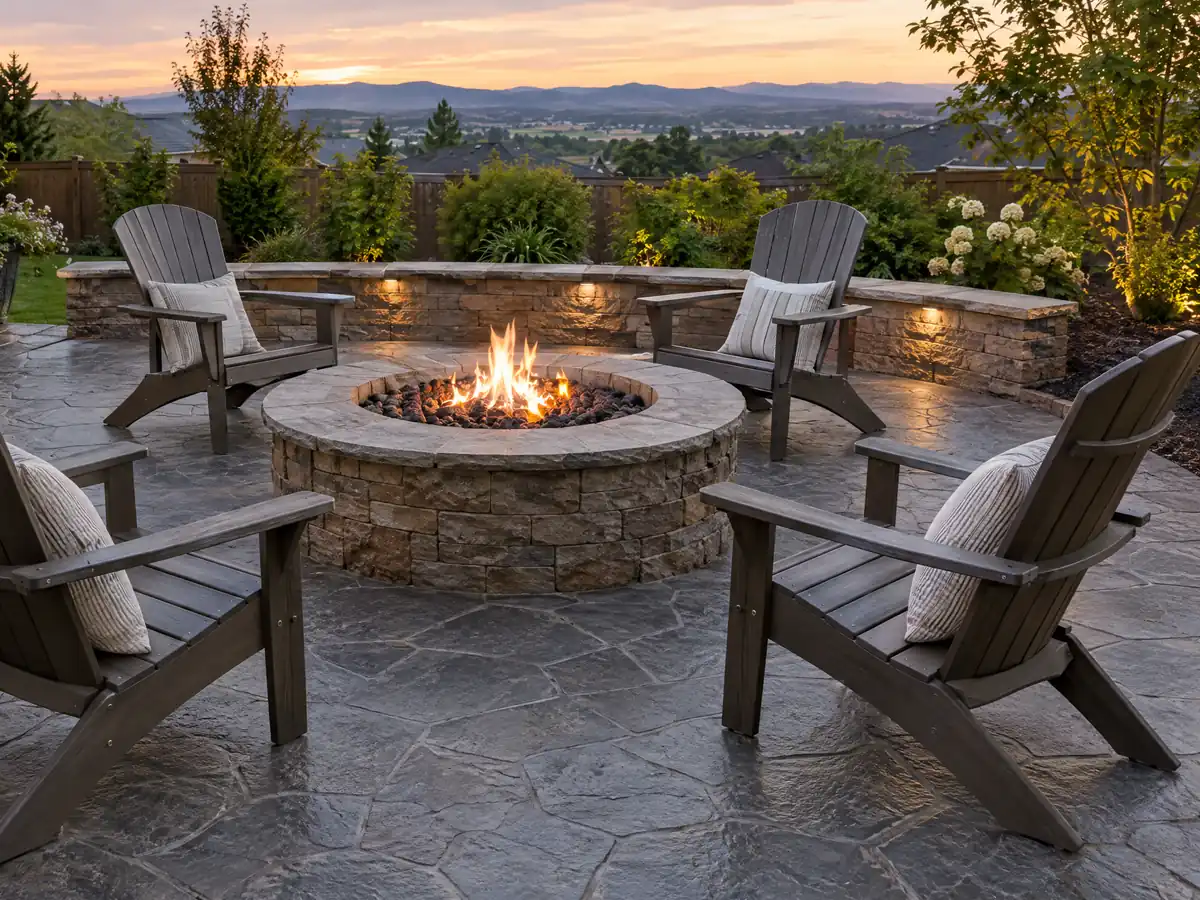
What concrete costs around Cathedral City
Dollar figures here are Los Angeles planning ranges, not a Cathedral City bid, and the dust plan, debris container, haul-off, rebar and any wall or encroachment permit belong on separate lines of the written proposal. The same property may need flooring in Cathedral City or decks in Cathedral City. Valley neighbors worth comparing are concrete in Palm Desert and concrete in Indio, with concrete in Hemet as another Riverside County city and concrete in Los Angeles as the benchmark. Our subcontractor guide shows which trade does which step, and the flooring cost guide prices what goes over a slab.
| What it covers | Typical range |
|---|---|
| Patio, walkway or slab, broom finish, 300 sq ft or more | $8 to $14 per square foot |
| Decorative: stained, stamped or exposed aggregate | $15 to $30 per square foot |
| Driveway replacement, with demolition of the old slab | $9 to $20 per square foot |
| 20 by 20 foot plain patio (400 sq ft) | About $3,200 to $5,600 |
| 20 by 20 foot decorative patio (400 sq ft) | About $6,000 to $12,000 |
| Small jobs under 300 sq ft | Usually above the per-foot range |
| Retaining walls | Set by the written proposal |
Other work we manage in Cathedral City
Cathedral City concrete questions, answered
Can I pour a concrete patio without a permit in Cathedral City?
We could not confirm it. The City pages we read do not say whether a plain ground-level slab needs a building permit. Dust rules, zoning coverage limits and any wall still apply. Call Building & Safety at (760) 770-0340 with the size, thickness and location before booking a crew, and ask whether Engineering needs to see work near the street.
How much should a 20x20 concrete patio cost?
At our Los Angeles planning range of $8 to $14 per square foot, 400 square feet of plain concrete is about $3,200 to $5,600, while Angi's August 2026 Los Angeles page shows a 20 by 20 slab at $1,600 to $5,200. No Cathedral City study turned up. Demolition, drainage and dust control push either number higher.
Do I need a dust control plan to pour concrete in Cathedral City?
Only for a grading permit or a building permit disturbing more than 5,000 square feet. Chapter 8.54 and Rule 403.1 start at that size, and the plan must be approved before earth-moving. A small patio looks to fall below it, yet visible dust still may not pass 20 percent opacity or travel more than 100 feet.
What is the maximum height of a retaining wall without a permit in California?
The model code exempts retaining walls up to 4 feet, but Cathedral City's Residential Code exempts only walls up to 2 feet, measured from the bottom of the footing, with no surcharge, and its Building Code amendment drops the exemption altogether. Block and masonry fences or walls over 3 feet also need a permit, so ask first.
Can I widen my driveway without a permit in Cathedral City?
Not freely. On R1 lots, driveways and open parking may cover no more than 50 percent of the required front or street-side yard, with a 75 percent limit on some major streets, and driveways must be at least 16 feet wide on Portland cement concrete or similar material. Work in the public right-of-way adds an encroachment permit from Engineering.
How much does a 300 sq ft stamped concrete patio cost?
At Angi's Los Angeles stamped rate of $15 to $30 per square foot, 300 square feet comes to roughly $4,500 to $9,000. That page is dated July 20, 2026 with no method shown, and no Cathedral City study turned up. Pattern, color, sealer and removal of an old slab decide where a job lands in that range.
Can you pour concrete in 105 degree heat?
Yes, with planning, though no Cathedral City source gives temperature limits. Ask the subcontractor what time the truck arrives, how the slab is finished and cured and who supplies water. Summer weekday work may start at 6:00 a.m. under the City's posted hours, and Sunday work is not allowed.
How high must a foundation sit above the street in Cathedral City?
At least 18 inches above the top of the curb, or above the street crown where the lot drains toward the road or is subject to impounded water. The Residential Code amendment lets the Chief Building Official waive it for an engineered equivalent or unique site conditions. Raise the question before the footing layout is drawn.
What license covers concrete work in Cathedral City?
Forming, pouring and finishing concrete is the C-8 class, and block walls are C-29. The City's own contractor paperwork was not part of what we read. Check the number on the CSLB site and ask each subcontractor for a license and a certificate of insurance.
Tell us what is being poured, how large it is and what the lot drains toward
Describe the slab, wall or driveway, the rough area, whether the lot is in the Cove, a golf community or a mobile home park, and what must be broken out first. Dust plan, wall height, foundation height and HOA questions are easier to settle before a crew is booked.