
Concrete Companyin Hemet, CA
A concrete company in Hemet can pour driveways and sidewalks without a building permit under the adopted code, but a driveway apron or curb cut in the public right of way needs an encroachment permit, and block or retaining walls over 3 feet need review. Shrink-swell valley soils make base and joints matter.
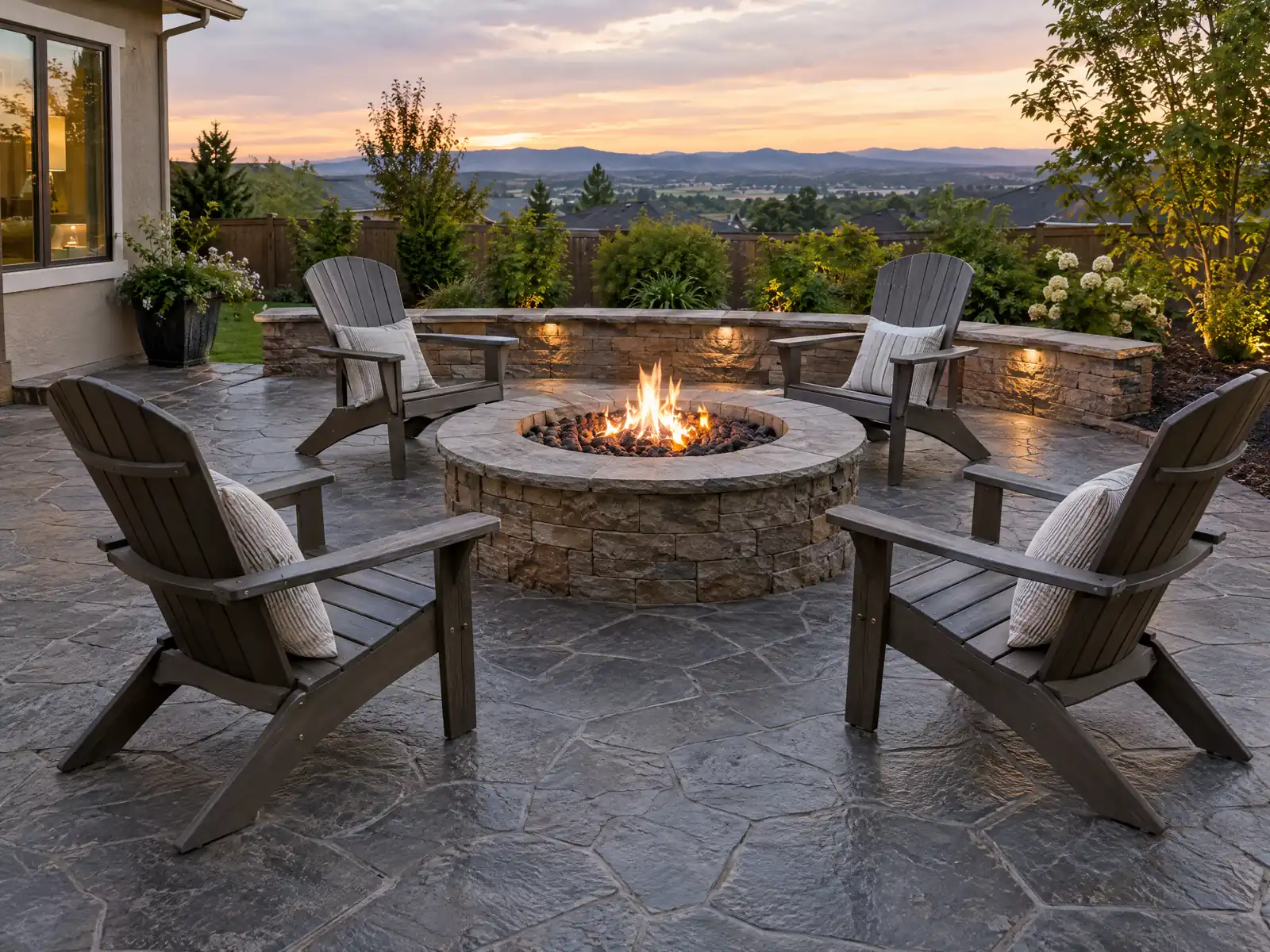
Hemet's flatwork is a mix of retirement-era pours and newer subdivision slabs. The Census Bureau's 2024 estimates date 7,667 of its 35,345 homes to the 1970s, 4,114 to the 1960s and 1,599 to the 1950s, and Wikipedia's census table shows the population rising from 5,416 in 1960 to 22,531 in 1980 and 58,812 in 2000. The 1,300 homes from 1949 or earlier stand on a street grid that General Plan 2030 says began in the late 1890s, so those homes, and the slabs poured with them, are at least 77 years old.
MDG Builders, CSLB #1040337, is a general contractor in Tarzana. On a Hemet pour we draft the scope, take the permit and right-of-way questions to the City's Building & Safety Division and engage a licensed concrete subcontractor to form, place and finish the work. The concrete page explains finishes, and the Hemet overview shows the other trades we manage here.
What Hemet's Building & Safety Division, Engineering, South Coast AQMD and state law say about concrete work
Where concrete permits come from in Hemet: City of Hemet Community Development Department, Building & Safety Division.
- The adopted Residential Code amendments exempt sidewalks and driveways from a building permit in Hemet (text read in GoCodebook's verbatim copy of the Hemet Municipal Code, a third-party mirror updated 2026-10-19, because the City's own code page at hemetca.gov/104/Municipal-Code returned HTTP 403).
- The adopted Building Code exemption covers sidewalks and driveways that are not more than 30 inches above adjacent grade, not over a basement or story below and not part of an accessible route (text read in GoCodebook's verbatim copy of the Hemet Municipal Code, a third-party mirror updated 2026-10-19, because the City's own code page at hemetca.gov/104/Municipal-Code returned HTTP 403).
- Engineering's permit page lists encroachment permit requirements (signed application, traffic control plan, City of Hemet business license, valid CSLB license and insurance), says concrete installation and improvement permits vary case by case and usually go through plan check, and says inspections are requested by email and approved the day before, with requests taken until 3 PM. A grading permit needs engineered plans, an erosion and sediment control plan, a geotechnical report and proof of state stormwater permit coverage.
- The Public Safety Element says shrink-swell (expansive) soils occur throughout Hemet, somewhat more in the eastern areas, that the condition is likely to affect building slabs and can be mitigated by replacing the soil, and that the City requires soil testing with building plan submittals for new construction.
- Grading permit exceptions in HMC Chapter 67 cover an excavation of 50 cubic yards or less that is under two feet deep, a fill of 50 cubic yards or less that is under one foot high on gentle natural slope, and excavation for re-compaction within five feet of an existing building's footings (text read in GoCodebook's verbatim copy of the Hemet Municipal Code, a third-party mirror updated 2026-10-19, because the City's own code page at hemetca.gov/104/Municipal-Code returned HTTP 403).
- Hemet's stormwater article requires construction sites to follow erosion and sediment control, forbids leaving pollutants in streets or storm drains, and asks new development and redevelopment to use low impact techniques such as increasing permeable areas and using porous materials for or near driveways and walkways (HMC 14-491) (text read in GoCodebook's verbatim copy of the Hemet Municipal Code, a third-party mirror updated 2026-10-19, because the City's own code page at hemetca.gov/104/Municipal-Code returned HTTP 403).
What do Hemet's shrink-swell soils and sinking groundwater do to a concrete slab?
They can lift, drop and crack it. The Public Safety Element says shrink-swell soils occur throughout Hemet, somewhat more in the eastern areas, that the condition is likely to affect building slabs, and that it can be mitigated by replacing the soil. The City requires soil testing with building plan submittals for new construction, and a patio or walk that sits on the same clay with no testing is a bet on the base.
Water under the valley matters too. The same element says pumping from the Hemet and San Jacinto groundwater basins can compact the aquifer and cause subsidence, which the City says soil testing can mitigate. It also rates the western border and the area east of Diamond Valley Lake highest for liquefaction because of high groundwater and sediment-rich soils, with the rest of the City moderately susceptible. Neither rating changes a driveway pour, but both explain why new foundations come with soil tests.
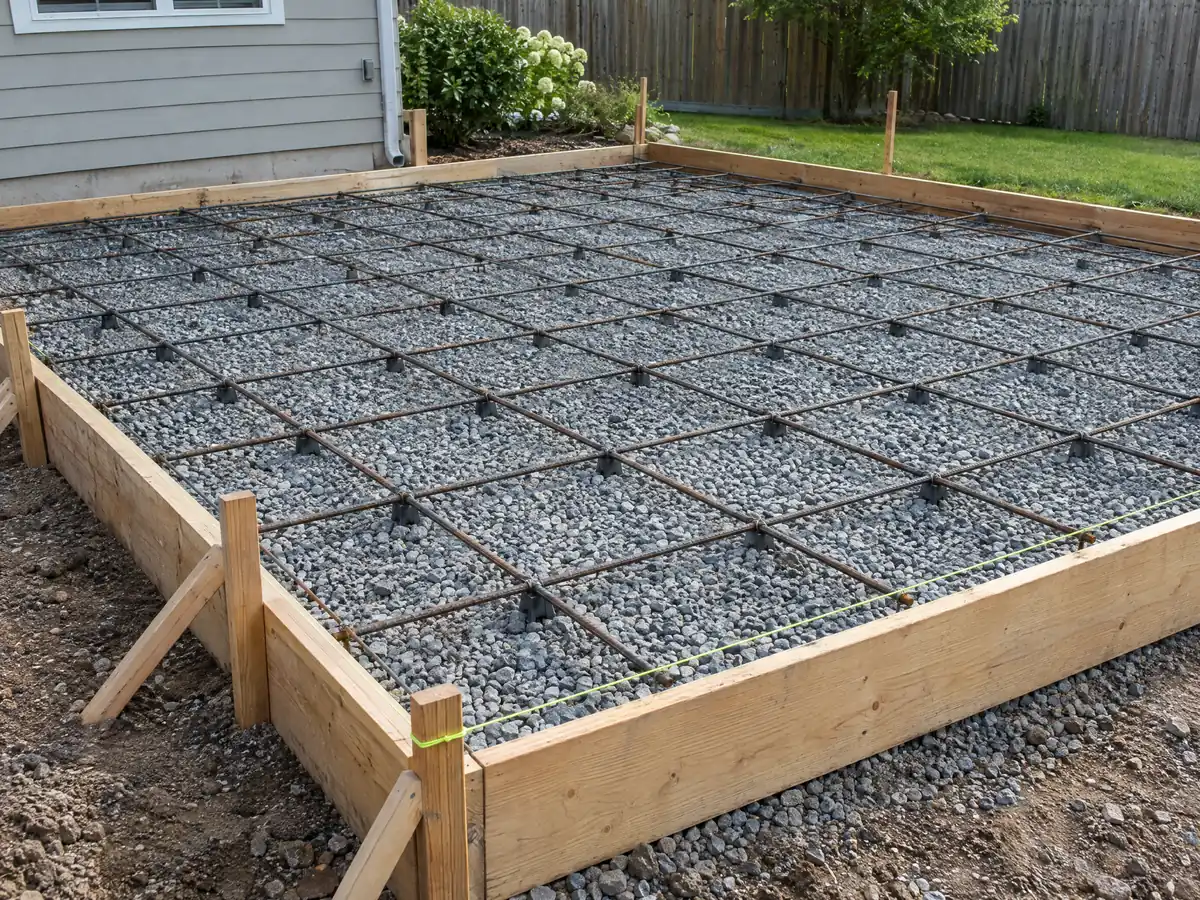
Ask the crew what lies under the slab: compacted base, thickness, joint spacing and rebar or mesh. We found no Hemet code citation for thickness or joint layout, so those are industry practice and the proposal should state them. Replacing the soil, not only pouring thicker, is the fix the City names.
How do Hemet's Santa Ana winds, 100 degree days and winter freezes affect a pour?
Wind and heat dry the surface faster than the middle of the slab. The City's Climate Vulnerability Assessment says Santa Ana winds frequently exceed 40 mph, and NOAA's normals for the Hemet station show about 41 days a year at or above 100 F, about 121 at or above 90 F and a 96.7 F August average high. We found no Hemet source on curing practice, so ask what the crew does about shade, wind breaks, curing compound and wet curing on a hot, windy morning.
Cold and rain show up as well. The same station averages about 13 days a year with lows at or below 32 F and 8.53 inches of rain from December through March, so a winter pour needs a plan for frost and for rain on fresh concrete. Pouring hours come from the adopted Building Code amendments (read in GoCodebook's third-party copy of the municipal code, so confirm): June through September 6 a.m. to 6 p.m., October through May 7 a.m. to 6 p.m., Saturdays 7 a.m. to 6 p.m., none on Sundays.
Two air rules apply to the work itself. SCAQMD Rule 403 bars dust that stays visible past the property line of an active operation, lists control measures and bars track-out of 25 feet or more in cumulative length, which covers Hemet grading, demolition and concrete cutting. Rule 1113 sets a 50 gram per liter VOC limit for floor coatings, a category that includes clear coatings made for or applied to concrete flooring, so ask for the sealer's data sheet.
Can I pour a concrete patio or slab without a permit in Hemet?
Sidewalks and driveways are exempt, and patios are less clear. The adopted Residential Code amendments exempt sidewalks and driveways from a building permit, and the Building Code version covers those not more than 30 inches above adjacent grade, not over a basement or story below and not part of an accessible route (both read in the third-party mirror, so confirm with the City). Neither line names a ground-level patio slab, so call Building & Safety at (951) 765-2475 with the size and location.
Two other permits can still apply to flat work. Engineering's permit page says concrete installation and improvement permits vary case by case and usually go through plan check, and a grading permit needs engineered plans, an erosion and sediment control plan, a geotechnical report and proof of state stormwater permit coverage. Chapter 67 excepts small jobs, such as an excavation of 50 cubic yards or less that is under two feet deep and excavation for re-compaction within five feet of an existing building's footings.
Every new permit application has gone through the Tyler EPL portal since August 11, 2026. Code Compliance says officers issue administrative citations when work is done without approval, so ask first on anything near the line.
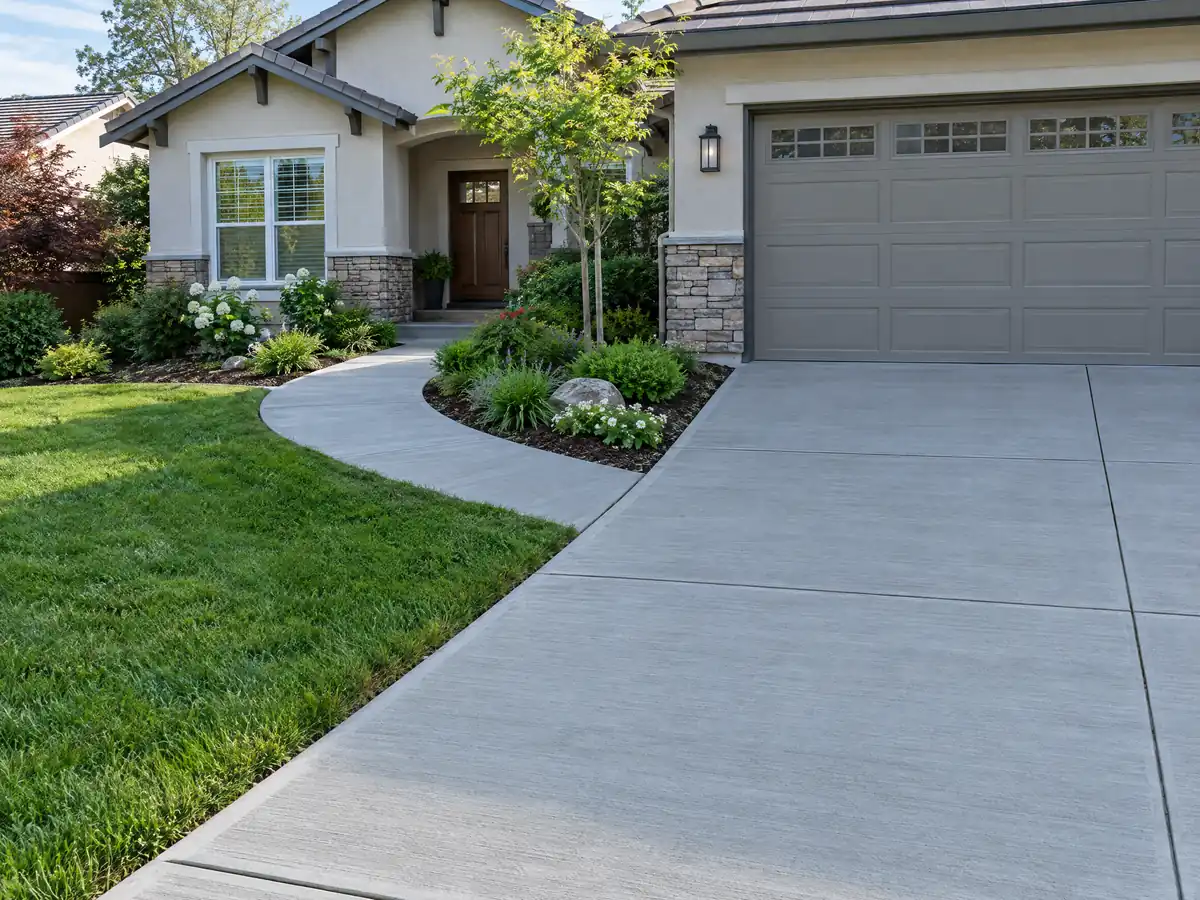
Do I need a permit to widen a driveway or add a curb cut in Hemet?
Yes if the work touches the public right of way. Code Compliance lists encroachment permits for work in the City right of way, such as driveway aprons, curb cuts, a second or circular driveway and utility work, and Engineering's page says an encroachment application needs a signed application, a traffic control plan, a City of Hemet business license, a valid CSLB license and insurance. A driveway entirely on your lot falls under the exemption above, but the apron at the street does not.
Inspections run by email. Engineering says requests are emailed and approved the day before, with requests taken until 3 PM, so schedule the pour around an approved inspection, not the other way around. Ask whether the proposal includes the traffic control plan and who holds the encroachment permit.
Drainage is a second question. The City's stormwater article asks new development and redevelopment to use low impact techniques such as more permeable area and porous materials for or near driveways and walkways (HMC 14-491, third-party mirror), so a wide new driveway may meet a runoff question as well as a permit one.
How tall can a block wall or retaining wall be in Hemet without engineering?
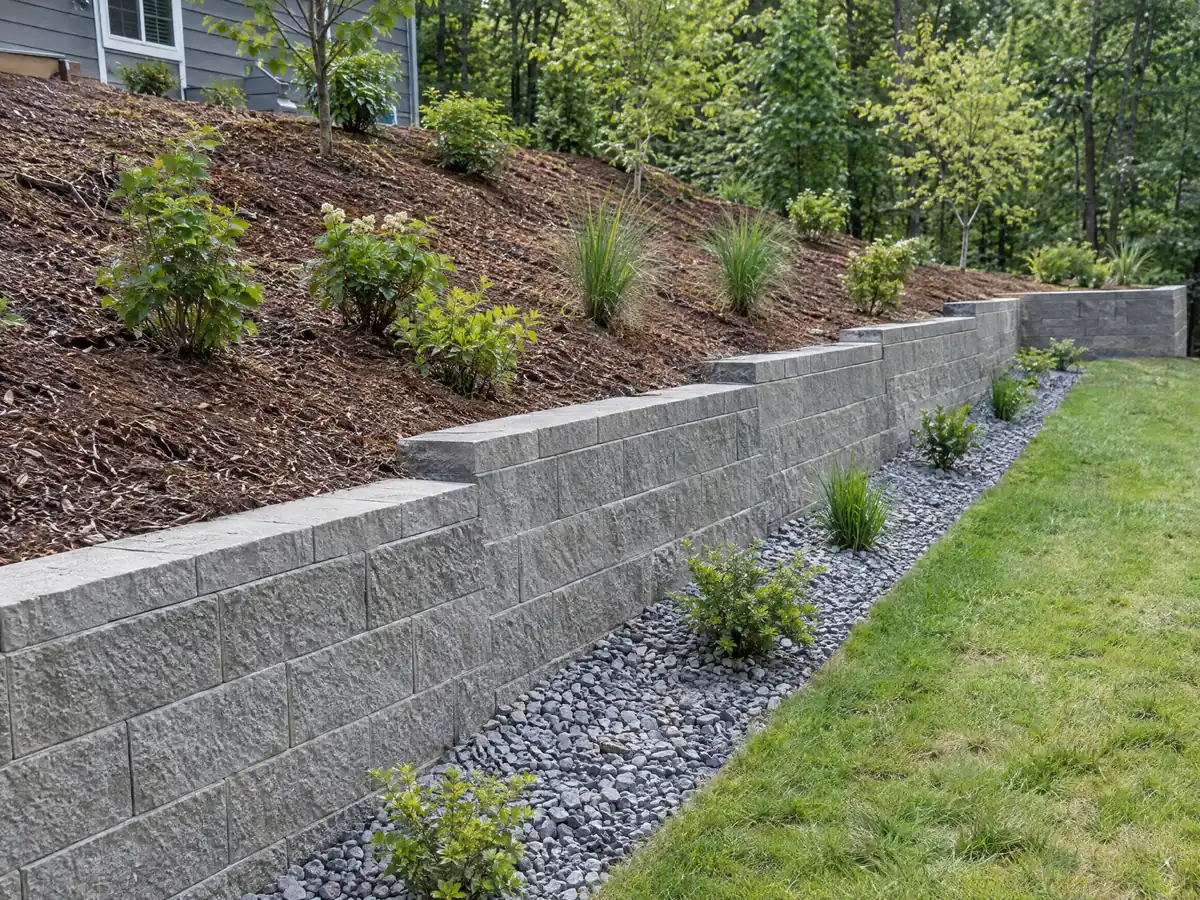
Three feet is the line in the City's permit handout. It lists retaining walls over 3 feet and block walls over 3 feet as needing permits and inspections, says block walls over 3 feet need city standard details or engineering calculations, and says a retaining wall that holds back a slope needs a permit and engineered design whatever its height. The handout also says planning approval is required for all walls.
Zoning caps how tall a wall can stand. HMC 90-316 limits solid walls in a required front yard to 42 inches, allows 72 inches on interior and rear lines and six feet on the street side of a corner lot, and caps a retaining wall plus fence at six feet on a street side yard and nine feet on interior or rear lines (third-party mirror, confirm). Building & Safety posts a Garden Wall Standard Plan and a Pilaster Standard Plan, and a Neighbor Consent Form sits under its block wall heading.
Block is masonry, so ask who builds it. CSLB's C-29 class covers concrete block walls for structures and fences, and which class covers a poured wall is for CSLB to say, so ask the subcontractor which license it holds. The City's design page gives 110 mph for Risk Category II at Exposure C, so ask the engineer how a tall free-standing wall meets it.
Where does water collect in Hemet, and what does it mean for new concrete?
Mostly in the south. The Public Safety Element says the greatest flood hazard is in the southern parts of the City, that the Hemet/Stetson Channel is a primary drain, and that flat ground and soils let rain stand for hours across large areas. That is a grading question for any slab: ask which way water leaves the pour and where it ends up.
The City's flood rules adopt the FEMA Flood Insurance Study and maps dated September 28, 1990 and later amendments, define substantial improvement as work costing 50 percent or more of a structure's market value, and require elevation or floodproofing for new construction and substantial improvements in flood hazard areas (third-party mirror, confirm). The Public Safety Element also maps inundation from the East Dam of Diamond Valley Lake, inside the City limits, which in a remote failure would spread over most of western Hemet.
Hemet's stormwater article requires construction sites to follow erosion and sediment control and forbids leaving pollutants in streets or storm drains, so washout from a pour needs a plan before the truck arrives.
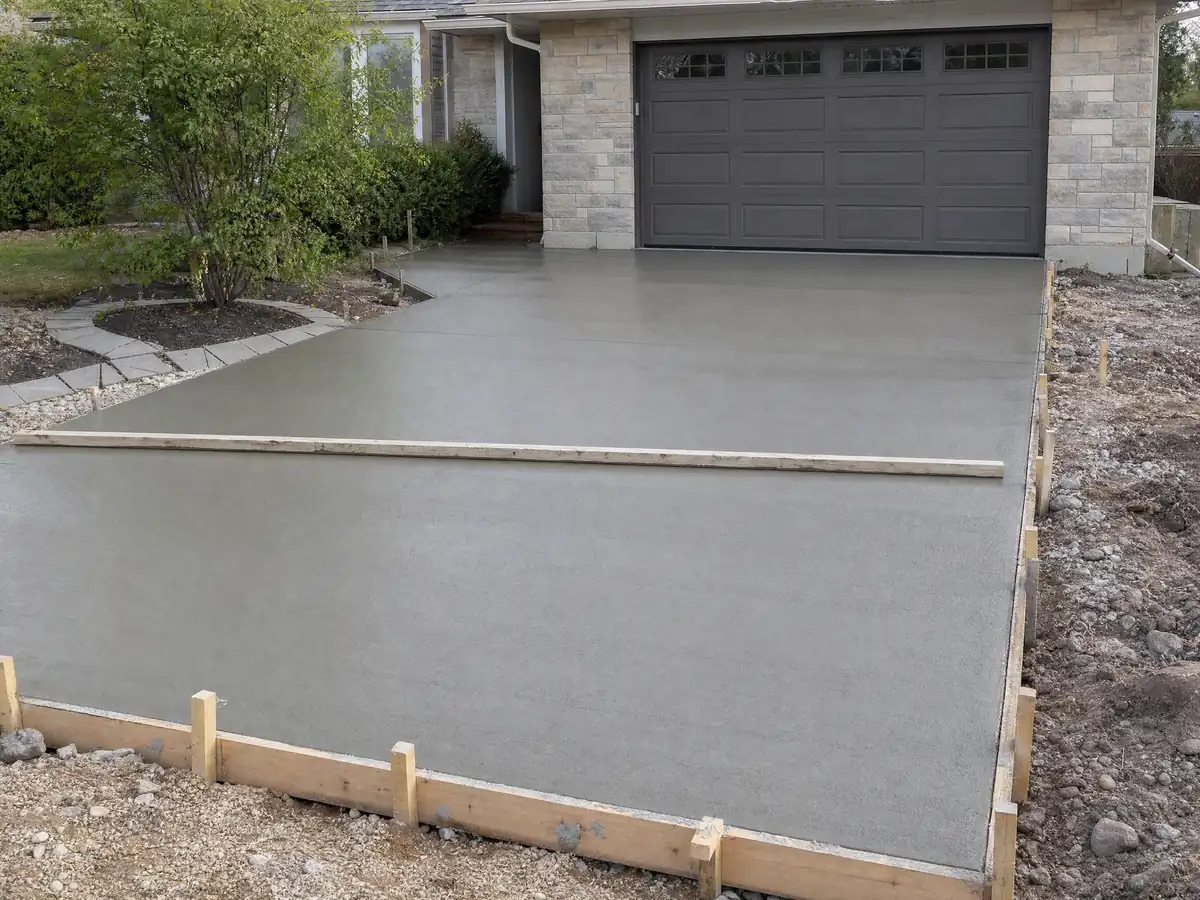
What does concrete work cost in Hemet, and who needs which license?
We found no Hemet concrete price study with a stated method, so the anchor is Angi's Los Angeles pages. They put a plain patio at $4 to $13 per square foot (August 4, 2026), stamped work at $15 to $30 (July 20, 2026) and a driveway at $8 to $20 (May 5, 2026). For labor, the federal OEWS survey for May 2025 lists a $33.67 mean hourly wage for cement masons around Los Angeles. Hemet bids may differ.
Our Los Angeles planning figures start at $8 to $14 per square foot for plain flatwork of 300 square feet or more. Decorative work such as stained, stamped or exposed aggregate runs $15 to $30, and driveway replacement with demolition $9 to $20, so a plain 20 by 20 slab is roughly $3,200 to $5,600. Minimum charges lift small jobs, and a retaining wall is priced by height, drainage and engineering after a visit.
CSLB's C-8 class covers forming, pouring, placing and finishing concrete work, and permitted work cannot go to an unlicensed hire because the state's $1,000 limit ends once a permit is required. Business and Professions Code 7159.5 caps a deposit at $1,000 or 10 percent of the price, whichever is smaller, and our license check guide shows how to verify a number.
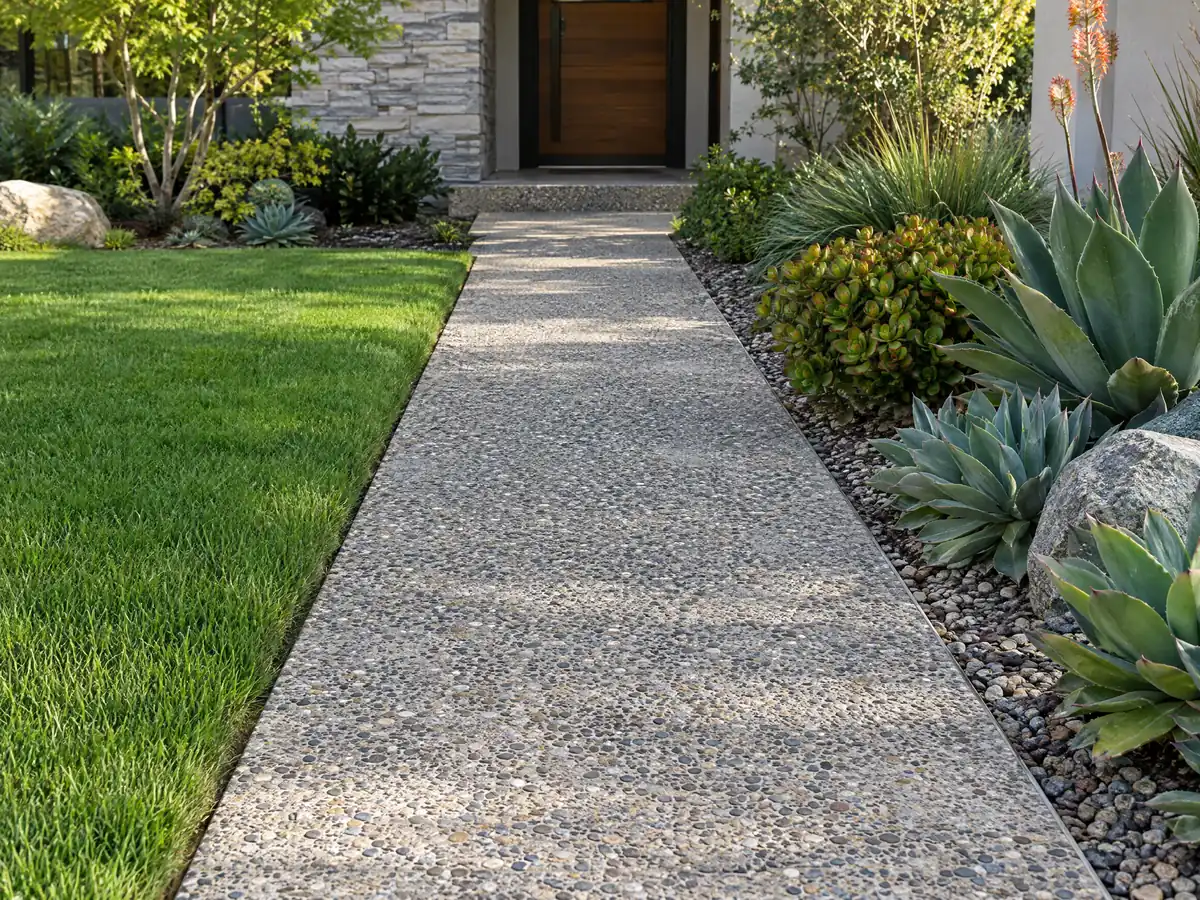
Concrete photos from Hemet and nearby communities
Footings, rebar, finished flatwork and walls from Hemet and the communities around it, shown at the steps where the decisions get made. Tap a photo to see it larger.
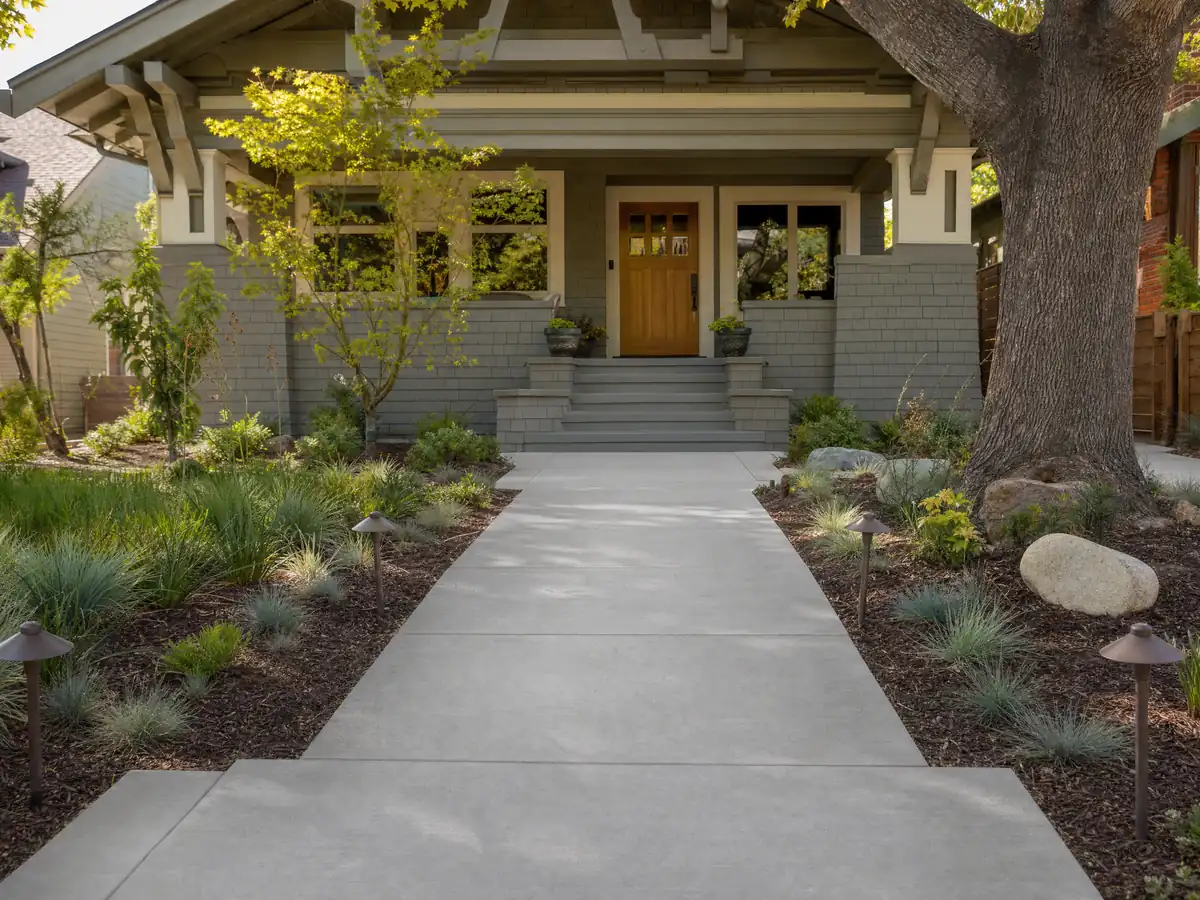
What concrete costs around Hemet
Dollar figures here are Los Angeles planning ranges from our concrete page, not a Hemet bid, and demolition, haul-off, rebar, drainage and any grading, apron or wall permit should be separate lines on the written proposal. The same property may need flooring in Hemet or decks in Hemet. For nearby cities, read concrete in Menifee, concrete in Moreno Valley and concrete in Temecula, and concrete in Los Angeles for the benchmark. Read the subcontractor guide to see who forms and who finishes, and the flooring cost guide for the surfaces that go on top.
| What it covers | Typical range |
|---|---|
| Patio, walkway or slab, broom finish, 300 sq ft or more | $8 to $14 per square foot |
| Decorative: stained, stamped or exposed aggregate | $15 to $30 per square foot |
| Driveway replacement, with demolition of the old slab | $9 to $20 per square foot |
| 20 by 20 foot plain patio (400 sq ft) | About $3,200 to $5,600 |
| 20 by 20 foot decorative patio (400 sq ft) | About $6,000 to $12,000 |
| Small jobs under 300 sq ft | Usually above the per-foot range |
| Retaining walls | Set by the written proposal |
Hemet concrete questions, answered
Can I pour a concrete patio without a permit?
Possibly, but Hemet's exemption lines name sidewalks and driveways, not patio slabs. The adopted codes also exempt sidewalks and driveways only up to 30 inches above grade in the Building Code version. Call Building & Safety at (951) 765-2475 with the size and location before any concrete work starts, since a grading or encroachment permit can apply separately.
How much should a 20x20 concrete patio cost?
Angi's Los Angeles patio page shows $4 to $13 per square foot, so 400 square feet runs $1,600 to $5,200, while our planning range of $8 to $14 gives $3,200 to $5,600. Hemet bids may differ. Demolition, rebar, drainage and a decorative finish add separate lines to the proposal.
Can I expand my driveway without a permit?
Only the part on your own lot, and even that depends on the adopted exemption for driveways. Hemet requires an encroachment permit for the apron, a curb cut or a second or circular driveway in the City right of way. Engineering lists a traffic control plan, a City business license, a CSLB license and insurance as application items.
What is the maximum height of a retaining wall without a permit in California?
The statewide model building code exempts retaining walls up to 4 feet measured from the bottom of the footing, but Hemet's permit handout lists retaining walls over 3 feet as needing a permit, so follow the City. Any wall holding back a slope needs a permit and engineered design whatever its height.
Is 4 inches of concrete thick enough for a driveway?
It is the usual figure for a patio or walk, and crews often pour more where trucks drive. We found no Hemet code citation for thickness, so the proposal should state thickness, base and rebar. Because shrink-swell soils are likely to affect slabs here, base preparation matters as much as the inches.
How much does a 300 sq ft stamped concrete patio cost?
Angi's Los Angeles stamped concrete page, dated July 20, 2026, gives $15 to $30 per square foot, which makes 300 square feet about $4,500 to $9,000. Hemet bids may differ, and demolition, rebar, drainage and sealer are usually extra. Small jobs also carry minimum charges.
How tall can a fence or block wall be in a Hemet front yard?
Solid walls and hedges in a required front yard are limited to 42 inches under HMC 90-316, and open fencing must be at least 75 percent open. Chain link, hog wire and barbed wire are barred there. A block wall over 3 feet needs city standard details or engineering calculations, and the handout says planning approval applies to all walls.
Does Hemet's soil crack concrete slabs?
It can. The Public Safety Element says shrink-swell soils occur throughout Hemet, somewhat more in the east, and are likely to affect building slabs. Soil replacement, a prepared base and well placed joints help, and cracks do not always mean failure. Ask the crew to state the base and joint plan in the written proposal.
What license does a concrete company need in Hemet?
A concrete company needs a current California license, usually the C-8 concrete class, and any permitted concrete work needs a licensed contractor. Hemet's encroachment permit also asks for a valid CSLB license, insurance and a City of Hemet business license. Check the number on the CSLB site and ask each subcontractor for a certificate of insurance.
Tell us the lot, the slab size and where the water goes
Say what you want poured, roughly how big it is, whether the yard drains well and whether any of it reaches the sidewalk or a wall. We bring the soil, drainage and permit questions to the first visit.