
Concrete Companyin Beaumont, CA
A concrete company in Beaumont pours driveways and walks that sit on the City's exempt list, but front and street-side yards may be no more than 50 percent paved, and anything in the street right-of-way needs a Public Works permit. The City's flyer says no exceptions to that cap while its code allows a deviation, so ask Planning.
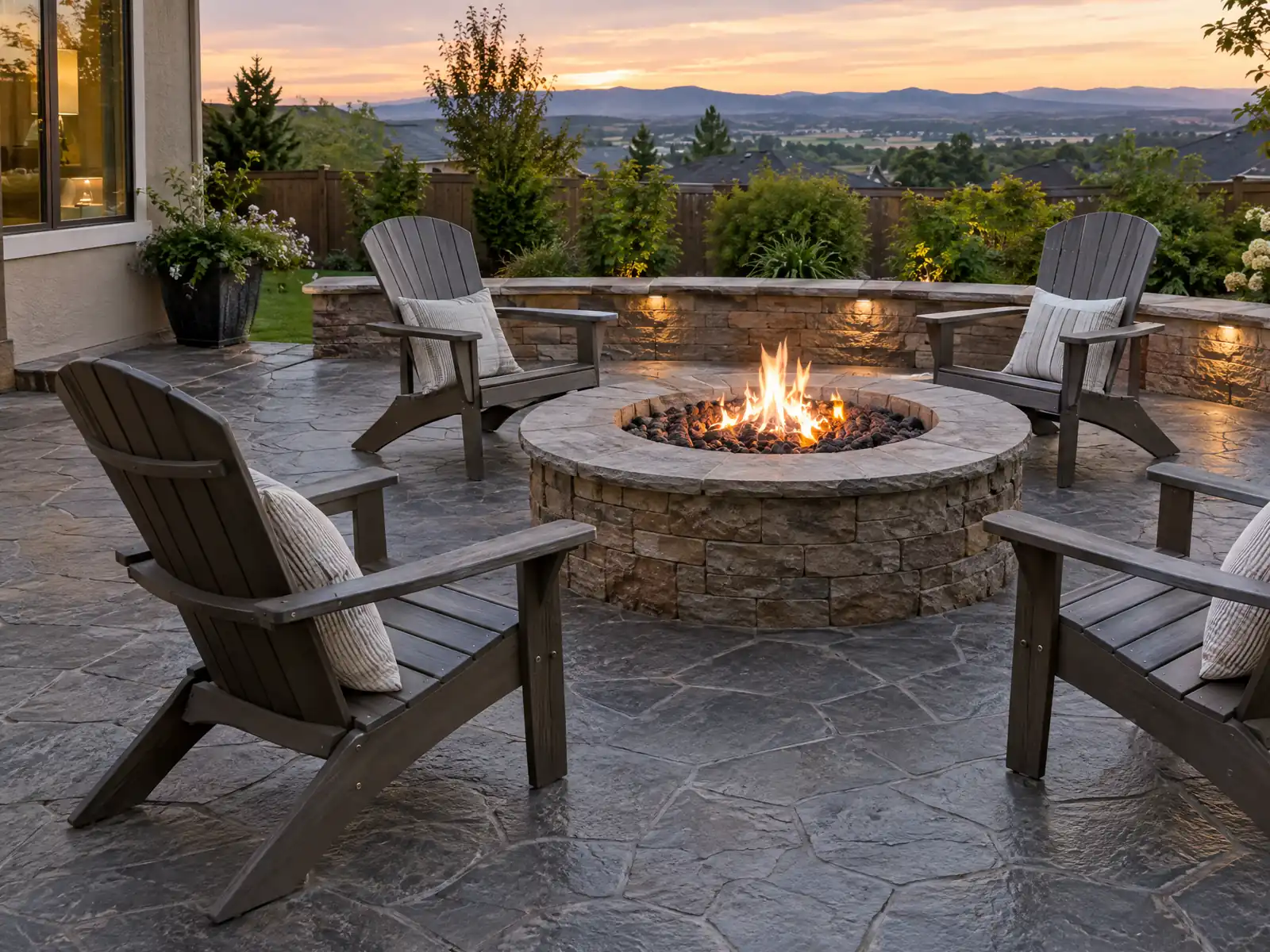
Beaumont concrete follows the town's growth in two waves. The City's 2016 Existing Conditions Report says a water company formed in 1907 built a reservoir and 40 miles of pipe that doubled the population to over 1,100 by 1910, and that a population boom began in 2000, with 8,232 homes built in the 2000s alone. The Census Bureau's 2024 five-year estimates count 18,044 homes and put 83.3 percent of them (15,024) at 1980 or later, so most driveways, walks and patio slabs are under 45 years old, while the old core around 6th Street holds the pre-1960 minority of 1,382 homes.
MDG Builders, CSLB #1040337, is a general contractor in Tarzana, so we draw the scope, handle the Beaumont paperwork with Beaumont Building & Safety and Public Works, and bring in a licensed concrete subcontractor to form, pour and finish. The concrete page covers finishes, and the Beaumont overview shows our other trades here.
What Beaumont Building & Safety, Public Works, the Development Code and SCAQMD say about concrete work
Where concrete permits come from in Beaumont: City of Beaumont Building & Safety.
- Permit: walkways and driveways are on the City's exempt list, but any work in the City right-of-way, such as a driveway approach, pedestrian sidewalk or curb core, needs an Encroachment Permit (see the general right-of-way rule). Retaining walls not over 4 feet from footing bottom are exempt unless they carry a surcharge. (City page, read directly on 2026-11-07)
- Front yard coverage (Municipal Code 17.C.04.040.A): on single-family lots no more than 50 percent of the front setback and street-side setback may be covered by an impervious surface such as a driveway, the rest must be landscaped, irrigated and maintained, at least one-third of that landscaped area must be trees, shrubs and other plants, and the rest wood chips, decorative rock, decomposed granite or other approved landscaping. Deviations can be sought through a Minor Plot Plan (read in GoCodebook's verbatim copy of the Beaumont Municipal Code, a third-party mirror whose pages read 'Text as of 2026-10-24', because library.municode.com returned HTTP 403)
- The City's Front Yard Landscaping flyer repeats the 50 percent non-pervious limit for the front and street-side yard, lists driveways, steps and bricks as non-pervious, and says exceptions and variances are not permitted and cannot be issued by the City; the flyer cites the older section number 17.06.080 and the code text above allows a Minor Plot Plan deviation, so ask Planning before designing a wider driveway. (City page, read directly on 2026-11-07)
- Parking surfaces (Municipal Code 17.C.06.080): vehicles on residential property may be parked only in paved parking spaces or in driveways that access required parking, and front, side and rear setbacks may not be used to park vehicles, boats or trailers unless on a surface approved by the Community Development Director or City Engineer. New single-family driveways follow 17.C.10.210.I (20-foot minimum apron, 20-foot width on lots under 70 feet wide, 28 feet for a two-car garage on wider lots, a 1-foot setback from every property line except the street line, a 3-foot continuous walkway linking gates, driveway and front door) (read in GoCodebook's verbatim copy of the Beaumont Municipal Code, a third-party mirror whose pages read 'Text as of 2026-10-24', because library.municode.com returned HTTP 403)
- Fire zones: in new landscape and in the first 5 feet around buildings (Zone 0) the WUI chapter prohibits combustible mulch, wood chips, firewood and artificial turf and allows hardscape as one of the features that can offset a reduced 30-foot structure setback (Municipal Code 15.20.020, Sections 604.8.2.2 and 608.2.1) (read in GoCodebook's verbatim copy of the Beaumont Municipal Code, a third-party mirror whose pages read 'Text as of 2026-10-24', because library.municode.com returned HTTP 403)
- Drainage and grading: under Appendix J as amended (Municipal Code 15.04.020, J109.4), graded lots must drain to the street or a publicly maintained facility, cross-lot drainage is allowed only at the City Engineer's discretion and may not exceed the pre-grading flow, and concentrated drainage must be contained or sent to an approved facility with non-erosive down drains (read in GoCodebook's verbatim copy of the Beaumont Municipal Code, a third-party mirror whose pages read 'Text as of 2026-10-24', because library.municode.com returned HTTP 403)
- Fresh concrete is a named pollutant in the City's stormwater ordinance (Municipal Code 13.24.020): it is a violation to leave any pollutant on a street, sidewalk, storm drain or any public or private lot except temporarily in a container with spill containment (13.24.050.A), non-stormwater may not enter the storm drain except the listed discharges such as irrigation and car washing (13.24.070), and compliance with the chapter is a condition of every City permit (13.24.090) (read in GoCodebook's verbatim copy of the Beaumont Municipal Code, a third-party mirror whose pages read 'Text as of 2026-10-24', because library.municode.com returned HTTP 403)
- Dust and coatings on concrete: SCAQMD Rule 403 treats construction activity and disturbed surface area as sources of fugitive dust, and Rule 1113 defines concrete-curing compounds, concrete surface retarders, floor coatings and waterproofing sealers as architectural coatings with VOC limits (limit table not quoted here because its layout is scrambled in the text extract)
Sources for these rules
- beaumontca.gov: Work Exempt From Permits
- gocodebook.com: chapter 17 c.04 landscaping standards
- beaumontca.gov: Front Yard Landscaping Requirements
- gocodebook.com: chapter 17 c.06 parking requirements
- gocodebook.com: chapter 15.20 california wildland urban interface code 12
- gocodebook.com: chapter 15.04 building code title 24 part 2 2
- gocodebook.com: chapter 13.24 stormwater urban runoff management and dischar
- aqmd.gov: r1113
Can I widen my driveway in Beaumont under the 50 percent front yard cap?
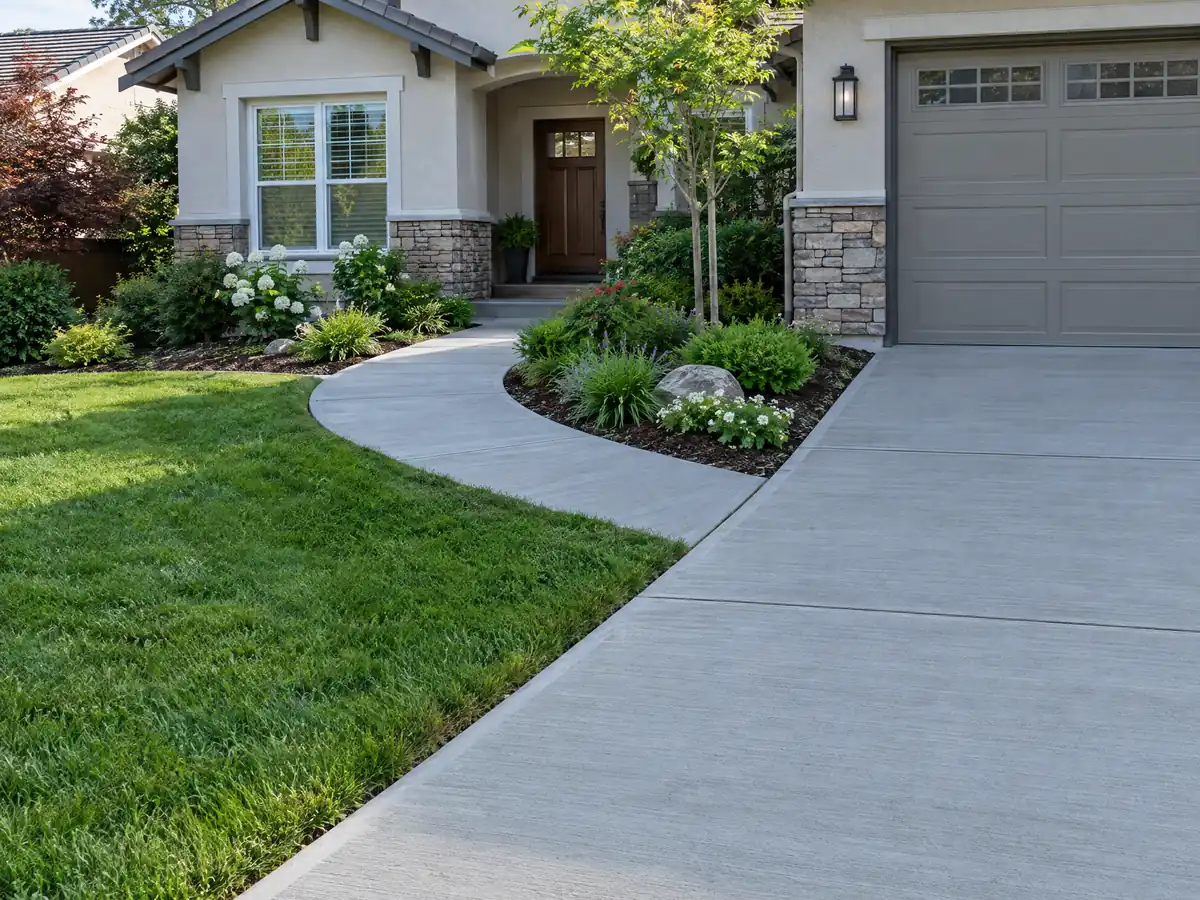
Not by much, and the City's own documents disagree about exceptions. Municipal Code 17.C.04.040.A says no more than 50 percent of the front and street-side setback on a single-family lot may be covered by an impervious surface such as a driveway. The rest must be landscaped, irrigated and maintained, with at least one-third of it in trees, shrubs and other plants and the remainder in wood chips, decorative rock or decomposed granite.
The conflict is real. The code says deviations can be sought through a Minor Plot Plan, but the City's Front Yard Landscaping flyer says exceptions and variances cannot be issued, and it cites an older section number, 17.06.080, from before the zoning update the City Council adopted on December 16, 2025. We cannot tell which governs a given lot, so ask Planning at planning@beaumontca.gov, in writing, before a wider driveway is drawn. Also ask which of the 17 specific plans, if any, covers the parcel.
New homes carry extra geometry under Section 17.C.10.210.I: a 20-foot apron, a driveway up to 20 feet wide on lots under 70 feet wide (28 feet for a two-car garage on wider lots), a 1-foot setback from side lines and a 3-foot continuous walkway linking gates, driveway and front door. Our text comes from GoCodebook's third-party copy of the code.
Do I need a permit for a driveway apron or sidewalk in Beaumont?
Yes, when the concrete touches the City's right-of-way, even if the driveway behind it is exempt. The exempt list names walkways and driveways, but Public Works issues an encroachment permit for any driveway approach, pedestrian sidewalk or curb core, and Municipal Code 12.12.040 bars building or maintaining an improvement in a City street or right-of-way without a permit from the City Engineer.
The City's encroachment page says the contractor must hold a Beaumont business license and a state license in Class A, C-8 or C-36 as fits the work, approval takes two or three working days to several weeks, and a traffic control plan is required when traffic is affected. We confirm which license the Public Works counter wants on the form before we price an apron.
Drainage is the other street-edge rule. Appendix J as amended in Municipal Code 15.04.020 (J109.4) says graded lots must drain to the street or a publicly maintained facility, cross-lot drainage is allowed only at the City Engineer's discretion and may not exceed the pre-grading flow, and concentrated drainage goes to an approved facility through non-erosive down drains. A new slab that tips water toward a neighbor is the case that rule describes.
Is a block wall under 6 feet exempt from a permit in Beaumont?
The City's pages point two ways, so ask before you stack block. The exempt list says fences not over 6 feet need no permit, and retaining walls up to 4 feet, measured from the bottom of the footing, are exempt unless they carry a surcharge or hold back someone else's land. Yet the Apply for Permit page lists Block Wall and Block Wall (Fence) among the permits taken in the CSS portal, and the forms page posts block wall, pilaster and retaining wall handouts.
The fee schedule shows what a block wall permit looks like. A wall of 6 feet or less and up to 50 linear feet on a City standard plan is $178.00 for inspection with no plan review fee, a non-standard wall of 6 feet or less is $189.00 plus $268.00, and a wall over 6 feet is $252.00 plus $447.00. Those are Building & Safety flat fees only, not impact or other agency fees.
Zoning sets height whatever the permit answer. Municipal Code 17.C.02.030 allows walls up to 6 feet in any zone but nothing over 3.5 feet in the required front setback, closer to the street than the front plane of the house, or inside the 35-foot corner visibility triangle. A wall hit by graffiti must be repainted in a matching color with an anti-graffiti coating within 10 days. Block walls are masonry, so the CSLB class is C-29, not C-8.
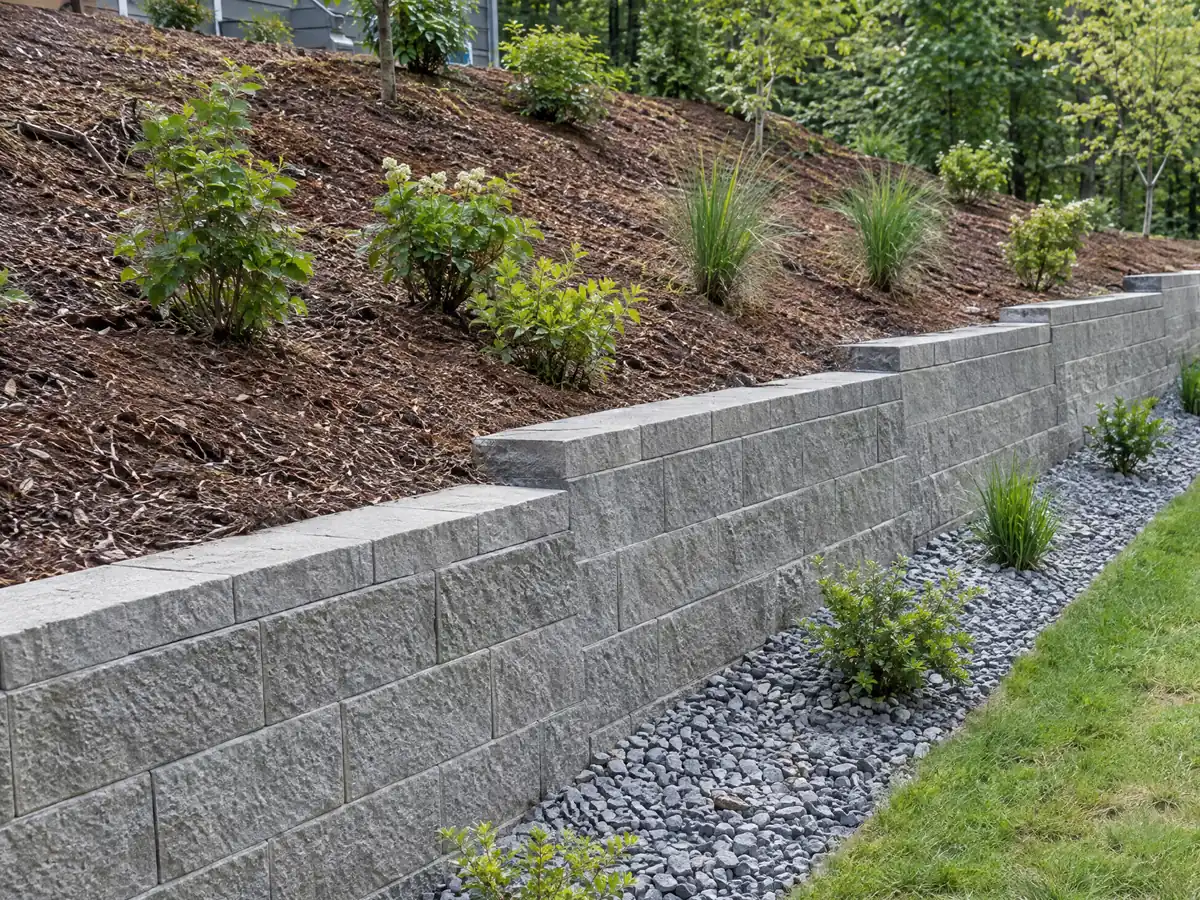
What do Beaumont's soils and nearby faults mean for slabs and footings?
They mean the footing under a wall deserves more thought than a patio slab. The 2016 report describes the Beaumont Plain as an elevated alluvial plain cut by San Timoteo and Cooper Creeks, with areas of low and moderate liquefaction susceptibility. Most of the city is low for ground subsidence, but some western areas where newer development is proposed are moderate and call for geotechnical analysis.
The same report rates seismic risk medium to high and names the San Jacinto Fault, San Andreas Fault Zone, Banning Fault and Beaumont Plains Fault Zone as faults that could affect the city. We did not verify whether an Alquist-Priolo zone crosses any residential parcel, so a wall or addition near a suspected trace is a question for the Building Official. Expansive soils, the report says, are normally handled by following the Building Code.
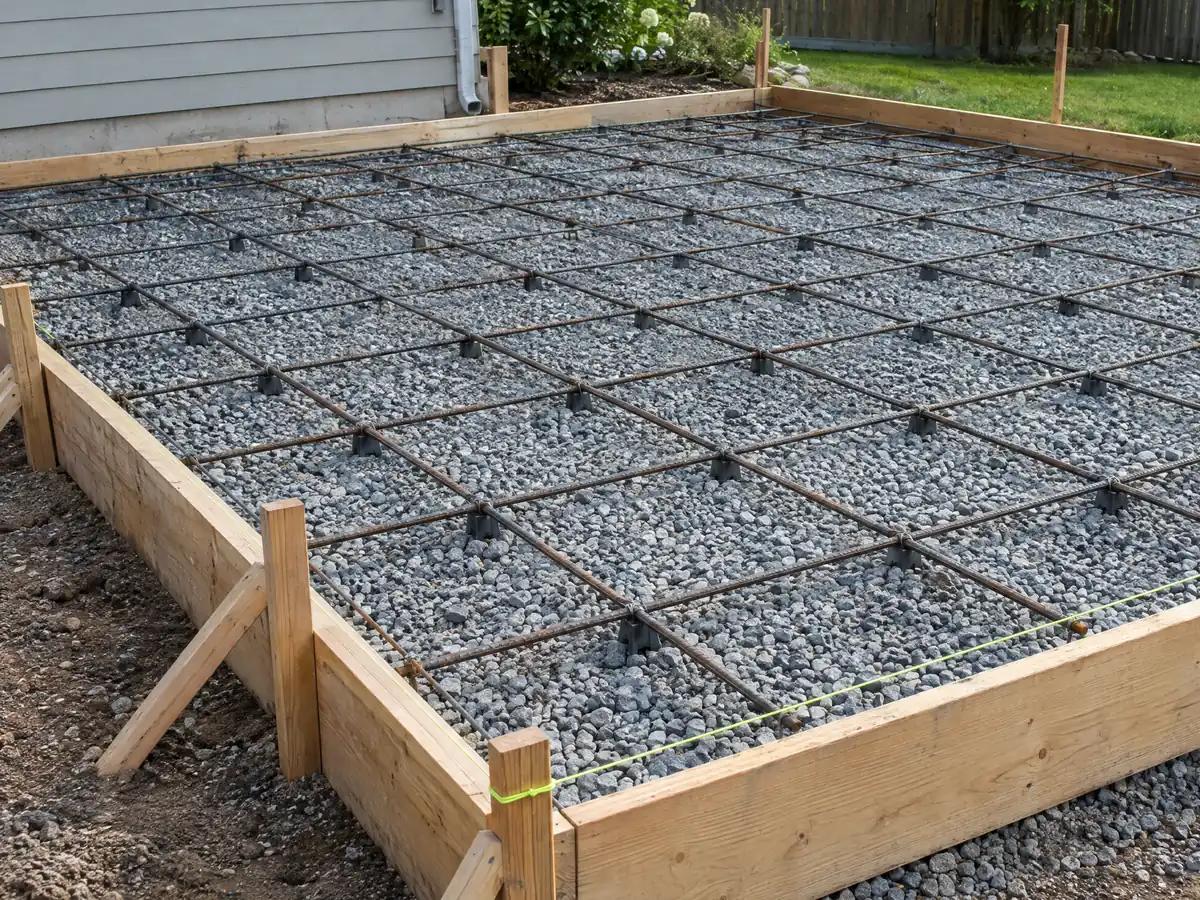
The plan-check page lists a default soil lateral bearing of 1,500 psf per foot unless a soils report says otherwise, on a line that still cites the 2019 codes, so confirm it against the 2025 editions. We found no Beaumont rule on slab thickness, mesh or joints, so the concrete subcontractor should write base, thickness, reinforcement and joint spacing into the proposal.
What does Beaumont's Zone 0 rule mean for a patio or walkway beside the house?
Concrete is the easy answer in the first 5 feet. The City's WUI chapter (Municipal Code 15.20.020) splits the 100 feet around a building into Zone 0, Zone 1 and Zone 2, and in new landscape and in Zone 0 it prohibits combustible mulch, wood chips, firewood and artificial turf. Hardscape is also one of the features that can offset a reduced 30-foot structure setback under Section 608.2.1, which the City's code applies to new buildings and additions.
The WUI Code reaches Moderate, High and Very High zones here, not just the top two. The State Fire Marshal issued the 2025 recommended maps on March 24, 2025, but the County Fire viewer would not load as text for us, so we cannot say which neighborhoods sit in which class. The City says Very High homes need 100 feet of defensible space and home hardening, and a sale in a High or Very High zone needs a compliant defensible space inspection on file.
On an addition the clearing comes before the concrete: the 100 feet must be done before vertical construction. Zone 1 reaches 50 feet instead of 30 on slopes over 20 percent, and a new fence within 5 feet of a building must be non-combustible.
What do the dust, washout and noise rules mean for a concrete job in Beaumont?
Beaumont lies inside the South Coast AQMD, which lists it among its Riverside County cities on both its jurisdiction and regional contacts pages. Rule 403 covers fugitive dust from construction, including earth-moving, demolition and disturbed surface area, so breaking out an old driveway or grading a pad needs a dust plan. Rule 1113 also classes curing compounds, surface retarders, floor coatings and waterproofing sealers as architectural coatings with VOC limits, and we did not read its limit table.
Washout is a City matter. Municipal Code 13.24.020 lists fresh concrete among pollutants, 13.24.050.A bars leaving any pollutant on a street, sidewalk, storm drain or lot except in a container with spill containment, and 13.24.090 makes compliance a condition of every City permit. Truck and pump wash water is not on the list of allowed non-stormwater discharges in 13.24.070.
Hours and debris matter too. Construction noise is allowed from 7 a.m. to 6 p.m. under 9.02.110.F, and within a quarter mile of a home a pour that runs past 6 p.m. needs the Building Official's written consent, so a summer finish needs a plan for that cutoff. Under 8.12.420 a licensed contractor may haul its own broken concrete to a CalRecycle-permitted facility, while a hired hauler must hold a City franchise.
How much does concrete work cost in Beaumont, and who needs which license?
No Beaumont price study with a stated method turned up, so the anchors are Angi's Los Angeles pages, and Riverside County bids may differ. Its patio page of August 4, 2026 shows $4 to $13 per square foot and an average of $5,248, the stamped page of July 20, 2026 shows $15 to $30, and the driveway page of May 5, 2026 shows $8 to $20 with a $7,270 average. The patio page prices a 20 by 20 foot slab between $1,600 and $5,200.
Our planning ranges for Los Angeles are $8 to $14 per square foot for plain patios, walks and slabs of 300 square feet or more, $15 to $30 for stained, stamped or exposed-aggregate finishes, and $9 to $20 for a driveway replacement that includes demolition. Minimum charges lift small jobs, and retaining walls are priced after a site visit. Federal wage data for the Los Angeles-Long Beach-Anaheim area put cement masons at a mean $33.67 an hour in May 2025, a wage and not a billing rate.
The C-8 class covers forming, pouring and finishing concrete, and the City's Hiring a Contractor page also asks owners to confirm a current City business license and workers' compensation. Under Business and Professions Code 7159.5 a home improvement deposit may not exceed $1,000 or 10 percent of the contract, whichever is smaller. Our license check guide shows how to read a record.
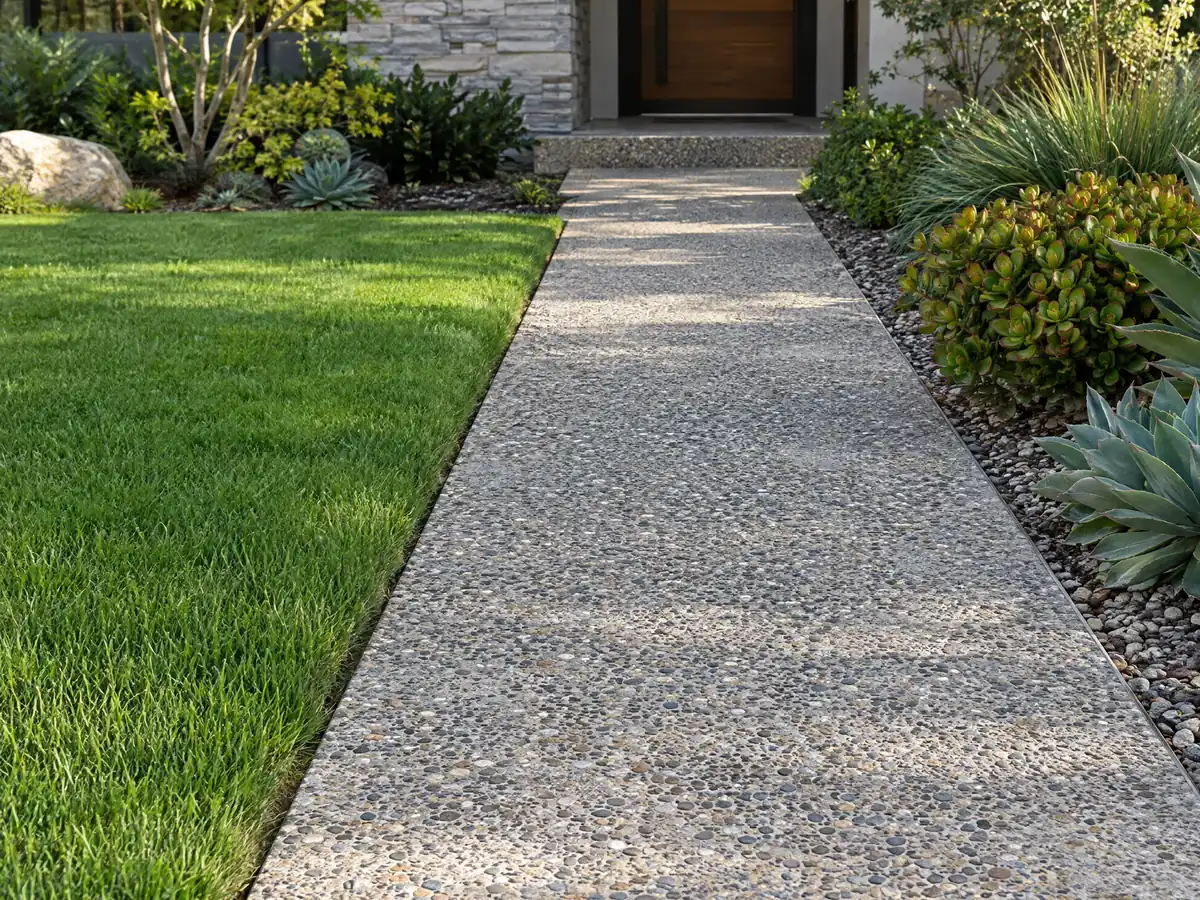
Concrete photos from Beaumont and nearby communities
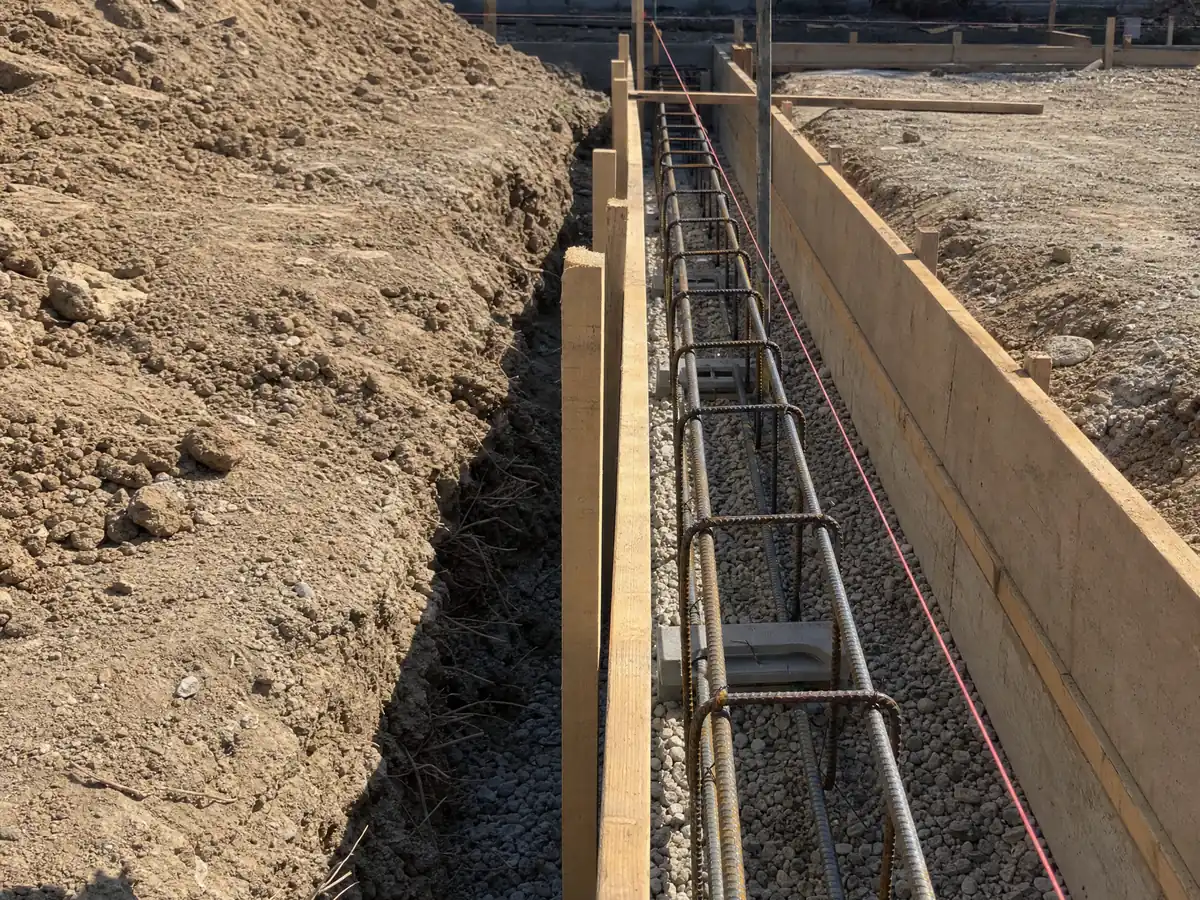
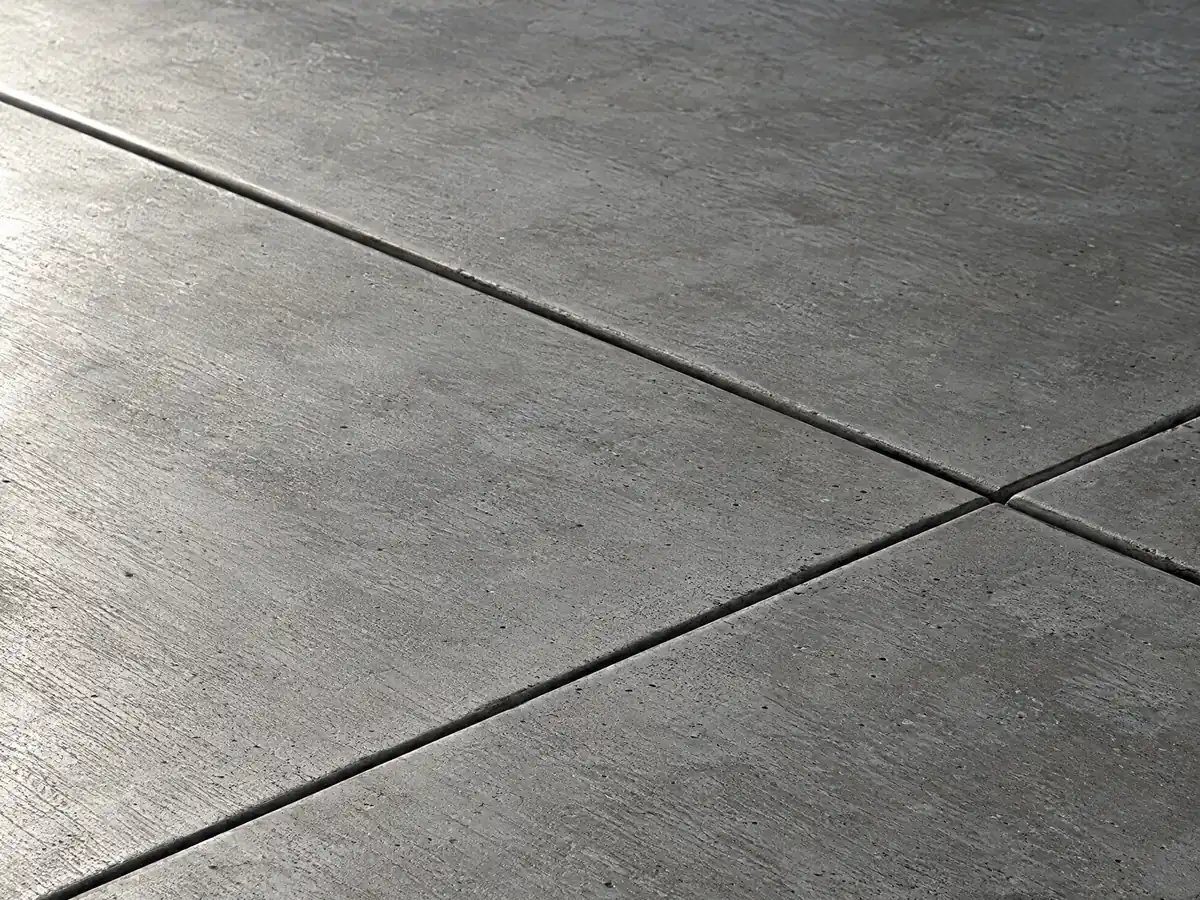
Forms, rebar, finished flatwork and block walls from Beaumont and the pass communities around it, shown at the steps where the rules matter. Tap any photo to enlarge it.
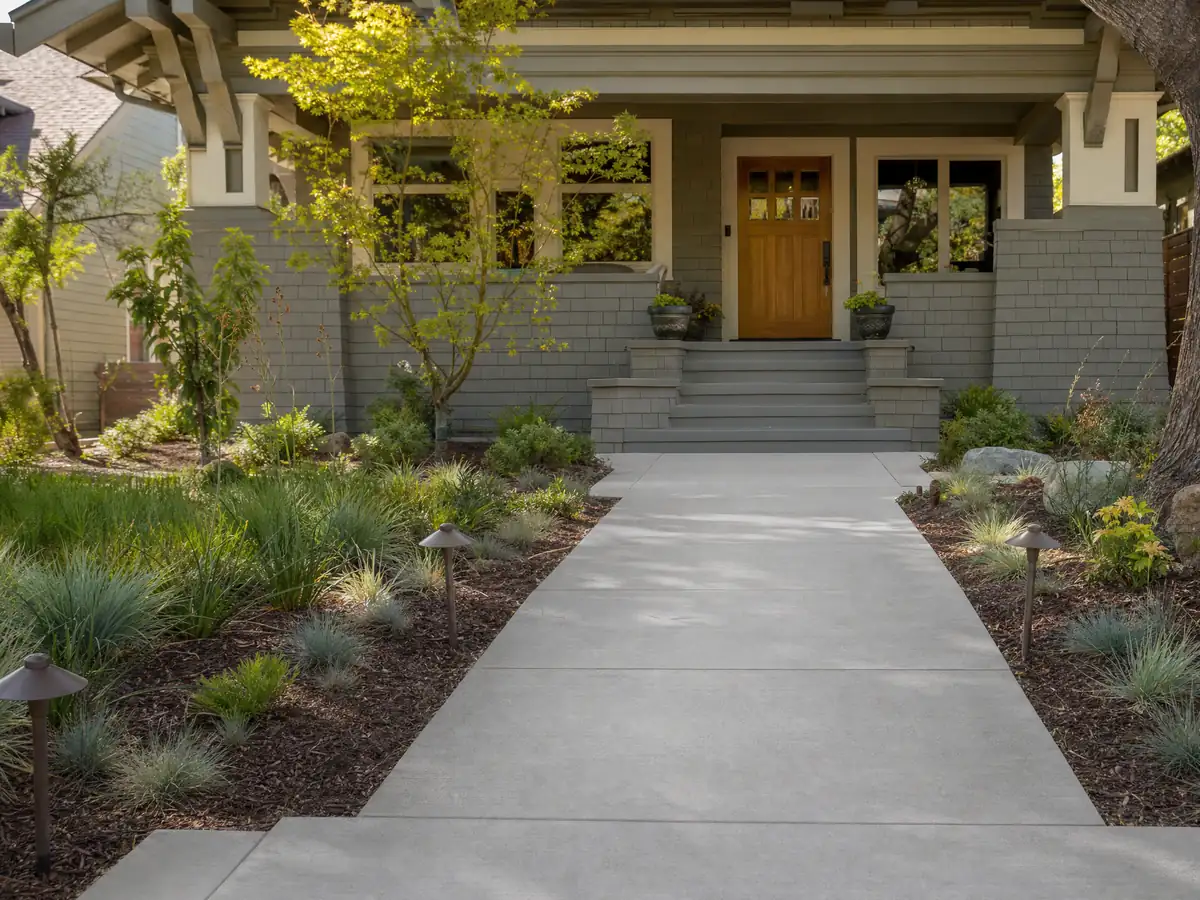
What concrete costs around Beaumont
Dollar figures here are Los Angeles ranges from our concrete page and not a Beaumont bid, so demolition, base, rebar, engineering and any right-of-way permit belong on separate proposal lines. The same lot may need flooring in Beaumont or a deck builder in Beaumont. For the towns on either side of the pass, read concrete in San Jacinto, concrete in Hemet and concrete in Moreno Valley, with concrete in Los Angeles as the big-city yardstick. Our flooring cost guide covers what goes on top of a slab, and the subcontractor guide explains who forms and who finishes.
| What it covers | Typical range |
|---|---|
| Patio, walkway or slab, broom finish, 300 sq ft or more | $8 to $14 per square foot |
| Decorative: stained, stamped or exposed aggregate | $15 to $30 per square foot |
| Driveway replacement, with demolition of the old slab | $9 to $20 per square foot |
| 20 by 20 foot plain patio (400 sq ft) | About $3,200 to $5,600 |
| 20 by 20 foot decorative patio (400 sq ft) | About $6,000 to $12,000 |
| Small jobs under 300 sq ft | Usually above the per-foot range |
| Retaining walls | Set by the written proposal |
Beaumont concrete questions, answered
Can I pour a concrete patio without a permit?
Often yes in Beaumont, because the City's exempt list covers walkways and driveways, but it does not name patio slabs, so call Building & Safety at 951-769-8529 with the size and height first. A cover over the slab is a patio cover and needs a permit, and any slab that reaches the street needs a Public Works permit.
How much should a 20x20 concrete patio cost?
A 20 by 20 patio is 400 square feet, so our $8 to $14 per square foot planning range gives $3,200 to $5,600. Angi's Los Angeles patio page shows a wider $1,600 to $5,200 for the same size. Beaumont bids will depend on access, base and finish, and stamped work at $15 to $30 per square foot costs more.
Can I expand my driveway without a permit?
Check the front yard cap before the width. Beaumont allows no more than 50 percent of a front or street-side setback to be paved, and the City's flyer and its code disagree on whether exceptions exist. A new apron or curb cut needs a Public Works encroachment permit. Ask Planning in writing before widening.
What is the maximum height of a retaining wall without a permit in California?
The model code exempts retaining walls up to 4 feet, measured from the bottom of the footing to the top, unless they support a surcharge, and Beaumont's exempt list repeats that line. A wall that holds back a neighbor's property needs a permit. Confirm the measurement with the counter, because our text comes from the City page and a third-party code copy.
Is 4 inches of concrete thick enough for a driveway?
No Beaumont rule sets it, so thickness is a design decision. Four inches is typical for walks and patios, yet cars, soil and base can change the answer for a driveway. The sources we read call thickness, mesh and joint spacing industry practice, so the subcontractor should put each in the proposal.
How much does a 300 sq ft stamped concrete patio cost?
Multiply Angi's Los Angeles stamped range of $15 to $30 per square foot, dated July 20, 2026, by 300 and you get $4,500 to $9,000, and the page's average project is $5,948. Beaumont bids can differ, and minimum charges push small jobs above per-foot averages.
Do I need a permit for a block wall in Beaumont?
Possibly, even under 6 feet. The exempt list excuses fences up to 6 feet, but the City's portal lists Block Wall and Block Wall (Fence) as permits and its fee schedule prices them, starting at $178.00 for a short standard-plan wall. Ask the counter before building, and note the 3.5-foot limit in the front setback.
Does concrete work in a Beaumont fire zone have special rules?
Yes, mostly in the first 5 feet around a building. Beaumont's WUI chapter bans combustible mulch, wood chips, firewood and artificial turf in Zone 0 and new landscape, and hardscape can offset a reduced setback. The WUI Code applies in Moderate, High and Very High zones, and the County Fire map decides which applies to your address.
Does concrete work near the street need an encroachment permit in Beaumont?
Yes, for any driveway approach, pedestrian sidewalk or curb core in the City right-of-way. Public Works issues the permit, the contractor needs a Beaumont business license and a Class A, C-8 or C-36 state license, and approval takes two or three working days to several weeks. A traffic control plan may be required.
What license does a concrete company need in Beaumont?
In California the concrete class is C-8, and block walls are masonry, C-29. A permitted job must be done by a licensed contractor. Look the number up on the CSLB site, confirm a current Beaumont business license and ask each subcontractor for a certificate of insurance.
Tell us what you want poured, how big it is and which lot it sits on
Describe the patio, driveway, walk or wall, its rough size and whether the lot is flat, sloped or inside a specific plan area. Front-yard cap, street-edge and wall-height questions come with us to the first visit.