
ADU Constructionin Santa Paula, CA
ADU construction in Santa Paula starts with state law, which makes the permit a ministerial decision with no hearing, and then follows the City's Chapter 16.227. The City must act on a complete application within 60 days or it is deemed approved. Flood elevation, historic review and Ventura County Fire can shape a lot before drawings start.
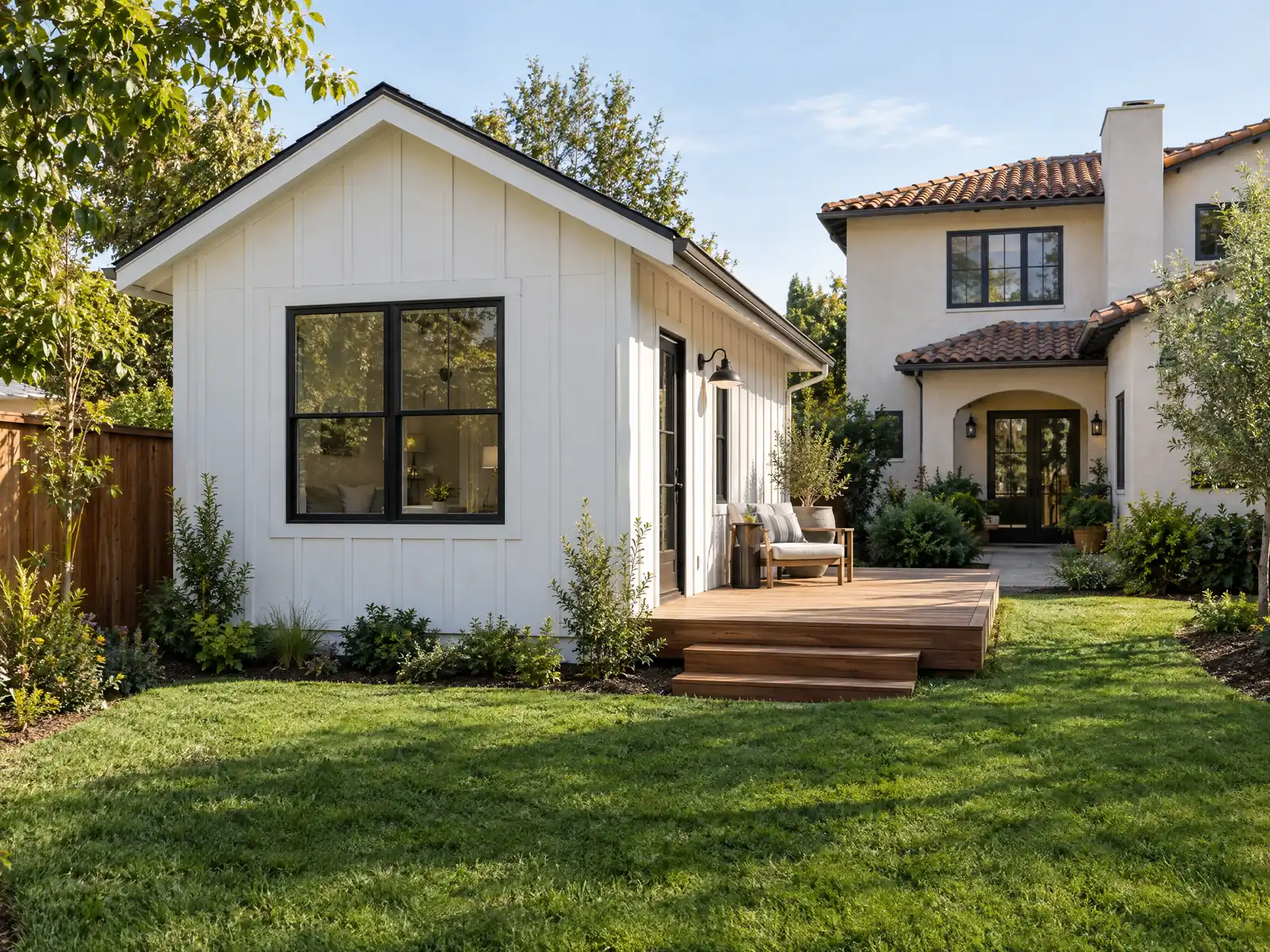
Santa Paula's voters drew a City Urban Restriction Boundary in 2000, one of the county's Save Open-space and Agricultural Resources measures, so most new housing has to fit inside lines that already exist. That puts the weight on lots like the ones the Census Bureau counts. Its 2024 five-year estimates show 10,149 homes, 61.3 percent of them single-family detached houses (6,226), with 886 mobile homes, 44.1 percent of occupied homes rented and a median owner-occupied value of $611,200. About half of those houses came before 1970, which leaves plenty of older garages and back yards to work with.
This page begins with what California law protects, then turns to the City's ADU chapter, fees, garage conversions and the local questions that other cities do not have. We read the City's own site and PDFs directly. The Municipal Code came from GoCodebook, a third-party mirror that is not the official code, and the City's posted ADU pages disagree with it in places, so confirm every rule with Planning. Cost ranges and phases are on our ADU construction page.
State law and City of Santa Paula rules that apply to an ADU
Where adu construction permits come from in Santa Paula: City of Santa Paula Community and Economic Development Department, Building & Safety Division.
- Santa Paula's ADU code is Chapter 16.227 (Ord. 1323, passed 12-21-22, amended by Ord. 1340, passed 11-20-24, per the mirror). The City must approve or deny a complete ADU or JADU application within 60 days or it is deemed approved, with delays requested by the applicant excluded, and a denial must list deficiencies.
- A converted ADU inside existing space (plus up to 150 square feet for access), one new detached ADU of 800 square feet or less with 4-foot side and rear setbacks, multifamily conversions up to 25 percent of existing units, and detached ADUs on multifamily lots (up to two on a proposed multifamily lot, up to eight on an existing one) need only a building permit. Other ADUs need an ADU permit in addition to the building permit.
- On the ADU permit path the maximum size is 850 square feet for a studio or one bedroom and 1,200 square feet for two or more bedrooms. An attached ADU is limited to 50 percent of the existing primary dwelling, but no percent, FAR, setback or coverage limit may force an ADU below 800 square feet. Setbacks are 20 feet in front and 4 feet at the sides and rear (none if rebuilt in the same place and size as an existing structure), and a JADU can be no more than 500 square feet.
- A detached ADU may be up to 16 feet high, or may use the zone's height limit if it meets zone setbacks. Up to 18 feet (20 feet to match the main roof pitch) is allowed within half a mile walking distance of major transit, and an attached ADU may reach 25 feet and two stories. The mirror (Ord. 1340) measures height from existing legal grade or base flood elevation, whichever is higher.
- The City's posted PDF of the amended ADU chapter says height is measured above existing legal grade only, without the base flood elevation wording found in the mirror, so the posted PDF may predate Ord. 1340. Ask Planning which text applies on a floodplain lot.
- No off-street parking is required for any new or converted ADU, and parking removed when a garage, carport, covered or uncovered space becomes or makes way for an ADU need not be replaced. ADUs cannot be rented for under 30 days or sold separately from the main home, and a deed restriction must be recorded before the certificate of occupancy. ADUs created on or after January 1, 2020 have no owner-occupancy rule, but a JADU needs an owner living on the property.
- No impact fee applies to one ADU under 750 square feet, and larger ADUs pay impact fees in proportion to the primary dwelling's size. A converted ADU on a single-family lot needs no new utility connection or connection fee, while other ADUs need a separate utility connection with a proportionate fee.
- The City's guidebook adds that an addition or remodel under 750 square feet pays no impact fees and under 800 square feet pays no school fees, and lists planning review, plan check, encroachment, sewer and water connection and flood zone fees as common project fees.
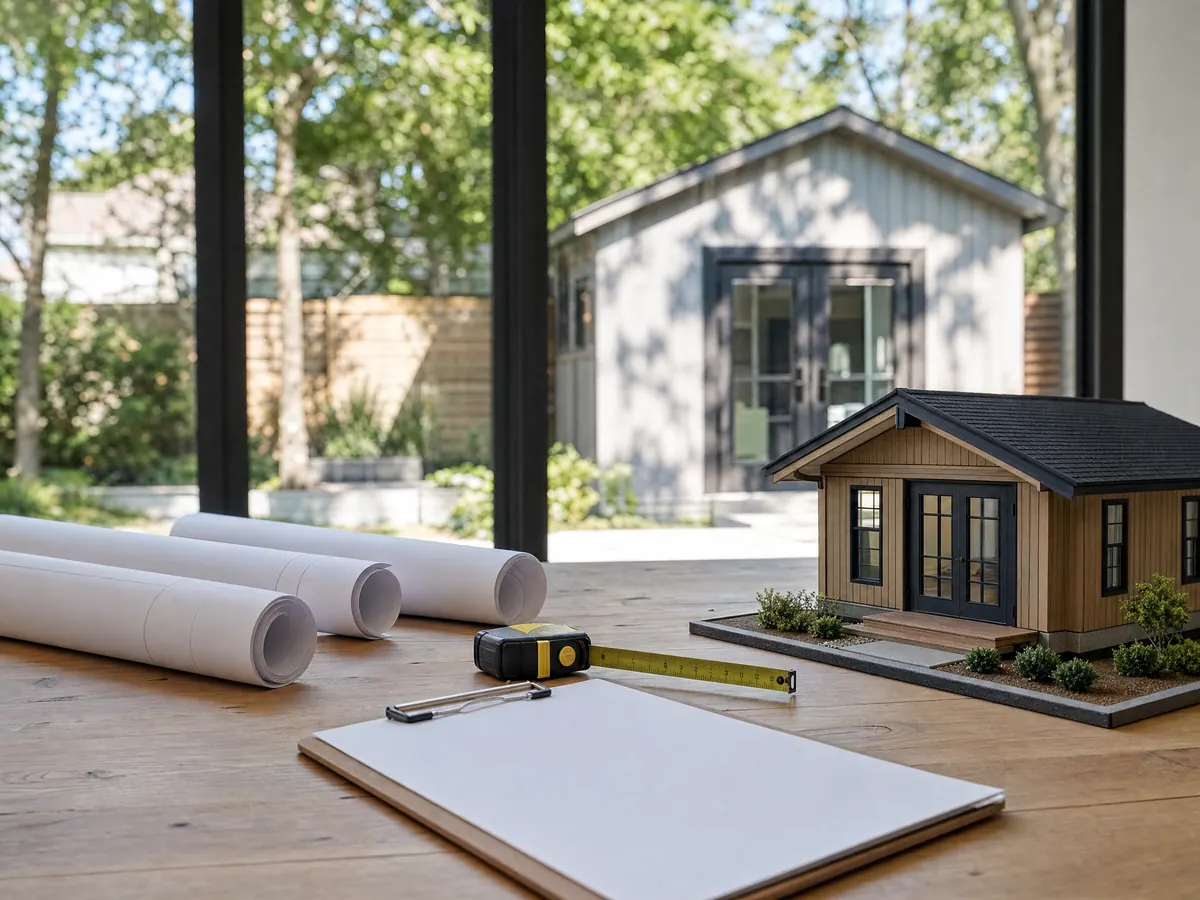
What can Santa Paula not do to an ADU application under California law?
A good deal is off the table. Government Code section 66317 says an ADU permit is considered and approved ministerially, with no discretionary review and no hearing, and section 66314 confines local rules to objective standards and bars any minimum lot size. Since January 1, 2026 an agency has 15 business days to say whether an application is complete and then 60 days from a complete application to act, or the permit is deemed approved.
Section 66323 protects four kinds of ADU from added standards: an ADU and a junior unit converted inside a house or existing accessory building, with up to 150 square feet added for access; one new detached ADU of up to 800 square feet with side and rear setbacks of no more than 4 feet; conversions of non-livable multifamily space; and detached units beside a multifamily building. A city cannot require an owner to live on site for an ADU or replace parking lost to a garage conversion. The text is on leginfo.legislature.ca.gov, and old pages that cite sections 66324 and 66332 are out of date, because SB 543 moved them to 66311.5 and 66311.7.
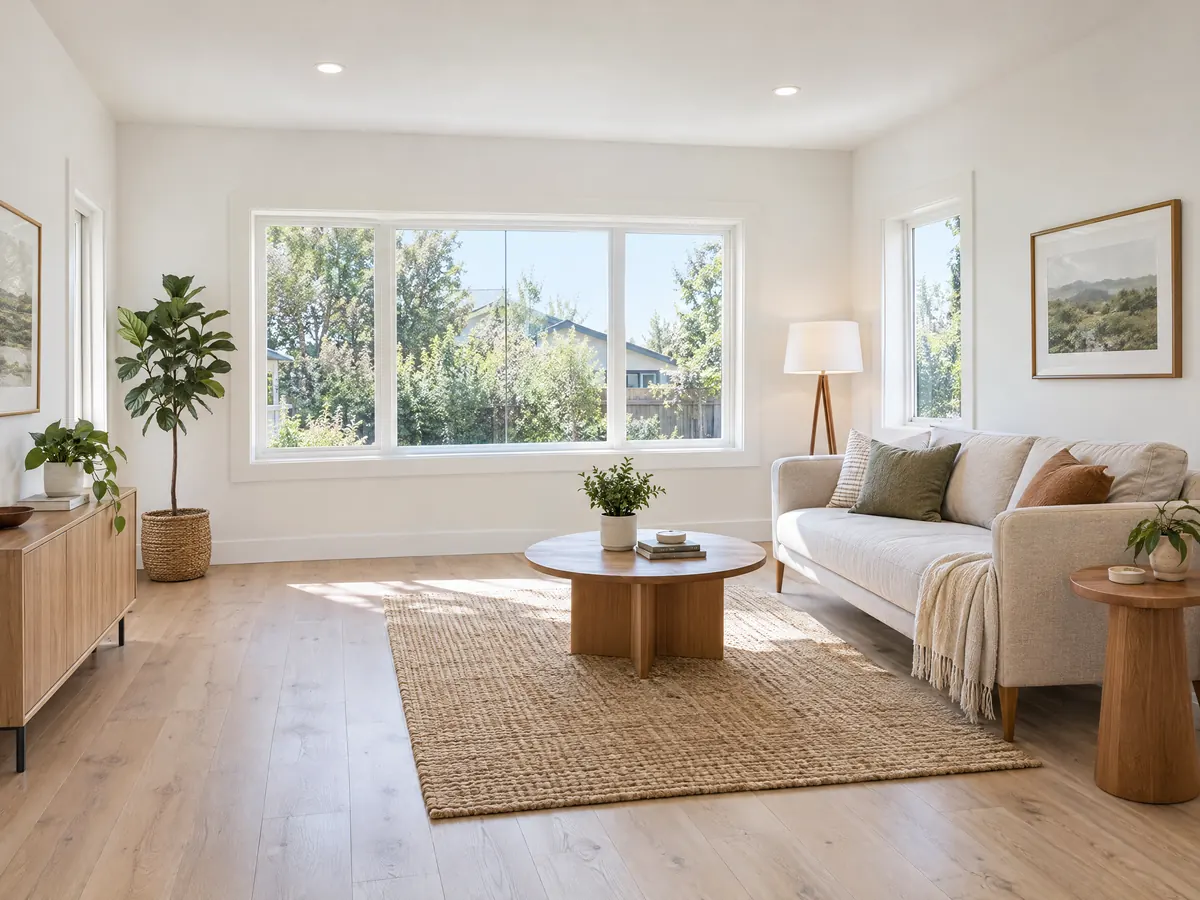
How big can an ADU be under Santa Paula's Chapter 16.227?
According to the code mirror, the City's ADU chapter was passed as Ordinance 1323 on December 21, 2022 and amended by Ordinance 1340 on November 20, 2024. On the ADU permit path a studio or one-bedroom unit can reach 850 square feet and a unit with two or more bedrooms 1,200. An attached unit is held to 50 percent of the existing house, but no percentage, setback or coverage rule can push any ADU below 800 square feet. Setbacks are 20 feet in front and 4 feet at the sides and rear, and a junior unit tops out at 500 square feet.
A detached ADU may be 16 feet high, or take the zone's height limit if it meets the zone's setbacks, and gets 18 feet (20 to match the main roof pitch) within half a mile's walk of major transit. An attached unit may reach 25 feet and two stories. On a multifamily lot, up to two detached units on a proposed building and up to eight beside an existing one need only a building permit. The City's web page still describes an older 50 percent or 1,200 square foot cap, so the chapter text is the newer source.
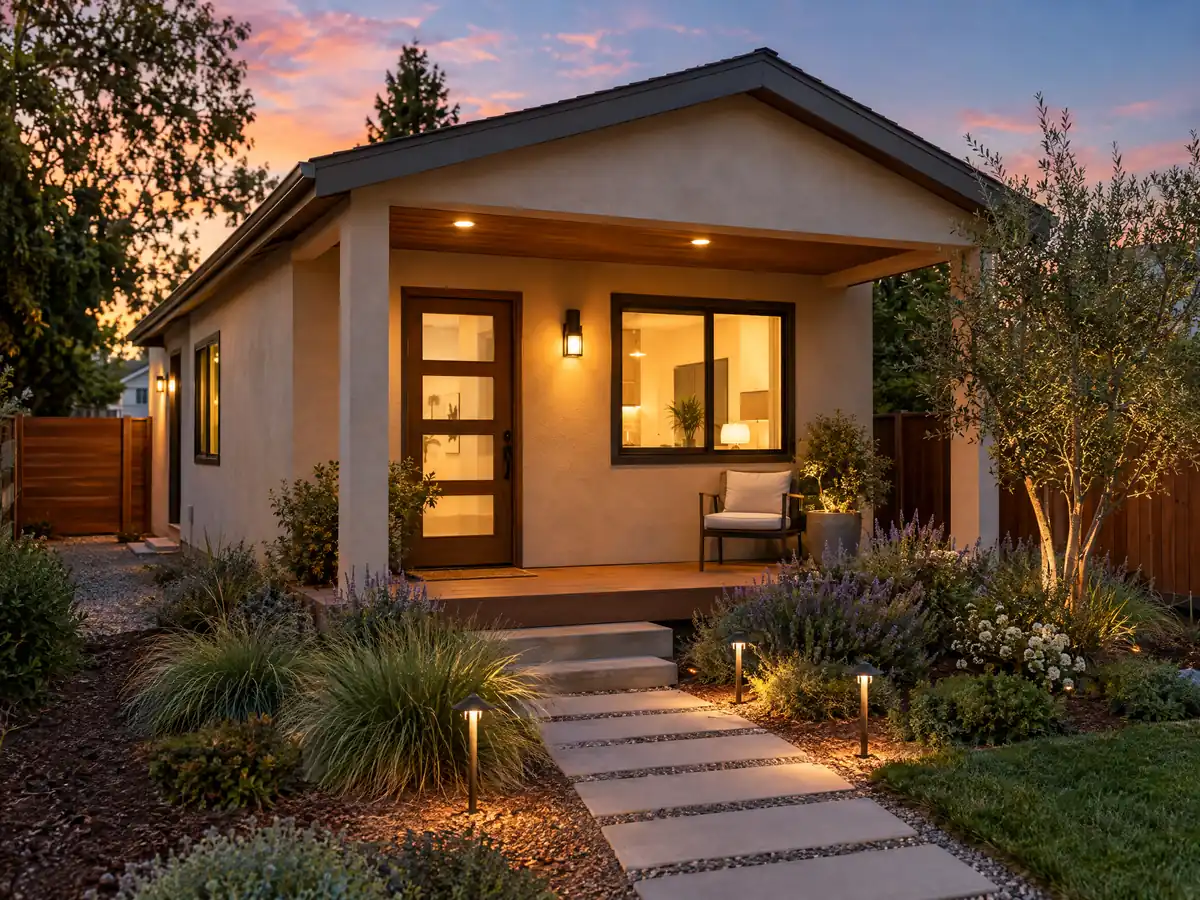
Can you convert a garage into an ADU in Santa Paula, and what about unpermitted units?
Yes, a garage can become an ADU, and under state law and the City chapter a conversion inside existing space needs only a building permit. No new setback applies to the existing walls, the lost parking does not have to be replaced and sprinklers are needed only if the main house has them. A garage water heater has to sit 18 inches off the floor and be strapped, so moving it is part of the scope. The City's guidebook suggests keeping at least 5 feet from a lot line on new construction to avoid costly fire-rated walls.
A second question is whether the unit already exists. Section 66311.7 bars a city from denying a permit for an ADU built without one before 2020 unless the unit is substandard under Health and Safety Code section 17920.3. Santa Paula's stock is old, with 50.6 percent of homes built before 1970, but we found no count of unpermitted units here. A deed restriction must be recorded before the certificate of occupancy, and the unit cannot be rented for under 30 days or sold apart from the house.
What fees does an ADU pay in Santa Paula, and when are there none?
Chapter 16.227 says one ADU under 750 square feet pays no impact fee, and a larger one pays in proportion to the main home's size. A converted ADU on a single-family lot needs no new utility connection or connection fee, while other units need their own connection with a proportionate charge. The City's guidebook repeats the 750 square foot line and adds that projects under 800 square feet pay no school fees.
The state statute reads differently on schools, treating a unit under 500 square feet as adding no assessable space, so ask which figure the district applies. The guidebook also lists planning review, plan check, encroachment, sewer and water connection and flood zone fees as common charges. The only Building & Safety schedule we found was adopted January 3, 2017 and prices simple items such as a re-roof at a flat $228, not ADUs. It may be out of date, so no ADU permit charge is printed here, and a written proposal shows each City fee on its own line.
Does the Historic Overlay or a nearby landmark change where an ADU can go?
It can. Under Chapter 16.227 an ADU on or within 600 feet of a property listed on the California Register of Historic Resources must be placed so it is not visible from any public right-of-way. Chapter 16.33 puts a Historic Overlay District on the Zoning Map and requires public hearings for permits to construct, alter or demolish on a designated landmark. The Zoning Map is an image file we could not read, so which parcels sit in the overlay is unverified.
The General Plan names seven historic areas for formal recognition: the Downtown Commercial and Downtown Residential districts, South 7th Street, McKevett Heights, Park Street, The Oaks and Richmond Tract. McKevett Heights is a 1920s tract of California Bungalows and Period Revivals, so an ADU plan there deserves an early check with Planning. Even outside any overlay, an ADU on the permit path must match the main house's materials, colors and roof slope, use down-lit fixtures, keep windows within 30 feet of a side or rear line at clerestory height or frosted, and add evergreen screening.
Flood floors, liquefaction and fire zones: what else can change an ADU in Santa Paula?
The Santa Clara River shapes the answer. The General Plan, citing a 2015 County study, counted 2,197 homes (31 percent) in the 100-year floodplain, and Chapter 151 asks for the lowest floor of new construction to sit at least one foot above base flood elevation, certified by an engineer or surveyor. The mirror measures ADU height from existing grade or base flood elevation, whichever is higher, while the City's posted PDF says existing grade only. We did not open the current FEMA map, so ask Planning which text governs your lot.
The City's guidebook asks for plans that show the FEMA flood zone, the CAL FIRE fire zone, the water meter location and size, a geotechnical report, energy calculations and structural calculations. The General Plan places liquefaction and subsidence mainly in the floodplain, and some northern edges are in a Very High fire zone, which the Thomas Fire of 2017 and the Mountain Fire of 2024 made hard to ignore. We did not open CAL FIRE's 2025 parcel map. Section 150.036 requires Class A roofing on any new building, and Ventura County Fire reviews plans separately.
How long does it take to build an ADU in Santa Paula, and who reviews the plans?
Design comes first, then review. The City's guidebook puts plan check at roughly 30 days, asks for electronic files and wants every earlier marked set with a resubmittal. Planning applications go to a separate counter by appointment at 805-933-4214, building plans go by email to buildsafe@spcity.org, and the zoning chapter calls for a Zoning Clearance before any permit issues. Ventura County Fire reviews on its own track and inspects alongside the City. The City's ADU standard plans are marked draft only.
MDG Builders, CSLB #1040337, acts as the general contractor, so it designs the scheme, files with each office and runs the schedule, and licensed trade firms pour the slab, frame, wire and plumb the unit. Each can show a license number and a certificate of insurance on request. Everyone on a Santa Paula job should hold a City business license, and the Building Division checks that before final clearance. For a related choice, our room addition versus ADU guide compares an attached room with a separate unit.
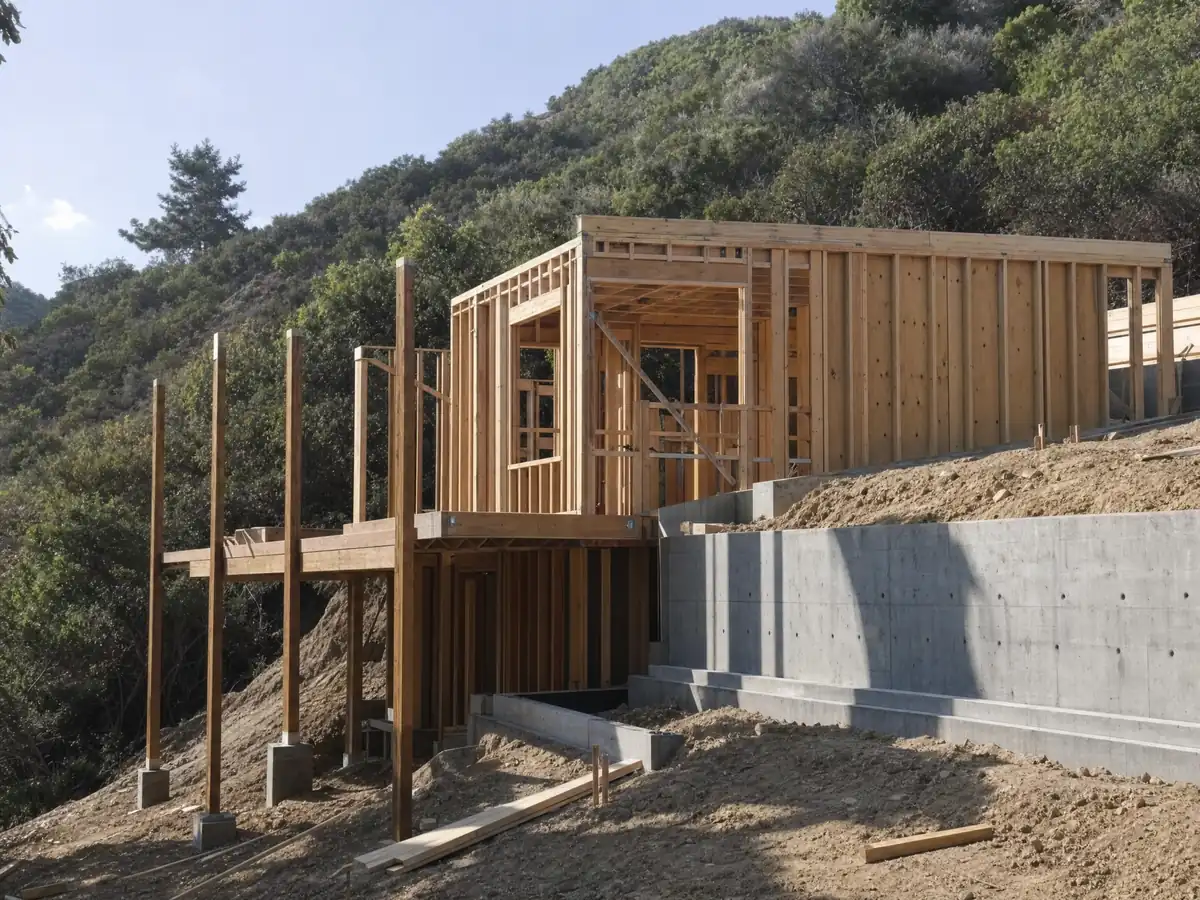
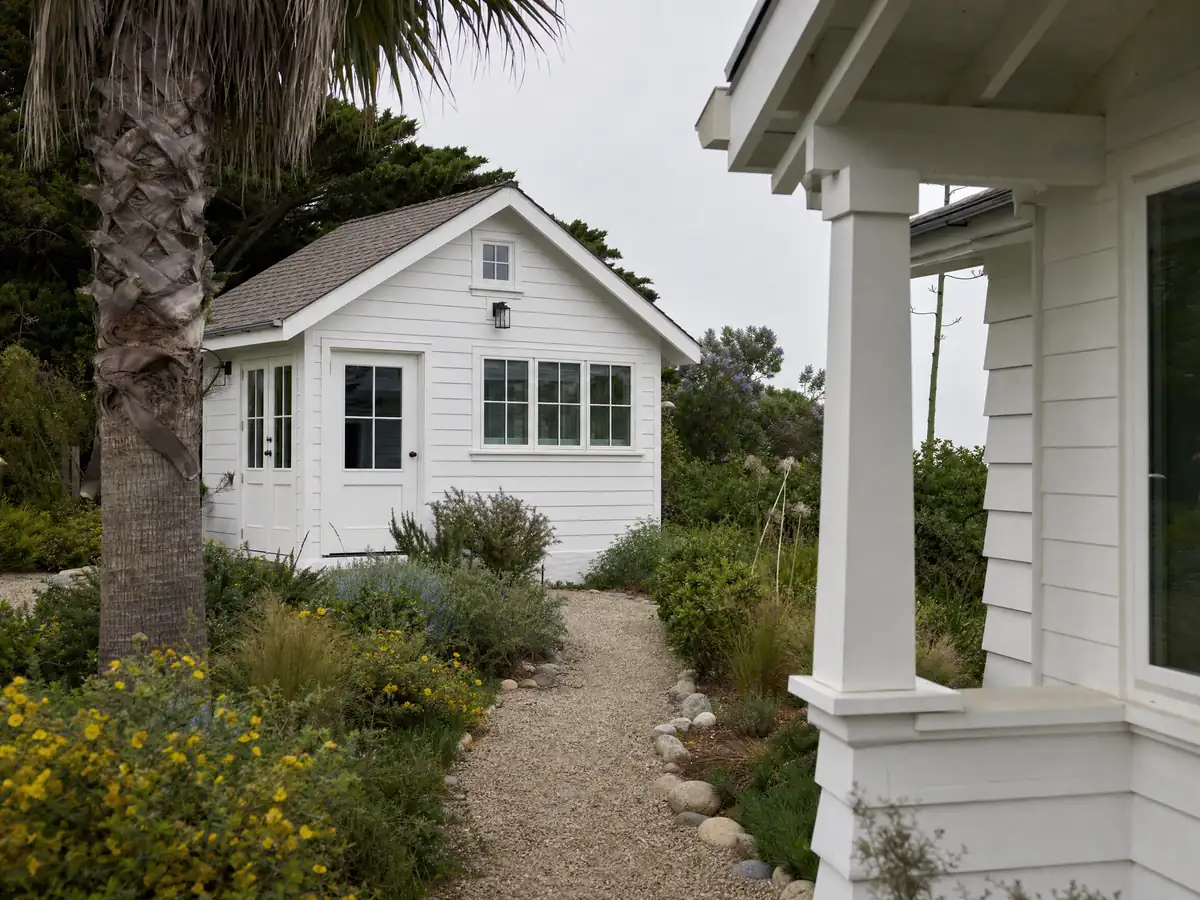
ADU photos from Santa Paula and nearby homes
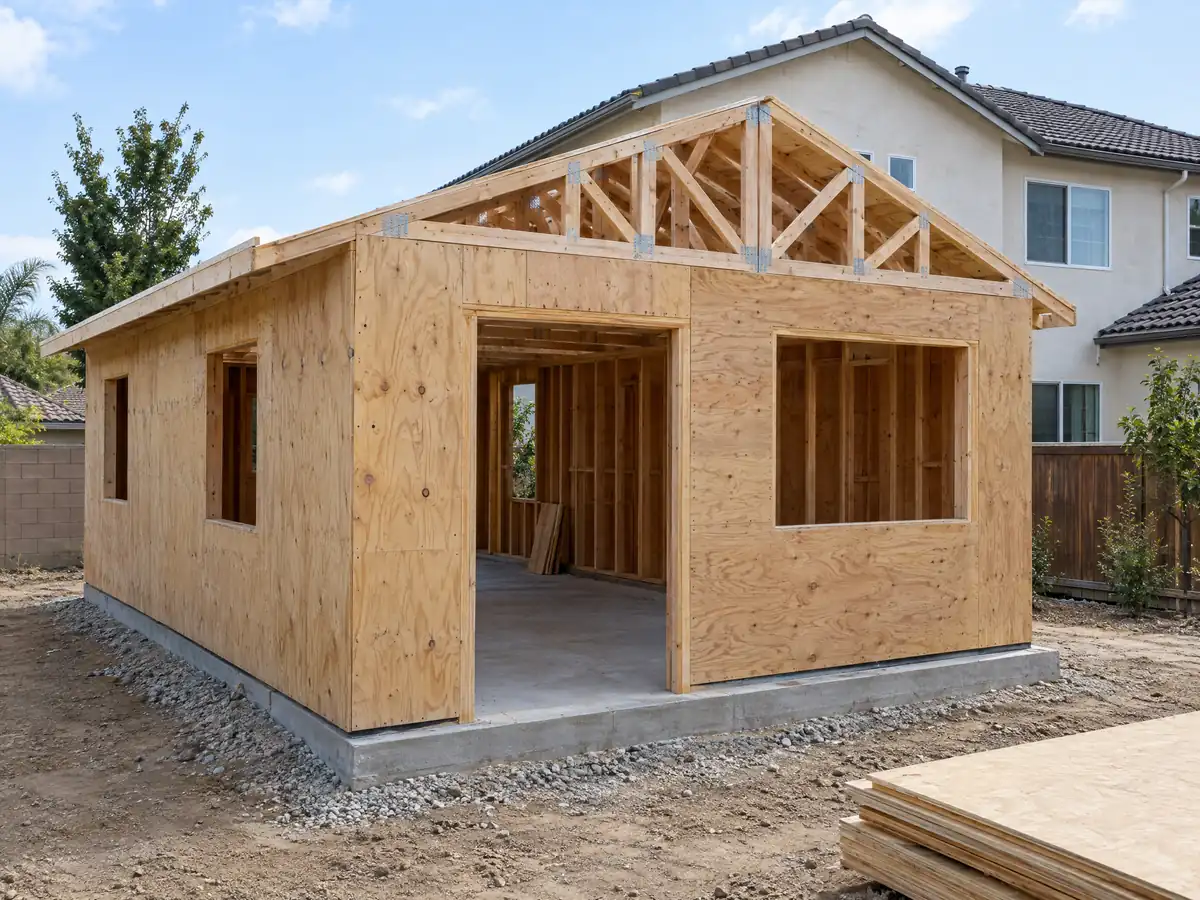
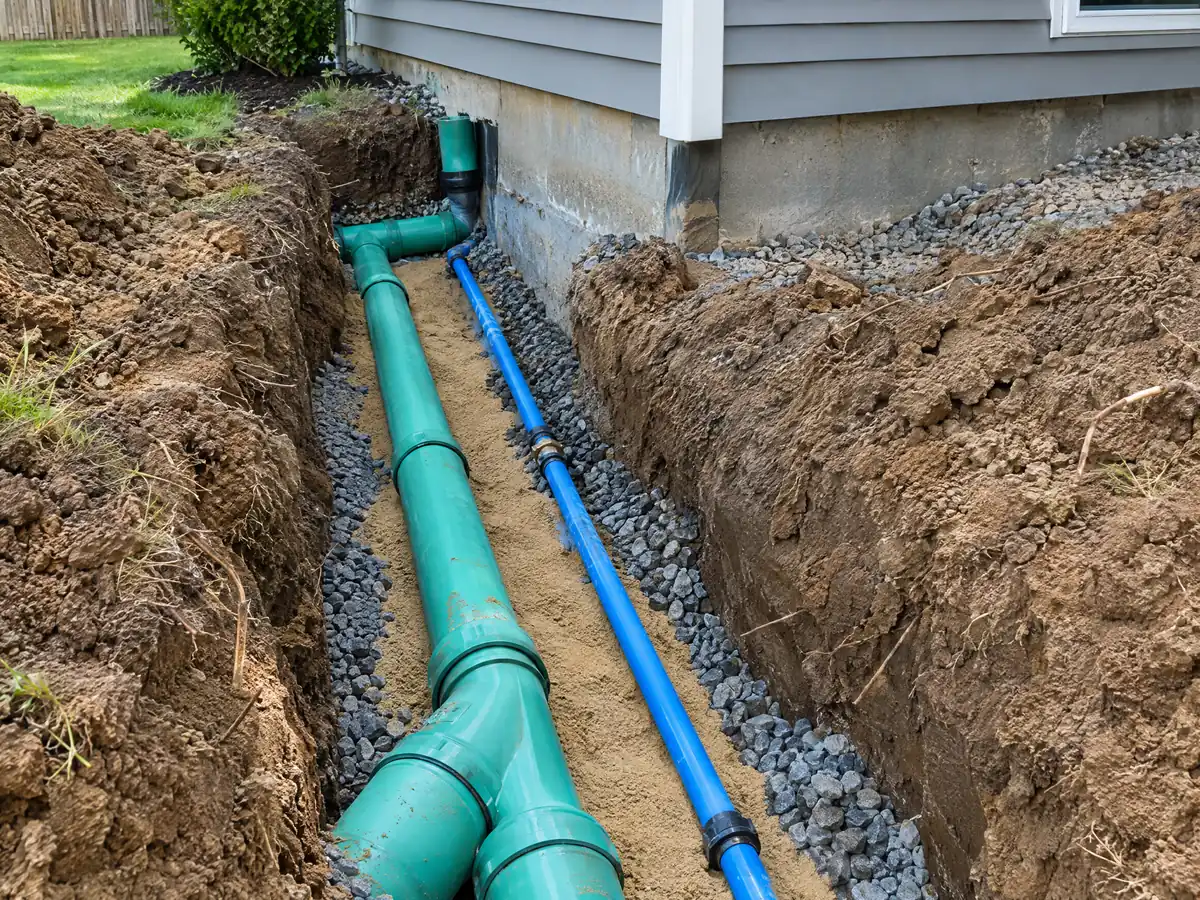
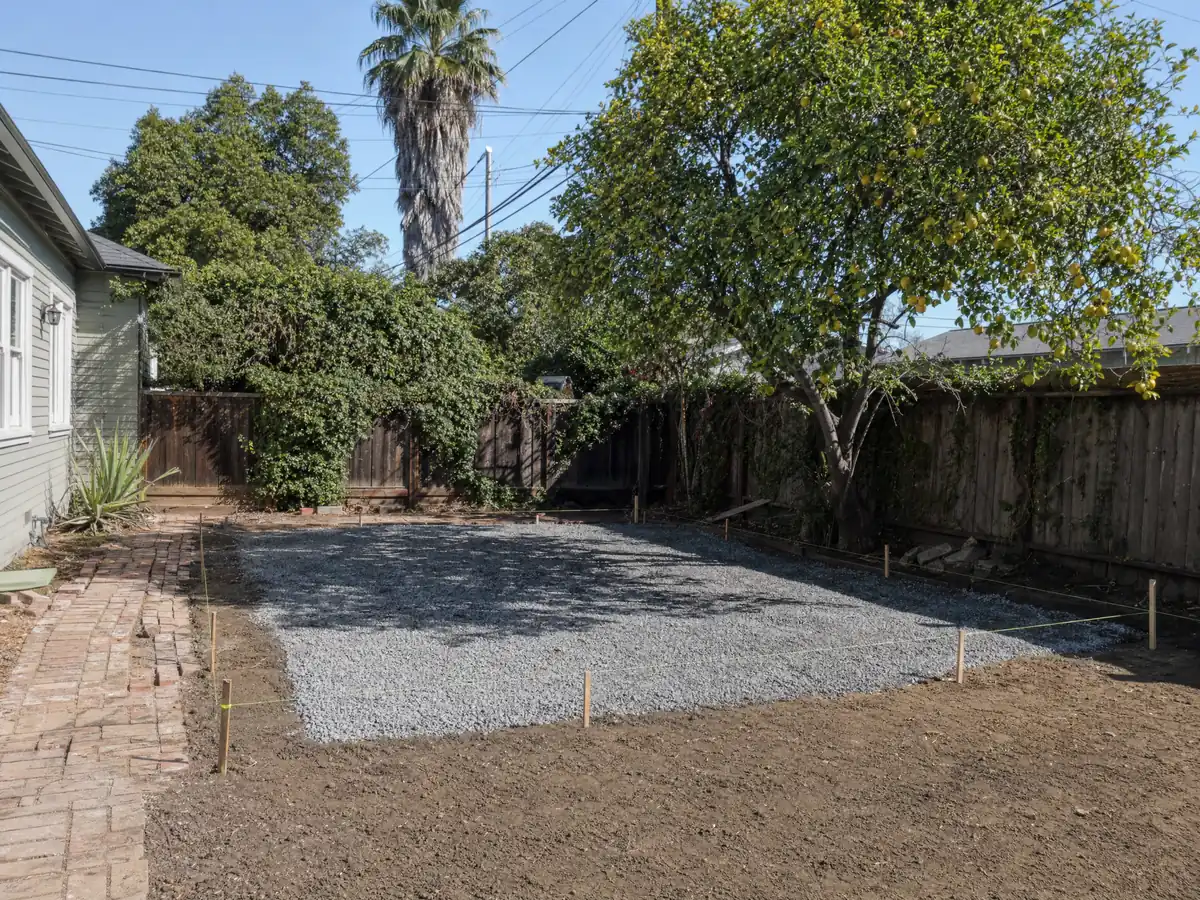
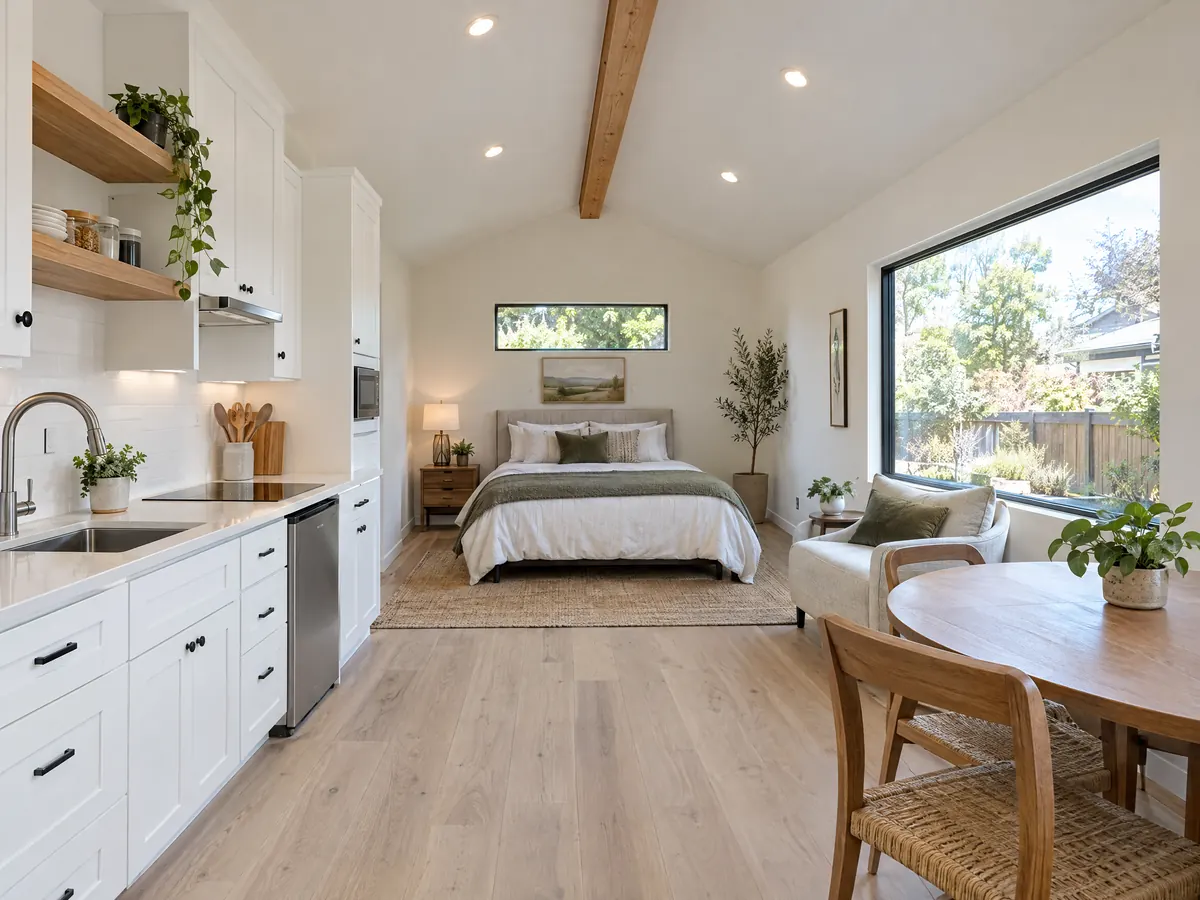
ADU scenes tied to Santa Paula and the Santa Clara River valley communities around it, from garage conversions and slabs to finished cottages. Tap a photo to enlarge it.
What adu construction costs around Santa Paula
On our ADU construction page, converting a garage to a studio or one bedroom costs about $100,000 to $200,000, and a new detached unit of 400 to 800 square feet about $200,000 to $400,000. Three independent reads support those ranges. A UC Berkeley survey of 2018 and 2019 projects found a Los Angeles County median of $100,000, and $90,000 for garage units. The Terner Center put Los Angeles at $148,000 in 2020. The 2025 Cost vs. Value report from Remodeling magazine puts an ADU job in Los Angeles at $178,536, of which 39.9 percent came back at resale. None is a Santa Paula bid. A raised slab above flood elevation, a geotechnical report or a fire-rated wall would add to a regional range, and the City's current fee schedule was not found, so each permit and utility charge is its own line in a proposal. Our ADU cost guide shows how the ranges were built, and the ADU versus JADU guide explains the junior unit. Nearby ADU pages cover Ventura, Oxnard, Fillmore and Moorpark. A bath for the unit is on our Santa Paula bathroom page, an attached project on the Santa Paula room addition page, windows on the Santa Paula window page, and the Santa Paula area page lists every trade we cover in town.
| What it covers | Typical range |
|---|---|
| Garage conversion to a studio or one bedroom | $100,000 to $200,000 |
| New detached ADU, 400 to 800 sq ft | $200,000 to $400,000 |
| UC Berkeley survey, Los Angeles County median, 2018 and 2019 projects | $100,000 overall. $90,000 garage. $180,000 detached. |
| Terner Center and Berkeley CCI, 2020 | $148,000 Los Angeles estimate. $167,000 statewide average. |
| Remodeling Cost vs. Value 2025, Los Angeles | $178,536 job cost |
| Electrical and plumbing, Angi Los Angeles, January 2026 | Electrical $2,600 to $7,800. plumbing $3,900 to $10,400. |
| City permit and plan check fees | Not priced here |
Other work we manage in Santa Paula
Santa Paula ADU questions, answered
How much does it cost to build an ADU in California?
A garage conversion to a studio or one bedroom runs about $100,000 to $200,000, and a new detached unit of 400 to 800 square feet about $200,000 to $400,000. Those ranges come from California and Los Angeles studies, not from a Santa Paula bid, and floodplain or fire requirements can move them. A site visit sets the figure.
How long does it take to get an ADU permit in Santa Paula?
The City must approve or deny a complete application within 60 days, or it is deemed approved, and must say within 15 business days whether the file is complete. Its guidebook puts plan check at about 30 days. Design, corrections and the separate Ventura County Fire review all come on top, so plan on months from first drawing to permit.
How big can an ADU be in California?
State law lets a detached ADU reach 1,200 square feet and an attached one 50 percent of the house, and it forces a city to allow at least 800 square feet with 4 foot setbacks. Santa Paula's chapter allows 850 square feet for a studio or one bedroom and 1,200 for more, with a 500 square foot junior unit.
Do I need a permit to convert my garage into an ADU?
Yes. A garage converted to living space needs a building permit, and under Chapter 16.227 an interior conversion needs nothing beyond that. State law gives the existing walls a setback exemption and removes replacement parking. Sprinklers are required only when the main house has them, so ask Building & Safety which checklist items apply.
What is the difference between an ADU and a JADU?
A junior ADU is a unit of up to 500 square feet inside the existing single-family house, including an attached garage, with an efficiency kitchen and its own entrance. An ADU can be detached or attached and is larger. Owner occupancy applies to a junior unit but not to a full ADU, and the two can be combined on one lot in some cases.
Do I have to live on the property to rent out an ADU?
No. State law bars a city from requiring owner occupancy for an ADU, and the Santa Paula chapter has no such rule for units created since 2020, though it bars rentals under 30 days. A junior unit is different, because its owner must live on the property. The City's web page still shows older wording, so confirm with Planning.
Can I sell my ADU separately from my main house?
Generally not. State law says an ADU cannot be sold apart from the primary home, with two narrow exceptions: a qualified buyer through a nonprofit program, or a city that has adopted a condominium ordinance. Santa Paula's chapter repeats the no-separate-sale rule. A deed restriction recorded before the certificate of occupancy keeps that on the title.
Do I need to provide parking for my ADU?
No. Santa Paula requires no off-street parking for a new or converted ADU, and when a garage, carport or parking space is lost to the unit, the space does not have to be replaced. That follows state law on conversions. A lot with deed or HOA limits is a separate question, so read the title documents.
Can I build an ADU in a flood zone in Santa Paula?
Often yes, with extra work. New construction in a mapped flood area needs its lowest floor at least one foot above base flood elevation, and the City's ADU checklist asks plans to show the FEMA zone. We did not open the current map, so ask Public Works and Planning for your parcel's zone and elevation before design.
Tell us about your Santa Paula ADU plans
Tell us the street or neighborhood, whether you are weighing the garage or the back yard, how big the unit might be and whether the lot is near the river, a creek or an older historic block, and we will plan the first visit around the flood and fee questions.