
Flooring Installationin Santa Paula, CA
Flooring installation in Santa Paula usually needs no building permit for carpet or tile, which the City's permit list exempts, though new plumbing, electrical or mechanical lines do. The larger variables sit underneath: a flood code that applies near the Santa Clara River, slab moisture, and a housing stock where about 72.6 percent of homes predate 1980.
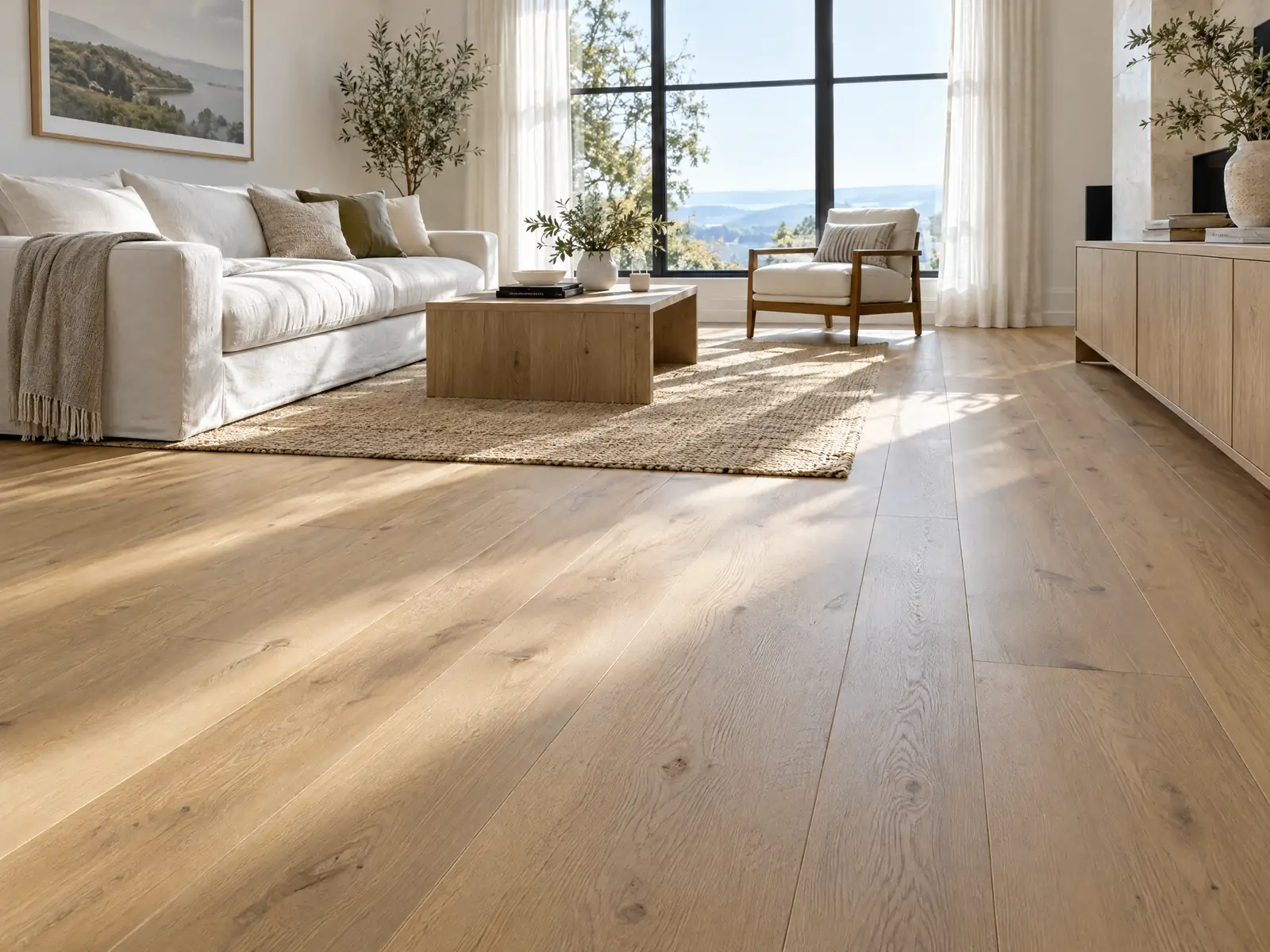
Many of the floors in Santa Paula were laid before modern codes. The community was founded in 1872, the Southern Pacific depot opened in 1887 and the city incorporated on April 22, 1902. The ACS 2024 estimates count 10,149 homes, with about 15.1 percent built before 1950, about 50.6 percent before 1970 and about 72.6 percent before 1980. The City's 2023 Housing Element adds that staff observation puts about 40 percent of the housing stock, some 3,600 units, in need of repair or replacement.
MDG Builders, CSLB #1040337, is a general contractor in Tarzana. We scope the job, ask the City which approvals apply and schedule the trades, and a licensed flooring subcontractor lays the floor, so ask us for that firm's license number and certificate of insurance. Materials are on our flooring page, the Santa Paula overview lists the other trades we manage here, and the license check guide walks through the CSLB lookup.
What Santa Paula's Building & Safety Division, its flood chapter and the Ventura County air district say about floors
Where flooring permits come from in Santa Paula: City of Santa Paula Community and Economic Development Department, Building & Safety Division.
- The City's residential permit list exempts floor covering such as carpet or tile and painting, papering or similar finish work. It still requires permits for plumbing, electrical or mechanical work, so new or altered lines for a flooring or remodel job need their own permits.
- VCAPCD Rule 74.2 lists Floor Coatings at 100 grams per liter, dropping to 50 on July 1, 2021. It defines a Floor Coating as an opaque coating labeled for horizontal surfaces that may be subject to foot traffic, and clear coatings fall in other categories such as Concrete/Masonry Sealers (100 g/L).
- In a FEMA special flood hazard area Section 151.20 requires materials and utility equipment resistant to flood damage and a lowest floor at least one foot above base flood elevation for new construction and substantial improvements. A substantial improvement is any repair or improvement costing 50 percent or more of the structure's market value.
- The City's bath handout says California Civil Code 1101.4 requires pre-1994 homes with non-compliant plumbing fixtures to be upgraded to water-conserving fixtures whenever a building permit is issued for remodeling, even if the fixtures are outside the scope of work.
- CSLB defines the C-15 Flooring and Floor Covering classification as preparing surfaces for and installing carpet, resilient sheet goods and tile, wood floors and similar materials (ceramic tile excepted), and C-54 Ceramic and Mosaic Tile as installing glazed, ceramic, mosaic, quarry, paver and stone tile.
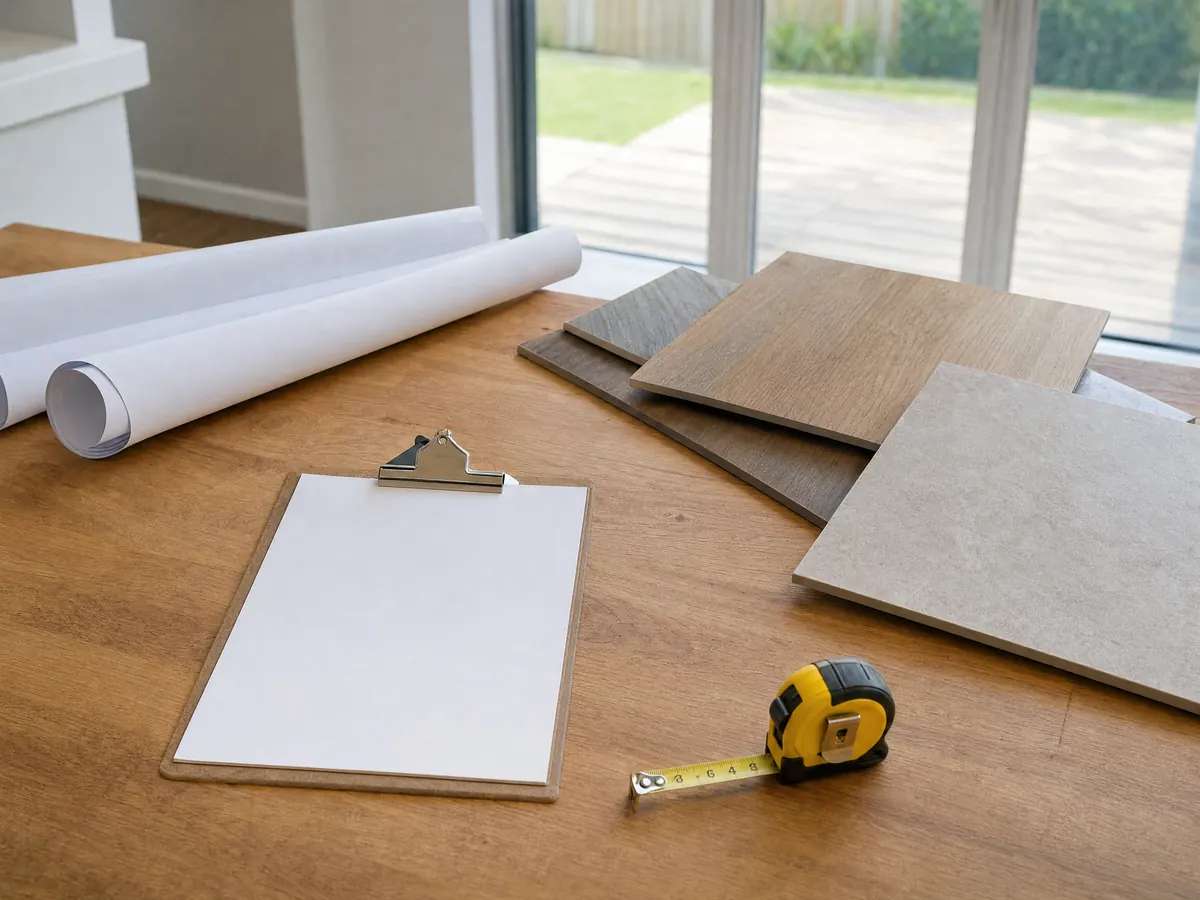
Does Santa Paula's flood code reach a flooring job near the Santa Clara River?
Only when the project is big enough, and only if the house sits in a mapped zone. The General Plan, quoting the 2015 Ventura County Multi-Hazard Mitigation Plan, says 2,197 housing units, 31 percent, were in the 100-year floodplain and 1,777 more, 25 percent, in the 500-year floodplain. Chapter 151 of the municipal code requires a development permit in special flood hazard areas and counts any repair or improvement costing 50 percent or more of a structure's market value as a substantial improvement.
A substantial improvement needs its lowest floor at least one foot above base flood elevation, built with flood-resistant materials and utility equipment under Section 151.20. A floor swap alone seldom comes near half the value of a house. A gut remodel that takes in walls, wiring, plumbing and floors can, and then the floor product becomes part of the flood-resistant materials question for the floodplain administrator.
Which map governs your parcel is not settled by what we read. The code adopts the flood insurance map and study dated September 3, 1997 and later amendments, and the current effective map was not opened for this page. Chapter 151 names the Public Works Director or City Engineer, at 970 E. Ventura Street, as the Floodplain Administrator who answers map questions. The code text we read comes from GoCodebook, a third-party mirror, so the City should confirm each section.
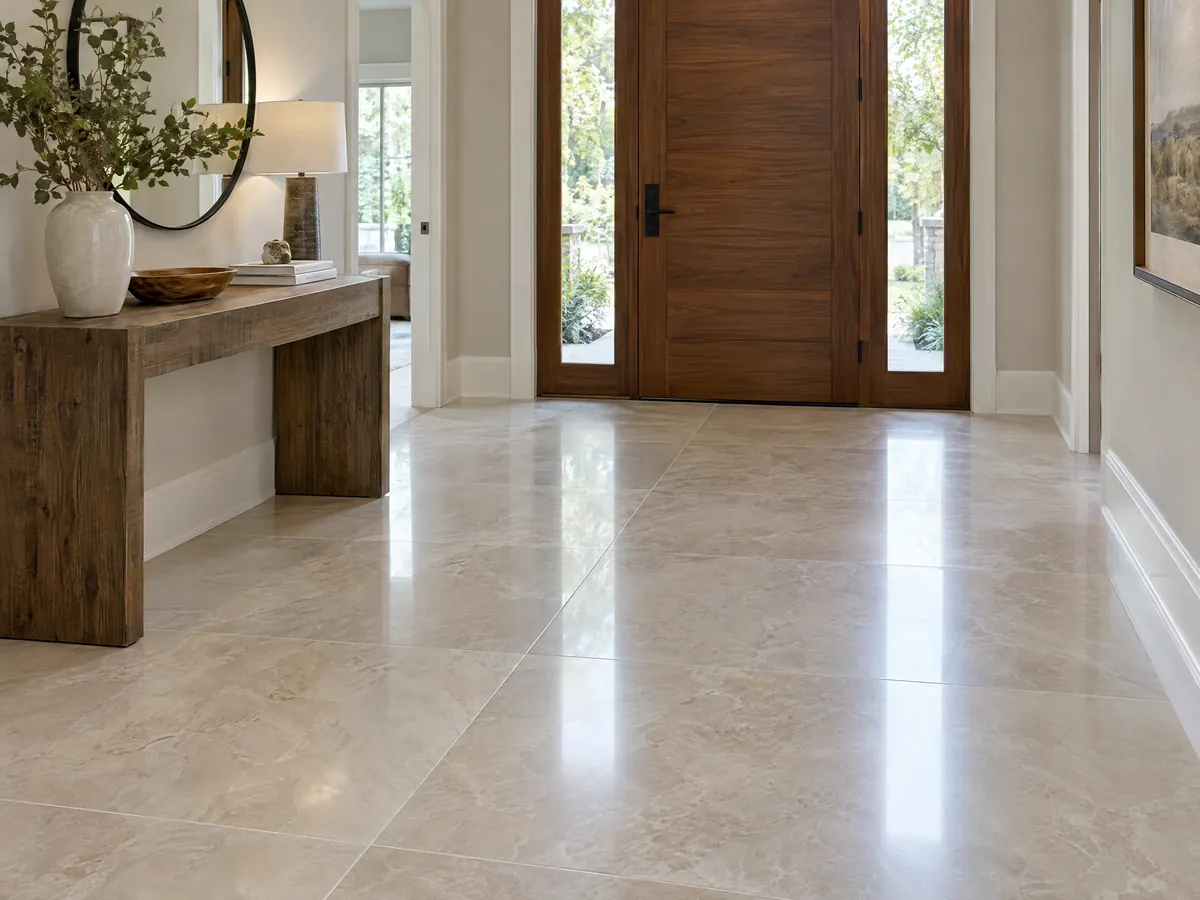
How do you test a Santa Paula slab for moisture before wood or vinyl goes down?
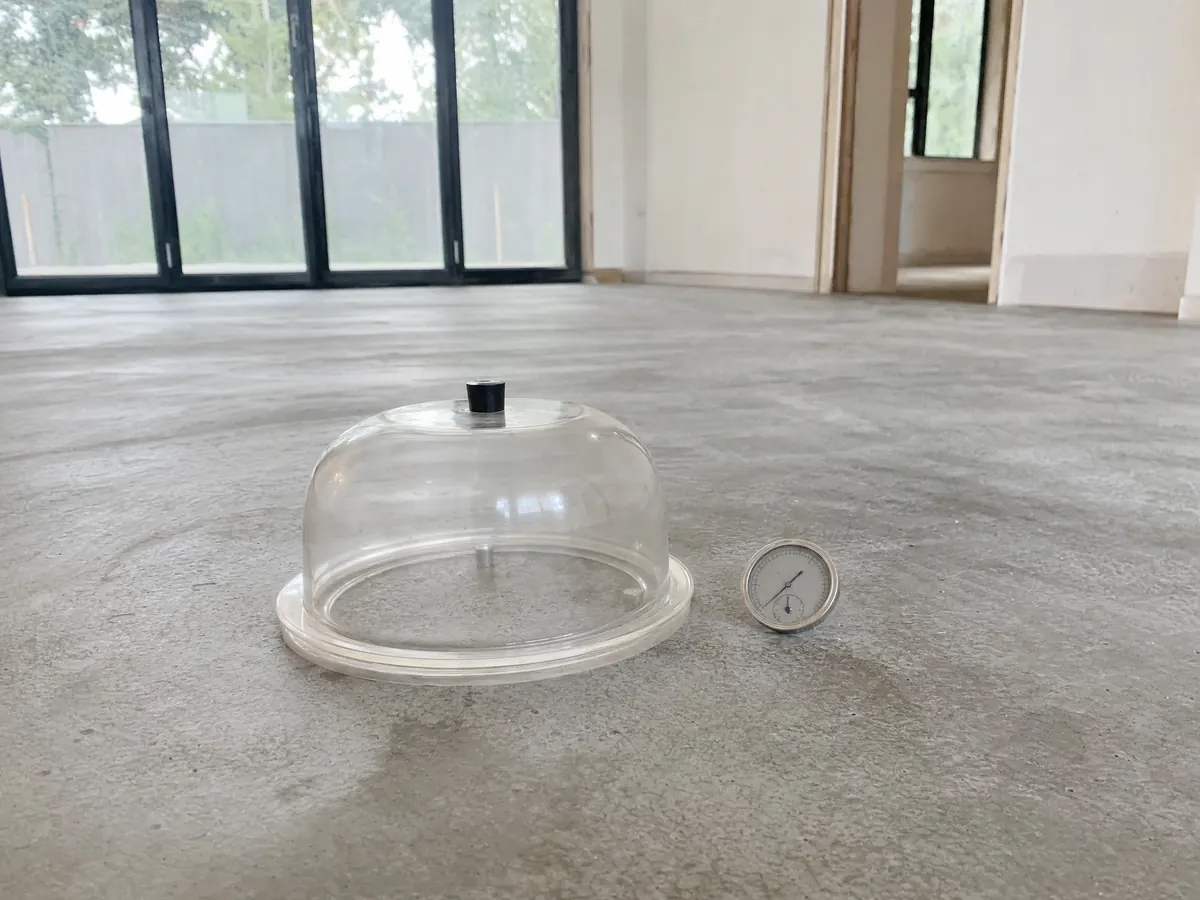
With numbers, not a hunch. Two tests are standard: ASTM F2170, which reads relative humidity in drilled probe holes, and ASTM F1869, which uses calcium chloride. Neither sets a pass mark, because the flooring or adhesive maker does. The National Wood Flooring Association's concrete subfloor paper says to follow those limits and strongly recommends a vapor retarder rated 0.13 perms or less, such as 6-mil polyethylene.
Winter rain is the reason to care. NOAA's 1991 to 2020 normals have no Santa Paula station, so two nearby ones bracket the city. Camarillo Airport, about 9.6 miles away, records 12.01 inches a year with 9.46 inches from December through March, and Ojai, about 11.2 miles away, records 20.68 inches with 16.62 inches in those four months. The City's undated Fast Facts page quotes 18.7 inches, which falls between them.
Ask where the probes will go. Readings near exterior walls, planters and a water heater closet say more than one in the middle of a room, and the results should reach you on paper before material is ordered. If a slab fails, the schedule slips and a mitigation line is added, so we write that possibility into the proposal.
What is under the floor of a Santa Paula house built in the 1920s, 1950s or 1960s?
Layers from each decade. The General Plan says most of the city's buildings date from the 1920s, 1950s and 1960s, many before modern codes, and the ACS shows the 1960s (2,269 homes) and 1970s (2,238 homes) as the two biggest building decades, effectively tied. The McKevett Heights tract of the 1920s, with late California Bungalows and Period Revivals, and The Oaks of the mid-1920s are the residential areas the General Plan calls of particular historic importance.
Old vinyl tile, sheet backing and black adhesive are normal finds in houses that age. The EPA's asbestos page names vinyl floor tiles, sheet backing and adhesives as possible sources and says the risk begins when the material is disturbed. We do not sand or scrape a suspect layer on a guess. It is identified, tested if there is doubt and removed by a qualified firm, each step priced on its own line.
Historic review mostly concerns exteriors. Ordinance 816 lists walls, fences and steps among the exterior alterations that need a Certificate of Appropriateness on a landmark or inside a historic district, and Section 16.33.060 sends those permits to public hearing. The Zoning Map that shows the Historic Overlay District was an image file we could not read, so for a porch floor or steps seen from the street, ask Planning at 805-933-4214 before pricing.
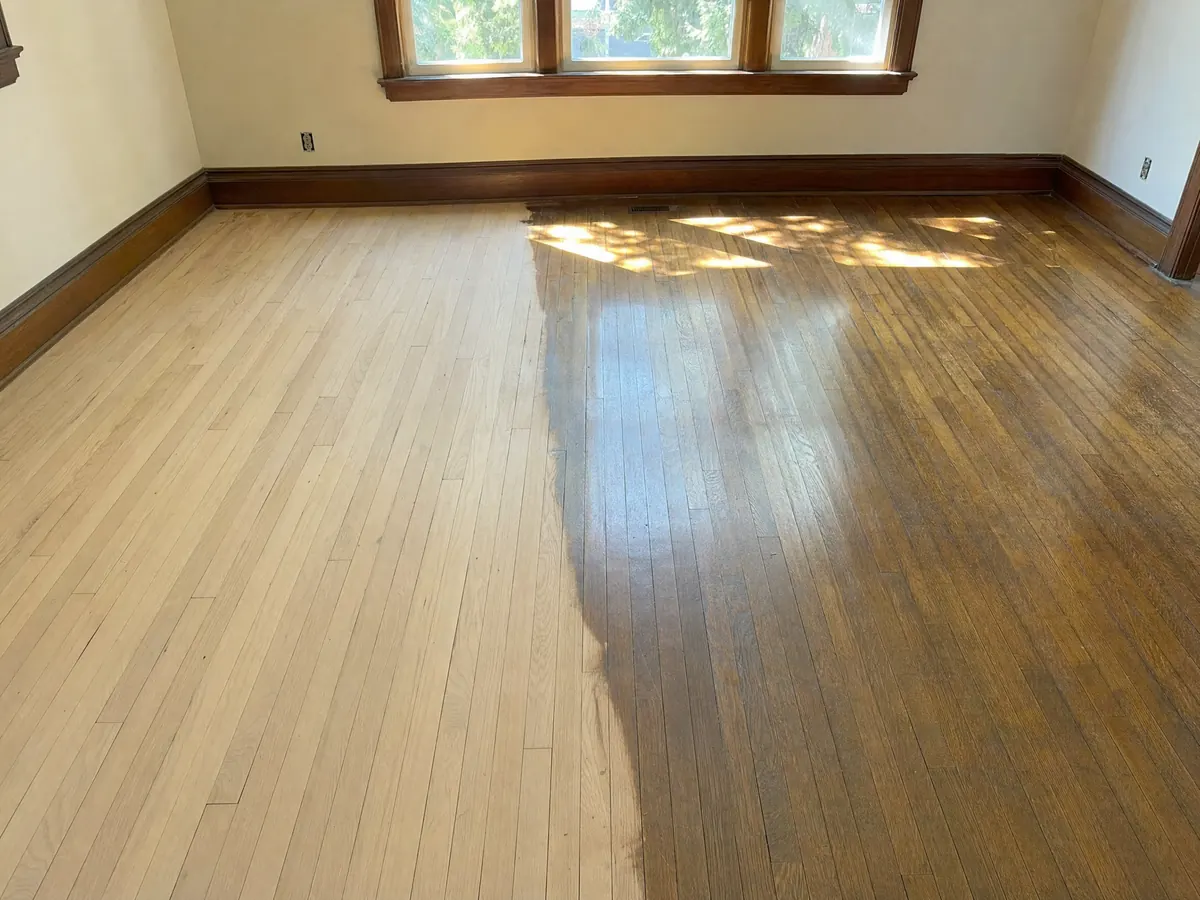
Why does a Santa Paula subfloor need a termite and level check before new boards go on?
Because the City's design values rate termite damage as very heavy. That entry sits in the residential design table in Section 150.075 on the code mirror. It describes the whole city, not your house, but it is the reason to look at a raised floor's sill plates, joists near plumbing and any wood touching soil before anything covers them.
The same table lists seismic design category D2 or E. The General Plan classes ground shaking potential as violent or extreme and puts liquefaction and subsidence areas mainly in the Santa Clara River floodplain. None of that proves a floor is out of level. It does justify a straightedge across each room, a map of cracks marked old or moving, and a leveling compound or patch priced as its own line when a dip has to be corrected.
Water stains and soft spots near a tub, sink or water heater get traced to their source first. A leak found under a floor is a plumbing repair, with its own permit, before the new floor goes back over it.
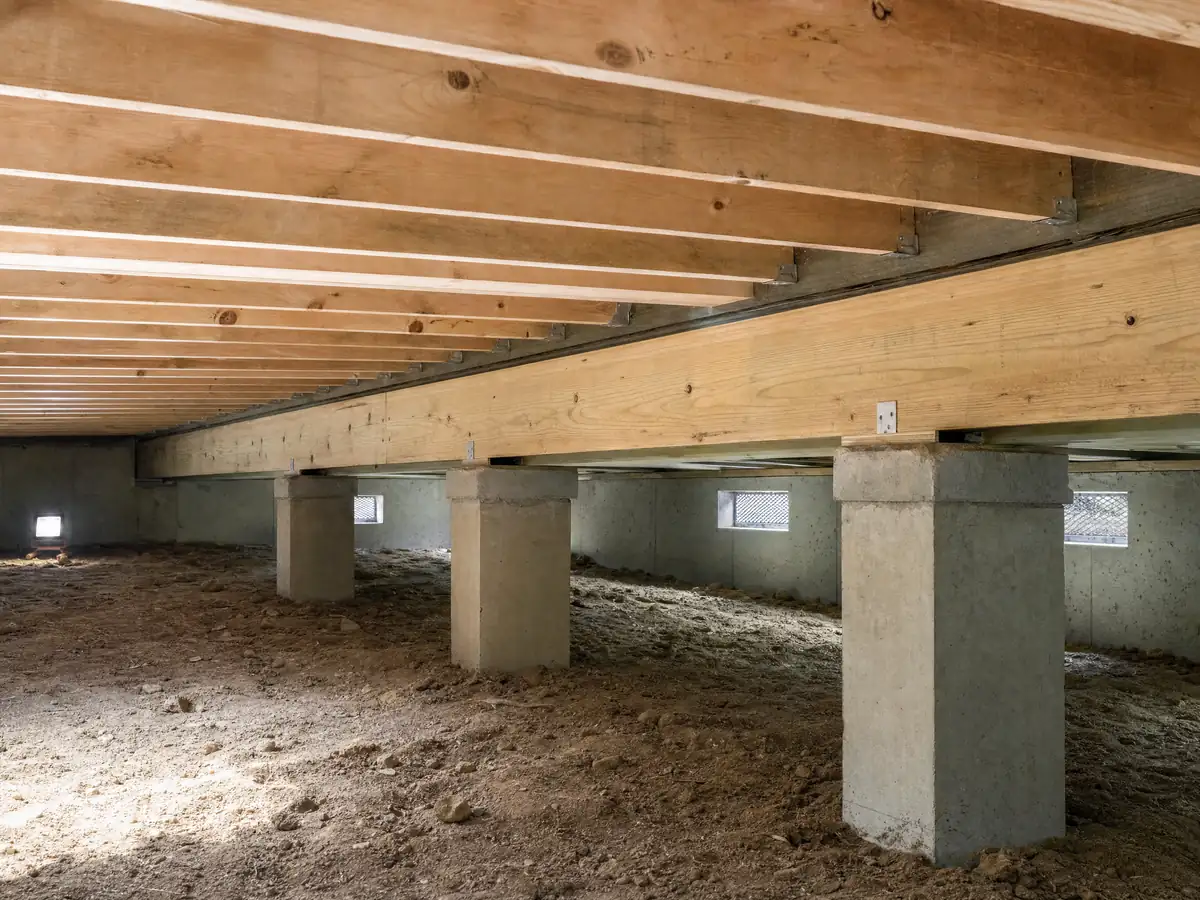
Does flooring installation need a permit in Santa Paula, and what about plumbing and electrical?
Usually not for the floor itself. The City's list of residential work that needs no permit names floor covering such as carpet or tile, along with painting, papering and similar finish work, and still requires permits for plumbing, electrical or mechanical work. The list is a Word file dated 11/7/02. Hardwood, plank and vinyl plank are not named, so the Building & Safety Division at 200 S. 10th Street, 805-933-4218, makes the call.
A permitted remodel can pull in other rules. The City's kitchen and bath handouts repeat Civil Code 1101.4, under which a pre-1994 home with non-compliant plumbing fixtures must be upgraded to water-conserving ones whenever a remodeling permit is issued, even outside the scope of work. Applications go by email to buildsafe@spcity.org, and the division is closed every other Friday.
Fees are the open question. The only schedule we found was adopted January 3, 2017, and the items we read were roofing, windows, block walls and drywall repair, with no flooring line, so we print no flooring permit fee. The code mirror shows the 2025 state codes adopted by Ord. 1349 while the City's handouts still cite 2022, so ask which edition the plan checker applies.
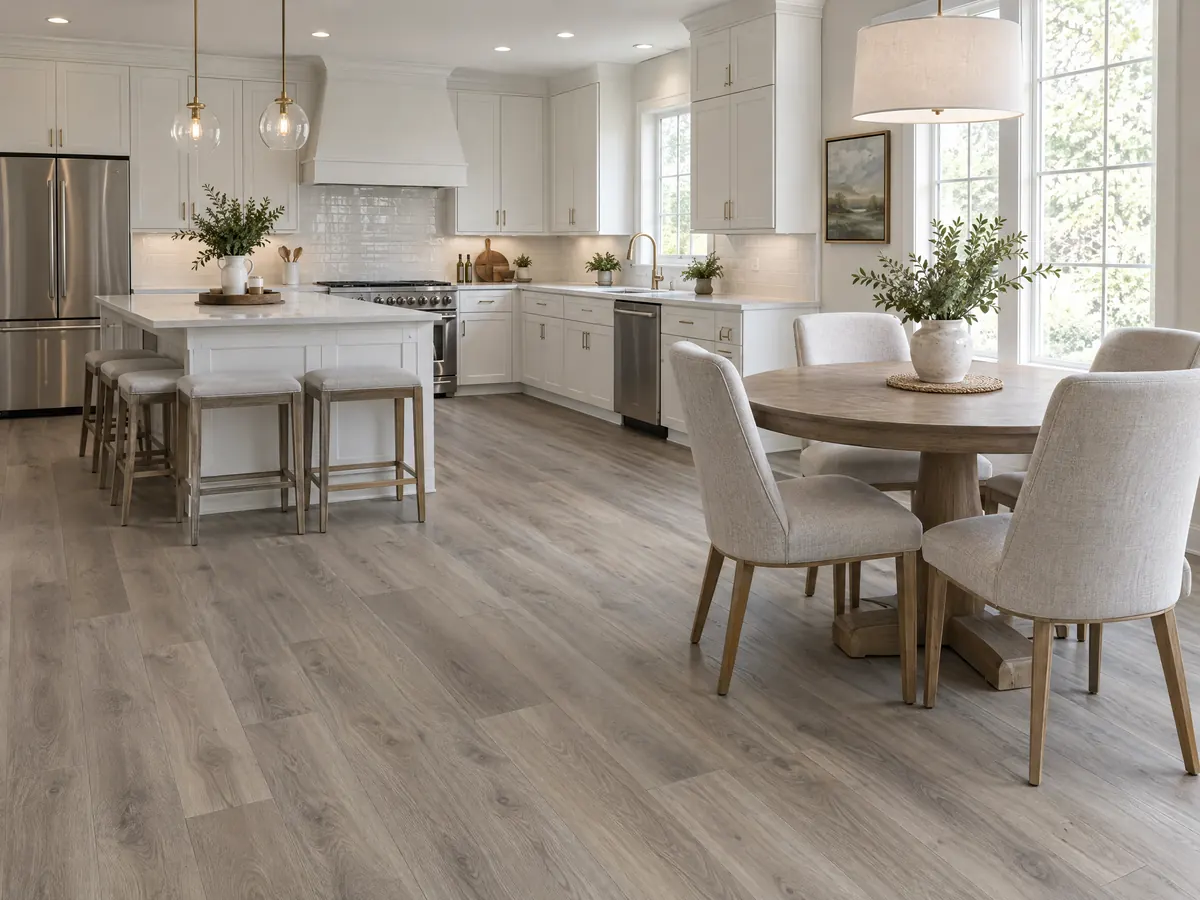
What rules apply to a coated garage floor, or to hard flooring in a Santa Paula rental or condo?
Product choice is regulated here. Ventura County APCD Rule 74.2, revised 11/10/2020, applies to anyone who applies an architectural coating in the district, and the district is Ventura County, not the South Coast. It lists floor coatings at 100 grams per liter of VOC, stepping down to 50 on July 1, 2021, defines them as opaque coatings labeled for surfaces that see foot traffic, and files clear coatings under other categories, such as concrete and masonry sealers at 100. Check the category on the rule itself before a can is opened.
Rentals change the first question. In the ACS 2024 data 44.1 percent of the city's 9,653 occupied homes are renter-occupied, and 10.9 percent of units, 1,102, sit in buildings of five or more. A landlord decides what goes into a rental, and an association's recorded rules decide what may lie over a neighbor's ceiling. The Davis-Stirling guide to hardwood floors says those documents and a field sound test control, so get the rule in writing.
A garage turned into a room is a larger step. A converted ADU inside existing space needs only a building permit under Chapter 16.227, and Planning can say how the old slab and any new floor layers are treated.
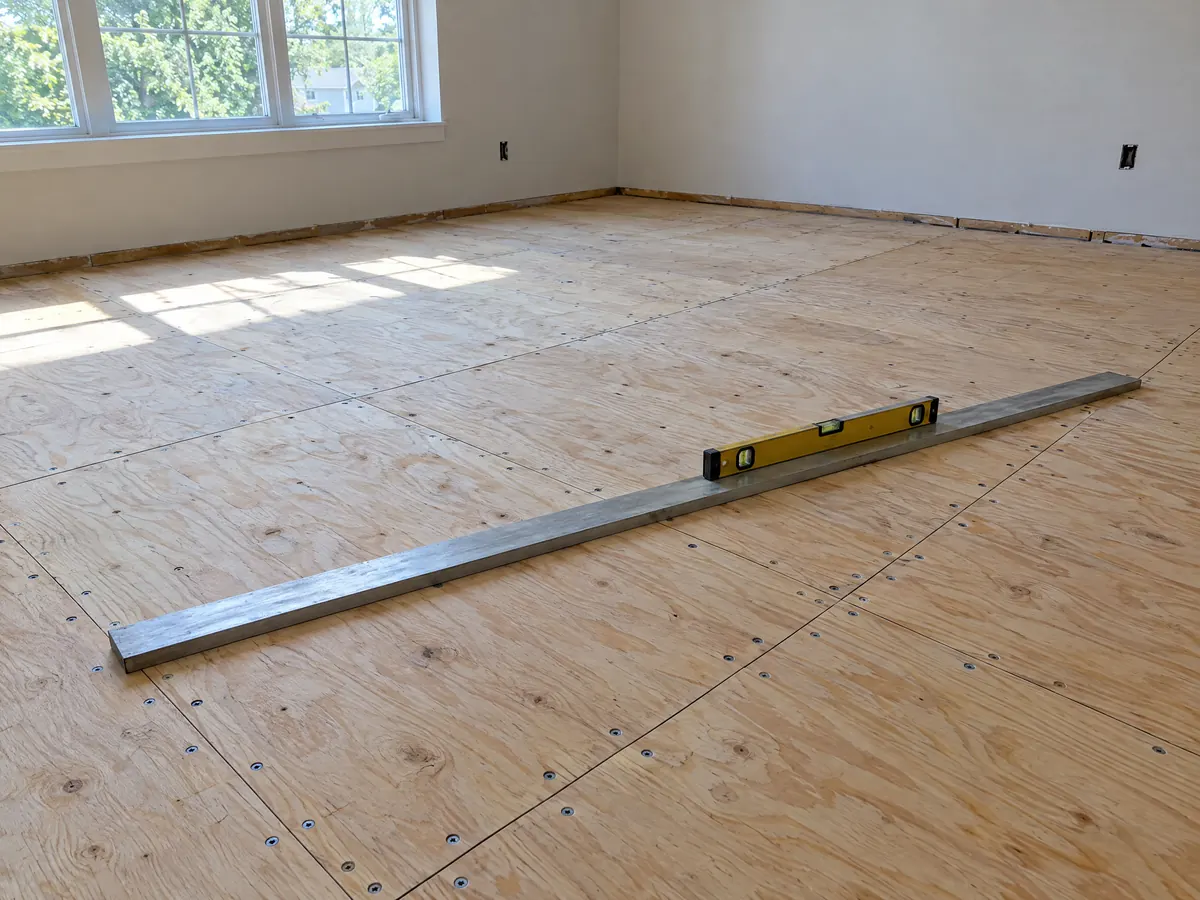
What does a flooring contractor charge in Santa Paula, and who needs which license?
We found no Santa Paula price study, so Los Angeles figures are the nearest published source. Angi's 2026 Los Angeles pages show installer labor of about $3 to $9 per square foot, engineered hardwood at $10 to $18 installed, solid hardwood at $12 to $22 and refinishing at $4 to $8, and its laminate page shows projects from roughly $2,000 to $5,500. No method is printed on those pages, so every figure here is rated medium to low confidence.
License class matters. CSLB defines C-15 as preparing surfaces for and installing carpet, resilient sheet goods and tile, wood floors and similar materials, ceramic tile excepted, and C-54 as installing glazed, ceramic, mosaic, quarry, paver and stone tile. The City asks every contractor, subcontractor, architect and engineer to hold a City business license, and Chapter 110 has the Building Department confirm that contractors on remodels are licensed before final clearance.
Hours and paperwork count too. Chapter 93 exempts construction from the sound limits only between 8 am and 6 pm Monday through Friday and requires a notice of the limits at every site entrance. Contracts above $500 must meet Business and Professions Code 7159, and the proposal should price removal, moisture work, leveling and transitions on separate lines.
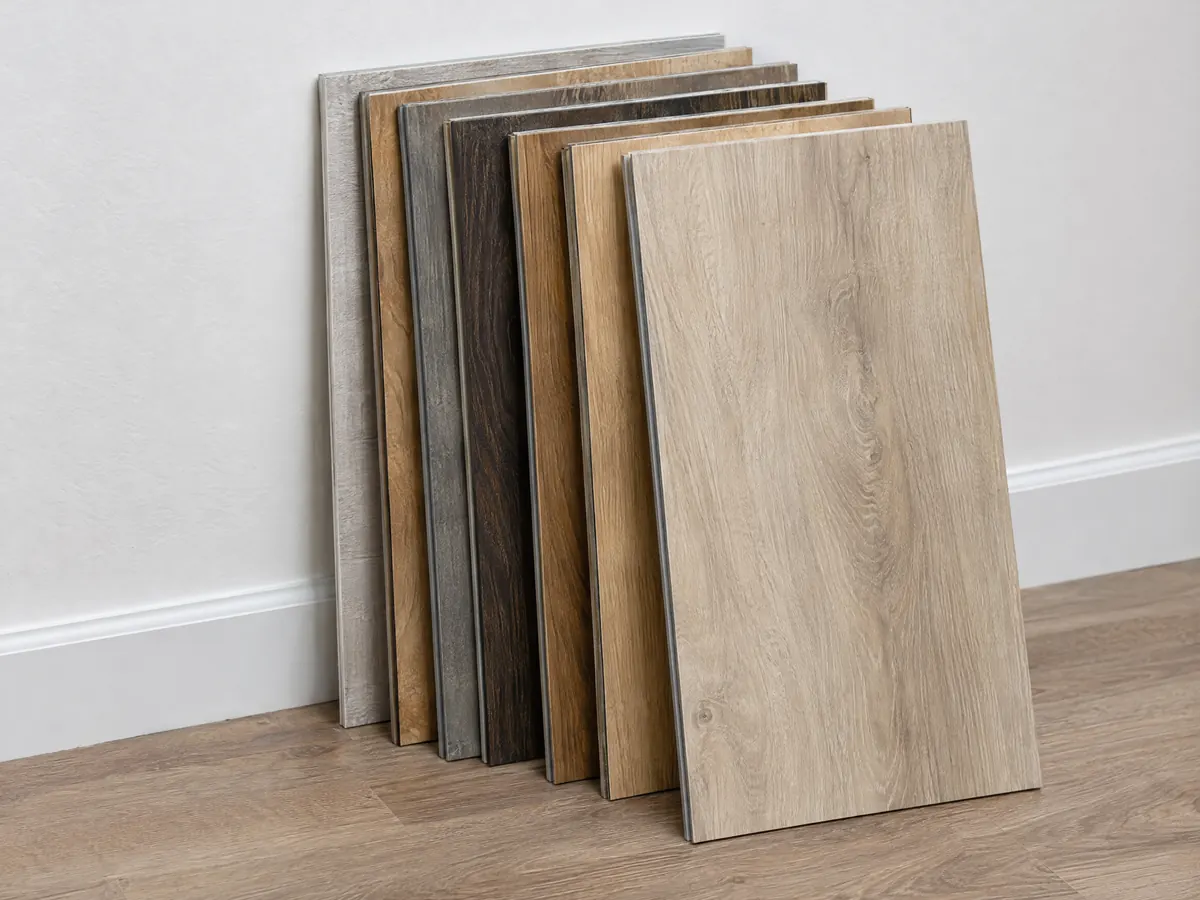
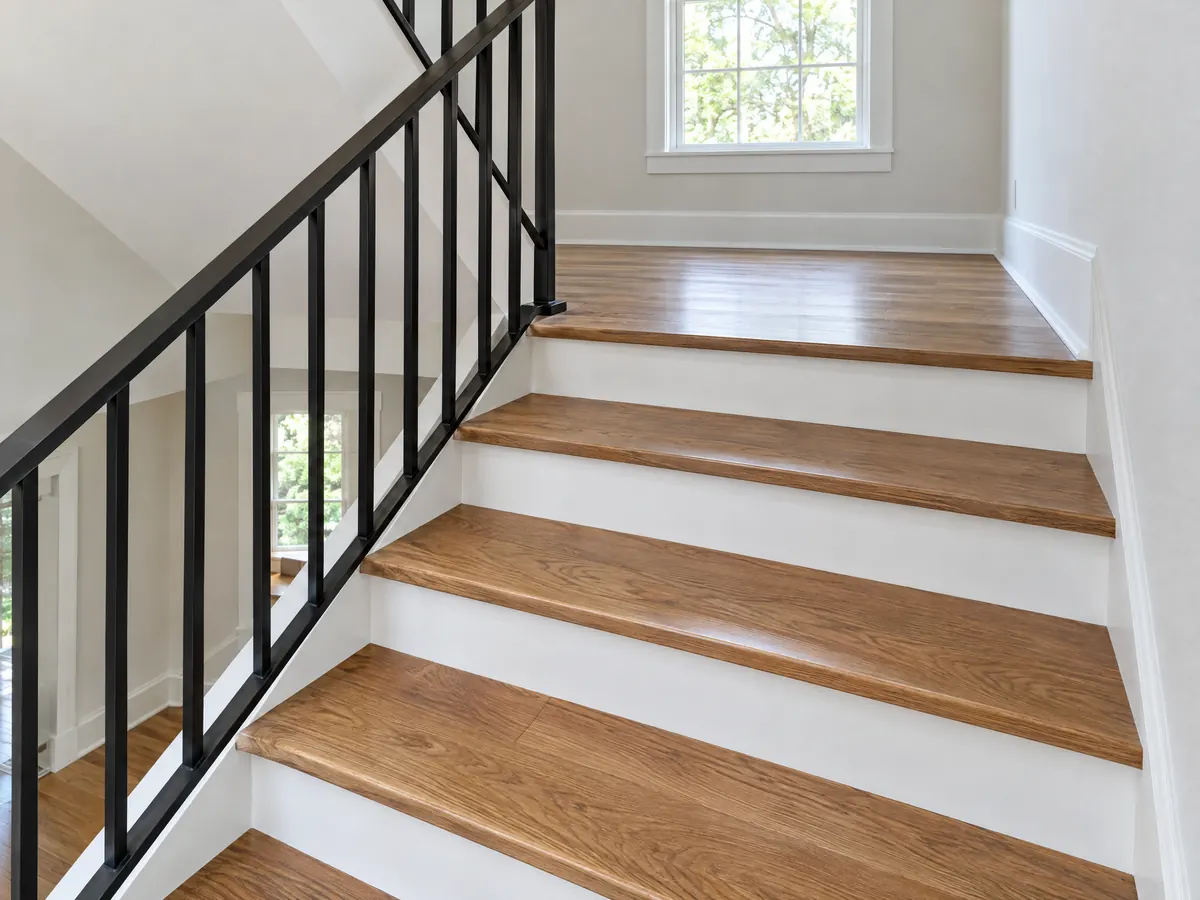
Flooring photos from Santa Paula and nearby communities
Subfloors, planks and slab tests from Santa Paula and the communities within about ten miles, shown at the steps where the decisions get made. Tap a photo to enlarge it.
What flooring costs around Santa Paula
These are Los Angeles benchmarks from our flooring page, not a Santa Paula quote, so ask each bidder to price removal, slab testing, leveling and asbestos handling on separate lines. For comparison, read flooring in Ventura, flooring in Oxnard, flooring in Simi Valley and flooring in Los Angeles. The same house may need concrete work in Santa Paula or a deck builder in Santa Paula, and the flooring cost guide explains what drives the price.
| What it covers | Typical range |
|---|---|
| Installation labor only | $3 to $9 per sq ft |
| Solid hardwood, installed | $12 to $22 per sq ft |
| Engineered hardwood, installed | $10 to $18 per sq ft |
| Refinishing existing hardwood | $4 to $8 per sq ft |
| Laminate, whole project | $2,000 to $5,500 |
| Hardwood, whole project | $3,153 to $8,496 |
| Removing the old floor | $455 to $685 per 200 sq ft |
| Tile | No sourced Los Angeles range |
Other work we manage in Santa Paula
Santa Paula flooring questions, answered
How much does it cost to have flooring professionally installed in Santa Paula?
Budget about $3 to $9 per square foot for labor, plus $10 to $18 installed for engineered hardwood or $12 to $22 for solid, using Angi's 2026 Los Angeles pages because we found no Santa Paula study. Those pages print no method, so confidence is medium to low. Old floor removal, slab moisture work and leveling are extra lines.
How much does it cost to install 1000 square feet of hardwood flooring?
In Santa Paula that is roughly $12,000 to $22,000 for solid hardwood and $10,000 to $18,000 for engineered, found by multiplying the Los Angeles per square foot ranges by 1,000. Angi's laminate page adds about $455 to $685 per 200 square feet to remove the old floor. Only a written proposal gives the real number for your rooms.
How much does it cost to refloor a 2000 square foot house?
Expect roughly $20,000 to $36,000 for engineered hardwood and $24,000 to $44,000 for solid in a Santa Paula house of that size, applying the Los Angeles ranges to 2,000 square feet. Laminate sits far lower, with Angi's Los Angeles laminate projects spanning about $2,000 to $5,500. Stairs, closets, transitions and subfloor repair are priced on top.
Can you put flooring over concrete, and how do you stop moisture from coming up through the slab?
Yes, once the slab is tested. The tester takes ASTM F2170 or F1869 readings and holds them against the flooring maker's limit, and the NWFA recommends a vapor retarder of 0.13 perms or less. Winter rain and floodplain ground make the readings worth having, so get them in writing before material is ordered.
Do I need a permit to replace flooring in Santa Paula?
Usually not for carpet or tile, which the City's permit list exempts. Hardwood and plank are not named, so Building & Safety decides. Plumbing, electrical or mechanical changes need permits, and a flood zone remodel at 50 percent of the structure's value or more changes the rules. Call 805-933-4218 with the scope and the address.
How do I choose a flooring contractor in Santa Paula?
Begin with the license. CSLB's C-15 class covers installing wood, carpet and resilient flooring, and tile is a separate class. Ask for the license number and a certificate of insurance, compare itemized proposals rather than hourly rates, and check the number yourself on CSLB's site. Any contract over $500 must follow section 7159.
Is there asbestos under old flooring in a Santa Paula home?
It is possible. The EPA lists vinyl floor tiles, sheet backing and adhesives as places asbestos may be found, and about 72.6 percent of Santa Paula homes were built before 1980. Do not sand or scrape a suspect layer. Have it identified and tested first, and expect testing and removal to show up as separate lines.
Does a flood zone affect flooring work in Santa Paula?
Only when the whole project is large. In a special flood hazard area, Chapter 151 counts work costing 50 percent or more of the structure's market value as a substantial improvement that must meet new-construction rules. A floor swap alone seldom gets there. Ask Public Works whether your address is in a mapped zone, and which map applies.
Should I refinish or replace the hardwood floors in an older Santa Paula house?
Refinish when the boards still have wood left to sand, which a look at a floor vent or a cut edge will show. Angi's 2026 Los Angeles pages put refinishing at $4 to $8 per square foot and new solid hardwood at $12 to $22, both without a stated method. Termite checks matter here, since the City rates termite damage as very heavy.
Can I install hard flooring in a Santa Paula condo or apartment?
Only with approval from the owner or association. A landlord decides for a rental, and a condo's recorded rules govern what may go above another unit. Published sound limits conflict, so ask for the association's flooring rule and any underlayment requirement in writing before planks are ordered.
Send the rooms, the floor type and the year the house was built
Name the rooms, say whether the house sits on a slab or a raised floor, and add the street and the year it was built. We check the City's flood and historic maps for that address before we phone you.