
Bathroom Remodelingin Santa Paula, CA
Bathroom remodeling in Santa Paula needs a City building permit once the job removes, replaces or moves a shower, tub, vanity, fan or circuit, while tile, countertops and cabinet refacing sit outside it. About 50.6 percent of homes predate 1970, so plan for old plumbing, lead-safe work and termite-damaged framing.
Santa Paula grew from oil money and orange groves. Oil was found in 1880, Union Oil was founded here in 1890 and the City incorporated on April 22, 1902. The Census Bureau's 2024 five-year estimates count 10,149 homes, and 5,131 of them, about 50.6 percent, went up before 1970. The 1960s (2,269 homes) and 1970s (2,238) are the two biggest decades, and the median owner-occupied value is $611,200. The City's 2023 Housing Element says staff think about 40 percent of the stock, roughly 3,600 homes, needs repair or replacement, with the denser, older streets south and east of downtown first in line.
This page shows where the City draws its permit line for bath work, what the City's 2022 handout asks of a new shower or fan, and what older houses hide. We read the City's own site and PDFs directly. The Municipal Code came from GoCodebook, a third-party mirror, because the official code library returned an error, and the mirror lists 2025 state codes while the handouts still cite 2022. Treat that as an open conflict and confirm the edition with the City. Price tiers and phases are on our bathroom remodeling page.
City of Santa Paula rules that apply to bathroom work
Where bathroom remodeling permits come from in Santa Paula: City of Santa Paula Community and Economic Development Department, Building & Safety Division.
- The City's bathroom remodel handout says a permit is required when a remodel removes, replaces or relocates showers, tubs or lavatories, or replaces or alters the electrical or exhaust fan, but not for countertop replacement or refacing existing cabinets.
- The FAQ says replacing a shower pan or bathtub needs a plumbing permit, and replacing a main water line or sewer lateral needs a plumbing permit.
- Bath requirements in the handout include a dedicated 20-amp bathroom circuit, GFCI protection, an outlet within 36 inches of each sink basin, no electrical fixtures within 3 feet horizontally and 8 feet above a tub, a minimum 30-inch shower circle (1,024 square inches), an outward-opening shower door at least 22 inches wide, and 12 by 12 inch access to a slip-joint tub trap or whirlpool motor.
- Bath exhaust fans need back draft dampers and a duct terminating 3 feet from an opening or property line, humidity control adjustable between 50 and 80 percent relative humidity, and capacity of at least 50 cfm intermittent or 20 cfm continuous.
- CSLB defines the C-54 Ceramic and Mosaic Tile classification as preparing surfaces and installing glazed wall, ceramic, mosaic, quarry, paver and stone tiles, including for bathtubs, showers and horizontal surfaces inside buildings.
What is behind the tile in a Santa Paula bathroom built before 1970?
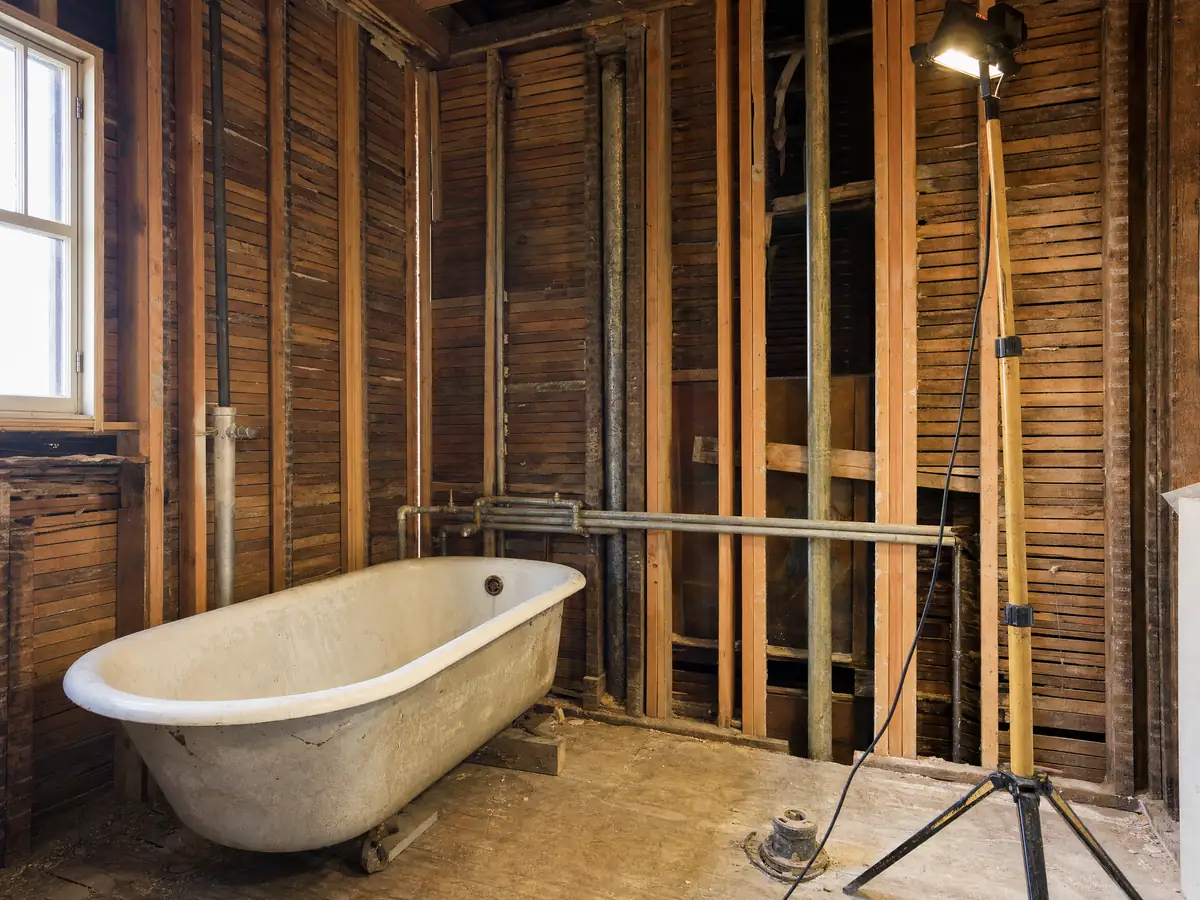
Often a bath that was patched more than once. The General Plan says most of the city's buildings date from the 1920s, 1950s and 1960s, and it singles out two 1920s residential areas for their age: McKevett Heights, with late California Bungalows and Period Revivals, and The Oaks, with narrow streets, oaks and river rock walls. A bungalow bath from that era sits on a raised wood floor, and a 1960s tract bath sits on a slab or a short crawl space.
The City's own design criteria rate termite damage as very heavy here. That matters under a tub, beside a toilet and along an exterior wall, where a slow drip feeds both rot and insects. Ask the contractor to probe the subfloor and the bottom plates as soon as the old tub or pan is out, and to photograph what is found before anything is covered.
- Who pays if the subfloor under the tub has to be replaced, and at what unit price?
- Will a termite company be called in before new framing closes the wall?
- Is the drain line cast iron, clay or plastic, and what happens if it fails the test?
Do you need a permit to remodel a bathroom in Santa Paula?
For most real remodels, yes. The City's 2022 bath handout asks for a permit whenever a project removes, replaces or relocates a shower, tub or lavatory, or changes the electrical or the exhaust fan. It does not ask for one to replace a countertop or reface existing cabinets. The City's FAQ adds that a new shower pan or bathtub needs a plumbing permit, and that painting, tiling, carpeting, cabinets and countertops need none.
Applications go by email to buildsafe@spcity.org, and the form asks for the project valuation, with labor estimated even when an owner does the work, plus the contractor's state license number. Anyone on the job, from the general contractor to the plumber, is told to hold a City business license. A small scope can often be handled over the counter, while a larger remodel needs plans and a plan check deposit. Describe the scope to the Building & Safety Division at 805-933-4218 before you buy a vanity or a valve, since the City's full permit list is a Word file dated 2002.
Does a bathroom permit force you to replace an old toilet or showerhead?
In a pre-1994 house, it can. The City's handouts cite California Civil Code 1101.4, which requires non-compliant plumbing fixtures to be upgraded to water-conserving ones whenever a building permit is issued for remodeling, even if the old fixtures sit outside the scope of work. The limits the City lists are 1.28 gallons per flush for a toilet, 1.2 gallons per minute for a bathroom faucet and 1.8 for a showerhead.
So a permit pulled for new shower tile can add a toilet to the proposal. We read this rule through the City's handouts, not through the Civil Code text itself, so ask the counter which fixtures it will check on your address. Put the answer in the written scope, because a surprise toilet is a small cost and a surprise inspection failure is a delay. A bath in a house built after 1993 is unlikely to be caught, though the City's handout does not say so in those words.
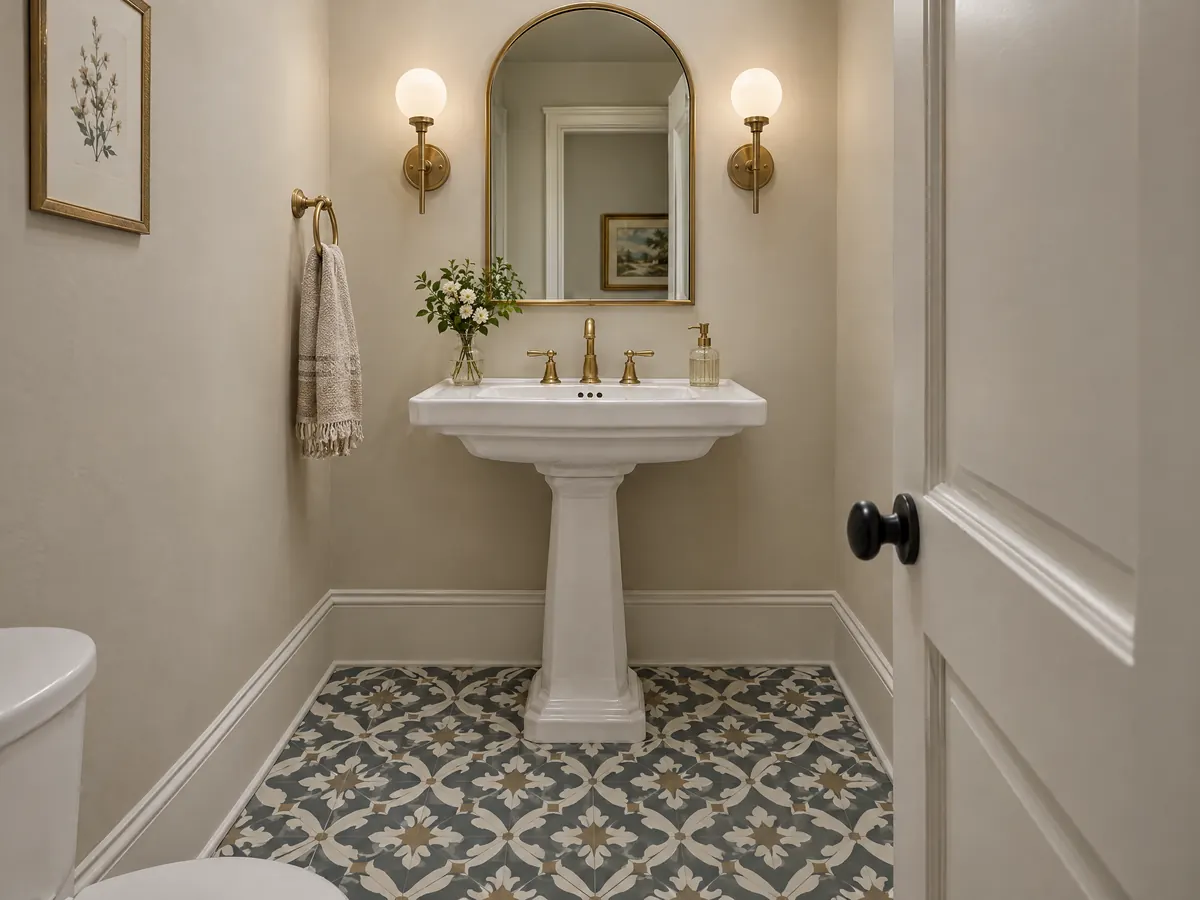
What does Santa Paula require for shower size, electrical and exhaust fans?
The City's handout gives numbers. A shower needs a circle at least 30 inches across (1,024 square inches), a door that opens outward and is at least 22 inches wide, and 12 by 12 inch access to a slip-joint tub trap or whirlpool motor. Electrical needs a dedicated 20-amp bath circuit, GFCI protection, an outlet within 36 inches of each basin and no fixtures within 3 feet sideways or 8 feet above a tub.
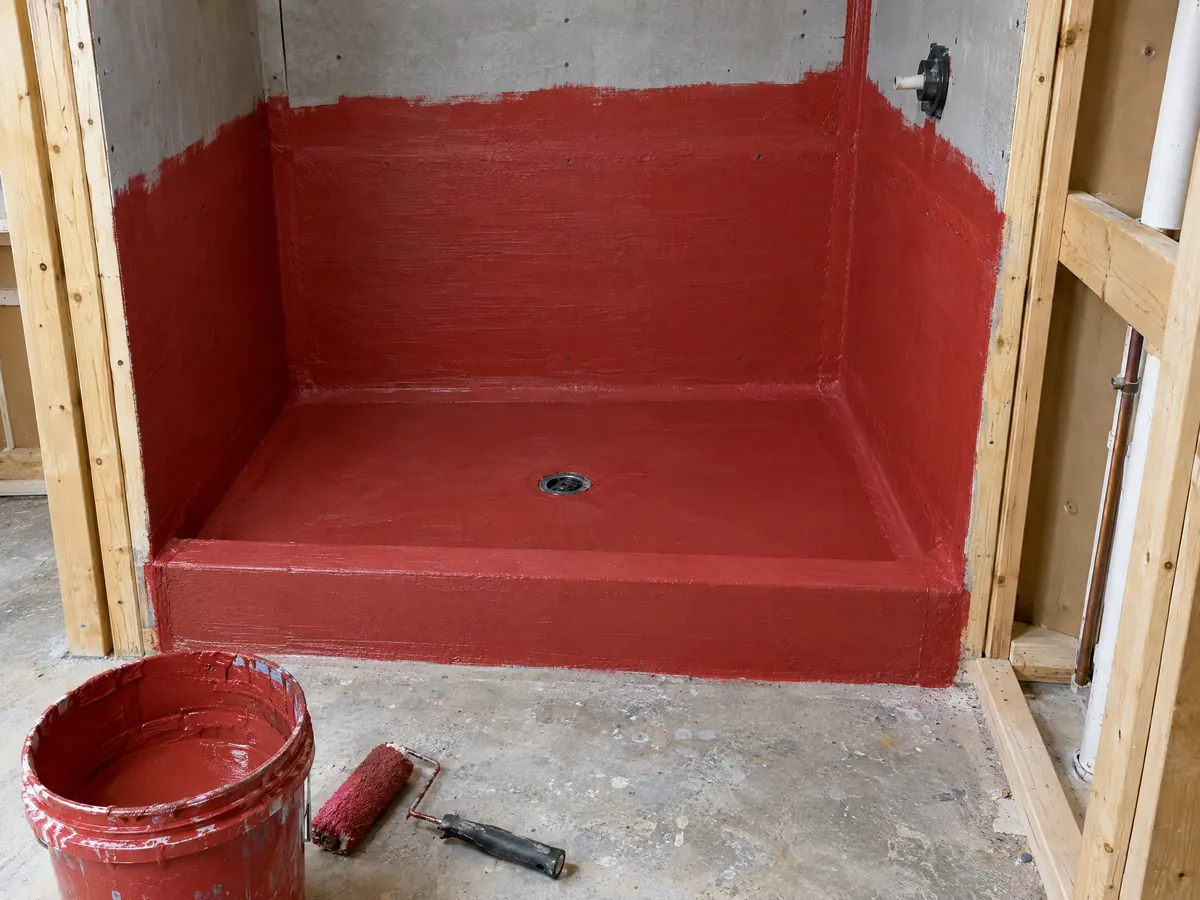
A fan needs a back draft damper and a duct that ends 3 feet from any opening or property line. The handout also calls for humidity control adjustable between 50 and 80 percent and at least 50 cfm intermittent or 20 cfm continuous. The California Energy Commission's summary of the 2025 Energy Code, in effect from January 1, 2026, asks for local exhaust and a bath light on an occupancy or vacancy sensor, so the plan should name the edition it follows. Ask for dated photos of the pan holding water before tile covers it.
Lead-safe work and paint rules for a Santa Paula bathroom renovation
Gutting a bath in a house built before 1978 is paid work that disturbs paint, so the EPA's lead rule applies, window replacement is always covered, and the minor-work exemption stops at 6 square feet per room inside. The census table cannot split 1978 from 1979, but 7,369 homes (72.6 percent) date from before 1980 and 1,530 (15.1 percent) from before 1950. The Housing Element says homes built before 1970 are the likeliest to carry deteriorated lead paint.
Money may exist for the oldest homes. The City lists Healthy Homes Ventura County, at 805-981-5228, for free lead paint cleanup and repairs on a limited number of qualifying homes built before 1951. The coating that goes back on the wall falls under the Ventura County Air Pollution Control District, not the South Coast AQMD. Its Rule 74.2, revised November 10, 2020, caps flat coatings at 50 grams per liter and nonflat at 50 since July 1, 2021. We did not research asbestos in old flooring or mastic, so ask who tests it.
Remodeling a bathroom in a Santa Paula rental, duplex or mobile home
Renters hold 4,261 of the 9,653 occupied homes, or 44.1 percent. Another 1,137 homes sit in buildings of two to four units, 1,102 in buildings of five or more and 886 are mobile homes. A tenant cannot authorize a permit, and in a shared building the drain stack, the shut-off and the wall behind the tub often belong to someone else. Get the owner's or association's approval in writing and tell neighbors the dates of any water shut-off.
Noise rules also bite in tight neighborhoods. Chapter 93 exempts construction from the sound limits only from 8 am to 6 pm Monday through Friday, and it requires the contractor or owner to post a notice of the limits at every site entrance. Owners doing their own work on a weekend may run tools only from 9 am to 5 pm. Chapter 110 adds that the Building Department checks every general contractor and subcontractor for a license before it gives final clearance on a remodel.
When a bathroom is part of a whole-house project: flood floors, old homes and sprinklers
A single bath rarely triggers the large-project rules, but a whole-house job can. In a FEMA special flood hazard area, Chapter 151 treats any repair or improvement costing 50 percent or more of a structure's market value as a substantial improvement that needs the lowest floor at least one foot above base flood elevation. The General Plan, quoting a 2015 County study, put 2,197 homes (31 percent) in the 100-year floodplain, and we did not open the current FEMA map, so ask Public Works about your address.
A bath that adds floor area counts toward the fire code's sprinkler line, which for an existing house is additions of 1,000 square feet or more in total, and Ventura County Fire does that review. A window or vent on a street wall of a landmark or an overlay property is a different matter, because the City's historic ordinance treats exterior changes as alterations that go to a commission. The overlay map is an image we could not read, so ask Planning whether your lot is in it.
On a project like this, MDG Builders, CSLB #1040337, writes the scope, files the permits and keeps the schedule, while licensed plumbers, tile setters and electricians do the field work and can show a license number and a certificate of insurance on request. For a plain-language look at which firm is responsible for which piece of a multi-trade job, read how general contractors use subcontractors.
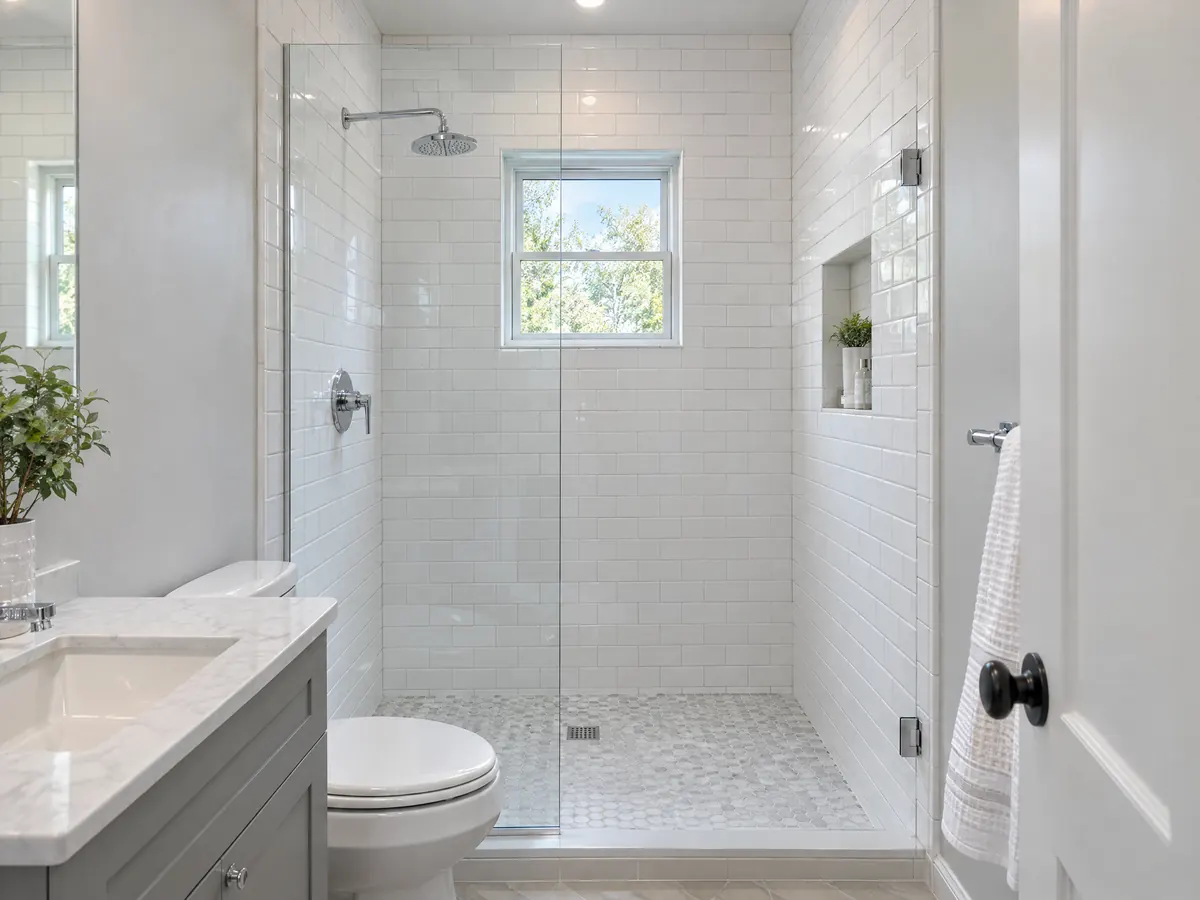
Bathroom photos from Santa Paula and nearby homes
Bathroom scenes tied to Santa Paula and the Santa Clara River valley communities around it, from opened walls and waterproofing to finished tile. Tap a photo to enlarge it.
What bathroom remodeling costs around Santa Paula
On our bathroom remodeling page, a bath of about 35 square feet falls into four tiers: a refresh near $9,000 to $18,000, a same-layout midrange remodel near $25,000 to $40,000, a primary bath from $50,000 to $85,000 and up, and $60,000 to $120,000 to add a bath that never existed. They rest on Remodeling magazine's 2025 Cost vs. Value report for Los Angeles, which lists a midrange bath at $27,143 and an upscale one at $85,055, and on Sweeten's Los Angeles guide, which starts a full bath with no layout change at $25,000. Neither is a Santa Paula quote, and we found no local price survey. The only City fee figures we found date from a schedule adopted January 3, 2017, so no permit charge is printed here; a written proposal lists it as its own line. Termite repairs, a flood-rated floor or lead-safe containment sit on top of a regional range. The bathroom cost guide explains what moves a bath between tiers, and the license check guide shows how to verify a contractor on the CSLB site. Neighboring Ventura County cities have their own bath pages: Ventura, Oxnard, Fillmore and Moorpark. A bath for a backyard unit is on our Santa Paula ADU page, a bath that adds floor area on the Santa Paula room addition page, a new bath window on the Santa Paula window page, and the Santa Paula area page lists every trade we cover in town.
| What it covers | Typical range |
|---|---|
| Refresh in the same layout: new vanity, toilet, fixtures, lighting, paint, limited tile | $9,000 to $18,000 |
| Mid-range full remodel in the same layout: new shower or tub, tile, vanity, fixtures, lighting and fan | $25,000 to $40,000 |
| Upscale or primary bath: stone, custom glass, freestanding tub, double vanity, heated floor | $50,000 to $85,000 and up |
| Adding a new bathroom | $60,000 to $120,000 |
Other work we manage in Santa Paula
Santa Paula bathroom remodel questions, answered
Do I need a permit for a bathroom remodel in Santa Paula?
Yes, once the work removes, replaces or relocates a shower, tub or vanity, or changes the electrical or the fan. The City's handout excludes countertop replacement and cabinet refacing, and its FAQ puts tile and paint on the no-permit side. Email buildsafe@spcity.org or call 805-933-4218 with your scope before you order materials.
Do I need a building permit to change a toilet in my home?
Probably, in a remodel. The City's handout asks for a permit when a project replaces fixtures, and in a house built before 1994 a permit can pull in water-saving fixtures elsewhere in the bath. A plain like-for-like swap is a gray area in the handout, so ask Building & Safety about your exact fixture.
How much does a bathroom remodel cost in California?
For a bath of about 35 square feet, expect $9,000 to $18,000 for a refresh, $25,000 to $40,000 for a midrange job and $50,000 to $85,000 or more for a primary bath. Those tiers lean on 2025 Los Angeles data because no Santa Paula survey turned up, so only a site visit and a written proposal give a real price.
Can a handyman do a bathroom remodel?
Only a very small job. Since January 1, 2025, California lets an unlicensed person take work worth $1,000 or less, but only if no permit of any kind is needed and no worker is hired. A remodel that replaces fixtures needs a permit in Santa Paula, so it needs a licensed contractor. Check any license on the CSLB site first.
What is the difference between a bathroom remodel and a bathroom renovation?
A renovation generally refreshes finishes and fixtures where they already are, and a remodel changes the layout or what is inside the wall. At the Santa Paula counter the distinction that counts is the permit trigger: tile and cabinet refacing fall outside it, but replacing or moving a shower, tub or vanity falls inside. Tell staff which you mean.
How long does a bathroom remodeling take?
Plan on 2 to 6 weeks of design and selections, 3 to 7 days of demolition and rough plumbing, 3 to 5 days of waterproofing and curing, then 1 to 2 weeks for tile and fixtures and 1 to 2 more for glass and the final. Permit time comes before all of that, and a small scope may be issued over the counter.
Is remodeling a bathroom worth it?
Partly. Remodeling magazine's 2025 Los Angeles report shows a midrange bath recouping about 89.6 percent at sale and an upscale one about 42.3 percent. Santa Paula's median owner-occupied value is $611,200 and no local resale study turned up, so treat those two numbers as regional guides, not a forecast for your street.
Does a bathroom remodel in Santa Paula need lead-safe work?
Usually, if the house was built before 1978. The EPA's rule covers paid work that disturbs paint in those homes, and about 72.6 percent of Santa Paula's homes predate 1980. Ask the contractor for an EPA firm certificate and for a plan to seal, clean and verify the work area when the job ends.
Where do you shower during a bathroom remodel?
Somewhere else, such as a second bath, a gym or a relative's home, because a full remodel takes the shower out of use for most of the job. The old shower is torn out, then waterproofed and given time to cure before any tile is set. With only one bath in the house, ask the contractor to put the no-water days in writing.
Tell us about your Santa Paula bathroom
Tell us which neighborhood the home is in, about when it was built, whether you own or rent, and whether the bath sits in a house, a duplex or a mobile home, and the first visit will start from the permit line, the termite question and the fixture rule.