
Concrete Companyin Redondo Beach, CA
A concrete company in Redondo Beach works to unusually specific driveway rules: Portland cement concrete at least 3-1/2 inches thick, 15 percent decorative surfacing on new driveways, and one curb cut per lot. Near the shoreline a Coastal Development Permit question can come first, and plain slabs run about $8 to $14 per square foot.
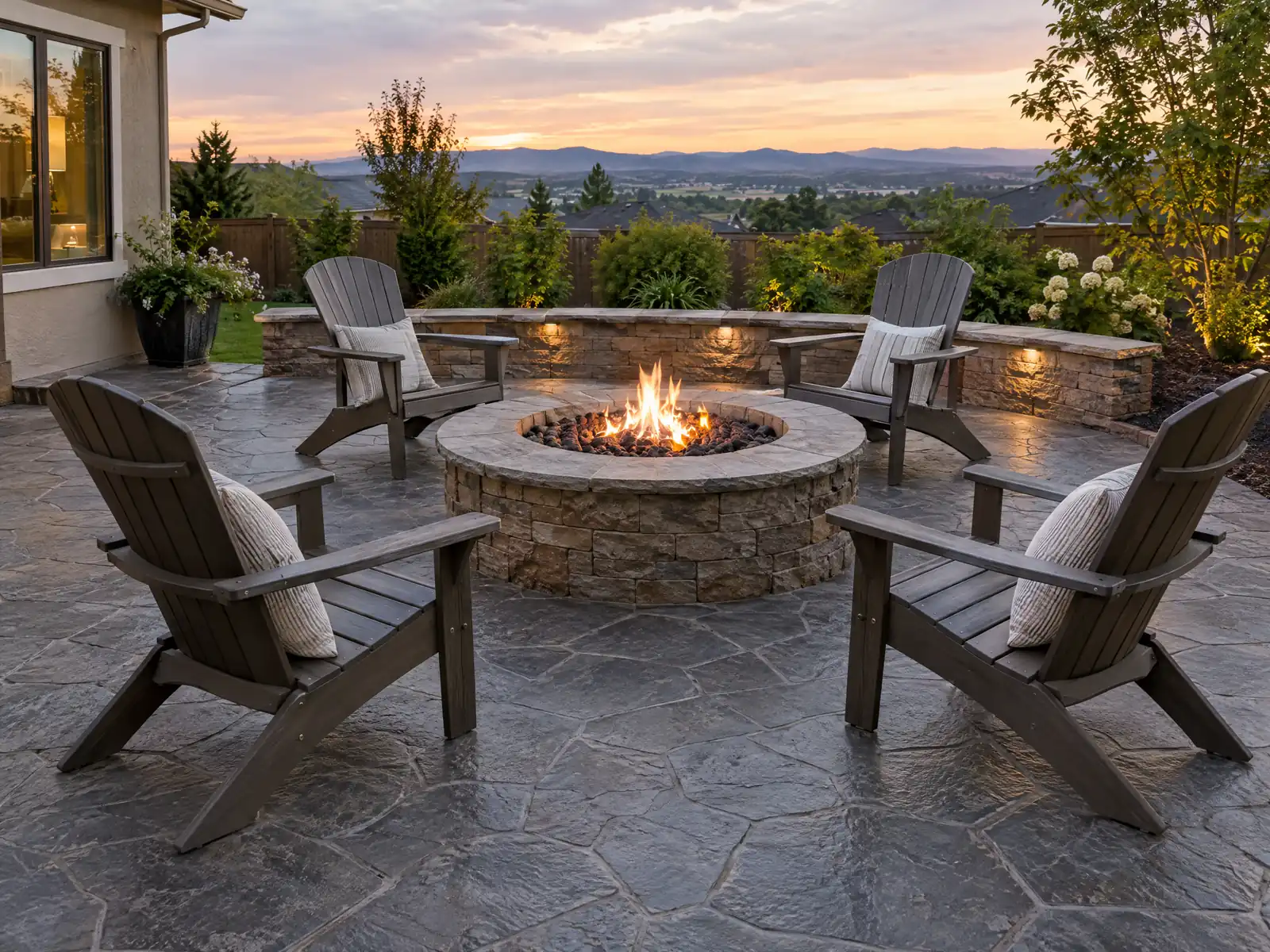
Concrete shaped this town more than most. King Harbor was begun in 1956 after storms wrecked the piers and the 1939 breakwater, and the population climbed from 13,092 in 1940 to 54,772 in 1965. Those years left a stock where the median home dates to 1973 and 25.2 percent of all units were built in the 1970s, so the driveways, walks and garage slabs most owners ask about are about fifty years old and have outlived their original design.
MDG Builders, CSLB #1040337, is a general contractor in Tarzana. We write the scope, check what the City requires and manage the schedule, and a licensed concrete subcontractor forms and pours the work; ask us for that firm's license number before you sign. Our concrete page covers materials, finishes and prices in general, and the Redondo Beach overview lists the other trades we coordinate in the city.
What Redondo Beach's codes say that touch concrete work
Where concrete permits come from in Redondo Beach: City of Redondo Beach Community Development Department, Building and Safety Division.
- All residential driveways and parking pads must be Portland cement concrete at least 3-1/2 inches thick or equivalent. Pervious materials (turf block, grass strips between concrete strips, brick, stone) may be approved through Administrative Design Review if the driveway is safe and there is a safe accessible path to the home, but soft materials such as grass strips may not be used where the slope exceeds 5 percent or on a driveway shared by two lots, and irrigation is required where grass is used (RBMC 10-2.1704(b)(1)).
- New residential driveways and parking pads must have at least 15 percent of their area surfaced with brick, exposed aggregate or a comparable decorative architectural material (25 percent in the R-1A zone), and no driveway serving off-street parking may exceed a 15 percent grade; the code adds that Building and Engineering Department driveway requirements also apply (RBMC 10-2.1704(b)(1) and (2)).
- A driveway serving one single-family home must be at least 9 feet and no more than 20 feet wide for a two-car garage (28 feet for a three-car garage), the driveway approach must match the driveway width, and an existing access narrower than 9 feet between a wall and the property line may continue if new development does not encroach into it (RBMC 10-2.1704(b)(4)).
- No front yard area may be used to park vehicles except operative vehicles on approved driveways that give direct access to a garage; only the R-1A zone allows parking pads in the front yard (up to 19 feet wide and 19 feet deep, for existing single-family homes with no garage or a one-car garage), and on corner lots the exterior side yard may be used for parking only on an approved driveway or in an area behind a 6-foot decorative wall or fence (RBMC 10-2.1708).
- No new curb cut is allowed except for an approved driveway giving direct access to a garage, no more than one curb cut per lot is permitted on the same street frontage, and curbs must be restored and aprons removed in connection with new residential construction or cumulative additions over 500 square feet where an existing curb cut does not serve a garage. New driveway approaches along the street are barred for alley-served lots on six named blocks: N. Lucia Avenue (east side) between Del Amo and Carnelian Streets, N. Maria Avenue between Del Amo and Beryl Streets, N. Paulina Avenue between Del Amo and Diamond Streets, N. Prospect Avenue (west side) between Del Amo and Diamond Streets, Beryl Street (north side) between Prospect Avenue and Flagler Lane, and Knob Hill Avenue (south side) between Pacific Coast Highway and Sapphire Street (RBMC 10-2.1704(b)(6) and (7)).
- Each residential parking space must be at least 9 feet wide and 19 feet long, garage doors must be at least 8 feet wide per space and 16 feet for a two-car garage, and garage entrances and overhead obstructions need at least 88 inches of clearance (RBMC 10-2.1704(c) and 9-1.11).
- The City's home page lists an 'Engineering Permit' application under How Do I? > Apply, handled through its own iWorQ portal; which concrete work in the parkway or driveway apron needs that permit is not stated on the pages read, so ask Engineering when a job touches the sidewalk, curb or apron.
- RBMC 9-1.14(c) says all development must be designed to minimize impervious surfaces and reduce directly connected impervious area, and that setback areas should stay permeable (vegetated, porous pavement, crushed gravel) where feasible, which is the City's basis for asking about permeable driveway strips and pavers.
Sources for these rules
What does Redondo Beach require for a new or replaced concrete driveway?
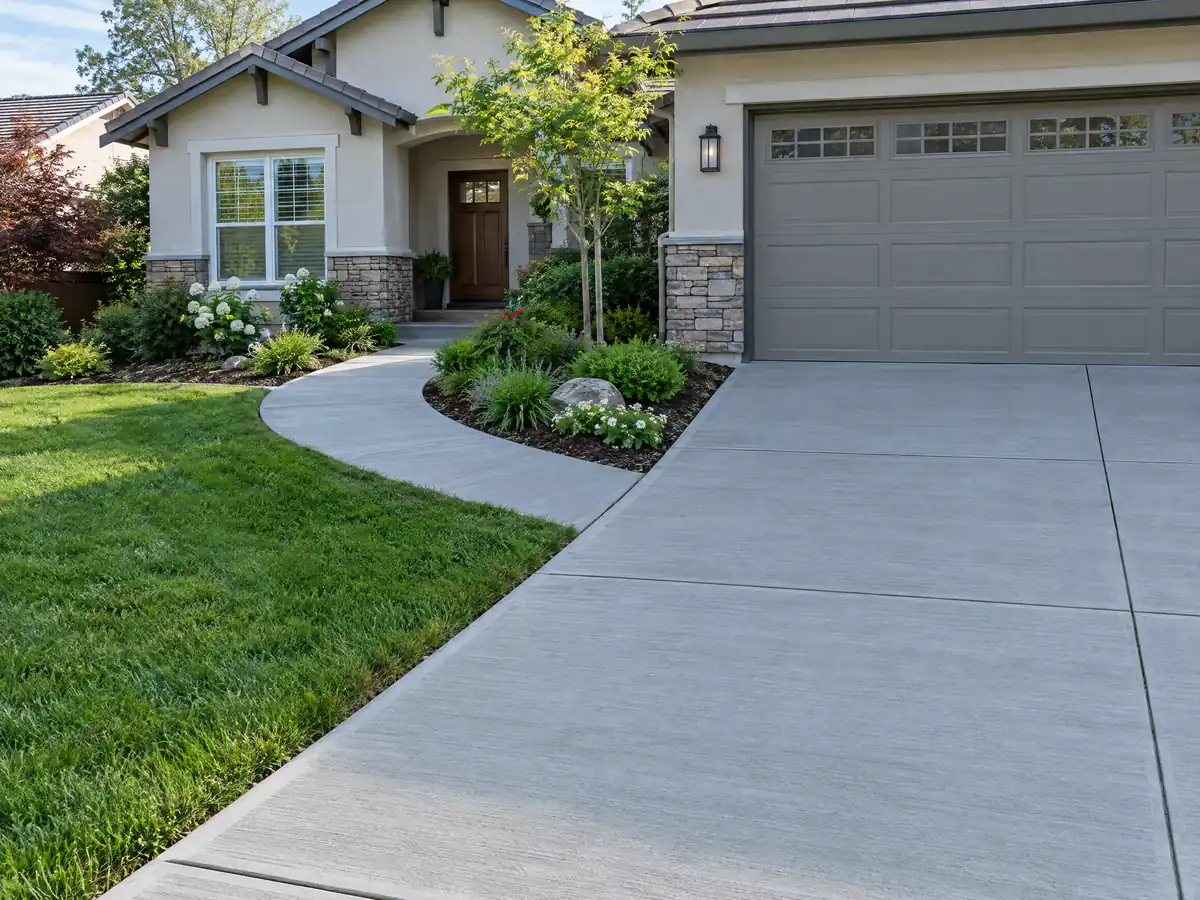
A residential driveway or parking pad must be Portland cement concrete at least 3-1/2 inches thick, or an equivalent, and a new one needs at least 15 percent of its area surfaced in brick, exposed aggregate or a comparable decorative material (25 percent in the R-1A zone). No driveway serving off-street parking may be steeper than a 15 percent grade. The text is in RBMC 10-2.1704, and Building and Engineering requirements apply on top of it.
Width follows the garage: at least 9 feet and no more than 20 feet for a two-car garage, 28 feet for three, with the street approach matching. Turf block, brick or grass strips between concrete tracks can be approved through Administrative Design Review, but not on a slope over 5 percent or on a driveway two lots share, and grass needs irrigation.
Front yards cannot be used to park outside an approved driveway that reaches a garage. Only the R-1A zone allows a front-yard pad, up to 19 by 19 feet, and only for existing homes with no garage or a one-car garage. Setback areas must otherwise be planted, except for walkways, driveways, parking and patio areas, and a planting strip at least 18 inches wide should separate a building from a driveway where feasible.
- Is the lot zoned R-1 or R-1A, which changes the decorative share?
- Does the plan show the decorative area, the width and the slope?
Who permits the curb cut, the driveway apron and the parkway in Redondo Beach?
A new curb cut is allowed only for an approved driveway that reaches a garage, and a lot gets no more than one on the same street frontage. New homes and cumulative additions over 500 square feet must restore the curb and remove aprons that do not serve a garage. Six named blocks bar new approaches on alley-served lots, among them the east side of N. Lucia Avenue between Del Amo and Carnelian Streets and the south side of Knob Hill Avenue between Pacific Coast Highway and Sapphire Street.
The City's home page lists an Engineering Permit handled through its own iWorQ portal, but the pages we read do not say which parkway or apron work needs it, so we ask Engineering rather than guess. The City's Construction Project Resource Guide adds that a DIG-ALERT ID must be issued before a Permit to Excavate is valid, and that Caltrans may require improvements along state highways such as Pacific Coast Highway.
Each residential parking space must be at least 9 feet wide and 19 feet long, so a replacement slab in front of a garage cannot shrink those dimensions. Work hours run Monday to Friday 7 a.m. to 6 p.m. and Saturday 9 a.m. to 5 p.m., never Sundays or six named holidays (RBMC 9-1.12).
Get the Engineering answer before forms go in, because a ready-mix truck cannot send its load back.
Does a patio, walkway or driveway pour near the water need a Coastal Development Permit?
Redondo Beach issues its own Coastal Development Permits under a certified Local Coastal Program, and 29 of 178 sample points on the city's land, about 16 percent, fell inside the Coastal Zone, along the western shoreline edge. That figure comes from a sample, so the City's zoning map settles any address. Improvements to an existing single-family home, including landscaping and exterior structures, are exempt under RBMC 10-5.2208, but a significant alteration of landforms is not, including vegetation work on a beach, wetland or dune or within 50 feet of a bluff edge or stream.
Whether a given pour qualifies is the Community Development Director's call. The code says no work may start until the Director finds it exempt, and unpermitted coastal work blocks new applications until a CDP covers it too. On the first row of lots beside the beach, development that is not exempt becomes a priority project needing an Urban Stormwater Mitigation Plan.
Inland, the stormwater rule in RBMC 9-1.14(c) still asks that development limit hard surfaces and keep setback areas permeable where feasible, which is the City's footing for questions about pavers and porous strips. The coastal ordinance was amended on December 16, 2025, and that amendment is marked as pending Coastal Commission certification, so the coastal text can still move.
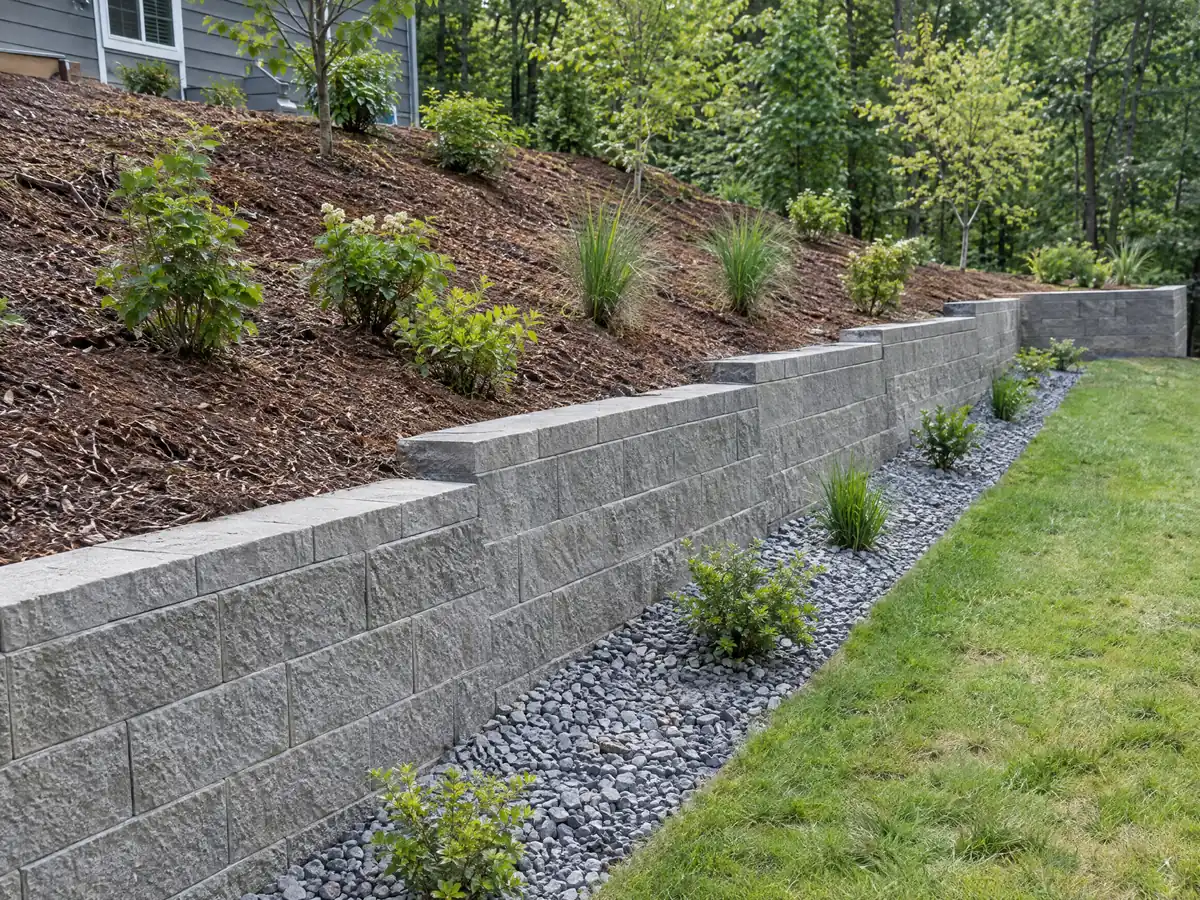
How tall can a retaining wall or raised patio be before Redondo Beach asks for more?
The state's model exempt list in 2022 CBC section 105.2 leaves out walls of 4 feet or less, measured from the footing bottom to the wall top, unless they carry a surcharge such as a driveway or a building. We did not read Redondo Beach's copy of that item, because the City rewrote only three entries of the list, so any wall is a question for Building and Safety before a price is given.
Grade limits matter just as much for raised flatwork. Finished grade in side and rear setbacks may be no more than 30 inches above existing grade, and on street-facing sides it may be no lower than existing grade or 2 feet below the finished first floor, with garages, driveways and walkways excepted (RBMC 10-2.1504). That caps fill-supported patios and cut-down front yards.
Slopes steeper than 1 to 3 pull a woodframe addition into the City's hillside seismic provisions, and a grade survey decides whether a lot is covered. Poured walls fall under CSLB's C-8 concrete class and block walls under C-29 masonry.
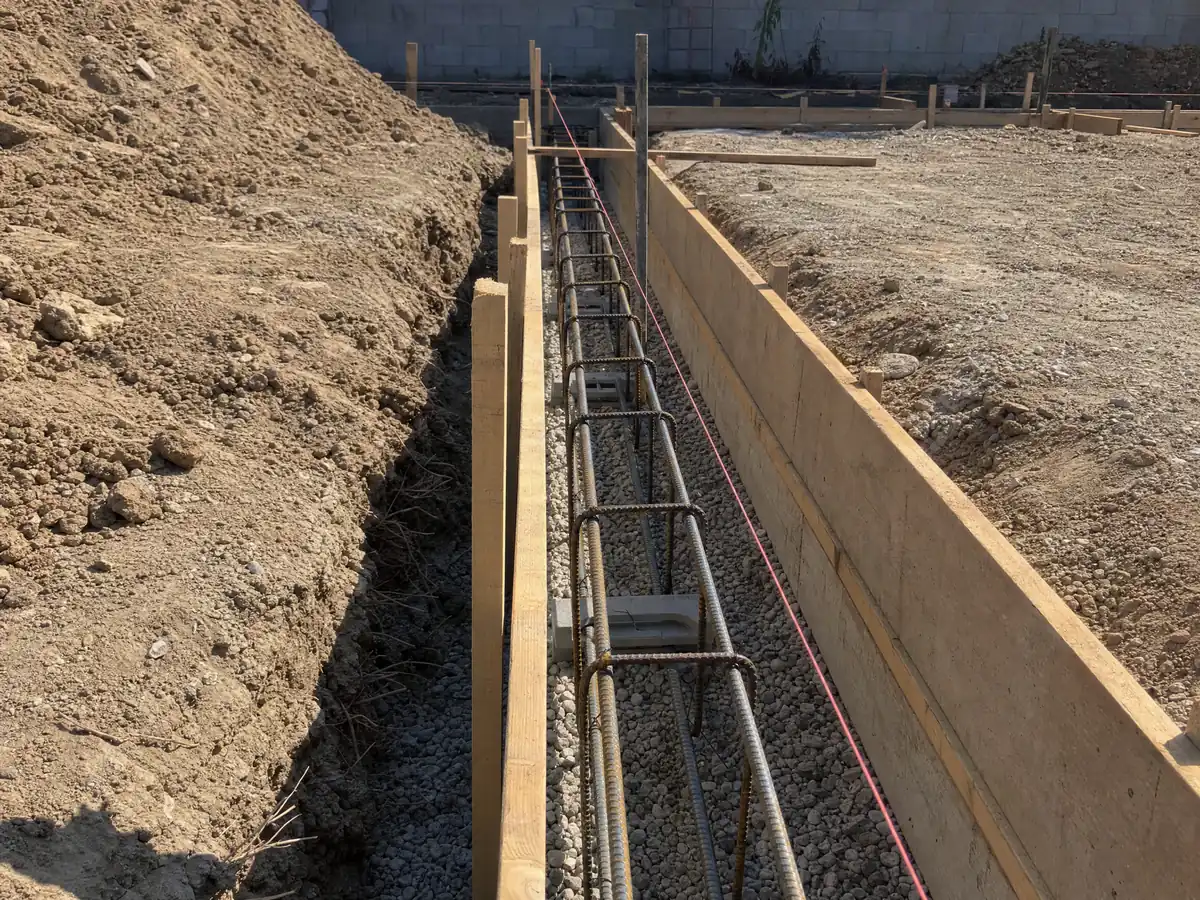
What footings and soil checks sit under new concrete in Redondo Beach?
In Seismic Design Categories D0 to D2, RBMC 9-22.09 wants exterior walls on continuous solid or fully grouted footings, continuous foundations under interior braced wall panels, and no wood foundations. Foundation work therefore starts with a plan and a soils question, not just a form board.
The State's seismic hazard layer put 7 of 178 sample points (3.9 percent) in a liquefaction zone and 1 (0.6 percent) in an earthquake-induced landslide zone, with the liquefaction points clustered at the western edge. Only a geotechnical report speaks for a particular lot, and the City publishes soils report requirements that we did not read. Hillside lots add diaphragm anchors at the uphill foundation under RBMC 9-1.10 and 9-22.09.
Permit timing has a catch. RBMC 9-1.06 makes a permit invalid after 12 months without a start, while the residential chapter in RBMC 9-22.05.4 still says 180 days, so ask Building and Safety which clock applies to your permit.
- Does the proposal list demolition, haul-off, base and rebar as separate lines?
- Who orders the soils report if the City asks for one?
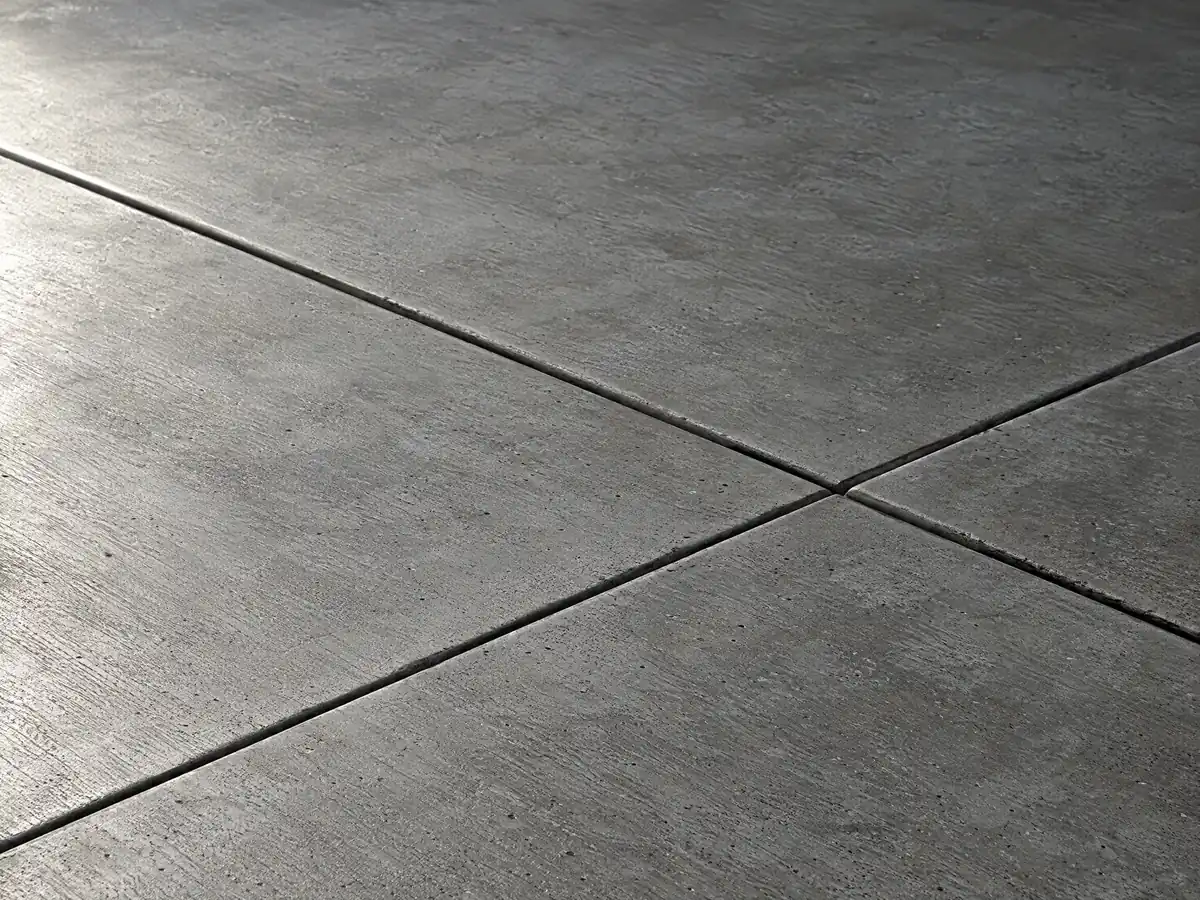
Concrete photos from Redondo Beach and the South Bay
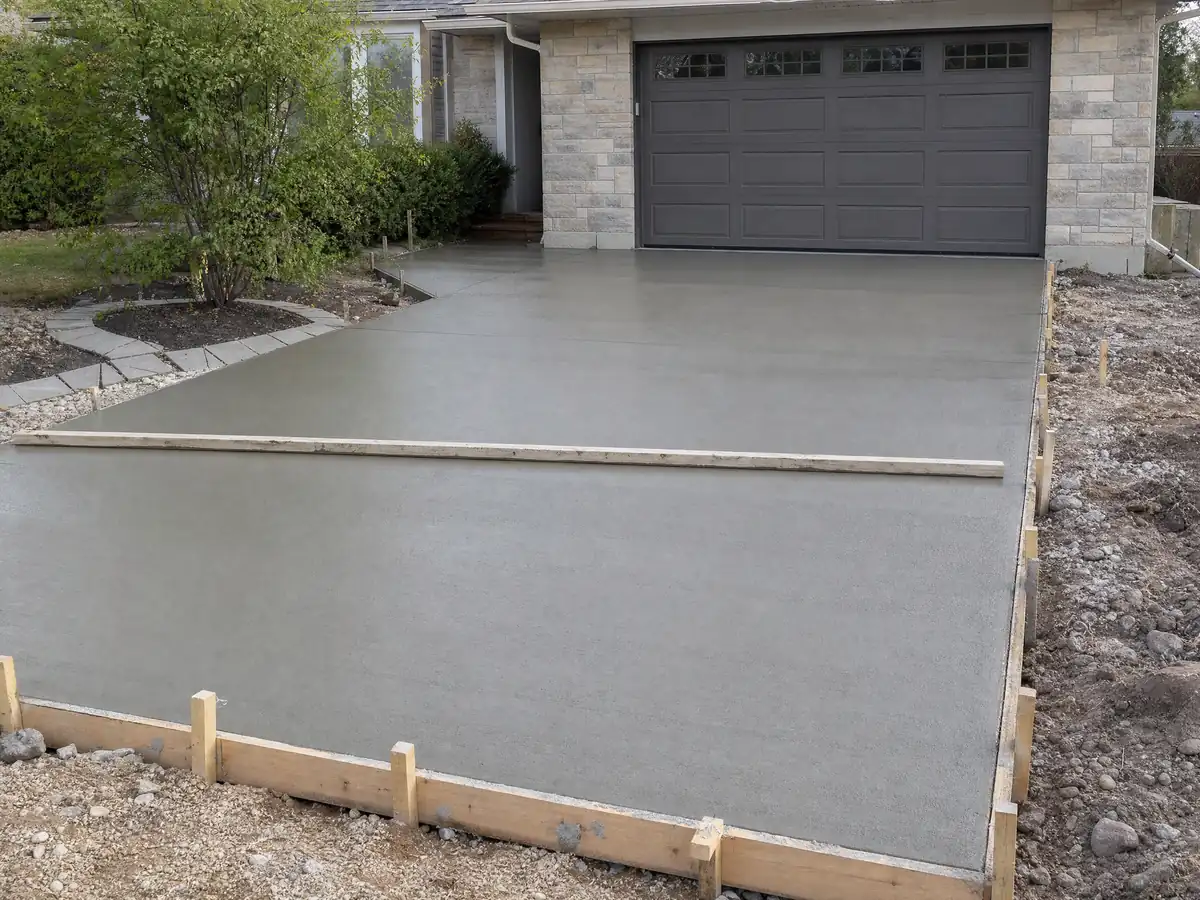
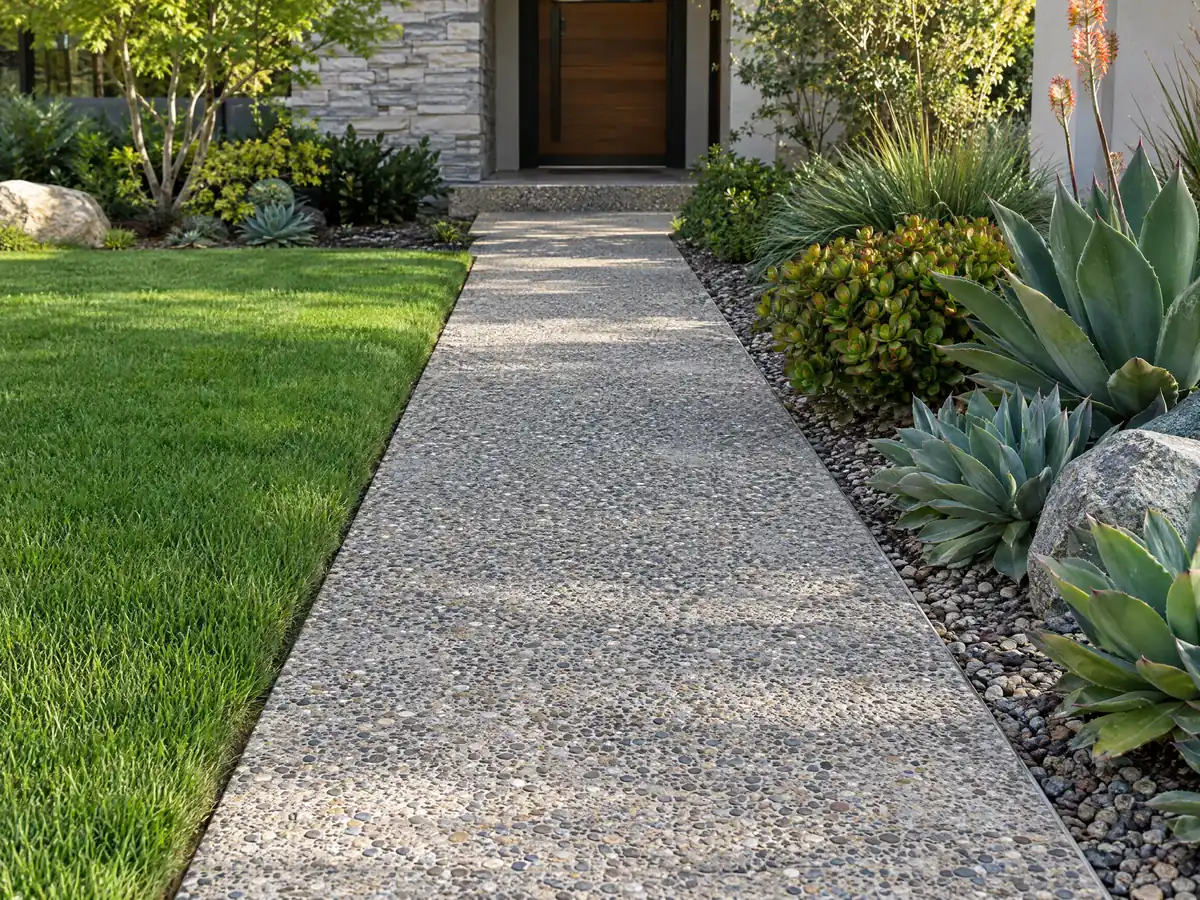
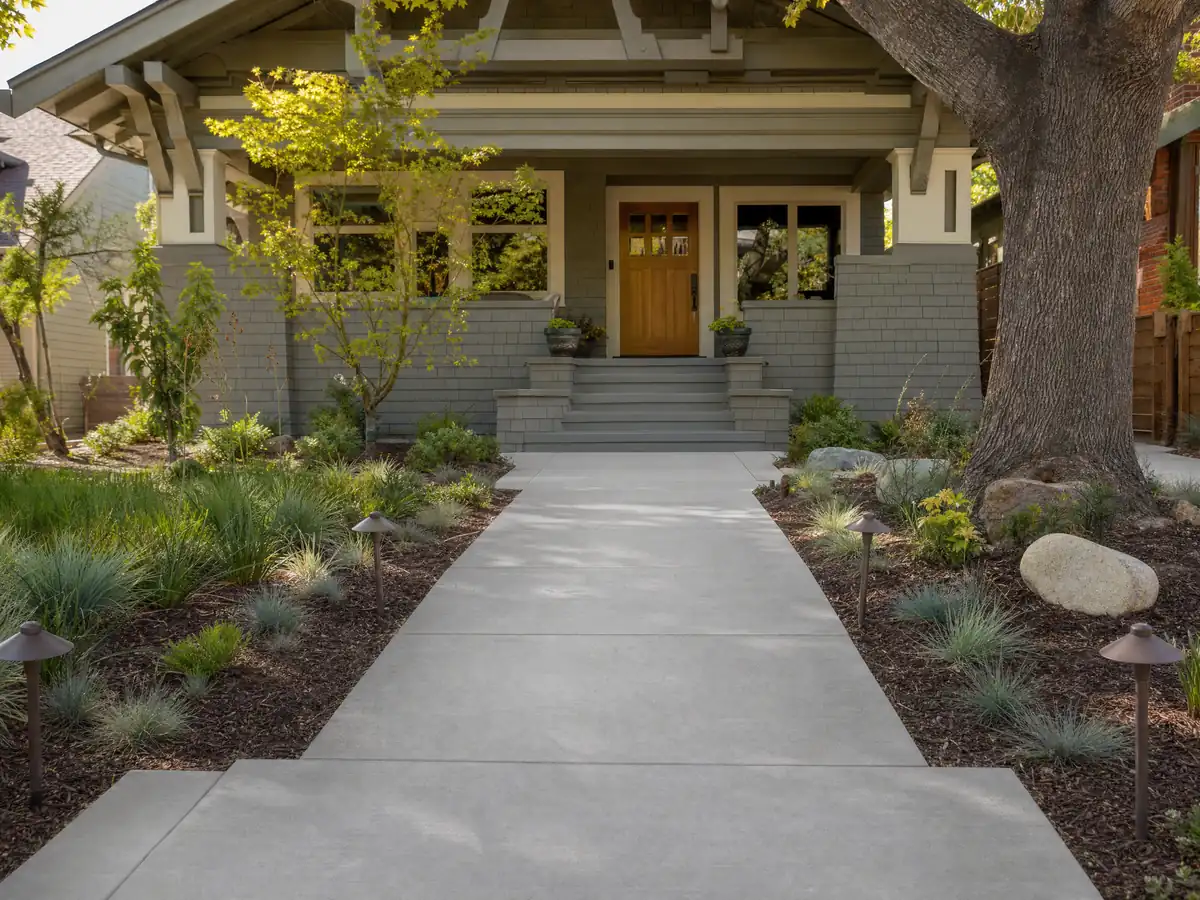
Three views of driveways, formwork and finished flatwork around Redondo Beach and its neighbors. Tap a photo to enlarge it.
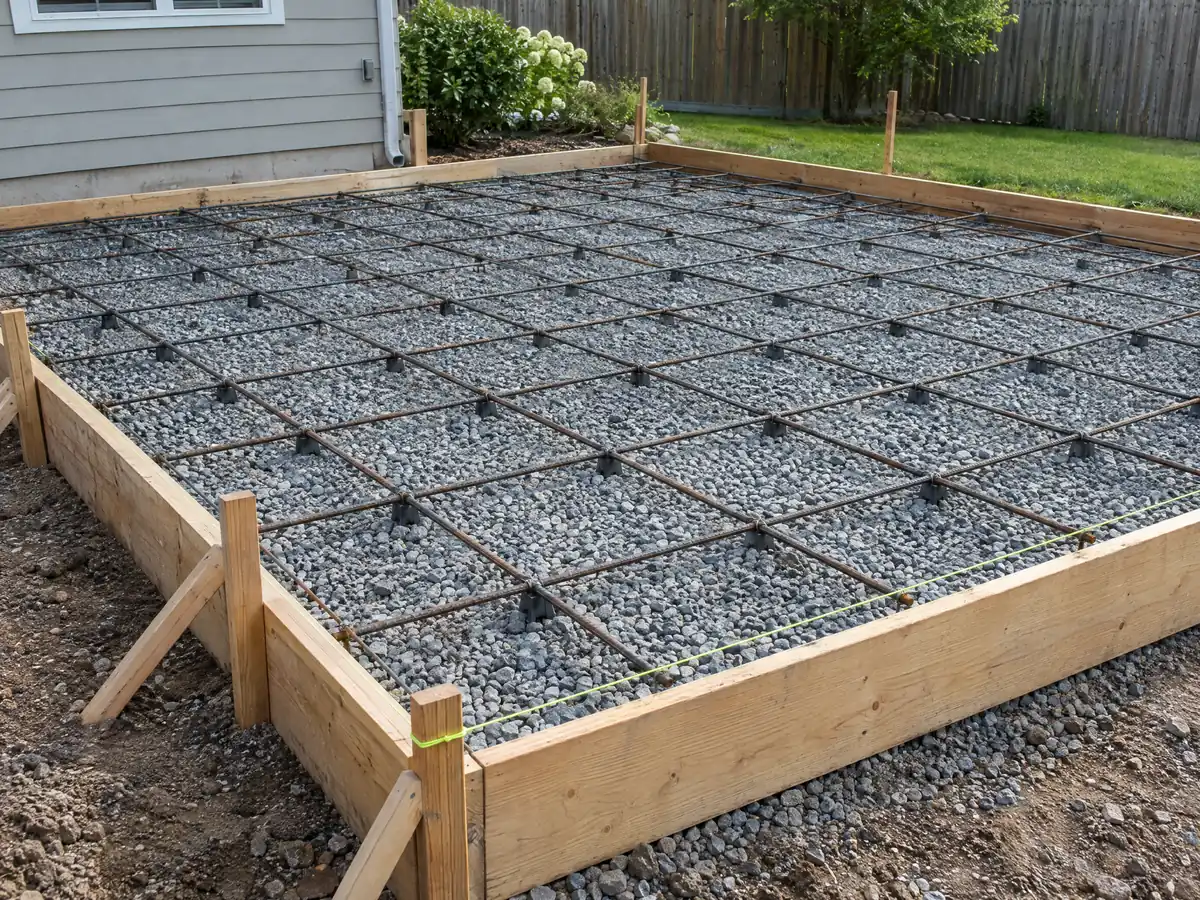
What concrete costs around Redondo Beach
No Redondo Beach concrete price study turned up, so our concrete page uses Los Angeles figures from Angi's 2026 city pages and HomeGuide. Plain patios, walks and slabs of 300 square feet or more run about $8 to $14 per square foot, stained or exposed aggregate finishes $15 to $30, and a driveway replacement with demolition $9 to $20, all medium to low in confidence. Retaining walls get no per-foot price from us. The Bureau of Labor Statistics lists a mean cement mason wage of $33.67 an hour for the Los Angeles area in May 2025. See decks in Redondo Beach and flooring in Redondo Beach for the work that often shares a lot, and compare concrete in Torrance, concrete in Long Beach and concrete in Los Angeles, and the Torrance overview, and see how work is split in our guide to how general contractors use subcontractors.
| What it covers | Typical range |
|---|---|
| Patio, walkway or slab, broom finish, 300 sq ft or more | $8 to $14 per square foot |
| Decorative: stained, stamped or exposed aggregate | $15 to $30 per square foot |
| Driveway replacement, with demolition of the old slab | $9 to $20 per square foot |
| 20 by 20 foot plain patio (400 sq ft) | About $3,200 to $5,600 |
| 20 by 20 foot decorative patio (400 sq ft) | About $6,000 to $12,000 |
| Small jobs under 300 sq ft | Usually above the per-foot range |
| Retaining walls | Set by the written proposal |
Other work we manage in Redondo Beach
Redondo Beach concrete questions, answered
How much should a 20x20 concrete patio cost in Redondo Beach?
Measure first: 20 feet by 20 feet is 400 square feet, and our Los Angeles range of $8 to $14 per square foot puts a plain broom-finish patio between $3,200 and $5,600. Demolition, drainage, permits and a difficult access path sit outside that figure. Angi and HomeGuide supply the range, and we rate it medium to low in confidence.
How much would a 20x20 stamped concrete patio cost?
Angi's Los Angeles stamped patio page lists $15 to $30 per square foot with an average project of $5,948, so 400 square feet lands between $6,000 and $12,000. Color, pattern and sealer choices move the number. This is a Los Angeles range, not a Redondo Beach study, and a site visit sets the real price.
Can I pour a concrete patio without a permit?
We cannot say yes from a source. The City rewrote only three items of the state's exempt list, and the rest was not in the text we read, so a patio is a Building and Safety question. Near the shoreline the Community Development Director's exemption determination may come first, and no work may start until the Director finds the project exempt.
What is the maximum height of a retaining wall without a permit in California?
The state's model list in 2022 CBC section 105.2 exempts walls of 4 feet or less, measured from the footing bottom to the top, unless they carry a surcharge. We did not read Redondo Beach's copy of that item, so treat every wall here as a question for Building and Safety, especially one holding up a driveway or a slope.
Is 4 inches of concrete thick enough for a driveway?
On the City's code, yes: Redondo Beach sets a minimum of 3-1/2 inches of Portland cement concrete, or an equivalent, for residential driveways, so 4 inches clears it. Heavier vehicles, weak soil or tree roots can justify more thickness or reinforcement, and the City adds that Building and Engineering requirements also apply.
Can I expand my driveway without a permit?
Do not assume so. Redondo Beach caps a two-car driveway at 20 feet wide, allows one curb cut per lot on a street frontage, requires 15 percent decorative surfacing on new driveways and bars front-yard parking outside an approved driveway. Ask Planning and Engineering with a dimensioned sketch before anyone orders concrete.
Can concrete be poured on Saturdays in Redondo Beach?
Yes, between 9 a.m. and 5 p.m. Construction in the city is allowed Monday to Friday from 7 a.m. to 6 p.m. and Saturdays from 9 a.m. to 5 p.m., never on Sundays or on Memorial Day, the Fourth of July, Labor Day, Thanksgiving, Christmas or New Year's Day. Minor repairs and routine maintenance of homes are carved out.
How much do contractors charge for concrete?
Los Angeles figures from Angi and HomeGuide put plain flatwork near $8 to $14 per square foot, decorative finishes at $15 to $30 and driveway replacement with demolition at $9 to $20. Small jobs usually cost more per foot because of minimum charges. We found no Redondo Beach study, so a written proposal is the only real price.
What license should a Redondo Beach concrete company hold?
CSLB's C-8 class covers forming, pouring and finishing concrete, and C-29 covers concrete block walls. The City also requires contractors and subcontractors to hold a City business license before a permit is issued. Ask for the license number and a certificate of insurance, and check both against the CSLB lookup before signing.
Does a coastal address change concrete work in Redondo Beach?
It can. About 16 percent of our 178 sample points fell inside the Coastal Zone, and the City issues its own Coastal Development Permits. Single-family exterior improvements are generally exempt, but landform alteration near a bluff, stream or beach is not, so the Director's exemption determination should come before any work.
Send the address, the area and what is there now
Give us the street, the length and width, the lot's zoning if you know it and whether it sits near the water, and we will check the driveway and Coastal Zone rules before we call you back.