
Deck Builderin Redondo Beach, CA
A deck builder in Redondo Beach starts with the yard: an unenclosed deck up to 30 inches above grade needs no side or rear setback, and taller ones need a check. We could not confirm the permit exemption, so ask the City. Near the water a coastal determination may come first. Wood runs about $45 to $75 a square foot.
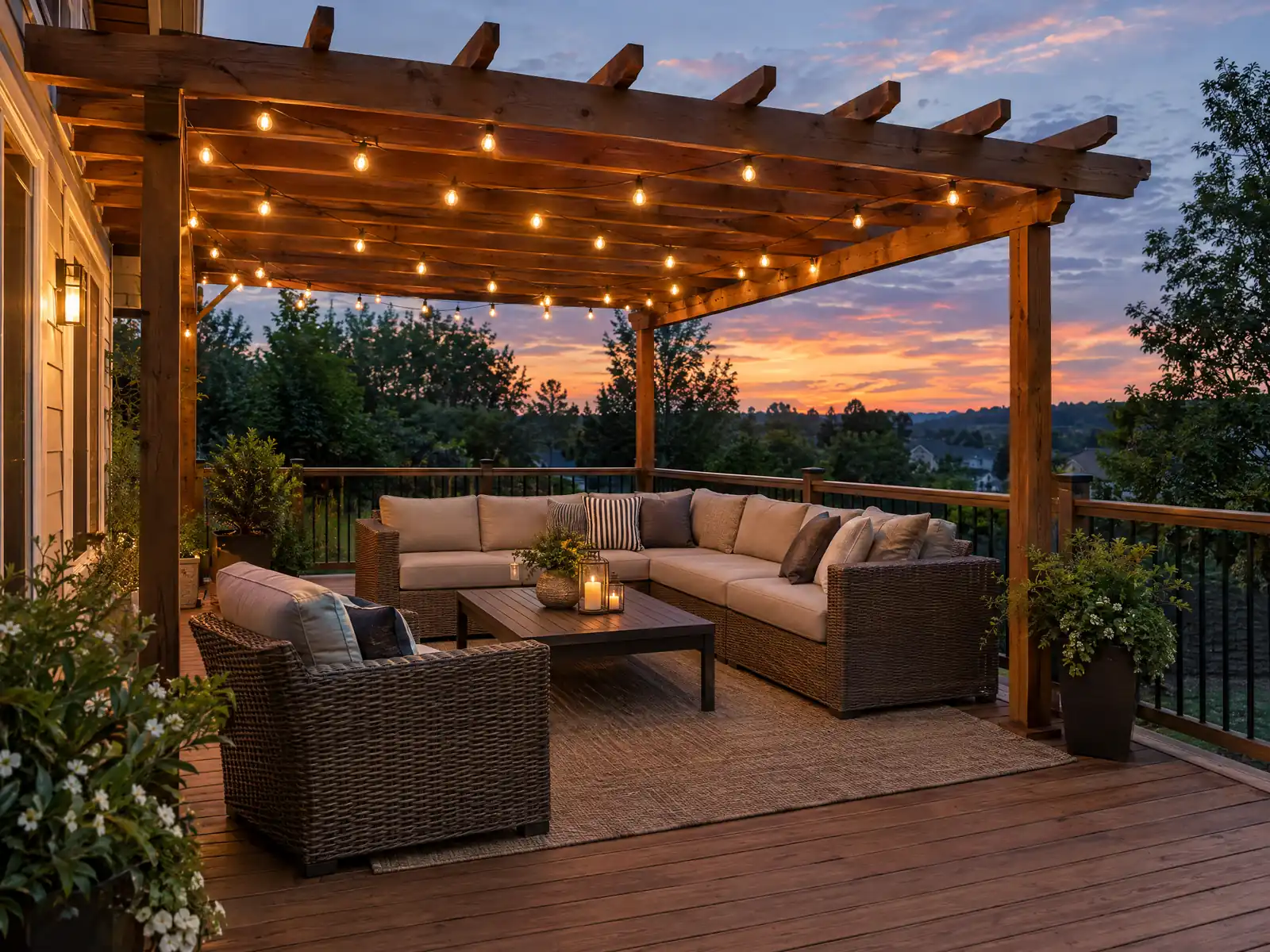
Decks in Redondo Beach go onto a mixed stock. The median home dates to 1973, only 40.0 percent of units are detached houses, and the median owner-occupied value is $1,279,200, so a rear deck on a 1960s tract house in North Redondo and a porch rebuild on an 1890s cottage in the Original Townsite are very different jobs. Some lots sit within sight of the sea, and the City, not the Coastal Commission, decides what the Coastal Zone requires of them.
MDG Builders, CSLB #1040337, takes the general contractor role from Tarzana: we draw the scope, sort out the City's answers and run the schedule, while a licensed framing subcontractor builds the deck. Ask us for that firm's license number and certificate of insurance. The deck builder page covers materials and pricing, and the Redondo Beach overview lists the other trades we coordinate here.
What Redondo Beach's codes say that touch decks
Where decks permits come from in Redondo Beach: City of Redondo Beach Community Development Department, Building and Safety Division.
- Unenclosed decks, porches and patios no more than 30 inches above existing grade need no side or rear setback, and may project up to 6 feet into the required front setback (with a safety railing as the building code requires); the setback relief is written for decks not more than 30 inches above existing grade, so a taller deck has to be checked against the setbacks (RBMC 10-2.1522(c)). The City amended only items 1, 2 and 9 of the state permit-exempt list (sheds, fences, prefabricated pools), and the state deck exemption in the rest of the list was not read, so ask Building and Safety whether a deck needs a building permit.
- The combined area of roof decks and mezzanines serving a unit may not exceed 500 square feet (RBMC 10-2.1508 inland and 10-5.1508 in the Coastal Zone), and roof decks count only 15 percent toward the required outdoor living space and only if at least 15 by 15 feet (RBMC 10-2.1510).
- Pools and spas may encroach any distance into side and rear setbacks and the space between buildings, and their mechanical equipment may sit in a rear setback or between buildings, but nothing for a pool or spa may extend into the front setback (RBMC 10-2.1522(e)). A prefabricated above-ground pool is exempt from a building permit only if it is under 18 inches deep, no more than 5,000 gallons and entirely above ground (RBMC 9-1.02, item 9).
- Pools and spas are governed by the Uniform Swimming Pool, Spa and Hot Tub Code, 2006 Edition, as adopted by RBMC 9-13.01, with permit fees and penalties set in 9-13.02 and 9-13.03.
- Unenclosed balconies may project up to 5 feet into front, side or rear setbacks if kept 12 feet from the front lot line, 10 feet from the rear, 5 feet from the side and 10 feet from any accessory building, with rails or walls of that projection no more than 42 inches high above the floor (RBMC 10-2.1522(a)(2)). The City also links a Balcony Law SB 326 checklist for existing balconies.
- Finished grade in side and rear setbacks may be no more than 30 inches above existing grade (RBMC 10-2.1504), which caps fill-supported decks and raised patios near property lines. Non-habitable decks that are neither supporting nor supported by the main building are exempt from the hillside seismic rules (RBMC 9-1.10).
- In the Coastal Zone, pools, fences and sheds are among the ancillary structures for which an existing single-family home is exempt from a CDP, and the exemption is lost for new swimming pools or irrigation in areas the Coastal Commission has declared short of water, and for work seaward of the mean high tide line or on a beach (RBMC 10-5.2208(a)(1)).
How far can a deck reach into a Redondo Beach yard?
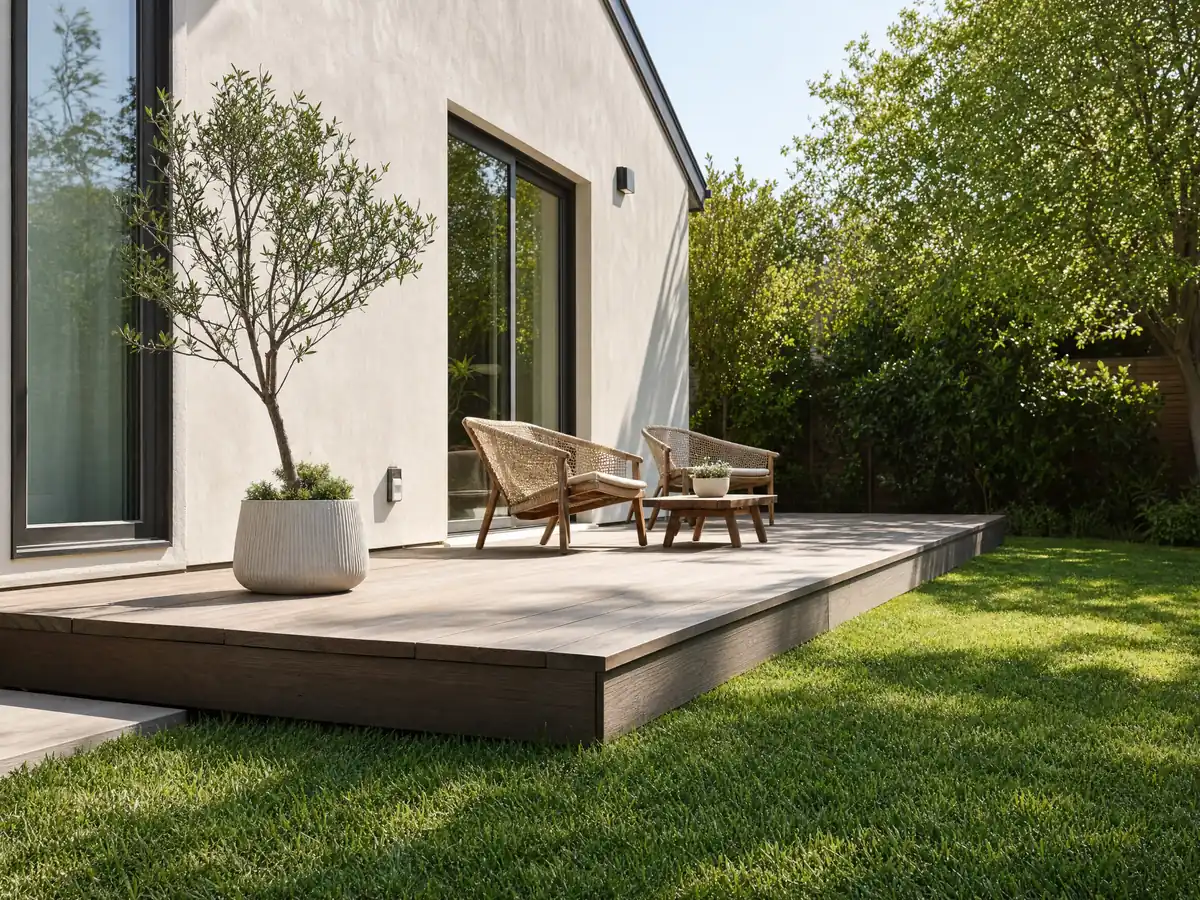
An unenclosed deck, porch or patio no more than 30 inches above existing grade needs no side or rear setback and may project up to 6 feet into the required front setback, with a safety railing where the building code calls for one (RBMC 10-2.1522(c)). The relief is written for decks at or below 30 inches, so a taller deck has to be checked against the setbacks one by one.
Grade is the second limit. Finished grade in side and rear setbacks may be no more than 30 inches above existing grade (RBMC 10-2.1504), which caps any fill or retained platform under a deck near a property line.
Unenclosed balconies are treated separately: they may project up to 5 feet into setbacks if they stay 12 feet from the front lot line, 10 feet from the rear, 5 feet from a side line and 10 feet from any accessory building, and the rail or wall on that projection may rise no more than 42 inches above the floor.
- How high is the walking surface above existing grade at its tallest point?
- Is the deck attached, freestanding or supported by fill?
Does a deck need a building permit in Redondo Beach, and how long does the permit last?
We could not confirm the exemption. The City rewrote only items 1, 2 and 9 of the state's exempt list in RBMC 9-1.02, covering sheds, fences and prefabricated pools, and the state's deck item in the rest of the list was not in the text we read. The model residential code exempts decks of 200 square feet or less that are not more than 30 inches above grade at any point, not attached to a dwelling and not serving the exit door, but we cannot say Redondo Beach copies it. Until Building and Safety answers in writing, treat an attached deck as permit work.
Other local steps apply once a permit is needed. Every Building Permit now requires a Waste Management Plan, a permit valued at $150,000 or more requires certified-mail notice to ten neighbors 14 days before work, and homeowners cannot pull permits for projects over $50,000. Framing crews may work only Monday to Friday 7 a.m. to 6 p.m. and Saturday 9 a.m. to 5 p.m., and never on Sundays.
Expiry has two answers. RBMC 9-1.06 voids a permit after 12 months without a start or after 12 months of suspension, with written extensions of up to 180 days each. The residential chapter, RBMC 9-22.05.4, still carries 180 days. Ask which clock governs yours.
Ask Building and Safety, at (310) 318-0636, for the exemption answer by email before lumber is ordered.
What guard height and ledger details does the code require on a deck?
Once a deck floor stands more than 30 inches above the ground within 36 inches of its edge, the 2022 California Residential Code (R312.1.1) calls for a guard, and R312.1.2 sets it at no less than 42 inches high. Openings must stop a 4 inch sphere. The residential code text settles the 36 versus 42 debate for decks. The City applies the 2025 edition to submittals from January 1, 2026, so confirm the current numbering.
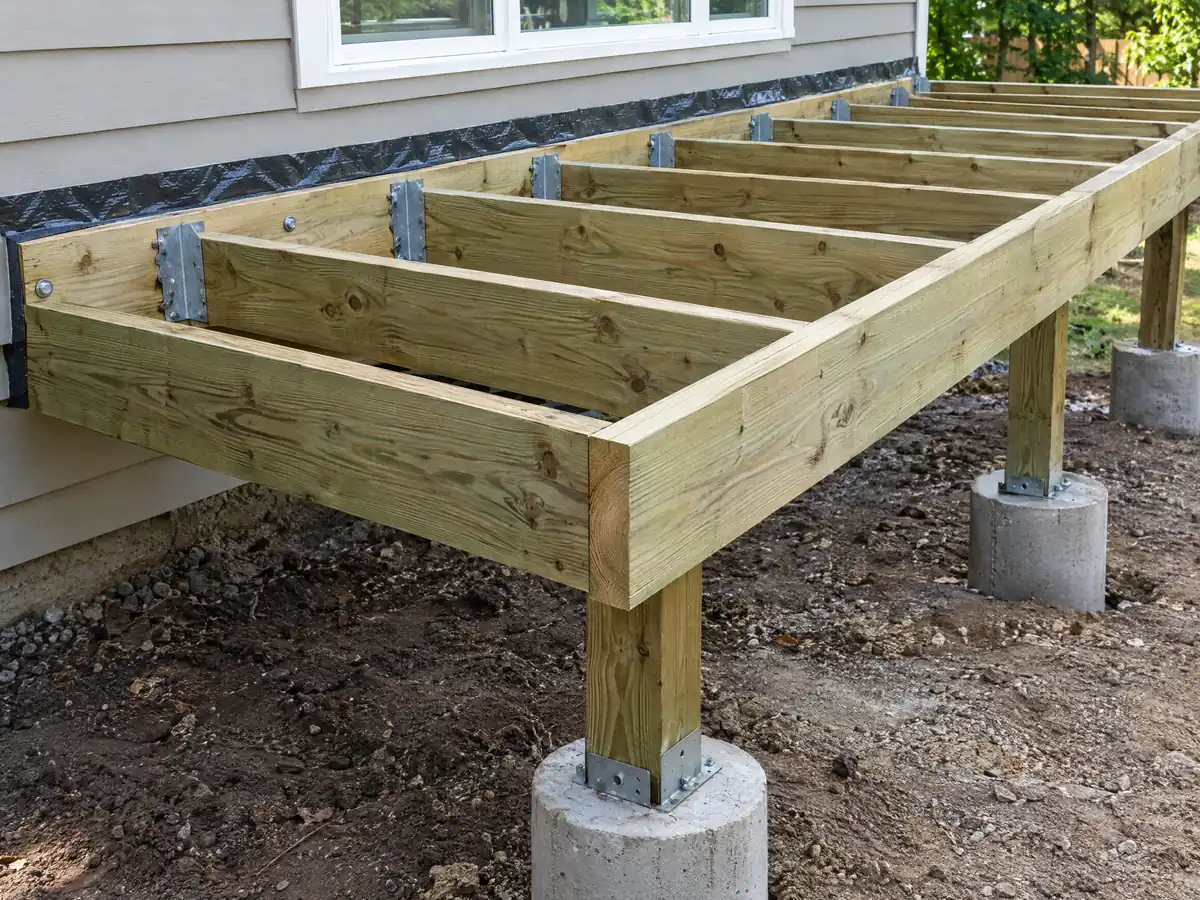
The ledger, where the deck meets the house, is where problems start. Section R507.9 requires a pressure-treated ledger of at least 2x8, bars concentrated beam loads on it and attachment to stone or masonry veneer, calls for hot-dipped galvanized or stainless fasteners and flashing, and sets lateral hold-downs, either two 1,500 pound devices within 24 inches of each end or four of 750 pounds (chapter 5).
Southern California has drywood termites, which UC Integrated Pest Management says infest decks and fences, so a repair starts with where the moisture or insects got in. Ask the installer to name the fasteners and flashing in the proposal.
Do decks near the water need a Coastal Development Permit in Redondo Beach?
Possibly. Redondo Beach runs its own certified Local Coastal Program, and 29 of 178 sample points on the city's land, about 16 percent, fell in the Coastal Zone along the western shoreline. That is a sample, so the City's map decides any address. RBMC 10-5.2208 exempts improvements to an existing single-family home, including exterior structures such as garages, pools, fences and sheds, but we found no line naming decks, so a deck is a question for the Community Development Director's exemption determination.
The exemption does not cover work within 50 feet of a bluff edge or seaward of the mean high tide line. For property between the sea and the first public road, or within 300 feet of a beach, it also stops short of a floor area increase of 10 percent or more, an added story, more than 10 percent more height or a significant new detached structure, such as a garage or fence. A freestanding pergola deck could be read that way.
No work starts until the Director finds the project exempt, and a disputed finding runs through the process in RBMC 10-5.2214(c). The Director decides most permits, the Planning Commission hears appealable-area cases, and a permit lapses two years after approval if nothing starts. Amendments adopted December 16, 2025 await Coastal Commission certification.
What limits apply to roof decks, old balconies and porches on landmark homes?
A roof deck is capped by the City: the combined area of roof decks and mezzanines serving a unit may not exceed 500 square feet (RBMC 10-2.1508 inland and 10-5.1508 in the Coastal Zone), and a roof deck counts only 15 percent toward the required outdoor living space, and only if it is at least 15 by 15 feet (10-2.1510). Non-habitable decks that neither support nor hang from the main building are carved out of the City's hillside seismic rules in RBMC 9-1.10, but a deck tied to the house on a slope steeper than 1 to 3 is not covered by that carve-out.
Existing balconies on multi-unit buildings fall under the state's balcony inspection law, and the City links an SB 326 checklist on its pages. In a city where 32.5 percent of units sit in buildings of five or more units, a deck request is often really a balcony repair.
In the Original Townsite, where landmarks date from the 1890s to the 1930s, a Certificate of Appropriateness is required for exterior changes visible from the street, even when no other permit is needed. We found no deck-specific line, so Planning gets a sketch of any porch or deck rebuild first.
How much does a deck cost in Redondo Beach, wood or composite?
No Redondo Beach deck price study turned up, so we begin with Los Angeles. The 2025 Cost vs. Value report, which Remodeling magazine runs for the city, costs out one fixed design: 16 by 20 feet with a built-in bench and planter, three steps and full railing. In treated wood it costs $18,419 and recoups $18,341 at resale, or 99.6 percent. In composite it costs $26,872 and recoups $19,845, or 73.9 percent. Spread over 320 square feet, that is roughly $58 and $84 per square foot.
For a plainer, flat-lot, attached deck our working ranges are $45 to $75 per square foot in pressure-treated wood and $65 to $110 in composite, with permits and engineering extra. Angi's Los Angeles page gives an average project of $13,570, and the Bureau of Labor Statistics lists a mean carpenter wage of $37.79 an hour for the metro area in May 2025.
Raised decks, second-story decks, roof decks and hardwoods such as ipe are priced after a visit, because we found no independent figures for them.
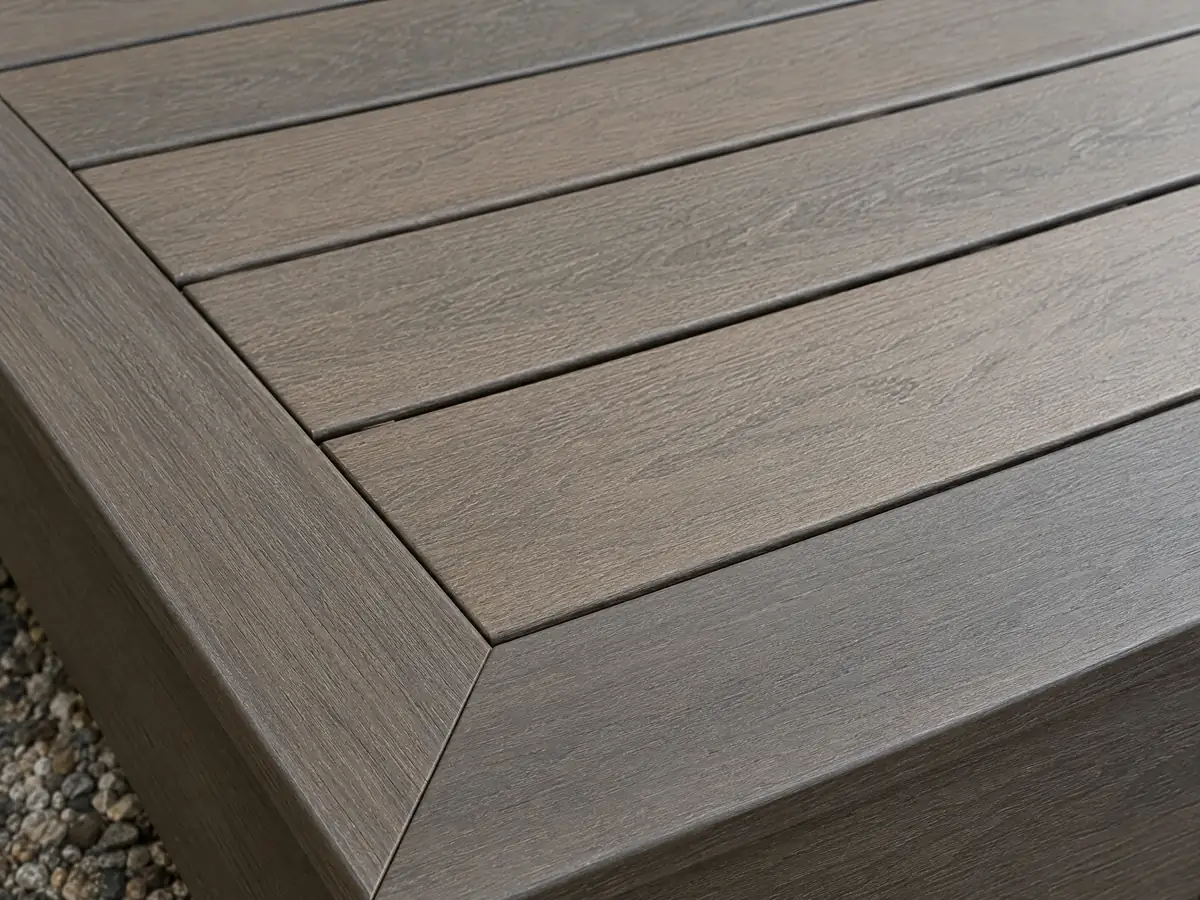
Deck photos from Redondo Beach and the South Bay
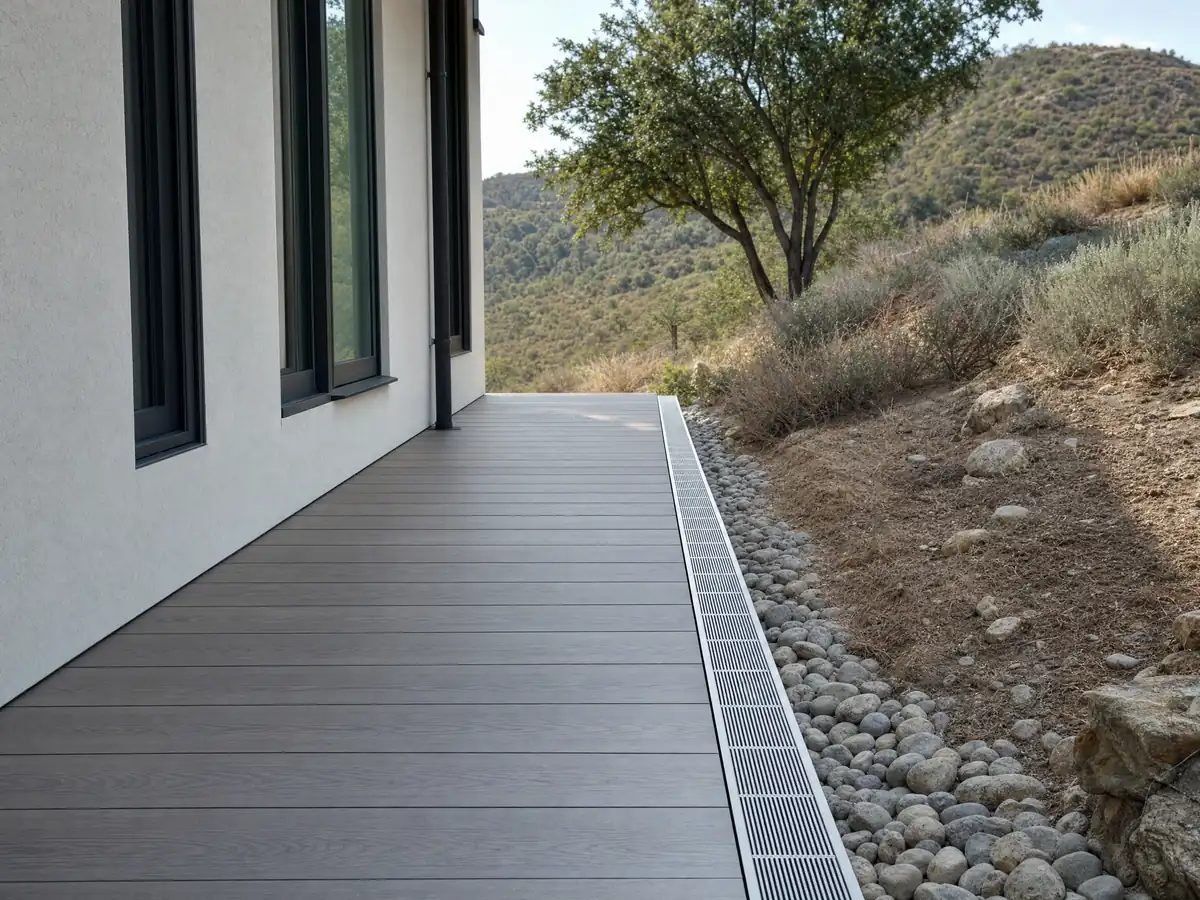
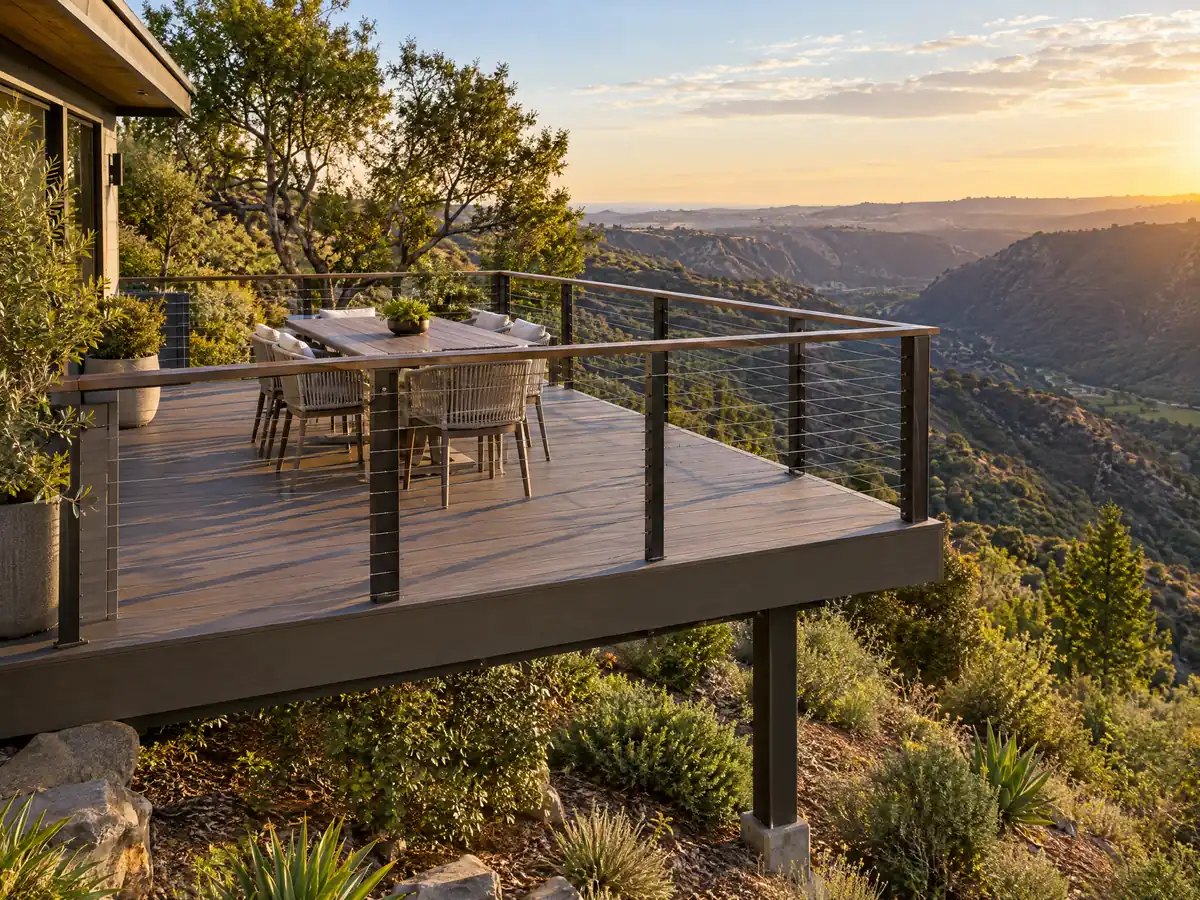
Six photos of decks and porches around Redondo Beach and its neighbors, from posts and framing to finished boards and railings. Tap a photo to enlarge it.
What decks costs around Redondo Beach
Our decks page carries the Los Angeles ranges, rated medium for wood and medium to low for composite, so none of these is a Redondo Beach quote. Coastal review, engineering and permit costs are separate lines, and the framing subcontractor's license number is yours to request, as the license check guide shows. For neighboring rules, compare decks in Torrance, decks in Long Beach and decks in Los Angeles, or read the Torrance overview. The how general contractors use subcontractors guide explains who does what on the job.
| What it covers | Typical range |
|---|---|
| Pressure-treated wood deck | $45 to $75 per square foot |
| Composite deck | $65 to $110 per square foot |
| 16 by 20 foot wood deck (320 sq ft) | About $14,500 to $24,000 |
| 16 by 20 foot composite deck | About $21,000 to $35,000 |
| Hillside, second-story, rooftop and ipe decks | Priced by site visit |
| Permits and engineering | Quoted as separate lines |
Other work we manage in Redondo Beach
Redondo Beach deck questions, answered
Can I build a deck without a permit in California?
Sometimes, but not on a single statewide rule, because each city adopts its own exempt list. Redondo Beach amended only three items of the state's list, and we could not confirm its deck exemption, so ask Building and Safety. The model residential code exempts small, low, unattached decks. Treat any attached deck as permit work until the City says otherwise.
What is the largest deck without a permit?
The model residential code sets the test at 200 square feet, not more than 30 inches above grade at any point, not attached to a dwelling and not serving the exit door. We could not confirm that Redondo Beach uses that wording, so no Redondo size is quoted here. Ask Building and Safety with your height and size before building.
How much should a 16x20 deck cost in Redondo Beach?
Using Los Angeles figures, about $14,500 to $24,000 in pressure-treated wood and $21,000 to $35,000 in composite for a standard, flat-lot, attached deck, with permits and engineering extra. The 2025 Cost vs. Value benchmark for a defined 16 by 20 foot wood deck is $18,419. A site visit sets the price.
How much would a 20x20 deck cost in Redondo Beach?
A 20 by 20 deck is 400 square feet, so our per-foot ranges give about $18,000 to $30,000 in treated wood and $26,000 to $44,000 in composite. These are Los Angeles ranges, not a Redondo Beach study. Height, stairs, railing type, footings and access all move the total.
Is it cheaper to build a wood deck or composite deck?
Wood costs less to build. In the 2025 Los Angeles Cost vs. Value report the wood deck costs $18,419 and the composite $26,872, but wood recoups 99.6 percent at resale against 73.9 percent for composite. The main downside of composite is the higher price, so ask each bidder to price both.
Is railing height 36 or 42 for decks?
Forty-two inches. Section R312.1.2 of the 2022 California Residential Code sets the guard at no less than 42 inches, and R312.1.3 requires openings that stop a 4 inch sphere. Redondo Beach applies the 2025 edition to submittals from January 1, 2026, so confirm that the numbering and height still match at the counter.
How high can a deck be without a railing in California?
Thirty inches. A guard is required where the walking surface is more than 30 inches above grade within 36 inches of the edge (2022 CRC R312.1.1). Redondo Beach's setback relief for unenclosed decks also stops at 30 inches above existing grade, so a deck at or below that height needs neither.
What happens if a deck is built without a permit?
In Redondo Beach, starting work before a permit is issued costs double the permit fees plus enforcement costs. In the Coastal Zone, development without a required Coastal Development Permit is not lawfully established, and the City cannot accept new applications for that property until a permit also covers the existing work.
Can I get a permit after the deck is built?
Possibly, but at a price and with no promise. The City charges double fees for work started before a permit, and an inspector may ask to see footings or the ledger. Ask Building and Safety before you buy a house with an older deck, or ask for the record of its original permit.
Do decks near the water in Redondo Beach need a coastal permit?
Possibly. Redondo Beach issues its own Coastal Development Permits, and about 16 percent of our 178 sample points fell inside the Coastal Zone. We found no line naming decks in the exemption, so the Community Development Director's determination should come before design, and no work starts until the Director finds the project exempt.
Send the address, the deck size and its height
Tell us the street, the size, the height above grade and whether the lot is near the water or in the Original Townsite, and we will check the setback and coastal questions before calling.