
Concrete Companyin Twentynine Palms, CA
A concrete company in Twentynine Palms should ask Building and Safety about almost every pour, because the City publishes no flatwork exemption list and grading needs an approved wind erosion control plan first. Flash-flood overlays, Joshua trees, collapsible soil and 89 days a year above 100 F shape the slab.
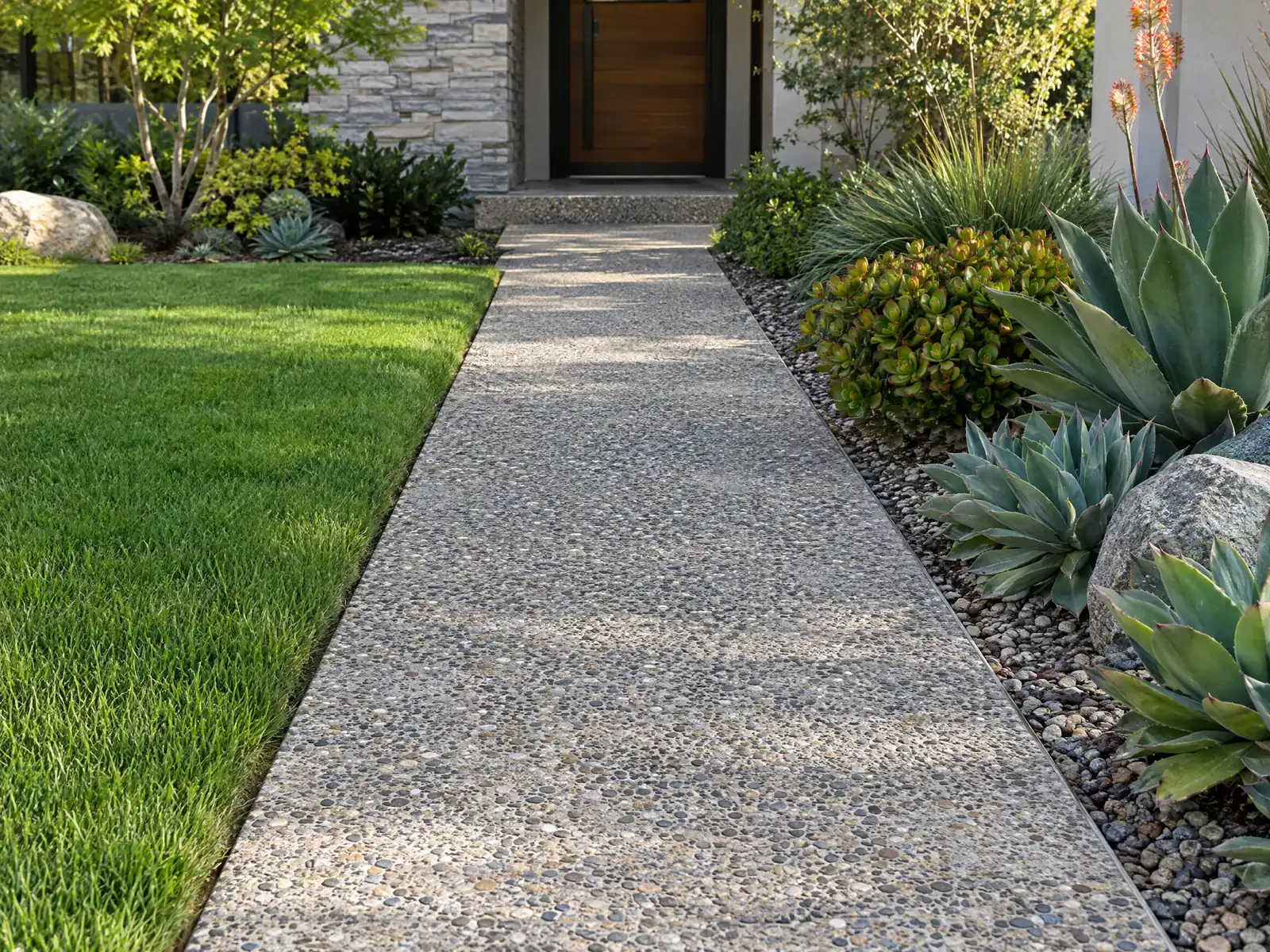
Twentynine Palms is mostly open desert. The City limits cover 58.8 square miles, 3.9 of them the Marine Corps Combat Center, and the General Plan keeps land nearest Joshua Tree National Park in 2.5 and 5 acre lots. Homesteaders came in 1910, the City incorporated in 1987, and many residential streets are still unpaved. Of the 10,642 homes in the Census Bureau's 2024 five-year estimates, 5,699 are single-family detached, so most concrete here is a driveway, a patio, a block wall or a foundation on a generous lot.
MDG Builders (CSLB #1040337) manages concrete as a general contractor: we scope the pour, put permit and right-of-way questions to the City's Building and Safety Division and bring in a licensed concrete subcontractor to form, place and finish it. The concrete page covers mixes and finishes, and the Twentynine Palms overview lists our other trades in the city.
What Twentynine Palms' Building and Safety Division, Public Works, the Mojave Desert AQMD and state law say about concrete work
Where concrete permits come from in Twentynine Palms: City of Twentynine Palms Community Development Department, Building and Safety Division.
- Grading (Municipal Code 18.01.020 amending CBC Appendix J, third-party mirror): a grading permit from the Building Official is needed for any grading except listed cases such as cemetery graves, utility or well excavations, mining and 'excavation for construction of a structure permitted under this code'; single-lot grading is reviewed by the City Engineer when cuts or fills exceed 4 feet, 13,000 square feet or more is graded (with exceptions) or the slope is 15 percent or steeper; building pads need at least 2 percent drainage to an approved facility, and a retention area holding more than 18 inches of water must percolate within 72 hours.
- Dust and erosion on concrete and flatwork jobs: before a grading permit the City requires a written wind erosion control plan and a water erosion control plan (see 18.01.020 and Rule 403), and MDAQMD Rule 403 bars visible dust beyond the property line except in High Winds (instantaneous above 25 mph or a 15-minute average above 15 mph); large projects need a District-approved Dust Control Plan (10 residential acres, 5 non-residential).
- Concrete sealers and curing: MDAQMD Rule 1113 Table 1 (Wayback copy) limits concrete and masonry sealers to 100 g/L VOC, floor coatings to 100 g/L, driveway sealers to 50 g/L and concrete curing compounds to 350 g/L.
- Retaining walls and foundations (FY 2026/2027 fee schedule): a standard concrete or masonry retaining wall up to 50 linear feet is $235.40 (plus $56.69 per additional 50 feet), special-design walls 3 to 10 feet high $326.61 (plus $117.09), and foundation repair $268.68; retaining walls under 36 inches are exempt from the Development Code's fence chapter (19.74.030).
- Driveways and road work: a residential driveway approach is $113.38 in the fee schedule, minor 'no dig' encroachment permits are $62.86 and major encroachment applications $150.37, and work in the public right-of-way needs a road permit filed with Public Works by email or fax (phone (760) 367-6799 extension 1015); the Engineering Division reviews grading, street and drainage plans, and the schedule charges a $475.73 flood hazard report and $357.42 for technical report review (soils, percolation, drainage).
- Soils under slabs: the Safety Element warns that collapsible alluvial and wind-blown soils can settle suddenly when wetted, with irrigation near foundations as the usual cause, and that playa clays and some older alluvial silts are expansive; the City's grading code requires recommendations of any geotechnical report to be carried into the grading plans.
Does a Twentynine Palms lot need a wind erosion plan or clearing permit before concrete goes in?
Often both, so ask first. Under the City's amendments to the grading appendix of the building code, read in GoCodebook's third-party mirror (text as of October 21, 2026), a written wind erosion control plan must be approved before any grading permit, and a water erosion control plan is required for any grading. The wind plan can rely on phased grading, water trucks, chemical soil stabilizers or hydroseeding.
Clearing is its own permit. The City requires one to clear or grub any vacant lot or any developed lot over one half acre, and it denies one that would damage or remove a Western Joshua tree or cause blowing dust or topsoil erosion. On parcels of one acre or more, Chapter 19.64 lets owners clear natural vegetation only for building pads, driveways, landscaping and similar listed uses, and only after a building or grading permit.
The air district adds a ceiling, not a floor. Mojave Desert AQMD Rule 403, read in a Wayback copy, calls for a District-approved Dust Control Plan on residential projects of 10 acres or more and bars visible dust past the property line except in High Winds. A backyard slab sits far below that line, but the City's own plan rule still applies, so confirm the current text with Building and Safety.
Do you need a grading or building permit to pour a patio, slab or driveway in Twentynine Palms?
Treat a permit as likely until staff say otherwise, because the pages we read show no flatwork exemption list. The grading code exempts a few cases, including utility and well excavations and excavation for a structure the code permits, but a pad graded ahead of a building permit still reaches the grading rule. Every structure that needs a building permit also needs a Zoning Clearance, which has no separate fee because the City processes it with the permit.
Grading review has thresholds. The City Engineer reviews single-lot grading when cuts or fills pass 4 feet, when 13,000 square feet or more is graded (with listed exceptions) or when the slope is 15 percent or steeper. Building pads need at least 2 percent drainage to an approved facility, and a retention area holding more than 18 inches of water must percolate within 72 hours.
The fee schedule prices the pieces. It lists $113.38 for a residential driveway approach, $62.86 for a minor no-dig encroachment permit, $150.37 for a major encroachment application, a $475.73 flood hazard report and $357.42 to review technical reports on soils, percolation or drainage. Work in the public right of way needs a road permit from Public Works at extension 1015, and the City asks diggers to call 811 at least two days ahead.
How do Joshua trees, mesquite and the Mesquite Dunes overlay change where concrete can go?
Municipal Code 19.98 requires a California Department of Fish and Wildlife take permit before any Western Joshua tree, or part of one, is removed, relocated or trimmed. CDFW's free Hazard Management Permit covers only dead trees and limited trimming of living ones, and its construction route is an Incidental Take Permit with a mitigation fee and a tree census. Each stem counts as a separate tree. CDFW's page says three amending bills were signed on October 23, 2026 and we did not read them, so confirm the current rules.
The Mesquite Dunes overlay in the north is stricter. Chapter 19.172 limits grading to foundations, parking and driveways unless the Planning Commission approves more after a hearing, bars sand extraction and honey mesquite removal without Commission approval and requires mesquite and desert tortoise clearance surveys before any grading or building permit.
Other overlays sit around the edges. The General Plan sets a half-mile Joshua Tree National Park Buffer, three wildlife corridors and a Drainage Area overlay, and where an overlay conflicts with the base zone the more restrictive rule governs. The City's Land Use and Zoning Map shows which touch an address. Settle the layout around trees and overlays before booking a crew.
How do 100 degree days and freezing nights treat a new slab in Twentynine Palms?
They stress fresh concrete at both ends. NOAA's normals for the Twentynine Palms station show about 89 days a year above 100 F (18.3 in June, 27.8 in July, 25.9 in August and 12.3 in September), about 154 above 90 F and about 16.6 with a low of 32 F or lower, mostly December through February. The average July high is 104.0 F with a low of 77.4 F, so a midday summer pour loses water fast and a winter pour can meet frost before it gains strength.
We found no City rule on slab thickness, joint spacing or curing, so those are industry practice and the proposal has to state them. It should name the thickness (four inches is common for houses), the base, the reinforcement, the joint layout, the cure method and the weather in which the crew will not pour. The Safety Element counts two to seven windstorms a year, so ask how a fresh surface will be protected from blowing sand.
Sealers carry air rules. Rule 1113 limits concrete and masonry sealers to 100 grams of VOC per liter, driveway sealers to 50 and curing compounds to 350, from a Wayback copy of the District's PDF. Decorative surfaces suit big desert patios, and Angi's Los Angeles stamped page prices them at $15 to $30 a square foot, but we found no local source on how color or sealer behaves in this sun, so ask the maker for its warranty limits.
What do flash floods, collapsible soil and two earthquake faults mean for a slab or footing?
Water comes fast and rarely. The Safety Element says much of the central and southern City sits in a FEMA 100-year floodplain, and the City adopted the FEMA Flood Insurance Study and map dated March 18, 1996 as updated. A flood development permit from the Floodplain Administrator is needed before construction in a special flood hazard area. The Indian Cove and Mesquite Drainage Area in the west floods though FEMA does not map it, and the Hansen Tract and Smoke Tree area have flooded repeatedly. We did not verify the zone of any address.
Soil moves under slabs. The Safety Element warns that alluvial and wind-deposited soils can settle suddenly when wetted, usually from irrigation beside a foundation, and that playa clays and some older silts are expansive. The grading code requires a geotechnical report's recommendations to be carried into the plans, and San Bernardino County's IB-0003 bulletin sets 2.5 inches an hour as its 100-year rainfall rate, though we did not confirm the City follows it.
Two State-zoned faults cross the City, the Pinto Mountain, which parallels Twentynine Palms Highway, and the Mesquite Lake. A Fault Zones overlay requires geotechnical studies before approval, and the Safety Element reports liquefaction features in trenches across both where groundwater is shallow. Ask which overlays touch your lot before anyone designs a footing.
How tall can a block wall be, and when does a retaining wall need a permit in Twentynine Palms?
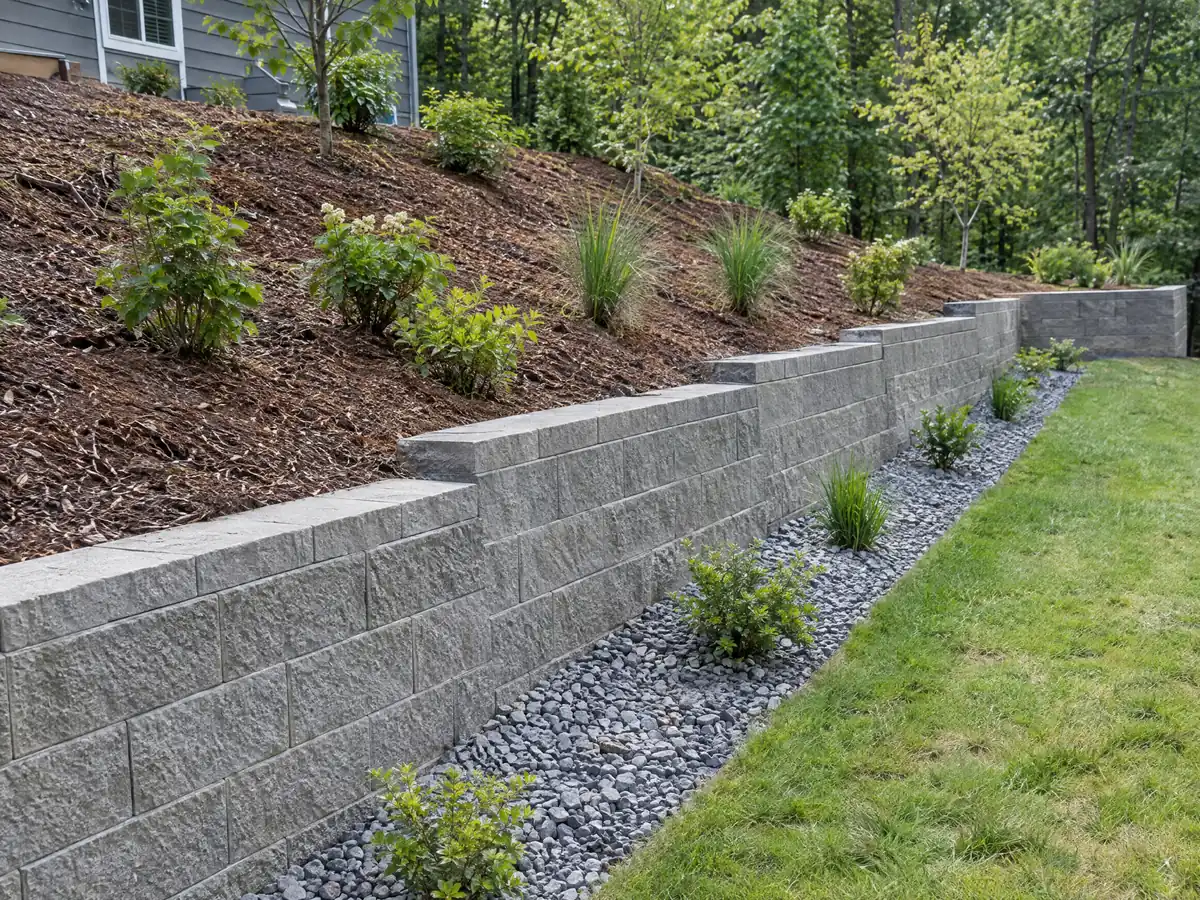
Height depends on the yard. The Development Code's table, read in the third-party mirror, allows 6 feet in a required front yard, 8 feet in required rear and interior side yards and in a street side yard, 4 feet on a reverse corner lot and only 2.5 feet inside a clear sight triangle at street, alley and driveway intersections, measured from the highest finish grade at the base. A new wall needs a Zoning Clearance, and decorative block is an allowed screening material.
Walls built to the chapter's standards are exempt from land use and development permits but may still need a building permit. The fee schedule lists masonry fences over 6 feet at $426.44 up to 100 linear feet and $93.67 per added 100, a standard retaining wall up to 50 linear feet at $235.40 plus $56.69 per added 50 and special-design walls 3 to 10 feet high at $326.61 plus $117.09.
Retaining walls under 36 inches are exempt from the fence chapter only, not from the building code. The 2022 model code text we read exempts walls up to 4 feet unless they hold a surcharge, but use the lower figure and ask the counter. Foothill lots with slopes of 30 percent or more fall under the City's hillside rules, which call for a slope analysis and a geologic report.
How much does concrete work cost in Twentynine Palms, and who needs which license?
We found no Twentynine Palms study with a stated method, so the anchor is Angi's Los Angeles pages. Patio concrete runs $4 to $13 a square foot on its August 4, 2026 page, stamped work $15 to $30 on July 20, 2026 and driveways $8 to $20 on May 5, 2026. The Bureau of Labor Statistics reports a mean of $33.67 an hour for cement masons in the Los Angeles metro area as of May 2025, a labor figure that desert bids may not match.
Our own planning figures are $8 to $14 a square foot for plain flatwork over 300 square feet, $15 to $30 for decorative finishes and $9 to $20 to replace a driveway including demolition, which puts a plain 400 square foot slab near $3,200 to $5,600. Ask whether the wind erosion plan, water truck, soils report and any flood hazard report are separate lines. Walls are priced after a visit, by height and drainage.
Poured concrete falls under CSLB's C-8 class and block walls under its C-29 masonry class. A home improvement down payment is capped at $1,000 or 10 percent of the price, whichever is smaller, by Business and Professions Code 7159.5, and our license check guide shows how to read a CSLB record.
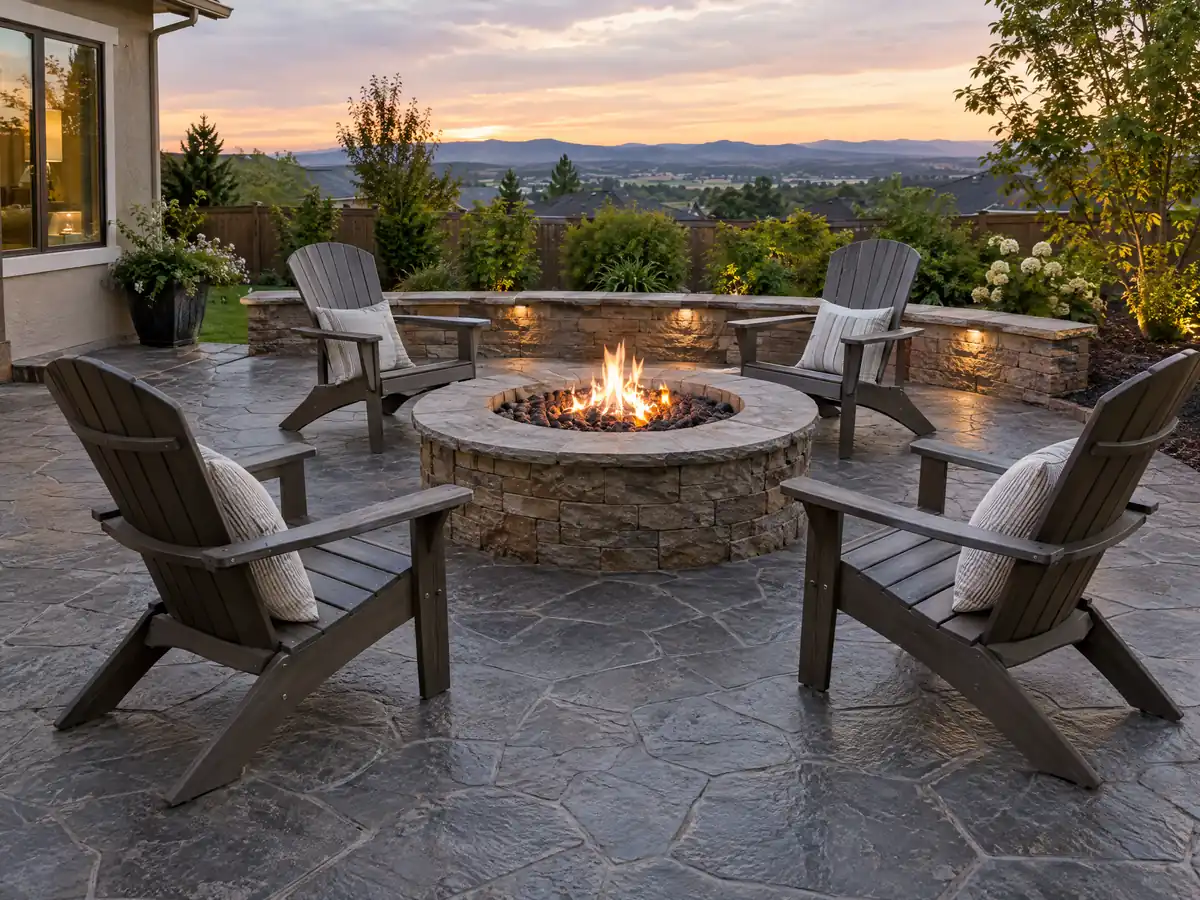
Concrete photos from Twentynine Palms and nearby communities
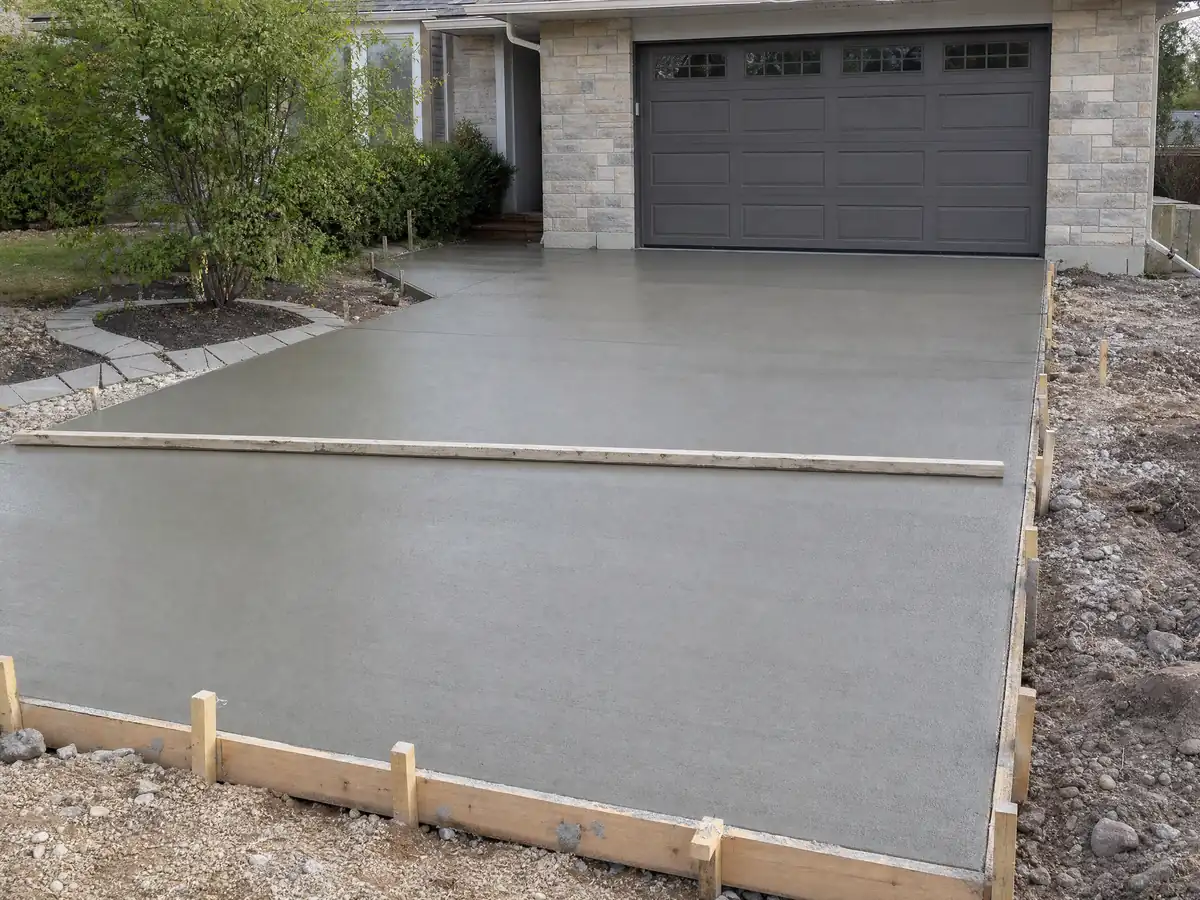
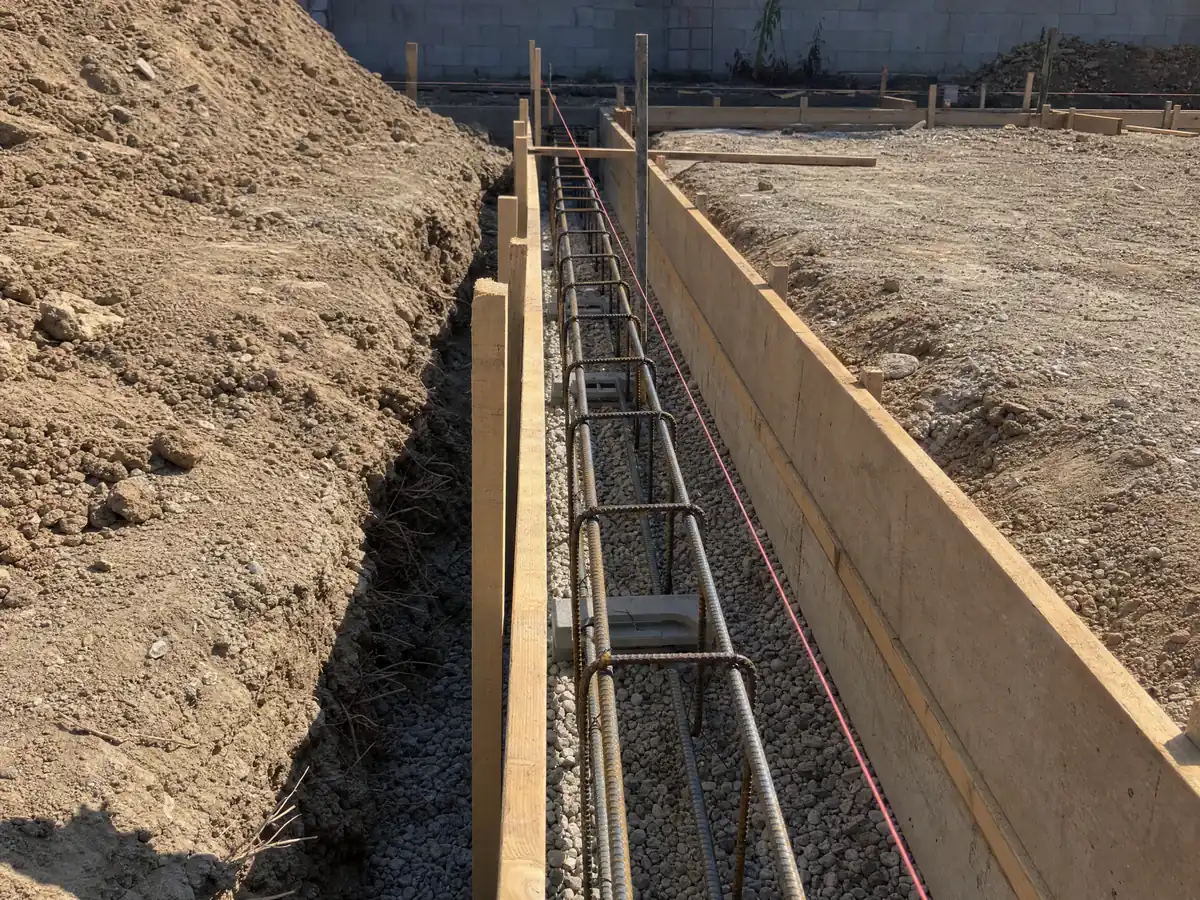
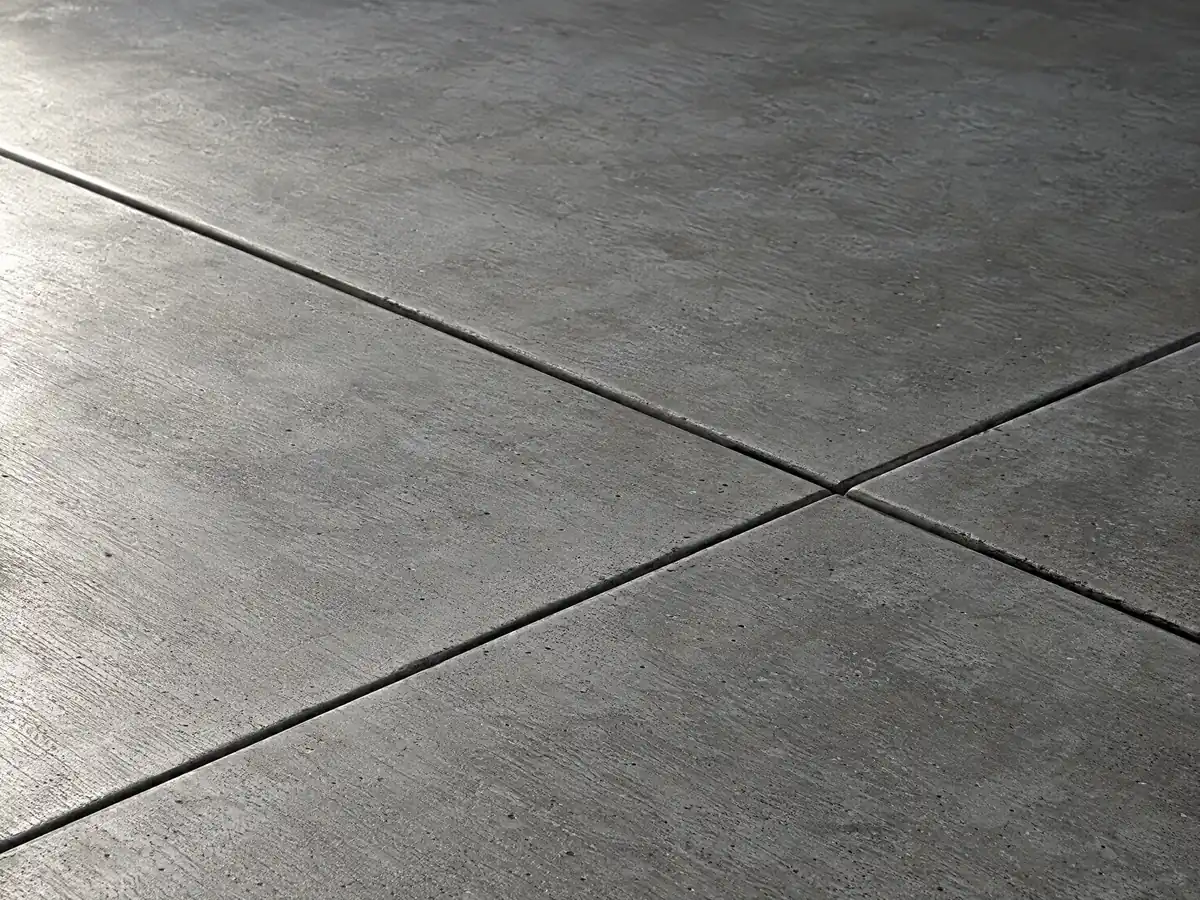
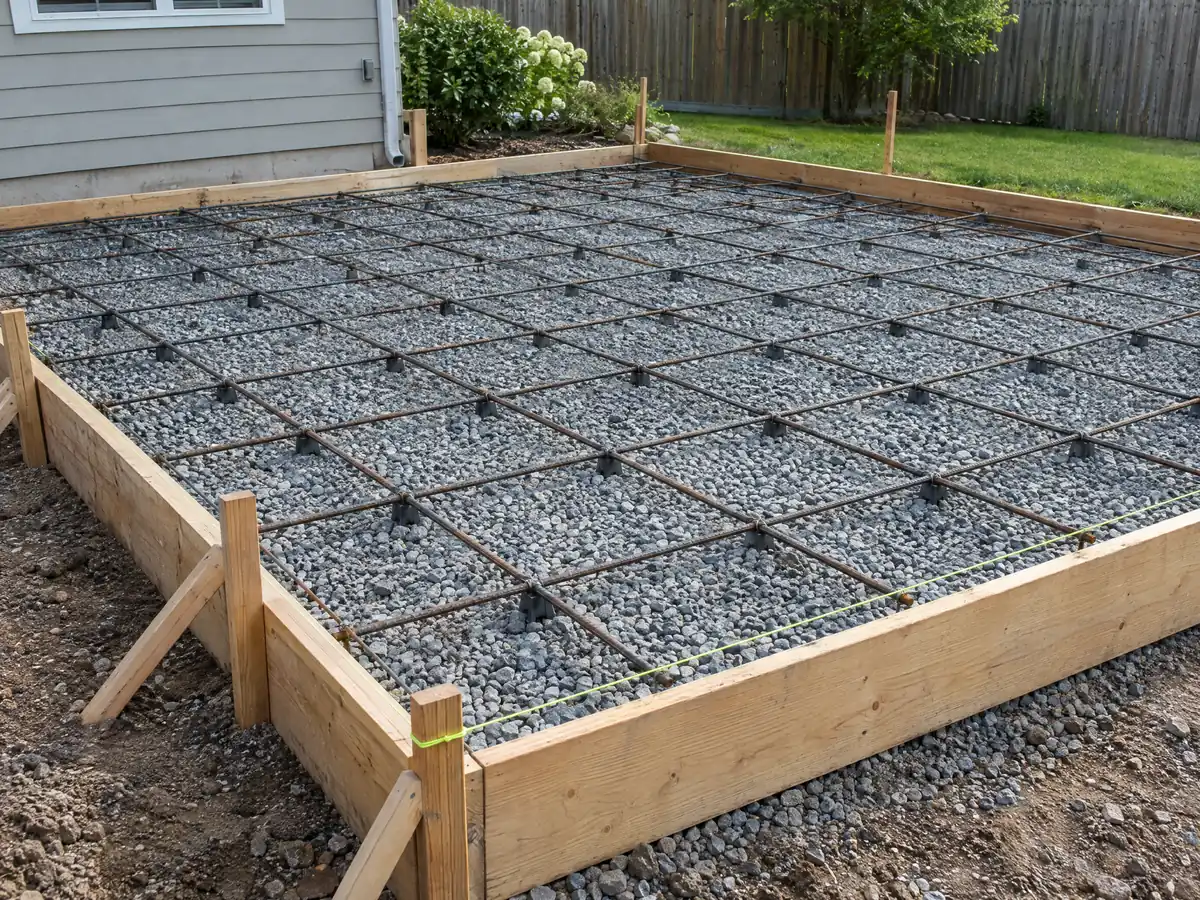
Footings, rebar, screeded slabs and finished walks and patios from Twentynine Palms and the Morongo Basin communities around it, shown at the steps where the rules bite. Tap any photo to enlarge it.
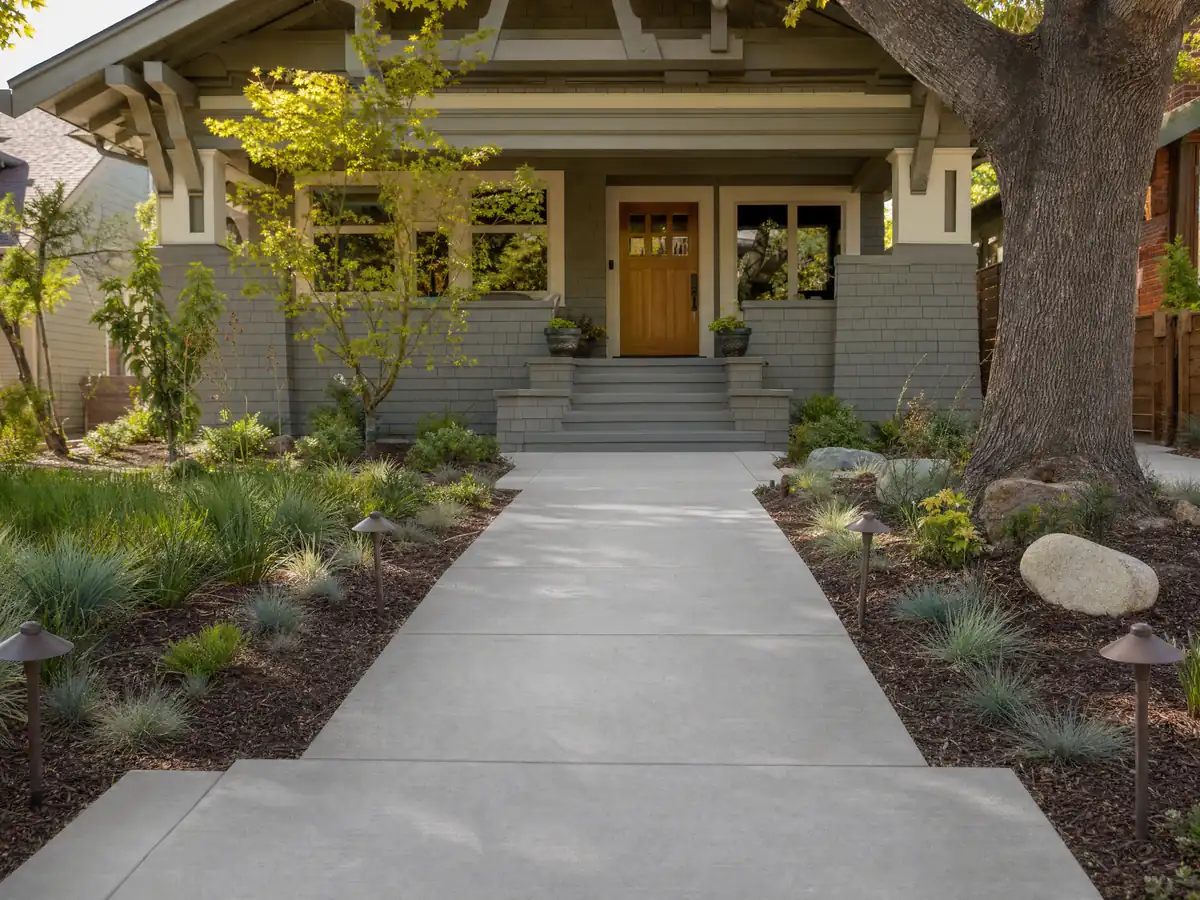
What concrete costs around Twentynine Palms
These dollar figures are Los Angeles ranges, not a Twentynine Palms bid, so ask for demolition, haul-off, rebar, drainage and any grading, wall or encroachment permit as separate lines. The same property may need flooring in Twentynine Palms or decks in Twentynine Palms. For other desert slabs, compare concrete in Palm Springs and concrete in Indio, roughly 30 miles away in a straight line across the mountains, or the High Desert pages for concrete work in Victorville and concrete in Apple Valley, with concrete in Los Angeles as the benchmark. Yucca Valley, the closest town, has no page yet. To see who forms a slab and who finishes it, read the subcontractor guide, and the flooring cost guide covers the surfaces that go on top.
| What it covers | Typical range |
|---|---|
| Patio, walkway or slab, broom finish, 300 sq ft or more | $8 to $14 per square foot |
| Decorative: stained, stamped or exposed aggregate | $15 to $30 per square foot |
| Driveway replacement, with demolition of the old slab | $9 to $20 per square foot |
| 20 by 20 foot plain patio (400 sq ft) | About $3,200 to $5,600 |
| 20 by 20 foot decorative patio (400 sq ft) | About $6,000 to $12,000 |
| Small jobs under 300 sq ft | Usually above the per-foot range |
| Retaining walls | Set by the written proposal |
Other work we manage in Twentynine Palms
Twentynine Palms concrete questions, answered
Can I pour a concrete patio without a permit?
Not safely in Twentynine Palms until you ask. The City publishes no flatwork exemption list in the pages we read, grading needs an approved wind erosion plan, and every structure needing a building permit needs a Zoning Clearance. Call Building and Safety at (760) 367-6799, extension 1005 or 1029, with the size, the slope and what the slab will hold.
How much should a 20x20 concrete patio cost?
Using our Los Angeles planning range of $8 to $14 a square foot, plain concrete for 400 square feet costs about $3,200 to $5,600, while Angi's August 2026 Los Angeles page shows $1,600 to $5,200 for a 20 by 20 slab. No Twentynine Palms study turned up. Stamping, demolition, drainage and dust control raise the price.
Can I expand my driveway without a permit?
Widening on your own lot may still need grading review, and the clearing permit rule applies to vacant lots and developed lots over half an acre. A new apron or curb cut crosses the public right of way and needs a Public Works road permit. Protected Joshua trees and overlays can also limit the layout, so call first.
What is the maximum height of a retaining wall without a permit in California?
The 2022 model code text we read exempts retaining walls up to 4 feet, measured from the bottom of the footing to the top, unless they support a surcharge. Twentynine Palms' fence chapter exempts walls under 36 inches, so use the lower number and ask the counter. The fee schedule prices special-design walls 3 to 10 feet high separately.
Is 4 inches of concrete thick enough for a driveway?
Four inches is a common residential thickness, but we found no Twentynine Palms code section that sets it, so treat it as industry practice. Heavy trucks, weak or collapsible soil and long spans call for more. The thickness, base, reinforcement and joint plan belong in the written proposal or on an engineer's drawing.
How much does a 300 sq ft stamped concrete patio cost?
Stamped work priced at Angi's Los Angeles range of $15 to $30 a square foot comes to roughly $4,500 to $9,000 for 300 square feet, against a July 2026 Angi average of $5,948 there. These are Los Angeles figures, not a Twentynine Palms bid. Demolition, grading, sealer and erosion control are extra, and small patios often carry minimum charges.
Does a small concrete job in Twentynine Palms need a wind erosion control plan?
If it involves grading, yes: the City's code amendments require an approved written wind erosion control plan before any grading permit. Mojave Desert AQMD Rule 403's Dust Control Plan applies at 10 residential acres, far above a backyard pour, but visible dust still cannot cross the property line in ordinary wind. We read both texts in third-party copies, so confirm them.
Do Joshua trees block a concrete project in Twentynine Palms?
They can. Municipal Code 19.98 requires a California Fish and Wildlife take permit before removing, relocating or trimming any Western Joshua tree, and the City will deny a clearing permit that would damage one. A slab or driveway may need to curve around a tree. Ask before cutting or digging near one.
Does a flood zone change what can be poured in Twentynine Palms?
It can. A flood development permit is needed before construction in a special flood hazard area, and homes must meet lowest-floor elevation rules. Much of the central and southern City is in a FEMA 100-year floodplain, per the Safety Element. We did not verify any address, so ask the Floodplain Administrator which map applies.
What license does a concrete company need in Twentynine Palms?
Look for a current CSLB license in the C-8 concrete class for poured work, or C-29 masonry for block walls. Check the number on CSLB's site and ask each subcontractor for proof of insurance. A contractor who pulls a City permit also needs a Twentynine Palms business license, $127.26 for the first year.
Tell us the lot, the slab size and which way the water runs
Say what is going in, about how big it is, whether the lot has Joshua trees or a wash nearby and whether the work touches the street or a wall. Dust, drainage and permit questions come with us to the first visit.