
Fence Companyin San Clemente, CA
A fence company in San Clemente works to a 3 foot 6 inch limit in the front setback and 6 feet at the sides and rear. Bluff and canyon lots carry extra setbacks, and overlay and historic properties limit materials. The City's papers disagree on whether 6 foot fences need a permit, so confirm with the Building Division.
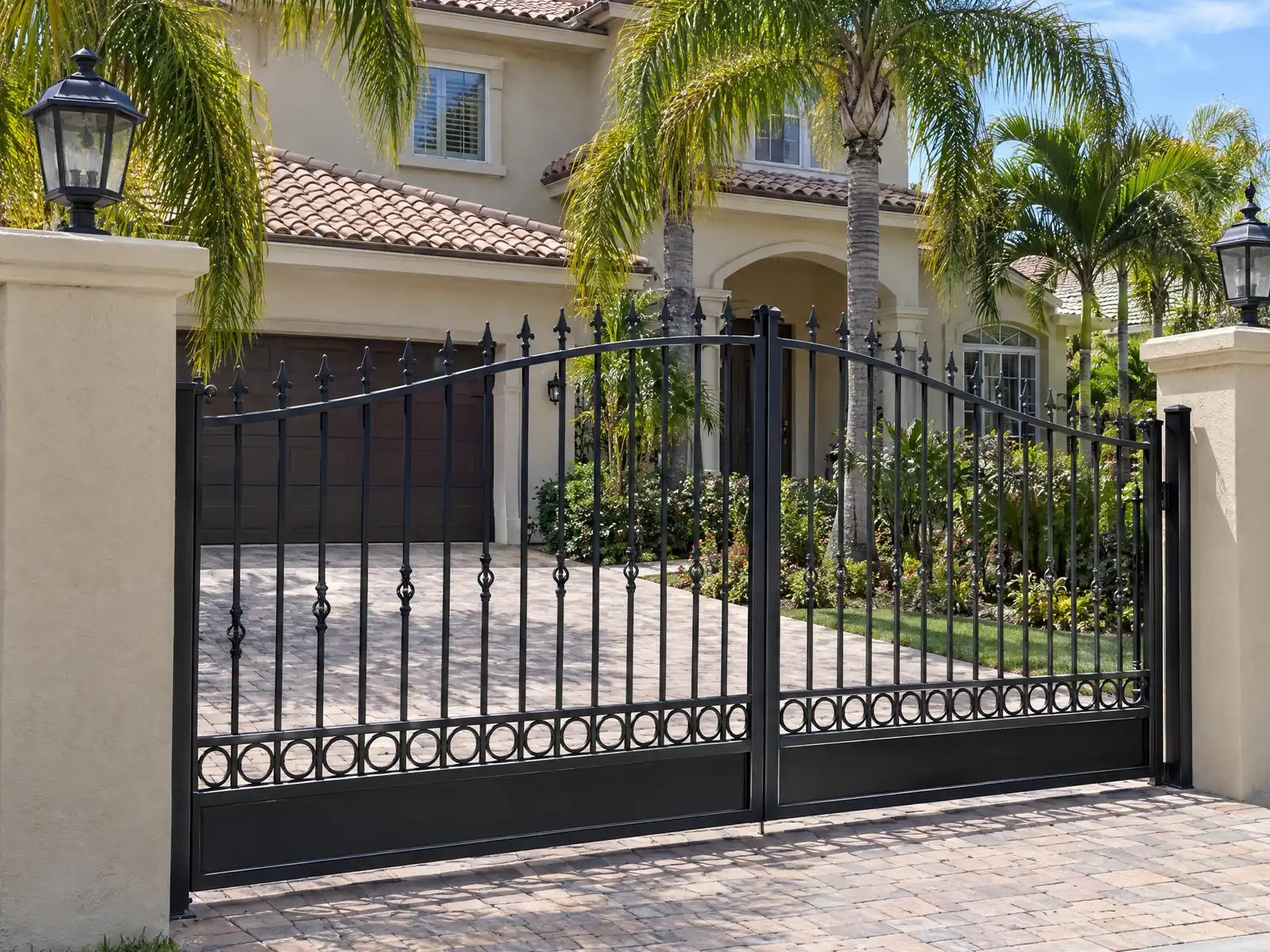
San Clemente's fences answer to its history. Ole Hanson laid out the 'Spanish Village by the Sea' in 1925, and the Historical Society counts about 500 original Spanish-style buildings from his era with 203 left, many of the rest torn down for apartment complexes in the 1970s. The ACS 2024 5-year estimates count 15,417 detached houses, 57.0 percent of units, plus 2,938 attached homes, and 33.5 percent of occupied homes are rented, so the person ordering a fence is not always the person who can approve it. The median home value is $1,398,400.
On a fence project, MDG Builders (CSLB #1040337) handles the plan, the City and HOA questions and the schedule, and a licensed C-13 fencing subcontractor builds it. Our fencing page has the sourced prices, the San Clemente overview lists every trade, and the guides for Laguna Niguel and Pasadena show how other cities set heights. The City's Permits page is where most fence questions start. Municode refused our tools, so the code text below comes from GoCodebook, a third-party mirror, and the Building Division should confirm it.
What San Clemente's zoning tables, permit forms and overlay say about fences
Where fencing permits come from in San Clemente: City of San Clemente Community Development Department, Building Division (Permits).
- Municipal Code Table 17.24.090 caps fences, walls and hedges in residential zones at 3 feet 6 inches in the front yard setback, 6 feet in interior side, rear and other areas, and on corner lots 3 feet 6 inches within 5 feet of the street-side property line and 6 feet in the rest of the street-side yard (3 feet 6 inches throughout on a reverse corner lot). Height is measured from the lower side of finished grade to the top, including pilasters and trellises, and barbed wire and razor fences are prohibited.
- A Minor Exception Permit allows a front or street-side fence, wall or hedge to rise to 6 feet if findings are made that it will not be unsightly, will not harm the street scene or block views of traffic at driveways, and a Conditional Use Permit is required for a fence over 6 feet in the rear half of a lot enclosing tennis courts, similar recreational areas or private screened outdoor areas.
- The current local amendment to the Building Code and Residential Code (Ordinance 1796) exempts fences other than pool barriers that are not over 6 feet high from a building permit and, in the same item, sets a separate 42 inch limit for masonry fences (the wording reads 'Masonry fences under 42 inches in height above finish grade', so ask whether a 6 foot masonry fence is exempt; the City's own masonry fence questionnaire treats a free-standing masonry fence up to 6 feet as a permit item). The City's Permits page still reprints an older wording (fences not over 42 inches high, or architectural features up to 6 feet, outside zoning setbacks), so confirm with the Building Division before assuming a 6 foot wood fence is exempt.
- The City's Masonry Fence and Retaining Wall Questionnaire covers a free-standing masonry fence of maximum 6 feet and asks whether the plans use the City standard design handout, whether the wall is on a shared property line with a neighbor's consent letter, whether the fence is more than 5 feet from the top of a descending slope, whether the retaining wall is on a slope greater than 1 to 3, and whether the wall is finished with paint or stucco only.
- Retaining wall limits in 17.24.180 are 3 feet 6 inches in the front and street-side setback, and 6 feet in side, rear and other areas (8 feet 6 inches where the wall faces toward the subject property). Stepped walls are allowed only if each wall meets the height limit and the horizontal gap equals the taller wall's height, a retaining wall must be at least as far from any other wall or fence as the taller structure is high, and a 2 foot deep planted strip is required at the base in front and street-side yards and next to canyons.
- The state exemption for retaining walls (as amended in San Clemente) covers walls not over 4 feet measured from the bottom of the footing to the top of the wall unless they support a surcharge or impound liquids, and the amendment adds that retaining walls on slopes steeper than 1 in 3 must be reviewed by Engineering and Planning to see whether a permit is needed (the printed slope wording is inconsistent between sections, so ask the Building Division). The City's retaining wall forms include BI-99 and require 3 sets of plans.
- BI-10 (rev. 1/10/18) says retaining and block walls need three plot plans showing height and linear footage, detailed structural drawings and calculations by a licensed professional, homeowners association approval, a note that a geologist's field memo is required at the footing inspection, and the written consent of the adjacent owner for a property-line wall.
- In the Architectural Overlay and on listed historic properties, chain link, chicken wire, metal, plastic, vinyl, wire-mesh and unfaced cement block fences are not eligible for administrative approval, and any fence reviewed administratively must meet zoning, preserve views of traffic at driveways and be compatible with the street scene and the house's materials. Listed historic properties can only get administrative approval for fences not in yards adjacent to street frontages.
Can I build a fence on a bluff or canyon lot in San Clemente?
Yes, within limits, and the limits start with a measured edge. In the Coastal Zone Overlay, development on a coastal bluff lot must sit at least 25 feet from the bluff edge or on the stringline of neighboring structures. At-grade decks, walls, fences, retaining walls and patio covers may reach as close as 10 feet, and no new permanent structure is allowed on the bluff face. A licensed surveyor or civil engineer must map the edge.
Canyon lots use a different formula: at least 30 percent of the lot depth and no less than 15 feet from the canyon edge, or 5 feet for ancillary improvements. The Coastal Commission's Categorical Exclusion E-82-1 skips Coastal Act permits for many residential improvements in mapped districts, but never for development on or next to bluffs, canyons or beaches. We could not confirm which lots are mapped or whether the Commission has certified the City's Implementation Plan. Hire the surveyor before the fence company, because the posts follow the line.
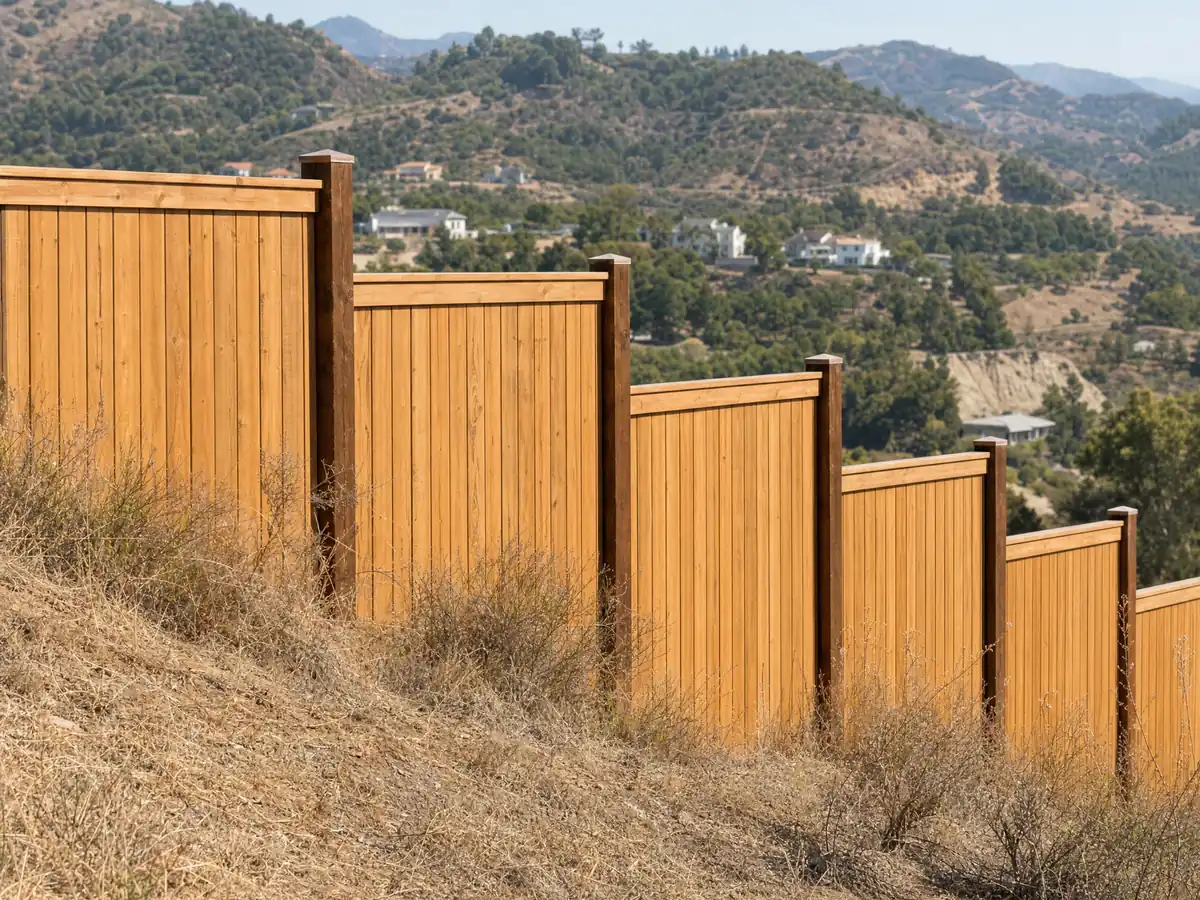
How tall can a fence be in a San Clemente front yard, side yard or corner lot?
The zoning table is clear for fences, walls and hedges in residential zones: 3 feet 6 inches in the front yard setback and 6 feet in interior side, rear and other areas. On a corner lot the limit is 3 feet 6 inches within 5 feet of the street-side property line and 6 feet in the rest of the street-side yard, and a reverse corner lot stays at 3 feet 6 inches throughout. Height runs from the lower side of finished grade to the top, so pilasters and trellises count, and barbed wire and razor fences are prohibited.
Taller fences need a discretionary step. A Minor Exception Permit can allow 6 feet in a front or street-side yard if findings show the fence will not be unsightly, will not harm the street scene and will not block views of traffic at driveways. A fence over 6 feet in the rear half of a lot, around a tennis court or a private screened outdoor area, needs a Conditional Use Permit. A 7 foot privacy fence is not an ordinary request here.
Ask for the finished-grade measurement on the lower side to be written on the drawing, because a sloped yard can shave inches off a tall panel.
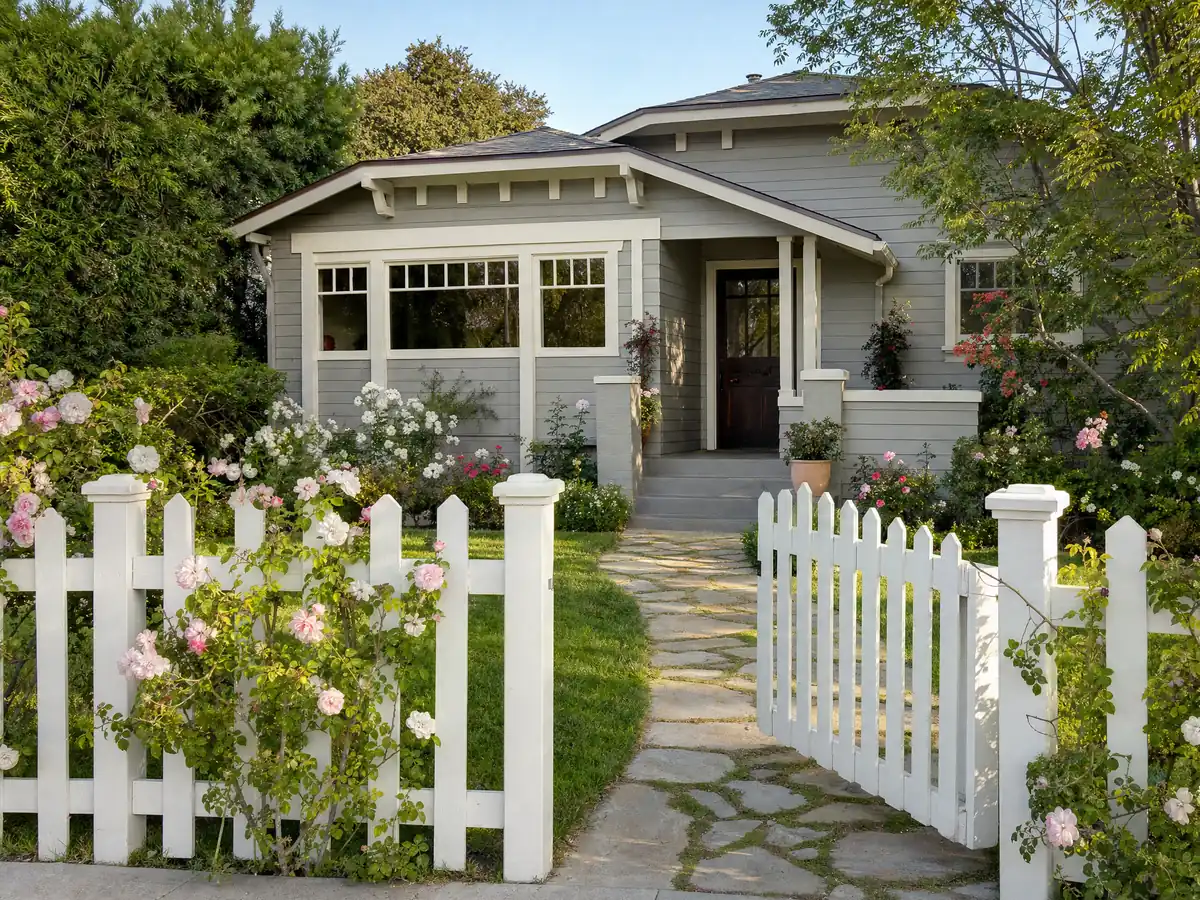
Does a fence need a building permit in San Clemente, and what about a 6 foot wall?
Here the City's papers disagree. The current local amendment to the building and residential codes, from Ordinance 1796, exempts fences other than pool barriers that are not over 6 feet high, and in the same item sets a 42 inch limit for masonry fences. The Permits page still reprints an older wording, fences not over 42 inches. The City's masonry fence questionnaire then treats a free-standing masonry fence up to 6 feet as a permit item. Read together, a wood or metal fence to 6 feet is probably exempt and a block fence over 42 inches probably is not, but get the answer in writing before ordering materials.
The Permits page adds that retaining walls, masonry fences, patio covers and pools need permits, and its permit lists carry an HOA Confirmation Form. Municipal Code 15.04.030 makes an applicant certify compliance with recorded CC&Rs, and a permit cannot be denied for missing association approval if the association is inactive or fails to act within 180 days of the application. Work started without a needed permit draws an investigation fee equal to the permit fee. New fencing that does not replace an existing fence is exempt from the construction waste plan.
What fence materials are allowed in San Clemente's Architectural Overlay?
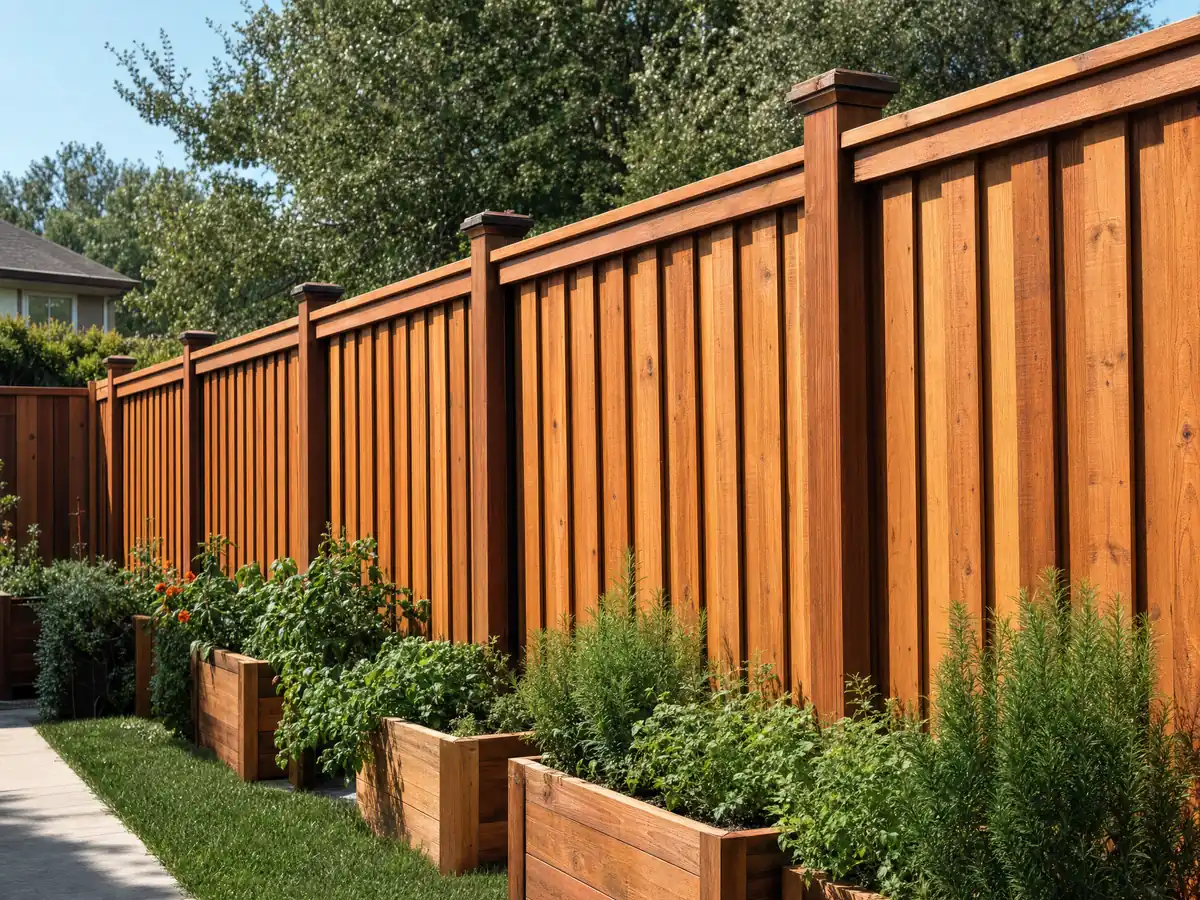
In the overlay and on listed historic properties, chain link, chicken wire, metal, plastic, vinyl, wire-mesh and unfaced cement block fences are not eligible for administrative approval. A fence reviewed that way must meet zoning, keep views of traffic at driveways and suit the street scene and the house's materials, and a listed historic property can only get administrative approval for fences that are not in yards beside street frontage. The review is an Administrative Development Permit, the City's shorter track for minor exterior work.
The overlay exists to hold Hanson's Spanish look, and the survivors from his era get close attention. Outside the overlay and away from listed sites, the zoning text we read imposes no such list, but a homeowners association may add its own. We read no HOA documents for any San Clemente community, so ask for the written fence standard before you sign a contract.
What do retaining walls, slopes and corrosive soils change about a San Clemente fence?
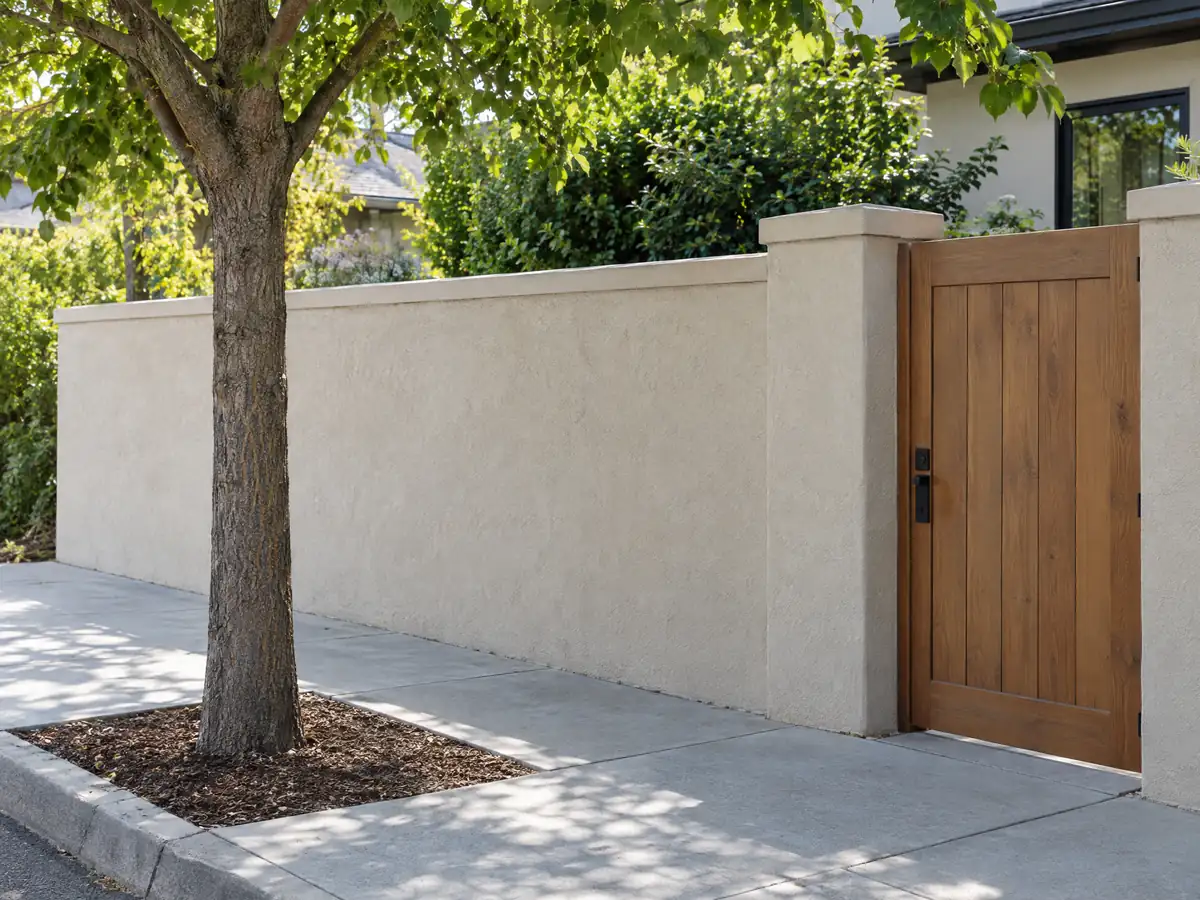
Walls follow their own height limits. Retaining walls may reach 3 feet 6 inches in a front or street-side setback and 6 feet in side, rear and other areas, or 8 feet 6 inches where the wall faces toward the subject property. Stepped walls are allowed only when each wall meets the limit and the horizontal gap equals the height of the taller wall, and front and street-side yards and canyon edges need a 2 foot deep planted strip at the base.
Permit rules for walls are less settled. The amended state exemption covers walls up to 4 feet from the bottom of the footing, but the printed slope wording differs between the code and the City's form, so ask the Building Division. Bulletin BI-10 asks for three plot plans, structural drawings and calculations from a licensed professional, HOA approval, a geologist's field memo at the footing inspection and, for a wall on the property line, the adjacent owner's written consent. The masonry fence questionnaire also asks whether the fence stands more than 5 feet from the top of a descending slope.
Soil is the last variable. Foundation concrete must be 4500 psi Type 5 because of corrosive soils, and structures within 7 feet of a descending slope may need engineered foundations. We did not find whether those rules reach a fence or wall footing, so ask. CSLB's C-13 fencing class excludes masonry walls, which belong to a masonry subcontractor.
What fence does a swimming pool need in San Clemente?
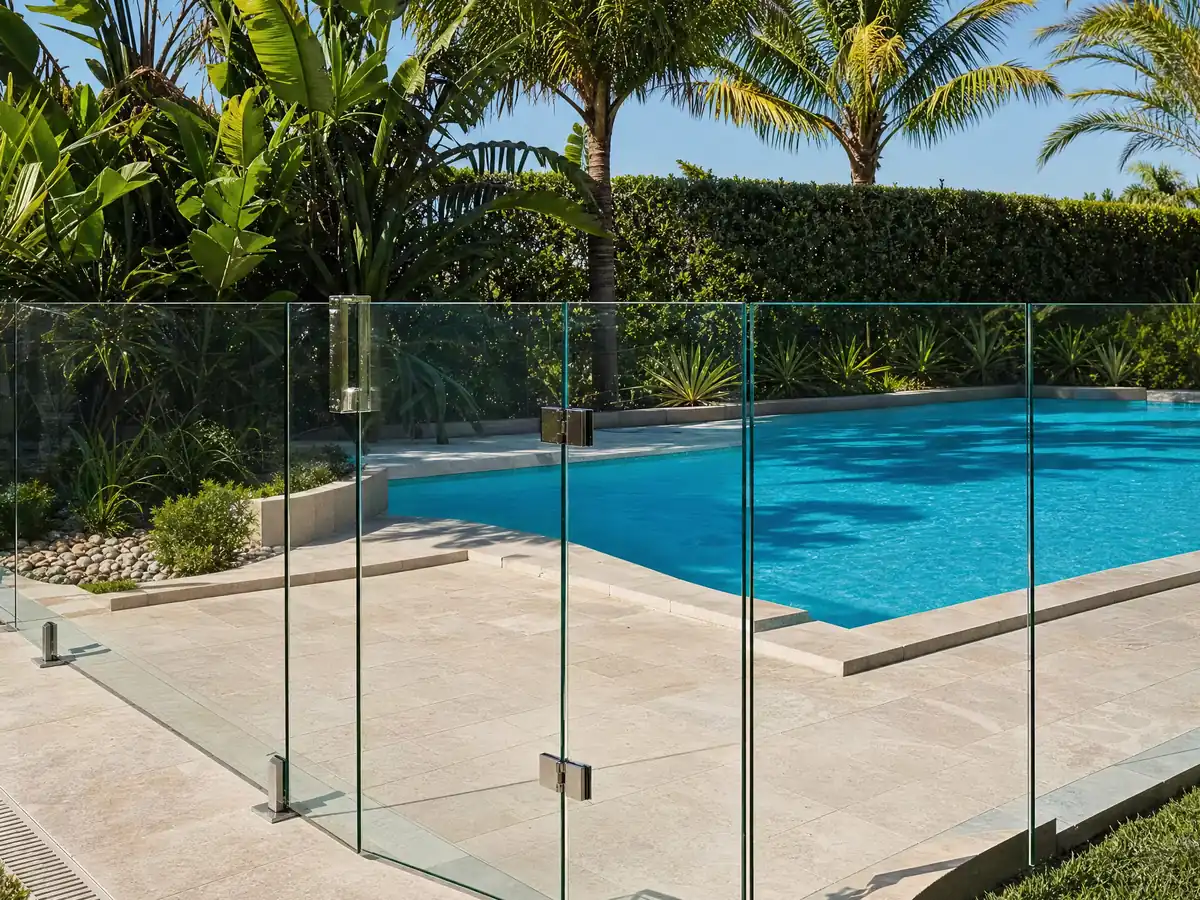
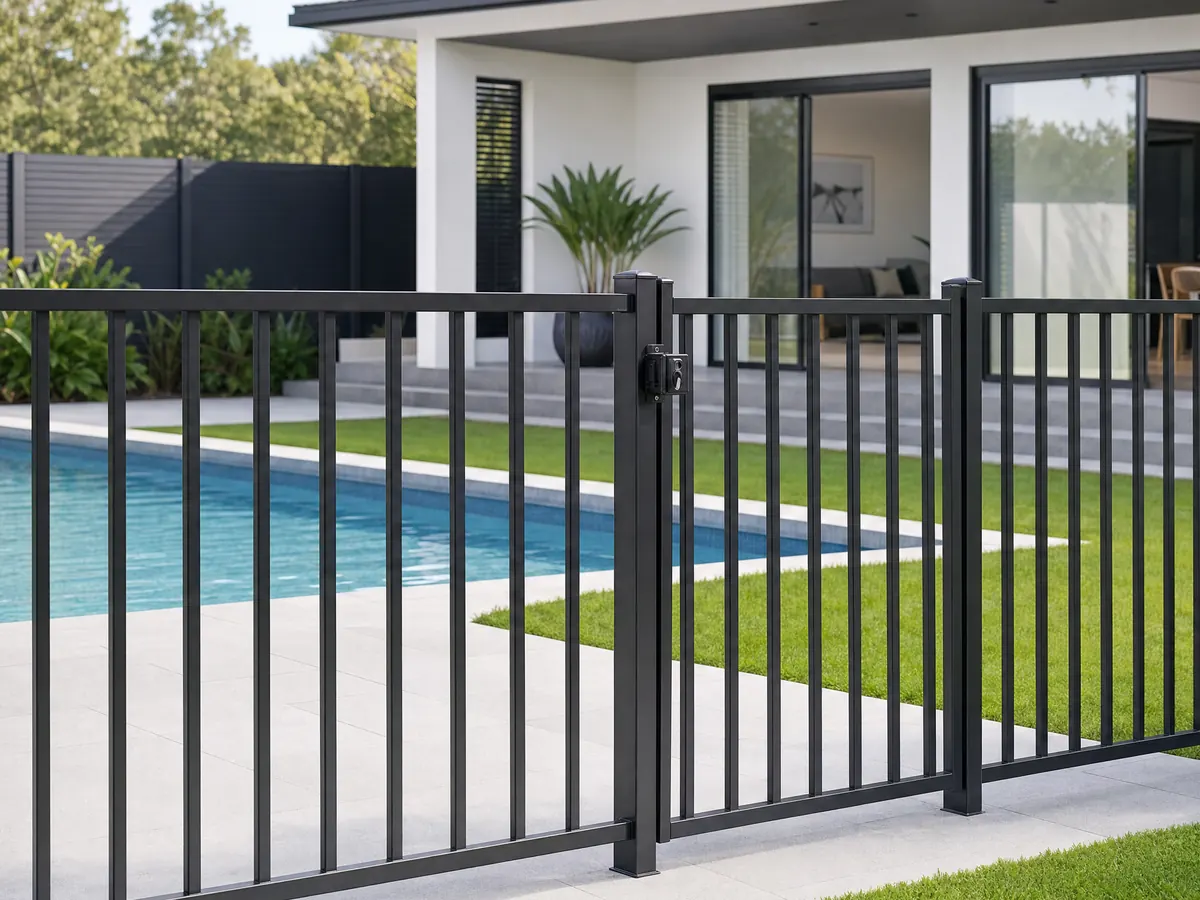
The City amends the state pool safety act for private homes. The enclosure must isolate the pool from the house, from adjacent properties and from public ways. A second drowning-prevention safety feature is required, and two more if the house forms part of the enclosure. Vertical barrier members may be no more than 4 inches apart, and horizontal members must be at least 45 inches apart so a child cannot climb them.
Equipment is part of the rule: pumps and filters must be enclosed and soundproofed to the noise code, Chapter 8.48. A pool barrier is also excluded from the exempt fence item, so it gets its own permit review. State law, Health and Safety Code 115922, calls for at least two of seven drowning-prevention features when a permit is issued for a new or remodeled pool, and the enclosure must meet section 115923, which we did not read. Price the barrier with the pool, not after it.
How much does fence installation cost in San Clemente, and how do I choose a fence company?
We found no San Clemente fence price survey, so these are Los Angeles figures. Angi's page for Los Angeles, updated August 4, 2026, shows $29 a linear foot on average inside a $15 to $60 range, and $2,100 to $2,350 for 100 feet. HomeGuide, Thumbtack and Fixr overlap on wood and vinyl. Across the four we plan around $25 to $55 a foot for a wood or vinyl privacy fence and $35 to $85 for aluminum or ornamental iron, which puts a 100 foot backyard run near $2,500 to $5,500. We found no independent per-foot price for block walls, so a block wall needs a written bid.
The Bureau of Labor Statistics lists fence erectors at a mean $28.00 an hour in the Los Angeles-Long Beach-Anaheim area for May 2025, a wage check and not a billing rate. Verify the C-13 license with our contractor license guide and read how general contractors use subcontractors before you sign. Business and Professions Code 7159 limits a deposit to the lesser of $1,000 or 10 percent. Who pays for a shared line fence is a state-law question we could not source here, so settle it with the neighbor in writing.
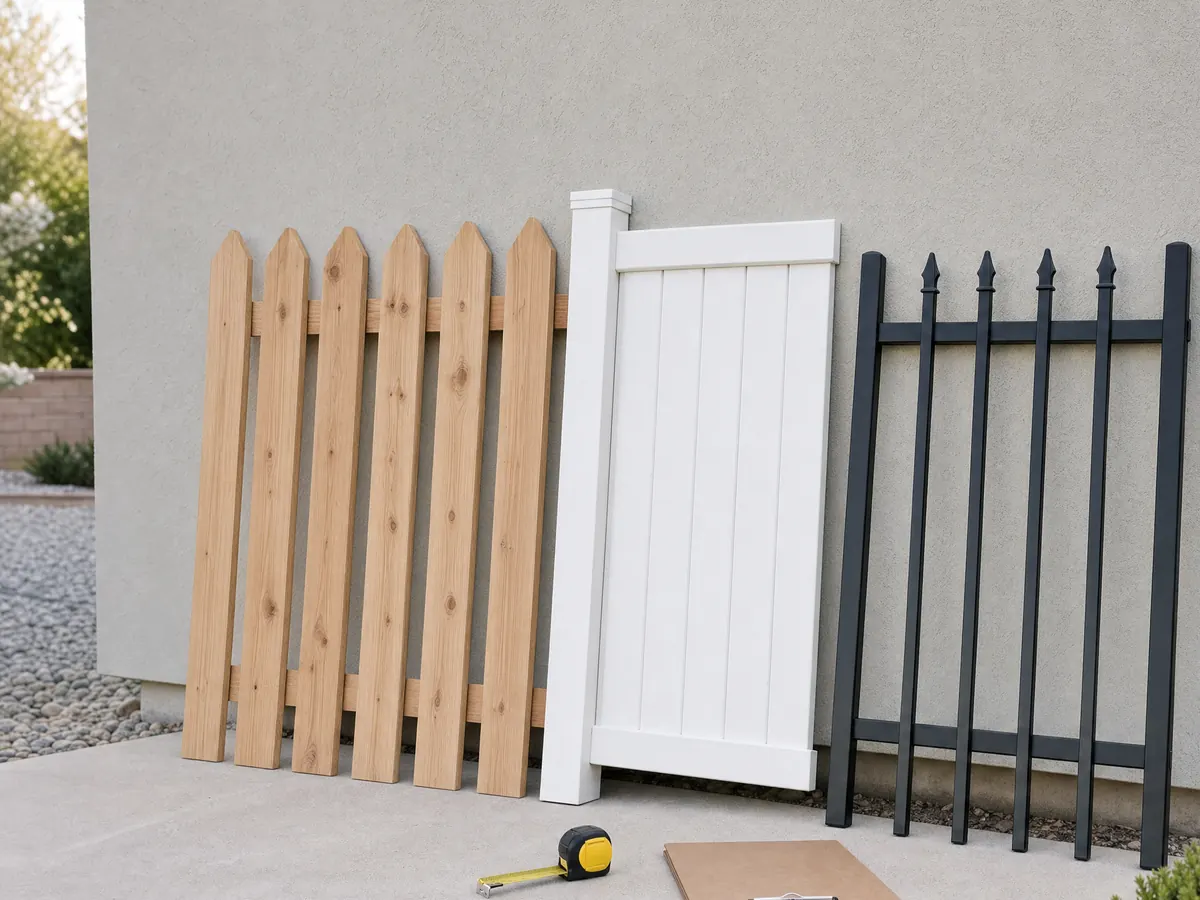
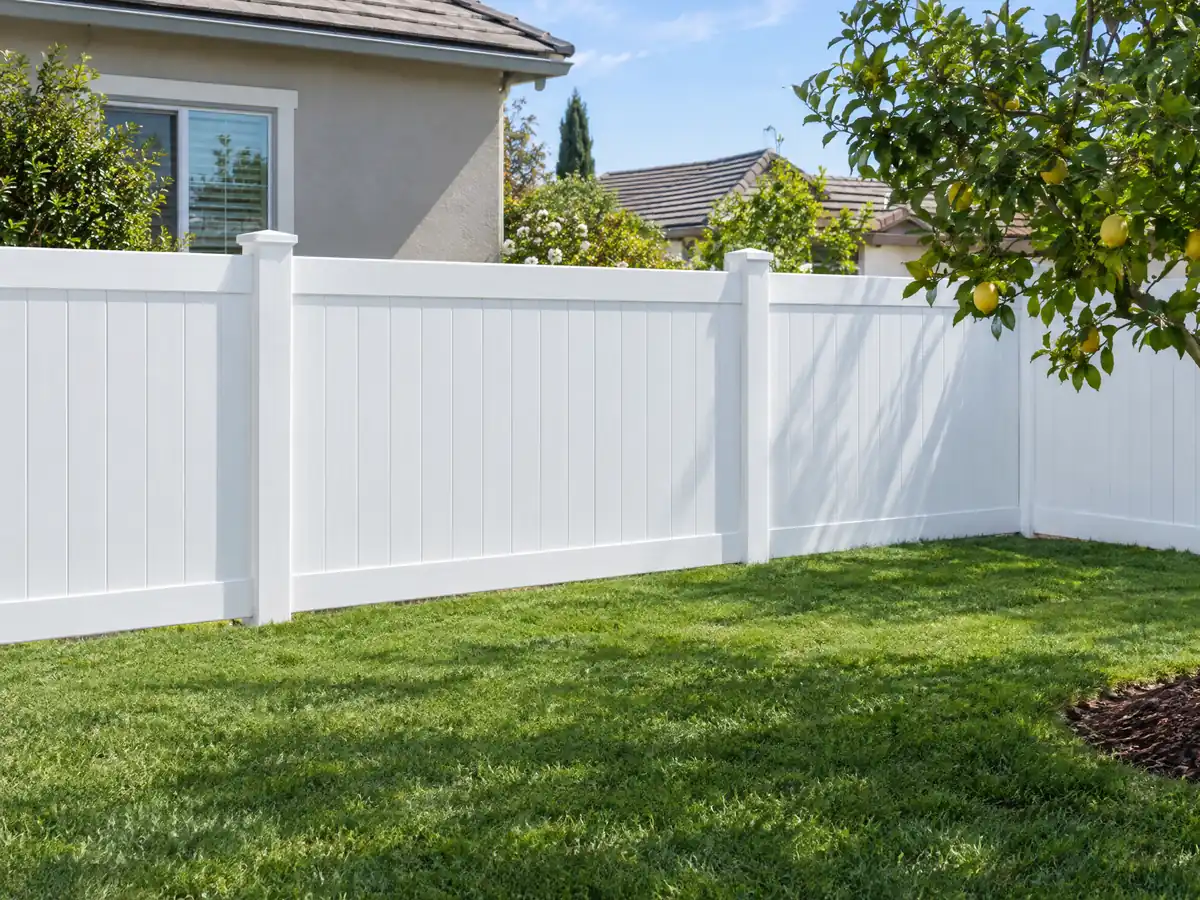
Fence photos from San Clemente and nearby communities
Fence scenes tied to San Clemente places such as Talega and Downtown and to nearby communities like Capistrano Beach and Dana Point, from front yard pickets to pool barriers and hillside runs.
Where these San Clemente fence figures come from
The per-foot ranges for each material, with sources and dates, sit in the table on our fencing price page. A new fence often goes in beside other exterior work, and the San Clemente rules for that are on the roofing page, the painting page and the kitchen remodeling page. For another coastal Orange County city, read the fencing guide for Mission Viejo, and for a city with a hillside height cap, the guide for Glendale.
| What it covers | Typical range |
|---|---|
| Wood or vinyl privacy fence, 6 feet | $25 to $55 per linear foot |
| Chain-link | $12 to $30 per linear foot |
| Aluminum or ornamental iron | $35 to $85 per linear foot |
| Typical 100-foot backyard run | $2,500 to $5,500 total |
| Block walls, horizontal slat fences, gates and openers, hillside lots | Set by the written proposal |
Other work we manage in San Clemente
San Clemente fence questions, answered
Do I need a permit to build a fence in San Clemente?
Often not for a wood or metal fence up to 6 feet under the current code amendment, but the City's papers conflict. Ordinance 1796 exempts fences not over 6 feet other than pool barriers and sets 42 inches for masonry, while the Permits page still shows an older 42 inch limit. Pool barriers and retaining walls need permits. Get the answer in writing.
How tall can my front yard fence be in San Clemente?
The limit is 3 feet 6 inches in the front yard setback, and the same height applies within 5 feet of the street-side line on a corner lot. A Minor Exception Permit can allow up to 6 feet in a front or street-side yard if findings show it will not harm the street scene or block views of traffic at driveways.
Can I put up a 7 foot fence in San Clemente?
Not as a routine fence. The zoning limit is 6 feet in side and rear areas and 3 feet 6 inches in the front setback. A Conditional Use Permit covers fences over 6 feet in the rear half of a lot around tennis courts or private screened outdoor areas. Ask Planning whether your case qualifies before you price panels.
Is chain link allowed in San Clemente?
Not in the Architectural Overlay or on listed historic properties, where chain link, chicken wire, metal, plastic, vinyl, wire-mesh and unfaced block fences are ineligible for administrative approval. We found no citywide ban in the zoning text we read, so outside those areas check your HOA and ask Planning. Barbed wire and razor fences are prohibited everywhere.
Do I need a permit for a block wall or retaining wall in San Clemente?
Expect yes for both. The City's Permits page lists retaining walls and masonry fences as permit items, and its masonry fence questionnaire covers free-standing masonry up to 6 feet. A retaining wall may be exempt up to 4 feet measured from the footing only if it carries no surcharge, and the slope wording is inconsistent, so ask the Building Division.
How much does fence installation cost for 100 feet in San Clemente?
Plan on about $2,500 to $5,500 for a 100 foot wood or vinyl privacy run, drawn from Los Angeles surveys because we found no San Clemente one. Angi's Los Angeles page prices 100 feet at $2,100 to $2,350, and aluminum or iron costs more. Block walls need a written bid, since no independent per-foot price was available.
What are the pool fence requirements in San Clemente?
The enclosure must isolate the pool from the house, neighboring properties and public ways, with vertical members no more than 4 inches apart and horizontal members at least 45 inches apart. The City requires a second drowning-prevention feature, or two more if the house is part of the enclosure, and pumps and filters must be enclosed and soundproofed.
What happens if I don't have a permit for a fence?
San Clemente charges an investigation fee equal to the permit fee when work starts without a required permit, collected whether or not a permit is issued later, and paying it does not excuse code violations. The first question is whether your fence needed a permit at all, so ask the Building Division before you build.
Can I build a fence on a bluff or canyon lot?
Yes, closer to the edge than a house but still limited. On a coastal bluff lot, at-grade fences and walls may reach 10 feet from the bluff edge, and no permanent structure may go on the bluff face. On a canyon lot, ancillary improvements may sit 5 feet from the edge. A licensed surveyor or civil engineer must map the edge.
Does my HOA have to approve my fence in San Clemente?
The City asks for an HOA Confirmation Form with permit applications, and Municipal Code 15.04.030 makes you certify compliance with recorded CC&Rs. A permit cannot be denied for missing association approval if the association is inactive or does not act within 180 days. Even a fence needing no permit may break HOA rules, so read the CC&Rs first.
Tell us about your San Clemente fence
Give us the street or neighborhood, whether the fence faces the street, a bluff or a neighbor, and whether a wall is involved. We confirm the height rule and the HOA step before we visit.