
Flooring Installationin Newport Beach, CA
Flooring installation in Newport Beach usually needs no building permit for like-for-like finish work, but the lot decides the rest: flood-zone rules, the 50 percent of market value remodel rule, condo sound rules and slab moisture near the bay. Flood-damaged single-family homes in named areas can use the City's same-day online permit for finishes.
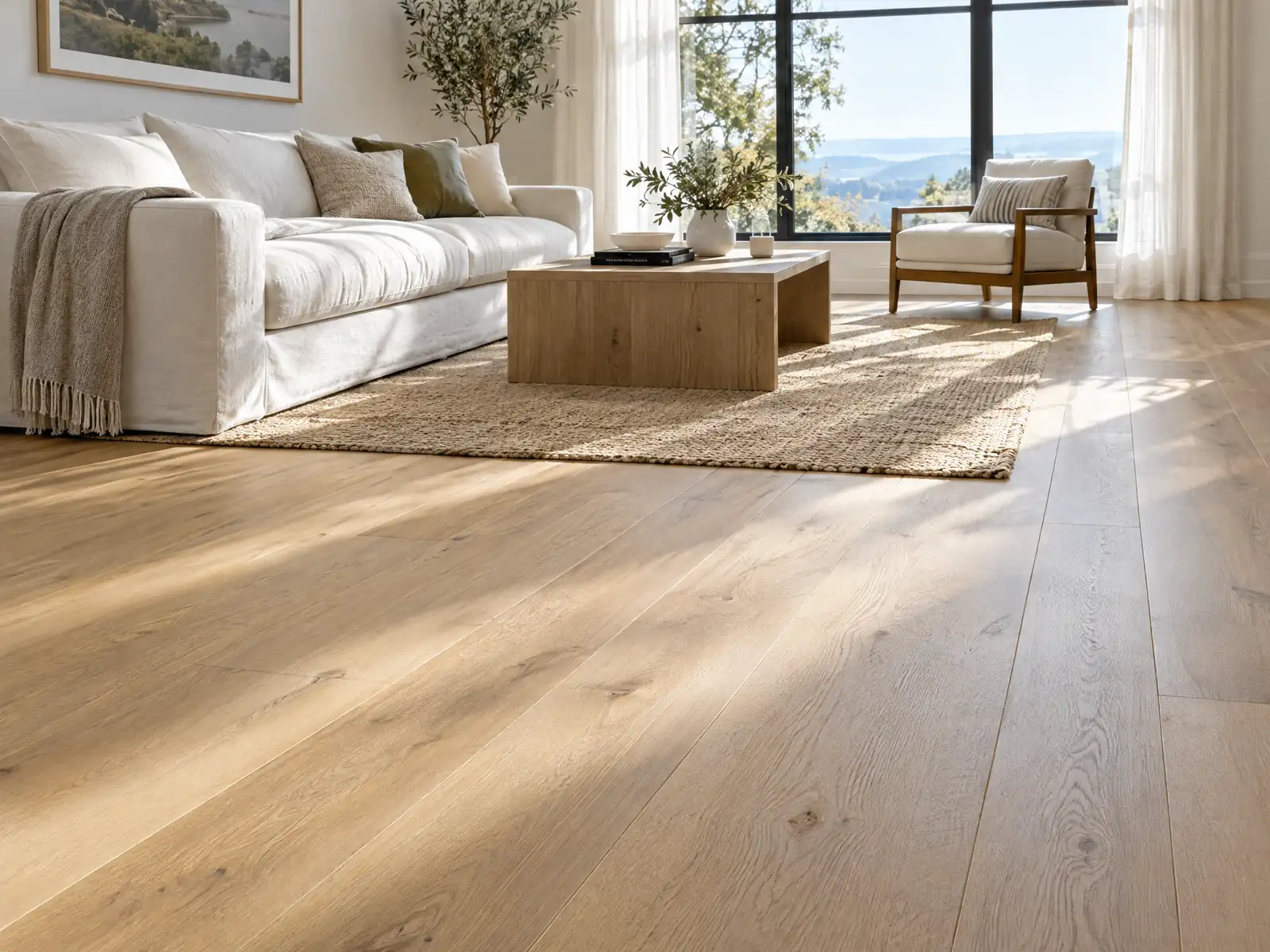
Newport Beach's floors span the whole story of the city. West Newport, Balboa, Corona del Mar and the bay islands were subdivided between 1902 and 1907, mostly as vacation cottages, the city incorporated on September 1, 1906, and the harbor was dredged and jettied from 1934 to 1936. Census estimates for 2024 count 44,042 homes, about 53 percent built before 1980 and 8.1 percent before 1950, so a single block can hold original cottage oak, a 1970s condo slab and a floor laid after 2000.
MDG Builders, CSLB #1040337, is a Tarzana general contractor, so licensed flooring and tile subcontractors lay the floors while we write the scope, put the permit questions to the City's Building Division and manage the schedule. Materials and cost ranges are on the flooring page, and the Newport Beach overview lists the other trades we manage here.
What Newport Beach's Building Division, its flood rules and state law say about flooring work
Where flooring permits come from in Newport Beach: City of Newport Beach Community Development Department, Building Division (Permit Center).
- NBMC 15.50.200 requires new construction and substantial improvements in flood hazard areas to use flood-damage-resistant materials and methods, and to place electrical, heating, ventilation, plumbing and air conditioning equipment so water cannot enter or accumulate in it. Enclosed areas below the lowest floor may be used only for parking, building access or storage, and need flood openings (at least two on different sides, one square inch per square foot of enclosed area, bottom no more than one foot above grade) unless an engineer or architect certifies another method. Mirror text as of 2026-10-22 (GoCodebook, a third-party copy).
- The state exempt-work list (CBC 105.2 via the City of Albany's 2025 excerpt) exempts tiling, carpeting and similar finish work, and Newport Beach's amendments to 105.2 do not change that. Slab, subfloor or structural work is not on the list, and plumbing or electrical pieces inside a flooring job still need their own permits.
- The City's Coastal Flood Recovery Single-Family Express Permit gives same day online permitting without plans for repair or replacement of finishes and nonstructural mechanical, electrical and plumbing in single-family dwellings damaged by coastal flooding, limited to areas named in the Fall and Winter 2026 to 2027 Emergency Proclamations.
- CSLB defines the C-15 Flooring and Floor Covering classification as preparing a surface for and installing carpet, resilient sheet goods, resilient tile, wood floors (including finishing and repair) and other flooring materials except ceramic tile.
Can you replace flooring after a tidal flood in Newport Beach without plans?
Yes, in a narrow set of cases, and the City built a program for it. The Coastal Flood Recovery program offers a Single-Family Express Permit, issued the same day online with no plans, for repair or replacement of finishes and nonstructural mechanical, electrical and plumbing work in single-family homes that flooding damaged. Duplexes, multifamily and commercial buildings get in-person expedited review of existing plans plus a site visit.
Two limits matter. The program covers only areas named in the Fall and Winter 2026 to 2027 Emergency Proclamations, which we did not read, so confirm your address on the City's Coastal Flood Recovery page before booking a crew. Contractors who reach a site from the water must carry Longshore and Harbor Workers' Compensation Act insurance, which is worth asking any subcontractor who serves a bayfront lot.
Timing is tight. The City's November 4, 2026 release expects king tides on November 23 to 27 and December 22 to 26, with water 12 inches or more above October's record 8.4 foot tide, and it names Balboa Island, Newport Island, the Balboa Peninsula, the Finley Tract and West Newport as the most exposed areas. We did not confirm whether the program stays open after this winter, so check the dates first.
- Is the address inside an area named in the Emergency Proclamations?
- Does the crew reach the house by land or by water?
- Are drying and moisture readings written into the scope?
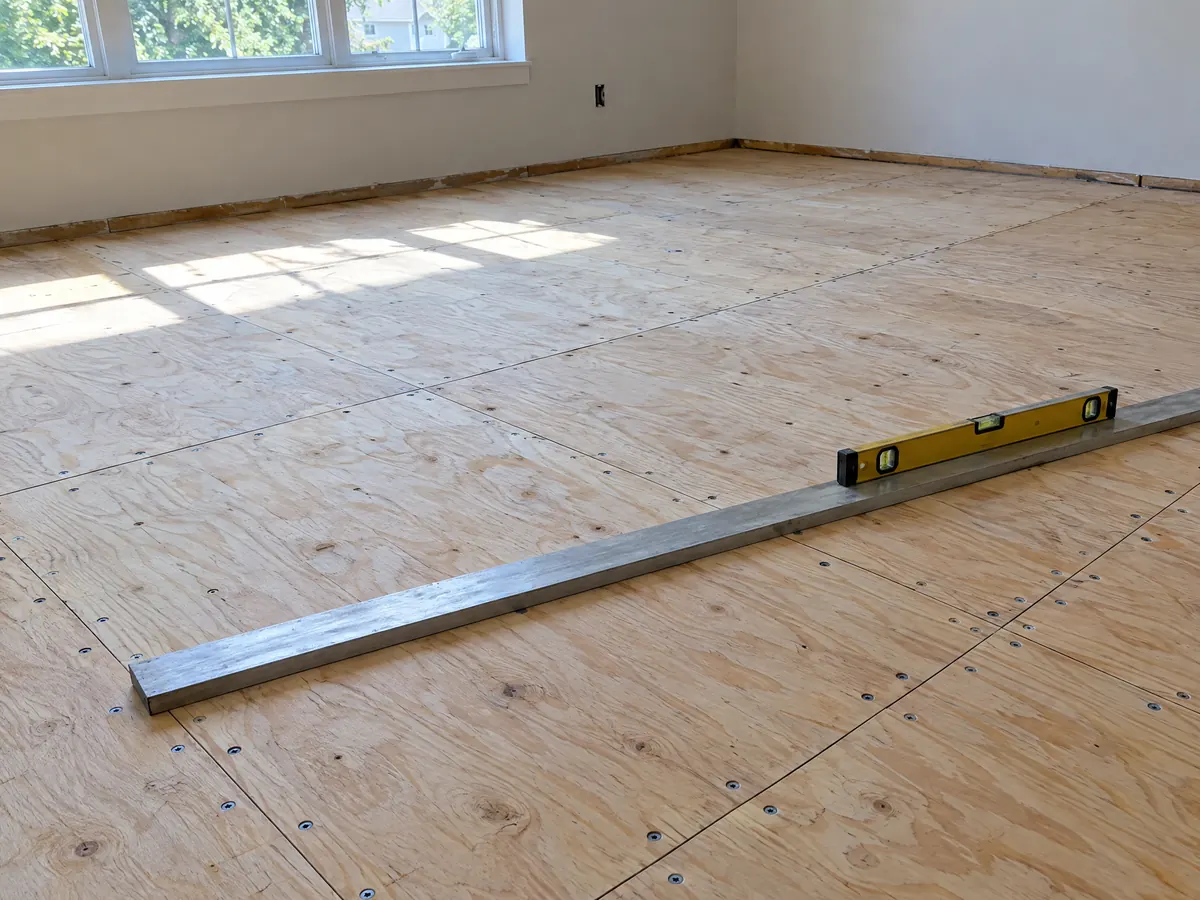
What do Newport Beach's flood-zone and 50 percent rules mean for a floor project?
A floors-only job is unlikely to reach either threshold, since the median owner-occupied home is valued at about $2 million or more, but a whole-house remodel can. Under NBMC 15.50, a substantial improvement is work over a 10 year period whose cumulative cost reaches 50 percent of the structure's market value, and for each building that period starts with the first permit issued after December 31, 2025. New construction and substantial improvements in flood hazard areas must use flood-damage-resistant materials, and the code text we read does not say which flooring products qualify, so ask the Building Division.
The second rule is separate and local. NBMC 15.02.060 requires the entire building to meet the code for new construction once a remodel permit's valuation equals or exceeds 50 percent of the building's market value, with an exception for valuations under $350,000 and an eased path for qualifying beach cottages outside FEMA special flood hazard areas. Flooring that rides on a kitchen, bath or addition permit adds to that valuation, so ask how the City would count your project.
Enclosed rooms below the lowest floor in a flood-zone home may be used only for parking, building access or storage, with flood openings on at least two sides, so a finished floor in a ground-level enclosure deserves a question to the City before you order material. The code text here comes from the GoCodebook mirror, text as of October 22, 2026, because the official code host blocked our tools, so confirm each section with the City.
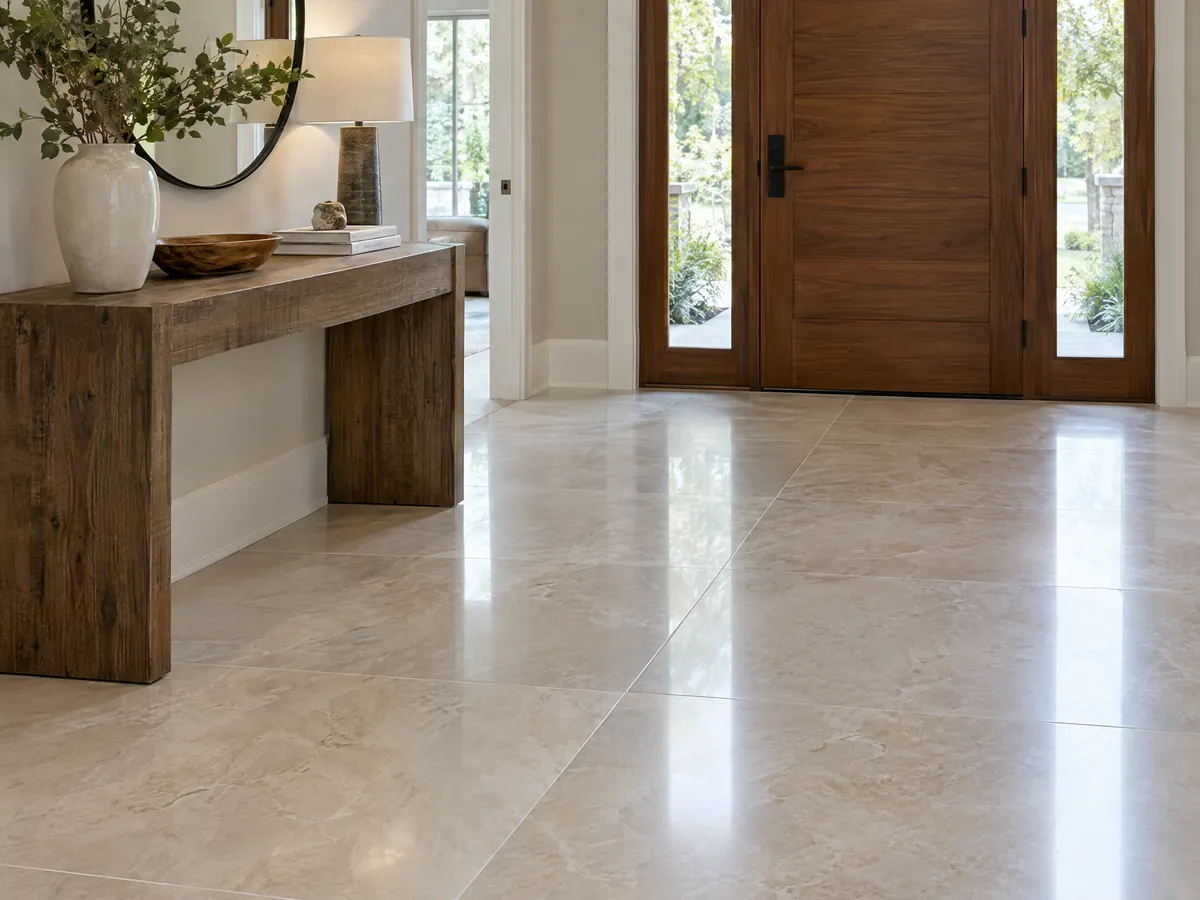
Do you need a permit to replace flooring in Newport Beach?
Probably not for finish work, while the slab or structure is a different question. The state list of permit-exempt work that the City works from exempts tiling, carpeting and similar finish work, and Newport Beach's changes to that list in NBMC 15.02.080 touch only the fence and pool items. We found no printed Newport Beach list, so confirm with the Permit Center at (949) 718-1888. Slab, subfloor or structural work is not on the exempt list, and plumbing or electrical pieces inside a flooring job need their own permits.
Starting early costs money. NBMC 15.02.110 charges an investigation fee equal to the permit fee when work begins before a required permit, collected whether or not a permit is later issued. Under NBMC 15.02.100 an issued permit becomes invalid if work does not start within 180 days or stops for 180 days after the last inspection, and an extension must be requested in writing 15 days before it expires.
Noise has hours too. NBMC 10.28.040 allows work on weekdays from 7:00 a.m. to 6:30 p.m. and on Saturdays from 8:00 a.m. to 6:00 p.m., never on Sundays or federal holidays, and a 2019 ordinance bans construction noise on weekends in designated high density areas. Tear-out counts as remodeling and demolition work under that chapter.
Can you install hard flooring in a Newport Beach condo or rental building?
Only if the association and the building's sound rules allow it. Census estimates put 12,849 of the city's 44,042 homes (29.2 percent) in buildings of five or more units, 7,289 of them in buildings of 50 or more, and 47.9 percent of occupied homes are rentals, so many floors sit above a neighbor's ceiling.
The City's Residential Code amendment R341 (NBMC 15.05.230) requires walls and floor-ceiling assemblies that separate dwelling units, including adjacent townhouses, to meet airborne and impact sound insulation under California Building Code Section 1206. We do not know how that applies to a new floor covering laid over an existing assembly, so put the question to the Building Division and the association, and ask for any underlayment specification in writing. Civil Code section 4765 sets out the written answer an association owes after an architectural request.
A tenant needs the owner's consent before anything else. Inside designated high density areas weekend construction noise is banned, and an HOA of at least 30 voting members with contiguous properties can ask the City Council to be excluded from that designation, so ask management which hours apply to your building.
- Does the governing document name hard flooring?
- Who signs the approval, and how long does it take?
- Is the building in a designated high density area?
What is under the floors of Newport Beach beach cottages and 1970s condos?
Often an old floor on an old adhesive. Census estimates count 23,460 Newport Beach homes (about 53 percent) built before 1980, 13,665 before 1970 and 3,588 before 1950, 1,658 of those in 1939 or earlier, with a median year built of 1979. Homes from 1960 to 1979 make up 35.6 percent of the stock, so the layer most likely to be under a new floor is vinyl, mastic or a thin slab from that era.
Resilient tile, sheet vinyl and the dark glue beneath them can contain asbestos, and only a lab result settles it. The federal OSHA asbestos standard for construction presumes older resilient flooring and its adhesive contain asbestos until tested, and South Coast AQMD's asbestos notification can apply to renovation and demolition. Ask the flooring subcontractor whether a sample went to a lab before any sanding or ripping.
Lead is a separate check. EPA's Renovation, Repair and Painting rule covers paid work that disturbs paint in housing built before 1978, and baseboards pulled for a new floor count. The census table cannot split 1978 and 1979 from earlier 1970s homes, and we found no count of cottages on raised wood floors versus slabs, so check which you have before ordering anything.
How do you test a Newport Beach slab for moisture before installing flooring?
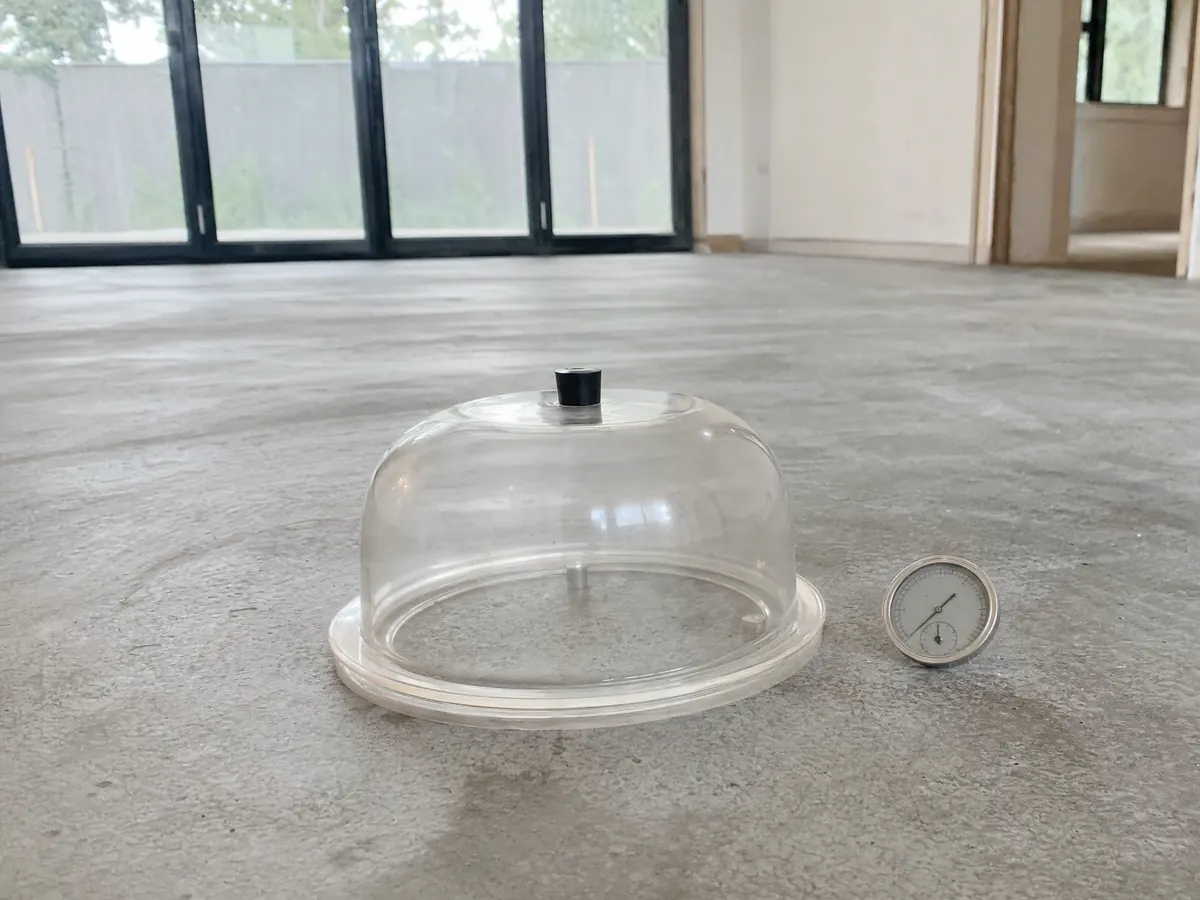
Two standard tests settle it. ASTM F2170 reads relative humidity in holes drilled into the slab, and ASTM F1869 weighs the vapor leaving the surface under a calcium chloride dish. Neither has a pass mark of its own, so the limit comes from the maker of the plank, vinyl or adhesive, and the readings should be written beside it. The National Wood Flooring Association recommends a vapor retarder of 0.13 perms or less, such as 6-mil polyethylene, under concrete subfloors, per its concrete subfloor guide.
Rain is a weak guide here. NOAA's 1991 to 2020 normals for the Newport Beach Harbor station show 9.43 inches a year, 7.54 of them from December through March, across 34.8 days of measurable rain, yet water reaches a slab by other routes: a sprinkler, a downspout or a high tide. The City's residential code amendment R405.1 even bars foundation drainage for basement walls that extend below the high tide level of Newport Bay, a reminder that some building here does reach below the bay.
Ask for readings along exterior walls and near bathrooms, repeat them after any flood, and keep them with the house records.
What does a flooring contractor charge in Newport Beach, and which license applies?
No Newport Beach price study with a stated method turned up, so the numbers here are Los Angeles figures from Angi's July 2026 pages, which we rate medium to low in confidence, and Orange County prices can differ. Angi lists installer labor at $3 to $9 a square foot, engineered hardwood at $10 to $18 and solid hardwood at $12 to $22 installed, and refinishing at $4 to $8. Its September 2026 laminate page puts removal of an old floor at $455 to $685 per 200 square feet and an average laminate project at $3,626.
Federal wage data for the Los Angeles-Long Beach-Anaheim metro area, which includes Orange County, show floor layers averaging $33.48 an hour in May 2025, tile and stone setters $30.72 and carpet installers $27.54. Those are wages and not billing rates. Demolition, drying, moisture testing, subfloor repair and stairs belong on separate proposal lines.
Carpet, resilient flooring and wood floors fall under CSLB's C-15 class, and ceramic tile is C-54. Why a permitted job never qualifies for the $1,000 unlicensed-work exception is explained in CSLB's bulletin on AB 2622, and our guide to checking a license walks through the lookup.
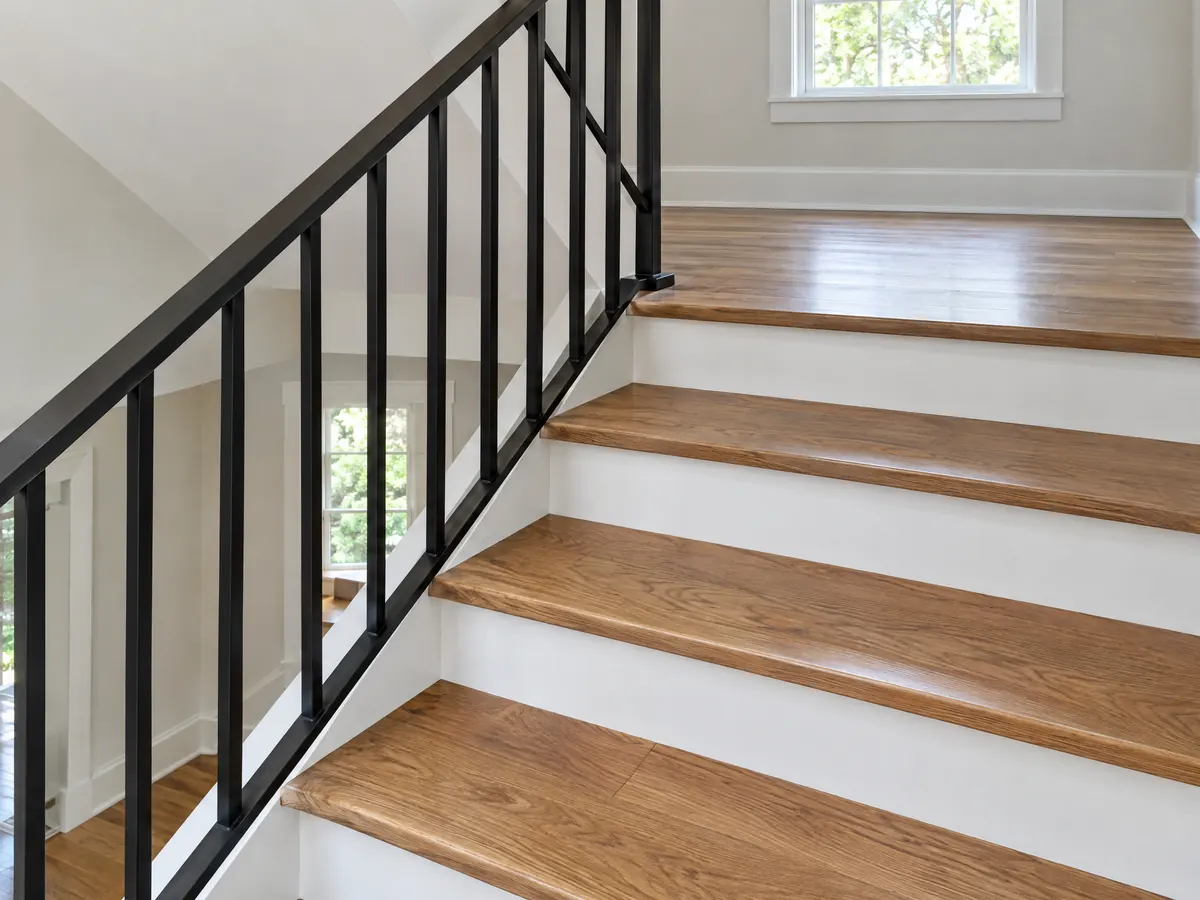
Flooring photos from Newport Beach and nearby communities
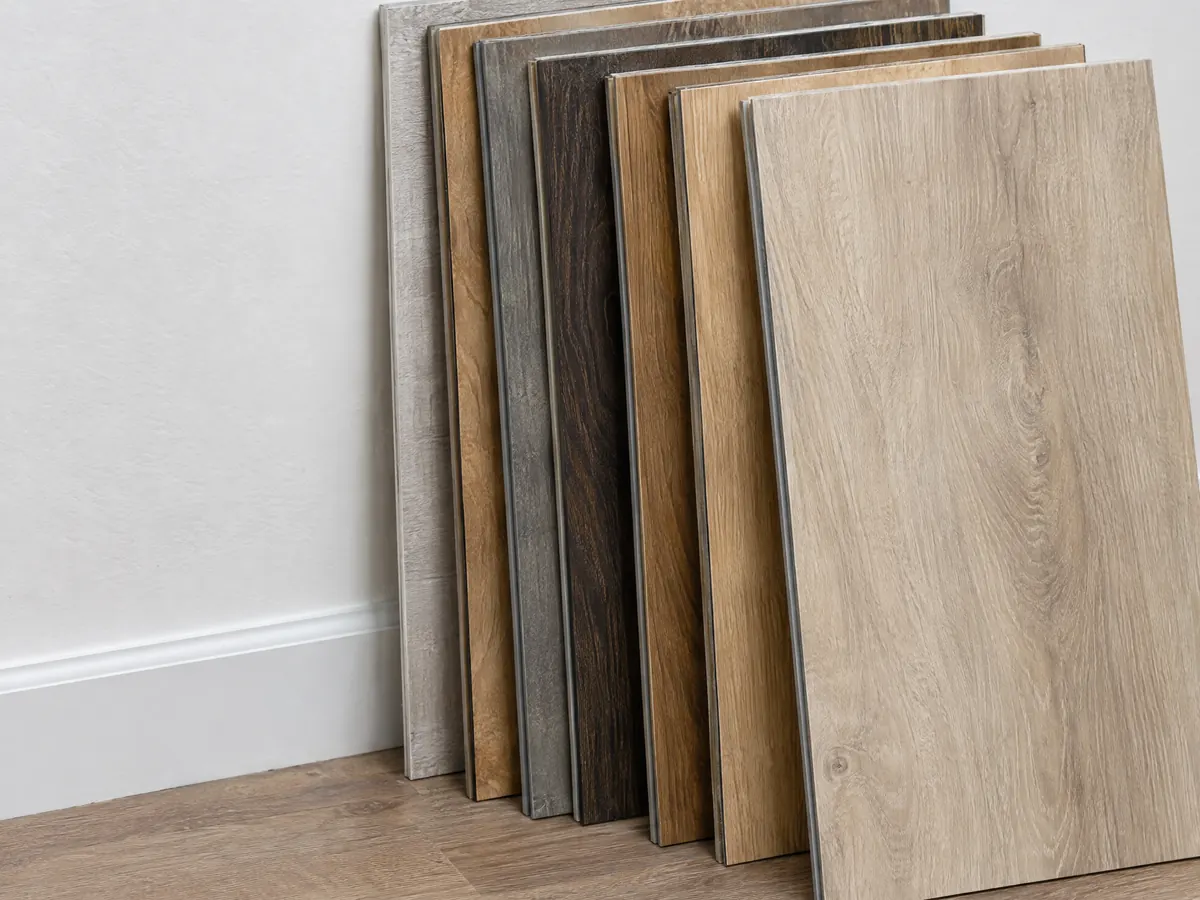
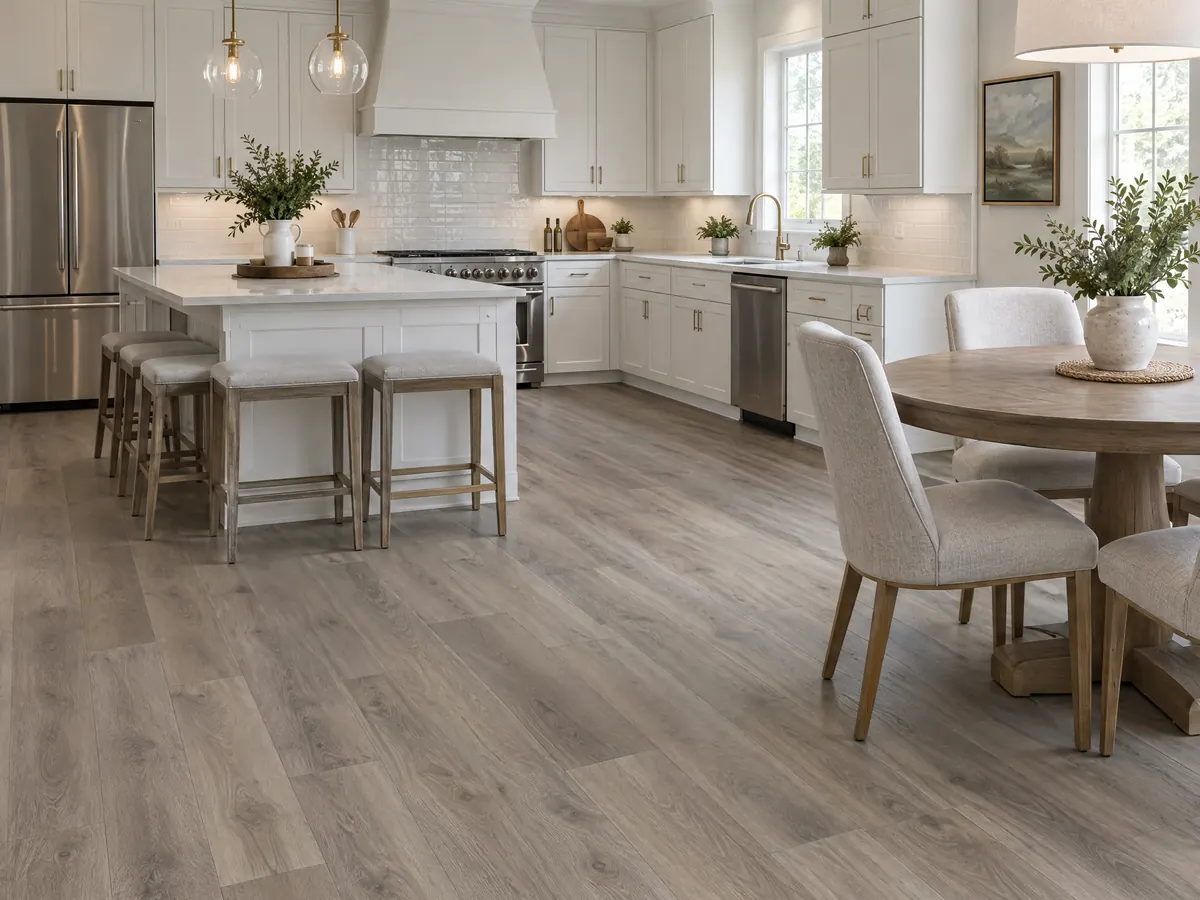
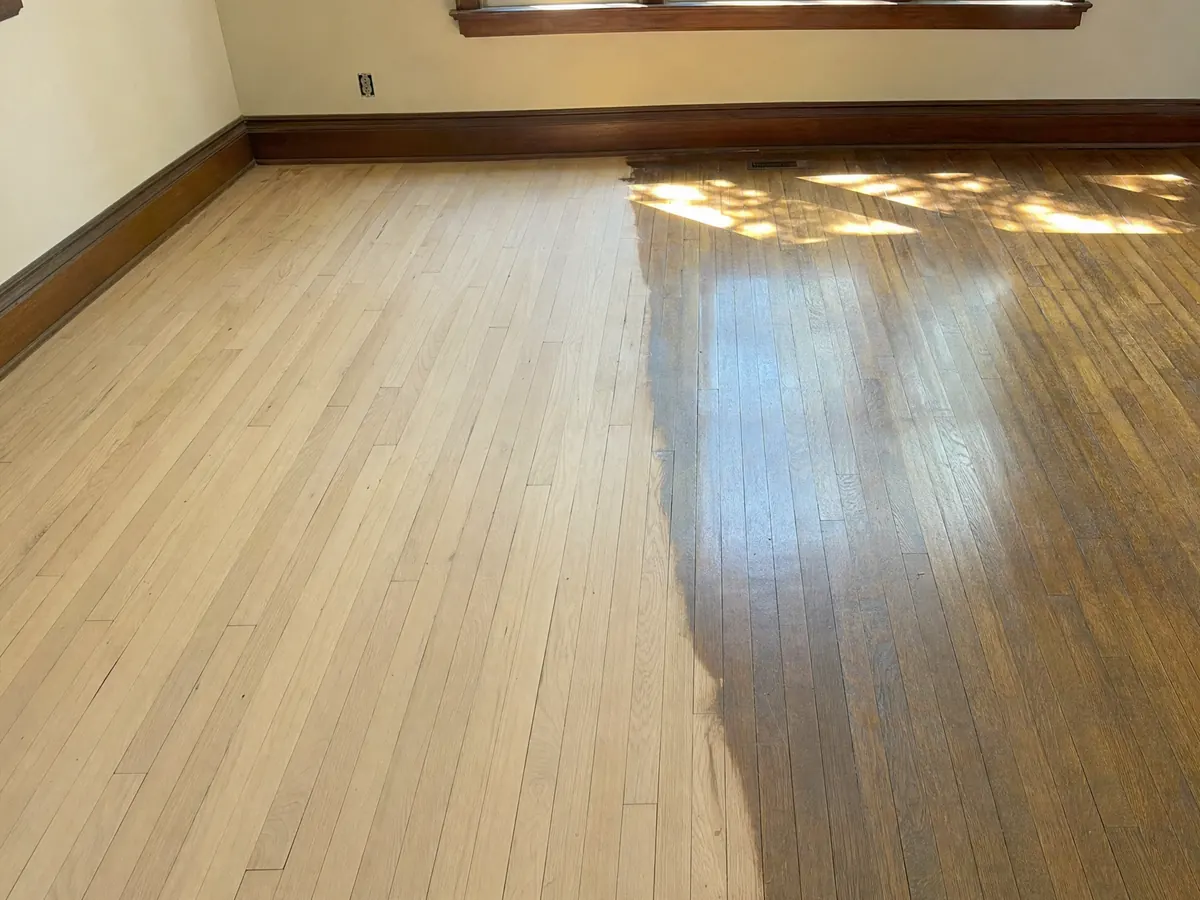
Floors at the stage where the decisions get made: plank samples, moisture tests, tile and finished rooms from Newport Beach and the towns around it. Tap any photo to enlarge it.
What flooring costs around Newport Beach
Dollar figures here are Los Angeles planning ranges from our flooring page, not a Newport Beach bid, and a written proposal should split demolition, drying, testing and subfloor work into separate lines. For the same property, see concrete work in Newport Beach and decks in Newport Beach. For Orange County comparisons, read flooring in Irvine, flooring in Huntington Beach and flooring in Santa Ana, and for Los Angeles County see flooring in Long Beach and flooring in Los Angeles. Our flooring cost guide sets refinishing beside replacement.
| What it covers | Typical range |
|---|---|
| Installation labor only | $3 to $9 per sq ft |
| Solid hardwood, installed | $12 to $22 per sq ft |
| Engineered hardwood, installed | $10 to $18 per sq ft |
| Refinishing existing hardwood | $4 to $8 per sq ft |
| Laminate, whole project | $2,000 to $5,500 |
| Hardwood, whole project | $3,153 to $8,496 |
| Removing the old floor | $455 to $685 per 200 sq ft |
| Tile | No sourced Los Angeles range |
Other work we manage in Newport Beach
Newport Beach flooring questions, answered
Do I need a permit to replace flooring in Newport Beach?
Probably not for like-for-like finish work, because the state exempt list the City follows names tiling, carpeting and similar finish work and Newport Beach changes only its fence and pool items. We found no printed Newport list, so confirm at the Permit Center, (949) 718-1888. Slab, subfloor, plumbing or electrical work is a separate question.
How much does it cost to have flooring professionally installed?
In Newport Beach, installer labor runs about $3 to $9 per square foot on Angi's July 2026 Los Angeles pages, plus material at $10 to $18 installed for engineered hardwood and $12 to $22 for solid hardwood. We found no Newport Beach study and rate these figures medium to low in confidence. Demolition, drying and subfloor repair are separate lines.
How much does it cost to refloor a 2,000 square feet house?
In Newport Beach, labor at $3 to $9 per square foot multiplies out to $6,000 to $18,000 for 2,000 square feet, before material. Engineered hardwood at Angi's $10 to $18 installed would give $20,000 to $36,000 across the house. These multiply Los Angeles ranges and are not a bid, so a site visit sets the real number.
Can you put flooring over concrete?
Yes, once the slab is tested and prepared, and in Newport Beach tide and flood history makes the test matter more. The flooring or adhesive maker sets the moisture limit, so the installer should take ASTM F2170 probe readings or set an F1869 calcium chloride dish, then patch and level. Get the numbers in writing, and repeat them after any flood.
Can I install hardwood flooring in a Newport Beach condo?
Only with the association's written approval. Roughly 29 percent of the city's homes are in buildings of five or more units, and the City requires sound insulation in assemblies between dwelling units under NBMC 15.05.230. We could not verify a sound-rating number, so ask the Building Division and the management company what they require.
Is there asbestos under old vinyl flooring in Newport Beach homes built before 1980?
Possibly, and nobody can tell by eye. About 53 percent of Newport Beach homes, 23,460 units, predate 1980, and OSHA presumes older resilient flooring and its adhesive contain asbestos until tested. A lab sample should go out before any sanding or ripping, and the proposal should say who removes a layer that tests positive.
Can I refinish hardwood floors instead of replacing them in Newport Beach?
Often, when enough wood stands above the tongue to take a sander, which a floor register or a cut edge shows. On Angi's Los Angeles pages refinishing is $4 to $8 per square foot and new solid hardwood $12 to $22, both medium to low in confidence. Ask the finisher for the coating's VOC number.
What license does a flooring contractor need in Newport Beach?
Carpet, resilient flooring and wood floors fall under CSLB's C-15 class, and ceramic tile under C-54. A permitted job cannot use the $1,000 unlicensed-work exception at all. Look the license number up on the CSLB site before accepting a quote, and ask for each subcontractor's license and certificate of insurance.
Does the 50 percent rule apply to a flooring project in Newport Beach?
It can, when flooring is part of a larger permit. NBMC 15.02.060 requires the whole building to meet new-construction code once a remodel permit reaches 50 percent of its market value, except under $350,000. A floors-only job is unlikely to get there, but ask the Building Division how your total would be counted.
Can I replace flooring after a king tide flood in Newport Beach?
Yes, and single-family homes in areas named in the 2026 to 2027 Emergency Proclamations can use the City's same-day online express permit for finishes, with no plans. Confirm your address on the City's Coastal Flood Recovery page first, and ask the crew for drying and moisture readings before new flooring goes down.
Tell us the home type, the rooms and any flood damage
Say whether it is a condo, a cottage or a house, whether water reached the floor and which rooms you want done. The flood, 50 percent rule and slab moisture questions come with us to the first visit.