
ADU Constructionin San Fernando, CA
ADU construction in San Fernando runs on a ministerial process under state law, with attached units capped at 850 or 1,200 square feet and detached units at the same two limits. The City must act within 60 days of a complete application. Its 2023 form still asks for owner occupancy, so confirm that rule with Planning.
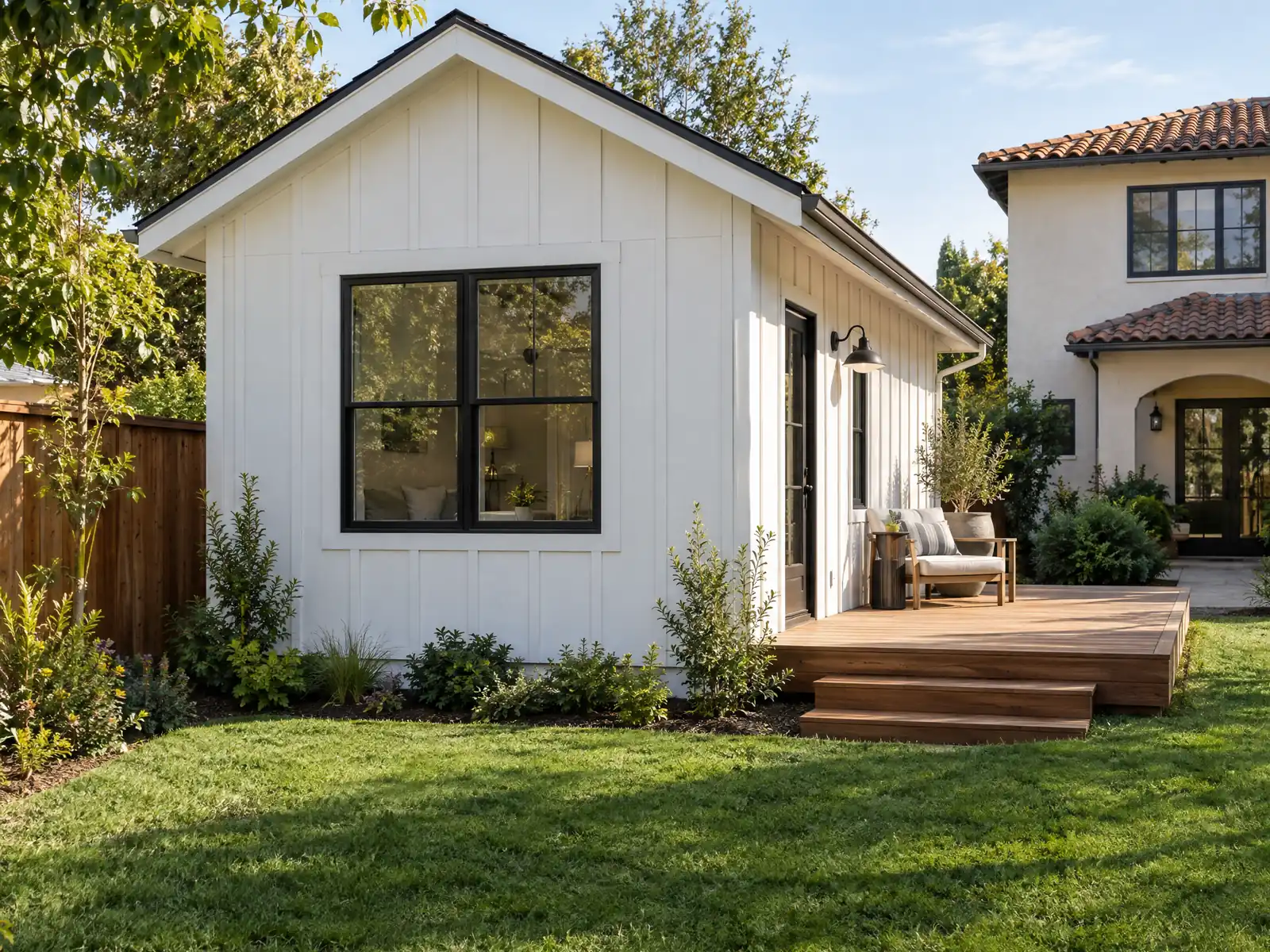
San Fernando is a 2.4 square mile city surrounded by Los Angeles, and most of its land is already built. The Census Bureau's 2024 five-year estimates count 6,613 housing units, 72.6 percent of them detached houses, and the City's 2025 historic survey says later growth has been mostly infill. Lots are small and fully used, which is why accessory units draw attention here. The same survey says tract houses filled the north and northwest of the city between 1946 and the late 1960s, and many of those lots have a detached garage at the back.
This page covers the owner-occupancy conflict, which rulebook governs, size and setbacks, garage conversions, unpermitted units, fees and the steps of the job. The posted Chapter 106 zoning PDF has an effective date we could not confirm, and the City's code host refused our tools, so section numbers may change. Price ranges and phases are on our ADU construction page.
San Fernando Planning and Building rules that apply to ADU construction
Where adu construction permits come from in San Fernando: City of San Fernando Community Development Department, Building & Safety Division.
- San Fernando's Zoning Code (Division 1 of Article IV) allows accessory dwelling units under a ministerial process tied to Government Code sections 66310 to 66342. Attached or interior units are capped at 850 square feet (one bedroom) or 1,200 (two or more), or 50 percent of the primary dwelling, whichever is less; detached units are capped at 850 or 1,200 square feet; the minimum is 150 square feet with a kitchen and a three-quarter bath; no minimum lot size applies.
- The Zoning Code sets ADU setbacks of at least 4 feet from side and rear lot lines (the zone's front setback applies), heights of 18 feet plus 2 feet for roof pitch if detached or 25 feet if attached, no required parking or replacement parking, and a 4 foot wide walkway to the sidewalk, and it requires landscape screening along side and rear lot lines. A garage conversion must replace the garage door with windows or entry doors.
- Section 106-521.K of the Zoning Code states that owner occupancy is not required for ADUs, which cannot be sold separately from the primary home (except through a qualified nonprofit); the posted text also restricts rentals of 30 days or less, but that sentence is cut off after the word unless in the PDF. Junior ADUs up to 500 square feet in a single-family home require owner occupancy unless the units have separate sanitation facilities. The City's 2023 ADU application form still carries an owner-occupancy covenant acknowledgement citing Section 106-358B.3, so ask Planning which text governs.
- ADU applications get a completeness determination within 15 business days, and the Building Division must approve or deny within 60 days of accepting a complete application when a home already exists on the lot. A building permit is required, an address assignment request goes to Public Works before permit issuance, ADUs of 750 square feet or more pay impact fees in proportion to the primary dwelling, and ADUs of 500 square feet or more pay school impact fees (Section 106-523).
- The City's ADU Site Plan Review/Planning Review application (Form CDD-039.3, 8/2023) lists a planning review fee of $431.66 for garage or recreation room conversions and for converting 50 percent of an existing dwelling, and a site plan review fee of $2,114.05 for new attached or detached ADUs, plus building permit fees based on valuation. That form is older than the 2026 code update, so confirm current fees with the City.
Do you have to live on the property to build an ADU in San Fernando? The code and the form disagree
Under the zoning code the City posts, no. Section 106-521.K states that owner occupancy is not required for accessory dwelling units, which cannot be sold separately from the primary home except through a qualified nonprofit. The posted text also restricts rentals of 30 days or less, but that sentence is cut off after the word unless in the PDF we read, so we cannot say what the exception is.
The City's own application tells a different story. Its ADU Site Plan Review and Planning Review form, CDD-039.3, dated 8/2023, still carries an owner-occupancy covenant acknowledgement that cites Section 106-358B.3. State law bars owner-occupancy requirements for ADUs under Government Code section 66315, which fits the newer code and not the older form.
Junior ADUs are a separate case. A JADU of up to 500 square feet inside a single-family home requires owner occupancy unless the unit has its own sanitation facilities, which matches the state rule in section 66333. Until Planning confirms in writing which text governs your application, treat the covenant question as open and ask before you sign anything that gets recorded against the deed.
What rules govern a San Fernando ADU after the June 2026 zoning update?
Three layers apply, and the order matters. State law, Government Code sections 66310 to 66342, sets the floor. The City's zoning code, Division 1 of Article IV, carries the local version under a ministerial process. The newer Objective Design Standards, approved June 15, 2026, also apply to accessory dwelling units. The City's Applications and Resources page carries the ADU form along with the fence and pre-sale forms.
Ministerial means the permit is considered and approved without discretionary review or a hearing, under Government Code section 66317. Since January 1, 2026, the City must tell the applicant in writing within 15 business days whether the application is complete, and then approve or deny within 60 days of a complete application when a home already exists on the lot. If it does not act in 60 days the application is deemed approved. The City's code carries the same 15 business day and 60 day clocks.
The General Plan page says the Council approved the Zoning Code Update, the Corridors Specific Plan update and the Objective Design Standards in June 2026 to remove housing barriers. We did not confirm the effective date, and the form on the Applications page is older than that update, so ask Planning which edition applies on the day you file.
How big can an ADU be in San Fernando, and how close to the fence can it sit?
The cap depends on the bedroom count and the type. San Fernando's code limits an attached or interior unit to 850 square feet with one bedroom or 1,200 with two or more, or 50 percent of the primary dwelling, whichever is less. A detached unit is capped at 850 or 1,200 square feet by the same bedroom split. The minimum is 150 square feet with a kitchen and a three-quarter bath, and no minimum lot size applies, which matters on small lots.
Setbacks are at least 4 feet from side and rear lot lines, with the zone's front setback applying. Height is 18 feet plus 2 feet for roof pitch if detached, or 25 feet if attached. The code requires no parking and no replacement parking, a 4 foot wide walkway to the sidewalk and landscape screening along the side and rear lines. A new ADU must also match the dominant roof slope of the main house and use the same wall, roof, window and door materials and colors, under Section 106-522.B.4.
State law sets a lower floor than these numbers. Cities must allow at least 800 square feet with 4 foot setbacks, and a conversion of existing space needs no setback at all. If a lot is tight, the state-protected 800 square foot detached unit is usually the fallback that Planning cannot reduce.
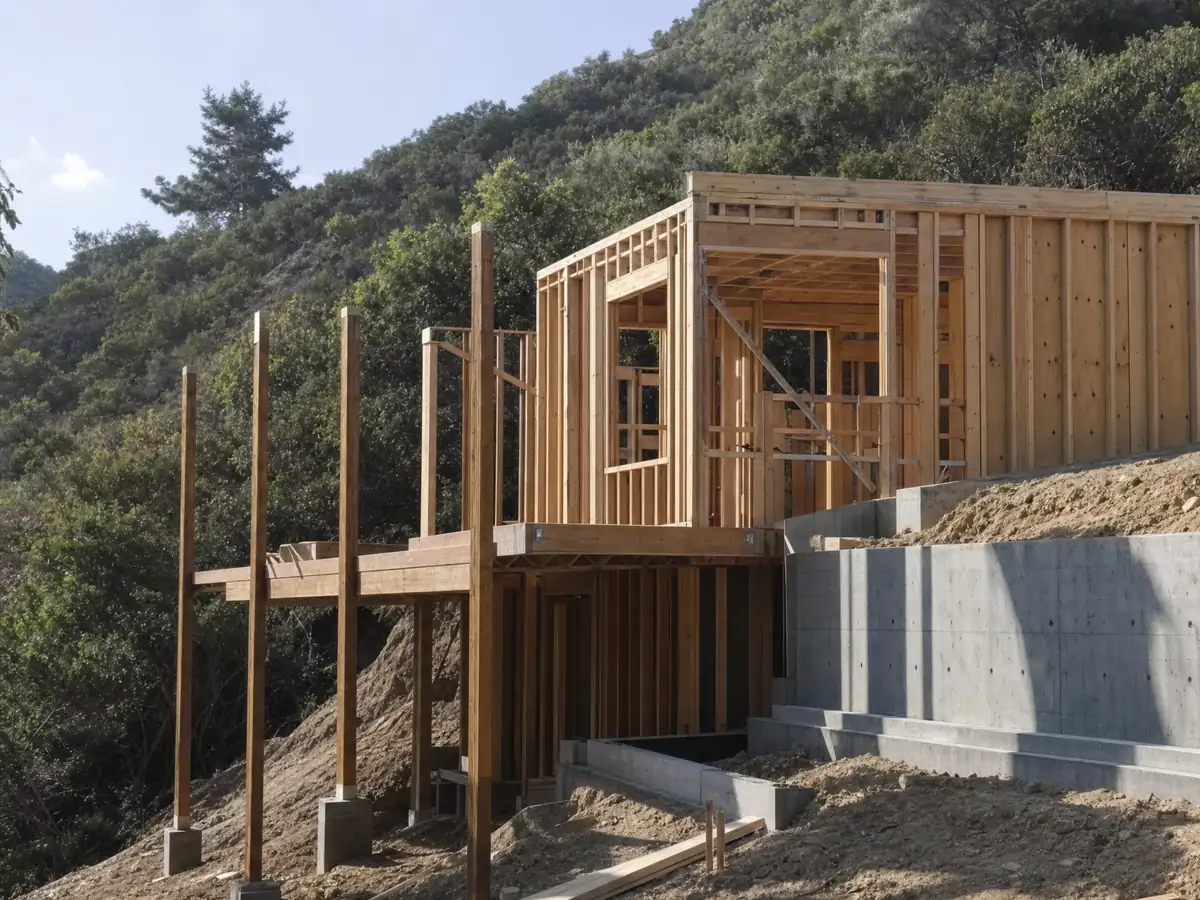
Garage conversion ADU in San Fernando: the garage door rule
A conversion is the cheapest route to a legal unit, and San Fernando's code adds one visible requirement. When a garage becomes an ADU or junior ADU, the garage door must be removed and replaced with windows or entry doors, under Section 106-522.B. The new openings also have to use the same materials and colors as the primary dwelling. Plan the front elevation before you price the job, because a blank infill wall is not enough.
State law helps in three ways. Converting a garage needs no replacement parking, no new utility connection can be forced on a unit converted from existing space, and no setback applies to the existing walls. State law also lets the owner combine one converted ADU with one junior ADU inside the house, up to 150 additional square feet for entry and exit.
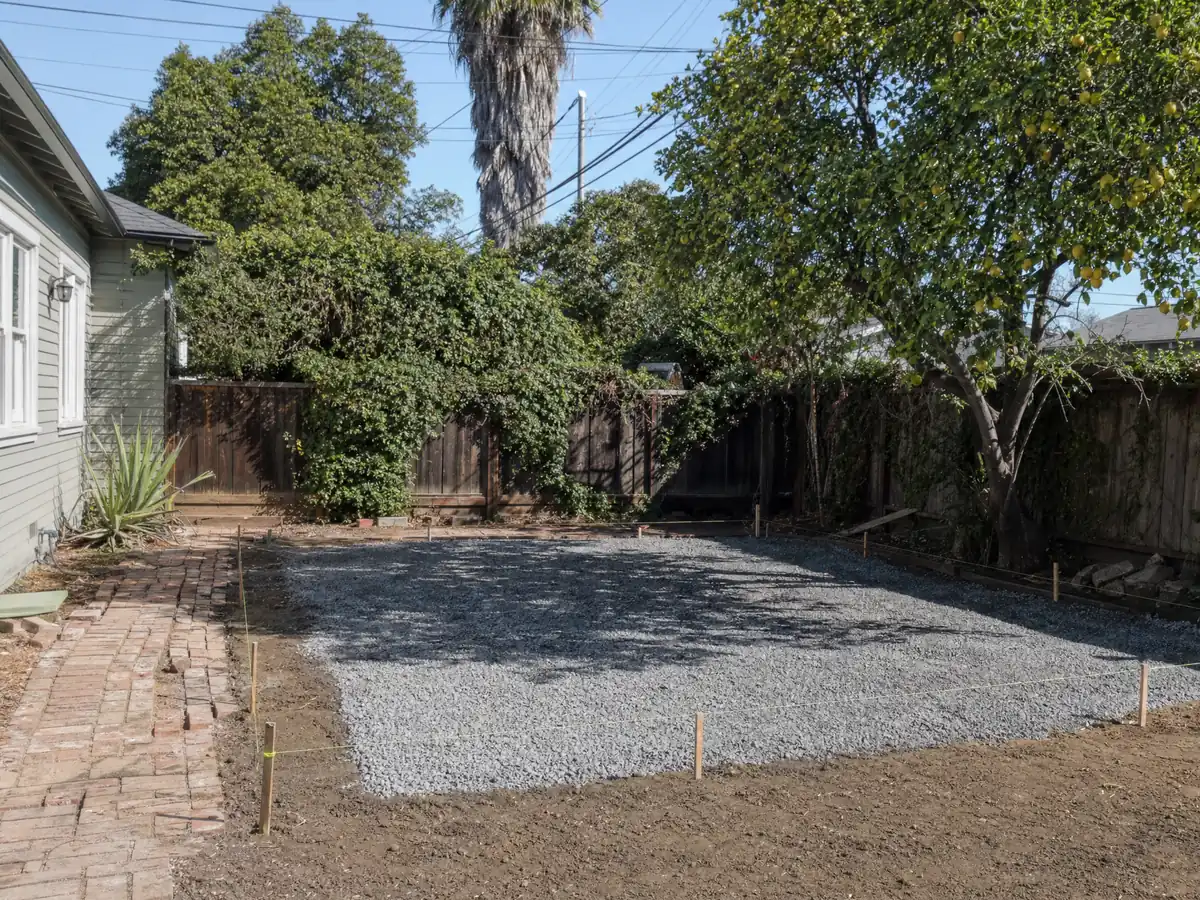
A garage at the back of a 1950s lot often has a thin slab, no insulation and a single circuit. Expect to open the floor for a bathroom drain, add a separate panel if the City asks for one and bring the slab up to the thickness the plans call for. Our garage conversion permit guide lists the Los Angeles checklist for comparison, though San Fernando sets its own.
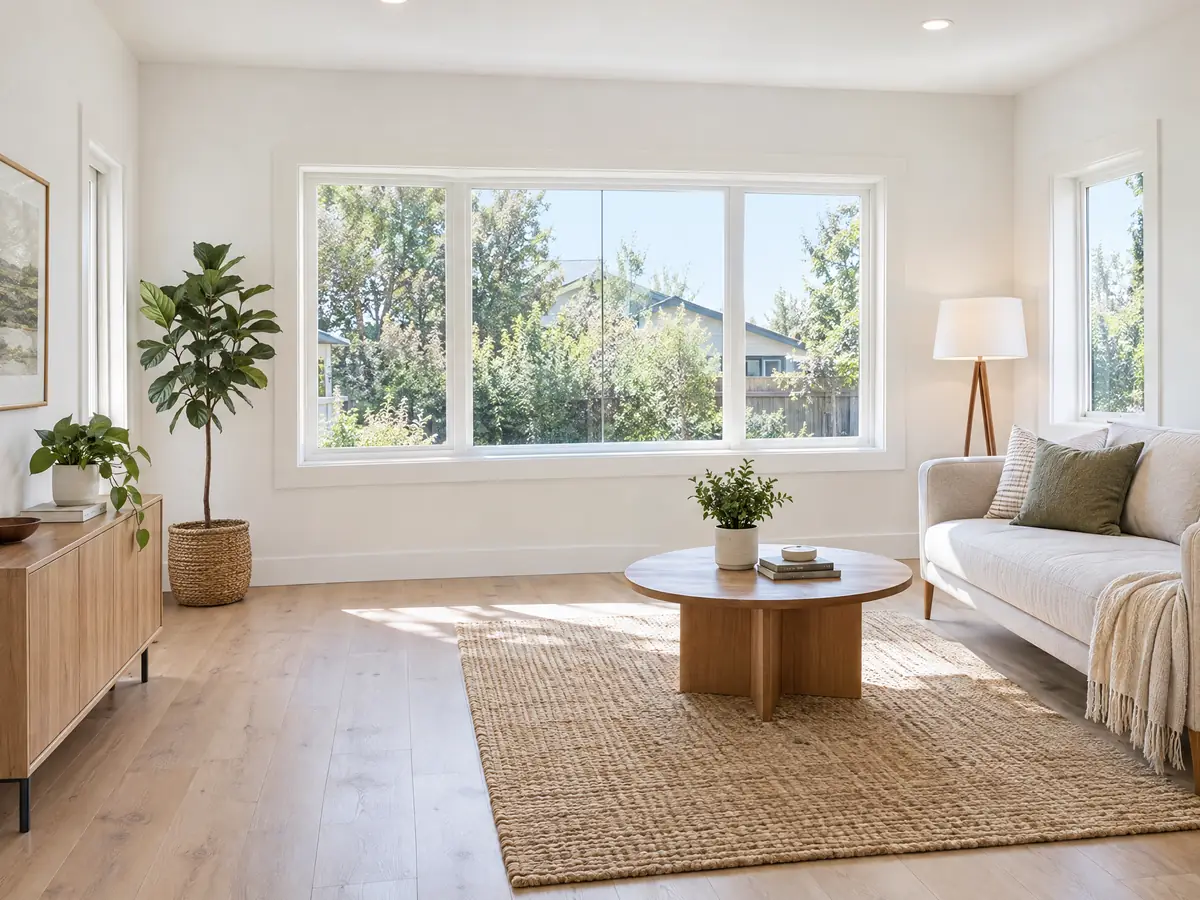
Can an unpermitted garage unit be legalized, and what will the pre-sale report show?
Possibly, and the pre-sale report is why the question comes up. San Fernando requires an inspection report before any residential sale, and the City says the report lists city records for the structure and any code violations an inspector finds. A converted garage with no permit, a back room with a kitchen or a second meter can appear there. The resale application also asks for the property type, bedroom and bath counts and the contractor's license number and class.
State law gives some owners a path. Section 66311.7 says a city cannot deny a permit for an ADU built before January 1, 2020 over building-code or ordinance violations unless correction is needed for health and safety, and the owner can ask for a confidential third-party inspection. Impact and connection fees are limited in most such cases.
That is a state rule, and we did not find a San Fernando handout on how the City applies it. Before you buy a house with a back unit or list your own, ask Planning and Building and Safety which records show the unit and what a legalizing permit would require.
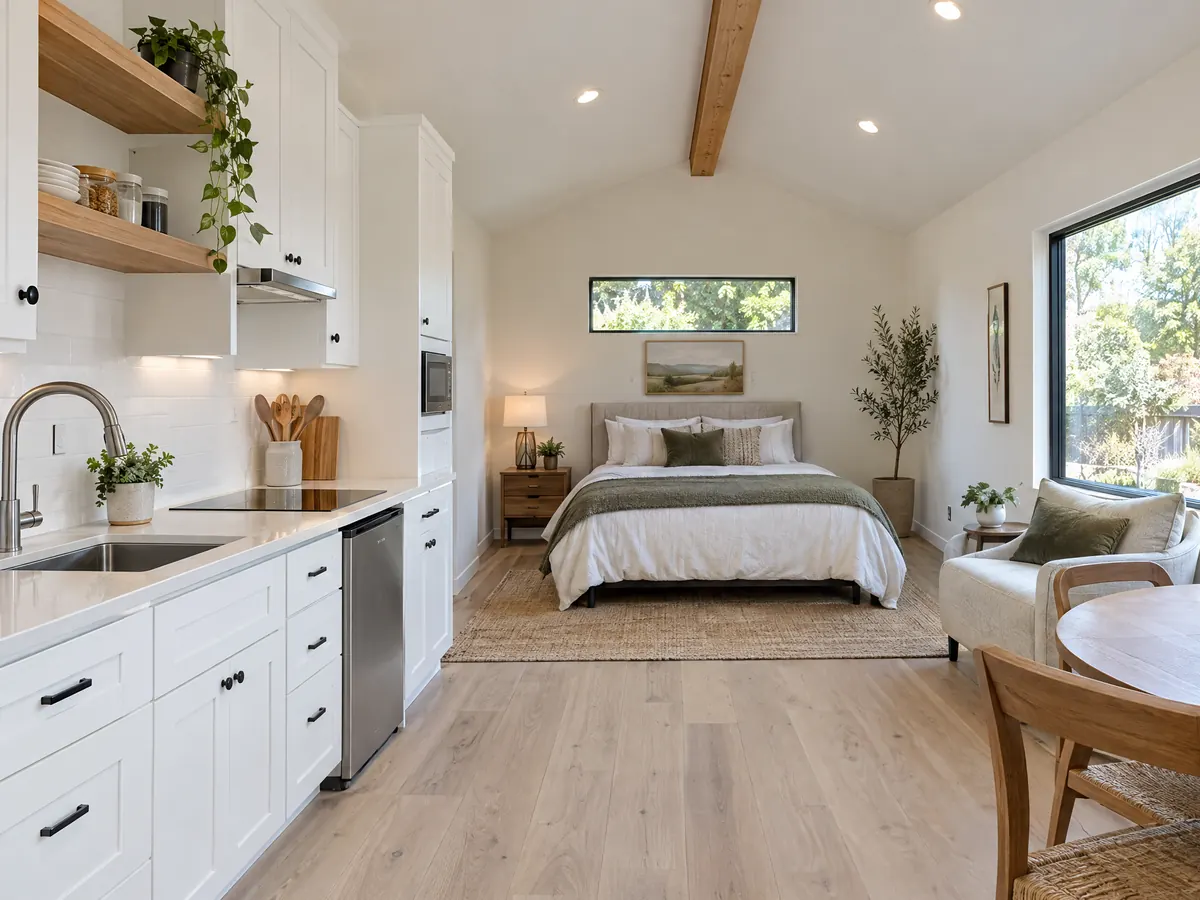
ADU fees, utility connections and Public Works steps in San Fernando
Fees come from several places. The City's ADU planning form, CDD-039.3 dated 8/2023, lists a planning review fee of $431.66 for garage or recreation room conversions and for converting 50 percent of an existing dwelling. It lists a site plan review fee of $2,114.05 for new attached or detached ADUs, plus building permit fees based on valuation. That form is older than the 2026 code update, so confirm current fees with the City.
Impact fees follow size. ADUs of 750 square feet or more pay impact fees in proportion to the primary dwelling, and ADUs of 500 square feet or more pay school impact fees, under Section 106-523. State law exempts units of 750 square feet or less from local impact fees but keeps utility connection and capacity charges separate.
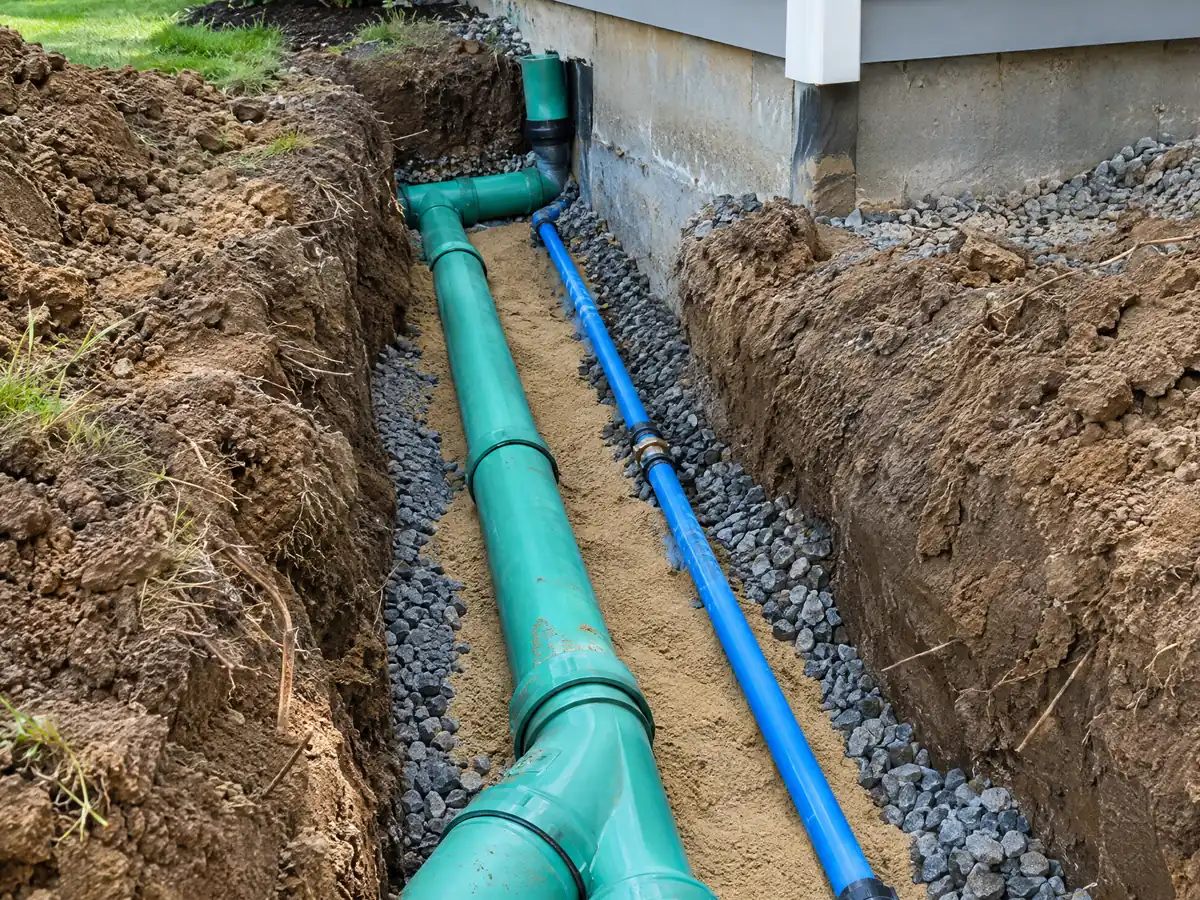
Public Works handles the rest. An address assignment request goes to Public Works before permit issuance. Its Service Request permits cover water meters, fire service lines and sewer dye tests, and the City says capital facility fees must be paid in full before a building permit is issued. Work in the street or sidewalk, such as a driveway approach or a utility trench, needs a Public Works Construction Permit with liability insurance naming the City and a ten day plan review.
From application to final: debris plans, trees and the order of an ADU job in San Fernando
A job runs in a fixed order. Design and a site plan come first, then the Planning application on the Online Permit Counter, then the completeness check and decision, then the building permit and plan check. Construction starts only after the permit, and the final inspection closes the job. Our trade page puts a garage conversion at roughly 3 to 5 months of construction and a detached unit at 5 to 9, after design and review.
Three San Fernando items sit in the middle. The Construction and Demolition Waste Management Plan applies to demolition of any size and to work over $10,000 in valuation, with Republic Services as hauler and a 65 percent diversion report before final inspection. Section 106-350 requires a barrier around heritage, protected or native trees at two times the trunk diameter, up to 15 feet, with no fill within 3 feet of the trunk. And a lot near the western boundary may touch the liquefaction zone the Safety Element maps there, which is a question for the structural engineer.
As MDG Builders, CSLB #1040337, we design and permit the unit and manage the build, and licensed concrete, framing, plumbing and electrical firms do the field work. Ask for each one's license number. Our ADU cost guide and the ADU versus JADU guide cover the money and the unit types.
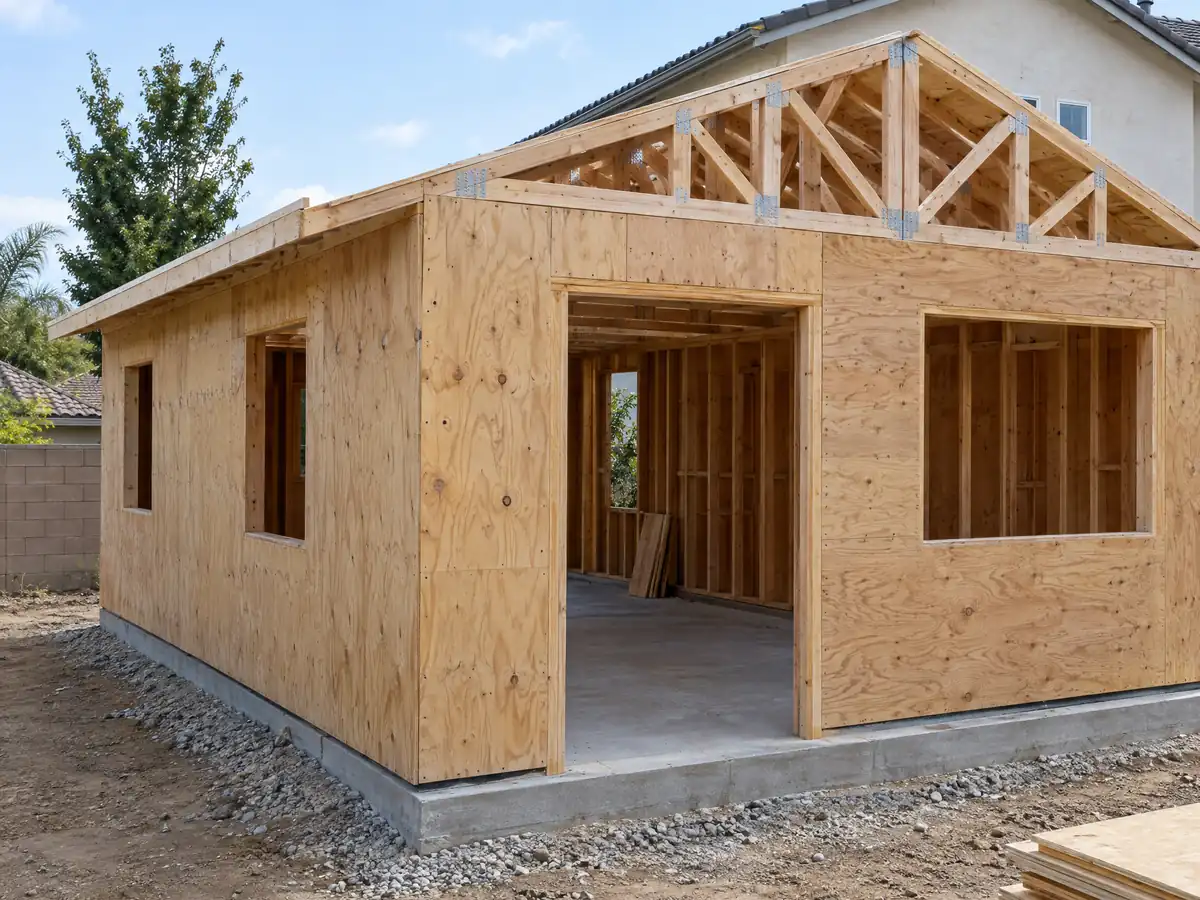
ADU photos from San Fernando and nearby homes
ADU scenes tied to San Fernando and the communities around it, from garage conversions and slabs to finished studios. Tap a photo to enlarge it.
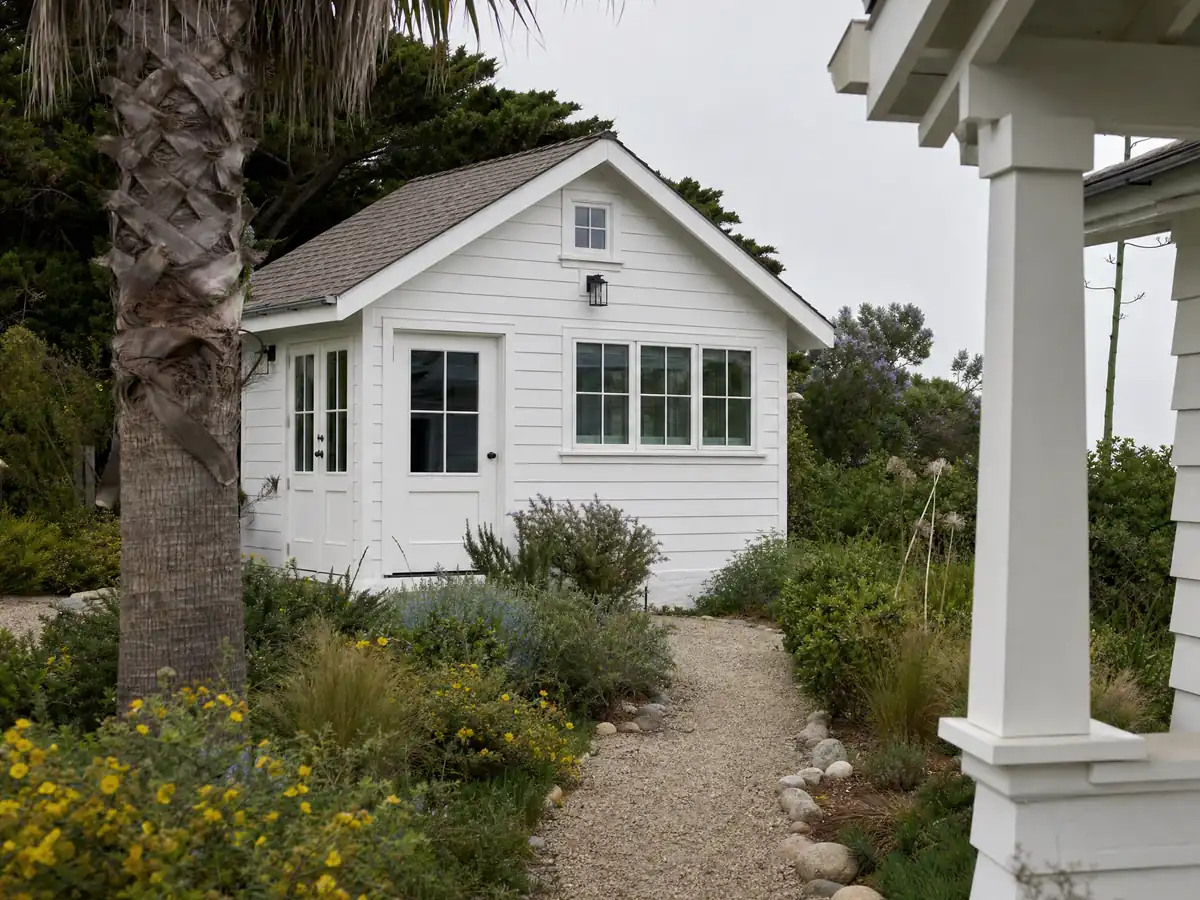
What adu construction costs around San Fernando
Our ADU construction page sets a garage conversion to a studio or one bedroom at about $100,000 to $200,000, and a new detached unit of 400 to 800 square feet at about $200,000 to $400,000. Three independent reads support those ranges: the UC Berkeley Center for Community Innovation's 2021 survey of Los Angeles County ADUs finished in 2018 and 2019, with a $100,000 median, $90,000 for garages and $180,000 for detached units; the Terner Center's 2020 Los Angeles estimate of $148,000; and the 2025 Cost vs. Value job cost of $178,536 from Remodeling magazine, which recovered 39.9 percent at resale. None is a San Fernando quote, and the City prints only the planning fees on its older form, so fees are their own lines in a written proposal. A bigger attached space is on our San Fernando room addition page, and a bath for the unit on the San Fernando bathroom page. Other cities apply the same state law in their own way, so compare ADU construction in Los Angeles, Burbank, Santa Clarita and Glendale. The San Fernando area page lists every trade we cover in the city, and the license check guide shows how to verify a contractor.
| What it covers | Typical range |
|---|---|
| Garage conversion to a studio or one bedroom | $100,000 to $200,000 |
| New detached ADU, 400 to 800 sq ft | $200,000 to $400,000 |
| UC Berkeley survey, Los Angeles County median, 2018 and 2019 projects | $100,000 overall. $90,000 garage. $180,000 detached. |
| Terner Center and Berkeley CCI, 2020 | $148,000 Los Angeles estimate. $167,000 statewide average. |
| Remodeling Cost vs. Value 2025, Los Angeles | $178,536 job cost |
| Electrical and plumbing, Angi Los Angeles, January 2026 | Electrical $2,600 to $7,800. plumbing $3,900 to $10,400. |
| City permit and plan check fees | Not priced here |
Other work we manage in San Fernando
San Fernando ADU questions, answered
Can I build an ADU in San Fernando?
Yes. The City's zoning code allows accessory dwelling units under a ministerial process tied to state law, with no minimum lot size and no required parking. A building permit is required, and Planning reviews the site plan. The City must act within 60 days of a complete application, after a 15 business day completeness check.
How big can an ADU be in San Fernando?
Up to 850 square feet with one bedroom or 1,200 with two or more for a detached unit, and the same limits or 50 percent of the main house for an attached or interior unit, whichever is less. The minimum is 150 square feet with a kitchen and a three-quarter bath. Heights are 18 feet detached and 25 feet attached.
Do I need to live on the property to build or rent an ADU?
The City's posted zoning code says owner occupancy is not required for ADUs, which fits state law. The City's 2023 ADU form still carries an owner-occupancy covenant, so the two conflict. A junior ADU of up to 500 square feet needs the owner to live there unless it has its own bathroom. Ask Planning which text governs.
How much does it cost to build an ADU in California?
Turning a garage into a studio or one-bedroom unit lands near $100,000 to $200,000, and a new detached unit of 400 to 800 square feet near $200,000 to $400,000. Those ranges rest on a Berkeley survey, a Terner Center estimate and Remodeling magazine's Cost vs. Value report, all for Los Angeles, not San Fernando. A written proposal sets the real price.
Do I need to provide parking for my ADU?
No. San Fernando's code requires no parking for an ADU and no replacement parking when a garage or carport is converted or demolished. State law says the same. The code does require a 4 foot wide walkway from the unit to the sidewalk and landscape screening along the side and rear lot lines.
Do I need a permit to convert my garage into an ADU?
Yes. A building permit is required, and garage conversions go through planning review first. The garage door must come out and be replaced with windows or entry doors that match the house. The City's form lists a $431.66 planning fee for conversions, but the form is from 2023, so confirm today's fee.
Can I convert an unpermitted garage conversion into a legal ADU?
Possibly. State law says a city cannot deny a permit for an ADU built before January 1, 2020 over code violations unless correction is needed for health and safety. San Fernando also inspects every home before sale, and the report lists code violations, so ask the City what records and fixes apply.
How long does it take to get an ADU permit?
The City must tell you within 15 business days whether the application is complete, then approve or deny within 60 days of a complete application. If it does not act in 60 days, the application is deemed approved. Building permit plan check is a separate step, and we did not find the City's plan check time.
Tell us about your San Fernando ADU plans
Tell us whether you are weighing the garage or the backyard, how old the house is and whether a sale or a rental is the goal, and we will plan the first visit around the City's review.