
Concrete Companyin Blythe, CA
A concrete company in Blythe starts with the ground and the water: the valley is river sand over shallow groundwater, the City adopts 2008 flood maps, and zoning wants every perimeter foundation at least eight inches above the curb. Dust comes next, because Mojave Desert AQMD Rule 403 reaches visible dust from a job of any size.
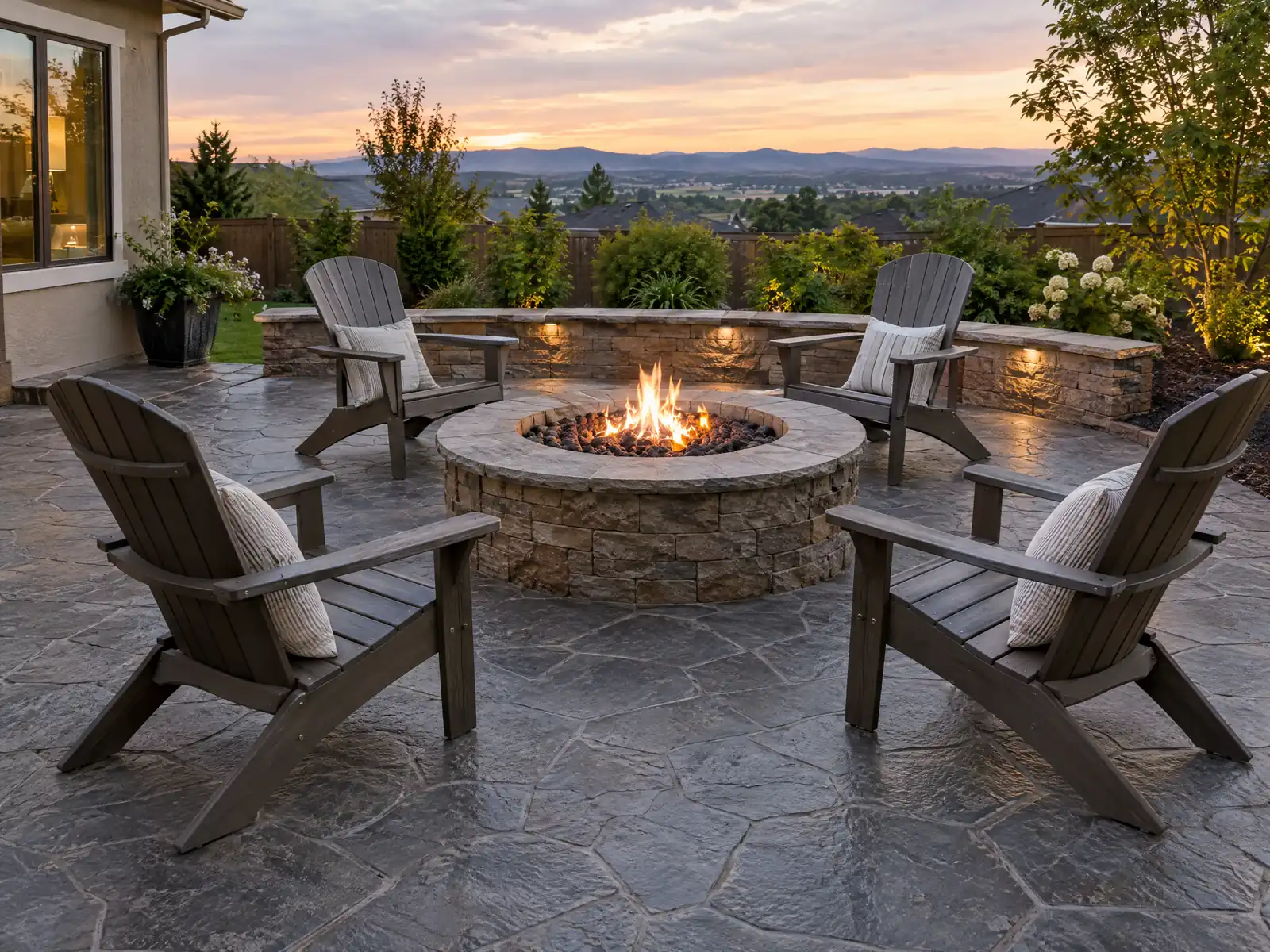
Blythe's founding story is about water and the control of it. San Francisco capitalist Thomas H. Blythe filed the first Colorado River water claim for the valley on July 17, 1877, a levee district followed in 1917 and Hoover Dam in 1935 virtually ended the floods, according to the irrigation district. The Census Bureau's 2024 estimates say 2,496 of the city's 4,962 homes predate 1980, so many walks, driveways and patio slabs here are 46 years old or more.
MDG Builders, CSLB #1040337, acts as the general contractor: we write the scope and carry the permit questions to Blythe's Building Division, and a licensed concrete subcontractor forms, places and finishes the work. The concrete page covers finishes, and the Blythe overview shows the other trades we can run in town.
What Blythe's Development Services Department, the Municipal Code, Mojave Desert AQMD and state law say about concrete work
Where concrete permits come from in Blythe: City of Blythe Development Services Department, Building Division.
- Blythe's floodplain chapter says new or substantially improved residential structures in an AO flood zone must have the lowest floor elevated above the highest adjacent grade by the depth on the FIRM, or at least two feet if no depth is given, and in an unnumbered A zone to or above the base flood elevation; fully enclosed areas below the lowest floor used only for parking, access or storage need flood openings whose bottom is no higher than one foot above grade (Municipal Code 17.29.050, GoCodebook third-party mirror). Parcel flood zones were not looked up.
- Blythe's zoning code requires every perimeter foundation to be at least eight inches above the highest adjacent curb height (Municipal Code 17.10.070, GoCodebook third-party mirror).
- For lots in the River Estates at Hidden Beaches development (Tracts 28758 and 28758-1), the City's Planning page publishes an engineer's building pad elevation certification for each lot (grouped by lot ranges), with a tract map to identify the lot. This is a Blythe-only record that a slab, patio or addition designer can pull before design.
- The City's Colorado River Corridor Plan (March 2007) says every new development project in the plan area must submit geotechnical and flooding studies and must incorporate their recommendations into the design to protect foundations and limit flooding, and its Table 3 sets minimum building pad elevations (finished grade) between plus 264.5 and plus 275.0 feet above mean sea level, depending on the river reach (the text extraction scrambled the table, so reach-by-reach figures are not stated here). The plan is dated 2007.
- Mojave Desert AQMD Rule 403 (Fugitive Dust Control, amended 10/28/20 per the rule's header) requires a District-approved Dust Control Plan for residential construction or demolition disturbing at least 10 acres, non-residential work disturbing at least 5 acres, any project or facility disturbing at least 20 acres, moving more than 2,500 cubic yards of bulk material per day on three consecutive days, and solar projects of at least 1 megawatt or 1 acre, and it also reaches any source whose visible dust beyond the property line causes a nuisance or is so designated by the air pollution control officer. A single-lot slab or driveway is far below those size triggers, but the nuisance clause and the visible-dust standard still apply. The rule is read from a Wayback copy of the District's PDF.
- Mojave Desert AQMD Rule 403 (C)(6) requires projects that are subject to it to use periodic watering (a water truck counts), prevent trackout onto paved surfaces and clean it up within 24 hours, cover loaded haul vehicles, stabilize graded surfaces if development is delayed more than 30 days, and cut back non-essential earth-moving in high winds. 'High winds' means an instantaneous wind speed over 25 miles per hour or a 15-minute average above 15 miles per hour, and the visible-dust prohibition in C(1) excepts high winds.
- Blythe's own Municipal Code treats blowing dust as a nuisance: maintaining property so that dust, sand or soil is blown or spread onto others' property or impairs public health is a nuisance (8.32.010), and the building inspector may require unpaved parking areas in the zones that chapter names C-1, C-2, M-1 and M-2 (the current zone list in Chapter 17.06 uses different names) to be gravelled, oiled or surfaced with oil-impregnated material, asphalt or concrete (8.32.040). Zoning 17.28.040 bars any airborne emission that damages health, animals, vegetation or other property, or that causes soiling at or beyond the property line. (GoCodebook third-party mirror.)
- Blythe's water conservation chapter prohibits washing down hard or paved surfaces such as sidewalks, driveways and patios except to alleviate a safety or sanitary hazard (13.05.060.J) and lets the City require recycled water instead of potable water for construction and dust control where recycled water is available (13.05.070.A). Repeat violations add water bill surcharges of $100, $150 and $200 (13.05.080). (GoCodebook third-party mirror.)
Sources for these rules
- gocodebook.com: chapter 17.29 floodplain management
- gocodebook.com: chapter 17.10 lot and building dimensions
- cityofblythe.ca.gov: River Estates at Hidden Beaches
- cityofblythe.ca.gov
- web.archive.org: 637393282546170000
- gocodebook.com: chapter 8.32 airborne particles
- gocodebook.com: chapter 13.05 water conservation 1
Is the ground in Blythe good for a slab or a footing?
It is sand, with water not far under it. The Palo Verde Irrigation District describes the valley soils as Colorado River alluvium, mostly sandy loam running from fine clays to light sand, over permeable sand at shallow depth, with groundwater averaging about 10 feet down under farmland. Riverside County's valley plan calls the area an ancient floodplain and says the 100-year flood plain holds an area of very high liquefaction potential. Both documents cover the valley and the unincorporated plan area, not specific Blythe lots.
That is why the City's submittal checklist lists soil analysis, grading, drainage and pad and finish floor elevations as items required when applicable. The City's Colorado River Corridor Plan, dated March 2007, says every new development project in its plan area must submit geotechnical and flooding studies and build in their recommendations. Ask whether a small slab near the river counts, and who will write the report if it does.
Whatever the answer, make the subcontractor state what base goes under the slab, how it will be compacted and how the joints are laid out. A geotechnical report is the only document that speaks for your lot.
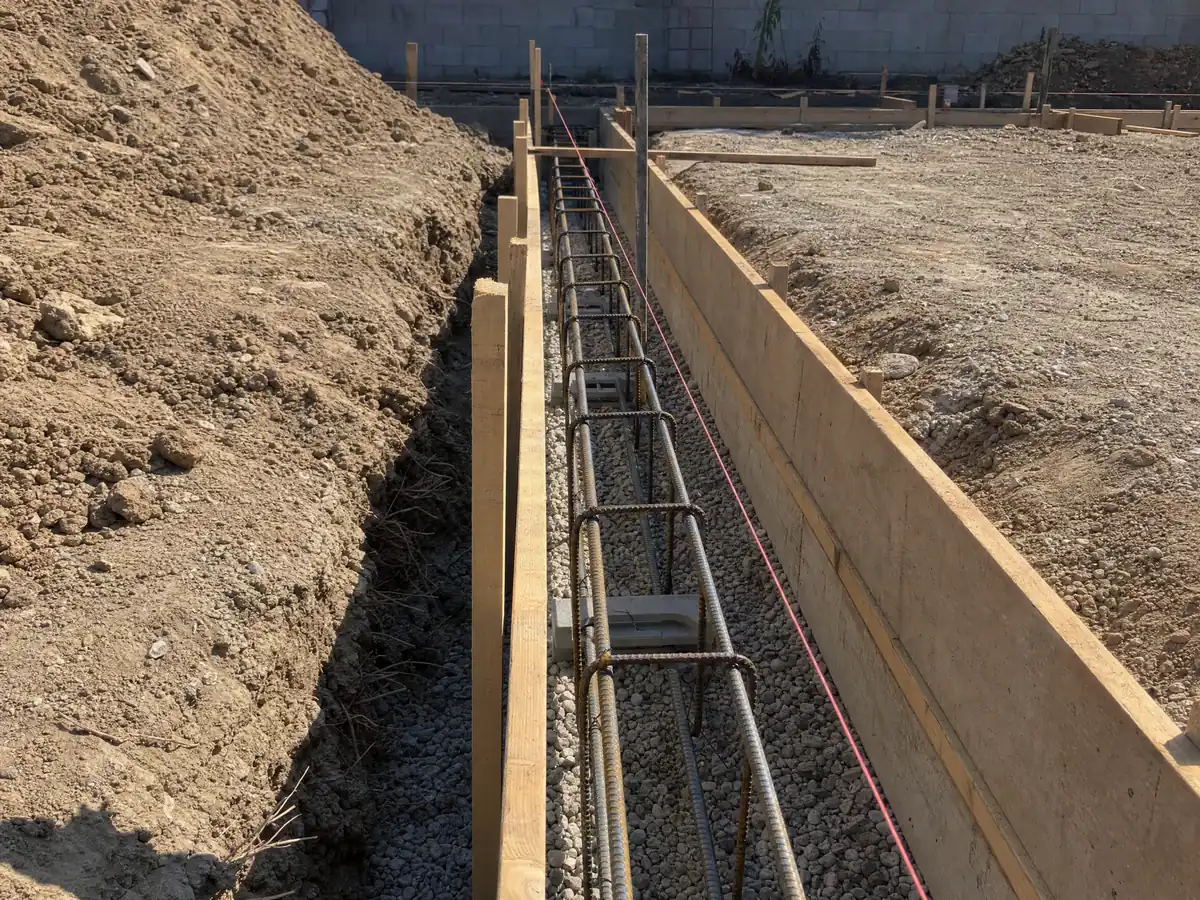
What do Blythe's flood maps and the 8 inch curb rule mean for a foundation?
Start with the curb. Blythe's zoning code, read in GoCodebook's third-party copy, requires every perimeter foundation to sit at least eight inches above the highest adjacent curb height (Municipal Code 17.10.070). A slab poured level with an old driveway can therefore end up too low, so the forms should be set from a surveyed elevation rather than by eye.
Chapter 17.29 adopts the Riverside County Flood Insurance Study and the maps dated August 28, 2008, and makes the planning director the floodplain administrator. In an AO zone, a new or substantially improved home needs its lowest floor above the highest adjacent grade by the depth on the map, or at least two feet if none is given. Elevation certificates come from a registered civil engineer or licensed land surveyor. We did not look up any parcel's zone, so ask the City.
Lot records exist in places. For River Estates at Hidden Beaches (Tracts 28758 and 28758-1), the City's Planning page posts an engineer's pad elevation certificate for each lot. The County says the river flooded in 1983, and we could not open any current levee record, so levee status stays unverified.
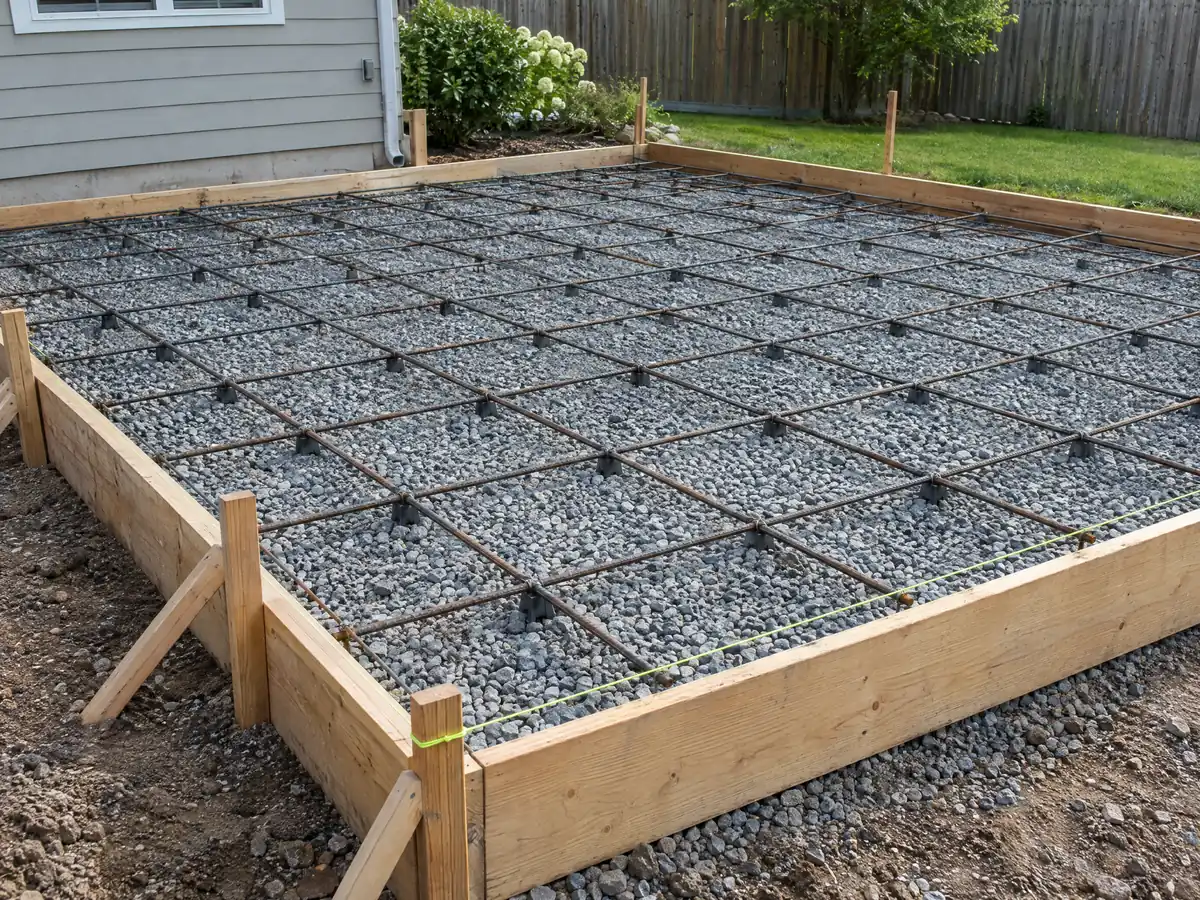
Do you need a dust control plan to pour concrete in Blythe?
Not for a house lot, but the dust rules still apply. Mojave Desert AQMD Rule 403, whose header shows an amendment date of October 28, 2020, demands a District-approved plan for residential work disturbing 10 acres or more, non-residential work of 5 acres, any project of 20 acres, moving 2,500 cubic yards of bulk material a day for three days, and solar projects of 1 megawatt or 1 acre. The rule also reaches any source whose visible dust beyond the property line causes a nuisance. The District's site blocked our tools, so we read the rule in a Wayback copy from May 2026.
Projects the rule covers must water the site periodically, keep trackout off paved streets and clean it within 24 hours, cover loaded haul vehicles, stabilize graded ground left idle for more than 30 days and cut back earth moving in high wind. The rule defines high wind as an instantaneous gust over 25 miles per hour or a 15-minute average above 15.
The City adds its own language. Municipal Code 8.32.010 calls dust, sand or soil blown onto other people's property a nuisance, and 17.28.040 bars airborne emissions that cause soiling at or beyond the property line. Ask the proposal who supplies the water and who sweeps the street.
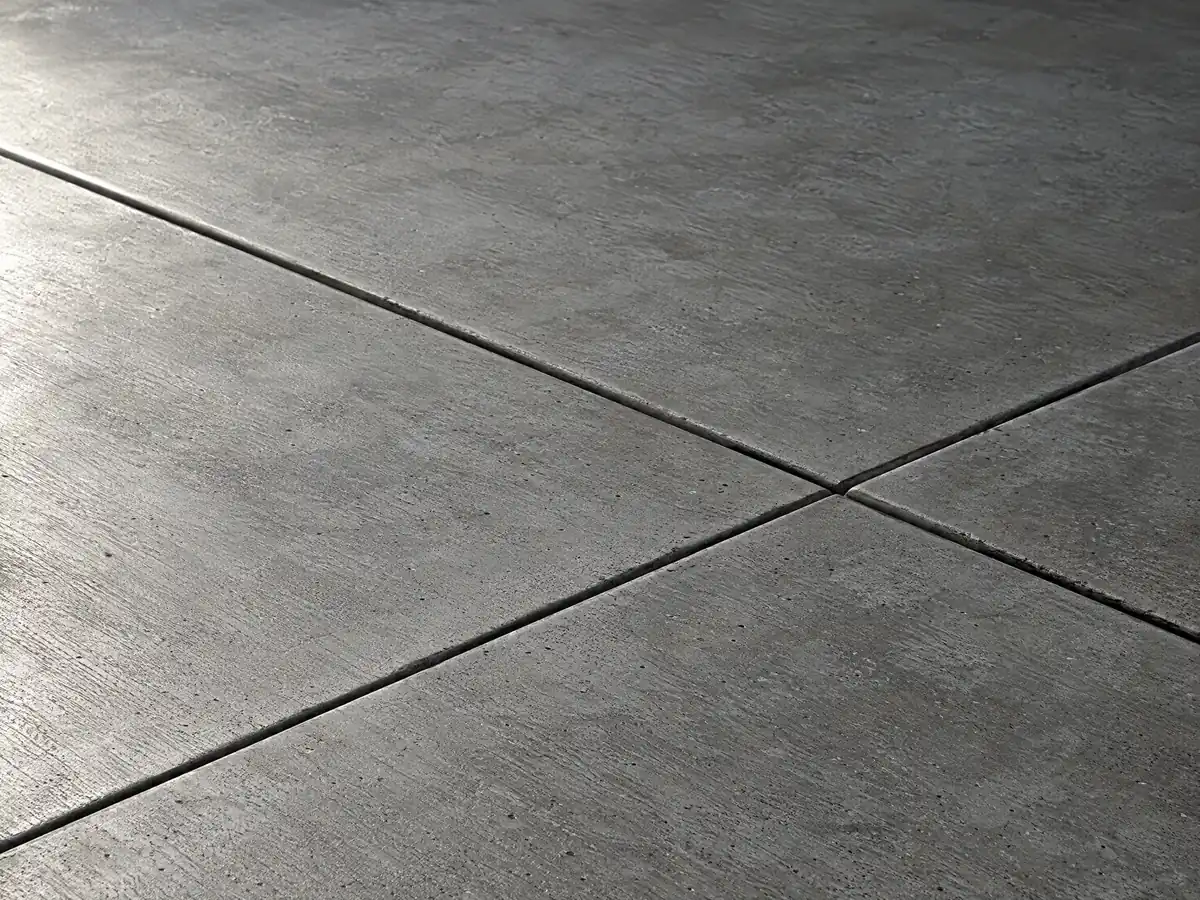
How do 131 days at 100 degrees change when and how concrete is poured in Blythe?
They decide the schedule more than any other single thing. NOAA's 1991 to 2020 normals for the Blythe station count 130.8 days a year at or above 100 F, July highs near 109.7 F, August lows near 78.3 F and only 3.61 inches of rain. We found no Blythe source on placing temperatures, so ask the subcontractor what time the truck will arrive, how the surface will be finished and cured and who is on site while it sets.
Water is regulated here, which touches cleanup and curing. Municipal Code 13.05.060.J prohibits washing down sidewalks, driveways and patios except to remove a safety or sanitary hazard, and 13.05.070.A lets the City require recycled water instead of potable water for construction and dust control where it exists. Repeat violations add surcharges of $100, $150 and $200 to the water bill. The text comes from GoCodebook's third-party mirror.
Cold is rarely the problem, with only about 9 days a year at or below 32 F, mostly in December and January. Ask where the washout goes and who pays for it before the first truck backs in.
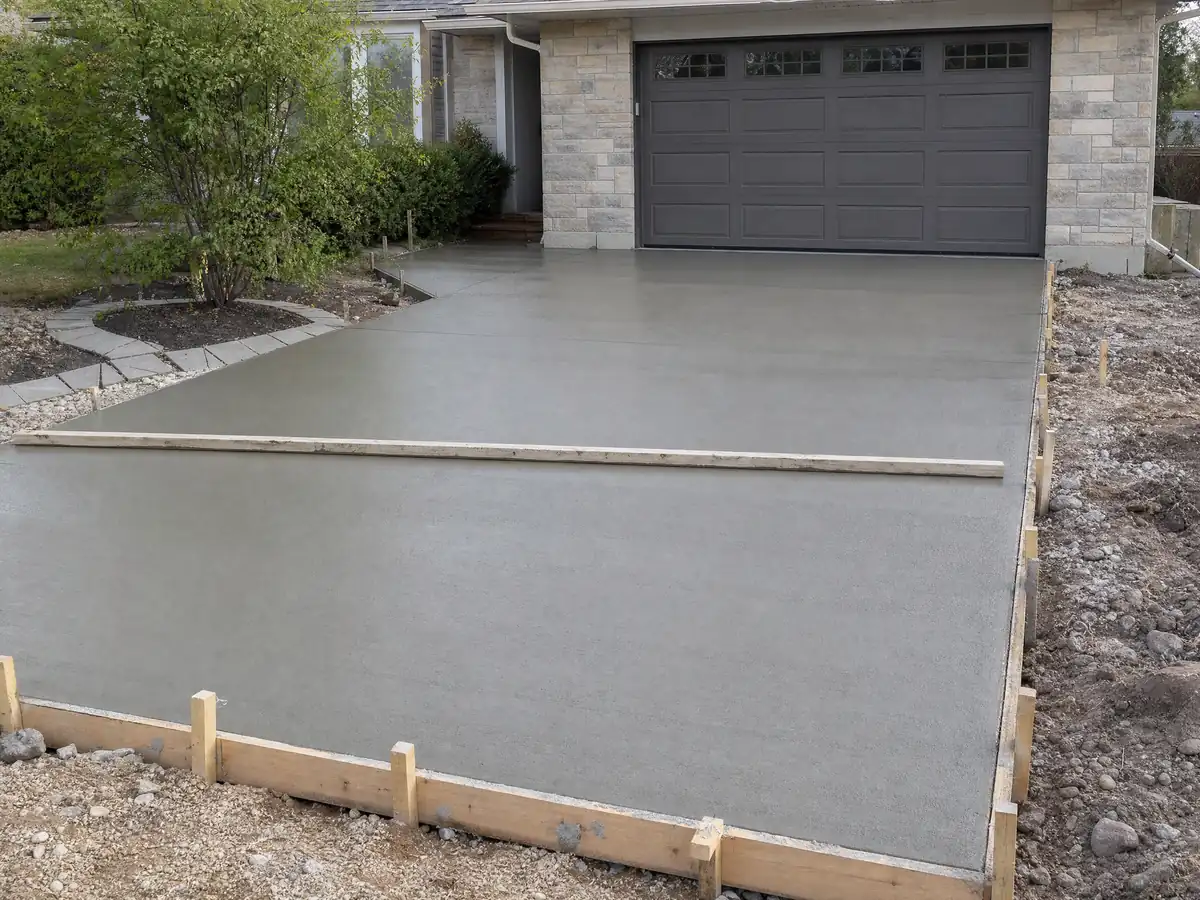
Does a patio or driveway need a permit in Blythe, and who can pull it?
Treat a patio as permit work. The City's Building Permits page says a permit is needed for a house, pool or room addition and also for a patio, block wall, wrought iron fence, reroof or deck, and its FAQ says anyone modifying or altering a property needs one. A driveway slab is not named on the pages we read, so ask Development Services at (760) 922-6130 with the size and location before you order concrete.
The checklist asks for three sets of plans on most residential jobs, drawn to scale on paper at least 11 by 17 inches, and four sets when work touches the public right-of-way or a utility. The plan check fee is due at submittal, the FAQ gives 10 to 15 business days for review, and Blythe's amended code voids a permit with no approved inspection within 12 months. If no work happens, the building official may refund up to 80 percent on a written request within 180 days.
An owner may pull a permit for a single-family home under 15.02.030. The checklist also asks for two trees and ground cover in a residential front yard, so ask whether a large front slab runs into that.
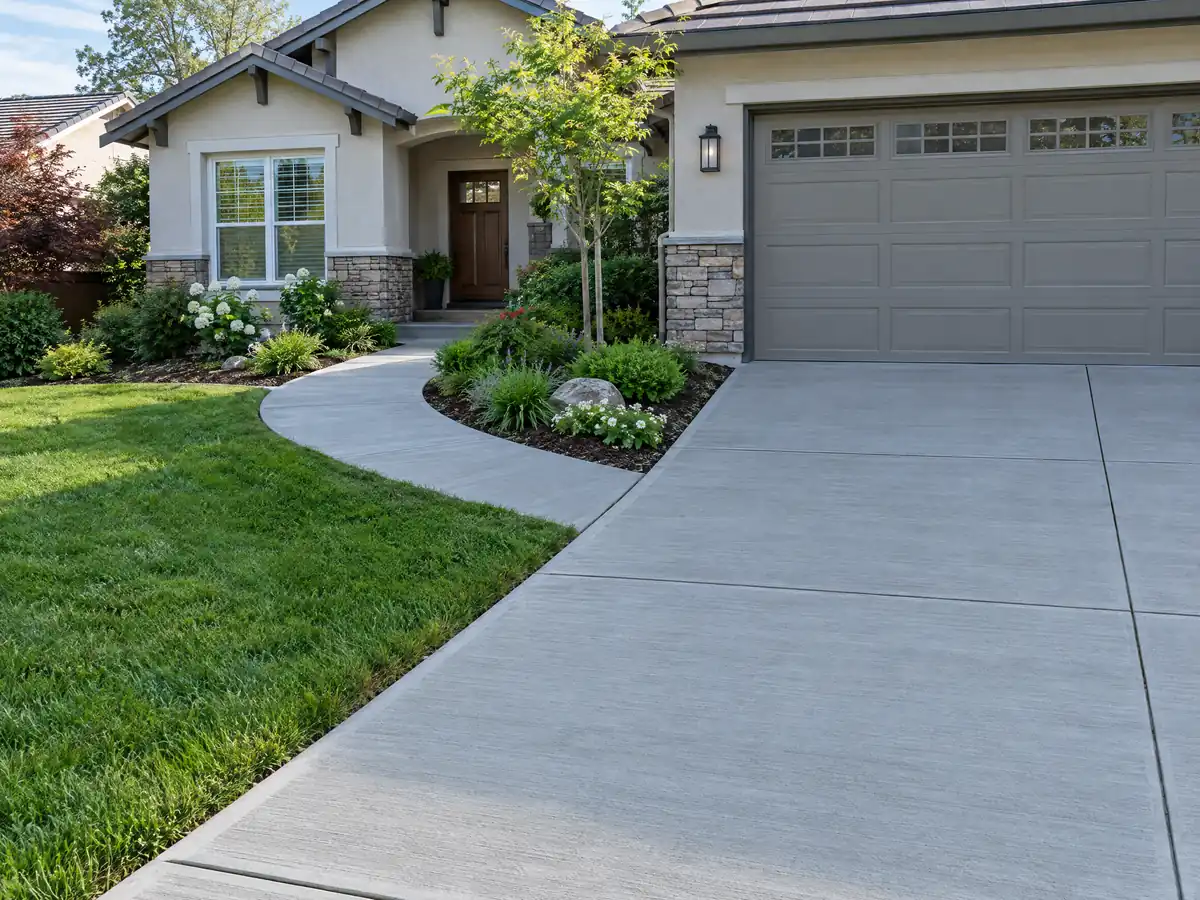
How wide can a Blythe driveway be, and what rules cover a block wall?
A single-family driveway must be at least 10 feet wide with nothing projecting below 8 feet above grade, and a home needs two parking spaces in most residential zones (Municipal Code 17.16, GoCodebook third-party mirror). A wider approach or a parking pad is a zoning question first, so settle it with Planning before the saw cuts anything.
Walls have two rule sets. The City says block walls and wrought iron need a building permit, and Blythe's fence exemption covers only a wood or chain link fence up to four feet in the front setback or six in the rear. Zoning allows screening up to six feet on side and rear lines, bars anything over four feet in the required front setback and caps anything over three feet at corner sight triangles.
We found no Blythe retaining wall height rule. The model code exempts walls up to four feet from footing bottom unless they carry a surcharge, but Blythe amends its exemption list, so confirm at the counter. CSLB's C-29 class covers block walls, and engineered walls are priced by height, drainage and soil, so we print no per-foot figure.
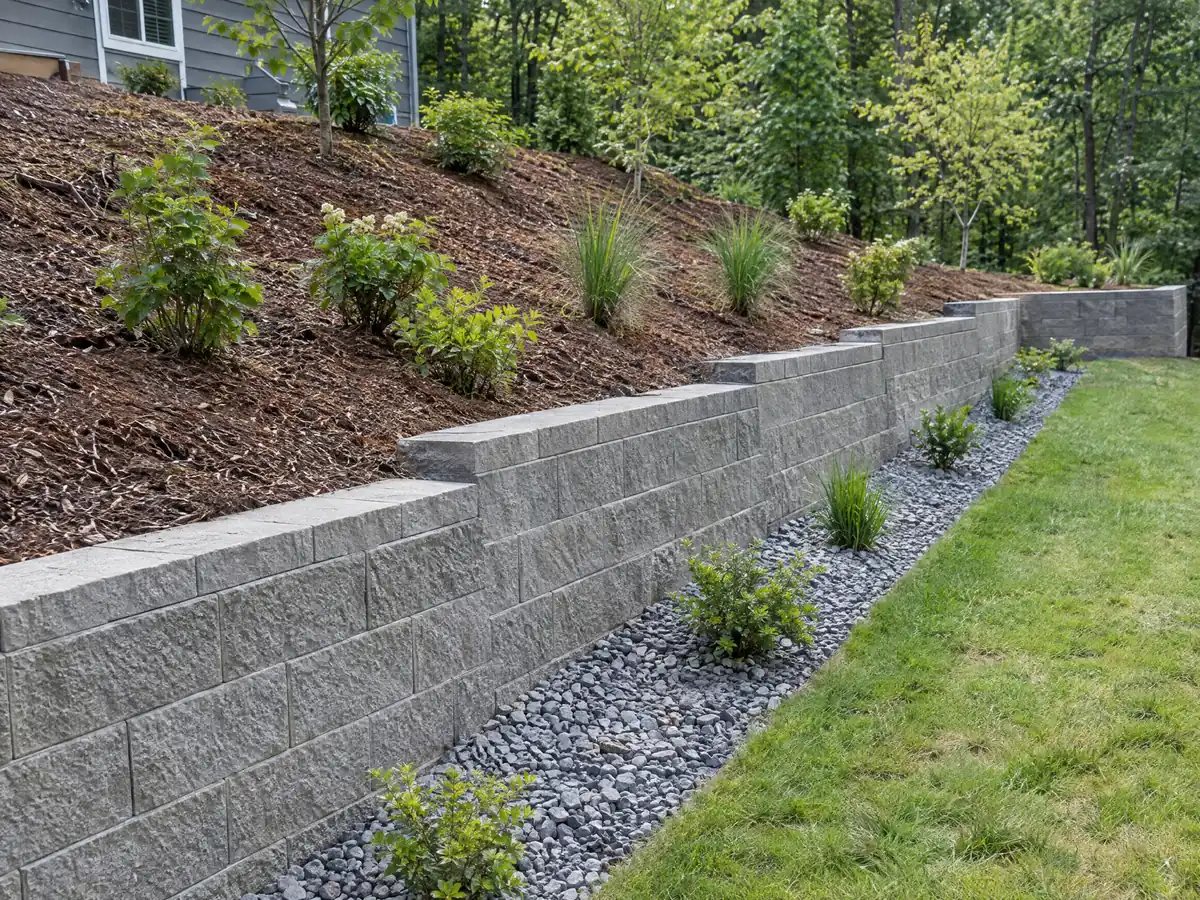
What does concrete work cost in Blythe, and which license covers it?
We found no Blythe price study, so the anchor is Angi's Los Angeles pages. Its August 4, 2026 patio page shows $4 to $13 a square foot, its July 20, 2026 stamped page $15 to $30 and its May 5, 2026 driveway page $8 to $20. Federal May 2025 data for the Los Angeles area put cement masons at a mean $33.67 an hour. A remote desert job may be quoted differently.
Our planning figures for Los Angeles are $8 to $14 a square foot for plain flatwork of 300 square feet or more, $15 to $30 for stained, stamped or exposed aggregate and $9 to $20 for driveway replacement with demolition. A plain 20 by 20 slab lands near $3,200 to $5,600, and small jobs cost more per foot because of minimum charges. Soil work, elevation survey, water, haul-off and rebar belong on separate lines.
CSLB's C-8 class covers forming, pouring and finishing flat concrete. Under Business and Professions Code 7048, work that needs a permit needs a licensed contractor. The license check guide shows how to read a record.
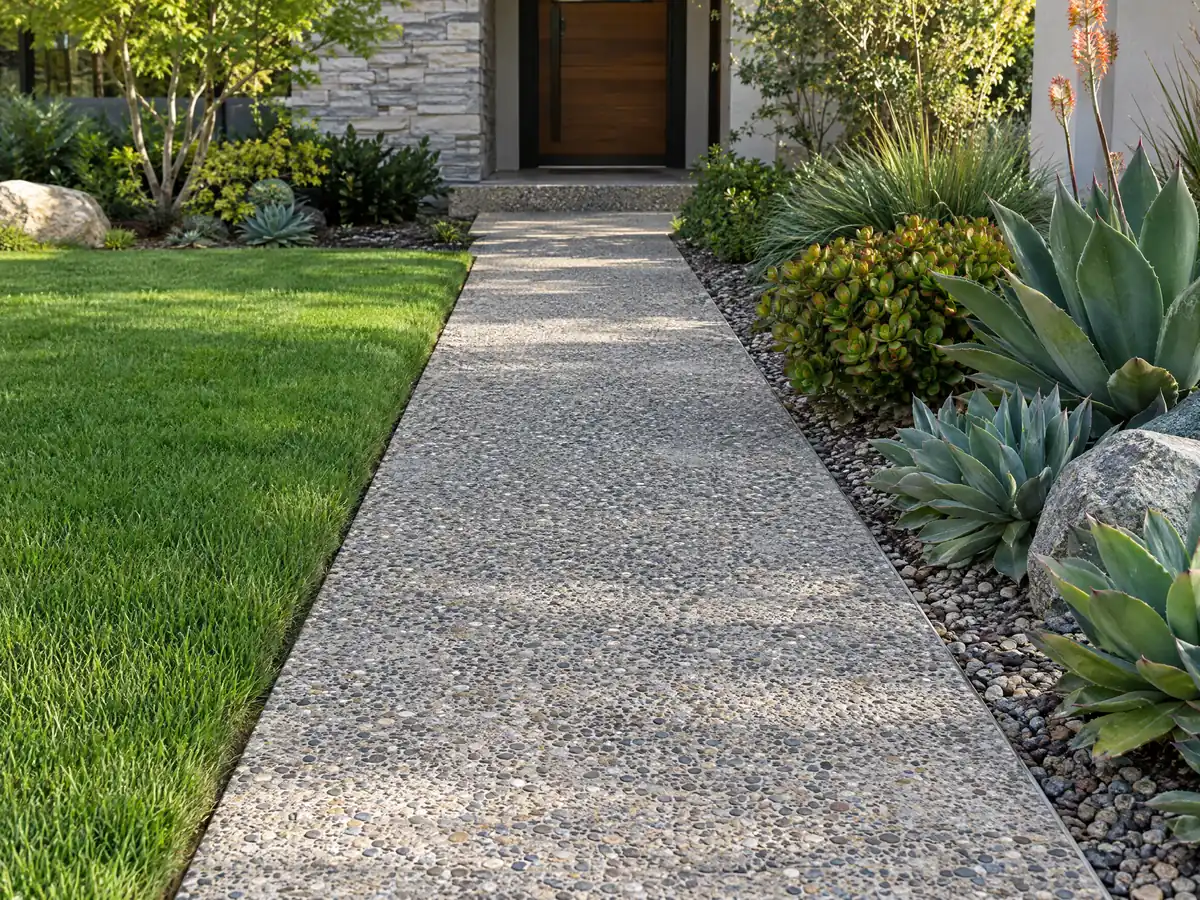
Concrete photos from Blythe and nearby communities
Footings, rebar, screeded slabs and finished walks and patios from Blythe and the Palo Verde Valley communities around it, shown at the steps where the rules bite. Tap any photo to enlarge it.
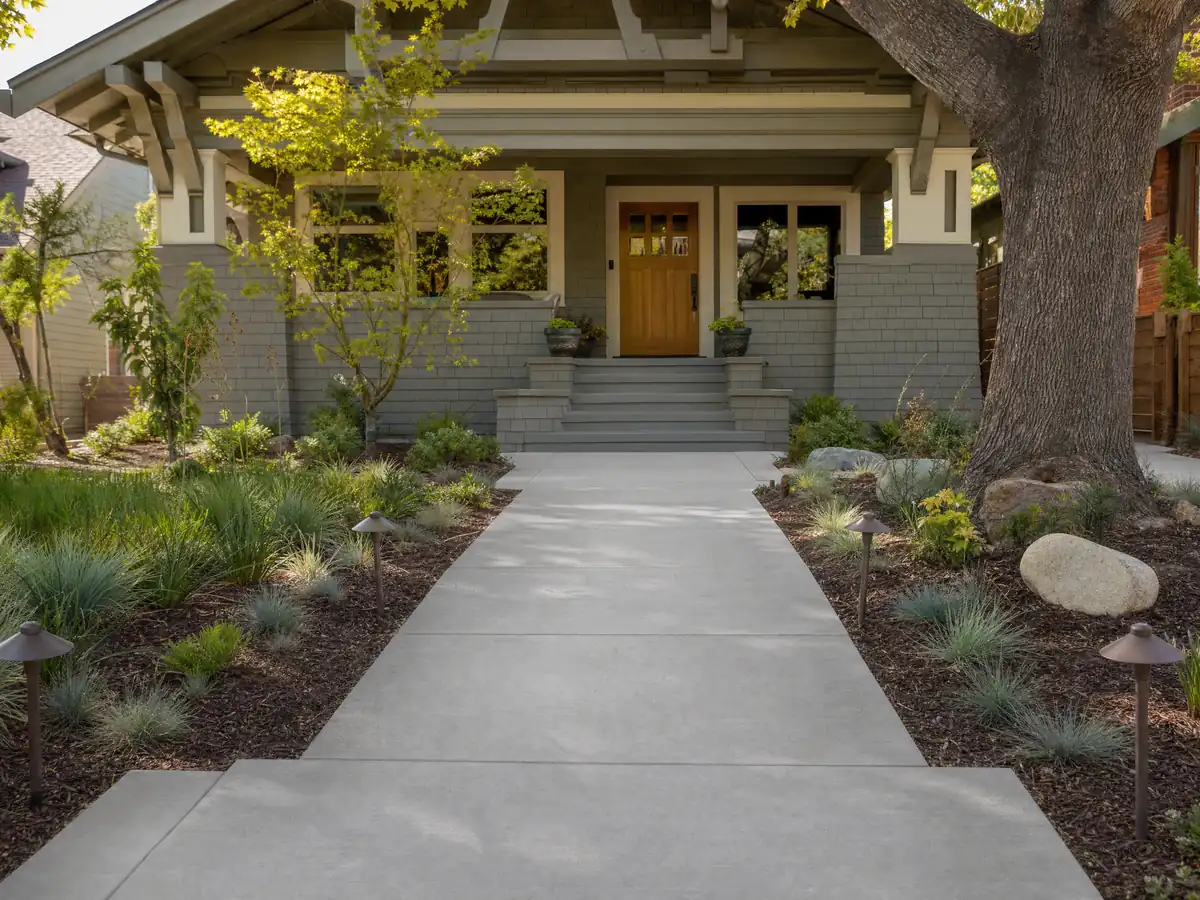
What concrete costs around Blythe
Dollar figures here are Los Angeles planning ranges, not a Blythe bid, and the soil work, elevation survey, water, demolition, haul-off, rebar and any wall permit belong on separate lines of the written proposal. The same property may need flooring in Blythe or decks in Blythe. The closest desert pages we have finished are concrete in Indio, about 93 miles away in a straight line, and concrete in Coachella, with concrete in Los Angeles as the benchmark city. The subcontractor guide shows who forms the slab and who finishes it, and the flooring cost guide prices surfaces that go on top.
| What it covers | Typical range |
|---|---|
| Patio, walkway or slab, broom finish, 300 sq ft or more | $8 to $14 per square foot |
| Decorative: stained, stamped or exposed aggregate | $15 to $30 per square foot |
| Driveway replacement, with demolition of the old slab | $9 to $20 per square foot |
| 20 by 20 foot plain patio (400 sq ft) | About $3,200 to $5,600 |
| 20 by 20 foot decorative patio (400 sq ft) | About $6,000 to $12,000 |
| Small jobs under 300 sq ft | Usually above the per-foot range |
| Retaining walls | Set by the written proposal |
Blythe concrete questions, answered
Can I pour a concrete patio without a permit in Blythe?
Probably not. The City's Building Permits page names patios among the work that needs a permit, and its FAQ asks one for anyone altering a property. A plain driveway slab is not named on the pages we read, so call Development Services at (760) 922-6130 with the size and location. Dust and zoning rules apply either way.
How much should a 20x20 concrete patio cost?
At our Los Angeles planning range of $8 to $14 a square foot, 400 square feet of plain concrete costs about $3,200 to $5,600, and Angi's August 2026 Los Angeles page shows a 20 by 20 slab at $1,600 to $5,200. No Blythe study turned up. Soil work, demolition and drainage add to either number.
Can I expand my driveway without a permit?
Not safely. Blythe's code wants single-family driveways at least 10 feet wide and two parking spaces at most homes, so widening is a zoning question first. We found no City page on aprons in the public right-of-way. Ask Development Services about both the pad and any permit before cutting anything.
What is the maximum height of a retaining wall without a permit in California?
The model code exempts retaining walls up to 4 feet, measured from the bottom of the footing, unless they carry a surcharge. We found no Blythe retaining wall rule, and the City amends its exemption list for fences, so confirm at the counter before digging. Block walls and wrought iron are named as permit work.
Do I need a dust control plan to pour concrete in Blythe?
Not for a house lot. Mojave Desert AQMD Rule 403 requires an approved plan only at 10 acres for residential work, 5 for non-residential or 20 for any project, among other triggers. Visible dust that causes a nuisance past the property line is still barred, and the City treats blown sand as a nuisance, so ask the crew about water.
How high must a foundation sit above the curb in Blythe?
At least eight inches above the highest adjacent curb height, according to Municipal Code 17.10.070 as read in GoCodebook's third-party copy. Flood rules add more in mapped zones, such as a lowest floor at least two feet above grade in an AO zone with no stated depth. Parcel flood zones need a City check.
Can you pour concrete in 109 degree heat?
It can be done with planning, though we found no Blythe source on temperature limits. Ask the concrete subcontractor how it will place, finish and cure the slab, what time the truck arrives and who supplies the water. July highs near 109.7 F are typical, and the code bans washing down paved surfaces.
Is 4 inches of concrete thick enough for a driveway?
We found no Blythe code line that sets a thickness for a house driveway, so the figure comes from the subcontractor's design. Heavier loads such as an RV or delivery trucks may call for more, and sandy soil makes the base under it a real question. Have the thickness and the base written into the proposal.
What license does a concrete company need in Blythe?
A concrete company needs a current California license, usually C-8 for poured and finished concrete or C-29 for block walls, plus whatever the City asks of a contractor pulling a permit. Check the number on the CSLB site and ask each subcontractor for a license number and certificate of insurance.
Tell us the lot, the slab size and where water goes after rain or irrigation
Say what you want poured, roughly how large it is, whether it touches a wall, a pool or the street and whether the lot is near the river or a canal. The soil, dust and permit questions come with us to the first visit.