
Concrete Companyin Coachella, CA
A concrete company in Coachella has to build around sulfate soil: the City's code requires Type V cement, a 4-inch base, 2 inches of sand and a 10-mil membrane under slabs, plus a liquid membrane on the first 8 inches of every block wall. Slabs and patios need a building permit, and dust rules start at 5,000 square feet.
Coachella's first big construction job was a railroad siding: the City's history page says the townsite was laid out in January 1901 at Woodspur, and the town incorporated on December 13, 1946 after a 5-to-1 vote. The Census Bureau's 2020 to 2024 estimates count 12,683 homes, 71.2 percent of them single-family detached houses and 24.6 percent built before 1980, so a lot of the walks, driveways and patio slabs here are decades old.
MDG Builders, CSLB #1040337, is a general contractor in Tarzana. On a Coachella pour we write the scope, put the soil, dust and permit questions to the City's Building Division and hire a licensed concrete subcontractor to form, place and finish. coachella.org blocked our requests, so City pages here are Internet Archive copies and the code is a third-party mirror, and every rule should be confirmed with the City. The concrete page explains finishes, and the Coachella overview shows the other trades we manage here.
What Coachella's Building Division, Public Works, South Coast AQMD and state law say about concrete work
Where concrete permits come from in Coachella: City of Coachella Development Services Department, Building Division.
- Building permit triggers for hardscape (Municipal Code 15.04.020, amending CBC 105.1, third-party mirror): concrete flatwork, patio slabs and pavers (except walkways exempt under 105.2), any new driveway of concrete, pavers, grass-crete or comparable surface, removal and repair of masonry walls for gates and driveways, tent or canvas shade structures over 200 square feet, storage sheds and metal containers over 120 square feet, and resurfacing or re-striping of parking lots. Post-tension masonry walls are prohibited.
- Sulfate soil rule for slabs (Municipal Code 15.52, third-party mirror): concrete that touches alkaline, sulfate-bearing soil must have floor slabs at least 8 inches above finish grade and at least 3.5 inches thick, the top of the slab at least 8 inches above the crest of the street or top of curb, and sulfate-resistant Type V Portland cement for slabs on earth or fill, footings, foundations, curbs, gutters, sidewalks, driveways and walls retaining earth, with at least 470 pounds (5 sacks) of cement per cubic yard (418 pounds if an approved water reducer is used).
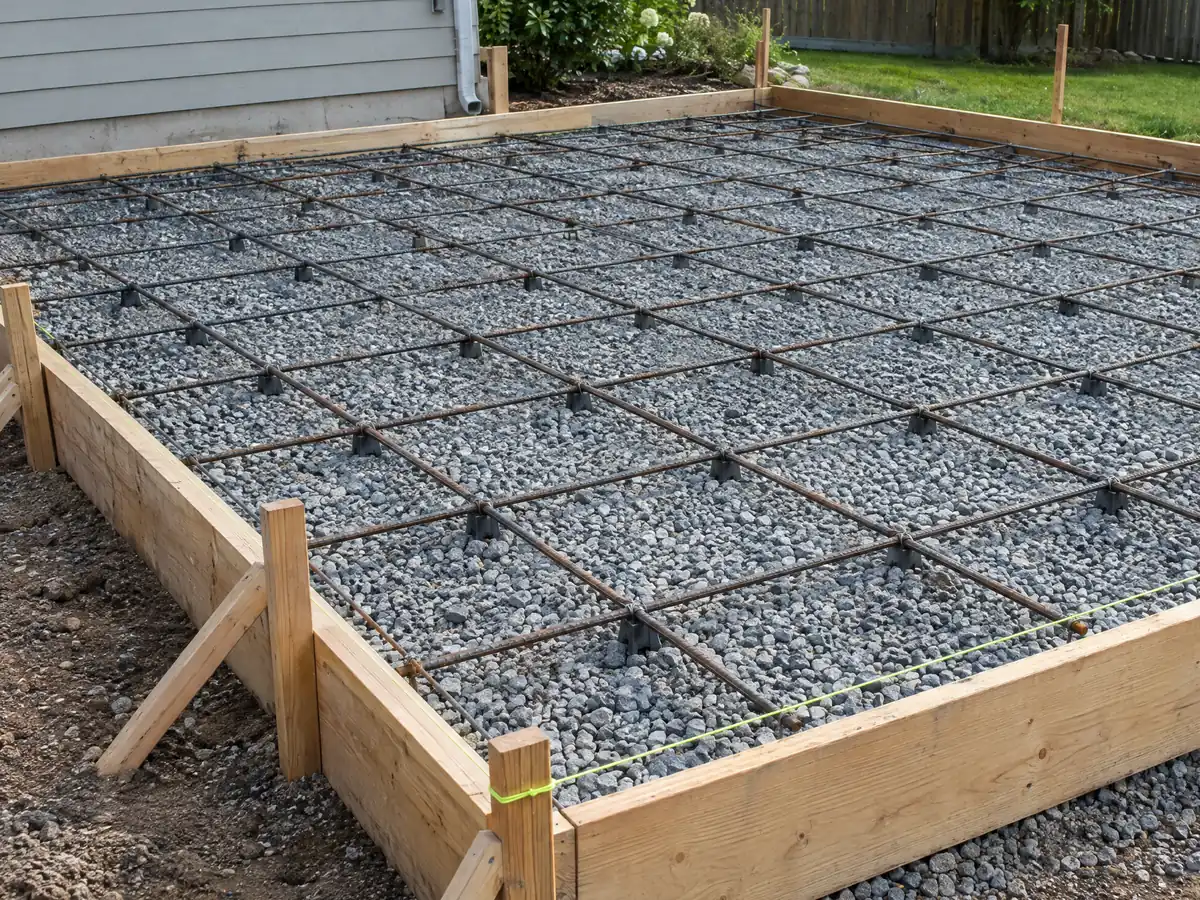
- Under the same chapter (15.52.080 and .090), a base course of at least 4 inches of clean graded gravel or crushed rock (passing a 2-inch sieve, retained on a 1/4-inch sieve) goes under every concrete floor slab, with a 2-inch layer of dry washed sand over the base under a 10-mil waterproof membrane. Fill soils with alkali or sulfate content may not be placed unless a tested sample is no worse than the natural soil at the site (the director of building may waive the test for good cause).
- Chapter 15.08.030 (Ord. 1201, 6-28-23) writes the same sulfate rules into the building code as amendments: CBC 1904.3 Type V cement, 1907.1.2 four-inch base course with a capillary break, 1907.1.3 two inches of dry washed sand under a 10-mil membrane, and Appendix J grading amendments (Director of Public Works acts as Building Official for grading, alkaline fill testing, minimum drainage gradients of 0.5 percent for poured-in-place concrete and 1.0 percent for asphalt).
- The City's Cement Protection Information handout says Coachella requires extra fortification for all cementitious construction because of harmful, intrusive soils: a minimum 10-mil visqueen under all cementitious materials, a plastic membrane between pools and soils and between flatwork and cement, and protection of the first 2 courses of block walls, and it points to Title 15 of the Municipal Code.
- Block wall membrane (Municipal Code 15.53, Ord. 1147, 1-22-20, third-party mirror): all concrete block used for retaining, freestanding, fence and structural walls must be protected from sulfate and selenium erosion with a liquid-applied, surface-bonding rubberized, polymer or asphalt membrane from the top of the footing up to 8 inches above finished soil grade without interruption, including mortar and head joints. Preformed membrane papers are not allowed. The ordinance's own finding is that sulfate and selenium eroded block "down to its aggregate content" and it estimates the extra cost at about $1 to $2 per linear foot of block wall.
- Driveways and curb cuts (Municipal Code 12.16, third-party mirror): any curb cut, curb or sidewalk removal or new driveway on a public street needs a permit from the public works superintendent; a driveway may be no wider than 30 feet at the top of curb, driveways serving one lot must be at least 18 feet apart, no more than 40 percent of a lot's frontage may be driveway, a curb may only be removed if a concrete driveway between curb and sidewalk is installed, and forms must be inspected before concrete is poured.
- Single-family driveway design (Municipal Code 17.19.020, Ord. 1204, 7-26-23): a driveway wider than 20 feet (measured 5 feet in front of the garage) must be decorative (pavers, colored concrete, decorative finishes or another approved treatment) and stamped concrete is not allowed; parking in the front setback is allowed only on approved driveways. The chapter covers new detached single-family homes, additions to them and accessory structures such as garages (third-party mirror).
Sources for these rules
- gocodebook.com: chapter 15.04 administration 1
- gocodebook.com: chapter 15.52 concrete on alkaline soil
- gocodebook.com: chapter 15.08 building code 2
- web.archive.org: 638616738833630000
- gocodebook.com: chapter 15.53 protection of preformed concrete block
- gocodebook.com: chapter 12.16 curb cuts and driveways
- gocodebook.com: chapter 17.19 supplemental standards for single family resid
What does Coachella's code require under and in a concrete slab, and why?
The City's own findings say the ground attacks concrete. Municipal Code 15.52 covers concrete that touches alkaline, sulfate-bearing soil and requires Type V Portland cement for slabs on earth or fill, footings, foundations, curbs, gutters, sidewalks, driveways and walls that retain earth, at no less than 470 pounds (5 sacks) of cement per cubic yard, or 418 pounds with an approved water reducer. Floor slabs must be at least 3.5 inches thick and at least 8 inches above finish grade.
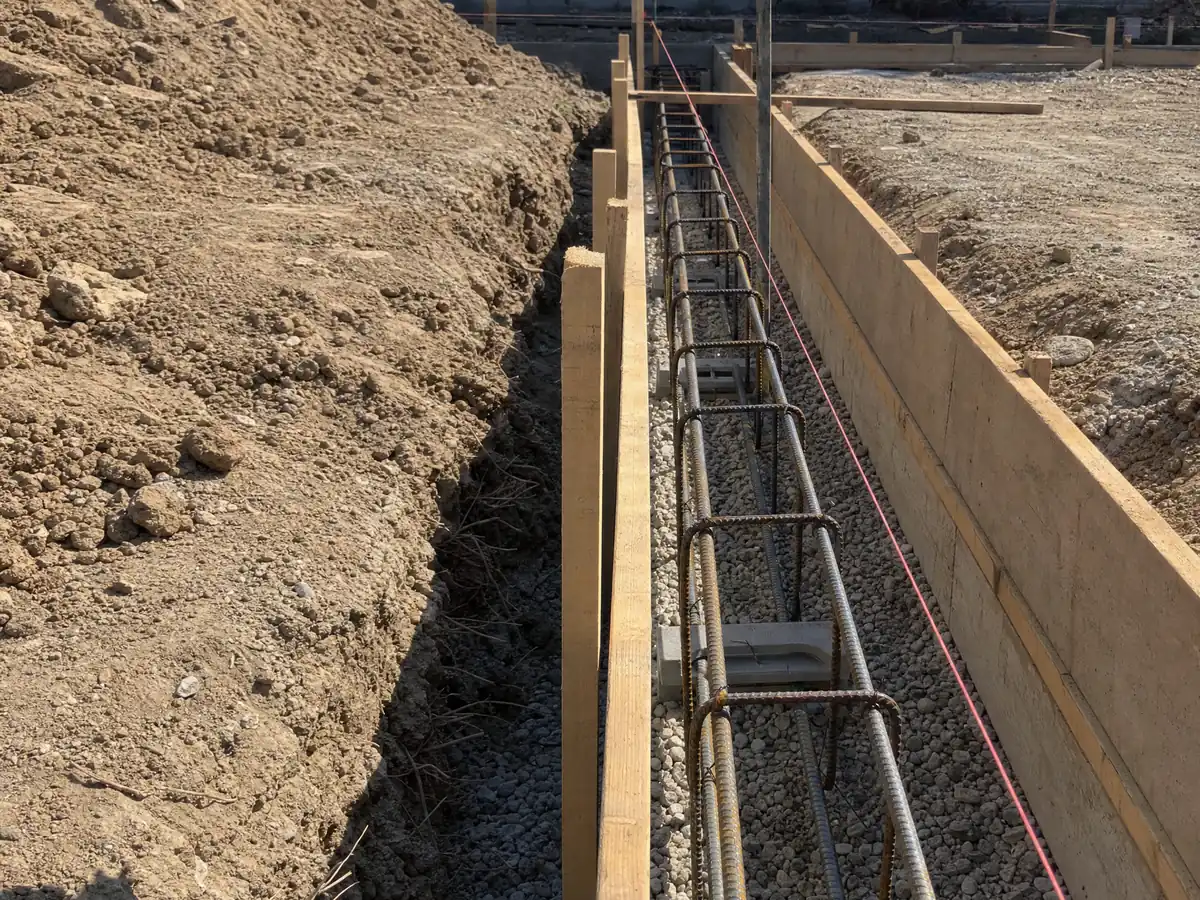
Under the slab goes a fixed stack. Sections 15.52.080 and .090 call for at least 4 inches of clean graded gravel or crushed rock, then 2 inches of dry washed sand, then a 10-mil waterproof membrane, and Ordinance 1201 of June 2023 repeats that stack in the building code amendments. Fill soil with alkali or sulfate content may not go in unless a tested sample is no worse than the natural soil, though the director of building may waive the test for good cause.
The top of a slab must also sit at least 8 inches above the street crest or curb top. The City's Design Criteria handout tells engineers to assume the soil is highly corrosive to metals and concrete and that termites are abundant. Everything here reached us through a mirror and City handout copies, so ask the counter which edition of each rule applies.
How must a block wall be protected from Coachella's soil?
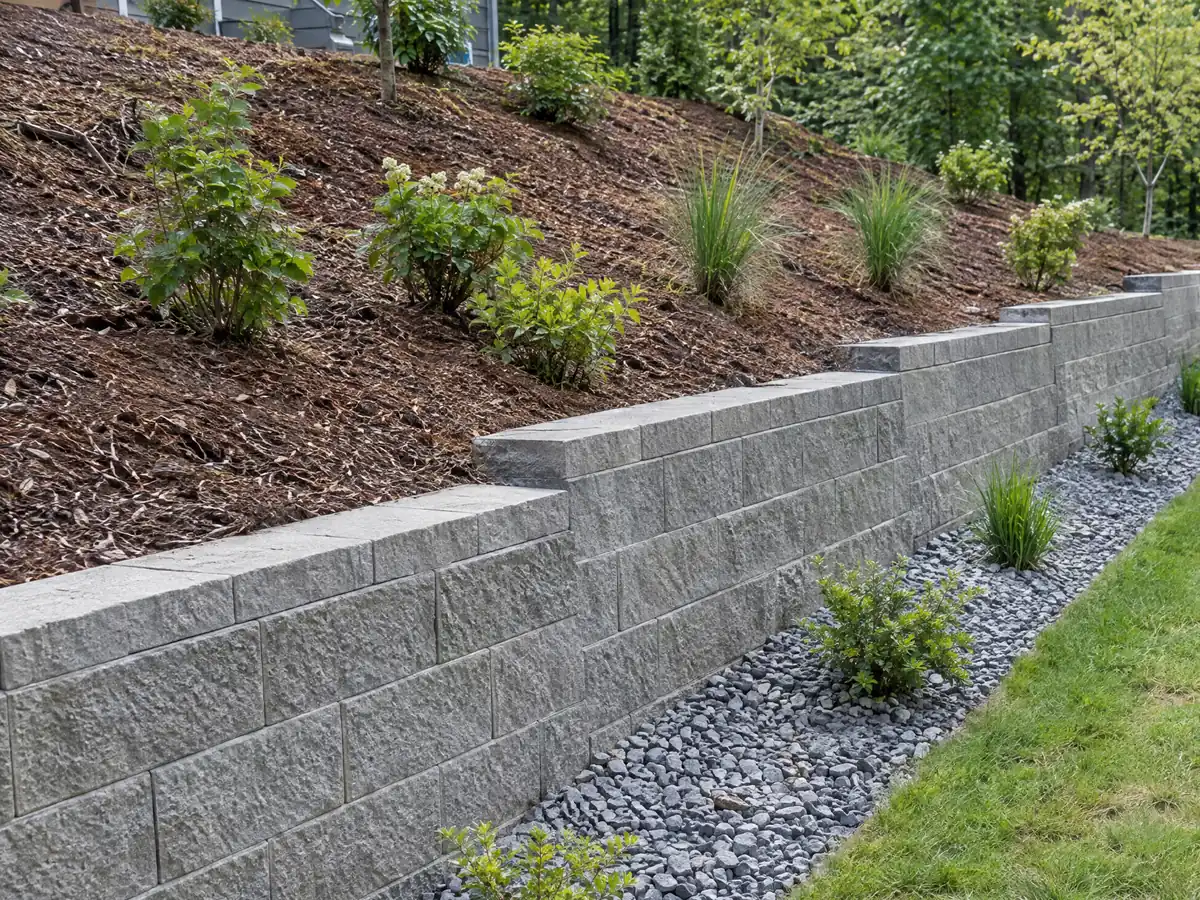
With a liquid membrane, from the footing up. Municipal Code 15.53 requires every concrete block used in a retaining, freestanding, fence or structural wall to be coated with a liquid-applied, surface-bonding rubberized, polymer or asphalt membrane from the top of the footing to at least 8 inches above finished soil grade, without a break, mortar and head joints included. Preformed membrane papers are not allowed. The City's Cement Protection handout describes the same idea as protecting the first two courses.
The ordinance explains itself. Its findings say sulfate and selenium had worn block down to its aggregate, and it puts the added cost at about $1 to $2 per linear foot of wall, a figure from a January 2020 ordinance rather than a current quote. Post-tension masonry walls are prohibited outright under Municipal Code 15.04.020.
Walls come with inspections. The City's block wall handout calls for a footing inspection with the trench clean, a rebar and pre-grout inspection before any grout, and a final after grouting and before decorative caps, with pilasters no more than 20 feet apart when infill fencing is attached. Block is CSLB's C-29 class; ask who applies the membrane and who checks it at the joints before backfill.
What do Chapter 8.20 and Rule 403.1 require before a slab job moves dirt in Coachella?
A plan, a deposit and a bond, once the disturbed area passes 5,000 square feet. Chapter 8.20 of the Municipal Code, from Ordinance 896 of 2003, requires a City-approved dust control plan before earth-moving, a $2,000 cash deposit plus a bond or equivalent of at least $2,000 per acre, and removal of track-out within one hour when it extends more than 25 feet and at the end of every workday. Visible dust may not pass 20 percent opacity, travel beyond 100 feet or cross a property line.
Small jobs still owe the dust standard. Below 5,000 square feet no plan is required, but the opacity and 100-foot limits cover any dust-generating work, and a site over an acre that waters for control must run a water application system. South Coast AQMD Rule 403.1, the Coachella Valley supplement to Rule 403, repeats the 5,000 square foot trigger and asks any operator claiming a high-wind exemption to track whether wind exceeds 25 mph.
Two points we could not confirm. Rule 403.1 maps a Blowsand Zone two miles either side of I-10, from the SR-111 junction southeast to the Jefferson Street interchange in Indio, and we did not check which Coachella parcels fall inside it. The District's dust control page lets an authorized local agency approve the plan, and we could not confirm that the City's ordinance counts, so ask which office takes it.
Does a concrete patio, slab or walkway need a permit in Coachella?
Usually yes, and the code says so directly. Municipal Code 15.04.020, which amends the model code's permit list, names concrete flatwork, patio slabs and pavers, except walkways that section 105.2 exempts, and any new driveway of concrete, pavers, grass-crete or a similar surface. It also lists removal and repair of masonry walls for gates and driveways and resurfacing or re-striping of parking lots, and we read it in the mirror, so confirm the current text.
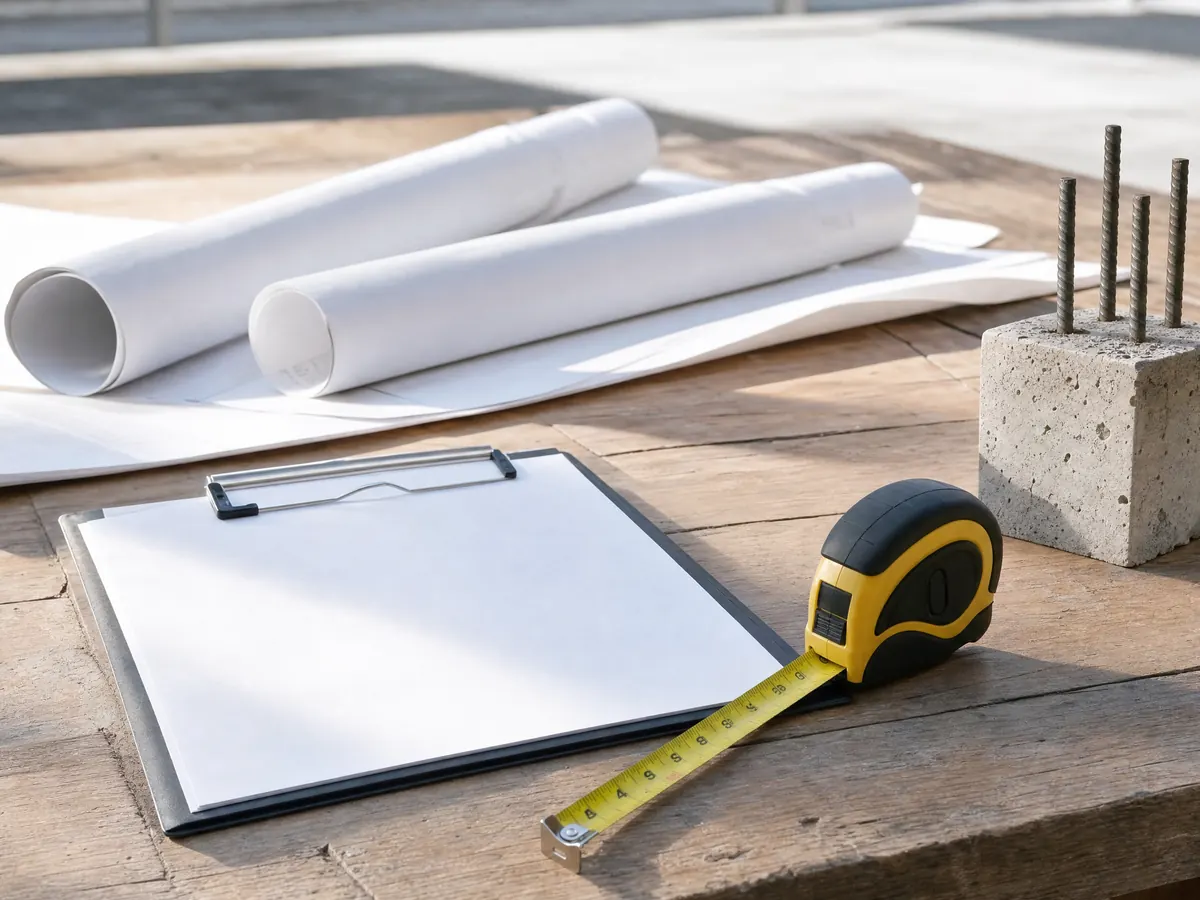
The City asks for plans. Its residential checklist wants plot plans showing easements and setbacks, plus foundation, floor and roof plans for a building. The soils handout waives a soils report for fences and block walls of 10 feet or less, retaining walls holding back 6 feet or less of level grade without surcharge, and patio covers and carports at an existing home, though the Building Official may still ask for one where soil or slope is questionable.
Inspection is booked ahead. The driveway chapter requires forms to be inspected before concrete is poured, and the City books inspections on (760) 501-8150 before 4 p.m. the day before. Applications are emailed to buildingservices@coachella.org, and we quote no permit fee because the City's fee schedule PDF is titled January 2014.
How wide can a Coachella driveway be, and what does a curb cut need?
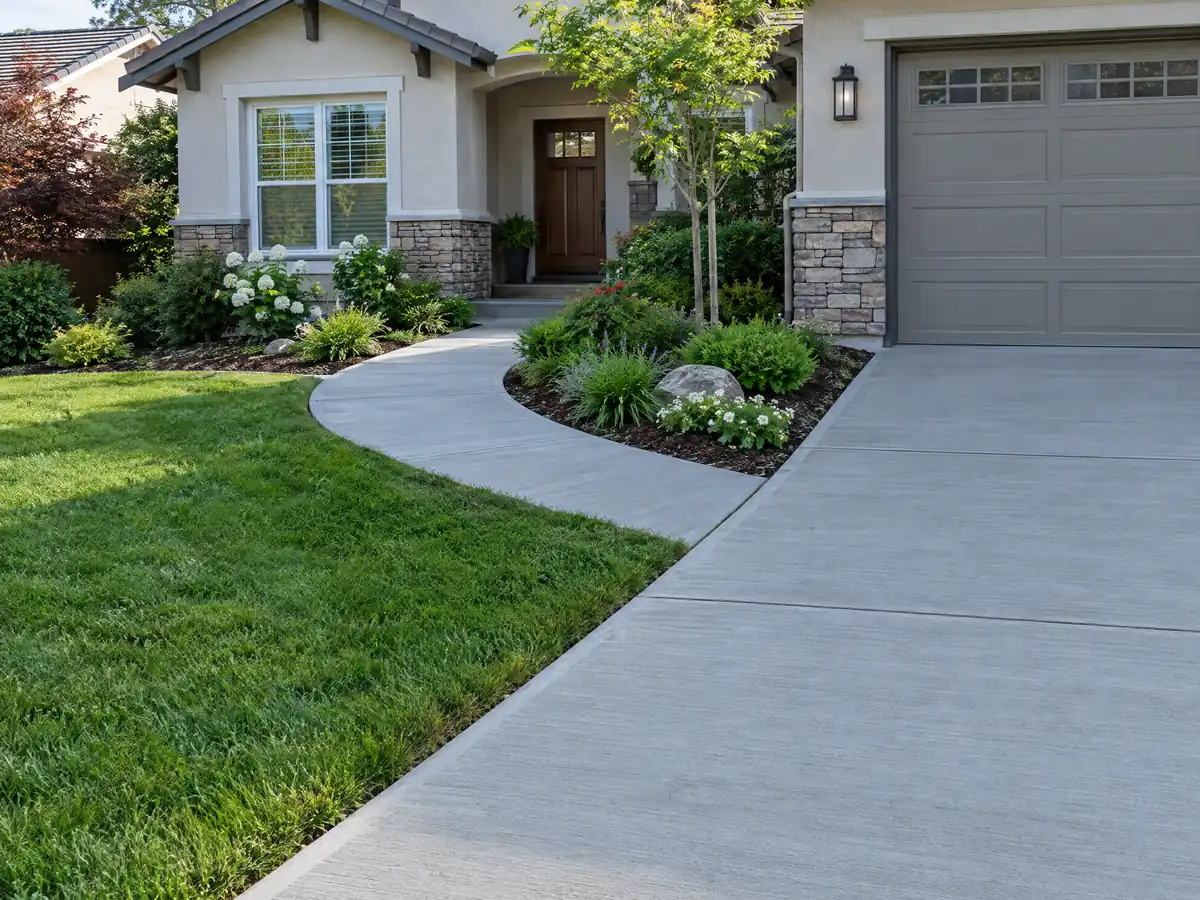
Municipal Code 12.16 requires a permit from the public works superintendent for any curb cut, curb or sidewalk removal or new driveway on a public street. A driveway may be no wider than 30 feet at the top of curb, two driveways serving one lot must stand at least 18 feet apart, and no more than 40 percent of a lot's frontage may be driveway. A curb may come out only if a concrete driveway goes in between curb and sidewalk.
Zoning adds an appearance rule for houses. Under Municipal Code 17.19.020, a driveway wider than 20 feet, measured 5 feet in front of the garage, must be decorative, meaning pavers, colored concrete, decorative finishes or another approved treatment, and stamped concrete is not allowed there. Parking in the front setback is allowed only on approved driveways, and the chapter covers new detached homes, additions to them and accessory structures such as garages.
Replacement is a question to ask. The permit list names any new driveway, and we could not confirm how the City treats a tear-out and re-pour in the same footprint, so ask before the saw touches the apron. The City's grading amendment also sets a minimum drainage gradient of 0.5 percent for poured-in-place concrete, which is 6 inches of fall per 100 feet.
How do 120 days at 100 degrees, 70 mph winds and flash floods change a pour in Coachella?
Heat sets the clock. NOAA's 1991 to 2020 normals for Desert Resorts Regional Airport show July highs of 106.9 F, about 120 days a year at or above 100 F and only 2.96 inches of rain. We found no Coachella source on placing temperatures, so ask the concrete subcontractor how the crew will place, finish and cure at 105 F, when the truck is due and who waters the slab afterward.
Wind is the second hazard. The City's code findings call hot dry winds of 70 mph or more common, and its design handout sets residential wind design at 123 mph. A fresh slab, an open trench and a pile of base rock all give that wind something to carry, which is where the dust duties above come from. Ask whether the crew has a wind plan and a wetting plan.
Water arrives in bursts. The City's code says flash flooding from short, intense storms is common in the valley even in drought, the design handout uses 2 inches per hour as the 100-year rainfall, and the storm page leads with the City's emergency proclamation for Hurricane Hilary. Work in a FEMA special flood hazard area needs a permit from the Director of Public Works under Chapter 15.56, and we did not check which parcels are mapped. Ask how a new slab sheds water away from the house.
What does concrete work cost in Coachella, and which license covers it?
No Coachella price study turned up, so the anchor is Angi's pages for Los Angeles. Its August 4, 2026 patio page shows $4 to $13 a square foot with a $5,248 average, its July 20, 2026 stamped page shows $15 to $30, and its May 5, 2026 driveway page shows $8 to $20. The federal May 2025 survey puts cement masons in the Los Angeles area at a mean $33.67 an hour. Desert bids may differ.
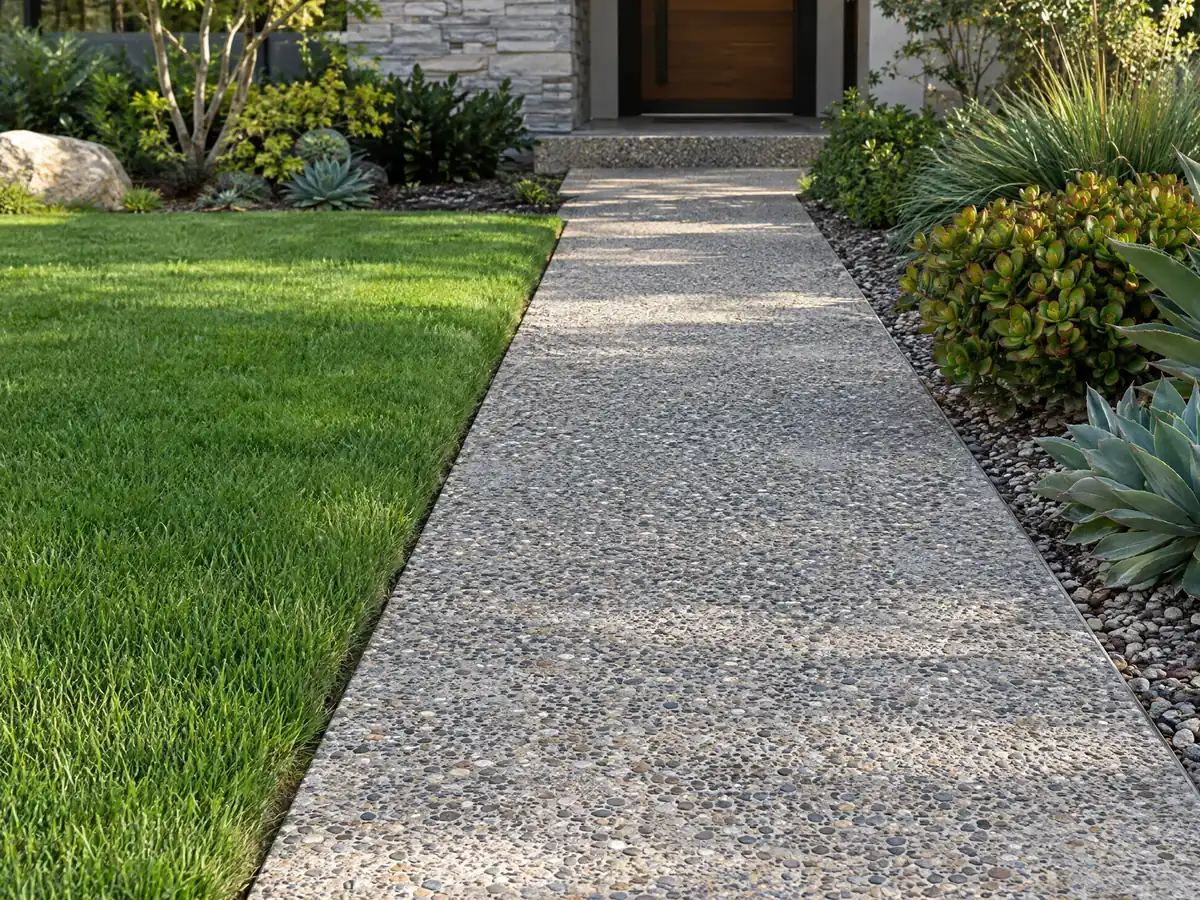
For Los Angeles we plan $8 to $14 a square foot for plain flatwork of 300 square feet or more, $15 to $30 for stained, stamped or exposed aggregate finishes and $9 to $20 for a driveway replaced with the old slab hauled off, so a plain 20 by 20 slab lands near $3,200 to $5,600. A Coachella proposal should break out Type V cement, the base, sand and membrane, any wall membrane, the dust deposit and bond, and haul-off. We found no price source for the soil work beyond the City's own $1 to $2 per foot wall membrane estimate.
Forming, pouring and finishing fall under CSLB's C-8 class. Work that needs a permit also needs a licensed contractor under Business and Professions Code 7048, and our license check guide shows how to read a CSLB record.
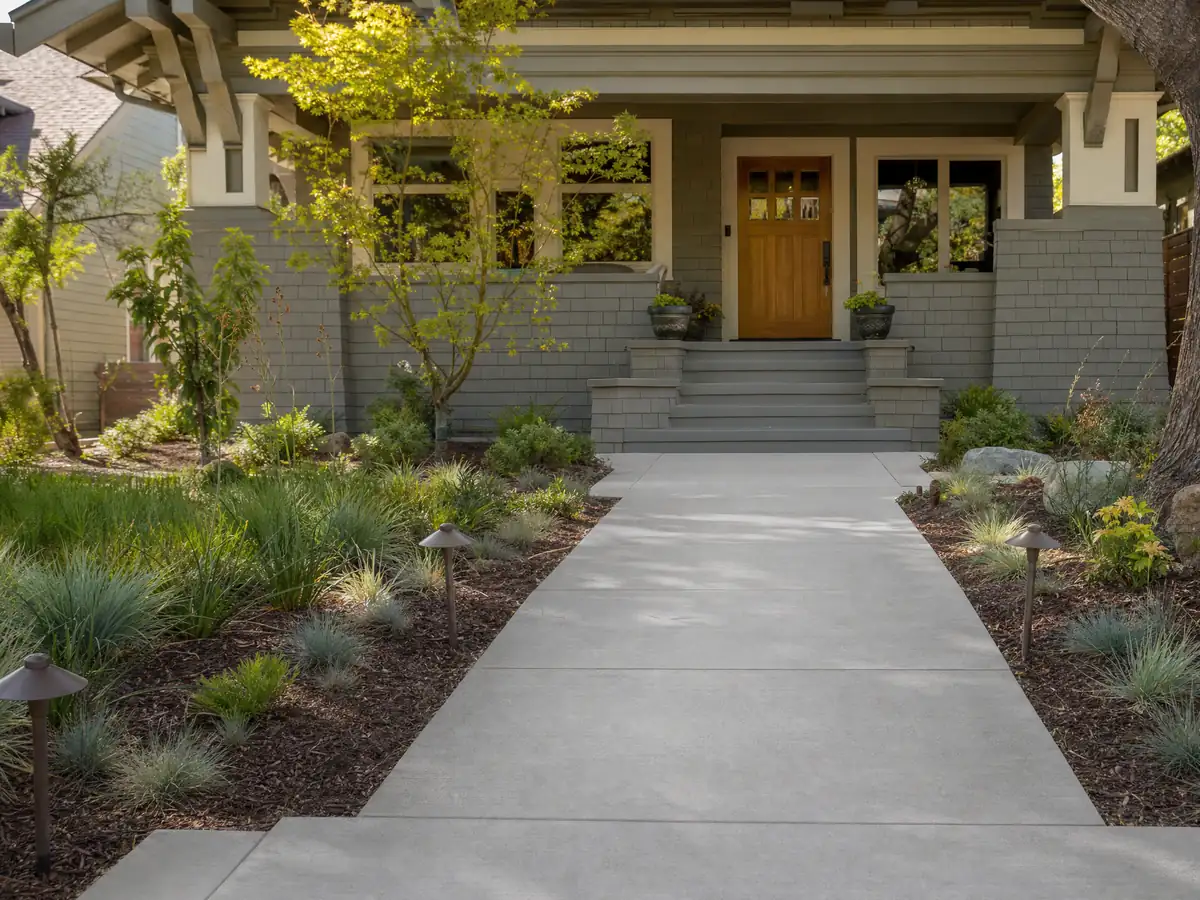
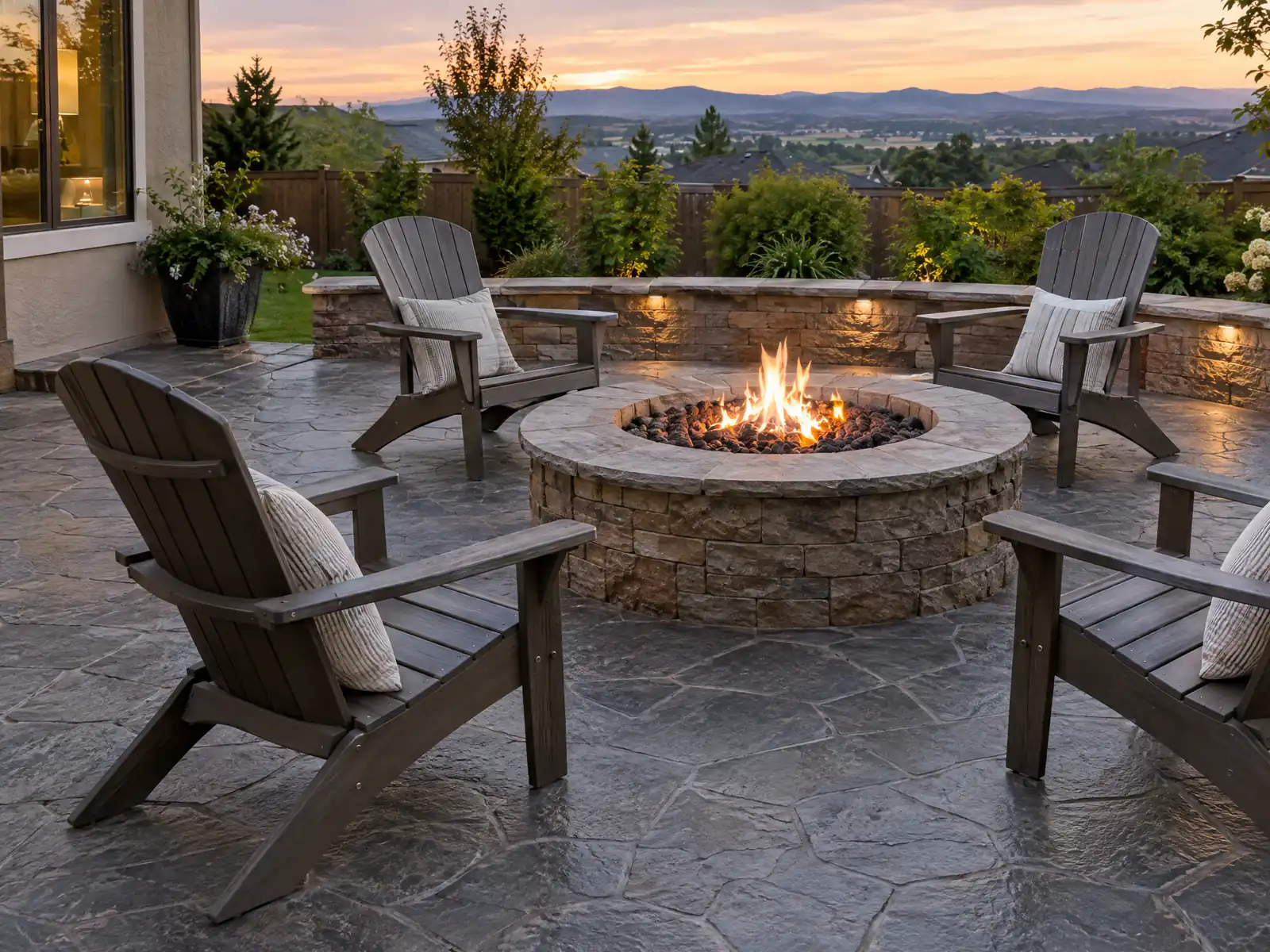
Concrete photos from Coachella and nearby communities
Footings, rebar, screeded slabs and finished walks and patios from Coachella and the valley towns beside it, shown at the steps where the rules bite. Tap any photo to enlarge it.
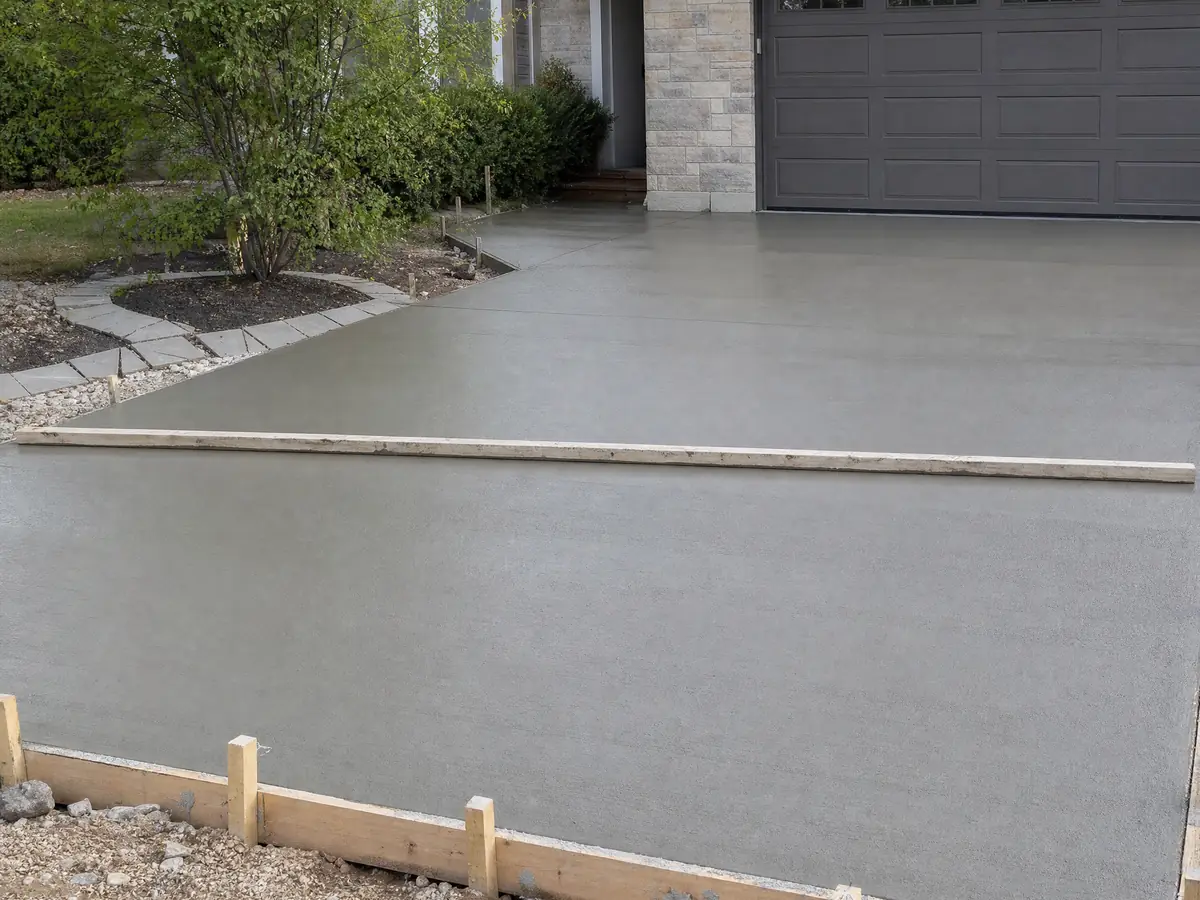
What concrete costs around Coachella
Dollar figures here are Los Angeles planning ranges, not a Coachella bid, and the cement spec, base and membrane, dust deposit, demolition, haul-off, rebar and any wall or street permit belong on separate lines of the written proposal. The same property may need flooring in Coachella or decks in Coachella. Down the valley, compare concrete in Indio and concrete in Palm Desert; farther inland, concrete in Hemet and concrete in Perris, with concrete in Los Angeles as the benchmark. Our subcontractor guide explains who forms a slab and who finishes it, and the flooring cost guide prices surfaces that go over one.
| What it covers | Typical range |
|---|---|
| Patio, walkway or slab, broom finish, 300 sq ft or more | $8 to $14 per square foot |
| Decorative: stained, stamped or exposed aggregate | $15 to $30 per square foot |
| Driveway replacement, with demolition of the old slab | $9 to $20 per square foot |
| 20 by 20 foot plain patio (400 sq ft) | About $3,200 to $5,600 |
| 20 by 20 foot decorative patio (400 sq ft) | About $6,000 to $12,000 |
| Small jobs under 300 sq ft | Usually above the per-foot range |
| Retaining walls | Set by the written proposal |
Coachella concrete questions, answered
Can I pour a concrete patio without a permit?
Not in Coachella, as far as we can read. Municipal Code 15.04.020 lists concrete flatwork and patio slabs among the work that needs a building permit and exempts only walkways that the model code exempts. Setbacks, dust limits and the sulfate soil rules apply as well. Email buildingservices@coachella.org with the size and location, and confirm the current text.
Can I expand my driveway without a permit?
No. A new driveway of concrete, pavers or a similar surface needs a building permit under Municipal Code 15.04.020, and a curb cut or new driveway on a public street needs a public works permit under Chapter 12.16. Width tops out at 30 feet at the curb and 40 percent of the frontage, and front setback parking is allowed only on approved driveways.
How much should a 20x20 concrete patio cost?
At our Los Angeles planning range of $8 to $14 per square foot, a plain 400 square foot slab costs about $3,200 to $5,600, and Angi's August 2026 Los Angeles page shows a 20 by 20 slab at $1,600 to $5,200. We found no Coachella study. Type V cement, the base and membrane, dust costs and demolition add to either figure.
Is a 2 inch concrete slab enough for a patio?
No. Two inches is too thin for structural concrete anywhere, and Coachella's code sets 3.5 inches as the minimum for floor slabs on sulfate soil, with 4 inches in the City's minimum foundation details for exempt structures. We found no number written for patio flatwork alone, so ask the proposal to state the thickness, base and reinforcement.
What is the maximum height of a retaining wall without a permit in California?
California's model building code lets a retaining wall of 4 feet or less, measured from the bottom of the footing, skip a permit unless it supports a surcharge. Coachella is stricter: Municipal Code 15.04.020 exempts retaining walls up to 2 feet from the top of the footing to the top of the wall. Anything taller needs a permit, and block must carry the sulfate membrane.
What is Type V cement, and does my Coachella slab need it?
Type V is sulfate-resistant Portland cement, and yes: Municipal Code 15.52 requires it for slabs on earth or fill, footings, foundations, curbs, gutters, sidewalks, driveways and walls that retain earth where concrete touches sulfate-bearing soil, at 5 sacks or more per cubic yard. Ask the proposal to name the cement type and sacks per yard.
Do I need a dust control plan to pour concrete in Coachella?
Only when you disturb more than 5,000 square feet, but the dust limits apply to every job. Chapter 8.20 requires a City-approved plan, a $2,000 cash deposit and a bond on larger sites, and track-out cleanup within one hour; below 5,000 square feet the 20 percent opacity and 100-foot limits still apply. Ask whether the City or South Coast AQMD takes the plan.
Does a block wall in Coachella need a waterproof coating?
Yes, a liquid-applied membrane. Municipal Code 15.53 requires it on every block retaining, freestanding, fence or structural wall, from the top of the footing to 8 inches above finished soil grade, mortar and head joints included, and preformed membrane papers are not allowed. The City's own 2020 estimate was $1 to $2 per linear foot, not a current price.
What license does a concrete company need in Coachella?
Poured and finished concrete falls under a California C-8 license and block walls under C-29. Coachella's permit paperwork wants the state license number, a business license and a workers' compensation declaration from whoever pulls the permit. Look up the number on the CSLB site and ask each subcontractor for a license and certificate of insurance.
Tell us what you want poured, how big, and what it touches
Say what you want poured, how large it is, and whether it meets a wall, a pool, a garage or the street. The soil spec, dust and permit questions travel with us to the first visit.