
Concrete Companyin Rancho Santa Margarita, CA
A concrete company in Rancho Santa Margarita works through three gates: the City, SAMLARC and the fire rules. The City's exemption list names sidewalks, driveways and retaining walls up to 4 feet, while grading and right of way work need Public Works permits, and SAMLARC covers front-of-home changes. Call 949-635-1800 ext. 6101 before you pour.
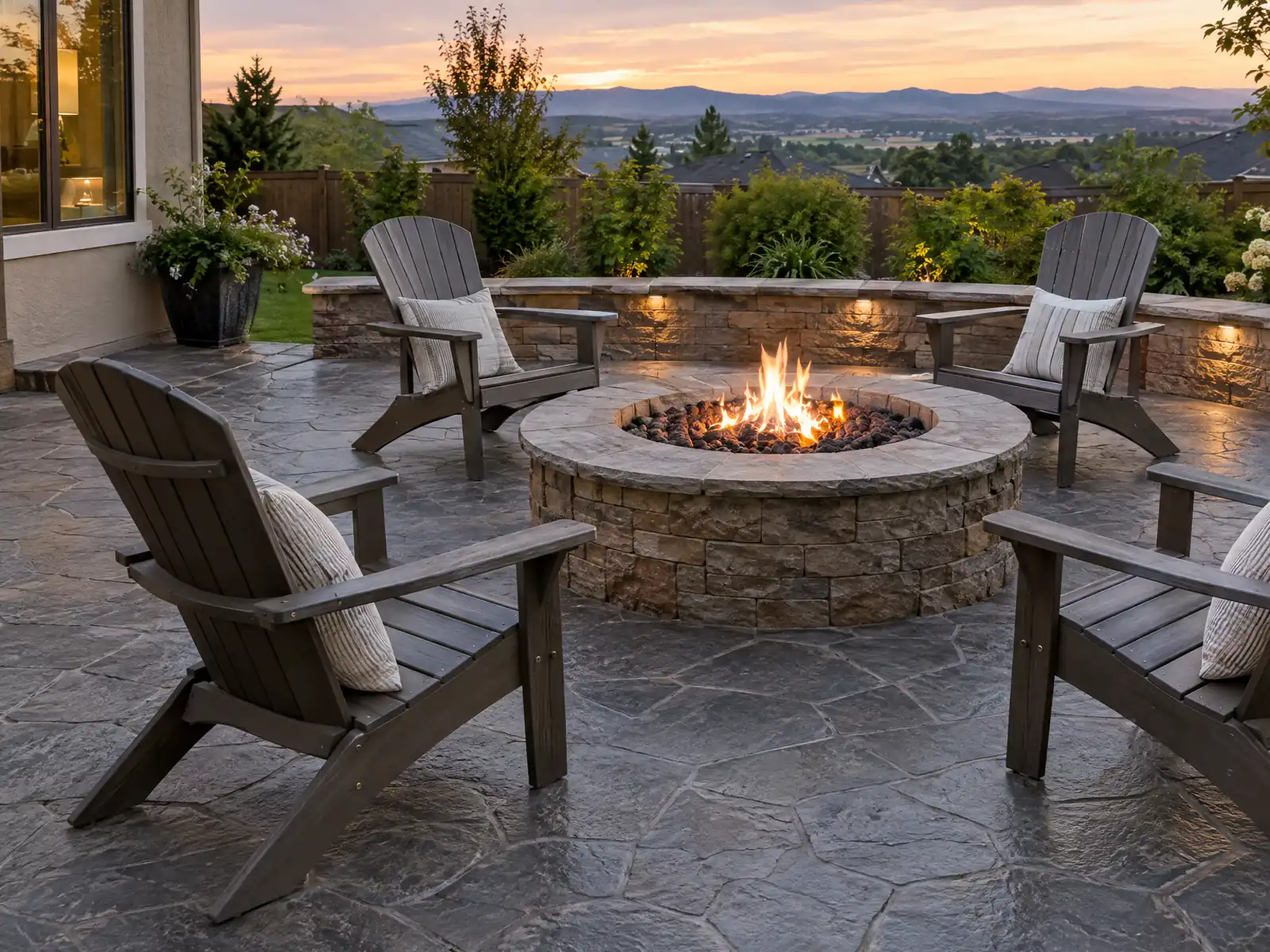
Rancho Santa Margarita's concrete is mostly 30 to 45 years old. Census estimates for 2020 to 2024 put 50.6 percent of the city's 17,498 homes in the 1990s and 35.4 percent in the 1980s, and the neighborhoods were laid out as planned communities, Rancho Santa Margarita, Rancho Trabuco, Robinson Ranch and Dove Canyon, after the O'Neill family created the Mission Viejo Company in 1963 and ground was broken on the Urban Village in the mid-1980s. Those driveways, walks and patios sit on a river terrace with clay layers that move.
At MDG Builders, CSLB #1040337, a general contractor based in Tarzana, the sequence is plan the job, put the setback and permit questions to the City's Building and Safety Division, then hand the forms, pour and finish to a licensed concrete subcontractor whose license number you are free to request. Finishes and ranges are on the concrete page, and the Rancho Santa Margarita overview covers the other trades we manage here.
What Rancho Santa Margarita's Building and Safety Division, Public Works, SAMLARC and OCFA say about concrete work
Where concrete permits come from in Rancho Santa Margarita: City of Rancho Santa Margarita Development Services Department, Building and Safety Division.
- The City's Permit Exceptions page exempts sidewalks and driveways, retaining walls up to 4 feet (footing bottom to wall top, no surcharge) and water tanks up to 5,000 gallons, and says projects involving grading need a Grading and Encroachment Permit from Public Works (ext. 6504).
- The City's Public Works forms page lists the Grading Permit, Encroachment Permit, Stockpile Encroachment Permit, Landscape Permit and Construction and Demolition Permit application package, so grading, encroachment and stockpile work is handled by Public Works.
- The City's retaining wall standard requires masonry, concrete and steel construction with 4,500 psi concrete (minimum), Grade 60 rebar and Type V cement for city-standard walls up to 5 feet in its table, a level backfill clear of structures for 10 feet, and material receipts at inspection because no deputy inspector is required.
- The Safety Element describes most of the city as sitting on competent alluvium on the Plano Trabuco terrace, with liquefaction susceptibility along Trabuco Canyon and Tijeras Canyon creeks, moderate to high expansion layers in every sedimentary unit and the most expansive soils along the western boundary, which affects slab, footing and driveway design.
- CSLB defines the C-8 Concrete classification as forming, pouring, placing, finishing and installing mass, pavement, flat and other concrete work, excluding contractors whose sole business is plaster coatings or placing reinforcing steel.
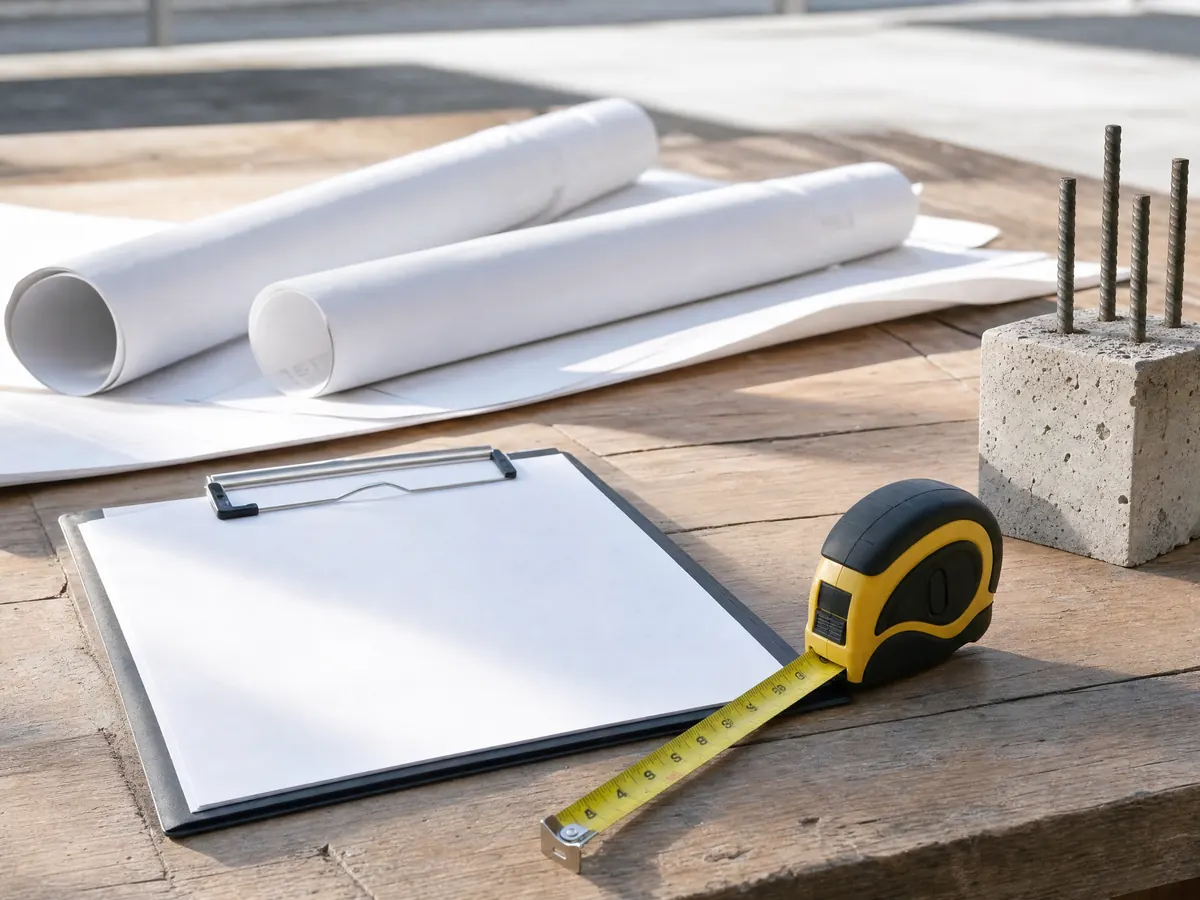
How do you replace a 30-year-old driveway or patio slab at a Rancho Santa Margarita tract home?
Start by deciding whether the slab is worn or moving. The City's 2021 housing survey found 29.1 percent of residents reporting minor deferred maintenance, and the Housing Element calls the city essentially built out, so most concrete work here is replacement and repair rather than new lots. Surface scaling and hairline cracks can often be patched or overlaid, while a slab that has tilted or stepped at its joints points at the soil under it, which is a different job.
Demolition and pour days have logistics. The City exempts construction and building repair noise from its noise code from 7 a.m. to 8 p.m. Monday through Saturday, which suits an early pour. Ask the crew where the truck will park, how the old slab leaves the site and who protects sprinkler lines and the neighbor's wall.
Weather sets the schedule. The nearest temperature normals, from the Irvine Ranch station about 9.4 miles northwest, show August highs averaging 90.2 F and 61.6 days a year at or above 90 F, though it is a valley station and the foothill neighborhoods run differently. The nearest rain station averages 15.25 inches a year and almost none in July or August, so rain delays cluster from December through March.
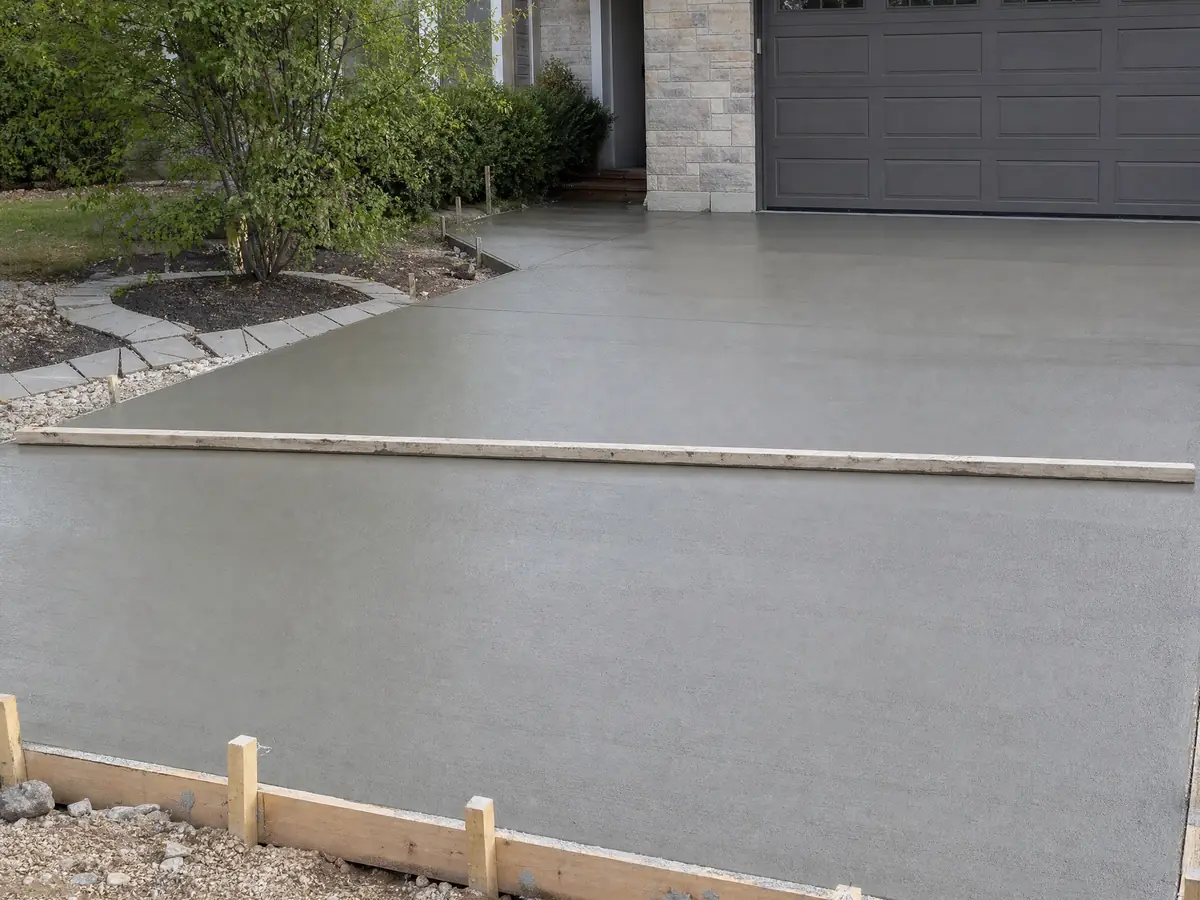
What do the Plano Trabuco terrace and Trabuco Canyon creek soils mean for footings, slabs and driveways?
The City's Safety Element says most of the city sits on competent alluvium on the Plano Trabuco terrace, but it also reports moderate to high expansion layers in every sedimentary unit, the most expansive soils along the western boundary, landslides mapped across the eastern half, and liquefaction susceptibility along Trabuco Canyon and Tijeras Canyon creeks where groundwater has been within 50 feet of the surface. Which of those applies to a lot depends on the lot, and we read no parcel-level map.
The City's Retaining Wall Standard shows what it expects of structural concrete: 4,500 psi minimum, Grade 60 rebar and Type V cement for its standard walls up to 5 feet, plus material receipts at inspection because no deputy inspector is required. Type V is sulfate-resistant cement, a fair question for any footing in clay, though we found no City list that says the same for flatwork.
No active fault crosses the city, and the closest, the Elsinore-Glen Ivy fault, is 10.1 miles away, so the practical soil questions are expansion, groundwater and slope stability. The document to ask for is the builder's original grading report or a geotechnical report for the lot.
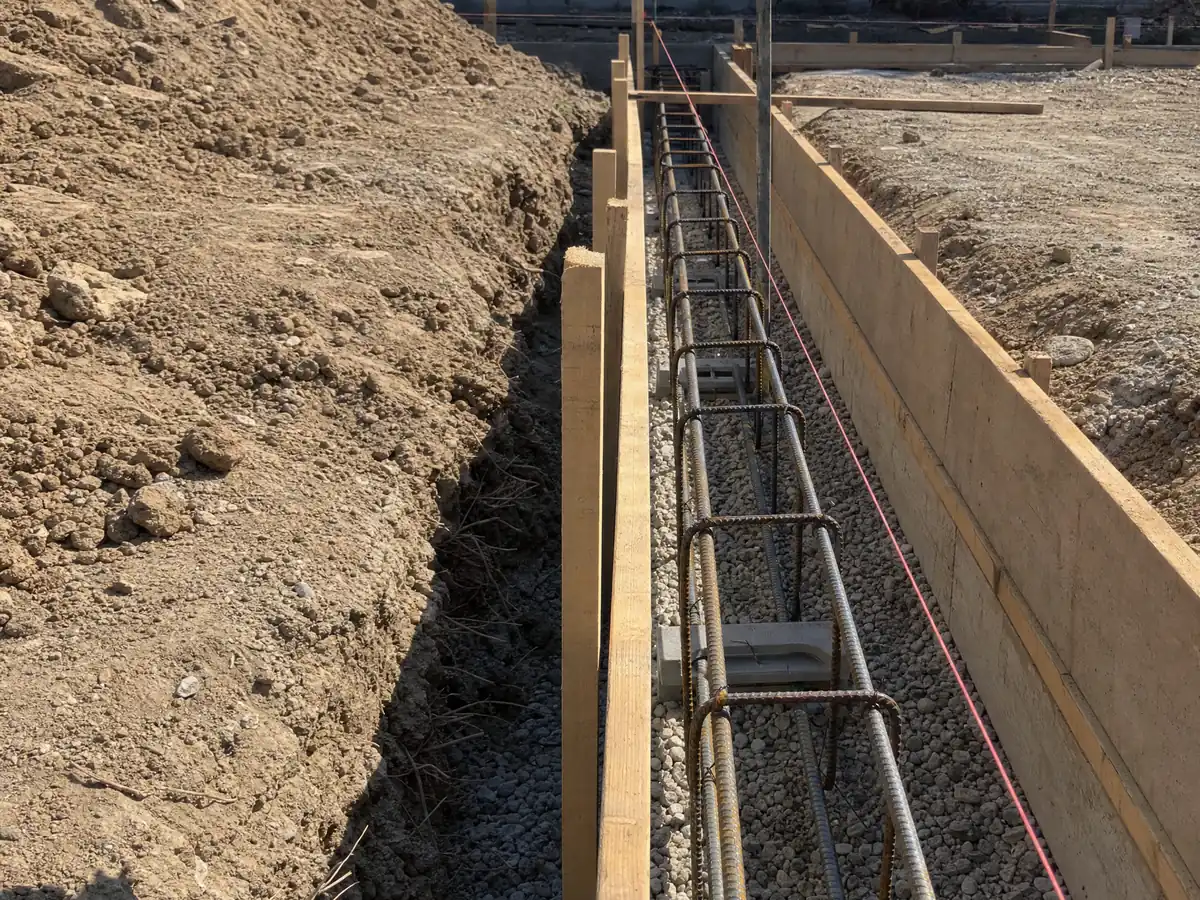
Do you need a permit to pour a driveway, sidewalk or patio in Rancho Santa Margarita?
Often not for the slab itself. The City's Permit Exceptions page lists sidewalks and driveways among work that needs no building permit, and exempt work must still meet the technical codes. A decorative patio slab is not named and zoning decides where it may sit, so ask at ext. 6101 with the size and the distance to each property line.
Public property is a separate permit. The City's Public Works forms page lists grading, encroachment and stockpile encroachment permits, and the Retaining Wall Standard says work in the public right of way needs an encroachment permit, so an apron or sidewalk that touches the street belongs to Public Works at ext. 6504.
Utilities and water districts may weigh in. The City's AB 2234 page lists Santa Margarita Water District, Trabuco Canyon Water District, Southern California Edison and SoCal Gas among outside agencies that can review plans or charge fees, and any pour that digs for footings should start with a call to 811.
- Is the surface at ground level?
- Does any of it reach the sidewalk or street?
- Is the lot beside open space or a slope?
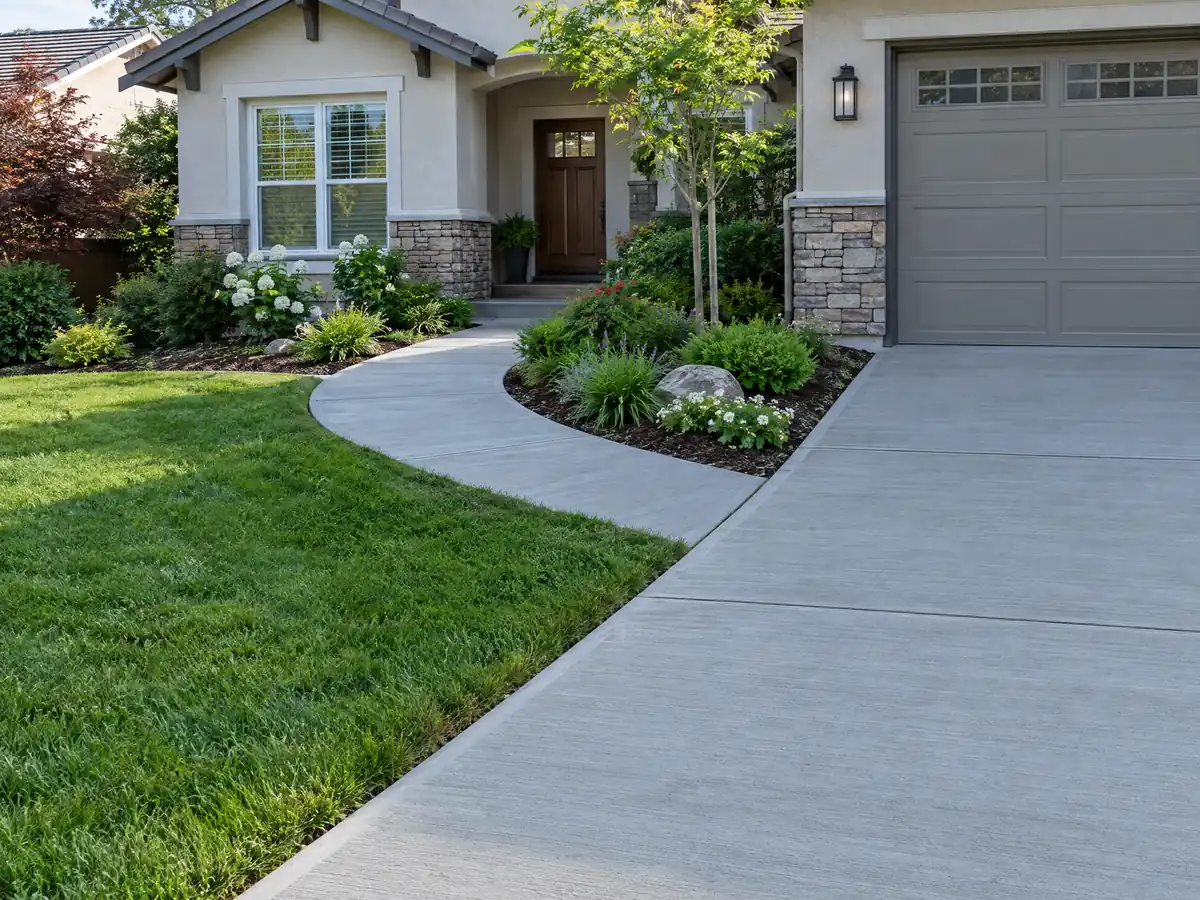
Does SAMLARC or a sub-association have to approve new concrete in the front yard or the back yard?
For the front, almost certainly. SAMLARC says all architectural improvements to the front of a home need its approval, along with those in rear and side yards above the fence line, and a wider driveway, a new front walk or a stamped entry falls in the first group on its face, though we read no SAMLARC sentence that names flatwork. Inside a sub-association tract, the sub-association approves first.
A ground-level rear patio is murkier. Below the fence line SAMLARC's rule does not obviously reach it, but sub-associations may add constraints beyond SAMLARC's standards, and separate associations govern Dove Canyon, Rancho Cielo, Robinson Ranch, Trabuco Highlands and Walden. The City replaced the old planned community zoning with its own zoning code in 2007, yet the planned communities still guide neighborhood character, so ask the management company in writing.
Plan around the calendar. SAMLARC's Architectural Review Committee meets on the second and fourth Mondays, and applicants collect Neighbor Notification signatures from adjacent, facing and impacted neighbors, so a pour date booked before approval is a risk. The rules for how an association answers a written request are in Civil Code section 4765.
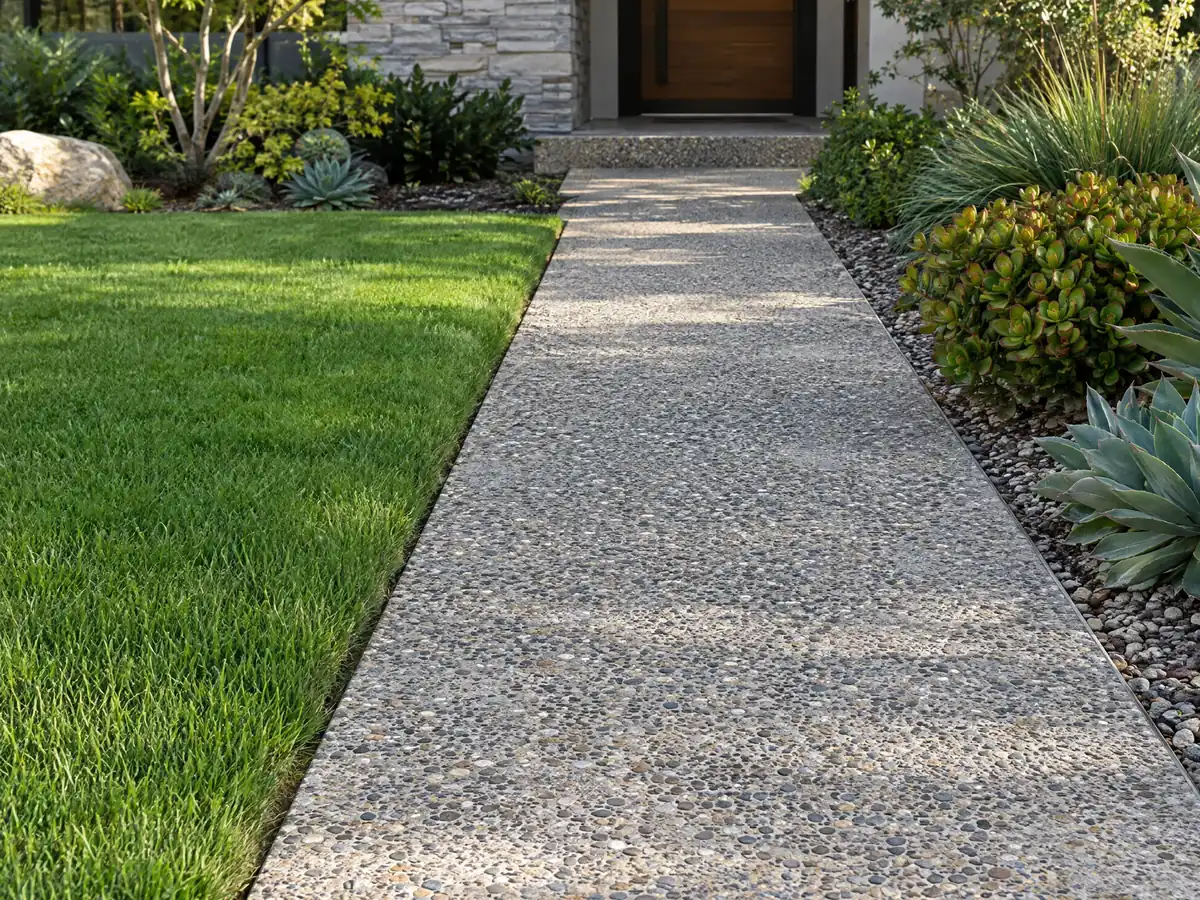
How tall can a retaining wall or block wall be in Rancho Santa Margarita before the City wants plans?
A retaining wall needs a permit when it holds back earth and is over 4 feet measured from the bottom of the footing, per the City's Retaining Wall Standard dated May 7, 2026. That standard design may not be used within 10 feet of a slope or swimming pool, and drainage must be a 4 inch perforated pipe in a gravel pocket 12 inches wide, with nothing draining onto neighbors.
Block garden walls have their own handout. The Block Wall Standard of the same date covers walls up to 6 feet, says it is not designed for retaining, and states that Planning must approve plans before any permit issues. A third-party mirror of the zoning code, which we could not check against the official Municode text, caps fences, walls and hedges at 3.5 feet in a front yard and 6 feet in side and rear yards.
The City's own pages disagree on height. Its Permit Exceptions page exempts fences up to 7 feet and its building FAQ says block walls under 6 feet need no permit, so confirm with Building and Safety before a block is laid. The fee schedule effective October 12, 2026 lists $492.75 for a masonry fence over 6 feet, up to 100 linear feet.
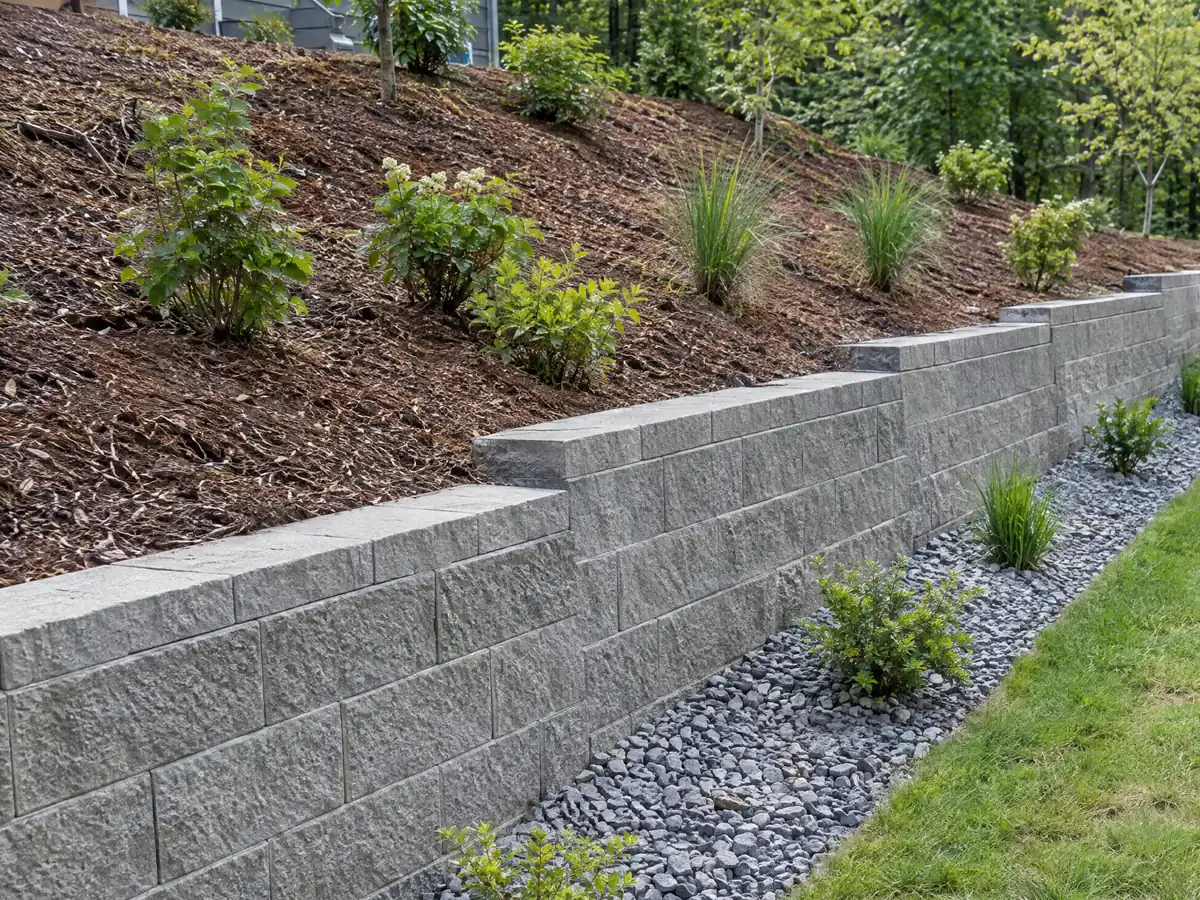
Does a pour near a slope, a creek or open space need a grading permit or OCFA review in Rancho Santa Margarita?
Grading is its own permit. The City's Permit Process page says grading needs a Grading and Encroachment Permit from Public Works at ext. 6504, and we found no City page giving the volume or depth that triggers it, so describe any cut, fill or sunken seating area in feet and cubic yards when you call.
Fire review can come first. OCFA says a property on a community perimeter, next to slopes or open space with non-irrigated vegetation, or in a fire hazard severity zone generally needs a Fuel Modification plan (PR125) and an Accessory Structure plan (PR182), and that OCFA approval is needed before a grading permit. The City's June 25, 2025 presentation showed about 70 percent of the city in proposed Very High, High or Moderate zones, and because we could not confirm adoption, check the City's fire hazard map page for your parcel.
Creeks add drainage questions. FEMA 100-year and 500-year zones follow Trabuco Creek and Tijeras Canyon Creek, the flows are flash-flood type, and the Safety Element says no homes or structures sit inside the mapped zones, so ask Public Works how runoff from a new patio should leave the lot.
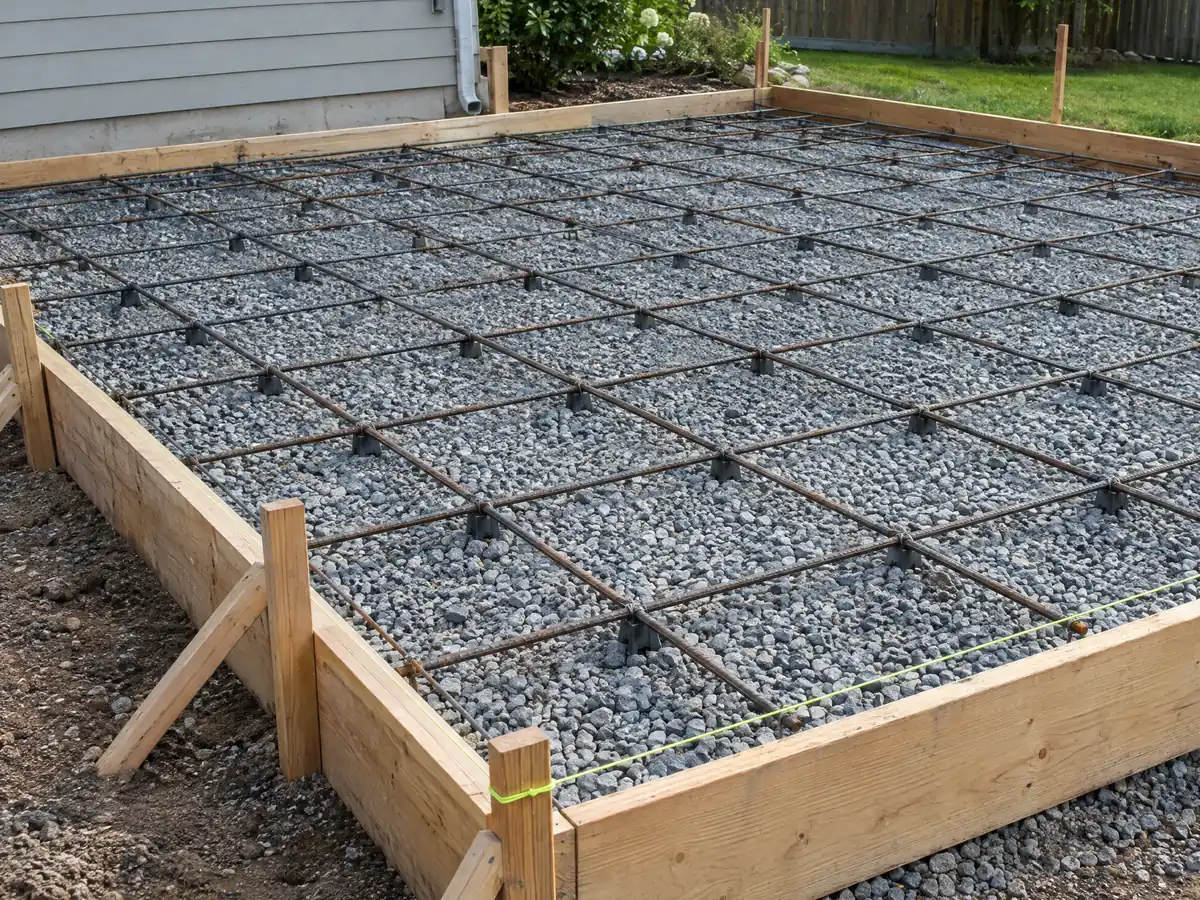
What does concrete work cost around Rancho Santa Margarita, and what license should the crew hold?
We found no Rancho Santa Margarita price study, so these are Los Angeles figures, with medium confidence for plain flatwork. Angi's patio page of August 4, 2026 shows $4 to $13 per square foot, an average of $5,248 and $1,600 to $5,200 for a 20 by 20 foot patio, its stamped concrete page of July 20, 2026 shows $15 to $30, and its driveway page of May 5, 2026 shows $8 to $20.
Our planning figures are $8 to $14 per square foot for typical flatwork of 300 square feet or more, $15 to $30 for decorative finishes and $9 to $20 for driveway replacement including demolition, so a 20 by 20 slab lands near $3,200 to $5,600. Small jobs cost more per foot because of minimum charges, and we print no per-foot retaining wall price because the sources spread too widely. Federal data for May 2025 in the Los Angeles-Long Beach-Anaheim metro area, which includes Orange County, shows cement masons averaging $33.67 an hour, a wage and not a billing rate.
CSLB's C-8 class covers forming, pouring, placing and finishing concrete, and placing rebar alone is excluded. Our license check guide shows how to look a number up.
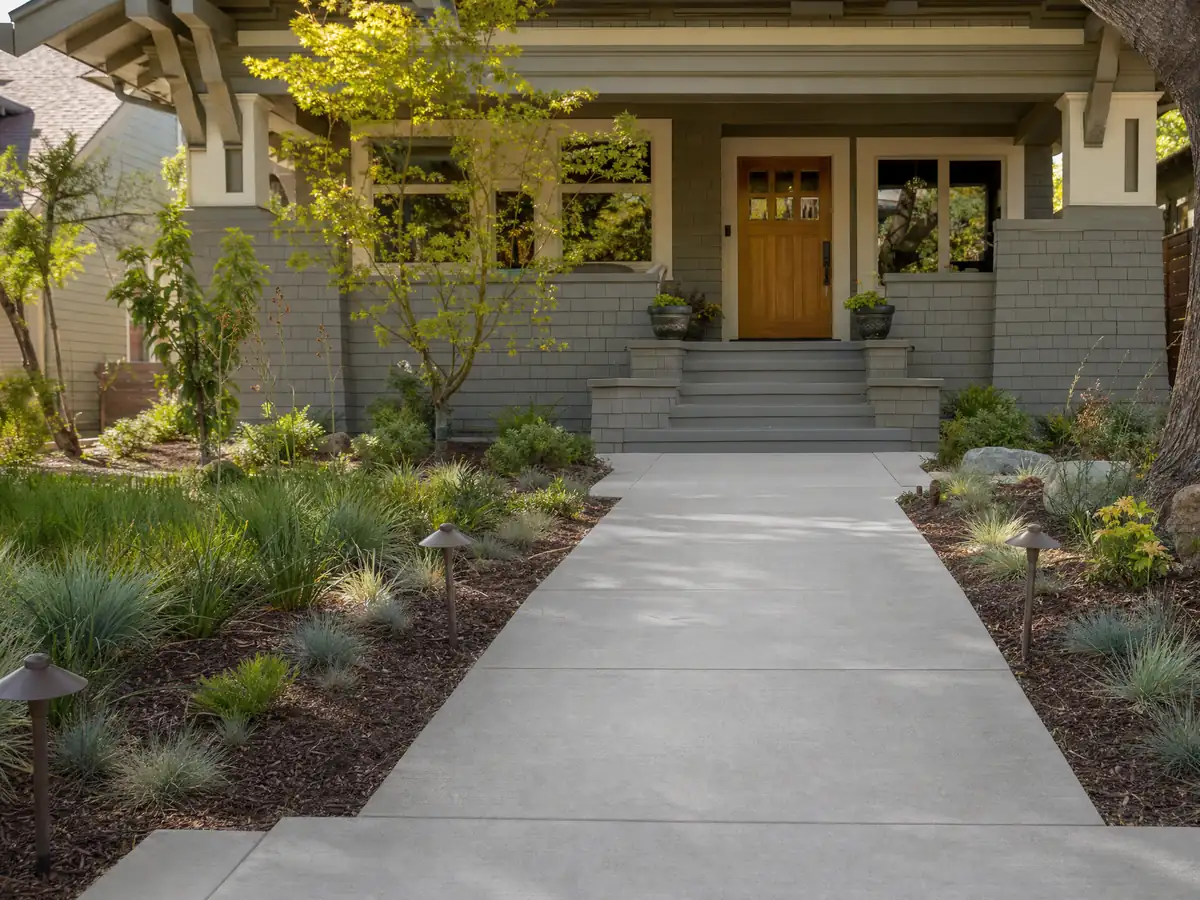
Concrete photos from Rancho Santa Margarita and nearby communities
Forms, rebar, finished flatwork and block walls from Rancho Santa Margarita and towns within about 10 miles, shown at the steps that matter. Tap any photo to enlarge it.
What concrete costs around Rancho Santa Margarita
Dollar figures on this page are planning ranges drawn from Los Angeles sources and our concrete page, not a Rancho Santa Margarita bid, and a proposal should show demolition, base, rebar and any City or OCFA review on separate lines. The same property may need flooring in Rancho Santa Margarita or a deck builder here. Nearby, compare concrete work in Mission Viejo, concrete in Lake Forest and concrete in Laguna Niguel. Our subcontractor guide explains who does what.
| What it covers | Typical range |
|---|---|
| Patio, walkway or slab, broom finish, 300 sq ft or more | $8 to $14 per square foot |
| Decorative: stained, stamped or exposed aggregate | $15 to $30 per square foot |
| Driveway replacement, with demolition of the old slab | $9 to $20 per square foot |
| 20 by 20 foot plain patio (400 sq ft) | About $3,200 to $5,600 |
| 20 by 20 foot decorative patio (400 sq ft) | About $6,000 to $12,000 |
| Small jobs under 300 sq ft | Usually above the per-foot range |
| Retaining walls | Set by the written proposal |
Other work we manage in Rancho Santa Margarita
Rancho Santa Margarita concrete questions, answered
Can I pour a concrete patio without a permit?
In Rancho Santa Margarita, possibly, but the City does not name patio slabs. Its Permit Exceptions page lists sidewalks and driveways, and zoning still decides where a slab may sit. Call the Permit Technician at ext. 6101 with the size and the distance to each property line, and ask the sub-association whether a rear patio needs its approval.
Can I expand my driveway without a permit in Rancho Santa Margarita?
The slab may be exempt, since the City's list names driveways, but a wider driveway is a front-of-home change that SAMLARC says needs its approval. An apron that touches the street needs a Public Works encroachment permit, so ask both offices before the old concrete comes out.
What is the maximum height of a retaining wall without a permit in California?
In Rancho Santa Margarita it is four feet, measured from the bottom of the footing, when the wall retains earth. The City's Retaining Wall Standard also bars its standard design within 10 feet of a slope or pool. Zoning heights for fences and walls are separate, and the City's pages disagree between 6 and 7 feet, so ask first.
How much should a 20x20 concrete slab cost?
For a Rancho Santa Margarita lot, at our planning range of $8 to $14 per square foot, 400 square feet comes to about $3,200 to $5,600, while Angi's Los Angeles page shows $1,600 to $5,200 for a 20 by 20 patio. We found no local study, so these are medium confidence, and demolition, base and any review are extra.
How much do contractors charge for concrete in Rancho Santa Margarita?
Planning figures from Los Angeles sources run $8 to $14 per square foot for plain flatwork, $15 to $30 for stamped or other decorative finishes and $9 to $20 for driveway replacement with demolition. Small jobs cost more per foot because of minimum charges, and a written proposal replaces any range.
Do I need SAMLARC approval to replace my driveway or front walk?
Most likely. SAMLARC says architectural improvements to the front of a home need its approval, and inside a sub-association tract the sub-association approves first. We read no sentence that names flatwork, so ask the management company in writing, and allow for committee meetings on the second and fourth Mondays.
Does concrete work near a slope or open space need a grading permit or fire review?
It can. Grading needs a Public Works permit at ext. 6504, we found no City page with its volume trigger, and OCFA says a perimeter lot beside non-irrigated open space or in a fire hazard severity zone generally needs plans PR125 and PR182, with approval before a grading permit.
Do Rancho Santa Margarita soils call for Type V cement?
For retaining walls the City's standard requires Type V cement, 4,500 psi concrete and Grade 60 rebar. We found no City sentence setting the same mix for flatwork, though the Safety Element reports expansive clay layers, so ask the subcontractor which cement and base it proposes and why.
What license does a concrete company need in Rancho Santa Margarita?
Poured and finished concrete falls under CSLB's C-8 class, and block walls under its masonry class, C-29. Permitted work needs a licensed contractor even under $1,000, because the unlicensed-work exemption never covers a permitted job. Look the license up on the CSLB website before accepting a bid.
Send a photo of the slab, the lot and any HOA notes
Describe what you want poured or replaced, the rough size, whether it touches the street or a slope and which sub-association you belong to. The approval, soils and fire questions come with us to the first visit.