
Deck Builderin Highland, CA
A deck builder in Highland works with two conflicting numbers: the Municipal Code exempts decks of 200 square feet or less, while the City's Permit Exceptions page still prints 120. Either way the deck must be detached, no higher than 30 inches and not serve the exit door. Anything attached needs a permit, and fire zone rules add more.
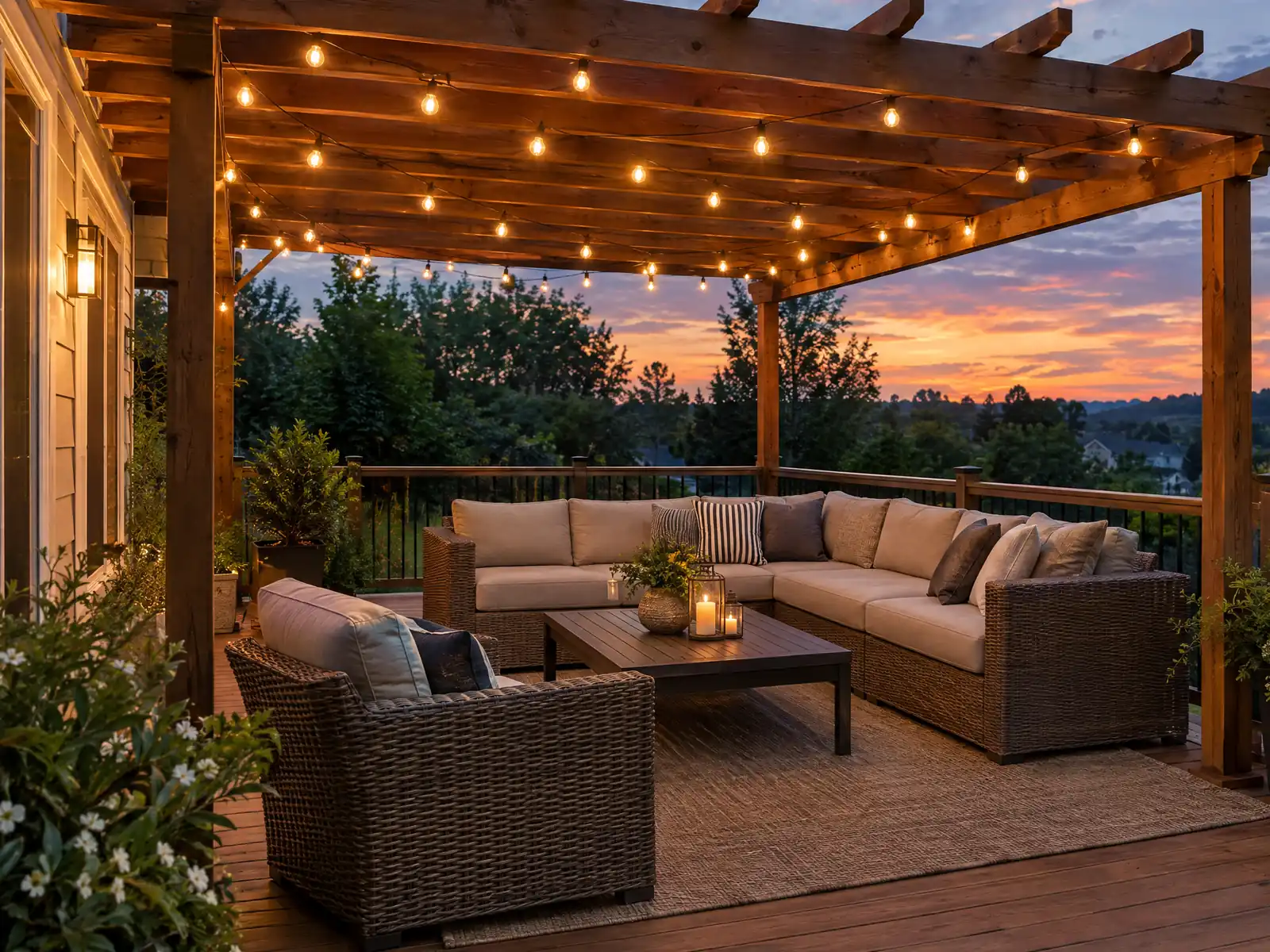
Highland's decks sit on a housing stock built mostly after incorporation. The Census Bureau's 2020 to 2024 estimates count 12,623 single-family detached homes, 75.2 percent of 16,795 units, and 53.5 percent of all homes date from 1980 through 2009, so the typical deck is a 1990s or 2000s wood deck or a builder's patio with a cover whose boards, stairs and ledger now deserve a look. The northern and eastern edge of town sits against the San Bernardino Mountains, where fire and slope rules change what can be built.
MDG Builders, CSLB #1040337, is a general contractor in Tarzana. We draw the deck, bring the permit and fire questions to Highland's Building & Safety Division and hire a licensed carpentry subcontractor to frame it. Materials and ranges are on the decks page, the Highland overview lists our other trades here, and a new deck often pairs with concrete work in Highland or flooring in Highland.
What Highland's Building & Safety Division, South Coast AQMD and state code say about decks
Where decks permits come from in Highland: City of Highland Building & Safety Division.
- Deck exemption: Municipal Code 15.04.030(A)(14) exempts decks not over 200 square feet, not over 30 inches above grade at any point, not attached to a dwelling and not serving the required exit door; the City's Permit Exceptions web page still prints the older 2019 figure of 120 square feet, so the code text is used and a call to the counter is advised. (Quoted from GoCodebook's unofficial copy of the Municipal Code dated 2026-10-04; confirm with the City.)
- Patio covers and canopies (16.40.030): attached patio covers may reach into rear, side and street side yards if the part in the yard stays under 1,000 square feet and 20 feet high, is no higher than the home, stays at least 5 feet from side, street side and rear lot lines, and is open on at least three sides; larger ones need a staff review permit approved by the Planning Commission, and Policy 230 requires an engineer when the roofing weighs 6 pounds per square foot or more. (Quoted from GoCodebook's unofficial copy of the Municipal Code dated 2026-10-04; confirm with the City.)
- Decks and outdoor fire in the fire zones: 16.40.450 requires firewood and flammable storage at least 30 feet from structures in development projects, and Fire Code 328 requires a permit for outdoor fires in hazardous fire areas except in permanent barbecues, portable barbecues or fireplaces on inhabited premises at least 30 feet from grass or brush. (Quoted from GoCodebook's unofficial copy of the Municipal Code dated 2026-10-04; confirm with the City.)
Does a deck need a permit in Highland, 200 square feet or 120?
Both numbers appear in Highland's own documents. Municipal Code 15.04.030(A)(14), read in GoCodebook's third-party mirror of the code, exempts decks not over 200 square feet, not over 30 inches above grade at any point, not attached to a dwelling and not serving the exit door required by the residential code. The City's Permit Exceptions page, which still cites the 2019 code cycle, prints 120 square feet for the same four conditions. The Municipal Code adopts the 2025 editions through Ordinance 477, so the code text is the better reading once the City confirms it.
Attachment is the dividing line. A deck fastened to the house, any deck 30 inches or higher at any point and any deck serving the required exit door is permit work at any size, and the City's Permits page lists decks beside garages, fences, fireplaces, pools and water heaters as residential work that needs one. Separate plumbing, electrical or mechanical permits apply where those trades are involved.
Paperwork runs through the portal. Applications go through the City's iWorQ permit portal, contractor declarations must be signed by the licensee or a person listed on the CSLB license, and an owner-builder files a property owner package instead. Staff say most applications get their completeness check the same business day, and a residential permit lapses if work does not start within 365 days. We left fee amounts out because the City's Fees page lists a contact, not a schedule.
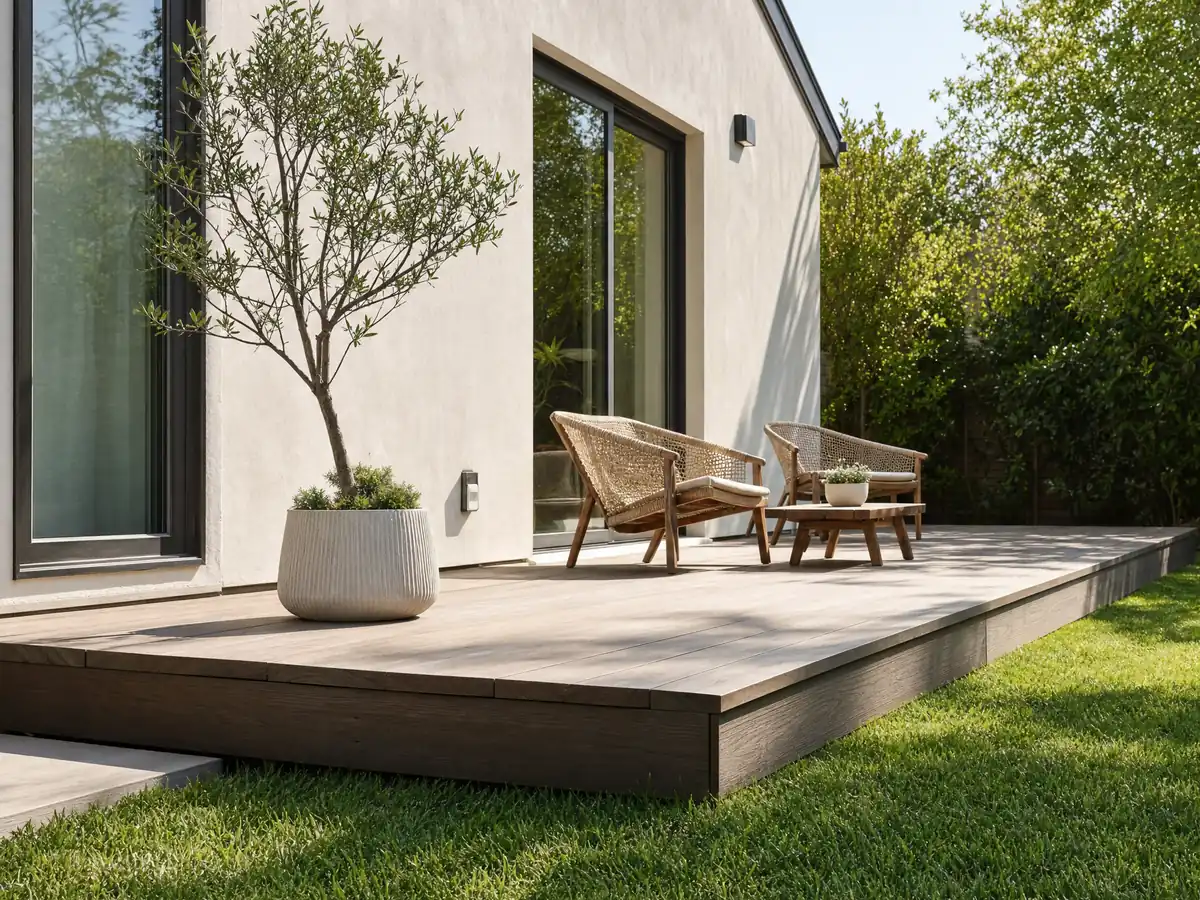
Can you build a deck on a Highland hillside lot, and what does Policy 355 add?
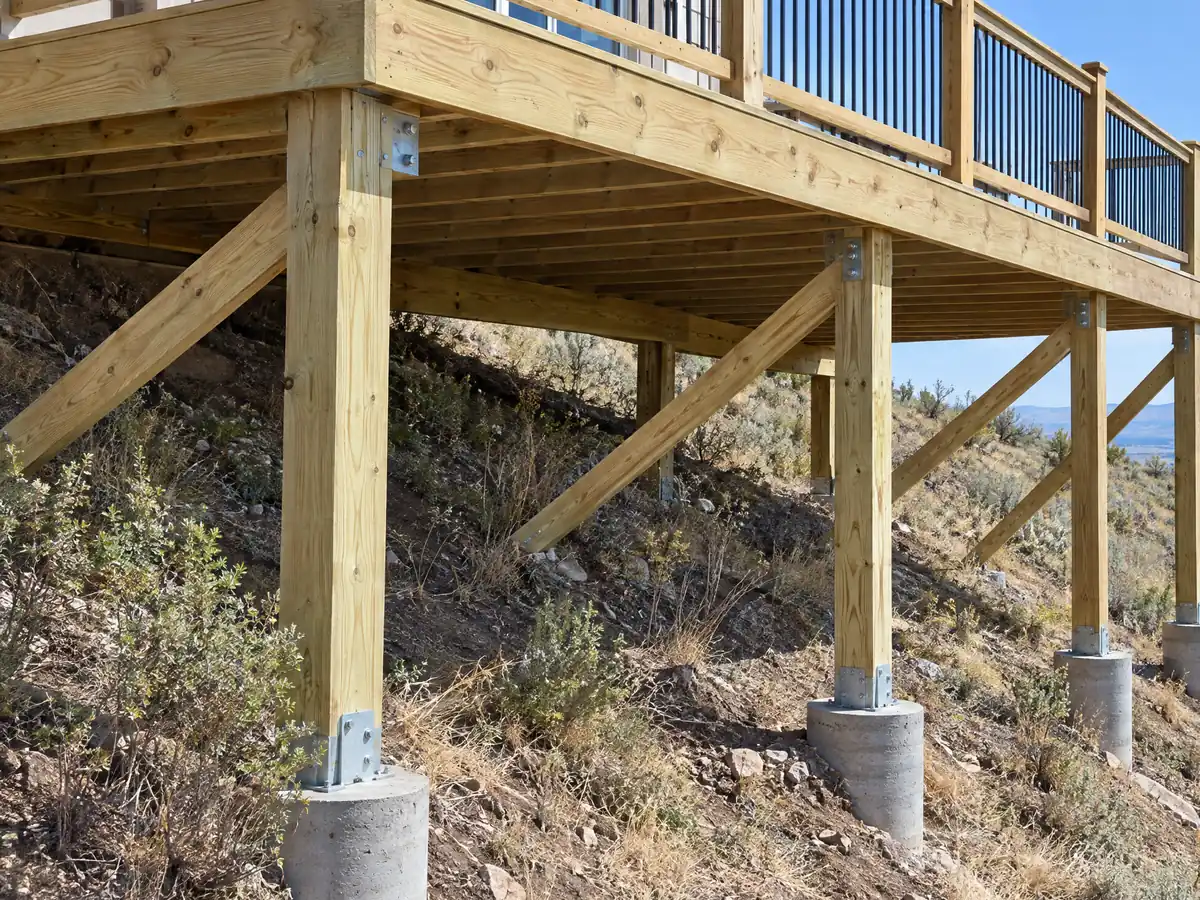
Yes, with extra steps on a slope. Municipal Code 16.40.420 applies hillside standards to any lot averaging a 10 percent slope or more, and 16.64.070 lets the City require an erosion and sediment control plan and stop work in wet weather. Slopes over 30 percent and 30 feet high bring fuel modification within 200 feet and a 30 foot setback from the graded edge, so a deck reaching over such a slope is a fire planning question as well as a structural one.
Walls under decks follow Policy 355. The Permit Exceptions page exempts a retaining wall of 4 feet or less, measured from the bottom of the footing, unless it carries a surcharge or sloped backfill steeper than 2:1, but the policy requires every residential retaining wall, exempt or not, to be reinforced with horizontal steel in the footing and vertical steel tying footing to wall. A post or beam near a wall can add surcharge, so show the engineer both.
Soil and water set the footings. The Safety Element says landslide risk is highest in the northern and eastern areas near steep slopes and the San Andreas Fault, and the December 22, 2010 debris flood engulfed several neighborhoods, with damage that CAL FIRE's unit blog put above 21 million dollars. Policy 290 requires a soils investigation and water quality plan for new homes and accessory buildings over 500 square feet, so ask the counter whether the same questions reach a deck on your lot, and where roof and deck runoff will leave it.
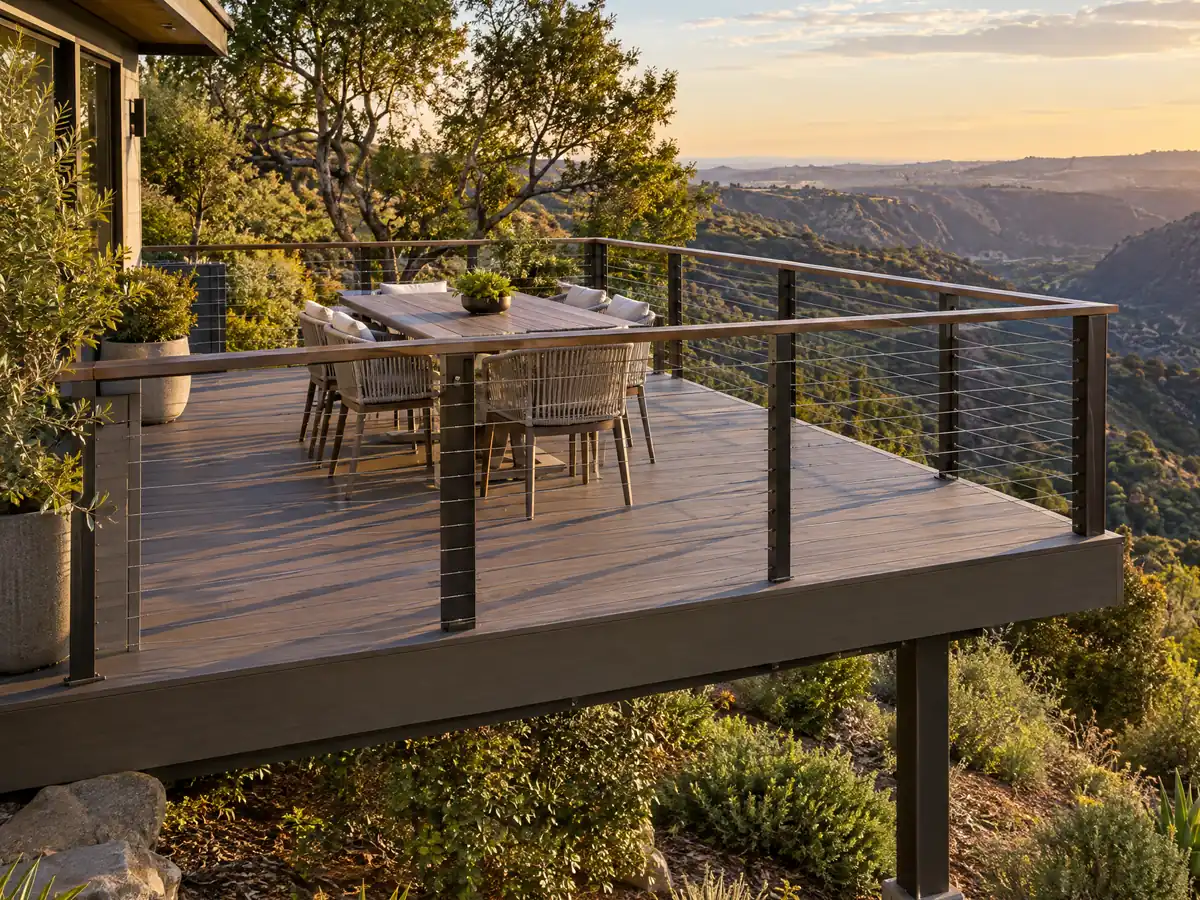
What do Highland's fire zone and wildland-urban interface rules mean for deck materials?
Highland has lived the risk. The Safety Element records the Old Fire of 2003, with more than 90,000 acres in and around Highland, nearly 1,000 homes destroyed and six deaths, and the Line Fire began on September 5, 2024 along Base Line near Alpine Street and burned 43,978 acres, with evacuation orders for over 9,200 homes according to Wikipedia. The Safety Element puts everything east of Weaver Street and north of Greenspot Road in a very high fire hazard severity zone.
The local code adds to the state WUI Code. Municipal Code 15.16, in GoCodebook's mirror, adopts the 2025 WUI Code with local additions that bar eave-type attic vents, require 12 foot wide vehicle access to within 10 feet of any pool or tank, and let the fire authority demand a fuel modification area never narrower than 100 feet. Section 16.40.450 requires noncombustible fences inside those areas and firewood 30 feet from structures. The 2022 residential code we read, section R337.9.3, allows tested, ignition-resistant, fire-retardant-treated or noncombustible decking surfaces.
The map is still moving. The City posts the State Fire Marshal's map of March 25, 2025, says it must adopt it by ordinance within 120 days and does not say whether it has, so check your address on the City's Fire Hazard Severity Zone Map page. CAL FIRE provides fire protection under a City contract, so ask the City's fire marshal whether a deck alone triggers ignition-resistant rules. One UC Extension summary said some tested composites missed the ignition-resistant definition, so check any board against the State Fire Marshal listing.
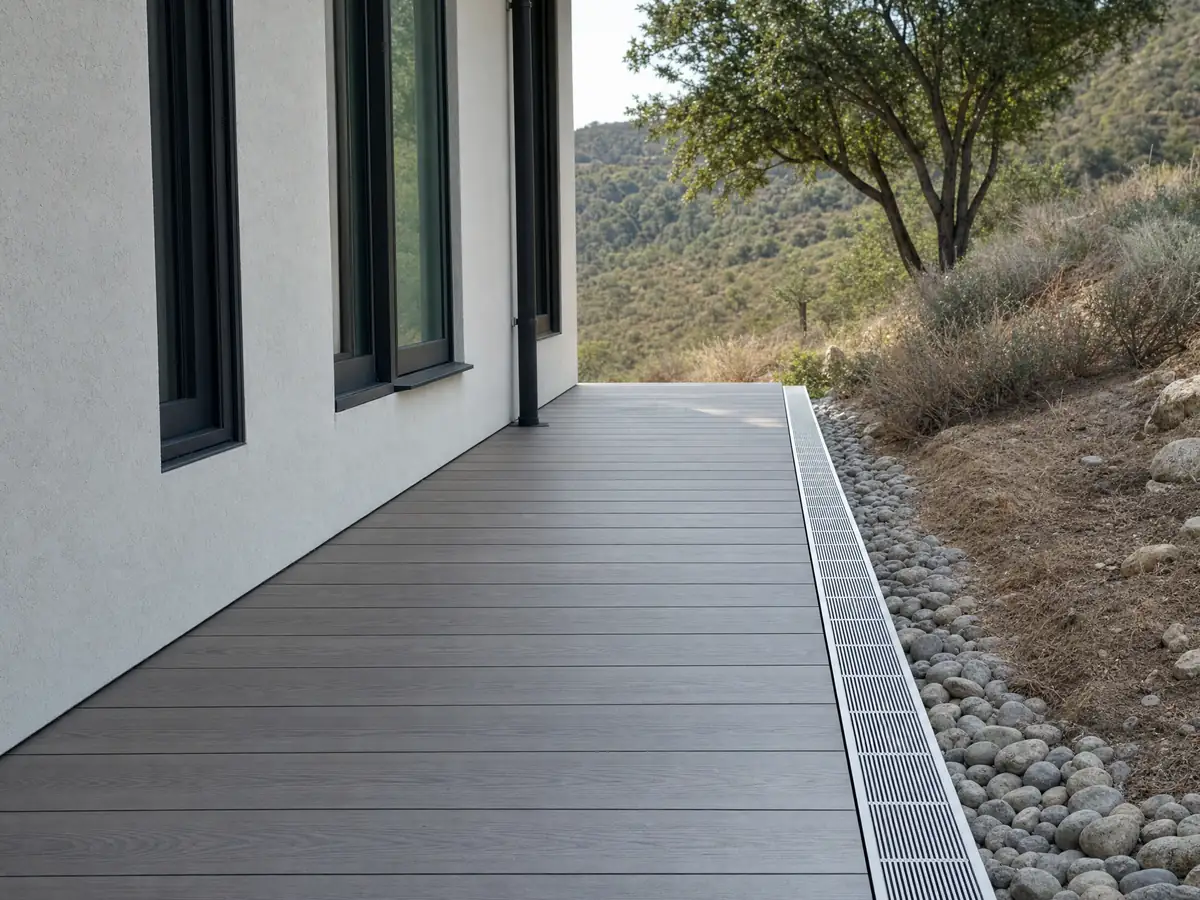
How is a deck attached and railed in Highland, and is the guard 36 or 42 inches?
The ledger is where a deck meets the house, and the 2022 California Residential Code spells out how. Section R507.9.1 calls for a pressure-treated 2 by 8 or larger, no beam bearing on it, no attachment through stone or masonry veneer, hot-dipped galvanized or stainless fasteners and flashing under R703.4. Highland adopts the 2025 edition, so confirm the numbers with the plan checker.
Lateral loads matter in a seismic city. The City's plan check page designs to seismic design category D at minimum, Climate Zone 10 and a ground snow load of 0, and it takes wind speed from the ATC Hazards tool under CBC 1609 and ASCE 7. Section R507.9.2 asks for two 1,500 pound hold-down devices within 24 inches of each end of the deck, or four 750 pound devices, to resist sliding off the house.
Guards are 42 inches. R312.1.1 requires a guard where the walking surface is more than 30 inches above grade within 36 inches of the edge, R312.1.2 sets the minimum at 42 inches and R312.1.3 requires openings that stop a 4 inch sphere. A deck 30 inches or lower needs none, while a 3 foot deck stands 36 inches high and does.
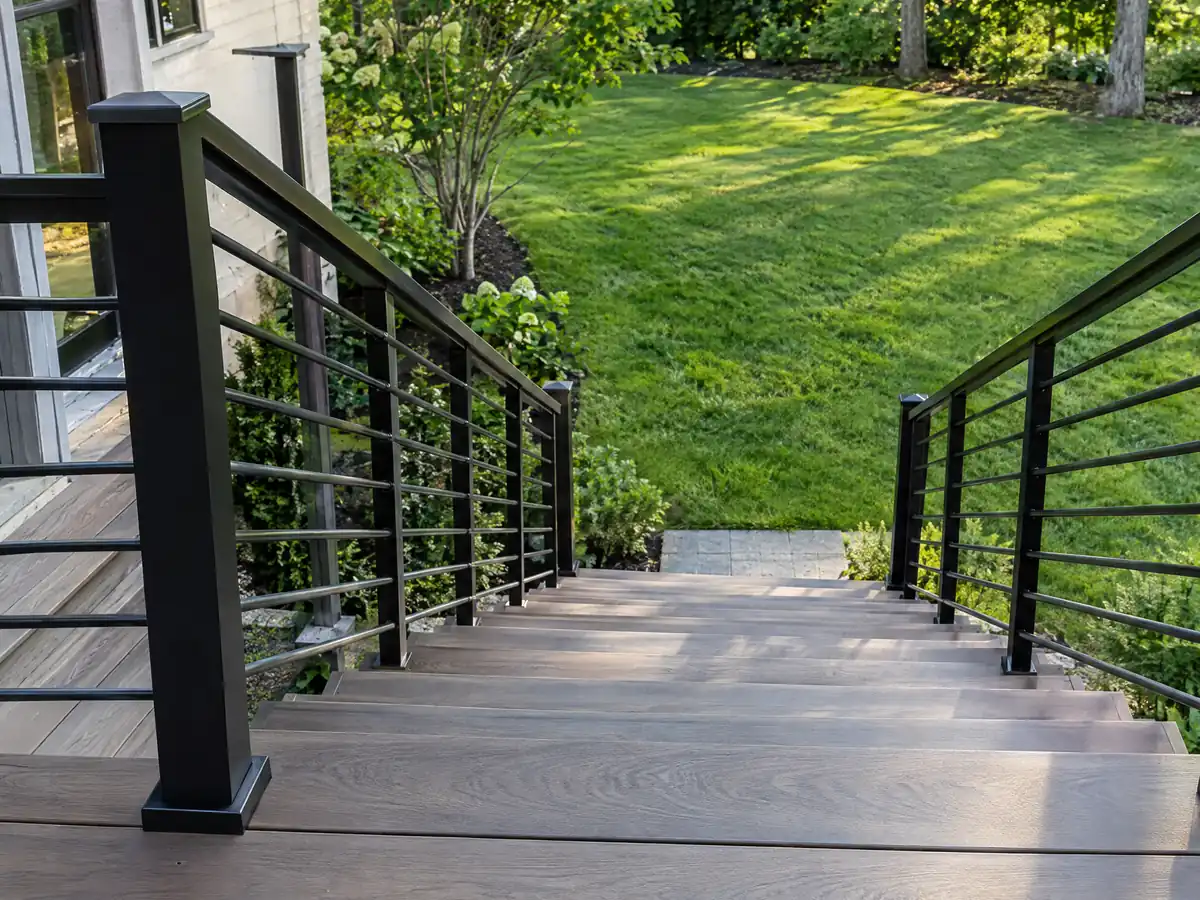
Where can a patio cover or deck go on a Highland lot, and when does a cover need an engineer?
Section 16.40.030 governs attached patio covers. They may reach into rear, side and street side yards if the part in the yard stays under 1,000 square feet and 20 feet high, is no taller than the home, sits at least 5 feet from side, street side and rear lot lines and is open on at least three sides. Larger covers need a staff review permit approved by the Planning Commission. We read these rules in GoCodebook's third-party mirror, so confirm them with Planning.
Weight triggers an engineer. Policy 230 requires stamped, wet-signed load calculations for any patio cover or roof carrying 6 pounds per square foot or more, which is why a tile or heavy composite cover needs engineering where a light aluminum one may not. The same policy asks for engineering before heavy tile goes onto a roof designed for wood shake or asphalt.
Setbacks sit on top. R-1 lots carry a 25 foot front setback, 5 and 10 foot interior side yards, a 20 foot rear yard and 40 percent maximum lot coverage, and detached accessory buildings are capped at 1,000 square feet and 20 feet. A pool must sit at least 5 feet from side and rear lot lines measured to the coping, and a fence that serves as a pool enclosure falls outside the fence exemption, so a deck beside a pool gets a second review.
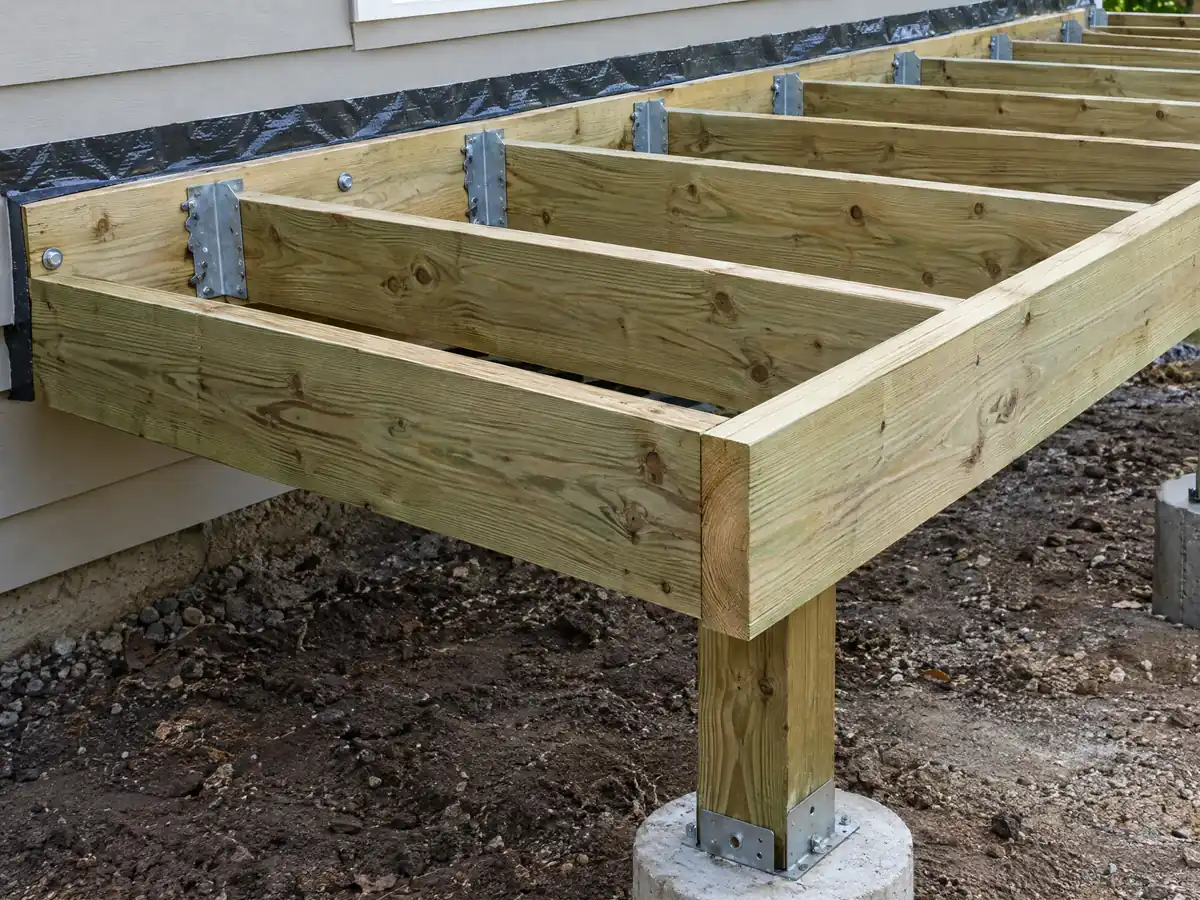
Can you do deck repair in Highland without a permit, and what about heat and termites?
Replacing a few boards is upkeep, but no Highland page we read says so. The exemptions cover small detached decks, not repairs, so send the counter a photo and treat new framing, a new ledger, stairs or a taller guard as permit work. If nobody knows whether an older deck was permitted, ask the counter to check the address. The January 2018 As-Built Structures bulletin asks for Planning clearance, three plan sets and exposed framing for inspection.
Sun is hard on finishes. NOAA's Redlands normals show about 104 days a year at or above 90 F and about 26 at or above 100 F, and the Safety Element counts four extreme heat days above 103 F historically and projects 28 by 2050. UC integrated pest management guidance names drywood termites as most prevalent in Southern California, and decks and fences are among what they infest, so any repair should also correct what keeps the wood damp.
Stain and coating choices are regulated. South Coast AQMD Rule 1113, amended February 5, 2016 as posted, lists a 100 grams per liter VOC limit for stains and for waterproofing sealers, and we did not confirm later amendments, so ask the crew which product goes on and keep the can label. The 7:00 am to 7:00 pm Monday through Saturday limit in Municipal Code 15.48.020 covers a sander or saw as well as a delivery truck.
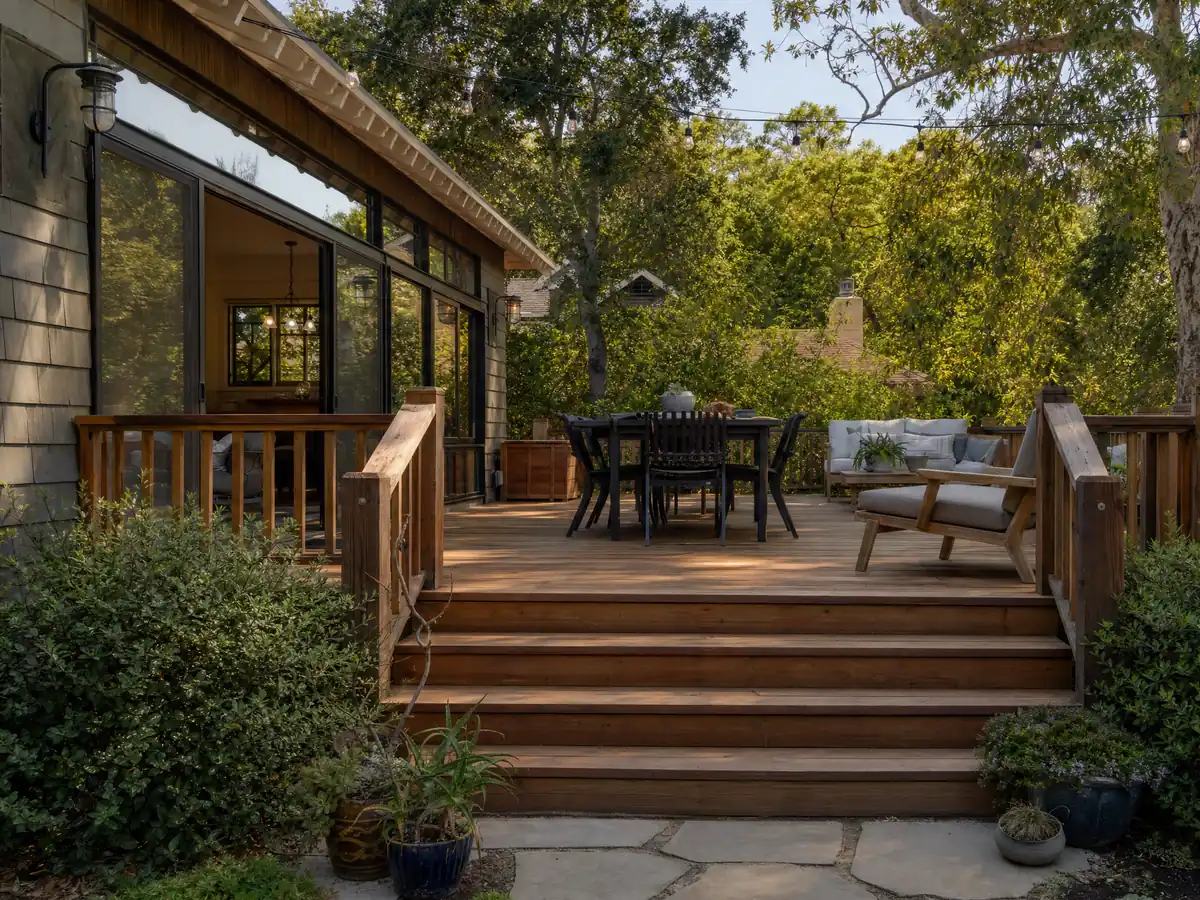
What does a deck builder charge in Highland, wood or composite?
No Highland deck study turned up, so we use the Los Angeles figures in Remodeling magazine's 2025 Cost vs. Value report. Its defined 16 by 20 foot deck, with bench, planter, three steps and full railing, costs $18,419 in wood and returns 99.6 percent at resale, or $26,872 in composite and returns 73.9 percent. Angi's Los Angeles deck page of October 28, 2025 shows an average of $13,570 inside a $6,335 to $20,871 range. The resale numbers belong to Los Angeles, and Highland's median owner-occupied home is valued at $485,600.
Our planning ranges are $45 to $75 per square foot for pressure-treated wood and $65 to $110 for composite, or about $14,500 to $24,000 and $21,000 to $35,000 for a 16 by 20 deck, before permits and engineering. Hillside, fire zone and engineered decks wait for a site visit because no independent source prices them. BLS puts the mean wage of Los Angeles area carpenters at $37.79 an hour in May 2025.
Framing and rough carpentry fall in CSLB's C-5 class, the license a Highland deck framer should show on the CSLB record. Business and Professions Code 7159.5 limits a deposit to the lesser of $1,000 or 10 percent of the contract price, and our license check guide shows how to verify a number.
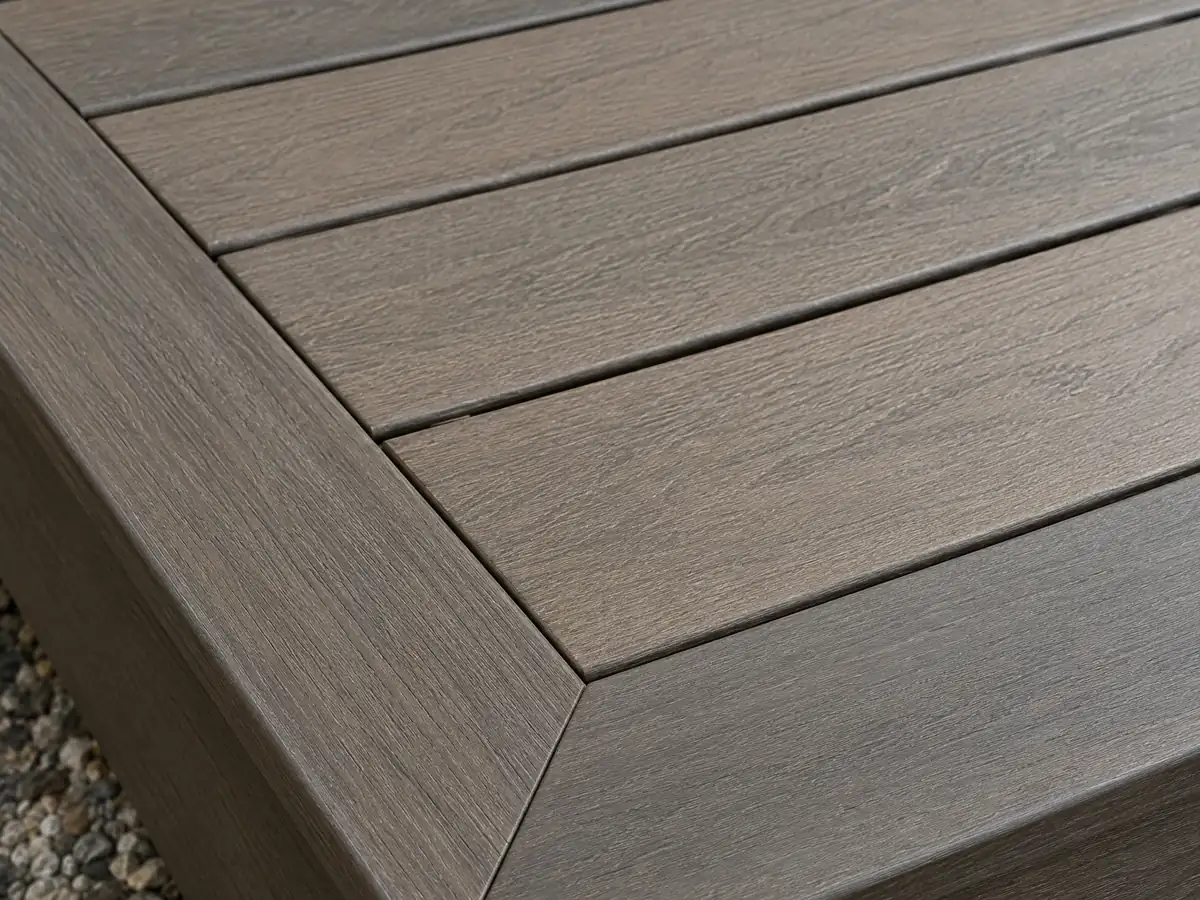
Deck photos from Highland and nearby communities
Footings, framing, railings, boards and finished decks from Highland and the communities around it, shown at the steps where the rules bite. Tap any photo to enlarge it.
What decks costs around Highland
Dollar figures on this page are Los Angeles planning ranges from our decks page, not a Highland bid, so permits, engineering, soils work and any fire plan review belong on their own proposal lines. To compare inland neighbors, read decks in San Bernardino, decks in Fontana and decks in Rialto, with decks in Los Angeles as the big-city benchmark. The subcontractor guide explains who frames and who finishes.
| What it covers | Typical range |
|---|---|
| Pressure-treated wood deck | $45 to $75 per square foot |
| Composite deck | $65 to $110 per square foot |
| 16 by 20 foot wood deck (320 sq ft) | About $14,500 to $24,000 |
| 16 by 20 foot composite deck | About $21,000 to $35,000 |
| Hillside, second-story, rooftop and ipe decks | Priced by site visit |
| Permits and engineering | Quoted as separate lines |
Highland deck questions, answered
Do you need a permit to build a deck in California?
Usually yes. In Highland the Municipal Code exempts only a deck of 200 square feet or less, not over 30 inches above grade, not attached to a dwelling and not serving the exit door, and the City's own web page still prints 120 square feet. Call the Building & Safety counter with the size, height and attachment before you build.
What is the largest deck without a permit?
In Highland, 200 square feet under Municipal Code 15.04.030(A)(14), though the Permit Exceptions page still says 120 from the 2019 code cycle. The deck must also stay within 30 inches of grade at every point, be detached from the house and not serve the required exit door. Confirm the current figure with the counter.
How much should a 16x20 deck cost?
For a 16 by 20 foot Los Angeles deck with bench, planter, steps and railing, the 2025 Cost vs. Value report in Remodeling magazine shows $18,419 in wood against $26,872 in composite. Our planning ranges are $14,500 to $24,000 for wood and $21,000 to $35,000 for composite before permits, and Highland hillside or fire zone decks cost more.
Is it cheaper to build a wood deck or composite deck?
Wood costs less up front, $18,419 against $26,872 for the same Los Angeles 16 by 20 deck, though wood returns 99.6 percent at resale and composite 73.9 percent. In a Highland fire zone, compare boards against the State Fire Marshal listing first, because one UC Extension summary said some tested composites did not qualify.
Is railing height 36 or 42 for decks?
Forty-two inches under section R312.1.2 of the 2022 California Residential Code, with openings small enough to stop a 4 inch sphere. The 36 inch figure is the distance from the edge where the guard requirement applies, not the rail height. Highland adopts the 2025 edition, so confirm both numbers with the plan checker.
How high can a deck be without a railing in California?
Up to 30 inches above grade, under the model residential code text we read, because a guard is required only where the walking surface is more than 30 inches high within 36 inches of the edge. A 3 foot deck stands 36 inches high and needs one. Highland adopts the 2025 edition, so verify the wording.
What happens if a deck is built without a permit?
In Highland, Municipal Code 15.04.030(D) adds an investigation fee equal to the permit fee on top of the permit fee, and the As-Built Structures bulletin asks for Planning clearance, three plan sets and exposed framing for inspection. The bulletin applies to structures built without permits, so ask the counter which path your deck would follow.
What is the downside of composite decking?
Cost and fire listing. Composite returns 73.9 percent at resale in the Los Angeles Cost vs. Value report against 99.6 percent for wood, and a deck in a Highland fire zone must use a walking surface that meets the state decking list in section R337.9.3. Verify each board against the State Fire Marshal listing before ordering.
Does a deck in a Highland fire hazard zone need special decking?
Possibly. Everything east of Weaver Street and north of Greenspot Road is in a very high fire hazard severity zone, the 2025 WUI Code applies with Highland's additions, and the state code lists allowed decking surfaces. Look up your address on the City's map, then ask the fire marshal's office whether a deck alone triggers those rules.
What license does a deck builder need in Highland?
A deck is framing and rough carpentry, which CSLB's C-5 class covers, and the City asks the contractor's declaration on a permit to be signed by the licensee or a person listed on the CSLB license. Check the number on the CSLB site, and ask each subcontractor for proof of insurance.
Tell us the size, the height and whether the deck touches the house
Give the rough dimensions, how high the deck sits above the ground, whether it attaches to the house, whether the lot slopes and whether you are east of Weaver Street. The permit and fire zone questions can start at our first visit.