
Deck Builderin Stanton, CA
A deck builder in Stanton, California, starts with the lot, not the lumber. Stanton sorts uncovered decks by height for setbacks, allows none in the front setback, and sits wholly in a liquefaction zone. We could not confirm whether a small deck is exempt from a permit, so treat any attached or raised deck as permitted work.
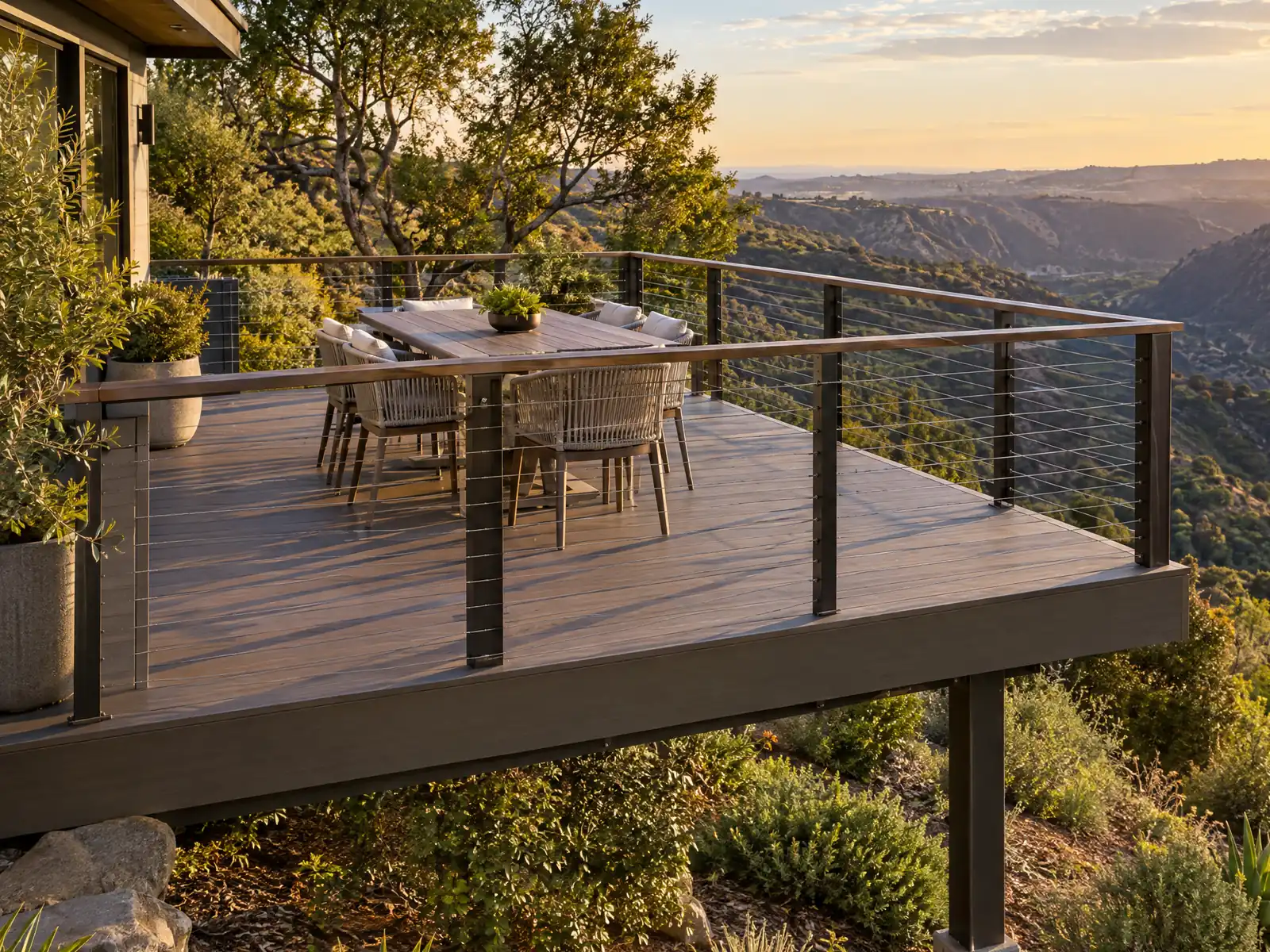
Stanton's decks go onto small, flat lots. The city covers 3.1 square miles in Orange County, a first-floor deck sits on land that was once part of Rancho Los Alamitos and Rancho Los Coyotes, and the City itself incorporated on June 4, 1956. Census estimates for 2020 to 2024 count 3,562 single-family detached homes among 13,269 units, 65.2 percent of all homes were built before 1980, and 14.2 percent are mobile homes, so many decks here are old, small or sit on land someone else owns.
MDG Builders, CSLB #1040337, is a general contractor in Tarzana, so we design the deck, put the permit questions to Stanton's Building Division and book a licensed framing or carpentry subcontractor to build it. Materials and ranges are on our decks page and the Stanton overview lists the other trades. The official code blocked our tools, so we read it on the GoCodebook mirror and every rule here should be confirmed with the City.
What Stanton's Building Division, zoning code and fire rules say about decks
Where decks permits come from in Stanton: City of Stanton Community & Economic Development Department, Building Division.
- Stanton's zoning code limits detached accessory structures (including gazebos and sheds) in residential zones to 16 feet high, 640 square feet each, and a combined total of 10 percent of the lot or 1,000 square feet, whichever is less. They may sit only in rear and interior side setback areas, never in the front yard or a street side setback, a covered structure's footprint may not exceed the house's footprint, and cargo containers are prohibited.
- Stanton's setback table lists other backyard items: swimming pools 18 inches or deeper must sit 5 feet from lot lines in RE and RL zones (3 feet in RM and RH), pool and spa equipment and air conditioning units may be 2 feet from side and rear lines, and fire pits, gazebos, greenhouses, spas up to 42 inches high and sheds under 120 square feet need 3 feet.
- Stanton's amended Building Code exempts a one-story detached storage shed or playhouse from a building permit only if it is 120 square feet or smaller with a ceiling no higher than 7 feet, and prefabricated pools under 18 inches deep, up to 5,000 gallons and entirely above ground; the zoning accessory structure standards still apply to those exempt structures.
- Stanton's amended Residential Code adds rules for outdoor fireplaces and fire pits: gas devices are allowed when approved by the Building Department and burn only a gas flame, combustible construction must stay 3 feet from the vertical column above the device unless a permanent hood and vent is installed, chimneys need a spark arrester, and burning wood is not allowed within 15 feet of combustible structures unless in a fireplace.
- New or remodeled pools and spas at single-family homes need an enclosure meeting Appendix CI of Stanton's amended Residential Code, and the City defines a pool as any artificial body of water deeper than 18 inches, including spas, hot tubs and above-ground pools.
Do you need a permit to build a deck in Stanton?
Assume yes until the City says otherwise. The model Residential Code exempts only a deck of 200 square feet or less, no more than 30 inches above grade at any point, not attached to the dwelling and not serving the required exit door. Stanton's amended exemption list names sheds, fences and block walls, retaining walls and small pools and does not mention decks, and we could not confirm in Stanton's own text whether the model exemption survives.
So an attached deck, a raised deck, a large deck or one at the exit door should be treated as permitted work. The Building Permit Technician at (714) 890-4286 can answer for a specific plan.
Permits expire. In Stanton one becomes invalid if work has not started within 12 months or stops for 180 days, a single written extension of up to 180 days is possible, and renewing after a lapse costs half the fee. Inspections run Monday to Thursday and are booked at (714) 890-4252.
How close to the property line can a Stanton deck go?
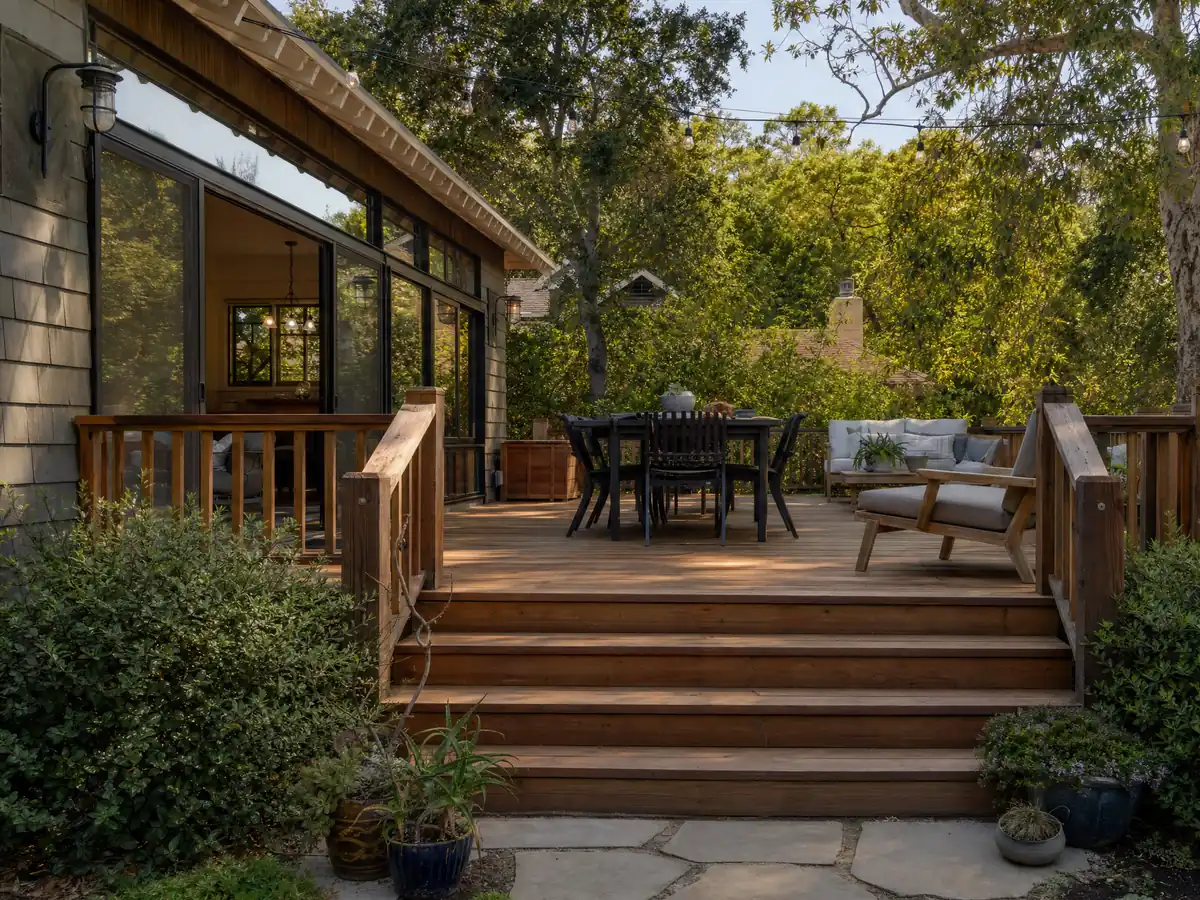
The table sorts uncovered decks by height. Take a deck at first-floor level or lower with any wall or railing 42 inches or less. Lying flat, under an inch high, it can run to the side and rear lot lines. Between 1 inch and 3 feet it must stay 5 feet back. Above 3 feet it needs 5 feet from an interior side line and 10 feet from a street side or rear line, and no uncovered deck may sit in the front setback.
We read nothing that covers a second-story deck, so ask Planning at (714) 890-4232 about one. A 36 inch passageway must also stay open along at least one side of the house, free of fences, walls and equipment, and the City does not let that be reduced.
Ask the Building Division whether the deck's footprint counts toward the lot's 50 percent impervious cap in RE and RL zones.
What can sit beside a Stanton deck: a pergola, a shed or a fire pit?
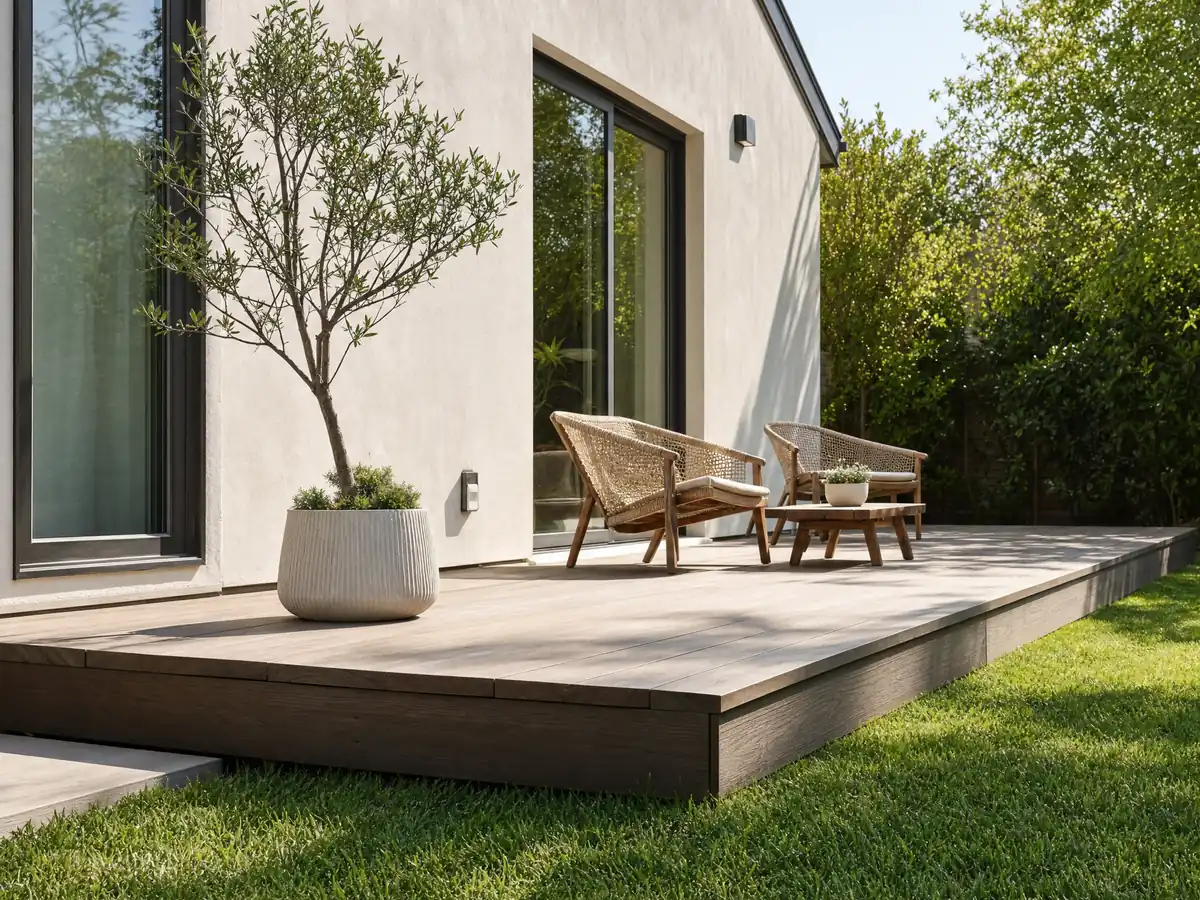
Detached structures have caps. In residential zones a gazebo, shed or similar accessory building may be 16 feet high and 640 square feet each, and all together 10 percent of the lot or 1,000 square feet, whichever is less. They may sit only in rear and interior side setback areas, a covered structure's footprint may not exceed the house's, and cargo containers are prohibited. A shed of 120 square feet or less with a ceiling no higher than 7 feet is exempt from a building permit, though the zoning limits still apply.
Fire pits and gazebos need 3 feet from the lot line. Stanton's Residential Code amendment allows gas fire devices when the Building Department approves them, wants combustible construction kept 3 feet from the vertical column above the device unless there is a hood and vent, requires a spark arrester on chimneys and bars burning wood within 15 feet of combustible structures unless it is in a fireplace.
Wildfire is a smaller question here. CAL FIRE's state map layers show no fire hazard zone inside Stanton, though we did not check the 2025 update, so ask the Orange County Fire Authority whether fire-rated decking is needed.
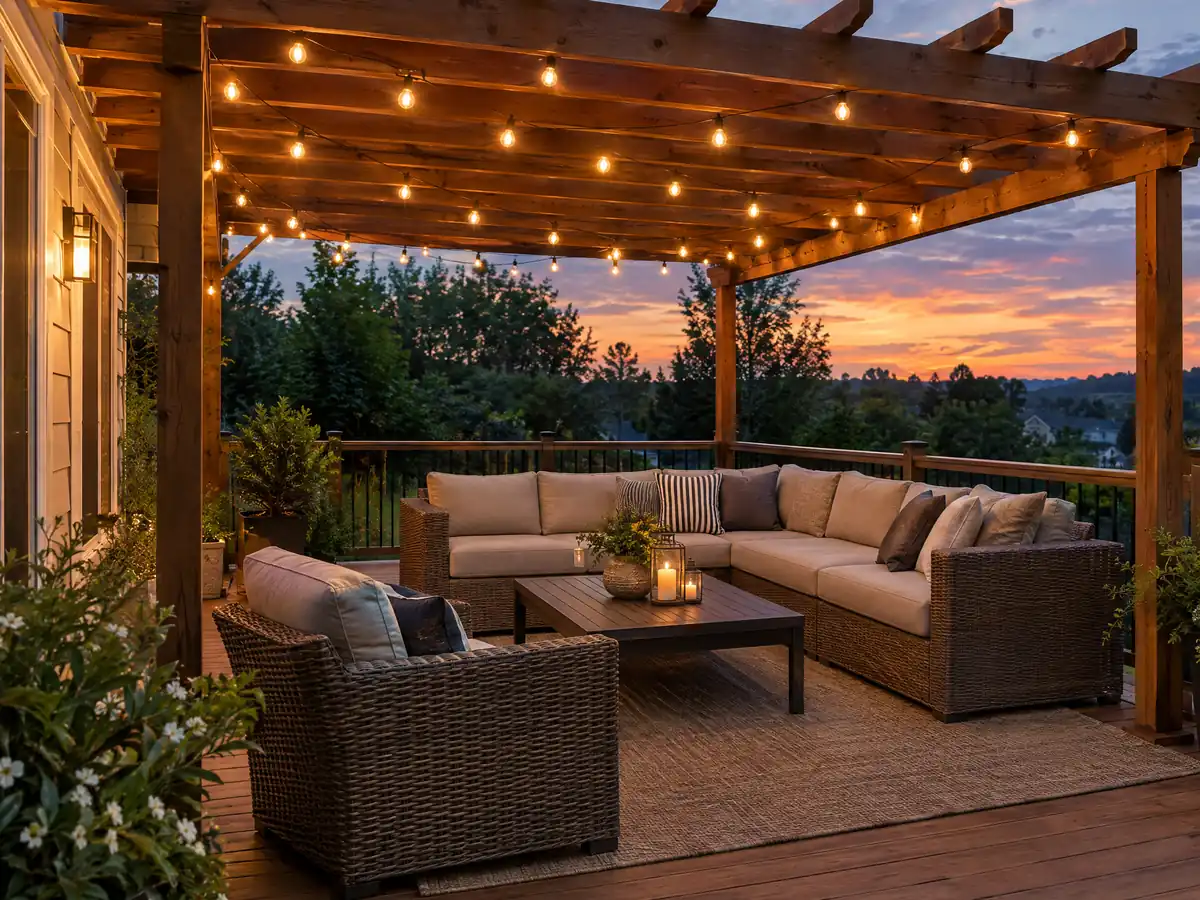
How high must a Stanton deck railing be, and what about decks beside pools and spas?
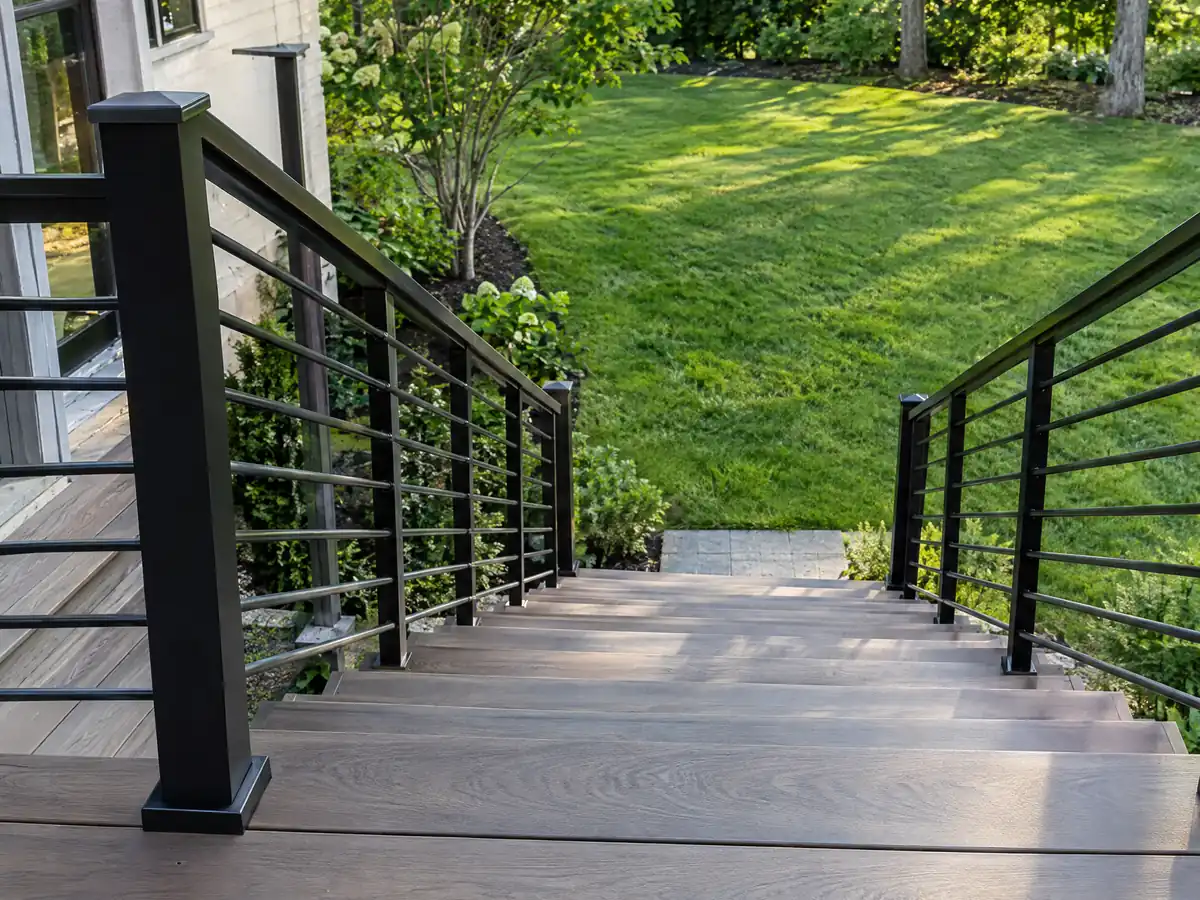
Forty-two inches is the model height. The 2022 California Residential Code, which we read, requires a guard where the walking surface is more than 30 inches above grade within 36 inches of the edge (R312.1.1), sets the height at 42 inches (R312.1.2) and stops a 4 inch sphere at any opening (R312.1.3). Stanton adopted the 2025 edition, so confirm the numbering and values.
Pools have their own rules. Stanton defines a pool as any artificial body of water deeper than 18 inches, spas and above-ground pools included, and a new or remodeled pool at a single-family home needs an enclosure meeting Appendix CI of the amended Residential Code. Walls or fences on exterior lot lines must be at least 6 feet high.
A pool must sit 5 feet from lot lines in RE and RL zones and 3 feet in RM and RH, equipment may go within 2 feet, and spas up to 42 inches high need 3 feet. A deck that touches the barrier changes the barrier.
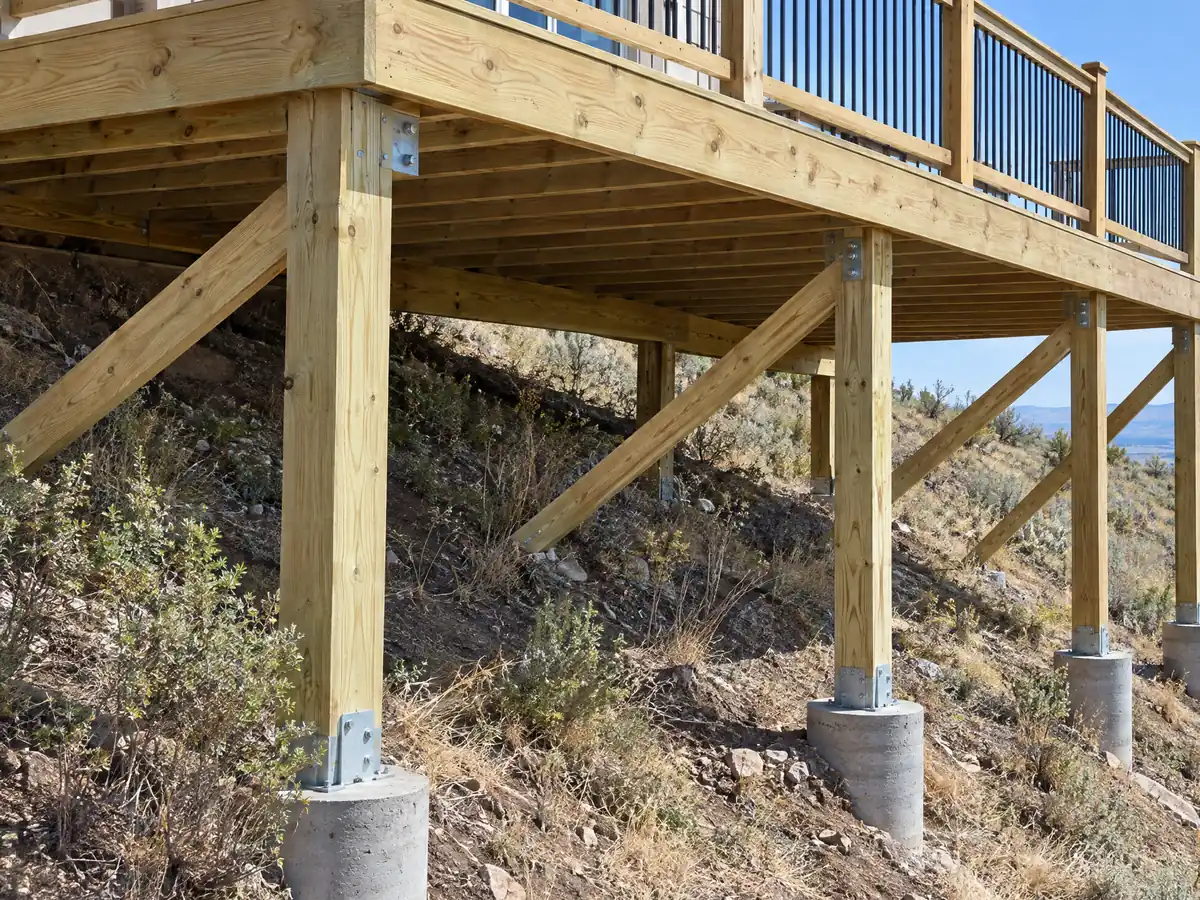
What holds a deck up in Stanton's liquefaction zone: footings, ledger and hold-downs?
The soil is the local fact. The City's Housing Element says the entire city lies in a liquefaction hazard zone and in FEMA Flood Zone X, and the Building Official may require a geologic or geotechnical report. We found no rule that triggers a report for a backyard deck, but a raised deck with deep posts is a fair reason to ask.
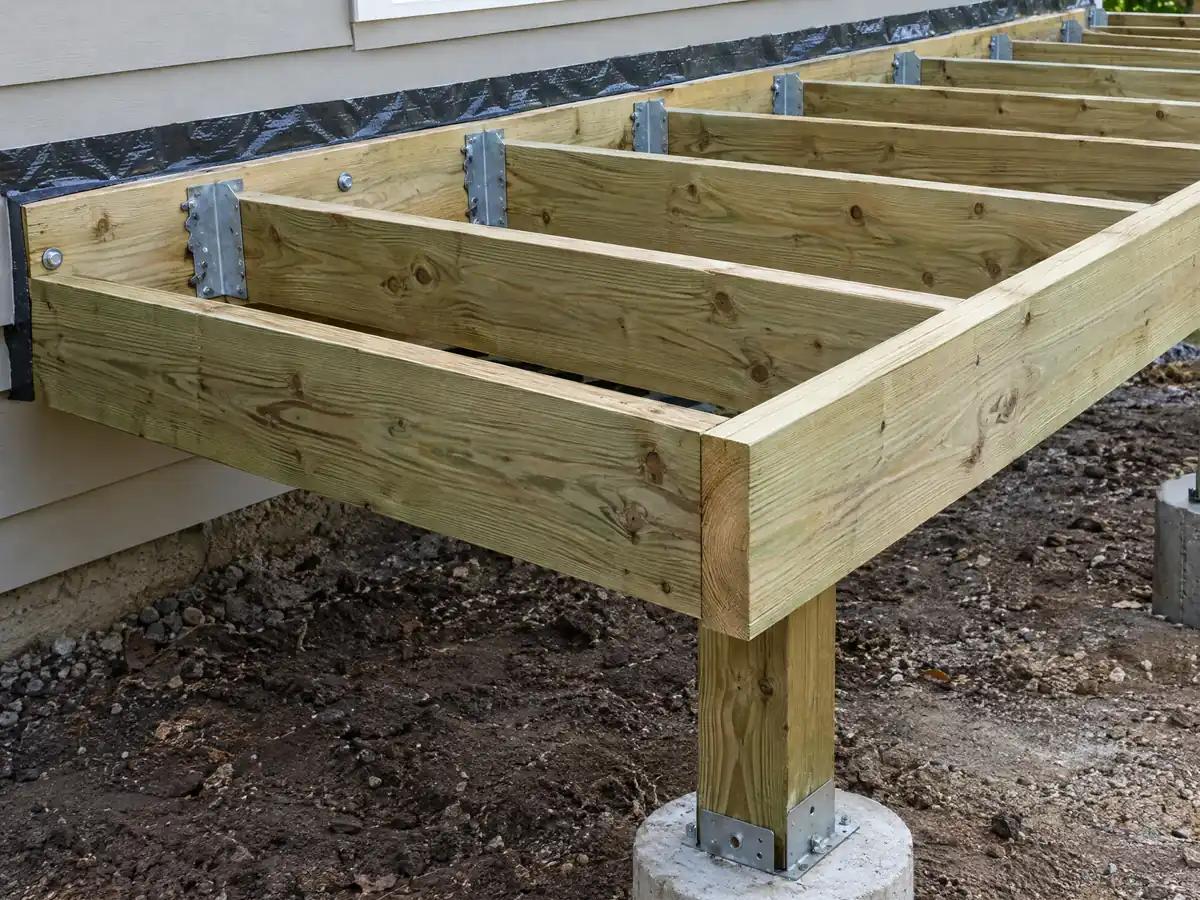
Ledger rules come from the 2022 California Residential Code at R507.9, which we read. The ledger is pressure-treated lumber at least 2 by 8, carries no concentrated loads from beams or girders, does not attach to stone or masonry veneer, and uses hot-dipped galvanized or stainless fasteners with flashing at the wall. Sideways restraint is two 1,500 pound hold-down devices within 24 inches of each end, or four 750 pound devices.
A freestanding deck still sends its weight to the ground, so every post needs a footing sized for load and soil, which the designer sets. Termites matter: the University of California's pest guide says drywood termites are most common in southern California and infest decks and fences.
Do you need a permit for deck repair in Stanton, and who has to agree?
We found no Stanton text that sets a repair threshold. Replacing a few boards is maintenance in plain terms, while a new ledger, posts or stairs look more like the attached or raised decks that need permits, so ask the Building Division and keep the answer in writing. A renovation permit also counts toward the City's 75 percent reconstruction rule, which looks back two years.
Age explains the need for repair. About 36.6 percent of Stanton's homes predate 1970, and the City's survey found 17.1 percent of residents needing a major repair. EPA's lead rule covers paid work that disturbs paint in homes built before 1978, so peeling paint on an old deck ledger is a reason to ask about certification.
Ownership matters as well. Renters hold 51.9 percent of occupied homes, and nine mobile home parks hold 1,301 spaces, so a deck at an apartment or park may need the owner's or park management's consent. We found no park's deck rules.
What does a deck builder charge in Stanton, wood or composite?
We found no Stanton deck study, so the anchor is the Los Angeles page of Remodeling magazine's 2025 Cost vs. Value report. It prices one design, a 16 by 20 foot deck with bench, planter, three steps and full railing, at $18,419 in treated wood (99.6 percent recouped at resale) and $26,872 in composite (73.9 percent recouped). Angi's October 2025 Los Angeles page reports an average job of $13,570, spread from $6,335 to $20,871. Wood prices line up across the two sources and composite prices do not, so we rate the composite figures medium to low.
Our planning ranges are $45 to $75 per square foot for treated wood and $65 to $110 for composite, or roughly $14,500 to $24,000 and $21,000 to $35,000 for a 16 by 20 deck, with permits and engineering extra. Federal wage data for May 2025 put carpenters in the Los Angeles-Long Beach-Anaheim metro area at a mean of $37.79 an hour, a wage and not a billing rate. We found no City fee schedule, so we print no permit fee.
CSLB's C-5 class covers framing and rough carpentry. Our license check guide shows how to look a number up, and the City's page does not say whether an out-of-city contractor needs a Stanton business license, so ask HdL at (714) 452-8064.
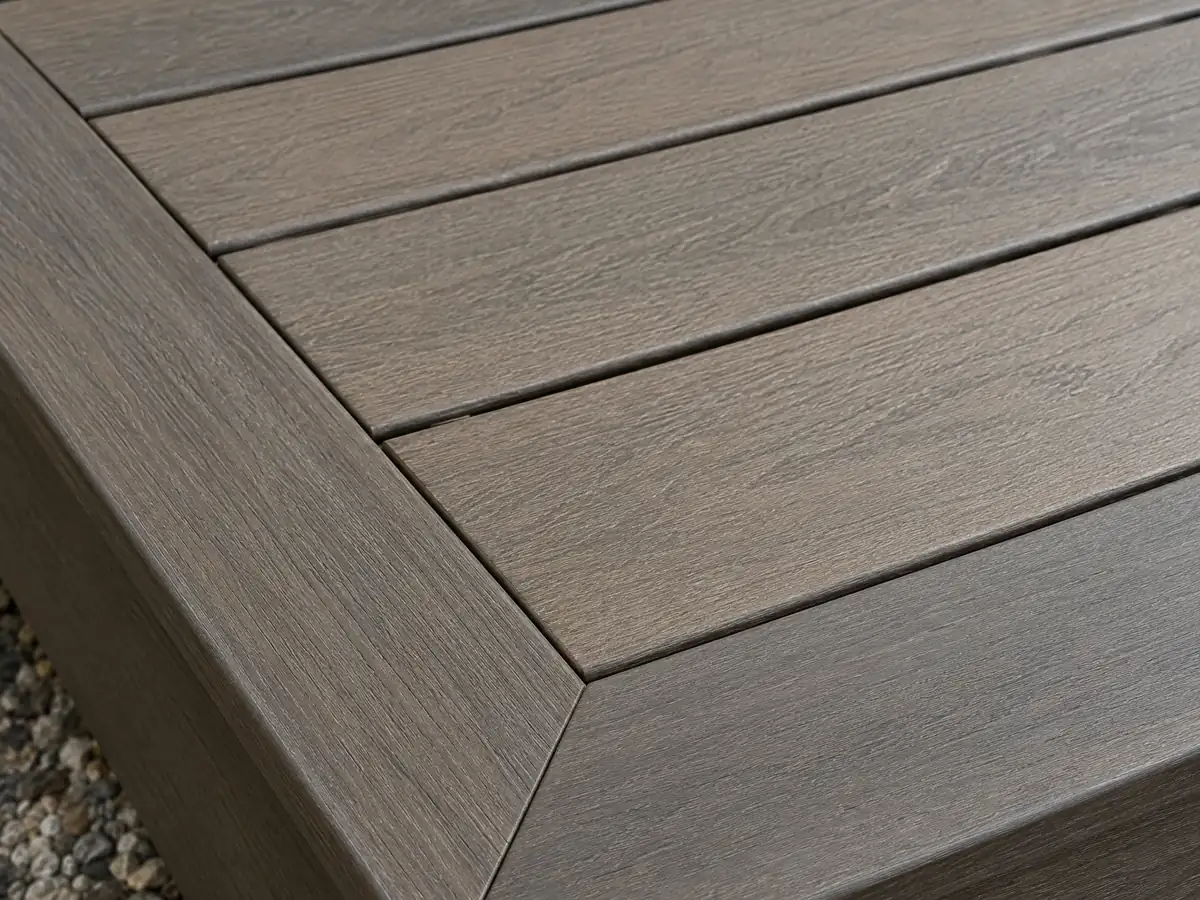
Deck photos from Stanton and nearby communities
Framing, footings, railings and finished boards from Stanton and neighboring towns, shown at the stages that matter. Tap any photo to enlarge it.
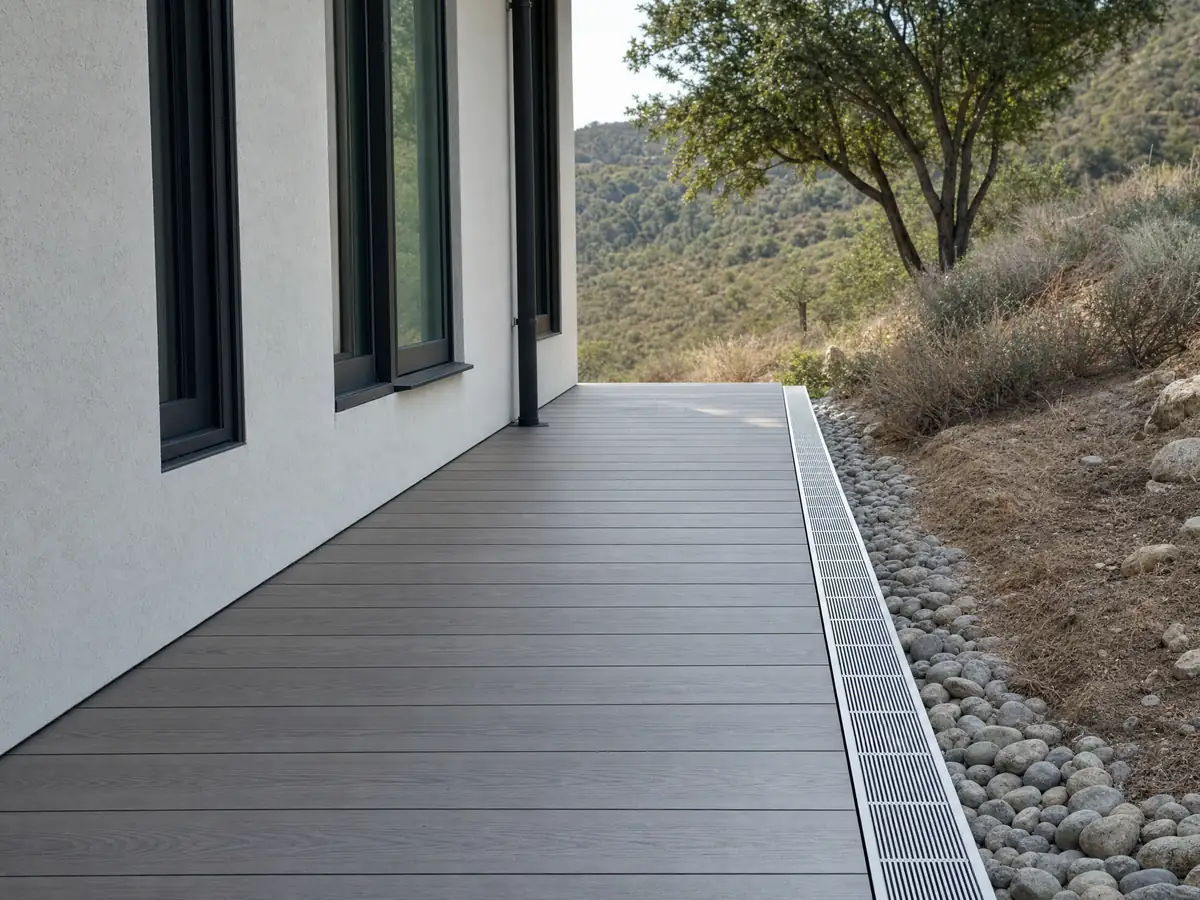
What decks costs around Stanton
Dollar figures on this page are Los Angeles planning ranges, not a Stanton bid, and permits, engineering and any soil report should appear on their own proposal lines. For the same property, see flooring in Stanton and concrete in Stanton. Nearby comparisons: decks in Garden Grove, decks in Westminster and decks in Los Angeles.
| What it covers | Typical range |
|---|---|
| Pressure-treated wood deck | $45 to $75 per square foot |
| Composite deck | $65 to $110 per square foot |
| 16 by 20 foot wood deck (320 sq ft) | About $14,500 to $24,000 |
| 16 by 20 foot composite deck | About $21,000 to $35,000 |
| Hillside, second-story, rooftop and ipe decks | Priced by site visit |
| Permits and engineering | Quoted as separate lines |
Stanton deck questions, answered
Can I build a deck without a permit in Stanton?
Only a small one, if at all, and we could not confirm it from Stanton's text. The model Residential Code exempts a deck of 200 square feet or less, no more than 30 inches high, detached and not at the exit door. Anything attached, raised or larger should be treated as permitted. Call the Building Permit Technician at (714) 890-4286.
What is the largest deck without a permit?
On the model exempt list it is 200 square feet, no more than 30 inches above grade at any point, detached from the house and not serving the required exit door. We could not confirm that Stanton keeps that line, and setbacks apply either way, so ask the Building Division before building even a small freestanding deck.
How much should a 16x20 deck cost?
For Los Angeles, Remodeling magazine's 2025 report lists one 16 by 20 foot design, with bench, planter, steps and railing, at $18,419 in wood and $26,872 in composite. Angi's Los Angeles average is $13,570. We found no Stanton study, so a site visit sets the actual price.
How much would a 20x20 deck cost in Stanton?
At our planning ranges of $45 to $75 per square foot for treated wood and $65 to $110 for composite, 400 square feet runs $18,000 to $30,000 in wood and $26,000 to $44,000 in composite, with permits and engineering extra. These multiply Los Angeles ranges and are not a Stanton bid.
Is it cheaper to build a wood deck or composite deck?
Wood costs less to build. On the identical Los Angeles design in the 2025 report, treated wood is $18,419 and composite is $26,872, yet resale recouped 99.6 percent for the wood and 73.9 percent for the composite. Ask for both prices on the same plan, with the same railing and stairs.
Is railing height 36 or 42 for decks?
Forty-two inches is the minimum in the 2022 California Residential Code, section R312.1.2, and a guard is required where the walking surface is more than 30 inches above grade within 36 inches of the edge. Openings must stop a 4 inch sphere. Stanton adopted the 2025 edition, so confirm the values.
Do freestanding decks need footings?
Yes, in practice. A freestanding deck still sends its load to the ground through posts, so each post needs a footing sized for the load and the soil. Stanton lies wholly in a liquefaction zone and the Building Official may ask for a soils report, so ask whether the plan shows footing size and depth.
Do you need a permit for deck repair in Stanton?
It depends on what is replaced, and we found no Stanton text that sets a repair threshold. A few new boards are maintenance in plain terms, while a new ledger, posts or stairs resemble the work that needs permits. Ask the Building Division at (714) 890-4286 and keep the reply in writing.
Can I put a fire pit on a deck in Stanton?
Not without checking the rules. Stanton's Residential Code amendment allows approved gas devices, wants combustible construction 3 feet from the column above the device unless a hood and vent is installed, and bars burning wood within 15 feet of combustible structures unless it is in a fireplace. Ask the Building Department before placing one.
What license does a deck builder need?
Framing and rough carpentry fall under CSLB's C-5 class, and a General Building contractor can take a framing job as prime. Look the number up on the CSLB site, and ask each subcontractor for its license and certificate of insurance. Work above the state's $1,000 threshold, or any permitted work, needs a license.
Tell us the lot, the size and the height off the ground
Share the rough size, how high the walking surface sits, whether it attaches to the house and who owns the property. For an existing deck, add its age and any boards, posts or stairs that wobble.