
Bathroom Remodelingin Ontario, CA
Bathroom remodeling in Ontario usually needs a permit when plumbing, wiring, framing or venting changes, but the City publishes no bathroom bulletin, so confirm like-for-like swaps with the Building Department. Altering a bath also brings water-saver fixtures (1.28 gallon toilets, 1.8 gpm showerheads) and alarm upgrades once the valuation passes $1,000.
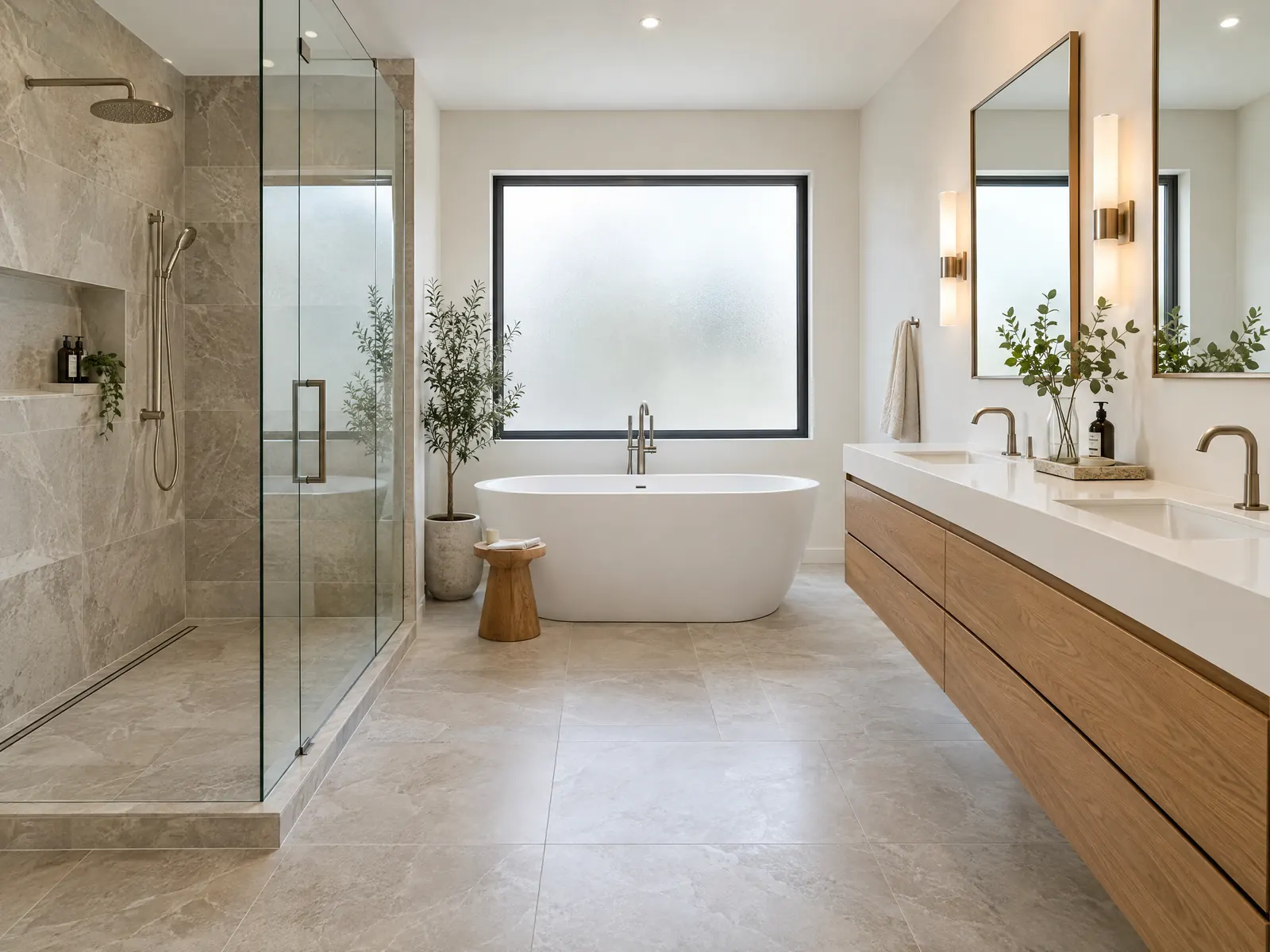
Ontario's bathrooms were built in layers. The Census Bureau's 2024 one-year estimates count 58,170 homes here, 48.1 percent of them built before 1980, with a median year built of 1981, so the typical bath has a 1970s or 1980s vanity and a tub surround that has been recaulked more than once. Another 6.2 percent of homes date from 1939 or earlier, and 22.6 percent from 2000 on, many in the Ontario Ranch tracts that replaced dairy land after the City annexed 8,200 acres in 1999.
This page covers the water-saver rule, the permit question, what plan check measures, older walls, historic blocks, rentals and the schedule. Municipal Code quotes come from GoCodebook's third-party mirror, because the City's own code hosts turned our tools away, and the Building Department decides each point. Price tiers and phases are on our bathroom remodeling page.
Ontario Building Department rules that reach a bathroom job
Where bathroom remodeling permits come from in Ontario: City of Ontario Community Development Agency, Building Department.
- Bathroom items checked in residential plan check (Residential Correction List, CRC and CPC cites): bathrooms with a tub or shower need a humidity-controlled exhaust fan of 50 cfm intermittent or 20 cfm continuous, shower and tub-wall surfaces must be nonabsorbent to at least 6 feet above the floor, shower compartments need at least 1,024 square inches of floor with a 30-inch circle, shower doors need a 22-inch opening, 6 foot 8 inch ceilings over a 30 by 30 inch area at the showerhead, and glazing within 60 inches of a tub or shower floor must be safety glass.
- Water-efficiency retrofit when a bathroom is altered: Bulletin 112 requires the dwelling's fixtures to meet Civil Code 1101.1 flow limits (toilets 1.28 gallons per flush, showerheads 1.8 gpm at 80 psi, lavatory faucets 1.2 gpm at 60 psi) and requires the alarm and fixture self-certification at final inspection with an adult home to let the inspector in.
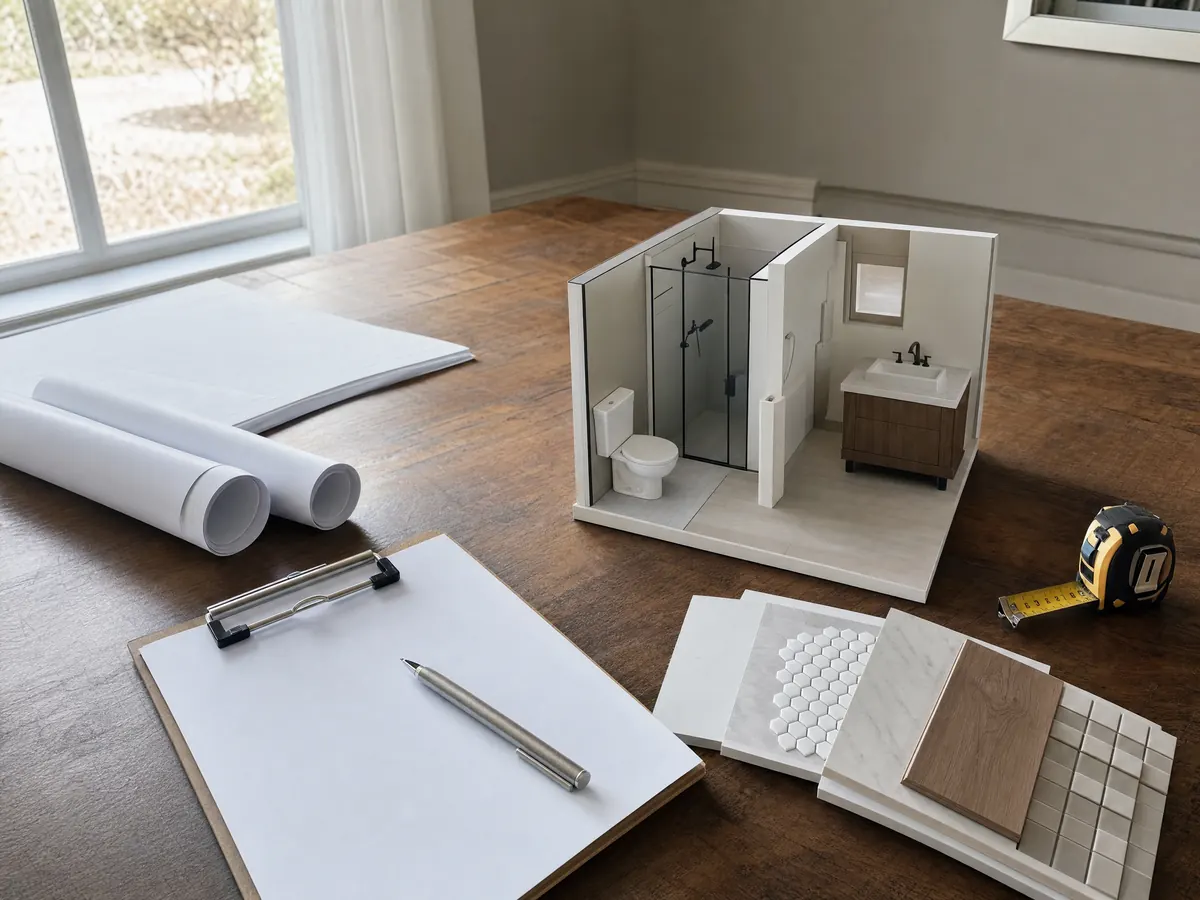
Which toilets, showerheads and faucets must an Ontario bathroom remodel meet?
The ones in Bulletin 112, which the Building Department revised on March 2, 2026. When additions or alterations are performed, plumbing fixtures in the dwelling must meet retrofit flow limits: toilets at 1.28 gallons per flush, showerheads at 1.8 gallons per minute, kitchen faucets at 1.8 and lavatory faucets at 1.2. Repair-type jobs such as a re-roof or a water heater changeout are excluded, but a bath remodel reads as an alteration.
The same bulletin asks for smoke and carbon monoxide alarms once alterations exceed $1,000 in valuation, hard-wired with battery backup and interconnected in general. The owner or contractor signs a self-certification before final inspection, and an adult must be home to let the inspector in. A tile-and-vanity job sounds too small for any of that, so we put the fixtures and alarms on the proposal as their own lines.
- Which flow ratings will the new toilet, showerhead and faucets carry?
- Who signs the self-certification, and is an adult booked to be home for the final?
- Are the hallway and bedroom alarms added under the same permit?
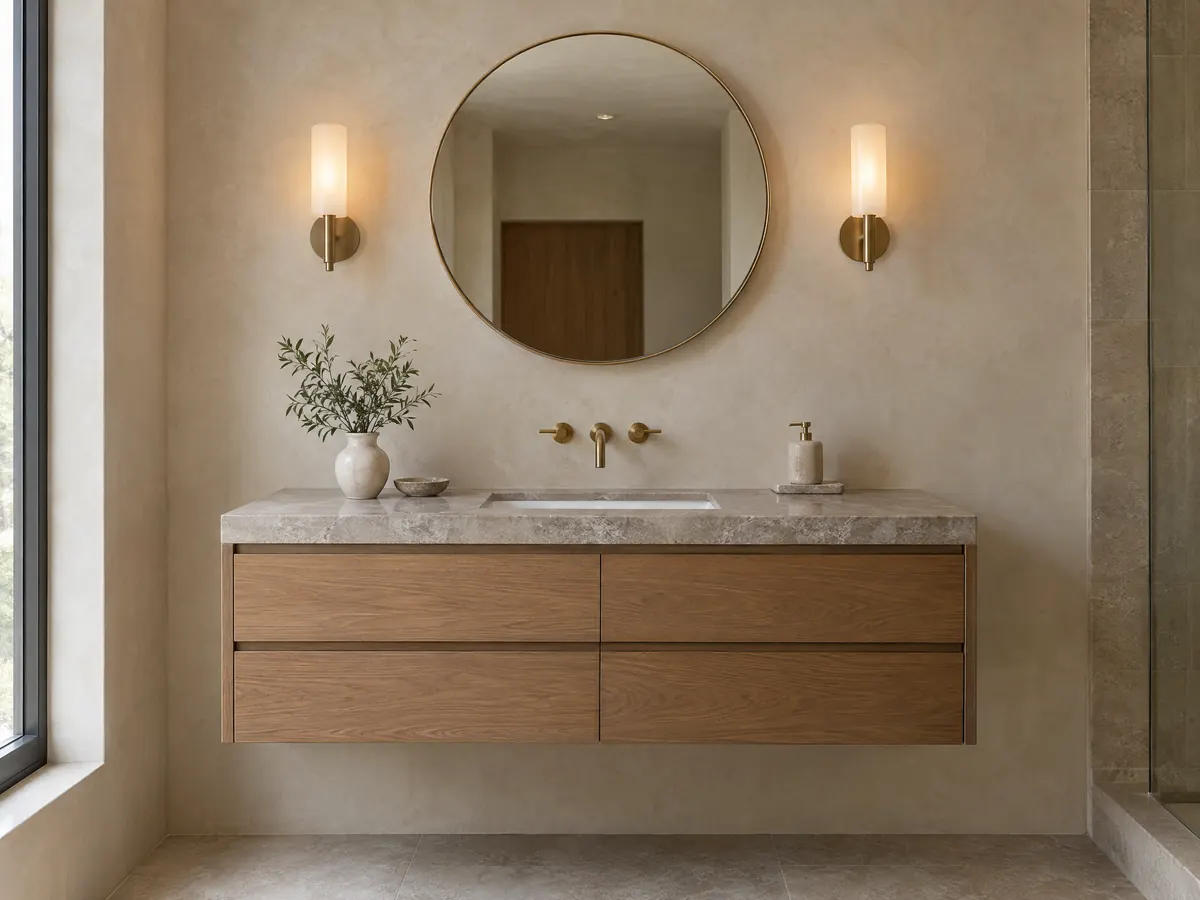
Do you need a permit for a bathroom renovation in Ontario?
Usually, when plumbing, wiring or framing changes, but Ontario does not spell out a bath rule. The City publishes a kitchen remodel bulletin that exempts like-for-like swaps of cabinets, counters, fixtures and flooring and requires permits when a layout changes or fixtures are added or moved. It publishes no matching bathroom bulletin, so we read the kitchen line as a hint, not a ruling. Call the permit technicians at (909) 395-2023 before treating any bath job as exempt.
Two other lines touch baths. A gas water heater replacement needs a plumbing permit, and gas piping needs one except for pieces under 6 feet between an existing outlet and an appliance in the same room. A homeowner may pull a permit for work on a house they live in, and swapping contractors on an open permit takes a letter from the first one. Applications are digital only through Citizen Portal Access. Fees follow valuation, with plan check at 80 percent of the permit fee and a $47.50 minimum, and we did not read the fee tables, so any charge appears as its own line in a written proposal.
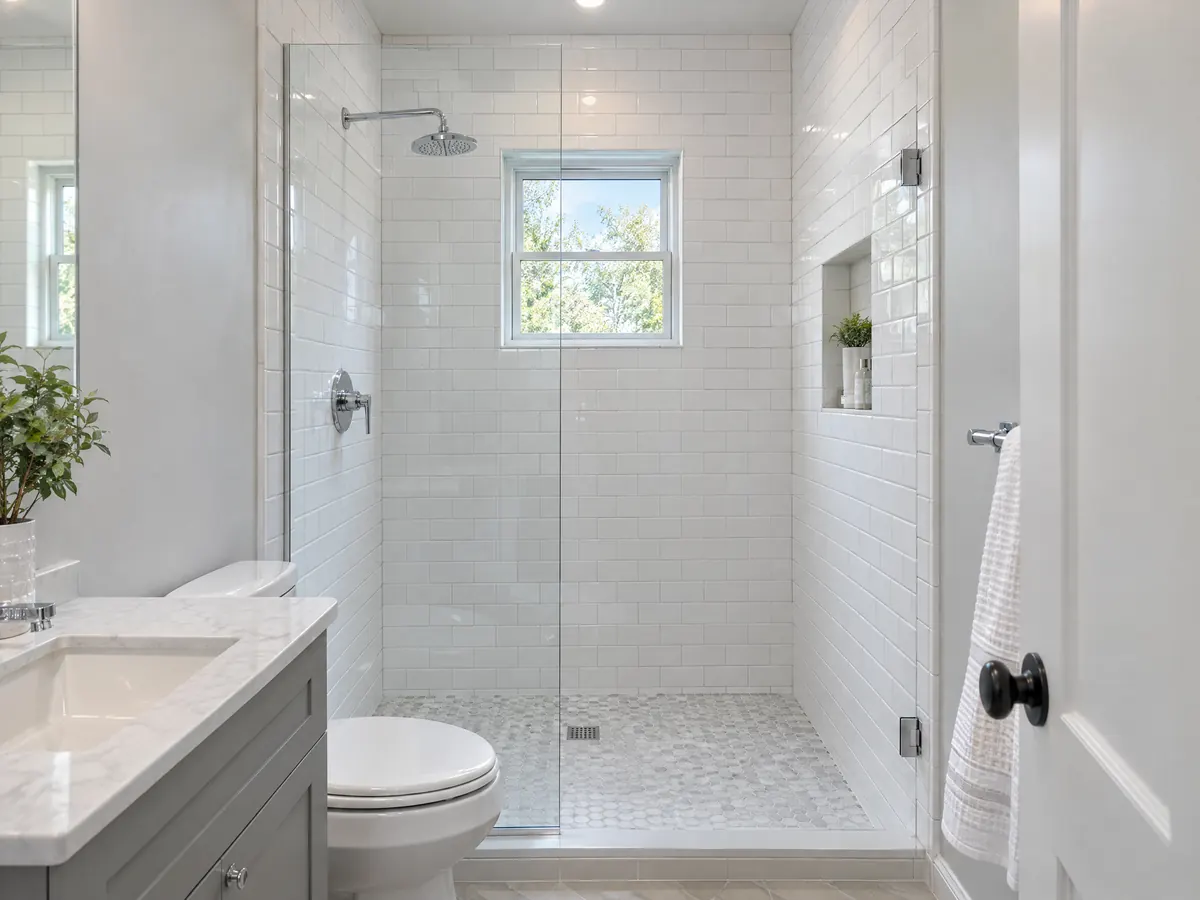
What does Ontario's plan check measure inside a shower or bath?
The City's Residential Correction List, revised March 12, 2026, shows the items reviewers check, and several are bathroom specific. A bathroom with a tub or shower needs a humidity-controlled exhaust fan rated 50 cfm intermittent or 20 cfm continuous, shower and tub-wall surfaces must be nonabsorbent to at least 6 feet above the floor, and glazing within 60 inches of a tub or shower floor must be safety glass.
Geometry counts too. A shower compartment needs at least 1,024 square inches of floor that fits a 30 inch circle, a shower door needs a 22 inch opening, and the ceiling must be at least 6 feet 8 inches high over a 30 by 30 inch area at the showerhead. The list is the plan check standard, and whether a given shower job goes to plan check is a question for the counter. Our bathroom cost guide shows how shower size moves a price.
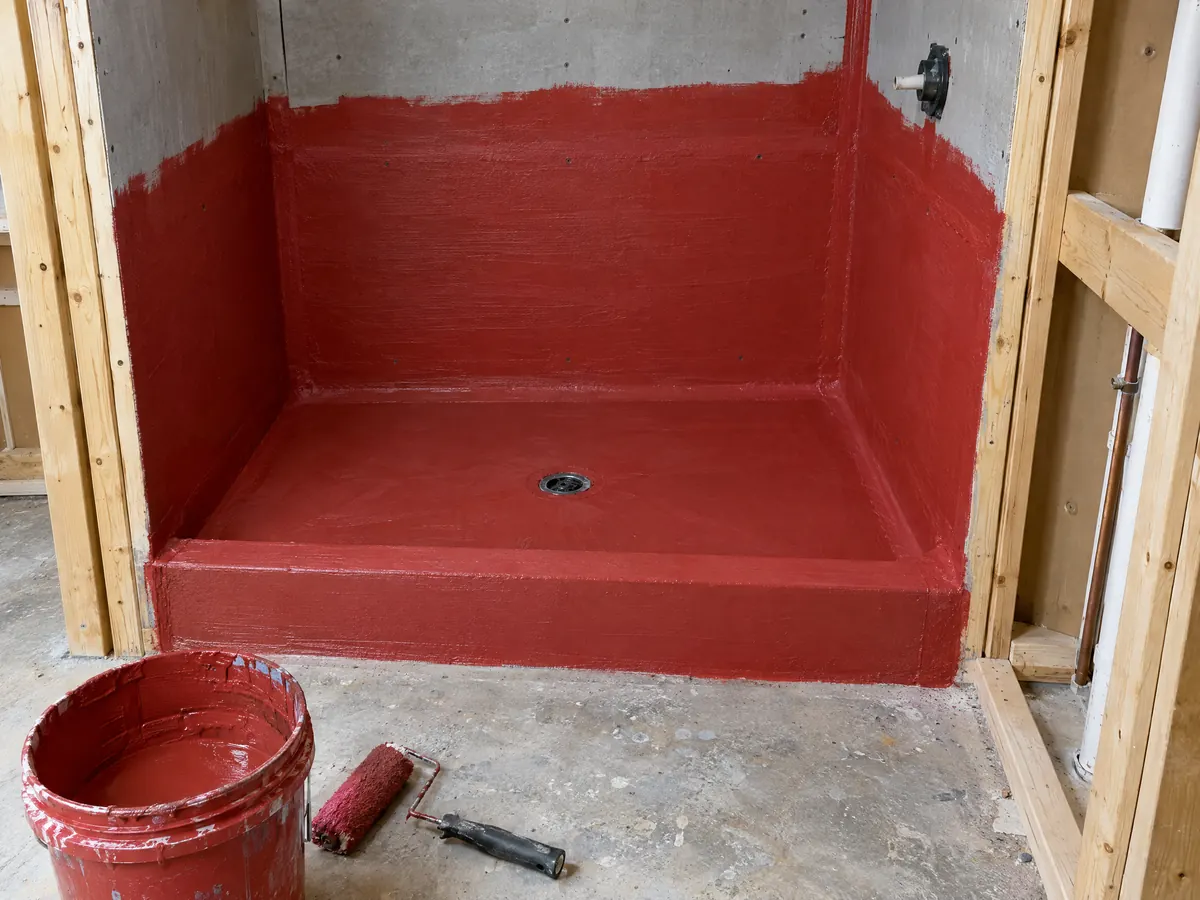
What is behind the wall of an Ontario bathroom built before 1980?
Often materials worth testing before they are disturbed. About 36.9 percent of Ontario's homes went up from 1950 through 1979 (6,117 in the 1950s, 6,584 in the 1960s and 8,791 in the 1970s), and 48.1 percent predate 1980. In that stock, asbestos in floor, plaster or roofing materials and lead-based paint are plausible on a remodel, and a photo cannot tell you which.
South Coast AQMD Rule 1403 requires the District to be notified of renovation work, with phone or email notices confirmed in writing within 48 hours and a fee. An owner-occupant doing their own single-unit renovation is exempt, and the survey requirement does not apply to single-unit renovations removing less than 100 square feet of asbestos-containing material. Federal lead-safe rules for paid work in pre-1978 houses were outside what we could open for this page, so ask any contractor which lead-safe certification it holds. The Census table cannot split 1978 from 1979, so your own build year is the guide.
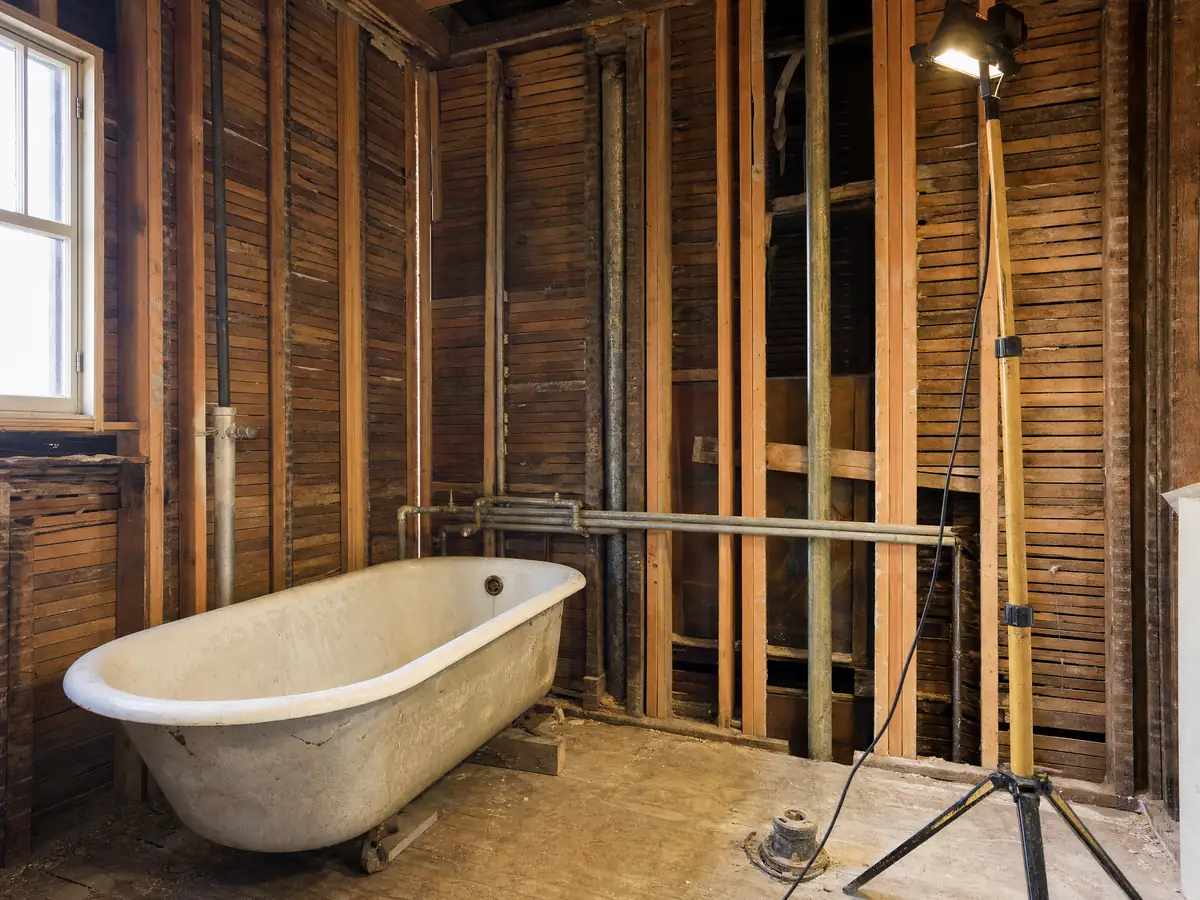
Does a historic district near Euclid Avenue change a bathroom remodel?
Usually only the outside of the house. Ontario's Development Code requires a Certificate of Appropriateness or Waiver for exterior work on a historic resource, including repainting and resurfacing, even when no other permit is needed, so a new exhaust vent, a bath window or a stucco patch on a street-facing wall can bring Planning into an interior job. The Euclid Avenue Overlay goes further: it covers all existing and new construction, additions and remodels inside its boundary, whether or not a building permit is required, so ask Planning whether interior work there is touched.
The older blocks are real. College Park was subdivided in 1914 and has mostly 1920s homes, El Morado Court dates to 1912, Armsley Square was laid out in 1924 with homes built mostly from 1925 to 1940, and Rosewood Court holds the largest cluster of Period Revival houses. We could not verify which of those districts are formally designated, because the City's map separates Designated, Potential and Proposed districts in a way our tools could not read. Planning at (909) 395-2036 can check an address.
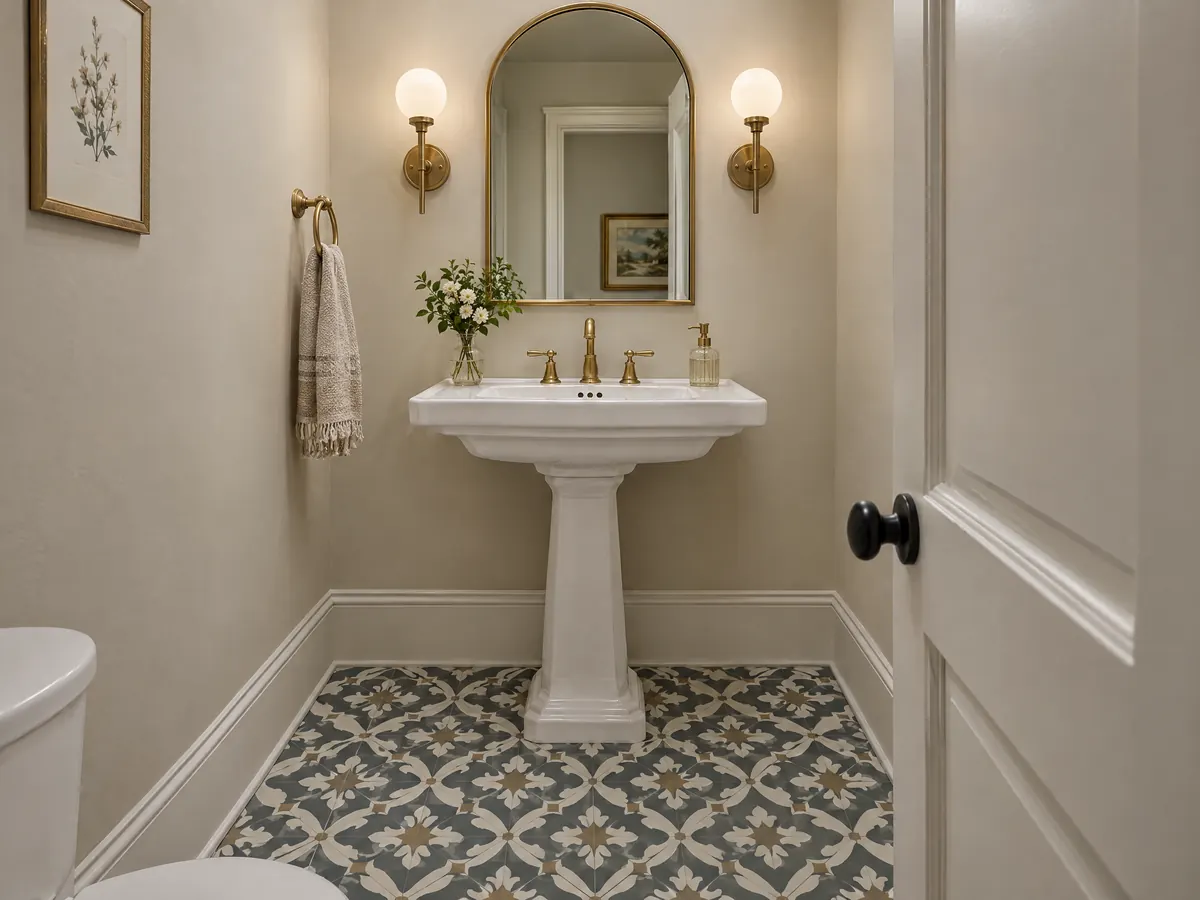
How do rentals, condos and apartments change a bathroom remodel in Ontario?
About 40.4 percent of Ontario's occupied homes are rented, 19.8 percent of homes sit in buildings of five or more units and another 8.6 percent in buildings of two to four, so many baths belong to a landlord, an association or a duplex owner. The City's permit rules follow the work, not the tenure, but a condo bath usually adds association rules and a rental adds a plan for tenants who lose a shower, neither of which the City sets.
Newer homes need a different eye. The Ontario Ranch methane assessment in Bulletin 110 is written for projects in that area, and we could not tell whether a remodel on a finished slab is covered, so ask. A moved drain in a slab-on-grade house means trenching, and the Municipal Code, in the mirror, requires underground pipe and lines to be bedded in clean dirt or sand, 6 inches below and 12 inches above, because of San Andreas proximity. Have the plumber price that bedding. Bath windows and fans are covered on our Ontario window page.
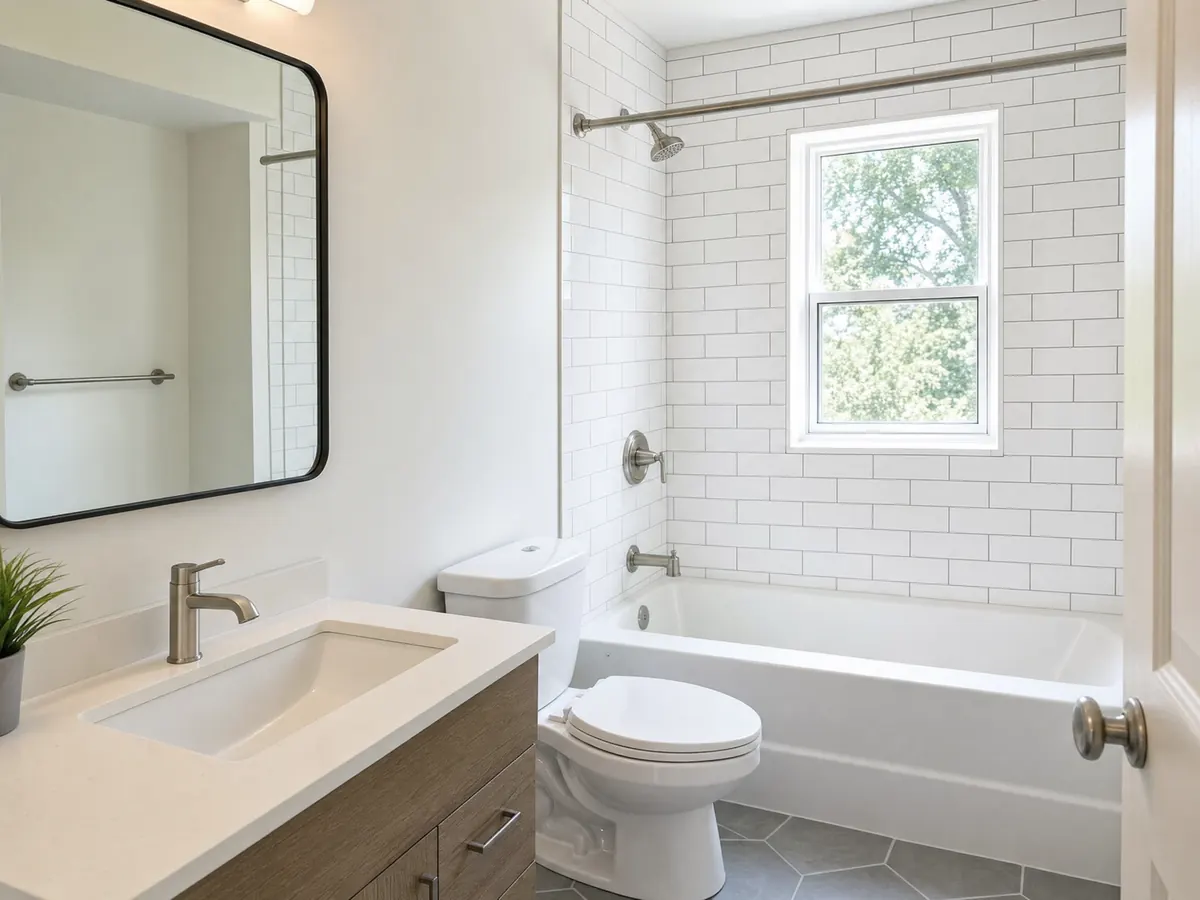
How long does bathroom remodeling take in Ontario, and who does the work?
Our planning ranges are 2 to 6 weeks of design and selections, about a week of demolition and rough plumbing, a few days for waterproofing to cure, 1 to 2 weeks of tile and fixtures, and a few days for glass and the final inspection. Those are our estimates, not City figures, and a custom tile order or shower glass is usually the slowest item. The Municipal Code mirror limits loud construction noise to 7 a.m. to 6 p.m. on weekdays and 9 a.m. to 6 p.m. on weekends.
MDG Builders, CSLB #1040337, is a licensed general contractor that designs, prices, permits and schedules the job, while licensed plumbing, tile and electrical subcontractors do the field work. Ask each firm for its license number and a certificate of insurance, and see how general contractors use subcontractors. The City's business license application asks contractors for a state license number, and you can verify it with our license check guide.
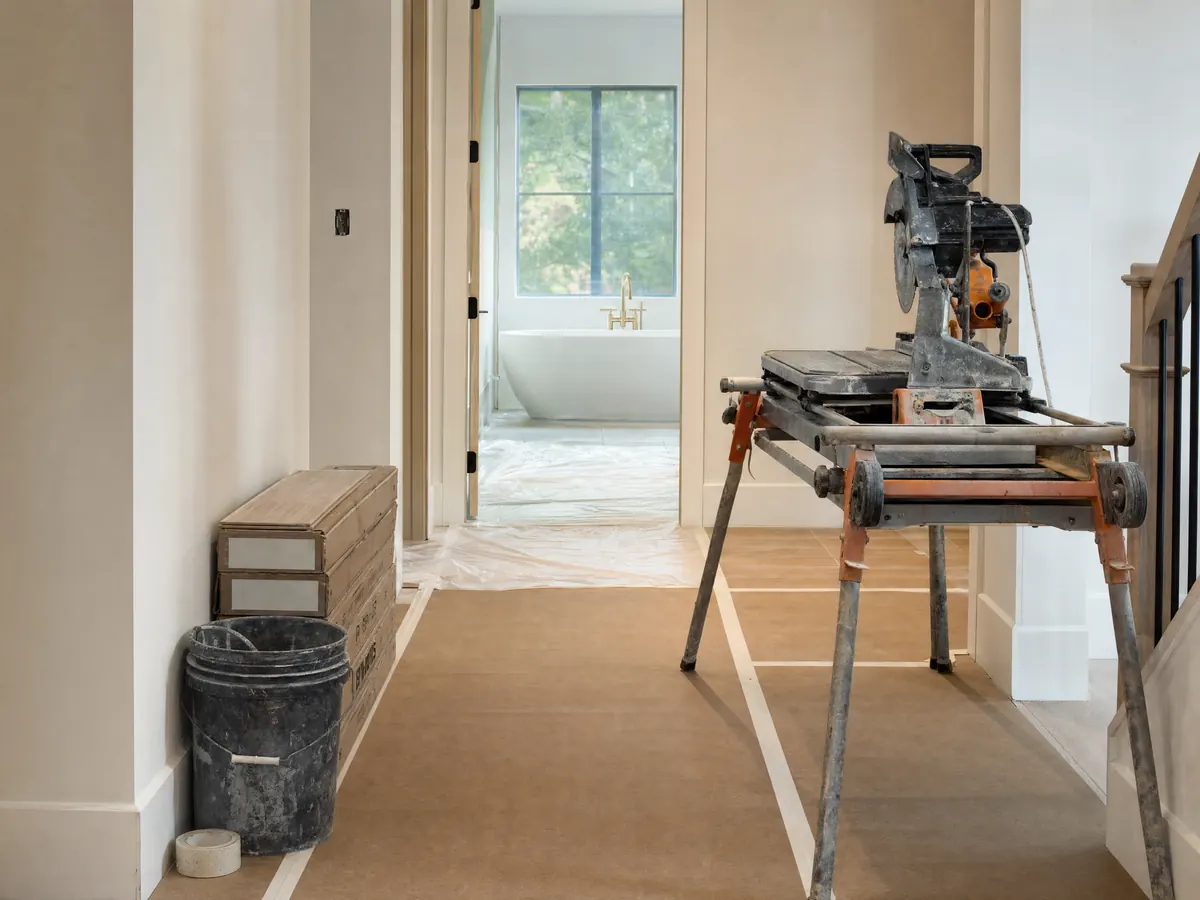
Bathroom photos from Ontario and nearby homes
Bathroom scenes tied to Ontario, from opened walls and shower waterproofing to finished tile, in the 1950s to 1980s tract homes and older colony-era blocks around the city. Tap a photo to enlarge it.
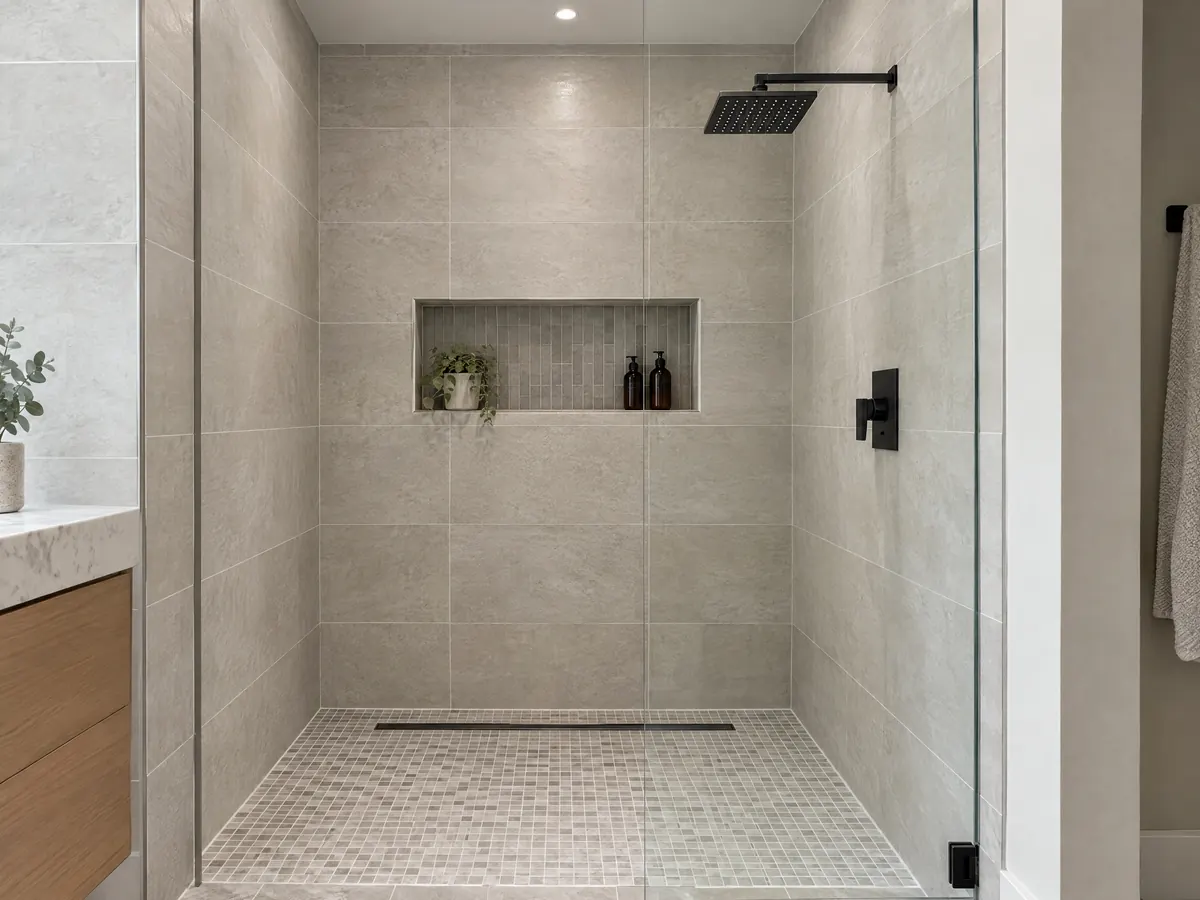
What bathroom remodeling costs around Ontario
Our bathroom remodeling page builds its tiers around a bath of about 35 square feet: roughly $9,000 to $18,000 for a refresh, $25,000 to $40,000 for a midrange remodel on the same layout, $50,000 to $85,000 and up for a primary bath and $60,000 to $120,000 for a bathroom added from scratch. Two Los Angeles sources frame the tiers. Remodeling magazine's 2025 Cost vs. Value report prices a midrange bath at $27,143 and an upscale one at $85,055, and Thumbtack's July 2026 page for that city runs from $8,495 to $26,582. Neither is an Ontario quote, and the median owner-occupied home here is worth $654,200, plus or minus $18,975. Fixture upgrades under Bulletin 112, added alarms, a drain moved through a slab and any asbestos handling can each add a line, and permit charges appear separately in a written proposal. The bathroom cost guide explains how a bath moves between tiers. For nearby work see Eastvale, Pomona, Corona and Los Angeles. A bath inside a backyard unit is on the Ontario ADU page, a new bath in an addition on the Ontario room addition page, and the Ontario area page lists every trade we cover here.
| What it covers | Typical range |
|---|---|
| Refresh in the same layout: new vanity, toilet, fixtures, lighting, paint, limited tile | $9,000 to $18,000 |
| Mid-range full remodel in the same layout: new shower or tub, tile, vanity, fixtures, lighting and fan | $25,000 to $40,000 |
| Upscale or primary bath: stone, custom glass, freestanding tub, double vanity, heated floor | $50,000 to $85,000 and up |
| Adding a new bathroom | $60,000 to $120,000 |
Ontario bathroom remodel questions, answered
Do I need a permit for a bathroom remodel in Ontario?
Often, but Ontario has no bathroom bulletin. Its kitchen bulletin requires permits when plumbing fixtures or electrical devices are added or moved and exempts like-for-like swaps, so we read a bath the same way and confirm by calling (909) 395-2023. Permits are filed digitally through Citizen Portal Access.
Do I need a permit for a shower remodel?
Usually, when the valve, drain or wall framing changes, and not for re-tiling an unchanged shower, though Ontario lists no shower exemption. A tub-to-shower conversion changes the drain and the walls, so expect a permit. Confirm the exact scope with the Building Department before you order materials.
How much does a bathroom remodel cost in California?
Our tiers, built on a 35 square foot bath, run about $9,000 to $18,000 for a refresh, $25,000 to $40,000 for a midrange remodel, and $50,000 to $85,000 and up for a primary bath. They rest on Los Angeles sources, not an Ontario survey, so a site visit and a written proposal set your price.
Can a handyman do a bathroom remodel?
Only a very small one. California lets an unlicensed person take work of $1,000 or less, but not when a permit is needed or when the person hires help. A moved drain or a new circuit needs a permit, so check any license on the CSLB website and ask for proof of insurance before paying a deposit.
What is the difference between a bathroom remodel and a bathroom renovation?
Renovation usually means refreshing what is there, and remodel suggests the layout, pipes or wiring change. Ontario's rules follow what you touch, not the word. New tile and a vanity are finish work, while a relocated toilet or a new exhaust fan duct is system work and may need a permit.
How long does a bathroom remodeling take?
Expect 2 to 6 weeks of design, about a week of demolition and rough plumbing, a few days of waterproofing and cure, 1 to 2 weeks of tile and fixtures, and a few days for glass and the final. Those are our ranges, and a back-ordered tile or shower glass usually adds the delay.
Do I need a permit to change a toilet?
A like-for-like swap probably does not, but Ontario publishes no fixture checklist, so ask the counter first. A new toilet should still meet the 1.28 gallon limit, and relocating one, adding a bathroom or replacing a buried drain needs a permit. Bulletin 112 asks for a self-certification at final when fixtures change.
Is remodeling a bathroom worth it?
Partly. Remodeling magazine's 2025 Cost vs. Value report for Los Angeles shows a midrange bath recouping about 89.6 percent at resale and an upscale bath about 42.3 percent. We found no Ontario resale study, so treat those numbers as a regional guide, and note the benefit shrinks as finishes get costlier.
Do bathroom remodels in older Ontario homes need asbestos or lead checks?
Often worth doing, since 48.1 percent of Ontario homes were built before 1980. South Coast AQMD Rule 1403 asks for notification before renovation, though an owner-occupant doing their own single-unit work is exempt. Ask a paid contractor about lead-safe certification and test suspect floor, plaster or paint before demolition.
Tell us about your Ontario bathroom
Tell us the neighborhood, roughly what year the house went up, whether it is a condo, a rental or a detached home, and whether the shower or toilet is moving, and the first visit starts with the permit question and the older-materials check.