
Deck Builderin Glendora, CA
A deck builder in Glendora's Very High Fire Hazard Severity Zone must use noncombustible, ignition-resistant, fire-retardant-treated or ASTM E2632 and E2726 tested walking surfaces, according to the State wildland-urban interface code as mirrored online. A deck over 200 square feet, over 30 inches high or attached to the house needs a building permit.
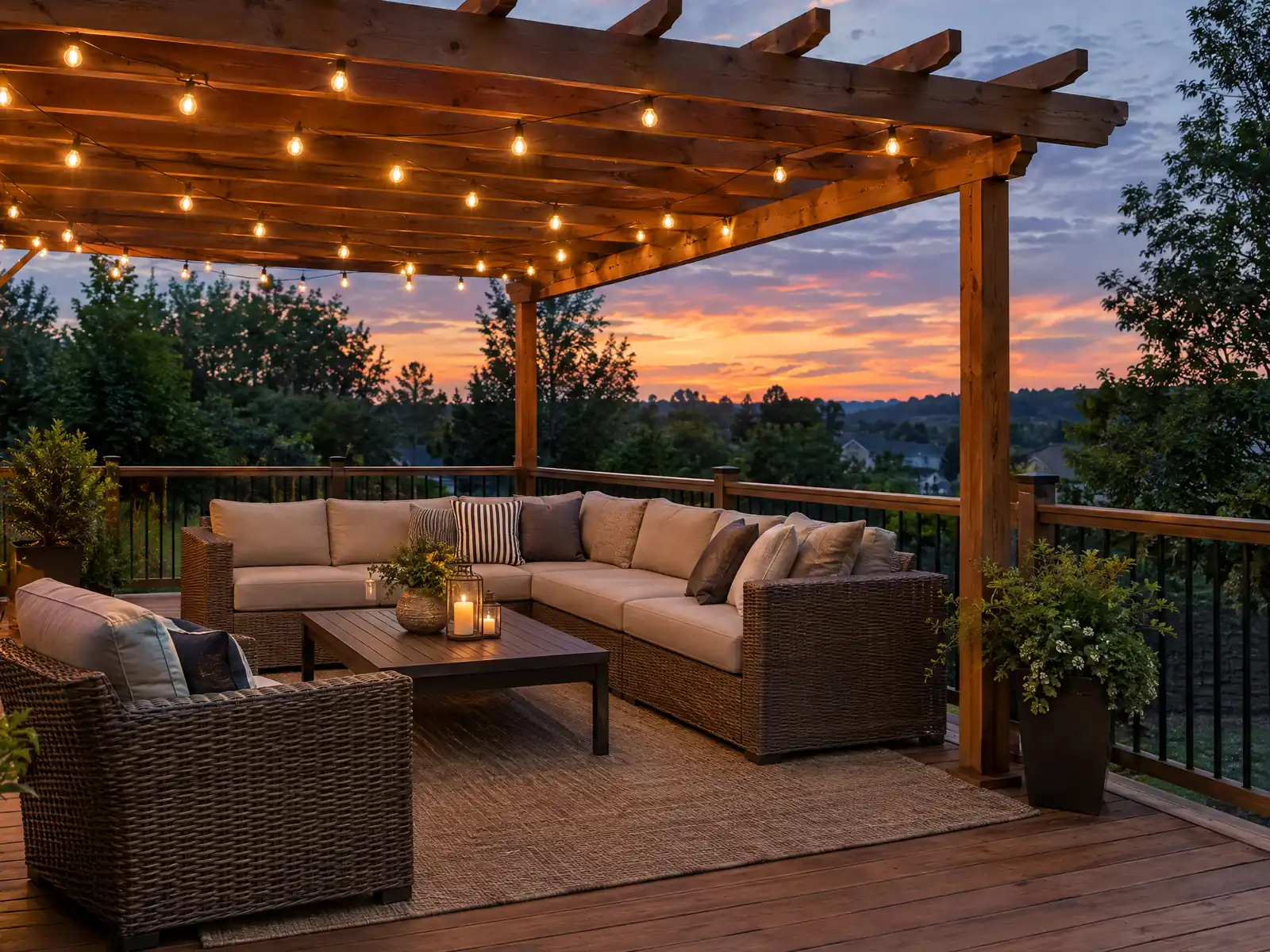
Glendora sits where the San Gabriel foothills meet the valley, and the City's Safety Element says that location creates a wildland-urban interface. On January 16, 2014 the Colby Fire, started by an illegal campfire and driven by Santa Ana winds, burned 1,992 acres, destroyed five homes and forced 3,600 people to evacuate. A deck here is a fire question as well as a lumber question.
MDG Builders, CSLB #1040337, is a general contractor in Tarzana. We scope the deck, put the permit questions to the Glendora Building Division and schedule the trades, and a licensed carpentry or framing subcontractor builds it. Prices and sources are on our decks page, and the Glendora overview lists the other work we manage in the city.
What Glendora's Building Division and municipal code say about decks
Where decks permits come from in Glendora: City of Glendora Community Development Department, Building and Safety Division.
- The State exemption list (CRC R105.2 as mirrored) exempts a deck of 200 square feet or less, no more than 30 inches above grade at any point, not attached to the dwelling and not serving the required exit door; and detached one-story accessory structures of 120 square feet or less. Anything larger or attached needs a permit, and the exemption does not override zoning.
- Glendora's permit worksheet prices a balcony or deck, a patio cover (lattice, solid roof or enclosed), a built-in BBQ, a firepit or fireplace and a pool or spa by square footage and valuation.
- The City's Patio Cover Standard Plan (dated 8/16/2011) covers lattice and solid patio covers with 4x4 posts, rafter and header span tables, 18 or 24 inch square footings 12 inches deep (1,500 psf soil), ledger bolting and a note that it is not designed to be enclosed. Its site plan list asks for lot coverage, with a maximum 35 percent floor area in non-hillside zones.
- Municipal Code 21.04.010 D.3 lets open patio structures attached to a single-family house project into the required rear setback, but no closer than 4 feet to the rear property line.
- The City's single-family zones handout excludes covered porches, balconies, patios, carports and open detached accessory structures (with or without a solid roof) from the 0.35 floor area ratio, and lists unroofed decks, patios and landings up to 36 inches above grade as allowed up to 4 feet into front and rear setbacks and within 3 feet of the side property line.
- In the RHR zone one detached open patio up to 400 square feet is exempt from the accessory structure count, and any excess over 400 square feet counts toward the 1,000 square foot limit; on hillside lots decking counts toward lot coverage.
- In fire hazard zones the WUI code (as mirrored) requires deck, porch, balcony and stair walking surfaces to be noncombustible, ignition-resistant, fire-retardant-treated wood or a product passing ASTM E2632 and E2726 under 504.7.3.2, with a Class B flame-spread exception if attached walls are ignition resistant; the County fuel modification sheet lists detached decks as exempt from fuel modification review.
- Swimming pools may sit in side and rear setback areas no closer than 6 feet to a property line (Municipal Code 21.03.010 D.1.e), and pools and spas need a barrier under Municipal Code 9.32.
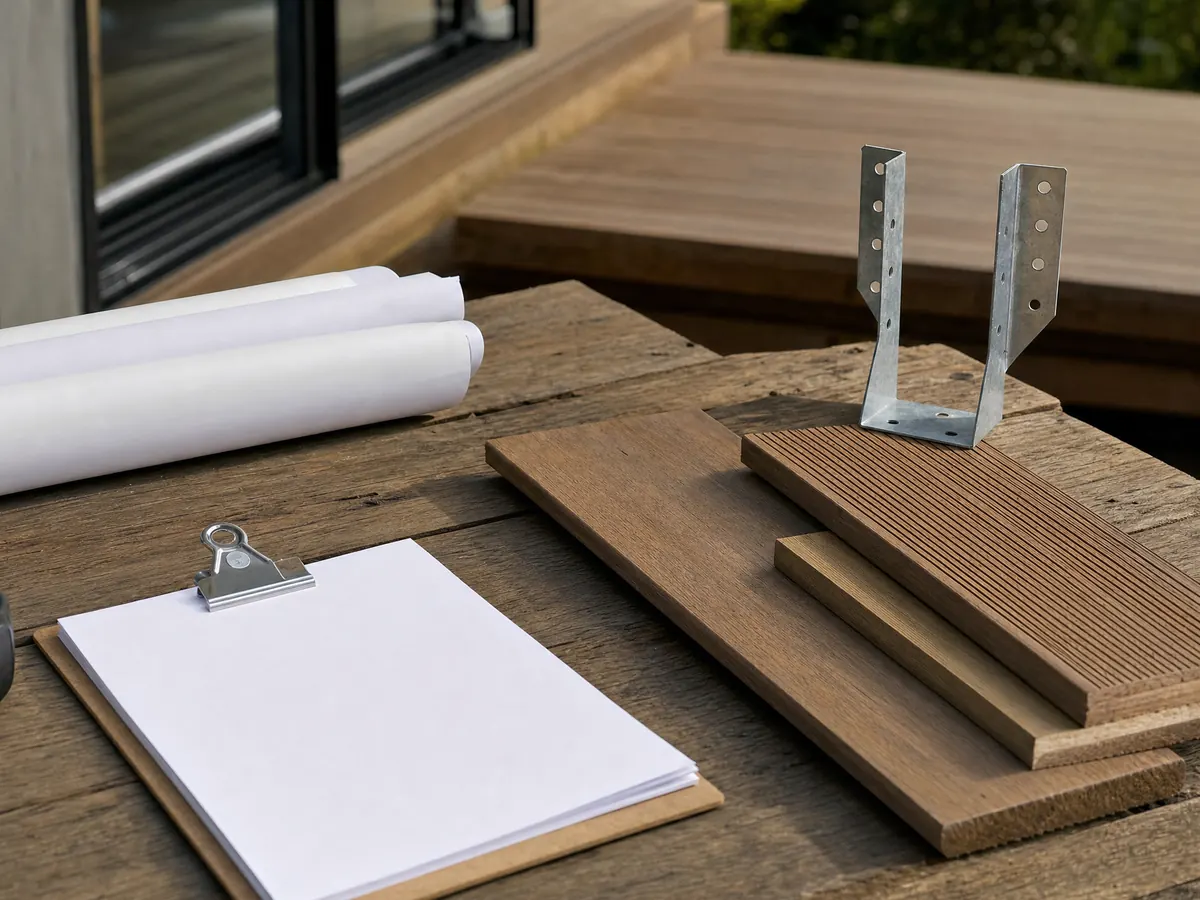
What decking is allowed in Glendora's Very High Fire Hazard Severity Zone?
In a fire hazard zone, the walking surfaces of decks, porches, balconies and stairs must be noncombustible, ignition-resistant, fire-retardant-treated wood, or a product that passes ASTM E2632 and E2726, with a Class B flame spread exception when the attached walls are ignition resistant. That is section 504.7.3.2 of the State wildland-urban interface code, which Glendora adopted in Chapter 19.07 (Ordinance 2097, November 12, 2025). We read it on a gocodebook.com mirror with AI-generated summaries, not on the State's own site, so confirm it with the Building Division.
Do not assume a board qualifies because it is sold as composite or pressure treated. One UC Extension summary in our research notes said some tested composites did not meet the ignition-resistant definition, so ask the builder for the product's test report or State Fire Marshal listing and keep a copy.
The City's own Fire Hazard Severity Zone map, on file with the Building Division under Municipal Code 19.06.020, decides any address. On the County's copy of the CAL FIRE layer, 119 of 302 evenly spaced points in the city, 39.4 percent, were Very High, a sample and not a parcel lookup. We found no Glendora source saying how many boards a repair may replace before the whole deck must meet the rule, so ask before you buy lumber.
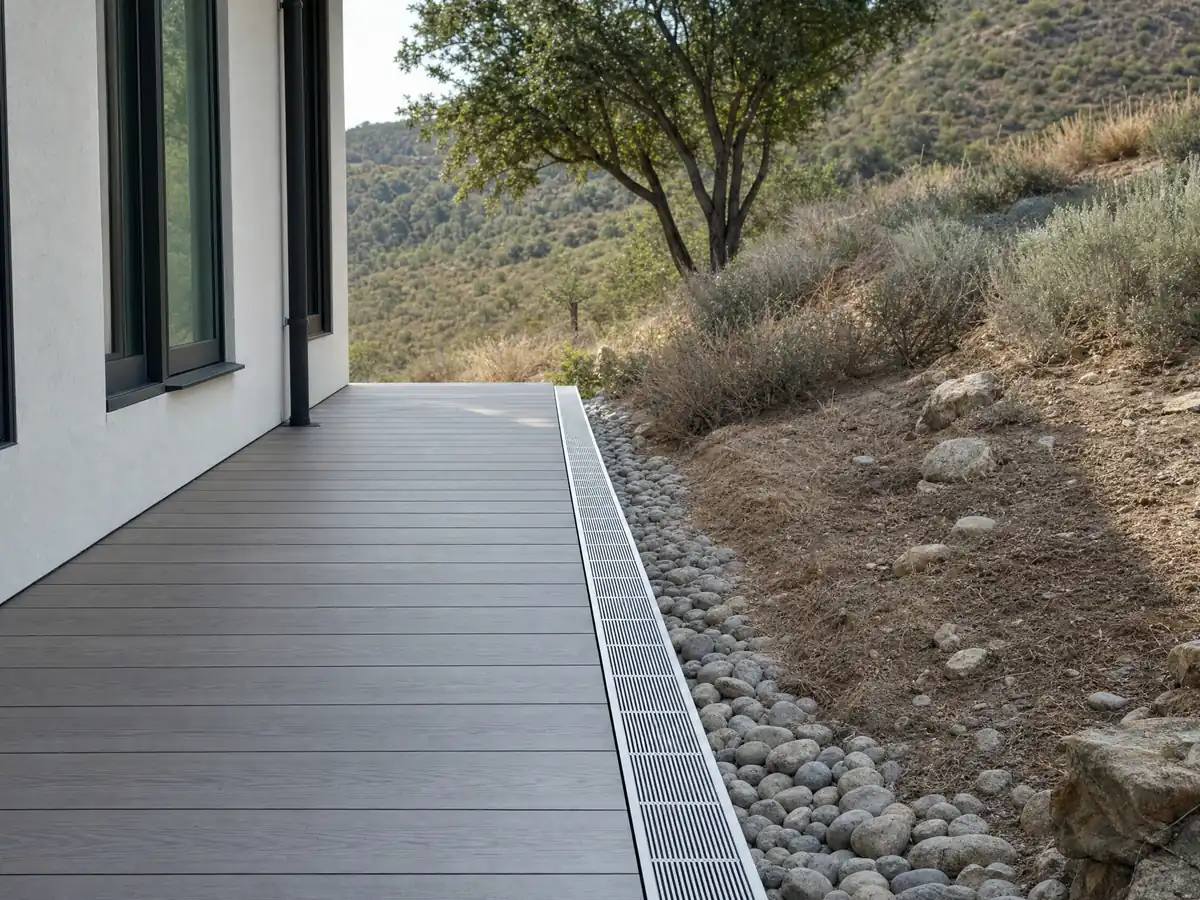
Can I build a deck without a permit in Glendora?
Only a small one. The State exemption list, read on the same mirror, exempts a deck of 200 square feet or less that stands no more than 30 inches above grade at any point, is not attached to the house and does not serve the required exit door. An attached deck, a taller one, a larger one or one beside the exit door needs a permit, and the exemption does not override zoning.
Glendora's permit worksheet prices a balcony or deck, and a patio cover, by square footage and valuation. A contractor's application needs a copy of the license and the Licensed Contractor's Declaration Form, an owner-builder uses the Owner-Builder's Declaration Form, and either one proves ownership. The permit issues electronically once fees and forms are in. The Master Fee Schedule was out of reach when we researched, so we print no fee.
For new homes and additions the City's submittal list sends any building in a Fire Hazard Severity Zone through LA County Fire Department review. Whether a deck alone follows that route is not stated, so ask when you call (626) 914-8222.
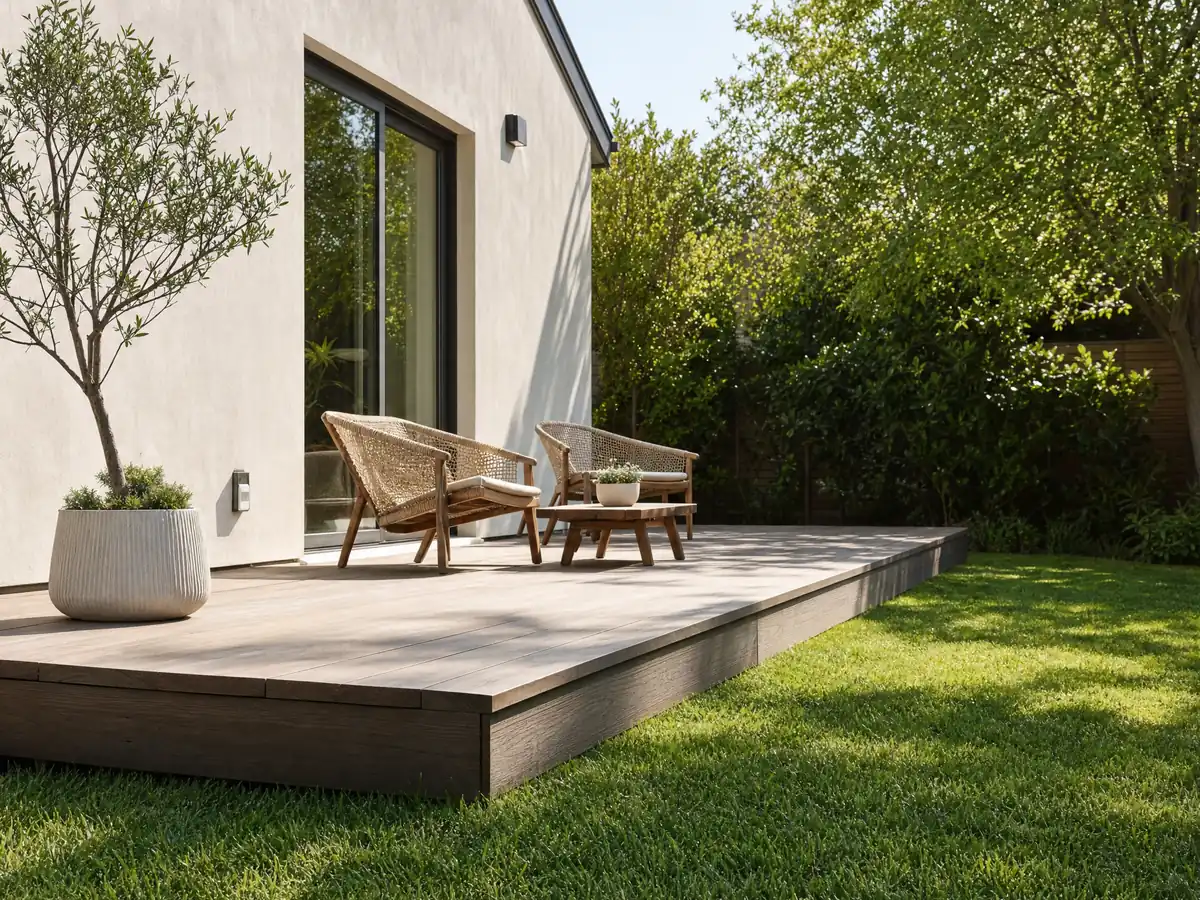
How are decks on Glendora hillside lots different?
The slope changes the whole project. On any parcel averaging a 10 percent slope or more, Municipal Code 21.04.030 counts decking toward lot coverage, keeps structures 50 horizontal feet from a ridge line, limits exterior colors to earth tones with no reflective materials visible from 100 feet, and holds back grading and building permits until a development plan is approved when more than 150 cubic yards of grading is involved.
Expect engineering. The code requires stepped foundations for hillside development, and the City's submittal list requires a geotechnical report for hillside locations when a new building or addition is involved. The County's exemption sheet lists detached decks as exempt from fuel modification review, but a deck attached to a house on a slope is part of that house's plan, so ask which one yours is.
Landscaping carries conditions as well. Disturbed slope needs at least one five-gallon shrub per 100 square feet plus ground cover within a year, irrigation tested in front of a building inspector, and plants from the County Fire Department's desirable list.
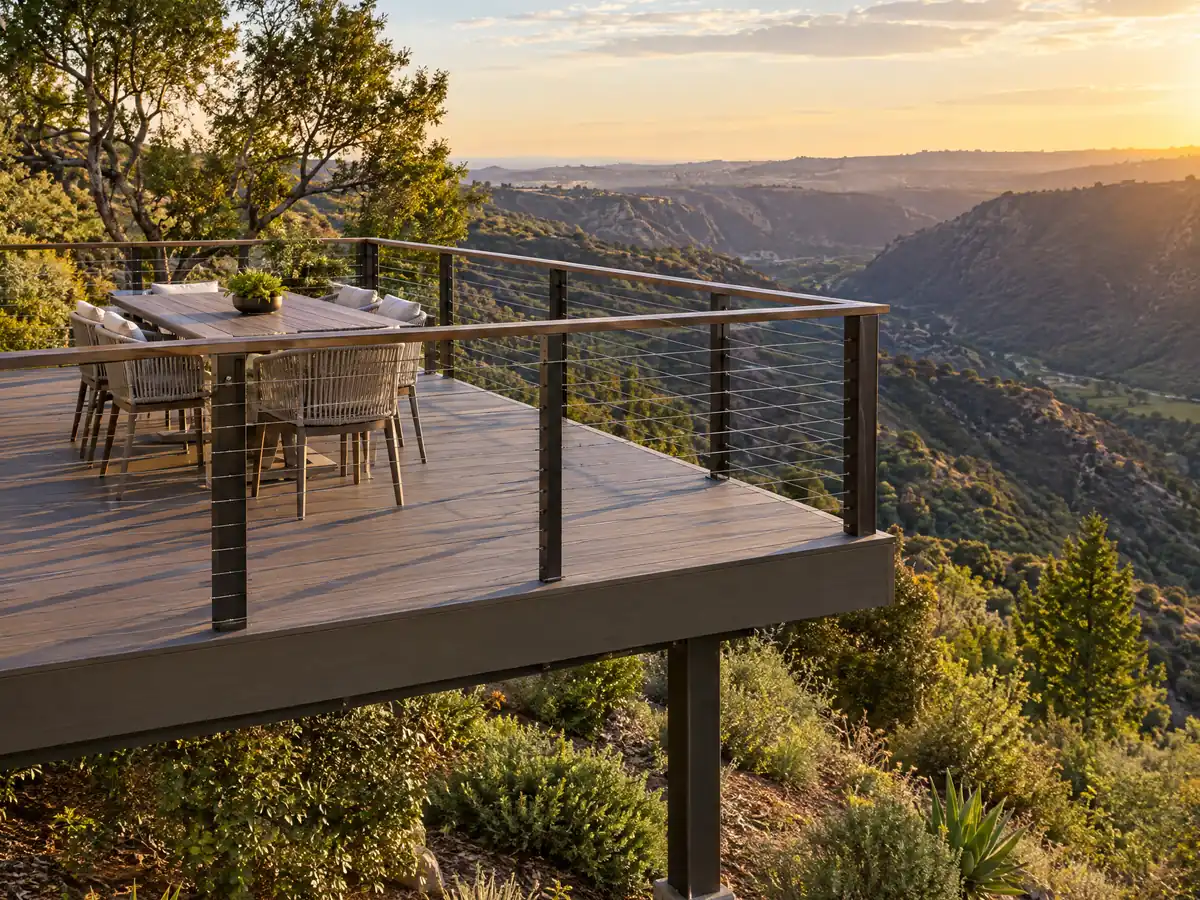
How close to the property line can a Glendora deck or patio cover go?
The City's single-family zones handout lets unroofed decks, patios and landings up to 36 inches above grade project up to 4 feet into front and rear setbacks and sit within 3 feet of the side property line. For open patio structures attached to a single-family house, Municipal Code 21.04.010 D.3 allows a projection into the rear setback but no closer than 4 feet to the rear line.
The handout excludes covered porches, balconies, patios, carports and open detached accessory structures from the 0.35 floor area ratio. The City's Patio Cover Standard Plan, dated August 16, 2011, covers lattice and solid covers with 4x4 posts, footings 18 or 24 inches square and 12 inches deep in 1,500 psf soil, and ledger bolting, and it notes the design is not meant to be enclosed.
In the Rural Hillside Residential zone, one detached open patio up to 400 square feet is exempt from the accessory structure count, and any excess counts toward the 1,000 square foot limit. A deck beside a pool has its own distance: Municipal Code 21.03.010 D.1.e keeps pools at least 6 feet from a property line, and Chapter 9.32 requires a barrier.
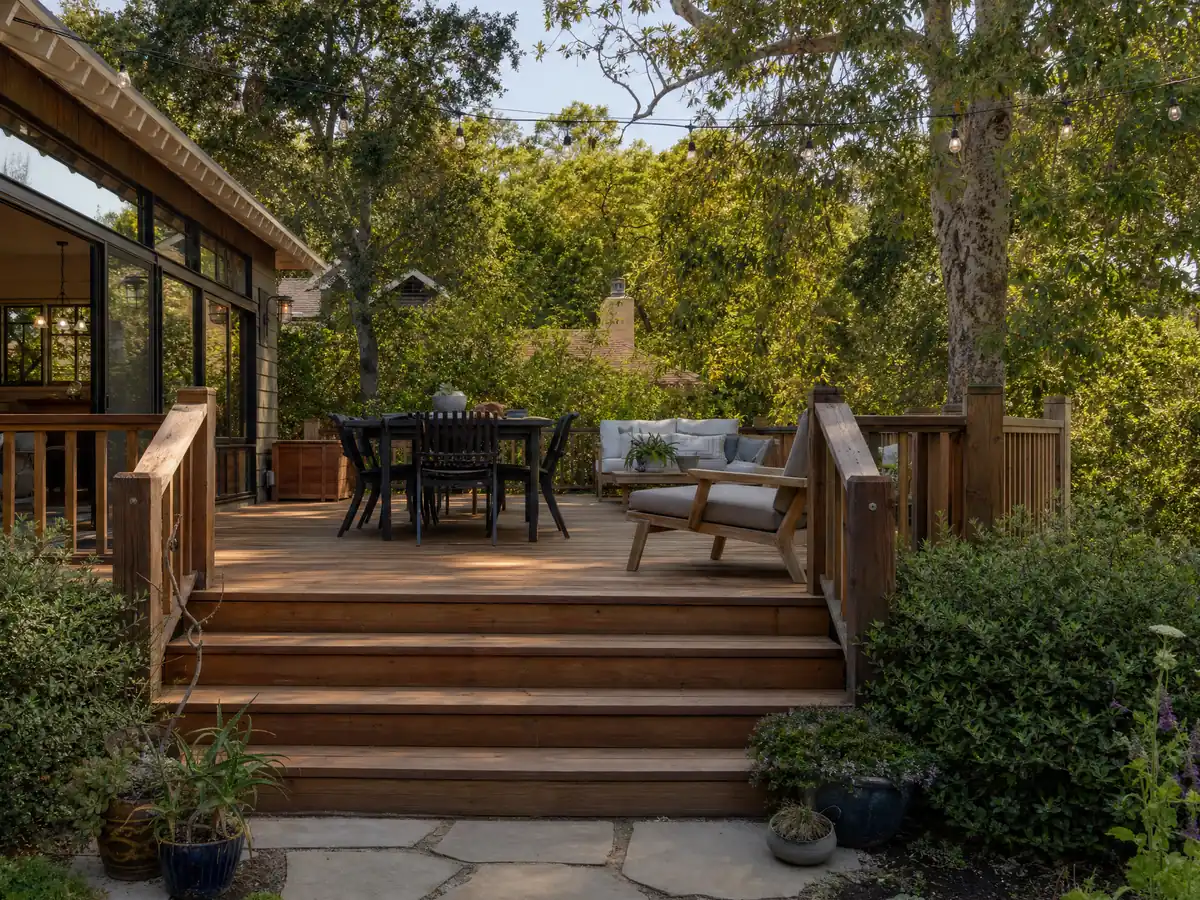
What guard height and ledger rules apply to a Glendora deck?
A walking surface more than 30 inches above grade, measured within 36 inches of its edge, needs a guard under the California Residential Code, and the guard must stand at least 42 inches tall with gaps too small to pass a 4 inch sphere. We read section R312.1 of the 2022 edition; Glendora adopted the 2025 edition in Chapter 19.13, so confirm the numbers with the Building Division.
The ledger is where most deck failures begin. Section R507.9 asks for a pressure-treated ledger of at least 2x8, no concentrated loads from beams, no attachment through stone or masonry veneer, hot-dipped galvanized or stainless fasteners and flashing, plus lateral hold-downs: two devices rated 1,500 pounds within 24 inches of each end, or four rated 750 pounds.
Below grade, the City's 2019 design criteria sheet gives a 12 inch minimum footing depth below finish grade and seismic design category D2 or E. Call 811 before digging footing holes.
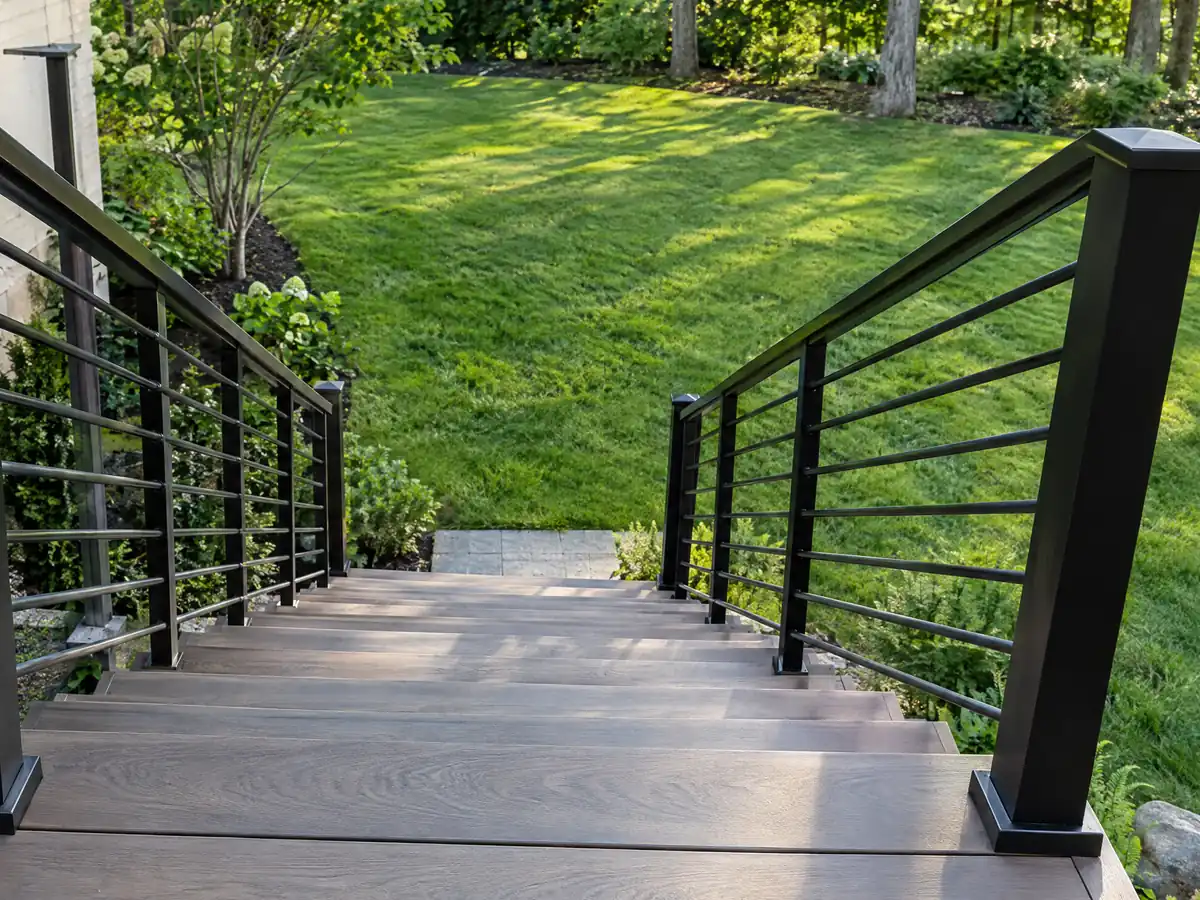
What goes wrong with decks on 1950s Glendora houses, and does the Historic District matter?
Old decks fail at the house wall and at the posts. About 79.9 percent of Glendora's units predate 1980, including 56.5 percent from 1950 to 1969, so a deck that came with a ranch house or was added later is probably decades old. The UC Integrated Pest Management program says drywood termites are most common in southern California and infest decks and fences, and that fixing moisture and sealing exterior wood helps.
The City says it has one designated Historic District near Glendora Village and 38 landmarks. Municipal Code 21.07.060 requires a Certificate of Appropriateness for changes to a contributing resource's exterior appearance, and ordinary maintenance with no change in design, material or look needs none. A rear deck may or may not count, so ask Planning at (626) 914-8214 before replacing anything in view of the street.
Street trees matter too. Section 16.12.040 requires parkway trees to be shielded during any repair or alteration of a house or structure, which reaches deck and patio work near the curb.
- Will the repair touch only the surface boards, or the joists, ledger and stair stringers too?
- Has the ledger been opened up and inspected for rot?
- Is the deck inside a historic or fire hazard area?
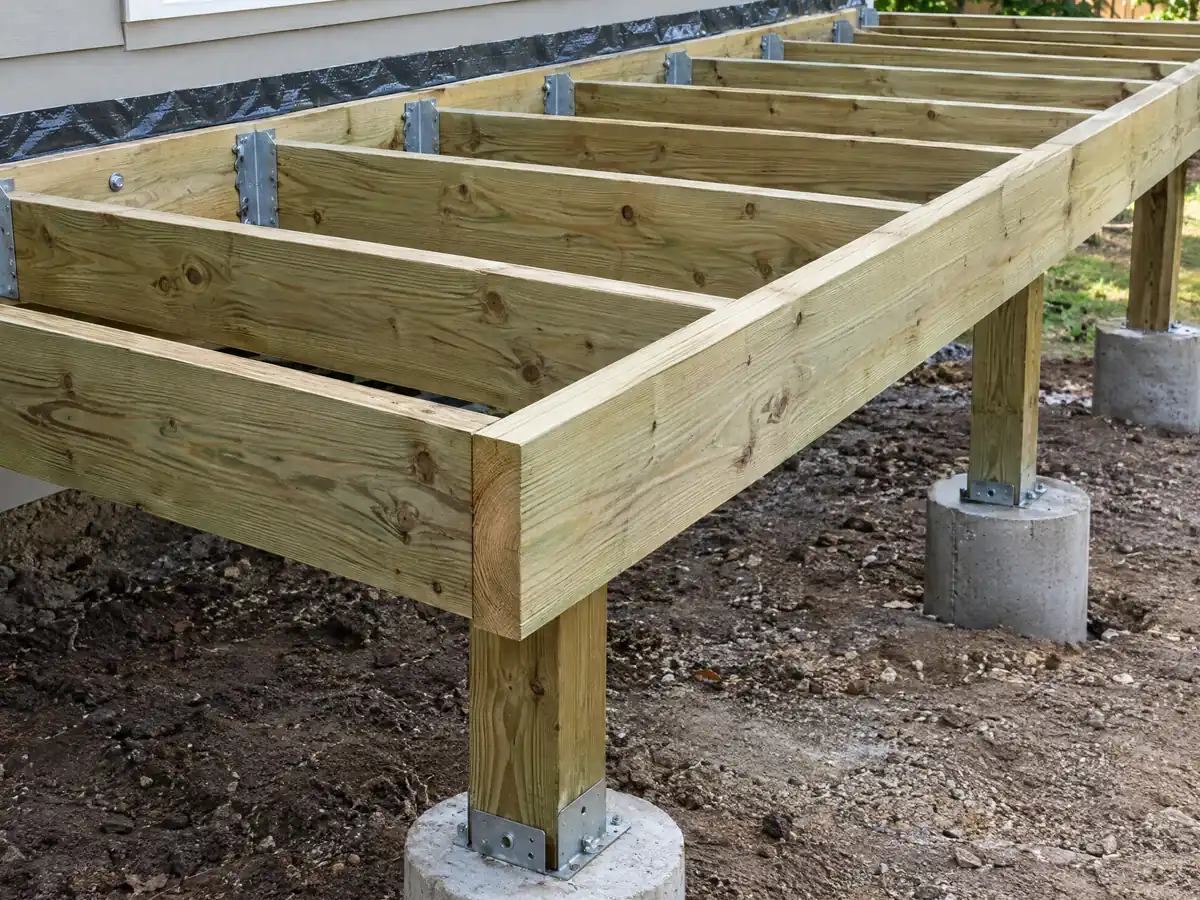
How much does a deck builder in Glendora charge for wood or composite?
Directory pages for Glendora mix tiny platforms with full decks and show no method, so we use the Los Angeles figures on our decks page, at medium confidence for wood and medium to low for composite. Pressure-treated wood runs $45 to $75 per square foot and composite $65 to $110, before permits and engineering. A 16 by 20 foot deck is about $14,500 to $24,000 in wood or $21,000 to $35,000 in composite.
The 2025 Cost vs. Value report for Los Angeles prices a defined 16 by 20 foot deck at $18,419 in wood and $26,872 in composite, and says wood recouped 99.6 percent at resale and composite 73.9 percent. Fire zone board rules narrow the choices, and hillside decks have no independent price, so they are quoted after a site visit.
CSLB's C-5 framing class covers the rough carpentry of a deck. Work totaling $1,000 or less with materials is the limit for an unlicensed person, and never for a job that needs a permit. Our guide to checking a contractor license shows how to look up a bidder.
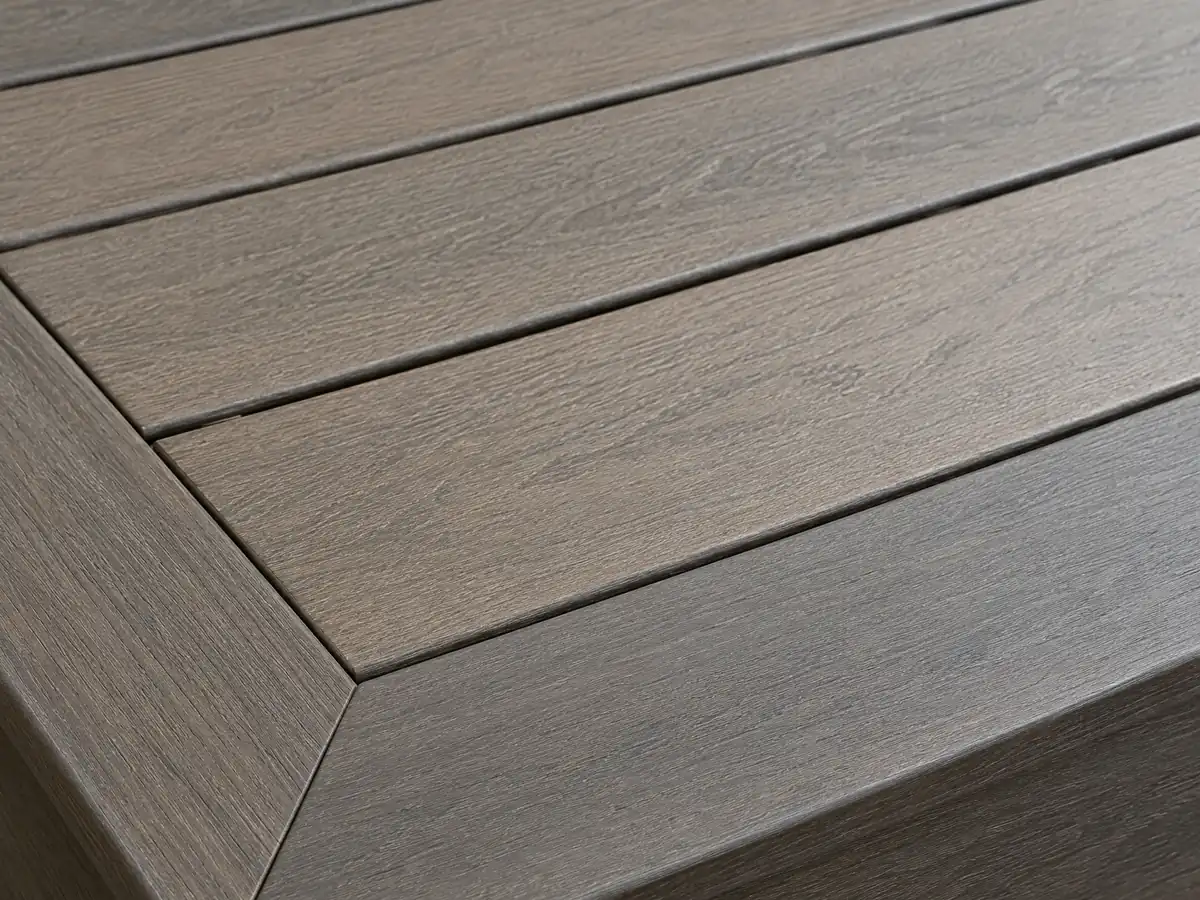
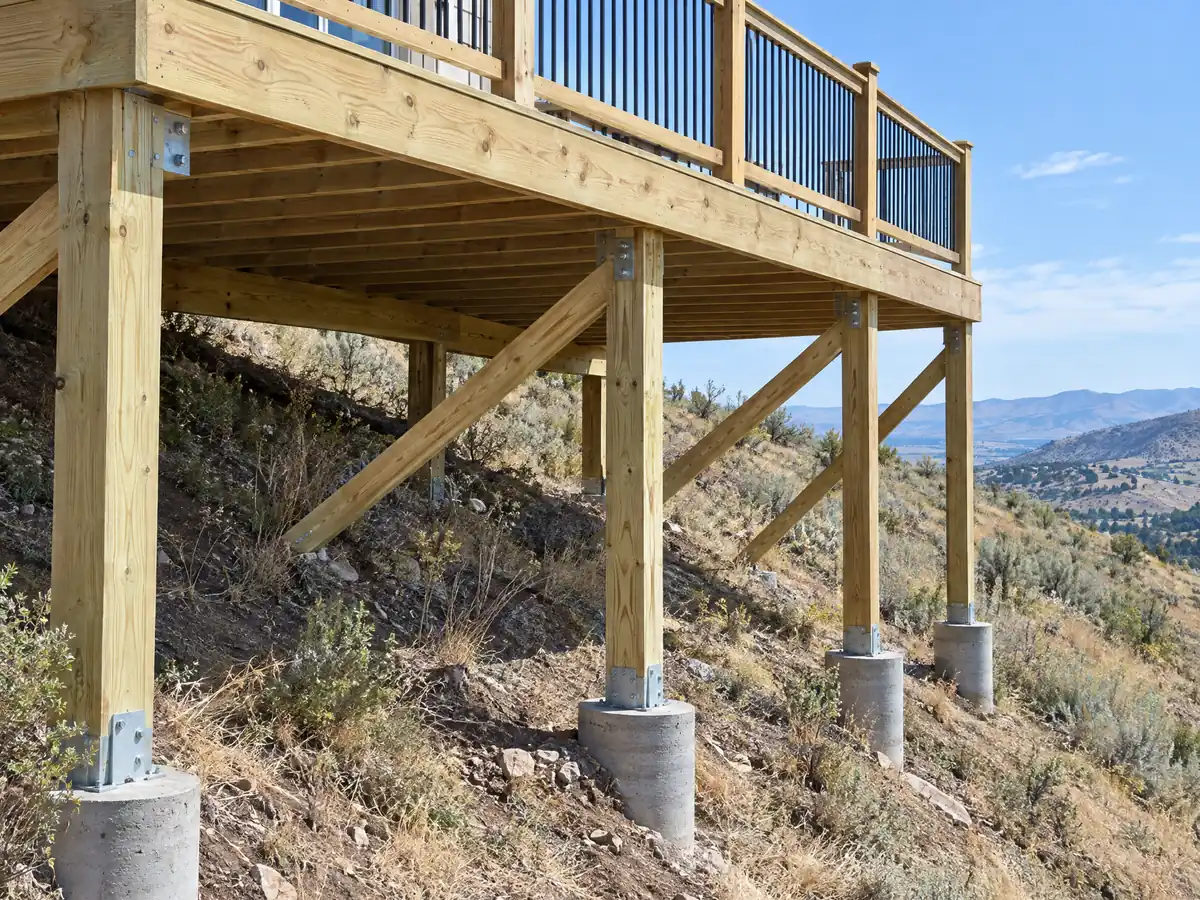
Deck photos from Glendora and nearby communities
Framing, footings and surfaces from Glendora and nearby foothill towns, including fire-resistant boards and hillside posts. Tap any photo to enlarge it.
What decks costs around Glendora
The dollar figures above are Los Angeles ranges from our decks page, not a Glendora bid. Comparison pages: decks in Los Angeles, decks in Covina, decks in Diamond Bar and decks in Pomona. The same yard often needs concrete work in Glendora or flooring in Glendora, and how general contractors use subcontractors explains how the trades are sequenced.
| What it covers | Typical range |
|---|---|
| Pressure-treated wood deck | $45 to $75 per square foot |
| Composite deck | $65 to $110 per square foot |
| 16 by 20 foot wood deck (320 sq ft) | About $14,500 to $24,000 |
| 16 by 20 foot composite deck | About $21,000 to $35,000 |
| Hillside, second-story, rooftop and ipe decks | Priced by site visit |
| Permits and engineering | Quoted as separate lines |
Deck questions from Glendora homeowners
Can I build a deck without a permit in Glendora?
Only a small, low, detached one. The State exemption list covers a deck of 200 square feet or less, no more than 30 inches above grade, not attached to the house and not serving the exit door, though we read it on an online mirror. Anything attached, larger or taller needs a permit, and zoning limits still apply.
What decking is allowed in a Glendora fire zone?
Noncombustible, ignition-resistant, fire-retardant-treated wood or a product tested to ASTM E2632 and E2726, per the State wildland-urban interface code that Glendora adopted in 2025. We read the text on a mirror with AI-generated summaries, so confirm it. Ask for the product's test report, because brand names and composite labels do not prove compliance.
How much does it cost to pay someone to build a deck in Glendora?
On our Los Angeles ranges, pressure-treated wood runs $45 to $75 per square foot and composite $65 to $110, so a 16 by 20 foot deck is about $14,500 to $24,000 in wood or $21,000 to $35,000 in composite. Permits and engineering are extra, and hillside decks are quoted after a site visit.
Is deck railing height 36 or 42 inches in Glendora?
The California Residential Code we read, the 2022 edition, sets guards at 42 inches, required where the walking surface sits more than 30 inches above grade within 36 inches of the edge, with openings too small for a 4 inch sphere. Glendora adopted the 2025 edition, so confirm the numbers with the Building Division.
How high can a deck be without a railing in Glendora?
Up to 30 inches above grade, measured within 36 inches of the edge, under the residential code edition we read, which is the line where a guard becomes required. The same 30 inch height also marks the limit of the State's permit exemption for a detached deck. Confirm both numbers with the Building Division.
Can I get a permit after my Glendora deck is built?
Possibly, but it costs more. Chapter 19.13 says investigation fees for work done without a permit are set by City Council resolution, and we found no amount. Ask the Building Division what it would need to see of finished framing, footings and the ledger, and ask before you build, not after.
Is it cheaper to build a wood deck or a composite deck in Glendora?
Wood costs less up front: $45 to $75 per square foot against $65 to $110 for composite on our Los Angeles ranges. Los Angeles Cost vs. Value data show wood recouping 99.6 percent at resale and composite 73.9 percent. In a fire zone, check that the specific wood or composite product meets the State's surface rule.
Does a deck count toward lot coverage on a Glendora hillside lot?
Yes. On parcels with a 10 percent average slope or more, Municipal Code 21.04.030 counts decking toward lot coverage, which caps from 25 percent down to 5 percent as the slope steepens. The code excepts approved driveways, narrow walks, retaining walls and the pool water surface, but it says pool decking is not excepted.
Who can do deck repair in Glendora, and does it need a permit?
A licensed contractor, with the C-5 framing class covering the carpentry, unless the job totals $1,000 or less with materials. Whether a repair needs a permit depends on scope: boards alone differ from joists, ledgers or stairs, and fire zone surface rules may apply. We found no Glendora threshold for repairs, so ask the Building Division.
Plan a deck for your Glendora lot
Tell us how high the deck sits, whether it attaches to the house and whether the lot slopes, and we will check the fire zone and hillside questions before the site visit.