
ADU Constructionin Glendora, CA
ADU construction is allowed in Glendora: one ADU and one JADU per single-family lot, up to 1,200 square feet, with a permit from the Building Division. The catch is the Very High fire zone, where City papers give three different street widths. Ask Planning which applies to your street. State law controls where it conflicts.
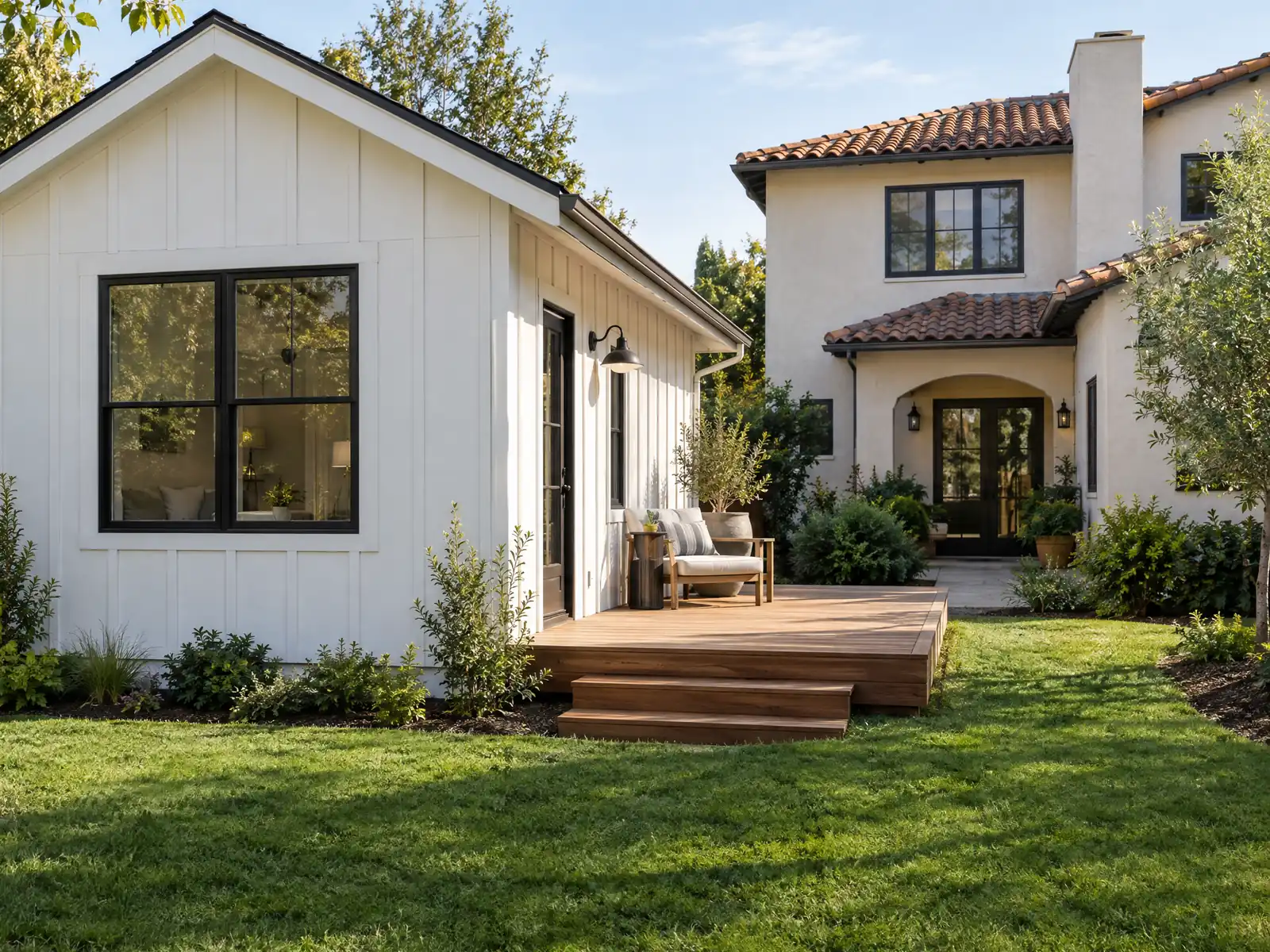
Most of Glendora's housing arrived when the city grew by annexation. Wikipedia's census table shows 3,988 residents in 1950 and 31,380 in 1970, and the Housing Element says much of today's stock was built in the 1940s through the 1960s. The Census Bureau's 2024 estimates count 70.2 percent of the city's 17,302 homes as single-family detached and 79.9 percent as built before 1980. That means a great many lots with a ranch house, a garage and a backyard, which is the raw material for an ADU.
This page covers a conflict inside the City's own paperwork about fire-zone streets, garage conversions, size and design rules, how SB 9 and an ADU share one lot, water and fire-flow paperwork, renting and selling, and how the permit moves. Cost ranges and the phase timeline sit on our ADU construction page.
Glendora Planning and Building rules that apply to ADU construction
Where adu construction permits come from in Glendora: City of Glendora Community Development Department, Building and Safety Division.
- Municipal Code 21.04.040 (amended through Ord. 2099, September 8, 2026) allows one ADU and one JADU on a lot in a single-family zone, attached or detached, and ADUs on lots with multifamily housing. ADUs do not count toward density, and the section is to be read consistently with Government Code 66310 to 66342, 65852.21 and 66411.7.
- ADU development standards in the code: maximum 1,200 square feet, minimum size an efficiency unit, front setback the same as the zone, 4 foot side and rear setbacks, maximum 25 feet and 2 stories, and no required off-street parking (one space per unit recommended). The City's March 2026 handout adds that the City does not require parking but strongly encourages it because of Glendora's overnight street parking limits.
- The ADU handout says ADUs and JADUs are prohibited in CAL FIRE Very High Fire Hazard Severity Zones when the site is not fully mitigated and served by a street meeting City standards, which it states as at least 36 feet wide. The code (21.04.040 C.1.c) says only 'a street that meets city standards', and the SB 9 handout says 26 feet, so the width is unsettled.
- ADUs may not be rented short term (the code says not for less than 30 days, the City handout says a term greater than 30 days), cannot be sold apart from the main home except as State law allows, must be labeled with an address on the main entrance, and (per the City's handout) must either match the existing house in style, materials, doors, windows, trim and roof style, meet the City's objective design standards, or be a preapproved plan.
- A JADU is limited to 500 square feet inside the walls of an existing or proposed single-family home (plus up to 150 square feet for an entry), needs an efficiency kitchen and a separate entrance, and requires owner occupancy only if it shares a bathroom with the house. A recorded deed restriction barring separate sale is required before the permit issues.
- Conversions: an existing garage or detached accessory structure of any size may become an ADU with no replacement parking, and no setback is required where the footprint and dimensions do not change. In multifamily buildings, non-livable space such as storage rooms, boiler rooms, attics, basements and garages may convert, up to 25 percent of the existing units (at least one when seven or fewer).
- On a lot with an existing multifamily building, up to eight detached ADUs are allowed, not to exceed the number of existing units; on a lot with a proposed multifamily building, no more than two detached ADUs. The City's handout table gives, for example, 2 detached ADUs and 1 conversion ADU for a 2-unit building and 8 detached with 25 percent conversion for 12 or more units.
- A guest house is a detached accessory building for temporary nonpaying guests: one bedroom, a three-quarter bath, no kitchen, no rental, 16 feet and one story, and side and rear setbacks of 4 feet (the handout lists 3 feet in the Rural Hillside Residential zone, while the code's RHR accessory rule says 4 feet). In the Historic Preservation Overlay Zone a guest house needs a Certificate of Appropriateness approved by the Planning Commission.
Sources for these rules
Can you build an ADU in Glendora's fire zone? Three documents, three street widths
Possibly, and the City's own paperwork does not agree on the test. The Planning Division's March 2026 ADU handout says ADUs and JADUs are prohibited in a CAL FIRE Very High Fire Hazard Severity Zone unless the site is fully mitigated and served by a street that meets City standards, which it states as at least 36 feet wide. The April 2025 SB 9 handout says 26 feet. Municipal Code 21.04.040 says only a street that meets City standards.
Three numbers for one question mean you cannot plan from any of them alone. Ask Planning at (626) 914-8214 which width applies to your street, and get the answer in writing. State law controls where a local rule conflicts with it: Government Code 66326 lets the State housing department find a local ordinance out of compliance, and the four state-protected ADU types in section 66323 carry their own limits on added local standards. Whether the street test can reach those types is a question for Planning and, if it matters, an attorney.
The zone is not a small corner of the map. In our sample of 302 evenly spaced points inside the city boundary on the County's copy of the State layer, about 39 percent landed in Very High, and those points ran most of the way down the city's north-south span, not only along the foothills. A sample is a guide and not a map, so the City's adopted fire hazard map at the Building Division decides your parcel.
Get the street-width answer in writing before paying for plans.
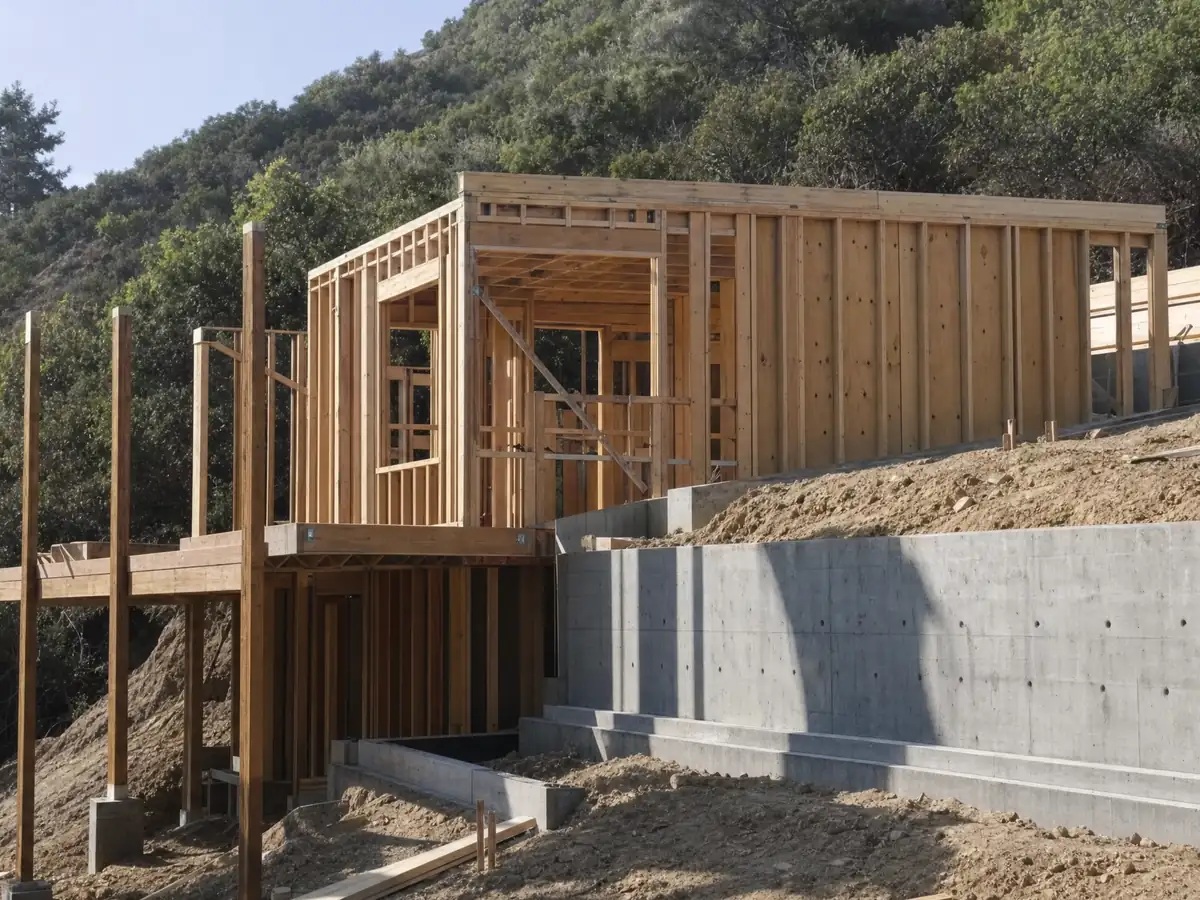
Garage conversion ADUs in Glendora's 1950s and 1960s tract homes
The City's rules make a garage the easiest place to start. An existing garage or other accessory structure of any size may become an ADU with no replacement parking, and no setback is needed when the footprint and dimensions stay the same. Because the median Glendora house dates to 1964, many candidates are garages built with the house, so the first job is learning what sits under the slab and inside the walls.
Before design, we look at the slab for cracks and moisture, the wall framing, the garage door opening that must be filled in, and the electrical panel and sewer line. Our garage conversion permit steps guide gives a checklist written for Los Angeles, and Glendora's details differ, so use it as a primer and confirm each item with the City.
Parking is the last decision. Glendora does not require it but strongly encourages one space per unit because of its overnight street parking limits, so find out what those limits mean on your block before the garage is gone.
- Is the garage original to the house, and is there a permit record?
- What is in the slab: cracks, moisture, a sewer line?
How big can an ADU be in Glendora, and how must it look?
The code caps an ADU at 1,200 square feet, allows 25 feet and two stories and asks for 4 foot side and rear setbacks, with the front setback matching the zone. A JADU is limited to 500 square feet inside the walls of the house, plus up to 150 square feet for an entry, and needs an efficiency kitchen and a separate entrance. Owner occupancy is required only if the JADU shares a bathroom with the house, and a recorded deed restriction against separate sale comes before the permit.
Design is where Glendora asks for more than the minimum. The City's handout says a new ADU must match the house in style, materials, doors, windows, trim and roof, or meet the City's objective design standards, or be a preapproved plan. The City lists two: BPC24-0004, a 400 square foot unit from Mei Li Homes, and BPC24-0010, a 495 square foot prefab unit from Abodu, and says more may be added. An address must be posted at the ADU's main entrance.
A guest house is not an ADU. It is a detached building for nonpaying guests with one bedroom, a three-quarter bath and no kitchen, limited to 16 feet and one story, and it may not be rented. If you want a kitchen or a tenant, the project is an ADU and follows the rules above.
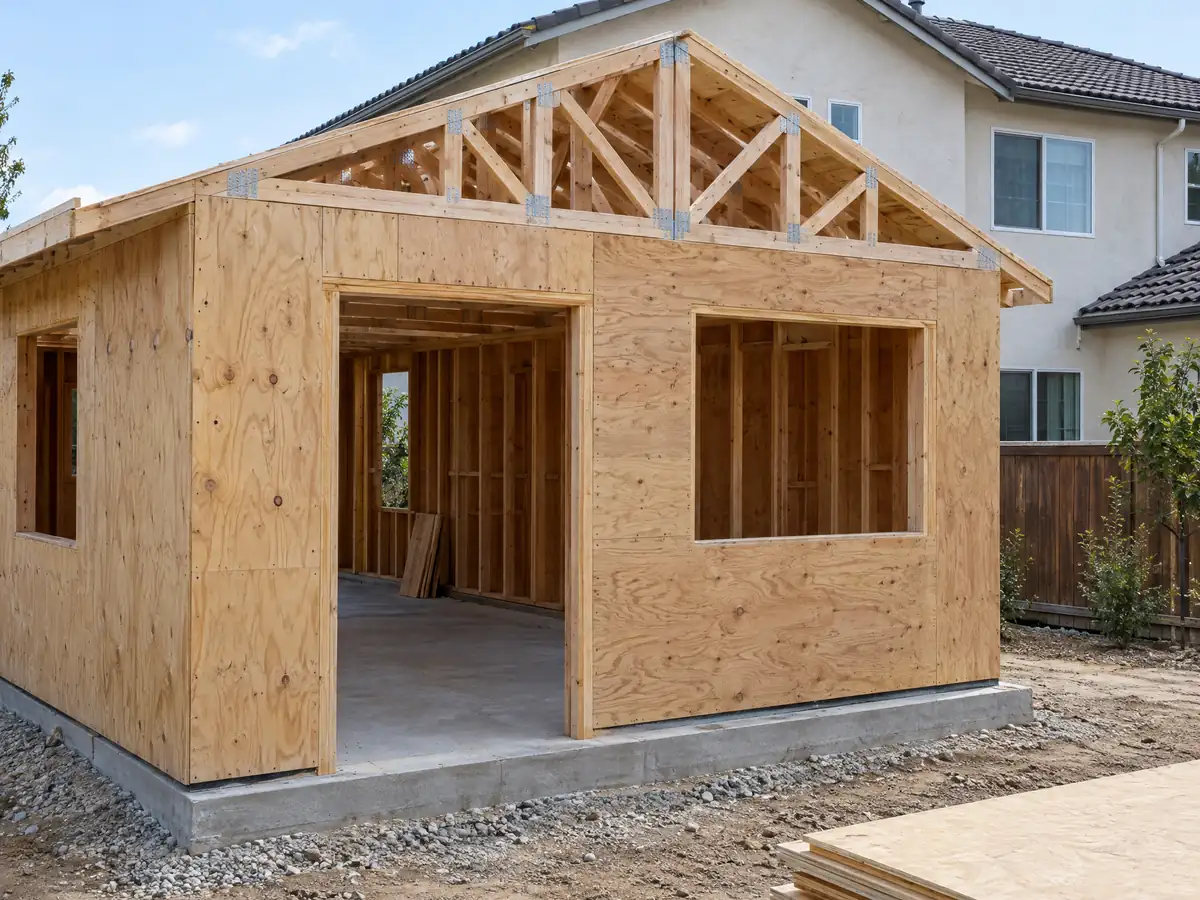
ADU, JADU or SB 9 duplex: what one Glendora lot can hold
The code allows one ADU and one JADU on a single-family lot, attached or detached, and ADUs do not count toward density. On a lot with an existing multifamily building, up to eight detached ADUs are allowed, not to exceed the number of existing units, plus conversions of storage rooms, attics or garages. These rules sit beside SB 9, which the City applies in R-1, E-3 through E-7 and Rural Hillside Residential zones.
SB 9 has its own limits here. An urban lot split needs an owner who signs an affidavit to live on the property for three years, produces no more than two lots each between 40 and 60 percent of the original area, and gets a decision within 60 days of a complete application. No more than four units may exist on the original parcel, so an ADU can use up room an SB 9 plan needed. The Historic Preservation Overlay, landmarks and floodways are excluded, and fire-zone lots face the same street-width question as ADUs.
For the choice between adding space and adding a unit, read our room addition versus ADU guide and the Glendora room addition page. Whether an ADU or an SB 9 unit fits your lot starts with a survey and a call to Planning.
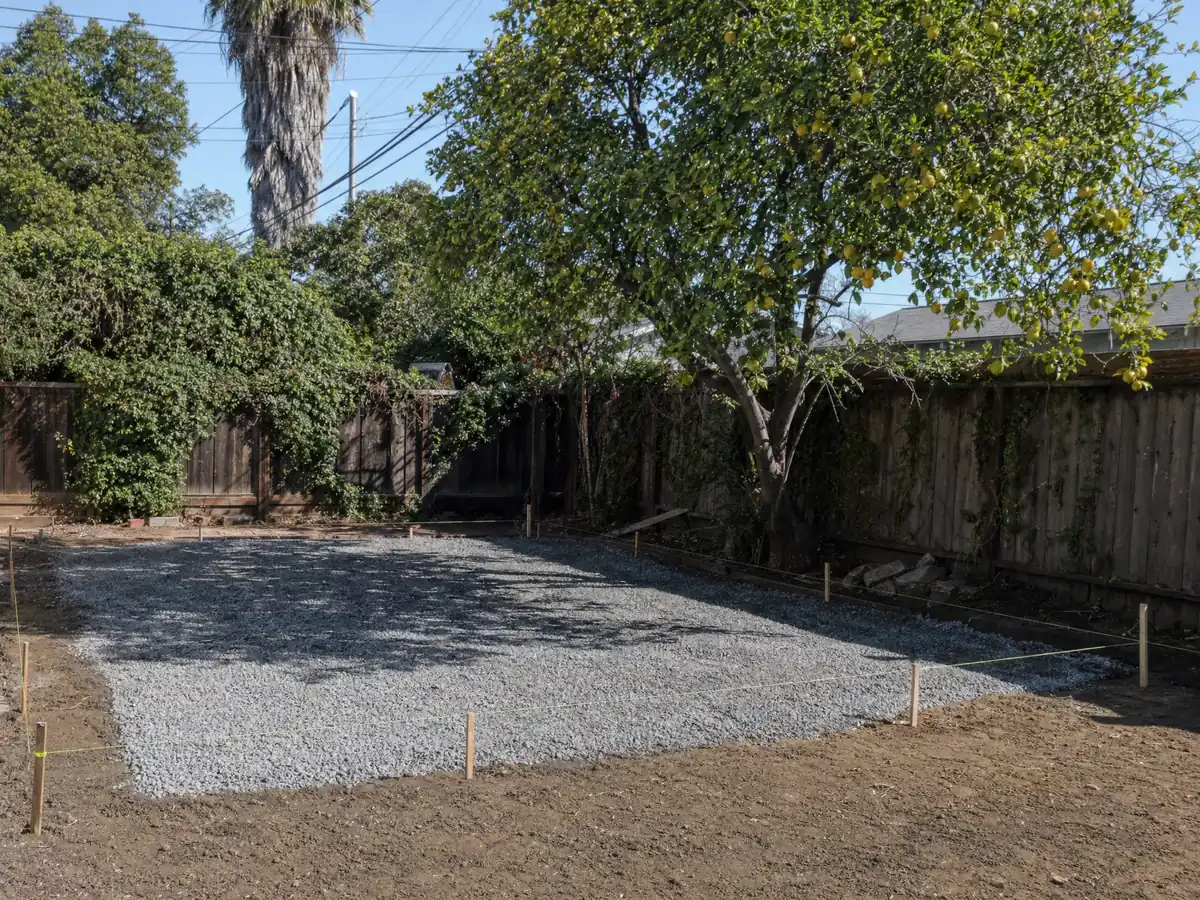
Water, fire flow, soil reports and the civil package for a Glendora ADU
A new unit touches utilities before it touches the City counter. The Water Division asks for plans showing existing and proposed water service, a fixture count for the demand calculation, a note on whether fire sprinklers are used and a backflow device within 10 feet of the meter, and it may require a separate service or meter. Call 811 before anyone digs.
Fire paperwork depends on the site. The City's list asks for a Los Angeles County Fire Department Form 195 on fire flow, with the Glendora Water Division completing its part, and any building in a Fire Hazard Severity Zone must meet the State's Wildland-Urban Interface Code and go through County fire department review. A detached ADU is exempt from sprinklers only when the main house has none, the ADU is 1,200 square feet or less, it meets Form 195 and the site is outside a fire zone.
Soil and grading add reports. The City requires a geotechnical report for new residential buildings, hillside locations and mapped fault, liquefaction or landslide zones, and a civil package covering grading, hydrology, low-impact development and erosion control when earthwork reaches 50 cubic yards or a new footprint reaches 2,000 square feet. The Safety Element says the Sierra Madre Fault Zone runs along the foothills, so ask early whether your lot needs a report.
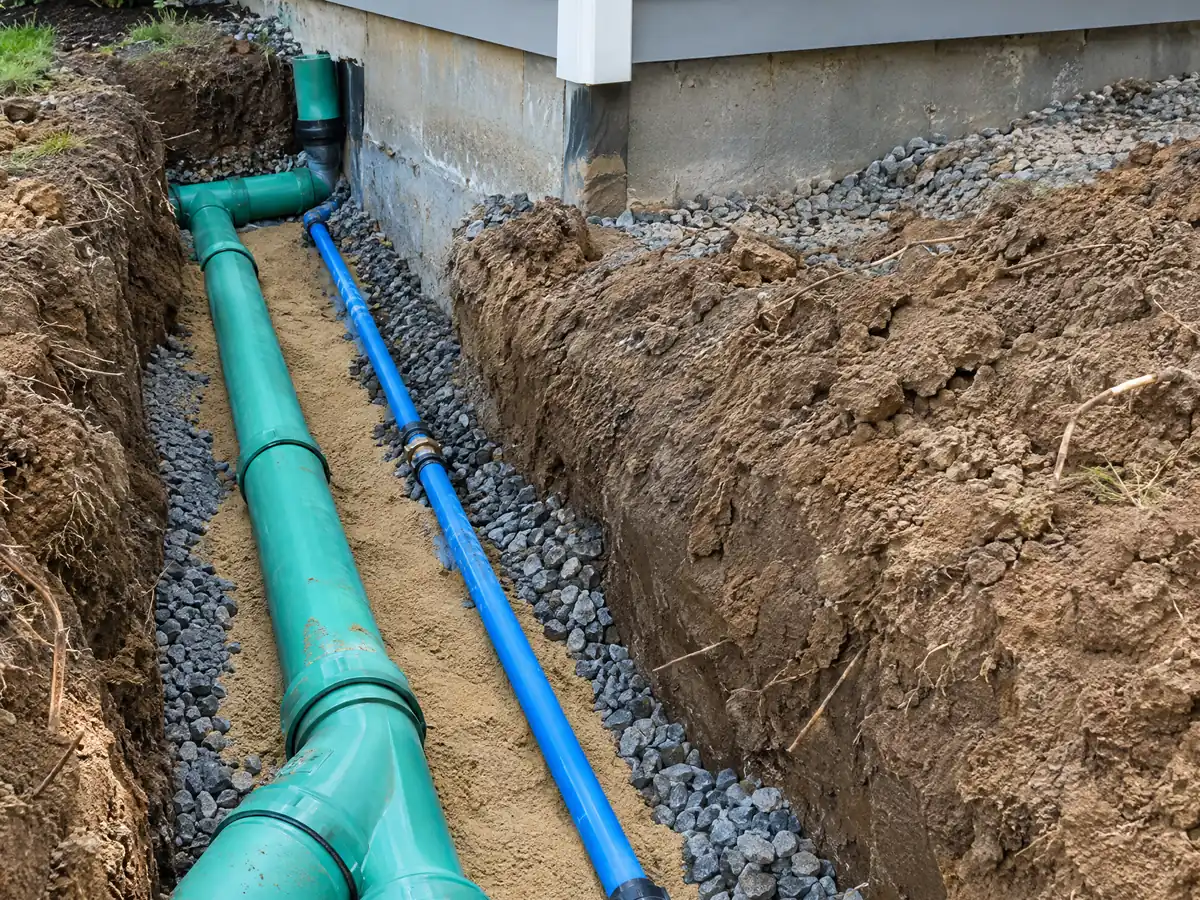
Renting, selling or financing a Glendora ADU
An ADU may not be rented short term. The code says not for less than 30 days and the City's handout says a term greater than 30 days, a one-day gap that matters for a 30 day lease, so ask Planning which wording the counter uses. State law lets a city require terms of 30 days or longer, and it does not let a city demand owner occupancy for an ADU under Government Code 66315.
An ADU cannot be sold apart from the main house except as State law allows, which means a sale to a qualified low-income buyer through a qualifying nonprofit or a city condominium ordinance. For income planning, the Census median gross rent for all Glendora rentals is $2,254, and that is not an ADU rent. We found no local ADU rent survey.
Property tax follows the State Board of Equalization's rule that new construction is assessed at the market value it adds, not at what it cost. Our ADU versus JADU guide compares the two unit types. The State housing department's handbook says FHA, Freddie Mac and Fannie Mae loans can count ADU rental income, FHA 203(k) is limited to an attached ADU and the CalHFA grant had run out of money when it was written.
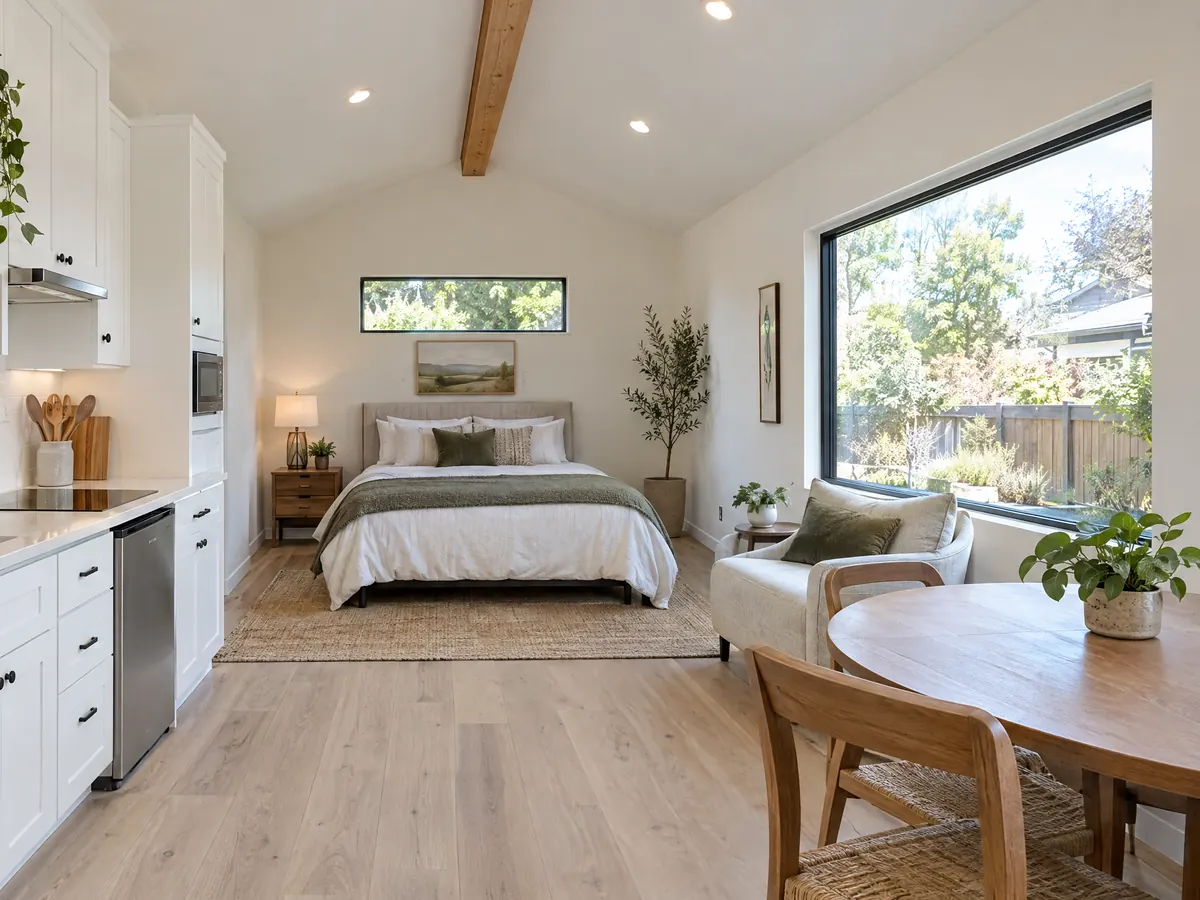
How an ADU permit moves through Glendora, and how long it takes
State law sets the clocks: the City has 15 business days to say whether an application is complete and 60 days to act on a complete one for a unit on a lot with a house, and silence means deemed approved under Government Code 66317. Glendora's ADU and SB 9 page lists the handout, the preapproved plans and the SB 9 forms, and the building permit uses the City's single dwelling, duplex and ADU submittal matrix (version 2026.1) with a Completeness Certification Form.
Where to file is the same open question as for other work. The Forms page says applications go through Civic Access and the Permit Application page describes email, so confirm with the Building Division at (626) 914-8222. The code section shows a September 2026 amendment, and we saw a reference to a pending update of the City's ADU and SB 9 rules that we could not open, so confirm current standards before signing a design contract.
Building time is MDG's planning range: 3 to 5 months for a garage conversion and 5 to 9 months for a detached unit, after design and permits. MDG Builders, CSLB #1040337, is a general contractor that designs, permits and manages, and licensed subcontractors do the concrete, framing, plumbing and electrical; every license number is available on request. For what moves the price, read our ADU cost guide.
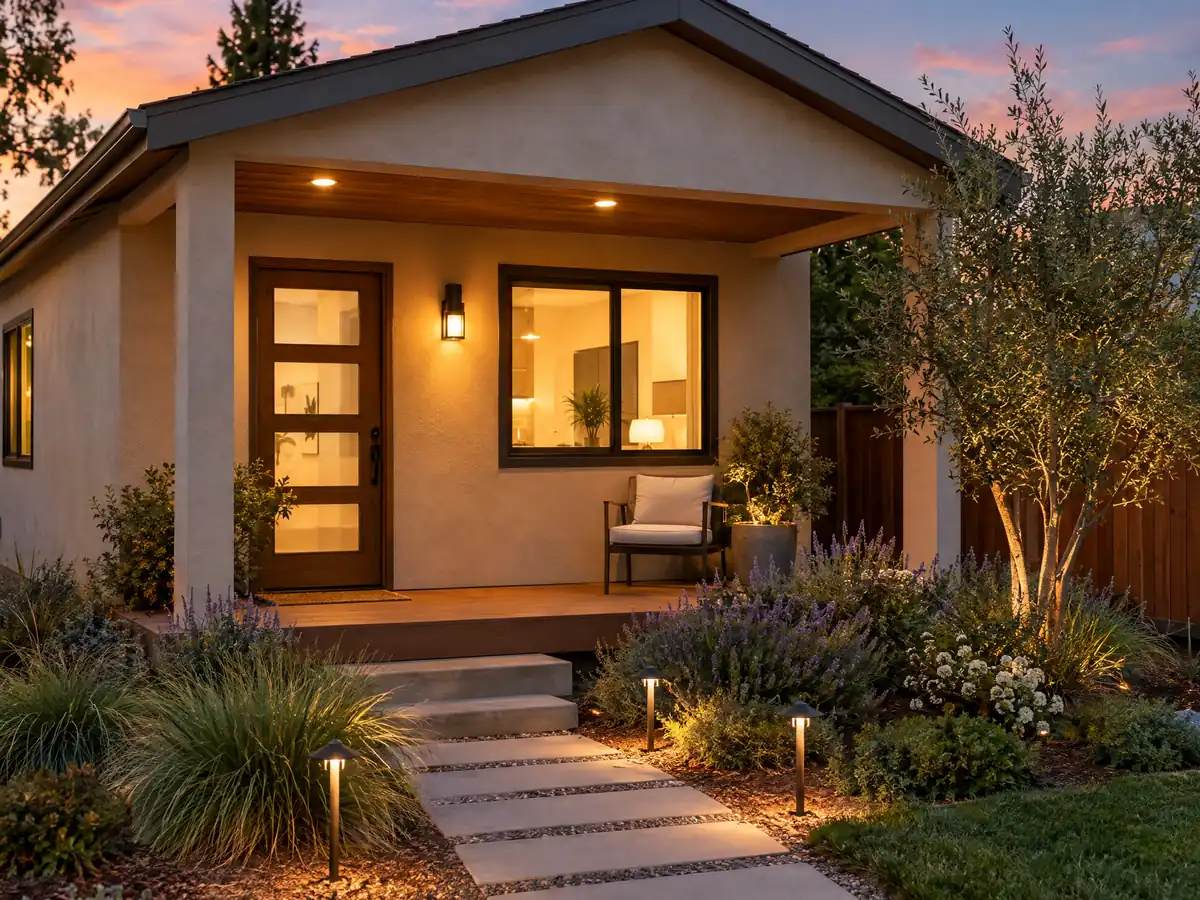
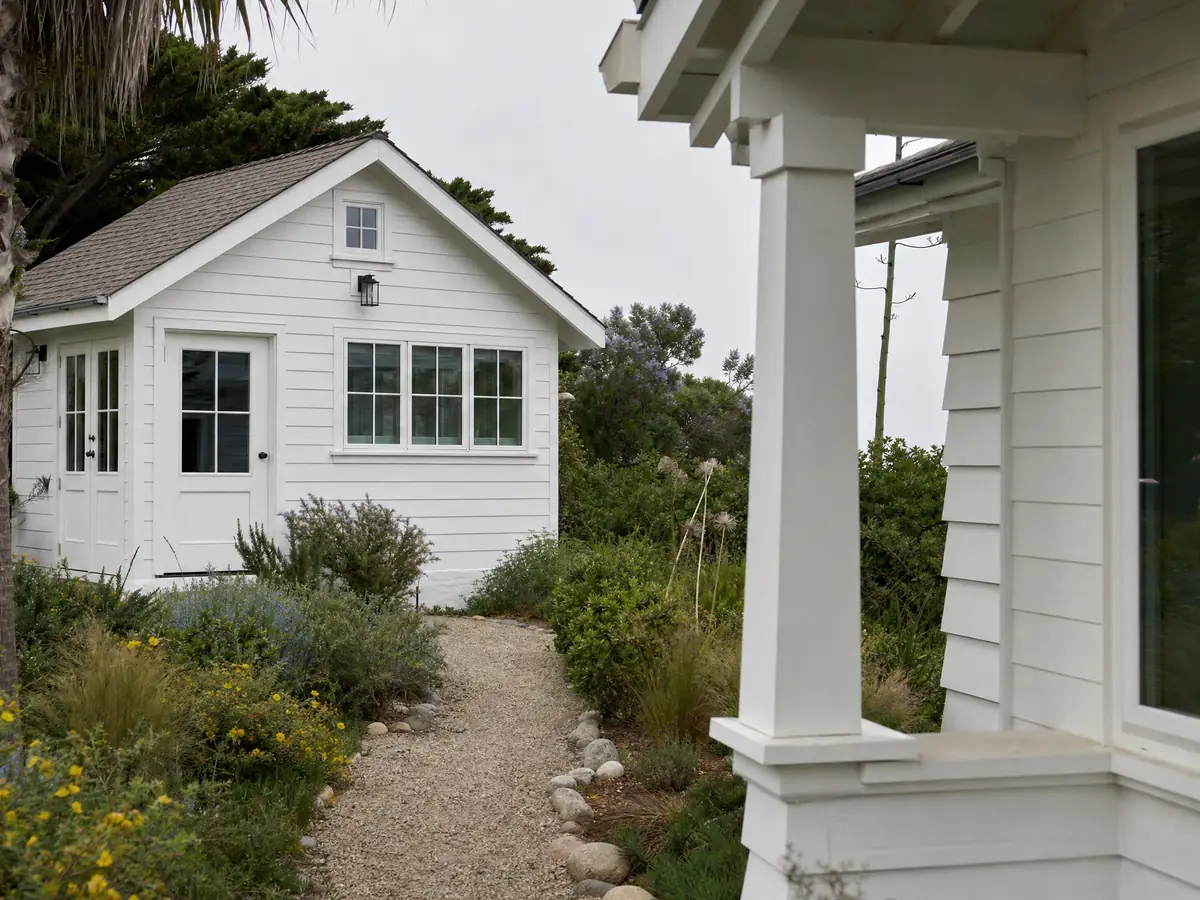
ADU photos from Glendora and nearby homes
ADU scenes tied to Glendora and nearby communities, from garage conversions and framing to finished studios. Tap a photo to enlarge it.
What adu construction costs around Glendora
On our ADU construction page, a garage conversion to a studio or one bedroom runs roughly $100,000 to $200,000 and a new detached unit of 400 to 800 square feet roughly $200,000 to $400,000. Those ranges are MDG's reading of three sources: a UC Berkeley survey of Los Angeles County projects from 2018 and 2019 (a median of $100,000, with garage ADUs at $90,000 and detached units at $180,000), the Terner Center's 2020 estimate of $148,000 for Los Angeles and Remodeling magazine's 2025 Cost vs. Value job cost of $178,536 for Los Angeles, which recouped 39.9 percent at resale. None is a Glendora quote. State law exempts an ADU of 750 square feet or less from impact fees, but utility connection charges are separate and we could not open the City's fee schedule, so fees appear as their own lines in a written proposal. Rules shift at city lines, so compare ADU construction in Covina, West Covina, Pomona, Baldwin Park and Los Angeles, and check any contractor with our license check guide. A new bathroom inside the unit is covered on the Glendora bathroom page, and the Glendora area page lists every trade we cover in the city.
| What it covers | Typical range |
|---|---|
| Garage conversion to a studio or one bedroom | $100,000 to $200,000 |
| New detached ADU, 400 to 800 sq ft | $200,000 to $400,000 |
| UC Berkeley survey, Los Angeles County median, 2018 and 2019 projects | $100,000 overall. $90,000 garage. $180,000 detached. |
| Terner Center and Berkeley CCI, 2020 | $148,000 Los Angeles estimate. $167,000 statewide average. |
| Remodeling Cost vs. Value 2025, Los Angeles | $178,536 job cost |
| Electrical and plumbing, Angi Los Angeles, January 2026 | Electrical $2,600 to $7,800. plumbing $3,900 to $10,400. |
| City permit and plan check fees | Not priced here |
Glendora ADU questions, answered
Can I build an ADU in a Glendora fire zone?
Possibly, but the City's documents conflict. The ADU handout bars ADUs in a Very High Fire Hazard Severity Zone unless the site is fully mitigated and on a street at least 36 feet wide, the SB 9 handout says 26 feet, and the code says only a street meeting City standards. Ask Planning at (626) 914-8214 for the width in writing. State law controls where it conflicts.
How big can an ADU be in Glendora?
Up to 1,200 square feet under the code, with 25 feet and two stories allowed and 4 foot side and rear setbacks. A JADU is capped at 500 square feet inside the house, plus up to 150 square feet for an entry. A sloped lot may bring extra coverage limits under the hillside rules, so ask Planning how they apply to yours.
How much does it cost to convert a garage to an ADU?
Our regional range is roughly $100,000 to $200,000 for a studio or one-bedroom garage conversion. It rests on a UC Berkeley survey (garage ADUs at $90,000 in Los Angeles County in 2018 and 2019), a 2020 Terner Center estimate and a 2025 Los Angeles report, not on a Glendora quote. Slab condition, a new bathroom and kitchen, and panel and sewer work move the number.
Do I need to provide parking for my ADU?
No. Glendora's code requires no off-street parking for an ADU and recommends one space per unit, and a garage converted to an ADU needs no replacement parking. The City's handout still strongly encourages parking because of its overnight street parking limits, so ask what those limits mean on your block before the garage is gone.
What is the difference between an ADU and a JADU?
A JADU is smaller and lives inside the house. In Glendora it is limited to 500 square feet within the walls of a single-family home, plus up to 150 square feet for an entry, with an efficiency kitchen and a separate entrance. An ADU can be attached or detached, up to 1,200 square feet, and is a complete unit. Owner occupancy applies to a JADU only if it shares a bathroom.
Can I rent my ADU on Airbnb or only for long-term rentals?
Only for terms longer than 30 days. The City's code says not for less than 30 days and its handout says a term greater than 30 days, so ask Planning which reading applies to a 30 day lease. State law lets a city require terms of 30 days or longer. Nightly vacation rentals do not fit either wording.
Can I sell my ADU separately from my main house?
Generally no. A Glendora ADU cannot be sold apart from the main home except as State law allows, which means a sale to a qualified low-income buyer through a qualifying nonprofit or under a city-adopted condominium ordinance. A JADU carries a recorded deed restriction against separate sale. A lender, an attorney or Planning can confirm the path for your lot.
How long does it take to get an ADU permit?
State law gives the City 15 business days to call an application complete and 60 days to approve or deny a complete one, and silence means deemed approved. Design time comes before that, and any correction round adds to it. Our planning ranges for building afterward are 3 to 5 months for a garage conversion and 5 to 9 months for a detached unit.
Do I need a permit to convert my garage into an ADU?
Yes. Turning a garage into a dwelling is building work, and the permit follows the City's single dwelling, duplex and ADU submittal list, which includes energy and structural packages as the design requires. The City says to file in Civic Access though one page still describes an emailed worksheet, so confirm the route with the Building Division before drawings are finished.
Tell us about your Glendora ADU plans
Tell us the neighborhood, whether you are weighing the garage or the backyard and whether the street sits in the foothill fire zone, and we will plan the first visit from that.