
Concrete Companyin Glendora, CA
A concrete company in Glendora starts with the slope: on a parcel averaging a 10 percent grade or more, paved surfaces count toward a lot coverage cap that falls from 25 percent to 5 percent. Walks and driveways on your own lot are on the State's no-permit list, but the street apron is a separate Public Works permit.
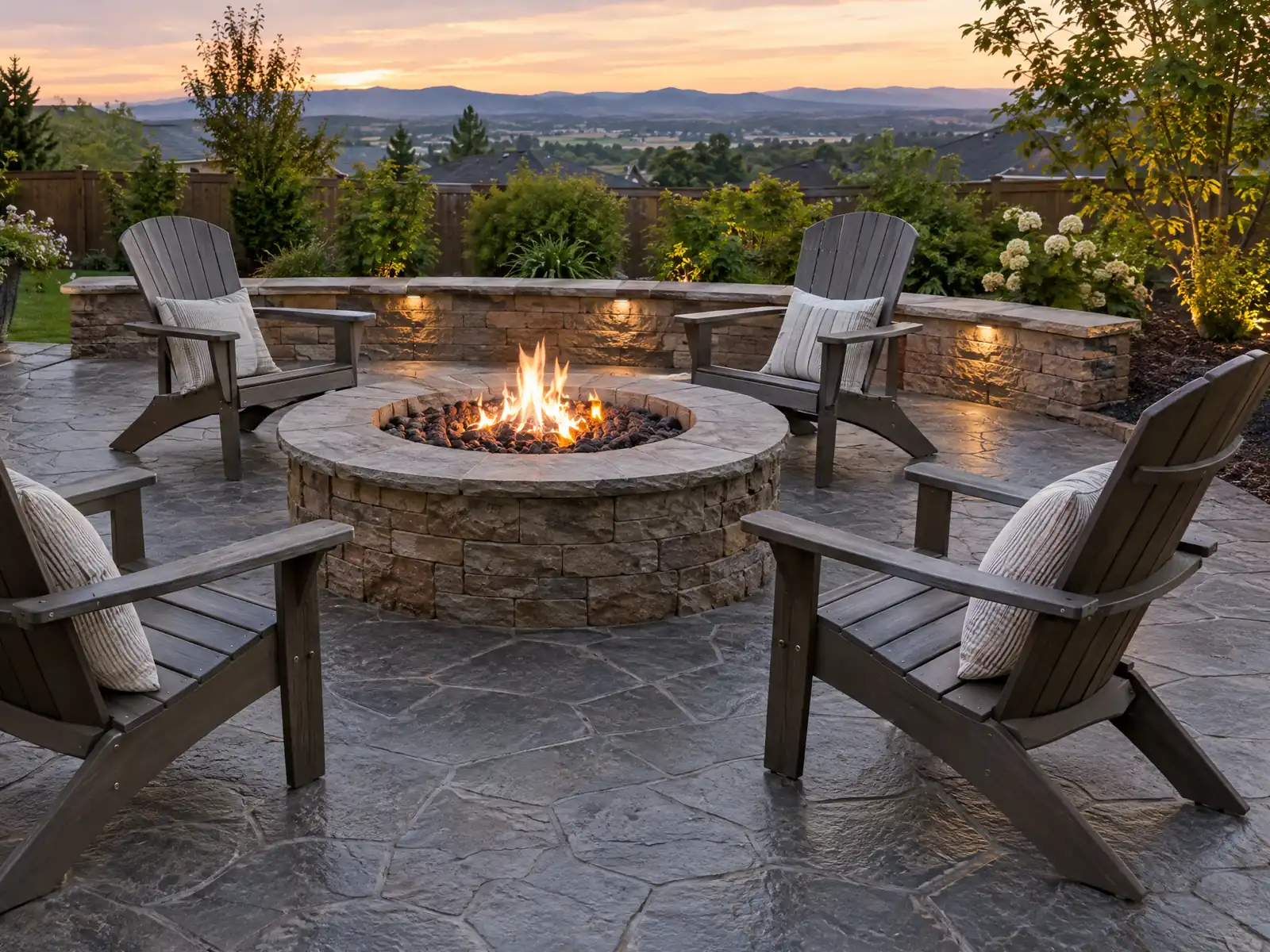
Glendora's first lot sale was on April 1, 1887, and the City incorporated on November 13, 1911 with about 700 residents on 2.5 square miles. Most of the concrete owners deal with is much younger. Census Bureau estimates for 2020 to 2024 put 56.5 percent of the city's housing units in the 1950s and 1960s, and the Housing Element says growth in those years came largely from annexing unincorporated land, so a great many walks, aprons and patio slabs are close to seventy years old.
MDG Builders, CSLB #1040337, is a general contractor in Tarzana. We scope the pour, put the permit questions to the Glendora Building Division and Public Works, and manage the schedule, while a licensed concrete subcontractor forms, places and finishes the work. Slab types and price sources are on the concrete page, and the Glendora overview lists the other trades we handle here.
What Glendora's Municipal Code, Building Division and Public Works say about concrete
Where concrete permits come from in Glendora: City of Glendora Community Development Department, Building and Safety Division.
- The State exemption list (CRC R105.2 as mirrored) names sidewalks and driveways as work that needs no building permit, and exemption does not authorize work that violates other City rules.
- Glendora's Public Works page lists a Driveway Approach permit for reconstructing or widening an approach, building a circular driveway or adding a second approach (typically corner lots); circular driveways and second approaches need Planning Division approval first.
- Municipal Code 21.03.010 D.1.c lets unroofed decks, patios, porches, landings, steps, walks and driveways not over 36 inches high sit in required setback areas.
- Single-family lots need two parking spaces in a garage with 20 by 20 foot minimum inside dimensions, a 25 foot clear backup area and a paved driveway at least 8 feet wide to the parking, with uncovered spaces at least 9 by 20 feet (City single-family zones handout).
- On hillside parcels all impervious surface counts toward lot coverage, including pool decking, with exceptions for approved driveways leading to a two-car garage, paved walks up to 3 feet wide on flat pads beside the house, retaining walls and pool water surface.
- Municipal Code 19.02.030 requires a grading plan check and a grading permit when grading exceeds 50 cubic yards, with a bond equal to 100 percent of the valuation of the grading work; large flatwork, pads and retaining work can reach that threshold on a sloped lot.
- Municipal Code 16.12.020 bars private hardscape that blocks water from reaching a parkway tree's root zone, or any barrier on its root crown, without the City Forester's prior approval, and 16.12.050 requires trenching to avoid the drip line and tunneling under woody roots 2 inches or larger where possible.
- Municipal Code 16.14.010 lets the City Forester approve a parkway tree removal when needed for hardscape repairs that cannot be done without severe root pruning, and requires replacement of any oak removed from city property or a parkway, so sidewalk and driveway work beside street trees starts with the Forester.
How much concrete can you pour on a Glendora hillside lot?
Less than you might expect once the lot slopes. Municipal Code 21.04.030 treats any parcel with an average slope of 10 percent or more as hillside, measured from a topographic map with contour intervals of five feet or less, and caps lot coverage by slope: 25 percent for 10 to under 25 percent, 20 percent for 25 to under 35, 15 percent for 35 to under 40, 10 percent for 40 to under 45 and 5 percent at 45 percent or more.
Coverage means almost every hard surface. The code excepts approved driveways to a two-car garage, paved walks up to 3 feet wide on flat pads beside the house, retaining walls and the water surface of a pool, but it states that pool decking is not excepted. A patio, a wide side path or a pool surround therefore draws on the same allowance as the house itself.
Ask the Building Division for the parcel's average slope before you sketch a patio. A lot at a 30 percent slope has a 20 percent cap, and a topographic survey, not a guess from the street, decides which row applies.
When does grading or a retaining wall in Glendora need a permit?
Grading sets the first threshold. Municipal Code 19.02.030 requires a grading plan check and permit once grading exceeds 50 cubic yards, with a bond equal to 100 percent of the work's valuation posted before the permit issues, and the City's submittal list asks for a civil package when earthwork reaches 50 cubic yards. A level 20 by 20 foot pad dug 6 inches deep moves about 7.4 cubic yards, so a patio alone rarely gets there; a cut into a slope for a pad and a wall can. On a hillside parcel, no grading or building permit issues until a development plan is approved when more than 150 cubic yards is involved.
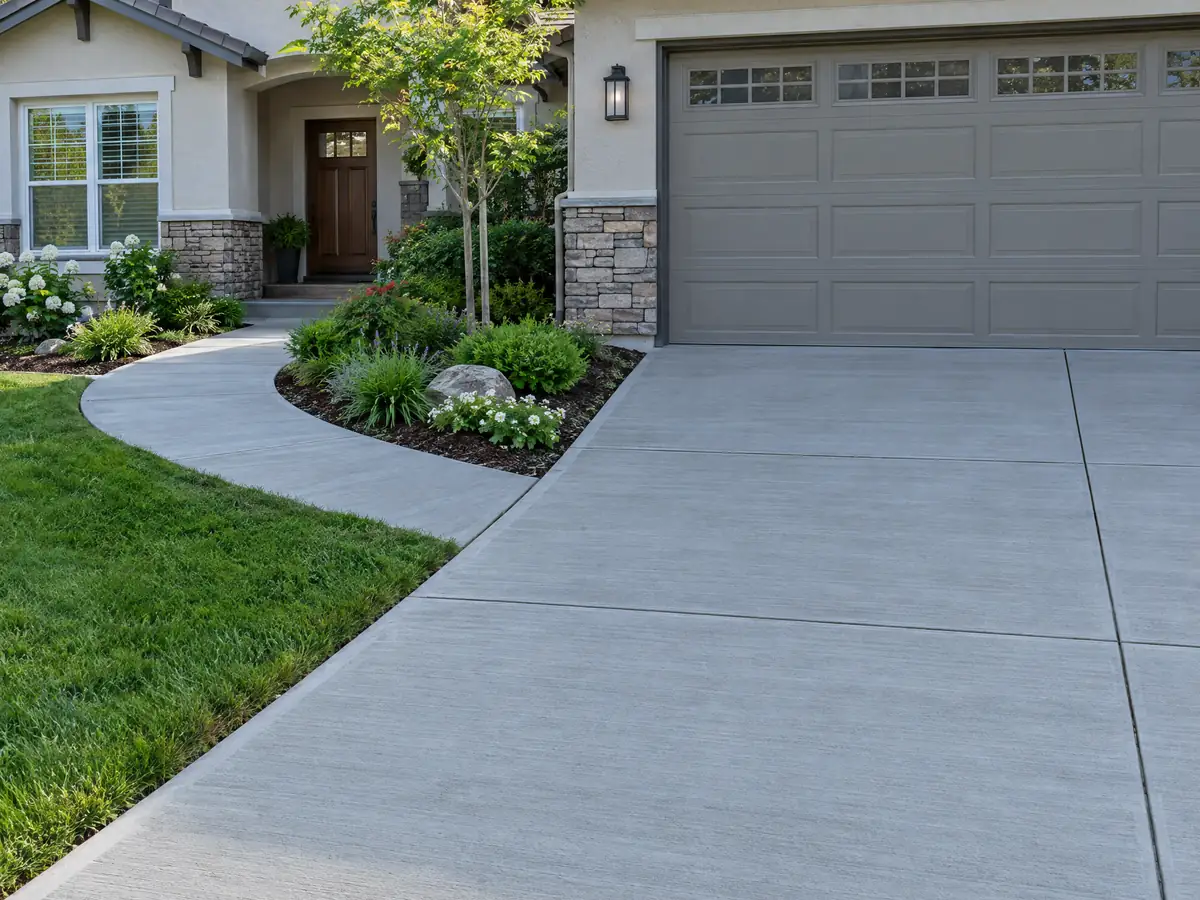
The State's no-permit list covers a retaining wall that holds soil back to 4 feet or less, counted from the base of the footing to the top, provided it carries no extra load above the slope such as a driveway or a structure. We read that list on a gocodebook.com mirror with AI-generated summaries, so confirm it. Glendora's permit worksheet still prices retaining walls by length and height, which is a reason to ask the counter before assuming a wall is exempt.
The hillside code adds its own limits: no grading on natural slopes steeper than 35 percent, visible retaining walls no taller than 6 feet, and plantings to soften any wall over 4 feet high and 25 feet long.
What does a Very High Fire Hazard Severity Zone mean for concrete work in Glendora?
The City's Safety Element says Glendora's position at the base of the San Gabriel Mountains creates a wildland-urban interface, with Very High zones mapped inside the city. On the County's copy of the CAL FIRE layer, 119 of 302 evenly spaced points in the city boundary, 39.4 percent, were Very High, and they were not confined to the northern edge. That is a sample, not a map overlay, and the City's own map on file with the Building Division settles any single address.
Concrete rarely draws the scrutiny; the paperwork around it does. Hillside development must follow the LA County Fire Department's fuel modification plan and plant list, and the County's exemption sheet says retaining walls, gates, fences and detached decks do not qualify for fuel modification review. A slab that belongs to a building project, such as a garage pad or an addition's footing, goes through that project's review, so ask which one applies.
Brush clearance rules sit in Title 18 and chapter 9.28 of the municipal code, which we could not read, so ask the Fire Department before paving or walling anything that touches the cleared strip around the house. The stakes are real: the January 2014 Colby Fire burned 1,992 acres, destroyed five homes and sent 3,600 people out.
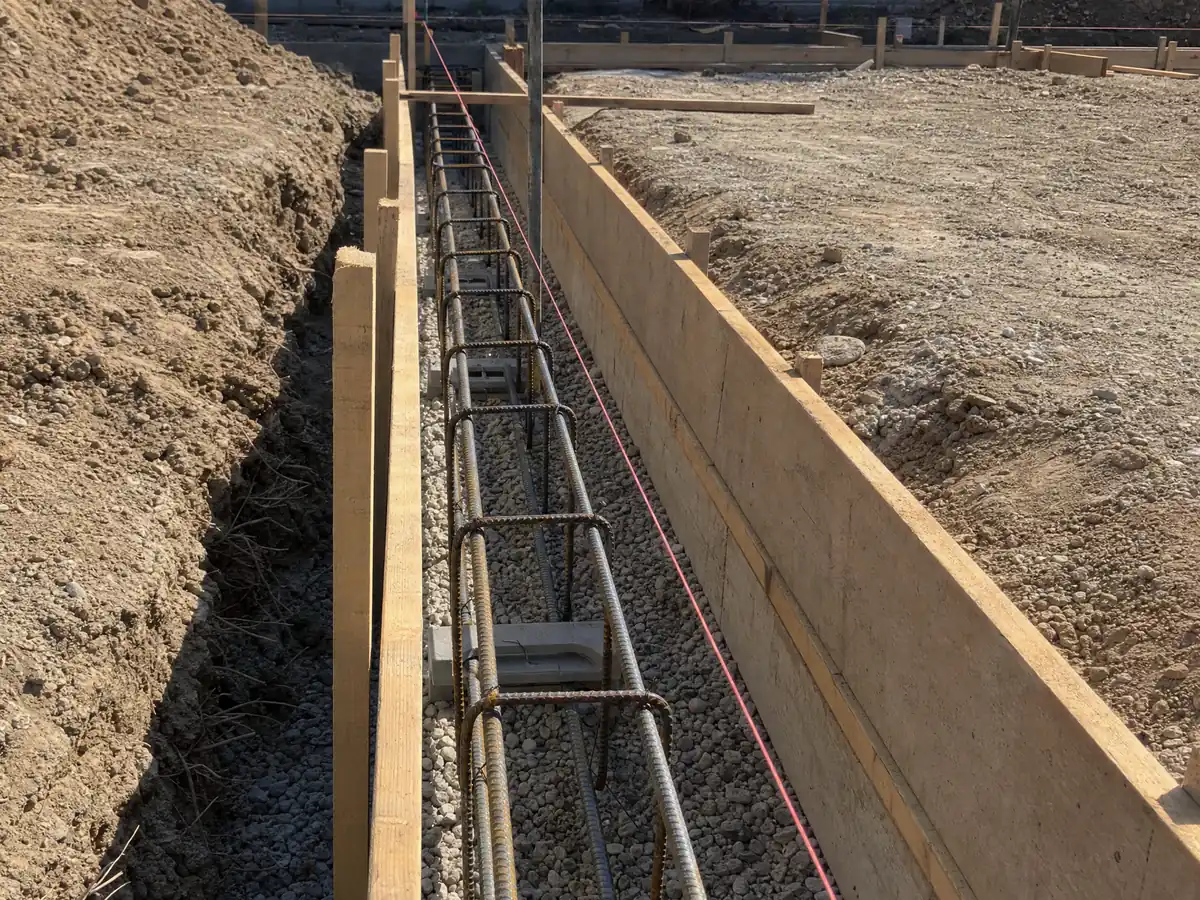
Can you pour a sidewalk or driveway next to a Glendora parkway tree?
Not always without the City Forester. Municipal Code 16.12.020 bars private hardscape that blocks water from a parkway tree's root zone, or any barrier on its root crown, unless the Forester approves it first, and 16.12.050 calls for trenching that avoids the drip line and tunneling beneath woody roots of 2 inches or larger where possible.
Removal is its own approval. Section 16.14.010 lets the Forester approve taking out a parkway tree when hardscape repairs cannot be done without severe root pruning, and any oak removed from city property or a parkway must be replaced. During any repair or alteration of a house or structure, 16.12.040 requires parkway trees to be shielded with chain-link fencing, staking or similar protection.
A lifted sidewalk panel beside a street tree is the classic trigger, so ask the contractor whether the quote includes the Forester's visit, root-friendly panel shaping and the cost of a replacement oak.
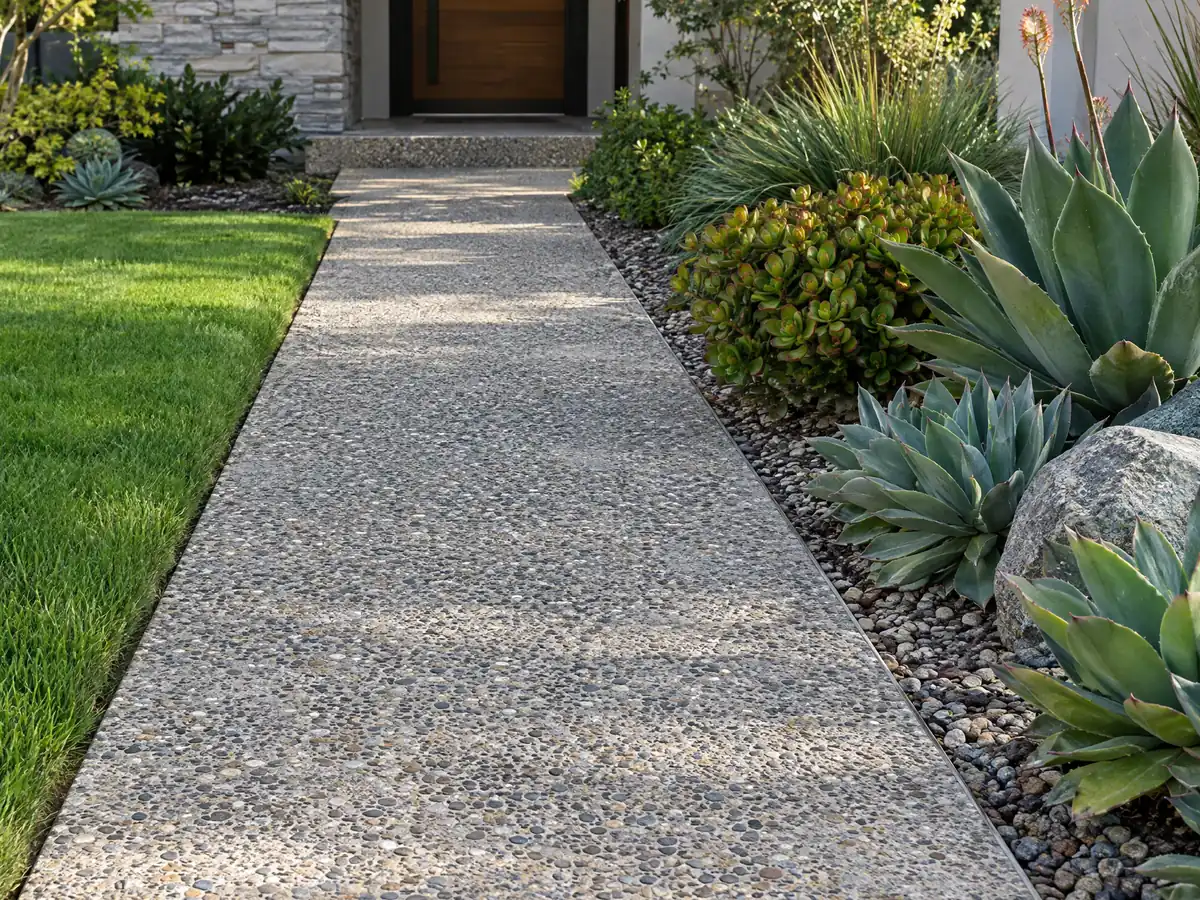
Does a driveway or driveway apron in Glendora need a permit?
Your own driveway slab is on the State's no-permit list for sidewalks and driveways, as read on that mirror, but the apron where it meets the street is public property. Glendora's Public Works page lists a Driveway Approach permit for rebuilding or widening an approach, building a circular driveway or adding a second approach, usually on corner lots, and circular drives and second approaches need Planning approval first. Work in the public right of way, such as aprons or steps, needs an encroachment permit from the Public Works director under Chapter 13.08, with a signed hold-harmless statement.
Zoning sets the footprint. A single-family lot needs two spaces in a garage measuring at least 20 by 20 feet inside, a 25 foot clear backup area and a paved driveway at least 8 feet wide, and uncovered spaces must be at least 9 by 20 feet. Under Municipal Code 21.03.010 D.1.c, unroofed walks, patios, steps and driveways not over 36 inches high may sit in required setbacks.
Public Works permits are separate from building permits. The worksheet goes to Engineering at (626) 914-8246, and the verification documents include the contractor license, a certificate of insurance, a Glendora business license and a traffic control plan when one is required.
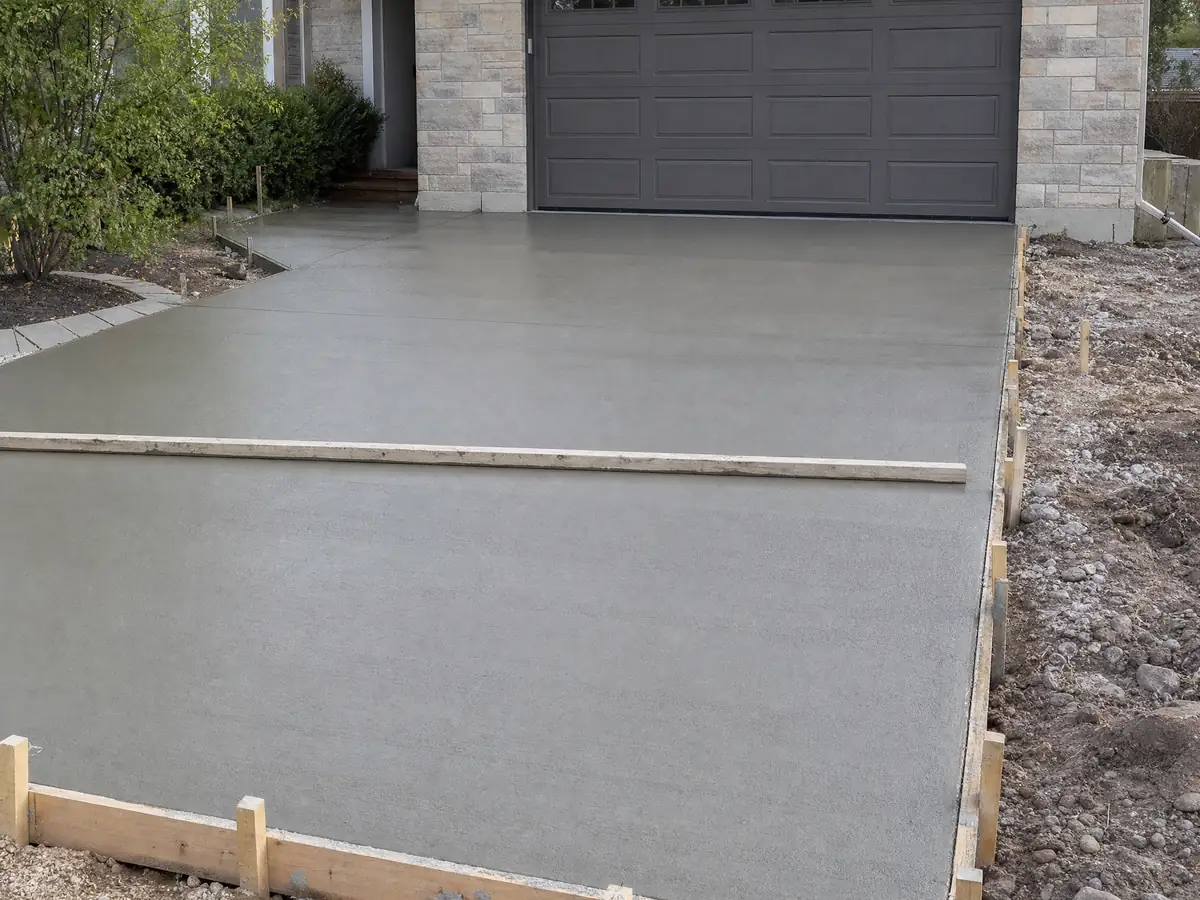
What should you know about old slabs and walks in a 1950s Glendora tract house?
Expect age and plan for roots. About 79.9 percent of Glendora's units predate 1980 and the median year built is 1964, so many driveways and walks have spent six decades in sun, irrigation and tree roots. The City's 2019 design criteria sheet lists a 12 inch minimum footing depth below finish grade, seismic design category D2 or E and termite damage as a concern, which a footing plan should reflect.
Near the Village the rules change. The City's Historic Preservation page describes one designated Historic District, a residential area documented in 1995, where alterations go to the Planning Commission for a Certificate of Appropriateness, and its list names 38 landmarks. Under Municipal Code 21.03.050 E, a permit application affecting the exterior appearance of a preserved feature goes to the Planning Commission, which decides within 90 days of a complete application.
We could not confirm whether replacing an original front walk counts as a preserved feature. Ask Planning at (626) 914-8214 before demolishing one, and call 811 before any digging.
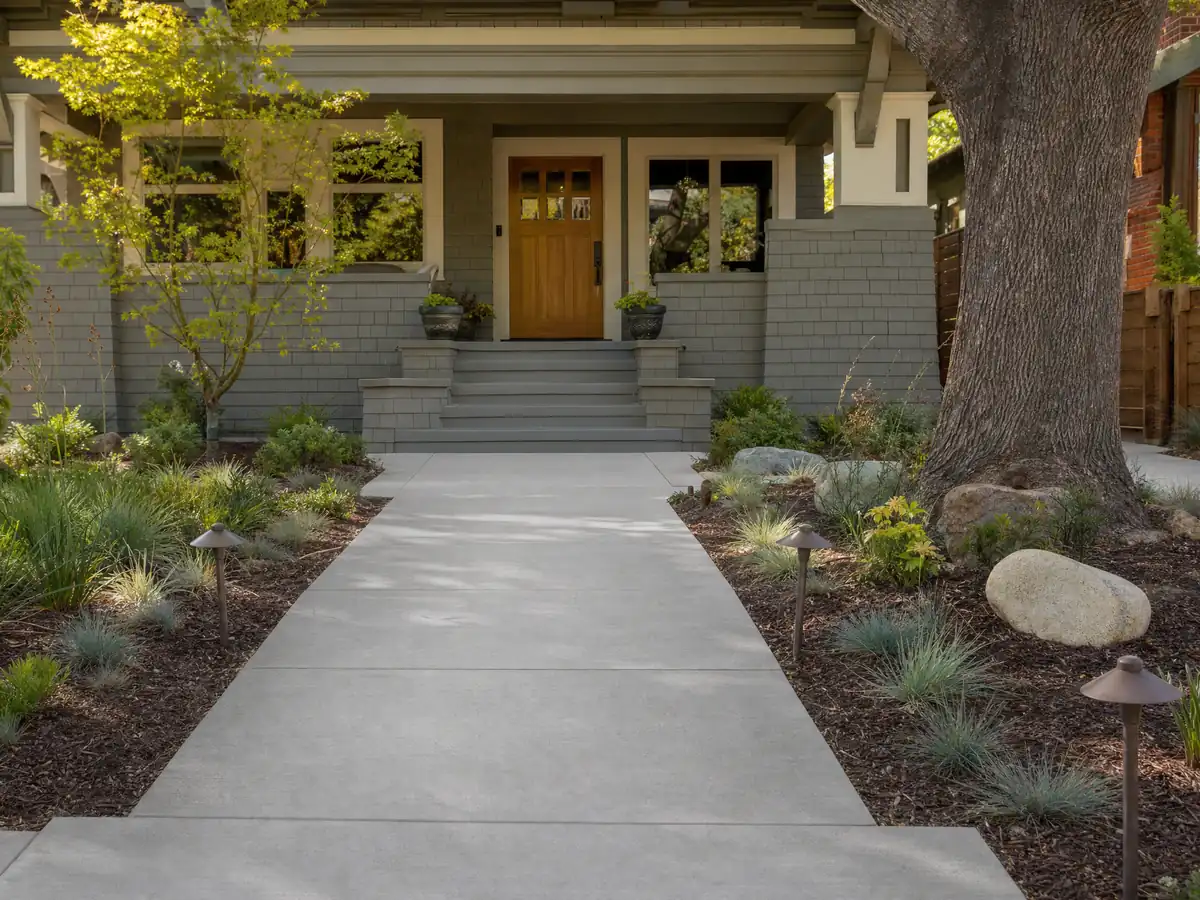
What does a concrete company in Glendora charge, and who is licensed to pour?
Local directory pages for Glendora disagree widely, and the ones we opened lean on 2022 national reports, so we use Angi's 2026 Los Angeles pages and rate plain flatwork medium and decorative work medium to low in confidence. A plain broom-finish patio, walk or slab of 300 square feet or more runs $8 to $14 per square foot. A 20 by 20 foot slab covers 400 square feet, which multiplies out to about $3,200 to $5,600 plain.
A stamped finish adds pattern, color and sealer, and on Angi's Los Angeles stamped patio page it costs $15 to $30 per square foot, roughly double the plain range because the crew works the surface and joints by hand. The same 400 square feet becomes about $6,000 to $12,000, and driveway replacement with demolition runs $9 to $20. A hillside pad with forms, steel and difficult access costs more than any of these, and retaining walls are priced from the site.
CSLB's C-8 class covers forming, pouring and finishing concrete but excludes placing reinforcing steel. Municipal Code 21.03.090 lists sediment, paints and cleaners as pollutants, so washout and slurry stay on site, and broken concrete falls under the 65 percent recycling rule. Our guide to checking a contractor license shows how to verify a bidder.
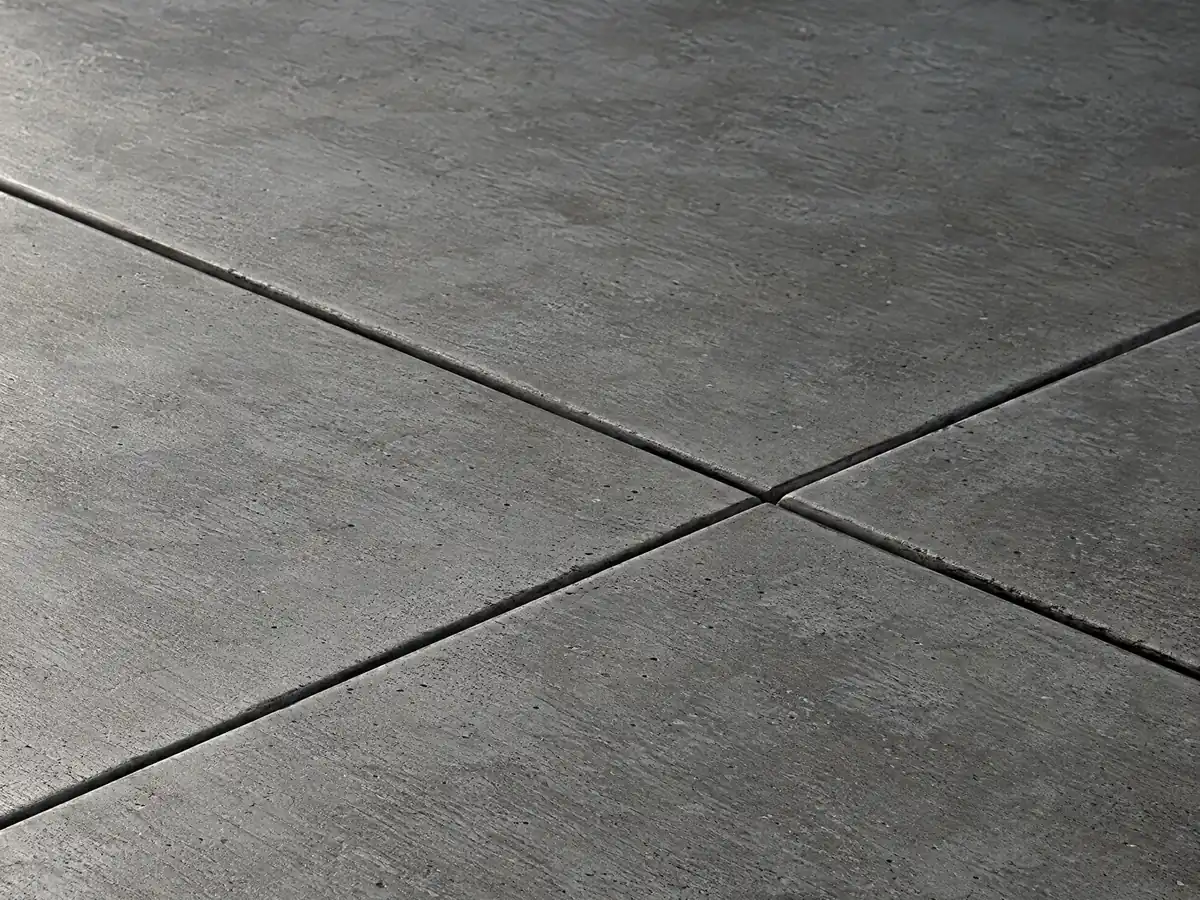
Concrete photos from Glendora and nearby communities
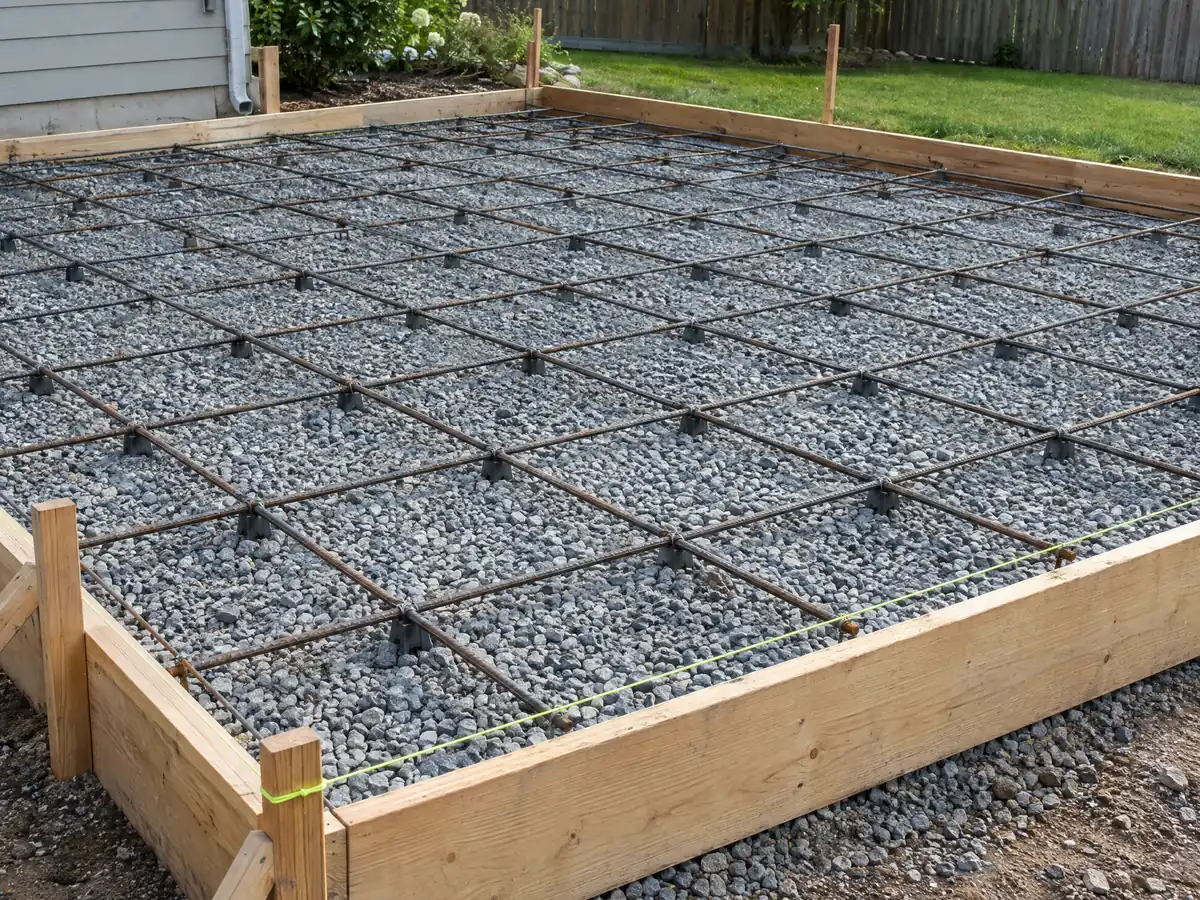
Forms, rebar and finishes from Glendora and nearby foothill towns, from walks to retaining walls. Tap any photo to enlarge it.
What concrete costs around Glendora
The dollar figures above are Los Angeles ranges from our concrete page, not a Glendora bid. Comparison pages: concrete work in Los Angeles, concrete in Covina, concrete in Pomona and concrete in Diamond Bar, which also sits at the foothill edge. The same lot often needs decks in Glendora or flooring in Glendora, and how general contractors use subcontractors explains how those trades are scheduled.
| What it covers | Typical range |
|---|---|
| Patio, walkway or slab, broom finish, 300 sq ft or more | $8 to $14 per square foot |
| Decorative: stained, stamped or exposed aggregate | $15 to $30 per square foot |
| Driveway replacement, with demolition of the old slab | $9 to $20 per square foot |
| 20 by 20 foot plain patio (400 sq ft) | About $3,200 to $5,600 |
| 20 by 20 foot decorative patio (400 sq ft) | About $6,000 to $12,000 |
| Small jobs under 300 sq ft | Usually above the per-foot range |
| Retaining walls | Set by the written proposal |
Concrete questions from Glendora homeowners
Do you need a permit for a concrete driveway or patio in Glendora?
Usually not for a slab on your own lot, since the State's list exempts sidewalks and driveways, though we read it on an online mirror. The street apron needs a Public Works Driveway Approach permit, and grading over 50 cubic yards needs a grading permit. On a hillside parcel, paving also counts toward a lot coverage cap.
How much does a 20x20 concrete patio cost in Glendora?
About $3,200 to $5,600 for plain broom finish, from our Los Angeles range of $8 to $14 per square foot applied to 400 square feet, or about $6,000 to $12,000 decorative. Those are Angi-based planning figures at medium confidence, not a Glendora bid. A sloped site, forms, steel and access raise the price.
Can I build a retaining wall in Glendora without a permit?
Only a low one. The State's exempt list covers walls of 4 feet or less measured from the base of the footing, with no extra load above, and Glendora's worksheet still prices walls by length and height. On hillside parcels visible walls are limited to 6 feet. Ask the Building Division before building any wall.
How much does stamped concrete cost compared with plain concrete in Glendora?
Stamped runs $15 to $30 per square foot on Angi's Los Angeles page, against $8 to $14 for plain broom finish, roughly double. A 400 square foot slab comes to about $6,000 to $12,000 stamped and $3,200 to $5,600 plain. Pattern, color, sealer and joint layout move the price, and we rate decorative figures medium to low.
Can I pour my own driveway or patio in Glendora?
An owner may do the work, and a permit job then needs the Owner-Builder's Declaration Form and proof of ownership. A hired concrete contractor needs a C-8 license and a Glendora business license. California law lets an unlicensed person take only work totaling $1,000 or less with materials, and never work that needs a permit.
Does concrete work on a Glendora hillside lot need a soils report?
The City requires a geotechnical report for new homes, additions over 500 square feet and hillside locations, and a report older than two years needs an update letter. We found no line saying a patio slab alone needs one, so ask the Building Division, especially when a pad comes with a wall or heavy grading.
Can I pour concrete next to a street tree in Glendora?
Often, with care, but not blindly. Municipal Code 16.12.020 bars hardscape that blocks water from a parkway tree's roots or any barrier on its root crown unless the City Forester approves, and removal of a parkway oak requires a replacement. Ask your contractor to include the Forester's approval in the schedule.
What concrete work needs a licensed contractor in Glendora?
Anything over $1,000 including materials, and anything that needs a permit. CSLB's C-8 class covers forming, pouring and finishing, while block walls fall under a masonry license. At the permit counter Glendora asks for the state license copy, a Licensed Contractor's Declaration and a business license, and Public Works adds a certificate of insurance.
Can I widen my driveway in Glendora without a permit?
Not safely. Rebuilding or widening a driveway approach at the curb needs a Public Works Driveway Approach permit, circular driveways and second approaches need Planning approval first, and on hillside parcels the added paving counts toward the lot coverage cap. Zoning also wants a paved driveway at least 8 feet wide to required parking.
Plan a driveway, patio or wall on your Glendora lot
Tell us what you want poured, about how big it is and whether the lot slopes or touches a street tree, and we will check the hillside and fire zone questions before pricing.