
Cool Roof Requirements in California: What Title 24 Means for a Re-Roof
California's Energy Code requires a cool roof product when 50 percent or more of a home's roof is replaced in a covered climate zone. For steep roofs in zones 4 and 8 to 15, the product needs an aged solar reflectance of at least 0.20 and thermal emittance of at least 0.75, or an SRI of at least 16.
When does a re-roof trigger the cool roof rule?
At half the roof. The California Energy Commission's 2025 Single-Family Residential Compliance Manual, Chapter 9, says cool roof requirements are triggered when 50 percent or more of the roof area is being replaced. The rule sits in section 150.2(b)1I of the 2025 Energy Code, which is Title 24, Part 6, and took effect January 1, 2026.
A patch does not count. The manual defines a repair as reconstruction or renewal for maintenance, and says replacing a component the Energy Code regulates is an alteration, not a repair. Its own example is swapping wood shake for asphalt shingles: that is an alteration. So the practical line on a roofing job is the share of the roof surface that gets new covering, and whether you are in a climate zone where the rule applies.
New roof area is treated differently. A roof over a room addition follows the addition rules, which exempt additions of 300 square feet or less from the cool roof requirement.
Which Southern California climate zones have a cool roof requirement?
The manual's alteration table applies the steep-slope requirement in climate zones 4 and 8 through 15. One of its worked answers adds that low-slope roof replacements must meet the low-slope criteria in zones 4 and 6 through 15. A steep roof has a pitch of 2:12 or more, and a low-slope roof is flatter than that.
The Energy Commission assigns zones by ZIP code. Its climate zone list and lookup tool place the region's cities like this:
- Zone 6: Santa Monica, Long Beach, Torrance, Malibu, Ventura and Santa Barbara. Low-slope rule only.
- Zone 7: downtown San Diego and the nearby coast. Neither rule appears in the manual's alteration zones.
- Zone 8: Anaheim, Irvine, Santa Ana and parts of the Los Angeles basin. Both rules.
- Zone 9: downtown Los Angeles, Pasadena, Burbank, Tarzana, Santa Clarita and Thousand Oaks. Both rules.
- Zone 10: Riverside, San Bernardino, Ontario, Temecula and Escondido. Both rules.
- Zones 14 and 15: Palmdale, Lancaster and Victorville in the high desert, Palm Springs and Indio in the low desert. Both rules.
- Zone 16: Big Bear. Outside both lists.
ZIP codes on a zone boundary can be assigned either way by the local building department, so confirm the zone for your address before choosing a product.
What reflectance numbers does the roofing product have to meet?
For a steep roof, the manual lists an aged solar reflectance of at least 0.20 and a thermal emittance of at least 0.75, or a Solar Reflectance Index of at least 16. For a low-slope roof the figures it gives are a reflectance of 0.63 and emittance of 0.75, or an SRI of 75.
The U.S. Department of Energy's Guide to Cool Roofs explains the two properties in plain terms. Solar reflectance is the fraction of sunlight a surface reflects. Thermal emittance is how efficiently it sheds heat as radiation. Both run from 0 to 1, and higher means cooler. Aged matters because many roofs become less reflective over time, so the code uses the long-term value.
What is a CRRC label, and why does the inspector ask for it?
It is the proof. The Energy Commission designates the Cool Roof Rating Council to rate roofing products, and its cool roof fact sheet says only the aged values in the CRRC Rated Products Directory may be used to show compliance. A product with no label has to use the code's default values instead of the maker's claims. The CRRC's Title 24 page puts it simply: any product used for compliance must be CRRC rated.
A cool roof does not have to be white. The fact sheet lists tile, metal, asphalt and coatings among the materials that qualify, in light, dark and vibrant colors. What to collect before you sign:
- The CRRC product ID for the exact product line and color.
- The aged solar reflectance, thermal emittance and SRI from the directory entry.
- Your climate zone and the roof pitch, written in the proposal.
- Which exception is being claimed, if no cool product is proposed.
- Who signs the Energy Code compliance forms.
What are the exceptions for a steep-slope re-roof?
There are several, and many houses already meet one. The manual waives the prescriptive cool roof requirement on a steep roof when any of these is true:
- The building has at least R-38 ceiling insulation.
- The attic has a radiant barrier that meets section 150.1(c)2 and is not laid over spaced sheathing.
- There are no ducts in the attic, in climate zones 2, 4, 9, 10, 12 and 14.
- There is R-2 or greater insulation above or below the roof deck.
- The roof area is covered by building-integrated solar panels. Only the active solar area is exempt.
- The roof construction weighs 25 pounds per square foot or more.
For low-slope roofs the manual offers a trade: more roof deck insulation in exchange for a lower reflectance, under Table 150.2-E. A project can also use the performance approach, which is an energy model, not a checklist.
Does the City of Los Angeles add its own cool roof rule?
Yes. LADBS Information Bulletin P/GI 2026-003, revised June 10, 2026, says that for residential replacement of more than 50 percent of the roof area, a Cool Roof Rating Council labeled and certified product is required. The bulletin's wording has no climate zone carve-out, which matters for coastal neighborhoods of the city that sit in zone 6. Ask LADBS which reflectance values it applies to your address.
The same bulletin lists two related Express Permit items. Resetting existing tile on new underlayment carries no cool roof requirement, and applying a roof coating is its own permit item. San Diego's Information Bulletin 123, dated September 2026, only warns that a roof replacement may trigger section 150.2(b)1I. If your house is in Pasadena, Long Beach or any other city with its own building department, ask that department, not Los Angeles.
A worked example: storm repair that crosses the 50 percent line
A house in Tarzana, zone 9, has 2,400 square feet of steep shingle roof. Wind damage means 1,100 square feet must be replaced. 1,100 divided by 2,400 is 45.8 percent, under the trigger. The roofer then finds another 150 square feet of bad shingles on the back slope. 1,250 divided by 2,400 is 52.1 percent, and the cool roof requirement now applies to the new roofing.
Before paying more for a cool-rated shingle, check the exceptions. This house has ducts in the attic, so that one fails. The attic insulation is measured at R-38, so the R-38 exception is met and a standard shingle may be allowed. The owner still has a choice, and the Department of Energy guide gives rough economics from February 2011: cool asphalt shingles cost up to $0.50 per square foot more, and a cool color roof on a home saves up to $0.05 per square foot a year. On 2,400 square feet that is at most $1,200 extra against up to $120 a year, about a 10-year payback at those dated figures.
Who handles the cool roof paperwork on a re-roof?
The contractor who pulls the permit. MDG Builders, CSLB #1040337, prepares the permit application and the Energy Code forms as general contractor, and the licensed roofing subcontractor who installs the roof signs for the installed product. Ask to see that subcontractor's license and certificate of insurance, as described in our guide to how subcontractors work.
Roofs rarely get replaced alone. If the project also includes an ADU or new windows, the Energy Code has separate rules for each, and our post on Title 24 window requirements covers the glass side.
Cool roof questions
Can you paint your roof white in California?
Yes, if the coating is made for roofs and applied correctly, and in Los Angeles a roof coating is a listed Express Permit item. To count toward Title 24, the coating must be a CRRC rated product, cover the entire roof surface and meet the thickness the manufacturer recommends. Ordinary house paint does not qualify.
Does a new roof keep your house cooler?
A cool-rated one can. The Department of Energy's Guide to Cool Roofs says that in warm or hot climates a cool roof can cut the annual air-conditioning energy use of a single-story building by up to 15 percent.
How can I make my roof more energy-efficient?
Combine a reflective roof surface with attic measures. The Energy Code's own exceptions point to the options: R-38 ceiling insulation, an attic radiant barrier, insulation at the roof deck, and ducts kept out of the attic.
What do I need to know before putting on a new roof?
Know your climate zone, your roof pitch and how much of the roof is being replaced. At 50 percent or more, the Energy Code's cool roof rule applies in most inland Southern California zones unless an exception fits. Ask for the CRRC product ID and the fire class in the written proposal.
Are there local roofing regulations or permits required in Los Angeles?
Yes. LADBS lists re-roofing with a Class A or B covering under 6 pounds per square foot as an Express Permit, and requires a Cool Roof Rating Council labeled product when more than 50 percent of a residential roof is replaced. A Class A covering is required in a Very High Fire Hazard Severity Zone.
What is included in a roof replacement?
A full replacement includes tear-off, deck repair, underlayment, flashings, the new covering and the permit with its inspections. In a covered climate zone it also includes Energy Code paperwork that names the CRRC rated product or the exception used.
Work that goes with this
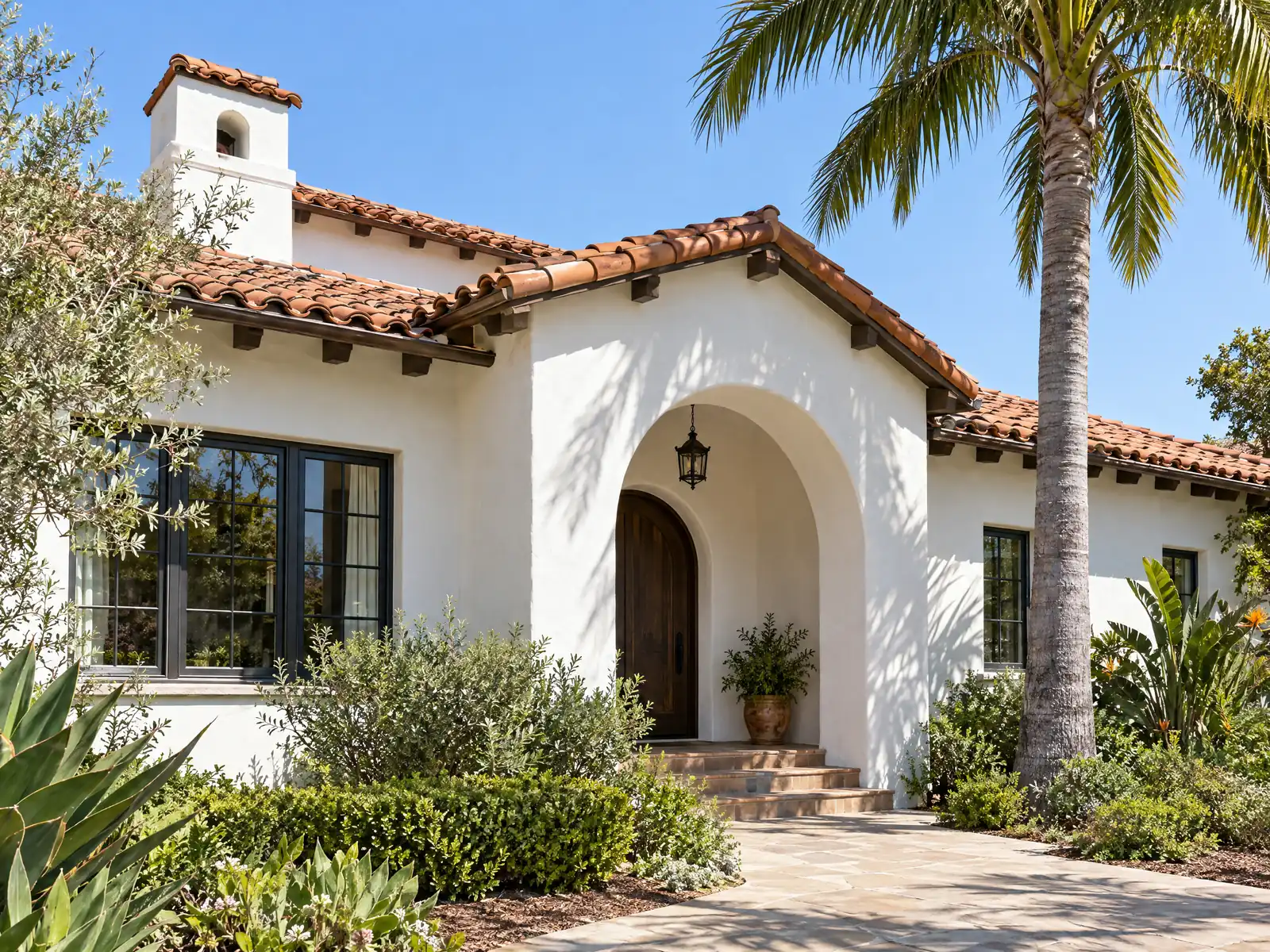
Roofing
Shingle, tile and metal roofs with LADBS permit rules, fire-zone requirements and sourced costs.
See roofing →
Windows
Replacement windows and sliding doors, with the LADBS permit path, glass ratings and sourced prices explained.
See window replacement →
ADU Construction
Garage conversions, detached ADUs and JADUs, with the 2026 permit clocks, utilities and sourced costs explained.
See ADU construction →Keep reading
Tile or Composition Shingle: Which Roof Fits a Southern California Home?
Tile against composition shingle on weight, structure, price per square foot, lifespan and fire rating, with city weight limits.
Read the guide →Title 24 Window Requirements in California: U-Factor and SHGC Explained
2025 Energy Code limits for replacement windows by climate zone, reading the NFRC label, the 75 square foot exception and a worked example.
Read the guide →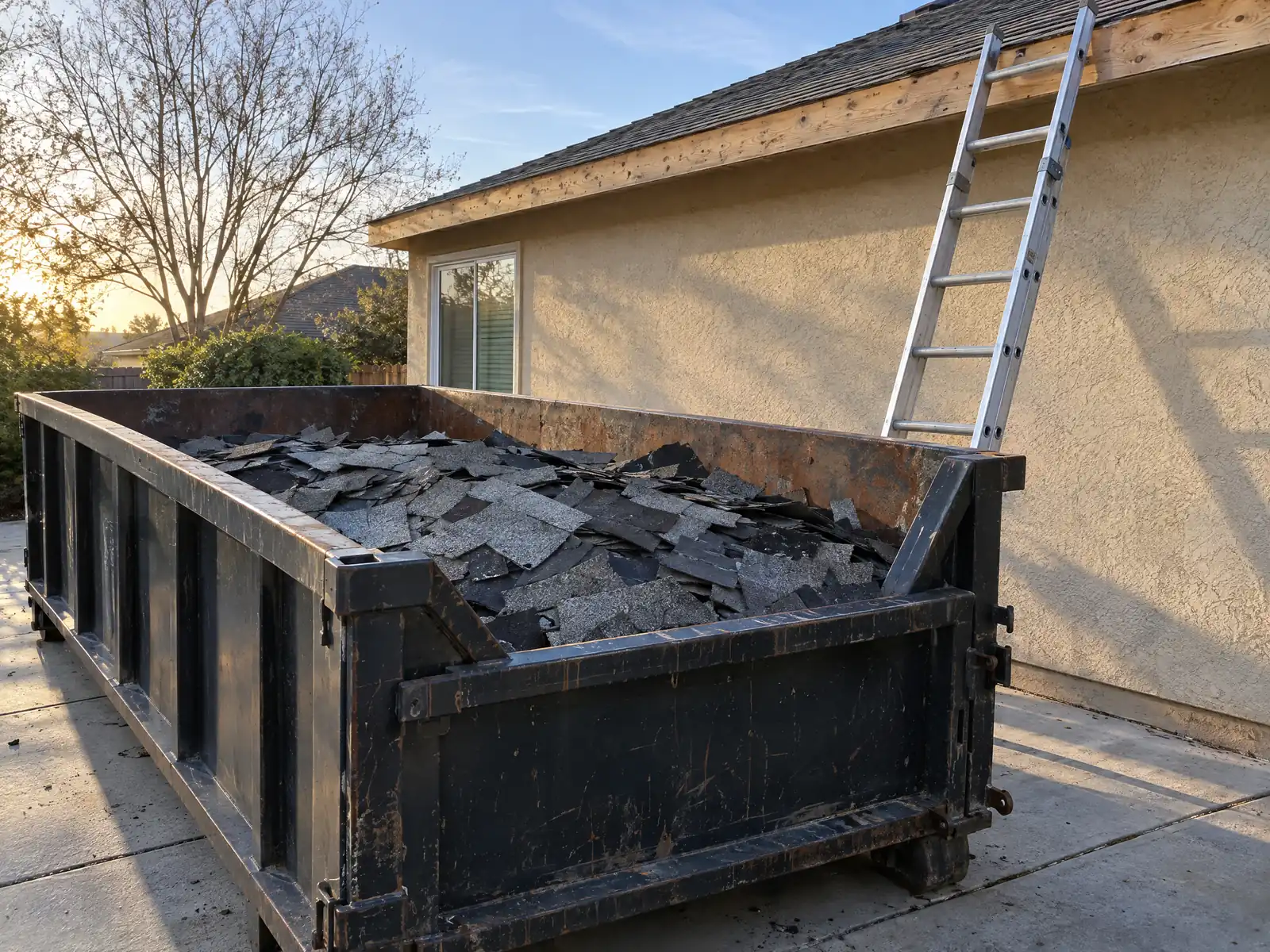
How Much Does a Roof Replacement Cost in Los Angeles?
Per-square-foot roof prices for Los Angeles with sources, a worked example by roof size, and the permit, fire-zone and contract rules.
Read the guide →Ready to plan your project?
Call or send the form. We schedule a site visit and send a written proposal.