
How Much Do Polished Concrete Floors Cost in California?
Polished concrete floors cost about $3 to $15 per square foot, and small residential jobs under 1,000 square feet often land at $8 to $15, according to HomeGuide's February 2026 guide. Grind depth, gloss level and the condition of your existing slab set the price. No independent California-only price study exists, so treat these as national ranges.
What is a polished concrete floor, exactly?
It is your structural slab, ground and refined until the concrete itself is the finished floor. A crew runs a heavy grinder over the surface with progressively finer diamond abrasives, applies a liquid densifier that hardens the top, and keeps refining until the slab reaches the chosen sheen. Nothing is laid on top.
People also use the word for two cheaper finishes: a slab ground once and sealed, or one that is stained and sealed. Those are legitimate flooring choices, but they are different products at different prices. Ask which one a bid describes.
What do polished concrete floors cost per square foot?
Two national guides publish dated ranges. HomeGuide's guide of February 8, 2026 gives $3 to $12 per square foot for basic finishes and $5 to $15 or more for decorative ones. Angi's guide, updated October 17, 2026, gives a wider $2 to $16 per square foot and a national average project of $4,500.
Neither is a California figure. We looked for an independent Los Angeles or statewide price source for polishing and did not find one, so we will not dress a national range up as local. Angi says labor is at least two-thirds of the total, so expect Southern California bids toward the upper half.
Polished concrete floor price table (national ranges)
These rows come from two national cost guides dated 2026. No independent California source was found.
| What it covers | Typical range | What moves the price |
|---|---|---|
| Polished concrete, basic finish | $3 to $12 per sq ft | Floor size, slab condition, number of grinding steps |
| Small residential job, under 1,000 sq ft | $8 to $15+ per sq ft | Mobilization, hand edging, tight rooms |
| Cream finish (least grinding) | $3 to $8 per sq ft | How flat and clean the slab surface is |
| Salt and pepper finish | $4 to $10 per sq ft | Depth of cut, consistency of the sand layer |
| Rock cut, full aggregate exposure | $6 to $12 per sq ft | Deepest grind, most diamond wear |
| High gloss sheen | $8 to $15 per sq ft | Extra polishing passes at fine grits |
| Tile removal before polishing | $2 to $7 per sq ft | Thinset thickness, adhesive type |
| Stain guard sealer | $1 to $3 per sq ft | Reapplied every 2 to 5 years in kitchens and high-traffic areas |
How we got these numbers: HomeGuide's polished concrete floor cost guide (February 8, 2026) for the finish, size and sealer rows, and Angi's polished concrete flooring cost guide (updated October 17, 2026) for the gloss and tile removal rows. Both are national, we could not confirm the survey method behind either, and they disagree on the low end ($2 against $3 per square foot). Confidence is medium-low for California homes. MDG's written proposal after seeing your slab is the real price.
Why does a small house cost more per foot than a warehouse?
Mobilizing machines, dust control and edge work cost about the same for a den as for a showroom. HomeGuide says projects under 1,000 square feet often carry premium pricing of $8 to $15 or more per square foot, while spaces over 5,000 square feet may drop to $3 to $6.
Homes also have more edges, all ground by hand, and HomeGuide notes that hard-to-reach areas can cost 10 to 30 percent more. A room stripped for a kitchen remodel, with the cabinets out, is far cheaper to polish than a finished one.
Cream, salt and pepper, or exposed aggregate: how much grinding do you want?
Grind depth changes both the look and the bill, and the cost table lists HomeGuide's three depths. A cream finish polishes the top paste and shows almost no stone. Salt and pepper cuts deeper to show sand and small stones. A rock cut exposes the large aggregate.
Gloss is the second choice. Angi prices a matte floor at $2 to $6 per square foot and semi-gloss at $3 to $8, and says each additional grinding pass adds $3 to $5 per square foot.
The trade has a shared vocabulary for this. The Concrete Polishing Council, part of the American Society of Concrete Contractors, wrote in July 2024 that it defines three classes of aggregate exposure and four sheen levels, so buyers specify the result instead of a number of passes. It recommends measuring the floor's clarity before any sealer goes on, because gloss-enhancing sealers can hide scratches that were never ground out. Ask each bidder to name the exposure class and sheen level in writing.
Worked example: polishing 600 square feet in a slab-on-grade home
Say you are pulling tile out of a 600 square foot living and dining area in a ranch house in Glendale. At HomeGuide's small-job range the polish is 600 x $8 = $4,800 up to 600 x $15 = $9,000.
The tile goes first. Angi lists tile removal at $2 to $7 per square foot: 600 x $2 = $1,200 up to 600 x $7 = $4,200. Angi also puts crack repair at around $2 per square foot where needed. If a third of the floor needs it, that is 200 x $2 = $400.
Low case: $4,800 + $1,200 = $6,000. High case: $9,000 + $4,200 + $400 = $13,600. That is $10 to about $22.67 per square foot all in, and the gap above the headline range is entirely preparation.
Can the slab under your carpet or tile be polished?
Usually, if it is sound, but polishing hides nothing. Tack strip holes, old plumbing trenches patched in a different mix, glue shadows and cracks all stay visible in the finished floor. Check before you commit:
- Pull flooring in a closet to see the real surface and the adhesive.
- Look for patched trenches; they polish to a different color.
- Map the cracks and track any that look fresh.
- Check flatness with a long straightedge. HomeGuide lists concrete leveling at $3 to $12 per square foot.
Does California code say anything about the slab itself?
It sets the slab, not the finish. The 2025 California Residential Code, section R506, requires concrete slab-on-ground floors to be not less than 3.5 inches thick and calls for a vapor retarder of at least 6 mil polyethylene under the slab, with exceptions that include garages and other unheated accessory structures.
Older slabs may have no vapor retarder, and a finish that is open to the slab can show moisture as dark patches. A new slab poured for an ADU or a room addition can be planned as a polished floor from day one, since the mix, the finishing and the protection during framing all affect how it grinds. Tell the builder before the pour. Our guide to slab cracks and when to worry covers which cracks need an engineer first.
What are the downsides of polished concrete at home?
It is hard, loud and cool. HomeGuide's list is fair: dropped glasses break, it is cold underfoot, it amplifies sound, it can be slippery when wet, acids can etch it, and hairline cracks can appear over time.
Upkeep is light but not zero. HomeGuide says a true polish does not need a sealer, though a stain guard helps in kitchens and is reapplied every 2 to 5 years. Compare the alternatives in our flooring cost guide, and look at microcement, a thin applied layer with a similar monolithic look, when the slab is too rough to show.
Who polishes concrete, and how long does it take?
A specialty crew with the right machines. HomeGuide says most residential projects up to 2,000 square feet take 2 to 4 days, longer when repairs are needed. MDG Builders, CSLB #1040337, is a general contractor based in Tarzana. On a remodel we sequence the polish around demolition, plumbing and cabinets, and the grinding is carried out by a licensed specialty subcontractor whose license number and certificate of insurance you can request.
Polish after demolition and rough plumbing, before cabinets and baseboards, and protect the floor until the painters are gone. Where the room opens to a patio through wide glass doors, a common request in Santa Monica, finish the window and door installation before the final passes.
Polished concrete questions
Is it expensive to have polished concrete floors?
It is mid-priced, not cheap. HomeGuide's February 2026 guide puts a 500 square foot area at $4,000 to $7,500, and homes under 1,000 square feet often pay $8 to $15 or more per square foot. Removing old flooring and repairing the slab are the costs that surprise people.
Is it cheaper to tile or polish concrete?
It depends on the slab. Where the concrete is sound and flat, polishing avoids buying a floor covering, and the published range starts at $3 per square foot. Where the slab needs leveling at $3 to $12 per square foot, tile can cost less and hides the flaws.
Does polished concrete need to be sealed?
A true mechanical polish does not rely on a sealer, because the densifier hardens the surface. A stain guard is still worth having in kitchens. HomeGuide prices it at $1 to $3 per square foot, reapplied every 2 to 5 years.
How long does it take to polish a concrete floor in a house?
Most residential projects up to 2,000 square feet take 2 to 4 days, according to HomeGuide. Add time for removing old flooring and adhesive, filling cracks and any leveling. The rooms cannot be used during grinding.
Is polished concrete more expensive than LVP?
On a small job it often is. HomeGuide puts polished concrete in homes under 1,000 square feet at $8 to $15 or more per square foot, before old flooring is removed. Vinyl plank is a covering laid over the slab, so it hides patches and cracks that polishing would leave on show. Compare written bids for both.
Work that goes with this
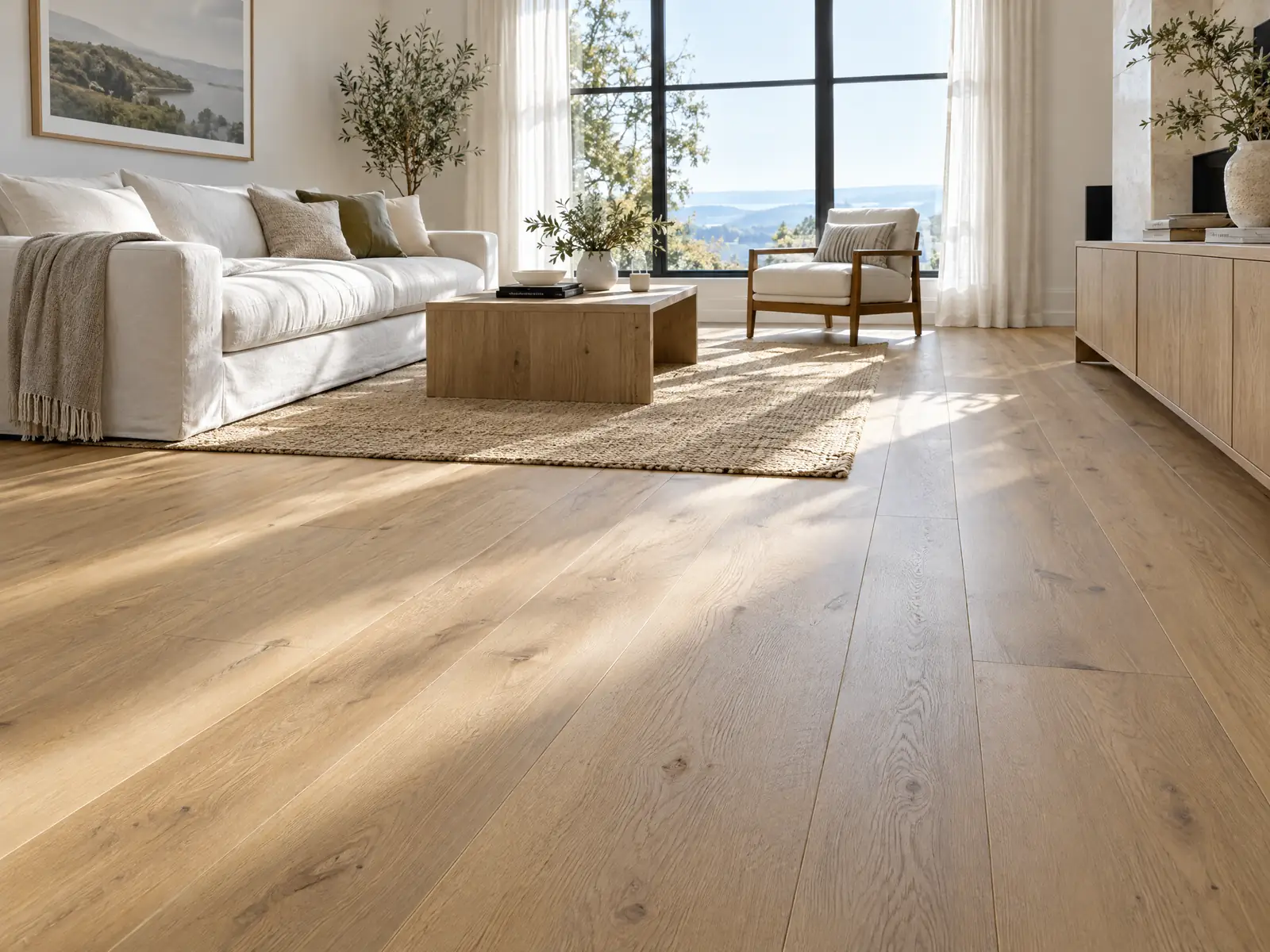
Flooring
Hardwood, engineered wood, vinyl plank, laminate and tile, with slab testing and a written scope.
See flooring →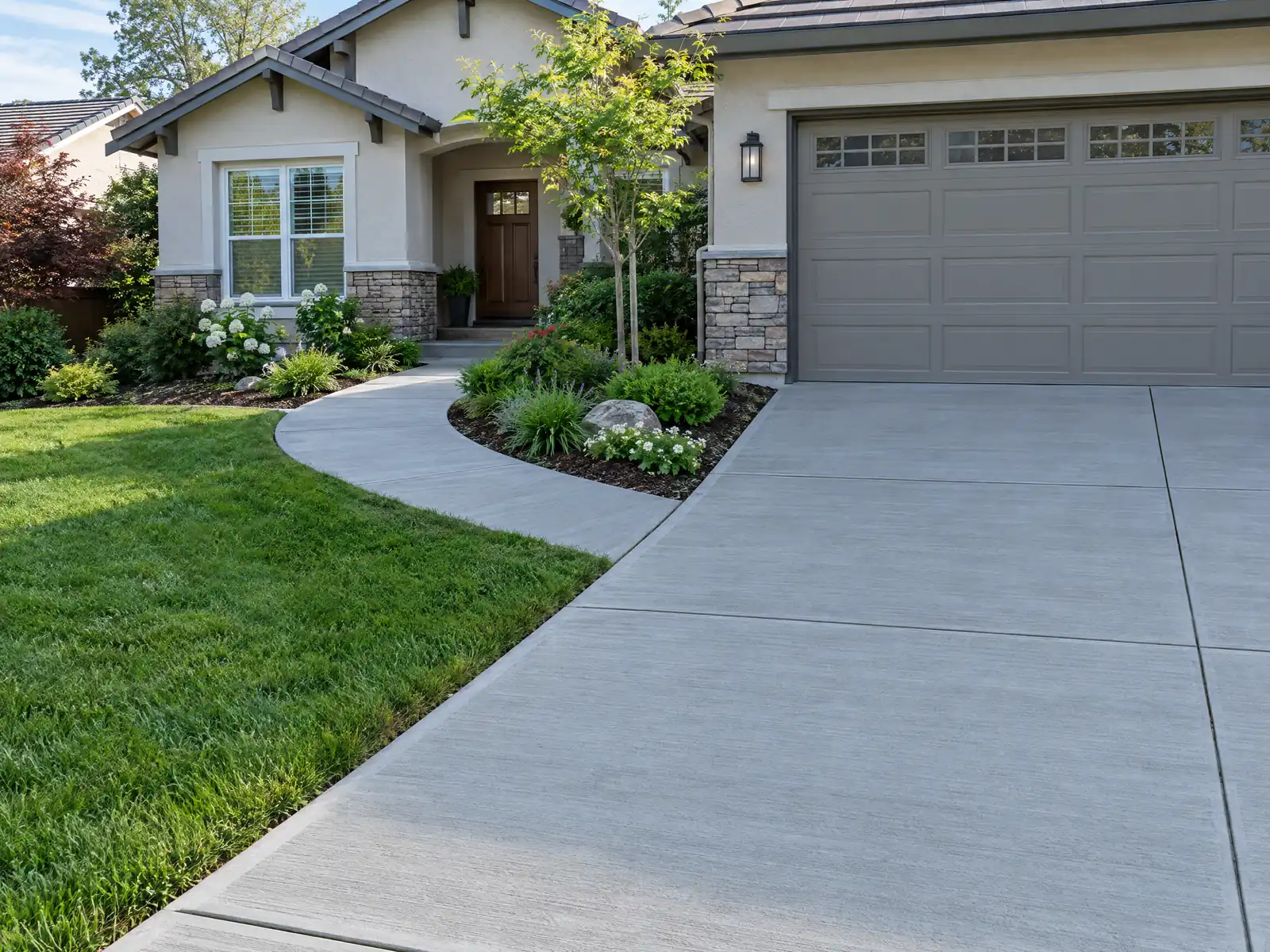
Concrete
Patios, driveways, walkways and retaining walls, poured by licensed specialists and priced from sources.
See concrete work →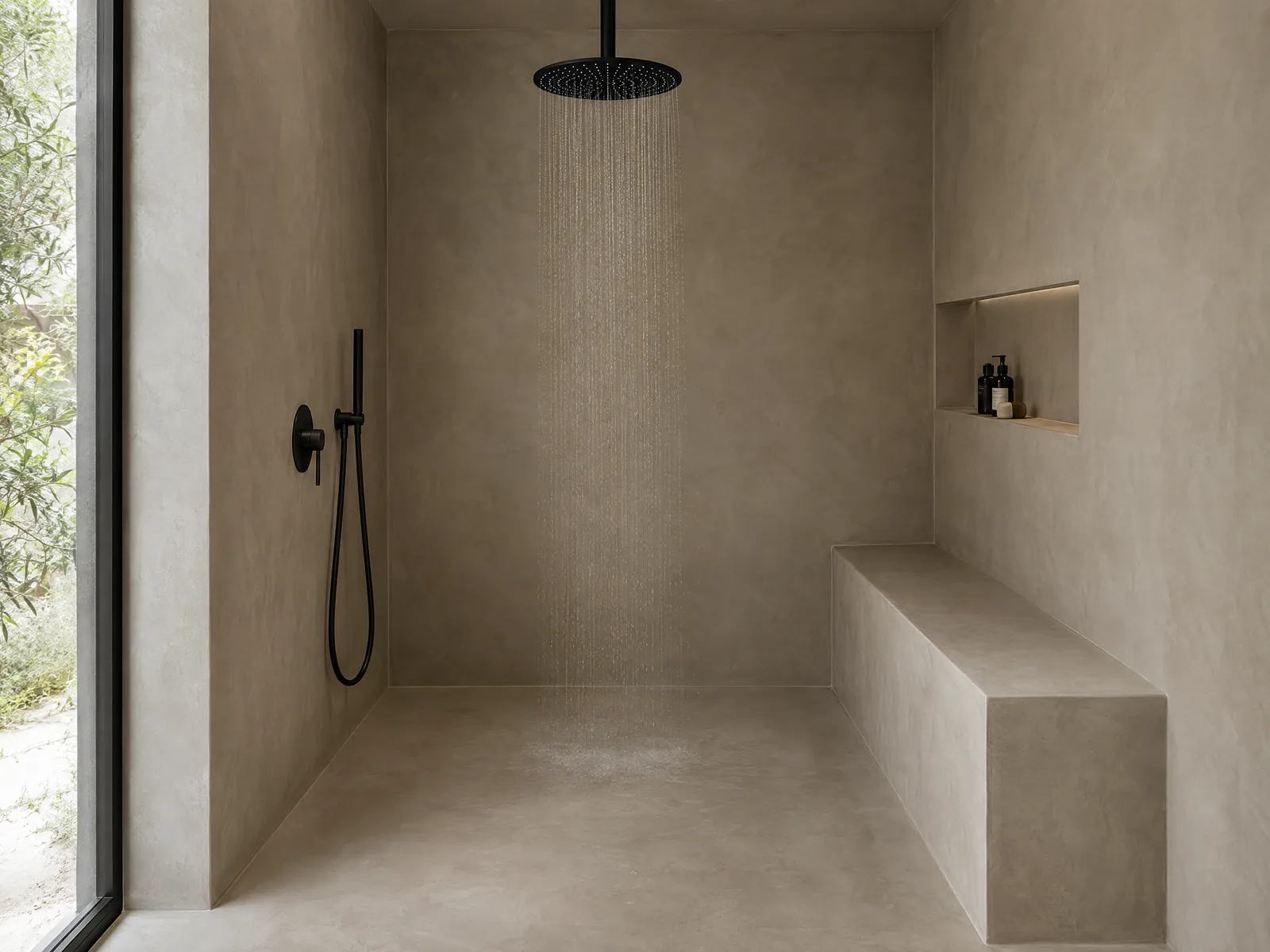
Microcement
Continuous cement-based finishes for floors, walls, counters and showers, with the prep and waterproofing explained.
See microcement →More on floors
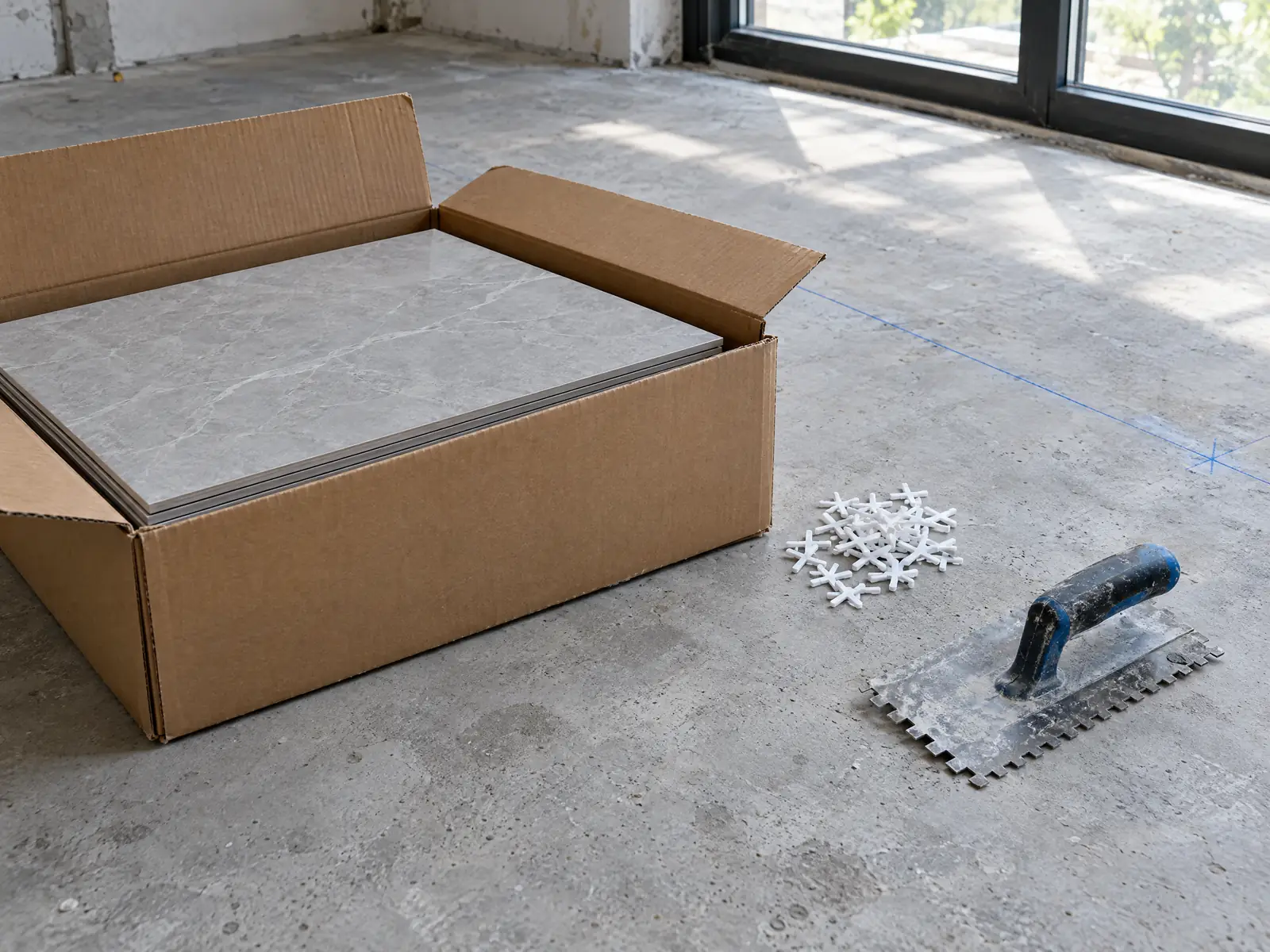
How Much Does Flooring Installation Cost in Los Angeles?
Per-square-foot flooring prices for Los Angeles with sources, a room-sized worked example, slab moisture, and who is licensed to install.
Read the guide →
Microcement vs Tile: Which Holds Up Better in a Bathroom?
How microcement and tile differ in installation, wet-area performance and upkeep, using only facts we could verify.
Read the guide →Concrete Slab Cracks in Southern California: When Should You Worry?
Which slab cracks are shrinkage and which point to soil movement, how to track a crack, the drainage numbers in the code, and who to call.
Read the guide →Ready to plan your project?
Call or send the form. We schedule a site visit and send a written proposal.