
Concrete Slab Cracks in Southern California: When Should You Worry?
Worry when a slab crack is getting wider, has one side higher than the other, or shows up together with sticking doors, sloping floors or diagonal wall cracks. Thin, level cracks that never change are usually shrinkage from curing. The American Society of Civil Engineers lists floor cracks 1/16 inch across or wider among possible signs of soil movement.
Are cracks in a concrete slab normal?
Mostly, yes. Concrete loses water and shrinks as it cures, and a slab held in place by the ground cannot shrink freely, so it cracks. Contractors cut control joints into flatwork to give that crack a straight line to follow. When a crack ignores the joint and wanders, it looks alarming and is usually the same shrinkage.
Shrinkage cracks are thin, both sides sit at the same height, and they stop changing early in the life of the slab. The question is never whether a slab has cracks. It is whether one of them is moving.
Which slab cracks should worry you?
The American Society of Civil Engineers Geo-Institute publishes a homeowner pamphlet, Living With Shrink/Swell Soils, a PDF created in 2015. Among its indoor indicators of soil-related movement it lists cracks in a concrete floor 1/16 inch across or wider. It adds that the probability of foundation movement rises with the number of indicators you see, how often, and where.
So one crack proves little. From the pamphlet's lists, look for these alongside it:
- Doors or windows that stick in frames that used to work.
- Cracks above doors and windows, or at wall corners.
- A sloping floor, or the bottom of a wall separating from the floor.
- Stair-step cracks in brick or block walls outside.
- A driveway, patio, porch or walkway pulling away from the foundation.
A wide crack that has not moved in ten years matters less than a thin one that opened this year.
How do you tell if a slab crack is getting worse?
Measure it and write it down. The pamphlet tells owners to monitor existing cracks for progressive or seasonal movement, and a pencil and a ruler are enough.
Pick three spots along the crack. At each, draw a short pencil line square across it and note the width and the date. Lay a straightedge across and check for a step, one side higher than the other. Take a phone photo with the ruler in frame. Repeat at the end of the dry season and again after winter rain.
No change over a year: almost certainly old shrinkage. Opens in the dry months and closes after rain: the soil is shrinking and swelling, and drainage is the first fix. Wider every time, or a growing step: get an engineer. Measure before installing new flooring, because a moving crack will come through tile and can split it.
What is expansive soil, and does California code define it?
Expansive soil is clay-rich ground that swells when it takes on water and shrinks when it dries. The pamphlet compares it to a dry sponge touching a puddle: moisture is drawn under the foundation, the clay grows, and the slab lifts. Uneven wetting does the damage, such as one soggy planter against one wall.
The code has a test for it. The 2025 California Residential Code, section R403.1.8.1, treats soil as expansive when it has an Expansion Index greater than 20 under ASTM D4829, or meets three lab criteria that include a Plasticity Index of 15 or greater. Slabs on such soil must be designed under section 1808.6 of the California Building Code, and section R401.4 lets the building official decide whether a soil test is required.
Local offices apply this differently. Ventura County's handout B-49, revised April 4, 2023, says building plans must come with a geotechnical investigation report unless a soils report waiver applies. That is why a room addition on unincorporated land outside Thousand Oaks, or an ADU in another jurisdiction, may need a soils engineer before plans are accepted.
Worked example: is your yard draining to code?
Water management is the cheapest repair there is. Section R401.3 of the same code says lots shall be graded so the ground falls not fewer than 6 inches within the first 10 feet from the foundation. Where that is impossible, drains or swales are required, and impervious surfaces within 10 feet must slope at least 2 percent away.
Check yours with a string, a line level and a tape. Hold the string level from the house out 10 feet and measure down to the soil. You want 6 inches or more, which is 6 / 120 = 0.05, or 5 percent. For a 4 foot concrete walkway beside the house, 2 percent is 0.02 x 48 = 0.96, so about 1 inch of fall away from the wall.
The ASCE pamphlet gives the same grade in a shorter run, at least 3 inches of fall in 5 feet, and 3 / 60 is also 5 percent. If your side yard tilts toward the house, you have found a likely cause before spending anything on the slab.
What can you do yourself to keep the soil under a slab steady?
Aim for even moisture on every side of the house, all year. The pamphlet calls that the single best thing an owner can do, and every item below comes from its action table.
- Discharge downspouts at least 3 feet from the foundation.
- Keep sprinkler lines, valves and heads at least 5 feet from the foundation.
- Do not pond water in planter beds against the house.
- Plant trees farther away than their mature height.
- In drought, consider soaker hoses about 18 inches from the foundation, within your water agency's rules.
- Walk the 5 feet around the house once a year and look for low spots.
How are slab cracks repaired, and what does it cost?
Repair follows the cause. A stable shrinkage crack is cleaned and filled so it does not show through new flooring. Angi's national flooring guide, updated October 17, 2026, puts concrete crack repair at around $2 per square foot, and HomeGuide's February 2026 guide lists minor crack filling and patching at $100 to $800.
A moving crack is a different job, because rigid fillers break again while the soil keeps cycling. The work may be drainage correction, repouring a section or stabilizing the foundation. We found no dated, independent Southern California price source for structural slab repair, so we print no numbers for it. Be careful with any company that prices foundation work from a photo.
Outdoors, a heaved driveway panel is usually replaced; see what a new concrete driveway costs in Los Angeles. On a lot that keeps moving, unit pavers can beat another slab, as we explain in stamped concrete compared with pavers.
Does a builder have to fix cracks in a newer California home?
There is a statute for original construction sold as a dwelling. Civil Code section 896, subdivision (b)(1), says foundations, load bearing components and slabs shall not contain significant cracks or significant vertical displacement. Subdivision (g)(1) covers exterior driveways, hardscape, sidewalks and patios installed by the original builder, and bars any action on that paragraph more than four years from close of escrow.
The statute does not define significant in inches. If your home is recent and the cracks are growing, notify the builder in writing and speak with a construction attorney. This is general information, not legal advice.
Who do you call first: a contractor or an engineer?
For a crack that is moving, an engineer. A licensed civil or geotechnical engineer is paid to diagnose and has nothing to sell you afterward. A repair company's free inspection is a sales visit.
Once there is a written diagnosis, a contractor prices and builds it. MDG Builders, CSLB #1040337, acts as the general contractor on that kind of repair: we coordinate the engineer's plan, the permit and the schedule, and licensed subcontractors do the concrete, drainage and finish work, each with a license and insurance certificate you can check. Around Santa Clarita and other hillside communities, ask whether grading or a retaining wall is part of the answer. Before hiring, read how to check a contractor license.
Slab crack questions
Are hairline cracks in concrete normal?
Yes, in most slabs. Concrete shrinks as it cures and thin, level cracks are the usual result. They are a concern when they keep widening, when one side sits higher than the other, or when they come with sticking doors, sloping floors or diagonal wall cracks. Mark and measure them to find out.
When should I worry about cracks in my concrete slab?
Worry when a crack changes. The American Society of Civil Engineers lists floor cracks 1/16 inch across or wider as one possible indicator of soil movement, and says the likelihood rises with the number of other signs present. A growing crack, a step across it, or new wall cracks call for an engineer.
Why is the concrete around my pool cracking?
Usually for the same reasons as any slab: shrinkage, or soil that moves as it gets wet and dries out. Pool decks see constant splash on one side and dry soil on the other, which is uneven moisture. Check that the deck drains away from the pool and the house, and track the cracks through one wet and dry season.
Can I just fill a crack in my slab and install new flooring?
You can if the crack is stable. Measure it over a season first. A crack that opens and closes with the weather will come through tile and can damage plank flooring, so the installer needs to know and may use a membrane or leave a movement joint. A widening crack should be diagnosed before any floor goes down.
Do I need a soils report to build on my lot in Southern California?
Often, and the building department decides. The California Residential Code lets the building official require a soil test where expansive or shifting soils are likely. Ventura County, for example, requires a geotechnical investigation report with building plans unless a waiver applies. Ask your city or county before you pay for drawings.
Work that goes with this
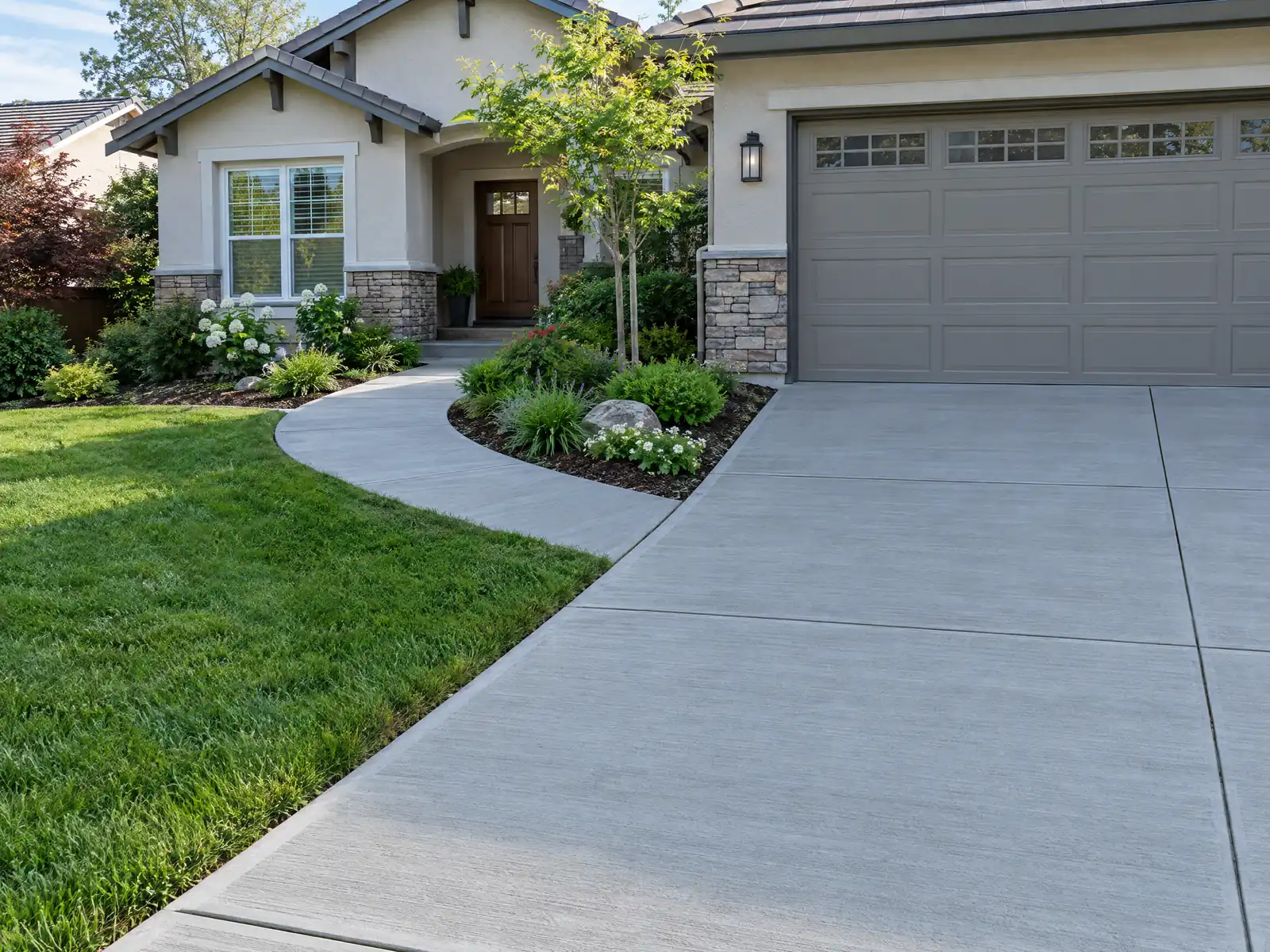
Concrete
Patios, driveways, walkways and retaining walls, poured by licensed specialists and priced from sources.
See concrete work →
Flooring
Hardwood, engineered wood, vinyl plank, laminate and tile, with slab testing and a written scope.
See flooring →
Room Additions
Family rooms, primary suites and second stories, from zoning check to final inspection, with sourced prices.
See room additions →Related concrete guides
What Does It Cost to Replace a Concrete Driveway in Los Angeles?
Per-square-foot driveway prices for Los Angeles with dates and sources, tear-out costs, a 720 sq ft worked example and the deposit cap.
Read the guide →Stamped Concrete or Pavers: Which Is Better for a California Yard?
Stamped concrete and pavers compared on installed price, repairs, sealing, drainage and clay soil, with dated Los Angeles numbers.
Read the guide →How Much Do Polished Concrete Floors Cost in California?
Polished concrete pricing by grind depth and gloss, what the slab under your old flooring has to pass, and a 600 square foot worked example.
Read the guide →Ready to plan your project?
Call or send the form. We schedule a site visit and send a written proposal.