
Hardwood vs. Luxury Vinyl Plank: Which Floor Fits a California Home?
Choose hardwood when you want a floor that can be sanded and refinished for decades and the slab or subfloor tests dry. Choose luxury vinyl plank for kitchens, baths, rentals and slabs with some moisture, at a lower price. In Los Angeles, Angi lists hardwood at $12 to $22 per square foot installed.
What is the real difference between hardwood, engineered wood and LVP?
Three products get compared as if they were two. Solid hardwood is one piece of wood, top to bottom. Engineered hardwood is a real wood wear layer bonded to a plywood or composite core, so the surface you walk on is still wood. Luxury vinyl plank, or LVP, is a printed image of wood under a clear wear layer on a vinyl or rigid composite core.
That one fact drives most of the trade-offs. Wood can be sanded and refinished, and it changes color with light and age. Vinyl cannot be sanded: a worn or gouged plank is replaced. In return, vinyl shrugs off the spills that stain or cup wood.
Which costs less to install in Los Angeles: wood or vinyl plank?
Vinyl plank costs less, but we can only put sourced Los Angeles numbers on the wood side. Angi's Los Angeles flooring pages, updated July 8, 2026 and read by our research in November 2026, list solid hardwood at $12 to $22 per square foot installed and engineered hardwood at $10 to $18. Installer labor alone runs $3 to $9 per square foot, and refinishing existing wood is $4 to $8. Angi does not state its method, so treat these as planning ranges.
We did not find a dated Los Angeles price for LVP from a source that explains how it got the number, so we do not print one. Labor is a similar line for both, and the plank itself is where vinyl saves money. Our flooring cost guide goes deeper on project totals.
Wood flooring prices in Los Angeles, and what is missing for LVP
Wood figures are from Angi's Los Angeles flooring pages, updated July 8, 2026. We found no dated, method-stating Los Angeles price for LVP, so that row has no number.
| What it covers | Typical range | What moves the price |
|---|---|---|
| Solid hardwood, installed | $12 to $22 per sq ft | Species, plank width, site finish or prefinished |
| Engineered hardwood, installed | $10 to $18 per sq ft | Wear layer thickness, glue-down or floating |
| Refinishing existing hardwood | $4 to $8 per sq ft | Stain color, repairs, number of finish coats |
| Installer labor only | $3 to $9 per sq ft | Layout, stairs, slab prep, removal of old floor |
| Luxury vinyl plank, installed | No sourced LA figure | Core type, wear layer, floating or glue-down; usually priced below wood |
How we got these numbers: Angi's Los Angeles pages on hardwood flooring cost and flooring installation cost (both updated July 8, 2026). Angi does not publish its method, every figure comes from one publisher, and confidence is medium-low. MDG's written proposal is the real price.
A worked example: 600 square feet of living room and hallway
Take 600 square feet across a living room, dining area and hall. At Angi's rates, solid hardwood is 600 x $12 = $7,200 up to 600 x $22 = $13,200. Engineered hardwood is 600 x $10 = $6,000 up to 600 x $18 = $10,800.
Now suppose there is old oak under the carpet, as some older Southern California houses have. Refinishing it is 600 x $4 = $2,400 up to 600 x $8 = $4,800. At the low ends that is $7,200 - $2,400 = $4,800 less than new hardwood. Lift a carpet corner in a closet before you price anything new.
Can hardwood or LVP go straight onto a concrete slab?
Both can, with conditions. The National Wood Flooring Association's concrete subfloor fact sheet says solid and engineered wood floors can be installed over concrete when the slab is properly prepared. It lists the conditions: flat within 1/8 inch in a 6-foot radius or 3/16 inch in a 10-foot radius, dry, tested for moisture, at least 3,000 psi, and free of sealers, paint, cracks and hollow spots. It strongly recommends a vapor retarder rated at 0.13 perms or less, and it leaves the moisture limit to the flooring and adhesive makers.
Vinyl plank asks for much the same slab. Shaw's installation guide for its COREtec rigid core planks calls for flatness of 3/16 inch in 10 feet or 1/8 inch in 6 feet, a slab pH between 7 and 10, and moisture no higher than 8 pounds on the calcium chloride test (ASTM F1869) or 90 percent relative humidity on the in-slab probe test (ASTM F2170). Above those readings it recommends moisture remediation. For floating installations over concrete it recommends 6 mil polyethylene film with taped seams.
So waterproof plank does not mean test-free slab. Ask which test will be run and what the product's limit is. If the slab has cracks, read when slab cracks are a concern and have a concrete contractor look at anything that is moving. Some owners skip a covering altogether, a route our guide to polished concrete floor costs covers.
How do sun and heat affect each floor in Southern California?
Both react to sun, in different ways. Wood changes color with light and moves with humidity swings, so follow the maker's acclimation instructions. Vinyl has printed limits. The COREtec guide tells owners to keep the space between 55 and 85 degrees Fahrenheit and to avoid prolonged direct sunlight, which it says may cause discoloration.
That matters behind a west-facing slider in the Valley or in a second home in Palm Desert left closed up through summer. Tell the installer how the house is used.
Expansion room is part of the answer. The COREtec guide calls for a 1/4 inch gap at the perimeter for areas under 2,500 square feet and 1/2 inch for larger ones.
Which floor handles kitchens, bathrooms and pets better?
Vinyl plank, for water. Its surface and core do not absorb a spilled dog bowl or a dripping dishwasher line the way a wood wear layer does. That makes it a common pick for a budget kitchen remodel, laundry rooms and rentals. In a bathroom remodel with a shower, tile or microcement is still the safer wet-area surface, as our comparison of microcement versus tile explains.
Wood wins on repairability. Pet scratches in a wood finish can be screened and recoated, and deeper wear can be sanded out. A scratched vinyl plank is swapped for a new one, which works only if you saved a carton from the same production run.
Indoor air is a fair question for both. California's Air Resources Board regulates formaldehyde from the composite wood cores in engineered and laminate flooring. Its flooring fact sheet says only Phase 2 compliant products have been legal for sale here since January 2014, and makers must label the flooring or its boxes as compliant.
Which rooms suit hardwood and which suit vinyl plank?
A mixed answer is often the right one.
- Living room, dining room, bedrooms and halls: hardwood or engineered hardwood, if the subfloor tests dry and the budget allows.
- Kitchen: either. Wood for one look with the living area, vinyl if spills and pets are daily.
- Laundry, mudroom, rental units and ADUs: vinyl plank.
- Upstairs condo: check the HOA's rules on hard flooring and sound before choosing anything.
Who installs these floors, and what should the quote include?
Flooring installation is the CSLB C-15 classification, which covers preparing the surface and installing wood and resilient floors. MDG Builders, CSLB #1040337, is a general building contractor, so on a flooring project we set the scope, order the sequence with the other trades and supervise, and a licensed flooring subcontractor lays the floor. Their license number and insurance certificate are yours to see on request.
A good quote names the product and its wear layer, the moisture test and who pays if the reading fails, floor prep, underlayment or vapor retarder, baseboards and transitions, and removal of the old floor. Local flooring pages for Torrance, Glendale and Irvine carry city-specific notes.
Hardwood and vinyl plank questions
Does LVP devalue a home?
We found no dated, independent study showing that vinyl plank lowers a California home's value. What is verifiable is that wood can be refinished before a sale and vinyl cannot. Ask a local agent what buyers in your price range expect.
What are the downsides of luxury vinyl plank flooring?
The main downsides are that it cannot be refinished, it can discolor in prolonged direct sun, and it has temperature limits. One major maker's guide calls for 55 to 85 degrees and window coverings in peak sun. Damaged planks must be replaced.
Is LVP used in high-end homes?
Yes, it can be, and it makes the most sense in laundry rooms, home gyms and guest units, where water resistance matters most. In main living areas, the case for hardwood is that real wood can be refinished.
Why does vinyl plank flooring need to acclimate?
Not every product does. Shaw's COREtec installation guide says acclimation before installation is not required, though the room must be climate controlled. Other makers ask for cartons to sit in the house first, so follow the guide for your exact product.
Is engineered hardwood worth it?
Yes, when you want a real wood surface over a concrete slab or at a lower price than solid wood. Angi's Los Angeles figures put it at $10 to $18 per square foot installed against $12 to $22 for solid. Check the wear layer, which decides whether it can ever be sanded.
What is the healthiest flooring to put in your house?
No single floor holds that title, so check emissions labels. In California, composite wood cores in engineered and laminate flooring must meet the Air Resources Board's Phase 2 formaldehyde standard and be labeled as compliant. Solid wood has no composite core.
Work that goes with this
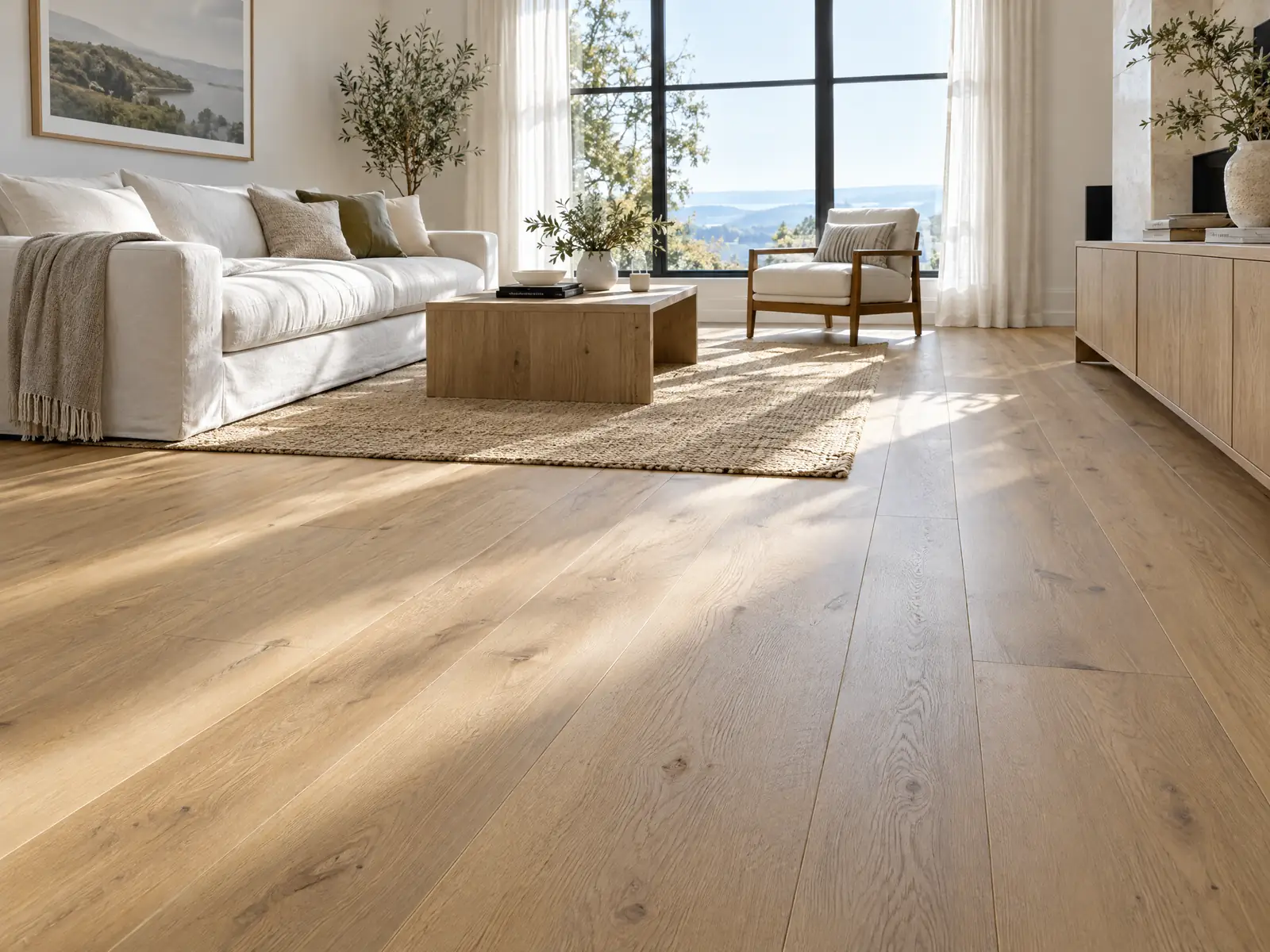
Flooring
Hardwood, engineered wood, vinyl plank, laminate and tile, with slab testing and a written scope.
See flooring →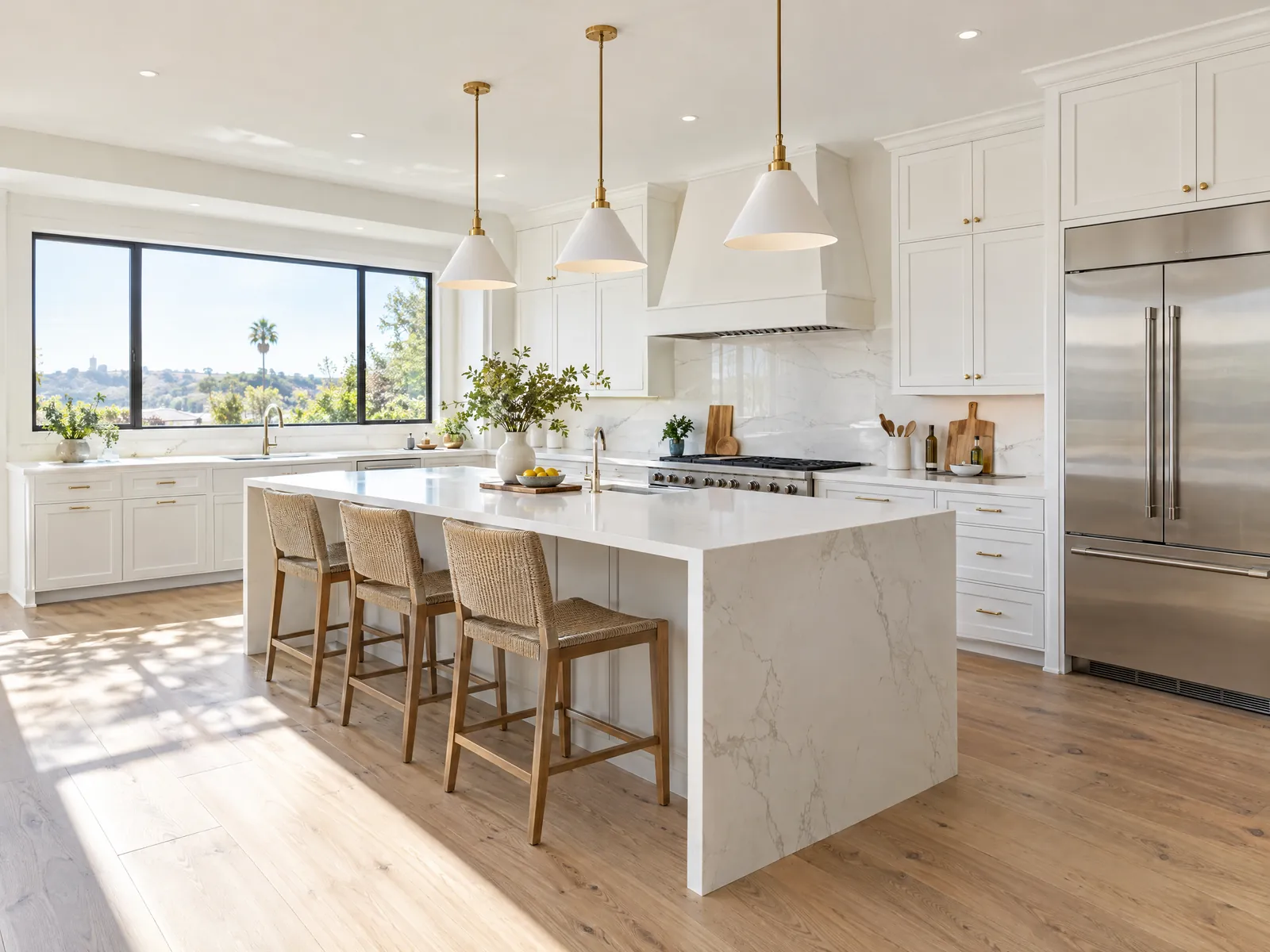
Kitchen Remodeling
Cabinets, counters, layout changes, permits and a written schedule, with prices tied to named sources.
See kitchen remodeling →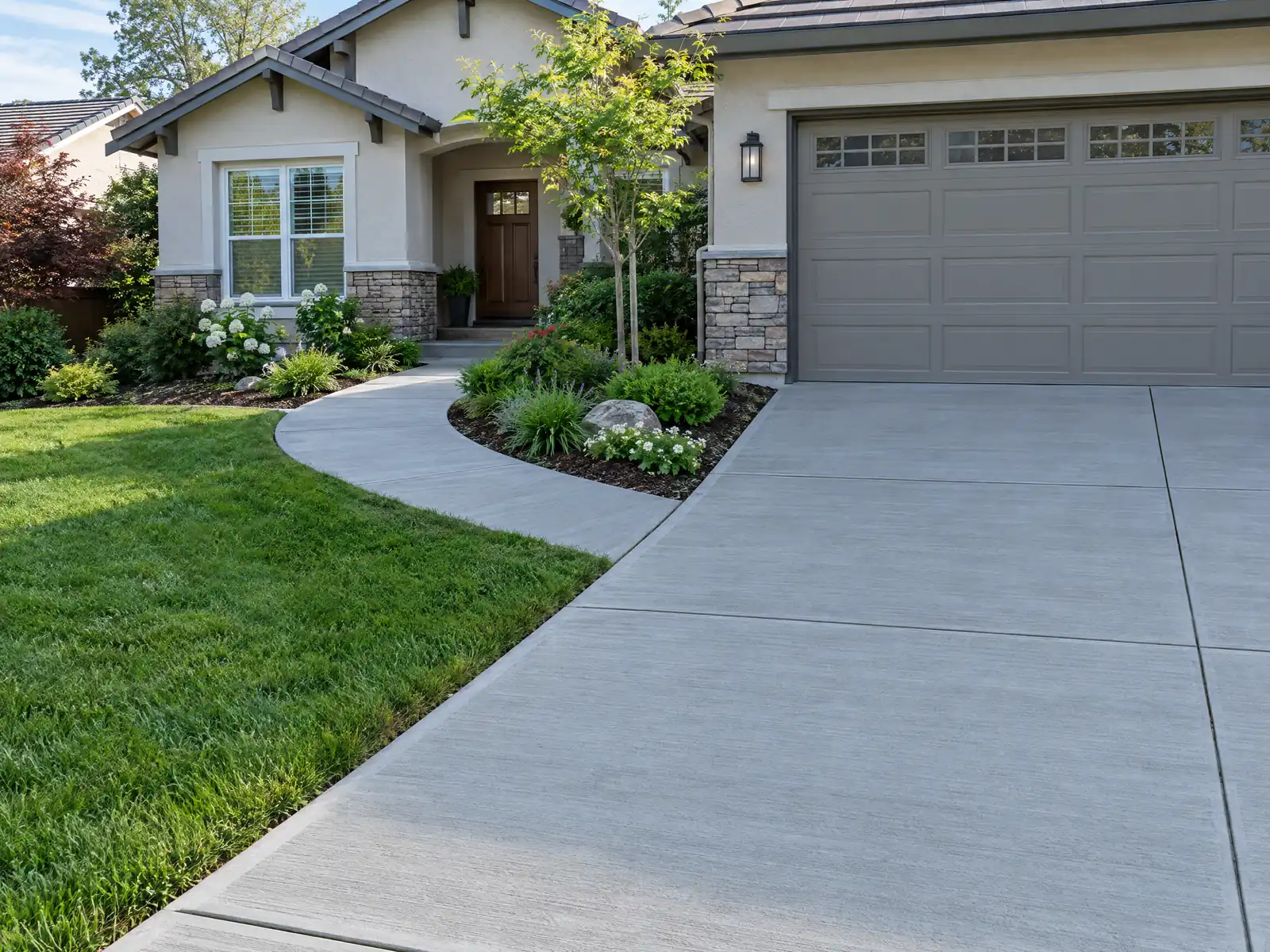
Concrete
Patios, driveways, walkways and retaining walls, poured by licensed specialists and priced from sources.
See concrete work →More flooring reading
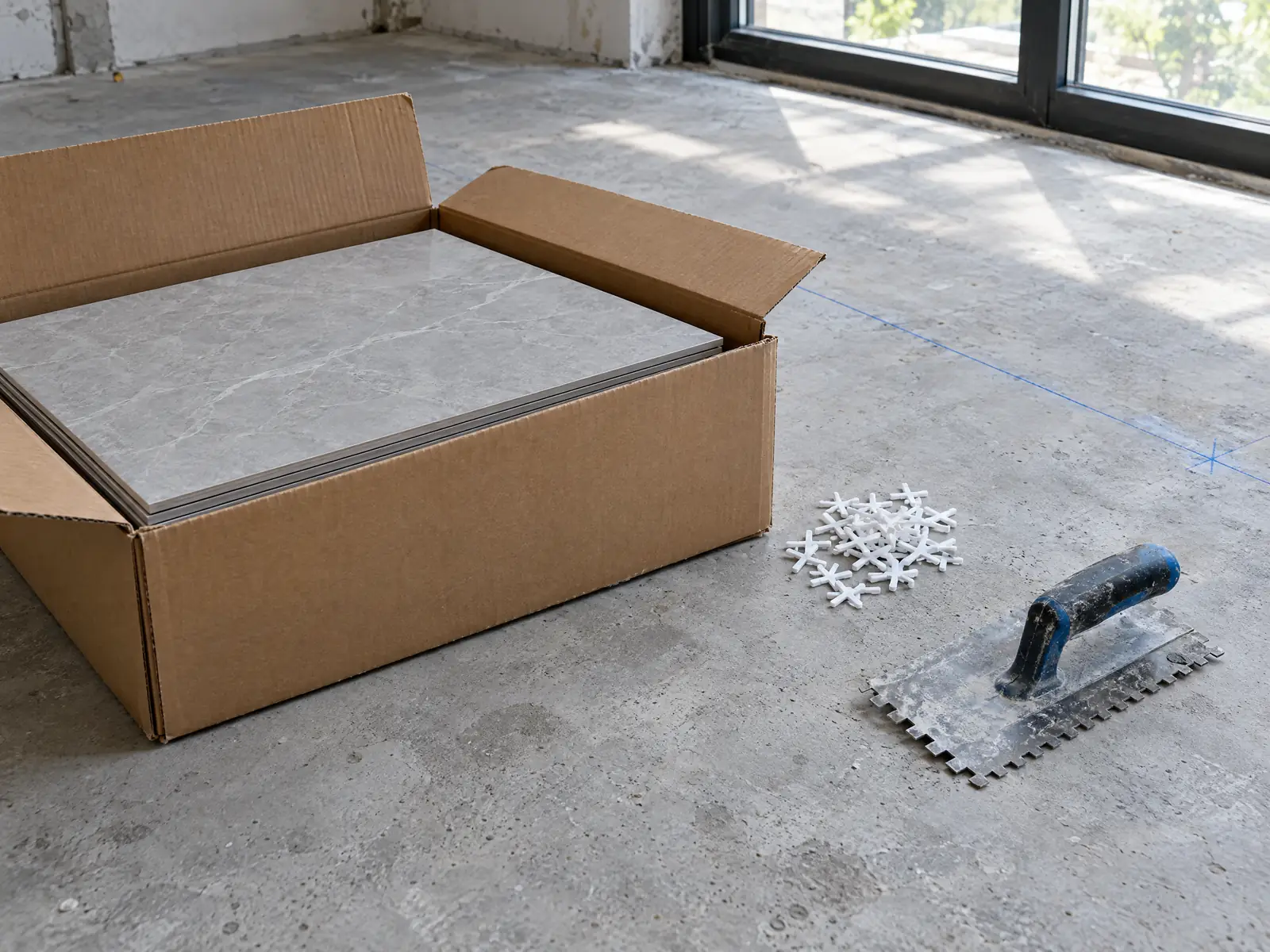
How Much Does Flooring Installation Cost in Los Angeles?
Per-square-foot flooring prices for Los Angeles with sources, a room-sized worked example, slab moisture, and who is licensed to install.
Read the guide →How Much Do Polished Concrete Floors Cost in California?
Polished concrete pricing by grind depth and gloss, what the slab under your old flooring has to pass, and a 600 square foot worked example.
Read the guide →Concrete Slab Cracks in Southern California: When Should You Worry?
Which slab cracks are shrinkage and which point to soil movement, how to track a crack, the drainage numbers in the code, and who to call.
Read the guide →Ready to plan your project?
Call or send the form. We schedule a site visit and send a written proposal.