
Do You Need a Permit for a Concrete Driveway in Los Angeles?
Yes for the part at the street. In the City of Los Angeles, any work on the driveway approach, curb or sidewalk in the public right of way needs an A-Permit from the Bureau of Engineering under Municipal Code section 62.105. The slab on your own lot follows different rules, and LADBS decides those.
Which part of your driveway belongs to the city?
A driveway has two owners. The slab from your garage to your property line is yours. The sloped apron, the curb opening and the sidewalk panel it crosses sit in the public right of way, and the city controls what gets built there. Finding the line takes care: LADBS warns owners in its fence bulletin not to assume the inside edge of the sidewalk is the property line.
That split decides which office you deal with. The Bureau of Engineering, part of Public Works, handles the right of way. The Department of Building and Safety, LADBS, handles the lot. Most concrete projects that replace a driveway end to end touch both.
What is an A-Permit and when does the city require one?
Los Angeles Municipal Code section 62.105 says no person may construct, reconstruct or repair a curb, sidewalk, gutter, driveway or approach in a street without first getting a written permit. The Bureau of Engineering's permit manual, revised July 7, 2025, calls the permit for this kind of minor street construction an A-Permit. It lists new driveway installations, driveway repair, sidewalk repair and curb and gutter repair as the common cases.
The A-Permit is limited to work that will not alter an established gutter flowline or change the grade of the sidewalk or street. If your project does either, the manual says a B-Permit is required. The manual also says there are currently no requirements on who can apply for an A-Permit and that proof of ownership is not required.
How wide can a residential driveway approach be in LA?
The manual's driveway procedure, revised May 1, 2026, quotes Municipal Code section 62.105.2. The minimum apron width is 10 feet in the A, RE, RS, R1, R2 and RW zones and 12 feet in the RD, R3, R4 and R5 zones, measured along the curb line. The maximum is 18 feet when the apron serves a lot in an A or R zone.
Wider than that is a deviation. The applicant submits a sketch, a written reason and an exceptions form, and the Bureau decides under four tests in section 62.105.5. Standard aprons follow City Standard Plan S-440-4. On a street the Mobility Plan classifies as an Avenue or Boulevard, LADOT must first approve a Driveway Approach Data Sheet.
Where is a new curb cut not allowed?
Section 62.105.1, as summarized in the same procedure, blocks an approach in several spots. The ones that surprise homeowners most are below. If your street is a state highway, the Bureau sends you to Caltrans District 7 instead.
- Inside a corner curb return, between the prolonged property lines at an intersection.
- Within 5 feet of an existing street light, unless you pay to relocate the light.
- Where the lot cannot hold a parked vehicle without it hanging over the sidewalk.
- In front of the neighbor's lot without the neighbor's consent, side slopes excepted.
What does the city charge to inspect a driveway apron?
Fees have two parts. Section 62.109, amended effective December 7, 2025, charges a permit application fee set in section 61.16, plus inspection fees: $3.70 per linear foot of curb, including depressed curb across a driveway, and $0.85 per square foot of concrete paving, gutter, sidewalk and driveway.
Here is the arithmetic for a 16 foot wide apron that is 8 feet deep. Area is 16 x 8 = 128 square feet, and 128 x $0.85 = $108.80. Depressed curb is 16 feet, and 16 x $3.70 = $59.20. Inspection fees come to $108.80 + $59.20 = $168.00.
The application fee comes on top. We could not open the current section 61.16 amount, so we do not print it. Angi's Los Angeles driveway page, updated May 5, 2026, puts the permit at $150 to $400 all in, which fits the math above.
Sidewalk damage caused by street tree roots is handled as a No Fee A-Permit. The Bureau asks for a photo of the damage, and a Street Tree permit is needed before roots are trimmed.
What will the Bureau of Engineering ask you for?
The manual's general conditions page, revised May 12, 2026, tells applicants to measure the site before applying, and photographs speed things up. If a water meter box, gas valve box or street light pull box sits in the path of the new apron, expect extra coordination with LADWP or the Bureau of Street Lighting before any concrete is poured.
The Bureau also checks for abandoned driveways. Old depressed curbs that no longer lead anywhere must be replaced with full-height curb and sidewalk, and an A-Permit for new work is not valid until they are closed. If you are planning a garage conversion, ask early what happens to the old curb cut.
- Height of the curb face.
- Distance from the curb face to the sidewalk and to the property line.
- Width of the existing sidewalk.
- Anything within 5 feet: street lights, poles, hydrants, meter boxes, catch basins.
- Street trees within 6 feet of the apron.
Does the driveway slab on your own lot need a building permit?
Often not, but the answer depends on the jurisdiction and on what else you change. In unincorporated Los Angeles County, Public Works lists the work that is exempt from a building permit under Title 26, section 106.3. Item 15 covers decks, walks and driveways not more than 30 inches above grade, not over a basement or story below, and not part of an accessible route.
For the City of Los Angeles we did not find an LADBS page that states the rule for a private ground-level driveway slab in plain words, so confirm with LADBS before you pour. Zoning is a separate question. The Bureau's procedure notes that front yard parking is not allowed unless LADBS approves it under Municipal Code section 12.21 C.1(g). Widening a driveway into a parking pad across the front yard is where owners get cited.
Grading, drains and retaining edges can each trigger their own permit. So can a new fence or gate across the drive, or a deck built over part of it.
How do driveway approach permits work in other Southern California cities?
Every city runs its own right of way, so the name and the counter change. The City of Montclair in San Bernardino County, for example, states that altering a residential driveway approach in the public right of way requires a Construction permit from Public Works Engineering, asks you to allow 10 days for processing, and inspects before and after the work. See our Montclair concrete page for that city.
Elsewhere you will hear encroachment permit, road permit or right of way permit for the same idea. In Pasadena, Long Beach or any Orange County city, call the public works or engineering counter and ask what the apron needs. We have not verified fees for those cities.
Who should pull the driveway permit, you or the contractor?
Either can, since the Bureau puts no limit on who applies. It is cleaner when the company doing the work holds the permit, because the permit holder requests the inspection and answers for the result. MDG Builders, CSLB #1040337, is a general contractor: we prepare the application, coordinate LADOT or utility sign-offs, and bring in a licensed concrete subcontractor to form and pour. Ask for that subcontractor's license and insurance certificate.
Get the permit number and who pays the city fees written into the contract. For prices, see what a new concrete driveway costs in Los Angeles. If the driveway is part of a larger build such as an ADU, it helps to know how general contractors use subcontractors before you compare bids.
Driveway permit questions
Can I expand my driveway without a permit?
Not at the street. Widening the apron or curb opening in the City of Los Angeles needs an A-Permit from the Bureau of Engineering, and the apron may not exceed 18 feet in A and R zones without an approved deviation. Widening the slab on your lot can also raise front yard parking limits, so check with LADBS first.
Are you allowed to pour your own driveway?
The Bureau of Engineering says there are currently no requirements on who can apply for an A-Permit, so an owner can apply for the apron. The work still has to match the city standard plan and pass inspection. For the slab on your lot, ask LADBS what applies to your address before starting.
How much is a driveway permit in Los Angeles?
Expect roughly $150 to $400 according to Angi's May 2026 Los Angeles page. The city's inspection fees are $0.85 per square foot of concrete driveway or sidewalk and $3.70 per linear foot of curb under Municipal Code section 62.109, plus an application fee set in section 61.16.
Can I pour a concrete patio without a permit?
Often yes for a simple ground-level slab, but confirm it for your address. Angi's April 2026 Los Angeles paver page says ground-level patios that are not attached to the house and involve no utilities typically do not need a permit. Covers, raised slabs over 30 inches, grading changes and anything in the right of way do.
When is a building permit not required for flatwork in Los Angeles County?
In unincorporated Los Angeles County, Title 26 section 106.3 exempts walks and driveways not more than 30 inches above grade, not over a basement or story below, and not part of an accessible route. It also exempts retaining walls that retain not over 4 feet measured from the bottom of the footing, unless they support a surcharge.
What happens to an old curb cut that is no longer used?
It has to be closed. The Bureau of Engineering's driveway procedure says abandoned driveways and depressed curbs must be removed and replaced with full-height curb and sidewalk, and that an A-Permit for new improvements is not valid until abandoned driveways at the job location are closed.
Work that goes with this
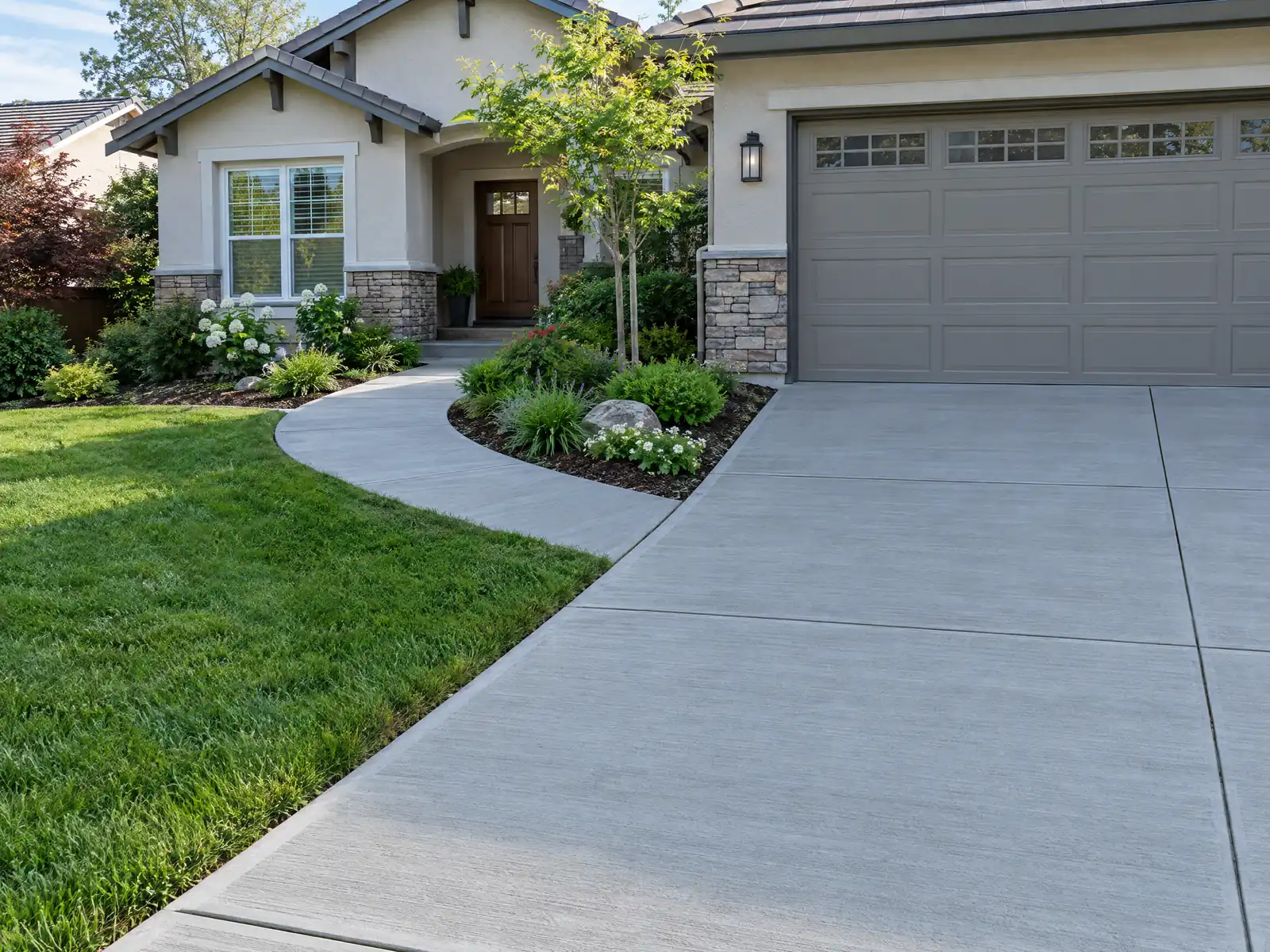
Concrete
Patios, driveways, walkways and retaining walls, poured by licensed specialists and priced from sources.
See concrete work →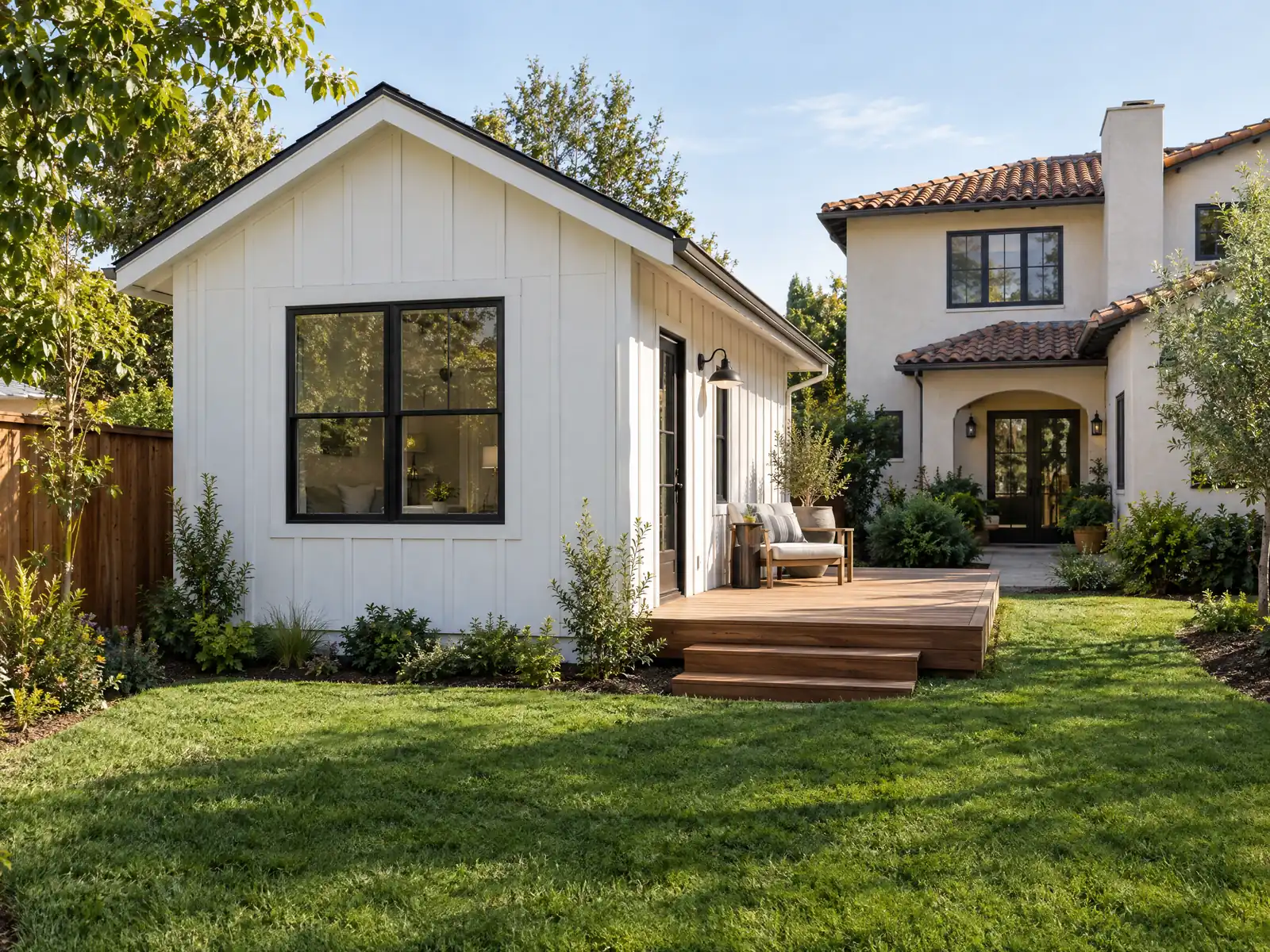
ADU Construction
Garage conversions, detached ADUs and JADUs, with the 2026 permit clocks, utilities and sourced costs explained.
See ADU construction →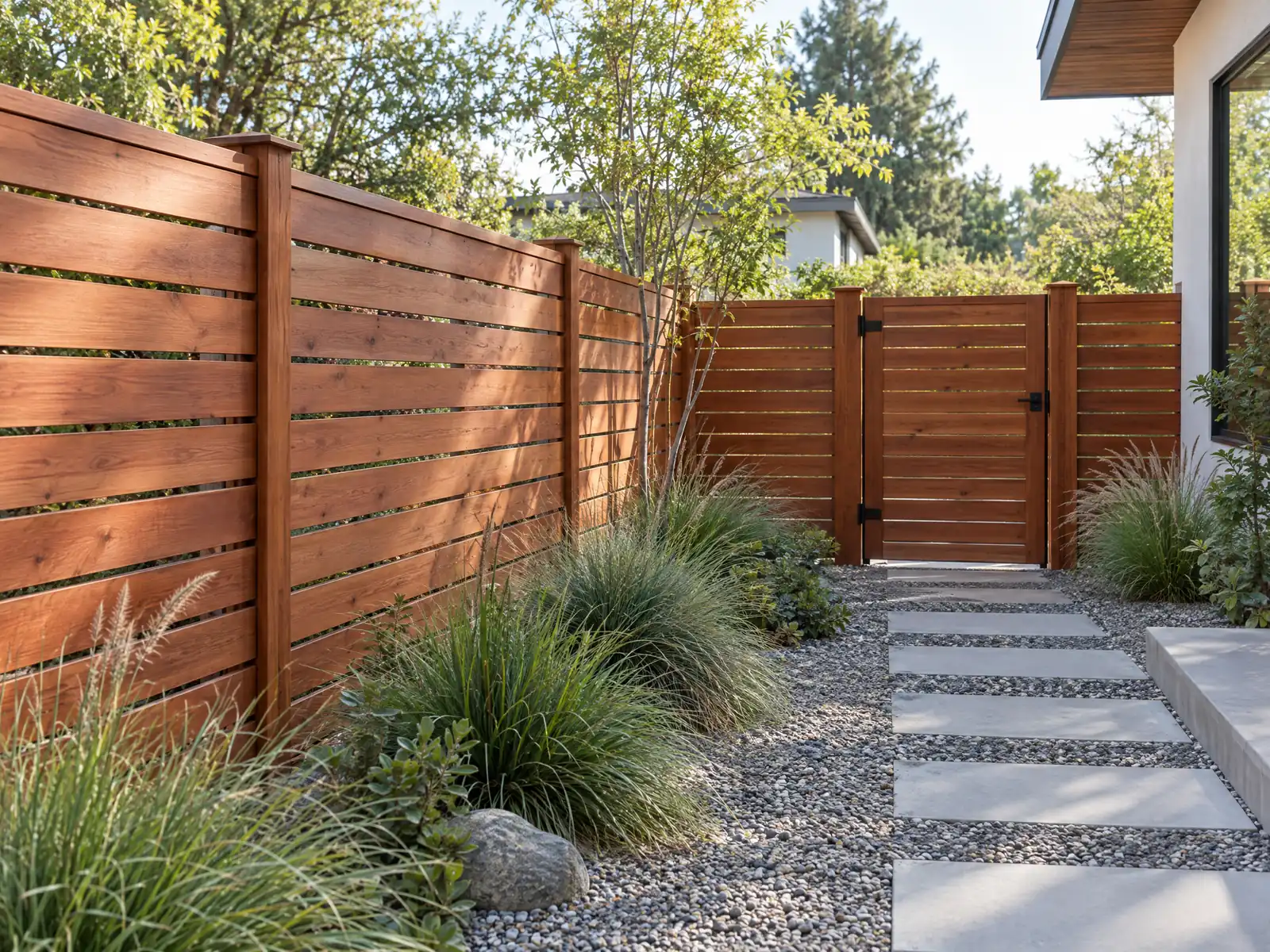
Fencing
Wood, vinyl, iron and block fences with the permit and height rules checked first.
See fencing →Related reading
What Does It Cost to Replace a Concrete Driveway in Los Angeles?
Per-square-foot driveway prices for Los Angeles with dates and sources, tear-out costs, a 720 sq ft worked example and the deposit cap.
Read the guide →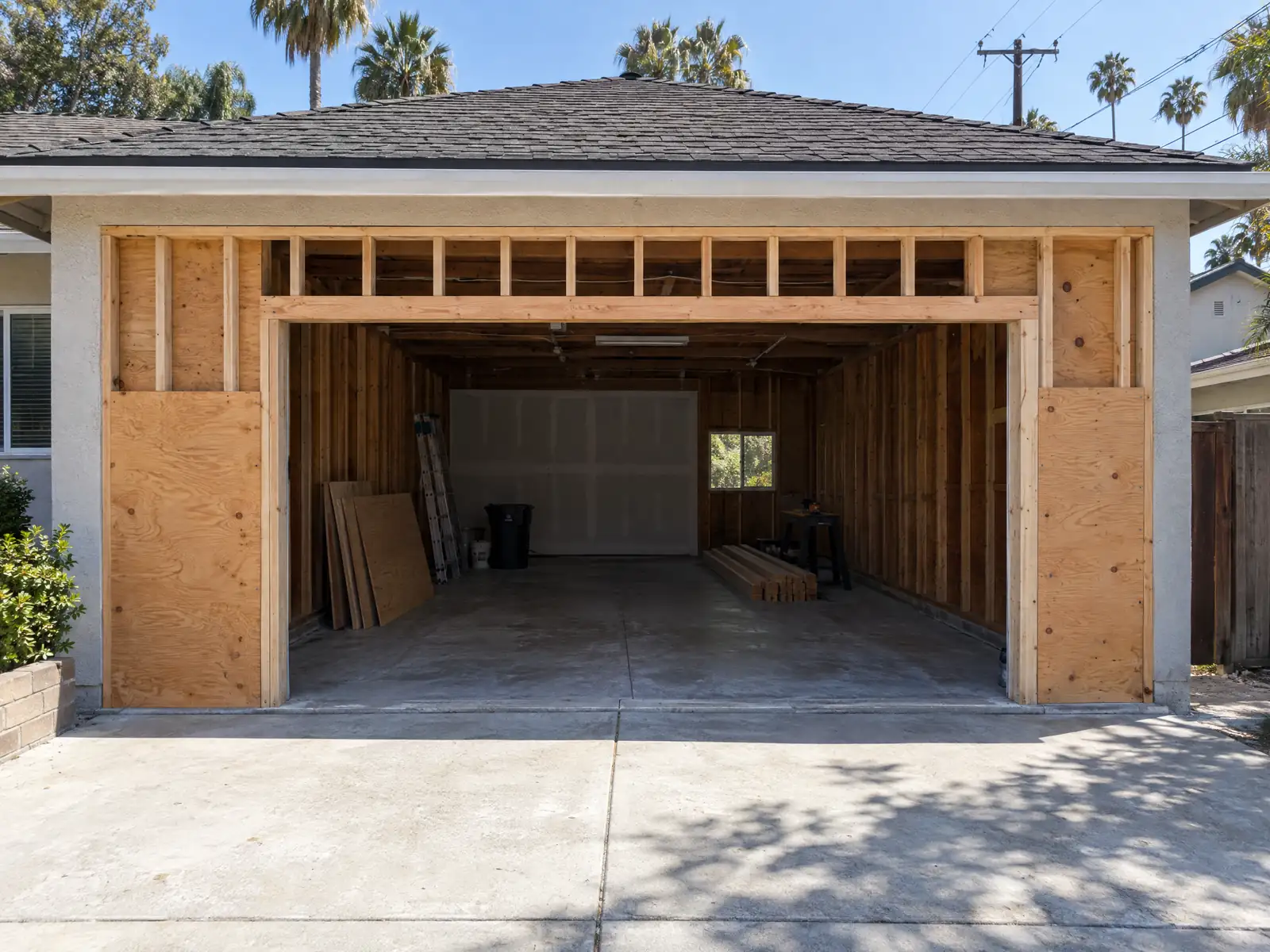
Garage Conversion Permit Steps in Los Angeles
The permit path for turning a Los Angeles garage into an ADU, with the LADBS conversion checklist and the state deadlines.
Read the guide →Stamped Concrete or Pavers: Which Is Better for a California Yard?
Stamped concrete and pavers compared on installed price, repairs, sealing, drainage and clay soil, with dated Los Angeles numbers.
Read the guide →Ready to plan your project?
Call or send the form. We schedule a site visit and send a written proposal.