
How to Choose a General Contractor in Los Angeles
Choose a general contractor in Los Angeles by getting at least three written bids on the same plans, verifying each license, bond and insurance status on the Contractors State License Board site, checking past job addresses in city permit records, and calling recent customers. Pick the bid that is complete, not the one that is cheapest.
Do you need a general contractor or a specialty contractor?
It depends on how many trades the job touches. Business and Professions Code section 7057 defines a general building contractor, the B license, as one whose work on a structure requires at least two unrelated building trades, or who superintends it. The same section says a B contractor may not take a prime contract for a single trade other than framing or carpentry unless it holds that specialty license or subcontracts the work to a contractor who does.
In practice, a bathroom remodel that involves plumbing, electrical, tile and drywall is a general contractor's job, because someone has to sequence four trades and one permit. Replacing a water heater is a plumber's. If your project is several trades, the general contractor is the single party responsible to you, and section 7159 makes the prime contractor responsible for completing the project according to the contract.
How many bids should you get for a remodel?
At least three. That is the number the Contractors State License Board gives on its page about finding the right licensed contractor, along with the condition that makes three bids useful: every bid must be based on identical plans, specifications and scope of work. Three prices for three different jobs tell you nothing.
So the first step is writing down the job. For a kitchen, that means a drawing with dimensions and a cabinet and appliance list. For an ADU or an addition it means at least a floor plan and a site sketch. Hand the same packet to each bidder. The CSLB says contractors must show the license number on bids, business cards and contracts.
A worked example: three kitchen bids that do not match
These numbers are invented to show the method. Bid A is $82,000. Bid B is $64,500. Bid C is $79,800. On price alone B wins by $82,000 - $64,500 = $17,500.
Now read the scopes. Bid B excludes permit fees, lists cabinets as an allowance of $9,000, and says nothing about upgrading the electrical panel that the other two include. You ask B to price the gaps. The panel comes back at $4,800 and permits at an estimated $2,200. The cabinets you chose are quoted by the other bidders at $19,500, so B's allowance is short by $19,500 - $9,000 = $10,500. B's real number is $64,500 + $4,800 + $2,200 + $10,500 = $82,000.
The low bid was the high bid with three items left out. The CSLB warns against automatically taking the lowest bid for this reason: a bid far below the others can signal a mistake, missing work or cut corners. Our kitchen remodel cost guide has sourced Los Angeles ranges to sanity-check the totals.
Before comparing prices, list what each bid excludes and what it carries as an allowance.
What should you verify about the license, bond and insurance?
Look up each bidder on the CSLB license check. Our guide to checking a contractor's license walks through the record, so here is the short list of what the CSLB itself tells consumers to confirm.
- Status and identity. A number on a truck does not prove the license is valid. The CSLB suggests asking to see the pocket license and a photo ID and confirming they match.
- Classification. A B license for multi-trade work, or the specialty class for a single trade.
- Bond. Every active license requires a $25,000 contractor's bond under section 7071.6. The CSLB cautions that it may not cover a project worth more than the bond or several complaints at once.
- Workers' compensation. Required when the contractor has employees. A record that says exempt means the licensee has certified it has none, so ask who will do the work. The CSLB warns that an owner can be liable if an uninsured worker is hurt on the property.
- Commercial general liability. Not required by law, but the contract must tell you whether the contractor carries it. If not, ask how property damage would be covered.
- A real business address and phone, not only a truck and a cellphone.
Which Los Angeles records can you check on a contractor's past jobs?
Ask each bidder for the addresses of three recent jobs like yours. For addresses in the City of Los Angeles, the Department of Building and Safety offers a free online building records search. Its Permit and Inspection Report shows the permits, related inspections and code enforcement recorded for a property, and the department says its building permit records go back to 1905.
You are looking for two things: that a permit was issued for the work the contractor described, and that the inspections were completed. A reference kitchen with no permit on record is its own answer. Our kitchen remodel permits post explains what should appear.
A Los Angeles mailing address is not always the City of Los Angeles. A job in Santa Monica, Glendale or Beverly Hills is permitted by that city's own building department, and unincorporated areas go through the county. Ask the contractor which offices they have pulled permits from in the past year, because each office has its own submittal steps.
What questions should you ask a general contractor before hiring?
Ask the same questions of every bidder and write the answers down. The differences between the answers are what you are choosing on.
- Who will be on my site each day, and who is my single point of contact?
- Which parts do your own employees do, and which go to subcontractors? May I have their names, license numbers and classifications?
- Who draws the plans and submits the permit? Will the permit carry your license number?
- How many jobs will you run at the same time as mine?
- What is excluded from this price, and which items are allowances?
- What finished work is each payment tied to?
- How do you document change orders, and what is your markup on them?
- Will you provide lien releases from subcontractors and suppliers with each invoice?
- What happens if hidden damage turns up behind a wall?
- Can I visit a job you have under way right now?
How do you check a contractor's references?
The CSLB suggests asking recent customers about their experience, and then checking financial responsibility with people who get paid by the contractor: material suppliers, subcontractors and financial institutions. A supplier who says the account is always current tells you more about lien risk than any review. Our article on lien release forms explains why that matters to your title.
With past customers, ask what you cannot see in photos. Did the job start and finish near the dates in the contract? Were change orders written before the work? Did the same people show up each week? Would they hire the firm again for a larger job, such as a room addition?
What should happen between picking a contractor and signing?
The bid becomes a contract, and the contract has to meet state law. For home improvement work over $500 it must be in writing, with the price, a description of the work and materials, approximate start and completion dates and a payment schedule, and the down payment may not exceed $1,000 or 10 percent, whichever is less. Our walkthrough on how to read a remodeling contract covers each heading, and the list of home improvement contract red flags covers what should make you pause.
For transparency, here is how MDG Builders answers the questions above. We hold CSLB #1040337 with the B General Building classification, based in Tarzana. Our record shows a workers' compensation exemption because we have no employees: we handle design, permits and day-to-day management, and licensed subcontractors perform the trade work. That model suits some owners and not others, so weigh it as you would any bidder's answers, and ask us for the subcontractor list and each certificate of insurance before you sign.
Questions about hiring a general contractor
How do I choose a contractor in Southern California?
Start with at least three written bids on identical plans, then verify each license on the Contractors State License Board site, confirm the bond and insurance status, look up past jobs in the local building department's records, and call recent customers and suppliers.
Should I always take the lowest bid?
No. The CSLB advises against automatically accepting the lowest bid, because a price far below the others may reflect a mistake, omitted work or planned shortcuts. Compare exclusions and allowances line by line first.
Can you negotiate with contractors on price?
Yes, and the productive way is to negotiate scope, not just the total. Ask what a different cabinet line, a simpler layout or a flexible start date would save. A price cut with no change in the work tends to return as shortcuts or change orders.
Do general contractors charge for estimates?
It varies by firm and by how much design work the estimate needs, so ask before the site visit. A rough range after a walkthrough is different from a fixed bid built on drawings. Either way, get the scope and price in writing with the license number on it.
Does a general contractor need workers' compensation insurance in California?
Only if it has employees, with exceptions for certain license classes that must carry it regardless. The CSLB license record shows either a policy or an exemption. If it says exempt, ask who performs the work and request each subcontractor's certificate of insurance.
What is the bond on a California contractor's license for?
The $25,000 contractor's bond is a condition of holding an active license under Business and Professions Code section 7071.6. The CSLB says it may not cover projects worth more than the bond or multiple complaints, and that a bond does not prove a contractor's competence.
Work that goes with this

Kitchen Remodeling
Cabinets, counters, layout changes, permits and a written schedule, with prices tied to named sources.
See kitchen remodeling →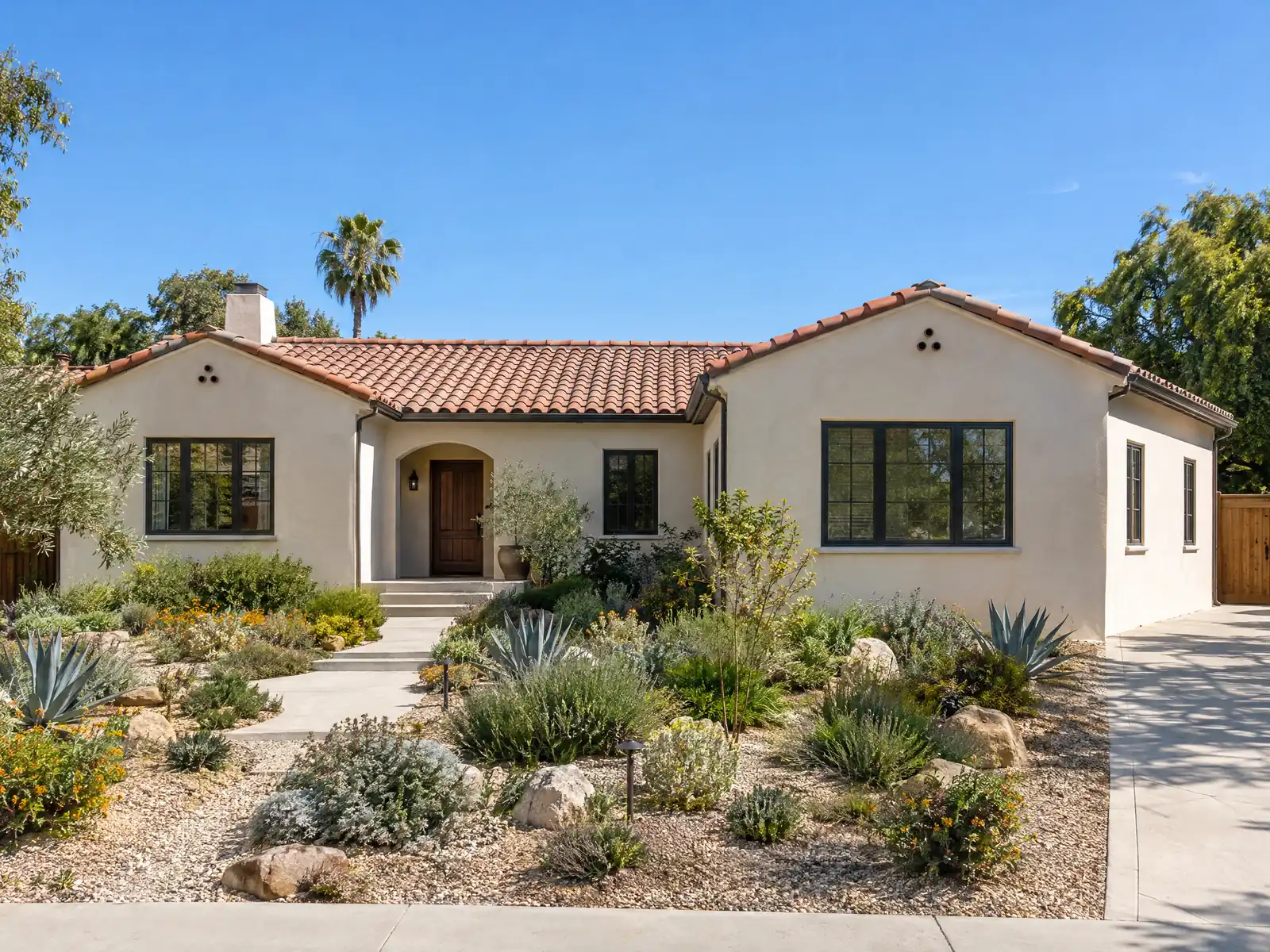
Room Additions
Family rooms, primary suites and second stories, from zoning check to final inspection, with sourced prices.
See room additions →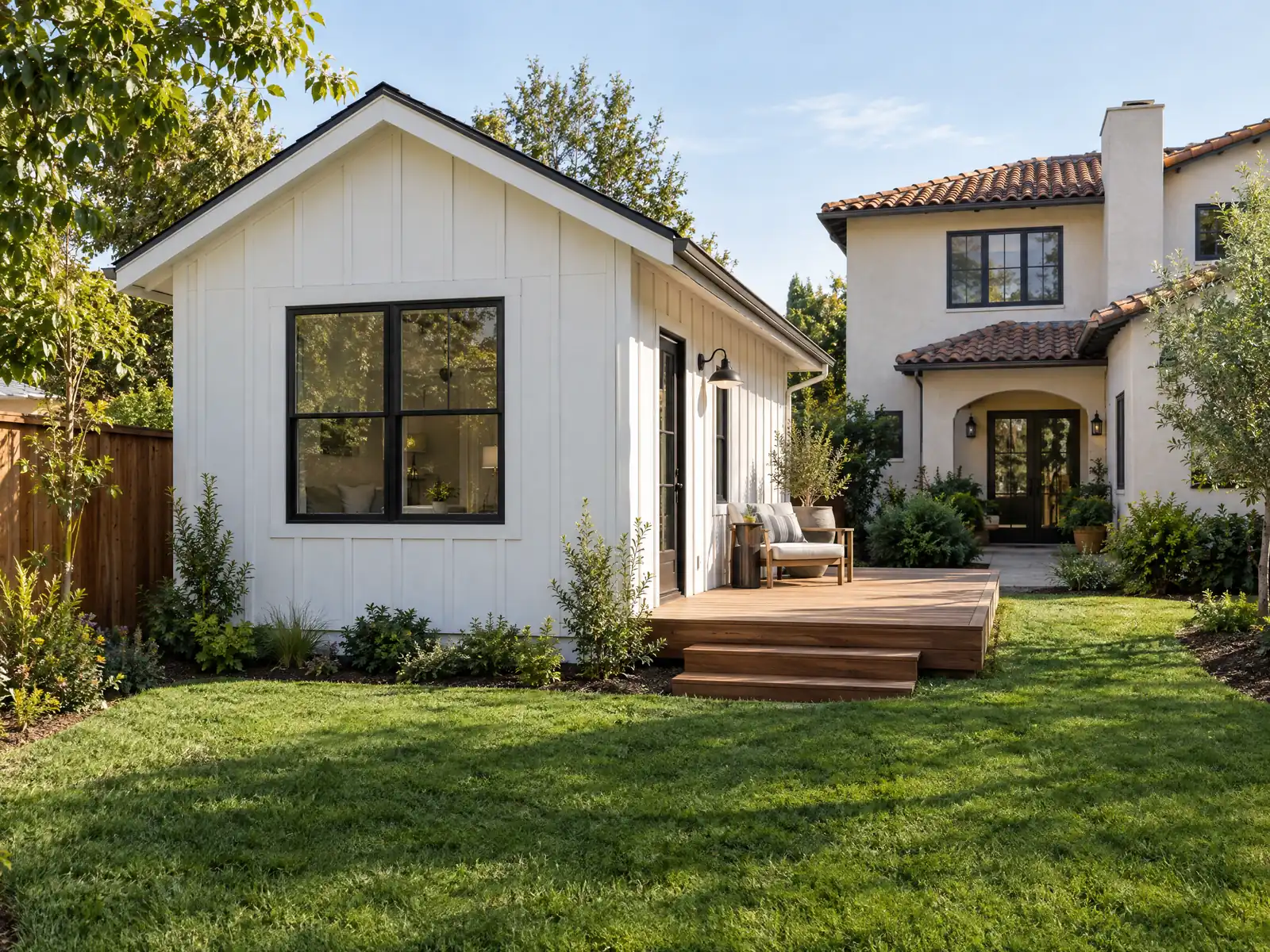
ADU Construction
Garage conversions, detached ADUs and JADUs, with the 2026 permit clocks, utilities and sourced costs explained.
See ADU construction →Keep reading

How to Check a Contractor's License in California
Read a CSLB license record line by line, learn what a B license means, and see MDG's own record as a worked example.
Read the guide →How to Read a Remodeling Contract in California, Page by Page
The headings state law requires in a home improvement contract: price, down payment, progress payments, dates, change orders and notices.
Read the guide →Home Improvement Contract Red Flags in California: 12 Warning Signs
Twelve warning signs in a contractor's pitch, payment terms and paperwork, each checked against CSLB guidance and California statute.
Read the guide →Ready to plan your project?
Call or send the form. We schedule a site visit and send a written proposal.